Back to Network
6
Shared Docs
6
Same-Page
6 / 6
Mentions
Document Mentions (6 shared documents)
2 mentions1 same-page
Page ?Same page
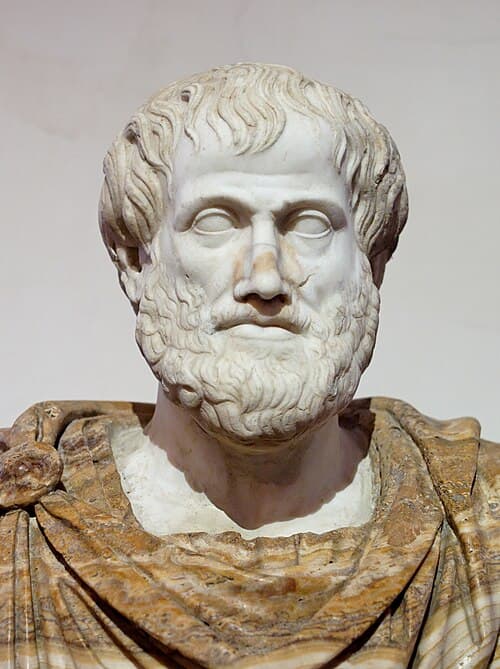
friends. Logical Beginnings The formal study of logic began in 3848c with the publication ofa treatise called the Organon by the Greek philosopher Aristotle. A student of Plato, Aristotle taught many of the famous leaders of his time, including Alexander The Great. Ancient Greece was not some idyllic thin
Once again, I disprove the theory. Since both routes fail, James’ list of prime numbers is not complete and, therefore, prime numbers are infinite. Feynman's Proof My favorite piece of logic is Richard Feynman's disproof of the existence of polywater. It’s a strange logical proof bordering on philosophy
2 mentions1 same-page
Page ?Same page
pic principle 322 Anti-Ballistic Missile Treaty 79 Antikythera 15 Apple 56, 68, 224, 306 Arab world democracy 82 Arafat, Yasser 81, 82 Archimedes 343 Aristotle 149 ARM 224 ARNN 280 art being appreciated 142 creativity and 304 Artamene 129 Art of Fugue 259 ASCII 203 Asimov, Isaac 4 Association of Computer M
ivity versus 312 program equivalence problem 250 programmer 235, 238, 263 programming geniuses 271 super-programmers 266 progressive cipher 214 proof Feynman’s proof 157 indirect 244 mathematical 156 philosophical 246 Index 415 PSPACE problem 168 Pulitzer Prize 365, 367 purpose on the planet 9 puzzle tw
2 mentions1 same-page
Page ?Same page
an when he was 60 years old. He’d had an astonishing life until then, of course. He’d been taught by Socrates and, in turn, had sharpened the mind of Aristotle. He’d established his famous Academy in Athens. The puzzles of philosophy and politics that defined his city’s most turbulent era had been the work o
was the time that Hillis asked Nobel-prize winning physicist Richard Feynman to tip him off about any smart scientists Thinking Machines might hire. Feynman, pushing 60, volunteered himself and spent his summer vacations for the next ten years with Hillis and his team.1?! When it came time to test the fir
Sponsored
2 mentions1 same-page
Page ?Same page
and decision making, they are the best learners in the universe. Much of the process of turning data into theories happens before we are five. Since Aristotle and Plato, there have been two basic ways of addressing the problem of how we know what we know, and they are still the main approaches in machine le
ard Feynman, at which the celebrated physicist remarked, “That is positively the dopiest idea I ever heard.” Maybe “despite” is the wrong word, since Feynman had a well-known predilection for playing with dopey ideas. In the event, he showed up on the day the company was incorporated and stayed on, for sum
2 mentions1 same-page
Page ?Same page
and decision making, they are the best learners in the universe. Much of the process of turning data into theories happens before we are five. Since Aristotle and Plato, there have been two basic ways of addressing the problem of how we know what we know, and they are still the main approaches in machine le
ard Feynman, at which the celebrated physicist remarked, “That is positively the dopiest idea I ever heard.” Maybe “despite” is the wrong word, since Feynman had a well-known predilection for playing with dopey ideas. In the event, he showed up on the day the company was incorporated and stayed on, for sum
2 mentions1 same-page
Page ?Same page
in the same sense as Galileo, if by this term one describes those who tear down the dictates of the authorities who came before, as Galileo had for Aristotle. Einstein did just the opposite. He knew that rules that had been established on the basis of experiment could not easily be tossed aside, and it w
seems to offer hope of a world where any dream, no matter how outlandish, is realizable. Other familiar names, Bohr, Schrodinger, Dirac, and later Feynman and Dyson, each made great leaps into the unknown. But they weren't alone. Physics is a collaborative discipline. Too often science stories are wr
Sponsored
Mutual Connections (491)
Entities connected to both Aristotle and Feynman
Jeffrey Epstein
PERSON10 w/ Aristotle·32 w/ Feynman
Alan Dershowitz
PERSON12 w/ Aristotle·15 w/ Feynman
Stephen Hawking
PERSON13 w/ Aristotle·13 w/ Feynman
Earth
LOCATION11 w/ Aristotle·14 w/ Feynman
Harvey Weinstein
PERSON11 w/ Aristotle·14 w/ Feynman
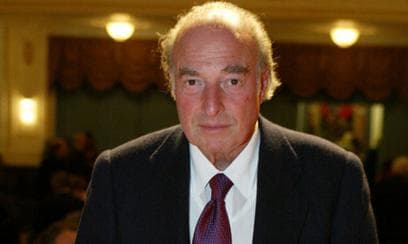
Marc Rich
PERSON13 w/ Aristotle·11 w/ Feynman
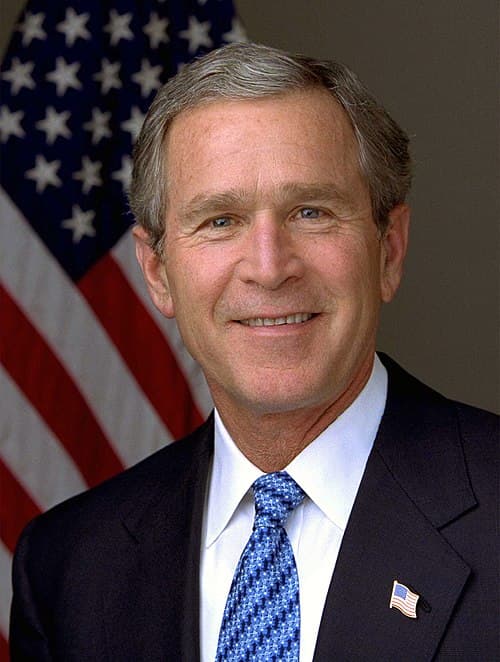
George W. Bush
PERSON13 w/ Aristotle·9 w/ Feynman
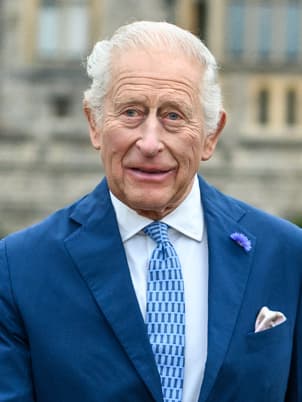
Prince Charles
PERSON14 w/ Aristotle·8 w/ Feynman
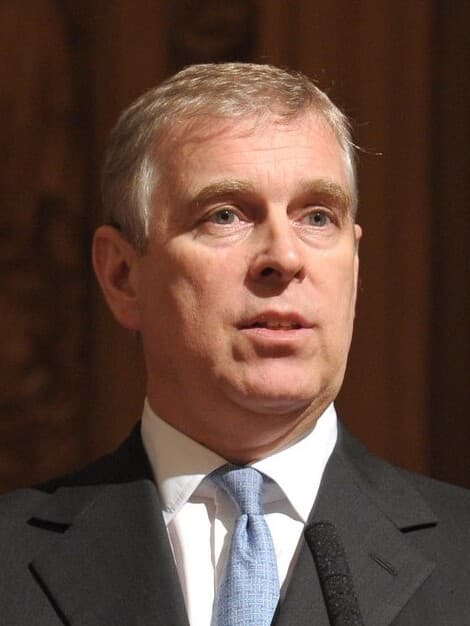
Prince Andrew
PERSON11 w/ Aristotle·10 w/ Feynman
Julie K. Brown
PERSON10 w/ Aristotle·10 w/ Feynman
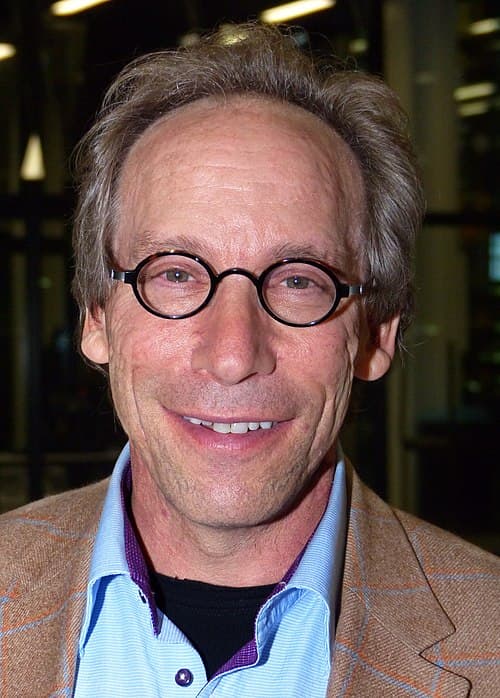
Lawrence Krauss
PERSON6 w/ Aristotle·14 w/ Feynman
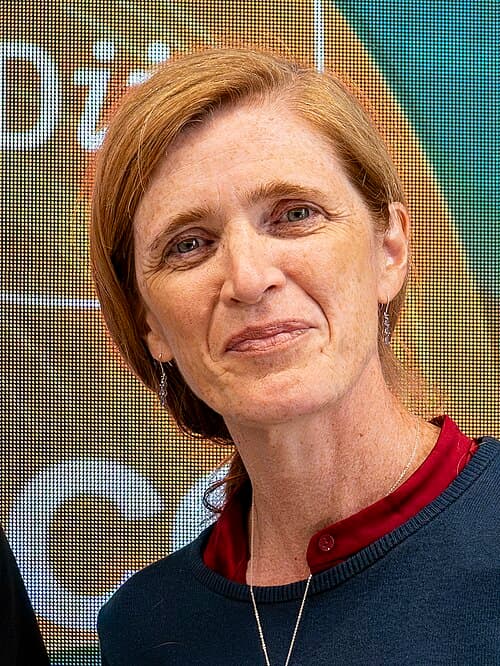
Samantha Power
PERSON9 w/ Aristotle·10 w/ Feynman
LB
Leon Black
PERSON10 w/ Aristotle·9 w/ Feynman
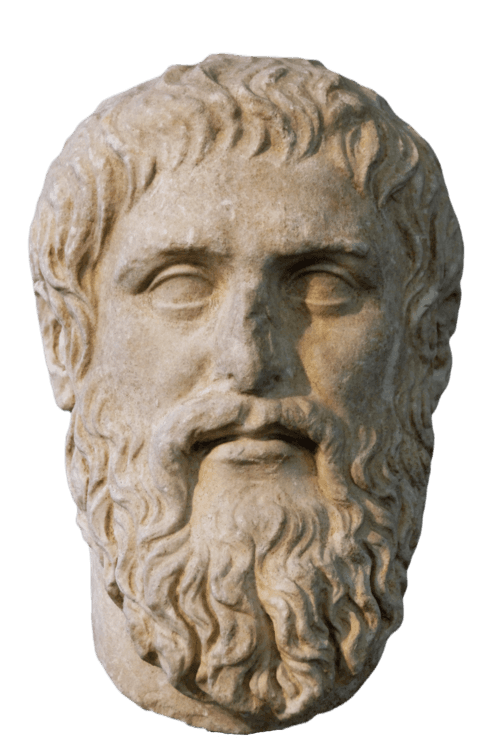
Plato
PERSON11 w/ Aristotle·8 w/ Feynman
William Shakespeare
PERSON10 w/ Aristotle·9 w/ Feynman
DB
Doug Band
PERSON9 w/ Aristotle·9 w/ Feynman
Quantum
ORGANIZATION5 w/ Aristotle·13 w/ Feynman
Eric Trump
PERSON6 w/ Aristotle·11 w/ Feynman
Richard Feynman
PERSON4 w/ Aristotle·12 w/ Feynman
Daniel Dennett
PERSON8 w/ Aristotle·7 w/ Feynman