Back to Network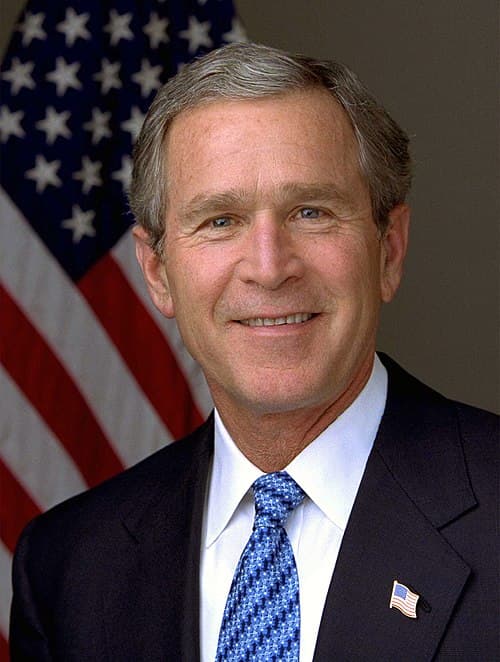












4
Shared Docs
4
Same-Page
5 / 4
Mentions
Document Mentions (4 shared documents)
3 mentions1 same-page
Page ?Same page
etween Greek philosophical psychology and Christianity can be found in the use of Stoic theories of desire by the apostle Paul, 3 the presence of Aristotle's family ethic — with its implicit psycho-biology - in the household codes of Ephesians and I Colossians, 4 and the gospel of John's identificati
cy (Cambridge: Cambridge University Press, 1995). Troels Engbert- Perdersen, Paul and the Stoics (Louisville, KY,: Westminster John Knox, 2000). °Aristotle, Nicomachean Ethics (New York: Random House, 1941), Bk. VIII, ch. 10. 3 The Interpreter's Bible: Luke and John, Vol. 8 (Nashville, TN.: Abingdon
disease. Arch Pediatr Adolesc Med 2006;160:805- I 1. 24. Weiss RS. Loneliness: The experience of emotional and social isolation. Cambridge, MA: MIT Press; 1973. 25. Brewer MB, Gardner W. Who is this "we"? Levels of collective identity and self representations. Journal of Personality and Social Ps
2 mentions1 same-page
Page ?Same page
pic principle 322 Anti-Ballistic Missile Treaty 79 Antikythera 15 Apple 56, 68, 224, 306 Arab world democracy 82 Arafat, Yasser 81, 82 Archimedes 343 Aristotle 149 ARM 224 ARNN 280 art being appreciated 142 creativity and 304 Artamene 129 Art of Fugue 259 ASCII 203 Asimov, Isaac 4 Association of Computer M
385 Review 100, no. 3 (1993): 363. Fiske, John. Introduction to Communication Studies. 3rd ed. Routledge, 2010. Franklin, Stan. Artificial Minds. MIT Press, 1997. Gilovich, Thomas. How We Know What Isr’t So: Fallibility of Human Reason in Everyday Life. Reprint. The Free Press, 1993. Gregory, Robert J.
2 mentions1 same-page
Page ?Same page
is between Greek philosophical psychology and Christianity can be found in the use of Stoic theories of desire by the apostle Paul, * the presence of Aristotle’s family ethic — with its implicit psycho-biology - in the household codes of Ephesians and I Colossians, * and the gospel of John’s identification o
iovascular disease. Arch Pediatr Adolesc Med 2006;160:805-11. Weiss RS. Loneliness: The experience of emotional and social isolation. Cambridge, MA: MIT Press; 1973. Brewer MB, Gardner W. Who is this “we”? Levels of collective identity and self representations. Journal of Personality and Social Psychology
Sponsored
2 mentions1 same-page
Page ?Same page
y we feel in witnessing another’s misfortune. Though the emotion is universally understood, recognized in our written records at least as far back as Aristotle, the German language is one of the few to capture the feeling by tapping the brain’s promiscuity, combining the word for harm (schaden) with the word
ociates; Espmark, Y., Amundsen, T., & Rosenqvist,G. (2000). Animal Signals. Tapir Academic Press; Hauser, M.D. (1996) The Evolution of Communication. MIT Press; Krebs, J., & Dawkins, R. (1984). Animal signals: mind-reading and manipulation. In: Behavioural ecology, pp. 380-402, Sinauer Press; Maynard Smith,
Sponsored
Mutual Connections (621)
Entities connected to both Aristotle and MIT Press
George W. Bush
PERSON13 w/ Aristotle·25 w/ MIT
Jeffrey Epstein
PERSON10 w/ Aristotle·24 w/ MIT
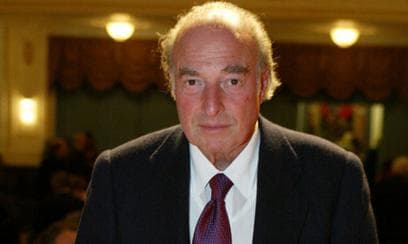
Marc Rich
PERSON13 w/ Aristotle·21 w/ MIT
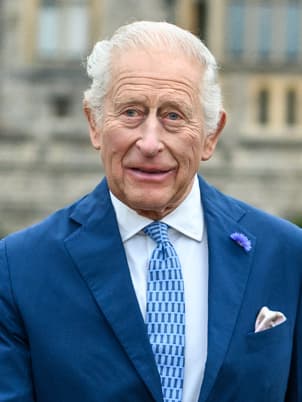
Prince Charles
PERSON14 w/ Aristotle·17 w/ MIT
Stephen Hawking
PERSON13 w/ Aristotle·14 w/ MIT
University of Oxford
ORGANIZATION7 w/ Aristotle·19 w/ MIT
Julie K. Brown
PERSON10 w/ Aristotle·16 w/ MIT
Earth
LOCATION11 w/ Aristotle·14 w/ MIT
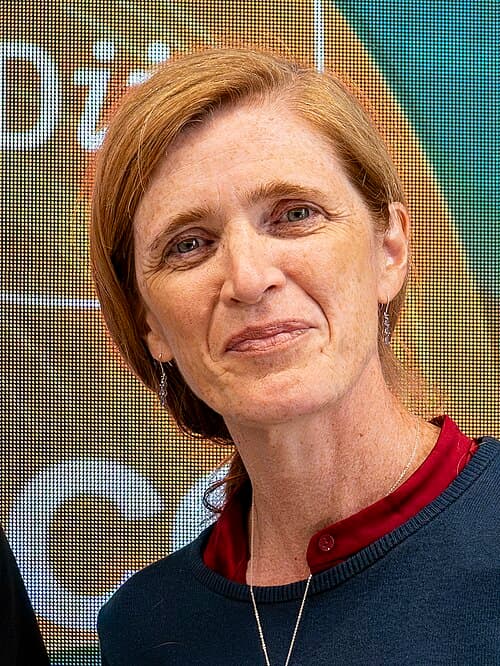
Samantha Power
PERSON9 w/ Aristotle·16 w/ MIT
Prince Andrew
PERSON11 w/ Aristotle·14 w/ MIT
LB
Leon Black
PERSON10 w/ Aristotle·14 w/ MIT
Lawrence Krauss
PERSON6 w/ Aristotle·17 w/ MIT
Alan Dershowitz
PERSON12 w/ Aristotle·10 w/ MIT
Harvey Weinstein
PERSON11 w/ Aristotle·11 w/ MIT
ET
Emmy Taylor
PERSON7 w/ Aristotle·14 w/ MIT
Harvard University
ORGANIZATION4 w/ Aristotle·16 w/ MIT
William Shakespeare
PERSON10 w/ Aristotle·8 w/ MIT
Barack Obama
PERSON10 w/ Aristotle·7 w/ MIT
Plato
PERSON11 w/ Aristotle·6 w/ MIT
Michael Cohen
PERSON5 w/ Aristotle·11 w/ MIT