Back to Network

5
Shared Docs
5
Same-Page
6 / 5
Mentions
Document Mentions (5 shared documents)
3 mentions1 same-page
Page ?Same page
etween Greek philosophical psychology and Christianity can be found in the use of Stoic theories of desire by the apostle Paul, 3 the presence of Aristotle's family ethic — with its implicit psycho-biology - in the household codes of Ephesians and I Colossians, 4 and the gospel of John's identificati
cy (Cambridge: Cambridge University Press, 1995). Troels Engbert- Perdersen, Paul and the Stoics (Louisville, KY,: Westminster John Knox, 2000). °Aristotle, Nicomachean Ethics (New York: Random House, 1941), Bk. VIII, ch. 10. 3 The Interpreter's Bible: Luke and John, Vol. 8 (Nashville, TN.: Abingdon
ed; Charles Darwin who argued that the difference in mind between humans and other species, great as it is, is one of degree and not of kind; and Albert Einstein who surmised a relationship between energy and matter, opening a universe of possibilities that previously was virtually unimaginable. As a resul
2 mentions1 same-page
Page ?Same page
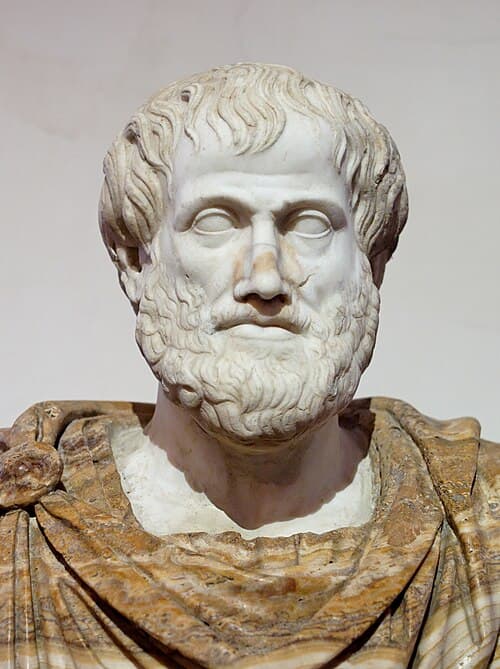
friends. Logical Beginnings The formal study of logic began in 3848c with the publication ofa treatise called the Organon by the Greek philosopher Aristotle. A student of Plato, Aristotle taught many of the famous leaders of his time, including Alexander The Great. Ancient Greece was not some idyllic thin
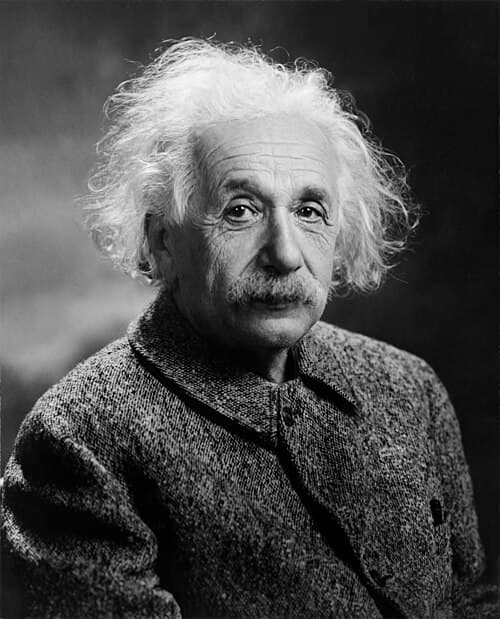
ys. ~ Output Neural Network HOUSE_OVERSIGHT_015806 Thinking “We cannot solve our problems with the same thinking we used when we created them.” Albert Einstein is normal. Mental work takes energy. Scientists estimate the brain consumes 20% of our resting energy; around 12 watts. Physical fitness is importan
2 mentions1 same-page
Page ?Same page
is between Greek philosophical psychology and Christianity can be found in the use of Stoic theories of desire by the apostle Paul, * the presence of Aristotle’s family ethic — with its implicit psycho-biology - in the household codes of Ephesians and I Colossians, * and the gospel of John’s identification o
lived; Charles Darwin who argued that the difference in mind between humans and other species, great as it is, is one of degree and not of kind; and Albert Einstein who surmised a relationship between energy and matter, opening a universe of possibilities that previously was virtually unimaginable. As a result, t
Sponsored
2 mentions1 same-page
Page ?Same page
y we feel in witnessing another’s misfortune. Though the emotion is universally understood, recognized in our written records at least as far back as Aristotle, the German language is one of the few to capture the feeling by tapping the brain’s promiscuity, combining the word for harm (schaden) with the word
ion 19 HOUSE_OVERSIGHT_012765 Chapter I: Nature’s secrets Nature hides her secrets because of her essential loftiness, but not by means of ruse. — Albert Einstein In Charles Darwin’s day, biologists unearthed the mysteries of evolution by means of observation, sometimes accompanied by a simple experiment. This
2 mentions1 same-page
Page ?Same page
in the same sense as Galileo, if by this term one describes those who tear down the dictates of the authorities who came before, as Galileo had for Aristotle. Einstein did just the opposite. He knew that rules that had been established on the basis of experiment could not easily be tossed aside, and it w
magnetism and plugged in the numbers, he derived: Speed of electromagnetic waves Fac 311,000,000 meters per second A famous story claims that when Albert Einstein finished his Gen- eral Theory of Relativity and compared its predictions for the orbit of Mercury to the measured numbers, he had heart palpitations
Sponsored
Mutual Connections (633)
Entities connected to both Aristotle and Albert Einstein
Jeffrey Epstein
PERSON10 w/ Aristotle·52 w/ Albert
Marc Rich
PERSON13 w/ Aristotle·23 w/ Albert
Harvey Weinstein
PERSON11 w/ Aristotle·24 w/ Albert
Samantha Power
PERSON9 w/ Aristotle·24 w/ Albert
George W. Bush
PERSON13 w/ Aristotle·17 w/ Albert
Prince Charles
PERSON14 w/ Aristotle·14 w/ Albert
Earth
LOCATION11 w/ Aristotle·13 w/ Albert
Barack Obama
PERSON10 w/ Aristotle·13 w/ Albert
LB
Leon Black
PERSON10 w/ Aristotle·13 w/ Albert
Stephen Hawking
PERSON13 w/ Aristotle·10 w/ Albert
Julie K. Brown
PERSON10 w/ Aristotle·10 w/ Albert
Richard Dawkins
PERSON10 w/ Aristotle·10 w/ Albert
Prince Andrew
PERSON11 w/ Aristotle·8 w/ Albert
DB
Doug Band
PERSON9 w/ Aristotle·10 w/ Albert
United States
LOCATION5 w/ Aristotle·13 w/ Albert
Alan Dershowitz
PERSON12 w/ Aristotle·6 w/ Albert
Deepak Chopra
PERSON2 w/ Aristotle·15 w/ Albert
Bill Clinton
PERSON6 w/ Aristotle·11 w/ Albert
Plato
PERSON11 w/ Aristotle·6 w/ Albert
Lawrence Krauss
PERSON6 w/ Aristotle·11 w/ Albert