Back to Network


















4
Shared Docs
4
Same-Page
7 / 4
Mentions
Document Mentions (4 shared documents)
3 mentions1 same-page
Page ?Same page
vailable for business to borrow and invest. But business lacked the “animal spirits” to take such a risk ina slump. We saw the same story after 2008. Keynes’ proposal was for government to do the borrowing and investing instead. That’s part of the “fiscal policy” I described in Chapter 1. Here we tend to
saving is invested, as I use the word, but finds different returns. Saving under the mattress is investment at zero return, and drops output just as Keynes said. Investment at the current average return keeps output unchanged. That’s what Keynes meant. But investment at lower returns lowers output, and c
zero just as buildings do. Yoram Ben-Porath combined these ideas and more in a masterly life- cycle model published in 1967. We'll get to it soon. Schultz called the part of consumption exhausted in taste satisfaction “pure consumption”. The part invested in human capital was “pure investment”. I change
3 mentions1 same-page
Page ?Same page
d their market value in return, as if on the books of a firm. Chapter 6: Parallels with the Firm 2/4/16 21 HOUSE_OVERSIGHT_011055 Marshall’s pupil Keynes was thoroughly a marginalist, as are economists in general today and as am I. One of the features of his General Theory of 1936 was a kind of double-
t the human capital of children. But Farr deserves credit for pointing out that human capital in general capitalizes pay less invested consumption. Keynes’ teacher Alfred Marshall agreed with Farr in 1990’. As I read this passage, Marshall interpreted maintenance consumption as investment. So did B. F.
realized, as it were, in his person. The conversion of some consumption into human capital was a favorite theme of Frank Knight a generation before Schultz. Only the rest is what Schultz called pure consumption eliminated from the economy in satisfying tastes. Becker added in 1964 that this investment mu
3 mentions1 same-page
Page ?Same page
ht also be surprised at my choice of benchmarks in verse and economics. Masefield and Mill? A consensus might have picked T. S. Elliot, say, and Lord Keynes. Masefield and Mill are likelier to be remembered as old-fashioned fuddy-duddies already outmoded when they wrote. But that’s me. I am Don Quixote. N
b paragraph on growth. The candidates for third seem well behind. Maybe Jevons or John Rae or Leon Walras. Time has not been kind to the teachings of Keynes. I would now rank his teacher Alfred Marshall higher. I like Myrdal’s magnificent ex ante - ex post distinction. Boehm Bawerk and the Austrian school
Bawerk and the Austrian school are underrated. The pantheon might have room for him. Am I being too tough on later economists? We should not forget Schultz and Ben- Porath. Schultz’ greatest achievement, unless Mincer beat him, was in spotlighting human depreciation. That left me to ask where this huge f
Sponsored
2 mentions1 same-page
Page ?Same page
Web Logs and Question Answering (WLQA2010). Malta, 22 May. 2010 Program Committee: 32st European Conference on Information Retrieval (ECIR 2010). Keynes, UK. 28-31 March. 2009 Program Committee: Web Information and Data Management. 191" International Conference on Information and Knowledge Managemen
eviewer for the journal Internet Research (http://info.emeraldinsight.com/authors/literati/index.htm) 2008 Best Paper, Jansen, B.J., Zhang, M., and Schultz, C. (2008) The Effect of Brand on the Evaluation of IT System Performance. Proceedings of the Southern Association for Information Systems Conferen
Sponsored
Mutual Connections (222)
Entities connected to both Keynes and Schultz
Jeffrey Epstein
PERSON9 w/ Keynes·42 w/ Schultz
George W. Bush
PERSON19 w/ Keynes·30 w/ Schultz
Julie K. Brown
PERSON8 w/ Keynes·41 w/ Schultz
Donald Trump
PERSON4 w/ Keynes·44 w/ Schultz
LB
Leon Black
PERSON9 w/ Keynes·38 w/ Schultz
Samantha Power
PERSON10 w/ Keynes·34 w/ Schultz
Wilbur Ross
PERSON2 w/ Keynes·37 w/ Schultz
Prince Charles
PERSON13 w/ Keynes·24 w/ Schultz
Stephen Hawking
PERSON7 w/ Keynes·30 w/ Schultz
Louisiana
LOCATION2 w/ Keynes·31 w/ Schultz
New Orleans
LOCATION2 w/ Keynes·30 w/ Schultz
Marc Rich
PERSON18 w/ Keynes·13 w/ Schultz
United Kingdom
LOCATION3 w/ Keynes·27 w/ Schultz
Ghislaine Maxwell
PERSON11 w/ Keynes·19 w/ Schultz
Robert Gates
PERSON6 w/ Keynes·24 w/ Schultz
Norway
LOCATION5 w/ Keynes·25 w/ Schultz
Prince Andrew
PERSON7 w/ Keynes·21 w/ Schultz
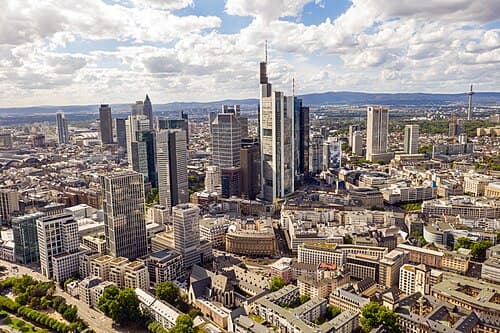
Frankfurt
LOCATION2 w/ Keynes·25 w/ Schultz
George Mitchell
PERSON2 w/ Keynes·25 w/ Schultz
Eric Trump
PERSON8 w/ Keynes·18 w/ Schultz