Back to Network

















5
Shared Docs
5
Same-Page
5 / 5
Mentions
Document Mentions (5 shared documents)
2 mentions1 same-page
Page ?Same page
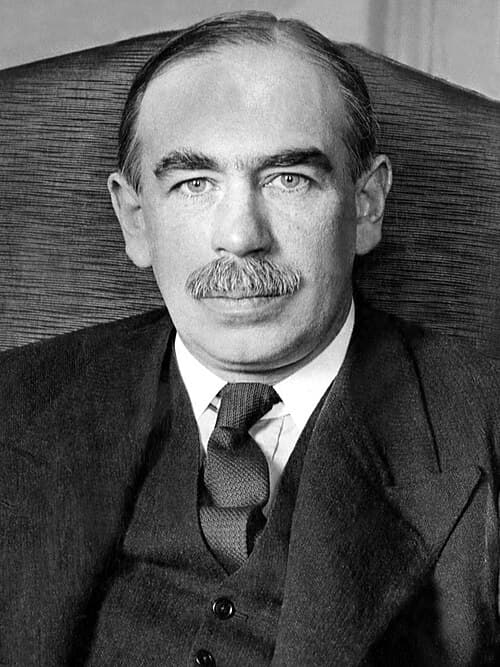
tic properties of light like a talisman. In his essay called Newton, the Man, the early 20" Century Cambridge Don and economic theorist, John Maynard Keynes, said that the Newton of the chapel followed “...certain mystic clues which God had laid about the world to allow a sort of philosopher’s treasure hu
, the Cabalist’s Yesod, the Sufis Baraka, the Christian Holy Spirit, the Yogic breath energy, prana, Mesmer’s animal magnetism, Galvani’s life force, Goethe’s Gestaltung, Madam Blavatsky’s astral light, Georg Groddeck’s it, Henri Bergson’s elan vitale, Schroedingers entropy, Abraham Maslow, Ruth Benedict
2 mentions1 same-page
Page ?Same page
tire world was pulled into the fire. “In the autumn of 1919, in which I write, we are at the dead season of our fortunes,” the economist John Maynard Keynes wrote after the Paris Peace Conference settled The Great War, dimly aware that an even deader season lay somewhere in the future in the form of anoth
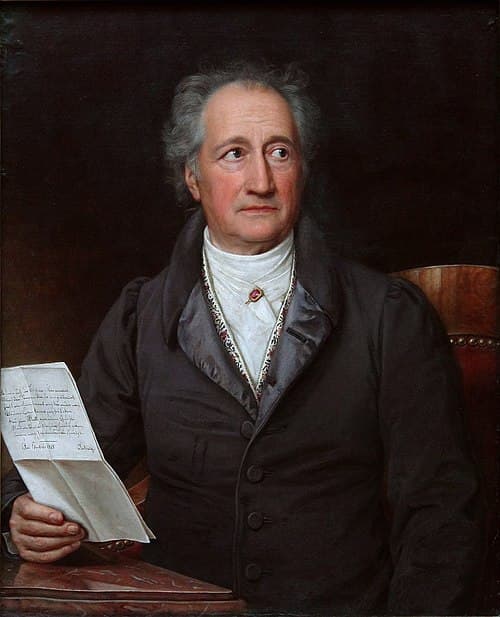
r, they are worth learning about and exploring. They stand out as trailguides to a fresh sensibility in the same way Nijinsky’s 20" century dances or Goethe’s 19" century poetry once did. We flip back and forth between real and virtual in our every day lives now, popping our head from screen to street. O
2 mentions1 same-page
Page ?Same page
ooking back on his formative years, before Europe was ground up in the First World War, the powerfully brilliant and sensitive economist John Maynard Keynes bitterly recalled the iron certainty of his set of friends and their confident, diffident arrogance: “We were not aware that civilization was a thin
ese sacrifices marked sailing adventure. But they knew the rewards for areal mastery of the sea: Fame, riches, knowledge, adventure. Sloterdijk cites Goethe, who reflecting on the power of nautical life in 1787, defined the edgy advantage of that ocean-mapping caste in his age: They had perspective. “No o
Sponsored
2 mentions1 same-page
Page ?Same page
ods is largely automated, as are many services. What’s left for humans to do? In 1930—long before the advent of computers, let alone AI—John Maynard Keynes wrote, in an essay called “Economic Possibilities for our Grandchildren,” that as a result of improvements in productivity, society could produce all
particular, sun-scorched, caterpillar-chewed clover found outside your house in an atlas. No, you aimed—if you were a genius natural philosopher like Goethe, Albinus, or Cheselden—to observe nature but then to perfect the object in question, to abstract it visually to the ideal. Take a skeleton, view it t
2 mentions1 same-page
Page ?Same page
ods is largely automated, as are many services. What’s left for humans to do? In 1930—long before the advent of computers, let alone AI—John Maynard Keynes wrote, in an essay called “Economic Possibilities for our Grandchildren,” that as a result of improvements in productivity, society could produce all
particular, sun-scorched, caterpillar-chewed clover found outside your house in an atlas. No, you aimed—if you were a genius natural philosopher like Goethe, Albinus, or Cheselden—to observe nature but then to perfect the object in question, to abstract it visually to the ideal. Take a skeleton, view it t
Sponsored
Mutual Connections (472)
Entities connected to both Keynes and Goethe
George W. Bush
PERSON19 w/ Keynes·8 w/ Goethe
Marc Rich
PERSON18 w/ Keynes·7 w/ Goethe
Alan Dershowitz
PERSON12 w/ Keynes·5 w/ Goethe
Prince Charles
PERSON13 w/ Keynes·3 w/ Goethe
Harvey Weinstein
PERSON11 w/ Keynes·4 w/ Goethe
DB
Doug Band
PERSON10 w/ Keynes·5 w/ Goethe
Samantha Power
PERSON10 w/ Keynes·4 w/ Goethe
Renaissance
ORGANIZATION8 w/ Keynes·6 w/ Goethe
Julie K. Brown
PERSON8 w/ Keynes·6 w/ Goethe
John Maynard
PERSON9 w/ Keynes·5 w/ Goethe
Jeffrey Epstein
PERSON9 w/ Keynes·5 w/ Goethe
LB
Leon Black
PERSON9 w/ Keynes·4 w/ Goethe
Ghislaine Maxwell
PERSON11 w/ Keynes·2 w/ Goethe
Prince Andrew
PERSON7 w/ Keynes·6 w/ Goethe
Stephen Hawking
PERSON7 w/ Keynes·6 w/ Goethe
Eric Trump
PERSON8 w/ Keynes·4 w/ Goethe
Vietnam
LOCATION8 w/ Keynes·4 w/ Goethe
Earth
LOCATION7 w/ Keynes·4 w/ Goethe
Lawrence Krauss
PERSON7 w/ Keynes·3 w/ Goethe
Bradley Cooper
PERSON7 w/ Keynes·3 w/ Goethe