Back to Network
















4
Shared Docs
4
Same-Page
4 / 4
Mentions
Document Mentions (4 shared documents)
2 mentions1 same-page
Page ?Same page
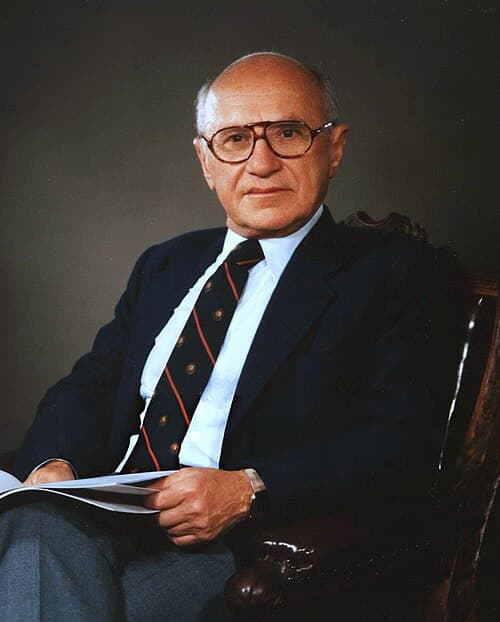
tionary theory focused on the selfish gene and, by extension, on the individual whose purpose for living was to survive long enough to reproduce. Milton Friedman influenced economic theory and government policies for decades by positing that people, being fundamentally rational, are motivated first and for
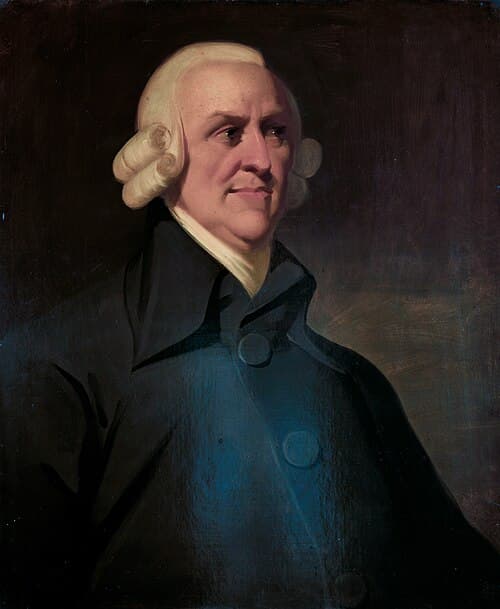
lities arc more sophisticated than simply yoking perceptions of the self and other. In the eighteenth century, Scottish philosopher and economist Adam Smith proposed that through imagination, "we place ourselves in his situation... enter as it were into his body, and become in some measure the same pe
2 mentions1 same-page
Page ?Same page
a form of income redistribution, Friedman's ideas suffer from needing continuous flows. I believe my own proposals achieve the same aims of those of Milton Friedman, at much less cost. I would ask that readers consider these proposals to be more neo—Friedmanite than neo- Marxian. If, however, my ideas are incor
g some of my own personal political beliefs. This paper uses theoretical ideas from Marx, though the classical economics is equally attributable to Adam Smith. In addition the discussion below is substantially about the reallocation of capital. However I emphasise that I disagree in the very strongest term
2 mentions1 same-page
Page ?Same page
covering payments in the downswings. That would be a problem if accounts yielded zero return, as checkable bank deposits do. The gist of my answer to Milton Friedman was that no amount of money is too much if it yields as much return as other assets of equal risk. Accounts are hedged or leveraged to do so. Omnibus
t in higher pay later. Meanwhile economists had developed the complementary idea of human capital as present cost of investment accumulated before. Adam Smith? in 1776 wrote .. The acquisition of such talents, by the maintenance of the acquirer during his education, study, or apprenticeship, always costs a
Sponsored
2 mentions1 same-page
Page ?Same page
volutionary theory focused on the selfish gene and, by extension, on the individual whose purpose for living was to survive long enough to reproduce. Milton Friedman influenced economic theory and government policies for decades by positing that people, being fundamentally rational, are motivated first and foremos
abilities are more sophisticated than simply yoking perceptions of the self and other. In the eighteenth century, Scottish philosopher and economist Adam Smith proposed that through imagination, “we place ourselves in his situation... enter as it were into his body, and become in some measure the same person
Sponsored
Mutual Connections (648)
Entities connected to both Milton Friedman and Adam Smith
Jeffrey Epstein
PERSON9 w/ Milton·31 w/ Adam
George W. Bush
PERSON14 w/ Milton·19 w/ Adam
ET
Emmy Taylor
PERSON8 w/ Milton·20 w/ Adam
LB
Leon Black
PERSON7 w/ Milton·19 w/ Adam
Bill Clinton
PERSON9 w/ Milton·17 w/ Adam
Barack Obama
PERSON6 w/ Milton·19 w/ Adam
Stephen Hawking
PERSON6 w/ Milton·19 w/ Adam
Julie K. Brown
PERSON5 w/ Milton·19 w/ Adam
Marc Rich
PERSON9 w/ Milton·15 w/ Adam
Samantha Power
PERSON6 w/ Milton·17 w/ Adam
Donald Trump
PERSON2 w/ Milton·20 w/ Adam
Prince Andrew
PERSON6 w/ Milton·16 w/ Adam
United States
LOCATION8 w/ Milton·14 w/ Adam
Prince Charles
PERSON6 w/ Milton·15 w/ Adam
Virginia Giuffre
PERSON3 w/ Milton·17 w/ Adam
Department of Justice
ORGANIZATION2 w/ Milton·18 w/ Adam
Michael Jackson
PERSON6 w/ Milton·14 w/ Adam
Michael Cohen
PERSON4 w/ Milton·14 w/ Adam
DB
Doug Band
PERSON8 w/ Milton·9 w/ Adam
Paul Ryan
PERSON3 w/ Milton·14 w/ Adam