Back to Network













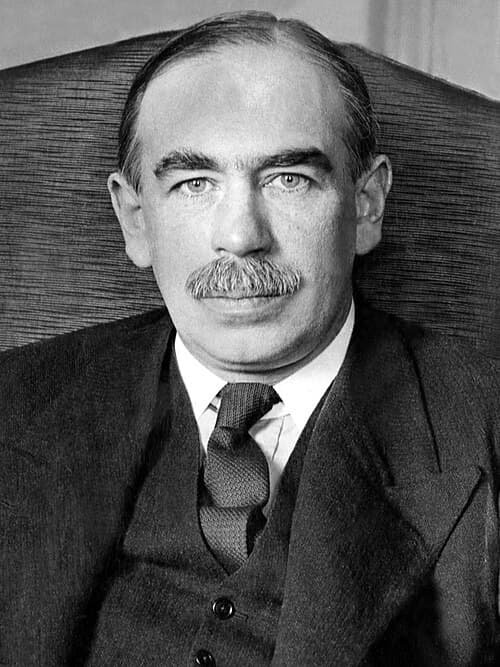
3
Shared Docs
3
Same-Page
4 / 6
Mentions
Document Mentions (3 shared documents)
4 mentions1 same-page
Page ?Same page
FREE GROWTH AND OTHER SURPRISES Draft Gordon Getty HOUSE_OVERSIGHT_010912 FOREWORD BY THE AUTHOR How Come This Book? A few months ago, Robert Trivers was kind enough to send me his new book. The title is “Wild Life”. Perfect two ways. Bob is a world authority on wildlife, to wit evolutionary biolog
OR How Come This Book? A few months ago, Robert Trivers was kind enough to send me his new book. The titl
vailable for business to borrow and invest. But business lacked the “animal spirits” to take such a risk ina slump. We saw the same story after 2008. Keynes’ proposal was for government to do the borrowing and investing instead. That’s part of the “fiscal policy” I described in Chapter 1. Here we tend to
saving is invested, as I use the word, but finds different returns. Saving under the mattress is investment at zero return, and drops output just as Keynes said. Investment at the current average return keeps output unchanged. That’s what Keynes meant. But investment at lower returns lowers output, and c
3 mentions1 same-page
Page ?Same page
can choose) because males with their now ill-adapted anti-parasite (histocampatability) genes will find few willing mates. This begins the part from Trivers. I'll come to Alexander’s later. Mothers in the source deme see an opposite picture. Conditions are not necessarily better than before, but they ar
d their market value in return, as if on the books of a firm. Chapter 6: Parallels with the Firm 2/4/16 21 HOUSE_OVERSIGHT_011055 Marshall’s pupil Keynes was thoroughly a marginalist, as are economists in general today and as am I. One of the features of his General Theory of 1936 was a kind of double-
t the human capital of children. But Farr deserves credit for pointing out that human capital in general capitalizes pay less invested consumption. Keynes’ teacher Alfred Marshall agreed with Farr in 1990’. As I read this passage, Marshall interpreted maintenance consumption as investment. So did B. F.
3 mentions1 same-page
Page ?Same page
ard for both sexes. R. A. Fisher in 1930, and Bob Trivers in 1972, suggested why. Males, in humans, produce
ht also be surprised at my choice of benchmarks in verse and economics. Masefield and Mill? A consensus might have picked T. S. Elliot, say, and Lord Keynes. Masefield and Mill are likelier to be remembered as old-fashioned fuddy-duddies already outmoded when they wrote. But that’s me. I am Don Quixote. N
b paragraph on growth. The candidates for third seem well behind. Maybe Jevons or John Rae or Leon Walras. Time has not been kind to the teachings of Keynes. I would now rank his teacher Alfred Marshall higher. I like Myrdal’s magnificent ex ante - ex post distinction. Boehm Bawerk and the Austrian school
Sponsored
Mutual Connections (241)
Entities connected to both Robert Trivers and Keynes
Jeffrey Epstein
PERSON421 w/ Robert·9 w/ Keynes
LB
Leon Black
PERSON54 w/ Robert·9 w/ Keynes
Donald Trump
PERSON58 w/ Robert·4 w/ Keynes
Marc Rich
PERSON37 w/ Robert·18 w/ Keynes
Prince Andrew
PERSON46 w/ Robert·7 w/ Keynes
George W. Bush
PERSON31 w/ Robert·19 w/ Keynes
Harry Reid
PERSON46 w/ Robert·2 w/ Keynes
Prince Charles
PERSON30 w/ Robert·13 w/ Keynes
Woody Allen
PERSON41 w/ Robert·2 w/ Keynes
John Brockman
PERSON41 w/ Robert·2 w/ Keynes
Reuters
ORGANIZATION38 w/ Robert·3 w/ Keynes
Martin Nowak
PERSON39 w/ Robert·2 w/ Keynes
Alan Dershowitz
PERSON28 w/ Robert·12 w/ Keynes
Richard Kahn
PERSON35 w/ Robert·2 w/ Keynes
Lawrence Krauss
PERSON26 w/ Robert·7 w/ Keynes
Stephen Hawking
PERSON24 w/ Robert·7 w/ Keynes
Ghislaine Maxwell
PERSON20 w/ Robert·11 w/ Keynes
John F. Kennedy
PERSON27 w/ Robert·4 w/ Keynes
CW
Courtney Wild
PERSON21 w/ Robert·7 w/ Keynes
Bradley Cooper
PERSON21 w/ Robert·7 w/ Keynes