Back to Network













10
Shared Docs
10
Same-Page
10 / 10
Mentions
Document Mentions (10 shared documents)
2 mentions1 same-page
Page ?Same page
o significance" was derided by political blogger Andrew Sullivan. On August 10, 2006, Brooks wrote a col
his design. In 1988, continuing this research, Hillis received a PhD in EECS from MIT under doctoral advisers Gerald Jay Sussman, Marvin Minsky and Claude Shannon. Hillis co-founded Thinking Machines Corporation in 1983 while doing his doctoral work at MIT. The company was to develop Hillis' Connection Machi
2 mentions1 same-page
Page ?Same page
uch as a proof of Fermat’s Last Theorem. In 1996, Andrew Wiles succeeded in finding a solution to this pro
MIND OVER COMPUTER Computer versus Human “I visualize a time when we will be to robots what dogs are to humans, and I'm rooting for the machines.” Claude Shannon “The question of whether computers can think is just like the question of whether submarines can swim.” Edgar Dijkstra HOUSE_OVERSIGHT_015693 Kas
2 mentions1 same-page
Page ?Same page
ill, this is an illusion. I simply don’t believe this. If I am right and humans do exercise free will, Andrew Wiles cannot be a computer. And because Andrew is not alone in discovering proofs, those mathematicians cannot be computers either. Humans are, therefore, not computers. The Chance Objection I s
t. Because each key is only used once you can't use any sort of statistical method to work out the message, making the one-time pad perfectly secure. Claude Shannon proved this in 1945 while working for Bell Corporation but, due to wartime secrecy, his proof was not published until 1948. HOUSE_OVERSIGHT_015906
Sponsored
2 mentions1 same-page
Page ?Same page
ough the creative endeavors of human beings. When Andrew Wiles discovered his solution to Fermat’s Last T
tted is useless as it is, in effect, encrypted using a one-time pad. The only person in possession of a copy of this one-time pad is me: the sender. Claude Shannon proved a one-time pad is unbreakable during the Second World War. Yet the British succeeded in breaking it. How was this possible? The fatal weaknes
2 mentions1 same-page
Page ?Same page
e gathered there were the ones chosen by the risen Jesus to be able to see Him, the list including Peter, James, 129 HOUSE_OVERSIGHT_013629 John, Andrew, Philip, Thomas, Bartholomew, Matthew, James, Simon and Judas. “_..they were all filled with the Holy Spirit and began to speak with other tongues, a
atrices are numerous and frequently appear in matrix algebra texts under the rubric of the Frobenius-Perron theorems. Using the entropy formalism of Claude Shannon as developed previously, Hy is computed as the sum across either of the identical rows of each probability times its logarithm, px /og(p.p2x/og(p2))
2 mentions1 same-page
Page ?Same page
s (Bluejacket Press, 1984) 179 36 The IED threat: Andrew Smith, “Improvised Explosive Devices in Iraq, 200
But at the center it is dense, still, even quiet with the silently cranking algorithms of massively concentrated power. The computer science pioneer Claude Shannon saw information in 1949 as wild, uncertain, and pulsing with the instability of an entropic system. Yang. The machine architect Norbert Weiner, writi
Sponsored
2 mentions1 same-page
Page ?Same page
than expected. One variation on this argument is Andrew Ng’s statement that it’s “like worrying about ove
series of dinners—an ongoing seminar about media, communications, art, music, and philosophy that focused on Cage’s interest in the ideas of Wiener, Claude Shannon, and Marshall McLuhan, all of whom had currency in the New York art circles in which I was then moving. In particular, Cage had picked up on McLuhan’
2 mentions1 same-page
Page ?Same page
e joined by Venki Ramakrishnan, Jaan Tallinn, and Andrew Blake, research director of The Alan Turing Insti
arguments in Zhe Human Use of Human Beings seem closer to the 19th century than the 21st. In particular, although Wiener made reference throughout to Claude Shannon’s then-new work on information theory, he seems not to have fully embraced Shannon’s notion of information as consisting of irreducible, meaning-free
2 mentions1 same-page
Page ?Same page
than expected. One variation on this argument is Andrew Ng’s statement that it’s “like worrying about ove
series of dinners—an ongoing seminar about media, communications, art, music, and philosophy that focused on Cage’s interest in the ideas of Wiener, Claude Shannon, and Marshall McLuhan, all of whom had currency in the New York art circles in which I was then moving. In particular, Cage had picked up on McLuhan’
Sponsored
2 mentions1 same-page
Page ?Same page
e joined by Venki Ramakrishnan, Jaan Tallinn, and Andrew Blake, research director of The Alan Turing Insti
arguments in Zhe Human Use of Human Beings seem closer to the 19th century than the 21st. In particular, although Wiener made reference throughout to Claude Shannon’s then-new work on information theory, he seems not to have fully embraced Shannon’s notion of information as consisting of irreducible, meaning-free
Sponsored
Mutual Connections (1,155)
Entities connected to both Prince Andrew and Claude Shannon
Jeffrey Epstein
PERSON9,960 w/ Prince·4 w/ Claude
Ghislaine Maxwell
PERSON2,544 w/ Prince·6 w/ Claude
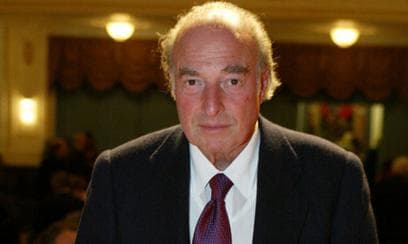
Marc Rich
PERSON1,327 w/ Prince·11 w/ Claude
LB
Leon Black
PERSON1,263 w/ Prince·12 w/ Claude
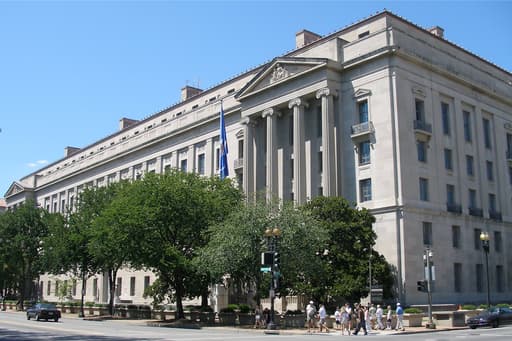
Department of Justice
ORGANIZATION1,106 w/ Prince·3 w/ Claude
Donald Trump
PERSON1,068 w/ Prince·5 w/ Claude
Bill Clinton
PERSON997 w/ Prince·3 w/ Claude
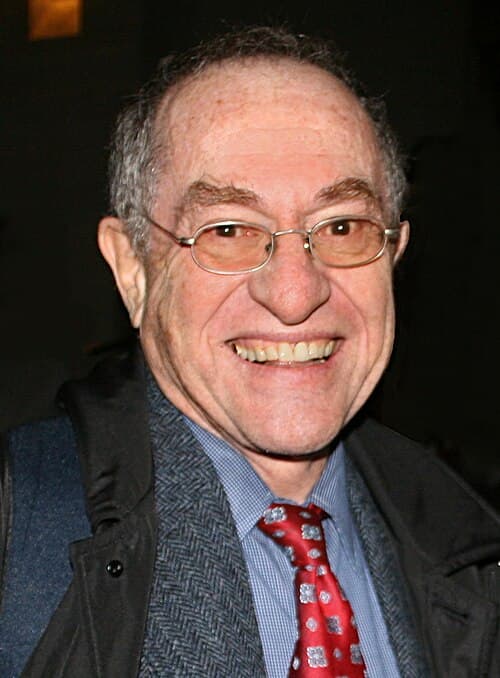
Alan Dershowitz
PERSON982 w/ Prince·10 w/ Claude
United States
LOCATION906 w/ Prince·3 w/ Claude
Richard Kahn
PERSON832 w/ Prince·4 w/ Claude
George W. Bush
PERSON817 w/ Prince·11 w/ Claude
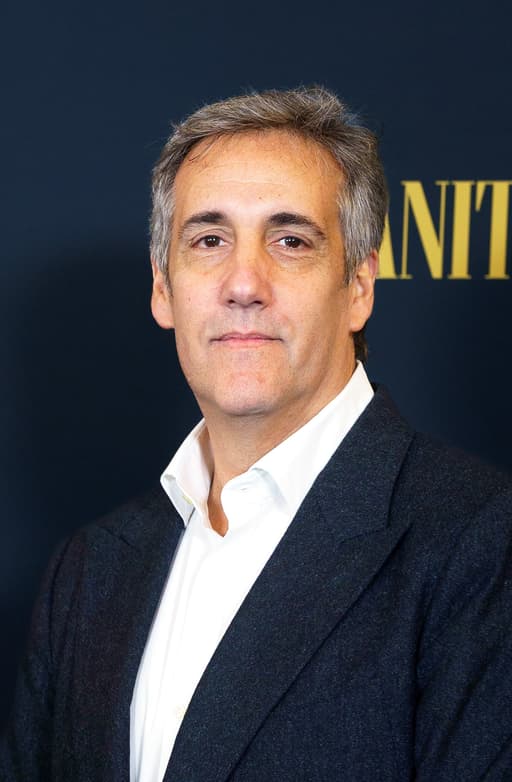
Michael Cohen
PERSON808 w/ Prince·3 w/ Claude
Woody Allen
PERSON736 w/ Prince·3 w/ Claude
Martha Stewart
PERSON719 w/ Prince·5 w/ Claude
Virginia Giuffre
PERSON687 w/ Prince·4 w/ Claude
Prince Charles
PERSON679 w/ Prince·9 w/ Claude
Joe Biden
PERSON655 w/ Prince·5 w/ Claude
John F. Kennedy
PERSON641 w/ Prince·6 w/ Claude
Stephen Hawking
PERSON627 w/ Prince·13 w/ Claude
Julie K. Brown
PERSON573 w/ Prince·5 w/ Claude