Back to Network















5
Shared Docs
5
Same-Page
5 / 5
Mentions
Document Mentions (5 shared documents)
2 mentions1 same-page
Page ?Same page
orrow," as David Ben-Gurion, the founder of the State of Israel, once said. "We shall never again be led as lambs to the slaughter," was the lesson Ben-Gurion and others drew from Auschwitz. Armed with nuclear weapons, the submarines are a signal to any enemy that the Jewish state itself would not be tota
via water," said Ami Ayalon, the deputy commander of the navy at the time, who would later become head of the Israeli domestic intelligence agency, Shin Bet. Strategic Depth Even then it was becoming apparent, according to Ayalon, "that in the Middle East things were heading toward nuclear weapons," es
2 mentions1 same-page
Page ?Same page
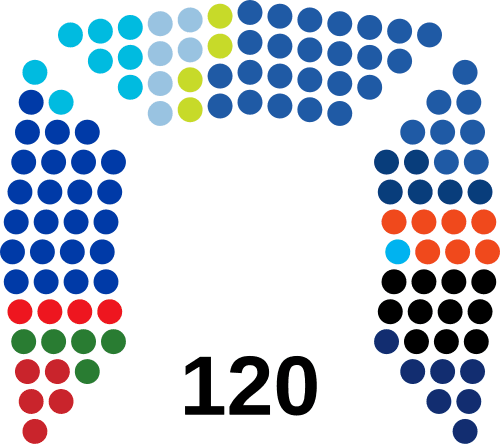
res might bring Labor back to power. There was no prospect he’d win an outright majority in the 120-seat Knesset. No one had ever done that, not even Ben-Gurion in his political heyday. From 1948, Israel’s political landscape had been populated by at least a dozen-or-so parties, mostly a reflection of the var
h their lives. Yet there were signs of trouble. The PLO leaders’ relocation to Tunis had reduced their direct influence. But the briefings I got from Shin Bet officers made it clear that some young West Bankers had begun trying to organize attacks against police, soldiers and Israeli civilians. The settleme
2 mentions1 same-page
Page ?Same page
tructure, the economy, the internal security and the stability needed for an eventual state to succeed. He was trying to do for the Palestinians what Ben-Gurion had done before 1948. He and I met and talked often but discreetly — sometimes in his office in Ramallah, sometimes in mine, sometimes over dinner in
an and I withdrew into a side room to talk with the chief of staff, Gaby Ashkenazi, as well as the heads of military intelligence, the Mossad and and Shin Bet. We emphasized that no final decision on whether to attack had been taken. That would require a further meeting with the Group of Eight, and then the
Sponsored
2 mentions1 same-page
Page ?Same page
res might bring Labor back to power. There was no prospect he'd win an outright majority in the 120-seat Knesset. No one had ever done that, not even Ben-Gurion in his political heyday. From 1948, Israel's political landscape had been populated by at least a dozen-or-so parties, mostly a reflection of the var
h their lives. Yet there were signs of trouble. The PLO leaders' relocation to Tunis had reduced their direct influence. But the briefings I got from Shin Bet officers made it clear that some young West Bankers had begun trying to organize attacks against police, soldiers and Israeli civilians. The settleme
2 mentions1 same-page
Page ?Same page
tructure, the economy, the internal security and the stability needed for an eventual state to succeed. He was trying to do for the Palestinians what Ben-Gurion had done before 1948. He and I met and talked often but discreetly - sometimes in his office in Ramallah, sometimes in mine, sometimes over dinner in
an and I withdrew into a side room to talk with the chief of staff, Gaby Ashkenazi, as well as the heads of military intelligence, the Mossad and and Shin Bet. We emphasized that no final decision on whether to attack had been taken. That would require a further meeting with the Group of Eight, and then the
Sponsored
Mutual Connections (387)
Entities connected to both Ben-Gurion and Shin Bet
Benjamin Netanyahu
PERSON9 w/ Ben-Gurion·13 w/ Shin
Mossad
ORGANIZATION7 w/ Ben-Gurion·14 w/ Shin
Jerusalem
LOCATION8 w/ Ben-Gurion·11 w/ Shin
Shimon Peres
PERSON9 w/ Ben-Gurion·8 w/ Shin
Bashar al-Assad
PERSON7 w/ Ben-Gurion·9 w/ Shin
Likud
ORGANIZATION9 w/ Ben-Gurion·7 w/ Shin
Lebanon
LOCATION7 w/ Ben-Gurion·9 w/ Shin
Ehud Barak
PERSON7 w/ Ben-Gurion·9 w/ Shin
Fatah
ORGANIZATION7 w/ Ben-Gurion·8 w/ Shin
the West Bank
LOCATION7 w/ Ben-Gurion·8 w/ Shin
Bill Clinton
PERSON7 w/ Ben-Gurion·8 w/ Shin
George W. Bush
PERSON8 w/ Ben-Gurion·7 w/ Shin
Knesset
ORGANIZATION7 w/ Ben-Gurion·7 w/ Shin
Yasser Arafat
PERSON7 w/ Ben-Gurion·7 w/ Shin
Haifa
LOCATION7 w/ Ben-Gurion·7 w/ Shin
West Bank
LOCATION6 w/ Ben-Gurion·7 w/ Shin
Saddam Hussein
PERSON7 w/ Ben-Gurion·6 w/ Shin
Barack Obama
PERSON5 w/ Ben-Gurion·7 w/ Shin
Likudnik
PERSON6 w/ Ben-Gurion·6 w/ Shin
Bibi Netanyahu
PERSON6 w/ Ben-Gurion·6 w/ Shin