Back to Network




















5
Shared Docs
3
Same-Page
5 / 6
Mentions
Document Mentions (5 shared documents)
3 mentions1 same-page
Page ?Same page
ael Hamid Alkifaey One could reasonably argue that the golden opportunity for peace in the Middle East was blown away when Israeli Prime Minister Yitzhak Rabin was assassinated on Nov. 4, 1995. He was the only Israeli leader capable of making peace with the Palestinians, and was about to do so had it not b
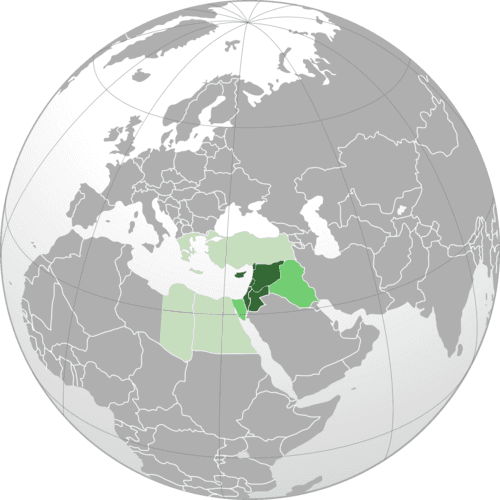
eft the southern flank exposed. Therefore, by holding the Levant, an eastern power protected itself against attacks from Mediterranean powers. The Levant was also important to any empire originating to the north or south of Israel. If Egypt decided to move beyond the Nile Basin and North Africa eastw
y over nearly 3,000 years. For convenience, we will use the term "Israel" to connote all of the Hebrew and Jewish entities that have existed in the Levant since the invasion of the region as chronicled in the Book of Joshua. As always, geopolitics requires a consideration of three dimensions: the int
2 mentions1 same-page
Page ?Same page
EFTA00659893 new one just across the Sinai desert gave rise to a new doctrine, most clearly enunciated by Israel's second great strategic thinker, Yitzhak Rabin. A hawkish dove, Rabin believed Israel needed to take advantage of the opportunity of peaceful relations with the Sunni Arab states of the "inner
Russia's power and influence in the Middle East and Mediterranean. Israel shares the U.S. interest in cutting off Iran and Russia's reach into the Levant. However, security considerations surrounding the unknown variables of a post-Assad Syria appear to have created a divide between U.S. and Israeli
2 mentions1 same-page
Page ?Same page
desires. Peacemaking on the Israeli side has never been -- and is likely never to be -- owned by the left. From Israeli premiers Menachem Begin to Yitzhak Rabin (breaker of bones during the first Intifada) to Ariel Sharon and Benjamin Netanyahu, the story of the Arab-Israeli negotiations is one of tough guy
ties to the Egyptian Muslim Brotherhood to achieve political legitimacy. When unrest spread into Syria and began to threaten Iran's position in the Levant, Hamas made a strategic decision to move away from the Iran-Syria axis, now on the decline, and to latch itself onto the new apparent regional tren
Sponsored
Page HOUSE_OVERSIGHT_030063
or two states. I doubt he'll ever locate his inner statesman — in which case the world's irritation and futile Palestinian unilateralism will harden. Yitzhak Rabin did not stand on the White House lawn with Yasser Arafat for a photo-op. The Israeli warrior understood the necessity of a two-state peace. To get th
Page: HOUSE_OVERSIGHT_030063 →Page HOUSE_OVERSIGHT_030088
, nationalism, and socialism. Ibn Khaldun's analysis was based on his native North Africa, but it can be adapted to the conditions of the Mashreq, or Levant-where similar historical conditions prevailed. As Albert Hourani explained in his magisterial History of the Arab Peoples (1991), 'asabiyya is a forc
Page: HOUSE_OVERSIGHT_030088 →Page HOUSE_OVERSIGHT_031839
Israel Hamid Alkifaey One could reasonably argue that the golden opportunity for peace in the Middle East was blown away when Israeli Prime Minister Yitzhak Rabin was assassinated on Nov. 4, 1995. He was the only Israeli leader capable of making peace with the Palestinians, and was about to do so had it not bee
Page: HOUSE_OVERSIGHT_031839 →Page HOUSE_OVERSIGHT_031858
icy over nearly 3,000 years. For convenience, we will use the term "Israel" to connote all of the Hebrew and Jewish entities that have existed in the Levant since the invasion of the region as chronicled in the Book of Joshua. As always, geopolitics requires a consideration of three dimensions: the intern
Page: HOUSE_OVERSIGHT_031858 →Sponsored
Mutual Connections (274)
Entities connected to both Yitzhak Rabin and Levant
Lebanon
LOCATION25 w/ Yitzhak·31 w/ Levant
Bashar al-Assad
PERSON24 w/ Yitzhak·30 w/ Levant
Barack Obama
PERSON25 w/ Yitzhak·29 w/ Levant
Benjamin Netanyahu
PERSON32 w/ Yitzhak·18 w/ Levant
United States
LOCATION22 w/ Yitzhak·28 w/ Levant
George W. Bush
PERSON20 w/ Yitzhak·24 w/ Levant
Saddam Hussein
PERSON20 w/ Yitzhak·23 w/ Levant
Tehran
LOCATION17 w/ Yitzhak·26 w/ Levant
Jerusalem
LOCATION26 w/ Yitzhak·16 w/ Levant
Damascus
LOCATION22 w/ Yitzhak·18 w/ Levant
Hosni Mubarak
PERSON20 w/ Yitzhak·19 w/ Levant
Bill Clinton
PERSON23 w/ Yitzhak·15 w/ Levant
Tunisia
LOCATION14 w/ Yitzhak·21 w/ Levant
Cairo
LOCATION14 w/ Yitzhak·20 w/ Levant
Fatah
ORGANIZATION22 w/ Yitzhak·11 w/ Levant
Middle East
LOCATION16 w/ Yitzhak·17 w/ Levant
Yasser Arafat
PERSON23 w/ Yitzhak·8 w/ Levant
Yemen
LOCATION9 w/ Yitzhak·21 w/ Levant
Mahmoud Abbas
PERSON17 w/ Yitzhak·13 w/ Levant
Terje Rod-Larsen
PERSON15 w/ Yitzhak·15 w/ Levant