Back to Network











4
Shared Docs
4
Same-Page
4 / 4
Mentions
Document Mentions (4 shared documents)
2 mentions1 same-page
Page ?Same page
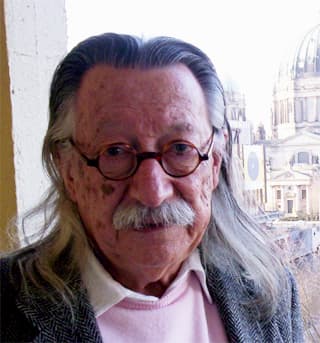
owing it to detect dissent and subversion as it arises and make resistance to state power futile. Orwell’s telescreens are the prototype, and in 1976 Joseph Weizenbaum, one of the gloomiest tech prophets of all time, warned my class of graduate students not to pursue automatic speech recognition because government s
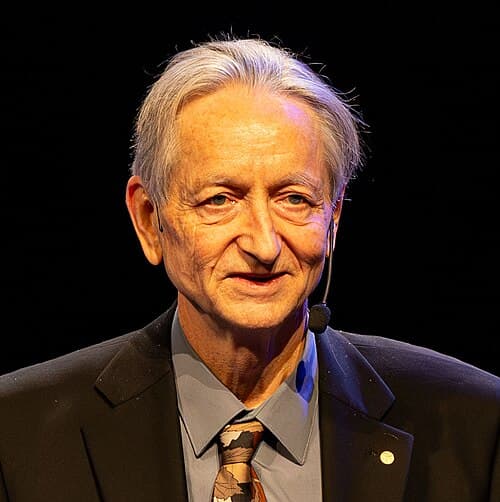
use, because this method lacks transparency. While recognizing the impressive achievements in deep learning by colleagues such as Michael Jordan and Geoffrey Hinton, he feels uncomfortable with this kind of opacity. He set out to understand the theoretical limitations of deep-learning systems and points out that
2 mentions1 same-page
Page ?Same page
e; the Fair Access to Science and Technology Research Act (FASTR); and the Open Humans Foundation. In his 1976 book Computer Power and Human Reason, Joseph Weizenbaum argued that machines should not replace Homo in situations requiring respect, dignity, or care, while others (author Pamela McCorduck and computer sc
euroscience communities need to interact closely, something that is happening already. Some of today’s greatest exponents of machine learning—such as Geoffrey Hinton, Zoubin Ghahramani, and Demis Hassabis—have backgrounds in cognitive neuroscience, and their success has been at least in part due to attempts to mod
2 mentions1 same-page
Page ?Same page
owing it to detect dissent and subversion as it arises and make resistance to state power futile. Orwell’s telescreens are the prototype, and in 1976 Joseph Weizenbaum, one of the gloomiest tech prophets of all time, warned my class of graduate students not to pursue automatic speech recognition because government s
use, because this method lacks transparency. While recognizing the impressive achievements in deep learning by colleagues such as Michael Jordan and Geoffrey Hinton, he feels uncomfortable with this kind of opacity. He set out to understand the theoretical limitations of deep-learning systems and points out that
Sponsored
2 mentions1 same-page
Page ?Same page
e; the Fair Access to Science and Technology Research Act (FASTR); and the Open Humans Foundation. In his 1976 book Computer Power and Human Reason, Joseph Weizenbaum argued that machines should not replace Homo in situations requiring respect, dignity, or care, while others (author Pamela McCorduck and computer sc
euroscience communities need to interact closely, something that is happening already. Some of today’s greatest exponents of machine learning—such as Geoffrey Hinton, Zoubin Ghahramani, and Demis Hassabis—have backgrounds in cognitive neuroscience, and their success has been at least in part due to attempts to mod
Sponsored
Mutual Connections (689)
Entities connected to both Joseph Weizenbaum and Geoffrey Hinton
Marc Rich
PERSON10 w/ Joseph·7 w/ Geoffrey
Stephen Hawking
PERSON10 w/ Joseph·5 w/ Geoffrey
Samantha Power
PERSON10 w/ Joseph·4 w/ Geoffrey
LB
Leon Black
PERSON7 w/ Joseph·6 w/ Geoffrey
Prince Andrew
PERSON7 w/ Joseph·5 w/ Geoffrey
Harvey Weinstein
PERSON7 w/ Joseph·5 w/ Geoffrey
Bill Gates
PERSON8 w/ Joseph·4 w/ Geoffrey
Robert Gates
PERSON8 w/ Joseph·4 w/ Geoffrey
Cambridge University
ORGANIZATION8 w/ Joseph·4 w/ Geoffrey
Alan Dershowitz
PERSON7 w/ Joseph·4 w/ Geoffrey
George W. Bush
PERSON6 w/ Joseph·5 w/ Geoffrey
Wilbur Ross
PERSON4 w/ Joseph·7 w/ Geoffrey
DB
Doug Band
PERSON7 w/ Joseph·4 w/ Geoffrey
Marvin Minsky
PERSON5 w/ Joseph·5 w/ Geoffrey
Turing
PERSON6 w/ Joseph·4 w/ Geoffrey
Feynman
PERSON6 w/ Joseph·4 w/ Geoffrey
Claude Shannon
PERSON6 w/ Joseph·4 w/ Geoffrey
Gordon Moore
PERSON8 w/ Joseph·2 w/ Geoffrey
Julie K. Brown
PERSON5 w/ Joseph·5 w/ Geoffrey
Wired
ORGANIZATION6 w/ Joseph·4 w/ Geoffrey