Back to People & Entities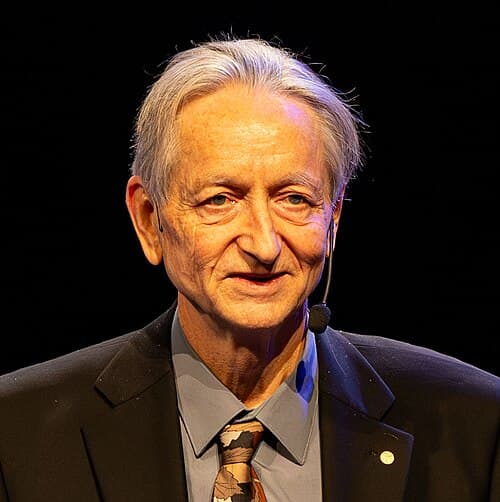


Geoffrey Hinton
Person
7
Total Mentions
7
Documents
768
Connected Entities
British-Canadian computer scientist and psychologist
Document Mentions (7)
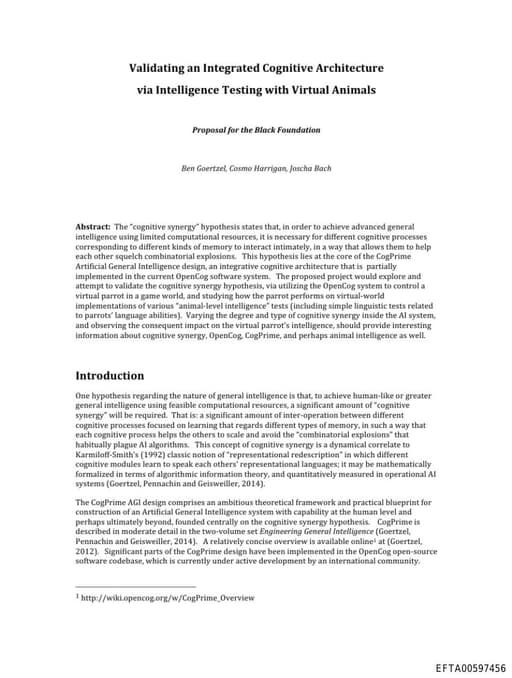
EFTA00597456.pdf
1 mentionEFTA00597456
. • Karmiloff-Smith, A. (1992). Beyond Modularity: A. Developmental Perspective on Cognitive Science. MIT Press/Bradford • Krizhevsky, Alex, and Geoffrey Hinton. "Learning multiple layers of features from tiny images? Computer Science Department University of Toronto, Tech. Rep (2009). • Murphy, R. A.; Mon
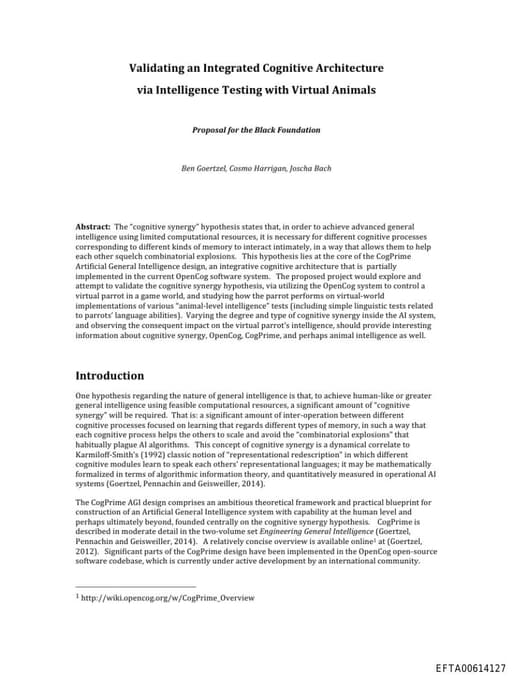
EFTA00614127.pdf
1 mentionEFTA00614127
. • Karmiloff-Smith, A. (1992). Beyond Modularity: A. Developmental Perspective on Cognitive Science. MIT Press/Bradford • Krizhevsky, Alex, and Geoffrey Hinton. "Learning multiple layers of features from tiny images? Computer Science Department University of Toronto, Tech. Rep (2009). • Murphy, R. A.; Mon
EFTA00624128.pdf
1 mentionEFTA00624128_sub_006 - EFTA00624128_555
ysis: Foundations and Applications. Springer-Verlag, 2005. HB06. Jeff Hawkins and Sandra Blakeslee. On Intelligence. Brown Walker, 2006. HDY+12. Geoffrey Hinton, Li Deng, bong Yu, George bald, Abdel rahman Mohamed, Navdeep Jaitly, Andrew Senior, Vincent Vanhoucke, Patrick Nguyen, and Tara Sainathand Brian Ki
Sponsored
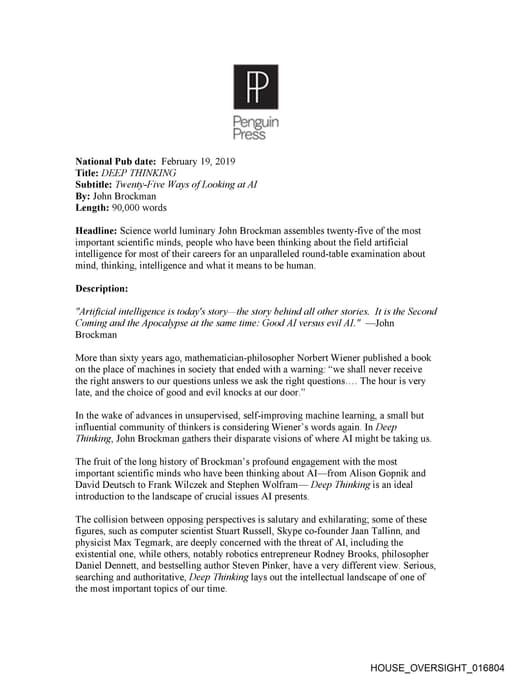
Brockman_DeepThinking.MS.pdf
1 mentionHOUSE_OVERSIGHT_016804_sub_001 - HOUSE_OVERSIGHT_016903
Source: House Oversight Committee
use, because this method lacks transparency. While recognizing the impressive achievements in deep learning by colleagues such as Michael Jordan and Geoffrey Hinton, he feels uncomfortable with this kind of opacity. He set out to understand the theoretical limitations of deep-learning systems and points out that
Brockman_DeepThinking.MS.pdf
1 mentionHOUSE_OVERSIGHT_016804_sub_002 - HOUSE_OVERSIGHT_016995
Source: House Oversight Committee
euroscience communities need to interact closely, something that is happening already. Some of today’s greatest exponents of machine learning—such as Geoffrey Hinton, Zoubin Ghahramani, and Demis Hassabis—have backgrounds in cognitive neuroscience, and their success has been at least in part due to attempts to mod
Brockman_DeepThinking.MS.pdf
1 mentionHOUSE_OVERSIGHT_016221_sub_001 - HOUSE_OVERSIGHT_016320
Source: House Oversight Committee
use, because this method lacks transparency. While recognizing the impressive achievements in deep learning by colleagues such as Michael Jordan and Geoffrey Hinton, he feels uncomfortable with this kind of opacity. He set out to understand the theoretical limitations of deep-learning systems and points out that
Sponsored
Brockman_DeepThinking.MS.pdf
1 mentionHOUSE_OVERSIGHT_016221_sub_002 - HOUSE_OVERSIGHT_016412
Source: House Oversight Committee
euroscience communities need to interact closely, something that is happening already. Some of today’s greatest exponents of machine learning—such as Geoffrey Hinton, Zoubin Ghahramani, and Demis Hassabis—have backgrounds in cognitive neuroscience, and their success has been at least in part due to attempts to mod
Sponsored
Connected Entities(20 of 768)
Wilbur Ross
PersonUnited States 39th Secretary of Commerce
7 docs7 co-mentions
Marc Rich
PersonAmerican commodities trader (1934–2013)
7 docs7 co-mentions
LB
Leon Black
PersonAmerican billionaire businessman (born 1951)
6 docs6 co-mentions
Stephen Hawking
PersonBritish theoretical physicist, cosmologist and author (1942–2018)
5 docs5 co-mentions
Berkeley
LocationCity in Alameda County, California, United States
5 docs5 co-mentions
Eric Trump
PersonAmerican businessman and reality television personality (born 1984)
5 docs5 co-mentions
Artificial General Intelligence
OrganizationOrganization referenced in documents
5 docs5 co-mentions
George W. Bush
PersonPresident of the United States from 2001 to 2009
5 docs5 co-mentions
Prince Andrew
PersonThird child of Queen Elizabeth II and Prince Philip, Duke of Edinburgh (born 1960)
5 docs5 co-mentions
Marvin Minsky
PersonAmerican cognitive scientist (1927-2016)
5 docs5 co-mentions
Harvey Weinstein
PersonAmerican film producer and sex offender (born 1952)
5 docs5 co-mentions
Julie K. Brown
PersonAmerican journalist
5 docs5 co-mentions
Walter Pitts
PersonAmerican logician and computational neuroscientist (1923-1969)
4 docs4 co-mentions
Daniel Dennett
PersonAmerican philosopher (1942–2024)
4 docs4 co-mentions
PI
Pitts
PersonSurname reference in Epstein-related documents
4 docs4 co-mentions
Leibniz
PersonSurname reference in documents
4 docs4 co-mentions
Neumann
PersonSurname reference in documents
4 docs4 co-mentions
Heinz von Foerster
PersonAustrian-American scientist and cybernetician (1911-2002)
4 docs4 co-mentions
Richard Feynman
PersonAmerican theoretical physicist (1918–1988)
4 docs4 co-mentions
Designing Reality
OrganizationOrganization referenced in documents
4 docs4 co-mentions