Back to People & Entities


Document Mentions (7)
EFTA02711248.pdf
1 mentionEFTA02711248
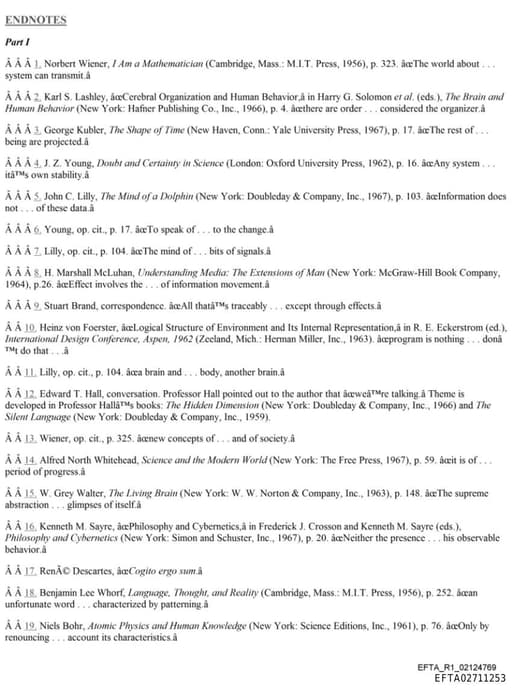
they belong to the people quoted in the book: Norbert Wiener, Karl Lashley, George Kubler, J. Z. Young, John Lilly, Marshall McLuhan, Stewart Brand, Heinz von Foerster, Edward T. Hall, Alfred North Whitehead, W. Grey Walter, Kenneth Sayre, Rene Descartes, Benjamin Lee Whorf, Niels Bohr, Rene Dubos, D. and K. Stanl
EFTA02711253.pdf
1 mentionEFTA02711253
involves the . . . of information movement.' A A A 9. Stuart Brand, correspondence. AceAll thataTMs traceably ... except through effects.' A A J.. Heinz von Foerster, aceLogical Structure of Environment and Its Internal Representation,' in R. E. Eckerstrom (ed.), International Design Conference, Aspen, 1962 (Zeel
EFTA02712843.pdf
1 mentionEFTA02712843
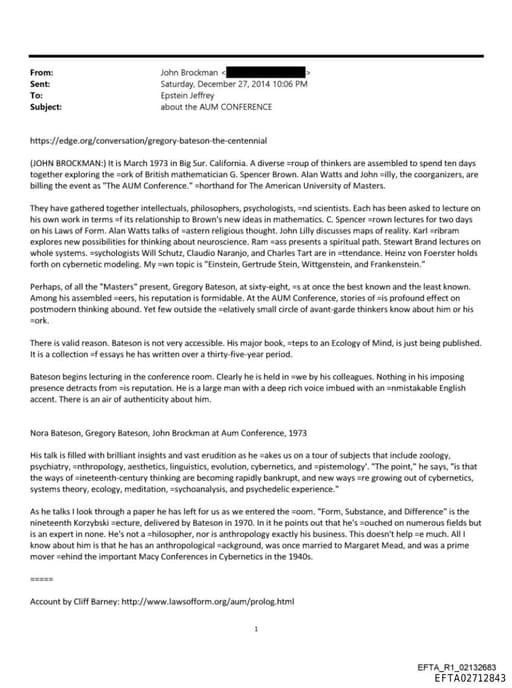
presents a spiritual path. Stewart Brand lectures on whole systems. =sychologists Will Schutz, Claudio Naranjo, and Charles Tart are in =ttendance. Heinz von Foerster holds forth on cybernetic modeling. My =wn topic is "Einstein, Gertrude Stein, Wittgenstein, and Frankenstein." Perhaps, of all the "Masters" prese
Sponsored
Brockman_DeepThinking.MS.pdf
1 mentionHOUSE_OVERSIGHT_016804_sub_001 - HOUSE_OVERSIGHT_016903
Source: House Oversight Committee
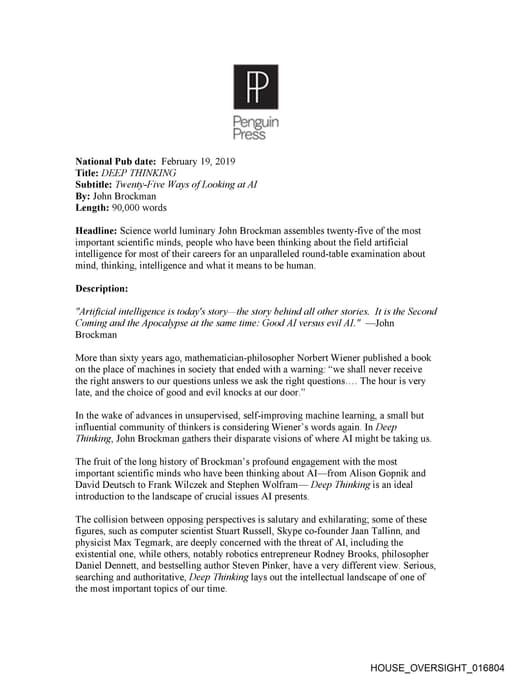
d systems—1* order Cybernetics— moved to the Cybernetics of observing systems—2"™ order Cybernetics—or “the Cybernetics of Cybernetics”, as coined by Heinz von Foerster, who joined the Macy conferences in the mid 1950s, and spearheaded the new movement. Cybernetics, rather than disappearing, was becoming metabolized
Brockman_DeepThinking.MS.pdf
1 mentionHOUSE_OVERSIGHT_016804_sub_002 - HOUSE_OVERSIGHT_016995
Source: House Oversight Committee
ge making, creativity, and the use of programming as artistic tools. The deep connections between science and art had already been noted by the late Heinz von Foerster, one of the architects of cybernetics, who worked with Norbert Wiener from the mid-1940s and in the 1960s founded the field of second-order cyberneti
Brockman_DeepThinking.MS.pdf
1 mentionHOUSE_OVERSIGHT_016221_sub_001 - HOUSE_OVERSIGHT_016320
Source: House Oversight Committee
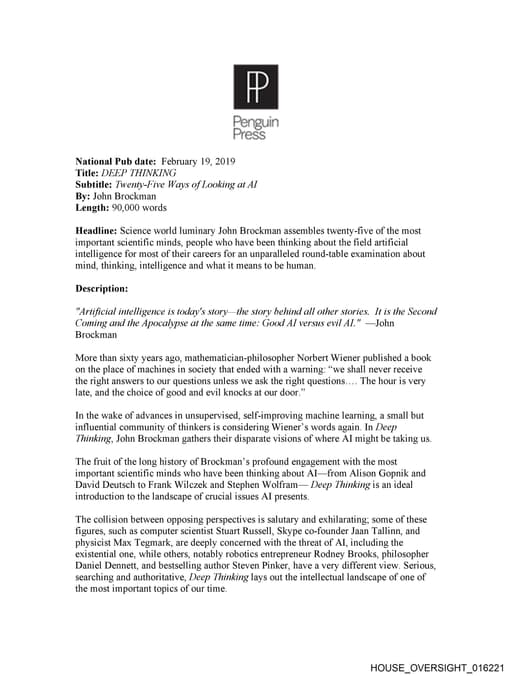
d systems—1* order Cybernetics— moved to the Cybernetics of observing systems—2"™ order Cybernetics—or “the Cybernetics of Cybernetics”, as coined by Heinz von Foerster, who joined the Macy conferences in the mid 1950s, and spearheaded the new movement. Cybernetics, rather than disappearing, was becoming metabolized
Sponsored
Brockman_DeepThinking.MS.pdf
1 mentionHOUSE_OVERSIGHT_016221_sub_002 - HOUSE_OVERSIGHT_016412
Source: House Oversight Committee
ge making, creativity, and the use of programming as artistic tools. The deep connections between science and art had already been noted by the late Heinz von Foerster, one of the architects of cybernetics, who worked with Norbert Wiener from the mid-1940s and in the 1960s founded the field of second-order cyberneti
Sponsored
Connected Entities(20 of 724)
Julie K. Brown
PersonAmerican journalist
7 docs7 co-mentions
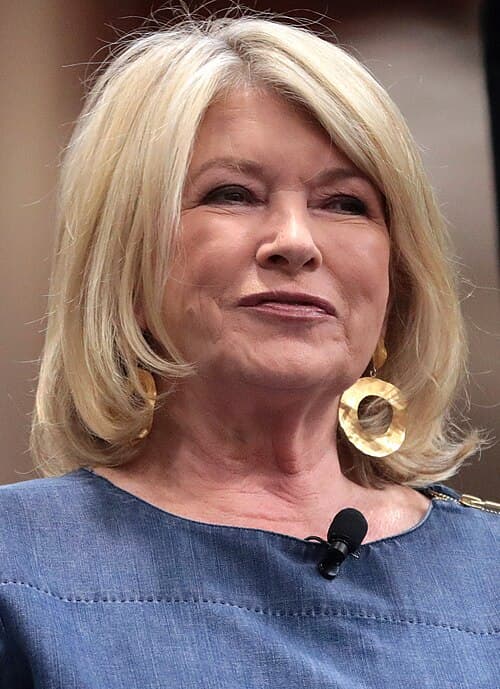
Martha Stewart
PersonAmerican businesswoman, writer, TV personality (born 1941)
6 docs6 co-mentions
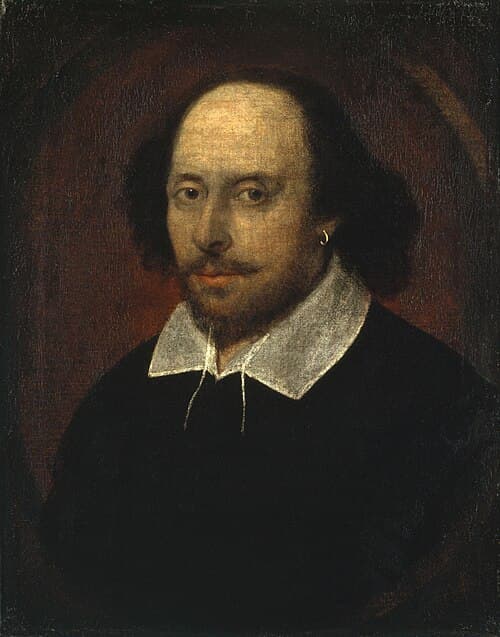
William Shakespeare
PersonEnglish playwright and poet (1564–1616)
6 docs6 co-mentions
John Brockman
PersonAmerican literary agent
6 docs6 co-mentions
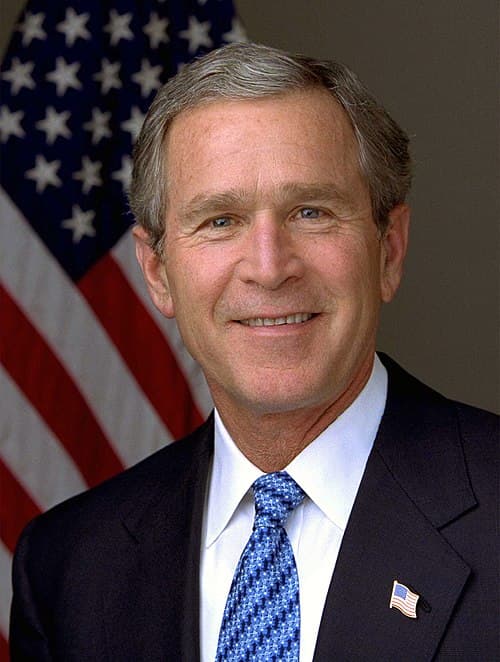
George W. Bush
PersonPresident of the United States from 2001 to 2009
6 docs6 co-mentions
Berkeley
LocationCity in Alameda County, California, United States
5 docs5 co-mentions
Gertrude Stein
PersonAmerican author (1874–1946)
5 docs5 co-mentions
Marc Rich
PersonAmerican commodities trader (1934–2013)
5 docs5 co-mentions
Alan Dershowitz
PersonAmerican lawyer, author, and art collector (born 1938)
5 docs5 co-mentions
WI
Wiener
PersonSurname reference in Epstein-related documents
5 docs5 co-mentions
BA
Bateson
PersonSurname reference in documents
5 docs5 co-mentions
Stewart Brand
PersonAmerican writer (born 1938)
5 docs5 co-mentions
CG
Clement Greenberg
PersonPerson referenced in documents
4 docs4 co-mentions
Daniel Kahneman
PersonIsraeli-American psychologist and economist (1934–2024)
4 docs4 co-mentions
AG
Ace Greenberg
PersonAmerican executive, former CEO and Chairman of Bear Stearns, who hired Jeffrey Epstein in 1976 (1927-2014)
4 docs4 co-mentions
James Watt
PersonBritish engineer (1736–1819)
4 docs4 co-mentions
Eric Trump
PersonAmerican businessman and reality television personality (born 1984)
4 docs4 co-mentions
Joseph McCarthy
PersonAmerican politician (1908–1957)
4 docs4 co-mentions
J. Robert Oppenheimer
PersonAmerican theoretical physicist, scientific director of the Manhattan Project (1904-1967)
4 docs4 co-mentions
Wilbur Ross
PersonUnited States 39th Secretary of Commerce
4 docs4 co-mentions