Back to Network






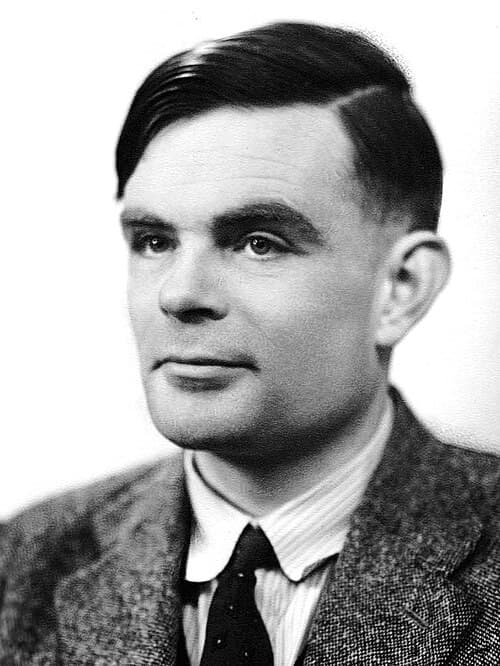

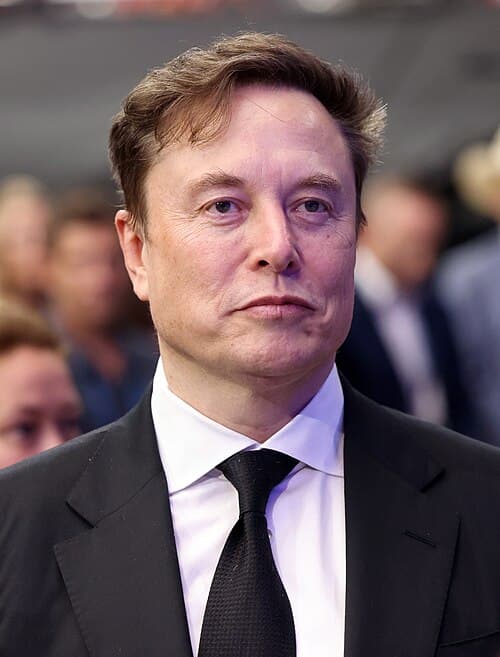

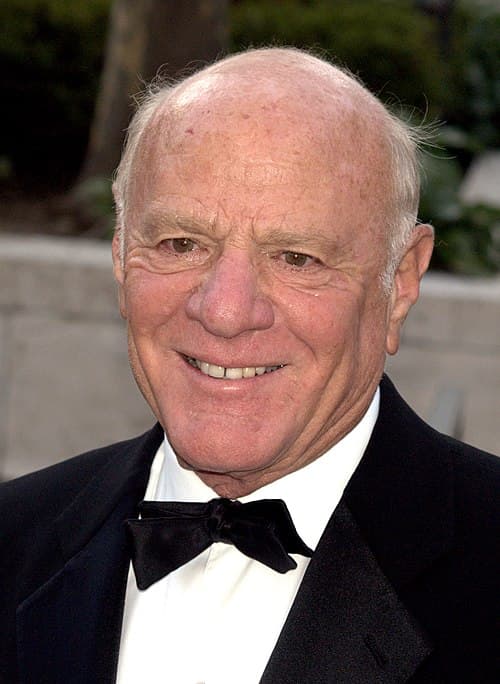


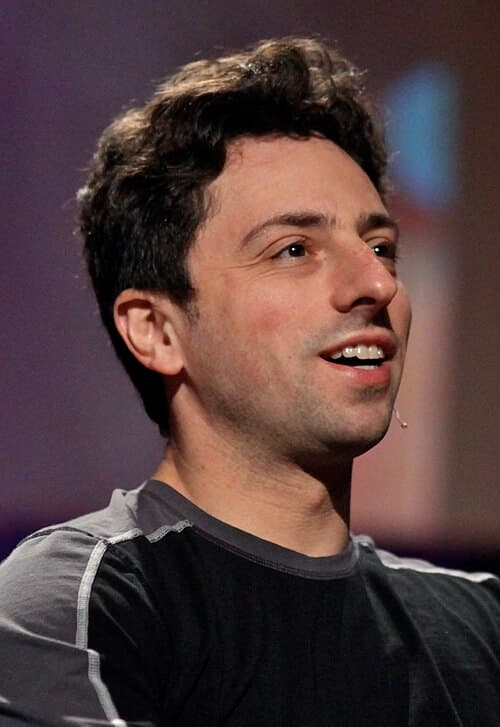

5
Shared Docs
5
Same-Page
5 / 5
Mentions
Document Mentions (5 shared documents)
2 mentions1 same-page
Page ?Same page
first, paradigm to bring exponential growth in computing o fe) ° d eo a @ se ao) < ° 1) @ ep) — @ o. w < 2 ra po > ae oO W Moore’s Law Extended by Ray Kurzweil HOUSE_OVERSIGHT_015709 20 Are the Androids Dreaming Yet? nephew of the famous American mathematician Edward Kasner, and subsequently the inspiration
How Alan Turing invented the computer, helped win World War II and left us with one of the greatest puzzles of our time: are humans simply computers or are we more t
2 mentions1 same-page
Page ?Same page
means the Turing test is not passable by a machine. Humans can create; machines cannot. That is the difference. Will Computers Take over the World? Ray Kurzweil, the American inventor and futurologist, has suggested computers are getting exponentially faster and will soon reach such immense power they became
, or even a physicist, could grasp! That thing is a Turing Machine. We will examine this next. HOUSE_OVERSIGHT_015898 Chapter 10 TURING’S MACHINE Alan Turing HOUSE_OVERSIGHT_015899 ‘A computer would deserve to be called intelligent if it could deceive a human into believing that it was human.” Alan Turi
2 mentions1 same-page
Page ?Same page
r Arafat and Shimon Pérez Learning Swedish, The Two Ronnies Scripts of the World Chinese Traditional and Simplified Great Comedy Videos Credited to Ray Kurzweil, CC1 Kind permission Intel Press Department kathclick, www.bigstock.com Opensource project encapsulated into widget by James Tagg Illustrated by J
In the nearly hundred years of investigation since Wallas proposed this theorem, we have not moved much further forward in understanding creativity. Alan Turing described his thoughts on the science behind creativity in a short piece he wrote about decision making: “When making a decision of minor importance
Sponsored
2 mentions1 same-page
Page ?Same page
Adam Kahane and Peter Senge. Solving Tough Problems: An Open Way of Talking, Listening, and Creating New Realities. Berrett-Koehler. 2004. Kur06. Ray Kurzweil. The Singularity is Near. 2006. Kur12. Ray Kurzweil. Bow to Create a Mint Viking, 2012. Kyb97. H. Kyburg. Bayesian and non-bayesian evidential up
XI. Taylor and P. Stone. Cross-domain transfer for reinforcement learning. Proc. of the 24th International Conf. on Machine Learning, 2007. Tur50. Alan Turing. Computing machinery and intelligence. Mind, 59, 1950. Tur77. Valentin F. Thrchin. The Phenomenon of Science. Columbia University Press, 1977. TV9
2 mentions1 same-page
Page ?Same page
4. Adam Kahane and Peter Senge. Solving Tough Problems: An Open Way of Talking, Listening, and Creating New Realities. Berrett-Koehler, 2004. Kur06. Ray Kurzweil. The Singularity is Near. 2006. Kurl2. Ray Kurzweil. How to Create a Mind. Viking, 2012. Kyb97. H. Kyburg. Bayesian and non-bayesian evidential upd
7. M. Taylor and P. Stone. Cross-domain transfer for reinforcement learning. Proc. of the 24th International Conf. on Machine Learning, 2007. Tur50. Alan Turing. Computing machinery and intelligence. Mind, 59, 1950. Tur77. Valentin F. Turchin. The Phenomenon of Science. Columbia University Press, 1977. TV96
Sponsored
Mutual Connections (666)
Entities connected to both Ray Kurzweil and Alan Turing
Alan Dershowitz
PERSON13 w/ Ray·34 w/ Alan
Jeffrey Epstein
PERSON25 w/ Ray·21 w/ Alan
Stephen Hawking
PERSON9 w/ Ray·27 w/ Alan
Prince Andrew
PERSON18 w/ Ray·12 w/ Alan
Prince Charles
PERSON16 w/ Ray·14 w/ Alan
Eric Trump
PERSON13 w/ Ray·13 w/ Alan
George W. Bush
PERSON8 w/ Ray·13 w/ Alan
Turing
PERSON3 w/ Ray·17 w/ Alan
Marc Rich
PERSON8 w/ Ray·10 w/ Alan
Elon Musk
PERSON13 w/ Ray·5 w/ Alan
Harvey Weinstein
PERSON4 w/ Ray·12 w/ Alan
Barry Diller
PERSON11 w/ Ray·5 w/ Alan
Samantha Power
PERSON2 w/ Ray·14 w/ Alan
Michael Douglas
PERSON6 w/ Ray·9 w/ Alan
Sergey Brin
PERSON12 w/ Ray·3 w/ Alan
Daniel Dennett
PERSON5 w/ Ray·10 w/ Alan
Penrose
PERSON4 w/ Ray·11 w/ Alan
Martin Nowak
PERSON11 w/ Ray·3 w/ Alan
ET
Emmy Taylor
PERSON12 w/ Ray·2 w/ Alan
Nathan Myhrvold
PERSON10 w/ Ray·3 w/ Alan