Back to Network

















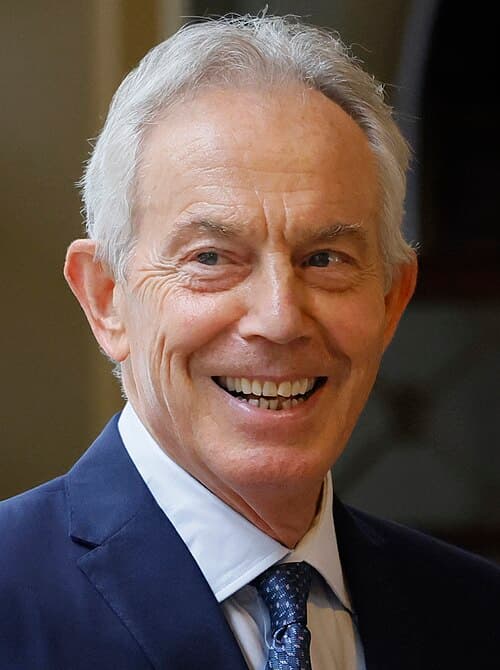
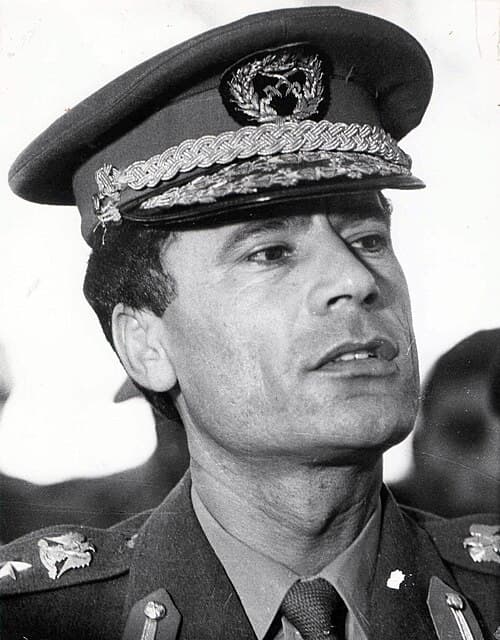

3
Shared Docs
3
Same-Page
8 / 3
Mentions
Document Mentions (3 shared documents)
4 mentions1 same-page
Page ?Same page
stead to the government; and 4) indicated that the Syrian people supported him -- otherwise he would not be in his position. Does this suggest that Bashar is out of touch with political reality? Or -- as he has watched with dismay the fate of his fellow Arab dictators in Egypt, Tunisia, and Yemen, who
n killed, a worrying sign that the violence is accelerating. Yet, in a remarkable interview this month with ABC's Barbara Walters, Syrian President Bashar al-Assad 1) denied the extent of violence in his beleaguered country; 2) disputed the evidence in a U.N. report charging him and his government with crimes ag
st Israel. In fact, in a rare public appearance this month, Hezbollah chief Hassan Nasrallah declared that his party will remain defiant, side with Assad's Syria and never relinquish its arms. If Hamas, an ally of Hezbollah, Syria and Iran (the so-called Resistance Axis), truly intends to reinvent it
overnment says and does on the matter. Hence, a large onus likely will rest on Washington as well as on Hamas. Bilal Y. Saab is Visiting Fellow at the James Martin Center for Nonproliferation Studies at the Monterey Institute of International Studies. EFTA_R1_01992708 EFTA02681493 10 Article 3. NYT The End, fo
4 mentions1 same-page
Page ?Same page
directly, it is now engulfing Syria, and Syria is basically their only true ally in the region. And it is our estimation that [President Bashar al- Assad's] days are numbered. It's a matter not of if, but when. Now, can we accelerate that? We're working with the world community to try to do that. It
. But more directly, it is now engulfing Syria, and Syria is basically their only true ally in the region. And it is our estimation that [President Bashar al- Assad's] days are numbered. It's a matter not of if, but when. Now, can we accelerate that? We're working with the world community to try to do
rected toward Syria and its weapons of mass destruction. When the Syrian uprising began more than a year ago, few predicted the regime of President Bashar al-Assad would ever teeter toward collapse. Now, though, the demise of Damascus's current leadership appears inevitable, and Syria's revolution will likely
d tons of sarin agent and mustard gas stockpiled that could be used in air-dropped bombs and artillery shells, according to information compiled by the James Martin Center.") Given its robust chemical weapons arsenal and its perceived need to deter Israel, Syria has long been suspected of having an active biological
3 mentions1 same-page
Page ?Same page
Spring has plunged Syria into a bloody civil war. Now, with allegations flying that the Russians are supplying helicopters to the odious regime of Bashar al-Assad in Syria, a familiar debate is underway. Should we intervene? There can be no morally credible argument against intervention—by someone. Leaving S
nt conflict, such as the Homs and Hama regions. The bases are said to be guarded by elite forces, but whether they would stay at their posts if the Assad regime collapses cannot be predicted." An additional concern is the manner in which the different kinds of chemical weapons are stored. EFTA006718
a regime meltdown. One aspect of the problem is the scale and scope of Syria's chemical weapons programme. Leonard Spector, executive director of the James Martin Center for Nonproliferation Studies based in Washington, notes that: "Syria has one of the world's largest chemical weapon arsenals, including traditional
Sponsored
Mutual Connections (22)
Entities connected to both Bashar al-Assad and the James Martin Center
Barack Obama
PERSON235 w/ Bashar·3 w/ the
Lebanon
LOCATION166 w/ Bashar·3 w/ the
Benjamin Netanyahu
PERSON154 w/ Bashar·2 w/ the
Tehran
LOCATION149 w/ Bashar·3 w/ the
Damascus
LOCATION137 w/ Bashar·3 w/ the
Terje Rod-Larsen
PERSON122 w/ Bashar·2 w/ the
Hosni Mubarak
PERSON122 w/ Bashar·2 w/ the
Middle East
LOCATION114 w/ Bashar·2 w/ the
Tunisia
LOCATION112 w/ Bashar·2 w/ the
Saddam Hussein
PERSON108 w/ Bashar·2 w/ the
Jeffrey Epstein
PERSON105 w/ Bashar·2 w/ the
Vladimir Putin
PERSON96 w/ Bashar·2 w/ the
Fatah
ORGANIZATION75 w/ Bashar·2 w/ the
Mahmoud Abbas
PERSON69 w/ Bashar·2 w/ the
North Korea
LOCATION58 w/ Bashar·2 w/ the
Muslim Brotherhood
ORGANIZATION49 w/ Bashar·2 w/ the
Prince Charles
PERSON41 w/ Bashar·2 w/ the
United Nations
ORGANIZATION32 w/ Bashar·2 w/ the
Tony Blair
PERSON28 w/ Bashar·2 w/ the
Qaddafi
PERSON28 w/ Bashar·2 w/ the