Back to Network

















4
Shared Docs
4
Same-Page
4 / 4
Mentions
Document Mentions (4 shared documents)
2 mentions1 same-page
Page ?Same page
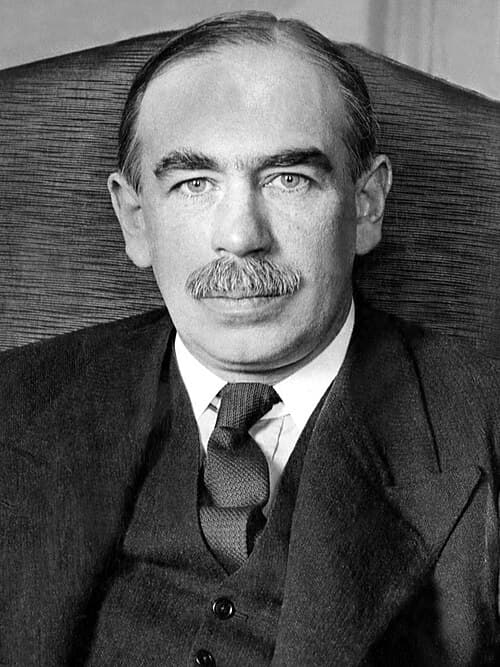
tually the entire world was pulled into the fire. “In the autumn of 1919, in which I write, we are at the dead season of our fortunes,” the economist John Maynard Keynes wrote after the Paris Peace Conference settled The Great War, dimly aware that an even deader season lay somewhere in the future in the form o
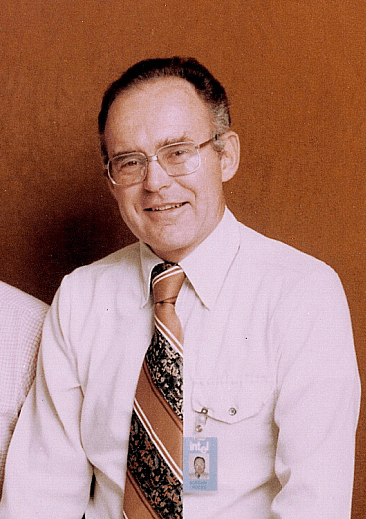
in the year 2020, (Redmond: Microsoft Research Publication 2008) 108 This how commonplace magic: Chris Mack, “The Multiple Lives of Moore’s Law: Why Gordon Moore’s grand prediction has endured for 50 years”, IEEE Spectrum (March 30, 2015), accessible online. 83 HOUSE_OVERSIGHT_018315 constantly. But when Gord
2 mentions1 same-page
Page ?Same page
ine power. Looking back on his formative years, before Europe was ground up in the First World War, the powerfully brilliant and sensitive economist John Maynard Keynes bitterly recalled the iron certainty of his set of friends and their confident, diffident arrogance: “We were not aware that civilization was
LA to New York would be about 1,000 per week, jet airline pioneers assumed. Would more than a few hundred engineers really want their own computers, Gordon Moore asked at a dinner party shortly after Intel proposed putting his chips in the first PCs. Yes, it turned out. Billions more. Highway designers call th
2 mentions1 same-page
Page ?Same page
ovement of goods is largely automated, as are many services. What’s left for humans to do? In 1930—long before the advent of computers, let alone AI—John Maynard Keynes wrote, in an essay called “Economic Possibilities for our Grandchildren,” that as a result of improvements in productivity, society could prod
ystopian scenarios prevail; we generally end up muddling along somewhere in between. But history also suggests that we don’t have to wait on history. Gordon Moore in 1965 was able to use five years of the doubling of the specifications of integrated circuits to project what turned out to be fifty years of expon
Sponsored
2 mentions1 same-page
Page ?Same page
ovement of goods is largely automated, as are many services. What’s left for humans to do? In 1930—long before the advent of computers, let alone AI—John Maynard Keynes wrote, in an essay called “Economic Possibilities for our Grandchildren,” that as a result of improvements in productivity, society could prod
ystopian scenarios prevail; we generally end up muddling along somewhere in between. But history also suggests that we don’t have to wait on history. Gordon Moore in 1965 was able to use five years of the doubling of the specifications of integrated circuits to project what turned out to be fifty years of expon
Sponsored
Mutual Connections (445)
Entities connected to both John Maynard and Gordon Moore
Marc Rich
PERSON7 w/ John·8 w/ Gordon
Stephen Hawking
PERSON5 w/ John·8 w/ Gordon
Keynes
PERSON9 w/ John·4 w/ Gordon
Samantha Power
PERSON5 w/ John·8 w/ Gordon
George W. Bush
PERSON8 w/ John·4 w/ Gordon
Joseph Weizenbaum
PERSON4 w/ John·8 w/ Gordon
Silicon Valley
LOCATION4 w/ John·7 w/ Gordon
Alan Dershowitz
PERSON6 w/ John·5 w/ Gordon
DB
Doug Band
PERSON6 w/ John·5 w/ Gordon
Prince Andrew
PERSON5 w/ John·5 w/ Gordon
Renaissance
ORGANIZATION5 w/ John·5 w/ Gordon
Barry Diller
PERSON4 w/ John·6 w/ Gordon
Harvey Weinstein
PERSON5 w/ John·5 w/ Gordon
Prince Charles
PERSON4 w/ John·6 w/ Gordon
Feynman
PERSON5 w/ John·4 w/ Gordon
Goethe
PERSON5 w/ John·4 w/ Gordon
Robert Gates
PERSON3 w/ John·6 w/ Gordon
Julie K. Brown
PERSON6 w/ John·3 w/ Gordon
Earth
LOCATION5 w/ John·4 w/ Gordon
Thomas Jefferson
PERSON5 w/ John·4 w/ Gordon