Back to Network














4
Shared Docs
4
Same-Page
4 / 10
Mentions
Document Mentions (4 shared documents)
4 mentions1 same-page
Page ?Same page
ake c to denote algorithmic information measured on some reference Turing machine, and F(X) to denote what appears on the second tape of a two-tape Turing machine t time-steps after placing X on its first tape. Other more naturalistic computational models are also possible here and are discussed extens
g used as the basis for an open-source software project called OpenCog, which is being worked on by software developers around the world. Right now OpenCog embodies only a percentage of the overall CogPrime design as described here. But if OpenCog continues to attract sufficient funding or volunteer in
the ideas presented here are not mere armchair speculation - they are currently being used as the basis for an open-source software project called OpenCog, which is being worked on by software developers around the world. Right now OpenCog embodies only a percentage of the overall CogPrime design as d
validated or refuted via practice. (As a related note: here and there in this book, we will refer to the "current" CogPrime implementation (in the OpenCog framework); in all cases this refers to OpenCog as of late 2013.) To state one believes one knows a workable path to creating a human-level (and po
4 mentions1 same-page
Page ?Same page
take c to denote algorithmic information measured on some reference Turing machine, and F(X) to denote what appears on the second tape of a two-tape Turing machine ¢ time-steps after placing X on its first tape. Other more naturalistic computational models are also possible here and are discussed extensi
ing used as the basis for an open-source software project called OpenCog, which is being worked on by software developers around the world. Right now OpenCog embodies only a percentage of the overall CogPrime design as described here. But if OpenCog continues to attract sufficient funding or volunteer inte
at the ideas presented here are not mere armchair speculation — they are currently being used as the basis for an open-source software project called OpenCog, which is being worked on by software developers around the world. Right now OpenCog embodies only a percentage of the overall CogPrime design as des
be validated or refuted via practice. (As a related note: here and there in this book, we will refer to the "current" CogPrime implementation (in the OpenCog framework); in all cases this refers to OpenCog as of late 2013.) To state one believes one knows a workable path to creating a human-level (and pot
3 mentions1 same-page
Page ?Same page
lready encompassed by Legg and Hutter's definition because one may bias the distribution of environments within the latter by considering different Turing machines underlying the Kohnogorov complexity. However this is not a general equivalence because the Solomonoff-Levin measure intrinsically EFTA006
pause to briefly discuss some of the practicalities of work done with the OpenCog system currently implementing parts of the CogPrime architecture. OpenCog, the open-source software framework underlying the "OpenCogPrime" (currently partial) implementation of the CogPrime architecture, has been used for
cessful, this will provide an outstanding platform for ongoing AGI development, as well as a visually appealing and immediately meaningful demo for OpenCog. Specific, particularly simple tasks that are the focus of this project team's current work at time of writing include: • Watch another character
Sponsored
3 mentions1 same-page
Page ?Same page
already encompassed by Legg and Hutter’s definition because one may bias the distribution of environments within the latter by considering different Turing machines underlying the Kolmogorov complexity. However this is not a general equivalence because the Solomonoff-Levin measure intrinsically HOUSE_OV
the present work, it has also been used to control virtual agents in virtual worlds [GEA08]. Prototype work done during 2007-2008 involved using an OpenCog variant called the Open- PetBrain to control virtual dogs in a virtual world (see Figure 6.6 for a screenshot of an OpenPetBrain-controlled virtual d
level of capability will be achievable by simply interposing DeS- TIN (or some other system in its place) as a perception /action “black box” between OpenCog and a robot. Some preliminary experiments in this direction have already been carried out, con- necting the OpenPetBrain to a Nao robot using simpler
Sponsored
Mutual Connections (404)
Entities connected to both Turing and OpenCog
Jeffrey Epstein
PERSON44 w/ Turing·86 w/ OpenCog
Joscha Bach
PERSON14 w/ Turing·40 w/ OpenCog
Marc Rich
PERSON16 w/ Turing·23 w/ OpenCog
Stephen Hawking
PERSON29 w/ Turing·9 w/ OpenCog
Alan Dershowitz
PERSON27 w/ Turing·6 w/ OpenCog
Marvin Minsky
PERSON18 w/ Turing·13 w/ OpenCog
George W. Bush
PERSON18 w/ Turing·10 w/ OpenCog
Novamente LLC
ORGANIZATION2 w/ Turing·23 w/ OpenCog
Earth
LOCATION18 w/ Turing·5 w/ OpenCog
Wilbur Ross
PERSON16 w/ Turing·6 w/ OpenCog
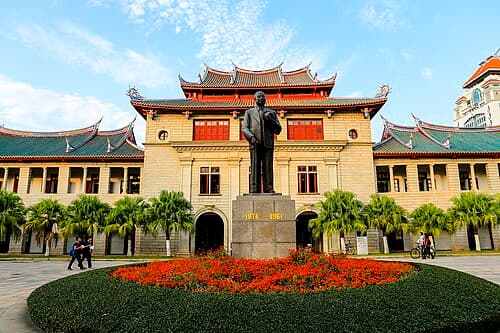
Xiamen
LOCATION2 w/ Turing·19 w/ OpenCog
Prince Charles
PERSON15 w/ Turing·5 w/ OpenCog
Michael Douglas
PERSON13 w/ Turing·7 w/ OpenCog
DeSTIN
ORGANIZATION4 w/ Turing·16 w/ OpenCog
Alan Turing
PERSON17 w/ Turing·2 w/ OpenCog
Prince Andrew
PERSON13 w/ Turing·6 w/ OpenCog
Penrose
PERSON17 w/ Turing·2 w/ OpenCog
Novamente
ORGANIZATION2 w/ Turing·16 w/ OpenCog
CogPrime
ORGANIZATION4 w/ Turing·14 w/ OpenCog
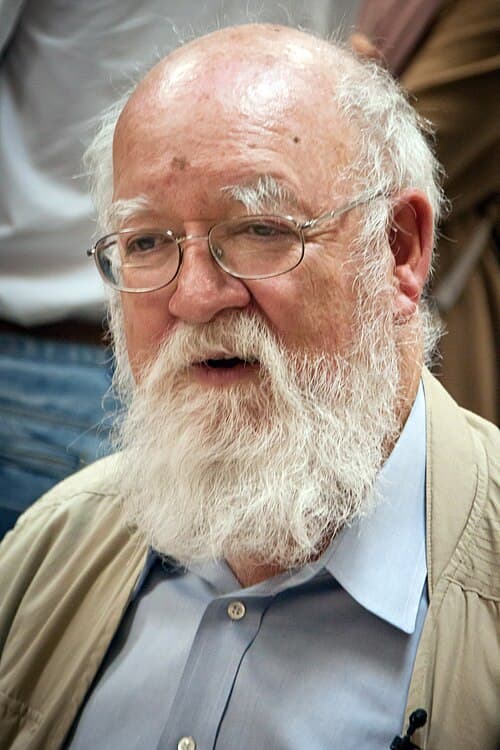
Daniel Dennett
PERSON14 w/ Turing·4 w/ OpenCog