Back to Network












4
Shared Docs
4
Same-Page
7 / 4
Mentions
Document Mentions (4 shared documents)
3 mentions1 same-page
Page ?Same page
more complex than they first appear. They are infinite, yet there are different infinities, and they have meaning. The smallpox example above and the Turing numbers we will discover shortly suggest numbers do have meaning independent of culture and language. The next two chapters will show us what happens
away their secrets. The Enigma machine was an elegant compromise between a truly unbreakable code and a simple cipher. Unfortunately for the Germans, Turing was on the side of the Allies. In the 1930s almost all mathematics, accounting, and code-breaking were performed by humans using pencil and paper. I
d rules often part company. Yet, we all assume math- ematics is free of such uncertainty. Let me tell you this is not so. The brilliant mathematician Kurt Gédel proved see eee this when he was just 22, and his proof a es says something fundamental about the 4 rs /, : nature of knowledge. a has The story of h
3 mentions1 same-page
Page ?Same page
a topic absent from a typical computer-science education: the physical configuration of a 118 HOUSE_OVERSIGHT_016921 computation. Von Neumann and Turing posed their questions as theoretical studies, because it was beyond the technology of their day to realize them. But with the convergence of communic
ce in terms of feedback, exploring the cultural rather than engineering uptake of this idea. She begins with primary readings by Wiener, Shannon, and Turing and then pivots from the scientists and engineers to the work and ideas of artists, feminists, postmodern theorists. Her goal: to come up with a new
g to it. What was constraining to cybernetics was the presumption of an analogy of structure between the controller and the controlled. By the 1930s, Kurt Gédel, Alonzo Church, and Alan Turing had all described universal systems of computation, in which the computation required no structural analogy to functi
3 mentions1 same-page
Page ?Same page
a topic absent from a typical computer-science education: the physical configuration of a 118 HOUSE_OVERSIGHT_016338 computation. Von Neumann and Turing posed their questions as theoretical studies, because it was beyond the technology of their day to realize them. But with the convergence of communic
ce in terms of feedback, exploring the cultural rather than engineering uptake of this idea. She begins with primary readings by Wiener, Shannon, and Turing and then pivots from the scientists and engineers to the work and ideas of artists, feminists, postmodern theorists. Her goal: to come up with a new
g to it. What was constraining to cybernetics was the presumption of an analogy of structure between the controller and the controlled. By the 1930s, Kurt Gédel, Alonzo Church, and Alan Turing had all described universal systems of computation, in which the computation required no structural analogy to functi
Sponsored
2 mentions1 same-page
Page ?Same page
se could be preprogrammed with every theory we could ever discover within it. (There would be no arbitrary problems.) This argument neatly sidesteps Turing’s theorem by specifying there is no such thing as an arbitrary problem - a random problem picked from the infinite set of problems. At the same time,
in Your Hand Number Quiz 1 Number Quiz 2 Donate a Random Number Which Number is Random Smallpox Virus Smallpox Child Chapter 9 Donald Rumsfeld Kurt Gédel, any Likeness is Accidental IAF Rule 164 PM Amazon Listing for PM 1+1 =2, PM (1) 1+1 = 2, PM (2) Konigsberg’s Bridges Peano Portrait Beer Mug, Ta
Sponsored
Mutual Connections (402)
Entities connected to both Turing and Kurt Gédel
Stephen Hawking
PERSON29 w/ Turing·4 w/ Kurt
Alan Dershowitz
PERSON27 w/ Turing·4 w/ Kurt
Samantha Power
PERSON19 w/ Turing·3 w/ Kurt
George W. Bush
PERSON18 w/ Turing·4 w/ Kurt
Harvey Weinstein
PERSON17 w/ Turing·4 w/ Kurt
Earth
LOCATION18 w/ Turing·3 w/ Kurt
Alan Turing
PERSON17 w/ Turing·4 w/ Kurt
Marvin Minsky
PERSON18 w/ Turing·2 w/ Kurt
Marc Rich
PERSON16 w/ Turing·3 w/ Kurt
Penrose
PERSON17 w/ Turing·2 w/ Kurt
Wilbur Ross
PERSON16 w/ Turing·3 w/ Kurt
Bill Gates
PERSON15 w/ Turing·3 w/ Kurt
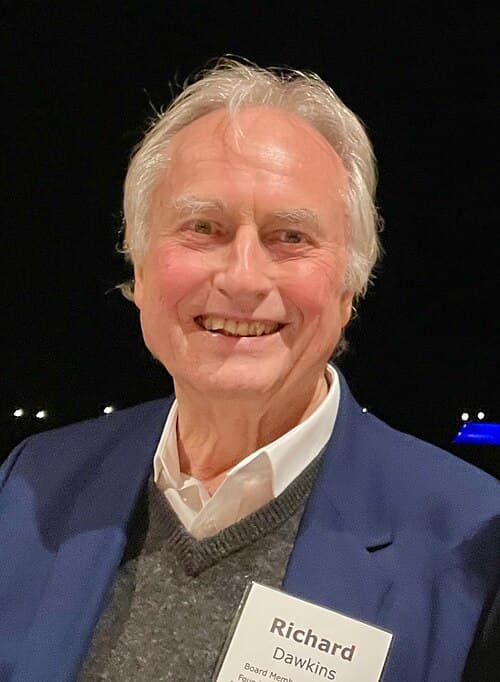
Richard Dawkins
PERSON15 w/ Turing·3 w/ Kurt
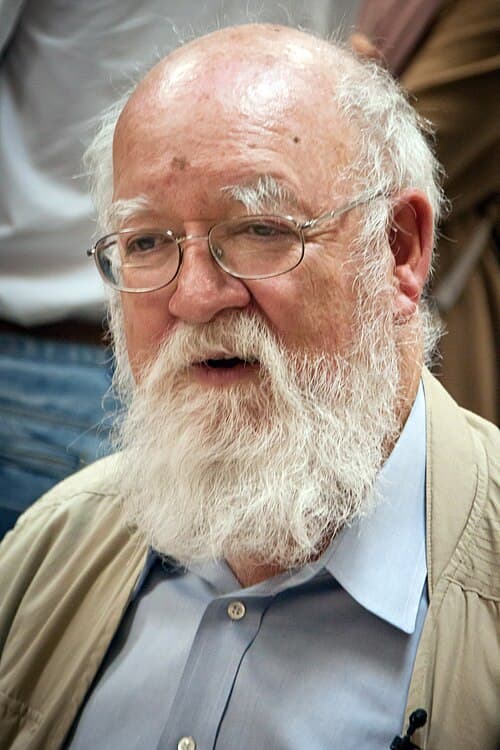
Daniel Dennett
PERSON14 w/ Turing·4 w/ Kurt
Robert Gates
PERSON14 w/ Turing·3 w/ Kurt
Prince Charles
PERSON15 w/ Turing·2 w/ Kurt
Prince Andrew
PERSON13 w/ Turing·4 w/ Kurt
Quantum
ORGANIZATION12 w/ Turing·4 w/ Kurt
Eric Trump
PERSON11 w/ Turing·4 w/ Kurt
Michael Douglas
PERSON13 w/ Turing·2 w/ Kurt