Back to Network











5
Shared Docs
5
Same-Page
9 / 5
Mentions
Document Mentions (5 shared documents)
3 mentions1 same-page
Page ?Same page
at they tend to favor or ignore. Surely (ding!)?, any man who could beat a woman at being perceived to be a woman would be an intelligent agent. What Turing did not foresee is the power of deep-learning AI to acquire this wealth of information in an exploitable form without having to understand it. Turing
the CIRL framework, one can formulate and solve the off-switch problem—that is, the problem of how to prevent a robot from disabling its off-switch. (Turing may rest easier.) A robot that’s uncertain about human preferences actually benefits from being switched off, because it understands that the human w
er straddled as those tools did from each other. Wiener was a giant of the earlier era and built on the tools developed since the time of Newton and Leibniz to describe and analyze continuous processes in the physical world. In 1948 he published Cybernetics, a word he coined to describe the science of com
3 mentions1 same-page
Page ?Same page
a topic absent from a typical computer-science education: the physical configuration of a 118 HOUSE_OVERSIGHT_016921 computation. Von Neumann and Turing posed their questions as theoretical studies, because it was beyond the technology of their day to realize them. But with the convergence of communic
ce in terms of feedback, exploring the cultural rather than engineering uptake of this idea. She begins with primary readings by Wiener, Shannon, and Turing and then pivots from the scientists and engineers to the work and ideas of artists, feminists, postmodern theorists. Her goal: to come up with a new
nd systems thinking that had been around since the Enlightenment (boosted by the Industrial Revolution). The names in this lineage include Descartes, Leibniz, Sadi Carnot, Clausius, Maxwell, and Watt. Wiener’s coinage nonetheless had profound cultural effects.4”7 The ubiquity today of the prefix “cyber-” c
3 mentions1 same-page
Page ?Same page
at they tend to favor or ignore. Surely (ding!)?, any man who could beat a woman at being perceived to be a woman would be an intelligent agent. What Turing did not foresee is the power of deep-learning AI to acquire this wealth of information in an exploitable form without having to understand it. Turing
the CIRL framework, one can formulate and solve the off-switch problem—that is, the problem of how to prevent a robot from disabling its off-switch. (Turing may rest easier.) A robot that’s uncertain about human preferences actually benefits from being switched off, because it understands that the human w
er straddled as those tools did from each other. Wiener was a giant of the earlier era and built on the tools developed since the time of Newton and Leibniz to describe and analyze continuous processes in the physical world. In 1948 he published Cybernetics, a word he coined to describe the science of com
Sponsored
3 mentions1 same-page
Page ?Same page
a topic absent from a typical computer-science education: the physical configuration of a 118 HOUSE_OVERSIGHT_016338 computation. Von Neumann and Turing posed their questions as theoretical studies, because it was beyond the technology of their day to realize them. But with the convergence of communic
ce in terms of feedback, exploring the cultural rather than engineering uptake of this idea. She begins with primary readings by Wiener, Shannon, and Turing and then pivots from the scientists and engineers to the work and ideas of artists, feminists, postmodern theorists. Her goal: to come up with a new
nd systems thinking that had been around since the Enlightenment (boosted by the Industrial Revolution). The names in this lineage include Descartes, Leibniz, Sadi Carnot, Clausius, Maxwell, and Watt. Wiener’s coinage nonetheless had profound cultural effects.4”7 The ubiquity today of the prefix “cyber-” c
2 mentions1 same-page
Page ?Same page
se could be preprogrammed with every theory we could ever discover within it. (There would be no arbitrary problems.) This argument neatly sidesteps Turing’s theorem by specifying there is no such thing as an arbitrary problem - a random problem picked from the infinite set of problems. At the same time,
tial calculus despite it being invented independently by Gottfried Leibniz. Newton managed to have himself appointed to chair the committee reviewing Leibniz’s work and determine who had come up with the idea first. Unsurprisingly, the committee found for Newton! We see Newton's laws of reflection and tra
Sponsored
Mutual Connections (695)
Entities connected to both Turing and Leibniz
Jeffrey Epstein
PERSON44 w/ Turing·15 w/ Leibniz
Stephen Hawking
PERSON29 w/ Turing·5 w/ Leibniz
Alan Dershowitz
PERSON27 w/ Turing·5 w/ Leibniz
Earth
LOCATION18 w/ Turing·6 w/ Leibniz
Samantha Power
PERSON19 w/ Turing·5 w/ Leibniz
George W. Bush
PERSON18 w/ Turing·5 w/ Leibniz
Harvey Weinstein
PERSON17 w/ Turing·6 w/ Leibniz
Marc Rich
PERSON16 w/ Turing·6 w/ Leibniz
Seth Lloyd
PERSON18 w/ Turing·4 w/ Leibniz
DB
Doug Band
PERSON11 w/ Turing·11 w/ Leibniz
Marvin Minsky
PERSON18 w/ Turing·4 w/ Leibniz
Alan Turing
PERSON17 w/ Turing·3 w/ Leibniz
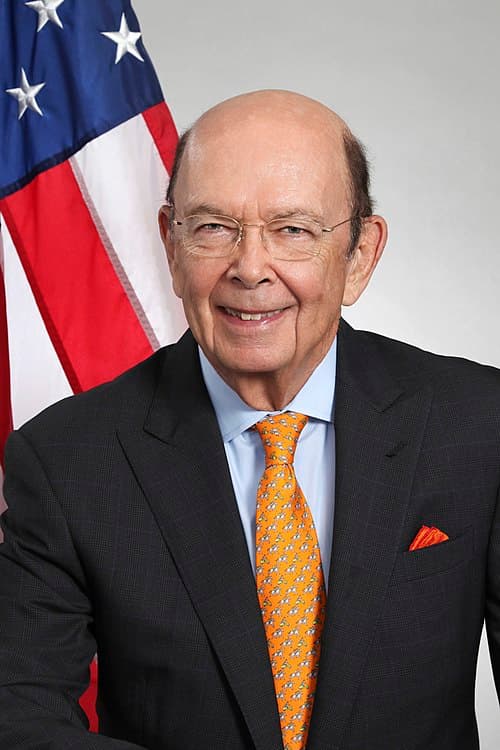
Wilbur Ross
PERSON16 w/ Turing·4 w/ Leibniz
Penrose
PERSON17 w/ Turing·3 w/ Leibniz
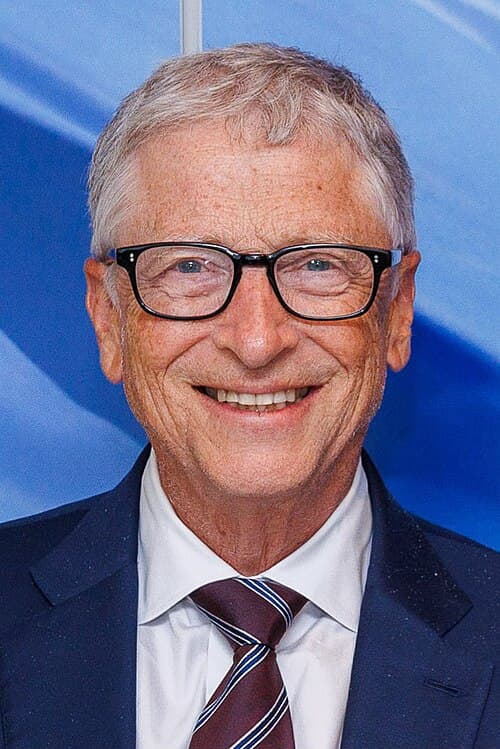
Bill Gates
PERSON15 w/ Turing·4 w/ Leibniz
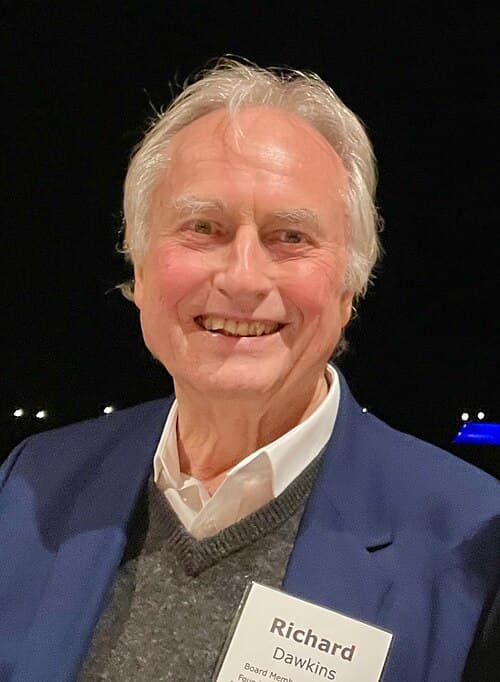
Richard Dawkins
PERSON15 w/ Turing·4 w/ Leibniz
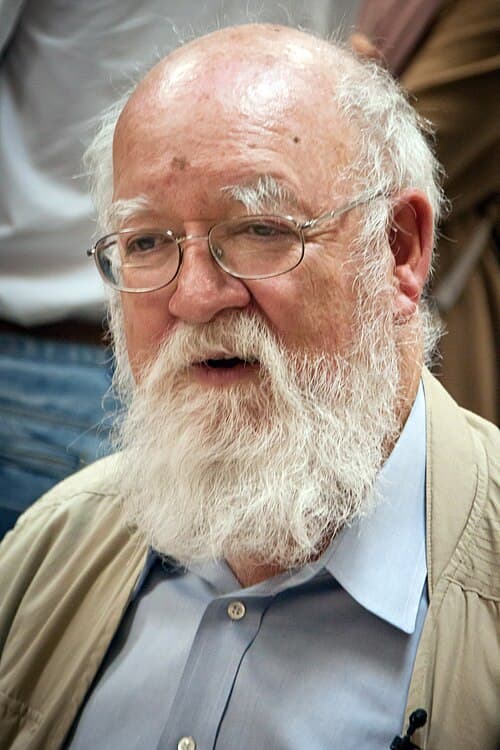
Daniel Dennett
PERSON14 w/ Turing·5 w/ Leibniz
Robert Gates
PERSON14 w/ Turing·5 w/ Leibniz
Quantum
ORGANIZATION12 w/ Turing·7 w/ Leibniz
John Brockman
PERSON13 w/ Turing·5 w/ Leibniz