Back to Network
















11
Shared Docs
11
Same-Page
16 / 11
Mentions
Document Mentions (11 shared documents)
3 mentions1 same-page
Page ?Same page
ry is reflected in the West's schizophrenic response to it. The Nixon administration eagerly sought better relations with China under Mao, and when Deng Xiaoping doubled down by opening up the country, the West applauded the change. The United States generously accepted Chinese products into its markets, all
better relations with China under Mao, and when Deng Xiaoping doubled down by opening up the country,
ess of civilizational fusion. EFTA00325887 In contrast to China and India, Russia has held back from thoroughly embracing modernity, even though the Soviet Union started modernizing before China and India. Russia hesitated to join the World Trade Organization and has not yet accepted that ungrudging particip
3 mentions1 same-page
Page ?Same page
question is whether the pallbearers will be crying." For Keating, the 20th-century leader exerting most influence on the coming century is China's Deng Xiaoping. "If you look at the other figures of the century, Roosevelt, Churchill, Stalin and Mao, none will leave the legacy in terms of the 21st century th
"If you look at the other figures of the century, Roosevelt, Churchill, Stalin and Mao, none will leave the legacy in terms of the 21st century that Deng leaves," he says. "He walked away from the ideology of the Communist Party just as effectively as Mikhail Gorbachev walked away from the essence of
leaves," he says. "He walked away from the ideology of the Communist Party just as effectively as Mikhail Gorbachev walked away from the essence of the Soviet Union." By 2050 Keating sees a world order with nations in terms of gross domestic product in this hierarchy: (1) China, (2) US, (3) India, (4) Japan, (5
3 mentions1 same-page
Page ?Same page
ry is reflected in the West's schizophrenic response to it. The Nixon administration eagerly sought better relations with China under Mao, and when Deng Xiaoping doubled down by opening up the country, the West applauded the change. The United States generously accepted Chinese products into its markets, all
better relations with China under Mao, and when Deng Xiaoping doubled down by opening up the country,
ntuate the process of civilizational fusion. In contrast to China and India, Russia has held back from thoroughly embracing modernity, even though the Soviet Union started modernizing before China and India. Russia hesitated to join the World Trade Organization and has not yet accepted that ungrudging particip
Sponsored
3 mentions1 same-page
Page ?Same page
atisfying the material needs of its people. The people along China's east coast, in particular, have been able to enjoy rapidly growing prosperity. Deng Xiaoping, the reformer, deliberately chose to develop the coastal regions first. Under Deng's policies, the losers were primarily in rural areas and in west
ar, have been able to enjoy rapidly growing prosperity. Deng Xiaoping, the reformer, deliberately chose to develop the coastal regions first. Under Deng's policies, the losers were primarily in rural areas and in western China. Nowadays, when Shanghai residents take a taxi they can learn about the
Taft and his isolationist followers. Later, President Richard M. Nixon's engagement with China and President Ronald Reagan's diplomatic outreach to the Soviet Union won out over the skepticism of cold-war conservatives. After the 9/11 attacks, President George W. Bush ushered in a new level of infighting, from
3 mentions1 same-page
Page ?Same page
for Constructive Vigilance HOUSE_OVERSIGHT_020459 Introduction For three and a half decades following the end of the Maoist era, China adhered to Deng Xiaoping’s policies of “reform and opening to the outside world” and “peaceful development.” After Deng retired as paramount leader, these principles continued
the end of the Maoist era, China adhered to Deng Xiaoping’s policies of “reform and opening to the outside world” and “peaceful development.” After Deng retired as paramount leader, these principles continued to guide China’s international behavior in the leadership eras of Jiang Zemin and Hu Jintao.
an visitors were pleased by the post-1972 developments in US-China relations, seeing them as likely to be both a source of strategic leverage against the Soviet Union and a stabilizing influence in Asian affairs. The government in Beijing was seen as preoccupied with domestic affairs, no longer opposed to the prese
2 mentions1 same-page
Page ?Same page
man Trials. The Wall Street Journal <https://www.wsj.corn/articles/china-greenlights-another-covid-19-vaccine-for-human- testing-11601445463> (9/30, Deng, Subscription Publication, 7.57M) reports Chinese drugmaker Shenzhen ICangtai, which is collaborating with AstraZeneca PLC on production of a corona
ing team engaged in talks with the Afghan government "comprises 21 men, most with graying beards and biographies that date back to the fight against the Soviet Union." Nearly all of the negotiators are "pulled from the organization's old guard, and many served in the militant group's shadow government." EFTA0013
Sponsored
2 mentions1 same-page
Page ?Same page
and a former attorney general." INTERNATIONAL NEWS China Approves Another Vaccine For Human Trials. EFTA00135745 The Wall Street Journal (9/30, Deng, Subscription Publication, 7.57M) reports Chinese drugmaker Shenzhen Kangtai, which is collaborating with AstraZeneca PLC on production of a coronav
ng team engaged in talks with the Afghan government "comprises 21 men, most with graying beards and biographies that date back to the fight against the Soviet Union." Nearly all of the negotiators are "pulled from the organization's old guard, and many served in the militant group's shadow government." Several
2 mentions1 same-page
Page ?Same page
icitors general and a former attorney general." INTERNATIONAL NEWS China Approves Another Vaccine For Human Trials. The Wall Street Journal (9/30, Deng, Subscription Publication, 7.57M) reports Chinese drugmaker Shenzhen Kangtai, which is collaborating with AstraZeneca PLC on production of a corona
ng team engaged in talks with the Afghan government "comprises 21 men, most with graying beards and biographies that date back to the fight against the Soviet Union." Nearly all of the negotiators are "pulled from the organization's old guard, and many served in the militant group's shadow government." Several
2 mentions1 same-page
Page ?Same page
ch is controlled by the Communist Party, published an analysis on the Web site of the business magazine Caijing. According to Agence France-Presse, Deng argued that President Hu Jintao and Prime Minister Wen Jiabao "had `created more problems than achievements' during their 10 years in power. ... Th
ior Saud royals. But what may seem safe to them is dangerous for the country. Saudi Arabia these days is all too reminiscent of the dying decade of the Soviet Union, during which one decrepit leader succeeded another, from Leonid Brezhnev to Yuri Andropov to Konstantin Chernenko, before a younger and more open-
Sponsored
2 mentions1 same-page
Page ?Same page
nomy was roughly five times that of the People's Republic. Forty years later, as a result of the industrial revolution unleashed by Mao's successor Deng Xiao- ping, it is conceivable that China could overtake America within a decade. This is a feat the Soviet Union never came close to achieving. Mor
r. The opening to China is a story Kissinger has told before: how he and Nixon had discerned that country could become a strategic counterweight to the Soviet Union; how he secretly flew to China after feigning illness in Pakistan; how he and Premier Zhou Enlai hammered out the diplomatic basis for EFTA_R1_020
Sponsored
Mutual Connections (1,728)
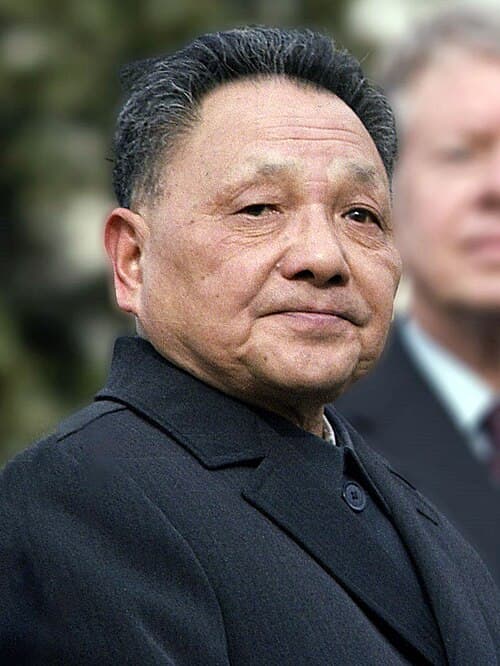
Entities connected to both Deng Xiaoping and the Soviet Union
George W. Bush
PERSON82 w/ Deng·80 w/ the
Barack Obama
PERSON40 w/ Deng·88 w/ the
Jeffrey Epstein
PERSON65 w/ Deng·63 w/ the
United States
LOCATION35 w/ Deng·86 w/ the
Bill Clinton
PERSON39 w/ Deng·72 w/ the
Marc Rich
PERSON40 w/ Deng·57 w/ the
LB
Leon Black
PERSON29 w/ Deng·61 w/ the
Joe Biden
PERSON22 w/ Deng·55 w/ the
Ghislaine Maxwell
PERSON52 w/ Deng·23 w/ the
Donald Trump
PERSON29 w/ Deng·45 w/ the
Michael Cohen
PERSON24 w/ Deng·50 w/ the
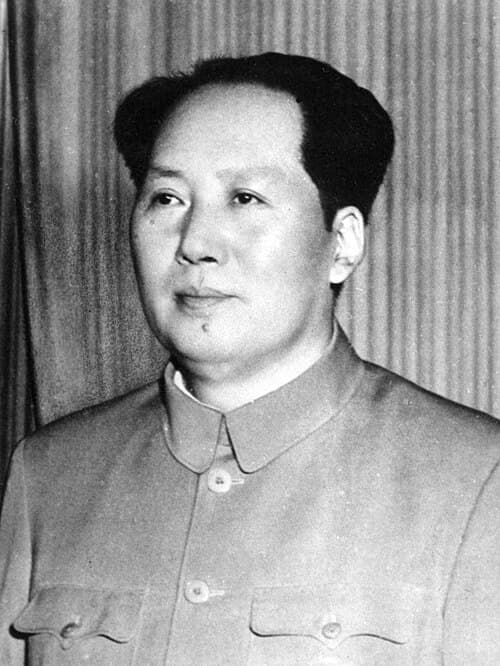
Mao Zedong
PERSON60 w/ Deng·12 w/ the
Bashar al-Assad
PERSON18 w/ Deng·51 w/ the
Vladimir Putin
PERSON17 w/ Deng·51 w/ the
Department of Justice
ORGANIZATION17 w/ Deng·50 w/ the
Prince Andrew
PERSON18 w/ Deng·48 w/ the
Lebanon
LOCATION14 w/ Deng·51 w/ the
Middle East
LOCATION17 w/ Deng·47 w/ the
Stephen Hawking
PERSON18 w/ Deng·45 w/ the
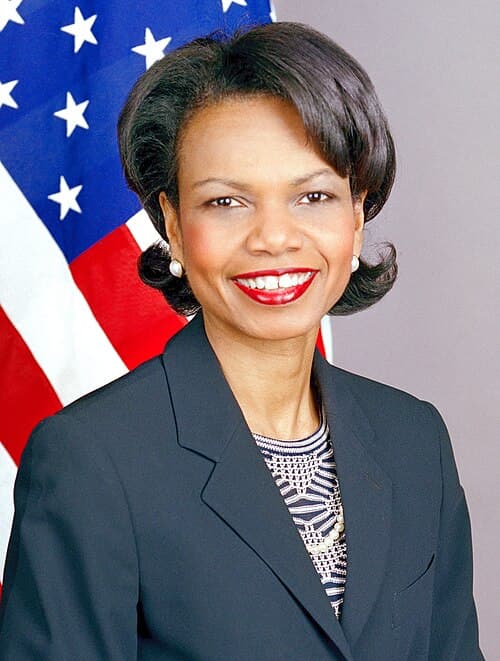
Condoleezza Rice
PERSON39 w/ Deng·24 w/ the