HOUSE_OVERSIGHT_020447_sub_001 - HOUSE_OVERSIGHT_020546
Document Information
Bates Range
HOUSE_OVERSIGHT_020447_sub_001 - HOUSE_OVERSIGHT_020546
Pages
100
Source
House Oversight Committee
Original Filename
Chinese influence_american interests - Hoover - 11.29.18.pdf
Document Content
Page 1 - HOUSE_OVERSIGHT_020447
Chinese Influence & American Interests PROMOTING CONSTRUCTIVE VIGILANCE A PUBLICATION OF THE HOOVER INSTITUTION HOUSE_OVERSIGHT_020447
Page 2 - HOUSE_OVERSIGHT_020448
Chinese Influence & American Interests PROMOTING CONSTRUCTIVE VIGILANCE Report of the Working Group on Chinese Influence Activities in the United States Co-Chairs LARRY DIAMOND ORVILLE SCHELL Senior Fellow Arthur Ross Director The Hoover Institution Center on US-China Relations Stanford University Asia Society HOOVER INSTITUTION PRESS STANFORD UNIVERSITY | STANFORD, CALIFORNIA HOUSE_OVERSIGHT_020448
Page 3 - HOUSE_OVERSIGHT_020449
With its eminent scholars and world-renowned library and archives, the Hoover Institution seeks to improve the human condition by advancing ideas that promote economic opportunity and prosperity, while securing and safeguarding peace for America and all mankind. The views expressed in this publication are solely those of the participants in the workshop and do not necessarily reflect the views of the staff, officers, or Board of Overseers of the Hoover Institution or the participant’s affiliated institutions. www.hoover.org Hoover Institution at Leland Stanford Junior University, Stanford, California 94305-6003 Copyright @ 2018 by the Board of Trustees of the Leland Stanford Junior University All rights reserved. No part of this publication may be reproduced, stored ina retrieval system, or transmitted in any form or by any means, electronic, mechanical, photocopying, recording, or otherwise, without written permission of the publisher and copyright holders. Efforts have been made to locate the original sources, determine the current rights holders, and, if needed, obtain reproduction permissions. On verification of any such claims to rights in the articles reproduced in this book, any required corrections or clarifications will be made in subsequent printings/editions. Hoover Institution Press assumes no responsibility for the persistence or accuracy of URLs for external or third-party Internet websites referred to in this publication, and does not guarantee that any content on such websites is, or will remain, accurate or appropriate. First printing 2018 24 23 22 21 20 19 18 7654321 HOUSE_OVERSIGHT_020449
Sponsored
Page 4 - HOUSE_OVERSIGHT_020450
Working Group Participants This report grew out of a series of discussions over the past year and a half at the Hoover Institution, Sunnylands, and George Washington University in which the following scholars participated: ROBERT DALY Woodrow Wilson International Center for Scholars LARRY DIAMOND Hoover Institution, Stanford University ELIZABETH ECONOMY Council on Foreign Relations GEN. KARL EIKENBERRY (RET.) Stanford University DONALD EMMERSON Stanford University FRANCIS FUKUYAMA Stanford University BONNIE GLASER Center for Strategic & International Studies KYLE HUTZLER Stanford University MARKOS KOUNALAKIS Hoover Institution WINSTON LORD Former US Ambassador to China EVAN MEDEIROS Georgetown University JAMES MULVENON SOS International ANDREW J. NATHAN Columbia University MINXIN PEI Claremont McKenna College JEFFREY PHILLIPS The Annenberg Foundation Trust at Sunnylands JOHN POMFRET The Washington Post ORVILLE SCHELL Center on US-China Relations, Asia Society DAVID SHAMBAUGH George Washington University SUSAN SHIRK University of California— San Diego ROBERT SUTTER George Washington University GLENN TIFFERT Hoover Institution EZRA VOGEL Harvard University CHRISTOPHER WALKER National Endowment for Democracy International Associates ANNE-MARIE BRADY University of Canterbury, New Zealand TIMOTHY CHEEK University of British Columbia, Canada JOHN FITZGERALD Swinburne University, Australia JOHN GARNAUT Former Senior Adviser to Prime Minister Malcolm Turnbull, Australia TIMOTHY GARTON ASH Oxford University, United Kingdom FRANCOIS GODEMENT European Council on Foreign Relations BILAHARI KAUSIKAN Former Permanent Secretary, Ministry of Foreign Affairs, Singapore RICHARD MCGREGOR Lowy Institute, Australia EVA PILS King’s College London, United Kingdom VOLKER STANZEL German Council on Foreign Relations The views expressed in this publication are solely those of the participants in the workshop and do not necessarily reflect the views of the staff, officers, or Board of Overseers of the Hoover Institution or the participant’s affiliated institutions. The convening organizations of this project have no affiliation with the US government. HOUSE_OVERSIGHT_020450
Page 5 - HOUSE_OVERSIGHT_020451
HOUSE_OVERSIGHT_020451
Page 6 - HOUSE_OVERSIGHT_020452
Acknowledgments This Working Group was jointly convened by the Hoover Institution at Stanford University and the Center on US-China Relations at Asia Society in New York. These co-conveners have also been assisted, financially and logistically, by The Annenberg Foundation Trust at Sunnylands. We are grateful to each of these institutions for their support of our work, and to Thomas Gilligan, Director of the Hoover Institution, and Ambassador David Lane, President of The Annenberg Foundation Trust at Sunnylands, for their personal support of this project. We also thank the latter two institutions, as well as the China Policy Program of the Elliott School of International Affairs at George Washington University, for supporting and hosting meetings of the Working Group. This report has been a collaborative effort among a group of American scholars and policy practitioners who have spent long careers studying and engaging China, Asia more broadly, and a wide variety of political systems around the world. Each participant also has an abiding interest in protecting and strengthening democratic institutions in the United States and elsewhere in the world. While different participants took the lead in drafting particular sections of the report, each section was reviewed and contributed to by a number of participants in what became a truly collective and collaborative research effort. Our general findings and policy principles represent a broad—though not necessarily complete— consensus of the Working Group Participants. This Working Group grew out of the Task Force on US-China Relations (chaired by Susan Shirk and Orville Schell}, and we thank the Carnegie Corporation of New York and the Henry Luce Foundation for their support of the Task Force. Although the two efforts share many members in common, they are separate and distinct endeavors. We present this report as the collective product of discussions and research among a group of distinguished American specialists on China and US foreign affairs. It analyzes the growing challenge posed by China’s influence-seeking activities in the United States across a number of important sectors of American public life. However, as we note throughout the report, these influence activities are not confined to the US. Indeed, they appear in different forms and to different degrees in a large number of other democratic societies around the world (in some cases more deeply than in the US). We therefore have opted to include in an Appendix short summary reports on China’s influence activities (and the resulting national responses) in eight other countries, We owe a particular debt of thanks to Kyle Hutzler, an MBA student at Stanford University with significant experience in China. His superior organizational skills and uncomplaining HOUSE_OVERSIGHT_020452
Sponsored
Page 7 - HOUSE_OVERSIGHT_020453
vi capacity for prodigious work contributed enormously to the coordination of our work throughout the project. We could not have produced this report without him. We would also like to thank Barbara Arellano and Alison Petersen at the Hoover Institution Press for their dedicated assistance in producing, editing, and publishing this report, as well as Laura Chang at the Center on US-China Relations at Asia Society for her assistance in helping to coordinate the project. Finally, we would like to thank all of the Working Group participants for their generous contributions of time and effort. None were remunerated for their contributions, and everyone participated and contributed out of their professional and national sense of responsibility. Larry Diamond Orville Schell THE HOOVER INSTITUTION CENTER ON US-CHINA RELATIONS STANFORD UNIVERSITY ASIA SOCIETY October 24, 2018 HOUSE_OVERSIGHT_020453
Page 8 - HOUSE_OVERSIGHT_020454
Contents Policy Principles for Constructive Vigilance Introduction SECTION 1 SECTION 2 SECTION 3 SECTION 4 SECTION 5 SECTION 6 SECTION 7 SECTION 8 APPENDIX I APPENDIX II APPENDIX III Congress State and Local Governments The Chinese American Community Universities Think Tanks Media Corporations Technology and Research Chinese Influence Operations Bureaucracy Chinese Influence Activities in Select Countries Australia Canada France Germany Japan New Zealand Singapore and Asean United Kingdom Chinese-Language Media Landscape Dissenting Opinion Afterword About the Participants ix 19 2g 39 57 79 103 121 133 145 146 151 156 160 165 169 173 179 187 193 193 197 HOUSE_OVERSIGHT_020454
Page 9 - HOUSE_OVERSIGHT_020455
vill HOUSE_OVERSIGHT_020455
Sponsored
Page 10 - HOUSE_OVERSIGHT_020456
Policy Principles tor Constructive Vigilance The members of this Working Group seek a productive relationship between China and the United States. To this end, and in light of growing evidence of China’s interference in various sectors of American government and society, we propose three broad principles that should serve as the basis for protecting the integrity of American institutions inside the United States while also protecting basic core American values, norms, and laws. Transparency Transparency is a fundamental tenet and asset of democracy, and the best protection against the manipulation of American entities by outside actors. e American NGOs should play an important role in investigating and monitoring illicit activities by China and other foreign actors. They should as well seek to inform themselves about the full range of Chinese influence activities and the distinctions between legitimate and illegitimate influence efforts. e Congress should perform its constitutional role by continuing to investigate, report on, and recommend appropriate action concerning Chinese influence activities in the United States. It should update relevant laws and regulations regarding foreign influence, and adopt new ones, to strengthen transparency in foreign efforts to exert influence. e Executive branch agencies should similarly investigate and publicize, when appropriate, findings concerning these activities, with a view to promoting healthy and responsible vigilance among American governmental and nongovernmental actors. e The US media should undertake careful, fact-based investigative reporting of Chinese influence activities, and it should enhance its knowledge base for undertaking responsible reporting. e Faculty governance is the key to preserving academic freedom in American universities. All gifts, grants, endowments, and cooperative programs, including HOUSE_OVERSIGHT_020456
Page 11 - HOUSE_OVERSIGHT_020457
Confucius Institutes, should be subjected to the usual procedures of faculty oversight. e US governmental and nongovernmental sectors should disclose financial and other relationships that may be subject to foreign influence. Integrity Foreign funding can undermine the independence of American institutions, and various types of coercive and covert activities by China (and other countries) directly contradict core democratic values and freedoms, which must be protected by institutional vigilance and effective governance. e¢ Openness and freedom are fundamental elements of American democracy and intrinsic strengths of the United States and its way of life. These values must be protected against corrosive actions by China and other countries. e Various institutions—but notably universities and think tanks—need to enhance sharing and pooling of information concerning Chinese activities, and they should promote more closely coordinated collective action to counter China’s inappropriate activities and pressures. This report recommends that American institutions within each of the above two sectors (and possibly others) formulate and agree to a “Code of Conduct” to guide their exchanges with Chinese counterparts. e When they believe that efforts to exert influence have violated US laws or the rights of American citizens and foreign residents in the United States, US institutions should refer such activities to the appropriate law enforcement authorities. e Rigorous efforts should be undertaken to inform the Chinese American community about potentially inappropriate activities carried out by China. At the same time, utmost efforts must be taken to protect the rights of the Chinese American community, as well as protecting the rights of Chinese citizens living or studying in the United States. e Consideration should be given to establishing a federal government office that American state and local governments and nongovernmental institutions could approach—on a strictly voluntary basis—for advice on how best to manage Chinese requests for engagement and partnership. This office could also provide confidential background on the affiliations of Chinese individuals and organizations to party and State institutions. Policy Principles for Constructive Vigilance HOUSE_OVERSIGHT_020457
Page 12 - HOUSE_OVERSIGHT_020458
xi e All American institutions—governmental and nongovernmental—that deal with Chinese actors (and other potential sources of inappropriate foreign influence) should review their oversight and governance practices and codify and exemplify best standards of practice and due diligence. Reciprocity American institutions are deflected from their purpose of increasing US-China understanding, and become distorted as one-way channels of Chinese influence, when they are denied access to China on a basis that is reciprocal with the access Chinese institutions are granted here. e The asymmetry of scholarly research access is the most glaring example of the lack of reciprocity. A whole variety of normal scholarly activities—including access to archives and certain libraries, fieldwork, conducting surveys, and interviewing officials or average citizens—have been cut off for American researchers in China while Chinese enjoy all of these academic opportunities in the United States. Individually and collectively, universities and other sectors of American democratic life should insist on greater reciprocity of access. e US government public diplomacy activities are heavily circumscribed in China, while nongovernmental organizations (NGOs) have encountered an increasingly difficult environment to carry out their work. More reasonable reciprocity for US public diplomacy efforts in China, relative to China’s activities in the United States, should be addressed in negotiations between the two countries. In addition, this report recommends enhanced American efforts to promote independent news and information, and democratic ideas, through US global broadcasting and efforts to counter disinformation. e The US government should actively promote and protect opportunities for American actors to operate in China. Policy Principles for Constructive Vigilance HOUSE_OVERSIGHT_020458
Sponsored
Page 13 - HOUSE_OVERSIGHT_020459
xii Policy Principles for Constructive Vigilance HOUSE_OVERSIGHT_020459
Page 14 - HOUSE_OVERSIGHT_020460
Introduction For three and a half decades following the end of the Maoist era, China adhered to Deng Xiaoping’s policies of “reform and opening to the outside world” and “peaceful development.” After Deng retired as paramount leader, these principles continued to guide China’s international behavior in the leadership eras of Jiang Zemin and Hu Jintao. Admonishing Chinese to “keep your heads down and bide your time,” these Party leaders sought to emphasize that China’s rapid economic development and its accession to “great power” status need not be threatening to either the existing global order or the interests of its Asian neighbors. However, since Party general secretary Xi Jinping came to power in 2012, the situation has changed. Under his leadership, China has significantly expanded the more assertive set of policies initiated by his predecessor Hu Jintao. These policies not only seek to redefine China’s place in the world as a global player, but they also have put forward the notion of a “China option” (# #38) that is claimed to be a more efficient developmental model than liberal democracy. While Americans are well acquainted with China’s quest for influence through the projection of diplomatic, economic, and military power, we are less aware of the myriad ways Beijing has more recently been seeking cultural and informational influence, some of which could undermine our democratic processes. These include efforts to penetrate and sway—through various methods that former Australian prime minister Malcolm Turnbull summarized as “covert, coercive or corrupting”—a range of groups and institutions, including the Chinese American community, Chinese students in the United States, and American civil society organizations, academic institutions, think tanks, and media." Some of these efforts fall into the category of normal public diplomacy as pursued by many other countries. But others involve the use of coercive or corrupting methods to pressure individuals and groups and thereby interfere in the functioning of American civil and political life. It is important not to exaggerate the threat of these new Chinese initiatives. China has not sought to interfere in a national election in the United States or to sow confusion or inflame polarization in our democratic discourse the way Russia has done. For all the tensions in the relationship, there are deep historical bonds of friendship, cultural exchange, and mutual inspiration between the two societies, which we celebrate and wish to nurture. And it is imperative that Chinese Americans—who feel the same pride in American citizenship as do other American ethnic communities—not be subjected to the kind of generalized suspicion or stigmatization that could lead to racial profiling or a new era of McCarthyism. However, HOUSE_OVERSIGHT_020460
Page 15 - HOUSE_OVERSIGHT_020461
with increased challenges in the diplomatic, economic, and security domains, China’s influence activities have collectively helped throw the crucial relationship between the People’s Republic of China and the United States into a worrisome state of imbalance and antagonism. (Throughout the report, “China” refers to the Chinese Communist Party and the government apparatus of the People’s Republic of China, and not to Chinese society at large or the Chinese people as a whole.) Not only are the values of China’s authoritarian system anathema to those held by most Americans, but there is also a growing body of evidence that the Chinese Communist Party views the American ideals of freedom of speech, press, assembly, religion, and association as direct challenges to its defense of its own form of one- party rule.” Both the US and China have derived substantial benefit as the two nations have become more economically and socially intertwined. The value of combined US-China trade ($635.4 billion, with a $335.4 US deficit) far surpasses that between any other pair of countries.? More than 350,000 Chinese students currently study in US universities (plus 80,000 more in secondary schools). Moreover, millions of Chinese have immigrated to the United States seeking to build their lives with more economic, religious, and political freedom, and their presence has been an enormous asset to American life. However, these virtues cannot eclipse the reality that in certain key ways China is exploiting America’s openness in order to advance its aims on a competitive playing field that is hardly level. For at the same time that China’s authoritarian system takes advantage of the openness of American society to seek influence, it impedes legitimate efforts by American counterpart institutions to engage Chinese society on a reciprocal basis. This disparity lies at the heart of this project’s concerns. China’s influence activities have moved beyond their traditional United Front focus on diaspora communities to target a far broader range of sectors in Western societies, ranging from think tanks, universities, and media to state, local, and national government institutions. China seeks to promote views sympathetic to the Chinese Government, policies, society, and culture; suppress alternative views; and co-opt key American players to support China’s foreign policy goals and economic interests. Normal public diplomacy, such as visitor programs, cultural and educational exchanges, paid media inserts, and government lobbying are accepted methods used by many governments to project soft power. They are legitimate in large measure because they are transparent. But this report details a range of more assertive and opaque “sharp power” activities that China has stepped up within the United States in an increasingly active manner.* These exploit the openness of our democratic society to challenge, and sometimes even undermine, core American freedoms, norms, and laws. Introduction HOUSE_OVERSIGHT_020461
Sponsored
Page 16 - HOUSE_OVERSIGHT_020462
Except for Russia, no other country’s efforts to influence American politics and society is as extensive and well-funded as China’s. The ambition of Chinese activity in terms of the breadth, depth of investment of financial resources, and intensity requires far greater scrutiny than it has been getting, because China is intervening more resourcefully and forcefully across a wider range of sectors than Russia. By undertaking activities that have become more organically embedded in the pluralistic fabric of American life, it has gained a far wider and potentially longer-term impact. Summary of Findings This report, written and endorsed by a group of this country’s leading China specialists and students of one-party systems is the result of more than a year of research and represents an attempt to document the extent of China’s expanding influence operations inside the United States. While there have been many excellent reports documenting specific examples of Chinese influence seeking,* this effort attempts to come to grips with the issue as a whole and features an overview of the Chinese party-state United Front apparatus responsible for guiding overseas influence activities. It also includes individual sections on different sectors of American society that have been targeted by China. The appendices survey China’s quite diverse influence activities in other democratic countries around the world. Among the report’s findings: e¢ The Chinese Communist party-state leverages a broad range of party, state, and non-state actors to advance its influence-seeking objectives, and in recent years it has significantly accelerated both its investment and the intensity of these efforts. While many of the activities described in this report are state-directed, there is no single institution in China’s party-state that is wholly responsible, even though the “United Front Work Department” has become a synecdoche for China’s influence activities, and the State Council Information Office and CCP@ Central Committee Foreign Affairs Commission have oversight responsibilities (see Appendix: “China’s Influence Operations Bureaucracy”). Because of the pervasiveness of the party-state, many nominally independent actors— including Chinese civil society, academia, corporations, and even religious institutions— are also ultimately beholden to the government and are frequently pressured into service to advance state interests. The main agencies responsible for foreign influence operations include the Party’s United Front Work Department, the Central Propaganda Department, the International Liaison Department, the State Council Information Office, the All-China Federation of Overseas Chinese, and the Chinese People’s Association for Friendship with Foreign Countries. These organizations and others are bolstered by various state agencies such as the Ministry of Foreign Affairs and the Overseas Chinese Affairs Office of the State Council, which in March 2018 was merged into the United Front Work Department, reflecting that department’s increasing power. Introduction HOUSE_OVERSIGHT_020462
Page 17 - HOUSE_OVERSIGHT_020463
e In American federal and state politics, China seeks to identify and cultivate rising politicians. Like many other countries, Chinese entities employ prominent lobbying and public relations firms and cooperate with influential civil society groups. These activities complement China’s long-standing support of visits to China by members of Congress and their staffs. In some rare instances China has used private citizens and/or companies to exploit loopholes in US regulations that prohibit direct foreign contributions to elections. e On university campuses, Confucius Institutes (CIs) provide the Chinese government access to US student bodies. Because CIs have had positive value in exposing students and communities to Chinese language and culture, the report does not generally oppose them. But it does recommend that more rigorous university oversight and standards of academic freedom and transparency be exercised over CIs. With the direct support of the Chinese embassy and consulates, Chinese Students and Scholars Associations (CSSAs) sometimes report on and compromise the academic freedom of other Chinese students and American faculty on American campuses. American universities that host events deemed politically offensive by the Chinese Communist Party and government have been subject to increasing pressure, and sometimes even to retaliation, by diplomats in the Chinese embassy and its six consulates as well as by CSSA branches. Although the United States is open to Chinese scholars studying American politics or history, China restricts access to American scholars and researchers seeking to study politically sensitive areas of China’s political system, society, and history in country. e At think tanks, researchers, scholars, and other staffers report regular attempts by Chinese diplomats and other intermediaries to influence their activities within the United States. At the same time that China has begun to establish its own network of think tanks in the United States, it has been constraining the number and scale of American think tanks operations in China. It also restricts the access to China and to Chinese officials of American think-tank researchers and delegations. e In business, China often uses its companies to advance strategic objectives abroad, gaining political influence and access to critical infrastructure and technology. China has made foreign companies’ continued access to its domestic market conditional on their compliance with Beijing’s stance on Taiwan and Tibet. This report documents how China has supported the formation of dozens of local Chinese chambers of commerce in the United States that appear to have ties to the Chinese government. e In the American media, China has all but eliminated the plethora of independent Chinese-language media outlets that once served Chinese American communities. It has co-opted existing Chinese-language outlets and established its own new outlets. State-owned Chinese media companies have also established a significant foothold Introduction HOUSE_OVERSIGHT_020463
Page 18 - HOUSE_OVERSIGHT_020464
in the English-language market, in print, radio, television, and online. At the same time, the Chinese government has severely limited the ability of US and other Western media outlets to conduct normal news gathering activities within China, much less to provide news feeds directly to Chinese listeners, viewers, and readers in China, by limiting and blocking their Chinese-language websites and forbidding distribution of their output within China itself. Among the Chinese American community, China has long sought to influence— even silence—voices critical of the PRC or supportive of Taiwan by dispatching personnel to the United States to pressure these individuals and while also pressuring their relatives in China. Beijing also views Chinese Americans as members of a worldwide Chinese diaspora that presumes them to retain not only an interest in the welfare of China but also a loosely defined cultural, and even political, allegiance to the so-called Motherland. Such activities not only interfere with freedom of speech within the United States but they also risk generating suspicion of Chinese Americans even though those who accept Beijing’s directives are a very small minority. In the technology sector, China is engaged in a multifaceted effort to misappropriate technologies it deems critical to its economic and military success. Beyond economic espionage, theft, and the forced technology transfers that are required of many joint venture partnerships, China also captures much valuable new technology through its investments in US high-tech companies and through its exploitation of the openness of American university labs. This goes well beyond influence-seeking to a deeper and more disabling form of penetration. The economic and strategic losses for the United States are increasingly unsustainable, threatening not only to help China gain global dominance of a number of the leading technologies of the future, but also to undermine America’s commercial and military advantages. Around the world, China’s influence-seeking activities in the United States are mirrored in different forms in many other countries. To give readers a sense of the variation in China’s influence-seeking efforts abroad, this report also includes summaries of the experiences of eight other countries, including Australia, Canada, France, Germany, Japan, New Zealand, Singapore, and the UK. Toward Constructive Vigilance In weighing policy responses to influence seeking in a wide variety of American institutions, the Working Group has sought to strike a balance between passivity and overreaction, confidence in our foundations and alarm about their possible subversion, and the imperative to sustain openness while addressing the unfairness of contending on a series of uneven playing fields. Achieving this balance requires that we differentiate constructive from harmful forms of interaction and carefully gauge the challenge, lest we Introduction HOUSE_OVERSIGHT_020464
Sponsored
Page 19 - HOUSE_OVERSIGHT_020465
see threats everywhere and overreact in ways that both undermine our own principles and unnecessarily damage the US-China relationship. The sections that follow lodge recommendations under three broad headings. The first two, promoting “transparency” and “integrity,” are hardly controversial in the face of the existing challenge, and they elicited little debate. Sunshine is the best disinfectant against any manipulation of American entities by outside actors and we should shine as much light as possible on Chinese influence seeking over organizations and individuals if it is covert, coercive, or corrupting. We should also shore up the vitality of our institutions and our own solidarity against Chinese divide-and-conquer tactics. Defending the integrity of American democratic institutions requires standing up for our principles of openness and freedom, more closely coordinating responses within institutional sectors, and also better informing both governmental and nongovernmental actors about the potentially harmful influence activities of China and other foreign actors. It was in the third category, promoting “reciprocity,” where the Working Group confronted the most difficult choices. In a wide range of fields, the Chinese government severely restricts American platforms and access while Chinese counterparts are given free rein in our society. Can this playing field be leveled and greater reciprocity be attained without lowering our own standards of openness and fairness? Since complaints and demarches by the US government and private institutions have not produced adequate results, is it possible to get Chinese attention by imposing reciprocal restrictions that do not undermine our own principles of openness? The Working Group, not always in unanimity, settled on a selective approach. We believe that in certain areas the only practical leverage resides in tit-for-tat retaliation. This would not be an end in itself, but a means to compel a greater reciprocity. The Chinese government respects firmness, fairness summons it, and American opinion compels it. Each section of this report offers its own recommendations for responding to China’s influence seeking activities in ways that will enhance the transparency of relationships, defend the integrity of American democratic institutions, and grant American individuals and institutions greater access in China that equates with the degree of access afforded Chinese counterparts in the United States. Our recommendations urge responses to China’s challenge that will promote greater transparency, integrity, and reciprocity. We believe that a new emphasis on such “constructive vigilance” is the best way to begin to protect our democratic traditions, institutions, and nation, and to create a fairer and more reciprocal relationship that will be the best guarantor of healthier ties between the United States and China. Introduction HOUSE_OVERSIGHT_020465
Page 20 - HOUSE_OVERSIGHT_020466
NOTES 1 Malcolm Turnbull, “Speech Introducing the National Security Legislation Amendment (Espionage and Foreign Interference) Bill 2017,” December 7, 2017, https://www.malcolmturnbull.com.au/media/speech- introducing-the-national-security-legislation-amendment-espionage-an. 2 See CCP Central Committee Document No. 9: http://www.chinafile.com/document-9-chinafile-translation. 3 https://ustr.gov/countries-regions/china-mongolia-taiwan/peoples-republic-china. 4 National Endowment for Democracy, Sharp Power: Rising Authoritarian Influence, Washington, DC, December 2017, https://www.ned.org/wp-content/uploads/2017/12/Sharp-Power-Rising-Authoritarian- Influence-Full-Report.pdf. 5 Several other studies have recently been published concerning China’s influence activities and united front work abroad, including: Bowe, Alexander. “China’s Overseas United Front Work.” US-China Economic and Security Review Commission. August 24, 2018. https://www.uscc.gov/sites/default/files/Research/ China%27s%200verseas%20United%20Front%20Work%20-%20Background%20and%20 Implications%20 for%20US_final_0.pdf; Jonas Parello-Plesner, The Chinese Communist Party’s Foreign Interference Operations: How the US and Other Democracies Should Respond: Hudson Institute, June 2018, https:// www.hudson.org/research/14409-the-chinese-communist-party-s-foreign-interference-operations-how- the-u-s-and-other-democracies-should-respond; Anastasya Lloyd- Damnjanovic, A Preliminary Study of PRC Political Influence and Interference Activities in American Higher Education, Washington, DC: Woodrow Wilson Center Kissinger Institute on China and the United States, September 6, 2018, https:// www.wilsoncenter.org/publication/preliminary-study-prc-political-influence-and-interference-activities- american-higher. 6 Throughout this report, we use the term “CCP,” which stands for Chinese Communist Party. It is sometimes also referred to as the Communist Party of China (CPC). Introduction HOUSE_OVERSIGHT_020466
Page 21 - HOUSE_OVERSIGHT_020467
Introduction HOUSE_OVERSIGHT_020467
Sponsored
Page 22 - HOUSE_OVERSIGHT_020468
SECTION 1 Congress During past presidential administrations, the US Congress has generally served as a brake on executive initiatives to “engage” China at the expense of other US interests that members have historically valued, such as maintaining good relations with Taiwan, interacting with the Tibetan government in exile, and expressing support for human rights. When President Donald Trump assumed office in 2017 and actively began courting Chinese President Xi Jinping, first at Mar-a-Lago and then at the Beijing summit, Congress took a wait-and-see posture. But as his own ardor for a partnership with Xi cooled and his administration became disenchanted with the idea of finding an easy new “engagement” policy, momentum began to shift. Soon Congress was working toward one of the most significant reevaluations of American-China policy since the start of normalization fifty years ago. And with the White House increasingly skeptical about the prospects of winning President Xi ‘s cooperation, a series of new initiatives began issuing forth from both the administration and the Congress, suggesting a rapidly changing landscape for US-China relations. What was telling was that this tidal shift now emanated not from Congress alone—where it had strong bipartisan support—but from the White House and National Security Council, the Pentagon, the Office of the US Trade Representative, the Department of the Treasury, and even the Department of State. As sentiment shifted away from hopes of finding common ways to collaborate, a spate of new US policy initiatives began appearing that suggested a sea change. Congress passed the 2019 National Defense Authorization Act, which sought to bolster US defenses against both Chinese military threats and China’s influence-seeking operations inside the United States. Congress also passed the Foreign Investment Risk Review Modernization Act of 2018 (FIRMMA), which empowered CFIUS (the Committee on Foreign Investment in the United States) to expand its oversight of foreign direct investment (FDI) from China. At the same time, members of Congress also began expressing ever more strenuous opposition to Chinese nonreciprocal practices in trade and investment, such as: putting whole sectors of the Chinese economy out-of-bounds to American investors; using Chinese companies to buy into sensitive high-tech areas of the US economy through mergers and acquisitions; and making the transfer of American advanced technology to Chinese partners the price of American companies being given access to Chinese markets. Congressional concern rose over Beijing’s continued expansion into and militarization of the South China Sea; the predatory lending practices that can be involved in President Xi Jinping’s signature Belt and Road Initiative; and Beijing’s continued persecution of Taiwan and opposition to US support for the island. This section reviews highlights of Chinese government’s efforts to influence the US Congress since the start of the normalization process in 1972. As suggested above, because it has HOUSE_OVERSIGHT_020468
Page 23 - HOUSE_OVERSIGHT_020469
10 viewed such “engagement” as too often taking place at the expense of more important interests, the Congress has usually been more wary than the White House of allowing hopes for a more positive US-China relations to determine our policy. At times, such as during the passage of the Taiwan Relations Act in 1979 and in reaction to the Chinese crackdown around Tiananmen Square in 1989, Congress has actively resisted the White House and sought to turn American policy in directions both the Chinese leadership and the US administration have opposed. However, often Congress has played a somewhat passive role, especially in recent years. Still, the control it formally exercises over US government budget outlays, legislation, and the approval of appointments of senior administration officials makes Congress not only important in the formation of US-China policy but also a prime target for Chinese influence efforts. By providing historical background, the review that follows informs contemporary US concerns about Chinese government efforts to influence American leaders and public opinion. The record over the past four decades shows some success in Chinese efforts to win influence over congressional opinion. However, more often than not, whatever positive results they have won have not lasted in the face of enduring differences between the two countries. Congressional Visits to China, 1972-1977 President Nixon’s second term featured the Watergate scandal, which forced his resignation in 1974 and resulted in a lull in high-level communication with China. This circumstance gave more prominence to the reports issued by the approximately eighty members of Congress who traveled to China in the period between President Nixon’s visit in 1972 and the start of the Carter administration in January 1977. The visits of these congressional delegations—including (repeatedly) top leaders from both parties—were by far the most active channel of high-level communications between the United States and the PRC during this time. And most of the members who went to China wrote reports that were published as official documents. At the time, these congressional reports, as well as the media’s coverage of their visits, became important vehicles through which American congressional leaders voiced their views and opinions on domestic Chinese politics and on Sino-American relations, both of which were having an increasingly important impact on American interests in Asia and the world. By and large, these American visitors were pleased by the post-1972 developments in US-China relations, seeing them as likely to be both a source of strategic leverage against the Soviet Union and a stabilizing influence in Asian affairs. The government in Beijing was seen as preoccupied with domestic affairs, no longer opposed to the presence of American forces in East Asia, and anxious to work with the United States and other noncommunist countries to offset Soviet pressure against China. The Americans saw the Taiwan question as the main impediment to improved bilateral relations, but they differed Congress HOUSE_OVERSIGHT_020469
Page 24 - HOUSE_OVERSIGHT_020470
11 on how the United States should deal with the problem. Although most members of Congress accepted the Ford administration’s cautious approach to China as wise, many were circumspect about the merits of China’s political, economic, social, and value systems, then experiencing the last turmoil of the Cultural Revolution and the decline and death of Mao Zedong in 1976, These congressional visits to China seemed to help the Chinese government improve its standing with Congress and favorably influence American public opinion. The resulting reports show how granting these delegations access to China’s leaders and elements of Chinese society that Beijing wished to highlight proved an effective strategy of calming tensions. And the costs for Beijing were limited to modest in-country expenses, since the members usually traveled as official congressional delegations on US government aircraft. One notable feature of this historical episode was the remarkable role played by Senate Majority Leader Mike Mansfield (D-MT). Senator Mansfield was widely consulted in Washington as an Asian affairs expert, meaning his observations arguably had more influence than those of other members. He visited China three times during this period, publishing separate reports with detailed assessments of various issues of concern to Americans at the time. In the main, his reports conveyed information and opinions that conformed with Chinese interests. Unlike many other members favoring a more cautious pace of normalization with China and sustained ties with Taiwan, Senator Mansfield urged the United States to promptly end ties with Taiwan and accept Beijing’s conditions for normal diplomatic relations, warning that to do otherwise would lead to dangerous friction in Sino-American relations and instability in Asia. Senator Mansfield portrayed China as a power with fundamentally peaceful motives in international affairs and placed much of the blame on the United States for past Sino-American conflicts in Asia. He also contradicted those members who worried that China’s leadership change could lead to internal struggles affecting China’s international and domestic policies. He insisted that such skepticism was unwarranted, because what he called the Maoist system had been effectively inculcated among the Chinese people. Some members complained that the limited itinerary for congressional visits that was furnished by Chinese hosts did not provide a basis for any meaningful assessment of conditions there. Despite the fact that many congressional visitors questioned how durable China’s Maoist regime was and how lasting China’s cooperation with the United States would actually prove to be, Mansfield countered that he had had enough opportunity during his three visits to the PRC to move about and obtain enough information through on-the-spot observation and talks with PRC leaders to conclude that it was no passing phenomenon. So, while many members thought the PRC’s system of indoctrination and control to be repressive politically, economically, and socially—an affront to the human rights and dignity of its people—voices like Mansfield’s served to mute the criticism, maintaining that the country’s political, economic, and social system was uniquely well suited to the Chinese people. Section 1 HOUSE_OVERSIGHT_020470
Sponsored
Page 25 - HOUSE_OVERSIGHT_020471
12 Influence Efforts after Establishing Official Relations, 1979-1988 As the Carter administration began moving toward full diplomatic recognition of the PRC, it withheld many of the details about its plans from Congress. One of the largest unresolved issues was the fate of Taiwan, in which Congress took a special interest. The United States had already dropped recognition of Taiwan at the United Nations, and now many in Congress worried that the United States would move to completely abandon the island. In response, Congress passed the Taiwan Relations Act in 1979, which underlined the importance of the United States keeping an ongoing relationship with Taiwan and continuing to provide weapons for its defense. After formal diplomatic relations were reestablished, China responded in the 1980s by expanding the size and capacity of its Washington embassy staff dedicated to dealing with Congress. Chinese officials lobbying Congress viewed with dismay the rise of pro-Taiwan independence groups among Taiwanese Americans, such as the Formosan Association for Public Affairs, which demonstrated an ability to promote their agenda despite the fact that the United States had broken ties with Taiwan. Beijing would go on to borrow a page from the Nationalist government’s playbook by beefing up a diplomatic arm capable of building closer relations with important congressional members and staffers.’ Since then, the Chinese government has welcomed numerous US delegations composed of both congressional members and staffers. The main host in China for such delegations has been the Chinese People’s Institute of Foreign Affairs (CPIFA).? Founded in December 1949, this organization focuses on international issues and foreign policy research and on conducting international exchanges of officials and expanding people-to-people diplomatic activities. This institute also works to establish contacts with foreign political activists, diplomats, and other distinguished individuals while organizing public lectures and symposiums on academic subjects and international policy affairs. CPIFA is a so-called united front organization, similar to those found in the former Soviet Union and other Leninist states that seek to opportunistically build alliances wherever they can. Such organizations, or GONGOs (“government-organized non-governmental organizations”), carry out government-directed policies and cooperative initiatives with influential foreigners without being perceived as a formal part of the Chinese government. CPIFA’s experience in dealing with foreign visitors is broad. Between 1972 and 2002, it hosted more than four thousand leading Americans in China. Being well connected with the Chinese government’s State Council and the Ministry of Foreign Affairs, it is positioned to organize meetings with high-level officials when the Party deems it in its interest to do so. The funding arrangements for congressional staff delegations visiting China usually provide for their travel to be paid by the US side, so as to avoid falling victim to ethics committees and overseers or violating rules regarding conflicts of interest and foreign lobbying. CPIFA often assumed in-country expenses. Congress HOUSE_OVERSIGHT_020471
Page 26 - HOUSE_OVERSIGHT_020472
13 The staff delegation trips to China were welcomed and sought after by congressional staff and congressional support agency personnel, mainly from the Congressional Research Service of the Library of Congress, which had a growing interest in China and the issues it posed for US policy. The trips generally came twice per year and involved meetings with Chinese government officials and others responsible for key foreign affairs and domestic issues of interest to the Congress. The exchanges in these meetings were generally cordial and substantive, although the trips also included sightseeing and visits to parts of China of interest to the Congress. In the United States, there have been a number of counterpart groups that have facilitated congressional exchanges. Among them are the Washington, DC-based US-Asia Institute (USAT), which has played a leading role in managing the congressional staff delegations side since 1985.* The National Committee on US-China Relations did a pilot congressional staff delegation visit to China in 1976 and resumed involvement with such exchanges again during the past decade.* In the 1980s, the Asia-Pacific Exchange Foundation (also known as the Far East Studies Institute) also managed a number of congressional staff delegations to China, while the US-Asia Institute has, since 1985, coordinated over 120 such delegations and exchanges to China. These visits have been done in cooperation with the Chinese People’s Institute of Foreign Affairs (CPIFA) and the Better Hong Kong Foundation (BHKF). But the National People’s Congress (NPC) has perhaps hosted the most trips, taking over a thousand congressional staff members to China. In these trips, members have traveled to nearly every corner of China, including Xinjiang and Tibet. In their discussions, they have covered a wide range of themes important to the US-China relationship. Staffers participating in such trips have clearly advanced their understanding of Chinese developments. Congress and Turmoil in US-China Relations, 1989-2001 The number of the congressional staff delegations to China slowed following the collapse of congressional support for engagement with China after the Tiananmen crackdown in 1989. Congressional anger and the impulse to punish the Chinese government overrode past interest in constructive engagement. As a result, Beijing began relying more heavily on the US business community and its organizations, notably the Emergency Committee for American Trade, to persuade Congress not to end the most-favored nation tariff treatment for Chinese imports. The Chinese embassy and various lobbyists who were, or at least claimed to be, supported by the Chinese government also tried to limit the damage by seeking to convince congressional members that conditions in China were much better there than were depicted in American media at the time.° Based on the reputation of its past efforts, the US-Asia Institute, presumably with the encouragement of its Chinese counterparts, strove to resume the staff dialogues and attracted a wide range of senior staff and support personnel, including some of Section 1 HOUSE_OVERSIGHT_020472
Page 27 - HOUSE_OVERSIGHT_020473
14 those working for the harshest congressional critics of China’s crackdown. One trip in December 1989 featured very heated debates with Chinese officials, especially after it was announced that National Security Adviser Brent Scowcroft and Deputy Secretary of State Lawrence Eagleburger were also in Beijing for talks with Chinese leaders and that the two had made an earlier secret trip in July, soon after the crackdown. As the Bush administration had publicly promised Congress that all such contacts would end, the staff delegates’ anger at and criticism of China’s repression was compounded by their harsh reaction to the Bush administration’s actions. As US-China relations continued during a tumultuous post-Tiananmen crackdown period, Congress played important roles on such key issues as the debate over most-favored nation tariff treatment, the visit of Taiwan’s president to the United States in 1995, and the decision to approve China’s entry into the World Trade Organization. The Chinese government endeavored to build influence with and gain access to Congress by encouraging US businesses to lobby Congress on China’s behalf and by continuing to receive member and staff delegations in China. Other entities in the Chinese official structure, including the Chinese Communist Party and the Chinese military, at times attempted to gain access to Congress. The International Department of the Chinese Communist Party engaged in growing exchanges with the major American political parties on a party-to-party basis. A Chinese “united front” organization, the Chinese Association for International Understanding (CAIFU), managed some of these ensuing trips. Also involved was the China Association for International Friendly Contact (CAIFC). This “united front” organization’s link to the Chinese government was not then well known, though in recent years it has been publicly linked to the People’s Liberation Army’s Political Warfare Department, which has intelligence responsibilities.° Meanwhile, other exchanges with US congressional specialists on China were promoted by a mysterious “united front” operative with excellent official contacts in China named Jimmy Wong, In this troubled decade, Wong made himself known to a wide range of Americans playing a role in China policy as having the ability to set up visits to China and meetings with key officials very quickly. He occasionally even opened his spacious Beijing home to congressional staffers. His precise affiliation with the Chinese authorities remains obscure.’ The approaches of the Chinese government to gain influence and gather information abroad differ from the tradecraft of Russia and the former Soviet Union.* Notably, the Chinese focus more on individuals rather than effects, and on shaping the personal context rather than operational tricks. It is person-to-person relationships that carry the weight of Chinese information operations. Working on these personal ties, the Chinese authorities focus on facilitating meetings and contacts that may or may not result in opportunities to influence foreign targets. Still, because Chinese influence seeking is largely a governmental undertaking, it is hardly surprising that the Chinese mix influence Congress HOUSE_OVERSIGHT_020473
Sponsored
Page 28 - HOUSE_OVERSIGHT_020474
15 operations with espionage. In one instance, after a visit to China supported by CAIFC, an American congressional official was asked by two employees at CAIFC who facilitated his trip to host them during a return visit to Washington. He obliged, and they were seemingly satisfied, having shopped extensively during their stay. Subsequently, the Chinese embassy officers who had arranged the congressional official’s visit to China with CAIFC were arrested and expelled for trying to steal US weapons technology, causing the US official to end all contact with CAIFC. Current Era Tensions in US-China relations subsided after the terrorist attack on America in September 2001 and subsequent wars in Afghanistan and Iraq preoccupied the Bush administration and Congress. Chinese and American leaders also proved to be sufficiently pragmatic to reach common ground on advancing relations in mutually agreeable ways and managing differences through a wide range of dialogues. Such exchanges only catalyzed visits by more congressional members and staff delegations visits to China. At this time, members often traveled to China in US government-—funded trips as guests of the US embassy. Some member trips and very frequent staff delegation visits were authorized under provisions of the Mutual Education and Cultural Exchange Act (MECEA) that were in line with the guidance of congressional ethics committees.’ In addition to the work of the US-Asia Institute, those organizing and facilitating staff delegations grew to include the Aspen Institute, the National Committee on US-China Relations, and the US-China Policy Foundation.” China also increased its own capacity to engage Congress beyond trips. Having moved into a new embassy in Washington in 2009, the Chinese embassy increased its congressional affairs staff to twelve (as of 2011), while also retaining the lobbying services of the firm Patton Boggs.'! During his time as ambassador, Zhou Wenzhong boasted that he had visited some one hundred members of Congress in their home districts. When certain measures, such as a bill that would have penalized China for being a “currency manipulator,” came before Congress, the embassy’s in-house team’s efforts reflected what some US officials called a much more “nuanced” and “sophisticated” understanding of the body. Whether or not Chinese officials or lobbyists interacting with congressional offices endeavored to exert influence by means beyond persuasion—such as by offering material benefits or threatening to withdraw Chinese investments or other tangible benefits to the congressional district— remained hard to discern given the very limited public reporting on such matters.” Congress, for its part, had already formalized efforts to better understand China through a variety of working groups. By 2006, both the House and the Senate had formed a US-China Inter-Parliamentary Exchange Group, which conducted periodic exchanges with China’s National People’s Congress. Also showing stronger American interest in China at that time were the Congressional China Caucus (led by members tending to be critical Section 1 HOUSE_OVERSIGHT_020474
Page 29 - HOUSE_OVERSIGHT_020475
16 of China); the China Working Group (led by members supportive of closer engagement with China); and the Senate China Working Group (led by members supportive of closer relations). Earlier legislation had established the Congressional-Executive Commission on China, focused on human rights conditions in China (a perennial negative aspect in US-China relations), and the US-China Economic and Security Review Commission, which was known for its annual report listing a variety of developments in China seen as adverse to US interests and values. While the latter two commissions continue to be active, are robust, and have growing impact, many of the other exchange mechanisms have proven less than durable. Once the leading members who founded such groups leave Congress, interest usually wanes. The National People’s Congress became even more active in supporting the growing number of congressional staff delegations to China during this period. In 2018, the House China Working Group remained active, but the House Congressional China Caucus and the Senate China Working Group were inactive. Most recently, the 115th Congress has actively embraced the Trump administration’s view that China has benefited more from the bilateral relationship than has the United States. In fact, amidst all the partisan warfare currently dividing Republicans and Democrats in Washington, a skepticism about China’s intentions and reliability and a willingness to push back in a bipartisan manner against its un-reciprocal, and sometimes even predatory, policies, is one of the most surprising phenomena. In 2018, for example, the Congress unanimously passed the Taiwan Travel Act, which encourages the Trump administration to host more high-ranking officials from Taiwan, a move that angered Beijing. Still, Congress is hardly united, even on trade. Some members have objected to the adverse impacts punitive tariffs are having on their constituencies, or they have opposed imposing tariffs on allies at the same time tariffs are imposed on China. And some members criticized President Trump’s decision in May 2018 to ease harsh sanctions against the prominent Chinese high-technology firm ZTE, in response to a personal plea from the Chinese president. Nevertheless, President Trump’s dominance in the Republican Party means that few in the Republican ranks controlling Congress are inclined to oppose him, especially on China. Indeed, Congress is generally endorsing the most significant reevaluation of American- China policy since the start of normalization fifty years ago. As such, it can be said that Chinese influence on Capitol Hill has reached a low point. Conclusion and Recommendations Congress is in the midst of a major reevaluation of the very assumptions underlying the decades-old American policy of “engagement” with China. Because of this increasingly competitive, even adversarial, new climate, Chinese influence and information operations are widely coming to be seen as expressions of a political system whose values are antithetical to those of the United States and as a threat to the integrity of Congress and our democracy. Arguing, as many have done as far back as Majority Leader Mike Mansfield, that Congress should move forward with positive engagement with China while seeking to Congress HOUSE_OVERSIGHT_020475
Page 30 - HOUSE_OVERSIGHT_020476
17 pragmatically manage our differences now seems, in the current environment, both naive and quixotic. Promote Transparency Follow-on congressional oversight will go far toward educating the Congress, the media, and the public about these important topics. The issues are complicated and have no simple solutions. Various specialists within and outside the US government should be consulted in determining the full scope of the problem and what should be done. Promote Integrity Congress needs also to distinguish between issues that present a real threat to the United States, such as Chinese espionage and Chinese-directed monitoring of Chinese students on US campuses, and institutions such as Confucius Institutes, which, as we have noted elsewhere in this report, can be better regulated by universities themselves. Promote Reciprocity In coming up with remedial steps, Congress must consider the broader bilateral relationship. It is asked to weigh carefully the continued important positive elements in the US-China relationship, the negative consequences that might arise from a confrontational approach to China, and America’s need to protect and foster its strengths and interests. NOTES 1 Sources for the information and judgments in this section include: United States Congress. House Committee on Foreign Affairs. Executive-Legislative Consultations over China Policy, 1978-1979. Washington, DC: US Government Printing Office, 1980; Ramon Myers, Michel Oksenberg, and David Shambaugh (eds.), Making China Policy: Lessons from the Bush and Clinton Administrations (Lanham, MD: Rowman & Littlefield, 2001); Harry Harding, A Fragile Relationship: The US and China Since 1972 (Washington, DC: Brookings Institution, 1992); David M. Lampton, Same Bed, Different Dreams: Managing US-China Relations, 1989-2000 (Berkeley: University of California, 2001); James Mann, About Face: A History of America’s Curious Relationship with China, from Nixon to Clinton (New York: Knopf, 1999); Robert Sutter, US-Chinese Relations: Perilous Past, Pragmatic Present (Lanham, MD: Rowman & Littlefield, 2010); Nancy B. Tucker, Strait Talk: United States-Taiwan Relations and the Crisis with China (Cambridge, MA: Harvard University Press, 2009). 2 See website at http://www.china.org.cn/english/features/38189.htm. 3 See the institute’s website at https://www.usasiainstitute.org/delegations/chin. 4 See the committee’s website at https://www.ncuscr.org/content/congressional-committee-staff -delegation-china-1976. 5 Sources for this section rely on sources seen in source note 2 and Shambaugh, David, ed., Tangled Titans, Boulder, CO: Rowman & Littlefield, 2013; Sutter, Robert, US-China Relations: Perilous Past, Uncertain Present, Boulder CO: Rowman & Littlefield, 2018, 119-164. Section 1 HOUSE_OVERSIGHT_020476
Sponsored
Page 31 - HOUSE_OVERSIGHT_020477
18 6 Bowe, Alexander. “China’s Overseas United Front Work.” US-China Economic and Security Review Commission. August 24, 2018. https://www.uscc.gov/sites/default/files/Research/China%27s%20 Overseas%20United%20Front%20Work%20-%20Background%20and%20Implications%20for%20US_final _O.pdf. 7 Information from a participant on one trip to China arranged by Jimmy Wong. 8 Mattis, Peter. “Contrasting China and Russia’s Influence Operations.” War on the Rocks. January 2018. https://warontherocks.com/2018/01/contrasting-chinas-russias-influence-operations. 9 See Foreign Travel Paid for by a Foreign Government, US Congress, House Ethics Committee https://ethics -house.gov/travel-information/travel-paid-foreign-government (accessed October 5, 2018). 10 This section relies heavily on Gill, Bates, and Melissa Murphy. Meeting the Challenges and Opportunities of China’s Rise. Washington DC: CSIS. 2006: 6-12. 11 Pomfret, John. “China’s Lobbying Efforts Yield New Influence, Openness on Capitol Hill.” Washington Post. January 9, 2010. http://www.washingtonpost.com/wp-dyn/content/article/2010/01/08 /AR2010010803710.html?sid=ST 2010010900293; Reid, Tim and Cornwell, Susan. “Exclusive: China Launches Lobbying Push on Currency Bill.” Reuters. October 11, 2011. https://www.reuters.com/article/us-usa-china -lobbying/exclusive-china-launches-lobbying-push-on-currency-bill-idUSTRE79A76S20111012. 12 Ibid. Congress HOUSE_OVERSIGHT_020477
Page 32 - HOUSE_OVERSIGHT_020478
SECTION 2 State and Local Governments In late 2017, an American city in the mid-Atlantic region was invited to form a sister city relationship with a town in southern China. The American partner city was home to a large number of national security professionals and university and government scientists, including many of PRC origin. The partnership was proposed and shepherded by the manager of a for-profit Chinese “exchanges” company—a woman of PRC origin. She was assisted by an American citizen of PRC origin who was running for a position on the local school board. In a briefing, an American China expert told the local sister city committee that there was no reason not to explore a partnership, provided the American side had defined goals and was aware of Beijing’s increasingly repressive domestic policies, its growing suspicions of US influence, and its well-funded efforts to increase its influence overseas. The man running for the local school board objected to this characterization and pointed out that China’s constitution gives the CCP paramount authority in China. After a long debate, the new sister city agreement was signed in the fall of 2018. Some Americans involved objected to China’s insistence that all sister city activities be carried out “in accordance with the principles on the establishment of diplomatic relations between the United States of America and the People’s Republic of China (ARGS A B32 Xe M),” because this seemed to be a reference to the One China Principle, which might be invoked to preclude exchanges with Taiwan. Despite these objections, the phrase appeared in the signed agreement because the Chinese side said that the Chinese People’s Association for Friendship with Foreign Countries required that all sister city agreements include such language and the US side did not want to derail the agreement by insisting otherwise. The story of this sister city agreement illustrates the challenges and opportunities “sub-national entities” (local governments, cities, and states) face in the United States when dealing with a China intent on maximizing its influence in America and across the globe. As this report details in other sections, the age of innocent engagement is over, and this is now true for American local officials as well as for representatives HOUSE_OVERSIGHT_020478
Page 33 - HOUSE_OVERSIGHT_020479
20 of the US federal government. Because most PRC attempts to influence American opinion and practices occur at the local level, and because local media, universities, companies, and advocacy agencies are often involved in these efforts, knowingly and unknowingly, local leaders, just as much as national leaders, need an understanding of PRC goals and strategies. “We Have Friends All Over the World” China pursues sister city relationships under an organization called the Chinese People’s Association for Friendship with Foreign Countries, which is part of China’s united front bureaucratic structure (See Appendix: Chinese Influence Operations Bureaucracy) that aims to strengthen the rule of the Chinese Communist Party and increase China’s influence overseas. With its long-standing Maoist slogan, “We Have Friends All Over the World,” the association had its heyday in the 1950s, when China was isolated and the group became a bridge between China and overseas supporters. It was marginalized in the 1980s, as China opened to the West and established diplomatic relations with hundreds of countries. However, under the administration of Communist Party leader Xi Jinping, the association has been revitalized as China seeks to groom local business, political, and media leaders in countries around the world. Its new standing is exemplified by the splendor of its headquarters located in the elegant old Italian Embassy compound near Tiananmen Square. The way the association and other Chinese organizations cultivate relationships with local officials follows a general pattern. First, in the United States, China demands that sister city relationships and state-to-province sister relations be carried out under “principles” on which Sino-US relations were established in the 1970s (as interpreted by the Chinese side). This means that China’s representatives will likely protest should local officials seek to maintain ties with representatives of Taiwan or with other individuals, such as the Dalai Lama, whom China regards as hostile forces. Second, it is important to understand why China seeks a relationship with localities, especially during times of tension with the federal government: China seeks to build alternative networks of interaction and support, while using these new relationships to help gain new traction back in Washington. Local American expertise, information, and opinion are also of more than passing political interest to Beijing, even if on paper an exchange relationship is only to “enhance people’s friendship, further international cooperation, safeguard world peace and promote common development,”' for Beijing understands clearly that local leaders today become the State and Local Governments HOUSE_OVERSIGHT_020479
Sponsored
Page 34 - HOUSE_OVERSIGHT_020480
21 national leaders of tomorrow. For China, all exchanges have a political character and hopefully a political harvest. Third, it is important for local officials to understand that local American “exchange” companies that bring Chinese delegations to the United States and promote professional interactions between the United States and China all depend on official PRC sanction and have received approval to receive Chinese delegations. The business model of such companies is, of necessity, as much political as financial. Even if they conduct high-quality programs, they should not be viewed as disinterested actors. They, too, are subject to rules made by the Chinese Communist Party, its united front bureaucracy, and united front strategic imperatives. Finally, American citizens of PRC origin have played a key role in promoting mutually beneficial engagement over the past forty years. As US-China relations grow more contentious, however, and as Beijing calls more aggressively for diaspora Chinese to serve the “motherland,” it will be necessary for citizen diplomats (including those who are not of PRC origin) to better educate themselves about American national interests in the US-China competition and the areas in which the nation’s values, institutional practices, and strategic goals are incompatible. Such awareness is even more vital for Chinese Americans who seek political office and whose abilities to navigate these shoals will depend on their knowledge of this complex system of interaction. American Communities as Engines of Engagement The American federal system allows sub-national governments considerable leeway to pursue local interests generally regardless of Washington’s security concerns. Free from geostrategic worries, state, county, and municipal leaders who have formed commercial and people-to-people relationships with the PRC have been a bulwark of better US-China relations since the early 1970s, and their efforts to build mutual understanding and solve joint problems formed the bedrock of bilateral relations over four decades. However, as China becomes more reliant on its old Leninist system and “united front” tactics (48% skBs), Sino-US relations become more contentious, and the CCP seeks to more forcefully build influence in American communities through channels detailed in this study, local leaders will be called upon to give greater weight to national interests when forming exchange relationships with PRC actors. Conversely, as Beijing’s relations with Washington worsen, China will likely seek to use tried-and-true “divide and conquer” tactics by cultivating new relations with more state and local-level officials. Section 2 HOUSE_OVERSIGHT_020480
Page 35 - HOUSE_OVERSIGHT_020481
22 Beginning in the early 1970s, China and the United States built trust and common prosperity through cooperation at the local level. The work of two hundred sister city pairs and over forty sister state/province partnerships was reinforced by state and city trade and investment promotion offices, chambers of commerce, Chinese American and traditional clan associations, Chinatown cultural centers, and various and sundry activities at US colleges and universities, secondary schools, church groups, and museums. Following the establishment of the pioneering Washington State China Relations Council in 1979,” centers for joint innovation and entrepreneurship, such as the Michigan China Innovation Center? and the Maryland China Business Council* were set up in nearly every state. Twenty-seven states now maintain trade offices in China—more than in any other nation.* Americans of Mainland, Taiwanese, and Hong Kong ancestry have founded cultural centers like the Asia Institute-Crane House in Louisville, Kentucky,@ and the China Institute in New York.’ After forty years of engagement, the US-China focused foundations, educational and exchange programs, research institutes, and arts and entertainment initiatives throughout the country are too many and various to be cataloged. American mayors, county executives, and governors—many of whom travel to China often and host an unending stream of Chinese visitors—have leveraged the work of these groups to enrich local coffers and local culture. American Communities as Targets While American local governments value such “exchanges” for financial and cultural reasons, “exchange” (2¢iit) has always been viewed as a practical political tool by Beijing,* and all of China’s “exchange” organizations have been assigned political missions. The US-China People’s Friendship Association, for example, has over thirty sections across the United States that promote “positive ties.” While its activities are not usually overtly political, the USCPFA Statement of Principles includes the following: “We recognize that friendship between our two peoples must be based on the knowledge of and respect for the sovereignty of each country; therefore, we respect the declaration by the United States of America and the People’s Republic of China that the resolution of the status of Taiwan is the internal affair of the Chinese on both sides of the Taiwan Straits.”? Some 190 Chinese Students and Scholars Associations!’ (CSSA) at American colleges and universities (see the section on “Universities”) also promote local exchanges and, in some cases, political activities,"! as do the 110 Confucius Institutes in America. The China General Chamber of Commerce-USA was founded in 2005 to build stronger investment environments for Chinese companies through local corporate citizenship programs planned by its six regional offices and municipal State and Local Governments HOUSE_OVERSIGHT_020481
Page 36 - HOUSE_OVERSIGHT_020482
23 affiliates."* These and other organizations maintain close ties to China’s diplomatic missions in the United States and are often in contact with training or “cultural exchange” companies that bring delegations of PRC experts and Communist Party members to US cities and states for so-called study tours. US and Chinese groups promoting exchanges and investment have often been a valuable resource for American local leaders—see, for example, the Virginia Museum of Fine Arts annual China Fest'* or the Chinese investment program in Greenville, South Carolina'*—but there have been other instances in which American politicians working with Chinese organizations have been drawn into schemes that cost them their jobs. Perhaps the most telling case is that of four officials in Ypsilanti, Michigan, who, in 2017, accepted a trip to China that they had been told was paid for by the Wayne State CSSA. The trip was eventually revealed as a boondoggle funded by a developer, Amy Xue Foster, who hoped to build a $300 million “Chinatown” in the area.’ The four officials, including the mayor, were fired. This is not to suggest that shady Chinese nationals are always plotting to corrupt otherwise innocent American leaders; US politicians have a long history of willingly accepting free trips, gifts, and other favors from the PRC or its fronts. As other sections of this study make clear, however, Beijing-directed activities such as the secret purchase of American Chinese-language newspapers and radio stations, harassment of local Chinese American dissidents, and the operation of CCP cells in local American businesses and universities do require heightened vigilance by US sub-national authorities, regardless of how much investment, how many tuition-paying students, or how many tourists China is able to produce. China Exchanges and Chinese Leverage The over forty years of engagement with China has created for American cities and states, as it has for American corporations and universities, deep interests and traditions with regard to China. However, the local policies that have guided these relationships are sometimes at odds with Washington’s policies, even our larger national interest. Although the United States has pulled out of the Paris Agreement, the seventeen governors who have joined the United States Climate Alliance, for example, continue to work with Beijing, which many would agree is a very salutary thing. But sometimes sub-national solidarity with China can become overexuberant, as it did ona July 2018 trip to Hong Kong by Los Angeles Mayor Eric Garcetti, who declared Section 2 HOUSE_OVERSIGHT_020482
Sponsored
Page 37 - HOUSE_OVERSIGHT_020483
24 his city’s independence from the looming Sino-US trade war. Garcetti stated that Los Angeles and China “have closely integrated economies, closely integrated cultures and closely integrated geography. ... We hope to be the leading Chinese city in America for investment, tourism and students.”!” Sometimes federalism, in the form of local leaders’ independent China policies, is a good thing and may, during times of upheaval in Washington, DC, help to offset unwise national policies. But if US-China relations continue on their current downward trajectory, there will be an increased danger that independent state and municipal China policies will sometimes conflict with national interest and hinder the United States in its competition with China to shape global norms and practices. As China’s wealth and ambition grow and as Beijing is becoming more adept at turning local American “China interests” into Chinese leverage, sub-national American governmental entities that formed their China policies in the Era of Engagement must become mindful that a new era will require them to develop new strategies for a new Era of Competition. Conclusion and Recommendations The following practices can foster the kind of constructive vigilance that local governments will need to exercise in their continued cooperation with China. Promote Transparency Sub-national governments should: e Not have secret agreements with Chinese entities, including foundations, corporations, or individuals. All MOUs and contracts should be transparent and public. All cooperative proposals should be subject to public hearings. All potential projects should receive the same due diligence that partnerships with American entities would demand. No exceptions to American laws or best practices should be made to placate allegedly “Chinese” customs. And in no way should China be allowed to have a veto over potential exchanges with other countries, entities, or individuals such as Taiwan or the Dalai Lama. e Share experiences and concerns with peers through the National Conference of Mayors, the National Governors Association, the National Council of County Association Executives, and the National Conference of State Legislatures. Best State and Local Governments HOUSE_OVERSIGHT_020483
Page 38 - HOUSE_OVERSIGHT_020484
25 practices for cooperating with China in ways that do not undermine national interests should be a regular topic at annual meetings. ¢ Meet with stakeholders across sectors—local leaders of industry, academia, the arts, religious groups, Chinese American organizations, and professional associations—to discuss issues emerging from cooperation with China, because a community-wide approach is required. e Celebrate successes and share best practices. In the era of US-China competition, there is more reason than ever to publicize cooperative projects that enrich local communities, build understanding, and solve common problems, while always being mindful of the larger framework of China’s goal and American interests. Promote Integrity Sub-national governments should: e Educate themselves and other stakeholders on the goals and methods of Chinese influence operations. While Americans are quick to label any wariness of communist parties as McCarthyism, and while the potential for racial stereotyping is real, the Chinese Communist Party’s United Front Work Department and International Liaison Department—two of the main bodies overseeing such exchanges—are in fact active and well resourced and determined. No mainland Chinese organization in the United States—corporate, academic, or people-to-people—is free of Beijing’s control, even if it is not formally part of the United Front. e Keep abreast of Washington’s China policies and improve political risk analysis capabilities. American China policy is evolving rapidly and cannot be incorporated into local practice without expert counsel and advice. China’s responses to US actions are also fast-moving, as are Chinese domestic events that have an impact on local American interests. The 2018 sell-off of Chinese- owned properties in the United States was instructive in this regard.'* State and municipal governments should therefore improve their political risk analysis capabilities and continually reassess their cooperative relationships with China. In effect, to successfully play in the China arena, sub-nationals need to develop their own sources of expertise. Section 2 HOUSE_OVERSIGHT_020484
Page 39 - HOUSE_OVERSIGHT_020485
26 e Communicate regularly with federal agencies like the FBI whenever doubts arise about a cooperative proposal or the Chinese institutions promoting it. Pay attention to who is on Chinese delegations. Get name lists beforehand and do due diligence on them. Promote Reciprocity Sub-national governments should: e Follow the money, and the power. In any cooperative venture, US local governments should determine exactly where Chinese investments originate and know which Beijing ministry has final decision-making authority related to the project. They should also check lists of funders and organizations against lists of known United Front agencies and registered foreign agents. e Not treat other stakeholders—other countries, Taiwan, or companies—in a prejudiced manner to win favor in Beijing. NOTES 1 As promised in the referenced sister cities agreement. 2 Washington State China Relations Council. https://www.wscrc.org. 3 Michigan-China Innovation Center. https://www.michiganchina.org. 4 Maryland-China Business Council. http://www.mcbc.net. 5 Burnett, Jennifer. “State Overseas Trade Offices, 2015.” Council of State Governments. November 4, 2015. https://knowledgecenter.csg.org/kc/content/state-overseas-trade-offices-2015. 6 Asia Institute - Crane House. http://www.cranehouse.org. 7 China Institute in America. https://www.chinainstitute.org. 8 Washington also views “exchanges” with China as a form of public diplomacy that serves American interests, but it does not direct the activities of American local governments and NGOs that do most of the work of engagement. 9 US-China People’s Friendship Association. http://www.uscpfa.org/about.htm. 10 “List of Chinese Students and Scholars Associations.” ImmigrationRoad.com. https://immigrationroad .com/resource/cssa-list-chinese-students-scholars-association-us.php. 11 Lloyd-Damnjanovic, Anastasya. “A Preliminary Study of PRC Political Influence and Interference Activities in American Higher Education.” https://www.wilsoncenter.org/publication/preliminary-study-pre -political-influence-and-interference-activities-american-higher. 12 China General Chamber of Commerce - USA. https://www.cgccusa.org/en. State and Local Governments HOUSE_OVERSIGHT_020485
Sponsored
Page 40 - HOUSE_OVERSIGHT_020486
27 13 St. George, Donna. “Holidays for All: Asian Students Ask for a Day Off on Lunar New Year.” Washington Post. July 8, 2018. https://www.washingtonpost.com/local/education/holidays-for-all-asian-students-ask -for-a-day-off-school-on-lunar-new-year/2018/07/08/e7f3d004-7bf3-11e8-80be-6d32e182a3bc_story.html. 14 Bell, Rudolph. “Chinese Continue to Eye SC for Investment.” Upstate Business Journal. June 11, 2017. https://upstatebusinessjournal.com/chinese-continue-eye-sc-investment. 15 Perkins, Tom. “How a Bizarre $300M ‘Chinatown’ Scandal Played Out in Ypsilanti, Beijing, and Wayne State.” Detroit Metro Times. April 9, 2018. https://www.metrotimes.com/news-hits/archives/2018/04/09 /how-a-bizarre-300m-chinatown-scandal-played-out-in-ypsilanti-beijing-and-wayne-state. 16 United States Climate Alliance. https://www.usclimatealliance.org/governors-1. 17 Bland, Ben. “L.A. Mayor Vows to Strengthen China Ties Despite Trade War Fears.” Financial Times. July 31, 2018. https://www.ft.com/content/cee7c58a-9498-11e8-b67b-b8205561c3fe. 18 Fung, Esther. “Chinese Reversing Big US Real Estate Buying Spree That Had Helped Boost Prices.” Wall Street Journal. July 24, 2018. https://www.wsj.com/articles/chinese-real-estate-investors-retreat-from-u-s -as-political-pressure-mounts-1532437934. Section 2 HOUSE_OVERSIGHT_020486
Page 41 - HOUSE_OVERSIGHT_020487
28 State and Local Governments HOUSE_OVERSIGHT_020487
Page 42 - HOUSE_OVERSIGHT_020488
SECTION 3 The Chinese American Community Chinese Americans have made essential contributions to almost every aspect of American life for over a century. Although they form a vital strand in the social fabric of the United States, Beijing also views Chinese Americans as members of a worldwide Chinese diaspora that, whatever the actual citizenship of individuals may be, presumes them to retain not only an interest in the welfare of China but also a loosely defined cultural, and even political, allegiance to the so-called Motherland (#4). Under Xi Jinping’s leadership, diaspora Chinese have been called on to help achieve the Rejuvenation of the Chinese Nation—a summons that places growing pressure on ethnic Chinese around the world to serve the “China Dream” (#8). While many overseas Chinese do feel pride in China as a country and the Chinese as a race, Beijing’s claims on their loyalty can have the untoward effect of calling into question their devotion to their own home nations. Under both the Nationalist and Communist parties, overseas Chinese have played an important role in modern Chinese politics as well as in China’s relations with the outside world. Diaspora communities worldwide have been key sources of legitimacy and support for whatever government held power in Beijing, but just as often they have been centers of antigovernment agitation. With PRC influence-seeking activities now expanding, China’s long-standing focus on diaspora communities has also intensified to become an important element in overall US-China relations. Such trends demand not only greater societal attention and understanding but also an appropriate response from the US government as well as non-governmental institutions. As the Chinese Communist Party seeks to encourage, even entice, ethnic-Chinese communities and individuals overseas to more fully support its interests, the Chinese Americans in the United States and other free societies need to better inform themselves as to the nature of this dynamic, and our governmental institutions may need to do more to defend their freedoms against harmfully intrusive and coercive activities. At the same time, it is essential that we not allow overseas Chinese as an ethnic group to fall under any kind indiscriminate cloud of suspicion. Above all, it is important to bear in mind that while ethnic Chinese can be quite naturally expected to take an interest in things Chinese, it is the Chinese Communist Party that puts a target on their backs through its presumption that they are all somehow the “sons and daughters of the Yellow Emperor” (KTP) and thus owe some measure of loyalty to the Chinese Communist Party. HOUSE_OVERSIGHT_020488
Sponsored
Page 43 - HOUSE_OVERSIGHT_020489
30 Origins and Structure From the 1950s to the 1970s, when the United States maintained an alliance with the regime of Chiang Kai-shek on Taiwan, pro-PRC organizations faced challenges gaining traction in the United States. During the 1950s, the FBI, aided by pro-Kuomintang security organizations, closely monitored their activities and participants. This antagonistic state of affairs began to change after President Nixon’s historic trip to China in 1972.'On February 24, 1973, more than forty Chinese on the East Coast, most of them immigrants from Taiwan, established the Washington Association to Promote China Unification to help advocate for Beijing’s official positions. One of the founders was a professor at the University of Maryland who was actively involved in organizations that already supported China’s position on Taiwan and Tibet.? However, a more beneficial contribution came in the form of advancing US-China scientific, educational, and cultural exchanges that started to be promoted by a growing number of preeminent Chinese American scientists, engineers, and academics who were also advising the Chinese government to launch reforms in science and education. These Chinese Americans were also personally helping them establish various programs to bring thousands of talented Chinese students to American institutions of learning. Recognizing the achievements, influence, and growth of the Chinese diaspora, Beijing undertook a systematic program designed to target and exploit overseas Chinese communities as a means of furthering its own political, economic, and security interests. The Beijing government used specialized bureaucracies to manage what it called “united front” activities abroad. Organizations such as the Overseas Chinese Affairs Office inside the Communist Party Central Committee’s United Front Work Department? and the State Council’s Taiwan Affairs Office led the charge. Almost all of these agencies have established nongovernmental fronts overseas, including the China Council for the Promotion of Peaceful National Reunification, the China Overseas Exchange Association, and the China Overseas Friendship Association.* Other “united front” organizations, such as the Chinese Enterprise Association and other Chinese chambers of commerce, are almost always linked both to the United Front Work Department and to the Ministry of Commerce. Following the violent crackdown on the prodemocracy movement in Beijing on June 4, 1989, the Chinese Communist Party redoubled its efforts to reach out to overseas Chinese. Many members of these communities had supported the student democracy movement, providing funds and safe havens for fleeing dissidents. But senior Chinese leader Deng Xiaoping was not dissuaded. In 1989 and again in 1993, he spoke of the “unique opportunity” overseas Chinese offered the PRC. Deng insisted that by drawing on their help, China could break out of international isolation and improve its international political standing. Gaining influence over overseas Chinese groups in order to “turn them into propaganda bases for China” became an important task of overseas Chinese united front work.* The Chinese American Community HOUSE_OVERSIGHT_020489
Page 44 - HOUSE_OVERSIGHT_020490
31 In China, all of the organizations involved in outreach to the overseas Chinese community are led by senior members of the Chinese Communist Party. Sun Chunlan, the former head of the United Front Work Department, is listed as the president of the China Overseas Friendship Association and the executive vice president of the China Council to Promote Peaceful Reunification. The head of the Overseas Chinese Affairs Office, Qiu Yuanping, also leads the China Overseas Exchange Association. Madame Qiu has a career background with the Party’s International Liaison Department. The president of the China Council for the Promotion of Peaceful Reunification is none other than Yu Zhengsheng, the former chairman of the Chinese People’s Consultative Conference and a former member of the Standing Committee of the Political Bureau of the Communist Party’s Central Committee.@ Goals and Methods The key goal of the Party’s united front work with overseas Chinese is to gain support for the Communist Party’s efforts to modernize the country by convincing members of overseas Chinese communities that the Party is the sole representative of China and to isolate competing forces that the Party perceives to be adversarial, or even hostile. For example, as part of a massive campaign to monitor, control, and even intimidate China’s ethnic minorities (no matter where in the world they are), Chinese authorities are creating a global registry of Uighurs who live outside of China. Chinese authorities threatening to detain Uighur relatives who remain in China if they do not provide personal information of their relatives living abroad to the Chinese police. This campaign has particularly targeted Uighurs living in Germany but is now reaching Uighurs in the United States as well.” Uighurs are not alone; Tibetan exiles living in the United States have long reported similar campaigns against members of their families and community. Chinese security officials have even been known to travel to America on tourist visas to exert pressure on Chinese dissidents living here.’ FBI agents have contacted prominent Chinese exiles in the United States offering them protection from Chinese agents who might travel to the United States to menace them.’ For most Chinese Americans, however, China’s efforts to influence them are far more anodyne. The official description of the Overseas Chinese Affairs Office (OCAO) states its purpose as: “to enhance unity and friendship in overseas Chinese communities; to maintain contact with and support overseas Chinese media and Chinese language schools; [and] to increase cooperation and exchanges between overseas Chinese and China related to the economy, science, culture and education.” Over the past three decades, the OCAO has dispatched former reporters and editors from the OCAO-run China News Service to establish pro-Beijing Chinese media organizations in the West. (Chinese officials have described such Chinese-language media outlets, schools, and other kinds of organizations as the “three treasures” (=) of united front work overseas.)!° Officials from Beijing have stated clearly that they do not view overseas Chinese as simple citizens of foreign countries, but rather as “overseas compatriots” (44 lal#ad]) who have both Section 3 HOUSE_OVERSIGHT_020490
Page 45 - HOUSE_OVERSIGHT_020491
32 historical connections and responsibilities as “sons and daughters of the Yellow Emperor” to support the PRC’s goals and the “China Dream.” As Xi Jinping"™ described it in a 2014 speech to the Seventh Conference of Overseas Chinese Associations, “The Rejuvenation of the Chinese Nation is a Dream shared by all Chinese” [emphasis added]. In January 2018, Politburo member and former state counselor and foreign minister Yang Jiechi made this presumption even clearer when he called upon the government to expand and strengthen “Overseas Chinese Patriotic Friendly Forces” in the service of the “Great Rejuvenation” of the Chinese nation. In addition to appealing to the cultural affinities of Chinese Americans, the Chinese government has also implemented a wide range of programs to strengthen ties with elite members of this community. China has appointed hundreds of Chinese Americans to positions in its united front organizations and provided thousands with free trips to China, during which they have been feted by senior united front officials. In some cases, Chinese Americans are offered senior positions in united front organizations. For example, in 2013, one Chinese American, a native of Guangdong Province, became the first and only foreigner to become a vice president of the Chinese Overseas Friendship Association (COFA).”” China has used this tactic of handing out what one senior Chinese American called “honors” to Chinese Americans as a way for united front departments, and even espionage agencies, to cultivate contacts in the United States, often to the detriment of other groups—such as Tibetans, Taiwanese independence supporters, supporters of the Republic of China, Uighurs, prodemocracy activists, and other independent Chinese voices with which the Party does not agree. Chinese Americans appointed to such positions in organizations established by the Communist Party have subsequently led protests against Taiwan and Tibet and participated in campaigns to silence Chinese dissidents, such as the exiled billionaire Guo Wengui. For example, a Chinese American who is a vice president of COFA spearheaded a campaign against Guo that was encouraged by officials from the PRC. On a video posted to YouTube, this individual is seen railing against Guo, vowing that he will “not rest” until Guo is returned to China to answer charges against him." United Front organizations in China have been surprisingly aggressive and transparent in their public tasking of Chinese Americans to carry out activities that support the PRC policies. One example occurred after the 19th Party congress in October 2017. The state- owned Fujian Daily reported on November 24, 2017, that representatives of local Chinese community associations based in the United States, Australia, the Philippines, and Europe had gathered in Fujian and received letters of appointment from local provincial and city United Front agencies in China to serve officially as “overseas propaganda agents” on their return to their home countries. These commissions obliged them to accept responsibility for promoting the decisions of the Party’s recent national congress in their home countries. The The Chinese American Community HOUSE_OVERSIGHT_020491
Sponsored
Page 46 - HOUSE_OVERSIGHT_020492
33 article noted that this practice of offering Party commissions to overseas Chinese to work overseas On united front tasks was not new. The president of the United Fujianese American Association (= )#83#24\M) told reporters: “I have received quite a few letters of appointment on previous occasions, but none for which I have felt such deep significance as the one today. It’s a heavy responsibility.”"* Peaceful Reunification Councils A key goal of PRC overseas activities is to convince, and sometimes pressure, Chinese in the United States to accept that the PRC government in Beijing is the sole representative of China and Chinese, and that the Republic of China on Taiwan is an illegitimate government. To this end, in 1988, the Party’s United Front Work Department founded the China Council for the Promotion of Peaceful National Reunification, and the Washington, DC, Association to Promote China Unification was folded into the council. The DC chapter’s assignment was to organize concerts, demonstrations, and other gatherings to support the PRC. Other chapters soon opened, so that by 2018, the council had established thirty-three in the United States and more than two hundred branches overseas. In America, these organizations are generally registered as domestic nonprofit community organizations, even though their leadership in Beijing includes senior members of the Chinese Communist Party. Indeed, an article in the People’s Daily, the mouthpiece of the Chinese Communist Party, spoke in glowing terms about how useful the Peaceful Reunification Councils were in furthering China’s goals of taking over Taiwan, noting that while chapters of the Peaceful Reunification Council complied with US law by registering as nonprofits, they were established to support Chinese government policies and coordinate activities with PRC consulates in the United States.'° “Over the years, the China Peaceful Reunification Council in Northern California has actively cooperated with the local Chinese consulate to work against ‘Taiwan independence’ and promote national reunification activities, and has some influence in San Francisco’s overseas Chinese community,” the Northern California Council candidly notes on its website.’ Around the United States, the councils count numerous prominent Chinese Americans as members. For example, one successful California businesswoman was for years the honorary chairwoman of the council in Northern California.'* While helping promote US-China educational exchanges, this individual has also consistently advocated on behalf of PRC policies in the United States, including China’s claims on Taiwan, and has helped to organize demonstrations against “Taiwan independence.” She is listed as an advisor to the China Overseas Exchange Association, which is part of the United Front Work Department.’ The Chinese government has also sought to co-opt local Chinese American community associations to serve its goals.”° In the past, organizations such as regional associations, known as Tongs (l#4), had generally been close to the Nationalist government of Taiwan. In San Francisco, however, that began to change as early as the 1980s when Soon Suey Section 3 HOUSE_OVERSIGHT_020492
Page 47 - HOUSE_OVERSIGHT_020493
34 Sing, one of San Francisco’s six major community organizations representing Chinese immigrants, became the first major Chinese group to fly the flag of the PRC on its building. Then a second Tong declared its fealty to Beijing, and a competition broke out between the PRC and Taiwan in San Francisco’s Chinatown to see which side could fly the most flags. This competition can be vividly seen from the seventeenth floor of a public housing project overlooking Chinatown, where PRC and Republic of China flags sit atop adjacent buildings stretching into the horizon. The value of these associations to Beijing can be seen in this example: When China’s president Xi Jinping visited the United States in September 2015, one of the leaders of San Francisco’s local Chinese American community associations was listed as first among twenty prominent Chinese Americans honored by the Chinese president.?! Chinese Americans and the Chinese People’s Consultative Conference Several Chinese Americans are so trusted by Beijing that they are direct participants in China’s most prominent national united front body, the Chinese People’s Consultative Conference (CPPCC). The preamble of China’s constitution defines the Chinese People’s Political Consultative Conference as “a broadly based representative organization of the united front which . . . will play a still more important role in the country’s political and social life, in promoting friendship with other countries and in the struggle for socialist modernization and for the reunification and unity of the country.” In practice, the CPPCC has served as an important advisory committee to help legitimize Chinese Communist Party’s rule both domestically and abroad. Beijing has been appointing Chinese Americans to the CPPCC for years. In some cases, authorities in Beijing seem to have had problems finding appropriately influential Americans to take seats on the committee, such as in 2017, when a Chinese property developer and educator (who appears to still be a Chinese citizen) was one of seven “Americans” listed as CPPCC members.” In doling out prestigious positions on the CPPCC, China seeks to show overseas Chinese that prominent members of their community want to be connected with China’s government. The American contingent to the thirteenth CPPCC (announced in March 2018) was no exception. Perhaps the most remarkable in years, the list of thirty- five overseas representatives included four highly successful Chinese American academics, scientists, and businessmen.”? The appointment of Chinese Americans to positions on this advisory body to the Chinese Communist Party raises difficult questions of divided national loyalty. Americans should, of course, be free to participate in whatever organizations they see fit, since freedom of association is hardwired into the constitutional DNA of the United States. However, the CPPCC is not an independent civil society NGO, but an organization controlled, managed, The Chinese American Community HOUSE_OVERSIGHT_020493
Page 48 - HOUSE_OVERSIGHT_020494
35 and dominated by the Chinese Communist Party. Members are expected to adhere to the disciplines and goals of the Party and work to strengthen China and the Party’s rule of China. Members of the CPPCC are expected to write reports about how their activities have aligned with China’s interests and to detail their work on China’s behalf.”* The potential exploitation of Chinese American members in this body by the Chinese government not only risks harming the interests of the United States but also has the potential to harm the security, reputation, and welfare of these Chinese Americans. A similar quandary could present itself to those Chinese Americans who have chosen to accept positions as consultants for another united front organization, the All-China Federation of Returned Overseas Chinese, which also serves the Party’s interests. In 2018, twelve representatives from the United States, including wealthy businessmen and civic leaders, were listed as advisors of the Federation’s 10 congress. The Chinese government picked them in recognition of their prominence and efforts in advocating positions friendly to Beijing.” To engender a sense of close support, state-owned Chinese media outlets routinely report about such contacts made between prominent Chinese Americans and senior Chinese officials. There are literally hundreds of such reports in the Chinese-language press about prominent Chinese Americans escorting leading figures from China’s united front bureaucracy in the United States or being hosted by them in China.*° In May 2017, Li Kexin, the deputy chief of mission at the Chinese embassy in Washington, praised the Peaceful Reunification Council's DC chapter for holding a “peaceful reunification forum” in Washington and for opposing Taiwan’s independence.”’ Officials from China have also traveled freely to the United States to take part in conferences and activities designed to further China’s influence operations in the United States. For example, United Front officials traveled to the United States in November 2016 for the council’s annual executive meeting, during which the council pledged to renew its efforts to “oppose Taiwan’s independence.””8 Conclusion and Recommendations As US citizens, Chinese Americans enjoy the same constitutional rights of freedom of speech, association, and political participation as everyone else, and their exercise of these rights is fully legitimate and protected by the Constitution and law. What’s more, it is incumbent on the United States government and American society as a whole not to demonize Chinese Americans for their feelings for and pride in China. However, it is also important that all American citizens be aware that such feelings can sometimes be exploited by an authoritarian regime to advance its goals and interests. Here it is not Chinese Americans who are at fault for having an attachment to their “motherland,” but it is the Chinese Communist Party for cynically attempting to use Chinese Americans to further its own interests in the process making overseas Chinese communities vulnerable to distrust. Section 3 HOUSE_OVERSIGHT_020494
Sponsored
Page 49 - HOUSE_OVERSIGHT_020495
36 While the US government needs to adopt a no-tolerance policy toward attempts by Chinese security forces to travel to the United States to secretly harass, manipulate, intimidate, and monitor China’s perceived enemies in the United States, the best antidote to such intrusion is for federal and local governments to do more to strengthen ties to Chinese American communities and to give greater visibility into the various inducements and pressures Beijing exerts on these communities. That the FBI has begun to reach out to prominent Chinese in the United States, offering protection, is a good beginning. A sustained education campaign is also urgently needed to inform the members of the Chinese American community of the potential adverse consequences of involvement with China’s united front activities. Chinese American organizations also need to do a better job of informing themselves about the underlying goals of PRC’s united front organizations as there are potential reputational costs of allying with them and losing independence. It can be taken as a positive sign that, for example, the Committee of 100, an organization founded by many illustrious Chinese Americans, has begun to debate the possibility of barring its leading members from accepting positions with PRC united front organizations officially aligned with the Chinese Communist Party.”? China’s activities in the United States can also be made more transparent by requiring spin-off groups from united front organizations in Beijing to register under the Foreign Agent Registration Act as agents of a foreign power. This would include all of the bureaus of the Peaceful Reunification Council, the China Overseas Exchange Association, and the China Overseas Friendship Association, among others that are, in fact, influence-seeking organizations with political implications run by a foreign state. In addition, Chinese Americans who accept positions in united front structures—such as the Chinese People’s Political Consultative Conference—should also be required to register as agents of a foreign power seeking influence in the United States. China has tried to sell these “honors” to the Chinese American community as a costfree way of expressing their sincere feelings of pride in China. However, the reality is that once a person accepts such “honors,” along with free travel to China and other emoluments, the Chinese Communist Party will always seek to exact a further price. And where that price creates divided loyalties and results in actions harmful to American interests and values, the US government must respond with appropriate legal and regulatory measures. NOTES 1 Fora broad take on the issue of Chinese influence operations, see Mattis, Peter, “An American Lens on China’s Interference and Influence-Building Abroad.” The Asan Forum. April 30, 2018. http://www.theasanforum.org /an-american-lens-on-chinas-interference-and-influence-building-abroad/; for a more in-depth look at the individuals involved both on the Chinese and American sides, see Eades, Mark, “China’s United Front Seeks to Undermine US Support for Taiwan.” International Policy Digest. September 11, 2017. https://intpolicydigest .org/2017/09/11/china-s-united-front-seeks-to-undermine-u-s-support-for-taiwan/; “Florence Fang’s The Chinese American Community HOUSE_OVERSIGHT_020495
Page 50 - HOUSE_OVERSIGHT_020496
37 ‘100,000 Strong Foundation’: Education or Indoctrination?” Foreign Policy Association. May 27, 2016. https:// foreignpolicyblogs.com/2016/05/27/florence-fangs-foundation-china-education-indoctrination. 2 www.chinaqw.com/node2/node2796/node2829/node3243/userobject6ai5003.html. 3 See the United Front Work Department of the CCP Central Committee. www.zytzb.gov.cn/html/index.html. 4 The following US chapters of the China Council for the Promotion of Peaceful National Reunification carry some content: United States: www.zhongguotongcuhui.org.cn/hnwtch/bmz/mg/qmzgtch/; one of the two Washington DC chapters. www.zhongguotongcuhui.org.cn/hnwtch/bmz/mg/hsdtch/; one of the two New York chapters. www.zhongguotongcuhui.org.cn/hnwtch/bmz/mg/nyzgtch/; one of the three Chicago chapters. http://www.zhongguotongcuhui.org.cn/hnwtch/bmz/mg/zjgtch/; the west coast chapter. http://www.zhongguotongcuhui.org.cn/hnwtch/bmz/mg/mxzgtch/; the San Francisco chapter. http://www -zhongguotongcuhui.org.cn/hnwtch/bmz/mg/jjswq/; the Boston chapter. http://www.zhongguotongcuhui .org.cn/hnwtch/bmz/mg/bsdzgtch. 5 Wang, Zhongshen. Duiwai xuanchuan chulun [Introduction to Foreign Propaganda]. Fuzhou: Fujian renmin chubanshe. 2000. 172. 6 Siu, Phila. “The ‘Down-to-Earth Liberal’ Taking on China’s Top Advisory Job,” South China Morning Post, March 15, 2018. http://www.scmp.com/news/china/policies-politics/article/2137217/wang-yang-down -earth-liberal-taking-chinas-top-advisory. 7 Allen-Ebrahimian, Bethany. “Chinese Cops Now Spying on American Soil.” The Daily Beast. August 14, 2018. https://amp.thedailybeast.com/chinese-police-are-spying-on-uighurson-american-soil. 8 O'Keeffe, Kate, Aruna Viswanatha, and Cezary Podkul. “China’s Pursuit of Fugitive Businessman Guo Wengui Kicks Off Manhattan Caper Worthy of Spy Thriller.” Wall Street Journal. October 23, 2017. https:// www.wsj.com/articles/chinas-hunt-for-guo-wengui-a-fugitive-businessman-kicks-off-manhattan-caper -worthy-of-spy-thriller-1508717977. 9 Conversations with Chinese exiles and businessmen. 10 RHR. “REARS ALAA Big cba BARS.” JR. http://gocn.southcn.com/dzkw2010/hqyhr/1 /201009/t20100907_116083.htm. 11 Ching, Frank. “Beijing Seeks Loyalty from Ethnic Chinese with Foreign Passports.” EJInsight. May 3, 2016. www.ejinsight.com/20160503-beijing-seeks-loyalty-from-ethnic-chinese-with-foreign-passports. 12 Li, Wei. “Rd ESTE PRIS BIA” The China Press. October 11, 2013. http://ny.uschinapress.com /spotlight/2013/10-11/20536.html. 13 “PREMMDE ARM Rs LAST.” YouTube. August 14, 2017. https://www.youtube.com /watch?v=Dgu6Fzll1kA. 14 “36 MBF RLBATAABRH BASLE RA.” AR. November 24, 2017. http://news.163.com/17/1124 /10/D40JLF68000187VG.html. 15 “SBR iB AES — evs.” CCPPNR. February 28, 2012. http://www.zhongguotongcuhui.org.cn /hnwtch/bmz/mg/hsdtch/201309/t20130916_4889986.html. 16 “ALAWAR SeHeeAR A: RIMes Belem.” People’s Daily. February 27, 2006. http://world -people.com.cn/GB/1029/42355/4146500.html. 17 See Chinese for Peaceful Reunification - Northern California. http://www.cpu-nc.org. 18 Eades, Mark. Ibid. 19 “HRS.” China Overseas Exchange Association. http://www.coea.org.cn/472/2013/1017/246.html; & Bb oN Be“ 3h eA. CCTV. January 2, 2003. http://www.cctv.com/lm/523/51/75448.html. Section 3 HOUSE_OVERSIGHT_020496
Page 51 - HOUSE_OVERSIGHT_020497
38 20 The Chinese embassy also targets prominent Chinese Americans through the Committee of 100, an organization of the most elite Chinese Americans in the United States. Committee members report significant pressure from the Chinese consulate on committee members to toe the Party line. Some prominent Committee members are openly sympathetic to the goals of the Chinese Communist Party. One of them is George Koo, who in addition to serving in a senior position on the committee is also listed as an “overseas director” of the China Overseas Friendship Association, based in Beijing. 21 “SUF ERERN PRSREEALG RRS MERE — Tete AEBS.” USA Phoenix News. September 27, 2015. http://webcache.googleusercontent.com/search?q=cache:CaS -Q4Aug00J:usaphoenixnews.com/m/article.php%3Fid%3D115662+&cd=1&hl=en&ct=clnk&gl=us. 22 “SPAM ele.” The China Press. March 14, 2016. http://ny.uschinapress.com/m/spotlight/2016 /03-14/90681.html. 23 “WESFSBERMAUH 35 BMA AE?” ChinaQw. March 3, 2018. http://www.chinaqw.com /hqhr/2018/03-03/180466.shtml; “35 BWI RAS BS OM 443K BB.” US-China Press. March 2, 2018. http://www.uschinapress.com/2018/0302/1127148.shtml. 24 Conversations with overseas Chinese members of the CPPCC. 25 “SPREE RAR A Be BSS + aS 3S BZ B.” Chinaql.org. September 1, 2018. http:// www.chinagql.org/BIG5/n1/2018/0901/c421026-30265674.html. 26 “IAS URAL A-SWe leith HRS.” China Review News. November 3, 2013. http://archive.fo /KyKB7#selection-493.0-498.0. 27 “SERS GHneREERRESAM iat wes.” NACPU. May 17, 2017. http://nacpu.org/news /News2017/05172017nacpu.html. 28 Zhu, Lia. “Reunification gets big boost.” China Daily. November 15, 2016. http://usa.chinadaily.com.cn /us/2016-11/15/content_27388427.htm; “XANAASkEwRi RE PARRA.” US-China Press. August 15, 2016. http://www.uschinapress.com/2016/0815/1075554.shtml. 29 Interview with a Committee of 100 executive. The Chinese American Community HOUSE_OVERSIGHT_020497
Sponsored
Page 52 - HOUSE_OVERSIGHT_020498
SECTION 4 Universities American universities have long played a leading role in relations between the United States and China. Ever since the Carter administration first explored the possibility with Deng Xiaoping and other Chinese counterparts of sending Chinese students to the United States in 1977—78,1 PRC government authorities (like their Republican-era predecessors) have seen American universities as integral to China’s economic and scientific development. For the first two decades after normalization, the Chinese government placed a priority on sending students in STEM subjects (Science, Technology, Engineering, Mathematics). Over time, however, fields of study broadened into the humanities, social sciences, and the arts, a change that has mirrored the shift in educational exchange from primarily a state-directed to a private consumer-driven phenomenon that saw an increasing number of middle-class Chinese parents opting to send their children to the United States for liberal arts undergraduate university, and even secondary school education. The net result has been that several million Chinese students have now successfully matriculated through the US higher education system. During the 2017-2018 academic year, for instance, a record 350,755 Chinese students were enrolled in American universities (with an additional 80,000 in high schools), out of a total of 1.5 million Chinese students studying worldwide in the same year.* (Altogether, since the late 1970s, an estimated 5.2 million Chinese have attended foreign universities.)* Unlike the early years of this epic exchange, a majority of Chinese students have become able to pay full tuition, creating an extremely significant source of revenue for financially stressed American universities and colleges. (Chinese pay tuition worth an estimated $12 billion per year, according to the US Department of Commerce.)> US universities and American society have benefited significantly from this exchange, and from the presence of international students generally. Chinese students have helped to diversify the makeup of US student bodies, they often contribute positively in the classroom, and they have made a real contribution in joint research projects with university faculty. Many have remained in the United States postgraduation to pursue professional careers, build their lives, and become American citizens—a sizable contribution to American society, to the US economy, and to technological innovation and the knowledge base in numerous fields. The engineering, medical, and hard sciences have benefited particularly, but so have the humanities and social sciences. Indeed, those who negotiated the initial educational and scientific exchange accords back in 1978-1979 could never have envisioned how much of a success story US-China higher educational exchanges would become over the next four decades. HOUSE_OVERSIGHT_020498
Page 53 - HOUSE_OVERSIGHT_020499
40 For their part, American universities and US scholars have also engaged in China during this period, although in far fewer—but not insignificant—numbers. (For example, in 2015-2016, 11,688 American students and scholars were studying in China.)° For those in the field of Chinese studies, it is de rigueur to study and do research in Chinese universities. Professional collaboration among faculty—mainly in the sciences and medicine—has also flourished. Some US universities—notably Johns Hopkins School of Advanced International Studies (Hopkins-Nanjing Center), New York University (NYU-Shanghai), and Duke University (Duke-Kunshan)—have gone so far as to establish campuses in China, while others have opened centers (e.g., Stanford, Virginia, Chicago, Yale, Harvard, Columbia). Many more American universities have forged collaborative exchange programs with Chinese counterparts. While US-China exchanges in higher education have primarily been a success story, as in many other dimensions of the Sino-American relationship, clouds have appeared on the horizon.’ American students have become less keen than in the past to study in China due to concerns about pollution, lack of open internet access, and expanding political controls. American scholars trying to conduct research in China have run into an increasing number of restrictions and impediments since 2010, due to a broad campaign against “foreign hostile forces” and an increasingly draconian political atmosphere that has cast a shadow across Chinese society, especially over higher education. Whole subject areas and regions of the country are now off-limits to American and other foreign scholars for fieldwork; previously normal interactions with Chinese scholars are now often heavily circumscribed; many Chinese scholars have become reluctant to meet with American counterparts; a growing number of libraries are off-limits; central-level archives have been closed, and provincial; municipal archives are increasingly restricted; interviews with government officials (at all levels) are more difficult to arrange; public opinion surveys must be carried out with Chinese partners, if they can be conducted at all; simple eyewitness social research in rural and, even some urban areas, is considerably more limited than previously. In short, normal scholarly research practices permitted elsewhere in the world are regularly proscribed in China. These restrictions also include the inability to hold open and uncensored public scholarly discussions, conferences, and other kinds of events. Meanwhile, Chinese students and scholars enjoy unimpeded access to all of these activities in the United States, resulting in a severe asymmetry in Sino-American scholarly exchange. This contravenes the spirit of the bilateral US-China educational exchange accords. At the same time, storm clouds are also gathering on American campuses with respect to another aspect of this important relationship, namely, growing concerns about unfair Chinese “influence-seeking activities” in the United States. Universities HOUSE_OVERSIGHT_020499
Page 54 - HOUSE_OVERSIGHT_020500
41 Confucius Institutes One of the most controversial aspects of the whole US-China educational exchange is the Confucius Institutes (CI), of which there are now 110 (plus 501 Confucius Classrooms in secondary schools) across the United States.* For secondary schools and colleges that have no or little other coverage of China on campus, CIs are an important resource. Sponsored by the Hanban, an organization directly under the Ministry of Education in Beijing, but also with ties to the External Propaganda Leading Group of the CCP Central Committee, the primary mission of CIs is to teach Chinese language and culture abroad. However, faculty and other watchdogs have warned that they may present risks to intellectual freedom by using American universities as vehicles through which to advance Chinese Communist Party propaganda. Accusations leveled at Cls revolve mainly around the exclusive use of PRC materials that promote PRC Chinese viewpoints, terminology, and simplified characters; the avoidance of discussion on controversial topics such as Tibet, Tiananmen, Xinjiang, the Falun Gong, and human rights in American classrooms and programs; and potential infringement on theoretically independent studies curricula on American campuses. Although proponents of CIs like to compare them with branches of France’s L’Alliance Francaise, Germany’s Goethe Instituts, and Spain’s Cervantes Institute, they are different in important ways. Unlike these other institutions, CIs are joint operations located inside—and co-funded by—a host university or secondary school for which the Hanban arranges a Chinese university to supply teachers, textbooks, and other materials. The teachers are paid by the Chinese university (and hence do not hold green cards or pay US taxes). Typically, the Hanban provides a $150,000 start-up grant with $100,000—$200,000 per year follow-on funding (depending on the institution) directly to the American university. Secondary schools normally receive $50,000 in initial funding and $15,000 subsequently per annum. Most troublesome are two provisions in the Hanban contracts with US host institutions: One forbids the Cls from conducting any activities that contravene Chinese law while the other requires that the enabling contract remain confidential, making oversight by the academic community difficult. Some participating American institutions have belatedly had second thoughts about their partnerships. In 2014, the University of Chicago terminated its CI contract with the Hanban after months of controversy among faculty, spurred by a high- profile critical article by an emeritus member.’ Since that time, at least two additional American universities have also closed their branches (Pennsylvania State University and University of West Florida),!° and Senator Marco Rubio (R-FL), a leading critic of alleged Chinese “influence activities,” has written letters to a number of other Florida institutions hosting CIs requesting that they also be closed.'' Representatives Michael McCaul (R-TX) and Henry Cuellar (D-TX) called for the same termination in their own Section 4 HOUSE_OVERSIGHT_020500
Sponsored
Page 55 - HOUSE_OVERSIGHT_020501
42 state, stating in a letter addressed to their state’s universities that these organizations “are a threat to our nation’s security by serving as a platform for China’s intelligence collection and political agenda.” They added that, “We have a responsibility to uphold our American values of free expression, and to do whatever is necessary to counter any behavior that poses a threat to our democracy.” The Texas A&M system complied with this request by ordering the closure of all Cls.’* Then, in August 2018, the University of North Florida announced the closure of its CI." Similar calls have been made in other states, and the 2019 National Defense Authorization Act restricts Department of Defense language study funding if a university hosts a Confucius Institute.'* Several other universities (including Dickinson State University in Pennsylvania, the University of Pennsylvania, and Princeton University) that had been contemplated opening CIs, have now decided not to do so. At the same time, Columbia University (and elsewhere) has come under criticism, more for lack of transparency than for its specific violative activities.’ That said, the majority of CIs have so far carried out their mission of language and cultural education without controversy. In 2014, both the Canadian Association of University Teachers (CAUT) and the American Association of University Professors (AAUP) called on universities to terminate CIs unless their agreements with Hanban were renegotiated to provide for total transparency and compliance with norms of academic freedom." In 2017, the National Association of Scholars (NAS), a politically conservative nonprofit advocacy group,” undertook an exhaustive study of Cls in the United States and produced a 183-page report.'@ Echoing the AAUP’s recommendations, the NAS urged closing all ClIs on the basis of four areas of concern: a restriction of intellectual freedom; lack of transparency; “entanglement” (with Chinese party—controlled institutions); and worries about them being used for Chinese “soft power” or pro-PRC propaganda. In addition to the above concerns, some have argued that the fact that CI language programs exclusively use PRC textbooks with “simplified” (or mainland-style) Chinese characters biases the contribution CIs make to Chinese language instruction on American campuses. In our view, this is not a serious problem, since students should learn this vocabulary and this form of written characters, so long as the university also provides the opportunity for students to learn traditional “complex” characters (used in Hong Kong, Taiwan, Singapore, and many diaspora communities) and to learn non-mainland vocabulary. A review of the entire set of Hanban textbooks used by CIs undertaken for this report finds they contain no overt political content. Only in one of six levels of textbook was there a single lesson on US-China relations, and it was a speech by former president Barack Obama, in which he asserted that the United States does not seek to “contain” China. Nor have we found any evidence of interference by Universities HOUSE_OVERSIGHT_020501
Page 56 - HOUSE_OVERSIGHT_020502
43 Cls in the mainstream Chinese studies curricula on US campuses to date. (See below for our recommendations concerning CIs.) Chinese Students and Scholars Associations Chinese Students and Scholars Associations (CSSA) on American campuses maintain regular contact with China’s diplomatic missions in the US. Even when these contacts are purely for cultural purposes, the CSSA provides a ready channel or entry point for the political departments of China’s embassy and consulates in the US to gather information and coordinate action, which in some cases includes pressuring the behavior of Chinese students. Sometimes pressure is even applied by China’s security services on the family members of those students it finds speaking out in unacceptable ways back in China. What is more, Chinese scholars and diplomats have sought to influence on-campus debates in China’s favors and have even protested when American universities have exercised their right to invite speakers whom China identifies as unfriendly. Finally, some Chinese students and scholars have exploited the collaborative research environment on US campuses to obtain sensitive American technologies. Chinese Students and Scholars Associations now exist on approximately 150 US campuses.” A second type of on-campus association has also recently started up, the China Development Student Think Tank (CDSTT), with chapters at Syracuse University, Boston University, and George Washington University. As voluntary associations of Chinese citizens on campus, these groups perform many appropriate social functions, such as orienting new students to life in the United States and arranging networking get-togethers. Nonetheless, their links with Chinese diplomatic missions and some of their activities, because of their attempts to interfere with other campus activities and broader political discourse and debate, present cause for concern. CSSAs at Washington, DC, universities make no secret of their ties to the Chinese embassy and receive small amounts of operating funds directly from it. CSSAs elsewhere have similar ties to nearby Chinese consulates, which also provide them with funding, other kinds of support, and surveillance. It has also been reported that Chinese Communist Party cells have been established on several US campuses.*° CSSAs often alert PRC diplomatic missions about events on campus that offend official PRC political sensitivities, e.g., speeches or discussions on Tibet, Taiwan, Xinjiang, human rights, and Chinese elite politics. Once notified, the local PRC mission has sometimes contacted university faculty or staff members to prevent such events from proceeding. In some instances, it is difficult to know whether opposition to events originates with a CSSA or the local PRC mission. In 2017, the CSSA at the University of California San Diego mobilized opposition to the chancellor’s invitation to the Dalai Lama to be the commencement speaker, which at least some CSSA members ultimately coordinated with the PRC consulate in Los Angeles.” After the event finally took place anyway as planned, Section 4 HOUSE_OVERSIGHT_020502
Page 57 - HOUSE_OVERSIGHT_020503
44 the Chinese government retaliated by banning students and scholars with funding from the Chinese government’s China Scholarship Council from attending UCSD. Other US universities have come under similar pressure when they have contemplated inviting the Dalai Lama or his associates to campus. Academic authorities at one Washington, DC, university were even warned by the Chinese embassy that if an event concerning Xinjiang went ahead, they risked losing their Confucius Institute. CSSAs also serve as a channel of political “peer monitoring” of Chinese students, constraining the academic freedom of Chinese students on campus—and thereby also undermining core principles of free speech and academic freedom. This issue has become more serious over the past several years, as the political environment in China has tightened and Chinese students widely fear that things they say on campus (even in class, at other campus activities, or in private conversations) that contradict official PRC policies are liable to be reported to the Chinese authorities and risk putting their families into jeopardy back home. A very public example of this kind took place during the commencement ceremonies at the University of Maryland in May 2017, after a Chinese student was selected as the commencement speaker. When Yang Shuping praised the “fresh air of free speech” and contrasted what she had found in the United States with China—and her comments went viral on the internet and social media in China—she received an avalanche of email threats, and her family in China was harassed.”? Another well-reported incident occurred at Duke University in 2008 when a twenty-year-old female undergraduate student became caught up in a pro-Tibetan independence demonstration. She was vilified online, and her parents were harassed back in China.”* In other cases, Chinese government authorities have visited students’ families in China and warned them about their children’s allegedly subversive statements abroad. In Australia, another kind of disturbing phenomenon has occurred: Several instances have occurred in which Chinese students have recorded professors’ lectures that were deemed critical of the PRC and then uploaded them onto the internet, thereby prompting harassment of the lecturers on social media.** There is no evidence that this has occurred on American campuses to date. But the presence on campus of a student organization linked to the Chinese government creates an understandable concern that faculty lecturing on politically sensitive topics might fear that their lectures are being monitored and thus self-censor themselves. This prospect is especially concerning when it involves a faculty member who, because he or she needs to travel to China for research or other professional purposes, feels under duress. Gifts and Grants Thanks to growing wealth accumulation in China, prosperous Chinese are beginning to develop the practice of philanthropy and to exercise giving both at home and Universities HOUSE_OVERSIGHT_020503
Sponsored
Page 58 - HOUSE_OVERSIGHT_020504
45 abroad.** This is potentially a good thing for American universities. Indeed, since 2011, Chinese sources have participated in at least 1,186 donations or contracts worth more than $426 million to seventy-seven American universities, according to disclosures made to the US Department of Education, making China the fifth most active country by number of gifts, and fourth, behind Qatar, England, and Saudi Arabia, in total monetary value of gifts. (These disclosures are only required of universities that accept federal aid, and the figures also include funds from Taiwanese sources.)”° All US institutions of higher education cultivate lifetime giving from both graduates and their families. Given the numbers of Chinese students matriculating from American universities and the wealth of many of their families back in China as well as their own potential career earnings, Chinese students have become a growing priority for university development officers. Indeed, some Chinese families also seem to believe that they can ensure, or at least enhance, their children’s chances of acceptance into top colleges through charitable gifts.’” Given the government’s extensive role in China’s economy, acceptance of all Chinese gifts and grants requires due diligence that should be above and beyond the standard practices currently employed by universities for other charitable giving. This is obviously the case when funding comes from the Chinese government itself, for example via the Hanban (the oversight body of the Confucius Institutes), which doles out research grants via its Confucius China Studies Program,’* the “Young Sinologists” program of the Chinese Ministry of Culture and Chinese Academy of Social Sciences,’ and, in one instance, the endowing of a faculty position at Stanford University. Chinese corporate and private donors are now also starting to pour millions of dollars into the US educational system, think tanks, and nonprofit organizations. Given that privately owned companies in China exist and prosper at the sufferance of political authorities there, even seemingly independent actors are often likely to act at government direction or in ways that they believe will please the government. Major mainland Chinese and Hong Kong companies and individuals with active business ventures in China have now pledged or donated substantial funds to US universities. This is also the case with some Hong Kong-based or US-based foundations that are linked directly or indirectly to the Chinese government or to enterprises and families that have prospered with the help of the Beijing government. The most notable case is the China-United States Exchange Foundation.*° CUSEF was established in 2008 on the initiative of former Hong Kong chief executive and shipping magnate Tung Chee Hwa (C.H. Tung) who continues to be the chairman of the foundation. Tung is also the vice chairman of the Chinese People’s Political Consultative Conference (CPPCC), China’s highest-level “united front” organization™ and he attended the Communist Party’s 19 Congress in October 2017. Moreover, the number of mainland-based members of Section 4 HOUSE_OVERSIGHT_020504
Page 59 - HOUSE_OVERSIGHT_020505
46 the foundation’s official advisors and the foundation’s easy connections with Chinese government organs belie the foundation’s assertion that it is independent of the Chinese Communist Party and the PRC government. CUSEF undertakes a range of programs aimed at Americans that can accurately be described as “influence-seeking activities”; as such, it has registered in the United States under the Foreign Agent Registration Act (FARA). Its lobbying activities include sponsoring all-expense-paid tours of China for delegations composed of what the foundation’s website refers to as “thought leaders,” including journalists and editors, think-tank specialists, and city and state officials.*? CUSEF has not often collaborated with American universities and think tanks, but it recently offered funding to the University of Texas at Austin for its China Public Policy Center. However, after receiving criticism from Senator Ted Cruz (R-TX) and others, the university declined the grant.¥ CUSEF grants have generally gone to leading US think tanks, such as the Brookings Institution, the Carnegie Endowment for International Peace, and the Asia Society. There have not yet been many offers by Chinese donors—private, corporate, or government—to fund faculty positions or centers for Chinese studies on US campuses, although many universities are believed to be seeking such gifts. In one instance in 2014, a leading Washington, DC, university was approached by a Chinese university with a proposal for a $500,000 annual grant to establish a Center for Chinese studies in partnership with the Chinese university.** The Chinese side had three main conditions for the grant: (1) that a series of Chinese officials and other visitors would be given public platforms for frequent speeches; (2) that faculty from the Chinese partner university could teach China courses on the US university campus; and (3) that new Chinese Studies courses would be added to the university curriculum. The Washington-based university turned down the lucrative offer, on the advice of its Chinese studies faculty. In August 2017, the Johns Hopkins University School of Advanced International Studies (SAIS) announced that it had received a substantial gift from CUSEF for an endowed junior faculty position, as well as program funding for a “Pacific Community Initiative.” SAIS administrators stated that there were no political or other strings attached to these grants, despite media insinuations to the contrary.* At Yale Law School, the China Law Center founded in 1999 was renamed the Paul Tsai China Center after receiving a $30 million endowment from Joseph C. Tsai, a Taiwanese Canadian billionaire who is a cofounder and executive vice chairman of the China-based Alibaba Group.* Tsai, an alumnus of Yale College and Yale Law School, made the gift in honor of his father, also an alumnus of Yale Law School. China is not the only authoritarian government that has given or facilitated gifts to American academic institutions or think tanks, but it is the wealthiest. There is no evidence so far that any of these gifts has compromised the independence of the recipient institution. But the trend toward large gifts from Chinese sources, Universities HOUSE_OVERSIGHT_020505
Page 60 - HOUSE_OVERSIGHT_020506
47 many with some kind of government linkage underscores the need for vigilance in enforcing a stricter code of due diligence and transparency on the part of university administrations and faculties. Pressure on University Administrations There are a large number of successful exchange programs between American and Chinese universities. Three US universities have developed campuses in China (Johns Hopkins, Duke, NYU), more than one hundred universities participate in cooperative- education programs in China, and countless US faculty members participate in collaborative projects with Chinese colleagues (principally in the sciences). These relationships have not been easy to establish or maintain, but they have generally been successful. A 2016 report by the Government Accounting Office, which reviewed the cooperative programs of twelve American universities, found that the universities “generally indicated that they experienced academic freedom,” while noting that self- and internet censorship remains a problem. In recent years, the outlook for these collaborations has deteriorated in line with broader restrictions on academic freedom on Chinese campuses. In 2013, and commensurate with CCP Central Committee Document No. 9, universities were reportedly instructed to avoid discussing topics including “universal values” and civil rights,?” and admonitions against teaching of Western values have continued. Since 2017, foreign university collaborative institutions have been required to institute Communist Party committees and place a Party secretary on their management boards.*8 In July 2018, the Ministry of Education ended 234, or one-fifth, of its international university partnerships. More than twenty-five programs with American universities were among them.” The Chinese government has demonstrated a penchant for turning to these collaborations as points of leverage when US universities have hosted the Dalai Lama or held other events deemed politically sensitive or offensive to the Chinese government. In such instances, existing collaborative exchange programs have been suspended or put on hold, planned visits of university administrators have been canceled, programs between university institutes and centers have been suspended, and Chinese students wishing to study at these US institutions have been counseled to go elsewhere. Such punitive actions resulting from campus visits by the Dalai Lama have been taken against Emory University, the University of Maryland, the University of California-San Diego, and others. In the case of the University of Maryland, which hosted the Dalai Lama in 2013, there was temporary fallout, and then following the 2017 graduation incident the Chinese government again halted cooperation, seriously damaging one of the most extensive exchange programs with China. Section 4 HOUSE_OVERSIGHT_020506
Sponsored
Page 61 - HOUSE_OVERSIGHT_020507
48 Such cases establish a worrying precedent of Chinese intrusion into American academic life. The message from China to US universities is clear: Do not transgress the political no-go zones of the Chinese Communist Party or government, or you will pay a price. Sometimes the pressure is overt; other times it is more subtle and indirect, but no less alarming. Some American faculty members report troubling conversations with university administrators who continue to view Chinese students as such a lucrative revenue stream that it should not be endangered by “needlessly irritating Chinese authorities.” Censorship and Self-Censorship The final category of troubling Chinese influence on American campuses involves the vexing issue of self-censorship among faculty and students in Chinese studies.*° In a much-quoted essay, Perry Link described censorship within China as the use of vague threats to induce academics, writers, and others to self-limit what they say; he called this “the anaconda in the chandelier” syndrome.*! More recently, the phenomenon has begun to loom over scholars working outside China, and the Chinese government has started deploying a variety of techniques to also encourage self-censorship beyond China’s borders, including in the United States. In some cases, this syndrome has led to outright self-censorship of academic work. To cite some of the most egregious examples: e Denial of visas to qualified scholars and students seeking access to China for research or training purposes. The State Department estimates that fifteen to twenty individuals are on an outright “black list,” while scores of others appear to be on a “gray” list, where denials are less absolute and sometimes temporary or limited only to certain categories of visa. But being cast into the “gray” status helps create exactly the kind of uncertainty about what behavior might lead to visa denial, thus inducing self-censorship in the hopes of not offending anyone further, much less turning one’s status from “gray” to “black.” In other words, the power to withhold or deny access through the issuance of visas affords the Chinese government a full spectrum of powerful control mechanisms over scholars. e Denial of access to interviewees, archives, libraries, and research institutes, even when visas are granted. e Restriction of visiting scholar status for American researchers to a few institutes under the Chinese Academy of Social Sciences, Chinese Academy of Sciences, and some universities. Other think tanks and research institutes do not permit foreign resident researchers. At the same time, it should be noted, Chinese researchers from a wide variety of institutes are free to regularly come to US universities and think tanks for short- and long-term stays. Universities HOUSE_OVERSIGHT_020507
Page 62 - HOUSE_OVERSIGHT_020508
49 e Attempts to control the agendas, participant name lists, what is written, and what is said at joint scholarly conferences held in China, and now sometimes even in the United States. (A recent technique is to require that a talk or paper by an American participant in a Chinese organized event be handed over to the organizing group for vetting well before the event itself, so a participant can be disinvited, if necessary.) e Restriction of internet and email communications when in China. e¢ Monitoring, even following, some American scholars by security services while in China. e Demands for censorship by foreign publishers of their digital content as a condition for allowing it to be made available online in China. e Insistence on censorship of Chinese-language editions of foreign books by the State Press & Publishing Administration. This places foreign authors in the difficult position of having to acquiesce to such censorship in order to have translations of their books published in China. e Censorship of online archives of PRC journals and publications, such as the China National Knowledge Infrastructure (CNKI) database. American universities each pay tens of thousands of dollars annually for access to these electronic databases. However, recent research has shown that CNKI in particular is now “curating” its catalogs and holdings by deleting articles the current government appears not to wish to see remaining in the historical record.” Since American universities have started to dispose of paper copies of many of the journals carried in CNKI (China National Knowledge Information) periodical index, this amounts to PRC distorting the historical record, not just for China but for the entire world. In addition to these specific restrictions affecting American scholars, the PRC government also influences the field of Chinese studies in the United States (and elsewhere) via controls over key regions of their country (especially minority areas such as Tibet and Xinjiang) and by putting no-go zones around a wide variety of research subjects within the broader areas of politics, religion, ethnography, and civil society that cannot be researched in-country. As a result, American professors cannot themselves work in these areas, nor can they in good conscience advise their graduate students to work on these subjects either because of risk to the researcher’s career, as well as to the human subjects whom researchers would be observing or interviewing. Such restrictions have real consequences for the open future of Chinese studies around the world. Section 4 HOUSE_OVERSIGHT_020508
Page 63 - HOUSE_OVERSIGHT_020509
50 Conclusion and Recommendations US-China academic exchanges are valuable to both China and the United States and should be maintained and developed. However, in doing so, universities must be alert to the risks of engaging with the Chinese government, institutions, and funders and be proactive in applying a higher level of due diligence and vigilance as a defense of the core principle of academic freedom, especially when conflicts take place at home in their own universities. Promote Transparency Confucius Institutes We do not endorse calls for Confucius Institutes to be closed, as long as several conditions are met. US institutions should make their CI agreements public to facilitate oversight by members of the university community and other concerned parties. Those agreements, in turn, must grant full managerial authority to the host institution (not on a shared basis with the Hanban), so the university has full control over what a CI teaches, the activities it undertakes, the research grants it makes, and whom it employs. The clause in all Hanban contracts that CIs must operate “according to China’s laws” must be deleted. If these standards cannot be attained, then the CI agreements should be terminated. Furthermore, universities should prevent any intervention by Cls in curricular requirements and course content in their overall Chinese studies curricula or other areas of study by maintaining a clear administrative separation between academic centers and departments on the one hand, and CIs on the other. Finally, universities must ensure that all public programming offered by their CIs conform to academic standards of balance and diversity and do not cross the line to become a platform for PRC propaganda, or even a circumscribed view of a controversial issue. In fact, this report would suggest that universities not permit Confucius Institutes to become involved in public programming that goes beyond the CI core mission of education about Chinese language and culture. To go beyond these two categories invites opportunities for politicized propaganda. Apply Due Diligence To minimize the risks just identified, universities must rigorously apply far stricter due-diligence procedures to scrutinize the sources and purposes of gifts and contracts from China to ensure that they do not interfere with academic freedom. Universities accepting gifts from Chinese nationals, corporations, or foundations must insist that there be no restrictions on academic freedom. Foreign donations should continue to be welcomed, but universities must ensure that the conditions of acceptance are reasonable, consonant with their principles, subject to oversight, and do not allow the program to become a beachhead for inappropriate influence. It is important that all universities exercise high standards of due diligence and not only scrutinize the source of the gift but consider the implications of such Universities HOUSE_OVERSIGHT_020509
Sponsored
Page 64 - HOUSE_OVERSIGHT_020510
Sl things as naming rights. Above all, they must insist that the terms of each gift impose no restrictions on academic freedom. The activities of all chairs, centers, and projects funded by Chinese support need to be fully transparent and supervised by independent faculty committees and university administrators, who must bear in mind that even when a joint project, research grant, or gift has undergone due diligence and has no explicit or evident strings attached, it can still produce a natural sense of obligation because no institution wants to offend a generous donor. This is a problem, not restricted to grants from China, but one that is deeply entrenched in the fund-raising structure on which American institutions of higher education depend for their well-being. Defend Academic Freedom Faculty governance is the core technique for protecting academic freedom in American universities and is the key to their leading role in research and teaching. It takes various forms in various institutions, but its key principles must be applied consistently to interactions involving China. Transparency must be maintained in the terms of a university’s contracts with all outside actors, whether individuals, foundations, donors, or collaborating institutions such as the Hanban, which funds Confucius Institutes. Such actors must be subject to regular oversight by faculty bodies and by administrators answerable to faculty bodies so that faculty, students, visiting scholars, and others associated with the university in an academic capacity will have uncompromised freedom of speech, research, teaching, and programmatic activities. Universities and their associated institutions—such as university presses—must refuse all forms of censorship of—or interference in—their publications, conferences, curricula, participants in events, and other academic activities. Some universities have formal rules barring such censorship, but they need to increase awareness, training, and enforcement. Other universities may need to enact or update such rules. While maintaining the openness of US universities to Chinese students, scholars, and researchers, universities should push for reciprocity from Chinese partner institutions with respect to various forms of research access. In short, universities should enhance protection for faculty and students—especially international students—from interference in their academic freedom, and campuses with large numbers of international students from authoritarian countries should introduce training for students on their academic rights in the American educational system, and on the proper distance that independent student organizations should maintain from government actors. Finally, universities should provide a confidential complaint procedure for students who feel they have come under pressure that threatens their academic freedom, and university advisors should stand prepared to counsel and assist these students to deal appropriately with such pressures. Section 4 HOUSE_OVERSIGHT_020510
Page 65 - HOUSE_OVERSIGHT_020511
52 Promote Integrity BeAlert to Risks The primary risk is of inappropriate influence over admissions, course content, and program activities stemming from the influence of Chinese government-linked donors, diplomatic missions, student groups, and institutions. This is not a new challenge for US university administrators and development officers. They have dealt with political quid pro quos from donors from South Korea, Taiwan, Japan, Israel, Russia, Kuwait, Qatar, Saudi Arabia, and other countries in the past and currently, and American universities have long learned how to refuse donations with strings attached. This historical experience and the existing safeguards should also help inform and guide US universities when it comes to dealing with this new wave of Chinese money. Faculty and administrators must continue to protect the open debate, diversity of opinion, freedom of expression, faculty autonomy, and transparency on which the health and reputation of their institutions are based. Funding from Chinese sources should be as welcome as funding from other sources, but only to the extent that fundamental academic values can be maintained and protected. A second risk is a loss of sensitive or proprietary technology through academic instruction of cooperation. There are indications that the US government is now strengthening measures to protect the theft of sensitive technology and intellectual property that is being developed on US campuses. These measures may require heightened screening and, in some cases, outright denial of visas to individuals from certain state-run institutions or even from certain sensitive research fields. Such calls have understandably prompted concern from the academic community fearing that this will undermine the principles of academic freedom, hinder collaboration, and deny American universities access to a rich talent pool. These reservations are merited and require that any tightening of visa categories be as narrow as possible. For their part, universities will of course have to comply with whatever regulations are imposed. They should, additionally, proactively review and update their procedures for protecting both proprietary and classified research. They should also enter into far closer collegial discussions with one another, relevant professional associations, and government agencies to collectively refine solutions to the difficult problem of balancing the pursuit of innovation and academic freedom with preventing the theft of technology and other IP. To meet these challenges, American universities may need to update their rules and intensify faculty and researcher training and institutional oversight for protection of proprietary research information. Some US universities refuse to accept contracts for classified research. Those that do accept such contracts must comply with government regulations for the protection of research findings. But all research universities conduct research that produces valuable intellectual property, which is proprietary in various proportions to the funder. And so, it is necessary for the university and Universities HOUSE_OVERSIGHT_020511
Page 66 - HOUSE_OVERSIGHT_020512
53 researchers to intensify efforts to protect their proprietary intellectual property from loss. Promote Reciprocity The academic community nationwide should work toward a common set of principles and practices for protecting academic freedom and promote greater reciprocity. To prevent influencers from using divide-and-conquer strategies (by rewarding some institutions while punishing others), it is important for the national academic community as a whole to come together to formulate and implement these principles. US universities should not only work together but they should also work with other universities around the world to develop a “Code of Conduct” for acceptable and unacceptable practices in academic exchanges with Chinese institutions and funders. (The section on think tanks in this section recommends similar measures.) The academic community and government should also monitor instances where Chinese entities may acquire financially challenged American colleges outright, ensuring that their academic integrity is not compromised.** Universities can and must continue to play a positive role in the US-China relationship. Indeed, by introducing international students to American life and values, and connecting them to new personal and professional relationships, universities are arguably the important means by which the United States exercises its soft power. Generally—but not always—individuals undergoing such an experience take a more positive view of the country. Unfortunately, as Chinese students contribute much, not least monetarily, to American universities, universities have been too slow to help them integrate themselves more organically into campus life. As a result, Chinese students report unacceptably high levels of depression and isolation or simply clubbing up with each other.** While acting to mitigate the risks of improper interference, universities must not forget their obligations to these students nor lose sight of the far greater opportunity to advance cooperation and understanding. NOTES 1 This process is well documented in Li, Cheng (ed.). Bridging Minds Across the Pacific: US-China Educational Exchanges, 1978-2003. Lanham, MD: Lexington Books. 2005. 2 “Places of Origin.” Institute of International Education. 2017. https://www.iie.org/Research-and-Insights /Open-Doors/Data/International-Students/Places-of-Origin. 3 “For China’s Elite, Studying Abroad Is de Rigueur.” Economist. May 17, 2018. https://www.economist.com /special-report/2018/05/17/for-chinas-elite-studying-abroad-is-de-rigueur. 4 Ibid. 5 Ibid. Section 4 HOUSE_OVERSIGHT_020512
Sponsored
Page 67 - HOUSE_OVERSIGHT_020513
54 6 “Destinations.” Institute of International Education. 2017. https://www.iie.org/Research-and-Insights /Open-Doors/Data/US-Study-Abroad/Destinations. 7 Aparticularly useful survey of examples of China’s interference on US campuses can be found in Lloyd- Damnjanovic, Anastasya. A Preliminary Study of PRC Political Influence and Interference Activities in American Higher Education. Washington, DC: Woodrow Wilson International Center for Scholars Kissinger Institute on China and the United States. 2018. https://www.wilsoncenter.org/sites/default/files/prc_political _influence_full_report.pdf. 8 “About Confucius Institute/Classroom.” Hanban. http://english.hanban.org/node_10971.htm. 9 Sahlins, Marshall. “China U.” Nation. October 30, 2013. https://www.thenation.com/article/china-u. 10 Redden, Elizabeth. “Another Confucius Institute to Close.” Inside Higher Ed. October 1, 2014. https:// www. insidehighered.com/quicktakes/2014/10/01/another-confucius-institute-close; Baucum, Joseph. “UWF Cuts Ties with Controversial Chinese-Affiliated Confucius Institute.” Pensacola News Journal. February 7, 2018. https://www.pnj.com/story/money/business/2018/02/07/uwf-cuts-ties-chinese-run -confucius-institute-criticized-controversial-chinese-government-affiliated/312966002. 11 “Rubio Warns of Beijing’s Growing Influence, Urges Florida Schools to Terminate Confucius Institute Agreements.” Office of Senator Marco Rubio. February 5, 2018. https://www.rubio.senate.gov/public/index .cfm/2018/2/rubio-warns-of-beijing-s-growing-influence-urges-florida-schools-to-terminate-confucius -institute-agreements. 12 Wang, Jackie. “Texas A&M System Cuts Ties.” Dallas Morning News. April 5, 2018. https://www -dallasnews.com/news/higher-education/2018/04/05/congressmen-urge-ut-dallas-texas-universities-cut -ties-chinas-confucius-institute. 13 Martina, Michael. “Florida University Latest to Cut Ties...” Reuters. August 15, 2018. https://www -reuters.com/article/us-usa-china-education/florida-university-latest-to-cut-ties-with-chinas-confucius -institute-idUSKBN1L012Z. 14 115th Congress. “John S. McCain National Defense Authorization Act of 2019.” https://www.gpo.gov /fdsys/pkg/BILLS-115hr5515enr/pdf/BILLS-115hr5515enr. pdf. 15 Feith, Dore. “Exploiting a Reputation: The Chinese Communist Party and Columbia’s Brand.” Current. Fall 2017. http:// www.columbia-current.org/exploiting-a-reputation.html. 16 AAUP. “Partnerships with Foreign Governments: The Case of Confucius Institutes.” June 2014. https:// www.aaup.org/file/Confucius_Institutes_0.pdf. 17 “National Association of Scholars.” Wikipedia. https://en.wikipedia.org/wiki/National_Association_of _ Scholars. 18 Peterson, Rachelle. “Outsourced to China: Confucius Institutes and Soft Power in American Higher Education.” National Association of Scholars. https://www.nas.org/images/documents/confucius _institutes/NAS_confuciusInstitutes.pdf. 19 Statistic given in Allen-Ebrahimian, Bethany. “Chinese Government Gave Money to Georgetown Chinese Student Group.” Foreign Policy. February 14, 2014. http://foreignpolicy.com/2018/02/14/exclusive-chinese -government-gave-money-to-georgetown-chinese-student-group-washington-china-communist-party -influence. 20 Allen-Ebrahimian, Bethany. “The Chinese Communist Party Is Setting Up Cells at Universities Across America.” Foreign Policy. April 18, 2018. https://foreignpolicy.com/2018/04/18/the-chinese-communist -party-is-setting-up-cells-at-universities-across-america-china-students-beijing-surveillance. 21 Ibid. Universities HOUSE_OVERSIGHT_020513
Page 68 - HOUSE_OVERSIGHT_020514
95 22 Ibid. 23 Dewan, Shaila. “Chinese Student in US Is Caught in Confrontation.” New York Times. April 17, 2008. http://www.nytimes.com/2008/04/17/us/17student.html. 24 Reynolds, Emma. “Tensions Rise as Chinese Government’s Influence Infiltrates Aussie Universities.” News.com.au. September 1, 2017. http://www.news.com.au/finance/economy/australian-economy /tensions-rise-as-chinese-governments-influence-infiltrates-aussie-universities/news-story/e7768bO0bb1f5 953a7608884527387372. 25 For example, to cite cases, in the last few years Wang Jianlin from Wanda is reported to have personally pledged substantial amounts to Harvard and Yale. SOHO China founders Pan Shiyi and Zhang Xin reportedly set up a $100 million dollar scholarship fund for American universities in 2014 to facilitate attendance of underprivileged Chinese students, and they have already made substantial gifts to Harvard and Yale. 26 See the list of 18,467 foreign gifts to US institutions of higher education for the period 2011-2017 accessible at https://studentaid.ed.gov/sa/about/data-center/school/foreign-gifts, accessed 2018.07.17. 27 Admissions officers at leading universities say this is an increasingly common practice. 28 “China Studies Program.” Hanban. english.hanban.org/node_43075.htm. 29 This program, created in 2014, has been for short-term visits to China, but in 2018 has added a research grant component. See http://en.chinaculture.org/2016-07/21/content_845260.htm. 30 “About Us.” China-United States Exchange Foundation. https://www.cusef.org.hk/about-us. 31 The CPPCC is a body in which the Communist Party liaises with China’s eight so-called democratic parties. It is comprised of representatives of these parties as well as CCP members. 32 These activities are all listed in the CUSEF Annual Reports: https://www.cusef.org.hk/annual-reports. 33 Redden, Elizabeth. “Thanks, but No Thanks.” /nside Higher Education. January 16, 2018. https://www -insidehighered.com/news/2018/01/16/ut-austin-rejects-funding-chinese-government-linked-foundation. 34 It was assumed that the funding came from Chinese government funds. 35 Allen-Ebrahimian, Bethany. “This Beijing-Linked Billionaire Is Funding Policy Research at Washington’s Most Influential Institutions.” Foreign Policy. November 28, 2017. https://foreignpolicy.com/2017/11/28 /this-beijing-linked-billionaire-is-funding-policy-research-at-washingtons-most-influential-institutions -china-de. 36 “Paul Tsai China Center: About Us.” https://law.yale.edu/china-center/about-us. 37 Li, Raymond. “Seven subjects off-limits for teaching, Chinese universities told.” South China Morning Post. May 10, 2013. https://www.scmp.com/news/china/article/1234453/seven-subjects-limits-teaching -chinese-universities-told. 38 Feng, Emily. “China tightens grip on university joint ventures.” Financial Times. August 7, 2018. https://www.ft.com/content/dbb7b87e-99f7-11e8-9702-5946bae86e6d. 39 Feng, Emily. “China closes a fifth of foreign university partnerships,” Financial Times. July 18, 2018, https://www.ft.com/content/794b7 7e8-8976-11e8-bf9e-8771d5404543. 40 See Greitens, Sheena Chestnut and Rory Truex. “Repressive Experiences Among China Scholars: New Evidence from Survey Data.” Paper presented at American Political Science Association. September 2018. Section 4 HOUSE_OVERSIGHT_020514
Page 69 - HOUSE_OVERSIGHT_020515
56 41 Link, Perry. “China: The Anaconda in the Chandelier.” New York Review of Books. April 11, 2002. http://www.nybooks.com/articles/2002/04/11/china-the-anaconda-in-the-chandelier. 42 See Tiffert, Glenn. “Peering Down the Memory Hole: History, Censorship and the Digital Turn.” August 21, 2017. https://www.washingtonpost.com/r/2010-2019/WashingtonPost/2017/08/23/Editorial -Opinion/Graphics/Tiffert-Peering_down_the_memory_hole_2017.pdf. 43 “Chinese companies are buying up cash-strapped US colleges.” Bloomberg. March 21, 2018. https:// www.bloomberg.com/news/articles/2018-03-20/cash-strapped-u-s-colleges-become-targets-for-chinese -companies. 44 Fischer, Karin. “Many Foreign Students Find Themselves Friendless in the US” Chronicle of Higher Education. June 14, 2012. https://www.chronicle.com/article/Many-Foreign-Students-Find/132275; “Do Years Studying in America Change Chinese Hearts and Minds?” Foreign Policy, December 7, 2015. https://foreignpolicy.com/2015/12/07/do-years-studying-in-america-change-chinese-hearts-and-minds -china-u-foreign-policy-student-survey. Universities HOUSE_OVERSIGHT_020515
Sponsored
Page 70 - HOUSE_OVERSIGHT_020516
SECTION 5 Think Tanks Think tanks play an unparalleled role in shaping American public opinion, media narratives, and US government policy. For this reason, they are high-value targets for lobbying and influence activities by foreign governments and nongovernmental actors, including those from the People’s Republic of China. Think tanks in the United States date to the early twentieth century, when industrial capital and private philanthropy (led by the likes of Andrew Carnegie, John D. Rockefeller, Andrew W. Mellon, and Henry Ford) began to endow private nonprofit research institutions at a time when there was increasing government demand for expertise on a growing range of public policy issues. Over the past century, think tanks have come to play ever more vital roles in the American public policy process, and they contribute both directly and indirectly to public education, a richer public dialogue via the media, greater civic engagement, and better-informed government policy formulation. Of the approximately 1,800 think tanks in the United States today, about half are research institutions located within US universities. For the purpose of this section, however, only those think tanks located in nonuniversity private sector settings are considered. Most of these think tanks and research institutions enjoy tax-exempt status under section 501(c)(3) of the Internal Revenue Code, which stipulates that they are restricted from legislative lobbying as “action organizations.” Institutions that receive this tax-exempt status must either be charitable philanthropic organizations or research organizations (think thanks) that operate in a supposedly nonpartisan way and in the general public interest. Because they are largely privately funded through donor contributions, US think tanks compete tenaciously for support, professional expertise, and public impact. Roles of Think Tanks in American Society The universe of think tanks in the United States is very diverse, and each think tank performs different missions for different audiences and clients through different means of output. Four roles are especially relevant to discussions of Chinese interest and potential influence seeking. The first and most important role is educating the public and better informing the “policy community.” The majority of mainstream think tanks consciously perform these functions through a variety of mechanisms: publishing books, articles in HOUSE_OVERSIGHT_020516
Page 71 - HOUSE_OVERSIGHT_020517
38 journals, shorter “policy briefs,” or “op-eds,” and by contributing to policy “task force” reports on specific issues; holding public seminars, briefings, and conferences; speaking to the print, television, radio, and electronic media; and maintaining informational websites that disseminate publications of the think-tank videos of events on a worldwide basis. The second role is to influence government policy. This is done through face-to- face meetings with government officials, providing testimony before congressional committees, track-two discussions, emails and other communications aimed at targeted audiences, and a wide variety of publications. The third role, undertaken by some, but not all, US policy think tanks, is to provide specific research on a contractual basis for government agencies that is generally not for public consumption. The fourth role is to provide personnel to go into government service for fixed periods of time through the famous American “revolving door,” whereby think tanks become “governments in waiting” for ex- and would-be officials until just after an election, when there is usually a large-scale turnover of personnel in Washington as each new administration is formed. In American think tanks, selection of general research topics can be influenced by outside sources (management, external funding agencies, or government policy shifts). But the final selection is usually subject to mutual agreement, and the findings of research are not supposed to be dictated by outside pressures. At the same time, both US think tanks and university research institutes are expected to maintain analytical independence from their funders. If the funding body does seek to interfere with a research project or promote its own agenda, there is an established expectation that its funding should be rejected. More often than not, there is a process of mutual consultation between researcher, think tank, and potential external funding bodies—through which interests are de-conflicted and grants are negotiated to the mutual satisfaction of all parties. While this is the optimal scenario, there have been cases revealed in the US media in recent years in which such principles were abridged. The Role of China in American Think Tanks It is against this general backdrop that the role of expanding Chinese influence on American think tanks needs to be considered. What follows are the findings gleaned through interviews with seventeen think-tank analysts from eleven Washington- and New York-based think tanks! that explore the nature of interactions that US think-tank specialists have recently been having with Chinese counterparts. The analysts are all Think Tanks HOUSE_OVERSIGHT_020517
Page 72 - HOUSE_OVERSIGHT_020518
539 recognized China experts (with the exception of one who is more broadly an Asia expert but has extensive experience with China-related projects) who have served as directors of programs or centers in their respective institutions. About half have served in the US government. One directs a think tank that is partially supported by Chinese government funds. The interviews were all conducted in 2018. China has become a priority field for US think tanks concerned with international relations, and most now have staff members (often several) devoted to researching and publishing on China. Many possess PhD degrees, Chinese language skills, and have lived in or visited China over many years with some originally from the PRC. Some stay on staff for many years, while others work on short-term (two- or three-year) contracts. Most think tanks also employ student research assistants and interns (including those from China). There is significant interaction between American and Chinese think tanks—as think-tank researchers need to visit China as well as host and receive visitors in the United States to be well informed and to perform their own research work. Most interviewees reported hosting or participating in ad hoc meetings in their home institutions with visiting Chinese officials or scholars on a regular basis; although two do not host any meetings with Chinese, they will attend such events if hosted by others. All but one of the interviewees travel to China for their work: to deliver lectures, to participate in conferences or Track 1.5 or Track 2 dialogues, and to do research for articles, books, and reports. A number of scholars noted a marked shift in the nature of their interactions with Chinese colleagues and research projects over the past few years. While long- standing Track 2 dialogues continue on issues such as cyber policy, nuclear policy, and US-China interactions in third countries and regions, overall they seem not as open, robust, and productive as in the past. Indeed, several long-standing Track 2 dialogues have been curtailed or stopped altogether—with scholars reporting that it is increasingly difficult to establish sustained dialogues that are meaningful with Chinese think tanks because of new rules, restrictions, and uncertainties. For instance, Chinese institutions (both think tanks and universities) must now obtain central-level government approval, such as vetting dialogue topics and foreign participants, before being able to host foreign participants in China. New Chinese government regulations generally limit Chinese think-tank scholars and university professors to one foreign trip per year, and even go so far as to hold passports to make even personal travel more difficult. When dialogues do occur, another noticeable recent trend has been a decline in candor and greater uniformity in what Chinese interlocutors say. One US think tanker noted, “The conversations have declined in productivity,” while another commented Section5 HOUSE_OVERSIGHT_020518
Sponsored
Page 73 - HOUSE_OVERSIGHT_020519
60 that he had “moved away from Track 2 because China does not have much to say beyond the Xi Catechism. Even in private conversations, we are not getting anything interesting.” And yet another indicated that he no longer participates in many joint events because they need to be “framed in a way to fit the Chinese narrative, including the speakers, agenda, topics and writing.” Achieving true candor in such dialogues with the Chinese side has long been difficult, as Chinese interlocutors routinely stick to “talking points” and stock slogans, stay strictly “on message,” and are afraid to say anything in front of their peers that might subsequently get them in political trouble back home. One US analyst commented that at a recent conference in Beijing, Chinese scholars demonstrated little interest in putting forth ideas for cooperation, a marked change from earlier meetings. This individual believes that tensions in the US-China relationship are at least partially responsible. And it is not only the Americans who see less utility in such dialogues. One Track 2 initiated by the Chinese side concerning global norm cooperation ended abruptly when the Chinese said they did not see any productive benefits, despite the willingness of the US side to move forward with the project. While these are long-standing problems, they have gotten demonstratively worse during the Xi Jinping era. As one think tank scholar commented, “Collaboration has become much more difficult, more authoritarian, and finding a common definition of a program is more difficult. We could usually find areas on which to work collaboratively, but there is a gap in worldview.” One US think tank analyst who directs an innovative program to foster dialogue among rising American and Chinese strategic thinkers, which used to be hosted alternately in both China and the United States, has moved the program entirely out of China because of the repressive political atmosphere. Another institution has transitioned away from cooperative projects with China to emphasize bolstering the capacity of other countries in their dealings with China. Many US think tank scholars have also become concerned that the relationship between Chinese and American scholars has regressed into a one-way street—with Americans providing intelligence to Chinese interlocutors, whose main purpose is to take the information back to their government. Indeed, some Chinese interlocutors arrive in the offices of American think tanks with barely disguised “shopping lists” of questions, which are presumably set by government “taskers” in Beijing. This is a regular occurrence, but it tends to spike when a high-level governmental visit or summit meeting is pending. A related Chinese goal is to transmit Chinese government policy perspectives to American think-tank counterparts. Think Tanks HOUSE_OVERSIGHT_020519
Page 74 - HOUSE_OVERSIGHT_020520
61 Since 2010, American (and other foreign) researchers have encountered a progressively more restrictive research environment in China. One American scholar noted that a previous research project that involved on-the-ground interviews across many provinces was no longer possible. The registration and information requirements of the 2017 Law on the Management of Foreign NGOs is part of the problem, she believes, by severely constraining opportunities to conduct joint projects and research in China. It has also become exceedingly difficult to arrange interviews with Chinese think-tank scholars and government officials; many institutional libraries are now off-limits; central-level archives are inaccessible with provincial and local ones also increasingly circumscribed; survey research is impossible (unless in partnership with an approved Chinese counterpart, which is increasingly hard to find); and other bureaucratic impediments make it increasingly difficult for foreign think-tank researchers to undertake their basic jobs of researching China. At the same time, Chinese researchers working in the US are able to schedule appointments easily with their American counterparts and government officials, enjoy open access to American libraries and government archives, are able to conduct surveys anywhere, and may travel freely around the United States to do field work. US Think-Tank Centers in China Only two American think tanks operate real satellite centers in Beijing, and one does so in Hong Kong. Both Beijing centers are cohosted by, and located on, the campus of Tsinghua University. One has a robust program of research by Chinese fellows, brings in people from the think tank’s other centers, has a young ambassador program for Americans and Chinese, and boasts a “wide open internet.” One center uses its facilities primarily for presentations from the resident fellows and other visitors. Some talks are open to the public, but most are restricted to faculty and graduate students. The center’s ambitions were originally greater: for example, to host a set of annual conferences with senior experts and officials on both sides. However, the Chinese side could not live up to its side of the bargain, demanding that senior US officials attend while not delivering Chinese officials of equivalent rank. These two centers have also become caught up within the increasingly strained US-China relationship as well as the tightening political atmosphere inside China. According to one affiliated research fellow, “connections with the center are a liability because institutions and people can cause you problems if you don’t say the right things.” At least one of the centers in Greater China has occasionally limited its public programming from addressing sensitive political issues, because it did not want to jeopardize the institution’s presence in China and Asia. Yet that think tank’s other staffers and fellows have also proved adept at circumventing political restrictions by, Section5 HOUSE_OVERSIGHT_020520
Page 75 - HOUSE_OVERSIGHT_020521
62 in one instance, inviting a well-known Hong Kong activist denied access at one center event to participate in an event at the US headquarters later. Chinese Outreach to US Think Tanks Chinese outreach to American think tanks takes several forms, including via embassy and consular officials, Chinese think-tank scholars, and representatives of China’s state-run media. Embassy and Consular Officials Chinese embassy and consular officials meet frequently with many (but not all) of the interviewees. Sometimes their aim is to assess Americans’ views on particular issues or offer feedback on particular articles (generally those that are critical of China). In one case, for example, a Chinese official stated that a particular analyst’s understanding was “too gloomy,” and in another that a scholar “didn’t have the correct data.” One think-tank scholar noted that Chinese officials use both threats and praise to try to influence her. On the one hand, they took her to lunch and expressed “concern with her mind set” indicating that she just “just do[es] not understand the situation.” But embassy and Chinese government officials can also be effusive in their praise and offers of assistance, suggesting that she “knows too much about Chinese policy.” Oftentimes officials ask for meetings with think tankers to transmit messages after important Communist Party or government events. After the annual meeting of China’s legislature (the National People’s Congress) in 2018, for example, one think- tank analyst was invited to lunch, only to endure an hour-and-a-half lecture on how US media and analysts misunderstood the new change in presidential term limits and Xi’s reform efforts. Another was visited by military attachés from the Chinese embassy in an effort to convey China’s opposition to the Taiwan Travel Act, US Defense Authorization Act, possible prospects for US Navy ship visits, and submarine sales to Taiwan. In concluding his stern warnings, one attaché warned: “We are no longer weak, and can inflict pain on Taiwan, if the United States is not careful and does not abide by the Three Communiques.” On other occasions, Chinese embassy officials ask for meetings to warn think tanks against hosting speakers on topics often related to Taiwan, Hong Kong, or Tibet. Several think-tank analysts reported that they or others in their institutions had received calls from senior Chinese embassy officials regarding projects related to the Dalai Lama, in one case stating, “This is very troubling—it will have consequences.” As far as the analysts were concerned, however, there turned out to be no consequences. Another received a complaint from the Chinese embassy after the think tank hosted Think Tanks HOUSE_OVERSIGHT_020521
Sponsored
Page 76 - HOUSE_OVERSIGHT_020522
63 a delegation from Taiwan’s Democratic Progressive Party (DPP)—but again there were no discernible consequences. In a separate case, a senior Chinese Ministry of Foreign Affairs official warned that a particular interactive website focusing on Chinese security issues was “anti-China.” In response, the think tank invited contributions by a prominent Chinese think-tank scholar: “The content of the website didn’t change, but the official didn’t complain again.” In another instance, the Chinese government withdrew an offer to a US think tank to host Foreign Minister Wang Yi after that think tank refused to disinvite a Taiwanese speaker for a separate event. Chinese officials have also requested that US think tanks bar certain scholars or NGO activists from participating in discussions with senior Chinese officials. When Chinese Foreign Minister Wang Yi spoke at one high-profile Washington think tank, the embassy requested the guest list in advance and then demanded that several individuals—including at least one senior China scholar—be disinvited. The think tank refused. In yet another case involving the director of the National People’s Congress Foreign Affairs Committee, Fu Ying, a US think tank was strongly advised to exclude a well-known China specialist as a condition for a meeting going forward. Think-tank analysts report that in most cases, but not all, such requests have been rejected and events continue as planned. Generally speaking, PRC visitors either steer clear of or limit their contact with think tanks that have strong relations with, or extensive funding from, Taiwan. One analyst who writes extensively on Taiwan and PRC-Taiwan relations finds that Chinese officials typically do not engage with him. At one time, there was a conflict between an event that he was hosting for a Taiwanese official with a significant event that same afternoon hosted by a colleague that featured very prominent Chinese and American officials. The Chinese embassy instructed them to move the Taiwan event, but they refused. Both events took place with no apparent negative repercussions. Think Tank to Think Tank As noted above, Chinese officials and think-tank counterparts reach out to American think-tank China specialists for the purposes of information/intelligence collection and influencing US policy debates. One Chinese scholar reported to an American think-tank analyst that that every time an American expert meets with a Chinese interlocutor, a report is written afterward. Another Chinese visitor indicated to a leading Washington think-tank expert that China’s Foreign Ministry has staff dedicated to tracking the activities and publications of about twenty leading American-China specialists. Any number of Chinese think tanks sponsor meetings and conferences in China and the United States with American counterparts. In some instances, the Chinese Section5 HOUSE_OVERSIGHT_020522
Page 77 - HOUSE_OVERSIGHT_020523
64 partners are well-known government entities. The Chinese Institute of Contemporary International Relations and the University of International Relations, both of which have links to the Ministry of State Security (MSS), host conferences on US-China relations and/or Track 2 dialogues. So do the Foreign Ministry—affiliated China Institute of International Studies, Chinese People’s Institute for Foreign Affairs, and the China Foreign Affairs University. The Charhar Institute is also involved in such activities, although its institutional linkages are unclear. More recently, Chinese think tanks professing to be independent from direct government control have begun to actively engage US counterparts. The think-tank Intellisia is one such organization that has sponsored dialogues with US scholars. The Center for China and Globalization is another such “independent” think tank, with more than a hundred researchers and staff. According to several think-tank analysts, its founder and head, Wang Huiyao, actively solicits invitations to speak in US think- tank settings. In May 2018, however, Senator Marco Rubio publicly questioned why Wang’s CCP affiliations—most particularly his work with the CCP’s United Front Work Department as a standing director of the China Overseas Friendship Association— were not mentioned as part of his biography in an invitation to an upcoming event at a DC-based think tank. Despite the fact that the think tank planned to acknowledge Wang’s position during the panel presentation, given the ensuing public scrutiny, Wang dropped out of the event. He later appeared, however, at another US think-tank event without his government affiliation noted and without provoking attention from any member of Congress. For such “independent” Chinese think tanks, organizing conferences can give them a significant boost in prestige at home. One Chinese think-tank director informed an American think-tank analyst that he received several hundred thousand dollars from the university’s party secretary as a bonus for bringing such a prestigious delegation of Western China watchers to China. Finally, a group of several senior Chinese government officials and think-tank scholars from different institutions has emerged as an important generator of China-US think tank cooperation. This group includes such well-known figures as Fu Ying (director of the NPC’s Foreign Affairs Committee), Wang Jisi (director of Peking University’s Institute of International and Strategic Studies), Yuan Peng (president of CICIR), and Wang Wen (executive dean of the Chongyang Institute for Financial Studies at Renmin University), who are all well funded and able to pay for the activities of the Chinese side, as well as travel and hotel stays for Americans who participate in their projects in China. Fu Ying emerges as the senior figure in a growing number of US-China interactions. According to several think-tank analysts, she works hard to structure projects in ways to ensure the best possible outcome from the Chinese perspective. This includes, for example, partnering primarily—although not solely—with scholars who are Think Tanks HOUSE_OVERSIGHT_020523
Page 78 - HOUSE_OVERSIGHT_020524
65 considered to be more favorably disposed to the Chinese government perspective and ensuring that those with challenging views are excluded. One analyst noted that former Hong Kong chief executive C.H. Tung’s and Fu’s relationships with US think- tank scholars and presidents provide them with frequent opportunities to speak before large public audiences at prestigious American venues and to advance an official Chinese narrative while gaining a certain added legitimacy at home. Fu is also explicit in her desire to cultivate relations with think-tank experts she believes may enter government. Following the election of Donald Trump, she “rushed in to see” one think-tank analyst with ties to the new administration and a flurry of embassy officials followed. However, when it became evident that said analyst would not be going into the administration, there was no more interest. In addition, at a meeting around a project on US-China relations advanced by Fu, she noted that she hoped some of the people would be entering the government; otherwise it would not prove to have been worth much to have done the project. Chinese president Xi Jinping has also encouraged Chinese think tanks to “go global”— establishing a presence within the United States and other countries as a way “to advance the Chinese narrative.” In 2015, the Institute for China-America Studies (ICAS) set up shop in Washington, DC, as a 501(3)(c) nonprofit organization. ICAS is funded by the Hainan-Nanhai Research Foundation, which receives its seed funding from the National Institute for South China Sea Studies, a Chinese government-—supported entity, as well as from the China Institute of the University of Alberta, Nanjing University, and Wuhan University. The head of ICAS, Hong Nong, retains ties to these institutions. ICAS maintains a small staff of researchers as well as a diverse board of international experts from China, the United States, Canada, Australia, and Indonesia. ICAS projects focus on the central issues of the US-China relationship, including US-China cooperation, maritime security, North Korea, and trade relations. Hong herself focuses on the South China Sea and the Arctic policies of non—Arctic Council member countries, of which China is the largest and most significant. The institute also holds an annual conference. While President Xi’s call to establish think tanks was contemporaneous with the establishment of ICAS, Hong has made it clear that the decision to set up ICAS in DC came as a result of an effort by her and some of her colleagues both in China and in Canada to understand better how American think tanks operate. She was asked to lead ICAS, and she then selected a board of directors, as well as advisory members. She views the mission of the think tank as being to serve as a bridge in perception between the United States and China. Hong does not want people to view the institute as advancing a Chinese government perspective or as wearing a “Chinese hat,” but she believes that in DC there are too few voices that reflect a Chinese (not necessarily Section5 HOUSE_OVERSIGHT_020524
Sponsored
Page 79 - HOUSE_OVERSIGHT_020525
66 government) perspective. While she acknowledges that there is not much diversity in the nature of the views represented by ICAS—there is no overt criticism of Chinese government policies—she is hopeful that once ICAS gains greater standing, it will be able to attract senior scholars from other institutions with a greater range of views to write for its website. More recently, Chinese publishing entrepreneur Zhou Zhixing has established the US-China New Perspectives Foundation, with offices in both Los Angeles and Washington, DC. As of yet, these offices have no track record of activities or publications. It is likely that more such think tanks initiated with or without formal Chinese government support will follow in the United States. Think-Tank Funding Different US think tanks have different funding models. At least one type (Federally Funded Research and Development Centers, or FFRDCs) is funded entirely by the US government, while several others accept some US government funding, as well as money from other governments on a contracted work basis. Three think tanks interviewed accept no US or other government funding: One is funded entirely by central operating funds from an endowment, while two others rely on a mix of foundation and private support. One think tank’s work is funded entirely by foundations. Most interviewees allow Chinese funders to pay for travel and meeting costs to Beijing for conferences, while a few categorically do not—either because of regulations or on the principle of conflict of interest. At least one think tank differentiates between funding that is dedicated to its work in Washington and that which supports its center in China. For the center in China, a US-based scholar has raised funds from the China Development Bank, Huawei Corporation, and private entrepreneurs from Hong Kong. This same think tank has a “China Council” of donors (including Chinese Americans, but no Chinese nationals) that supports the think tank’s activities. Some US institutions refuse to accept funds from China-based commercial entities, although they are occasionally willing to accept donations from their US-based subsidiaries. Other think tanks, however, accept funds from Chinese corporations and individual businesspeople. One has taken money from Alibaba America for a particular event celebrating the fifteenth anniversary of WTO accession; another has taken money from the Chinese real estate firm Vanke for a project on the environment. A Chinese businessman, Fu Chen, supports work at one China center that also has several prominent Chinese businesspersons on its board. One has an advisory council with Chinese Americans, and yet another think tank is building an advisory council that will include Chinese, but only those who have become American citizens. (This analyst is also considering accepting private Chinese money but not money from Chinese state-owned enterprises.) Think Tanks HOUSE_OVERSIGHT_020525
Page 80 - HOUSE_OVERSIGHT_020526
67 C.H. Tung and his China-US Exchange Foundation (CUSEF) have emerged as a leading funding source for several think tanks, providing financial assistance for a variety of projects ranging from supporting book research and writing, to funding collaborative projects, to promoting exchanges. CUSEF’s work in this area extends back to the mid-1990s (for more on CUSEF, see the section on universities in this report). The interviewees differ, however, in their assessments of whether CUSEF funding reflects direct linkages with Beijing. As one analyst noted, “C.H. is a special figure because he is half Hong Kong and half PRC.” Another commented that he currently has the potential to undertake a joint project with C.H. Tung and will “probably do it for the money and the contact.” Another has accepted funds for work on cultural exchange and climate change, while yet another is far more circumspect, describing Mt. Tung as an “open united front agent” in his capacity as vice chair of the Chinese People’s Political Consultative Congress. Many of the partnerships CUSEF establishes in conjunction with US think tanks represent efforts to find common ground, particularly in line with PRC initiatives and policies, for example: “The New Model of Major Power Relationship Research Project 2014,” “Taiwan Arms Sales Research Project 2014,” and the “Pacific Community Initiative.” CUSEF also funds a number of annual exchange programs, including for members of Congress, state and local officials, historically black colleges and universities, as well as several journalist delegations, including one for students of journalism. CUSEF often partners with the Center for American Progress, the American Foreign Policy Council, and the East-West Institute. However, each partnership is different. The Center for American Progress, for example, pays its own way in its work with CUSEF, CUSEF also funds projects with think-tank analysts who are not China scholars, such as a project on US-China relations in the Arctic. One think-tank analyst who was involved in the CUSEF-funded “Creating a Pacific Community” project became uncomfortable with the overall orientation of the project and dropped out. C.H. Tung is personally proactive, often visiting the United States and meeting with think-tank experts. On one occasion, he encouraged an American scholar to write an article together with a noted Chinese scholar on the South China Sea. He also offered to establish a massive program with one institute in which the think tank would train Chinese Party School officials on free market economics (the idea was eventually rejected by the think tank). In addition, CUSEF has funded the publication of at least two books in which US analysts were involved. In both cases, the analysts state that C.H. was “hands-off” in the process. Yet, in another instance, when a US scholar approached the CUSEF for possible funding of a major book on US-China relations, the foundation insisted on two conditions: that half of the contributors be Chinese scholars, and that the foundation would have the right to review the manuscript prior to publication. The American scholar in question refused these conditions and looked elsewhere for support. Section5 HOUSE_OVERSIGHT_020526
Page 81 - HOUSE_OVERSIGHT_020527
68 Taiwan’s TECRO also supports work at several think tanks. In rare cases—because one usually excludes the other—US think tanks end up accepting funds from both Taiwan and mainland China sources. Visa Access Most American scholars consider travel to China an important element of their ability to do their job—attending conferences, participating in delegations, and undertaking independent research. Given this imperative, the issue of visa access is a central one. While most analysts receive single-entry professional exchange (F) visas, a few routinely receive one-year multiple-entry F visas, while some have ten-year tourist (L) visas. Others receive double-entry visas, if proof of specific invitations are produced. One US think-tank scholar, a Chinese national, travels to China on a Chinese passport. While ten-year multiple-entry tourist visas are, of course, optimal—there is also a serious potential downside: namely, that they are for “tourism,” and, according to Chinese law, professional activities are not permitted. One senior scholar who holds a ten-year tourist visa was recently visited and interrogated at his hotel in Beijing after several days of meetings with Chinese think tanks and universities. Several think-tank analysts expressed the opinion that Chinese officials are now paying more attention to the writings of American think-tank analysts—not only books, articles, and op-eds, but also social media. This is done not only to become familiar with changing views but to catalog who is supportive and who is critical of China’s policies. One scholar believes that, as a result of a comment posted on Twitter, this individual was required to go to the Chinese embassy for an interview before being granted a visa. This had never happened in his previous decades of China-related travel. In another instance, Beijing attempted to enforce its sovereignty claims through the visa process, A visa was initially denied because an American scholar had stated that “Hong Kong” and “Taiwan” were places he had previously visited, instead of “Hong Kong SAR,” and “Taiwan, China.” Most of the scholars interviewed believe that the process of gaining a visa has become much more politicized and difficult in the past year or two, with much more scrutiny given to an applicant’s political views. Among those interviewed, only one think-tank scholar reported actually being denied a visa. (However, there have been reports of other think-tank analysts being rejected who are reluctant to go public about their denials.) In addition, most of those interviewed observed that the Chinese embassy now often issues visas the day before or even the morning of departure, making the visa process laborious and nerve-racking. Two interviewees reported that companies that specialize in expediting visa applications have indicated that their respective think tanks are on a blacklist that makes obtaining visas problematic. In one case, an interviewee related a case in which Think Tanks HOUSE_OVERSIGHT_020527
Sponsored
Page 82 - HOUSE_OVERSIGHT_020528
69 a junior researcher was told not to list the think tank as her place of employment on her visa application or it might be rejected. (To avoid this scenario, the senior researcher reached out to a Chinese official to pave the way and the visa was issued.) In another instance, a visa expediter was banned from doing business with the Chinese embassy after it informed a think tank that it had landed on a list making it difficult to get visas. A senior Chinese official told one think-tank analyst that responsibility for reviewing visa requests has shifted from the Ministry of Foreign Affairs to the Ministry of Public Security, thus creating many delays and difficulties. One US think-tank scholar reported that he has not only been advised on a number of occasions not to even apply for a visa but also has had a planned invitation to a conference hosted by an American company revoked because the Foreign Ministry told the company not to invite him. Others have been granted visas only for “personal” trips, with the proviso that they do no public speaking nor meet with anyone outside of family members or cultural figures. Think-tank scholars report that on several occasions, when one member of a delegation has been in danger of not receiving a visa (or not receiving it in time), reaching out to the Chinese Embassy or consular officials (in one case threatening to cancel the delegation) has resulted in a favorable disposition. Two think tanks now routinely reach out to Chinese officials before submitting applications in order to pave the way. Nonetheless, a few think-tank analysts are concerned about being beholden to the embassy or the consulate and the shadow such dependency casts on their ability to continue their work. One analyst indicated that although he is asked to help other members of the think tank with their visa issues, he does not want to be in debt to the embassy and therefore does not offer to help proactively. Chinese Media and Think Tanks The Chinese media offer both opportunities and pitfalls to American think-tank analysts. A significant part of a think-tank analyst’s job is to influence official and public opinion—and the media, whether Chinese or Western, is an essential part of that process. Think-tank analysts are under no illusion, however, that the Chinese media can be trusted to present their ideas as they are delivered. As one interviewee underscored, “The desire of Chinese media is to make Americans see things the Chinese way—in a positive and beneficial light—and to present positive American views to the Chinese public. You have to be prepared that the Chinese media will have leading questions and know that they will not include critical things.” One senior US scholar has had multiple experiences of censorship, and one case of fabricated quotations, by Chinese newspapers. It is also apparent that Chinese journalists Section5 HOUSE_OVERSIGHT_020528
Page 83 - HOUSE_OVERSIGHT_020529
70 increasingly flood public events put on by US think tanks in Washington, using the events as press conferences and to pose leading questions. While Western reporters are not immune to this type of behavior, the Chinese media undertake such distortions in a far more systematic manner, with a pointed political agenda that is usually determined by the government’s current political “line.” With this in mind, US think-tank analysts have developed a varied set of approaches to their interactions with the Chinese media. Some see the Chinese media as an opportunity to get their views across to the Chinese public, even though, as one think tanker acknowledges, he knows he may be censored in “inappropriate ways.” Another stated that despite the obvious biases, he still gives a lot of interviews—to CCTV, CGTN, Xinhua, People’s Daily, and the Shanghai Media Group, among them. At least one claims that while he does frequent CGTN interviews, he has never been censored. Several US think-tank scholars indicate that they keep track of their interviews, and if they are misquoted, they stop speaking to that journalist. One notes that he refuses to do interviews on sensitive political issues, such as party congresses. Another indicates he will only do live television as a hedge against being censored, while another indicates he will only be interviewed in written email form. Two analysts refuse to give interviews to Chinese media at all, with the exception of those that occur in the immediate aftermath of a public talk when an analyst is approached by Chinese journalists. In one case, an analyst reported that Xinhua conducted an in-person background interview after she refused to write an op-ed, but she was willing to share her views (which were negative). Xinhua then drafted a full, positive-sounding op-ed in her name, which they planned to publish without her approval. She successfully blocked it, and her institute now has a blanket ban on interviews with the Chinese press unless there is a special reason. This is intended to send a message that they do not believe the Chinese media can be trusted. The opportunity to earn money through interviews was mentioned by one scholar. She noted that CGTN pays $150 per interview. The network warned her, however, that if she was too critical of the Chinese government, she would not be invited back. CGTN also indicated that she should be “more like” another think-tank analyst who had become a regular on CGTN. Writing and Publishing in China The majority of the think-tank analysts who have been interviewed for this section have refused to write op-eds for Chinese newspapers, with several stating that they have had bad experiences in which content has been censored. One scholar reports several instances of pieces being commissioned by Global Times, only to have his piece spiked after submission because of its controversial content. Others, however, have Think Tanks HOUSE_OVERSIGHT_020529
Page 84 - HOUSE_OVERSIGHT_020530
71 written for Chinese publications and have not experienced any such issues. Several analysts noted that they have heard that their articles and reports have been translated into Chinese in neibu (internal circulation) channels for consumption by think tanks and government officials. One interviewee commented that if what she writes is positive, it is published openly; if it is critical, it is only published internally. A number of interviewees also reported that their work had been improperly published on Chinese websites. Sohu has taken think-tank reports and put them online without permission; one analyst forced the company to take them down from the web. Another scholar reported that a Chinese think tank at one point claimed she was one of its fellows and posted bogus content on its website that it alleged she had written. While some of the think-tank scholars interviewed have had their books translated into Chinese by mainland presses, most have not. A growing number do not try, recognizing that significant parts of their books would never make it past the censors. When informed privately by the translator of her book that large portions were being excised, one scholar halted the Chinese publication process. Another scholar battled for two years with the Chinese publisher after the contract had been signed between the Western and Chinese publishers. The State Press and Publishing Administration demanded more than seventy deletions, finally settling on five with the agreement of the scholar. In the end, however, the Chinese publisher informed the scholar’s publisher that the book could not proceed to publication because of “unfriendly remarks” the scholar had been making in the media. Most US scholars simply do not bother with mainland publishers and look for publication opportunities in Taiwan or Hong Kong. Several US scholars believe that there are pirated copies of their books or at least partially translated copies available within China. At least one scholar found that a search on Baidu yielded half of her most recent book online. Not all scholars are willing to sacrifice the opportunity to be published in China. One analyst reported that a senior non-China expert at their think tank permitted his book to be published in China, even though several pages had been mistranslated and the editors had actually created some new passages that did not exist anywhere in the original text. Even the title and subtitle of the book, as well as the author’s own professional title, were incorrectly identified. Public Voice The issue of censorship also arises in the context of how think-tank analysts present their own views publicly, especially when in China. On the whole, think-tank scholars show determination to raise sensitive topics and be forthright in presenting their views. But it is an understandable human instinct to want to be polite and diplomatic while still conveying one’s own views honestly. As one scholar, who also does a lot of Section5 HOUSE_OVERSIGHT_020530
Sponsored
Page 85 - HOUSE_OVERSIGHT_020531
72 consulting, noted, “Access to China is my livelihood.” At the same time, he argues, “T never say anything contrary to my views, but I write in a way that is less shrill.” Another scholar noted, “I don’t self-censor, but there is no need to launch a polemic every day of the week... polemics get your visa cut off. China’s greatest power is the power of visa control.” A third commented, “I don’t censor the substance, but I may modulate what I say.” He argued that he sometimes indulges the sensibilities of the PRC in order to get his deeper point across. As another analyst noted, “I avoid sensationalizing. Iam willing to be critical, but I try not to make attacks on Xi.” And different interviewees distinguish between writing and speaking: “I do not compromise on writing, but I am cautious in interviews: I will say the same message but indirectly, not confrontationally.” One analyst said, “I make sure that if I go into battle, I do so thoughtfully, not accidentally.” She tries to be very strategic about the messages that she sends and tries not to weigh in on every small issue or bluntly charge, “You are wrong!” In a similar vein, one other scholar says he often uses an interrogatory, rather than accusatory, approach when raising challenging issues, such as human rights. The knowledge that what an analyst says publicly reflects not only on the individual but also on the analyst’s institution also shapes at least one scholar’s thinking: “There is a conflict between protecting your institute and speaking truthfully. Whether it is over access or money. Sometimes I put the positive first—and then say . . ’but some people say.’ I might not start right off with Xi Jinping—I might be more indirect. In public meetings, there is a tacit understanding that you will not be super critical of China.” Another suggests that it is “very hard not to subconsciously self-censor.” This person indicated that when their institute does projects on counterterrorism in the Middle East or Southeast Asia, they are very careful about discussing China’s restive region of Xinjiang where up to one million Uighurs are presently believed to be in reeducation camps. In general, they do not take on projects concerning Taiwan or Xinjiang. Interviewees expressed a deep sensitivity around the issue of Taiwan and how to refer to the island and its officials. One analyst observed that in an invitation, his institute would not identify Taiwan’s representative to the United States as an “ambassador,” but during the event, he would indeed orally introduce the official as the “ambassador.” Or as another scholar noted, “I am tactful but keep to my original point of view. I don’t change the substance. On Taiwan, in private conversations, I use President Tsai—but I also maintain neutrality in public to ensure that is acceptable to Taiwan and the PRC.” Two analysts stated that they do not self-censor “at all.” They understand the temptation, but they try to write and say in public exactly what they would in private. Think Tanks HOUSE_OVERSIGHT_020531
Page 86 - HOUSE_OVERSIGHT_020532
73 Pressure from Think-Tank Boards or Outside Influencers Interaction between think-tank analysts and the members of their institution’s boards of trustees varies significantly. Some engage frequently, socialize, and consult on China-related issues—while others have virtually no contact. Only three interviewees reported incidents of attempted interference. In one case, a prominent former board member complained to the head of the think tank about an article that was “too tough” on China. However, no pressure, besides the obviously intimidating impact of having a piece of writing singled out by an overseer, was brought to bear on the scholar. In another case, a board member tried to pressure a think-tank president to avoid hosting the Dalai Lama, but failed. A third instance involved the Hong Kong political activist discussed earlier. The tendency can also work in the other direction. One scholar indicated that his board is very involved and has lately become tougher on China in recent years, focusing on “how do we still counter China, yet still engage.” Chinese Nationals in US Think Tanks American think-tank analysts differ in their assessment of the risks and rewards for hosting Chinese scholars as visiting fellows or employing Chinese nationals on staff, with most suggesting that it is better to have them inside the think tanks to understand how they are thinking and working. One analyst said he “assumed some or all would be interrogated” when they returned to China. “RAND,” he said, “should be worried.” One researcher noted that she is “careful to keep Chinese nationals from attending sensitive meetings featuring US officials or military officers,” but otherwise welcomes them to events. Only one Washington think tank hosts Chinese scholars on a regular and continuous basis (although Washington-based universities do so more often), including them in programming and most meetings, even when funded by a Chinese host institution. Scholars at this institution view them as valuable for gaining insights and for training purposes. Another think-tank analyst who has hosted visiting fellows from China pointed out that two prominent Chinese scholars who spent time at their institution went back and wrote “important papers.” Still, some expressed concern over all the “bright young Chinese showing up on Mass [Massachusetts] Ave.” and the potential that they might have for reporting back to Beijing. The scholar noted that think tanks want young people to “plow through the Chinese literature,” and this means hiring Chinese nationals, Chinese Americans, or Taiwanese because of their language abilities. Some analysts expressed concerns that think-tank analysts who are of Chinese nationality (either nationals or American citizens) may face special pressures from the imputation that as ethnic Chinese, they are susceptible to Chinese influence and control. Section5 HOUSE_OVERSIGHT_020532
Page 87 - HOUSE_OVERSIGHT_020533
T4 Broader Concerns Think-tank analysts voiced a range of concerns around the issue of Chinese influence—seeking activities in the United States. One is the deliberate effort to manage US perceptions and to frame issues in ways that are favorable to the Chinese Communist Party. As one analyst noted, “This requires pushback, which is tough work.” While many believed that they could adequately defend themselves against efforts to influence them, noting as one did that the “the general capacity of US society to push back is not bad,” they worried about their colleagues who were not knowledgeable China experts and might therefore be more easily deceived. For example, one scholar pointed out that with US-China cooperation, the incentive is to come up with shared values and ideas. He noted that in the case of the Sanya Initiative (the US-China dialogue featuring retired military officers from both sides), he has had to “talk them (the American participants) off the ledge; they think they are being tough, but they are mistaken.” This same analyst sees the American media as complicit in echoing Chinese perspectives, noting that when Xi Jinping delivered his speech in Davos in January 2017, few reporters understood that the Chinese were in the midst of a major propaganda campaign to promote globalization 2.0. He also suggests that there is “de facto self-censorship” of entire areas of scholarship: human rights for one. Another analyst noted that outside of the National Endowment for Democracy, she does not see much foundation interest in normal discourse in this issue either. One scholar worried about growing Chinese control over all areas of US-Chinese interaction: “The Chinese are following people, bugging our hotel rooms. There is imbalanced control that serves CCP interests not ours. There is lack of serious training by the US side on how to deal with Chinese influence.” The potential for Chinese money to give China leverage over American think tanks also provoked a degree of anxiety. Several scholars expressed concern over funding issues, noting that reliance on a single funder with an agenda makes scholars vulnerable. In addition, one scholar worried that the amount of money China is spending to promote its views, whether through think-tank cooperation or the Chinese media (such as CGTN paying for its interviews) means that China will ultimately be able to “buy its way in.” A number of analysts believed that the involvement of the US government in these issues will only make things more contentious. There is concern that Washington will overreact. As one analyst noted, there is a type of “binaryism in Washington, in which you must be ‘for or against’ China; you are either friendly to China or producing stuff that says China is evil.” This scholar, along with several others, raised the issue of the rise of anti-China sentiments, such as the “yellow peril” and McCarthyism, and expressed concern about Chinese Americans and anyone who has interests with China coming under attack. One analyst mentioned the Committee of 100, a collection of prominent Chinese Americans, as being particularly vulnerable to unfair attack. Think Tanks HOUSE_OVERSIGHT_020533
Sponsored
Page 88 - HOUSE_OVERSIGHT_020534
75 Another analyst noted that we need “a granular view on issues of sharp power.” He pointed in particular to Confucius Institutes, arguing that he would not accept Confucius Institute-sponsored research, but was fine with language training, although it would be better to get them off campuses. He laughed at the idea that they were “effective instruments of Chinese propaganda.” Along these lines, a few individuals indicated that they were less concerned about Chinese influence in the social sciences and more concerned about reports that Chinese students and postdocs in scientific research labs bring restricted technologies back to China. Finally, there were calls from some analysts for far more reciprocity than currently exists. These analysts felt that the playing field between the two countries was out of balance and argued that there should be a much stronger dose of reciprocity and “hardball” in US-China exchanges, arguing that the American side should curtail or cut off contacts until Chinese institutions were willing to operate at a level of openness similar to that found in their American counterparts. Conclusion and Recommendations American think-tank scholars working on China face an increasingly challenging research environment. But in this challenge, they are hardly unique. Members of the media and the civil society/NGO world also share similar, even more daunting, challenges. The process for obtaining visas has become more onerous; the quality of engagement with Chinese counterparts has declined and become more difficult; and opportunities to do field-based research, as well as archival work, have diminished. Track 2 dialogues are viewed with increasing skepticism as to their value by more and more US scholars and policy specialists, who find their Chinese colleagues ever more unable and/or unwilling to share their perspectives in an open and meaningful manner. Many think-tank analysts are responding by limiting their Track 2 efforts and changing the way they conduct their research. At the same time, a small but growing group of well-funded Chinese scholars and officials are proactively seeking to shape the American narrative and American views of China. They are doing so by supporting and funding joint projects with American partners in ways that reflect Chinese government priorities, but they give them the opportunity to choose and work with only those American scholars viewed by China as sympathetic to China’s goals. To date, these efforts do not appear to have influenced the US debate over China in a significant manner, but it is important to be aware of the money and effort being thrown at the endeavor. Chinese funding of American think tanks remains limited. C.H. Tung, through his China-US Exchange Foundation, is to date the most common source of financial support, although most report his funding as “hands-off.” A few Chinese companies Section5 HOUSE_OVERSIGHT_020534
Page 89 - HOUSE_OVERSIGHT_020535
76 have also bankrolled a limited number of American think-tank activities. However, American think tanks with centers in China have actively engaged in fund-raising from mainland Chinese sources. With only a few exceptions, American think-tank analysts do not foresee that Chinese money will become a significant factor in their work at home any time soon, although because of endemic funding shortages at most nonprofits, worries about reliance on Chinese money are not unfounded. Chinese media relentlessly solicit American think-tank scholars’ opinions for consumption within both the United States and China. At least one outlet pays participants for their time and makes it clear that criticism of China is unwelcome. Censorship of written work is common, even expected, so that few interviewees expect to have their books published in China. American think-tank analysts appear most annoyed when their work is illegally and/or incorrectly published on Chinese websites. In most instances, they seek to have the work taken down from the web. American think-tank analysts have a highly developed understanding of Chinese efforts to influence their views —whether in the form of heavy-handed criticism from the Chinese embassy for an article or a proposed meeting with someone like the Dalai Lama, a Hong Kong dissident, or via more subtle efforts that arise through joint projects funded by Chinese partners. To the last one, all interviewees for this study indicated that they refuse to be pressured into changing their practices. Some think-tank scholars acknowledge that they try to be diplomatic in their public discourse on China—but insist that they do not change their overall message, only their tone or choice of wording. Some argue that they save their tough language to deliver the most important messages. But some also admit to acceding to Chinese demands on how to present Taiwanese officials in public settings—such as in the announcements of a meeting on the think tank’s website—but then adopting the Taiwanese preference during the meeting itself. The general view—although not shared by all—was that seeking to avoid unnecessarily insulting or upsetting the Chinese is the better strategy. But most agreed that the arena of acceptable parlance was shrinking and that pressures were growing. As an antidote, the American think-tank community should understand that its position is one with significant leverage. Chinese officials and scholars seek to use think tanks as venues for visiting Chinese officials, as legitimating partners for Chinese-supported research projects that will influence the American narrative, and as important sources of information concerning the changing US political landscape. The American scholars should celebrate their principles of independence, use the leverage their institutional frameworks provide to resist incursion, and constructively push for greater reciprocity. Some specific recommendations include: Think Tanks HOUSE_OVERSIGHT_020535
Page 90 - HOUSE_OVERSIGHT_020536
TT Promote Transparency ¢ Think tanks should—in partnership with universities—jointly and regularly produce summaries of difficulties in China-related research (access to regions, agencies, persons, visas, etc.) and make these available to each other and to US officials. The latter, in turn, should be mindful of the reciprocal nature of think-tank work and how the inability of American scholars to secure meetings with Chinese officials and scholars when Chinese scholars are afforded such privileges is harmful to the stability of the overall relationship. e Think tanks should publicly disclose the source of funding for events, publications, and other activities. If think-tank leaders elect to solicit funds from Hong Kong or mainland Chinese sources, they should be transparent about from where the money came and how it is being used, to ensure that there is no opportunity for the Chinese funder to harmfully affect the research agenda or outcome. Promote Integrity e¢ A Code of Conduct should be worked out among US think tanks—perhaps in conjunction with American university China studies centers—to establish “do’s and don'ts” in their exchanges with Chinese institutions. Once this is worked out among American institutions, then counterparts in other democratic countries should also be approached with an eye toward establishing multilateral Codes of Conduct. Promote Reciprocity e US think-tank representatives—the presidents and senior China scholars—should arrange a meeting with the Chinese ambassador to express their collective perspectives on these issues and call for changes. Such a meeting could be usefully coupled with a jointly signed letter of concern by directors of all major US think tanks. e Ifany member of any think-tank delegation is denied a visa, the delegation should cancel the trip. It sends a profoundly wrong signal to proceed, if China is able to control the composition of a delegation. The think tank should also consider a moratorium on Chinese officials visiting or speaking at the think tank until the visa issues are resolved. The same principle may be applied to Chinese think tanks that refuse to receive American scholars for visits. In such cases, US think tanks should seriously consider not hosting residential stays for Chinese visiting scholars from institutions that do not offer parallel opportunities for American scholars in China. (At present, only the Chinese Academy of Social Sciences and the Shanghai Institute of International Studies permit foreign scholars in residence.) Section5 HOUSE_OVERSIGHT_020536
Sponsored
Page 91 - HOUSE_OVERSIGHT_020537
78 ¢ The US government should not unilaterally grant Chinese think-tank or university scholars ten-year visas, as it has been doing, without exacting across-the-board reciprocal treatment for US think-tank and university scholars. At the same time, the US government should also advocate consistently on behalf of US think-tank and university scholars who have been barred from visiting China. Two core values cut across all of our concerns: freedom of speech and reciprocity. As a democratic society, we should tolerate no infringements—overt or covert—on our freedom of speech and freedom of analysis concerning China. A “leveling of the playing field” in terms of upholding the principles and practicalities of reciprocity in our exchanges with Chinese counterparts is needed, because it is an essential part of making the relationship both more equitable and reciprocal and more stable and thus durable. NOTES 1 These include: the American Enterprise Institute, Asia Society, Carnegie Endowment for International Peace, Brookings Institute, Center for American Progress, Center for Strategic and International Studies, Council on Foreign Relations, International Peace Institute, Institute for China-American Studies, Kissinger Institute on China and the United States, and Stimson Center. Think Tanks HOUSE_OVERSIGHT_020537
Page 92 - HOUSE_OVERSIGHT_020538
SECTION 6 Media When the Xinhua News Agency leased a massive sign in Times Square in 2011 and then agreed to a twenty-year lease for a new US headquarters on the top floor of a Broadway skyscraper, it was clear that, as analyst He Qinglian put it, “The Chinese have arrived.” Xinhua’s foray into Manhattan was followed by a website of the People’s Daily, the mouthpiece of the Communist Party, which set up shop in the Empire State Building.” At a time when Western media outlets are challenged by the internet and weakened by uncertain business models, China’s rise as a major player in the media landscape around the globe has become all the more worthy of attention. The Chinese government’s campaign to “grab the right to speak” from Western media outlets and independent Chinese voices, which it accuses of distorting news about China and sullying China’s image, has come with a rapid expansion of China’s English-language media operations, a concerted campaign to control overseas Chinese-language media, and ongoing efforts to block attempts by Western media to contend inside China. Xinhua News Agency journalist Xiong Min summed up the motivation for China’s new campaign in 2010. “The right to speak in the world is not distributed equally,” she wrote. “Eighty percent of the information is monopolized by Western media.”? It was time, she said, to end that monopoly by means of what China has called the Grand External Propaganda Campaign (AJB). Since coming to power, President Xi Jinping has overseen the intensification of this external propaganda blitz, which was launched in 2007 by former Party general secretary Hu Jintao. As Xi told the November 2014 Foreign Affairs Work Conference in Beijing: “We should increase China’s soft power, give a good Chinese narrative, and better communicate China’s messages to the world.” This is the task CCP propagandists have now undertaken in an increasingly fulsome way. On February 19, 2016, Xi visited the headquarters of the People’s Daily, Xinhua News Agency, and China Central Television, where he again stressed the importance of external propaganda work.@ At the August 2018 National Meeting on Ideology and Propaganda, Xi stated: “To present good images, we should improve our international communication capability, tell China’s stories well, disseminate China’s voice, show an authentic HOUSE_OVERSIGHT_020538
Page 93 - HOUSE_OVERSIGHT_020539
80 and comprehensive China to the world, and raise the country’s soft power and the influence of Chinese culture.”° External propaganda work has long been an important foreign policy instrument for the Chinese Communist Party and the People’s Republic of China, but under Xi it has become a top priority of China’s party-state. State Media China’s Communist Party and government have a long history of trying to influence international opinion. Over the years, the themes of its external propaganda have varied substantially—usually in parallel with dramatic fluctuations in its own domestic political campaigns (G&s) and related slogans (O45), shifts in ideology GBiR#A), meta propaganda narratives (#234), and substantive elements in China’s diplomacy (J43). The shifts in Beijing’s propaganda lines (Bf##4z) throughout PRC history have been dizzyingly consistent, but they are always important to follow as indicators of the country’s direction. During the 1950s, Communist China used organizations such as the China News Service, a successor to the Party’s International News Agency (founded in 1938), to appeal to overseas Chinese for support of the new revolution. The Party placed this news service under the State Council’s Office for Overseas Chinese Affairs. Other propaganda campaigns targeted allies in the Western world, such as black nationalist figures from the United States like Robert Williams, who were given airtime on shortwave broadcasts from Beijing, and a few Western writers and journalists, like Edgar Snow, Felix Greene, and William Hinton, who were offered rare, and sometimes lucrative, peeks behind the Bamboo Curtain. During the Cultural Revolution, from 1966 to 1976, Beijing’s propaganda outreach to overseas Chinese slowed, as the Party persecuted those in China with foreign ties. But following the arrest of the Gang of Four in 1976 and the economic reform program led by Deng Xiaoping in the early 1980s, the Party once again directly engaged with the overseas Chinese community as well as with mainstream Western society and media, appealing to all comers to help China modernize. In 1980, the Party formed the External Propaganda Group (W\84%4)48) and placed it under the Propaganda Department of the CCP Central Committee. Zhu Muzhi, the former chief of the Xinhua News Agency and a vice minister of propaganda, was its first head. In 1991, the group was transferred to the State Council, where it was still internally referred to as the External Propaganda Group. For foreign consumption, however, it was called the State Council Information Office. Media HOUSE_OVERSIGHT_020539
Sponsored
Page 94 - HOUSE_OVERSIGHT_020540
81 From 1980, Beijing added to its stable of foreign-facing propaganda publications—such as Beijing Review, China Reconstructs, and China Pictorial—by starting or reopening more than twenty periodicals, including the English-language China Daily, the overseas edition of the People’s Daily, the overseas edition of Outlook (#), and the Voice of China (44748). The Party also resumed publishing material for overseas Chinese. During the Cultural Revolution, the number of magazines targeting overseas Chinese had shrunk to ten, whereas by the end of the 1980s, it had surpassed 130. Before 1982, the state-run Xinhua News Agency had focused almost solely on providing news to domestic Chinese clients. In 1983, however, it also began sending news to international clients. The China News Service, which had suspended operations during the Cultural Revolution, also resumed work, sending hundreds of stories a day to overseas Chinese-language media. Today the CNS employs more than two thousand people worldwide, working out of forty-six bureaus. The Party directed its media outlets in their overseas work to support socialism with Chinese characteristics, push the policies of reform and opening up, and oppose hegemonism, or, in other words, fight against Western ideological control. In the run-up to the 2008 Beijing Olympics, China’s propaganda agencies redoubled their efforts to “grab the right to speak,” or gain “discourse power” (ifiB 4X). The worldwide torch-lighting ceremony touched off free-Tibet rallies and other human rights protests that angered Chinese authorities and some Chinese as well. An anti-CNN movement began in China, alleging that Western media outlets were distorting “China’s story.” This was the genesis for what has come to be known as the Grand Overseas Propaganda Campaign (AJB), first promoted by the administration of Party Chief Hu Jintao and Premier Wen Jiabao. The International Herald Leader, a publication of the Xinhua News Agency, reported in 2009 that foreign propaganda work had been elevated by the Party to a “systematic, strategic position,” the goal of which was to “grab back the right to speak, and improve China’s international image.”’ Reports that had first surfaced in Hong Kong’s South China Morning Post in 2009, that China had earmarked $7 billion for the campaign, were soon repeated by the Chinese media, most notably in the March 14 edition of Phoenix Weekly.@ The Grand Overseas Propaganda Campaign has been grand, indeed, with Chinese sources reporting hundreds of millions of dollars being spent on a multitude of projects designed to bolster China’s image. The expansion of the Xinhua News Agency is but one example. From 120, the number of Xinhua bureaus around the world has now grown to more than 200’ and its client base has expanded to more than 1,450, What is more, it now reports in seven languages and competes directly with all the major wire Section 6 HOUSE_OVERSIGHT_020540
Page 95 - HOUSE_OVERSIGHT_020541
82 services of the world. In the United States, Xinhua doubled the number of bureaus, adding Chicago, Houston, and San Francisco to its original footprint in Washington, DC, New York, and Los Angeles. Xinhua, like other state-owned Chinese media outlets, also began hiring local talent, and in 2009 it began a TV broadcast in English. As part of this vigorous propaganda campaign, the Party has sought to turn China Central Television into a global competitor to CNN. CCTV was already airing in America as of 2004, when it cooperated with EchoStar, America’s second-largest satellite TV company, to launch the Chinese “Great Wall Platform” package, including twelve Mandarin channels, two Cantonese channels, one Hokkien channel, and one English channel. That same year, Rupert Murdoch’s News Group helped CCTV place programming on Time Warner and NewsCorp’s US television network. CCTV also expanded its offerings in the United States, growing its bureau in Washington and hiring American reporters too. By 2012, CCTV, recently renamed the China Global Television Network (CGTN), was broadcasting in seven languages. Its programs for American audiences regularly feature personalities from Russia’s state-funded propaganda outlet, RT, which was recently required to register as a foreign agent; RT, in turn, regularly features CGTN personalities. China Radio International (CRI) was also given a foreign platform. Decades ago, the Beijing-based propaganda outlet relied solely on shortwave broadcasts to beam China’s message to the world, but in the late 2000s it began leasing local stations around the globe and across the United States that it supplied with content made in Beijing. CRI has used a US-based company through which it leases stations. That firm is EDI Media Inc. (s2S48 8 IR 5]), which also owns other media properties that tow Beijing’s line: G&E TV GRR), GE Studio Network GRIF BA), and EDI City Newsweek (703 BTFI).1° A CRI subsidiary in China, Guoguang Century Media, holds a majority stake in G&E Studio."' When it comes to reporting on mainland China, the content of all of EDI’s outlets mirrors that of China’s state-owned media. China’s state-run media have proved to be nimble in accomplishing Beijing’s goal of penetrating US markets. In 2013, the Hong Kong—based Phoenix Satellite TV group, which has close ties to the Chinese state and broadcasts in China, attempted to purchase two major FM stations in Los Angeles that shared the same frequency. One of them, KDAY, covers West L.A., while KDEY stretches into Riverside and San Bernardino counties to the east of the city. Greater Los Angeles is home to more than a half million Chinese, the second-biggest concentration next to New York City. But none of the Media HOUSE_OVERSIGHT_020541
Page 96 - HOUSE_OVERSIGHT_020542
83 region’s Chinese-language radio stations are particularly loyal to Beijing, representing either independent Chinese voices or those supporting the banned religious sect, Falun Gong. According to sources close to the deal, Phoenix structured the offer to avoid a US law that limits foreign ownership of US radio stations to 25 percent. In filings with the Federal Communications Commission, Phoenix was listed as owning 20 percent of the US-based investor, RBC, while the remaining 80 percent was owned by an editor at Phoenix who is also a US citizen.’ Under such a setup, no FCC regulations would have been broken. To be extra sure that the deal would go through, however, advisors to Phoenix convinced the Hong Kong company to seek approval from the Committee on Foreign Investment in the United States (CFIUS), a Treasury Department bureau that monitors foreign investments in the United States on national security grounds. In a ruling that surprised the potential investors, CFIUS declined to approve the deal, referring it to then-president Obama. Sources close to the deal noted that the fact that a Phoenix employee in the United States had pleaded guilty to espionage-related charges did not help Phoenix’s case.'* RBC pulled out of the deal on September 25, 2013. But the efforts to break into the L.A. radio market did not end there. In the summer of 2018, a New York firm, H&H Capital Partners, announced that it was buying a Mexican radio station, XEWW, that broadcasts throughout Southern California." Sources involved in that deal said that H&H sought to buy a Mexican station in order to avoid scrutiny in the United States. H&H is a New York-based firm led by several individuals who spent years working as reporters for Global Times, a state-run newspaper in China. Filings from H&H to the FCC about the deal suggest that Phoenix Satellite TV remains a player in the purchase as the address that H&H gave for its Los Angeles—based holding company was the same as Phoenix’s offices in L.A.* H&H’s attempt to buy XEWW to broadcast into the United States has been challenged at the FCC by a Chinese-language radio station linked to Falun Gong.’ China’s main English-language newspaper, China Daily, has also expanded operations into America, starting a North American edition in 2009. In addition, through its marketing arm, China Watch, the paper began distributing English-language content directly as advertising inserts in the Wall Street Journal, the Des Moines Register, and the Washington Post, among other leading US newspapers. Often, it’s hard to tell that China Watch’s material is an ad, as was the case highlighted by President Donald Trump with an advertising insert in the Sunday Des Moines Register—an insert that the president suggested was aimed at undermining political support both for the president and the Republican party.’” Rough estimates from newspaper executives indicate that China Section 6 HOUSE_OVERSIGHT_020542
Sponsored
Page 97 - HOUSE_OVERSIGHT_020543
84 Daily pays $250,000 for each insert in major US dailies. In 2009, the Global Times (48k AY#R), part of the People’s Daily group, started an English-language newspaper as well. Chinese investment in the US media market is not limited to the central government. Chinese provincial media firms also have a footprint in the United States. Sky Link TV (K Fi) is one example. It is fully owned by Guangzhou Media American Co, Ltd. (2B RSA IRAs), which, in turn, is owned by GZ Television Media (7 N#WMERA BR4S]), a Chinese state-owned media outlet. Sky Link’s story also illustrates the switch from Taiwan money to mainland money in the US Chinese-language media world. Sky Link was established in 1989 by a Taiwanese corporation. In 2009, it was purchased by a private Chinese company; three years later, the Chinese state-owned GZ Television Media bought Sky Link TV, a takeover that was hailed by the PRC’s Ministry of Commerce as a key “cultural export” in 2014.'* When Sky Link TV reports on China, the Sino-US relationship, Taiwan, Hong Kong, and other important issues concerning China, it follows and quite often repeats verbatim the official line from PRC media. Its major business partners include CCTV and Xinhua. The Grand Overseas Propaganda Campaign has continued under the regime of General Secretary Xi Jinping, who, in his 2014 New Year’s address, called on all media friendly to the CCP to “better tell China’s story.” In March 2018, the Party announced plans to unite these individual efforts into a mammoth overseas-facing propaganda organ, known as the Voice of China, by merging the foreign operations of China Global Television Network, China National Radio and China Radio International.” (It is not clear whether the parallel with the Voice of America was intentional.) Despite all of these efforts, President Xi still appears to be unsatisfied with the Party’s efforts to “grab the right to speak.” In August 2018, the Chinese government announced a shake-up in its propaganda organs, reflecting significant concern at the heart of the Party that China was not winning its ideological battle with the West.”° Diaspora Media In the early 1990s, the state-owned China News Service and the Overseas Chinese Office of the State Council dispatched editorial personnel to the United States to found the Chinese- language TV broadcaster, SinoVision, and the newspaper Qiaobao (448). Shanghai's Xinmin Wanbao sent staff to the United States to start up an American edition as well. Chinese officials backed this push as part of an effort to fight back against the negative publicity generated by the Party’s crackdown on protests around Tiananmen Square on June 4, 1989, Media HOUSE_OVERSIGHT_020543
Page 98 - HOUSE_OVERSIGHT_020544
85 The SinoVision/Qiaobao story is illustrative of Beijing’s push to dominate Chinese- language media in the United States. SinoVision, Qiaobao, and the Sino American Times (= 3HET#R) all belong to the Asian Culture and Media Group (2 B= WIL SB). Sources in these firms say that the Overseas Chinese Affairs Office of the State Council of PRC (FEHB BiB iH 4) set up the firm in the early 1990s but hid its financial role in these companies. All the major executives of these firms appear to have been either appointed directly or approved by the Overseas Chinese Affairs Office.*? Most of the major executives and editors in these businesses served either as editors or reporters for the China News Service or in the Overseas Chinese Office of the State Council. The group’s flagship newspaper, Qiaobao, is divided into two divisions: the Western US Qiaobao (RHE id) and the Eastern United States. Qiaobao (2H Arik). The president of the Western division is also the chairman of the board of directors of Rhythm Media Group, a corporation that consists of Qigobao and a few other media outlets, including radio stations in Seattle and elsewhere.”? The chairman worked for the official China News Service (# #4) for many years as a reporter before coming to the United States to establish the Western US Qiaobao in the 1990s. The China News Service is a branch of the Overseas Chinese Affairs Office. In 2015, the service described the work of the top executives of the Eastern US Qiaobao’s (27 HF48) work as part of the PRC’s broader push to strengthen its “soft power” and fight back against “Western media hegemony.”*? Qiaobao is the sole major newspaper to use simplified Chinese characters in an effort to appeal to immigrants from mainland China living abroad. Almost all the news stories in Qiaobao about China, the Sino-US relationship, Taiwan, Hong Kong, and other important issues important to China are taken directly from official Chinese media outlets or websites, including CCTV, Xinhua, and the People’s Daily. Its current editor is I-Der Jeng, and in an email communication with Foreign Policy magazine, he stated that the paper receives no editorial direction from Beijing.** However, like its parent company, numerous reporters and editors on the paper come from China’s state-owned press outlets.?° The group’s main TV outlet is SinoVision. It operates two twenty-four-hour channels (one Chinese and one English language), and it is on the program lineups of cable systems covering about thirty million people. SinoVision’s website (http://www .Sinovision.net) ranks twelfth among all the Chinese websites in the United States. Like its sister newspapers, SinoVision was established in 1990 as part of the PRC’s first push to establish propaganda outlets in the United States. It is headquartered in New York City, with branches in Boston, Washington, DC, Chicago, Los Angeles, San Francisco, and Seattle. According to Wang Aibing (£32%k), a former executive of SinoVision, Section 6 HOUSE_OVERSIGHT_020544
Page 99 - HOUSE_OVERSIGHT_020545
86 starting in 1990, the State Council’s Overseas Chinese Affairs Office gave $800,000 a year to SinoVision, ultimately increasing its subsidy to between $2 million and $3 million a year. Wang made this charge in a 2011 letter to the Overseas Chinese Affairs Office alleging widespread corruption at the station.*° Allegations of corruption and governmental subsidies have not been corroborated. What is clear, however, is that, like Qiaobao, SinoVision’s content echoes China’s official media. The vast majority of its stories about China, Sino-American relations, Taiwan, Hong kong, and other important issues for the PRC government are taken directly from official Chinese media outlets or websites, including CCTV, Xinhua, and the People’s Daily. In an essay, Qiaobao’s Eastern Group president, You Jiang, defended his paper’s support of the PRC’s agenda by saying that it stemmed not from Beijing’s direction, but from demands from pro-Chinese immigrants in the United States.” Forays by PRC organizations to assert direct control over Chinese-language media in the United States sparked a battle with publications owned by private interests from Taiwan and Hong Kong that did not share the PRC’s ideological bent. PRC officials openly acknowledged the political nature of this battle, and in a 2007 interview, Guo Zhaojin, the president of the state-owned China News Service, noted that if China could gain control of Chinese-language publications in the United States, China would be better able to influence the overseas Chinese community, have a say in American politics, and “protect the national image.” Guo further observed that more than one- quarter of America’s minorities relied on foreign-language media to obtain their news, Foreign-language media, said Guo, was a “giant hiding in plain sight.””8 Beijing seems to be winning the battle with Chinese-language outlets expressing views that dissent from Beijing’s. Over the course of the last twenty years, a series of once- independent Chinese-language media have fallen under Beijing’s control. The Sing Tao Newspaper Group was established in Hong Kong in 1938. In the mid-1990s, its original owner”? was forced to divest of interests in the paper, and it was soon taken over by a pro-PRC businessman,*° who, starting in 1998, became a member of the Chinese People’s Political Consultative Conference, which functions as part of the broader united front organization network. Sing Tao’s coverage of China is clearly now aligned with that of state-run media from Beijing. In fact, in May 2001, the year he purchased Sing Tao, the owner established a joint venture with the Xinhua News Agency to create an information-service company known as Xinhua Online. Media HOUSE_OVERSIGHT_020545
Sponsored
Page 100 - HOUSE_OVERSIGHT_020546
87 Another case in point is the World Journal (#5 Hig), for years the premier Chinese- language paper in the United States serving immigrants from Taiwan and only one of the six newspapers owned by the United Daily News (UDN), Taiwan’s most influential newspaper company. The paper once dominated news coverage in Chinatowns across America, and it acted as the voice of the Chinese Nationalist Party of Taiwan. Unlike PRC-controlled outlets, the World Journal did cover events such as the death of the jailed Chinese human rights advocate and Nobel Peace Prize laureate Liu Xiabo. But the Journal's coverage has shifted in recent years and become more pro-PRC ina variety of areas, such as China’s militarization of the South China Sea and its handling of Taiwan and Hong Kong. Sources at the Journal observe that the paper’s owners in Taiwan are interested in growing their business in China, which may help explain the paper’s evolving editorial stance. For example, in March 2004, the World Journal published recruitment notices on the front page, announcing its intention to establish a mainland news group and recruit reporters in China. In a 2015 essay, an executive*! at Qiaobao, one of the Journal’s main competitors, noted the Journal's shifting editorial stance. “No longer do they only report negative news about the mainland,” he wrote.” According to sources inside the newspaper, Chinese consulates in both New York and San Francisco have pressured World Journal’s local offices not to publish ads related to the religious sect, Falun Gong, which has been outlawed in China. The New York office has already acquiesced in full for the East Coast edition. The West Coast edition now only runs Falun Gong ads in throwaway sections of the paper. Ming Pao is another formerly independent newspaper that has fallen under Beijing’s control. For years, its US edition was popular among Cantonese-speaking immigrants in the United States. In January 2007, the Hong Kong Ming Pao Group announced a $600 million merger with the two largest Chinese-language media outlets in Malaysia, the Xingzhou Media and Nanyang News. The merger was welcomed in Beijing. Guo Zhaojin, then president of the China News Service, said the new company would develop into one of the largest Chinese print media platforms in the world, with more than five newspapers in major cities in North America, Southeast Asia, and Greater China and a daily circulation of more than one million copies. China’s efforts to dominate Chinese-language media coincided with two other developments in the 1990s. The Chinese immigrant community boomed in the United States, as hundreds of thousands of mainland Chinese became US citizens, transforming the complexion of a community that had been dominated by immigrants from Hong Kong and Taiwan. Second, Taiwan’s political system Section 6 HOUSE_OVERSIGHT_020546
Entities Mentioned
AP
Alison Petersen
PERSON
Name reference in documents
Allen-Ebrahimian
PERSON
American journalist and author
Andrew Carnegie
PERSON
Name reference in documents
Andrew W. Mellon
PERSON
Name reference in documents
AR
Arthur Ross
PERSON
American philanthropist

Aruna Viswanatha
PERSON
Journalist
Barack Obama
PERSON • 4 mentions
President of the United States from 2009 to 2017

Barbara Arellano
PERSON
French recording artist; singer-songwriter (1930–1997)
BA
Baucum
PERSON
Name reference in documents
Bill Clinton
PERSON • 2 mentions
President of the United States from 1993 to 2001 (born 1946)
Brent Scowcroft
PERSON
9th & 17th United States National Security Advisor (1925-2020)
BU
Burnett
PERSON
Surname reference in Epstein-related documents
C.H. Tung’s
PERSON
Name reference in documents
CP
Cezary Podkul
PERSON
Name reference in documents
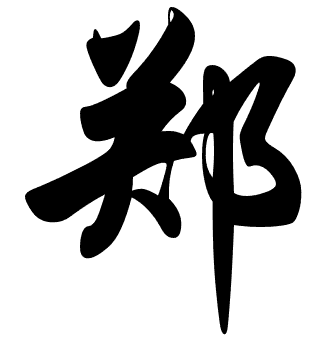
Cheng
PERSON
Surname reference in Epstein-related documents
Chiang Kai-shek
PERSON
Name reference in documents
Chris Tucker
PERSON
American actor and comedian
CW
CHRISTOPHER WALKER
PERSON
Name reference in documents
Confucius
PERSON
5th-century BCE Chinese philosopher and politician

Cynthia Nixon
PERSON
American actress and politician
DA
Damnjanovic
PERSON • 2 mentions
Name reference in documents

David Lane
PERSON
American white supremacist, convicted felon
David M. Lampton
PERSON
American political scientist
David Shambaugh
PERSON
Name reference in documents
Deng Xiaoping
PERSON • 2 mentions
Chinese politician and paramount leader from 1978 to 1989
DI
Diego
PERSON
Refers to Diego Galan and also to San Diego location references in Epstein documents
Donald Trump
PERSON • 4 mentions
President of the United States (2017–2021, 2025–present)
DO
Donna
PERSON
Ambiguous first name - refers to multiple people in Epstein documents
EA
Eades
PERSON
Name reference in documents

Edgar Snow
PERSON
American journalist (1905–1972)

Elizabeth II
PERSON
Queen of the United Kingdom from 1952 to 2022
EM
Emily
PERSON
Ambiguous first name - refers to multiple people in Epstein documents
Eric Garcetti
PERSON
American politician and diplomat (born 1971)

Eric Trump
PERSON
American businessman and reality television personality (born 1984)

Esther
PERSON
Biblical Jewish queen of Persia and Medes (Book of Esther)

EZRA VOGEL
PERSON
American academic, sinologist (1930–2020)
Falun Gong
PERSON • 2 mentions
Person referenced in documents
FE
Feith
PERSON
Name reference in documents
Felix Greene
PERSON
British journalist (1909–1985)
FI
Fischer
PERSON
Ambiguous surname reference in Epstein art and financial documents

Florence Fang’s
PERSON
Name reference in documents
Fu Chen
PERSON
Researcher (ORCID 0000-0002-9145-6702)
Fu Ying
PERSON
Chinese politician

George Koo
PERSON
Dutch musician, songwriter
George W. Bush
PERSON • 2 mentions
President of the United States from 2001 to 2009
GT
GLENN TIFFERT
PERSON
Name reference in documents
Guo Wengui
PERSON
Chinese businessman
HH
Harry Harding
PERSON
US-American political scientist
Harry Reid
PERSON
American politician (1939–2021)
He Qinglian
PERSON
Chinese economist
Henry Cuellar
PERSON
American politician & attorney (born 1955)
Henry Ford
PERSON
American business magnate (1863–1947)
Henry Kissinger
PERSON
American politician and diplomat (1923–2023)
Hu Jintao
PERSON
Former General Secretary of the Chinese Communist Party
JA
Jackie
PERSON
Ambiguous first name - refers to multiple people in Epstein documents
James Mann
PERSON
Journalist and Author-in-Residence, School of Advanced International Studies, Johns Hopkins University
JAMES MULVENON
PERSON
American political scientist

Jeffrey Epstein
PERSON
American sex offender and financier (1953–2019)

JEFFREY PHILLIPS
PERSON
Name reference in documents
JE
Jennifer
PERSON
First name reference to multiple individuals in Epstein documents
JI
Jiang
PERSON
Surname reference in Epstein-related documents
Jiang Zemin
PERSON
Person referenced in documents

Jimmy Wong
PERSON
American actor and singer
John D. Rockefeller
PERSON
Person referenced in documents
JOHN FITZGERALD
PERSON
Irish economist
JOHN GARNAUT
PERSON
Name reference in documents
John McCain
PERSON • 2 mentions
American politician, military officer, and presidential candidate (1936–2018)
JP
Jonas Parello-Plesner
PERSON
Danish diplomat

Joseph C. Tsai
PERSON
Name reference in documents
KARL EIKENBERRY
PERSON
United States general and former ambassador to Afghanistan
Kyle Hutzler
PERSON
Name reference in documents
LARRY DIAMOND ORVILLE SCHELL
PERSON
American academic
LC
Laura Chang
PERSON
American musician
Lawrence Eagleburger
PERSON
American statesman and diplomat (1930-2011)
Lawrence Krauss
PERSON
American particle physicist and cosmologist
LX
Liu Xiabo
PERSON
Name reference in documents
LL
Lloyd-Damnjanovic
PERSON
Name reference in documents
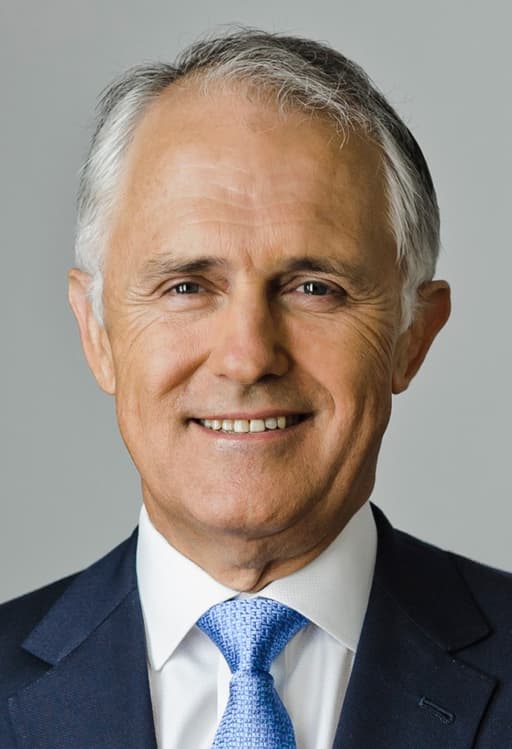
Malcolm Turnbull
PERSON
Person referenced in documents

Mansfield
PERSON
Surname reference in documents
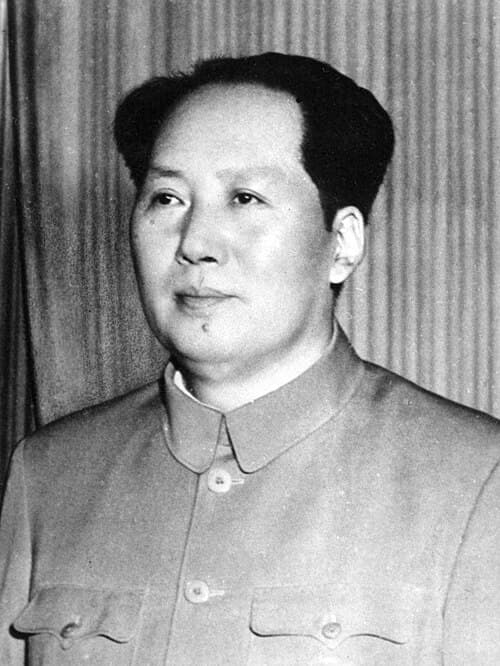
Mao Zedong
PERSON
1st chairman of the Chinese Communist Party and founder of the People's Republic of China (1893–1976)
Marc Rich
PERSON
American commodities trader (1934–2013)
Marco Rubio
PERSON • 2 mentions
72nd United States Secretary of State since 2025
MA
Martina
PERSON
First name reference to multiple individuals in the documents
Mattis
PERSON
Reference to James Mattis, former U.S. Secretary of Defense
MM
Melissa Murphy
PERSON
Chef
Michael Bloomberg
PERSON
American businessman and politician; 108th Mayor of New York City
MO
Michel Oksenberg
PERSON
American political scientist (1938–2001)

Mike Mansfield
PERSON
American politician and diplomat (1903–2001)

Nancy B. Tucker
PERSON
Name reference in documents

O'Keeffe
PERSON
Surname reference in documents
Orville Schell
PERSON
Name reference in documents
Pan Shiyi
PERSON
Chinese business magnate
PE
Perkins
PERSON
Surname reference in documents
PE
Peterson
PERSON
Surname reference in Epstein documents

Pomfret
PERSON
Name reference in documents
Prince Andrew
PERSON
Third child of Queen Elizabeth II and Prince Philip, Duke of Edinburgh (born 1960)
PR
pro-Kuomintang
PERSON
Name reference in documents
Qiu Yuanping
PERSON
Director of Overseas Chinese Affairs Office of the State Council of China

Rachelle
PERSON
Canadian actress

Ramon Myers
PERSON
Name reference in documents

Raymond
PERSON
Surname reference in Epstein-related documents
RB
Rd ESTE PRIS BIA
PERSON
Name reference in documents
Registration Act
PERSON
Name reference in documents
RE
Reynolds
PERSON
Surname reference in Epstein-related documents

RICHARD MCGREGOR
PERSON
Australian journalist, writer and author
Richard Nixon
PERSON
President of the United States from 1969 to 1974 (1913–1994)
RD
ROBERT DALY
PERSON
Director of the Kissinger Institute on China and the United States
RS
ROBERT SUTTER
PERSON
French singer, composer and lyricist
RW
Robert Williams
PERSON
English chemist (1926–2015)
RT
Rory Truex
PERSON
Name reference in documents
RU
Rudolph
PERSON
First name reference to multiple individuals

Rupert Murdoch
PERSON • 2 mentions
Australian-American business magnate (born 1931)

Samantha Power
PERSON
Irish-American academic, author and diplomat
SH
Shaila
PERSON
Name reference in documents

Shambaugh
PERSON
Name reference in documents

Sheena Chestnut
PERSON
American political scientist
Sun Chunlan
PERSON
Chinese politician

Sunshine
PERSON
Surname reference in Epstein-related documents
SUSAN SHIRK
PERSON
American academic
SU
Sutter
PERSON
Name reference in documents
Ted Cruz
PERSON
American politician (born 1970)
Tete AEBS
PERSON
Name reference in documents
The Dalai Lama
PERSON • 2 mentions
Tibetan spiritual leader, referenced in Epstein scheduling and contact documents
TG
Thomas Gilligan
PERSON
Australian rules footballer b1978

Tiffert
PERSON
Name reference in documents

TIMOTHY GARTON ASH
PERSON
Name reference in documents
Tongs
PERSON
Name reference in documents
Tung Chee Hwa
PERSON
Politician and businessman from Hong Kong

Uighurs
PERSON • 2 mentions
Surname reference in documents
VA
Vanke
PERSON
Name reference in documents
Vince Foster
PERSON
American lawyer (1945-1993)

Virginia Giuffre
PERSON
Advocate for sex trafficking victims (1983–2025)
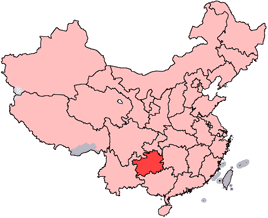
Wang Aibing
PERSON
Name reference in documents
Wang Huiyao
PERSON
Chinese government interlocutor
Wang Jianlin
PERSON
Chinese businessman
Wang Jisi
PERSON
Chinese academic
Wang Wen
PERSON
Name reference in documents
Wang Yi
PERSON
Chinese diplomat leader, Director of the CCP Central Foreign Affairs Commission Office since 2023
Wen Jiabao
PERSON
6th Premier of the People's Republic of China from 2004 to 2013
Wilbur Ross
PERSON
United States 39th Secretary of Commerce

Woody Allen
PERSON
American filmmaker, actor and comedian (born 1935)
Xi Jinping
PERSON • 3 mentions
General Secretary of the Chinese Communist Party since 2012
XW
Xinmin Wanbao
PERSON
Name reference in documents

Xiong Min
PERSON
Crystal Structure Laboratory, China University of Geosciences
Yang Jiechi
PERSON
Politburo member of the Chinese Communist Party
YS
Yang Shuping
PERSON
Name reference in documents
Yu Zhengsheng
PERSON
Chairman of the National Committee of the Chinese People's Political Consultative Conference
YP
Yuan Peng
PERSON
One of several Chinese currencies, historical and present; name of currency unit in some east Asian languages
Zhou Wenzhong
PERSON
Chinese diplomat and former ambassador
ZZ
Zhou Zhixing
PERSON
Person, CBDB ID = 394802
ZM
Zhu Muzhi
PERSON
Chinese politician (1916-2015)

Zhu, Lia.
PERSON
Name reference in documents
7 China Institute in America
ORGANIZATION
Organization referenced in documents
a Foreign Government
ORGANIZATION
Organization referenced in documents
Admissions
ORGANIZATION
Organization referenced in documents
Advanced International Studies
ORGANIZATION
Organization referenced in documents
Alibaba America
ORGANIZATION
Organization referenced in documents
Alibaba Group
ORGANIZATION
Organization referenced in documents
American Association of University
ORGANIZATION
Organization referenced in documents
American Communities as Engines of Engagement
ORGANIZATION
Organization referenced in documents
American Higher Education
ORGANIZATION
Organization referenced in documents
American Political Science Association
ORGANIZATION
Organization referenced in documents
American Trade
ORGANIZATION
Organization referenced in documents
American-China
ORGANIZATION
Organization referenced in documents
Another Confucius Institute
ORGANIZATION
Organization referenced in documents
Arctic Council
ORGANIZATION
Organization referenced in documents
Association to Promote China Unification
ORGANIZATION
Organization referenced in documents
Baidu
ORGANIZATION
Chinese web services company
Beijing Review
ORGANIZATION
Organization referenced in documents

Bloomberg L.P.
ORGANIZATION
American privately held financial, software, data, and media company
BMA AE
ORGANIZATION
Organization referenced in documents
Board of Overseers
ORGANIZATION
Organization referenced in documents
Boston University
ORGANIZATION
Private research university in Boston, Massachusetts, United States
Bridging Minds Across
ORGANIZATION
Organization referenced in documents
Brookings Institution
ORGANIZATION
Policy research institution
BWI RAS BS
ORGANIZATION
Organization referenced in documents
CAIFC
ORGANIZATION
Organization referenced in documents
Capitol Hill
ORGANIZATION
Neighborhood in Washington, D.C., USA
CCP Central Committee Document
ORGANIZATION
Organization referenced in documents
CCPPNR
ORGANIZATION
Organization referenced in documents
CDSTT
ORGANIZATION
Organization referenced in documents
Center for American Progress, Center for Strategic and International Studies
ORGANIZATION
Organization referenced in documents
Cervantes Institute
ORGANIZATION
Organization referenced in documents
CFIUS
ORGANIZATION
Organization referenced in documents
Chandelier
ORGANIZATION
Organization referenced in documents
China Daily
ORGANIZATION
Chinese Communist Party propaganda outlet
China National Knowledge Information
ORGANIZATION
Organization referenced in documents
China National Radio
ORGANIZATION
Organization referenced in documents
China Peaceful Reunification Council
ORGANIZATION
Organization referenced in documents
China Pictorial
ORGANIZATION
Organization referenced in documents
China Radio International
ORGANIZATION
Organization referenced in documents
China Review News
ORGANIZATION
Organization referenced in documents
China Scholarship Council
ORGANIZATION
Organization referenced in documents
China Watch
ORGANIZATION
Organization referenced in documents
Chinatowns
ORGANIZATION
Organization referenced in documents
Chinese Academy of Sciences
ORGANIZATION
Organization referenced in documents
Chinese Influence &
ORGANIZATION
Organization referenced in documents
Chinese Influence Activities
ORGANIZATION
Organization referenced in documents
Chinese Party School
ORGANIZATION
Organization referenced in documents
Chinese Students
ORGANIZATION
Organization referenced in documents
Ching, Frank
ORGANIZATION
Organization referenced in documents
CICIR
ORGANIZATION
Organization referenced in documents
Claremont McKenna College
ORGANIZATION
Private liberal arts college in Claremont, California
Confucius China Studies Program
ORGANIZATION
Organization referenced in documents
Confucius Institute/Classroom
ORGANIZATION
Organization referenced in documents
Congress Foreign Affairs Committee
ORGANIZATION
Organization referenced in documents
Consular
ORGANIZATION
Organization referenced in documents
Conversations
ORGANIZATION
Organization referenced in documents

Cornell University
ORGANIZATION
Private Ivy League research university in Ithaca, New York
Council of State Governments
ORGANIZATION
Organization referenced in documents
Council on Foreign Relations
ORGANIZATION
Organization referenced in documents
CPIFA
ORGANIZATION
Organization referenced in documents
CPPCC
ORGANIZATION
Organization referenced in documents
CUSEF
ORGANIZATION
Organization referenced in documents
D-MT
ORGANIZATION
Organization referenced in documents
Democratic Progressive Party
ORGANIZATION
Organization referenced in documents

Department of Defense
ORGANIZATION
Executive department of the United States federal government
Department of Justice
ORGANIZATION • 2 mentions
United States Department of Justice, federal executive department responsible for law enforcement
Detroit Metro Times
ORGANIZATION
Organization referenced in documents
Development Centers
ORGANIZATION
Organization referenced in documents

Duke University
ORGANIZATION
Private university in Durham, North Carolina, USA
Duke-Kunshan)—have
ORGANIZATION
Organization referenced in documents
Eastern Group
ORGANIZATION
Organization referenced in documents
EDI City Newsweek
ORGANIZATION
Organization referenced in documents
eleven Washington-
ORGANIZATION
Organization referenced in documents

Emory University
ORGANIZATION
Private research university in Atlanta, Georgia, United States
Era of Competition
ORGANIZATION
Organization referenced in documents
Establishing Official Relations
ORGANIZATION
Organization referenced in documents

European Council
ORGANIZATION
Institution of the European Union defining the EU's general political direction and priorities and consisting of heads of state or government of the EU's member states
Executive-Legislative Consultations
ORGANIZATION
Organization referenced in documents
Eye SC for Investment
ORGANIZATION
Organization referenced in documents
Federation’s
ORGANIZATION
Organization referenced in documents
FIRMMA
ORGANIZATION
Organization referenced in documents
Florida University Latest to Cut Ties
ORGANIZATION
Organization referenced in documents
Foreign Affairs Committee
ORGANIZATION
Organization referenced in documents

Foreign Policy
ORGANIZATION
American news magazine and website based in Washington, D.C.
Foreign Policy Association
ORGANIZATION
Organization referenced in documents
Francaise
ORGANIZATION
Organization referenced in documents
Fujian Daily
ORGANIZATION
Organization referenced in documents
G&E Studio
ORGANIZATION
Organization referenced in documents
GE Studio Network
ORGANIZATION
Organization referenced in documents
George Washington University
ORGANIZATION
Private university in Washington, D.C., USA
Georgetown University
ORGANIZATION
Private university in Washington, D.C., United States
German Council
ORGANIZATION
Organization referenced in documents
Gill, Bates
ORGANIZATION
Organization referenced in documents

Goethe Instituts
ORGANIZATION
Organization referenced in documents
GOP
ORGANIZATION
American political party
Grand Overseas Propaganda Campaign
ORGANIZATION
Organization referenced in documents
Guoguang Century Media
ORGANIZATION
Organization referenced in documents
GZ Television
ORGANIZATION
Organization referenced in documents
GZ Television Media
ORGANIZATION
Organization referenced in documents
H&H Capital Partners
ORGANIZATION
Organization referenced in documents
Harvard University
ORGANIZATION
American university publishing house
Henry Luce Foundation
ORGANIZATION
Organization referenced in documents
Higher Education
ORGANIZATION
Organization referenced in documents
Hoover Institution Press
ORGANIZATION
Organization referenced in documents
Hopkins-Nanjing Center
ORGANIZATION
Organization referenced in documents
House Ethics Committee
ORGANIZATION
Organization referenced in documents
Hudson Institute
ORGANIZATION
Organization referenced in documents
Influence Operations
ORGANIZATION
Organization referenced in documents
Institute of International Education
ORGANIZATION
Organization referenced in documents
Intellisia
ORGANIZATION
Organization referenced in documents
Inter-Parliamentary Exchange Group
ORGANIZATION
Organization referenced in documents
International and Strategic Studies
ORGANIZATION
Organization referenced in documents
International News Agency
ORGANIZATION
Organization referenced in documents
International Peace Institute
ORGANIZATION
International Peace Institute, think tank
Italian Embassy
ORGANIZATION
Organization referenced in documents
Johns Hopkins School
ORGANIZATION
Organization referenced in documents
King’s College London
ORGANIZATION
Organization referenced in documents
Knopf
ORGANIZATION
Organization referenced in documents
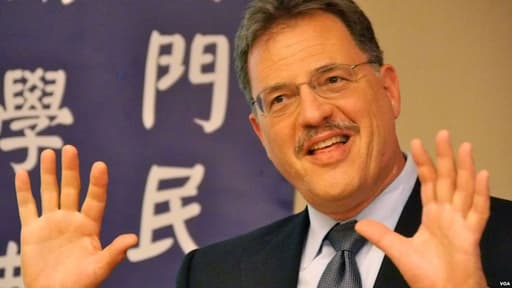
LARRY DIAMOND
ORGANIZATION
Organization referenced in documents
Lexington Books
ORGANIZATION
Organization referenced in documents
Lobbying Efforts Yield New Influence
ORGANIZATION
Organization referenced in documents
Lowy Institute
ORGANIZATION
Organization referenced in documents

McCarthyism
ORGANIZATION
Phenomenon in the United States of making accusations of subversion or treason without proper regard for evidence, named after Senator Joseph McCarthy
Media American Co, Ltd.
ORGANIZATION
Organization referenced in documents
Ming Pao
ORGANIZATION
Organization referenced in documents
Ming Pao Group
ORGANIZATION
Organization referenced in documents
Motherland
ORGANIZATION
Organization referenced in documents
Mt. Tung
ORGANIZATION
Organization referenced in documents
NACPU
ORGANIZATION
Organization referenced in documents

Nanjing University
ORGANIZATION
Public university in Nanjing, China
Nanyang News
ORGANIZATION
Organization referenced in documents
National Association of Scholars
ORGANIZATION
Organization referenced in documents
National Endowment
ORGANIZATION
Organization referenced in documents

New York Review of Books
ORGANIZATION
American magazine
News Group
ORGANIZATION
Organization referenced in documents
NewsCorp
ORGANIZATION
Organization referenced in documents
NYU-Shanghai
ORGANIZATION
Organization referenced in documents
Overseas United Front Work
ORGANIZATION
Organization referenced in documents

Patton Boggs
ORGANIZATION
Organization referenced in documents
Peking University’s Institute
ORGANIZATION
Organization referenced in documents
Pennsylvania State University
ORGANIZATION
Organization referenced in documents
Pensacola News Journal
ORGANIZATION
Organization referenced in documents
People’s Friendship Association
ORGANIZATION
Organization referenced in documents
People’s Political Consultative Conference
ORGANIZATION
Organization referenced in documents
Phoenix Satellite TV
ORGANIZATION
Organization referenced in documents
Politburo
ORGANIZATION
Executive committee of a communist party
Political Warfare Department
ORGANIZATION
Organization referenced in documents
Public Affairs
ORGANIZATION
Academic discipline
Pursuit of Fugitive
ORGANIZATION
Organization referenced in documents
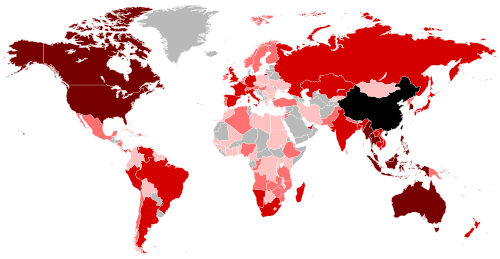
Qiaobao
ORGANIZATION • 3 mentions
Organization referenced in documents
Renmin University
ORGANIZATION
Organization referenced in documents
Republic of China
ORGANIZATION
Organization referenced in documents
Reunification
ORGANIZATION
Organization referenced in documents
Rhythm Media Group
ORGANIZATION
Organization referenced in documents
RIMes Belem
ORGANIZATION
Organization referenced in documents
Rowman &
ORGANIZATION
Organization referenced in documents
Rowman & Littlefield
ORGANIZATION
City in Texas, USA
Security Review Commission
ORGANIZATION
Organization referenced in documents
See Foreign Travel
ORGANIZATION
Organization referenced in documents
See the United Front Work Department
ORGANIZATION
Organization referenced in documents
Sing Tao
ORGANIZATION
Organization referenced in documents
SinoVision
ORGANIZATION
Organization referenced in documents
Sky Link TV
ORGANIZATION
Organization referenced in documents
Soft Power
ORGANIZATION
Organization referenced in documents
SOHO China
ORGANIZATION
Organization referenced in documents
SOS International
ORGANIZATION
Organization referenced in documents
Standing Committee of the Political Bureau of the Communist Party’s
ORGANIZATION
Organization referenced in documents
STANFORD UNIVERSITY ASIA SOCIETY
ORGANIZATION
Organization referenced in documents
State Overseas Trade Offices
ORGANIZATION
Organization referenced in documents
Survey Data
ORGANIZATION
Organization referenced in documents
Swinburne University
ORGANIZATION
Organization referenced in documents
Taiwan Affairs Office
ORGANIZATION
Organization referenced in documents
Taiwan Arms Sales Research Project
ORGANIZATION
Organization referenced in documents
Technology, Engineering, Mathematics
ORGANIZATION
Organization referenced in documents
TECRO
ORGANIZATION
Organization referenced in documents
Texas A&M
ORGANIZATION
Public research university in College Station, Texas, United States
Texas A&M System Cuts Ties
ORGANIZATION
Organization referenced in documents
the “China Dream
ORGANIZATION
Organization referenced in documents
the “Great Rejuvenation”
ORGANIZATION
Organization referenced in documents
the “Pacific Community Initiative
ORGANIZATION
Organization referenced in documents
the 115th
ORGANIZATION
Organization referenced in documents
the American Enterprise Institute
ORGANIZATION
Organization referenced in documents
the American Foreign Policy Council
ORGANIZATION
Organization referenced in documents
The Annenberg Foundation Trust
ORGANIZATION
Organization referenced in documents
the Asia Institute-Crane House
ORGANIZATION
Organization referenced in documents
the Asia Society
ORGANIZATION
Organization referenced in documents
the Asian Culture and Media Group
ORGANIZATION
Organization referenced in documents
the Canadian Association of University Teachers
ORGANIZATION
Organization referenced in documents
the Carnegie Corporation of New York
ORGANIZATION
Organization referenced in documents
the Carnegie Endowment for International Peace
ORGANIZATION
Organization referenced in documents
the CCP Central Committee
ORGANIZATION
Organization referenced in documents
the Center for American Progress
ORGANIZATION
Organization referenced in documents
the Center on US-China Relations at
ORGANIZATION
Organization referenced in documents
the Central Propaganda Department
ORGANIZATION
Organization referenced in documents
The Charhar Institute
ORGANIZATION
Organization referenced in documents
the China Council
ORGANIZATION
Organization referenced in documents
the China Development Bank
ORGANIZATION
Organization referenced in documents
the China Development Student Think Tank
ORGANIZATION
Organization referenced in documents
the China Foreign Affairs University
ORGANIZATION
Organization referenced in documents
The China General Chamber of Commerce-USA
ORGANIZATION
Organization referenced in documents
the China Institute of the University of
ORGANIZATION
Organization referenced in documents
the China Law Center
ORGANIZATION
Organization referenced in documents
the China National Knowledge Infrastructure
ORGANIZATION
Organization referenced in documents
the China Overseas Exchange Association
ORGANIZATION
Organization referenced in documents
The China Press
ORGANIZATION
Organization referenced in documents
the China Working Group
ORGANIZATION
Organization referenced in documents
the China-United States Exchange Foundation
ORGANIZATION
Organization referenced in documents
the Chinese Academy of Social Sciences
ORGANIZATION
Organization referenced in documents
The Chinese American Community
ORGANIZATION
Organization referenced in documents
the Chinese Association for International Understanding
ORGANIZATION
Organization referenced in documents
The Chinese Communist Party’s
ORGANIZATION
Organization referenced in documents
the Chinese Embassy
ORGANIZATION
Organization referenced in documents
the Chinese Government
ORGANIZATION
Organization referenced in documents
the Chinese Ministry of Culture and Chinese Academy of Social Sciences
ORGANIZATION
Organization referenced in documents
the Chinese Nationalist Party of Taiwan
ORGANIZATION
Organization referenced in documents
the Chinese Overseas Friendship Association
ORGANIZATION
Organization referenced in documents
the Chinese People’s Association for Friendship
ORGANIZATION
Organization referenced in documents
the Chinese People’s Association for Friendship with Foreign Countries
ORGANIZATION
Organization referenced in documents
the Chinese People’s Institute of Foreign Affairs
ORGANIZATION
Organization referenced in documents
the Chinese People’s Political Consultative Conference
ORGANIZATION
Organization referenced in documents
the Chongyang Institute for Financial Studies
ORGANIZATION
Organization referenced in documents
the Committee of 100
ORGANIZATION
Organization referenced in documents
the Committee on Foreign Investment
ORGANIZATION
Organization referenced in documents
the Communist Party Central Committee’s
ORGANIZATION
Organization referenced in documents
the Communist Party of China
ORGANIZATION
Organization referenced in documents
the Communist Party’s
ORGANIZATION
Organization referenced in documents
the Confucius Institutes
ORGANIZATION
Organization referenced in documents
the Congressional China Caucus
ORGANIZATION
Organization referenced in documents
the Congressional-Executive Commission
ORGANIZATION
Organization referenced in documents
the Crisis with China
ORGANIZATION
Organization referenced in documents
the Des Moines Register
ORGANIZATION
Organization referenced in documents
the Eastern US Qiaobao’s
ORGANIZATION
Organization referenced in documents
the Elliott School of International Affairs
ORGANIZATION
Organization referenced in documents
the Emergency Committee
ORGANIZATION
Organization referenced in documents
the Empire State Building
ORGANIZATION
Organization referenced in documents
the External Propaganda Leading Group
ORGANIZATION
Organization referenced in documents
the Falun Gong
ORGANIZATION
Organization referenced in documents
the Far East Studies Institute
ORGANIZATION
Organization referenced in documents
the Foreign Ministry
ORGANIZATION
Organization referenced in documents
the Formosan Association
ORGANIZATION
Organization referenced in documents
the Gang of Four
ORGANIZATION
Organization referenced in documents
the Global Times
ORGANIZATION
Organization referenced in documents
the Government Accounting Office
ORGANIZATION
Organization referenced in documents
the Hainan-Nanhai Research Foundation
ORGANIZATION
Organization referenced in documents
THE HOOVER INSTITUTION CENTER ON
ORGANIZATION
Organization referenced in documents
the International Liaison Department
ORGANIZATION
Organization referenced in documents
the Leland Stanford Junior University
ORGANIZATION
Organization referenced in documents
the Library of Congress
ORGANIZATION
Organization referenced in documents
the Maryland China Business Council*
ORGANIZATION
Organization referenced in documents
the Michigan China Innovation Center
ORGANIZATION
Organization referenced in documents
the Ministry of Commerce
ORGANIZATION
Organization referenced in documents
the Ministry of Foreign Affairs
ORGANIZATION
Organization referenced in documents
the Ministry of State Security
ORGANIZATION
Organization referenced in documents
the Mutual Education and Cultural Exchange Act
ORGANIZATION
Organization referenced in documents
The National Committee
ORGANIZATION
Organization referenced in documents
the National Conference of State Legislatures
ORGANIZATION
Organization referenced in documents
the National Endowment for Democracy
ORGANIZATION
Organization referenced in documents
the National Governors Association
ORGANIZATION
Organization referenced in documents
the National Institute for South China Sea Studies
ORGANIZATION
Organization referenced in documents
the National People’s
ORGANIZATION
Organization referenced in documents
the National People’s Congress
ORGANIZATION
Organization referenced in documents
the Northern California Council
ORGANIZATION
Organization referenced in documents
the Office of the US Trade Representative
ORGANIZATION
Organization referenced in documents
the Overseas Chinese Affairs Office
ORGANIZATION
Organization referenced in documents
the Overseas Chinese Office of the State Council
ORGANIZATION
Organization referenced in documents
the People’s Daily
ORGANIZATION
Organization referenced in documents
the People’s Liberation Army’s
ORGANIZATION
Organization referenced in documents
the Promotion of Peaceful Reunification
ORGANIZATION
Organization referenced in documents
the Senate China Working Group
ORGANIZATION
Organization referenced in documents
the Seventh Conference of Overseas Chinese Associations
ORGANIZATION
Organization referenced in documents
the Shanghai Institute of International Studies
ORGANIZATION
Organization referenced in documents
the Shanghai Media Group
ORGANIZATION
Organization referenced in documents
the Sino American Times
ORGANIZATION
Organization referenced in documents

the State Council
ORGANIZATION
Organization referenced in documents
the State Council’s Office for Overseas Chinese Affairs
ORGANIZATION
Organization referenced in documents
the State Council’s Overseas Chinese Affairs Office
ORGANIZATION
Organization referenced in documents
The State Press and Publishing Administration
ORGANIZATION
Organization referenced in documents
the Taiwan Relations Act
ORGANIZATION
Organization referenced in documents
the Taiwan Travel Act
ORGANIZATION
Organization referenced in documents

the Task Force
ORGANIZATION
Organization referenced in documents
the Three Communiques
ORGANIZATION
Organization referenced in documents
the United Daily News
ORGANIZATION
Organization referenced in documents
the United States Climate Alliance
ORGANIZATION
Organization referenced in documents
the University of California San
ORGANIZATION
Organization referenced in documents

the University of Chicago
ORGANIZATION
University in Chicago
the University of International Relations
ORGANIZATION
Organization referenced in documents
the University of Pennsylvania
ORGANIZATION
Organization referenced in documents
the university’s
ORGANIZATION
Organization referenced in documents
the US Congress
ORGANIZATION
Organization referenced in documents
the US Department of Education
ORGANIZATION
Organization referenced in documents
the Virginia Museum of
ORGANIZATION
Organization referenced in documents
the Voice of America
ORGANIZATION
Organization referenced in documents
the Voice of China
ORGANIZATION
Organization referenced in documents
The Wall Street Journal
ORGANIZATION
American business-focused daily newspaper
the Washington Association to Promote China Unification
ORGANIZATION
Organization referenced in documents
the Working Group Participants
ORGANIZATION
Organization referenced in documents
the World Journal
ORGANIZATION
Organization referenced in documents
the World Trade Organization
ORGANIZATION
International organization regulating trade between nations
the Xinhua News Agency
ORGANIZATION
Organization referenced in documents
Think-Tank Boards
ORGANIZATION
Organization referenced in documents

Time Warner
ORGANIZATION
Former American cable telecommunications company
Tsinghua University
ORGANIZATION
Public university in Beijing, China
United Front
ORGANIZATION
Organization referenced in documents
United Front Seeks
ORGANIZATION
Organization referenced in documents
united front work overseas.
ORGANIZATION
Organization referenced in documents
University of Canterbury
ORGANIZATION
Organization referenced in documents
University of West Florida
ORGANIZATION
Organization referenced in documents
Upstate Business Journal
ORGANIZATION
Organization referenced in documents
Urges Florida Schools
ORGANIZATION
Organization referenced in documents
US Government Printing Office
ORGANIZATION
Organization referenced in documents

US Navy
ORGANIZATION
Organization referenced in documents
US-Asia Institute
ORGANIZATION
Organization referenced in documents
Visa Access
ORGANIZATION
Organization referenced in documents

Wanda
ORGANIZATION
Entity referenced in documents
Woodrow Wilson Center Kissinger Institute
ORGANIZATION
Organization referenced in documents
Woodrow Wilson International Center for Scholars
ORGANIZATION
Organization referenced in documents
World Journal’s
ORGANIZATION
Organization referenced in documents
Wuhan University
ORGANIZATION
Organization referenced in documents
Xinhua Online
ORGANIZATION
Organization referenced in documents
Xinhua, People’s Daily
ORGANIZATION
Organization referenced in documents
Yale College
ORGANIZATION
Organization referenced in documents

Yale Law School
ORGANIZATION
Law school of Yale University

Alberta
LOCATION
Province of Canada
American Think Tanks
LOCATION
Location referenced in documents

Anastasya
LOCATION • 2 mentions
Location referenced in documents
Aparticularly
LOCATION
Location referenced in documents

Berkeley
LOCATION
City in Alameda County, California, United States
Bethany
LOCATION
Village recorded in the New Testament as the home of the siblings Mary, Martha, and Lazarus, as well as that of Simon the Leper

Boulder
LOCATION
City in Colorado, United States
California-San Diego
LOCATION
Location referenced in documents
China
LOCATION
Country in East Asia
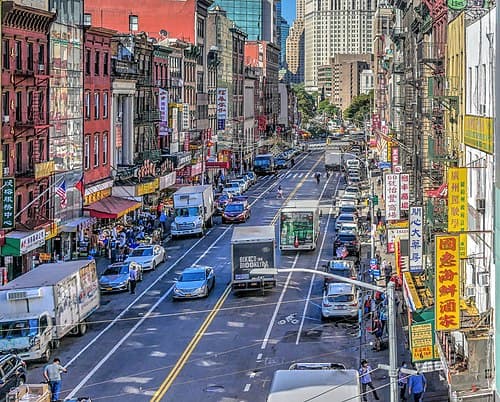
Chinatown
LOCATION
1974 US film directed by Roman Polański

Davos
LOCATION
Municipality in the canton of Graubünden, Switzerland
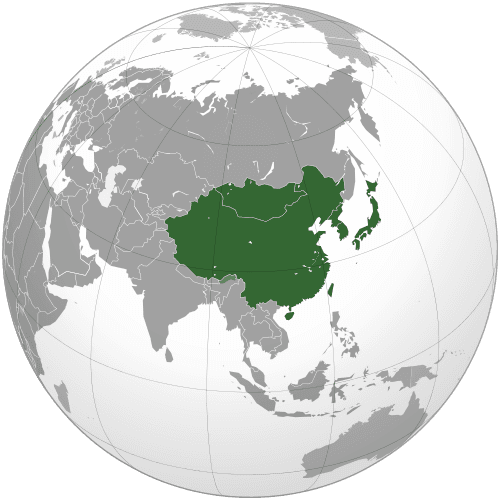
East Asia
LOCATION
Eastern region of Asia

Fujian
LOCATION
Province of the People's Republic of China, covering the mountainous coast opposite Taiwan
Fuzhou
LOCATION
Capital city of Fujian province, China
Greenville
LOCATION
County seat of Greenville County, South Carolina, United States
Guangdong Province
LOCATION
Location referenced in documents
Guangzhou
LOCATION
Capital city of Guangdong Province, China
Hanban
LOCATION • 2 mentions
PRC Ministry of Education body
Hong Kong
LOCATION • 2 mentions
City and special administrative region of China

Houston
LOCATION
Seat of Harris County, and largest city in State of Texas, United States

Kuwait
LOCATION
Sovereign state in Western Asia
Lanham
LOCATION
Community and census-designated place in Prince George's County, Maryland, United States
Littlefield
LOCATION
City in Texas, USA
Louisville
LOCATION
County seat of Jefferson County, Kentucky, United States
Malaysia
LOCATION
Country in Southeast Asia

Michigan
LOCATION
State of the United States of America
mid-Atlantic
LOCATION
Region of the United States

New Zealand
LOCATION
Island country in the southwest Pacific Ocean
North America
LOCATION
Continent
North Florida
LOCATION
Location referenced in documents
North Korea
LOCATION
Sovereign state in East Asia

Northern California
LOCATION
Region of California, United States
Phila
LOCATION
Daughter of Antipater, the regent of Macedonia

Philippines
LOCATION
Archipelagic country in Southeast Asia

Phoenix
LOCATION
Seat of Maricopa County, largest city in, and capital of, the State of Arizona, United States
pro-PRC
LOCATION
Location referenced in documents
Riverside
LOCATION
County seat of Riverside County, California, United States
San Bernardino
LOCATION
Seat of San Bernardino County, California, United States

San Diego
LOCATION
Seat of San Diego County, California, United States; second-largest city in California

San Francisco
LOCATION
Consolidated city and county in California, United States
Sanya
LOCATION
Location referenced in documents

Seattle
LOCATION
City in and county seat of King County, State of Washington, United States
Shanghai
LOCATION
Provincial-level municipality in China
South
LOCATION
Directional region of the United States
South China Morning Post
LOCATION
Hong Kong newspaper
South China Sea
LOCATION
South China Sea, body of water
Southeast Asia
LOCATION
South-eastern region of Asia

St. George
LOCATION
Christian saint and martyr (died 303)
Sunnylands
LOCATION
Estate/retreat in Rancho Mirage, California
the East Coast
LOCATION
Directional region of the United States
the East-West Institute
LOCATION
Location referenced in documents
the Eastern United States
LOCATION
Location referenced in documents
the Hong Kong
LOCATION
Location referenced in documents
the People’s Republic
LOCATION
Location referenced in documents
the Soviet Union
LOCATION
Former country, now part of Russia and other nations
the Taiwan Straits
LOCATION
Location referenced in documents
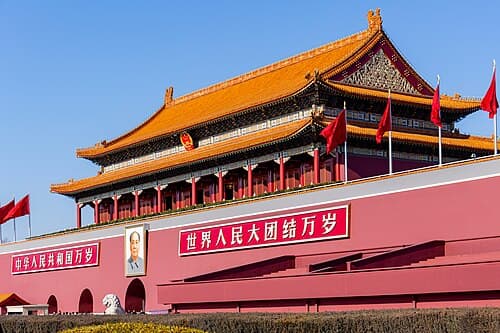
Tiananmen
LOCATION
Monumental gate in the centre of Beijing, China
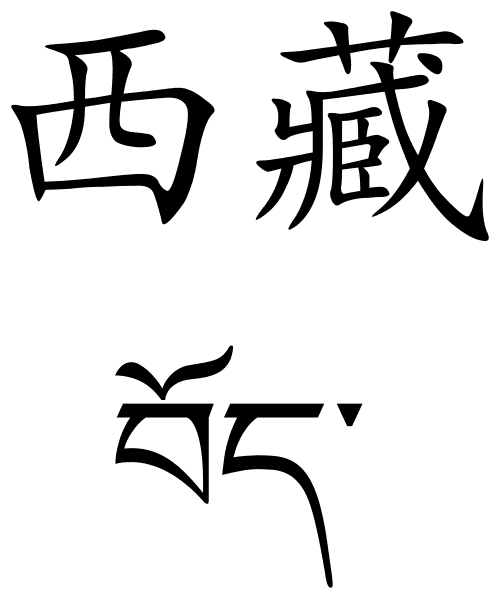
Tibet
LOCATION
Plateau region in west China
Uighur
LOCATION
Location referenced in documents

United Kingdom
LOCATION
Country in north-west Europe

United States
LOCATION • 2 mentions
Country located primarily in North America
Washington D.C.
LOCATION
Capital city of the United States of America
Wayne State
LOCATION
Location referenced in documents
West L.A.
LOCATION
Location referenced in documents
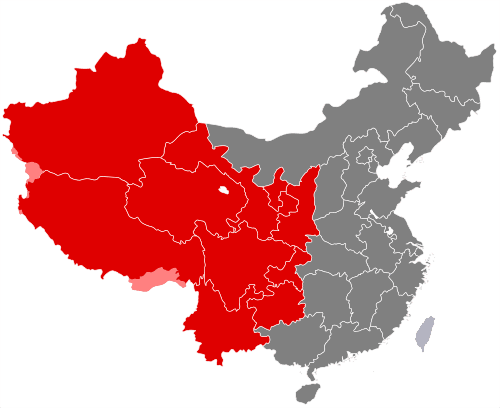
Western China
LOCATION
Geographical and cultural region in China
Xinjiang
LOCATION
Autonomous region in China
Ypsilanti
LOCATION
City in Washtenaw County, Michigan, United States
Zhongshen
LOCATION
Location referenced in documents
Statistics
Pages:100
Entities:542
Avg. OCR:94.6%
Sponsored