HOUSE_OVERSIGHT_018232_sub_003 - HOUSE_OVERSIGHT_018437
Document Information
Bates Range
HOUSE_OVERSIGHT_018232_sub_003 - HOUSE_OVERSIGHT_018437
Pages
6
Source
House Oversight Committee
Original Filename
TSS1211.pdf
Document Content
Page 201 - HOUSE_OVERSIGHT_018432
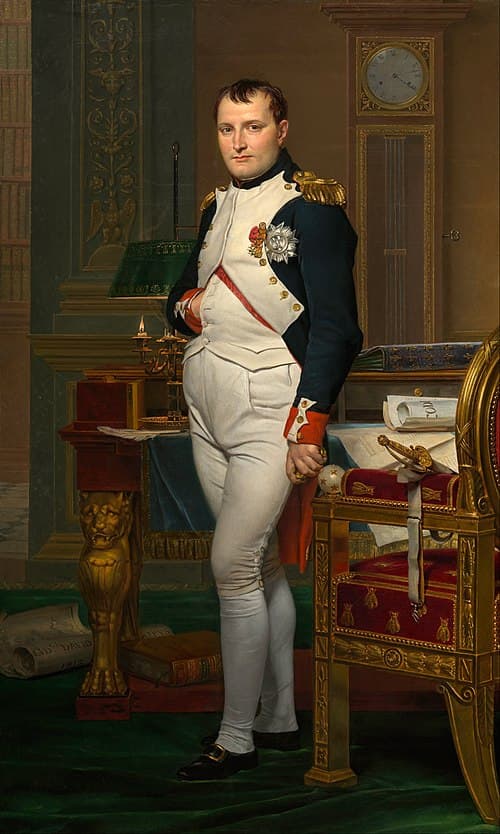
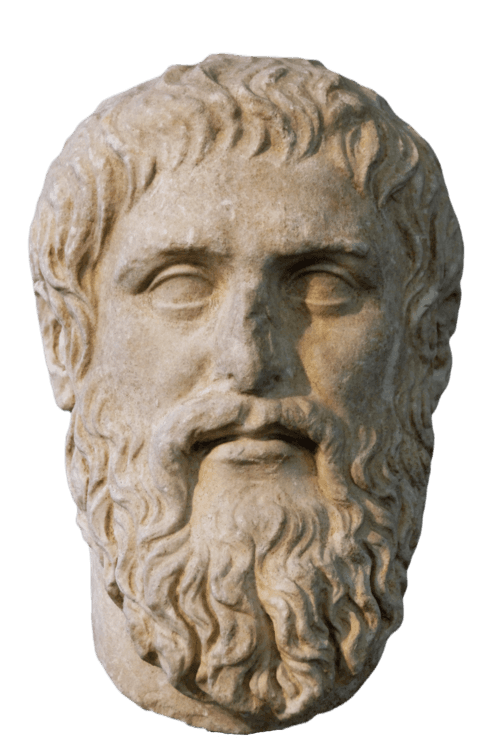
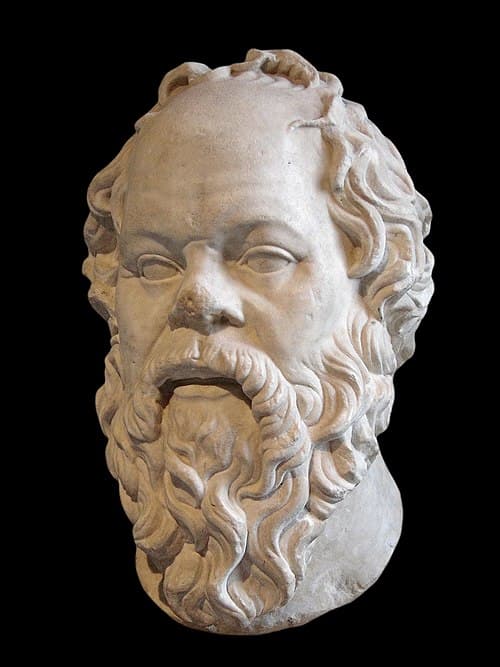
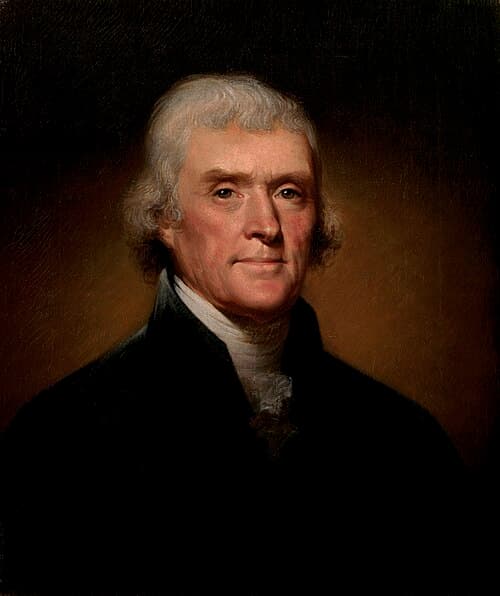
times are unusual: Jefferson. Napoleon. Su Dongpo, who led the Southern Song Dynasty to real greatness. Given the difficulty of finding such a match you can perhaps understand why history is so often pitched with evil; and why Plato was not a democrat. He knew how hard the ideal was to achieve; how suspicious we ought to be of it’s accomplishment. You might have in your mind a picture of a perfect Sicilian government: Literate, open to foreign ideas and trade, careful to balance the privilege of power with its still heavier obligations. The reality: A homicidal king. The stretched distance between ideal and reality was what Plato and Socrates thought philosophy must fill. As we consider the immense gap between where we are now - a fracturing, struggling order confronting new power arrangements whose content and speed and instincts are all really foreign to all of us - the puzzle is how best to fill the space between where we are now and where we intend to go. In Plato and Socrates’ age, before they great emancipation of the Enlightenment, it was only natural that their focus was on the education of kings. This, after all, was where most of the power lay. It was the decisive element: Was the ruler good or bad? But we confront our age with a different balance. What will decide our future, | think, is not merely our rulers but the quality of our citizens. | mean you and me. As we've seen, much of our future will be embodied in highly concentrated, connected systems that move at very rapid velocities and are spliced everywhere with the accelerant of artificial intelligence. We are all preparing ourselves to be subjugated in a sense by these systems and by their masters. Our best defense will not be to wait for wise leaders, for the appearance of men and women bespoke fit to the moment, capable of balancing instinct and interest into a rare balance. They are unlikely to emerge - and just getting rid of the people we have now will be hard enough. Any strategy based on hoping for great leadership is too risky for all of us. No, a better best defense is finally to rely on ourselves, to use the inheritance of the Enlightenment - the revolution one that made us citizens and not subjects - to ensure we’re not made subjects yet again, to forces we can’t understand and won't manage to control. In trading our liberty for convenience, we are spending that inheritance too fast now, too blindly. It would be easy enough to say that we all need to become more technical, that we need new versions of Plato’s Academy where we teach our children, our leaders and ourselves the inside tricks of the wired age. After all, if we’re to prevent the machines and the New Caste and the ripping dangers of a connected age from demolishing everything, we’d best know what they are doing. The need for more technical knowledge for all of us is, inarguably, clear. As I’ve said, one of our problems is that we live in an era of leaders who honestly don’t have the Seventh Sense, who lack a fluency even with the mundane quotidian demands of our digital fluxus - secure passwords on their own email, say, or an instinct for compressed space and time. Mapped on to the really big policy questions of the day, like the prosecution of our wars or the repair of our economics, they are outmatched. So: Yes, we need political direction informed by a feel for the fast, far-running fibers of the topological landscape that will decide our future. We need men and women who can command networks against network dangers. Linked, high-speed systems, after 200 HOUSE_OVERSIGHT_018432
Page 202 - HOUSE_OVERSIGHT_018433
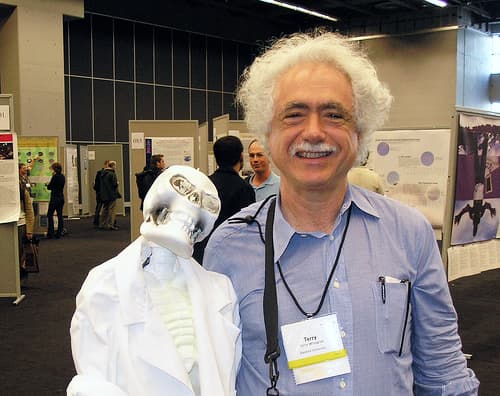
all, mark the political topology on which on which all the fundamental act of our age will occur: our own gating. But as essential as more technical knowledge is, I don’t think it’s likely to be where we come up short. Yes we need more computer coding academies, we need better popular education about network choices, we need to retool our leaders. But I don’t think it’s a shortage of bolt-heads that will do us in. Rather, given the unique pressures of what is ahead, I think it is our human side that may let us down. I’m sure we'll all be told in coming years that everything would be fine if we just let the New Caste figures take over, with their bloodless technological tools. These revolutionaries are a crucial part of the story of human progress, but they cannot alone write the next chapters. | think, asked to run our government, they’d likely end up like Plato’s pro-Spartan relatives in that awful dictatorship of the Thirty: A crew of buddies convinced they can get things under control who become rapidly overwhelmed by the human element, by wild network thumos and then reduced toa murderous madness. They would use technology to manipulate our voting just as they might manipulate our options for a new liver - or news or financial security. “One of the reasons computer software is so abysmal is that it’s not designed at all, but merely engineered,” the computer scientist Terry Winograd has written. “Another reason is that implementers often place more emphasis on a programs internal construction than its external design.”2”! This black-box temperament, the sense of efficacy as a final value for code, of internal design, of closed control, isa dangerous fit to the human business of free politics. But to expect our current leaders to catch up? | fear this is also unlikely. It’s not merely that they continue to wield the aging tools of industrial power with a strange confidence. No, their failures - which don’t seem to faze them much - are less dangerous than where they might yet succeed: Control, surveillance, the shredding of liberty in the name of an elusive safety. These leaders are fascinated by how the new tools might be used to extend the rule of a system that serves their interests, that serves them. The fear that such tools might one day snap back upon them (or us) is muted by ignorance and dulled by greed; by vision that does not extend much beyond “What’s in this for me?” So we find our future not in our own hands, but instead in the grip of two groups: One ignorant of networks; the other ignorant of humanity. The only answer, then, is to educate ourselves. We need to cultivate a sensibility that permits us to see through this manipulation; and then to act. The instincts of technology and of history must emerge in our calculations now. What will serve us best in a technical age is a sense of humanity that the old political machines and the New Caste digital ones can’t match. One of the most famous gates that Plato and Socrates drew around their imagined, ideal and perfect republic was a kind of electric fence against, of all things, poets. As Socrates explains in The Republic, poets “maim the thoughts of those who hear them.” Poetry appeared to the philosophers as a pernicious force, an injection of 271 “One of the reasons”: Terry Winograd, Bringing Design to Software (New York: ACM Press, 1996) p. 5 201 HOUSE_OVERSIGHT_018433
Page 203 - HOUSE_OVERSIGHT_018434
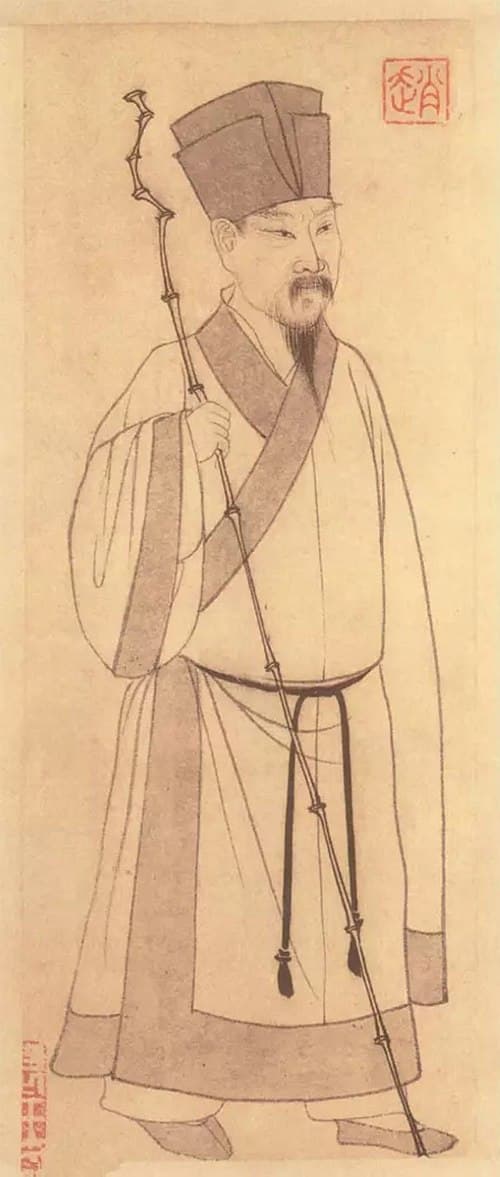
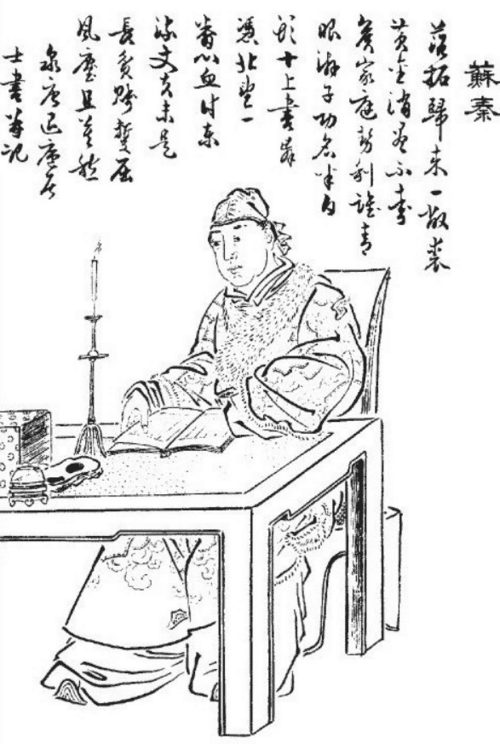
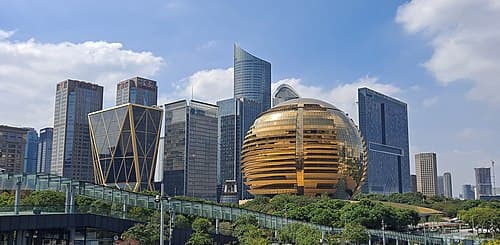
passion and madness that sent the heart into spasms and pressed the mind to distraction. This was about the last thing a new state needed. “Poetry mustn't be taken seriously as a serious thing laying hold of truth,” Socrates warns. “The man who hears it must be careful, fearing for the regime in himself.” Thus: Hesiod’s magnificent Works and Days, banned. Homer, banned. There has always been, about poetry, this sense of the magical, that it was a key to something intimately bound to the human mystery. It was no surprise to me to find, when I went back to re-read Turing’s “Can Machines Think?” essay, that the very first thing the great mathematician dreamed up to ask a digital brain was: “Write me a sonnet.” Poetry has always marked a test. Socrates and Plato gatekeep the poets out of their republic because they know the mad part of the soul verse can touch. It is hard to blame them. After all, they were among the earliest Western minds to try to dispel madness and superstition and sophistry. Without their logic and effort there would be no Aristotle, no science, none of the sense of our world as a comprehensible machine. The confidence to philosophize - which for them meant also to poke at the political wiring of our world - demanded the break from poetry and mysticism as a source of action or legitimacy. Had they failed, we'd still be in the dark. But had they completely succeeded? We'd hardly be human. You know, as I’ve said, when I first moved to China, there were so many things that baffled me. (There still are, to be honest.) But very high on that list was a peculiarity of ancient Chinese political life. For thousands of years the greatest poets and painters had also been emperors and politicians. Su Dongpo, for instance, the official who turned the lake city of Hangzhou into one of the great cultural centers of human history is also one of China’s best regarded poets. The calligraphy of the Qing dynasty Mingzhen Emperor is marked with a temprament of transcendent delicacy. It’s not merely that we'd never seriously expect a Western political figure to make great art - or even to have interesting ideas or be able to write these days. It’s not even that many of the most significant Chinese political documents are paintings of mountains or rivers, that even letters from high officials are often rated as great art. My first encounter with this strange mix, art and power mingled, produced a predictable Western reaction: It’s amazing how many “Renaissance Men” China had, | thought. These officials seemed to have mastered so many different talents. What I did not understand was that these men had not, in fact, mastered many different talents, at least not in any way I might understand it. They were not “Renaissance Men”, but actually a different breed, operating on a deeper level. They had mastered one skill. This was the cultivation of a finely-tuned inner energy - an instinct powerful enough that it could be turned with equal ease to calligraphy or warfare. This sort of effort took time. It demanded that knife-in-the-leg focus of Su Qin. And it demanded faith that some sort of enlightenment would in fact take place. For this, they had thousands of years of history as proof. Once this breakthrough to inner knowledge happened, once they developed a fine sensitivity to the underlying force of power, then they could tap into it for anything. Fighting wars. Counseling princes. Fishing. Composing poetry. 202 HOUSE_OVERSIGHT_018434
Sponsored
Page 204 - HOUSE_OVERSIGHT_018435
There is a lesson for us here, one that redounds onto Plato’s political question and our own: Who should rule? We feel overwhelmed by our age. So much to master: Fighting wars. Complex politics. Radically changing economics. New technologies replacing old ones before we can understand them. The mastery of each of these will not be achieved by dashing success in each. So we need to cultivate a single, essential instinct here. Anew temprament that I’ve called The Seventh Sense. And, with that done, to fight the wars, write the poems, make the civilizations to confront all that lies ahead. Our greatest hope in the race against the totalizing machines and those who control them; our finest insurance for liberty and prosperity instead of madness is not in technology. Our greatest weapon will not be our bombers our drones or our financial strength. It will be in our own humanity. We have to accept that we are going to be gated in all the ways we've seen: By speed, by Al, by the New Caste. We'll be torn apart by those new network dynamics, and placed on topologies we can hardly understand. Our future fight is not about if we are going to be enmeshed or not. It is about the terms of that enmeshment - and it is here that the great questions of politics will be decided. And where the protection of the things you love and care about will be braced against the crashing of an old order. 5. Everything ahead of us will be political. We’ve established already: Connection changes the nature of an object. What’s true for a phone or a medical device, a weapon or an currency is true too for a vote. Or a citizen. The nature, the essence of an object changes as a result of connectivity. It takes that old Platonic notion of an “ideal” state and stretches it beyond what we're fully capable of understanding. Our puzzle is that while “we are what we are connected to,” it is also true that we don’t fully know or understand just what those links are yet. At certain moments it seems we're linked to something miraculous, at others to a system of really instant viciousness. And because we are all connected, changes in one part of the system invariably redound elsewhere. An object seems miraculous one moment, violent the next. This isn’t getting easier for us. We are, as we've seen, heading to an era where the machines and the networks will have ever more, ever more decisive power, largely because we've given it to them. We’d be wise to consider the lesson of history here: Structures snap when bent by forces for which they are not prepared. Those fast, hammering centuries that ran from the reformation to the scientific revolution to the enlightenment to the industrial revolution were like this. The redistribution of power and finance into the hands of the many demanded the demolition of old structures, the ones mastered by a few. For one man to rule millions with no reason other than birth made no sense anymore. The last six centuries have been nothing but a tale of liberation, its price and its rewards. We are more free now than we ever have been, in a sense. And, at this very same moment, we are more enmeshed. Power is moving now from institutions and ideas built for liberty to ones built for enclosure, for connection, for speed and for the beyond- human intelligence that complexity demands. This will snap our votes, our money and our ideas with the same blunt efficiency the last revolution managed in Luther’s 203 HOUSE_OVERSIGHT_018435
Page 205 - HOUSE_OVERSIGHT_018436
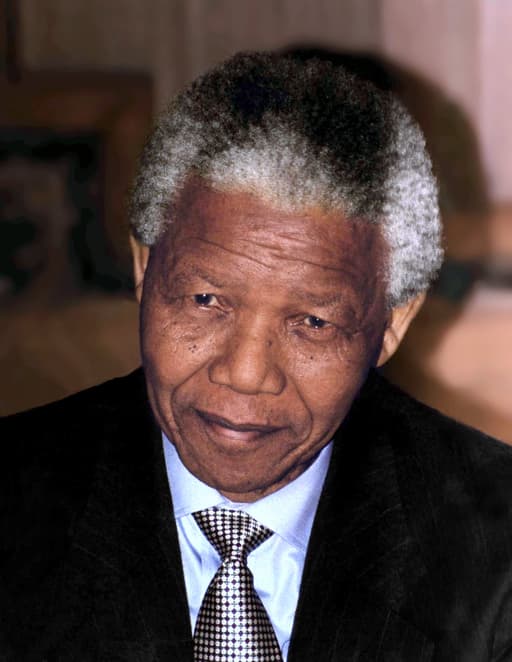
Wittenberg church, in the American and French revolutions, in the silent fatal cracking of Ghandi’s India and Mandela’s South Africa. We know that no political system that doesn’t match the power distribution of the society it governs can endure. Feudal order could not survive the pressures of liberty. Can democracy withstand the pressures of enmeshment, of massive concentration of power, of artificial intelligences. Or will the slow, inefficient reaction time of popular voting prove finally unequal to the complexity ahead of us or too easy to manipulate? Writing of the Enlightenment, the historian Leon-Michel Gambetta once explained that the goal of politics in the age of liberation and questioning was, “to derive the political and social system from the idea of reason rather than that of grace.” What to do now? In a world where we may need to derive a political system girded by tools of Al or wired by fast-moving and emergent networks, that can’t quite be derived from reason? What will the goal of politics be then? When the first AI runs for President on a ticket of pure efficacy? Or perhaps Democratic and Reblican candidates will debate who has the best AI. How will you vote? We need already to reevaluate the idea of citizenship. What is it for? And the state too. To fit these roles into an age of liberation took centuries after Luther began the reformation; we may have but decades to decide what they mean in an age of enmsemhment. Does setting geographic and age criteria for voting still make sense? One man one vote? Is there a better system to deal with complex issues? The economists Daron Aceomoglu and James Robinson, in their magestirial study Why Nations Fail marked success or collapse by these lines: Countries with “inclusive” institutions which guarded both elites and society at large have historically fared better than those (think of Russia or Latin America) that ran on “extractive” urges, nations machined to secure the profits and serenity of the elites alone. But where to fit our gated world into such an analysis, an era in which linked institutions benefit both the gated and gatekeeper? Would you say such a system was extractive as it sucks our data and habits and secrets into massive, opaque finance or machine learning systems? Or inclusive because, after all, we’re enmeshed in a web of newly found linked wealth: time, health, finance, information, security. Networks in so many ways insist on fresh considerations of power. What sorts of network design is likely to be most effective, most legitimate? Kant’s famous question of the 1780s - “What is Enlightenment?” - is one we've not yet perfectly answered or resolved. The new puzzle of “What is Enmeshment” is one we're only beginning to consider now. It too will take lifetimes to answer, and the debate will be decied in the collision of ideas and institutions we can’t even dream of today with the structures of power that tower around us now. At least we can see already that we'll need new ways to consider our future political order, mashed through as it will be by connection, machines and hot human hopes and fears. We'll certainly face our own turning points as our institutions collapse or calcify or (hopefully) redesign themselves in some modern version of Britain’s bloodless 1688 Glorious Revolution, that ineffable moment when parliamentary 204 HOUSE_OVERSIGHT_018436
Page 206 - HOUSE_OVERSIGHT_018437
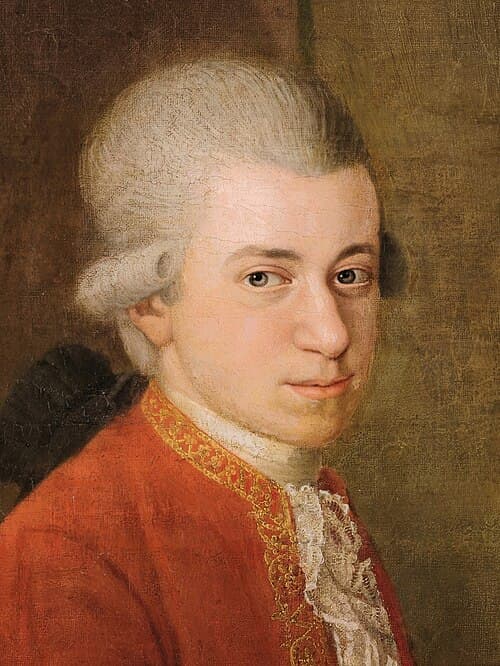
power finally achieved real grip. Recall that important distinction between “Predictive Learning” and “Representational Learning” - and how machines with a deep representation outperformed the ones merely predicting, the difference between recognizing a Mozart symphony and writing one? We ourselves need to move now from predictive to representational views of our world. We need an historical sense, of course. But something else too, that Seventh Sense I’ve been writing about. So much of what lies ahead can’t, of course, be predicted by looking at what has come before. And we won't make this leap to a new representation of the world around us with mere technology. That passage to a new, and subtle insight, to a new instinct, demands wisdom. There will be a point, several hundred years from now, when the answers to the fundamental questions we now face will be decided. A new political order, tuned to the power laws now visible with the Seventh Sense will emerge. Our question we will often ask on that long passage is this: Can more and more technology bridge the gap between the ideal society we might aim for and the troubled one we have? Or might it crank that gap wider still? My sense is that the antidote to the machines and their new logic is not, in the end to make ourselves more like the machines. Encryption alone won't protect our privacy. Mobility won’t assure our liberty. We can’t keep up with the innovations, to be honest. So we have to go deeper. Our protection will come from making ourselves more human, not just more technical. We should consider the path Su Dongpo’s life suggest, the cultivation of an inner instinct, and that this should touch on the very things that make us most human. This means to make ourselves more political, more cultured, more aware of history and ideas. Which problems do we solve with technology? Which ones with our own hearts and minds? This choice, at least, is still before us. Take a moment. Look at yourself. Feel yourself with the Seventh Sense. Through each of us now will flow all the power of this new age. Yes, it can jack apart all our old habits and fill the passage of our time with all the dangers of evil as we silently watch terrible and fearful things appear from nowhere. But we can also wake up, see the world accurately and then act with the confidence of knowing that we are, each of us, the passage through with which the future will emerge. At the very moment we might feel so many of our burdens lifted by technology, an old and heavy one crashes down upon us. It is the burden of maintaining our liberty. Now, you and me are, like it or not, what we are connected to. 205 HOUSE_OVERSIGHT_018437
Entities Mentioned
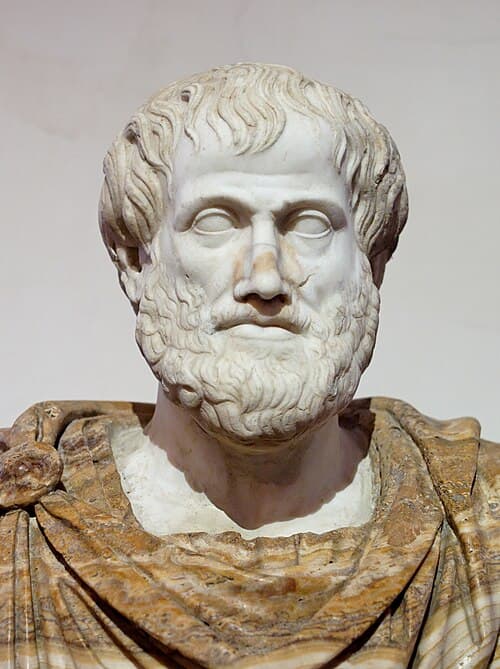
Aristotle
PERSON
4th-century BCE Classical Greek philosopher and polymath
CW
Courtney Wild
PERSON
American victim/survivor of Jeffrey Epstein who led legal battle for victims' rights
DA
Daron Aceomoglu
PERSON
Name reference in documents
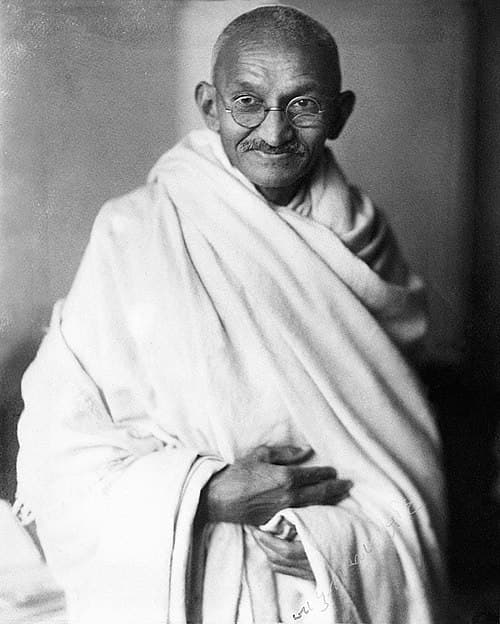
Ghandi
PERSON
Name reference in documents
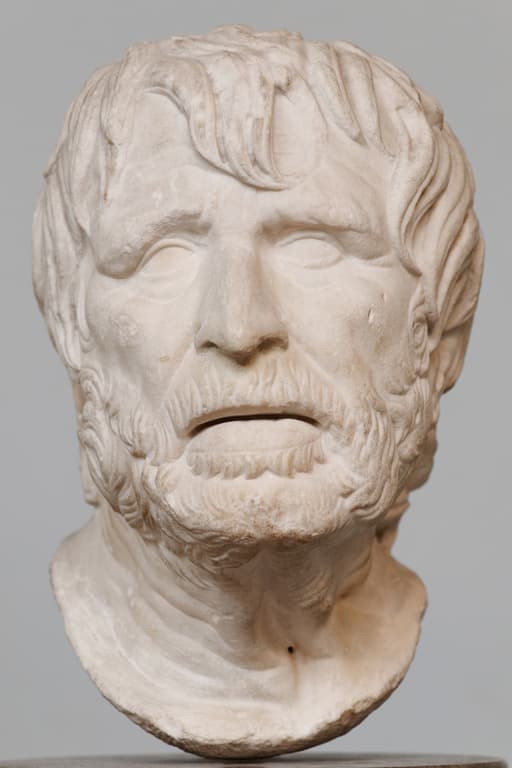
Hesiod
PERSON
Ancient Greek poet of the archaic period
James Robinson
PERSON
British writer of comic books and screenplays
LU
Luther
PERSON
First name reference to multiple individuals in the documents
Mandela
PERSON
First President of South Africa and anti-apartheid activist (1918–2013)
ME
Mingzhen Emperor
PERSON
Name reference in documents
Mozart
PERSON
References to classical composer Wolfgang Amadeus Mozart in discussions about music
Napoleon
PERSON
First name reference to multiple individuals in Epstein-related documents
Plato
PERSON
4th-century BCE Greek philosopher
Samantha Power
PERSON
Irish-American academic, author and diplomat
Socrates
PERSON
5th-century BCE Greek philosopher
Su Dongpo’s
PERSON
Name reference in documents
Su Qin
PERSON
Chinese political strategist in the Warring States period
Terry Winograd
PERSON
American professor
Thomas Jefferson
PERSON
President of the United States from 1801 to 1809
ACM Press
ORGANIZATION
Organization referenced in documents
Bringing Design to Software
ORGANIZATION
Organization referenced in documents
Plato’s Academy
ORGANIZATION
Organization referenced in documents
the New Caste
ORGANIZATION
Organization referenced in documents

Works
ORGANIZATION
2016 song by Rihanna
Hangzhou
LOCATION
Capital of Zhejiang Province, China
The Republic
LOCATION
Location referenced in documents
Statistics
Pages:6
Entities:25
Avg. OCR:95.0%
Sponsored