HOUSE_OVERSIGHT_023731_sub_002 - HOUSE_OVERSIGHT_023930
Document Information
Bates Range
HOUSE_OVERSIGHT_023731_sub_002 - HOUSE_OVERSIGHT_023930
Pages
100
Source
House Oversight Committee
Original Filename
Schank 1st.pdf
Document Content
Page 101 - HOUSE_OVERSIGHT_023831
Knowledge-Based Education vs. Process-Based Education a5 But she, too, added: “We do need accountability.” Accountability must play well in Peoria because every politician is for iby Accountability must mean to voters, I assume, that teachers will be measured by how well they teach their students. Political candi- dates, always willing to hop on an uncontroversial point of view, are all quite certain that the voters know what they are talking about. No matter how stupid NCLB is, no matter how mean spirited, no matter how awful for both teachers and students, its very horror rests on the premise that no one seems to be disputing that the federal govern- ment has the right to tell the schools what to teach and to see whether they are indeed teaching it. How is this premise wrong? e It assumes that all schools should teach the same subjects. e It assumes that some subjects are more important than other subjects. e It assumes that all important subjects can be easily tested. e It assumes that seeing who did better than whom in school is an intrinsic part of the educational process. e It assumes that all children have the same educational needs, Let’s take them one by one. ALL SCHOOLS SHOULD TEACH THE SAME SUBJECTS Why is this wrong? First, it is wrong because subjects aren’t what should be taught. But even if one follows the view presented in this book that the issue is cognitive processes and not subjects, cognitive processes need to be applied to actual domains, that are relevant to the life of the student.. Kids in New York come from, and will live in, a different world than their compatriots in New Mexico. In New Mexico, I was asked whether we could teach casino management and land use. Yes, we could, but not if there is federal accountability about algebra and 20 other sub- jects that make it impossible to fit these subjects in. HOUSE_OVERSIGHT_023831
Page 102 - HOUSE_OVERSIGHT_023832
&6 Teaching Minds SOME SUBJECTS ARE MORE IMPORTANT THAN OTHER SUBJECTS Yes, we have electives. But they don’t matter. Because accountability means making sure that we first teach what does matter. What mat- ters is the stuff that we are holding people accountable for. Since this seems to be math and science these days, for no good reason I can discern, this means that we will get to the stuff that would excite kids and keep them in school, and might teach them some job skills, after we are done with the important stuff. But I am certain that none of the politicians mentioned in the Times article knows the quadratic formula or the elements of the periodic table, which is, of course, the stuff of accountability since it is so easy to test. Then how can that be the important stuff? ALL IMPORTANT SUBJECTS CAN BE EASILY TESTED Yes, there are right answers in math. But are there right answers in whether we should have invaded Iraq? No? Does that mean we can’t teach how governments actually work and how to get reasoned argu- ments to be heard? Is there a right speech political candidates should make? Does that mean we can’t ask students to give speeches because we can’t easily assess them? Do we teach only subjects for which there are clear right answers? We do now, which is one reason why school is a deadly experience for one and all and will remain so as long as ac- countability is the key word in government. SEEING WHO DID BETTER THAN WHOM IN SCHOOL IS AN INTRINSIC PART OF THE EDUCATIONAL PROCESS It really is all about competition, isn’t it? Bush, both Clintons, and Obama are all the winners of the school competition. They went to Ivy League schools, which seems to be the real issue for most parents. I taught at Ivy League schools and I was profoundly unimpressed with the test- taking, grade-grubbing students I found there. The goal of education is not to say who won, and it is not to tell Harvard whom to admit. The goal is provide real-world skills, some of which HOUSE_OVERSIGHT_023832
Page 103 - HOUSE_OVERSIGHT_023833
Knowledge-Based Education vs. Process-Based Education 8&7 may not be so easy to assess until the graduate actually shows up in the real world. ALL CHILDREN HAVE THE SAME EDUCATIONAL NEEDS There is more than a 50% dropout rate in many high schools because we have forgotten that not everyone is going to Harvard and that going to Harvard is not the goal of education. Some children simply need to learn about ethics and business and child raising and how the legal system works, how to take care of their health and how to un- derstand when politicians are saying things that make no sense. Why wouldn’t those subjects be critical? No politician seems to think any of those are more important than math and science. How about the student who has a passion for the environment, or doing social good, or being a good parent, or running for office? Does every student’s school life have to be the same? STUDENTS LEARN THAT MEMORIZATION IS MORE IMPORTANT THAN THINKING In an answer-obsessed world, “go figure it out for yourself” or “go try it and see what happens” are replaced by more memorization. Giving kids a chance to fail helps them learn. Actively preventing failure by telling the right answer just helps kids pass tests. In each of the cog- nitive processes that I presented in Chapter 4, failure is not only an option—but it will happen all the time. One’s first hypothesis will be wrong. One will plan badly or botch a negotiation. These processes are all about failure, not right answers. Recovering from failure, getting better next time, is what learning is all about. Learning entails failure and cannot happen without it. The kind of failure I have in mind here is expectation failure. This means that we can fail even when we suc- ceed, because we didn’t expect things to happen quite like they did. Our predictions are often wrong. We work at getting better at making them and explaining to ourselves why we were wrong. This process of expectation failure followed by explanation is at the heart of learning. That’s what learning is all about. Memorization has nothing whatever to do with learning, unless you want to become a singer. HOUSE_OVERSIGHT_023833
Sponsored
Page 104 - HOUSE_OVERSIGHT_023834
8g Teaching Minds How can we offer new curricula and new ways of learning if no mat- ter what we do children must pass algebra tests? Each administration says over and over again that science is important, but since science in high school is defined for the most part by boring tests of vocabu- lary terms and definitions, who would be excited to learn science? If a really good scientific reasoning curriculum were created, the schools could not offer it unless it helped kids pass the very same tests that that curriculum was intended to replace. We must make radical change. The only way to do that is to stop focusing on teaching subjects and stop using the fact-based tests are the natural end result of that focus on subjects. An education system based on cognitive processes would look very different indeed. HOUSE_OVERSIGHT_023834
Page 105 - HOUSE_OVERSIGHT_023835
CHAPTER 8 MZ aS PE G@: New Curricula for a New Way of Teaching A smart man makes a mistake, learns from it, and never makes that mistake again. But a wise man finds a smart man and learns from him how to avoid the mistake altogether. —Roy H. Williams How do we put all this into practice? First, let’s make sure we avoid creating departments around each of the 12 cognitive processes. The organization around subjects, which is the basis of how our schools are organized, is the source of the problem in both universities and high schools. Subjects create departments. Departments in universities are a se- rious problem for students and administrators. They represent silos where decisions are made that will help the department prosper. De- partments lobby for their courses to be required so they can hire more faculty. They make sure majors in their departments follow certain rules for graduation that are intended to make students scholars in their field rather than practitioners. Departments are the reason stu- dents graduate without job skills. Faculty are almost always against practical training. English departments have to be forced to teach stu- dents to write. Computer science departments have to be forced to teach students to program in a way that would make them hirable by industry. Psychology departments avoid teaching clinical psychology, which is really what students what to learn more about. For about 10 years I have been building new online story-centered curricula. The idea behind a story-centered curriculum (SCC) is that a good curriculum should tell a story. That story should be one in which the student plays one or more roles. Those roles should be those that normally come up in such a story. These curricula are intended to teach students how to actually do something. The roles students play &g HOUSE_OVERSIGHT_023835
Page 106 - HOUSE_OVERSIGHT_023836
90 Teaching Minds in the story are ones that a graduate of such a program actually might do in real life or actually might need to know about (possibly because he is likely to manage or work with someone who performs that role). Stories have been at the center of human consciousness for a long time. People tell stories, and the stories they tell shape who they are. People hear stories and remember those that resonate deeply with them. And, people live stories. The stories they live become part of them in a deep way. While we may easily forget everything about a traditional course we took in high school, we can hardly forget the roles we have played in real-life experiences, especially when those roles went on for a long time and had emotional impact on us. The central argument here is that good education requires good stories—not solely stories that one is told, however. A good education relies on the creation of stories that a student can participate in and feel deeply about. This means that those stories must include others who are playing roles the student will have to deal with on the job, and that the roles the student plays in the stories must relate to the current or future roles that the student intends to play in his or her career. The SCC is inherently goal-based. The goals must be those that a student has already. For small boys, for example, it can be assumed that the idea of building a truck or designing an airplane is an activ- ity that would grab their interest. For older students, these would be ones like current or future job assignments. In an online world, it is quite possible to create hundreds or thousands of choices and allow students to pick what they want to do—not what they want to study, but activities that genuinely excite them. The SCC is inherently activity-based. The tasks that constitute the SCC must relate to goals that the student has and the tasks that people actually perform in the roles that the student will play when the train- ing is completed. Thus, an SCC is made up of a set of real-life types of tasks that make up the bulk of the work done by the student, and a set of events that occasionally interrupt or augment those tasks. Thanks to a grant from the Kauffman Foundation, we built a full- year (all day, every day) high school curriculum in health sciences. This would be, ideally, used in a high school that offered perhaps over 100 full-year curricula. Students would choose four that they liked and after completing them would graduate from high school. All of the curricula would teach what it is like to live in a part of the real world, as well as allowing for practice in the 12 cognitive processes. It takes HOUSE_OVERSIGHT_023836
Sponsored
Page 107 - HOUSE_OVERSIGHT_023837
New Curricula for a New Way of Teaching 97 a while to build these SCCs and they are quite expensive to build, but they cost less than building a new school, so the money could easily be made available. Let’s look at the health sciences curriculum we built. The year in health sciences comprises nine “rotations,” each last- ing 3 to 4 full-time weeks on average, in which students experience what it is like to solve the kinds of problems real professionals solve in various specialized fields related to biology and healthcare. These experiences are set in realistic stories in which the students play a leading role. The rotations are conducted consecutively. Students pri- marily work on assigned projects in teams, although each rotation has independent tasks as well. Each of the rotations was created with the assistance of an expert in each of the respective specialties. One goal of the curriculum is for students to discover that prac- ticing science is fun and relevant to real-world problems. They also should develop a sense of what it would be like to work as a practitio- ner in the various health sciences fields, so they can decide whether they might someday like a career in healthcare or biology. Of course, the real goal is to enable practice in the 12 cognitive processes. Let’s see how that happens. The rotations in the year in health sciences are: 1. Internal Medicine—Students diagnose and develop a treatment plan for a fictional patient who has a major illness and ultimately requires an organ transplant as a part of his treatment. Students also make judgments about ethical issues related to transplants, following a principled approach to ethical reasoning. 2, Nutrition Advisor—Students coach fictional nutritional advisors on their management of teenage clients’ nutritional concerns and issues. During the process they also develop nutritional plans for themselves and for a peer. 3. Super Worm—Students work for a fictional philanthropic billionaire who asks them to invent ways of modifying the common earthworm so it can more efficiently improve soil to better supply the world with food. 4. Sports Medic—Students diagnose and develop treatment plans for patients who have sports-related injuries. In the process students produce in-depth reports on additional issues related to sports medicine. HOUSE_OVERSIGHT_023837
Page 108 - HOUSE_OVERSIGHT_023838
92 Teaching Minds 5. Designer Genes—Students consider ethical and political issues related to genetic engineering, for example, cloning, gene therapies, and the manufacturing of drugs. In the process they learn about DNA and the basics of genetic engineering. 6. Plant Plague—Students working for a fictional county farming agency are faced with an anomalous powdery mildew that has infected wheat in their local area. They investigate how the new strain of mildew arose and how it spread to this area and crop in particular. They work to develop a treatment for the current crop; then they develop a way to alter the wheat or the way in which it is grown to prevent future fungal outbreaks. 7. Medical Detective—Students work with the fictional county medical examiner to conduct medical investigations. They are asked to determine the time and cause of death for various mysterious cases. 8. Cutting Costs Without Cutting Care—In this rotation, students consider business aspects related to healthcare. Students play the role of a hospital consultant whose job it is to discern why the hospital is losing money and make recommendations for correcting the situation. In the process they confront ethical issues related to cutting costs in the area of healthcare. 9. Outbreak—In this rotation, students work in the areas of infectious disease, epidemiology, and public health administration. They begin by diagnosing the cause of a fictional patient’s infection that stems from bacteria in a food item. They then learn that many people across the country have been found with similar illnesses. Students have to develop a plan to manage the outbreak due to the availability of the food item to a wide population. Later they are fictionally hired to develop a readiness plan for a possible worldwide pandemic. Students spend weeks in each rotation. What do they learn? Remember, the answer cannot be that they learn about health sci- ences. Why not? Because that is really not the issue. No high school student learn- ing a subject really learns that subject. Students forget what they have HOUSE_OVERSIGHT_023838
Page 109 - HOUSE_OVERSIGHT_023839
New Curricula for a New Way of Teaching 93 learned in a day or in a week or a year. Professors always assume that entering high school students need to be retaught the basics. They may pick up the general idea but in reality the content of the subject area is, at best, vaguely understood. What they can learn is that they like a subject or have an interest in learning more. The only other thing they can learn involves the 12 cognitive pro- cesses. So let’s look at how the health sciences curriculum covers these processes. By explicit design, all of the health science rotations emphasize all four of the “social processes.” The students work in teams (teamwork), sometimes even in collaboration with other teams. The students and teams necessarily try to influence one another, negotiate with one an- other, and constantly have to describe their points of view and their results. The step-by-step instructions that are part of every rotation explicitly discuss how best to handle this. Now let’s look at four of the rotations in detail. INTERNAL MEDICINE The essence of this rotation is learning about how to do diagnosis, in this case, of liver disease. Students watch a detailed interview with the patient, select (after some orientation) specific tests to administer, receive the results, and report suggested diagnoses. They must com- municate what they have discovered. So they describe the patient’s symptoms and must analyze and discuss the causation of the patient’s symptoms. Then they begin to plan a course of action. Planning what to do is a major component of this rotation. To do this they must make a judgment as a crucial part of the diagnostic work. They must do this again as well in the ethics unit that occurs later in this rotation. In that unit they undertake a detailed study of both medical and ethi- cal issues in liver transplantation—which is where evaluation comes into play. Here the students become consciously aware of their values as they decide how to influence medical and ethical choices, SUPER WORM The students plan carefully for this unit (a hypothetical redesign of the earthworm to make it even more helpful in agriculture). Hypothetical HOUSE_OVERSIGHT_023839
Sponsored
Page 110 - HOUSE_OVERSIGHT_023840
94 Teaching Minds experimentation is performed repeatedly as the students predict the effects of various modifications of the worm’s anatomy. Describing their conclusions is important—the project’s goals; the worm’s anat- omy, physiology, and behavior; and the interaction of anatomy and function. SPORTS MEDIC The core of this rotation is four athletic injuries. In each case the stu- dents examine the patients, describe their observations in detail, and perform a formal differential diagnosis. The students must use judg- ment and modeling to predict the effect of providing a competitive athlete with an artificial bone implant. DESIGNER GENES This rotation has three primary activities. In all three, evaluation plays a role as they discuss genetically modified animals, crops, and muscles. Describing, planning, and influence all are involved as the students prepare a congressman for hearings. All four of the social processes come into play in formal debates. What should be clear here is that what the health sciences curricu- lum seems to be about and what it is actually about are very different things. It seems to be about teaching health sciences content, when what it is really about is having students practice various cognitive processes that occur again and again throughout life. This was the goal of the design, pure and simple: to help students practice thinking. It really doesn’t matter what arena they are thinking in. We get them interested in thinking by having them think about something that interests them and is connected to a world they may wish to explore later on in life. They may indeed learn something about that world as well, but the point is the cognitive process-based education, not the subject-based education. I thought of the idea of building SCCs instead of using the normal set of courses that constitute most students’ school year when I took a job with Carnegie Mellon University (CMU) as the Chief Education Officer of its new West Coast campus, located in Silicon Valley. There HOUSE_OVERSIGHT_023840
Page 111 - HOUSE_OVERSIGHT_023841
New Curricula for a New Way of Teaching 95 were no faculty located at this campus, since Carnegie Mellon is in Pittsburgh. I took this as an opportunity, not as a problem, since fac- ulty want to teach the way they always have taught. Lecturing is easy and faculty like to do it. Students have learned to cope with lectur- ing and later cramming for tests, so no one complains much. No one learns much from this, but no one seems to be too concerned about it. I was asked to design master’s degree programs in computer sci- ence. It seemed to me that students entered a master’s degree program because they wanted to get a good job after graduation, so I asked what jobs they were preparing for as I looked at each Pittsburgh cam- pus program. Even though the faculty in Pittsburgh had been teach- ing these master’s degree programs for years, faculty members were surprisingly unconcerned with what students did after graduation. They just taught their courses, their specialties actually, and assumed the students would find value in them. This seemed an odd state of affairs to anyone who looked at it from the outside, but as professor I know that faculty are rarely concerned with master’s degree students at all and naturally wouldn’t have given these programs that much thought. There was a great deal of hostility to the SCCs that were built by my team and me. They were seen as threatening the existing structure of courses and lectures. Nevertheless, the students liked them a great deal and the people who mentored in them, after some initial resis- tance, began to like them and promote them. This happened in the areas of software engineering and software development. The faculty in e-business liked what we had built so much that they got rid of the existing course-based, e-business master’s degree they had offered in Pittsburgh and now offer only the SCC version on the main CMU campus. SCCs work and work well. Students learn actual skills and teach- ers feel like they are helping students do something real. But faculty, who are used to the old classroom-style method, often resist doing the hard work now required of them. This is true for students as well. One mentor in the West Coast e-business program who himself had gradu- ated from the Pittsburgh classroom-based program said that he felt sorry for the kids on the West Coast campus because they had to work so hard. He noted that they were learning a lot more than he did but that he had liked sitting in the back of the classroom and ignoring the teacher. It was much easier and he had done well at that. HOUSE_OVERSIGHT_023841
Page 112 - HOUSE_OVERSIGHT_023842
96 Teaching Minds A story-centered curriculum is intended to teach cognitive pro- cesses, not subjects. Subjects are, of course, covered, but they are not really the point. Certain things need to be done again and again in life, but those things can be learned only in context, not as an ab- straction. Different contexts must be provided in order to motivate students and to provide real-world skills that will be remembered, not because they were studied and tested, but because they were practiced again and again. What is life like in a story-centered curriculum? The first ones we built were built as master’s degree programs at Carnegie Mellon’s new West Coast campus. Here is Max Soderby, a mentor in the first one of those master’s programs, talking about his experience: Iam almost jealous in a way because I see that they are gaining skills more rapidly than I gained them when I was a student in Pittsburgh at CMU’s campus. They get exposure to things that we just talked about in a lecture hall, whereas they are actually doing it: implementing actual software and putting designs into practice. We mostly did homework and talked about it ina lecture hall. So I am jealous in that respect. It is also a lot more work, but that work pays off for the students. Subject-based education is not really supposed to be training for work. I once proposed to the president of Yale (Bart Giamatti) that we build a master’s degree program in an area of computer science that would help get people jobs after graduation. He said that that was training and that Yale does not do training. The academic subjects taught at Yale are meant to produce scholars. But, in a way, he was very wrong. Yale does do training. Yale and almost all other colleges are divided into departments, and a major in a department’s subject typically is seen by the faculty as preparation for an academic career in that subject. The students may well have a different point of view, however. Unfortunately, they come away disappointed. An English major could be hoping to become a journalist, but the education that he will re- ceive is more likely to be appropriate for creating an English profes- sor. A math major may well want to be an actuary, but will not learn actuarial science at Yale. He will learn to be a potential mathematics professor. And, worst of all, in my own field of computer science, the HOUSE_OVERSIGHT_023842
Sponsored
Page 113 - HOUSE_OVERSIGHT_023843
New Curricula for a New Way of Teaching 97 very idea that a Yale degree would make you capable of getting a good job as a programmer is frowned upon by the faculty. They are training computer science professors. This is the logical end result of subject- based training. Now, what Giamatti had in mind as the end goal of college, training for the mind, is a noble enough ideal, and a natural out- come of cognitive process-based education. The classic liberal arts view of education, one that a reader might think I am not in favor of, is actually a better model than the model that has evolved in the nation’s top universities. The idea that you should try thinking in a variety of fields is a better plan, and one more in line with what I am proposing here, than the model that exists on most universities’ campuses. The latter model, the one that makes students major in a subject and thus supposedly become prepared to work in that field, is really just a big lie. There is nothing unusual here. Here again, is a statement from the Ivy League professor whom I quoted earlier: There is an unspoken rule at places like my university that if you are really good, you do exactly what your teacher does. So what are these schools training students for? It could be only one thing—to become professors. There is no attempt to teach practical real-world applications of the ideas taught in classes, in part because the faculty themselves don’t know those applications. Here is the Big Ten computer science professor again: There are roughly 60 faculty members in computer science. They cover all the traditional areas of computer science. Ironically, software engineering, which is what 90% of the undergraduates do when they graduate, is not covered. It is not considered an intellectual or academic discipline. It is considered too practical. There is only one software engineering course and it is taught by an adjunct because no one really cares about it. This is a real problem because (the Big Ten professor again). . . There are hundreds of computer science majors here. The faculty doesn’t feel it needs to change because there are students HOUSE_OVERSIGHT_023843
Page 114 - HOUSE_OVERSIGHT_023844
98 Teaching Minds clamoring for what is now offered. Ninety-eight percent of them want to be programmers, Almost none of them want Ph.D.s. I cannot go to a faculty meeting any more. I get into a fight at every faculty meeting. I argue about teaching and education and they think they know because they are professors. I cannot subject myself anymore to their abuse. These problems exist precisely because of the subject-based education system. That system is about factual knowledge, and it is this emphasis on factual knowledge that has given rise to the testing mania that has swept the country. These problems exist because the real mission of the university is very different than the general public imagines. Here is a quote and a story that I rather like: A university is what a college becomes when the faculty loses interest in students.—John Ciardi Benjamin Franklin told the story of some Massachusetts commissioners who invited the Indians to send a dozen of their youth to study free at Harvard. The Indians replied that they had sent some of their young braves to study there years earlier, but on their return “they were absolutely good for nothing, being neither acquainted with the true methods for killing deer, catching beaver, or surprising an enemy.” They offered instead to educate a dozen or so white children in the ways of the Indians “and make men of them.”(From Benjamin Franklin, An American Life, by Walter Isaacson) What has changed? Key life skills no longer include catching beaver. Otherwise, things are pretty much the same. Change “catching bea- ver” to any modern daily skill, and Franklin’s story is just as valid today. What do students really learn at a great university? Parents never really ask this question. They just know that their kid got into a good college and that their child is lucky to go there. Should you avoid sending your child to top schools because they don’t teach so well there and really don’t plan to improve the situa- tion any time soon? HOUSE_OVERSIGHT_023844
Page 115 - HOUSE_OVERSIGHT_023845
New Curricula for a New Way of Teaching 99 No. Of course not. If your child gets into Yale, send her there. It is a great place. But you should know what Yale actually has to offer and what it doesn’t. If your child wants to be a professor, Yale is the place. If your child wants to be an intellectual, Yale is the place. If your child wants to go to law school, Yale is the place. If your child wants to hobnob with the best and brightest, Yale is the place. If your child wants to have a fun time for 4 years, Yale is the place. Then what is wrong? There is a problem only if you think that there is a different reason to go to college than the reasons I have listed above. Oh. There is this other problem. Many of the other 3,000 colleges are trying very hard to imitate Yale. They attempt to provide similar experiences and they can’t pull it off. Yale is a unique place. The na- tion can afford only so many unique places, however. We cannot af- ford having the main university of a state thinking it is Yale, as my state university friend suggests. If every university has as its main fo- cus research and not education, then the best and brightest of each state will be trained, not necessarily willingly, to be academics rather than practitioners. There will be a great many students who came to school for an education that will help them in their future lives who will be disappointed to find out that that is not the type of education being offered. Professors at Yale are playing the prestige game. Unfortunately, they are hardly alone in this. My state university professor again: We definitely want to be part of the superstar system but we have no superstars. If we had them, we would probably lose them to Harvard and Yale anyway. Nevertheless, we are obsessed with the National Rankings put out by places like U.S. News and World Report. Faculty and deans say they are not obsessed with them, but rankings are an important part of the evaluation process and shape a department’s growth. We want to be in the top 4 or 5 universities. We are not but that’s what we want to be. HOUSE_OVERSIGHT_023845
Sponsored
Page 116 - HOUSE_OVERSIGHT_023846
100 Teaching Minds U.S. News and World Report's annual rankings weigh heavily on the minds of the faculty and administration of universities who are in the prestige game. These rankings are based on numbers: average SAT scores of admitted students, average rank in class of admitted students, faculty publications, and many other numbers that come out in favor of research universities with world-class faculty. But world-class fac- ulty means faculty who care about research and not about teaching. While there certainly is no harm in going to Harvard or Yale, the suc- cess of their students hardly depends on what they learned in those places and depends a great deal more on the fact that the best and the brightest are the ones who go there in the first place. These places get away with teaching courses in obscure issues in literature and history, or in economic theory or in complex math- ematics, by pretending that they are really teaching students to think. But does knowing obscure information necessarily imply that one is a good thinker? A good thinker, I claim, would be good at each of the 12 cognitive processes. What does it mean to be good at prediction, for example? Is a 2-year-old good at prediction? Is a dog good at prediction? Is a profes- sional gambler good at prediction? Is a stock trader good at predic- tion? Is a mother of a toddler good at prediction? Is a politician good at prediction? Is a scientist good at prediction? We actually are quite good at assessing the ability of others at pre- diction precisely because we have data to support our conclusions. We know how good gamblers or stock traders are at predicting. If they are very successful, we can say they are brilliant at what they do, or we can say they are lucky. Those are our choices. The same is true of scientists. Most scientists make predictions, and those that are proven right are seen as brilliant. Luck enters into science as well and quite often scientists say that a given Nobel Prize winner was lucky and isn’t really all that bright. Dogs are seen as being smart (for a dog) when they can correctly predict the arrival of their master or bad weather or threats, and are seen as stupid when they bark at thunder. Their behavior is seen as stupid precisely because of the erroneous prediction that barking will scare the thunder away. A dog’s inability to predict is exactly why we think dogs are dumb animals, and when they surprise us with an ac- curate prediction, they are seen as smart. Of course, we don’t expect dogs to predict who will win the big game. We know their limitations. HOUSE_OVERSIGHT_023846
Page 117 - HOUSE_OVERSIGHT_023847
New Curricula for a New Way of Teaching 107 But it is not only the accuracy of predictions that factors into our sense of a person’s or an animal’s ability to think. We say that a person is intelligent even when he predicts badly, if he gives good explana- tions for his predictions even though they don’t pan out. So when a sportscaster gives his prediction about the outcome of an upcoming game, we think he is intelligent if he has thought it out carefully, and if his explanation is coherent, and if his reasoning is sound, and we give extra credit if some of his ideas are surprising in some way. So, even if he subsequently turns out to be wrong, we still think he is good at thinking. But prediction is actually quite complicated to judge. We respect great predictors. We think people who can predict well, especially those who can explain their predictions well, are very intelligent. But, often, we see intelligence when it may not be there. The reason is scripts. And we may fail to see it when it is there. The reason for that is explanations. Scripts and explanations are at the beginning and at the end of intelligent behavior. What do I mean by that? When a child is learning about the world, she is learning the scripts that commonly are followed in the world that she inhabits. I have explained this at length in two different books,’ so I will just summarize here. Scripts tell us what will happen next in the aspects of the world that repeat frequently. Anyone who goes to a restaurant knows that when you order food, someone will bring it to you and later you will be expected to pay for it. There are lots of variations on this standard restaurant script, however. It doesn’t work quite like that at Burger King. The script is different but there is a script there too and we learn it if we frequent Burger King. The restaurant script has many varia- tions and we are initially confused when we encounter a new one, but we learn through repeated practice. And, we generalize so that we can understand that the McDonald’s script is pretty much the same as the one at Burger King. We can predict what will happen next in the world based on ex- periences we have repeated. Following scripts is so normal that it is not seen as a sign of intelligence to be able to do it. We don’t exclaim: Wow, he predicted that the waitress would bring what we ordered and she did. Amazing! But the opposite is certainly seen as a sign of stupidity. Once one has experienced something many times, one should know what will HOUSE_OVERSIGHT_023847
Page 118 - HOUSE_OVERSIGHT_023848
102 Teaching Minds happen next in that arena. Dogs usually know the scripts that pertain to them, as well. They know which merchant will have the dog biscuit for them, for example. People seem astonishingly dumb when they can’t predict what is obvious to everyone else. Not knowing what will happen next in a script you don’t know, because you don’t have the relevant experi- ence, means nothing at all, of course. The question is: If you have experienced something repeatedly, why haven’t you figured out that what you have seen before will happen again? Script following is, therefore, a sign of intelligence but a very lim- ited one. We can blindly follow a script, and this can make us seem dumb indeed. Since scripts vary one from the other in many ways, the ability to see the nuances makes all the difference. Expecting that a fast-food restaurant will be the same as a three-star Michelin res- taurant because it is a restaurant after all is what makes people seem stupid. Failing to make the right generalizations indicates a lack of thought. The real question is this: What do you do when your script fails? This is important because scripts fail all the time. You expect some- thing to happen and it doesn’t. You love the cheesecake at Lindy’s and suddenly it doesn’t serve cheesecake. Or you find that Lindy’s is now out of business. What do you do? People recover from script failure on a daily basis. How they do this tells us a lot about how the mind works. When people refuse to abandon the generalizations they have made, they immediately are perceived as being stupid. When a medi- cal assistant asked me the other day about the upcoming Thanksgiv- ing holiday, I responded that I would be eating duck instead of turkey. She said that sounded awful and that duck was greasy and gamey and it sounded like a terrible idea. I asked her if she had ever eaten duck and she said no because it was game and she hated game. I told her it wasn’t gamey. She refused to believe me. I was about to recommend trying magret de canard but thought better of it and asked if she had ever eaten in a French restaurant in her life. She said that she hadn't. People who have scripts often generalize them so that in their own minds they experts on things that they have never experienced. This is what stupid looks like. On the other hand, we might wonder what smart looks like. Let’s imagine the same woman with the same beliefs hearing me say that duck was not gamey or greasy. Intelligent people respond, when they HOUSE_OVERSIGHT_023848
Sponsored
Page 119 - HOUSE_OVERSIGHT_023849
New Curricula for a New Way of Teaching 103 are confused, or when a long-held belief is challenged, with a request for evidence. She might have asked where she might try duck or what duck tasted like since she had not understood it correctly. She might have allowed for the possibility that she was wrong and asked to know more. But she didn’t. People who aren’t intellectually curious rarely do. This kind of dull thinking is not so much a matter of genetics as it a matter of not having been educated properly. And, that is, of course, the real issue here. If a child grows up in a world where questions are expected and where long-held beliefs can be abandoned because of new evidence, he will seek such interactions. But a child who grows up in a world where adults set themselves up as knowing everything and no one’s beliefs are ever questioned, you will get mindless behavior like this. Of course, it doesn’t matter if this woman doesn’t try duck. It is likely, however, that this behavior pattern—learn rules and never question them—pervades her life. This leads me to my main point. Scripts are great things to have. They get you through the airport. They get you through Burger King. They get you through most of the mundane aspects of life. But scripts need to be modified. They fail all the time. The airport starts a new check-in procedure. The restaurant you always go to deletes your favorite item from the menu. The store you always shop in is getting very crowded. At some point we encoun- ter script failure and we deal with it. The question is how. We deal with script failure using two key procedures. It is our facil- ity with these procedures that differentiates intelligence from stupid- ity. Thinking depends on them, and everyone must do them when trying to think. But not everyone does them well. The procedures are: Generalization Explanation These are not new ideas in the context of this book. Explanation is one kind of describing. Generalization is the method by which we do prediction, make judgments, do diagnosis, and determine causation. We generalize whenever we try to think. This entire book is a generalization. It is an attempt to make sense of a vast array of information. That is what generalization is all about. The book is also an explanation of the generalizations I have HOUSE_OVERSIGHT_023849
Page 120 - HOUSE_OVERSIGHT_023850
104 Teaching Minds found to be true. At the core of thinking, you find generalization and explanation. But it is important to remember that what starts the process of generalization and explanation is failure. Without failure we don’t try to generalize and explain because we have nothing to generalize and explain. Thinking, therefore, looks like this: Make a prediction Prediction fails Make a generalization Explain your generalization Make a new prediction Let me explain how this works and why one cannot think well if one cannot do this. To explain, I will tell a personal story relating to my own thinking and learning with respect to two of the twelve cognitive processes. I will explain afterwards why I have chosen to tell stories and why I have used personal ones. DESCRIBING Let’s start with describing. There is, of course, an art to describing. Anyone who writes and anyone who speaks publicly is learning all the time about describing. Since I was a professor for 30 odd years, and since I have written hundreds of papers and about 25 books, and since I have given numerous keynote speeches around the world, I have been thinking a great deal about describing for many years. I learn something whenever I speak publicly because I can easily tell whether I am being heard or not. Are the listeners on the edge of their seats or are they half asleep (or literally asleep)? I learn when I write because I read the reviews, and colleagues are always happy to tell me what was wrong with what I wrote. Once, I was given a lesson in public speaking by someone older and wiser than me that I never forgot. I recently had been hired at Stanford as a professor. I was pretty young (22) and full of myself. In those days, the Computer Science Department ran a course for new graduate students that served as an introduction to all the special re- search possibilities in artificial intelligence for those who wanted to enter that field. There were many faculty in AI at Stanford and each HOUSE_OVERSIGHT_023850
Page 121 - HOUSE_OVERSIGHT_023851
New Curricula for a New Way of Teaching 105 got a week to talk about what his work was about. The goal was to try to convince students to sign up for a special research seminar with that faculty member the following quarter. My champion at Stanford was a psychiatrist named Kenneth Col- by. He invited me to share his week and thus we would be a team for which students could sign up the following quarter. I listened to his talks to the students. He was very funny but rather light on content, in my opinion. I wasn’t impressed. But, after I spoke, he said something to me I never forgot. He said: If you try to say everything that you know in an hour, either of two things is true. Either you can do it and therefore you must not know very much, or else you can’t do it and you will talk way too fast trying to fit it allin and you will be generally incomprehensible. I listened to what he had to say, but I wasn’t sure he was right. At the first meeting of our jointly run seminar, we discovered that we had won the student jackpot. While other faculty had gotten four or five sign-ups, we had gotten 25. I was very proud of myself until the students went around the table to say who they were and why they had signed up. Not a single one of them had signed up because of any- thing I had said. They had been mesmerized by Colby. Then I reheard in my head what Colby had told me the previ- ous quarter. He had entertained them—not overwhelmed them. They thought he would be interesting and fun and they wanted to work with him. While I had looked down on his lighthearted presentation style, it turned out he knew what he was doing. So, what did I learn and how did my thinking change? Thinking, as I said earlier, looks like this: Make a prediction Prediction fails Make a generalization Explain your generalization Make a new prediction What was my prediction? I had predicted that speaking quickly with a great deal of brilliant content would woo the incoming students. This was simply wrong. I needed to make a new generalization. Fortu- nately, I did not have to do the work myself. Colby had helped me by supplying a generalization that he believed to be true. (Good teachers HOUSE_OVERSIGHT_023851
Sponsored
Page 122 - HOUSE_OVERSIGHT_023852
106 Teaching Minds do exactly this: They supply generalizations when a student needs one and cannot come up with one by himself after a prediction that he made has failed.) The generalization that Colby supplied was, more or less: Be enter- taining if you want to attract followers and be listened to. Was he right? Is this a good generalization? The next step in thinking is: Explain your generalization. What this means here is that I needed to understand why this might be true. If possible, one wants to test out the new hypothesis. Fortunately for me, I had many opportunities to speak in public over the next 40 years. I tried many different methods of teaching and lecturing. Enter- taining always works. Colby was right. But I said that one needs to explain why it works. This is my expla- nation: People have trouble paying attention to someone who talks for an hour. Human beings are not built for this. Our ancestors certainly didn’t listen to lectures. People communicate best by asking questions and interrupting. Since this isn’t possible in a lecture, any questions they might ask, they ask themselves and try to answer. While they are thinking about what a speaker says, the speaker keeps on talking. No one can really hear a lecture, in my opinion. So, a good speaker, recog- nizing this, does not try to make the audience do that. He makes them laugh, he paints interesting pictures for them to ponder, he amazes them perhaps, but he does not try to get them to, nor does he expect them to, remember all that he has said. The less content, the more likely they will remember. Colby knew all this. I learned it over time. He jump-started my thinking. By now, this new generalization of mine, together with my expla- nation, is part of my core beliefs. But any belief can be challenged by reality. And, any new belief generates new predictions. So I predicted that if I was funnier when I spoke, people would appreciate what I said more. I also predicted that if I didn’t speak much in a graduate seminar and let students argue with one another, they would get more out of it. After 40 years I still believe these things. But, and this is the important part, there are nuances upon nuances about all these is- sues in my memory. I need to explain it simply when I write or speak about it, but when I think about it, I recall all kinds of exceptions and caveats. I know, or at least I think I know, a great deal about speak- ing and have lots of memories about specific successes and failures. Thinking and learning require one to recall one’s experiences, analyze those experiences, come up with new hypotheses about failures, make HOUSE_OVERSIGHT_023852
Page 123 - HOUSE_OVERSIGHT_023853
New Curricula for a New Way of Teaching 107 new predictions, and be prepared for these predictions to fail. This is what thinking looks like no matter which cognitive process is being thought about and practiced. DIAGNOSIS Now let’s talk about diagnosis. Again I will start with a story. This is one I have been telling for a long time because it informs us about how the mind works. I was discussing with my colleague (Bob Abelson) how it could be that my wife could not seem to make steak rare (as I like it—she is no longer my wife, but not because of this). Bob responded that he couldn't get his hair cut as short as he wanted in England 20 years earlier. This seems on the surface to be a rather odd response, but when we look deeper we can see that I was saying something like, She could do this right if she wanted to, and he was thinking, Maybe she thinks the request is too extreme, as happened to me with a barber in Eng- land many years ago. Matching odd situations to other odd situations and seeing the similarity is what creative thinking is all about. Bob was trying to di- agnose a problem that had been on his mind for a long time, and my new story provided him with new evidence to think again about what the proper diagnosis might be. This is what thinking looks like. It is also what reminding looks like. People get reminded precisely because they are trying to match a new situation to one they already know about and thereby determine what to do next. To put this another way, diagnosis depends on prior diagnosis. We constantly are trying to improve our diagnostic capability because we always strive to make better decisions no matter what arena these decisions are in. The fact that the improvement of diagnostic capability is not explicitly part of each and every curriculum in school is scandalous. When we design new curricula, we need to ground them in some realistic framework that will enable students to practice things that they might end up doing in the real world. But that does not mean that the real issue in designing these curricula is anything other than teaching thinking, that is, enabling practice in the 12 cognitive pro- cesses. However, teaching thinking in the absence of a context that truly interests students is absurd. HOUSE_OVERSIGHT_023853
Page 124 - HOUSE_OVERSIGHT_023854
HOUSE_OVERSIGHT_023854
Sponsored
Page 125 - HOUSE_OVERSIGHT_023855
CHAPTER 9 MZ i CG: i How to Teach the Twelve Cognitive Processes That Underlie Learning The art of teaching is the art of assisting discovery. —Mark Van Doren We need to completely redefine what we mean by school and what we do in school. We need to think about education in a new way. Rather than wanting people to be educated, which usually means being able to quote Shakespeare or nod sagely when Freud’s name is mentioned, we need to expect people to be able to think well. Education would be better defined by defining an educated person as one who can make well-reasoned arguments for what they are about to do. We must focus on teaching cognitive processes and abandoning the subject-based (and test-based) education system we have now that is clearly failing. The reason we have all those tests is simply because we have no idea how to make people learn all the stuff that is part of that subject-based system without threatening them. No one really wants to learn the Pythagorean theorem or information about the Taft Hartley Act. Let scholars know about these things; the average person just doesn’t need to know this stuff. But all people do know how to find and use the mathematics they need when they have continually practiced it, and they know how to find prior relevant experiences when they have to come up with a new plan they want to propose. That simply does not mean we have to tell it all to them years before they might ever make use of it. In the age of the Internet, just-in-time learning is a serious reality. We can change things now in part because we have information read- ily available online. But the Internet has been designed by committee. It has much in it that is nonsense, and finding what you need just in time can be quite difficult. Still, it would not be that complicated to de- sign a different kind of Internet, the moral equivalent of Encyclopedia 109 HOUSE_OVERSIGHT_023855
Page 126 - HOUSE_OVERSIGHT_023856
110 Teaching Minds Britannica, if you will. It would be filled with knowledge from experts that had been vetted by other experts and delivered seamlessly with- out your having to search for it. You don’t need to bea scholar in order to make reasoned decisions. You just need to know how to find infor- mation to help you think things out well. This means that learning to think clearly and knowing how to assess the value of new evidence that one has found, must be the main goal of any school system. When does school start to falter? One way to think about school is to ask about the significance and age-related properties of each of the cognitive processes. Let’s see if we can rank the processes in terms of age. Which of these processes would we expect a child who was entering school to already be able to do? To put this another way, a normal 5-year-old: 1. 11. 12, can make some accurate predictions about very simple things, like where his mother might be and what she might be doing and what will be on television would have trouble modeling any process has a limited sense of evaluation but knows what he likes would be able to experiment with simple things like food and toys might be able to do limited diagnosis of what might have gone wrong in a process, but it typically would be limited to explanations that he had heard from someone else might be able to do limited planning based on plans that had been used before might know something about causation because he would have been told about it and remembered what he had been told can make some judgments based on his own tastes and what he has been taught about what is good and what is bad can do some describing, but typically is not at all good at it . should be able to influence some people, especially his grandparents should be able to work in a simple team together with kids his own age toward a goal should be able to do some simple negotiation, especially with his parents, siblings, and some friends HOUSE_OVERSIGHT_023856
Page 127 - HOUSE_OVERSIGHT_023857
How to Teach the Twelve Cognitive Processes 177 So, upon reaching school age, a child can do some of the cognitive processes. Now the question is, How to we teach him to get better at them? First let’s see what the cognitive processes fundamentally have in common. This will give us a way of thinking about how to teach them. The first and most important thing they have in common is that they all rely on a case base. We have all engaged in each of these processes many times and we have a range of experiences we can call upon to guide us the next time we find ourselves doing them. Each process relies on a story base as well. We can tell stories about inter- esting experiences we have had in doing each one of them. Stories usually revolve around failures, or at least unexpected results, since without these there are no good Stories to tell. Engaging in any cogni- tive process includes the possibility of making a mistake during the process. We expect to get smarter each time as a result of any mistakes we make. This is what cognitive processes are like. We learn cognitive processes through experience and we index the failures we have so that we can find them again and perhaps avoid making the same mis- take. When we avoid an error that we know we have made previously, we say that we have learned. It follows, therefore, that acquiring a case base, learning the sto- ries of others and learning to tell our own stories, and learning classic mistakes and being able to analyze behavior to find a mistake are all aspects of learning the cognitive processes. Acquiring the case base and consciously analyzing the cases in that case base, then, is the fundamental issue in teaching the cogni- tive processes. HOW TO TEACH PREDICTION We live in a physical world but we also live in a social world. Children need to understand that if they drop something heavy on their foot, it will hurt; they also need to know that if they do something mean to someone, the person may dislike them for it and may seek revenge. We use predictions to figure out what will happen as a result of our actions and then we use that knowledge to guide us in our future HOUSE_OVERSIGHT_023857
Sponsored
Page 128 - HOUSE_OVERSIGHT_023858
1712 Teaching Minds actions. What kinds of predictions do children regularly make, then? And, what can we teach and how can they learn? 1. Children predict the actions of the people that they interact with, but they do not necessarily realize that they do this. 2, Children predict the reactions of objects and actions in the physical world, but they do not necessarily realize that they do this either. 3. Children predict their own feelings and mental states. They do things that they think will make them happy, but they don’t necessarily realize that they do this either. These three worlds, the social, the physical, and the mental, are at the center of what adults make predictions about. We predict the speed of an oncoming car and decide whether we can cross the street safely. Children may not do this so well. We predict what will happen when we scream and yell at someone, but children may not predict this too well either. We predict events that will make us happy or sad, such as taking a nice vacation, or playing a game, or a good meal, or establish- ing a relationship with another person. Children do not consciously think about such things. But adults do think about these things, so where do children learn about them? At the present time, the answer is that they learn about them as events happen randomly in their lives. If they are lucky enough to have someone helpful to talk with about their experiences, they may, in fact, become good at analyzing how the world works and making their predictions conscious. Getting better at prediction is the cornerstone of living one’s life in a satisfying way. One can, of course, get better at prediction by simply thinking about it—this is how most people do that today, of course. But not everyone is capable of doing that and, clearly, most adults are not all that good at mak- ing important predictions in their own lives. (This is one reason that there are bad marriages, financial counselors, clinical psychologists, and prisons.) What helps teach one to predict is to hear about the experience of others and to be able to reflect on one’s own experience. This means that having experiences to reflect upon, and people who are knowl- edgeable to discuss those experiences with, is at the cornerstone of learning to predict effectively. HOUSE_OVERSIGHT_023858
Page 129 - HOUSE_OVERSIGHT_023859
How to Teach the Twelve Cognitive Processes 1713 This should start as early as 1st grade (or age 5—I don’t really be- lieve in grades). How do we do it? We design experiences for children that are age appropriate and talk about what will happen in those experiences be- fore they do them and how they can learn from and improve upon those experiences after they happen. Then they undergo a slightly more complex experience that builds on what they learned. The pro- cess is simple enough. The question is what experiences to design, how to design them.’ I should note that prediction is used as a teaching methodology in schools today, especially in reading. I suggested this in a book I wrote about teaching reading in 1978, and since that time (not necessarily because of that book) it has become more common to use prediction to teach reading. Also, high school kids are asked to make predictions in courses that cover current events. Kids predict sporting events or the sex of their in utero sibling. The idea that kids can make predictions is not a really radical point. My point is that prediction has to be the curriculum, not be ancillary to the curriculum. If we want children to predict well, we need to help them do that. As it stands now, they are on their own. As adults who have not been taught to predict well, they will make poor life decisions, predicting wrongly about how people in their lives (bosses, spouses, children, co-workers, etc.) will behave toward them after they take certain actions, for example. Yes, understanding is im- proved if one predicts the future actions of characters in a book one is reading—it helps a lot. And, reading is a skill that is very important. But it also helps to understand how to predict daily actions better and how to find out whether you were right and how to explain why you were wrong. Doing this consistently makes you better at predicting something more important than what an author has a character do in a story. How do we get good at making predictions about the outcome of actions? What outcomes do we need to predict? Every action we take involves a prediction. When we put one foot in front of the other in an effort to move our bodies forward, we are predicting that this will work, that we won't fall down, and that it won't hurt to do this. Sometimes we do fall or it does hurt. We learn this and compensate next time. This is learning in its most basic form. And obviously, we have been learning about walking since we were HOUSE_OVERSIGHT_023859
Page 130 - HOUSE_OVERSIGHT_023860
114 Teaching Minds very small. We keep learning about walking throughout our lives be- cause things change. Babies predict what will happen when they cry. They don’t start out making such predictions. They learn to expect results that they have already experienced. These are scripts, and I have discussed them at length elsewhere.’ Scripts are acquired naturally as a result of re- peated sequences of events. We predict what will happen next because we know the script. Scripts are not normally taught because they are readily acquired from living. But what if you want to teach them? You might want to teach them in a situation where someone’s new job is a script and rather than learn that job from repeated experience, there is a desire to jump-start the process by simply teaching the script. How can we do this? There is also prediction that is not script-based. In other words, there could well be a script but the predictor doesn’t know it. How can one learn to predict well if one does not have a script? And lastly, there is often the need to predict when there couldn't possibly be a script because what needs to be predicted is novel, at least to the predictor. How can the prediction be made? More impor- tant, how can someone be taught to predict in that kind of situation? These, then, are the three aspects of prediction: learning a script; functioning without a script because it isn’t known; and predicting when there is no script. How do we teach these things? Scripts are learned through repeti- tion. No one seeks to explain to a child that since she will be doing something again and again, she will now memorize the steps before she tries it out for the first time. Instead, we take the child through the steps until she has learned them. There is no need to try to teach a child scripts (such as how restaurants function or airplane rides go or school procedure works). We can say some words about these things, of course, but the learning comes from repeated practice no matter what we do. Teachers (and course designers) often fail to understand about teaching scripts. Talking about what a student will have to do later will not help that student do what he is being asked to do. We don’t learn scripts consciously and thus aren’t likely to remember what we are consciously told about what to do. We are conscious when we execute a script—we are thinking about what will happen next—but not so much in words as in expectations of next events. We don’t talk about HOUSE_OVERSIGHT_023860
Sponsored
Page 131 - HOUSE_OVERSIGHT_023861
How to Teach the Twelve Cognitive Processes 115 one foot going in front of the other foot or think about it very much. So if a teacher tries to teach us about it, it is doubtful that the words will help us much. Scripts are practiced. We can prepare for them if that makes people happy. We can tell a child what will happen when he rides in an airplane for the first time, but it isn’t so that he can do what he is supposed to do so much as to make him more comfortable and less surprised by noises or procedures that might be upsetting. The only way to really learn a script is to do it again and again. So what does this tell us about teaching scripts? What if we don’t have the time to allow a student to practice? This is, of course, what happens in job-training situations. We tell someone what to do and hope they very quickly will learn how to do it. We can’t afford weeks of practice. So how do we teach scripts in that case? The answer to this depends on the number of mistakes that it is possible to make while executing a script. The real issue in script execution is, after all, not knowing the next steps, but knowing what to do (or what not to do) when the script begins to falter in some way. This means that a teacher (or a course designer) must have one question in mind when thinking about teaching a script: What are the most common (and most important) mistakes that are made by novices when they execute this script? To teach people to avoid mistakes in a script, or to teach them to get out of difficult situations properly, one must practice those situa- tions. This means that script teaching must focus around errors and that it is the job of a teacher to systematically make sure that every- thing that could go wrong, does go wrong in any practice situation. Teaching scripts means helping the student form a case base of errors and a case base of how to handle them. Here again, this cannot be taught consciously. Script failures must be taught through practice. The students must build up their own case bases by experiencing the problem and then either think their way out of it, or learn standard solutions as a way out of it by practicing them. So, we can speed up the script-learning process by creating a simulation that has every im- portant mistake built into it waiting for the student to trip up and make that mistake. When a script isn’t known and predictions need to be made, the usual human procedure is to adapt on old script to serve as a tempo- rary new one. Never been on a plane but have been on a train? Never been in a fancy restaurant but have been to a fast-food restaurant? HOUSE_OVERSIGHT_023861
Page 132 - HOUSE_OVERSIGHT_023862
116 Teaching Minds Never been to college but have been to high school? These are situa- tions that happen to people. They usually assume that one is like the other. While this assumption may not work out all that well, it is the best a scriptless person can do in the situation. A teacher, therefore, can take advantage of this human desire to see unknown A as being like known B. People do this all the time. They assume the girl they just met will behave like the last one they went out with. They assume that their teacher will behave the way their last teacher did. They assume that their new car works the way the last one did. They do this with situations as well. What it means is that people predict on the basis of experience and it is the job of the teacher to help students understand which of their prior experiences is most relevant when they are confused. Doing this is not so easy. But it is possible and it is a proper area for a teacher or a course to focus on. Here is the process. Students need to be asked what to do in a situ- ation that is new to them. Their natural response would be to rely on prior experience. The teacher’s job is to make that reliance explicit. To ask students to say which experience they will rely on for help in the new situation and ask why they think that that particular choice will be helpful. To ask them to analyze the differences between the current issue and the prior script and to predict where the prior script might not work. To ask them to think of alternative scripts that might help. What I have described here is the basic process of indexing cases and matching cases, which is critical to thinking—especially original thinking. No case is really exactly the same as one that came before. We are used to partial matches when we use an old case to help with a new one. What we are not used to is a discussion of why one match was correct and why another was less helpful. Making case matching a conscious process helps us understand something that we normally do without much conscious thought. People need to learn to rely on partial matches and they need to know how to determine which par- tial match is most likely. I have referred to this process as case-based reasoning in many prior publications.* But I have not spoken about how to teach case-based reasoning. This is where post hoc discussion is very important. An example of such a discussion can be found in a book written by Harvard government professors@ on the failure of President Ford to choose the right cases to reason from in a crisis. Usu- ally this kind of analysis is done as kind of an afterthought. However, teaching people to do it actually is critical to teaching people to pre- dict properly. HOUSE_OVERSIGHT_023862
Page 133 - HOUSE_OVERSIGHT_023863
How to Teach the Twelve Cognitive Processes 1917 How do we teach prediction when there is no script and there are no seemingly relevant prior cases? In some sense we can’t. We can teach people how to go about trying to make predictions. This is actually what science is about. Scientists create theories that make predictions, which they then try to verify with evidence. This process—hypotheses verified by evidence—can be taught in the sense that it is a way of thinking that can be practiced in various venues. It is reasonable to start teaching chil- dren to think in this way about the world around them. As for adults, teaching scientific reasoning in the context of corporate training is probably a less than optimal place to start. People in corporations need to be able to reason from evidence and to understand what data would confirm or deny the value of actions they have taken for the benefit of the company. This, of course, is scientific reasoning. But, unfortunately, the people who go into the business world tend to have never practiced scientific reasoning in their educational careers because they weren’t interested in science. But they must be interested in predicting well in order to succeed in business. HOW TO TEACH MODELING Building a model of a process is very difficult for a child to do and not so easy for an adult to do either. When you teach computer science, you learn this quickly enough. Computer programs are models of pro- cesses. People try to write computer programs by creating diagrams that model what happens first and then what happens next, and so on. These models are almost never right the first time. Programmers learn to debug their programs, which means they continue to try to get their model to be accurate. But most people cannot do this very easily, and it is a very important skill. Knowing how to raise money is important if one wants to start a business, for example. The money-raising process can be understood, but one has to examine it and go through it. This is just as true of ordering in a restaurant. Children may seem to know about ordering in a restaurant, but they may not understand money or service or having a job exactly and thus may have an er- roneous model of the process. Why does the waitress bring food, is a complex question for a 5-year-old, but also an important one. Build- ing models of how and why things work as they do, is significant for children to learn to do. HOUSE_OVERSIGHT_023863
Sponsored
Page 134 - HOUSE_OVERSIGHT_023864
1718 Teaching Minds The way to do this is to look at processes that children engage in during the course of their daily lives and have them first explain how and why the processes work and then try to improve upon them. They could carefully examine the operations of the school cafeteria, for example. Of course, this has to be done in line with the interests that the children actually have. The idea is building the model, not telling them what models they have to build. Every child has an inter- est—animals, sports, family, cars, dinosaurs, whatever. Children need to learn to model the processes that interest them in order to better understand them and to make them better. Children will learn about the modeling process from working on a car engine, for example, if they are taught to think about what is going on in a deep way rather than just learning a set of facts about how the car runs. This is true in any area of interest, from medicine to government to science. Adults have a difficult time with models at work, as citizens, at home, and so on. They don’t always know how things really work. To get people to be better at understanding the processes that they en- gage in daily life, they need to be able to model them. This ability has to be taught and practiced early.. Of course, kids have been building models of actual objects for a long time. Using a kit to build a model airplane is fun but it doesn’t teach you much about how planes fly. More detailed models of physi- cal objects are very helpful. Building a medieval castle, for example, sounds like fun to me, and there are things to be learned from doing this, of course. It is a good activity for little kids, but modeling involves social processes as well. Kids need to understand how the world works, so it isn’t the castle itself that is so important but perhaps a model of the society around the castle, and the need for the castle, that would matter in this instance. HOW TO TEACH EXPERIMENTATION Everyone experiments all the time. We eat foods that we hope won’t make us fat or might make us healthy. We take drugs that are supposed to help us, and maybe they do maybe they don’t. We try out relation- ships that may or may not work. We experiment with jobs, hobbies, HOUSE_OVERSIGHT_023864
Page 135 - HOUSE_OVERSIGHT_023865
How to Teach the Twelve Cognitive Processes 1719 homes, cars, toys, games, lifestyles, behaviors, hairdos. . . . The list is seemingly infinite. We may not see ourselves as experimenting when we try out some- thing new. We often experiment ineffectively. Learning to experiment in a reasonable way is yet again something that can be done only through experience. But, in this case, there really is an experimental process to be learned. It can be taught early on by finding simple ex- periments that small children really are interested in doing—they do not all have to do the same ones since it doesn’t matter what they do. They can learn to attempt to control the variables and see what hap- pens in a variety of circumstances. This is, again, the scientific meth- od, but the issue is really not teaching science so much as it is teaching a scientific approach to gathering useful knowledge. What constitutes evidence and how to draw conclusions are the kinds of things that a teacher can help with. Here again, a case base is acquired and relied on throughout this process. The discussion of findings so that they can be mentally indexed is very important part of the process. But how do we find out what is true? Ask any 5-year-old this question and the answer is not very likely to be, We run an experi- ment. Ask mommy, is more likely or, Ask the teacher, if the kid is in school. But, testing hypotheses is a critical part of learning to think. Of course, one has to have a hypothesis first. Children are rarely asked for their hypotheses about things. This is not exactly odd because al- though children do have them, it is a weird kind of discussion to have with a 5-year-old. Nevertheless, it is important to do. Teaching chil- dren to form and test hypotheses is as simple as asking them to do it. But, here again, asking them to do it must be done within the context of something they really care about. There have been many attempts over the course of educational history to teach kids science by having them run experiments; sometimes they are asked simply to replicate old experiments and sometimes they are asked to try new ideas out and figure things out for themselves. While the latter is most certainly preferable, these experiments tend to be about testing water quality, or nutrients in the soil, subjects that are not exactly on the mind of a 5-year-old. What is on the mind of a 5-year-old? He might be wondering about how to deal with his baby sister. Or he might be wondering HOUSE_OVERSIGHT_023865
Page 136 - HOUSE_OVERSIGHT_023866
120 Teaching Minds how best to throw a rock in order to hit the cat. For many of these things, hypotheses can be formed, discussions about what makes a good hypothesis can be had, and ideas for testing out hypotheses can be sought. Maybe these would just be thought experiments (as in the case of hitting the cat), but thought experiments are important also. Knowing what would confirm or deny a hypothesis is important. Finding out what kids want to get better at is part of the issue here. If they want to learn to hit a baseball, having a theory about what makes a good swing and what makes a bad one may matter to them. The subject matter doesn’t matter at all really, just the thinking and the experimentation. This suggests that the real way to teach experimentation and the other subjects we have discussed here is to group kids not by age but by interests. So, if a child wants to think about dogs all day, group him with a set of other dog lovers and start coming up with hypotheses about dogs’ behavior, needs, commands that they might learn, train- ing, breeding, and so on. It just doesn’t matter what the subject is at this stage. Suggestions for kids’ science experiments are everywhere. Here is a typical one: Gravity The Earth tries to pull everything down toward its center. This pull is called the force of gravity (the invisible force). When you lift things up, you have to pull against gravity. If you drop a pencil, gravity pulls it to Earth. If you rest its midpoint on your finger, gravity will pull down equally on both sides of the pencil and it will balance in the air. Here is another: Sound and Noise Have one person fill each of the plastic eggs with a different item. Put some rice in one, some dried beans in another, and so on. Keep track of what you put in each egg by writing numbers on the eggs. Have a different person try to see if he can figure out HOUSE_OVERSIGHT_023866
Sponsored
Page 137 - HOUSE_OVERSIGHT_023867
How to Teach the Twelve Cognitive Processes 127 what is inside each egg by shaking and listening to the sound generated. After he takes a first guess, show him the list of what items are in each egg and have him guess again. See if he changes his mind about some of the previous guesses. Now open the eggs and see how close the guesses were to what was actually inside each egg. Now, let’s make a musical instrument called a kazoo. Cut a small square of wax paper about 1 inch larger than the end of the cardboard tube. After doing that, wrap the wax paper over one of the ends of the tube and put a rubber band over the paper to hold it in place. Now, put the open end of your kazoo up to your mouth and hum a tune into it. Notice how the kazoo buzzes and vibrates to amplify (make louder) the sound of your voice. Of course, this is not exactly what I have in mind when I suggest focus- ing school on experimentation. Say the word experiment and the word science usually follows right away. This is unfortunate because most kids won’t become scientists any time soon. Also, most kids already know what they are being asked to “experiment” about. They know the pencil falls and they know you can make noise by blowing through things. They may not understand how all this works, but they won’t understand much mote after doing these so-called “experiments.” Experiments in the larger sense are about attempts to find out what is true about things you are uncertain about. The issue is how to do that when you are wondering about something. To do this we need to constantly deal with what kids are worrying about and ask them to determine how they can find out what is true. This is experi- mentation that can be helped by teachers. It needs to be individually focused, however. You can’t have a class worry collectively about any one thing. Each kid has his own concerns, HOW TO TEACH EVALUATION For an issue that is so important to so many people, it is astonishing how difficult this seems to be. Just say no to drugs campaigns don’t work and people wonder why. Abstinence campaigns don’t work and people wonder why. It is not all that mysterious. You can’t teach HOUSE_OVERSIGHT_023867
Page 138 - HOUSE_OVERSIGHT_023868
122 Teaching Minds evaluation verbally. Since children naturally copy their parents, it is not that complicated to figure out where children acquire their initial values. And, since values are not typically stated (my father never said liquor at 5 p.m. is a good thing), it certainly isn’t through lectures that we learn values. I learned to drink at 5 p.m. from my father. He wasn’t trying to teach me that. I learned to gamble from my father. He wasn’t trying to teach me that either. I learned to be argumentative from my father. He wasn’t trying to teach that. I did not learn algebra from my father. That, he was trying to teach me. My son wanted to grow up and sip Pepsi. He told me this constant- ly as he was growing up. It did not matter that I hadn’t drunk Pepsi for 10 years at the point when he was saying that. He was impressed that I had done this when he was 3 and he was frustrated that I didn’t allow him to drink it. Presto, another family value is learned. Children learn the family values that their family actually has. Teenage mothers who warn against getting pregnant at a young age may say that in words, but their actions say that their kid is alive and well and it all worked out. So, it follows that we don’t have to consciously teach values be- cause we teach them without saying a word. Values are held subcon- sciously and learned subconsciously. We can only hope that we have set a good example. That having been said, there will still be those who ask how we can teach values. You can’t expect that “you can’t,” will work as an answet. I mentioned in Chapter 3 that there are lots of things that you can’t teach. I mentioned honesty as an example. Honesty is, of course, a value. Now let’s ask whether you can teach people to be more hon- est than they are naturally inclined to be. The answer is that to do this, you have to turn a subconscious process into a conscious one. You would need to provide case after case and experience after experi- ence to a student that all led to the conclusion that honesty simply works out better in the long run. This is, of course, what abstinence and say no to drugs campaigns endeavor to do. They want to argue kids into believing that things they think are fun, are bad. But how can we make that argument? The argument we can make is that these things aren’t as much fun as you think, so try them and see for your- self—but that kind of ruins the basic premise about not doing them in the first place. So, in principle there is no way to argue kids into not doing what looks like fun to them and what doesn’t seem to have HOUSE_OVERSIGHT_023868
Page 139 - HOUSE_OVERSIGHT_023869
How to Teach the Twelve Cognitive Processes 123 hurt anyone very much. The idea of showing pain is big in values campaigns. Campaigns against drunk driving like to show students dead drivers and awful car crashes. But they miss the real point. Have the students seen their parents drink and drive or friends drink and drive? Are they dead? If not, these campaigns will have little impact since values are subconsciously held. There is a way to teach these things but it isn’t easy. Imagine that you wanted to teach teenagers not to drive drunk. You could create a simulation of drunkenness that asked students to drive drunk while not being able to hold their heads steady, blacking out from time to time, and seeing very badly. In other words, instilling a new emotion into the mix can alter values. Make people afraid of something they want to do and that fear will manifest itself when it is time to do it. Emotions can be induced into subconscious processes and decision- making through experience. Emotions can change values. There is a sense in which appreciation cannot be taught. You like it or you don’t. I have two grandsons. The 5-year-old (my daughter’s child) has announced that he doesn’t want to have anything to do with a ball. The 3-year-old (my son’s child) goes wild with excitement when he sees ballgames being played and responds excitedly when balls are given to him. What is the difference and how did this hap- pen? The difference is obvious: One appreciates the art of it and one doesn’t. How this happened is less clear, but the parenting is very dif- ferent with respect to balls in each house. There are other, biologi- cal differences as well. The 3-year-old has much taller parents and is already the same size as the 5-year-old. He is much more physical as well. So, the question is, Could we teach the 5-year-old to love balls and ballgames, and could we teach the 3-year-old to hate balls and ball- games? The answer to this is obvious. We could do this. It might be hard but people are, unfortunately, quite good at negative reinforce- ment, so it is possible to make people change their attitudes by using it as a method. Is there a way to teach the positive? Can we get someone to ap- preciate a work of art who does not respond immediately to works of art? Can we get someone to appreciate classical music who does not have any interest in it? This is, of course, what many art history or music appreciation courses endeavor to do. Their methodology is always the same: HOUSE_OVERSIGHT_023869
Sponsored
Page 140 - HOUSE_OVERSIGHT_023870
124 Teaching Minds repeated exposure and analysis. It always involves a lot of talking. And therein lies the problem. Since appreciation and enjoyment are sub- conscious processes, it stands to reason that these processes are best addressed by a methodology that is less conscious. Telling me why I should like something is not likely to do much more than teach me how to talk about something as if I liked it. I can point out the finer points of baseball to you, but if you don’t care, I won’t be able to get you to go to the next baseball game. On the other hand, of course, you certainly won’t like baseball if you have never seen it played. Exposure is the key to teaching subcon- scious processes. Add to that an enjoyable atmosphere surrounding the experience, especially if it is early on in one’s life, associated with the artistry you want to teach, and it is likely that the learner will learn to like whatever he is being exposed to. So, evaluation, which starts out as a subconscious process, must be taught by enabling copying and repeated practice, but cannot easily be taught verbally. HOW TO TEACH DIAGNOSIS Diagnosis is the same and it is different. Many different people do di- agnosis under many different circumstances. But, the process is always the same. So it seems normal to ask why an expert in doing diagno- sis in one area cannot do diagnosis nearly as well in another area of knowledge. Why can’t a doctor fix his own car? Why can’t a detective figure out why a business is failing? It is all diagnosis after all. Diagnosis is best taught early on but it can be taught at any age. In the end, it is just about knowing what counts as evidence and how to create and rule out hypotheses. The general process of gathering evidence and testing hypotheses is the same no matter what you are doing. This is true in principle, of course, not in actual fact. In reality, doctors cannot rule out hypotheses by tests that might harm the pa- tient. Businesspeople cannot rule out hypotheses by running control businesses that may lose money while others make money. Detectives cannot spoil a crime scene by altering the evidence. Mechanics cannot try something that might make things worse. Investors cannot control world events that might make a seemingly correct hypothesis still not work out all that well. To teach diagnosis, simple problems can be worked on that lead to more complex problems. What is being taught, apart from the process HOUSE_OVERSIGHT_023870
Page 141 - HOUSE_OVERSIGHT_023871
How to Teach the Twelve Cognitive Processes 125 itself, is the knowledge that underlies the hypothesis and understand- ing what constitutes evidence and the consequences of evidence. This knowledge is very domain specific and is the reason that doctors don’t necessarily make good car mechanics, and vice versa. This knowledge can be acquired only through practice and experience and can be ac- quired only consciously. Diagnosis is thus a conscious process that is very knowledge dependent. There is no seat-of-the-pants diagnosis, namely, diagnosis that is seemingly subconscious, although it may well seem that way. Having an intuition is usually just the result of having a great deal of experience, so much so that hypotheses just jump out at you because similar cases are so easily recognizable to an expert. Someone who is good at diagnosis would be good at diagnosis in any domain of knowledge if they knew how to gather and interpret evidence in that domain. Diagnosis is clearly very difficult to learn. Most people are rather bad at it outside of their own areas of interest. Even inside their knowl- edge base they can be sloppy in the reasoning and leap to wrong con- clusions. This is true of all analytic skills. It is possible to never learn to do them well. HOW TO TEACH PLANNING Planning is extremely important and typical of an analytic cognitive process; it is something that some people simply never learn to do well. Teaching planning must be focused around the assembly of a case base. Planning is taught in many domains of knowledge and is almost always taught wrong. The classic error is to teach the theory of planning, means-ends analysis, a theory of urban planning, spatial planning, military planning, and logic-based artificial intelligence planning. Such courses all make the same mistake. Course designers think people use theories when, in fact, when people plan, they sim- ply try to adapt old plans that have worked before to new situations. Often people don’t plan at all. They simply assume that a set of ac- tions they intend to perform will work to achieve an expected goal. Teaching planning is therefore a tedious process that is best begun in childhood. It involves making plans, seeing how they play out, and performing an analysis of what went wrong. Often people are not even aware that they have made a plan, and are simply frustrated when things go wrong. They almost never perform an after-action HOUSE_OVERSIGHT_023871
Page 142 - HOUSE_OVERSIGHT_023872
126 Teaching Minds review (as the military calls the analysis process that takes place after a plan has been implemented). Teaching planning means teaching about goals, how they typi- cally are achieved, what obstacles might be encountered, and how to deal with them. The principles of planning are the same no matter what domain you are in, so children can learn to plan birthday par- ties, hikes, class trips, how to deal with their problems, how to treat their little sister, how to get along with their parents, and so on. This process can be learned by copying, seeing how others deal with these things, adapting a plan that has worked before, and so on. A teacher who tries to teach planning from first principles is teaching something that is easily forgotten as well as teaching a process that doesn’t occur that much in real life. Chefs adapt old recipes or parts of old recipes. Generals adapt old battle plans or parts of old battle plans. Computer programmers use code that has worked before. Planning without a pri- or plan in mind really is quite unusual and generally not a good idea. Planning, like diagnosis, should be a basic part of all curricula in school at all ages. People make plans all the time. They plan their lunch, they plan their day, they plan their trips, they plan their er- rands, and, of course, they plan their lives. It is astonishing that we don’t teach planning all the time in every aspect of life. But we don’t because this doesn’t seem very academic. Since it is not explicitly taught to children, it is reasonable to ask how we might best teach planning to adults. Corporations want to teach financial planning, resource planning, supply chain planning, creating business plans, creating marketing plans, and so on. Planning is, in fact, one of the major preoccupations of business, as well it should be. So, how do we teach it? The problem here is that planning really works in only one way. It is relies on a case base. We plan by adapting old plans. That’s how we do it. We store old plans and we retrieve them when we need them again; we change them so they apply to the new situation or change them so that this time they will work out when they failed before. But we always Start with an old plan. New planners, those we are trying to teach how to plan, cannot help but do this, even if they do not have a relevant old plan to work from. They simply will choose the best plan they have, even though it might not be all that germane to the current situation. Proverbs—for example, to a man with a hammer, everything is a nail—don’t come from nowhere. HOUSE_OVERSIGHT_023872
Sponsored
Page 143 - HOUSE_OVERSIGHT_023873
How to Teach the Twelve Cognitive Processes 127 Thus, when we teach planning, there is either a lot to undo, or we must start from the beginning. We can try to explain why each and every old plan is not really helpful in a new situation, or we can teach a series of plans that are relevant. In other words, if you are trying to teach people to write a business plan, you need to start with a lemon- ade stand and work up. If you are trying to teach financial planning, you need to start with a child’s allowance and work up. If you want to teach battle planning, try a tug of war first. This is what should have occurred in childhood. If it didn’t, it needs to be restarted that way for adults. We need to use, again and again, plans in different situations that are simple and begin to analyze why they fail. (And these plans must fail, at least in simulation, or no real learning will occur.) Planning is very difficult. It must start simple and be practiced simply for a while or it never becomes second nature. Plans must fail, at least in simulation, because analysis of what went wrong is a critical part of planning. If you aren’t analyzing what went wrong, you aren’t learning to plan. Your case base will not end up having been indexed well enough to enable you to pick and choose appropriate plans in the future. HOW TO TEACH CAUSATION At the root of diagnosis and planning is causation. Detecting cause is an essential part of diagnosis, and anticipating cause is an impor- tant aspect of planning. Causation must be understood in order to do many things in this world. One needs to know what causes what. Sci- ence courses in school attempt to teach causation by having students memorize F = ma, or having them imitate chemistry experiments, or having them dissect a frog. While there is nothing wrong with any of that in principle, it really doesn’t teach causation in a way that is particularly useful to a functioning adult. While diagnosis and planning may not be recognized as critical skills by schools, causation is, although not under that word. Cau- sation is understood as being what science is all about, and when schools endeavor to teach science, they are in fact trying to teach causation. This is true for social science as well. History is about cau- sation, as is psychology. The fact that these subjects are not talk- ed about in this way indicates something important about them. HOUSE_OVERSIGHT_023873
Page 144 - HOUSE_OVERSIGHT_023874
128 Teaching Minds Subject- based education makes the academic disciplines the center of what needs to be learned, when there is really something else at the base of learning. All human learning and all scientific inquiry is about causation; attempts to determine what causes what, and why, are what it means to be a scientist or an academic. Theories of cau- sation, and tests to see whether those theories are true, are what it means to be a scientist. The problem is that telling students that causation is part of sci- ence makes them think about physics formulas and fact memorization when the real issue in teaching causation is how to determine what causes what, rather than how to memorize what causes what. There are, of course, facts about causation that are worth knowing. It is nice to know that if you let go of something, it may fall, but it is not neces- sary to know that gravity is the issue in this. The world went on quite well for millions of years before Newton. People certainly understood before Newton that things would fall when you let go of them and nothing else was supporting them. Scientific explanations of causa- tion are nice for scientists but not necessary for everyday humans. What everyday people need to know is how to determine what causes what in areas of their own interest. They can hear you tell them about causation—the stock market always goes down when a Democrat is elected president—but they need to be able to decide whether what you said is true and whether it is the election that causes the decline or something else. Understanding about causation is much more a function of being able to figure out what caused what in any given instance than it is the memorization of facts about science. Of course, with known cases, as we have seen, being able to extrapolate from one case to another is a good way of determining what is likely to happen. There is no harm in knowing prior cases and great value in being able to use them. But, as always, cases are better learned from one’s own experience than from being told about them. Teaching causation, therefore, means teaching the process of de- termining what happened in any given situation. Since there is a great deal to learn about any domain of inquiry in order to deter- mine causation, the main issue is how to know what the facts are and how to reason from them. This means that, yet again, it is the domain of knowledge that needs to be learned, and this entails con- stant practice in that domain. And, the methodology of determining HOUSE_OVERSIGHT_023874
Page 145 - HOUSE_OVERSIGHT_023875
How to Teach the Twelve Cognitive Processes 129 causation needs to be learned. This, too, can depend on the particu- lar domain of inquiry. Reasoning from all this takes practice as well. Determining cause is a critical cognitive process that underlies nearly all thinking. HOW TO TEACH JUDGMENT How do we get good at making a judgment? Judgments are a kind of prediction, of course. When a judge sentences a criminal, he is, in a sense, making a prediction about what will happen in the rest of this person’s life. But he also is making decision that is no way a predic- tion, but simply serves as punishment. Similarly, when we decide that a certain restaurant is our favorite, we are predicting something about how much we will enjoy future experiences, but we also are making a decision that may or may not matter to others, that is, a recom- mendation. Recommendations are also predictions, but they have a different feel. When a boss decides whom to promote, he is predicting something about future behavior but, again, the prediction isn’t the key point. A judgment is a decision that has some import. Nevertheless, as different as judgments and predictions may or may not be, the process of teaching them is identical. Good judg- ment is learned by making judgments and analyzing the results or truth of those judgments as more information becomes available. Af- ter a judgment is made it too becomes one of one’s cases and stories. Cases about judgment can be learned only by making simple judg- ments and getting smarter about the process over time on the basis of experience. Judgments can be made in two ways that matter here. Either some- one can decide to do one thing versus another thing based on ethical, moral, avaricious, or emotional grounds, or for many other reasons. Judgments aren’t so different from decisions in this aspect. Teaching someone to make a judgment of this sort, between A and B, can be done by putting students in situations in which such judgments need to be made and then going over with them how they decided and what they may have left out of their thinking. A different kind of judgment is made when one judges the behav- ior of others. Judges do this, of course, as do compliance officers in companies, and teachers with respect to student mistakes. HOUSE_OVERSIGHT_023875
Sponsored
Page 146 - HOUSE_OVERSIGHT_023876
130 Teaching Minds Children normally make judgments about the behavior of their parents and friends as well. In all these cases, judgment is best taught by having a student watch the behavior of others, keeping himself out of the issue and seeing what factors motivated and determined the behavior of the actors. It is a lot easier to teach proper behavior when it is not one’s own behavior that is being judged. One can learn to act by judging how others act. So, children make judgments all the time. Typically those judg- ments reflect the values that they have been taught at home. Children decide what is good and what is bad mostly based on what they have been told. No child discovers for himself that George Washington was an admirable man. No child decides on his own that the United States is the best country in the world. These things are taught by parents and by schools. School, to the extent that it serves as a place of in- doctrination, has always succeeded at producing citizens who believe what they are taught to believe at a young age. There obviously is a great deal of sentiment for keeping indoctrination as a key part of education, but teaching judgment means allowing children to come to conclusions based on their own experience and not merely what they were told. Learning to make judgments is a process of deciding for oneself what is true, which is, of course, not so easy. This should be the role of school but it usually isn’t. School wants to teach us the truth when, in fact, truth is best discovered, again, from experience. How would one discover the “best country in the world,” if that is a meaningful idea, or whether George Washington was all he was cracked up to be? Obviously, travel helps teach one about countries. Kids can learn about countries by simulated travel in the modern era. But the point wouldn’t be so much to teach them that they make good cheese in France, which is the kind of thing school does today, but to think about what makes France different from the United States. Simi- larly, we can read and learn some facts about George Washington, and these are indeed taught to children in primary school. I do not believe that children are equipped at a young age to determine for themselves whether Washington was a good man. Perhaps that would be a worth- while assignment in high school, as long as students were interested in the question and were allowed to come to any conclusion that they could reasonably defend. But children of 5 or 6 can understand what HOUSE_OVERSIGHT_023876
Page 147 - HOUSE_OVERSIGHT_023877
How to Teach the Twelve Cognitive Processes 131 a hero is and what leadership is, and they can determine for them- selves who they know or have seen who is good at both. Again, real experiences and discussions are how one learns to think about this, but it must be done in an environment of possible truths, not prede- termined truths. One doesn’t create a nation of people who can think by telling them what they should think. Kids know who is the leader among them. They should learn to discuss what it is about their leader that makes them want to follow. This is difficult discussion to have with a 6-year-old, but it gets easier with age. Once again, asking kids to make judgments isn’t that unusual. Here is a remark from a parenting book that I happened upon: When adults praise their kids for smart judgments, the kids glow. But here’s the clincher: kids earn more and more freedom and independence when parents trust their judgments more and more.@ The issue here is, yet again, not whether kids make judgments, but whether they are taught, as a central part of what they study, how to make judgments. The cognitive processes depend on reasoning from evidence in a way that makes sense. This is not something people are naturally good at. They often exhibit faulty reasoning. Practicing reasoning means practicing within particular domains of knowledge. Reasoning is the same process no matter what you are reasoning about, but we don’t reason about nothing. Learning the actual facts is important, but it is the idea that this is important that has sent the school systems on the wrong path. Academics study the facts, as well they should, but they also teach the facts, which is a grievous error. How to determine the facts and how to determine their effects on a situation is what the processes of diagnosis, planning, and causation are all about. HOW TO TEACH INFLUENCE This is yet another childhood skill. Children learn how to influence their parents and their siblings and their friends very early on. Of course, they may not learn these things in a good way. They might learn that temper tantrums or bullying works very well. HOUSE_OVERSIGHT_023877
Page 148 - HOUSE_OVERSIGHT_023878
132 Teaching Minds Teaching people how to influence people involves putting them in situations where it is possible to influence people and seeing how it goes. There is nothing to learn exactly. We try behaviors and see what works. What works for one person may not work for another. One way or another, we learn how to get what we want, or we learn to hang out with people who will respond to our needs. This is basically a sub- conscious process. We are so busy working on this at a very young age that we may not have any idea what it is we know or how to improve what we do. Of course, there is a conscious part as well. Someone can tell us that we will catch more flies with honey than with vinegar, and we can, if we think about it, adjust our behavior. But aphorisms about what works and what doesn’t work aren’t always correct and are highly idiosyncratic. Although there are books about how to win friends and influence people, the reality is that, apart from adopting a phony personality, people are who they are, more or less. But this does not mean they can’t be taught what works. It usually does mean that they can be taught what works as a result of their own experience. And, they can be taught what doesn’t work as a result of their own experience. But this isn’t at all easy. If it were, psychiatrists would not be able to make a living. You can tell a person to change his behavior, you can even tell him exactly what to do when, but he is likely not going to be able to do what you say. The way influence is taught currently is probably the way it has to be taught, then, by use of mentors who look at your behavior and talk you through why you do what you do. This same mentoring method can be used in corporate settings. Simulations may not be so effective because while we may know and be able to say the right answer, this doesn’t mean that we can execute the desired behavior in reality. HOW TO TEACH TEAMWORK Teamwork is learned by working in teams. It is a mixed process be- cause, here again, we behave in ways that are not so conscious but we can make conscious changes. Leaders learn to manage teams by thinking about what works and what doesn’t. Quarterbacks must learn to manage their teammates. If they don’t, it really doesn’t mat- ter how well they can throw the ball. Team members have to want to work hard for the leader, and the leader has to know how to mo- tivate each team member. People are different so what works for one HOUSE_OVERSIGHT_023878
Sponsored
Page 149 - HOUSE_OVERSIGHT_023879
How to Teach the Twelve Cognitive Processes 133 may not work for another. A leader learns to figure out who is who and what works for each member of the team. The conscious part of this is about learning who needs what from the leader in order for the leader to get the most out of each individual so that the team’s goals are achieved. The subconscious part is about interacting with others, which is rarely conscious behavior. We get smarter through experience. If our team wins because we functioned well as a team, we learn to repeat the behaviors that worked. If we win because our team was simply much bigger than the other team, then we probably won't learn much about teamwork. Teamwork can be taught only by examining how a team functions and attempting to make conscious the subconscious behavior that is not working. Thinking about what we have done that may not have been helpful to the team, and making sure that team members’ goals are aligned, is pretty much the only way we can learn to improve our behavior. HOW TO TEACH NEGOTIATION My daughter was a little over 2 when we moved back to the United States from Switzerland. The enormity of U.S. toy stores overwhelmed her and it seemed that she wound up crying every time we entered one. She wanted everything. So I had what I thought was a clever idea. I told her that she could have two toys of her choice but that if she cried she couldn't get any at all. We talked about it and it was clear that she had understood what I said. She ran around the toy store and end- ed up selecting three toys. I told her one would have to go back—that our agreement was two. She started crying hysterically. I then said she had to put them all back as she had violated our no crying agreement. All of sudden, she sucked up all her tears and said in a breathless voice: I’m not crying now. I said that we would compromise on one toy. That was possibly her first lesson in negotiating. I say possibly because kids and parents negotiate all the time. She and J are still ne- gotiating. Now it is about when she will come to visit or when she will send her son down to visit or a range of other family issues. Negotiation is so important that it is nearly absurd to ask how we teach negotiation. We can learn it by copying, of course, which I did when I watched my father get a good price on a used car I was buying that I was ready to pay much more for. But really we negotiate with HOUSE_OVERSIGHT_023879
Page 150 - HOUSE_OVERSIGHT_023880
134 Teaching Minds our wives and children and friends and co-workers all the time. It is possible to teach negotiation, of course. My team once built a course on negotiation, working with a Harvard Law professor’ who taught negotiation. The course worked by having people negotiate. The situations were artificial so there is some question as to how valu- able lessons can be learned from negotiating when nothing important (except ego) depends on it. What I found most interesting about that course were the stories that the expert told from his life as a profes- sional negotiator. I can’t say that I was ever able to personally make use of the lessons that those stories taught, but other people’s experi- ences are interesting to think about. In the end, what we really know about negotiation is what has worked well for us in the course of our lives when we were negotiating. Coaching can help, of course, which implies that the best way to teach negotiation would be with a men- tor watching you do it for real and offering tips. Psychologists perform this service in couples counseling, and presumably real estate agents perform this service for homebuyers and sellers. Just-in-time advice is always helpful. HOW TO TEACH DESCRIBING There is a famous quote: “I apologize that this letter is so long—I lacked the time to make it short.”8 As long as people have been talk- ing, they have had to learn to talk well. When they learned to write, they had to learn to write well. Communication is a very big part of living in a society and those who communicate well gain all kinds of advantages. It is difficult to attain public office without speaking well, or to become an important academic without writing well, or to make sales or convince anyone of anything without making your case well. This takes practice and coaching, and there is no substitute for ei- ther. One also has to have something to say, so this means one has to have had experiences to talk and write about. Further, it helps if one is writing about something that one is passionate about. Asking kids to write about their summer vacations doesn’t necessarily make them into good writers. Asking kids to give speeches about George Washing- ton fails for reasons of lack of passion. People need to learn to describe well what is most important to them. And, they must be doing this HOUSE_OVERSIGHT_023880
Page 151 - HOUSE_OVERSIGHT_023881
How to Teach the Twelve Cognitive Processes 135 in every task they undertake. They must talk about and write about what they do until the description process becomes second nature to them. So, describing cannot be taught in and of itself. It must be part and parcel of other events students undertake. Writing classes make no sense, therefore. They exist because of the subject-based divisions in school. Writing and speaking must be part of everything that is go- ing on. SUMMARY Proficiency at all the cognitive processes depends on discovery and being able to extrapolate from one’s experience about what has been discovered. These processes depend strongly on prior cases, and prior cases are best learned slowly in childhood. They also depend on an analysis of those cases, which is best done with help from a teacher. Discussion, reflection, and analysis of prior cases make one better able to deal with new cases. New cases must be compared with old ones in a way that helps one reason better from them. This comparison is the basis of teaching analytic cognitive processes. Learning cognitive processes means having prior experiences with events that are similar to current events and being able to extrapolate from them. When we go to a doctor, we want one who has seen our problem, and described it to others, many times before. Only then can we detect the nuances of difference that will determine an effective course of action. Teaching cognitive processes means providing students with ex- periences, hopefully each one more complex than the one before, and helping students discuss those experiences and compare one with another. Knowledge is experience, but it is experience that has been analyzed so that it can be retrieved again just in time as needed. This will happen only if we have thought about what we have experienced. A teacher’s job, therefore, is to help provide the experiences and to help the student reflect upon the significance of those experiences. Good parents do this naturally. Good teachers would do it naturally as well, if they were allowed to do so. Helping someone see the world in a new way is pretty much what good teaching is all about. HOUSE_OVERSIGHT_023881
Sponsored
Page 152 - HOUSE_OVERSIGHT_023882
HOUSE_OVERSIGHT_023882
Page 153 - HOUSE_OVERSIGHT_023883
CHAPTER 10 i MZ Defining Intelligence All our knowledge begins with the senses, proceeds then to the understanding, and ends with reason. There is nothing higher than reason. —Immanuel Kant What is school for? A common answer is, to make people more knowl- edgeable. Another is, to socialize them and prepare them for living with others. Another is, to make them ready for work. (This last one seems almost laughable because it is clearly untrue in the modern world, but people do seem to still believe it.) Another is, to prepare them for more school. (People take this one very seriously.) My answer is: School should make people more intelligent. Really? Can we make people more intelligent? There are those who would argue, and I am quite sure they are right, that intelligence is genetic: It can’t be altered by school, one way or the other. Nevertheless, I think that school should make students more intelligent. How can I believe both things? It all depends on how you define intelligence. Let’s think about in- telligence the way ordinary people define it when they say that some- one seems dumb or that someone seems to be very smart. There is a lot to be learned by considering seriously the folk view of intelligence as opposed to the classical school/testing view. In the 2007 Miss Teen USA contest, Miss South Carolina responded to this question: “Recent polls have shown that a fifth of Americans can’t locate the United States on a world map. Why do you think this is?” 137 HOUSE_OVERSIGHT_023883
Page 154 - HOUSE_OVERSIGHT_023884
138 Teaching Minds In this way: “T personally believe, that U.S. Americans, are unable to do so, because uh, some, people out there, in our nation don’t have maps, and uh... I believe that our education like such as in South Africa, and the Iraq, everywhere like such as... and, I believe they should uh, our education over here, in the U.S. should help the U.S. or should help South Africa, and should help the Iraq and Asian countries so we will be able to build up our future, for us.” Millions of Americans upon hearing this interview, which was re- played on every television outlet, thought this response was both very funny and an indication of how stupid Miss South Carolina was. Most adults feel that they know what intelligence looks like and that they know what stupidity looks like. Everyone agreed about the absurdity of this response. It was, after all, incoherent, and this was obvious to anybody. Miss South Carolina was given another chance to answer the question on the Today Show on NBC, some days later. Here is a description of what happened from the MSNBC website: She explained Tuesday that she was so overwhelmed by the moment she barely heard any of the question. “Everything did come at me at once,” she said. “And I made a mistake—everybody makes a mistake—I’m human. Right when the question was asked of me, I was in shock... I would love to re-answer that question.” Curty [of the Today show] obliged, reading the entire question as it had been asked during the pageant. This time, Upton [Miss South Carolina] was ready. “Personally, my friends and I, we know exactly where the United States is on a map,” she said. “I don’t know anyone else who doesn’t. If the statistics are correct, I believe there should be more emphasis on geography in our education so people will learn how to read maps better.” She came back later in the show to deliver a flawless explanation of lunar eclipses. Held up on the Internet as the quintessential dumb blonde, Upton was an honor student in high school. HOUSE_OVERSIGHT_023884
Sponsored
Page 155 - HOUSE_OVERSIGHT_023885
Defining Intelligence 139 The premise here is that she isn’t actually stupid but was just con- fused by the moment and that she is intelligent because she is on the honor roll at school, can explain lunar eclipses, and could answer the original question coherently, given sufficient time to do it (and maybe with some help). The media, for reasons of their own, decided to make this a feel- good story and get people to feel better about Miss South Carolina. She has continued to work in the media in various ways since the original interview. Iam not concerned here with Miss South Carolina’s intelligence, but with what it means to be seen as being intelligent. My premise is that while native intelligence is certainly genetic, the perception of intelligence and what might be described as intelligent behavior can be altered. (Perhaps this seems as incoherent a position as Miss South Carolina’s position on education.) The curious thing about her second response is that it doesn’t answer the original question at all. The question was about why she thought Americans were ignorant about geography, and she respond- ed by saying that they weren’t but that maybe there should be more education about reading maps, which in no way addresses the ques- tion about why Americans can’t locate the United States on a map. So her answer is still awful even after she was given time to work on it. It is simply unintelligent. The question is: Could we make Miss South Carolina more intel- ligent somehow? Clearly school hasn’t done it. (She was an honor student!) How might one do it? Of course, we really aren’t concerned with Miss South Carolina in particular. Consider the following interviews conducted at a Sarah Palin book signing in November 2009, in Columbus, Ohio. The interviewees were all in line waiting to meet Sarah Palin and to buy her book: Interviewer: Tell us why you are here today. Older woman: She stands for what America is. Interviewer: What do you mean by that? Older woman: Freedom, liberty, right to speak . . . Interviewer: What are the particular issues you would like to see her bring to office? Older woman: Oh, geez, help me out here, guys. Second woman: Fairness. Realness. HOUSE_OVERSIGHT_023885
Page 156 - HOUSE_OVERSIGHT_023886
140 Teaching Minds So we have a Palin supporter who has no idea why she supports Palin and asks for help. The “helper” says fairness and realness, which apart from being ungrammatical is also nonsense. Neither supporter seems to know much about Palin, but they are eager to meet her and they be- lieve in her. (This is not a comment about Sarah Palin, at least not by me. Supporters of most political candidates have difficulty explaining why they like whomever they like. Or, alternatively, they can explain it and those explanations leave you wondering.) I will never forget attending a JFK campaign visit to Brooklyn when I was 14. The woman next to me exclaimed that she would vote for JFK because he was so gorgeous. | was appalled. I knew the woman. She was not a deep thinker, but, really-people vote for someone be- cause of their looks? Yes, people do, political scientists have pointed this out consistently. Is this intelligent behavior? Of course not. The question is: Can we do something about it? Is this an aspect of intelligence that is not genetic and that therefore can be changed? If you know and believe that what you have just said makes no sense, you can try to learn how to make sense. Do these people know that are they are not making sense? Here is another person from that same Columbus event: Young man in Ohio State jacket: She’s the epitome of conservativeness and I’m telling you if the Republican Party doesn’t back her, it doesn’t matter because she’s going to get the presidency. Interviewer: What would you like to see her do with foreign policy? Young man in Ohio State jacket: To be honest with you I don’t know anything about her foreign policy. Interviewer: What are some of the problems you have with cap and trade proposed by Democrats in office? Young man in Ohio State jacket: You want to give away your own money, it’s fine, but don’t tell me to give away my money. It’s socialism. Young man in Ohio State jacket: The state that she did govern was right across the street from Russia. You know so I’m not saying that she ever had to deal with Russia but I’m sure she HOUSE_OVERSIGHT_023886
Page 157 - HOUSE_OVERSIGHT_023887
Defining Intelligence 147 had boundary issues she had to deal with. We have boundary issues right now with Mexico now. This Palin supporter is also incoherent but incoherent in a differ- ent way. He doesn’t know much, and he knows he doesn’t know much. But he has beliefs and he believes in his beliefs. He has beliefs about socialism (that it is bad, and that President Obama thinks it is good) that are based on no real knowledge. He has beliefs about foreign policy and what it means to have foreign policy experience that are based on nonsense. And he has made up some beliefs about “boundaries.” What does this tell us? It tells us that at some point, maybe not now because he is too set in his own beliefs, someone could have taught him about socialism or “boundaries” or what it means to have foreign policy experience. But it should be clear that this is exactly the kind of education that we have been trying to do in our schools forever. You can talk about socialism in school, but that doesn’t mean that your average person learns much from what is said there. There is a wonderful movie called Ferris Bueller’s Day Off that reveals a great deal about education. I often use a clip from that movie, when I give speeches on education or training, wherein the teacher drones on about the Smoot Hawley tariff and George Bush’s view of Reagan’s voodoo economics (as stated in the 1980 primaries) while the students doze off. At a different point in the same movie, the lead character blows off a European history test, saying: It’s on European socialism. I mean, really! What’s the point? I’m not European ... I don’t plan on being European. So who gives a crap if they’re socialists? They could be fascist anarchists. ... It still wouldn’t change the fact that I don’t own a car! They do teach about socialism in school, but no one is listening. If we can’t produce reasonably intelligent voters in our schools, then we aren’t doing much. Here is another Columbus Palin fan: Interviewer: What do you think she would bring in terms of policy in office? HOUSE_OVERSIGHT_023887
Sponsored
Page 158 - HOUSE_OVERSIGHT_023888
142 Teaching Minds Young woman: Good judgment. Interviewer: Any specifics? Young woman: I think she would control the out-of-control spending. Young woman: I think she would acknowledge the system of government in the United States rather than focus on the administration of czars. Interviewer: Yeah, and what is your problem with czars? Young woman: I’m an American and we don’t have czars in America. Here again, we have a juxtaposition of beliefs based on no actual evi- dence or reality. I don’t know what this woman has heard about czars, but whatever it is, it misses the point. Could we teach this woman to be on point—to say meaningful things based on actual evidence? Not now, I fear, but it is my contention that we could have done so at some point in her life. School has failed her and she seems, to anyone listen- ing, to be stupid. But she is not really stupid; she is just talking stu- pidly because she hasn’t been challenged to behave in any other way. Here is another: Middle-aged woman: Governor of Alaska is the only one that has top security. Interviewer: What does that mean? Middle-aged woman: It means that if anything happens to our borders on that side, she’s the first one in line for attack for there. This person not only makes no sense, but she can’t speak in an under- standable way. Is that genetic? I doubt it. Intelligence, as it is popularly defined, includes the ability to produce coherent speech, which cer- tainly can be enhanced through teaching, but apparently not by our schools as they currently exist. Here is one last interview from that event: Interviewer: What do you think of foreign policy—what would you like to see her do with foreign policy? Man with cap: I don’t know, I really don’t have an answer—I don’t know her well enough. I don’t know what she knows or doesn’t know. I don’t know some stuff of what people ask me. HOUSE_OVERSIGHT_023888
Page 159 - HOUSE_OVERSIGHT_023889
Defining Intelligence 143 Interviewer: Some of the viewers think there’s not enough oil. Man with cap: We got us self-sufficient energy gas oil right under our feet. Why aren’t we exploring more for it and drilling here instead of sending all that money overseas and exporting, I mean importing, all that oil back to America? Interviewer: Do you hope she runs for president in 2012? Man with cap: Yes, I do. Interviewer: You will support her? Man with cap: I sure would. Interviewer: Do you think there will be any problems supporting her, knowing that you’re unfamiliar with her foreign policy issues? Man with cap: That wouldn’t keep me from not voting for her. There is a difference between ignorance and stupidity, just as there is a difference between knowledge and intelligence. It is a good guess that the “man with cap” above is both stupid and ignorant. The question is why? One reason is that it is now acceptable in our society to be ignorant and stupid. Here is some of the famous ABC/Charles Gibson interview with Sarah Palin during the 2008 presidential campaign: Gibson: Do you agree with the Bush doctrine? Palin: In what respect, Charlie? Gibson: The Bush—well, what do you—what do you interpret it to be? Palin: His worldview. Gibson: No, the Bush doctrine, enunciated September 2002, before the Iraq war. Palin: I believe that what President Bush has attempted to do is rid this world of Islamic extremism, terrorists who are hellbent on destroying our nation. There have been blunders along the way, though. There have been mistakes made. And with new leadership, and that’s the beauty of American elections, of course, and democracy, is with new leadership comes opportunity to do things better. Gibson: The Bush doctrine, as I understand it, is that we have the right of anticipatory self-defense, that we have the right to a preemptive strike against any other country that we think is going to attack us. Do you agree with that? HOUSE_OVERSIGHT_023889
Page 160 - HOUSE_OVERSIGHT_023890
144 Teaching Minds Palin: Charlie, if there is legitimate and enough intelligence that tells us that a strike is imminent against American people, we have every right to defend our country. In fact, the president has the obligation, the duty to defend. I suppose it is not a crime to not know the doctrine of the sitting president from your own party when you are running for vice presi- dent, but it does seem odd. But what is worse, is that after being told what that doctrine is, Palin is content to ramble on incoherently. Why doesn’t this bother her? Clearly this is not a real issue because it doesn’t bother her supporters either. Here is some more from that interview: Gibson: But this is not just reforming a government. This is also running a government on the huge international stage in a very dangerous world. When I asked John McCain about your national security credentials, he cited the fact that you have commanded the Alaskan National Guard and that Alaska is close to Russia. Are those sufficient credentials? Palin: But it is about reform of government and it’s about putting government back on the side of the people, and that has much to do with foreign policy and national security issues. Let me speak specifically about a credential that I do bring to this table, Charlie, and that’s with the energy independence that I’ve been working on for these years as the governor of this state that produces nearly 20% of the U.S. domestic supply of energy, that I worked on as chairman of the Alaska Oil and Gas Conservation Commission, overseeing the oil and gas development in our state to produce more for the United States. Gibson: I know. I’m just saying that national security is a whole lot more than energy. Knowledge should matter for high government officials, but it doesn’t matter precisely because the people who are listening have no knowl- edge either. Is Sarah Palin intelligent? There are plenty who would say that she is not. These include those who rank coherent thinking and the ability to create coherent explanations high on their list of what constitutes intelligence. But, it should be clear, that is not what HOUSE_OVERSIGHT_023890
Sponsored
Page 161 - HOUSE_OVERSIGHT_023891
Defining Intelligence 145 generally is thought of as intelligence. IQ tests have been measuring intelligence for decades with questions like these: At the end of a banquet 10 people shake hands with each other. How many handshakes will there be in total? A. 100 B. 20 C. 45 D. 50 E. 90 The day before the day before yesterday is three days after Saturday. What day is it today? A. Monday B. Tuesday C. Wednesday D. Thursday E. Friday Which number should come next in the series 1, 3, 6, 10, 15? A.8 B. 11 C, 24 D. 21 E, 27 Library is to book as book is to A, page B. copy C. binding D. cover It is a reasonable guess that neither Palin nor her supporters would do really well on questions like these. But the real issue is why questions like these were chosen to be on IQ tests in the first place. Certainly our concept of intelligence, and how to measure it, depends on some vague sense of mathematical reasoning ability rather than real-life situation reasoning ability. HOUSE_OVERSIGHT_023891
Page 162 - HOUSE_OVERSIGHT_023892
146 Teaching Minds The schools make the same distinction. They do not seriously de- bate foreign policy in high school, but they do teach how to do num- ber sequences. There might be those who would say that Palin and her supporters probably didn’t do well on the math SAT either. But to me this is just a nonsensical way to look at intelligence. Plenty of smart people don’t do well in, nor do they care about, math. But smart people do well in reasoning logically from evidence and in presenting a coherent argument for their beliefs. This is the essence of what it means to be smart and to be educated. We expect leaders to be coher- ent in what they say and to be able to justify their beliefs and actions. One can assume that those who are bad at number sequences present no problem for the country in any way, but being bad at detecting faulty reasoning has its consequences in a democracy. Here is a bit from the Katie Couric interview with Sarah Palin that was shown on CBS during the 2008 campaign: Couric: Why, in your view, is Roe v. Wade a bad decision? Palin: I think it should be a states’ issue not a federal government-mandated, mandating yes or no on such an important issue. I’m, in that sense, a federalist, where I believe that states should have more say in the laws of their lands and individual areas. Now, foundationally, also, though it’s no secret that I’m pro-life, that I believe in a culture of life is very important for this country. Personally that’s what I would like to see, um, further embraced by America. Couric: Do you think there’s an inherent right to privacy in the Constitution? Palin: I do. Yeah, I do. Couric: The cornerstone of Roe v. Wade. Palin: I do. And I believe that individual states can best handle what the people within the different constituencies in the 50 states would like to see their will ushered in an issue like that. Couric: What other Supreme Court decisions do you disagree with? Palin: Well, let’s see. There’s, of course in the great history of America there have been rulings, that’s never going to be absolute consensus by every American. And there are those issues, again, like Roe v. Wade, where I believe are best held on a state level and addressed there. So, you know, going through the history of America, there would be others but... HOUSE_OVERSIGHT_023892
Page 163 - HOUSE_OVERSIGHT_023893
Defining Intelligence 147 Couric: Can you think of any? Palin: Well, I could think of .. . any again, that could be best dealt with on a more local level. Maybe I would take issue with. But, you know, as mayor, and then as governor and even as a vice president, if I’m so privileged to serve, wouldn't be in a position of changing those things but in supporting the law of the land as it reads today. So little of what Palin says makes sense that this interview was seen as a national embarrassment, provoking multiple explanations for it from the Palin camp, none of which said: She is just stupid and ignorant. Obviously that is what her detractors were thinking. But is it true? Is she stupid and ignorant? How can we find out? Look at this next piece of the Couric interview: Couric: .. . people have questioned your readiness since that interview. And I’m curious to hear your reaction. Palin: Well, not only am I ready but willing and able to serve as vice president with Senator McCain if Americans so bless us and privilege us with the opportunity of serving them, ready with my executive experience as a city mayor and manager, as a governor, as a commissioner, a regulator of oil and gas, not only with my résumé proving that readiness, but I think the important thing here is that John McCain and I, we share a vision for America that includes energy independence. What could be clearer than the idea that she is simply out of her league and that it was a foolish idea to promote her as a possible vice president? Why cynical politicians decide this is OK to do is not my problem. The question I want to address is what makes one intelli- gent, apart from genetics. Looking at what we have seen here, we can think about our 12 cognitive processes one more time. Which of them are critical to the everyday assessment of the intelligence of another person that most people do on a daily basis? Let’s start by eliminating some. Being able to evaluate something, or having a set of values you believe in, has very little to do with basic intelligence. The samples of stupidity that I cite above do not indicate that any of this ability—determining what is important—is missing in the people being interviewed. HOUSE_OVERSIGHT_023893
Sponsored
Page 164 - HOUSE_OVERSIGHT_023894
148 Teaching Minds Similarly, these people probably can influence one another, work in teams, and negotiate with one another to some extent. They may not be great at it, but we wouldn’t characterize the ability to influence others well as a sign of intelligence. Many world leaders are very influ- ential but not all of those are considered to be brilliant. Similarly, the ability to be a good team player is no way considered to be a sign of intelligence. Some very bright people have difficulty working with others. These things are not signs of intelligence. Modeling and experimentation ability aren’t really important when we talk about intelligence. Experimentation is something scien- tists do. Children and chefs and nonscientists do it as well, of course. But we wouldn't criticize these interviewees if it turned out that they didn’t know how to experiment. We certainly have no idea from these interviews whether they can experiment or not. We can guess that they cannot. We tend to think that experimentation is the province of brilliant people, but would we say that someone is unintelligent because they don’t know how to conduct a real experiment? Or, that a chef is brilliant because he takes risks with food? (We may say that he is a brilliant chef, but that doesn’t mean we think he is brilliant.) Experimentation has a lot to do with innovation, which is certainly related to intelligence, but, again, it really is not what we think about when we hear interviews and think that the people being interviewed are stupid. Similarly, we don’t know whether these folks can effectively create a model of the world. It seems a good guess that they cannot, but, yet again, this lies more within the province of science and very intel- ligent thinking than within our everyday definition of intelligence. Some very smart people have weird models of the world or no model of certain aspects of the world. We do not think that the interviewees are stupid because they don’t conduct experiments or create elaborate world models. But a different story emerges when we look at the rest of the cogni- tive processes, Which of the remaining processes are clearly missing in the answers supplied by the interviewees above? Obviously these people don’t speak particularly well. Being able to aptly describe your views, or describe a situation you have been in, or a thought you have had, is a hallmark of intelligence. We judge people’s intelligence, at least in part, by how well they speak. HOUSE_OVERSIGHT_023894
Page 165 - HOUSE_OVERSIGHT_023895
Defining Intelligence 149 Does the ability to do diagnosis serve as a hallmark of intelligence? Certainly doctors do diagnosis on a daily basis and doctors are highly respected in our society. Most people think that if you are a doctor, then you must be smart, but if you push on this belief, you find that what people actually think is that a doctor had to go to school for a really long time, learn of lot of complicated material, and then work really hard as an intern and then as a resident. People re- spect doctors and may well think that the doctor is the smartest per- son in their small town, but that is typically because she is likely the most educated person in that town. They easily may not consider her to have “common sense,” which is one way that ordinary people de- scribe their perception of intelligent behavior. Diagnosis is done by plumbers, detectives, engineers, and beau- ty care professionals as well. Diagnosis is a very important cognitive process to learn. Learning to do it well often means the difference between success and failure on the job and personally. Can the inter- viewees do diagnosis? Miss South Carolina can. She asserts that her friends can locate the United States on a map of the world. She can find contradictory evidence for the proposition presented to her, which is certainly part of diagnosis. The Palin inter- viewees have done diagnosis as well. They have determined what is wrong with the country. They may not have done much more than listen to someone on talk radio, but they came to a conclusion based on the evidence presented to them. But they have done it badly. That is why they seem stupid. Coming up with an accurate diagnosis requires intelligence. Ev- eryone does diagnosis, but we seek counsel from those who do it bet- ter than others. Diagnostic ability is a hallmark of intelligence. What about causation? Let’s consider Miss South Carolina’s revised remarks again: “Personally, my friends and I, we know exactly where the United States is on a map,” she said. “I don’t know anyone else who doesn’t. If the statistics are correct, I believe there should be more emphasis on geography in our education so people will learn how to read maps better.” Miss South Carolina thinks “there should be more emphasis on ge- ography in our education so people will learn to read maps better.” HOUSE_OVERSIGHT_023895
Page 166 - HOUSE_OVERSIGHT_023896
150 Teaching Minds In many ways this remark is as dumb as her early remarks. Why do I think this? Because it makes it clear that she hasn’t a clue, and doesn’t really care, about causation. And, this is exactly the problem with Sarah Palin’s remarks to Katie Couric as well: Couric: .. . people have questioned your readiness since that interview. And I’m curious to hear your reaction. Palin: Well, not only am I ready but willing and able to serve as vice president with Senator McCain if Americans so bless us and privilege us with the opportunity of serving them, ready with my executive experience as a city mayor and manager, as a governor, as a commissioner, a regulator of oil and gas, not only with my résumé proving that readiness, but I think the important thing here is that John McCain and I, we share a vision for America that includes energy independence. Why do I think that the problem here is about a misunderstanding of how to determine causation? Miss South Carolina has determined the following things to be true: If students can’t do something, they should be taught to do it. If students can’t do something, it is because they weren’t taught to do it. If students can’t do something that it seems anyone should be able to do, then it should be taught in school. Reading maps is more important than whatever would have to be eliminated from school so that reading maps could take its place. These decisions should be made on the basis of statistical evidence of student’s abilities. But is any of this reasonable? Not only could one argue with each of these propositions, but it is fair to say that Miss South Carolina herself doesn’t know that she holds these positions, that she hasn’t thought about them, and that she might disagree with what she said if some- one pointed this out to her. In other words, she cannot reason well precisely because her be- liefs indicate that she does not think about causation, and one can HOUSE_OVERSIGHT_023896
Sponsored
Page 167 - HOUSE_OVERSIGHT_023897
Defining Intelligence 157 guess that she doesn’t think about causation because no one ever tried to get her to do so. So she may very well be smart but she sounds stupid because she seems to be unaware of her own causal reasoning and is not very good at it. Being good at understanding causation and figuring what could possibly cause what and why is a hallmark of intelligence. Intelligence can be enhanced by practicing the cognitive processes that are the basis of intelligent behavior and intelligent reasoning. One of these hallmark processes is certainly causation. We could make Miss South Carolina smarter by teaching her how to determine what causes what and asking her to figure things out and explain them to others using a causation model that she could defend. Of course, it would have been better if this process started when she was a small child. Now, with that in mind, let’s look at the Palin remark. Palin was asked about her readiness for the office of vice president, which isn’t much of an office really. What was really being asked was her readi- ness for the presidency, which was not unreasonable to worry about considering John McCain’s age. She responded in a way that made clear that she has no understanding of causation either. In the statements above, she asserted (implicitly) the following beliefs about causation: Any mayor or city manager is ready to be president. Any governor is ready to be president. Any commissioner is ready to be president. Any regulator of gas and oil is ready to be president. If you have a vision of energy independence, you are ready to be president. Now, of course, one of these beliefs is, in fact, shared by the country since we have chosen governors to be president. But the other beliefs are simply wrong. No one thinks that having a vision of energy in- dependence prepares you to be president or that being an oil and gas regulator prepares you to be president. So, what does Palin misunderstand here? She doesn’t get the idea of preparedness as causation. Having a degree in accounting prepares you to be an accountant, most would agree. We believe, as a society, in certain rites of passage preparing you for the next step. Palin apparently has never thought about this or why anyone would hold such beliefs. HOUSE_OVERSIGHT_023897
Page 168 - HOUSE_OVERSIGHT_023898
152 Teaching Minds It is not an unreasonable question to ask whether being a USS. senator prepares you to be president. It would not have been odd if Palin had asked Couric whether we ever had a president who actually was prepared for the job. Other than vice presidents who work closely with a president for 4 years or more, it is not unreasonable to assert that we have a history of unprepared presidents. But she didn’t say that because preparedness is a causative notion and Palin doesn’t seem to get causation. She may be bright enough to have been taught about causation when she was small, but apparently this didn’t happen. As a result, she seems stupid to those who do understand causation. Palin recently has made statements that make you wonder where her ideas about causation come from. This is from a 2009 interview on ABC: Walters: Now let’s talk about some issues—the Middle East. The Obama Administration does not want Israel to build any more settlements on what they consider Palestinian territory. What is your view on this? Palin: I disagree with the Obama Administration on that. I believe that, um, the Jewish settlements should be allowed to be expanded upon because the population of Israel is going to grow. More and more Jewish people will be flocking to Israel in the days and weeks and months ahead. What is the problem here? Again, there is a question of causation, but it is more obvious that that is the issue. No one who hears this state- ment would fail to ask why Jews would be flocking to Israel in the weeks and months ahead. It is important to understand that determination of causation is the backbone of an intelligently thought out belief system. People be- lieve certain things. They believe that the sun will rise in the morning and that their parents will come home from work at night. Beliefs often are based on observation and generalization. People also are taught beliefs. There are many ways to acquire beliefs. Children get them from their parents mostly but also from friends and siblings. At some point, however, reality comes into play. Reality often means comparing a belief with what you know or can figure out about causa- tion. You can believe that the sun rises each morning but not know its cause. And, of course, you can learn the cause. You can believe that the HOUSE_OVERSIGHT_023898
Page 169 - HOUSE_OVERSIGHT_023899
Defining Intelligence 153 Great Pumpkin rises on Halloween if you like, but at some point you might notice that this doesn’t seem to take place. Beliefs, reality, and the rules of causation are interrelated but they are not the same thing. Causal knowledge should, however, enable one to alter erroneous beliefs that don’t stand up to what one knows about causation. So what would cause Jews to suddenly flock to Israel? Is she privy to information about another Holocaust or is this some fundamental- ist religious belief? She doesn’t say. The fact that she doesn’t say, is what makes her look either unintelligent or incapable of clear reason- ing. Being able to justify one’s beliefs by citing common knowledge or revealing knowledge known only to you involves relying on com- monly known rules about causation. What about prediction? You can believe that New York will beat Philadelphia in football. You can predict it based on evidence. You can explain the cause and effect that have made you come to this point of view. But, after New York loses, you need to modify some beliefs that you previously held. At the very least you have to acknowledge that your prediction was wrong and you might want take this into account the next time you make a prediction, by finding out what went wrong in your reasoning, if anything. Or, you simply can say your team wasn’t lucky, of course. Prediction relies on beliefs, and in many situations predictions are or are not verified immediately and new thinking can begin. But when one gets married, for example, one is predicting that the marriage will be good and will work out well for all parties. One might not realize for some years that this prediction was wrong. Then, when seeking a new marriage, the predictor hopes she has determined what went wrong by seeing what erroneous beliefs were held the last time. It is very good to be able to predict, but predictive ability is not seen as a Sign of intelligence. After all, people seek out fortune tellers because they think fortune tellers have a gift, not because they think fortune tellers are very bright. At the 2010 Olympics an octopus was apparently capable of making accurate predictions. No one claimed that it was an especially bright octopus. A prediction made by someone that is justified by, “I just feel it,” makes the predictor look foolish. In contrast, a prediction about rela- tivity, for example, that is complex to understand but has been ex- plained clearly and later is borne out by evidence makes the predictor HOUSE_OVERSIGHT_023899
Sponsored
Page 170 - HOUSE_OVERSIGHT_023900
154 Teaching Minds look like a genius. But what actually makes us feel that a scientist’s accurate predictions make him smart is the reasoning behind those predictions, the causal explanation. We can see how intelligence, or the lack of it, is perceived by people and we must begin to reconsider how intelligence should be measured by those trying to put numbers to mental abilities. And, we can see why those Palin supporters seem so dumb. Let’s look at one of them again: Interviewer: What do you think she would bring in terms of policy to office? Young woman: Good judgment. Interviewer: Any specifics? Young woman: I think she would control the out-of-control spending. This is a prediction. The question is what this prediction is based on. It is a good guess that the young woman cannot cite examples of Palin’s good judgment and has no idea whether Palin was able to control spending in Alaska. If she were able to cite examples, that is, if her predictions were supported by evidence that she clearly articulated, we would, in fact, think that the young woman was smart. Perhaps she is smart and perhaps the interviewer deliberately cut out those responses. It seems unlikely, given the weird “czar” remark that fol- lowed this, but the point is that we seek such evidence when we make a judgment about someone’s intelligence. What about planning? Those who make bad plans are usually laughed at. Criminals who get caught by doing something dumb are always made fun of by the press. Bad planning makes a person look stupid. Bad judgment, on the other hand, is more easily forgiven. When you make a mistake, you can always claim to have used bad judgment. Make the same mistake again and you begin to look stupid. So, if we are interested in making people more intelligent, as op- posed to more knowledgeable, it is clear that we need to redefine what we mean by intelligence. Intelligence is the ability to diagnose well, to plan well, and to be able to understand what causes what. To do this one must be able to reassess one’s belief system when new evidence is presented and HOUSE_OVERSIGHT_023900
Page 171 - HOUSE_OVERSIGHT_023901
Defining Intelligence 155 one must be able to explain one’s reasoning clearly to those who ask. And, one must have a knowledge base of relevant information to draw upon. But our education system, in concentrating only on the knowl- edge base and not on independent reasoning from that knowledge base, has ensured that the knowledge base remains incomprehensible to most people and therefore is immediately forgotten after school is over. It would be a good idea to eliminate IQ tests as a measure of intel- ligence and begin to teach people to do diagnosis, to plan well, to be able to determine causality, and to clearly explain their reasoning to others. Those that cannot learn to do this would rightly be called stupid, but those who can would rightly be called intelligent. Degrees of intelligence would be about one’s ability to do this for more and more complex issues in complex domains. HOUSE_OVERSIGHT_023901
Page 172 - HOUSE_OVERSIGHT_023902
HOUSE_OVERSIGHT_023902
Sponsored
Page 173 - HOUSE_OVERSIGHT_023903
CHAPTER 11 Restructuring the University It is a miracle that curiosity survives formal education. —Albert Einstein When I moved from Stanford to Yale, it was entirely because of the efforts of Bob Abelson, a psychology professor who became my good friend and wonderful colleague during the 15 years I was at Yale. Bob had been instrumental in helping to create the Computer Science Department at Yale, which is the department that wound up recruit- ing me( Bob had hoped I would be outside the department structure since I didn’t really fit in anywhere very well, but he couldn’t win that argument.) Bob told me a story about the creation of the Computer Science Department at Yale, which involved his having to argue with another faculty member on a university committee about why a department should be created around a machine. He said that one member of the committee actually asked him whether there should be a department of lathe science as well. We both found this to be pretty funny at the time. Now, however, I have to admit that the guy had a point. I have been a professor in quite a few academic departments in my university career: linguistics, computer science, psychology, edu- cation, and electrical engineering. These departments all have some something in common: They have no real reason to exist. One would assume that departments represent academic disciplines that are co- herent in some way, but it simply isn’t so. The people in a computer science department, for example, have in common that they all think about computer-related issues, but so do people in other disciplines. Some parts of computer science have more in common with math- ematics than they do with other parts of computer science. There were many people in the departments that I was in who worked on things that I didn’t understand or care about. All our interchanges were about 157 HOUSE_OVERSIGHT_023903
Page 174 - HOUSE_OVERSIGHT_023904
158 Teaching Minds department affairs, never about computer science. We had nothing to say to one another about that. The same is true in every department. Academic departments are made up of faculty who have been thrown together for historical reasons but really have no business being in the same department. What does a clinical psychologist have in common with someone who studies animal behavior? Do they talk about crazy chimps? What does an historical linguist have to say to a Chomskian linguist? What does someone who works on the philosophy of mind have to say to someone who studies religious philosophy? Departments probably should have been organized around ideas instead of around words. I tried to facilitate that when I helped create cognitive science as a discipline by founding the Journal of Cognitive Science and the Cognitive Science Society. That was over 30 years ago and while some cognitive science departments have been created, in the end the disciplines that study the mind continue to do so in their own ways. Computer scientists who study the mind build comput- er models, and psychologists who study the mind run experiments. Anthropologists who study the mind do descriptions. That these are three of the twelve cognitive processes is no accident. Departments are organized to some extent around the processes that they use, but that is by no means the central organizing principle. As that old adversary to the creation of the Yale Computer Science Department said, the central organizing principle was a machine and that is kind of silly. Who suffers from this state of affairs? The students, of course. When a department’s faculty meets to decide what courses students must take in order to major in their field, it is not a sage conversation among scholars about what it means to be a computer scientist or psy- chologist. It is a political tug fest, where people from very diverse fields within these departments push and shove for turf. Why do they care? There are two big reasons. First, if no one signs up for the courses you teach, you won't be teaching them for long. Second, if many students sign up for the courses you teach, you can justify hiring more faculty in your subdiscipline, which means more friends to hang out with and more power in department meetings where the votes can now go your way. You think this stuff doesn’t matter? These issues are the lifeblood of every university department. Let’s look at both of these and see why they might matter. HOUSE_OVERSIGHT_023904
Page 175 - HOUSE_OVERSIGHT_023905
Restructuring the University 159 Instead of subjects then, let’s take a fanciful tour through the twelve cognitive processes and see what would happen to the univer- sity if it organized itself around those processes. First let’s look at the existing Yale departments and schools: African American Studies Anthropology Applied Mathematics Applied Physics Architecture, School of Art, School of Astronomy Biology Biomedical Engineering Chemical Engineering Chemistry Classics Computer Science Drama, School of East Asian Languages & Literatures Economics Electrical Engineering English Language & Literature Environmental Engineering Epidemiology & Public Health Forestry & Environmental Studies, School of French Geology & Geophysics Germanic Languages & Literatures History History of Art International Relations Italian Law School Linguistics Mathematics Mechanical Engineering Medicine, School of HOUSE_OVERSIGHT_023905
Sponsored
Page 176 - HOUSE_OVERSIGHT_023906
160 Teaching Minds Music, School of Near Eastern Languages & Civilizations Nursing, School of Philosophy Physics Political Science Psychology Slavic Languages & Literatures Sociology Spanish Statistics This list may be somewhat inaccurate since it is taken from a list of possible majors, which is not the same thing as a list of departments. I just edited it to reflect my memory of Yale, which could conceivably have added a new department or two since I was there 20 years ago (but departments are not easily created or deleted at Yale). Now let’s ask what would happen if we reorganized. Which departments specialize in prediction, for example? Clearly, economics is about prediction, as is physics, and sociology, and psy- chology, and any branch of engineering. Which departments specialize in judgment? Law does certainly. Medicine, parts of psychology, parts of anthropology, aspects of statis- tics, architecture, and art history do so, as do many others. Which departments specialize in modeling? Computer science certainly does, as do parts of psychology. Engineering disciplines do and nearly all of the sciences do. Economics and sociology do as well. Which departments specialize in experimentation? All of the sci- ences, plus psychology, do experiments. Economics and sociology people sometimes do them. Political scientists do experiments. Which departments specialize in describing? The humanities spe- cialize in this, as do English and Italian, and Near Eastern languages, and linguistics, and anthropology. Parts of psychology and medicine and law do as well. Where is diagnosis practiced? In medicine, of course, but also in law, business, and engineering. Where is planning studied and practiced? In engineering and in architecture certainly, but also in business, medicine, computer sci- ence, and psychology. HOUSE_OVERSIGHT_023906
Page 177 - HOUSE_OVERSIGHT_023907
Restructuring the University 167 Where is causation worried about? Nearly everywhere. Anyone in the social sciences or in any practical discipline worries about causation. So, should departments be organized around the twelve cognitive processes? Probably not. It would be difficult to do and everyone would be against it. It is difficult to change what has always been in place. But those who study diagnosis would benefit from being around others who were doing diagnosis all the time. And those who are worried about de- scriptions would do well to hang around others doing the same. But it doesn’t matter that much, really. In a research university, professors really just talk with people who are doing more or less exactly what they themselves are doing. Departmental seminars are social gather- ings more than intellectual meeting places, since a talk on one subspe- cialty rarely interests those who work in different subspecialties in the same department. But none of this really matters. Our research universities (of which there are maybe 50 in the United States) are doing very well, and my problem is not with them. It is with the institutions that claim to be educating our youth for the future and that employ professors who have a Ph.D. from a research university and who really wish they were still there. The research universities serve as professor training grounds that train many more professors who can do research than we pos- sibly could need. These people then become professors at institutions where hardly any student intends to get a Ph.D., but they continue to teach the same Ph.D. training curriculum that they studied. This has got to stop. The problem is not so much the universities as the high schools, of course. As long as college is seen as a professor training ground, then high school is seen as way to get into the profes- sor training ground, and a nonsensical system evolves that trains high school kids to study what professors need to know. This has to end. When students sign up for psychology at their university, they want to know what is wrong with them and their parents, and instead they study how to do experiments because that is what their profes- sors learned to do in graduate school. When students take computer science in college, they want to learn to use the computer, but instead they study the mathematics of computation because that is what their professor does. When kids study chemistry in college, they are doing it in order to become doctors for the most part, but instead of learning HOUSE_OVERSIGHT_023907
Page 178 - HOUSE_OVERSIGHT_023908
162 Teaching Minds chemistry that doctors need to know, they study the chemistry re- search that their professors are doing. When they want to learn busi- ness, they learn economics. When they want to learn how to write, they learn about literature. All of this happens because of the nature of the research universities’ domination of our education system. In order to fix our high schools, we need to get rid of departments based on rather arbitrarily defined academic subjects.. We should or- ganize universities around the kinds of work people do, where work means the kinds of thinking that they engage in, not the machines that they play with. Anyway that’s my suggestion. AN IMAGINED FIRST YEAR IN COLLEGE We all know that what I propose will never happen. University faculty would stop such a proposal at every turn. So, in the name of real- ity, I want to make a suggestion that university faculty possibly could adopt. Simply divide the 4 years that make up college into two parts. Dedicate the first 2 years to the teaching of the 12 processes and the last 2 to the study of the subjects that the faculty so dearly love. Intro- duction to X, which now dominates the first 2 years of college for most students, would be abandoned. The faculty hate teaching it anyway and the students hate taking it. How would this work? Let’s first consider the set of processes grouped under conceptual processes. Conceptual Processes Prediction is an area of life that is worth getting good at doing. Who, in the various faculties, organize their daily lives around predic- tions? Economists make predictions. It is what they do all the time. Medical doctors make predictions. Physicists make predictions. Po- litical scientists make predictions. Let’s imagine that students were taught by a team of people from these four areas who were the exactly those people who specialized in making predictions all the time in their careers. And, let’s suppose that they created a year-long course in how to make predictions based on known evidence, past cases, and HOUSE_OVERSIGHT_023908
Sponsored
Page 179 - HOUSE_OVERSIGHT_023909
Restructuring the University 163 pushing the boundaries of what is known. Wouldn’t this be a bet- ter course than Introduction to Physics? The teachers could introduce whatever aspects of physics they wanted to help students understand the predictive process in that area, but other faculty who did predic- tion in other areas would be part of the discussion. There would be a set of interesting issues ranging from predictions that were thought to be right but weren't, to predictions that are being made today in each area. The content would be the predictive process itself, not the traditional subject matter. Statistics (and other useful tools) would be taught in this context while the predictive process was being studied. Modeling. Who build models? Psychologists think about models of the mind, as do computer scientists and philosophers who specialize in thinking about thinking. Architects and economists build models of a different sort. Engineers work with models regularly. All of these people use different modeling tools but they work on the same thing: trying to figure out how something works by building it and seeing if they can replicate it. They may be using a computer or building blocks or electricity or art. It makes no difference. It is all an attempt to see how things work by building some facsimile. This is an important idea in human thinking, and a course should be taught to undergraduates on how to do it by the people who actually do it, teaching different techniques as they go. They are many ways to build a model, and students in college should know the possibilities before they take on further study. Experimentation. Psychologists do experiments. Chemists do experiments. Physicists do experiments. Medical researchers do experiments. (The drug companies are constantly doing experiments that affect us all.) Why is there no course in learning how to do an experiment? Shouldn't students be learning how to come up with a hypothesis and how to test that hypothesis? Isn’t that more important as a fundamental building block of the mind than any course offered to freshmen in college today? Evaluation. Every academic field does evaluation. In every discipline there are ways and means to discuss and evaluate the worth of papers and research and practical proposals. Businesses are HOUSE_OVERSIGHT_023909
Page 180 - HOUSE_OVERSIGHT_023910
164 Teaching Minds evaluated regularly and evaluation is taught explicitly in business school. Political scientists evaluate politicians and political systems. Historians evaluate what makes governments, battles, cities, and a range of other things successful. Architects and urban planners and engineers worry about evaluation of what they propose and produce. All of these people could combine to teach students how to evaluate. This is very important part of functioning in any society. First College Year Summary It would be my contention that a freshman year made up of these four processes, taught in four simultaneous courses that were designed to relate to one another in various ways and at specific times, would be a wonderful thing for teaching people how to think. The best of our faculty could teach what they thought about to students, who now would be ready to start to think rigorously. By the end of this first year, students could begin to specialize, not in academic subjects just yet, but in other processes that build on the conceptual processes. SECOND YEAR IN COLLEGE Let’s look at the analytic processes. Analytic Processes Diagnosis. Who does diagnosis? Doctors certainly. Lawyers cer- tainly. All the people I mentioned above who are building models need to figure out why their models may have gone wrong. Anyone who manages people or large operations needs to figure out all the time what has gone wrong. In fact, diagnosis is a critical part of nearly every area of thinking and every area of work. Diagnosis needs to be studied for its own sake. How do we do diagnosis in principle, no mat- ter what the situation? Diagnosis also needs to be examined in the various contexts in which it can be applied. A course in diagnosis, taught by the entire fac- ulty who do diagnosis regularly, showing real work and real situations that they have had to handle, and coming after the first year, would have two advantages. One, it could build on the basic conceptual HOUSE_OVERSIGHT_023910
Page 181 - HOUSE_OVERSIGHT_023911
Restructuring the University 165 processes discussed above. Second, students could choose to think about diagnosis in some areas as opposed to others. Art experts might teach about art fraud, and lawyers might teach about detecting busi- ness fraud. In each case there would be similarities, and these should be taught by a group of faculty from different areas, but at the end of the course students should be able to start to actually do diagnosis under the tutelage of an expert in an area that interests them. They actually may not know much about that area of knowledge, of course, and that would be the objection of the faculty to this idea. But it is my contention that faculty have had this wrong all these years. Teaching the basics to students, who have no concept of their possible use, is really not helpful. All these introductory courses are just an excuse to pack kids into lecture halls and pretend to do educa- tion while saving money on hiring more teachers. Teachers should pose real-world problems to students and encourage students to gain the knowledge they need to solve them. Diagnosis is a perfect area for this. One can try one’s hand at crime detection, without knowing everything about the details of how one does it, with the help of an expert looking over one’s shoul- der. This kind of just-in-time learning is how humans have always learned what they needed to know. The idea that school should teach you what you need to know before you need to know it, is seriously flawed. People can’t remember what they learned, years after they learned it in school, if they haven’t been practicing what they learned all along. Judgment. Law typically is not part of any college curriculum because law schools are recent inventions on college campuses (that is, they are from the past century and not the century before) so law never got to be part of the required or even elective set of college courses despite the fact that so many students want to be lawyers. Judges make judgments all the time, and those lawyers who teach judges to make judgments should be teaching freshmen to make judgments as well. Of course, artists and musicians and literary critics make judgments of a different sort, as do philosophers and businesspeople. All of these people could be teaching a course together on how to make judgments fairly and how to determine what is fair. This is where ethics and morality come into play as well. HOUSE_OVERSIGHT_023911
Sponsored
Page 182 - HOUSE_OVERSIGHT_023912
166 Teaching Minds Planning. What I said about diagnosis is also true of planning. We plan in everything we do. There are economic plans, architectural plans, medical treatment plans, business plans, and so on. A computer program is a type of plan, and research plans are everywhere in a university. Writing these plans is not so different in principle, but in reality a business plan doesn’t look much like a treatment plan. So there is the idea of a good plan and the understanding of what a plan looks like, what a plan’s description ought to be like, in any area of life. You may think a business plan should look a certain way, but if the business community has a different idea, that idea will turn out to be right. Students should have the opportunity to write all kinds of plans, learning about the principles of planning while learning about what officially is considered to be a good plan in an area of the real world that interests them. So, as part of the second year, students should get to study plan- ning, and then study successful planning documents, and then write plans and have them evaluated by the faculty. Causation. Who studies causation? Everybody. Psychologists worry about what makes people crazy, doctors worry about what makes people sick, environmentalists worry about what is ruining the planet. Physicists want to know how the world works. Computer scientists want to know how computers can work better. Engineers do nothing but causation, really. So, here again, determining causes is a basic cognitive skill and it can be learned within the second year as well, in the same way I have been describing building on what came in the first year to tackle complex problems of causation in areas that interest the students. Social Processes Describing can easily be taught, as all of the eight processes dis- cussed above are taught by requiring students to present their work in written and oral form. Students need to learn to write but they also need to learn to talk and to use alternative media to make their points and to explain what they have done. A coherent course of study in how to describe properly is easily within the ability of any college fac- ulty and ought to be its highest priority, taught from many different HOUSE_OVERSIGHT_023912
Page 183 - HOUSE_OVERSIGHT_023913
Restructuring the University 167 points of view, teaching what description is about not how to work PowerPoint. THIRD YEAR IN COLLEGE AND BEYOND Now what next? After these 2 years, what will students be able to do and what should the faculty do with them? Clearly, faculty, as I have pointed out, want to teach what interests them—their own research subspe- cialties. Faculty will want to continue to insist on there being majors. Students should not have to be forced to select a major subject because majors (and, of course, subjects) are at the root of the problem. Whose needs do majors satisfy? Faculty like them because the fac- ulty can determine that to be a major in X students must know all of its aspects, and then insist that students, take obscure courses that they would not want to take. This is another way of making sure that faculty get to teach whatever they want to teach. An alternative would be to let students specialize in a cognitive process, like diagnosis, and an area where they have become knowl- edgeable to which diagnosis applies, like financial diagnosis or behav- ioral diagnosis. Every student who majors in business doesn’t really want to, or need to, know every aspect of business, and a student who majors in psychology doesn’t need to study clinical, social, animal, and developmental psychology, if what he is interested in is diagnos- ing personality disorders, for example. Let students specialize, if they want—they shouldn’t be made to, but let them specialize in processes that they might want to become proficient at. We shouldn’t force them to take courses , that in no way serve their interests. Such requirements are made using argu- ments about breadth when they are there to make sure that undersub- scribed courses get taught. Majors in computer science at Yale when I arrived there had to take artificial intelligence and numerical analysis. These subjects never interest the same people. They are as different as accounting and clinical psychology. These requirements were there because faculty wanted to make sure there were students enrolled in their course. If they didn’t, they would have had to teach something they didn’t know as well. Faculty made arguments about the well- rounded student, but students’ needs had nothing to do with it. HOUSE_OVERSIGHT_023913
Page 184 - HOUSE_OVERSIGHT_023914
168 Teaching Minds Whenever you see a required course in a departmental major, there is politics behind it. Someone has traded with someone else. If you make them take my course, then I will vote to make them take your course. It is how requirements are created at every school. No one is thinking of the students’ needs, trust me. So what if we did think of the students’ needs? What would we do in the third and fourth years of college? It seems obvious that students would like to learn some job skills and that they would like to be able to pick subjects that interested them for further study. In addition, they might have found something that they were working on in the first 2 years that made them want to get better at it. This is what the rest of college should look like then. For computer science, for example, students should get to select software engineering, as suggested by my colleague earlier, if they want to be employable, and they should be able to improve cogni- tive skills that they may have acquired in the first 2 years. They may not have studied various subspecialties in computer science, so they should get to choose the ones that interest them. They also may have an interest in pursuing some noncomputer-related subjects taught at the university, for their own edification. In other words, they get to choose and the choices should include job skills and continued use of the cognitive processes they have honed in the first 2 years. Faculty simply should offer choices, and students should pick. What would happen if this were done? In a world where students got to decide what they studied, many of the departments listed above would disappear. There might be some call for Near Eastern languages or art history, but not that much. These departments exist for historical reasons and universities are reluctant to get rid of them, so universities make requirements that students take courses in them. An enormous English department is justified only by the sense that universities ought to have that sort of thing and by continuing English literature requirements for students. Without that, such departments would be much smaller than they are. Therefore, it is clear that this cannot happen. What could happen is this: High schools could change and col- leges would have to adapt. This is possible because high school does not have to be the way it is today. Its current organization around academic subjects makes no sense. This can be fixed by simply build- ing different kinds of high school curricula. But how can we change high school? HOUSE_OVERSIGHT_023914
Sponsored
Page 185 - HOUSE_OVERSIGHT_023915
Restructuring the University 169 As it stands now, we can’t. High schools teach what colleges tell them to teach. Recently I was looking for a picture of the man who was principal of my elementary school many years ago. I wanted to put it in a speech I was about to give. So, I went to the P.S. 247 (Brook- lyn) website and discovered that it is now a “New York City College Partnership Elementary School.” When I finished laughing, I started to wonder when this “everyone must spend their entire childhood worrying about getting into college” nonsense would end. P.S. 247 was not a great bastion of learning or a fun place in the 1950s, and I can only imagine how awful it is now. I wondered why P.S. 247 now had to be a college prep elementary school. A commenter on what I wrote noted that the old trade schools, which used to dominate the New York school system, were serving mostly minority populations and this had to stop; so now “everyone can go to college” is the man- tra of the equity folks. But the problem is, of course, that what is being bought with all this college preparation is the right to be an unemployed English ma- jor instead of the airplane mechanic you might have been if you had gone to Aviation High School. High school has become all about college, and college is all about scholarship and research, so what is left? So who teaches students to think clearly? Who teaches students about the possibilities there are for work that might interest them? Who teaches students how to get along with one another, and who teaches people how to communi- cate well? Certainly not the high schools, which are obsessed with test score preparation, which means rote memory for the most part. Certainly not the colleges, which are run by faculty who do re- search and who think mostly about that. One possible answer is community colleges, but when someone like me suggests that skipping college and going to community college instead to learn an actual skill might be a good idea for most students, that suggestion is disregarded as being on the lunatic fringe. The good news is that because of all this craziness, there is a big opportunity to build an alternative, which I will discuss in Chapter 14. HOUSE_OVERSIGHT_023915
Page 186 - HOUSE_OVERSIGHT_023916
HOUSE_OVERSIGHT_023916
Page 187 - HOUSE_OVERSIGHT_023917
CHAPTER 12 MZ PE G@: How Not to Teach Some people will never learn anything, for this reason, because they understand everything too soon. —Alexander Pope My daughter learned a lot from me and from her surroundings when she was small. All children learn all the time when they are little. But what are they learning? When Hana was about 1-1/2 we lived in Switzerland. Hana was my parent’s first grandchild. Since they were in New York, there were frequent phone calls back and forth and more than the occasional visit. Once during this period I got curious as to whether Hana knew the names of her grandparents. I figured she might not know the word name so I asked her, “What does Gammy (her name for my mother) call Poppy (my father). She immediately responded, “Maaacc!!” imitating the intonation and exasperation of my mother trying to get my father’s attention. I asked what my father called my mother, and she said “Marge!” in the tone of an authorita- tive military call. Hana talked to her grandparents on the phone quite a bit. One day I noticed her walking in furious circles while she was talking, at one point almost bringing the phone down on her head. Now who had been teaching her that? Well... me. That’s what I do when I talk on the phone. And it is still what my daughter does, 30 years later. Speaking of 30 years later (well, 20 in this story), I observed this same seemingly imitative behavior in Hana when she was in college. I remarked to a friend of my daughter who went to school with her in Evanston that there was a no left turn sign in Evanston (where I also worked) that I always ignored because it was so stupid. She said that my daughter always ignored the same sign and also said it was stupid. The curious part of this story is that my daughter and I, having our own cars and lives, had never been in a car together in Evanston and neither had we ever discussed this sign. 177 HOUSE_OVERSIGHT_023917
Sponsored
Page 188 - HOUSE_OVERSIGHT_023918
172 Teaching Minds Did I teach her to ignore stupid no left turn signs? Of course I did. But I never said such a thing to her or taught her how to decide when it was safe to ignore a sign. I was just in her world and she was watching. I observed a similar phenomenon with my son. I like to watch football and my son sat with me and learned to watch too. Twenty years later, when an event occurred on the field, I noticed that we said exactly the same thing at the same time. “Oof,” “oh come on,” “ugh.” Whatever event on the field caused me to exclaim something, caused my son to exclaim the same thing. Now, I could not tell you what was an “oof” and what was an “ugh,” and neither could he. I do this kind of thing unconsciously and so does he. He learned what I had to teach, but he doesn’t know what he learned and I don’t know what I taught. What does this have to do with teaching? Perhaps we just need to watch our teachers and then we can copy what they do. Well, not exactly. I took a yoga lesson the other day. The instructor got into a pose and said I was to copy what he did. I said there wasn’t a chance that I could copy what he did. He wasn’t used to being talked to like this. (Most students are better at being students than I am, of course.) I explained that I could barely understand what he had done, despite seeing it, and I certainly didn’t know the intent of what he had done, so I wouldn’t know which aspects of his action were significant and which were unimportant. I told him this was no way to teach. Now I know I will not be able to teach the yoga instructor how to teach better, and I doubt he will be reading this book. But whether you are teaching yoga or baseball or science or business, the rules are the same. Before I list them, let me start with the top mistakes teach- ers make. Some of these mistakes are forced on teachers by a badly designed education system, and some are ones that teachers make no matter what they are teaching or which system they are teaching in. Some of these are less than obvious. So, let’s consider them one by one: Mistake #1: Assuming that there is some kind of learning other than learning by doing Mistake #2: Believing that a teacher’s job is assessment Mistake #3: Thinking there is something that everyone must know in order to proceed HOUSE_OVERSIGHT_023918
Page 189 - HOUSE_OVERSIGHT_023919
How Not to Teach 173 Mistake #4: Thinking that students are not worried about the purpose of what they are being taught Mistake #5: Thinking that studying can replace repeated practice as a key learning technique Mistake #6: Thinking that because students have chosen to take your course, they have an interest in learning what you plan to teach them Mistake# 7: Correcting a student who is doing something wrong by telling him what to do instead Mistake #8: Thinking that a student remembers what you just taught him Now, let’s consider these teaching mistakes one by one. Mistake #1: Assuming that there is some kind of learning other than learning by doing All of us, teachers or not, believe that we can teach by telling. When I say that people learn by doing, people think: Yes, maybe most of the time, but you also can learn by being told. The issue is what it means to learn, of course. I define learning in terms of the cognitive processes that are exercised during the attempt to learn. This means that when I say the following: “You cannot learn by being told,” what I mean is that that you cannot learn to do any cog- nitive process by being told. I can tell you that George Washington never told a lie, and you could learn that and you could make it some- thing that you now believe. But this is not learning in the sense that it doesn’t make you more capable of doing something because you have learned it. Subject-based education relies on learning by telling because for most of the things that are being taught, there is no other way to learn them. How else could you learn that George Washington never told a lie? By observation? By historical research? We learn this by being told. But we do not learn cognitive processes by simply being told. We learn them by practicing them. This confusion is why teaching in its current form, with a teacher in front of a class, exists at all. Without this focus on subject-based education, it could not exist. And, this is why parents never stand in front of their kids teaching them things. Cognitive processes cannot be altered by telling. So, we have rule #1 for teaching: HOUSE_OVERSIGHT_023919
Page 190 - HOUSE_OVERSIGHT_023920
174 Teaching Minds Rule #1: A teacher should never tell a student anything that the teacher thinks is true. Now, on the surface this seems ridiculous. How can you resist telling students the truth? Isn’t that your job as a teacher? No. It isn’t. Why not? Because, in general, students wouldn't believe you anyway. Stu- dents don’t take what teachers say as gospel. And, they tend not to remember what you say. I have taught many a class and asserted X only to be told minutes later that I had asserted not X. People don’t listen very well. So what is the point of saying true things, besides feeling good about having said something wise? The point certainly isn’t teaching. How will students learn what is true, then? By discovery. By fail- ure. By repeated experience. By talking with people about what they think and having to defend their claims. Not by listening to you. Let’s consider mistake #2. Mistake #2: Believing that a teacher’s job is assessment What does this mean? In the real world, teaching and assessment are usually conjoined. Teachers teach and they also give grades and test. This is a problem. It is a problem because satisfying the teacher becomes a goal of the student that tends to supersede learning, and it is a problem because as the ultimate arbiter of truth, a teacher gets to say what is true and students have to believe it. To fix this a teacher needs to not be in this dual role. This is easier said than done, of course. I used to tell students they would get an Ano matter what they did as long as they handed in the work that I asked for. This had the effect of having many students sign up for an easy A and having the administration become annoyed with how many A’s I gave out. Both of these outcomes were entirely pre- dictable. But what I did, changed student behavior in the class greatly. They often wrote about how much they wanted to please the teacher and how once I took that out of the equation, how much it changed their view as to why they were doing anything at all. For some, it had a very bad effect. They just didn’t take the class seriously. Others took it more seriously than ever because they were the judges of their own work. (I asked them to defend their viewpoints to the class during class time so their friends were also judges.) HOUSE_OVERSIGHT_023920
Sponsored
Page 191 - HOUSE_OVERSIGHT_023921
How Not to Teach 175 Of course, the system teachers teach in does not allow them to separate assessment and teaching. But it doesn’t allow them to teach only cognitive processes either. For a cognitive process-based educa- tion system to work, teachers must be allowed to teach, and others should be the ultimate judges of success. Teachers need to help stu- dents get where they are trying to go and let others decide whether they have gotten there. So, we have rule #2 for teaching: Rule #2: A teacher should never be the ultimate judge of the teachers own students’ success. Here again, this seems absurd. But in the end, this separation of responsibilities is very important. Parents judge how well their children are walking and talking, of course. But the children are not anxious about passing their parents’ assessments. The success is its own reward. And in the end, others judge how well your children speak. A parent is really there to help, not judge. Let’s look at mistake #3. Mistake #3: Thinking there is something that everyone must know in order to proceed This is, of course, the killer mistake. Go to any faculty meeting, or interview any teacher, and he will tell you that something is the basis for all that follows that, and if you don’t know it, you can’t proceed in the subject he teaches. Theory first is the mantra of nearly every teacher. The question is why this is so. I have been in arguments about this so often that I wonder why these views are so widely held. Teach theory first, then practice. Because of this mantra, computer science majors often don’t learn to program in a way that actually would make them hirable, and budding medical students drown in a sea of chemistry equations. Businesspeople learn about finance long before they learn how to run a business, if they ever do learn that, and psychology students learn about B.E. Skinner when what they really wanted to know is why they are so screwed up. Why do teachers like teaching theory so much? I think that the answer is that it is orderly stuff, with official answers that the teach- er gets to know while the students try to learn them. This puts the teacher in a powerful situation and teachers are comfortable with that. Teaching practice is much harder. There often are no right an- swers and many screw-ups, and the learning process is much messier. HOUSE_OVERSIGHT_023921
Page 192 - HOUSE_OVERSIGHT_023922
176 Teaching Minds Theory is a subject. Practice in a field means exercising the twelve cognitive processes we have been referring to, and because of that, progress is much harder to ascertain. You can test theory. It is harder to test practice. One can gain a lot of knowledge about what doesn’t work while practicing and still produce nothing worthwhile. The les- sons learned are harder to assess. Teaching theory makes all teachers more comfortable. Of course, theory means there is no doing, so no one really learns much. After they pass the test, they can forget what they learned with no consequences. There is a big difference between knowing that and knowing how. Schools have always emphasized knowing that. The primary reason for this is that the stuff you can say you know is testable. But knowing how is much more important. So we worry that students don’t know that George Washington was president, without asking what the use of that knowledge is. There may be a use for that knowledge. It is doesn’t come to me immediately what that use would be, but let’s assume there is some use for that knowledge for your average student. If so, that knowledge should be taught within the context in which it might be used. There is, for example, a use of that knowledge for construct- ing a history paper about the origins of the United States. Of course, that itself may not be a useful exercise. In the context of doing that exercise, assuming there was good justification for it, that knowledge would be naturally learned. Natural learning of factual knowledge, learning it when it comes up, is fine, as long as it isn’t being learned so that it can be tested. It is much more useful to learn knowledge when that knowledge enables you to do something, however. There are endless books about what every 3rd-grader must know that use the idea that factual knowledge is the basis of the ability to read as their justification. Unfortunately, the writers of these tracts have misunderstood the cognitive science behind those statements. It is difficult to read things when you don’t un- derstand what they are about. But it does not follow from that, that the solution is to ram that knowledge down kids’ throats and then have them read. It is much more clever to have them read about what they know and to gradually increase their knowledge through stories that cause them to have to learn more in order to make the stories understandable to them. In that case, the learning is in context and thus more natural. HOUSE_OVERSIGHT_023922
Page 193 - HOUSE_OVERSIGHT_023923
How Not to Teach 177 Rule #3: Teach practice first, theory and facts second [if you must teach theory and facts at all]. It is the rare course that starts with, let’s build this now. Courses that start like that usually hold the students’ interest, however. Now let’s move on to the next mistake. Mistake #4: Thinking that students are not worried about the purpose of what they are being taught When students ask what use algebra will be to them, they are told they will need it later. They are told this about any number of subjects that they are forced to learn in high school. The problem is that sub- ject-based education is never about the potential use of those subjects. Those were the subjects at Harvard in 1892; that is the only answer that is true about why students are being forced to learn them. No one gives that answer. In fact, very few seem to know that answer. Students have the right to know why they are learning something. “You will need it later,” is usually a lie, so we need to stop telling them that. And, we need to think about what real reasons there are to learn something. If we cannot find those reasons, we really shouldn’t be teaching the subject. But, of course, I don’t think we should be teach- ing subjects at all, so my view on this should come as no surprise. Rule #4: Don’t teach anything unless you can easily explain the use of learning it. Let’s look at the next mistake. Mistake #5: Thinking that studying can replace repeated practice as a key learning technique Practice makes sense. When studying and homework mean prac- tice, then they are good things. But rarely is that their intent. Unless, of course, we are talking about practicing test taking, which makes sense only if good test scores are the goal. I realize that good test scores are, these days, the goal in our society, as one would expect in any subject-based education system. So here is rule #5: HOUSE_OVERSIGHT_023923
Sponsored
Page 194 - HOUSE_OVERSIGHT_023924
178 Teaching Minds Rule #5: No homework unless that homework is to produce something. Now let’s have a look at mistake #6. Mistake #6: Thinking that because students have chosen to take your course, they have an interest in learning what you plan to teach them Professors who typically teach courses that students have chosen voluntarily to take generally are under the illusion that students have come to the course hoping to learn what they intend to teach. Noth- ing could be further from the truth. Unless you are teaching human sexuality or how to get a job, or abnormal psychology, you generally can expect that students have very little interest in the content you are about to share and a great interest in the grade you eventually are going to give them. The reason for this is simple enough. Professors are teaching a subject. Subject, in the university world, is a euphemism for profession. The profession of English professors is something other than teaching English—it is being a professional in some subspecialty in literature or some allied field. Similarly, a professor of psychology has an area of research within psychology that is his real profession. When a profes- sor teaches, he is teaching how things work in his profession and he is teaching the basics of being in that profession. The percentage of undergraduates in a class that actually want to enter the profession of the professors is very small. Most have no intention whatsoever of entering the profession of the professors. So, they recognize instantly that what they are learning is very unlikely to be of use to them in their later lives. Some take it seriously anyway and some don’t. But for the most part students really aren’t much interested in what a profes- sor is teaching. They don’t listen and they don’t do what you ask them to do. Why not? They may be lazy, but that isn’t the real reason. It may be true that they are taking four other classes, but that also isn’t the real rea- son. The real reason has to do with the inherent value of work, which is one of the real issues in the transformation from subject-based edu- cation to cognitive process-based education. Students can feel, rightly, that they have read enough Dickens or have solved enough equations HOUSE_OVERSIGHT_023924
Page 195 - HOUSE_OVERSIGHT_023925
How Not to Teach 179 to satisfy the teacher or at least to satisfy their own needs in these areas. The problem is, as I stated originally, that learning starts with a goal and that the students’ goals may not be the same as the teacher’s goals. Since the students have no Dickens-related goal, and actually have a teacher satisfaction goal, they simply have misestimated what will satisfy the teacher. Now let’s consider real goals. Students do not stop driving a car because they are tired even though they haven’t arrived where they are going. They do not fail to ask out Mary Lou on a date because they got bored talking mid-sentence. They do not give up on hitting a baseball mid-swing or midway through the game. People put in the effort required when they are working on truly held goals. Subject- based goals are almost never truly held. But cognitive process goals are nearly always truly held if the student is working on real things. If school wants to deal with artificial things (flying an air flight simula- tor instead of a real plane, for example, in order to learn to fly), then those artificial things need to feel very real and be very motivating. Rule #6: Try teaching students things they actually may need to know after they leave school. Here is mistake #7. Mistake# 7: Correcting a student who is doing something wrong by telling him what to do instead This one seems really weird. Wouldn’t you tell someone to do things differently or what went wrong when you see them making a mistake? Most of us would because this seems a reasonable thing to do. It just isn’t a reasonable thing for a teacher to do. A teacher needs to help a student think about what went wrong as opposed to telling him what went wrong and how to fix it. What do you think happened? Why did it happen, do you suppose? What could you have done differently? Why does this matter? It matters because self-generated explana- tions are remembered more easily than explanations that we are told. It actually is quite difficult to remember anything you have been told. It is much easier to remember what you yourself have thought up, in part because you probably spent some time doing it, considered HOUSE_OVERSIGHT_023925
Page 196 - HOUSE_OVERSIGHT_023926
180 Teaching Minds alternatives, and finally decided on an explanation, and then perhaps you tested that explanation another time. A self-generated explana- tion is a hypothesis, and hypotheses that we have come up with our- selves serve as the basis for learning. We tend to remember what we ourselves have said and thought more than we remember the words of others, Rule #7: Help students come up with their own explanations when they have made a mistake. Here is the next one. Mistake #8: Thinking that a student remembers what you just taught him I can’t tell you how many times I have said X in a lecture or dis- cussion only to be asked why I believed not X. Why does this happen? People really don’t listen. They are not being annoying. They really can’t easily listen. There is so much going on in their own heads while you are talking that it is remarkable they hear anything of what any- one says to them. Teachers live in a world where students are worried about the perceptions of their friends, events at home, and a million other things that have nothing to do with what a teacher is saying. A teacher simply cannot assume that a student will remember what he was just told. In any case, a teacher shouldn't necessarily be telling students the truth. How could telling a student the truth be a bad idea? When tell- ing is about facts, it is certainly a fine idea. But remember, I do not think that it is the job of a teacher to tell students facts. A teacher’s primary responsibility is to get students to understand the world bet- ter and to help enhance their capabilities. Neither of these things hap- pens through a teacher telling a student anything. Comprehension is an internal affair, arrived at by thinking. Ability comes from practice. Neither comes from a teacher. What a teacher can do is to encourage students to take on more and thus enhance their capabilities, or think more and thus enhance their comprehension. This means that telling a student a fact that he needs just makes it all too simple. Figuring out what you need is the real issue. Confirming what a student has dis- covered is a fine idea, but even that isn’t always a matter of telling the student the truth. A Socratic teacher might deny what he knows is true HOUSE_OVERSIGHT_023926
Sponsored
Page 197 - HOUSE_OVERSIGHT_023927
How Not to Teach 187 in order for a student to defend a point of view and learn to be con- vincing. A teacher might fail to praise a student, even when she has succeeded, because the student should know that she has succeeded in any case. I am not suggesting that teachers never tell the truth, only that it isn’t necessary to do it all the time. Since coming to one’s own conclusions is mostly how we learn, the real job of a teacher is to force students to come to sensible con- clusions by confronting what they already believe with stuff that is antithetical to those beliefs. A confused person has only two choices. Admit he is confused and doesn’t care, or resolve the confusion. Re- solving the confusion entails thinking. Teachers can encourage think- ing by making sure students have something confusing to think about. Rule #8: Never assume that a student is listening to what you are saying or that what you are saying really matters. What I have been arguing so far amounts to defining what I call Socratic apprenticeship. Learning by doing is facilitated by a good teacher, but that teacher has to be around when needed and has to know what to say and what not to say that will help the student think harder. The teacher doesn’t provide answers—he just helps students find out where to look for answers and how to know whether they found the answers. Our current education system does not encourage teaching and learning to work this way, and I assume neither did the system that Plato was criticizing when he started to talk about learning by doing and Socratic teaching in the first place. But something important has changed. We can now create ap- prenticeships online. It is possible to learn by doing in a simulated world set up on the computer that provides for human help as needed. We have been building what we call story-centered curricula for about 10 years now. Students learn within the context of an intense year- long experience where they do only projects and produce deliverables that are commented on and improved upon by interaction with a So- cratic teacher. We have produced them for masters programs at vari- ous universities, for high school programs intended to replace what is there now, and for corporations when they wish to create really effective training. These curricula change how we learn and how we teach. Both of these need to be reconsidered in the wake of the disaster of an educa- tion system that we have created. HOUSE_OVERSIGHT_023927
Page 198 - HOUSE_OVERSIGHT_023928
182 Teaching Minds In summary, a good teacher does the following: e never tells a student anything that the teacher thinks is true e never allows himself to be the ultimate judge of his own students’ success e teaches practice first, theory second (if he must teach theory at all) e does not come up with lists of knowledge that every student must know e doesn’t teach anything unless he can easily explain the use of learning it e assigns no homework unless that homework is to produce something e groups students according to their interests and abilities, not their ages e ensures that any reward to a student is intrinsic e teaches students things they actually may need to know after they leave school e helps students come up with their own explanations when they have made a mistake e never assumes that a student is listening to what he is saying e never assumes that students will do what he asked them to do if what he asked does not relate to a goal they truly hold e never allows “pleasing the teacher” to be the goal of the student e understands that students won’t do what he tells them if they don’t e understand what is being asked of them e earns the respect of students by demonstrating abilities ¢ motivates students to do better and does not help them to do better e understands that his job is to get students to do something e understands that experience, not teachers, changes belief systems confuses students does not expect credit for good teaching HOUSE_OVERSIGHT_023928
Page 199 - HOUSE_OVERSIGHT_023929
CHAPTER 13 MZ , \ CG@: i How the Best Universities Inadvertently Ruin Our Schools We have met the enemy, and he is us. —VWalt Kelly It should come as no surprise to readers of this book that I never re- ally liked school. I endured it. I didn’t have the option to quit—an unthinkable idea in my household. In the end I even wound up with a Yale degree (all right, an honorary one—but it is printed in Latin). Truth be told, I did get a real Ph.D., but that was more a testament to my figuring out how to work the system while avoiding the draft, than it was a testament to my scholarship or academic prowess. I became a professor, an unlikely job for someone who hated school, and I became an unlikely colleague who worked with people who, by and large, loved school. I spent 35 years of my life as a profes- sor at the best universities in America, and still I hated school. Somewhere in the middle of my academic career, about the time that my kids went to school, I began to think about how learning worked. (I was trying to develop computers that learned.) Since my kids also hated school, I began to wonder about why school was the way it was and why it really had so little to do with learning as I un- derstood it. Eventually I realized that I was part of the problem. I readily had found employment in a world that let me think about interesting problems all day and work with really smart graduate students. To pay for this life of the mind, I was required to teach every now and then. I never really liked teaching for exactly the same reason I didn’t like being on the other side of the classroom. I didn’t get the point. I talked. Students listened or at least faked listening, and then there were grades to be given out based on how well they actually had been listening. I didn’t like this game any more as a teacher than I had 183 HOUSE_OVERSIGHT_023929
Sponsored
Page 200 - HOUSE_OVERSIGHT_023930
184 Teaching Minds liked it as a student. Who said that listening to what I happened to be talking about was an important thing to do? And, who said students should be graded on how well they had listened to whatever truth I was espousing? What if I was saying nonsense? I didn’t think I pos- sessed a direct line to the truth any more than I had thought that my own teachers did. The system didn’t make sense to me as a student and it didn’t as a professor. But it was a very easy job. And the pay, despite what people think about professors’ salaries, was pretty good. How hard was this teaching obligation? At Northwestern I was required to teach one 3-hour- a-week course for 1 quarter every other year. This came to about 36 hours of work in 2 years. Yes, really. So, how was I part of the problem? Actually my light teaching ob- ligation is the tip of the iceberg of an enormous problem. It brings up the question of how and why that light load works for a university, the answer to which sheds light on what is wrong with our school system. How do the economics of a university work such that a profes- sor can teach so little? That is an important question. But an equally important question is how it is that a professor, who is after all, in the mind of the public at least, a teacher, teaches so little and is happy about it? People used to ask me, when I said that I was a professor, what I taught. I would always laugh. I would suggest that they ask me in- stead what I was a professor of, which was, of course, the only relevant question. I didn’t teach much and when I did teach, I hardly taught computer science, which was actually what I was a professor of. I usu- ally taught my view of how the mind worked. Sometimes I taught how education needed to be fixed. But, anyhow, as I have said, there wasn’t all that much teaching going on in my life. Sometimes I taught more often than required of me, simply because I was feeling guilty. The rules said I didn’t have to teach much but there were students, usually graduate students, who were thinking that as they had attended this university in part to interact with me, at least I should teach a course that included them at least once. So I did it because I felt guilty, not because anyone higher up in the university cared what I did. I remember a Yale undergraduate who wanted an appointment with me. He was screaming in the halls, after he had been told that he could see a graduate assistant instead of me, that he had paid $20,000 HOUSE_OVERSIGHT_023930
Entities Mentioned
Albert Einstein
PERSON
German-born theoretical physicist (1879–1955)

Alexander Pope
PERSON
Name reference in documents
B.E. Skinner
PERSON
Name reference in documents

Barack Obama
PERSON • 2 mentions
President of the United States from 2009 to 2017
BG
Bart Giamatti
PERSON
American baseball commissioner (1938–1989)
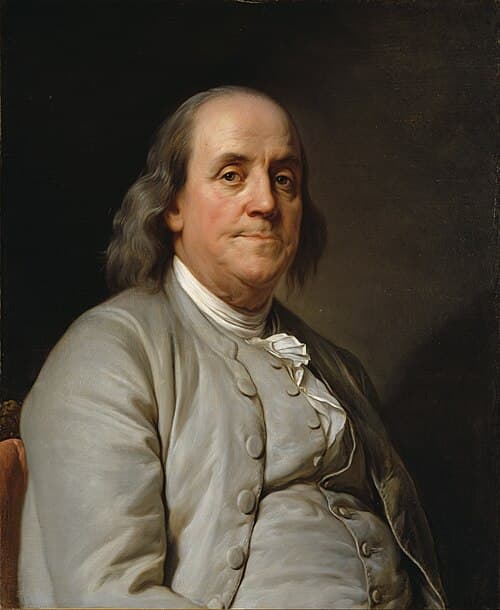
Benjamin Franklin
PERSON
American polymath and statesman (1706–1790)

Bill Clinton
PERSON
President of the United States from 1993 to 2001 (born 1946)
BA
Bob Abelson
PERSON
Name reference in documents

Businesspeople
PERSON
Name reference in documents
Charles Gibson
PERSON
American broadcast television anchor, journalist, and podcaster
CO
Colby
PERSON
First name reference to multiple individuals in the documents

Condoleezza Rice
PERSON
American diplomat and political scientist (born 1954)
CW
Courtney Wild
PERSON
American victim/survivor of Jeffrey Epstein who led legal battle for victims' rights
CU
Curty
PERSON
Name reference in documents
Dickens
PERSON
Surname or name fragment in documents

Donald Trump
PERSON
President of the United States (2017–2021, 2025–present)
DB
Doug Band
PERSON
American presidential advisor
FB
Ferris Bueller’s
PERSON
Name reference in documents
Freud
PERSON
Reference to Sigmund Freud or Lucian Freud
GA
Gammy
PERSON
Name reference in documents

George W. Bush
PERSON • 3 mentions
President of the United States from 2001 to 2009

George Washington
PERSON
American literary and historical figure, referenced in Epstein documents
GI
Giamatti
PERSON
Name reference in documents
GI
Gibson
PERSON
American guitar manufacturer

Hartley Act
PERSON
Name reference in documents
Immanuel Kant
PERSON
German philosopher (1724–1804)
John F. Kennedy
PERSON
President of the United States from 1961 to 1963 (1917–1963)

John McCain
PERSON • 3 mentions
American politician, military officer, and presidential candidate (1936–2018)

Katie Couric
PERSON • 2 mentions
American journalist, presenter, producer, and author
KE
Kenneth
PERSON
Name
MA
Maaacc
PERSON
Name reference in documents
MA
Marge
PERSON
American cartoonist (1904–1993)
MD
Mark Van Doren
PERSON
Name reference in documents
Mary Lou
PERSON
American actress
MS
Max Soderby
PERSON
Name reference in documents
Plato
PERSON
4th-century BCE Greek philosopher

Prince Charles
PERSON
King of the United Kingdom and other Commonwealth realms since 2022 (born 1948)

Ronald Reagan
PERSON
President of the United States from 1981 to 1989 and actor (1911–2004)
RW
Roy H. Williams
PERSON
Name reference in documents

Sarah Palin
PERSON • 3 mentions
Governor of Alaska from 2006 to 2009

Smoot Hawley
PERSON
Name reference in documents
UP
Upton
PERSON
Surname reference in documents
Walter Isaacson
PERSON • 2 mentions
American author, journalist and professor (born 1952)

Walters
PERSON
Surname reference in Epstein-related documents
William Shakespeare
PERSON
English playwright and poet (1564–1616)
Aviation High School
ORGANIZATION
Organization referenced in documents

Burger King
ORGANIZATION
Global chain of hamburger fast food restaurants headquartered in Florida, United States

Carnegie Mellon University
ORGANIZATION
Private research university in Pittsburgh, Pennsylvania, United States
Carnegie Mellon’s
ORGANIZATION
Organization referenced in documents

Chemical Engineering
ORGANIZATION
Organization referenced in documents
Experimentation
ORGANIZATION
Organization referenced in documents
First College Year Summary
ORGANIZATION
Organization referenced in documents
GOP
ORGANIZATION
American political party
Internal Medicine—Students
ORGANIZATION
Organization referenced in documents
Intro-
ORGANIZATION
Organization referenced in documents
Knowledge-Based Education
ORGANIZATION
Organization referenced in documents
Lindy
ORGANIZATION
Organization referenced in documents

Michelin
ORGANIZATION
French multinational tyre manufacturing company
Nutrition
ORGANIZATION
Journal
Ohio State
ORGANIZATION
Public research university in Columbus, Ohio, United States
Pepsi
ORGANIZATION
American soft drink company
Presto
ORGANIZATION
Organization referenced in documents
Process-Based Education
ORGANIZATION
Organization referenced in documents
Pythagorean
ORGANIZATION
Organization referenced in documents
Social Processes
ORGANIZATION
Organization referenced in documents
Sports Medic
ORGANIZATION
Organization referenced in documents
Super Worm—Students
ORGANIZATION
Organization referenced in documents
Teamwork
ORGANIZATION
Organization referenced in documents
the Alaskan National Guard
ORGANIZATION
Organization referenced in documents
the Cognitive Science Society
ORGANIZATION
Organization referenced in documents
the Kauffman Foundation
ORGANIZATION
Organization referenced in documents
the Obama Administration
ORGANIZATION
Organization referenced in documents
the Yale Computer Science Department
ORGANIZATION
Organization referenced in documents
U.S. News
ORGANIZATION
Organization referenced in documents
World Report's
ORGANIZATION
Organization referenced in documents

Alaska
LOCATION
State of the United States of America
Carolina
LOCATION
U.S. state or region

Columbus
LOCATION • 2 mentions
Capital city of Ohio, United States of America

Earth
LOCATION
Third planet from the Sun in the Solar System
Evanston
LOCATION
Suburban city in Cook County, Illinois, United States
Near Eastern
LOCATION
Academic journal
Peoria
LOCATION
County seat of Peoria County, Illinois, United States

Philadelphia
LOCATION
1993 film by Jonathan Demme

Pittsburgh
LOCATION
City and county seat in Allegheny County, Pennsylvania, United States

Silicon Valley
LOCATION
2014–2019 American television series
South Carolina’s
LOCATION
Location referenced in documents
Thanksgiv-
LOCATION
Location referenced in documents

United States
LOCATION
Country located primarily in North America

West Coast
LOCATION
Directional region of the United States
Statistics
Pages:100
Entities:89
Avg. OCR:95.2%
Sponsored