HOUSE_OVERSIGHT_019874_sub_002 - HOUSE_OVERSIGHT_020073
Document Information
Bates Range
HOUSE_OVERSIGHT_019874_sub_002 - HOUSE_OVERSIGHT_020073
Pages
100
Source
House Oversight Committee
Original Filename
Fire and Fury - Michael Wolff.pdf
Document Content
Page 101 - HOUSE_OVERSIGHT_019974
any moment, and it pleased him that Bannon’s pronouncements and views would consistently be fully formed and ever available, a bracing, unified-field narrative. As well, he could turn him off, and Bannon would be tactically quiet until turned on again. Kushner had neither Bannon’s policy imagination nor Priebus’s institutional ties. But, of course, he had family status, carrying its own high authority. In addition, he had billionaire status. He had cultivated a wide range of New York and international money people, Trump acquaintances and cronies, and, often, people whom Trump would have wished to like him better than they did. In this, Kushner became the representative in the White House of the liberal status quo. He was something like what used to be called a Rockefeller Republican and now might more properly be a Goldman Sachs Democrat. He —and, perhaps even more, Ivanka—was at diametric odds with both Priebus, the stout- right, Sun Belt-leaning, evangelical dependent Republican, and Bannon, the alt-right, populist, anti-party disruptor. From their separate corners each man pursued his own strategy. Bannon did all he could to roll over Priebus and Kushner in an effort to prosecute the war for Trumpism/Bannonism as quickly as possible. Priebus, already complaining about “political neophytes and the boss’s relatives,” subcontracted his agenda out to Ryan and the Hill. And Kushner, on one of the steepest learning curves in the history of politics (not that everyone in the White House wasn’t on a steep curve, but Kushner’s was perhaps the steepest), and often exhibiting a painful naiveté as he aspired to be one of the world’s savviest players, was advocating doing nothing fast and everything in moderation. Each had coteries opposed to the other: Bannonites pursued their goal of breaking everything fast, Priebus’s RNC faction focused on the opportunities for the Republican agenda, Kushner and his wife did their best to make their unpredictable relative look temperate and rational. And in the middle was Trump. OOK Ok “The three gentlemen running things,” as Walsh came to coolly characterize them, all served Trump in different ways. Walsh understood that Bannon provided the president with inspiration and purpose, while the Priebus-Ryan connection promised to do what to Trump seemed like the specialized work of government. For his part, Kushner best coordinated the rich men who spoke to Trump at night, with Kushner often urging them to caution him against both Bannon and Priebus. The three advisers were in open conflict by the end of the second week following the immigration EO and travel ban debacle. This internal rivalry was the result of stylistic, philosophic, and temperamental differences; perhaps more important, it was the direct result of the lack of a rational org chart or chain of command. For Walsh, it was a daily process of managing an impossible task: almost as soon as she received direction from one HOUSE_OVERSIGHT_019974
Page 102 - HOUSE_OVERSIGHT_019975
of the three men, she would be countermanded by one or another of them. “T take a conversation at face value and move forward with it,” she defended herself. “I put what was decided on the schedule and bring in comms and build a press plan around it and bring in political affairs and office of public liaison. And then Jared says, Why did you do that. And I say, ‘Because we had a meeting three days ago with you and Reince and Steve where you agreed to do this.’ And he says, “But that didn’t mean I wanted it on the schedule. That’s not why I had that conversation.’ It almost doesn’t matter what anyone says: Jared will agree, and then it will get sabotaged, and then Jared goes to the president and says, See, that was Reince’s idea or Steve’s idea.” Bannon concentrated on a succession of EOs that would move the new administration forward without having to wade through Congress. That focus was countermanded by Priebus, who was cultivating the Trump-Ryan romance and the Republican agenda, which in turn was countermanded by Kushner, who was concentrating on presidential bonhomie and CEO roundtables, not least because he knew how much the president liked them (and, as Bannon pointed out, because Kushner himself liked them). And instead of facing the inherent conflicts in each strategy, the three men recognized that the conflicts were largely irresolvable and avoided facing that fact by avoiding each other. Each man had, in his own astute fashion, found his own way to appeal to the president and to communicate with him. Bannon offered a rousing fuck-you show of force; Priebus offered flattery from the congressional leadership; Kushner offered the approval of blue- chip businessmen. So strong were these particular appeals that the president typically preferred not to distinguish among them. They were all exactly what he wanted from the presidency, and he didn’t understand why he couldn’t have them all. He wanted to break things, he wanted a Republican Congress to give him bills to sign, and he wanted the love and respect of New York machers and socialites. Some inside the White House perceived that Bannon’s EOs were meant to be a workaround in response to Priebus’s courtship of the party, and that Kushner’s CEOs were appalled by Bannon’s EOs and resistant to much of the Republican agenda. But if the president understood this, it did not particularly trouble him. 7 OK Ok Having achieved something like executive paralysis within the first month of the new administration—each of the three gentlemen was as powerful in his allure to the president as the others and each, at times, was equally annoying to the president—Bannon, Priebus, and Kushner all built their own mechanisms to influence the president and undermine the others. Analysis or argument or PowerPoint did not work. But who said what to Trump and when often did. If, at Bannon’s prodding, Rebekah Mercer called him, that had an effect. Priebus could count on Paul Ryan’s clout with him. If Kushner set up Murdoch to call, that HOUSE_OVERSIGHT_019975
Page 103 - HOUSE_OVERSIGHT_019976
registered. At the same time, each successive call mostly canceled the others out. This paralysis led the three advisers to rely on the other particularly effective way to move him, which was to use the media. Hence each man became an inveterate and polished leaker. Bannon and Kushner studiously avoided press exposure; two of the most powerful people in government were, for the most part, entirely silent, eschewing almost all interviews and even the traditional political conversations on Sunday morning television. Curiously, however, both men became the background voices to virtually all media coverage of the White House. Early on, before getting down to attacking each other, Bannon and Kushner were united in their separate offensives against Priebus. Kushner’s preferred outlet was Joe Scarborough and Mika Brzezinski’s Morning Joe, one of the president’s certain morning shows. Bannon’s first port of call was the alt-right media (“Bannon’s Breitbart shenanigans,” in Walsh’s view). By the end of the first month in the White House, Bannon and Kushner had each built a network of primary outlets, as well as secondary ones to deflect from the obviousness of the primary ones, creating a White House that simultaneously displayed extreme animosity toward the press and yet great willingness to leak to it. In this, at least, Trump’s administration was achieving a landmark transparency. The constant leaking was often blamed on lower minions and permanent executive branch staff, culminating in late February with an all-hands meeting of staffers called by Sean Spicer—cell phones surrendered at the door—during which the press secretary issued threats of random phone checks and admonitions about the use of encrypted texting apps. Everybody was a potential leaker; everybody was accusing everybody else of being a leaker. Everybody was a leaker. One day, when Kushner accused Walsh of leaking about him, she challenged him back: “My phone records versus yours, my email versus yours.” But most of the leaks, certainly the juiciest ones, were coming from the higher-ups— not to mention from the person occupying the topmost echelon. The president couldn’t stop talking. He was plaintive and self-pitying, and it was obvious to everyone that if he had a north star, it was just to be liked. He was ever uncomprehending about why everyone did not like him, or why it should be so difficult to get everyone to like him. He might be happy throughout the day as a parade of union steel workers or CEOs trooped into the White House, with the president praising his visitors and them praising him, but that good cheer would sour in the evening after several hours of cable television. Then he would get on the phone, and in unguarded ramblings to friends and others, conversations that would routinely last for thirty or forty minutes, and could go much longer, he would vent, largely at the media and his staff. In what was termed by some of the self-appointed Trump experts around him—and everyone was a HOUSE_OVERSIGHT_019976
Sponsored
Page 104 - HOUSE_OVERSIGHT_019977
Trump expert—he seemed intent on “poisoning the well,” in which he created a loop of suspicion, disgruntlement, and blame heaped on others. When the president got on the phone after dinner, it was often a rambling affair. In paranoid or sadistic fashion, he’d speculate on the flaws and weaknesses of each member of his staff. Bannon was disloyal (not to mention he always looks like shit). Priebus was weak (not to mention he was short—a midget). Kushner was a suck-up. Spicer was stupid (and looks terrible too). Conway was a crybaby. Jared and Ivanka should never have come to Washington. His callers, largely because they found his conversation peculiar, alarming, or completely contrary to reason and common sense, often overrode what they might otherwise have assumed to be the confidential nature of the calls and shared the content with someone else. Hence news about the inner workings of the White House went into free circulation. Except it was not so much the inner workings of the White House— although it would often be reported as such—but the perambulations of the president’s mind, which changed direction almost as fast as he could express himself. Yet there were constant tropes in his own narrative: Bannon was about to be cast out, Priebus too, and Kushner needed his protection from the other bullies. So if Bannon, Priebus, and Kushner were now fighting a daily war with one another, it was mightily exacerbated by something of a running disinformation campaign about them that was being prosecuted by the president himself. A chronic naysayer, he viewed each member of his inner circle as a problem child whose fate he held in his hand. “We are sinners and he is God” was one view; “We serve at the president’s displeasure,” another. OOK Ok In the West Wing of every administration since at least that of Clinton and Gore, the vice president has occupied a certain independent power base in the organization. And yet Vice President Mike Pence—the fallback guy in an administration the length of whose term remained the subject of something like a national office betting pool—was a cipher, a smiling presence either resisting his own obvious power or unable to seize it. “I do funerals and ribbon cuttings,” he told a former Republican Hill colleague. In this, he was seen as either feigning an old-fashioned, what-me-worry, standard-issue veep identity lest he upset his patron or, in fact, honestly acknowledging who he was. Katie Walsh, amid the chaos, saw the vice president’s office as a point of calm in the storm. Pence’s staff was not only known by people outside the White House for the alacrity with which it returned calls and for the ease with which it seemed to accomplish West Wing tasks, it also seemed to be comprised of people who liked each other and who were dedicated to a common goal: eliminating as much friction as possible around the vice president. Pence started nearly every speech saying, “I bring greetings from our forty-fifth HOUSE_OVERSIGHT_019977
Page 105 - HOUSE_OVERSIGHT_019978
president of the United States, Donald J. Trump ...”—a salutation directed more to the president than to the audience. Pence cast himself as blandly uninteresting, sometimes barely seeming to exist in the shadow of Donald Trump. Little leaked out of the Pence side of the White House. The people who worked for the vice president, were, like Pence himself, people of few words. In a sense, he had solved the riddle of how to serve as the junior partner to a president who could not tolerate any kind of comparisons: extreme self-effacement. “Pence,” said Walsh, “is not dumb.” Actually, well short of intelligent was exactly how others in the West Wing saw him. And because he wasn’t smart, he was not able to provide any leadership ballast. On the Jarvanka side, Pence became a point of grateful amusement. He was almost absurdly happy to be Donald Trump’s vice president, happy to play the role of exactly the kind of vice president that would not ruffle Trump’s feathers. The Jarvanka side credited Pence’s wife, Karen, as the guiding hand behind his convenient meekness. Indeed, he took to this role so well that, later, his extreme submissiveness struck some as suspicious. The Priebus side, where Walsh firmly sat, saw Pence as one of the few senior West Wing figures who treated Priebus as though he was truly the chief of staff. Pence often seemed like a mere staffer, the ever present note taker in so many meetings. From the Bannon side, Pence garnered only contempt. “Pence is like the husband in Ozzie and Harriet, a nonevent,” said one Bannonite. Although many saw him as a vice president who might well assume the presidency someday, he was also perceived as the weakest vice president in decades and, in organizational terms, an empty suit who was useless in the daily effort to help restrain the president and stabilize the West Wing. 7 OK Ok During that first month, Walsh’s disbelief and even fear about what was happening in the White House moved her to think about quitting. Every day after that became its own countdown toward the moment she knew she wouldn’t be able to take it anymore—which would finally come at the end of March. To Walsh, the proud political pro, the chaos, the rivalries, and the president’s own lack of focus and lack of concern were simply incomprehensible. In early March, Walsh confronted Kushner and demanded: “Just give me the three things the president wants to focus on. What are the three priorities of this White House?” “Yes,” said Kushner, wholly absent an answer, “we should probably have that conversation.” HOUSE_OVERSIGHT_019978
Page 106 - HOUSE_OVERSIGHT_019979
CPAC n February 23, a 75-degree day in Washington, the president woke up complaining () about an overheated White House. But for once, the president’s complaints were not the main concern. The excited focus in the West Wing was organizing a series of car pools out to the Conservative Political Action Conference, the annual gathering of conservative movement activists, which had outgrown the accommodations of Washington hotels and moved to the Gaylord Resort on Maryland’s National Harbor waterfront. CPAC, right of right-of-center and trying to hold steady there, ambivalent about all the conservative vectors that further diverged from that point, had long had an uncomfortable relationship with Trump, viewing him as an unlikely conservative, if not a charlatan. CPAC, too, saw Bannon and Breitbart as practicing an outré conservatism. For several years Breitbart had staged a nearby competitive conference dubbed “The Uninvited.” But the Trump White House would dominate or even subsume the conference this year, and everybody wanted to turn out for this sweet moment. The president, set to speak on the second day, would, like Ronald Reagan, address the conference in his first year in office, whereas both Bushes, wary of CPAC and conservative activists, had largely snubbed the gathering. Kellyanne Conway, a conference opener, was accompanied by her assistant, two daughters, and a babysitter. Bannon was making his first official pubic appearance of the Trump presidency, and his retinue included Rebekah Mercer, the pivotal Trump donor and Breitbart funder, her young daughter, and Allie Hanley, a Palm Beach aristocrat, conservative donor, and Mercer friend. (The imperious Hanley, who had not met Bannon before, pronounced him “dirty” looking.) Bannon was scheduled to be interviewed in the afternoon session by CPAC chairman Matt Schlapp, a figure of strained affability who seemed to be trying to embrace the Trump takeover of his conference. A few days before, Bannon had decided to add Priebus to the interview, as both a private gesture of goodwill and a public display of unity—a sign of a budding alliance against Kushner. HOUSE_OVERSIGHT_019979
Sponsored
Page 107 - HOUSE_OVERSIGHT_019980
In nearby Alexandria, Virginia, Richard Spencer, the president of the National Policy Institute, which is sometimes described as a “white supremacist think tank,” who had, peskily for the White House, adopted the Trump presidency as a personal victory, was organizing his trip to CPAC, which would be as much a victory march for him as it was for the Trump team. Spencer—who, in 2016, he had declared, “Let’s party like it’s 1933,” as in the year Hitler came to power—provoked an outcry with his widely covered “Heil Trump” (or “Hail Trump,” which of course amounts to the same thing) salute after the election, and then achieved a kind of reverse martyrdom by taking a punch from a protester on Inauguration Day that was memorialized on YouTube. CPAC, organized by the remnants of the conservative movement after Barry Goldwater’s apocalyptic defeat in 1964, had, with stoic indefatigability, turned itself into the backbone of conservative survival and triumph. It had purged John Birchers and the racist right and embraced the philosophic conservative tenets of Russell Kirk and William F. Buckley. In time, it endorsed Reagan-era small government and antiregulatory reform, and then added the components of the cultural wars—antiabortion, anti-gay-marriage, and a tilt toward evangelicals—and married itself to conservative media, first right-wing radio and later Fox News. From this agglomeration it spun an ever more elaborate and all- embracing argument of conservative purity, synchronicity, and intellectual weight. Part of the fun of a CPAC conference, which attracted a wide assortment of conservative young people (reliably mocked as the Alex P. Keaton crowd by the growing throng of liberal press that covered the conference), was the learning of the conservative catechism. But after a great Clinton surge in the 1990s, CPAC started to splinter during the George W. Bush years. Fox News became the emotional center of American conservativism. Bush neocons and the Iraq War were increasingly rejected by the libertarians and other suddenly breakaway factions (among them the paleocons); the family values right, meanwhile, was more and more challenged by younger conservatives. In the Obama years, the conservative movement was increasingly bewildered by Tea Party rejectionism and a new iconoclastic right-wing media, exemplified by Breitbart News, which was pointedly excluded from the CPAC conference. In 2011, professing conservative fealty, Trump lobbied the group for a speaking slot and, with reports of a substantial cash contribution, was awarded a fifteen-minute berth. If CPAC was supposedly about honing a certain sort of conservative party line, it was also attentive to a wide variety of conservative celebrities, including, over the years, Rush Limbaugh, Ann Coulter, and various Fox News stars. The year before Obama’s reelection, Trump fell into this category. But he was viewed quite differently four years later. In the winter of 2016, during the still competitive Republican primary race, Trump—now eyed as much as a Republican apostate as a Republican crowd pleaser—decided to forgo CPAC and what he feared would be less than a joyous welcome. This year, as part of its new alignment with the Trump-Bannon White House, CPAC’s HOUSE_OVERSIGHT_019980
Page 108 - HOUSE_OVERSIGHT_019981
personality headliner was slated to be the alt-right figure Milo Yiannopoulos, a gay British right-wing provocateur attached to Breitbart News. Yiannopoulos—whose entire position, rather more like a circa-1968 left-wing provocateur, seemed to be about flouting political correctness and social convention, resulting in left-wing hysteria and protests against him —was as confounding a conservative figure as could be imagined. Indeed, there was a subtle suggestion that CPAC had chosen Yiannopoulos precisely to hoist Bannon and the White House on the implicit connection to him—yYiannopoulos had been something of a Bannon protégé. When, two days before CPAC opened, a conservative blogger discovered a video of Yiannopoulos in bizarre revelry seeming to rationalize pedophilia, the White House made it clear he had to go. Still, the White House presence at CPAC—which included, along with the president, Bannon, Conway, Education Secretary Betsy DeVos, and the oddball White House foreign policy adviser and former Breitbart writer Sebastian Gorka—seemed to push the Yiannopoulos mess to the side. If CPAC was always looking to leaven boring politicians with star power, Trump, and anyone connected him, were now the biggest stars. With her family positioned out in front of a full house, Conway was interviewed in Oprah-like style by Mercedes Schlapp (wife of Matt Schlapp—CPAC was a family affair), a columnist for the conservative Washington Times who would later join the White House communications staff. It was an intimate and inspirational view of a woman of high achievement, the kind of interview that Conway believed she would have been treated to on network and cable television if she were not a Trump Republican—the type of treatment, she’d point out, that had been given to Democratic predecessors like Valerie Jarrett. At about the time that Conway was explaining her particular brand of antifeminist feminism, Richard Spencer arrived at the convention center hoping to attend the breakout session “The Alt-Right Ain’t Right at All,” a modest effort to reaffirm CPAC’s traditional values. Spencer, who since the Trump victory had committed himself to full-time activism and press opportunities, had planned to position himself to get in the first question. But almost immediately upon arriving and paying his $150 registration fee, he had attracted first one reporter and then a growing circle, a spontaneous press scrum, and he responded by giving an ad hoc news conference. Like Yiannopoulos, and in many ways like Trump and Bannon, Spencer helped frame the ironies of the modern conservative movement. He was a racist but hardly a conservative—he doggedly supported single-payer health care, for instance. And the attention he received was somehow less a credit to conservatism than another effort by the liberal media to smear conservatism. Hence, as the scrum around him increased to as many as thirty people, the CPAC irony police stepped in. “You're not welcome on the property,” announced one of the security guards. “They want you off the property. They want you to cease. They want you off the property.” “Wow,” said Spencer. “Can they?” HOUSE_OVERSIGHT_019981
Page 109 - HOUSE_OVERSIGHT_019982
“Enough debate,” the guard said. “This is private property and CPAC wants you off the property.” Relieved of his credentials, Spencer was ushered to the CPAC perimeter of the hotel, where, his pride not all that wounded, he turned, in the comfort of the atrium lounge area, to social media and to texting and emailing reporters on his contact list. The point Spencer was making was that his presence here was not really so disruptive or ironic as Bannon’s, or, for that matter, Trump’s. He might be ejected, but in a larger historical sense it was the conservatives who were now being ejected from their own movement by the new cadre—which included Trump and Bannon—of what Spencer called the identitarians, proponents of “white interests, values, customs, and culture.” Spencer was, he believed, the true Trumper and the rest of CPAC now the outliers. OOK Ok In the green room, after Bannon, Priebus, and their retinues had arrived, Bannon—in dark shirt, dark jacket, and white pants—stood off to the side talking to his aide, Alexandra Preate. Priebus sat in the makeup chair, patiently receiving a layer of foundation, powder, and lip gloss. “Steve—’ said Priebus, gesturing to the chair as he got up. “That’s okay,” said Bannon. He put up his hand, making another of the continual small gestures meant, pointedly, to define himself as something other than every phony baloney in swampland politics—and something other than Reince Priebus, with his heavy powder foundation. The significance of Bannon’s first appearance in public—after days of apparent West Wing turmoil, a 7Zime magazine cover story about him, nearly endless speculation about his power and true intentions, and his elevation at least in the media mind to the essential mystery of the Trump White House—could hardly be underestimated. For Bannon himself this was, in his own mind, a carefully choreographed moment. It was his victory walk. He had, he thought, prevailed in the West Wing. He had, again in his own mind, projected his superiority over both Priebus and the idiot son-in-law. And he would now dominate CPAC. But for the moment he attempted a shucks-nothing-to-it lack of self-consciousness even as, at the same time, he was unquestionably the preening man of the hour. Demurring about accepting makeup was not just a way to belittle Priebus, but also a way to say that, ever the commando, he went into battle fully exposed. “You know what he thinks even when you don’t know what he thinks,” explained Alexandra Preate. “He’s a bit like a good boy who everybody knows is a bad boy.” When the two men emerged onto the stage and appeared on the big-screen monitors, the contrast between them could hardly have been greater. The powder made Priebus look mannequin-like, and his suit with lapel pin, little-boyish. Bannon, the supposedly HOUSE_OVERSIGHT_019982
Sponsored
Page 110 - HOUSE_OVERSIGHT_019983
publicity-shy man, was eating up the camera. He was a country music star—he was Johnny Cash. He seized Priebus’s hand in a power handshake, then relaxed in his chair as Priebus came too eagerly forward in his. Priebus opened with traditional bromides. Bannon, taking his turn, went wryly for the dig: “I want to thank you for finally inviting me to CPAC.” “We decided to say that everybody is a part of our conservative family,” said Matt Schlapp, resigned. He then welcomed “the back of the room,” where the hundreds of reporters covering the event were positioned. “Is that the opposition party?” asked Bannon, shielding his eyes. Schlapp went to the setup question: “We read a lot about you two. Ahem ...” “It’s all good,” replied Priebus tightly. “Til bet not all of it’s accurate,” said Schlapp. “Ill bet there’s things that don’t get written correctly. Let me ask both of you, what’s the biggest misconception about what’s going on in the Donald Trump White House?” Bannon responded with something just less than a smirk and said nothing. Priebus offered a testimonial to the closeness of his relationship with Bannon. Bannon, eyes dancing, lifted the microphone trumpetlike and made a joke about Priebus’s commodious office—two couches and a fireplace—and his own rough-and- ready one. Priebus hewed to the message. “It’s, ahh ... it’s actually ... something that you all have helped build, which is, when you bring together, and what this election shows, and what President Trump showed, and let’s not kid ourselves, I can talk about data and ground game and Steve can talk about big ideas but the truth of the matter is Donald Trump, President Trump, brought together the party and the conservative movement, and I tell you if the party and the conservative movement are together’—Priebus knocked his fists “similar to Steve and I, it can’t be stopped. And President Trump is the one guy, he was the one person, and I can say this after overseeing sixteen people kill each other, it was Donald Trump who was able to bring this country, this party, and this movement together. And Steve and I know that and we live it every day and our job is to get the agenda of President Trump through the door and on pen and paper.” With Priebus gasping for breath, Bannon snatched the relay baton. “I think if you look at the opposition party’—throwing his hand out to the back of the room—“and how they portrayed the campaign, how they portrayed the transition, and now how they are portraying the administration, it’s always wrong. I mean on the very first day that Kellyanne and I started, we reached out to Reince, Sean Spicer, Katie... . It’s the same team, you know, that every day was grinding away at the campaign, the same team that HOUSE_OVERSIGHT_019983
Page 111 - HOUSE_OVERSIGHT_019984
did the transition, and if you remember, the campaign was the most chaotic, in the media’s description, most chaotic, most disorganized, most unprofessional, had no earthly idea what they were doing, and then you saw ’em all crying and weeping that night on November 8.” Back in the White House, Jared Kushner, watching the proceedings casually and then more attentively, suddenly felt a rising anger. Thin-skinned, defensive, on guard, he perceived Bannon’s speech as a message sent directly to him. Bannon has just credited the Trump victory to everybody else. Kushner was certain he was being taunted. When Schlapp asked the two men to enumerate the accomplishments of the last thirty days, Priebus floundered and then seized on Judge Gorsuch and the deregulation executive orders, all things, said Priebus, “that’—he paused, struggling—“eighty percent of Americans agree with.” After a brief pause, as though waiting for the air to clear, Bannon raised the microphone: “I kind of break it down into three verticals, three buckets; the first, national security and sovereignty, and that’s your intelligence, defense department, homeland security. The second line of work is what I refer to as economic nationalism, and that is Wilbur Ross at Commerce, Steve Mnuchin at Treasury, [Robert] Lighthizer at Trade, Peter Navarro, [and] Stephen Miller, who are rethinking how we are going to reconstruct our trade arrangements around the world. The third, broadly, line of work is deconstruction of the administrative state—” Bannon stopped for a moment; the phrase, which had never before been uttered in American politics, drew wild applause. “The way the progressive left runs is that if they can’t get it passed they’re just going to put it in some sort of regulation in an agency. That’s all going to be deconstructed.” Schlapp fed another setup question, this one about the media. Priebus grabbed it, rambled and fumphered for a while, and ended up, somehow, on a positive note: We'll all come together. Lifting the microphone, once again Joshua-like, and with a sweeping wave of his hand, Bannon pronounced, “It’s not only not going to get better, it’s going to get worse every day”—his fundamental apocalyptic song—“and here’s why—and by the way, the internal logic makes sense, corporatist, globalist media, that are adamantly opposed, adamantly opposed, to an economic nationalist agenda like Donald Trump has. And here’s why it’s going to get worse: because he’s going to continue to press his agenda. And as economic conditions continue to get better, as more jobs get better, they’re going to continue to fight. If you think they’re going to give you your country back without a fight you are sadly mistaken. Every day it is going to be a fight. This is why I’m proudest of Donald Trump. All the opportunities he had to waver off this. All the people he had coming to him saying ‘Oh, you got to moderate.’ ” Another dig at Kushner. “Every day in the Oval Office he tells Reince and me, “I committed this to the American people. I promised this when I ran. HOUSE_OVERSIGHT_019984
Page 112 - HOUSE_OVERSIGHT_019985
And I’m going to deliver on this.’ ” And then the final, agreed-upon-beforehand question: “Can this Trump movement be combined with what’s happening at CPAC and other conservative movements for fifty years? Can this be brought together ... and is this going to save the country?” “Well, we have to stick together as a team,” said Priebus. “It’s gonna take all of us working together to make it happen.” As Bannon started into his answer, he spoke slowly, looking out at his captive and riveted audience: “I’ve said that there is a new political order being formed out of this and it’s still being formed. If you look at the wide degree of opinions in this room, whether you are a populist, whether you’re a limited-government conservative, whether you’re a libertarian, whether you’re an economic nationalist, we have wide and sometimes divergent opinions, but I think the center core of what we believe, that we’re a nation with an economy, not an economy just in some global market place with open borders, but that we are a nation with a culture, and a reason for being. I think that’s what unites us. And that’s what’s going to unite this movement going forward.” Bannon lowered the microphone to, after what might be interpreted as a beat of uncertainty, suddenly thunderous applause. Watching from the White House, Kushner—who had come to believe that there was something insidious when Bannon used the words “borders,” “global,” “culture,” and “unite,” and who was more and more convinced that they were personally directed against him—was now in a rage. OOK Ok Kellyanne Conway had increasingly been worrying about the seventy-year-old president’s sleeplessness and his worn look. It was the president’s indefatigability—a constant restlessness—that she believed carried the team. On the campaign trail, he would always add stops and speeches. He doubled his own campaign time. Hillary worked at half time; he worked at double time. He sucked in the energy from the crowds. Now that he was living alone in the White House, though, he had seemed to lose a step. But today he was back. He had been under the sunlamp and lightened his hair, and when the climate-change-denying president woke up on another springlike morning, 77 degrees in the middle of winter, on the second day of CPAC, he seemed practically a different person, or anyway a noticeably younger one. At the appointed hour, to the locked-down ballroom at the Gaylord Resort, filled to capacity with all stripes of the conservative faithful—Rebekah Mercer and her daughter up front—and hundreds of media people in an SRO gallery, the president emerged onto the stage, not in an energetic television-style rush, but with a slow swagger to the low strains of “I’m Proud to Be an American.” He came to the stage as a political strongman, a man occupying his moment, clapping—here he reverted to entertainer pose—as he slowly approached the podium, HOUSE_OVERSIGHT_019985
Sponsored
Page 113 - HOUSE_OVERSIGHT_019986
mouthing “Thank you,” crimson tie dipping over his belt. This would be Trump’s fifth CPAC address. As much as Steve Bannon liked to see himself as the author of Donald Trump, he also seemed to find it proof of some added legitimacy—and somehow amazing in itself—that since 2011 Trump had basically come to CPAC with the same message. He wasn’t a cipher, he was a messenger. The country was a “mess”—a word that had stood the Trump test of time. Its leaders were weak. Its greatness had been lost. The only thing different was that in 2011 he was still reading his speeches with only occasional ad-libs, and now he ad-libbed everything. “My first major speech was at CPAC,” the president began. “Probably five or six years ago. My first major political speech. You were there. I loved it. I loved the people. I loved the commotion. They did these polls where I went through the roof. I wasn’t even running, right? But it gave me an idea! And I got a little bit concerned when I saw what was happening in the country so I said let’s go to it. It was very exciting. I walked the stage at CPAC-. I had very little notes and even less preparation.” (In fact, he read his 2011 speech from a sheet of paper.) “So when you have practically no notes and no preparation and then you leave and everybody was thrilled. I said, I think I like this business.” This first preamble gave way to the next preamble. “T want you all to know that we are fighting the fake news. It’s phony. Fake. A few days ago I called the fake news the enemy of the people. Because they have no sources. They just make ’em up when there are none. I saw one story recently where they said nine people have confirmed. There are no nine people. I don’t believe there was one or two people. Nine people. And I said, Give me a break. I know the people. I know who they talk to. There were no nine people. But they say nine people... .” A few minutes into the forty-eight-minute speech and it was already off the rails, riff sustained by repetition. “Maybe they’re just bad at polling. Or maybe they’re not legit. It’s one or the other. They’re very smart. They’re very cunning. And they’re very dishonest... . Just to conclude”—although he would go on for thirty-seven minutes more—“‘it’s a very sensitive topic and they get upset when we expose their false stories. They say we can’t criticize their dishonest coverage because of the First Amendment. You know they always bring up’—he went into a falsetto voice—‘“the First Amendment. Now I love the First Amendment. Nobody loves it better than me. Nobody.” Each member of the Trump traveling retinue was now maintaining a careful poker face. When they did break it, it was as though on a delay, given permission by the crowd’s cheering or laughter. Otherwise, they seemed not to know whether the president had in fact gotten away with his peculiar rambles. “By the way, you folks in here, the place is packed, there are lines that go back six blocks”—there were no lines outside the crowded lobby—‘I tell you that because you HOUSE_OVERSIGHT_019986
Page 114 - HOUSE_OVERSIGHT_019987
won't read about it. But there are lines that go back six blocks... . “There is one allegiance that unites us all, to America, America... . We all salute with pride the same American flag ... and we are all equal, equal in the eyes of Almighty God... . We’re equal ... and I want to thank, by the way, the evangelical community, the Christian community, communities of faith, rabbis and priests and pastors, ministers, because the support for me, as you know, was a record, not only numbers of people but percentages of those numbers who voted for Trump ... an amazing outpouring and I will not disappoint you ... as long as we have faith in each other and trust in God then there is no goal beyond our reach ... there is no dream too large ... no task too great ... we are Americans and the future belongs to us ... America is roaring. It’s going to be bigger and better and stronger than ever before... .” Inside the West Wing, some had idly speculated about how long he would go on if he could command time as well as language. The consensus seemed to be forever. The sound of his own voice, his lack of inhibition, the fact that linear thought and presentation turned out not at all to be necessary, the wonder that this random approach seemed to command, and his own replenishing supply of free association—all this suggested that he was limited only by everyone else’s schedule and attention span. Trump’s extemporaneous moments were always existential, but more so for his aides than for him. He spoke obliviously and happily, believing himself to be a perfect pitch raconteur and public performer, while everyone with him held their breath. If a wackadoo moment occurred on the occasions—the frequent occasitons—when his remarks careened in no clear direction, his staff had to go into intense method-acting response. It took absolute discipline not to acknowledge what everyone could see. OOK Ok As the president finished up his speech, Richard Spencer, who in less than four months from the Trump election was on his way to becoming the most famous neo-Nazi in America since George Lincoln Rockwell, had returned to a seat in the atrium of the Gaylord Resort to argue his affinity for Donald Trump—and, he believed, vice versa. Spencer, curiously, was one of the few people trying to ascribe an intellectual doctrine to Trumpism. Between those taking him literally but not seriously, and those taking him seriously but not literally, there was Richard Spencer. Practically speaking, he was doing both, arguing the case that if Trump and Bannon were the pilot fish for a new conservative movement, Spencer himself—the owner of altright.com and, he believed, the purest exponent of the movement—was their pilot fish, whether they knew it or not. As close to a real-life Nazi as most reporters had ever seen, Spencer was a kind of catnip for the liberal press crowded at CPAC. Arguably, he was offering as good an explanation of Trump’s anomalous politics as anyone else. Spencer had come up through writing gigs on conservative publications, but he was HOUSE_OVERSIGHT_019987
Page 115 - HOUSE_OVERSIGHT_019988
hardly recognizable in any sort of official Republican or conservative way. He was a post- right-wing provocateur but with none of the dinner party waspishness or bite of Ann Coulter or Milo Yiannopoulos. They were a stagey type of reactionary. He was a real one —a genuine racist with a good education, in his case UVA, the University of Chicago, and Duke. It was Bannon who effectively gave Spencer flight by pronouncing Breitbart to be “the platform for the alt-right’—the movement Spencer claimed to have founded, or at least owned the domain name for. “T don’t think Bannon or Trump are identitarians or alt-rightists,” Spencer explained while camped out just over CPAC’s property line at the Gaylord. They were not, like Spencer, philosophic racists (itself different from a knee-jerk racist). “But they are open to these ideas. And open to the people who are open to these ideas. We’re the spice in the 29 mix. Spencer was right. Trump and Bannon, with Sessions in the mix, too, had come closer than any major national politician since the Civil Rights movement to tolerating a race- tinged political view. “Trump has said things that conservatives never would have thought... . His criticism of the Iraq War, bashing the Bush family, I couldn’t believe he did that ... but he did... . Fuck them ... if at the end of the day an Anglo Wasp family produces Jeb and W then clearly that’s a clear sign of denegation... . And now they marry Mexicans ... Jeb’s wife ... he married his housekeeper or something. “In Trump’s 2011 CPAC address he specifically calls for a relaxation of immigration restrictions for Europeans ... that we should re-create an America that was far more stable and more beautiful... . No other conservative politician would say those things ... but on the other hand pretty much everyone thought it ... so it’s powerful to say it... . Clearly [there’s] a normalization process going on.” “We are the Trump vanguard. The left will say Trump is a nationalist and an implicit or quasi-racialist. Conservatives, because they are just so douchey, say Oh, no, of course not, he’s a constitutionalist, or whatever. We on the alt-right will say, He is a nationalist and he is a racialist. His movement is a white movement. Duh.” Looking very satisfied with himself, Spencer paused and then said: “We give him a kind of permission.” OOK Ok Nearby, in the Gaylord atrtum, Rebekah Mercer sat having a snack with her home- schooled daughter and her friend and fellow conservative donor Allie Hanley. Both women agreed that the president’s CPAC speech showed him at his most gracious and charming. HOUSE_OVERSIGHT_019988
Sponsored
Page 116 - HOUSE_OVERSIGHT_019989
10 GQLDMAN he Jarvanka side of the White House increasingly felt that rumors leaked by Bannon | and his allies were undermining them. Jared and Ivanka, ever eager to enhance their status as the adults in the room, felt personally wounded by these backdoor attacks. Kushner, in fact, now believed Bannon would do anything to destroy them. This was personal. After months of defending Bannon against liberal media innuendo, Kushner had concluded that Bannon was an anti-Semite. That was the bottom-line issue. This was a complicated and frustrating business—and quite hard to communicate to his father-in-law —hbecause one of Bannon’s accusations against Kushner, the administration’s point person on the Middle East, was that he was not nearly tough enough in his defense of Israel. After the election, the Fox News anchor Tucker Carlson with sly jocularity privately pointed out to the president that by offhandedly giving the Israel portfolio to his son-in- law—who would, Trump said, make peace in the Middle East—he hadn’t really done Kushner any favors. “IT know,” replied Trump, quite enjoying the joke. Jews and Israel were a curious Trump subtext. Trump’s brutish father was an often vocal anti-Semite. In the split in New York real estate between the Jews and non-Jews, the Trumps were clearly on the lesser side. The Jews were white shoe, and Donald Trump, even more than his father, was perceived as a vulgarian—after all, he put his name on his buildings, quite a déclassé thing to do. (Ironically, this proved to be a significant advance in real estate marketing and, arguably, Trump’s greatest accomplishment as a developer— branding buildings.) But Trump had grown up and built his business in New York, the world’s largest Jewish city. He had made his reputation in the media, that most Jewish of industries, with some keen understanding of media tribal dynamics. His mentor, Roy Cohn, was a demimonde, semiunderworld, tough-guy Jew. He courted other figures he considered “tough-guy Jews” (one of his accolades): Carl Icahn, the billionaire hedge funder; Ike Perlmutter, the billionaire investor who had bought and sold Marvel Comics; Ronald Perelman, the billionaire Revlon chairman; Steven Roth, the New York billionaire real estate tycoon; and Sheldon Adelson, the billionaire casino magnate. Trump had HOUSE_OVERSIGHT_019989
Page 117 - HOUSE_OVERSIGHT_019990
adopted a sort of 1950s Jewish uncle (tough-guy variety) delivery, with assorted Yiddishisms—Hillary Clinton, he declared, had been “shlonged” in the 2008 primary— helping to give an inarticulate man an unexpected expressiveness. Now his daughter, a de facto First Lady, was, through her conversion, the first Jew in the White House. The Trump campaign and the White House were constantly supplying off-note messages about Jews, from their equivocal regard for David Duke to their apparent desire to tinker with Holocaust history—or at least tendency to stumble over it. At one point early in the campaign, Trump’s son-in-law, challenged by his own staff at the New York Observer and feeling pressure about his own bona fides, as well as seeking to stand by his father-in-law, wrote an impassioned defense of Trump in an attempt to prove that he was not an anti-Semite. For his efforts, Jared was rebuked by various members of his own family, who clearly seemed worried about both the direction of Trumpism and Jared’s opportunism. There was also the flirtation with European populism. Whenever possible, Trump seemed to side with and stoke Europe’s rising right, with its anti-Semitic associations, piling on more portent and bad vibes. And then there was Bannon, who had allowed himself to become—through his orchestration of right-wing media themes and stoking of liberal outrage—a winking suggestion of anti-Semitism. It was certainly good right-wing business to annoy liberal Jews. Kushner, for his part, was the prepped-out social climber who had rebuffed all entreaties in the past to support traditional Jewish organizations. When called upon, the billionaire scion had refused to contribute. Nobody was more perplexed by the sudden rise of Jared Kushner to his new position as Israel’s great protector than U.S. Jewish organizations. Now, the Jewish great and the good, the venerated and the tried, the mandarins and myrmidons, had to pay court to Jared Kushner ... who until little more than a few minutes ago had truly been a nobody. For Trump, giving Israel to Kushner was not only a test, it was a Jewish test: the president was singling him out for being Jewish, rewarding him for being Jewish, saddling him with an impossible hurdle for being Jewish—and, too, defaulting to the stereotyping belief in the negotiating powers of Jews. “Henry Kissinger says Jared is going to be the new Henry Kissinger,” Trump said more than once, rather a combined compliment and slur. Bannon, meanwhile, did not hesitate to ding Kushner on Israel, that peculiar right-wing litmus test. Bannon could bait Jews—globalist, cosmopolitan, Davoscentric liberal Jews like Kushner—because the farther right you were, the more correct you were on Israel. Netanyahu was an old Kushner family friend, but when, in the fall, the Israeli prime minister came to New York to meet with Trump and Kushner, he made a point of seeking out Steve Bannon. HOUSE_OVERSIGHT_019990
Page 118 - HOUSE_OVERSIGHT_019991
On Israel, Bannon had partnered with Sheldon Adelson, titan of Las Vegas, big-check right-wing contributor, and, in the president’s mind, quite the toughest tough-guy Jew (that is, the richest). Adelson regularly disparaged Kushner’s motives and abilities. The president, to Bannon’s great satisfaction, kept telling his son-in-law, as he strategized on Israel, to check with Sheldon and, hence, Bannon. Bannon’s effort to grab the stronger-on-Israel label was deeply confounding to Kushner, who had been raised as an Orthodox Jew. His closest lieutenants in the White House, Avi Berkowitz and Josh Raffel, were Orthodox Jews. On Friday afternoons, all Kushner business in the White House stopped before sunset for the Sabbath observance. For Kushner, Bannon’s right-wing defense of Israel, embraced by Trump, somehow became a jujitsu piece of anti-Semitism aimed directly at him. Bannon seemed determined to make Kushner appear weak and inadequate—a cuck, in alt-right speak. So Kushner had struck back, bringing into the White House his own tough-guy Jews— Goldman Jews. OOK Ok Kushner had pushed for the then president of Goldman Sachs, Gary Cohn, to run the National Economic Council and to be the president’s chief economic adviser. Bannon’s choice had been CNBC’s conservative anchor and commentator Larry Kudlow. For Trump, the Goldman cachet outdrew even a television personality. It was a Richie Rich moment. Kushner had been a summer intern at Goldman when Cohn was head of commodities trading. Cohn then became president of Goldman in 2006. Once Cohn joined Trump’s team, Kushner often found occasion to mention that the president of Goldman Sachs was working for him. Bannon, depending on whom he wanted to slight, either referred to Kushner as Cohn’s intern or pointed out that Cohn was now working for his intern. The president, for his part, was continually pulling Cohn into meetings, especially with foreign leaders, just to introduce him as the former president of Goldman Sachs. Bannon had announced himself as Trump’s brain, a boast that vastly irritated the president. But in Cohn, Kushner saw a better brain for the White House: not only was it much more politic for Cohn to be Kushner’s brain than Trump’s, but installing Cohn was the perfect countermove to Bannon’s chaos management philosophy. Cohn was the only person in the West Wing who had ever managed a large organization (Goldman has thirty- five thousand employees). And, not to put too fine a point on it—though Kushner was happy to do so—Bannon had rolled out of Goldman having barely reached midlevel management status, whereas Cohn, his contemporary, had continued on to the firm’s highest level, making hundreds of millions of dollars in the process. Cohn—a Democrat globalist-cosmopolitan Manhattanite who voted for Hillary Clinton and who still spoke frequently to former Goldman chief and former Democratic New Jersey senator and HOUSE_OVERSIGHT_019991
Sponsored
Page 119 - HOUSE_OVERSIGHT_019992
governor Jon Corzine—immediately became Bannon’s antithesis. For Bannon, the ideologue, Cohn was the exact inverse, a commodities trader doing what traders do—read the room and figure out which way the wind is blowing. “Getting Gary to take a position on something is like nailing butterflies to the wall,” commented Katie Walsh. Cohn started to describe a soon-to-be White House that would be business-focused and committed to advancing center-right to moderate positions. In this new configuration, Bannon would be marginalized and Cohn, who was dismissive of Priebus, would be the chief of staff in waiting. To Cohn, it seemed like easy street. Of course it would work out this way: Priebus was a lightweight and Bannon a slob who couldn’t run anything. Within weeks of Cohn’s arrival on the transition team, Bannon nixed Cohn’s plan to expand the National Economic Council by as many as thirty people. (Kushner, not to be denied, nixed Bannon’s plan to have David Bossie build and lead his staff.) Bannon also retailed the likely not-too-far-off-the-mark view (or, anyway, a popular view inside Goldman Sachs) that Cohn, once slated to become Goldman’s CEO, had been forced out for an untoward Haig-like grasping for power—in 1981 then secretary of state Alexander Haig had tried to insist he held the power after Ronald Reagan was shot—when Goldman CEO Lloyd Blankfein underwent cancer treatment. In the Bannon version, Kushner had bought damaged goods. The White House was clearly Cohn’s professional lifeline—why else would he have come into the Trump administration? (Much of this was retailed to reporters by Sam Nunberg, the former Trump factotum who was now doing duty for Bannon. Nunberg was frank about his tactics: “I beat the shit out of Gary whenever possible.”) It is a measure of the power of blood (or blood by marriage), and likely the power of Goldman Sachs, too, that in the middle of a Republican-controlled Washington and a virulent, if not anti-Semitic (at least toward liberal Jews), right-wing West Wing, the Kushner-Cohn Democrats appeared to be ascendant. Part of the credit went to Kushner, who showed an unexpected tenacity. Conflict averse—in the Kushner household, his father, monopolizing all the conflict, forced everyone else to be a mollifier—confronting neither Bannon nor his father-in-law, he began to see himself in a stoic sense: he was the last man of moderation, the true figure of self-effacement, the necessary ballast of the ship. This would all be made manifest by a spectacular accomplishment. He would complete the mission his father-in-law had foisted on him, the one he was more and more seeing as his, yes, destiny. He would make peace in the Middle East. “He’s going to make peace in the Middle East,” Bannon said often, his voice reverent and his expression deadpan, cracking up all the Bannonites. So in one sense Kushner was a figure of heightened foolishness and ridicule. In another, he was a man, encouraged by his wife and by Cohn, who saw himself on the HOUSE_OVERSIGHT_019992
Page 120 - HOUSE_OVERSIGHT_019993
world stage carrying out a singular mission. Here was yet another battle to be won or lost. Bannon regarded Kushner and Cohn (and Ivanka) as occupying an alternative reality that had little bearing on the real Trump revolution. Kushner and Cohn saw Bannon as not just destructive but self-destructive, and they were confident he would destroy himself before he destroyed them. In the Trump White House, observed Henry Kissinger, “it is a war between the Jews and the non-Jews.” OOK Ok For Dina Powell, the other Goldman hire in the West Wing, the main consideration when Ivanka pitched her on coming to work at the White House was the downside assessment of being associated with a Trump presidency. Powell ran the Goldman Sachs philanthropic arm, a public relations initiative as well as a courtship of the increasingly powerful pools of philanthropic money. Representing Goldman, she had become something of a legend at Davos, a supreme networker among the world’s supreme networkers. She stood at an intersection of image and fortune, in a world increasingly swayed by private wealth and personal brands. It was a function of both her ambition and Ivanka Trump’s sales talents during swift meetings in New York and Washington that Powell, swallowing her doubts, had come on board. That, and the politically risky but high-return gamble that she, aligned with Jared and Ivanka, and working closely with Cohn, her Goldman friend and ally, could take over the White House. That was the implicit plan: nothing less. Specifically, the idea was that Cohn or Powell—and quite possibly both over the course of the next four or eight years would, as Bannon and Priebus faltered, come to hold the chief of staff job. The president’s own constant grumbling about Bannon and Priebus, noted by Ivanka, encouraged this scenario. This was no small point: a motivating force behind Powell’s move was the certain belief on the part of Jared and Ivanka (a belief that Cohn and Powell found convincing) that the White House was theirs to take. For Cohn and Powell, the offer to join the Trump administration was transmuted beyond opportunity and became something like duty. It would be their job, working with Jared and Ivanka, to help manage and shape a White House that might otherwise become the opposite of the reason and moderation they could bring. They could be instrumental in saving the place—and, as well, take a quantum personal leap forward. More immediately for Ivanka, who was focused on concerns about women in the Trump White House, Powell was an image correction to Kellyanne Conway, whom, quite apart from their war with Bannon, Ivanka and Jared disdained. Conway, who continued to hold the president’s favor and to be his preferred defender on the cable news shows, had publicly declared herself the face of the administration—and for Ivanka and Jared, this HOUSE_OVERSIGHT_019993
Page 121 - HOUSE_OVERSIGHT_019994
was a horrifying face. The president’s worst impulses seem to run through Conway without benefit of a filter. She compounded Trump’s anger, impulsiveness, and miscues. Whereas a presidential adviser was supposed to buffer and interpret his gut calls, Conway expressed them, doubled down on them, made opera out of them. She took Trump’s demand for loyalty too literally. In Ivanka and Jared’s view, Conway was a cussed, antagonistic, self-dramatizing cable head, and Powell, they hoped, would be a deliberate, circumspect, adult guest on the Sunday morning shows. By late February, after the first helter-skelter month in the West Wing, the campaign by Jared and Ivanka to undermine Bannon seemed to be working. The couple had created a feedback loop, which included Scarborough and Murdoch, that reinforced the president’s deep annoyance with and frustration about Bannon’s purported importance in the White House. For weeks after the 7Zime magazine cover story featuring Bannon, there was hardly a conversation in which Trump didn’t refer to it bitterly. (“He views Zime covers as zero sum,” said Roger Ailes. “If someone else gets on it, he doesn’t.”) Scarborough, cruelly, kept up a constant patter about President Bannon. Murdoch forcefully lectured the president about the oddness and extremism of Bannonism, linking Bannon with Ailes: “They’re both crazy,” he told Trump. Kushner also pressed the view to the president—ever phobic about any age-related weakness—that the sixty-three-year-old Bannon wouldn’t hold up under the strain of working in the White House. Indeed, Bannon was working sixteen- and eighteen-hour days, seven days a week, and, for fear of missing a presidential summons or afraid that someone else might grab it, he considered himself on call pretty much all night. As the weeks went by, Bannon seemed physically to deteriorate in front of everybody’s eyes: his face became more puffy, his legs more swollen, his eyes more bleary, his clothes more slept in, his attention more distracted. OOK Ok As Trump’s second month in office began, the Jared-[vanka-Gary-Dina camp focused on the president’s February 28 speech to the joint session of Congress. “Reset,” declared Kushner. “Total reset.” The occasion provided an ideal opportunity. Trump would have to deliver the speech in front of him. It was not only on the teleprompter but distributed widely beforehand. What’s more, the well-mannered crowd wouldn’t egg him on. His handlers were in control. And for this occasion at least, Jared-Ivanka-Gary-Dina were the handlers. “Steve will take credit for this speech if there’s even one word of his in it,” Ivanka told her father. She knew well that for Trump, credit, much more than content, was the hot- button driver, and her comment ensured that Trump would keep it out of Bannon’s hands. “The Goldman speech,” Bannon called it. HOUSE_OVERSIGHT_019994
Sponsored
Page 122 - HOUSE_OVERSIGHT_019995
The inaugural, largely written by Bannon and Stephen Miller, had shocked Jared and Ivanka. But a particular peculiarity of the Trump White House, compounding its messaging problems, was its lack of a speech-writing team. There was the literate and highly verbal Bannon, who did not really do any actual writing himself; there was Stephen Miller, who did little more than produce bullet points. Beyond that, it was pretty much just catch as catch can. There was a lack of coherent message because there was nobody to write a coherent message—just one more instance of disregarding political craft. Ivanka grabbed firm control of the joint session draft and quickly began pulling in contributions from the Jarvanka camp. In the event, the president behaved exactly as they hoped. Here was an upbeat Trump, a salesman Trump, a nothing-to-be-afraid-of Trump, a happy-warrior Trump. Jared, Ivanka, and all their allies judged it a magnificent night, agreeing that finally, amid the pageantry—Mr. Speaker, the President of the United States —the president really did seem presidential. And for once, even the media agreed. The hours following the president’s speech were Trump’s best time in the White House. It was, for at least one news cycle, a different presidency. For a moment, there was even something like a crisis of conscience among parts of the media: Had this president been grievously misread? Had the media, the biased media, missed well-intentioned Donald Trump? Was he finally showing his better nature? The president himself spent almost two full days doing nothing but reviewing his good press. He had arrived, finally, at a balmy shore (with appreciative natives on the beach). What’s more, the success of the speech confirmed the Jared and Ivanka strategy: look for common ground. It also confirmed Ivanka’s understanding of her father: he just wanted to be loved. And, likewise, it confirmed Bannon’s worst fear: Trump, in his true heart, was a marshmallow. The Trump on view the night of the joint session was not just a new Trump, but a declaration of a new West Wing brain trust (which Ivanka was making plans to formally join in just a few weeks). Jared and Ivanka, with an assist from their Goldman Sachs advisers, were changing the message, style, and themes of the White House. “Reaching out” was the new theme. Bannon, hardly helping his cause, cast himself as a Cassandra to anyone who would listen. He insisted that only disaster would come from trying to mollify your mortal enemies. You need to keep taking the fight to them; you’re fooling yourself if you believe that compromise is possible. The virtue of Donald Trump—the virtue, anyway, of Donald Trump to Steve Bannon—was that the cosmopolitan elite was never going to accept him. He was, after all, Donald Trump, however much you shined him up. HOUSE_OVERSIGHT_019995
Page 123 - HOUSE_OVERSIGHT_019996
11 WIRETAP ith three screens in his White House bedroom, the president was his own best cable y Y curator. But for print he depended on Hope Hicks. Hicks, who had been his junior aide for most of the campaign and his spokesperson (although, as he would point out, he was really his own spokesperson), had been, many thought, pushed to the sidelines in the West Wing by the Bannonites, the Goldman wing, and the Priebus-RNC professionals. To the senior staff, she seemed not only too young and too inexperienced—she was famous among campaign reporters for her hard-to-maneuver-in short skirts—but a way-too- overeager yes woman, always in fear of making a mistake, ever tremulously second- guessing herself and looking for Trump’s approval. But the president kept rescuing her —“Where’s Hope?”—from any oblivion others tried to assign her to. Baffling to almost everyone, Hicks remained his closest and most trusted aide, with, perhaps, the single most important job in this White House: interpreting the media for him in the most positive way it could be interpreted, and buffering him from the media that could not be positively spun. The day after his “reset” speech before the joint session of Congress presented a certain conundrum for Hicks. Here were the first generally good notices for the administration. But in the Post, the Times, and the New Yorker that day, there was also an ugly bouquet of very bad news. Fortunately the three different stories had not quite sunk into cable, so there was yet a brief respite. And at least for the better part of the day, March 1, Hicks herself did not entirely seem to grasp how bad the news actually was. The Washington Post’s story was built around a leak from a Justice Department source (characterized as a “former senior American official”—hence, most likely someone from the Obama White House) saying that the new attorney general, Jeff Sessions, had, on two occasions, met with the Russian ambassador, Sergey Kislyak. When the president was shown the story, he didn’t see its significance. “So what?” he said. Well, during his confirmation, it was explained to the president, Sessions had said he HOUSE_OVERSIGHT_019996
Page 124 - HOUSE_OVERSIGHT_019997
didn’t. Facing Sessions at the January 10 hearing, Al Franken, the former comedian and Democratic senator from Minnesota, appeared to be casting blindly for an elusive fish in his efforts to find a question. Stopping and starting, slogging through his sentence construction, Franken, who had been handed a question based on the just-revealed Steele dossier, got to this end: These documents also allegedly say, quote, “There was a continuing exchange of information during the campaign between Trump’s surrogates and intermediaries for the Russian government.” Now, again, I’m telling you this as it’s coming out, so you know. But if it’s true, it’s obviously extremely serious and if there is any evidence that anyone affiliated with the Trump campaign communicated with the Russian government in the course of this campaign, what will you do? ? Instead of answering Franken’s circuitous question—“What will you do?”—with an easy “We will of course investigate and pursue any and all illegal actions,” a confused Sessions answered a question he wasn’t asked. Senator Franken, ’'m not aware of any of those activities. I have been called a surrogate at a time or two in that campaign and I didn’t have—did not have communications with the Russians, and I’m unable to comment on it. The president’s immediate focus was on the question of why anyone believed that communicating with the Russians was bad. There is nothing wrong with that, Trump insisted. As in the past, it was hard to move him off this point and to the issue at hand: a possible lie to Congress. The Post story, to the extent that it registered at all, didn’t worry him. Supported by Hicks, he saw it a way-long-shot effort to pin something on Sessions. And anyway, Sessions was saying he didn’t meet with the Russians as a campaign surrogate. So? He didn’t. Case closed. “Fake news,” said the president, using his now all-purpose rejoinder. As for the bad 7imes story, as Hicks related it to the president, it appeared to him to be good news. Briefed by anonymous sources in the Obama administration (more anonymous Obama sources), the story revealed a new dimension to the ever growing suggestion of a connection between the Trump campaign and Russian efforts to influence the U.S. election: American allies, including the British and the Dutch, had provided information describing meetings in European cities between Russian officials—and others close to Russia’s president, Vladimir V. Putin—and associates of President-elect Trump, according to three former American officials who requested anonymity in discussing classified intelligence. HOUSE_OVERSIGHT_019997
Sponsored
Page 125 - HOUSE_OVERSIGHT_019998
And: Separately, American intelligence agencies had intercepted communications of Russian officials, some of them within the Kremlin, discussing contacts with Trump associates. The story went on: Mr. Trump has denied that his campaign had any contact with Russian officials, and at one point he openly suggested that American spy agencies had cooked up intelligence suggesting that the Russian government had tried to meddle in the presidential election. Mr. Trump has accused the Obama administration of hyping the Russia story line as a way to discredit his new administration. And then the real point: At the Obama White House, Mr. Trump’s statements stoked fears among some that intelligence could be covered up or destroyed—or its sources exposed—once power changed hands. What followed was a push to preserve the intelligence that underscored the deep anxiety with which the White House and American intelligence agencies had come to view the threat from Moscow. Here was more confirmation of a central Trump thesis: The previous administration, its own candidate defeated, was not just disregarding the democratic custom of smoothing the way for the winner of the election; rather, in the Trump White House view, Obama’s people had plotted with the intelligence community to put land mines in the new administration’s way. Secret intelligence was, the story suggested, being widely distributed across intelligence agencies so as to make it easier to leak, and at the same time to protect the leakers. This intelligence, it was rumored, consisted of spreadsheets kept by Susan Rice that listed the Trump team’s Russian contacts; borrowing a technique from WikiLeaks, the documents were secreted on a dozen servers in different places. Before this broad distribution, when the information was held tightly, it would have been easy to identify the small pool of leakers. But the Obama administration had significantly expanded that pool. So this was good news, right? Wasn’t this proof, the president asked, that Obama and his people were out to get him? The 7imes story was a leak about a plan to leak—and it provided clear evidence of the deep state. Hope Hicks, as always, supported Trump’s view. The crime was leaking and the culprit was the Obama administration. The Justice Department, the president was confident, was now going to investigate the former president and his people. Finally. OOK Ok Hope Hicks also brought to the president a big piece in the New Yorker. The magazine had just published an article by three authors—Evan Osnos, David Remnick, and Joshua Yaffa HOUSE_OVERSIGHT_019998
Page 126 - HOUSE_OVERSIGHT_019999
—attributing Russian aggressiveness to a new cold war. Remnick, the editor of the New Yorker, had, since the Trump election, propounded an absolutist view that Trump’s election imperiled Democratic norms. This 13,500-word story—handily connecting the dots of Russia’s geopolitical mortification, Putin’s ambition, the country’s cyber talents, Trump’s own nascent authoritarianism, and the U.S. intelligence community’s suspicions about Putin and Russia —codified a new narrative as coherent and as apocalyptic as the one about the old cold war. The difference was that in this one, the ultimate result was Donald Trump—he was the nuclear bomb. One of the frequently quoted sources in the article was Ben Rhodes, the Obama aide who, Trump’s camp believed, was a key leaker, if not one of the architects of the Obama administration’s continued effort to connect Trump and his team to Putin and Russia. Rhodes, many in the White House believed, was the deep state. They also believed that every time a leak was credited to “former and current officials,” Rhodes was the former official who was in close touch with current officials. While the article was largely just a dire recapitulation of fears about Putin and Trump, it did, in a parenthesis toward the end of the article—quite burying the lead—connect Jared Kushner to Kislyak, the Russian ambassador, in a meeting in Trump Tower with Michael Flynn in December. Hicks missed this point; later, it had to be highlighted for the president by Bannon. Three people in the Trump administration—the former National Security Advisor, the current attorney general, and the president’s senior adviser and son-in-law—had now been directly connected to the Russian diplomat. To Kushner and his wife, this was less than innocent: they would, with a sense of deepening threat, suspect Bannon of leaking the information about Kushner’s meeting with Kislyak. OOK Ok Few jobs in the Trump administration seemed so right, fitting, and even destined to their holder as Jeff Sessions’s appointment as the nation’s top law enforcement officer. As he viewed his work as AG, it was his mandate to curb, circumscribe, and undo the interpretation of federal law that had for three generations undermined American culture and offended his own place in it. “This is his life’s work,” said Steve Bannon. And Sessions was certainly not going to risk his job over the silly Russia business, with its growing collection of slapstick Trump figures. God knows what those characters were up to—nothing good, everybody assumed. Best to have nothing to do with it. Without consulting the president or, ostensibly, anyone in the White House, Sessions decided to move as far as possible out of harm’s way. On March 2, the day after the Post story, he recused himself from anything having to do with the Russia investigation. HOUSE_OVERSIGHT_019999
Page 127 - HOUSE_OVERSIGHT_020000
The news of the attorney general’s recusal exploded like an IED in the White House. Sessions was Trump’s protection against an overly aggressive Russian investigation. The president just could not grasp the logic here. He railed to friends: Why would Sessions not want to protect him? What would Sessions gain? Did he think this stuff was real? Sessions needed to do his job! In fact, Trump already had good reason to worry about the DOJ. The president had a private source, one of his frequent callers, who, he believed, was keeping him abreast of what was going on in the Justice Department—and, the president noted, doing a much better job of it than Sessions himself. The Trump administration, as a consequence of the Russia story, was involved in a high-stakes bureaucratic push-pull, with the president going outside government to find out what was happening in his own government. The source, a longtime friend with his own DOJ sources—many of the president’s rich and powerful friends had their own reasons to keep close tabs on what was happening at the Justice Department—fed the president a bleak picture of a Justice Department and an FBI run amok in its efforts to get him. “Treason” was a word that was being used, the president was told. “The DOJ,” the president’s source told him, “was filled with women who hated him.” It was an army of lawyers and investigators taking instructions from the former administration. “They want to make Watergate look like Pissgate,” the president was told. This comparison confused Trump; he thought his friend was making a reference to the Steele dossier and its tale of the golden showers. After the attorney general’s recusal, the president, whose instinctive reaction to every problem was to fire someone, right away, thought he should just get rid of Sessions. At the same time, there was little doubt in his mind about what was happening here. He knew where this Russia stuff was coming from, and if these Obama people thought they were going to get away with it they had another think coming. He would expose them all! OOK Ok One of Jared Kushner’s many new patrons was Tony Blair, the former —British prime minister, whom Kushner had gotten to know when, on the banks of the River Jordan in 2010, they both attended the baptism of Grace and Chloe Murdoch, the young daughters of Rupert Murdoch and his then wife, Wendi. Jared and Ivanka had also lived in the same Trump building on Park Avenue where the Murdochs lived (for the Murdochs it was a temporary rental apartment while their grand triplex on Fifth Avenue was —renovated, but the renovation had lasted for four years), and during that period Ivanka Trump had become one of Wendi Murdoch’s closest friends. Blair, godfather to Grace, would later be accused by Murdoch of having an affair with his wife, and of being the cause of their breakup (something Blair has categorically denied). In the divorce, Wendi got the Trumps. But once in the White House, the president’s daughter and son-in-law became the HOUSE_OVERSIGHT_020000
Sponsored
Page 128 - HOUSE_OVERSIGHT_020001
target of a renewed and eager cultivation by, with quite some irony, both Blair and Murdoch. Lacking a circle of influence in almost all of the many areas of government with which he was now involved, Kushner was both susceptible to cultivation and more than a little desperate for the advice his cultivators had to offer. Blair, now with philanthropic, private diplomatic, and varied business interests in the Middle East, was particularly intent on helping shepherd some of Jared’s Middle East initiatives. In February, Blair visited Kushner in the White House. On this trip, the now freelance diplomat, perhaps seeking to prove his usefulness to this new White House, mentioned a juicy rumor: the possibility that the British had had the Trump campaign staff under surveillance, monitoring its telephone calls and other communications and possibly even Trump himself. This was, as Kushner might understand, the Sabbath goy theory of intelligence. On the Sabbath, observant Jews could not turn on the lights, nor ask someone else to turn on the lights. But if they expressed the view that it would be much easier to see with light, and if a non-Jew then happened to turn them on, that would be fine. So although the Obama administration would not have asked the British to spy on the Trump campaign, the Brits would have been led to understand how helpful it might be if they did. It was unclear whether the information was rumor, informed conjecture, speculation, or solid stuff. But, as it churned and festered in the president’s mind, Kushner and Bannon went out to CIA headquarters in Langley to meet with Mike Pompeo and his deputy director Gina Haspel to check it out. A few days later, the CIA opaquely reported back that the information was not correct; it was a “miscommunication.” OOK Ok Politics had seemed to become, even well before the age of Trump, a mortal affair. It was now zero-sum: When one side profited, another lost. One side’s victory was another’s death. The old notion that politics was a trader’s game, an understanding that somebody else had something you wanted—a vote, goodwill, old-fashioned patronage—and that in the end the only issue was cost, had gone out of fashion. Now it was a battle between good and evil. Curiously, for a man who seemed to have led a movement based in anger and retribution, Trump was very much (or believed he was very much) a politician of the old stripe—a let’s-work-it-out guy. You scratch my back, I'll scratch yours. He was, in his mind, the ultimate tactician, always knowing what the other guy wanted. Steve Bannon had pressed him to invoke Andrew Jackson as his populist model, and he had loaded up on Jackson books (they remained unread). But his real beau ideal was Lyndon Johnson. LBJ was a big man who could knock heads, do deals, and bend lesser men to his will. Trade it out so in the end everyone got something, and the better dealmaker got a little more. (Trump did not, however, appreciate the irony of where HOUSE_OVERSIGHT_020001
Page 129 - HOUSE_OVERSIGHT_020002
Lyndon Johnson ended up—one of the first modern politicians to have found himself on the wrong end of both mortal and moral politics.) But now, after little more than seven weeks in office, Trump saw his own predicament as unique and overwhelming. Like no other president before (though he did make some allowances for Bill Clinton), his enemies were out to get him. Worse, the system was rigged against him. The bureaucratic swamp, the intelligence agencies, the unfair courts, the lying media—they were all lined up against him. This was, for his senior staff, a reliable topic of conversation with him: the possible martyrdom of Donald Trump. In the president’s nighttime calls, he kept coming back to how unfair this was, and to what Tony Blair had said—and others, too! It all added up. There was a plot against him. Now, it was certainly true that Trump’s closest staff appreciated his volatility, and, to a person, was alarmed by it. At points on the day’s spectrum of adverse political developments, he could have moments of, almost everyone would admit, irrationality. When that happened, he was alone in his anger and not approachable by anyone. His senior staff largely dealt with these dark hours by agreeing with him, no matter what he said. And if some of them occasionally tried to hedge, Hope Hicks never did. She agreed absolutely with all of it. At Mar-a-Lago on the evening of March 3, the president watched Bret Baier interview Paul Ryan on Fox. Baier asked the Speaker about a report on the online news site Circa— owned by Sinclair, the conservative broadcast group—involving allegations that Trump Tower had been surveilled during the campaign. On March 4, Trump’s early morning tweets began: Terrible! Just found out that Obama had my “wires tapped” in Trump Tower just before the victory. Nothing found. This is McCarthyism! (4:35 a.m.) Is it legal for a sitting President to be “wire tapping” a race for president prior to an election? Turned down by court earlier. ANEW LOW! (4:49 a.m.) How low has President Obama gone to tap my phones during the very sacred election process. This is Nixon/Watergate. Bad (or sick) guy! (5:02 a.m.) At 6:40 he called Priebus, waking him up. “Did you see my tweet?” he asked. “We’ve caught them red-handed!” Then the president held his phone so Priebus could hear the playback of the Baier show. He had no interest in precision, or even any ability to be precise. This was pure public exclamation, a window into pain and frustration. With his misspellings and his use of 1970s lingo—“wire tapping” called up an image of FBI agents crouched in a van on Fifth Avenue—it seemed kooky and farcical. Of the many tweets that Trump had seemed to hoist himself by, from the point of view of the media, intelligence community, and extremely satisfied Democrats, the wiretap tweets had pulled him highest and most left him dangling in ignorance and embarrassment. HOUSE_OVERSIGHT_020002
Page 130 - HOUSE_OVERSIGHT_020003
According to CNN, “Iwo former senior U.S. officials quickly dismissed Trump’s accusations out of hand. ‘Just nonsense,’ said one former senior U.S. intelligence official.” Inside the White House, the “just nonsense” quote was thought to be from Ben Rhodes, offered in cat-that-swallowed-the-canary fashion. Ryan, for his part, told Priebus he had no idea what Baier was talking about and that he was just BSing through the interview. But if tapping Trump’s phones wasn’t literally true, there was a sudden effort to find something that might be, and a frantic White House dished up a Breitbart article that linked to a piece by Louise Mensch, a former British politician who, now living in the United States, had become a kind of conspiracy-central of the Trump-Russia connection. There was a further effort to push aggressive incidental collection and unmasking back onto the Obama White House. But in the end, this was another—and to some quite the ultimate—example of how difficult it was for the president to function in a literal, definitional, lawyerly, cause-and-effect political world. It was a turning point. Until now, Trump’s inner circle had been mostly game to defend him. But after the wiretap tweets, everybody, save perhaps Hope Hicks, moved into a state of queasy sheepishness, if not constant incredulity. Sean Spicer, for one, kept repeating his daily, if not hourly, mantra: “You can’t make this shit up.” HOUSE_OVERSIGHT_020003
Sponsored
Page 131 - HOUSE_OVERSIGHT_020004
12 REPEAL AND REPLACE few days after the election, Steve Bannon told the president-elect—in what Katie Walsh would characterize with a raised eyebrow as more “Breitbart shenanigans”— that they had the votes to replace Paul Ryan as Speaker of the House with Mark Meadows, the head of the Tea Party-inspired Freedom Caucus and an early Trump supporter. (Meadows’s wife had a particular place of regard in the Trump camp for continuing a campaign swing across the Bible Belt over Billy Bush weekend.) Nearly as much as winning the presidency itself, removing Ryan—indeed, humiliating him—was an ultimate expression of what Bannon sought to accomplish and of the mind- meld of Bannonism and Trumpism. From the beginning, the Breitbart campaign against Paul Ryan was a central part of its campaign for Donald Trump. Its embrace of Trump, and Bannon’s personal enlistment in the campaign fourteen months after it began, was in part because Trump, throwing political sense to the wind, was willing to lead the charge against Ryan and the GOP godfathers. Still, there was a difference between the way Breitbart viewed Ryan and the way Trump viewed him. For Breitbart, the House rebellion and transformation that had driven the former Speaker, John Boehner, from office, and which, plausibly, was set to remake the House into the center of the new radical Republicanism had been halted by Ryan’s election as Speaker. Mitt Romney’s running mate, and a figure who had merged a conservative fiscal wonkishness—he had been the chairman of the House Ways and Means Committee and, as well, chairman of the House Budget Committee—with an old-fashioned idea of unassailable Republican rectitude, Ryan was the official last, best hope of the Republican Party. (Bannon, typically, had turned this trope into an official Trumpist talking point: “Ryan was created in a petri dish at the Heritage Foundation.”’) If the Republican Party had been moved further right by the Tea Party rebellion, Ryan was part of the ballast that would prevent it from moving further, or at least at a vastly slower pace. In this he represented an adult, older-brother steadiness in contrast to the Tea Party’s ADD-hyper immaturity—and a stoic, almost martyrlike resistance to the Trump movement. Where the Republican establishment had promoted Ryan into this figure of not only HOUSE_OVERSIGHT_020004
Page 132 - HOUSE_OVERSIGHT_020005
maturity but sagaciousness, the Tea Party-Bannon-Breitbart wing mounted an ad hominem campaign pushing an image of Ryan as uncommitted to the cause, an inept strategist and incompetent leader. He was the Tea Party-Bannon-Breitbart punch line: the ultimate empty suit, a hee-haw sort of joke and an embarrassment. Trump’s distaste for Ryan was significantly less structural. He had no views about Ryan’s political abilities, and had paid no real attention to Ryan’s actual positions. His view was personal. Ryan had insulted him—again and again. Ryan had kept betting against him. Ryan had become the effective symbol of the Republican establishment’s horror and disbelief about Trump. Adding insult to injury, Ryan had even achieved some moral stature by dissing Trump (and, as usual, he considered anybody’s gain at his expense a double insult). By the spring of 2016, Ryan was still, and by then the only, alternative to Trump as the nominee. Say the word, many Republicans felt, and the convention would stampede to Ryan. But Ryan’s seemingly smarter calculation was to let Trump win the nomination, and then to emerge as the obvious figure to lead the party after Trump’s historic defeat and the inevitable purge of the Tea Party-Trump-Breitbart wing. Instead, the election destroyed Paul Ryan, at least in Steve Bannon’s eyes. Trump had not only saved the Republican Party but had given it a powerful majority. The entire Bannon dream had been realized. The Tea Party movement, with Trump as its remarkable face and voice, had come to power—something like total power. It owned the Republican Party. Publicly breaking Paul Ryan was the obvious and necessary step. But a great deal could fall into the chasm between Bannon’s structural contempt for Ryan and Trump’s personal resentment. If Bannon saw Ryan as being unwilling and unable to carry out the new Bannon-Trump agenda, Trump saw a chastened Ryan as suddenly and satisfyingly abject, submissive, and useful. Bannon wanted to get rid of the entire Republican establishment; Trump was wholly satisfied that it now seemed to bend to him. “He’s quite a smart guy,” Trump said after his first postelection conversation with the Speaker. “A very serious man. Everybody respects him.” Ryan, “rising to a movie-version level of flattery and sucking-up painful to witness,” according to one senior Trump aide, was able to delay his execution. As Bannon pressed his case for Meadows—who was significantly less yielding than Ryan—Trump dithered and then finally decided that not only was he not going to push for Ryan’s ouster, but Ryan was going to be his man, his partner. In an example of the odd and unpredictable effects of personal chemistry on Trump—of how easy it can be to sell the salesman—Trump would now eagerly back Ryan’s agenda instead of the other way around. “T don’t think that we quite calculated that the president would give him carte blanche,” reflected Katie Walsh. “The president and Paul went from such a bad place during the campaign to such a romance afterward that the president was happy to go along with HOUSE_OVERSIGHT_020005
Page 133 - HOUSE_OVERSIGHT_020006
whatever he wanted.” It didn’t exactly surprise Bannon when Trump flipped; Bannon understood how easy it was to bullshit a bullshitter. Bannon also recognized that the Ryan rapprochement spoke to Trump’s new appreciation of where he found himself. It was not just that Ryan had been willing to bow to Trump, but that Trump was willing to bow to his own fears about how little he actually knew about being president. If Ryan could be counted on to handle Congress, thought the president, well, phew, that takes care of that. 7 OK Ok Trump had little or no interest in the central Republican goal of repealing Obamacare. An overweight seventy-year-old man with various physical phobias (for instance, he lied about his height to keep from having a body mass index that would label him as obese), he personally found health care and medical treatments of all kinds a distasteful subject. The details of the contested legislation were, to him, particularly boring; his attention would begin wandering from the first words of a policy discussion. He would have been able to enumerate few of the particulars of Obamacare—other than expressing glee about the silly Obama pledge that everyone could keep his or her doctor—and he certainly could not make any kind of meaningful distinction, positive or negative, between the health care system before Obamacare and the one after. Prior to his presidency, he had likely never had a meaningful discussion in his life about health insurance. “No one in the country, or on earth, has given less thought to health insurance than Donald,” said Roger Ailes. Pressed in a campaign interview about the importance of Obamacare repeal and reform, Trump was, to say the least, quite unsure of its place on the agenda: “This is an important subject but there are a lot of important subjects. Maybe it is in the top ten. Probably is. But there is heavy competition. So you can’t be certain. Could be twelve. Or could be fifteen. Definitely top twenty for sure.” It was another one of his counterintuitive connections to many voters: Obama and Hillary Clinton seemed actually to want to talk about health care plans, whereas Trump, like most everybody else, absolutely did not. All things considered, he probably preferred the notion of more people having health insurance than fewer people having it. He was even, when push came to shove, rather more for Obamacare than for repealing Obamacare. As well, he had made a set of rash Obama-like promises, going so far as to say that under a forthcoming Trumpcare plan (he had to be strongly discouraged from using this kind of rebranding—political wise men told him that this was one instance where he might not want to claim ownership with his name), no one would lose their health insurance, and that preexisting conditions would continue to be covered. In fact, he probably favored government-funded health care more than any other Republican. “Why can’t Medicare simply cover everybody?” he had impatiently wondered aloud during one discussion with aides, all of whom were careful HOUSE_OVERSIGHT_020006
Sponsored
Page 134 - HOUSE_OVERSIGHT_020007
not to react to this heresy. It was Bannon who held the line, insisting, sternly, that Obamacare was a litmus Republican issue, and that, holding a majority in Congress, they could not face Republican voters without having made good on the by now Republican catechism of repeal. Repeal, in Bannon’s view, was the pledge, and repeal would be the most satisfying, even cathartic, result. It would also be the easiest one to achieve, since virtually every Republican was already publicly committed to voting for repeal. But Bannon, seeing health care as a weak link in Bannonism-Trumpism’s appeal to the workingman, was careful to take a back seat in the debate. Later, he hardly even made an effort to rationalize how he’d washed his hands of the mess, saying just, “I hung back on health care because it’s not my thing.” It was Ryan who, with “repeal and replace,” obfuscated the issue and won over Trump. Repeal would satisfy the Republican bottom line, while replace would satisfy the otherwise off-the-cuff pledges that Trump had made on his own. (Pay no attention to the likelihood that what the president construed as repeal and replace might be very different from what Ryan construed as repeal and replace.) “Repeal and replace” was a useful slogan, too, in that it came to have meaning without having any actual or specific meaning. The week after the election, Ryan, bringing Tom Price—the Georgia congressman and orthopedist who had become Ryan’s resident heath care expert—traveled to Trump’s Bedminster, New Jersey, estate for a repeal and replace briefing. The two men summed up for Trump—who kept wandering off topic and trying to turn the conversation to golf— seven years of Republican legislative thinking about Obamacare and the Republican alternatives. Here was a perfect example of an essential Trump paradigm: he acceded to anyone who seemed to know more about any issue he didn’t care about, or simply one whose details he couldn’t bring himself to focus on closely. Great! he would say, punctuating every statement with a similar exclamation and regularly making an effort to jump from his chair. On the spot, Trump eagerly agreed to let Ryan run the health care bill and to make Price the Health and Human Services secretary. Kushner, largely staying silent during the health care debate, publicly seemed to accept the fact that a Republican administration had to address Obamacare, but he privately suggested that he was personally against both repeal alone and repeal and replace. He and his wife took a conventional Democratic view on Obamacare (it was better than the alternatives; its problems could be fixed in the future) and strategically believed it was best for the new administration to get some easier victories under its belt before entering a hard-to-win or no-win fight. (What’s more, Kushner’s brother Josh ran a health insurance company that depended on Obamacare.) Not for the last time, then, the White House would be divided along the political spectrum, Bannon taking an absolutist base position, Priebus aligned with Ryan in support of the Republican leadership, and Kushner maintaining, and seeing no contradiction in, a HOUSE_OVERSIGHT_020007
Page 135 - HOUSE_OVERSIGHT_020008
moderate Democratic view. As for Trump himself, here was a man who was simply trying to get out from under something he didn’t especially care about. Ryan and Priebus’s salesmanship promised to get the president out from under other issues as well. Health care reform, according to the Ryan plan, was something of a magic bullet. The reform the Speaker would push through Congress would fund the tax cuts Trump had guaranteed, which, in turn, would make all that Trump-promised infrastructure investment possible. On this basis—this domino theory that was meant to triumphantly carry the Trump administration through to the August recess and mark it as one of the most transformational presidencies in modern times—Ryan kept his job as Speaker, rising from hated campaign symbol to the administration’s man on the Hill. In effect, the president, quite aware of his and his staff’s inexperience in drafting legislation (in fact, nobody on his senior staff had any experience at all), decided to outsource his agenda—and to a heretofore archenemy. Watching Ryan steal the legislative initiative during the transition, Bannon faced an early realpolitik moment. If the president was willing to cede major initiatives, Bannon would need to run a counteroperation and be ready with more Breitbart shenanigans. Kushner, for his part, developed a certain Zen—you just had to go with the president’s whims. As for the president, it was quite clear that deciding between contradictory policy approaches was not his style of leadership. He simply hoped that difficult decisions would make themselves. 7 OK Ok Bannon was not merely contemptuous of Ryan’s ideology; he had no respect, either, for his craft. In Bannon’s view, what the new Republican majority needed was a man like John McCormick, the Democratic Speaker of the House who had served during Bannon’s teenage years and had shepherded Johnson’s Great Society legislation. McCormick and other Democrats from the 1960s were Bannon’s political heroes—put Tip O’Neill in that pantheon, too. An Irish Catholic working-class man was philosophically separate from aristocrats and gentry—and without aspirations to be either. Bannon venerated old- fashioned pols. He looked like one himself: liver spots, jowls, edema. And he hated modern politicians; they lacked, in addition to political talents, authenticity and soul. Ryan was an Irish Catholic altar boy who had stayed an altar boy. He had not grown up to be a thug, cop, or priest—or a true politician. Ryan certainly wasn’t a vote counter. He was a benighted figure who had no ability to see around corners. His heart was in tax reform, but as far as he could tell the only path to tax reform was through health care. But he cared so little about the issue that—yjust as the White House had outsourced health care to him—he outsourced the writing of the bill to insurance companies and K Street lobbyists. HOUSE_OVERSIGHT_020008
Page 136 - HOUSE_OVERSIGHT_020009
In fact, Ryan had tried to act like McCormick or O’Neill, offering absolute assurances of his hold on the legislation. It was, he told the president during his several daily calls, a “done deal.” Trump’s trust in Ryan rose still higher, and it seemed to become in his own mind proof that he had achieved a kind of mastery over the Hill. If the president had been worried, he was worried no more. Done deal. The White House, having had to sweat hardly at all, was about to get a big victory, bragged Kushner, embracing the expected win over his dislike of the bill. The sudden concern that the outcome might be otherwise began in early March. Katie Walsh, who Kushner now described as “demanding and petulant,” began to sound the alarm. But her efforts to personally involve the president in vote collecting were blocked by Kushner in a set of increasingly tense face-offs. The unraveling had begun. 7 OK Ok Trump still dismissively called it “the Russian thing—a whole lot of nothing.” But on March 20, FBI director James Comey appeared before the House Intelligence Committee and tied the story up in a neat package: I have been authorized by the Department of Justice to confirm that the FBI, as part of our counterintelligence mission, is investigating the Russian government’s efforts to interfere in the 2016 presidential election, and that includes investigating the nature of any links between individuals associated with the Trump campaign and the Russian government and whether there was any coordination between the campaign and Russia’s efforts. As with any counter intelligence investigation, this will also include an assessment of whether any crimes were committed. Because it is an open, ongoing investigation and is classified I cannot say more about what we are doing and whose conduct we are examining. He had, however, said quite enough. Comey converted rumor, leaks, theory, innuendo, and pundit hot air—and until this moment that was all there was, at best the hope of a scandal—into a formal pursuit of the White House. Efforts to pooh-pooh the narrative— the fake news label, the president’s germaphobe defense against the golden shower accusations, the haughty dismissal of minor associates and hopeless hangers-on, the plaintive, if real, insistence that no crime had even been alleged, and the president’s charge that he was the victim of an Obama wiretap—had failed. Comey himself dismissed the wiretap allegation. By the evening of Comey’s appearance, it was evident to everyone that the Russia plot line, far from petering out, had a mighty and bloody life to come. Kushner, ever mindful of his father’s collision with the Justice Department, was especially agitated by Comey’s increasing focus on the White House. Doing something about Comey became a Kushner theme. What can we do about him? was a constant question. And it was one he kept raising with the president. Yet this was also—as Bannon, without too much internal success, tried to explain—a HOUSE_OVERSIGHT_020009
Sponsored
Page 137 - HOUSE_OVERSIGHT_020010
structural issue. It was an opposition move. You could express surprise at how fierce, creative, and diabolical the moves turned out to be, but you shouldn’t be surprised that your enemies would try to hurt you. This was check, but far from checkmate, and you had to continue to play the game, knowing that it would be a very long one. The only way to win the game, Bannon argued, was with a disciplined strategy. But the president, prodded here by his family, was an obsessive and not a strategist. In his mind, this was not a problem to address, this was a person to focus on: Comey. Trump eschewed abstractions and, ad hominem, zeroed in on his opponent. Comey had been a difficult puzzle for Trump: Comey had declined to have the FBI pursue charges against Clinton for her email dodge. Then, in October, Comey had single-handedly boosted Trump’s fortunes with the letter reopening the Clinton email investigation. In their personal interactions, Trump had found Comey to be a stiff—he had no banter, no game. But Trump, who invariably thought people found him irresistible, believed that Comey admired his banter and game. When pressed, by Bannon and others, to fire Comey as one of his early acts—an idea opposed by Kushner, and thus another bullet on Bannon’s list of bad recommendations by Kushner—the president said, “Don’t worry, I’ve got him.” That is, he had no doubt that he could woo and flatter the FBI director into positive feeling for him, if not outright submission. Some seducers are preternaturally sensitive to the signals of those they try to seduce; others indiscriminately attempt to seduce, and, by the law of averages, often succeed (this latter group of men might now be regarded as harassers). That was Trump’s approach to women—pleased when he scored, unconcerned when he didn’t (and, often, despite the evidence, believing that he had). And so it was with Director Comey. In their several meetings since he took office—when Comey received a presidential hug on January 22; at their dinner on January 27, during which Comey was asked to stay on as FBI director; at their Valentine’s Day chat after emptying the office of everybody else, including Sessions, Comey’s titular boss—Trump was confident that he had laid on the moves. The president was all but certain that Comey, understanding that he, Trump, had his back (1.e., had let him keep his job), would have Trump’s back, too. But now this testimony. It made no sense. What did make sense to Trump was that Comey wanted it to be about him. He was a media whore—this Trump understood. All right, then, he, too, could play it this way. Indeed, health care, a no-fun issue—suddenly becoming much less fun, if, as seemed increasingly possible, Ryan couldn’t deliver—palled before the clarity of Comey, and the fury, enmity, and bitterness Trump, and Trump’s relatives, now bore him. Comey was the larger-than-life problem. Taking Comey down was the obvious solution. Getting Comey became the mission. In Keystone Cops fashion, the White House enlisted House Intelligence Committee HOUSE_OVERSIGHT_020010
Page 138 - HOUSE_OVERSIGHT_020011
chairman Devin Nunes in a farcical effort to discredit Comey and support the wiretap theory. The scheme shortly collapsed in universal ridicule. Bannon, taking a public hands-off with respect to both health care and Comey, began to advise reporters that the important story wasn’t health care but Russia. This was cryptic advice: it was not clear whether he was trying to distract attention from the coming health care debacle, or couple it with this new dangerous variable, thus amping up the kind of chaos that he usually benefited from. But Bannon was unequivocal about one thing. As the Russia story unfolds, he advised reporters, keep your eye on Kushner. OOK Ok By mid-March, Gary Cohn had been drafted into the effort to salvage the faltering health care bill. This might have seemed like a form of hazing for Cohn, whose grasp of legislative matters was even more limited than that of most in the White House. On Friday, March 24, the morning of the theoretical House vote for the Republican health care bill, Politico’s Playbook characterized the chances of a vote actually coming to the floor as a “toss-up.” In that morning’s senior staff meeting, Cohn was asked for an assessment of where things stood and promptly said, “I think it’s a toss-up.” “Really?” thought Katie Walsh. “That’s what you think?” Bannon, joining Walsh in a pitiless contempt for the White House effort, targeted Kushner, Cohn, Priebus, Price, and Ryan in a series of calls to reporters. Kushner and Cohn could, per Bannon, be counted on to run at the first sound of gunfire. (Kushner, in fact, had spent much of the week on a skiing holiday.) Priebus mouthed Ryan talking points and excuses. Price, supposedly the health care guru, was an oafish imposter; he would stand up in meetings and mumble nothing but nonsense. These were the bad guys, setting up the administration to lose the House in 2018, thereby assuring the president’s impeachment. This was vintage Bannon analysis: a certain and immediate political apocalypse that sat side by side with the potential for a half century of Bannonism-Trumpism rule. Convinced he knew the direction of success, keenly aware of his own age and finite opportunities, and—if for no clear reason—seeing himself as a talented political infighter, Bannon sought to draw the line between believers and sell-outs, being and nothingness. For him to succeed, he needed to isolate the Ryan, Cohn, and Kushner factions. The Bannon faction held tight on forcing a vote on the health care bill—even knowing defeat was inevitable. “I want it as a report on Ryan’s job as Speaker,” said Bannon. That is, a devastating report, an epic fail. The day of the vote, Pence was sent to the Hill to make one last pitch to Meadows’s HOUSE_OVERSIGHT_020011
Page 139 - HOUSE_OVERSIGHT_020012
Freedom Caucus. (Ryan’s people believed that Bannon was secretly urging Meadows to hold out, though earlier in the week Bannon had harshly ordered the Freedom Caucus to vote for the bill—“a silly Bannon show,” according to Walsh.) At three-thirty, Ryan called the president to say he was short fifteen to twenty votes and needed to pull the vote. Bannon, backed by Mulvaney, who had become the White House’s Hill operative, continued to urge an immediate vote. A defeat here would be a major defeat for the Republican leadership. That suited Bannon just fine: let them fail. But the president backed down. Faced with this singular opportunity to make the Republican leadership the issue, and to name them as the problem, Trump wobbled, provoking in Bannon a not-so-silent rage. Ryan then leaked that it was the president who had asked him to cancel the vote. Over the weekend, Bannon called a long list of reporters and told them—off the record, but hardly—“T don’t see Ryan hanging around a long time.” OOK Ok After the bill had been pulled that Friday, Katie Walsh, feeling both angry and disgusted, told Kushner she wanted out. Outlining what she saw as the grim debacle of the Trump White House, she spoke with harsh candor about bitter rivalries joined to vast incompetence and an uncertain mission. Kushner, understanding that she needed to be discredited immediately, leaked that she had been leaking and hence had to be pushed out. On Sunday evening, Walsh had dinner with Bannon in his Capitol Hill redoubt, the Breitbart Embassy, during which, to no avail, he implored her to stay. On Monday she sorted out the details with Priebus—she would leave to work part time for the RNC and part time for the Trump (c)(4), the outside campaign group. By Thursday she was gone. Ten weeks into the new administration, the Trump White House had lost, after Michael Flynn, its second senior staff member—and the one whose job it was to actually get things done. HOUSE_OVERSIGHT_020012
Sponsored
Page 140 - HOUSE_OVERSIGHT_020013
13 BANNON AGONISTES e, too, felt like a prisoner, he had told Katie Walsh when she came to tell him she was leaving. By ten weeks in, Steve Bannon’s mastery of the Trump agenda, or at least of Trump himself, appeared to have crumbled. His current misery was both Catholic in nature—the self-flagellation of a man who believed he lived on a higher moral plane than all others— and fundamentally misanthropic. As an antisocial, maladjusted, post-middle-aged man, he had to make a supreme effort to get along with others, an effort that often did not go well. Most especially, he was miserable because of Donald Trump, whose cruelties, always great even when they were casual, were unbearable when he truly turned against you. “T hated being on the campaign, I hated the transition, I hate being here in the White House,” said Bannon, sitting one evening in Reince Priebus’s office, on an unseasonably warm evening in early spring, with the French doors open to the arbor-covered patio where he and Priebus, now firm friends and allies in their antipathy toward Jarvanka, had set an outdoor table. But Bannon was, he believed, here for a reason. And it was his firm belief—a belief he was unable to keep to himself, thus continually undermining his standing with the president—that his efforts had brought everybody else here. Even more important, he was the only person showing up for work every day who was committed to the purpose of actually changing the country. Changing it quickly, radically, and truly. The idea of a split electorate—of blue and red states, of two opposing currents of values, of globalists and nationalists, of an establishment and populist revolt—was media shorthand for cultural angst and politically roiled times, and, to a large degree, for business as usual. But Bannon believed the split was literal. The United States had become a country of two hostile peoples. One would necessarily win and the other lose. Or one would dominate while the other would become marginal. This was modern civil war—Bannon’s war. The country built on the virtue and the character and the strength of the American workingman circa 1955—65 was the ideal he HOUSE_OVERSIGHT_020013
Page 141 - HOUSE_OVERSIGHT_020014
meant to defend and restore: trade agreements, or trade wars, that supported American manufacturing; immigration policies that protected American workers (and, hence, American culture, or at least America’s identity from 1955 to 1965); and an international isolation that would conserve American resources and choke off the ruling class’s Davos sensibility (and also save working-class military lives). This was, in the view of almost everyone but Donald Trump and the alt-right, a crazy bit of voodoo economic and political nonsense. But it was, for Bannon, a revolutionary and religious idea. For most others in the White House, it was Bannon’s pipe dream. “Steve is ... Steve,” became the gentle term of art for tolerating him. “A lot of stuff goes on in his head,” said the president, pursuing one of his reliable conversational themes, dismissing Bannon. But it wasn’t Bannon versus everybody else so much as it was Bannon Trump versus non-Bannon Trump. If Trump, in his dark, determined, and aggressive mood, could represent Bannon and his views, he could just as easily represent nothing at all—or represent solely his own need for instant gratification. That’s what the non-Bannon people understood about Trump. If the boss was happy, then a normal, incremental, two-steps- forward-one-step-back approach to politics might prevail. Even a new sort of centrism, as inimical to Bannonism as it was possible to conceive, could emerge. Bannon’s pronouncements about a fifty-year rule for Trumpism might then be supplanted by the rule of Jared, Ivanka, and Goldman Sachs. By the end of March, this was the side that was winning. Bannon’s efforts to use the epic health care fail as evidence that the establishment was the enemy had hopelessly backfired. Trump saw the health care failure as his own failure, but since he didn’t have failures, it couldn’t be a failure, and would in fact be a success—if not now, soon. So Bannon, a Cassandra on the sidelines, was the problem. Trump rationalized his early embrace of Bannon by heaping scorn on him—and by denying that he had ever embraced him. If there was anything wrong with his White House, it was Steve Bannon. Maligning Bannon was Trump’s idea of fun. When it came to Bannon, Trump rose to something like high analysis: “Steve Bannon’s problem is PR. He doesn’t understand it. Everybody hates him. Because ... look at him. His bad PR rubs off on other people.” The real question, of course, was how Bannon, the fuck-the-system populist, had ever come to think that he might get along with Donald Trump, the use-the-system-to-his-own- advantage billionaire. For Bannon, Trump was the game he had to play. But in truth he hardly played it—or couldn’t help undermining it. While ever proclaiming it Trump’s victory, he would helplessly point out that when he had joined the campaign it was facing a polling deficit that no campaign, ten weeks from election day, had ever recovered from. Trump without Bannon, according to Bannon, was Wendell Willkie. Bannon understood the necessity not to take what otherwise might be Trump’s own HOUSE_OVERSIGHT_020014
Page 142 - HOUSE_OVERSIGHT_020015
spotlight; he was well aware that the president meticulously logged all claims against credit that he believed solely to be his. Both he and Kushner, the two most important figures in the White House after the president, seemed professionally mute. Still, Bannon seemed to be everywhere, and the president was convinced—trightly—that it was the result of Bannon’s private press operation. More often than self-mockery could sustain, Bannon referred to himself as “President Bannon.” A bitter Kellyanne Conway, regularly dissed for her own spotlight grabbing, confirmed the president’s observation that Bannon stepped into as many White House photo ops as possible. (Everybody seemed to keep count of everybody else’s photo bombs.) Bannon also did not much bother to disguise his innumerable blind quotes, nor to make much of an effort to temper his not-so-private slurs against Kushner, Cohn, Powell, Conway, Priebus, and even the president’s daughter (often, most especially, the president’s daughter). Curiously, Bannon never expressed a sideways thought about Trump—not yet. Trump’s own righteousness and soundness was perhaps too central to Bannon’s construct of Trumpism. Trump was the idea you had to support. This could seem to approach the traditional idea of respecting the office. In fact, it was the inverse. The man was the vessel: there was no Bannon without Trump. However much he might stand on his unique, even magical-seeming, contributions to the Trump victory, Bannon’s opportunity was wholly provided by Trump’s peculiar talent. He was no more than the man behind the man— Trump’s Cromwell, as he put it, even though he was perfectly aware of Cromwell’s fate. But his loyalty to the idea of Trump hardly protected him from the actual Trump’s constant briefs against him. The president had assembled a wide jury to weigh Bannon’s fate, putting before it, in an insulting Borscht Belt style, a long list of Bannon’s annoyances: “Guy looks homeless. Take a shower, Steve. You’ve worn those pants for six days. He says he’s made money, I don’t believe it.” (The president, notably, never much took issue with Bannon’s policy views.) The Trump administration was hardly two months old, yet every media outlet was predicting Bannon’s coming defenestration. One particularly profitable transaction with the president was to bring him new, ever harsher criticism of his chief strategist, or reports of other people criticizing him. It was important to know not to say anything positive to Trump about Bannon. Even faint praise before the “but’”—“Steve is obviously smart, but ...”—could produce a scowl and pout if you didn’t hurry to the “but.” (Then again, saying anyone was “smart” invariably incurred Trump’s annoyance.) Kushner enlisted Scarborough and Brzezinski in something of a regular morning television Bannon slag-a-thon. H. R. McMaster, the three-star general who had replaced Michael Flynn as National Security Advisor, had secured the president’s pledge that he could veto members of the NSC. Kushner, a supporter of McMaster’s appointment, had quickly ensured that Dina Powell, a key player in the Kushner faction, would join the NSC and Bannon would be removed. HOUSE_OVERSIGHT_020015
Sponsored
Page 143 - HOUSE_OVERSIGHT_020016
Bannonites would, with lowered voices and certain pity, ask each other how he seemed and how he was holding up; invariably they would agree about how bad he looked, the strain etching ever deeper into his already ruined face. David Bossie thought Bannon “looked like he would die.” “T now understand what it is like to be in the court of the Tudors,” reflected Bannon. On the campaign trail, he recalled, Newt Gingrich “would come with all these dumb ideas. When we won he was my new best friend. Every day a hundred ideas. When”—by spring in the White House—“T got cold, when I went through my Valley of Death, I saw him one day in the lobby and he looks down, avoiding my eyes with a kind of mumbled ‘Hey, Steve.’ And I say, ‘What are you doing here, let’s get you inside,’ and he says, “No, no, I’m fine, I’m waiting for Dina Powell.’” Having attained the unimaginable—bringing a fierce alt-right, anti-liberal ethnopopulism into a central place in the White House—Bannon found himself face to face with the untenable: undermined by and having to answer to rich, entitled Democrats. 7 OK Ok The paradox of the Trump presidency was that it was both the most ideologically driven and the least. It represented a deeply structural assault on liberal values—Bannon’s deconstruction of the administrative state meant to take with it media, academic, and not- for-profit institutions. But from the start it also was apparent that the Trump administration could just as easily turn into a country club Republican or a Wall Street Democrat regime. Or just a constant effort to keep Donald Trump happy. Trump had his collection of pet- peeve issues, test-marketed in various media rollouts and megarallies, but none seemed so significant as his greater goal of personally coming out ahead of the game. As the drumbeat for Bannon’s removal grew, the Mercers stepped in to protect their investment in radical government overthrow and the future of Steve Bannon. In an age when all successful political candidates are surrounded by, if not at the beck and call of, difficult, rich people pushing the bounds of their own power—and the richer they were, the more difficult they might be—Bob and Rebekah Mercer were quite onto themselves. If Trump’s ascent was unlikely, the Mercers’ was all the more so. Even the difficult rich—the Koch brothers and Sheldon Adelson on the right, David Geffen and George Soros on the left—are leavened and restrained by the fact that money exists In a competitive market. Obnoxiousness has its limits. The world of the rich is, in its fashion, self-regulating. Social climbing has rules. But among the difficult and entitled rich, the Mercers cut a path through disbelief and incredulity. Unlike other people contributing vast sums to political candidates, they were willing not to win—ever. Their bubble was their bubble. So when they did win, by the fluke alignment of the stars for Donald Trump, they were HOUSE_OVERSIGHT_020016
Page 144 - HOUSE_OVERSIGHT_020017
yet pure. Now, having found themselves—by odds that were perfect-storm outlandish—in power, they were not going to give it up because Steve Bannon had hurt feelings and wasn’t getting enough sleep. Toward the end of March, the Mercers organized a set of emergency meetings. At least one of them was with the president himself. It was exactly the kind of meeting Trump usually avoided: he had no interest in personnel problems, since they put the emphasis on other people. Suddenly he was being forced to deal with Steve Bannon, rather than the other way around. What’s more, it was a problem he had in part created with his constant Bannon dissing, and now he was being asked to eat crow. Even though the president kept saying he could and should fire Bannon, he was aware of the costs—a right-wing backlash of unpredictable proportions. Trump thought the Mercers were super-strange bedfellows too. He didn’t like Bob Mercer looking at him and not saying a word; he didn’t like being in the same room with Mercer or his daughter. But though he refused to admit that the Mercers’ decision to back him and their imposition of Bannon on the campaign in August was, likely, the event without which he would not now be in the White House, he did understand that if crossed, the Mercers and Bannon were potential world-class troublemakers. The complexity of the Bannon-Mercer problem prompted Trump to consult two contradictory figures: Rupert Murdoch and Roger Ailes. Even as the president did so, perhaps he knew he would come up with a zero-sum answer. Murdoch, already briefed by Kushner, said getting rid of Bannon was the only way to deal with the dysfunction in the White House. (Murdoch, of course, made the assumption that getting rid of Kushner was not an option.) It was the inevitable outcome, so do it now. Murdoch’s response made perfect sense: by now, he had become an active political supporter of the Kushner-Goldman moderates, seeing them as the people who would save the world from Bannon and, indeed, from Trump as well. Ailes, blunt and declarative as always, said, “Donald, you can’t do it. You’ve made your bed and Steve is in it. You don’t have to listen to him, you don’t have to even get along with him. But you’re married to him. You can’t handle a divorce right now.” Jared and Ivanka were gleeful at the prospect of Bannon’s ouster. His departure would return the Trump organization to pure family control—the family and its functionaries, without an internal rival for brand meaning and leadership. From the family’s point of view, it would also—at least in theory—help facilitate one of the most implausible brand shifts in history: Donald Trump to respectability. The dream, long differed, of the Trump pivot, might actually happen without Bannon. Never mind that this Kushner ideal—saving Trump from himself and projecting Jared and Ivanka into the future—was nearly as far- fetched and extreme as Bannon’s own fantasy of a White House dedicated to the return of a pre-1965 American mythology. HOUSE_OVERSIGHT_020017
Page 145 - HOUSE_OVERSIGHT_020018
If Bannon were to go, it also might cause the ultimate split in the already fractured Republican Party. Before the election, one theory suggested that a defeated Trump would take his embittered 35 percent and make hay with a rancorous minority. Now the alarming theory was that as Kushner tried to transform his father-in-law into the kind of latter-day Rockefeller that Trump, however implausibly, had on occasion dreamed of becoming (Rockefeller Center being an inspiration for his own real estate branding), Bannon could run off with some meaningful part of that 35 percent. This was the Breitbart threat. The Breitbart organization remained under the control of the Mercers, and it could at any moment be handed back to Steve Bannon. And now, with Bannon’s overnight transformation into political genius and kingmaker, and the triumph of the alt-right, Breitbart was potentially much more powerful. Trump’s victory had, in some sense, handed the Mercers the tool with which to destroy him. As push came to shove and the mainstream media and swamp bureaucracy more and more militantly organized against him, Trump was certainly going to need the Mercer-backed alt-right standing up in his defense. What, after all, was he without them? As the pressure mounted, Bannon—until now absolutely disciplined in his regard for Donald Trump as the ideal avatar of Trumpism (and Bannonism), rigidly staying in character as aide and supporter of a maverick political talent—began to crack. Trump, as almost anyone who had ever worked for him appreciated, was, despite what you hoped he might be, Trump—and he would invariably sour on everyone around him. But the Mercers dug in. Without Bannon, they believed the Trump presidency, at least the Trump presidency they had imagined (and helped pay for), was over. The focus became how to make Steve’s life better. They made him pledge to leave the office at a reasonable time—no more waiting around for Trump to possibly need a dinner companion. (Recently, Jared and Ivanka had been heading this off anyway.) The solution included a search for a Bannon’s Bannon—a chief strategist for the chief strategist. In late March, the Mercers came to an agreed-upon truce with the president: Bannon would not be fired. While this guaranteed nothing about his influence and standing, it did buy Bannon and his allies some time. They could regroup. A presidential aide was only as good as the last good advice he gave, and in this, Bannon believed the ineptness of his rivals, Kushner and his wife, would seal their fate. OOK Ok Though the president agreed not to fire Bannon, he gave Kushner and his daughter something in exchange: he would enhance both their roles. On March 27, the Office of American Innovation was created and Kushner was put in charge. Its stated mission was to reduce federal bureaucracy—that is, to reduce it by creating more of it, a committee to end committees. In addition, Kushner’s new outfit would study the government’s internal technology, focus on job creation, encourage and HOUSE_OVERSIGHT_020018
Sponsored
Page 146 - HOUSE_OVERSIGHT_020019
suggest policies about apprenticeships, enlist business in a partnership with government, and help with the opioid epidemic. It was, in other words, business as usual, albeit with a new burst of enthusiasm for the administrative state. But its real import was that it gave Kushner his own internal White House staff, a team of people working not just on Kushner-supported projects—all largely antithetical to Bannon projects—but, more broadly, as Kushner explained to one staffer, “on expanding my footprint.” Kushner even got his own “comms person,” a dedicated spokesperson and Kushner promoter. It was a bureaucratic build-out meant not only to enhance Kushner but to diminish Steve Bannon. Two days after the announcement about Jared’s expanded power base, Ivanka was formally given a White House job, too: adviser to the president. From the beginning she had been a key adviser to her husband—and he to her. Still, it was an overnight consolidation of Trump family power in the White House. It was, quite at Steve Bannon’s expense, a remarkable bureaucratic coup: a divided White House had now all but been united under the president’s family. His son-in-law and daughter hoped—they were even confident—that they could speak to DJT’s better self, or at least balance Republican needs with progressive rationality, compassion, and good works. Further, they could support this moderation by routing a steady stream of like-minded CEOs through the Oval Office. And, indeed, the president seldom disagreed with and was often enthusiastic about the Jared and Ivanka program. “If they tell him the whales need to be saved, he’s basically for it,” noted Katie Walsh. But Bannon, suffering in his internal exile, remained convinced that he represented what Donald Trump actually believed, or, more accurately, what the president felt. He knew Trump to be a fundamentally emotional man, and he was certain that the deepest part of him was angry and dark. However much the president wanted to support his daughter and her husband’s aspirations, their worldview was not his. As Walsh saw it, “Steve believes he is Darth Vader and that Trump is called to the dark side.” Indeed, Trump’s fierce efforts to deny Bannon’s influence may well have been in inverse proportion to the influence Bannon actually had. The president did not truly listen to anybody. The more you talked, the less he listened. “But Steve is careful about what he says, and there is something, a timbre in his voice and his energy and excitement, that the president can really hone in on, blocking everything else out,” said Walsh. As Jared and Ivanka were taking a victory lap, Trump signed Executive Order 13783, a change in environmental policy carefully shepherded by Bannon, which, he argued, effectively gutted the National Environmental Policy Act, the 1970 law that served as the foundation of modern environmental protections and that required all executive agencies to prepare environmental impact statements for agency actions. Among other impacts, EO HOUSE_OVERSIGHT_020019
Page 147 - HOUSE_OVERSIGHT_020020
13783 removed a prior directive to consider climate change—a precursor to coming debates on the country’s position regarding the Paris Climate Accord. On April 3, Kushner unexpectedly turned up in Iraq, accompanying Gen. Joseph Dunford, chairman of the Joint Chiefs of Staff. According to the White House press office, Kushner was “traveling on behalf of the president to express the president’s support and commitment to the government of Iraq and U.S. personnel currently engaged in the campaign.” Kushner, otherwise a remote and clammed-up media presence, was copiously photographed throughout the trip. Bannon, watching one of the many television screens that provided a constant background in the West Wing, glimpsed Kushner wearing a headset while flying in a helicopter over Baghdad. To no one in particular, recalling a foolish and callow George W. Bush in flight gear on the aircraft carrier USS Abraham Lincoln proclaiming the end of the Iraq War, he intoned, “Mission accomplished.” Gritting his teeth, Bannon saw the structure of the White House moving in the exact opposite direction from Trumpism-Bannonism. But even now, he was certain he perceived the real impulses of the administration coming his way. It was Bannon, stoic and resolute, the great if unheralded warrior, who, at least in his own mind, was destined to save the nation. HOUSE_OVERSIGHT_020020
Page 148 - HOUSE_OVERSIGHT_020021
14 SITUATION ROOM ust before seven o’clock on the morning of Tuesday, April 4, the seventy-fourth day of J the Trump presidency, Syrian government forces attacked the rebel-held town of Khan Sheikhoun with chemical weapons. Scores of children were killed. It was the first time a major outside event had intruded into the Trump presidency. Most presidencies are shaped by external crises. The presidency, in its most critical role, is a reactive job. Much of the alarm about Donald Trump came from the widespread conviction that he could not be counted on to be cool or deliberate in the face of a storm. He had been lucky so far: ten weeks in, and he had not been seriously tested. In part this might have been because the crises generated from inside the White House had overshadowed all outside contenders. Even a gruesome attack, even one on children in an already long war, might not yet be a presidential game changer of the kind that everyone knew would surely come. Still, these were chemical weapons launched by a repeat offender, Bashar al-Assad. In any other presidency, such an atrocity would command a considered and, ideally, skillful response. Obama’s consideration had in fact been less than skillful in proclaiming the use of chemical weapons as a red line—and then allowing it to be crossed. Almost nobody in the Trump administration was willing to predict how the president might react—or even whether he would react. Did he think the chemical attack important or unimportant? No one could say. If the Trump White House was as unsettling as any in American history, the president’s views of foreign policy and the world at large were among its most random, uninformed, and seemingly capricious aspects. His advisers didn’t know whether he was an isolationist or a militarist, or whether he could distinguish between the two. He was enamored with generals and determined that people with military command experience take the lead in foreign policy, but he hated to be told what to do. He was against nation building, but he believed there were few situations that he couldn’t personally make better. He had little to no experience in foreign policy, but he had no respect for the experts, either. HOUSE_OVERSIGHT_020021
Sponsored
Page 149 - HOUSE_OVERSIGHT_020022
Suddenly, the question of how the president might respond to the attack in Khan Sheikhoun was a litmus test for normality and those who hoped to represent it in Trump’s White House. Here was the kind of dramatic juxtaposition that might make for a vivid and efficient piece of theater: people working in the Trump White House who were trying to behave normally. OOK Ok Surprisingly, perhaps, there were quite a few such people. Acting normal, embodying normality—doing things the way a striving, achieving, rational person would do them—was how Dina Powell saw her job in the White House. At forty-three, Powell had made a career at the intersection of the corporate world and public policy; she did well (very, very well) by doing good. She had made great strides in George W. Bush’s White House and then later at Goldman Sachs. Returning to the White House at a penultimate level, with at least a chance of rising to one of the country’s highest unelected positions, would potentially be worth enormous sums when she returned to the corporate world. In Trumpland, however, the exact opposite could happen. Powell’s carefully cultivated reputation, her brand (and she was one of those people who thought intently about their personal brand), could become inextricably tied to the Trump brand. Worse, she could become part of what might easily turn into historical calamity. Already, for many people who knew Dina Powell—and everybody who was anybody knew Dina Powell—the fact that she had taken a position in the Trump White House indicated either recklessness or seriously bad judgment. “How,” wondered one of her longtime friends, “does she rationalize this?” Friends, family, and neighbors asked, silently or openly, Do you know what you’re doing? And how could you? And why would you? Here was the line dividing those whose reason for being in the White House was a professed loyalty to the president from the professionals they had needed to hire. Bannon, Conway, and Hicks—along with an assortment of more or less peculiar ideologues that had attached themselves to Trump and, of course, his family, all people without clearly monetizable reputations before their association with Trump—were, for better or worse, hitched to him. (Even among dedicated Trumpers there was always a certain amount of holding their breath and constant reexamination of their options.) But those within the larger circle of White House influence, those with some stature or at least an imagined stature, had to work through significantly more complicated contortions of personal and career justification. Often they wore their qualms on their sleeves. Mick Mulvaney, the OMB director, made a point of stressing the fact that he worked in the Executive Office Building, not the West Wing. Michael Anton, holding down Ben Rhodes’s former job at the NSC, had HOUSE_OVERSIGHT_020022
Page 150 - HOUSE_OVERSIGHT_020023
perfected a deft eye roll (referred to as the Anton eye roll). H. R. McMaster seemed to wear a constant grimace and have perpetual steam rising from his bald head. (“What’s wrong with him?” the president often asked.) There was, of course, a higher rationale: the White House needed normal, sane, logical, adult professionals. To a person, these pros saw themselves bringing positive attributes— rational minds, analytic powers, significant professional experience—to a situation sorely lacking those things. They were doing their bit to make things more normal and, therefore, more stable. They were bulwarks, or saw themselves that way, against chaos, impulsiveness, and stupidity. They were less Trump supporters than an antidote to Trump. “Tf it all starts going south—more south than it is already going—I have no doubt that Joe Hagin would himself take personal responsibility, and do what needed to be done,” said a senior Republican figure in Washington, in an effort at self-reassurance, about the former Bush staffer who now served as Trump’s deputy chief of staff for operations. But this sense of duty and virtue involved a complicated calculation about your positive effect on the White House versus its negative effect on you. In April, an email originally copied to more than a dozen people went into far wider circulation when it was forwarded and reforwarded. Purporting to represent the views of Gary Cohn and quite succinctly summarizing the appalled sense in much of the White House, the email read: It’s worse than you can imagine. An idiot surrounded by clowns. Trump won’t read anything—not one-page memos, not the brief policy papers; nothing. He gets up halfway through meetings with world leaders because he is bored. And his staff is no better. Kushner is an entitled baby who knows nothing. Bannon is an arrogant prick who thinks he’s smarter than he is. Trump is less a person than a collection of terrible traits. No one will survive the first year but his family. I hate the work, but feel I need to stay because I’m the only person there with a clue what he’s doing. The reason so few jobs have been filled is that they only accept people who pass ridiculous purity tests, even for midlevel policy-making jobs where the people will never see the light of day. Iam in a constant state of shock and horror. Still, the mess that might do serious damage to the nation, and, by association, to your own brand, might be transcended if you were seen as the person, by dint of competence and professional behavior, taking control of it. Powell, who had come into the White House as an adviser to Ivanka Trump, rose, in weeks, to a position on the National Security Council, and was then, suddenly, along with Cohn, her Goldman colleague, a contender for some of the highest posts in the administration. At the same time, both she and Cohn were spending a good deal of time with their ad hoc outside advisers on which way they might jump out of the White House. Powell could eye seven-figure comms jobs at various Fortune 100 companies, or a C-suite future at a HOUSE_OVERSIGHT_020023
Page 151 - HOUSE_OVERSIGHT_020024
tech company—Facebook’s Sheryl Sandberg, after all, had a background in corporate philanthropy and in the Obama administration. Cohn, on his part, already a centamillionaire, was thinking about the World Bank or the Fed. Ivanka Trump—dealing with some of the same personal and career considerations as Powell, except without a viable escape strategy—was quite in her own corner. Inexpressive and even botlike in public but, among friends, discursive and strategic, Ivanka had become both more defensive about her father and more alarmed by where his White House was heading. She and her husband blamed this on Bannon and his let- Trump-be-Trump philosophy (often interpreted as let Trump be Bannon). The couple had come to regard him as more diabolical than Rasputin. Hence it was their job to keep Bannon and the ideologues from the president, who, they believed, was, in his heart, a practical-minded person (at least in his better moods), swayed only by people preying on his short attention span. In mutually codependent fashion, Ivanka relied on Dina to suggest management tactics that would help her handle her father and the White House, while Dina relied on Ivanka to offer regular assurances that not everyone named Trump was completely crazy. This link meant that within the greater West Wing population, Powell was seen as part of the much tighter family circle, which, while it conferred influence, also made her the target of ever sharper attacks. “She will expose herself as being totally incompetent,” said a bitter Katie Walsh, seeing Powell as less a normalizing influence than another aspect of the abnormal Trump family power play. And indeed, both Powell and Cohn had privately concluded that the job they both had their eye on—chief of staff, that singularly necessary White House management position —would always be impossible to perform if the president’s daughter and son-in-law, no matter how much they were allied to them, were in de facto command whenever they wanted to exert it. Dina and Ivanka were themselves spearheading an initiative that, otherwise, would have been a fundamental responsibility of the chief of staff: controlling the president’s information flow. OOK Ok The unique problem here was partly how to get information to someone who did not (or could not or would not) read, and who at best listened only selectively. But the other part of the problem was how best to qualify the information that he liked to get. Hope Hicks, after more than a year at this side, had honed her instincts for the kind of information—the clips—that would please him. Bannon, in his intense and confiding voice, could insinuate himself into the president’s mind. Kellyanne Conway brought him the latest outrages against him. There were his after-dinner calls—the billionaire chorus. And then cable, itself programmed to reach him—to court him or enrage him. HOUSE_OVERSIGHT_020024
Sponsored
Page 152 - HOUSE_OVERSIGHT_020025
The information he did not get was formal information. The data. The details. The options. The analysis. He didn’t do PowerPoint. For anything that smacked of a classroom or of being lectured to—“professor” was one of his bad words, and he was proud of never going to class, never buying a textbook, never taking a note—he got up and left the room. This was a problem in multiple respects—indeed, in almost all the prescribed functions of the presidency. But perhaps most of all, it was a problem in the evaluation of strategic military options. The president liked generals. The more fruit salad they wore, the better. The president was very pleased with the compliments he got for appointing generals who commanded the respect that Mattis and Kelly and McMaster were accorded (pay no attention to Michael Flynn). What the president did not like was /istening to generals, who, for the most part, were skilled in the new army jargon of PowerPoint, data dumps, and McKinsey-like presentations. One of the things that endeared Flynn to the president was that Flynn, quite the conspiracist and drama queen, had a vivid storytelling sense. By the time of the Syrian attack on Khan Sheikhoun, McMaster had been Trump’s National Security Advisor for only about six weeks. Yet his efforts to inform the president had already become an exercise in trying to tutor a recalcitrant and resentful student. Recently Trump’s meetings with McMaster had ended up in near acrimony, and now the president was telling several friends that his new National Security Advisor was too boring and that he was going to fire him. McMaster had been the default choice, a fact that Trump kept returning to: Why had he hired him? He blamed his son-in-law. After the president fired Flynn in February, he had spent two days at Mar-a-Lago interviewing replacements, badly taxing his patience. John Bolton, the former U.S. ambassador to the United Nations and Bannon’s consistent choice, made his aggressive light-up-the-world, go-to-war pitch. Then Lt. Gen. Robert L. Caslen Jr., superintendent of the United States Military Academy at West Point, presented himself with what Trump viewed positively as old- fashioned military decorum. Yes, sir No, sir That’s correct, sir. Well, I think we know China has some problems, sir. And in short order it seemed that Trump was selling Caslen on the job. “That’s the guy I want,” said Trump. “He’s got the look.” But Caslen demurred. He had never really had a staff job. Kushner thought he might not be ready. “Yeah, but I liked that guy,” pressed Trump. Then McMaster, wearing a uniform with his silver star, came in and immediately HOUSE_OVERSIGHT_020025
Page 153 - HOUSE_OVERSIGHT_020026
launched into a wide-ranging lecture on global strategy. Trump was soon, and obviously, distracted, and as the lecture continued he began sulking. “That guy bores the shit out of me,” announced Trump after McMaster left the room. But Kushner pushed him to take another meeting with McMaster, who the next day showed up without his uniform and in a baggy suit. “He looks like a beer salesman,” Trump said, announcing that he would hire McMaster but didn’t want to have another meeting with him. Shortly after his appointment, McMaster appeared on Morning Joe. Trump saw the show and noted admiringly, “The guy sure gets good press.” The president decided he had made a good hire. OOK Ok By midmorning on April 4, a full briefing had been assembled at the White House for the president about the chemical attacks. Along with his daughter and Powell, most members of the president’s inner national security circle saw the bombing of Khan Sheikhoun as a straightforward opportunity to register an absolute moral objection. The circumstance was unequivocal: Bashar al-Assad’s government, once again defying international law, had used chemical weapons. There was video documenting the attack and substantial agreement among intelligence agencies about Assad’s responsibility. The politics were right: Barack Obama failed to act when confronted with a Syrian chemical attack, and now Trump could. The downside was small; it would be a contained response. And it had the added advantage of seeming to stand up to the Russians, Assad’s effective partners in Syria, which would score a political point at home. Bannon, at perhaps his lowest moment of influence in the White House—many still felt that his departure was imminent—was the only voice arguing against a military response. It was a purist’s rationale: keep the United States out of intractable problems, and certainly don’t increase our involvement in them. He was holding the line against the rising business-as-usual faction, making decisions based on the same set of assumptions, Bannon believed, that had resulted in the Middle East quagmire. It was time to break the standard-response pattern of behavior, represented by the Jarvanka-Powell-Cohn- McMaster alliance. Forget normal—in fact, to Bannon, normal was precisely the problem. The president had already agreed to McMaster’s demand that Bannon be removed from the National Security Council, though the change wouldn’t be announced until the following day. But Trump was also drawn to Bannon’s strategic view: Why do anything, if you don’t have to? Or, why would you do something that doesn’t actually get you anything? Since taking office, the president had been developing an intuitive national security view: keep as many despots who might otherwise screw you as happy as possible. A self-styled strongman, he was also a fundamental appeaser. In this instance, then, why cross the Russians? HOUSE_OVERSIGHT_020026
Page 154 - HOUSE_OVERSIGHT_020027
By the afternoon, the national security team was experiencing a sense of rising panic: the president, in their view, didn’t seem to be quite registering the situation. Bannon wasn’t helping. His hyperrationalist approach obviously appealed to the not-always- rational president. A chemical attack didn’t change the circumstances on the ground, Bannon argued; besides, there had been far worse attacks with far more casualties than this one. If you were looking for broken children, you could find them anywhere. Why these broken children? The president was not a debater—well, not in any Socratic sense. Nor was he in any conventional sense a decision maker. And certainly he was not a student of foreign policy views and options. But this was nevertheless turning into a genuine philosophical face-off. “Do nothing” had long been viewed as an unacceptable position of helplessness by American foreign policy experts. The instinct to do something was driven by the desire to prove you were not limited to nothing. You couldn’t do nothing and show strength. But Bannon’s approach was very much “A pox on all your houses,” it was not our mess, and judging by all recent evidence, no good would come of trying to help clean it up. That effort would cost military lives with no military reward. Bannon, believing in the need for a radical shift in foreign policy, was proposing a new doctrine: Fuck ’em. This iron-fisted isolationism appealed to the president’s transactional self: What was in it for us (or for him)? Hence the urgency to get Bannon off the National Security Council. The curious thing is that in the beginning he was thought to be much more reasonable than Michael Flynn, with his fixation on Iran as the source of all evil. Bannon was supposed to babysit Flynn. But Bannon, quite to Kushner’s shock, had not just an isolationist worldview but an apocalyptic one. Much of the world would burn and there was nothing you could do about it. The announcement of Bannon’s removal was made the day after the attack. That in itself was a rather remarkable accomplishment on the part of the moderates. In little more than two months, Trump’s radical, if not screwball, national security leadership had been replaced by so-called reasonable people. The job was now to bring the president into this circle of reason. OOK Ok As the day wore on, both Ivanka Trump and Dina Powell were united in their determination to persuade the president to react ... normally. At the very minimum, an absolute condemnation of the use of chemical weapons, a set of sanctions, and, ideally, a military response—although not a big one. None of this was in any way exceptional. Which was sort of the point: it was critical not to respond in a radical, destabilizing way— including a radical nonresponse. Kushner was by now complaining to his wife that her father just didn’t get it. It had HOUSE_OVERSIGHT_020027
Sponsored
Page 155 - HOUSE_OVERSIGHT_020028
even been difficult to get a consensus on releasing a firm statement about the unacceptability of the use of chemical weapons at the noon press briefing. To both Kushner and McMaster it seemed obvious that the president was more annoyed about having to think about the attack than by the attack itself. Finally, Ivanka told Dina they needed to show the president a different kind of presentation. Ivanka had long ago figured out how to make successful pitches to her father. You had to push his enthusiasm buttons. He may be a businessman, but numbers didn’t do it for him. He was not a spreadsheet jockey—his numbers guys dealt with spreadsheets. He liked big names. He liked the big picture—he liked /iteral big pictures. He liked to see it. He liked “impact.” But in one sense, the military, the intelligence community, and the White House’s national security team remained behind the times. Theirs was a data world rather than a picture world. As it happened, the attack on Khan Sheikhoun had produced a wealth of visual evidence. Bannon might be right that this attack was no more mortal than countless others, but by focusing on this one and curating the visual proof, this atrocity became singular. Late that afternoon, Ivanka and Dina created a presentation that Bannon, in disgust, characterized as pictures of kids foaming at the mouth. When the two women showed the presentation to the president, he went through it several times. He seemed mesmerized. Watching the president’s response, Bannon saw Trumpism melting before his eyes. Trump—despite his visceral resistance to the establishment ass-covering and standard- issue foreign policy expertise that had pulled the country into hopeless wars—was suddenly putty. After seeing all the horrifying photos, he immediately adopted a completely conventional point of view: it seemed inconceivable to him that we couldn’t do something. That evening, the president described the pictures in a call to a friend—the foam, all that foam. These are just kids. He usually displayed a consistent contempt for anything but overwhelming military response; now he expressed a sudden, wide-eyed interest in all kinds of other military options. On Wednesday, April 5, Trump received a briefing that outlined multiple options for how to respond. But again McMaster burdened him with detail. He quickly became frustrated, feeling that he was being manipulated. The following day, the president and several of his top aides flew to Florida for a meeting with the Chinese president, Xi Jinping—a meeting organized by Kushner with the help of Henry Kissinger. While aboard Air Force One, he held a tightly choreographed meeting of the National Security Council, tying into the staff on the ground. By this point, the decision about how to respond to the chemical attack had already been made: the military would launch a Tomahawk cruise missile strike at Al Shayrat airfield. After a HOUSE_OVERSIGHT_020028
Page 156 - HOUSE_OVERSIGHT_020029
final round of discussion, while on board, the president, almost ceremonially, ordered the strike for the next day. With the meeting over and the decision made, Trump, in a buoyant mood, came back to chat with reporters traveling with him on Air Force One. In a teasing fashion, he declined to say what he planned to do about Syria. An hour later, Air Force One landed and the president was hustled to Mar-a-Lago. The Chinese president and his wife arrived for dinner shortly after five o’clock and were greeted by a military guard on the Mar-a-Lago driveway. With Ivanka supervising arrangements, virtually the entire White House senior staff attended. During a dinner of Dover sole, haricots verts, and thumbelina carrots—Kushner seated with the Chinese first couple, Bannon at the end of the table—the attack on Al Shayrat airfield was launched. Shortly before ten, the president, reading straight off the teleprompter, announced that the mission had been completed. Dina Powell arranged a for-posterity photo of the president with his advisers and national security team in the makeshift situation room at Mar-a-Lago. She was the only woman in the room. Steve Bannon glowered from his seat at the table, revolted by the stagecraft and the “phoniness of the fucking thing.” It was a cheerful and relieved Trump who mingled with his guests among the palm trees and mangroves. “That was a big one,” he confided to a friend. His national security staff were even more relieved. The unpredictable president seemed almost predictable. The unmanageable president, manageable. HOUSE_OVERSIGHT_020029
Page 157 - HOUSE_OVERSIGHT_020030
15 MEDIA n April 19, Bill O’Reilly, the Fox anchor and the biggest star in cable news, was pushed out by the Murdoch family over charges of sexual harassment. This was a continuation of the purge at the network that had begun nine months before with the firing of its chief, Roger Ailes. Fox achieved its ultimate political influence with the election of Donald Trump, yet now the future of the network seemed held in a peculiar Murdoch family limbo between conservative father and liberal sons. A few hours after the O’Reilly announcement, Ailes, from his new oceanfront home in Palm Beach—precluded by his separation agreement with Fox from any efforts to compete with it for eighteen months—sent an emissary into the West Wing with a question for Steve Bannon: O’Reilly and Hannity are in, what about you? Ailes, in secret, had been plotting his comeback with a new conservative network. Currently in internal exile inside the White House, Bannon—‘the next Ailes” —was all ears. This was not just the plotting of ambitious men, seeking both opportunity and revenge; the idea for a new network was also driven by an urgent sense that the Trump phenomenon was about, as much as anything else, right-wing media. For twenty years, Fox had honed its populist message: liberals were stealing and ruining the country. Then, just at the moment that many liberals—including Rupert Murdoch’s sons, who were increasingly in control of their father’s company—had begun to believe that the Fox audience was beginning to age out, with its anti-gay-marriage, anti-abortion, anti- immigrant social message, which seemed too hoary for younger Republicans, along came Breitbart News. Breitbart not only spoke to a much younger right-wing audience—here Bannon felt he was as much in tune with this audience as Ailes was with his—but it had turned this audience into a huge army of digital activists (or social media trolls). As right-wing media had fiercely coalesced around Trump—treadily excusing all the ways he might contradict the traditional conservative ethos—mainstream media had become as fiercely resistant. The country was divided as much by media as by politics. Media was the avatar of politics. A sidelined Ailes was eager to get back in the game. This was his natural playing field: (1) Trump’s election proved the power of a significantly HOUSE_OVERSIGHT_020030
Sponsored
Page 158 - HOUSE_OVERSIGHT_020031
smaller but more dedicated electoral base—just as, in cable television terms, a smaller hardcore base was more valuable than a bigger, less committed one; (2) this meant an inverse dedication by an equally small circle of passionate enemies; (3) hence, there would be blood. If Bannon was as finished as he appeared in the White House, this was his opportunity, too. Indeed, the problem with Bannon’s $1.5 million a year Internetcentric Breitbart News was that it couldn’t be monetized or scaled up in a big way, but with O’Reilly and Hannity on board, there could be television riches fueled by, into the foreseeable future, a new Trump-inspired era of right-wing passion and hegemony. Ailes’s message to his would-be protégé was plain: Not just the rise of Trump, but the fall of Fox could be Bannon’s moment. In reply, Bannon let Ailes know that for now, he was trying to hold on to his position in the White House. But yes, the opportunity was obvious. 7 OK Ok Even as O’Reilly’s fate was being debated by the Murdochs, Trump, understanding O’Reilly’s power and knowing how much O’Reilly’s audience overlapped with his own base, had expressed his support and approval—‘“T don’t think Bill did anything wrong... . He is a good person,” he told the New York Times. But in fact a paradox of the new strength of conservative media was Trump himself. During the campaign, when it suited him, he had turned on Fox. If there were other media opportunities, he took them. (In the recent past, Republicans, particularly in the primary season, paid careful obeisance to Fox over other media outlets.) Trump kept insisting that he was bigger than just conservative media. In the past month, Ailes, a frequent Trump caller and after-dinner adviser, had all but stopped speaking to the president, piqued by the constant reports that Trump was bad- mouthing him as he praised a newly attentive Murdoch, who had, before the election, only ever ridiculed Trump. “Men who demand the most loyalty tend to be the least loyal pricks,” noted a sardonic Ailes (a man who himself demanded lots of loyalty). The conundrum was that conservative media saw Trump as its creature, while Trump saw himself as a star, a vaunted and valued product of all media, one climbing ever higher. It was a cult of personality, and he was the personality. He was the most famous man in the world. Everybody loved him—or ought to. On Trump’s part this was, arguably, something of a large misunderstanding about the nature of conservative media. He clearly did not understand that what conservative media elevated, liberal media would necessarily take down. Trump, goaded by Bannon, would continue to do the things that would delight conservative media and incur the wrath of HOUSE_OVERSIGHT_020031
Page 159 - HOUSE_OVERSIGHT_020032
liberal media. That was the program. The more your supporters loved you, the more your antagonists hated you. That’s how it was supposed to work. And that’s how it was working. But Trump himself was desperately wounded by his treatment in the mainstream media. He obsessed on every slight until it was overtaken by the next slight. Slights were singled out and replayed again and again, his mood worsening with each replay (he was always rerunning the DVR). Much of the president’s daily conversation was a repetitive rundown of what various anchors and hosts had said about him. And he was upset not only when he was attacked, but when the people around him were attacked. But he did not credit their loyalty, or blame himself or the nature of liberal media for the indignities heaped on his staffers; he blamed them and their inability to get good press. Mainstream media’s self-righteousness and contempt for Trump helped provide a tsunami of clicks for right-wing media. But an often raging, self-pitying, tormented president had not gotten this memo, or had failed to comprehend it. He was looking for media love everywhere. In this, Trump quite profoundly seemed unable to distinguish between his political advantage and his personal needs—he thought emotionally, not strategically. The great value of being president, in his view, was that you’re the most famous man in the world, and fame is always venerated and adored by the media. Isn’t it? But, confusingly, Trump was president in large part because of his particular talent, conscious or reflexive, to alienate the media, which then turned him into a figure reviled by the media. This was not a dialectical space that was comfortable for an insecure man. “For Trump,” noted Ailes, “the media represented power, much more so than politics, and he wanted the attention and respect of its most powerful men. Donald and I were really quite good friends for more than 25 years, but he would have preferred to be friends with Murdoch, who thought he was a moron—at least until he became president.” OOK Ok The White House Correspondents’ Dinner was set for April 29, the one hundredth day of the Trump administration. The annual dinner, once an insiders’ event, had become an opportunity for media organizations to promote themselves by recruiting celebrities— most of whom had nothing to do with journalism or politics—to sit at their tables. This had resulted in a notable Trump humiliation when, in 2011, Barack Obama singled out Trump for particular mockery. In Trump lore, this was the insult that pushed him to make the 2016 run. Not long after the Trump team’s arrival in the White House, the Correspondents’ Dinner became a cause for worry. On a winter afternoon in Kellyanne Conway’s upstairs West Wing office, Conway and Hope Hicks engaged in a pained discussion about what to do. HOUSE_OVERSIGHT_020032
Page 160 - HOUSE_OVERSIGHT_020033
The central problem was that the president was neither inclined to make fun of himself, nor particularly funny himself—at least not, in Conway’s description, “in that kind of humorous way.” George W. Bush had famously resisted the Correspondents’ Dinner and suffered greatly at it, but he had prepped extensively, and every year he pulled out an acceptable performance. But neither woman, confiding their concerns around the small table in Conway’s office to a journalist they regarded as sympathetic, thought Trump had a realistic chance of making the dinner anything like a success. “He doesn’t appreciate cruel humor,” said Conway. “His style is more old-fashioned,” said Hicks. Both women, clearly seeing the Correspondents’ Dinner as an intractable problem, kept characterizing the event as “unfair,” which, more generally, is how they characterized the media’s view of Trump. “He’s unfairly portrayed.” “They don’t give him the benefit of the doubt.” “He’s just not treated the way other presidents have been treated.” The burden here for Conway and Hicks was their understanding that the president did not see the media’s lack of regard for him as part of a political divide on which he stood on a particular side. Instead, he perceived it as a deep personal attack on him: for entirely unfair reasons, ad hominem reasons, the media just did not like him. Ridiculed him. Cruelly. Why? The journalist, trying to offer some comfort, told the two women there was a rumor going around that Graydon Carter—the editor of Vanity Fair and host of one of the most important parties of the Correspondents’ Dinner weekend, and, for decades, one of Trump’s key tormentors in the media—was shortly going to be pushed out of the magazine. “Really?” said Hicks, jumping up. “Oh my God, can I tell him? Would that be okay? He’ll want to know this.” She headed quickly downstairs to the Oval Office. OOK Ok Curiously, Conway and Hicks each portrayed a side of the president’s alter ego media problem. Conway was the bitter antagonist, the mud-in-your-eye messenger who reliably sent the media into paroxysms of outrage against the president. Hicks was the confidante ever trying to get the president a break and some good ink in the only media he really cared about—the media that most hated him. But as different as they were in their media functions and temperament, both women had achieved remarkable influence in the administration by serving as the key lieutenants responsible for addressing the president’s most pressing concern, his media reputation. While Trump was in most ways a conventional misogynist, in the workplace he was much closer to women than to men. The former he confided in, the latter he held at arm’s HOUSE_OVERSIGHT_020033
Sponsored
Page 161 - HOUSE_OVERSIGHT_020034
length. He liked and needed his office wives, and he trusted them with his most important personal issues. Women, according to Trump, were simply more loyal and trustworthy than men. Men might be more forceful and competent, but they were also more likely to have their own agendas. Women, by their nature, or Trump’s version of their nature, were more likely to focus their purpose on a man. A man like Trump. It wasn’t happenstance or just casting balance that his Apprentice sidekick was a woman, nor that his daughter Ivanka had become one of his closest confidants. He felt women understood him. Or, the kind of women he liked—positive-outlook, can-do, loyal women, who also looked good—understood him. Everybody who successfully worked for him understood that there was always a subtext of his needs and personal tics that had to be scrupulously attended to; in this, he was not all that different from other highly successful figures, just more so. It would be hard to imagine someone who expected a greater awareness of and more catering to his peculiar whims, rhythms, prejudices, and often inchoate desires. He needed special—extra special—handling. Women, he explained to one friend with something like self-awareness, generally got this more precisely than men. In particular, women who self-selected themselves as tolerant of or oblivious to or amused by or steeled against his casual misogyny and constant sexual subtext—which was somehow, incongruously and often jarringly, matched with paternal regard—got this. OOK Ok Kellyanne Conway first met Donald Trump at a meeting of the condo board for the Trump International Hotel, which was directly across the street from the UN and was where, in the early 2000s, she lived with her husband and children. Conway’s husband, George, a graduate of Harvard College and Yale Law School, was a partner at the premier corporate mergers and acquisitions firm Wachtell, Lipton, Rosen & Katz. (Though Wachtell was a Democratic-leaning firm, George had played a behind-the-scenes role on the team that represented Paula Jones in her pursuit of Bill Clinton.) In its professional and domestic balance, the Conway family was organized around George’s career. Kellyanne’s career was a sidelight. Kellyanne, who in the Trump campaign would use her working-class biography to good effect, grew up in central New Jersey, the daughter of a trucker, raised by a single mother (and, always in her narrative, her grandmother and two unmarried aunts). She went to George Washington law school and afterward interned for Reagan’s pollster, Richard Wirthlin. Then she became the assistant to Frank Luntz, a curious figure in the Republican Party, known as much for his television deals and toupee as for his polling acumen. Conway herself began to make appearances on cable TV while working for Luntz. One virtue of the research and polling business she started in 1995 was that it could adapt to her husband’s career. But she never much rose above a midrank presence in Republican political circles, nor did she become more than the also-ran behind Ann Coulter and Laura Ingraham on cable televiston—which is where Trump first saw her and HOUSE_OVERSIGHT_020034
Page 162 - HOUSE_OVERSIGHT_020035
why he singled her out at the condo board meeting. In a real sense, however, her advantage was not meeting Trump but being taken up by the Mercers. They recruited Conway in 2015 to work on the Cruz campaign, when Trump was still far from the conservative ideal, and then, in August 2016, inserted her into the Trump campaign. She understood her role. “I will only ever call you Mr. Trump,” she told the candidate with perfect-pitch solemnity when he interviewed her for the job. It was a trope she would repeat in interview after interview—Conway was a catalog of learned lines—a message repeated as much for Trump as for others. Her title was campaign manager, but that was a misnomer. Bannon was the real manager, and she was the senior pollster. But Bannon shortly replaced her in that role and she was left in what Trump saw as the vastly more important role of cable spokesperson. Conway seemed to have a convenient On-Off toggle. In private, in the Off position, she seemed to regard Trump as a figure of exhausting exaggeration or even absurdity—or, at least, if you regarded him that way, she seemed to suggest that she might, too. She illustrated her opinion of her boss with a whole series of facial expressions: eyes rolling, mouth agape, head snapping back. But in the On position, she metamorphosed into believer, protector, defender, and handler. Conway is an antifeminist (or, actually, in a complicated ideological somersault, she sees feminists as being antifeminists), ascribing her methods and temperament to her being a wife and mother. She’s instinctive and reactive. Hence her role as the ultimate Trump defender: she verbally threw herself in front of any bullet coming his way. Trump loved her defend-at-all-costs shtick. Conway’s appearances were on his schedule to watch live. His was often the first call she got after coming off the air. She channeled Trump: she said exactly the kind of Trump stuff that would otherwise make her put a finger-gun to her head. After the election—Trump’s victory setting off a domestic reordering in the Conway household, and a scramble to get her husband an administration job—Trump assumed she would be his press secretary. “He and my mother,” Conway said, “because they both watch a lot of television, thought this was one of the most important jobs.” In Conway’s version, she turned Trump down or demurred. She kept proposing alternatives in which she would be the key spokesperson but would be more as well. In fact, almost everyone else was maneuvering Trump around his desire to appoint Conway. Loyalty was Trump’s most valued attribute, and in Conway’s view her kamikaze-like media defense of the president had earned her a position of utmost primacy in the White House. But in her public persona, she had pushed the boundaries of loyalty too far; she was so hyperbolic that even Trump loyalists found her behavior extreme and were repelled. None were more put off than Jared and Ivanka, who, appalled at the HOUSE_OVERSIGHT_020035
Page 163 - HOUSE_OVERSIGHT_020036
shamelessness of her television appearances, extended this into a larger critique of Conway’s vulgarity. When referring to her, they were particularly partial to using the shorthand “nails,” a reference to her Cruella de Vil-length manicure treatments. By mid-February she was already the subject of leaks—many coming from Jared and Ivanka—about how she had been sidelined. She vociferously defended herself, producing a list of television appearances still on her schedule, albeit lesser ones. But she also had a teary scene with Trump in the Oval Office, offering to resign if the president had lost faith in her. Almost invariably, when confronted with self-abnegation, Trump offered copious reassurances. “You will always have a place in my administration,” he told her. “You will be here for eight years.” But she had indeed been sidelined, reduced to second-rate media, to being a designated emissary to right-wing groups, and left out of any meaningful decision making. This she blamed on the media, a scourge that further united her in self-pity with Donald Trump. In fact, her relationship with the president deepened as they bonded over their media wounds. 7 OK Ok Hope Hicks, then age twenty-six, was the campaign’s first hire. She knew the president vastly better than Conway did, and she understood that her most important media function was not to be in the media. Hicks grew up in Greenwich, Connecticut. Her father was a PR executive who now worked for the Glover Park Group, the Democratic-leaning communications and political consulting firm; her mother was a former staffer for a democratic congressman. An indifferent student, Hicks went to Southern Methodist University and then did some modeling before getting a PR job. She first went to work for Matthew Hiltzik, who ran a small New York-based PR firm and was noted for his ability to work with high- maintenance clients, including the movie producer Harvey Weinstein (later pilloried for years of sexual harassment and abuse—accusations that Hiltzik and his staff had long helped protect him from) and the television personality Katie Couric. Hiltzik, an active Democrat who had worked for Hillary Clinton, also represented Ivanka Trump’s fashion line; Hicks started to do some work for the account and then joined Ivanka’s company full time. In 2015, Ivanka seconded her to her father’s campaign; as the campaign progressed, moving from novelty project to political factor to juggernaut, Hicks’s family increasingly, and incredulously, viewed her as rather having been taken captive. (Following the Trump victory and her move into the White House, her friends and intimates talked with great concern about what kind of therapies and recuperation she would need after her tenure was finally over.) Over the eighteen months of the campaign, the traveling group usually consisted of the candidate, Hicks, and the campaign manager, Corey Lewandowski. In time, she became— in addition to an inadvertent participant in history, about which she was quite as HOUSE_OVERSIGHT_020036
Sponsored
Page 164 - HOUSE_OVERSIGHT_020037
astonished as anyone—a kind of Stepford factotum, as absolutely dedicated to and tolerant of Mr. Trump as anyone who had ever worked for him. Shortly after Lewandowski, with whom Hicks had an on-and-off romantic relationship, was fired in June 2016 for clashing with Trump family members, Hicks sat in Trump Tower with Trump and his sons, worrying about Lewandowski’s treatment in the press and wondering aloud how she might help him. Trump, who otherwise seemed to treat Hicks in a protective and even paternal way, looked up and said, “Why? You’ve already done enough for him. You’re the best piece of tail he’ll ever have,” sending Hicks running from the room. As new layers began to form around Trump, first as nominee and then as president- elect, Hicks continued playing the role of his personal PR woman. She would remain his constant shadow and the person with the best access to him. “Have you spoken to Hope?” were among the words most frequently uttered in the West Wing. Hicks, sponsored by Ivanka and ever loyal to her, was in fact thought of as Trump’s real daughter, while Ivanka was thought of as his real wife. More functionally, but as elementally, Hicks was the president’s chief media handler. She worked by the president’s side, wholly separate from the White House’s forty-person-strong communications office. The president’s personal message and image were entrusted to her—or, more accurately, she was the president’s agent in retailing that message and image, which he trusted to no one but himself. Together they formed something of a freelance operation. Without any particular politics of her own, and, with her New York PR background, quite looking down on the right-wing press, she was the president’s official liaison to the mainstream media. The president had charged her with the ultimate job: a good write-up in the New York Times. That, in the president’s estimation, had yet failed to happen, “but Hope tries and tries,” the president said. On more than one occasion, after a day—one of the countless days—of particularly bad notices, the president greeted her, affectionately, with “You must be the world’s worst PR person.” OOK Ok In the early days of the transition, with Conway out of the running for the press secretary job, Trump became determined to find a “star.” The conservative radio host Laura Ingraham, who had spoken at the convention, was on the list, as was Ann Coulter. Fox Business’s Maria Bartiromo was also under consideration. (This was television, the president-elect said, and it ought to be a good-looking woman.) When none of those ideas panned out, the job was offered to Fox News’s Tucker Carlson, who turned it down. But there was a counterview: the press secretary ought to be the opposite of a star. In HOUSE_OVERSIGHT_020037
Page 165 - HOUSE_OVERSIGHT_020038
fact, the entire press operation ought to be downgraded. If the press was the enemy, why pander to it, why give it more visibility? This was fundamental Bannonism: stop thinking you can somehow get along with your enemies. As the debate went on, Priebus pushed for one of his deputies at the Republican National Committee, Sean Spicer, a well-liked forty-five-year-old Washington political professional with a string of posts on the Hill in the George W. Bush years as well as with the RNC. Spicer, hesitant to take the job, kept anxiously posing the question to colleagues in the Washington swamp: “If I do this, will I ever be able to work again?” There were conflicting answers. During the transition, many members of Trump’s team came to agree with Bannon that their approach to White House press management ought to be to push it off—and the longer the arm’s length the better. For the press, this initiative, or rumors of it, became another sign of the incoming administration’s antipress stance and its systematic efforts to cut off the information supply. In truth, the suggestions about moving the briefing room away from the White House, or curtailing the briefing schedule, or limiting broadcast windows or press pool access, were variously discussed by other incoming administrations. In her husband’s White House, Hillary Clinton had been a proponent of limiting press access. It was Donald Trump who was not able to relinquish this proximity to the press and the stage in his own house. He regularly berated Spicer for his ham-handed performances, often giving his full attention to them. His response to Spicer’s briefings was part of his continuing belief that nobody could work the media like he could, that somehow he had been stuck with an F-Troop communications team that was absent charisma, magnetism, and proper media connections. Trump’s pressure on Spicer—a constant stream of directorial castigation and instruction that reliably rattled the press secretary—helped turn the briefings into a can’t- miss train wreck. Meanwhile, the real press operation had more or less devolved into a set of competing press organizations within the White House. There was Hope Hicks and the president, living in what other West Wingers characterized as an alternative universe in which the mainstream media would yet discover the charm and wisdom of Donald Trump. Where past presidents might have spent portions of their day talking about the needs, desires, and points of leverage among various members of Congress, the president and Hicks spent a great deal of time talking about a fixed cast of media personalities, trying to second-guess the real agendas and weak spots among cable anchors and producers and Times and Post reporters. Often the focus of this otherworldly ambition was directed at Zimes reporter Maggie Haberman. Haberman’s front-page beat at the paper, which might be called the “weirdness of Donald Trump” beat, involved producing vivid tales of eccentricities, questionable HOUSE_OVERSIGHT_020038
Page 166 - HOUSE_OVERSIGHT_020039
behavior, and shit the president says, told in a knowing, deadpan style. Beyond acknowledging that Trump was a boy from Queens yet in awe of the 7imes, nobody in the West Wing could explain why he and Hicks would so often turn to Haberman for what would so reliably be a mocking and hurtful portrayal. There was some feeling that Trump was returning to scenes of past success: the 7imes might be against him, but Haberman had worked at the New York Post for many years. “She’s very professional,” Conway said, speaking in defense of the president and trying to justify Haberman’s extraordinary access. But however intent he remained on getting good ink in the Zimes, the president saw Haberman as “mean and horrible.” And yet, on a near-weekly basis, he and Hicks plotted when next to have the Zimes come in. OOK Ok Kushner had his personal press operation and Bannon had his. The leaking culture had become so open and overt—most of the time everybody could identify everybody else’s leaks—that it was now formally staffed. Kushner’s Office of American Innovation employed, as its spokesperson, Josh Raffel, who, like Hicks, came out of Matthew Hiltzik’s PR shop. Raffel, a Democrat who had been working in Hollywood, acted as Kushner and his wife’s personal rep—not least of all because the couple felt that Spicer, owing his allegiance to Priebus, was not aggressively representing them. This was explicit. “Josh is Jared’s Hope,” was his internal West Wing job description. Raffel coordinated all of Kushner and Ivanka’s personal press, though there was more of this for Ivanka than for Kushner. But, more importantly, Raffel coordinated all of Kushner’s substantial leaking, or, as it were, his off-the-record briefings and guidance—no small part of it against Bannon. Kushner, who with great conviction asserted that he never leaked, in part justified his press operation as a defense against Bannon’s press operation. Bannon’s “person,” Alexandra Preate—a witty conservative socialite partial to champagne—had previously represented Breitbart News and other conservative figures like CNBC’s Larry Kudlow, and was close friends with Rebekah Mercer. In a relationship that nobody seemed quite able to explain, she handled all of Bannon’s press “outreach” but was not employed by the White House, although she maintained an office, or at least an officelike presence, there. The point was clear: her client was Bannon and not the Trump administration. Bannon, to Jared and Ivanka’s continued alarm, had unique access to Breitbart’s significant abilities to change the right-wing mood and focus. Bannon insisted he had cut his ties to his former colleagues at Breitbart, but that strained everybody’s credulity—and everybody figured nobody was supposed to believe it. Rather, everybody was supposed to fear it. There was, curiously, general agreement in the West Wing that Donald Trump, the HOUSE_OVERSIGHT_020039
Sponsored
Page 167 - HOUSE_OVERSIGHT_020040
media president, had one of the most dysfunctional communication operations in modern White House history. Mike Dubke, a Republican PR operative who was hired as White House communications director, was, by all estimations, from the first day on his way out the door. In the end he lasted only three months. 7 OK Ok The White House Correspondents’ Dinner rose, as much as any other challenge for the new president and his team, as a test of his abilities. He wanted to do it. He was certain that the power of his charm was greater than the rancor that he bore this audience—or that they bore him. He recalled his 2015 Saturday Night Live appearance—which, in his view, was entirely successful. In fact, he had refused to prepare, had kept saying he would “improvise,” no problem. Comedians don’t actually improvise, he was told; it’s all scripted and rehearsed. But this counsel had only marginal effect. Almost nobody except the president himself thought he could pull off the Correspondents’ Dinner. His staff was terrified that he would die up there in front of a seething and contemptuous audience. Though he could dish it out, often very harshly, no one thought he could take it. Still, the president seemed eager to appear at the event, if casual about it, too—with Hicks, ordinarily encouraging his every impulse, trying not to. Bannon pressed the symbolic point: the president should not be seen currying the favor of his enemies, or trying to entertain them. The media was a much better whipping boy than it was a partner in crime. The Bannon principle, the steel stake in the ground, remained: don’t bend, don’t accommodate, don’t meet halfway. And in the end, rather than implying that Trump did not have the talent and wit to move this crowd, that was a much better way to persuade the president that he should not appear at the dinner. When Trump finally agreed to forgo the event, Conway, Hicks, and virtually everybody else in the West Wing breathed a lot easier. 7 OK Ok Shortly after five o’clock on the one hundredth day of his presidency—a particularly muggy one—while twenty-five hundred or so members of news organizations and their friends gathered at the Washington Hilton for the White House Correspondents’ Dinner, the president left the West Wing for Marine One, which was soon en route to Andrews Air Force Base. Accompanying him were Steve Bannon, Stephen Miller, Reince Priebus, Hope Hicks, and Kellyanne Conway. Vice President Pence and his wife joined the group at Andrews for the brief flight on Air Force One to Harrisburg, Pennsylvania, where the president would give a speech. During the flight, crab cakes were served, and Face the Nation’s John Dickerson was granted a special hundredth-day interview. The first Harrisburg event was held at a factory that manufactured landscaping and HOUSE_OVERSIGHT_020040
Page 168 - HOUSE_OVERSIGHT_020041
gardening tools, where the president closely inspected a line of colorful wheelbarrows. The next event, where the speech would be delivered, was at a rodeo arena in the Farm Show Complex and Expo Center. And that was the point of this little trip. It had been designed both to remind the rest of the country that the president was not just another phony baloney in a tux like those at the White House Correspondents’ Dinner (this somehow presupposed that the president’s base cared about or was even aware of the event) and to keep the president’s mind off the fact that he was missing the dinner. But the president kept asking for updates on the jokes. HOUSE_OVERSIGHT_020041
Page 169 - HOUSE_OVERSIGHT_020042
16 COMEY soy t's impossible to make him understand you can’t stop these investigations,” said Roger Ailes in early May, a frustrated voice in the Trump kitchen cabinet. “In the old days, you could say leave it alone. Now you say leave it alone and you’re the one who gets investigated. He can’t get this through his head.” In fact, as various members of the billionaires’ cabinet tried to calm down the president during their evening phone calls, they were largely egging him on by expressing deep concern about his DOJ and FBI peril. Many of Trump’s wealthy friends saw themselves as having particular DOJ expertise. In their own careers, they had had enough issues with the Justice Department to prompt them to develop DOJ relationships and sources, and now they were always up on DOJ gossip. Flynn was going to throw him in the soup. Manafort was going to roll. And it wasn’t just Russia. It was Atlantic City. And Mar-a-Lago. And Trump SoHo. Both Chris Christie and Rudy Giuliani—each a self-styled expert on the DOJ and the FBI, and ever assuring Trump of their inside sources—encouraged him to take the view that the DOJ was resolved against him; it was all part of a holdover Obama plot. Even more urgent was Charlie Kushner’s fear, channeled through his son and daughter- in-law, that the Kushner family’s dealings were getting wrapped up in the pursuit of Trump. Leaks in January had put the kibosh on the Kushners’ deal with the Chinese financial colossus Anbang Insurance Group to refinance the family’s large debt in one of its major real estate holdings, 666 Fifth Avenue. At the end of April, the New York Times, supplied with leaks from the DOJ, linked the Kushner business in a front-page article to Beny Steinmetz—an Israeli diamond, mining, and real estate billionaire with Russian ties who was under chronic investigation around the world. (The Kushner position was not helped by the fact that the president had been gleefully telling multiple people that Jared could solve the Middle East problem because the Kushners knew all the best people in Israel.) During the first week of May, the 7Zimes and the Washington Post covered the Kushner family’s supposed efforts to attract Chinese investors with the promise of U.S. visas. HOUSE_OVERSIGHT_020042
Sponsored
Page 170 - HOUSE_OVERSIGHT_020043
“The kids’—Jared and Ivanka—exhibited an increasingly panicked sense that the FBI and DOJ were moving beyond Russian election interference and into finances. “Ivanka is terrified,” said a satisfied Bannon. Trump turned to suggesting to his billionaire chorus that he fire FBI director Comey. He had raised this idea many times before, but always, seemingly, at the same time and in the same context that he brought up the possibility of firing everybody. Should I fire Bannon? Should I fire Reince? Should I fire McMaster? Should I fire Spicer? Should I fire Tillerson? This ritual was, everyone understood, more a pretext to a discussion of the power he held than it was, strictly, about personnel decisions. Still, in Trump’s poison-the- well fashion, the should-I-fire-so-and-so question, and any consideration of it by any of the billionaires, was translated into agreement, as in: Carl Icahn thinks I should fire Comey (or Bannon, or Priebus, or McMaster, or Tillerson). His daughter and son-in-law, their urgency compounded by Charlie Kushner’s concern, encouraged him, arguing that the once possibly charmable Comey was now a dangerous and uncontrollable player whose profit would inevitably be their loss. When Trump got wound up about something, Bannon noted, someone was usually winding him up. The family focus of discussion—insistent, almost frenzied—became wholly about Comey’s ambition. He would rise by damaging them. And the drumbeat grew. “That son of a bitch is going to try to fire the head of the FBI,” said Ailes. During the first week of May, the president had a ranting meeting with Sessions and his deputy Rod Rosenstein. It was a humiliating meeting for both men, with Trump insisting they couldn’t control their own people and pushing them to find a reason to fire Comey— in effect, he blamed them for not having come up with that reason months ago. (It was their fault, he implied, that Comey hadn’t been fired right off the bat.) Also that week, there was a meeting that included the president, Jared and Ivanka, Bannon, Priebus, and White House counsel Don McGahn. It was a closed-door meeting— widely noted because it was unusual for the Oval Office door ever to be closed. All the Democrats hate Comey, said the president, expressing his certain and self- justifying view. All the FBI agents hate him, too—75 percent of them cant stand him. (This was a number that Kushner had somehow alighted on, and Trump had taken it up.) Firing Comey will be a huge fundraising advantage, declared the president, a man who almost never talked about fundraising. McGahn tried to explain that in fact Comey himself was not running the Russia investigation, that without Comey the investigation would proceed anyway. McGahn, the lawyer whose job was necessarily to issue cautions, was a frequent target of Trump rages. Typically these would begin as a kind of exaggeration or acting and then devolve into the real thing: uncontrollable, vein-popping, ugly-face, tantrum stuff. It got primal. Now the president’s denunciations focused in a vicious fury on McGahn and his cautions about HOUSE_OVERSIGHT_020043
Page 171 - HOUSE_OVERSIGHT_020044
Comey. “Comey was a rat,” repeated Trump. There were rats everywhere and you had to get rid of them. John Dean, John Dean, he repeated. “Do you know what John Dean did to Nixon?” Trump, who saw history through personalities—people he might have liked or disliked —was a John Dean freak. He went bananas when a now gray and much aged Dean appeared on talk shows to compare the Trump-Russia investigation to Watergate. That would bring the president to instant attention and launch an inevitable talk-back monologue to the screen about loyalty and what people would do for media attention. It might also be accompanied by several revisionist theories Trump had about Watergate and how Nixon had been framed. And always there were rats. A rat was someone who would take you down for his own advantage. If you had a rat, you needed to kill it. And there were rats all around. (Later, it was Bannon who had to take the president aside and tell him that John Dean had been the White House counsel in the Nixon administration, so maybe it would be a good idea to lighten up on McGahn.) As the meeting went on, Bannon, from the doghouse and now, in their mutual antipathy to Jarvanka, allied with Priebus, seized the opportunity to make an impassioned case opposing any move against Comey—which was also, as much, an effort to make the case against Jared and Ivanka and their allies, “the geniuses.” (“The geniuses” was one of Trump’s terms of derision for anybody who might annoy him or think they were smarter than him, and Bannon now appropriated the term and applied it to Trump’s family.) Offering forceful and dire warnings, Bannon told the president: “This Russian story is a third-tier story, but you fire Comey and it'll be the biggest story in the world.” By the time the meeting ended, Bannon and Priebus believed they had prevailed. But that weekend, at Bedminster, the president, again listening to the deep dismay of his daughter and son-in-law, built up another head of steam. With Jared and Ivanka, Stephen Miller was also along for the weekend. The weather was bad and the president missed his golf game, dwelling, with Jared, on his Comey fury. It was Jared, in the version told by those outside the Jarvanka circle, that pushed for action, once more winding up his father- in-law. With the president’s assent, Kushner, in this version, gave Miller notes on why the FBI director should be fired and asked him to draft a letter that could set out the basis for immediate dismissal. Miller—less than a deft drafting hand—trecruited Hicks to help, another person without clearly relevant abilities. (Miller would later be admonished by Bannon for letting himself get tied up, and potentially implicated, in the Comey mess.) The letter, in the panicky draft assembled by Miller and Hicks, either from Kushner’s directions or on instructions directly coming from the president, was an off-the-wall mishmash containing the talking points—Comey’s handling of the Hillary Clinton HOUSE_OVERSIGHT_020044
Page 172 - HOUSE_OVERSIGHT_020045
investigation; the assertion (from Kushner) that the FBI itself had turned against Comey; and, the president’s key obsession, the fact that Comey wouldn’t publicly acknowledge that the president wasn’t under investigation—that would form the Trump family’s case for firing Comey. That is, everything but the fact that Comey’s FBI was investigating the president. The Kushner side, for its part, bitterly fought back against any characterization of Kushner as the prime mover or mastermind, in effect putting the entire Bedminster letter effort—as well as the determination to get rid of Comey—entirely on the president’s head and casting Kushner as passive bystander. (The Kushner side’s position was articulated as follows: “Did he [Kushner] support the decision? Yes. Was he told this was happening? Yes. Did he encourage it? No. Was he fighting for it [Comey’s ouster] for weeks and months? No. Did he fight [the ouster]? No. Did he say it would go badly? No.”) Horrified, McGahn quashed sending it. Nevertheless, it was passed to Sessions and Rosenstein, who quickly began drafting their own version of what Kushner and the president obviously wanted. “I knew when he got back he might blow at any moment,” said Bannon after the president returned from his Bedminster weekend. 7 OK Ok On Monday morning, May 8, in a meeting in the Oval Office, the president told Priebus and Bannon that he had made his decision: he would fire Director Comey. Both men again made heated pleas against the move, arguing for, at the very least, more discussion. Here was a key technique for managing the president: delay. Rolling something forward likely meant that something else—an equal or greater fiasco—would come along to preempt whatever fiasco was currently at hand. What’s more, delay worked advantageously with Trump’s attention span; whatever the issue of the moment, he would shortly be on to something else. When the meeting ended, Priebus and Bannon thought they had bought some breathing room. Later that day, Sally Yates and former director of National Intelligence James Clapper appeared before the Senate Judiciary Committee’s Crime and Terrorism subcommittee— and were greeted by a series of furious tweets from the president. Here was, Bannon saw again, the essential Trump problem. He hopelessly personalized everything. He saw the world in commercial and show business terms: someone else was always trying to one-up you, someone else was always trying to take the limelight. The battle was between you and someone else who wanted what you had. For Bannon, reducing the political world to face-offs and spats belittled the place in history Trump and his administration had achieved. But it also belied the real powers they were up against. Not people—institutions. To Trump, he was just up against Sally Yates, who was, he steamed, “such a cunt.” HOUSE_OVERSIGHT_020045
Sponsored
Page 173 - HOUSE_OVERSIGHT_020046
Since her firing on January 30, Yates had remained suspiciously quiet. When journalists approached her, she, or her intermediaries, explained that per her lawyers she was shut down on all media. The president believed she was merely lying in wait. In phone calls to friends, he worried about her “plan” and “strategy,” and he continued to press his after-dinner sources for what they thought she and Ben Rhodes, Trump’s favorite Obama plotter, had “up their sleeves.” For each of his enemies—and, actually, for each of his friends—the issue for him came down, in many ways, to their personal press plan. The media was the battlefield. Trump assumed everybody wanted his or her fifteen minutes and that everybody had a press strategy for when they got them. If you couldn’t get press directly for yourself, you became a leaker. There was no happenstance news, in Trump’s view. All news was manipulated and designed, planned and planted. All news was to some extent fake—he understood that very well, because he himself had faked it so many times in his career. This was why he had so naturally cottoned to the “fake news” label. “ve made stuff up forever, and they always print it,” he bragged. The return of Sally Yates, with her appointment before the Senate Judiciary Committee, marked the beginning, Trump believed, of a sustained and well-organized media rollout for her. (His press view was confirmed later in May by a lavish, hagiographic profile of Yates in the New Yorker. “How long do you think she was planning this?” he asked, rhetorically. “You know she was. It’s her payday.”) “Yates is only famous because of me,” the president complained bitterly. “Otherwise, who is she? Nobody.” In front of Congress that Monday morning, Yates delivered a cinematic performance— cool, temperate, detailed, selfless—compounding Trump’s fury and agitation. OOK Ok On the morning of Tuesday, May 9, with the president still fixated on Comey, and with Kushner and his daughter behind him, Priebus again moved to delay: “There’s a right way to do this and a wrong way to do this,” he told the president. “We don’t want him learning about this on television. I’m going to say this one last time: this is not the right way to do this. If you want to do this, the right way is to have him in and have a conversation. This is the decent way and the professional way.” Once more, the president seemed to calm down and become more focused on the necessary process. But that was a false flag. In fact, the president, in order to avoid embracing conventional process—or, for that matter, any real sense of cause and effect—merely eliminated everybody else from his process. For most of the day, almost no one would know that he had decided to take matters into his own hands. In presidential annals, the firing of FBI director James Comey may be the most consequential move ever made by a modern president acting entirely on his own. HOUSE_OVERSIGHT_020046
Page 174 - HOUSE_OVERSIGHT_020047
As it happened, the Justice Department—Attorney General Sessions and Deputy Attorney General Rod Rosenstein—were, independent of the president’s own course, preparing their case against Comey. They would take the Bedminster line and blame Comey for errors of his handling of the Clinton email mess—a problematic charge, because if that was truly the issue, why wasn’t Comey dismissed on that basis as soon as the Trump administration took office? But in fact, quite regardless of the Sessions and Rosenstein case, the president had determined to act on his own. Jared and Ivanka were urging the president on, but even they did not know that the axe would shortly fall. Hope Hicks, Trump’s steadfast shadow, who otherwise knew everything the president thought—not least because he was helpless not to express it out loud—didn’t know. Steve Bannon, however much he worried that the president might blow, didn’t know. His chief of staff didn’t know. And his press secretary didn’t know. The president, on the verge of starting a war with the FBI, the DOJ, and many in Congress, was going rogue. At some point that afternoon Trump told his daughter and son-in-law about his plan. They immediately became coconspirators and firmly shut out any competing advice. Eerily, it was a notably on-time and unruffled day in the West Wing. Mark Halperin, the political reporter and campaign chronicler, was waiting in the reception area for Hope Hicks, who fetched him a bit before 5:00 p.m. Fox’s Howard Kurtz was there, too, waiting for his appointment with Sean Spicer. And Reince Priebus’s assistant had just been out to tell his five o’clock appointment it would be only a few more minutes. Just before five, in fact, the president, having not too long before notified McGahn of his intention, pulled the trigger. Trump’s personal security guard, Keith Schiller, delivered the termination letter to Comey’s office at the FBI just after five o’clock. The letter’s second sentence included the words “You are hereby terminated and removed from office, effective immediately.” Shortly thereafter, most of the West Wing staff, courtesy of an erroneous report from Fox News, was for a brief moment under the impression that Comey had resigned. Then, in a series of information synapses throughout the offices of the West Wing, it became clear what had actually happened. “So next it’s a special prosecutor!” said Priebus in disbelief, to no one in particular, when he learned shortly before five o’clock what was happening. Spicer, who would later be blamed for not figuring out how to positively spin the Comey firing, had only minutes to process it. Not only had the decision been made by the president with almost no consultation except that of his inner family circle, but the response, and explanation, and even legal justifications, were also almost exclusively managed by him and his family. Rosenstein and Sessions’s parallel rationale for the firing was shoehorned in at the last minute, at HOUSE_OVERSIGHT_020047
Page 175 - HOUSE_OVERSIGHT_020048
which point, at Kushner’s direction, the initial explanation of Comey’s firing became that the president had acted solely on their recommendation. Spicer was forced to deliver this unlikely rationale, as was the vice president. But this pretense unraveled almost immediately, not least because most everyone in the West Wing, wanting nothing to do with the decision to fire Comey, was helping to unravel tt. The president, along with his family, stood on one side of the White House divide, while the staff—mouths agape, disbelieving and speechless—stood on the other. But the president seemed also to want it known that he, aroused and dangerous, personally took down Comey. Forget Rosenstein and Sessions, it was personal. It was a powerful president and a vengeful one, in every way galled and affronted by those in pursuit of him, and determined to protect his family, who were in turn determined to have him protect them. “The daughter will take down the father,” said Bannon, in a Shakespearian mood. Within the West Wing there was much replaying of alternative scenarios. If you wanted to get rid of Comey, there were surely politic ways of doing it—which had in fact been suggested to Trump. (A curious one—an idea that later would seem ironic—was to get rid of General Kelly at Homeland Security and move Comey into that job.) But the point really was that Trump had wanted to confront and humiliate the FBI director. Cruelty was a Trump attribute. The firing had been carried out publicly and in front of his family—catching Comey entirely off guard as he gave a speech in California. Then the president had further personalized the blow with an ad hominem attack on the director, suggesting that the FBI itself was on Trump’s side and that it, too, had only contempt for Comey. The next day, as though to further emphasize and delight in both the insult and his personal impunity, the president met with Russian bigwigs in the Oval Office, including Russia’s Ambassador Kislyak, the very focus of much of the Trump-Russia investigation. To the Russians he said: “I just fired the head of the FBI. He was crazy, a real nut job. I faced great pressure because of Russia. That’s taken off.” Then, to boot, he revealed information supplied to the United States by Israel from its agent in place in Syria about ISIS using laptops to smuggle bombs onto airlines—revealing enough information to compromise the Israeli agent. (This incident did not help Trump’s reputation in intelligence circles, since, in spycraft, human sources are to be protected above all other secrets.) “It’s Trump,” said Bannon. “He thinks he can fire the FBI.” OOK Ok Trump believed that firing Comey would make him a hero. Over the next forty-eight hours he spun his side to various friends. It was simple: he had stood up to the FBI. He proved HOUSE_OVERSIGHT_020048
Sponsored
Page 176 - HOUSE_OVERSIGHT_020049
that he was willing to take on the state power. The outsider against the insiders. After all, that’s why he was elected. At some level he had a point. One reason presidents don’t fire the director of the FBI is that they fear the consequences. It’s the Hoover syndrome: any president can be hostage to what the FBI knows, and a president who treats the FBI with something less than deference does so at his own peril. But this president had stood up to the feds. One man against the unaccountable power that the left had long railed against—and that more recently the right had taken as a Holy Grail issue, too. “Everybody should be rooting for me,” the president said to friends, more and more plaintively. Here was another peculiar Trump attribute: an inability to see his actions the way most others saw them. Or to fully appreciate how people expected him to behave. The notion of the presidency as an institutional and political concept, with an emphasis on ritual and propriety and semiotic messaging—statesmanship—was quite beyond him. Inside the government, the response to Comey’s firing was a kind of bureaucratic revulsion. Bannon had tried to explain to Trump the essential nature of career government officials, people whose comfort zone was in their association with hegemonic organizations and a sense of a higher cause—they were different, very different, from those who sought individual distinction. Whatever else Comey might be, he was first and foremost a bureaucrat. Casting him ignominiously out was yet another Trump insult to the bureaucracy. Rod Rosenstein, the author of the letter that ostensibly provided the justification for firing Comey, now stood in the line of fire. The fifty-two-year-old Rosenstein, who, in rimless glasses, seemed to style himself as a bureaucrat’s bureaucrat, was the longest- serving U.S. attorney in the country. He lived within the system, all by the book, his highest goal seeming to be to have people say he did things by the book. He was a straight shooter—and he wanted everyone to know it. All this was undermined by Trump—trashed, even. The brow-beating and snarling president had hectored the country’s two top law enforcement officials into an ill- considered or, at the very least, an ill-timed indictment of the director of the FBI. Rosenstein was already feeling used and abused. And then he was shown to have been tricked, too. He was a dupe. The president had forced Rosenstein and Sessions to construct a legal rationale, yet then he could not even maintain the bureaucratic pretense of following it. Having enlisted Rosenstein and Sessions in his plot, Trump now exposed their efforts to present a reasonable and aboveboard case as a sham—and, arguably, a plan to obstruct justice. The president made it perfectly clear that he hadn’t fired the director of the FBI because he did Hillary wrong; he fired Comey because the FBI was too aggressively investigating him and his administration. HOUSE_OVERSIGHT_020049
Page 177 - HOUSE_OVERSIGHT_020050
Hyper-by-the-book Rod Rosenstein—heretofore the quintessential apolitical player— immediately became, in Washington eyes, a hopeless Trump tool. But Rosenstein’s revenge was deft, swift, overwhelming, and (of course) by the book. Given the decision of the attorney general to recuse himself from the Russia investigation, it fell under the authority of the deputy attorney general to determine whether a conflict existed—that is, whether the deputy attorney general, because of self- interest, might not be able to act objectively—and if, in his sole discretion, he judged a conflict to exist, to appoint an outside special counsel with wide powers and responsibilities to conduct an investigation and, potentially, a prosecution. On May 17, twelve days after FBI director Comey was fired, without consulting the White House or the attorney general, Rosenstein appointed former FBI director Robert Mueller to oversee the investigation of Trump’s, his campaign’s, and his staff’s ties to Russia. If Michael Flynn had recently become the most powerful man in Washington for what he might reveal about the president, now Mueller arguably assumed that position because he had the power to make Flynn, and all other assorted Trump cronies and flunkies, squeal. Rosenstein, of course, perhaps with some satisfaction, understood that he had delivered what could be a mortal blow to the Trump presidency. Bannon, shaking his head in wonder about Trump, commented drily: “He doesn’t necessarily see what’s coming.” HOUSE_OVERSIGHT_020050
Page 178 - HOUSE_OVERSIGHT_020051
17 ABROAD AND AT HOME n May 12, Roger Ailes was scheduled to return to New York from Palm Beach to meet with Peter Thiel, an early and lonely Trump supporter in Silicon Valley who had become increasingly astonished by Trump’s unpredictability. Ailes and Thiel, both worried that Trump could bring Trumpism down, were set to discuss the funding and launch of a new cable news network. Thiel would pay for it and Ailes would bring O’Reilly, Hannity, himself, and maybe Bannon to it. But two days before the meeting, Ailes fell in his bathroom and hit his head. Before slipping into a coma, he told his wife not to reschedule the meeting with Thiel. A week later, Ailes, that singular figure in the march from Nixon’s silent majority to Reagan’s Democrats to Trump’s passionate base, was dead. His funeral in Palm Beach on May 20 was quite a study in the currents of right-wing ambivalence and even mortification. Right-wing professionals remained passionate in their outward defense of Trump but were rattled, if not abashed, among one another. At the funeral, Rush Limbaugh and Laura Ingraham struggled to parse support for Trumpism even as they distanced themselves from Trump himself. The president had surely become the right wing’s meal ticket. He was the ultimate antiliberal: an authoritarian who was the living embodiment of resistance to authority. He was the exuberant inverse of everything the right wing found patronizing and gullible and sanctimonious about the left. And yet, obviously, Trump was Trump—careless, capricious, disloyal, far beyond any sort of control. Nobody knew that as well as the people who knew him best. Ailes’s wife, Beth, had militantly invited only Ailes loyalists to the funeral. Anyone who had wavered in her husband’s defense since his firing or had decided that a better future lay with the Murdoch family was excluded. This put Trump, still enthralled by his new standing with Murdoch, on the other side of the line. Hours and then days—carefully tracked by Beth Ailes—ticked off without a condolence call from the president. The morning of the funeral, Sean Hannity’s private plane took off for Palm Beach from HOUSE_OVERSIGHT_020051
Sponsored
Page 179 - HOUSE_OVERSIGHT_020052
Republic Airport in Farmingdale, Long Island. Accompanying Hannity was a small group of current and former Fox employees, all Ailes and Trump partisans. But each felt some open angst, or even incredulity, about Trump being Trump: first there was the difficulty of grasping the Comey rationale, and now his failure to give even a nod to his late friend Ailes. “He’s an idiot, obviously,” said the former Fox correspondent Liz Trotta. Fox anchor Kimberly Guilfoyle spent much of the flight debating Trump’s entreaties to have her replace Sean Spicer at the White House. “There are a lot of issues, including personal survival.” As for Hannity himself, his view of the right-wing world was shifting from Foxcentric to Trumpcentric. He did not think much more than a year would pass before he, too, would be pushed from the network, or find it too inhospitable to stay on. And yet he was pained by Trump’s slavish attentions to Murdoch, who had not only ousted Ailes but whose conservatism was at best utilitarian. “He was for Hillary!” said Hannity. Ruminating out loud, Hannity said he would leave the network and go work full time for Trump, because nothing was more important than that Trump succeed—“in spite of himself,” Hannity added, laughing. But he was pissed off that Trump hadn’t called Beth. “Mueller,” he concluded, drawing deeply on an electronic cigarette, had distracted him. Trump may be a Frankenstein creation, but he was the right wing’s creation, the first, true, right-wing original. Hannity could look past the Comey disaster. And Jared. And the mess in the White House. Still, he hadn’t called Beth. “What the fuck is wrong with him?” asked Hannity. 7 OK Ok Trump believed he was one win away from turning everything around. Or, perhaps more to the point, one win away from good press that would turn everything around. The fact that he had largely squandered his first hundred days—whose victories should have been the currency of the next hundred days—was immaterial. You could be down in the media one day and then the next have a hit that made you a success. “Big things, we need big things,” he said, angrily and often. “This isn’t big. I need big. Bring me big. Do you even know what big 1s?” Repeal and replace, infrastructure, true tax reform—the rollout Trump had promised and then depended on Paul Ryan to deliver—was effectively in tatters. Every senior staff member was now maintaining that they shouldn’t have done health care, the precursor to the legislative rollout, in the first place. Whose idea was that, anyway? HOUSE_OVERSIGHT_020052
Page 180 - HOUSE_OVERSIGHT_020053
The natural default might be to do smaller things, incremental versions of the program. But Trump showed little interest in the small stuff. He became listless and irritable. So, okay, it would have to be peace in the Middle East. For Trump, as for many showmen or press release entrepreneurs, the enemy of everything is complexity and red tape, and the solution for everything is cutting corners. Bypass or ignore the difficulties; just move in a straight line to the vision, which, if it’s bold enough, or grandiose enough, will sell itself. In this formula, there is always a series of middlemen who will promise to help you cut the corners, as well as partners who will be happy to piggyback on your grandiosity. Enter the Crown Prince of the House of Saud, Mohammed bin Salman bin Abdulaziz Al Saud, age thirty-one. Aka MBS. The fortuitous circumstance was that the king of Saudi Arabia, MBS’s father, was losing it. The consensus in the Saudi royal family about a need to modernize was growing stronger (somewhat). MBS—an inveterate player of video games—was a new sort of personality in the Saudi leadership. He was voluble, open, and expansive, a charmer and an international player, a canny salesman rather than a remote, taciturn grandee. He had seized the economic portfolio and was pursuing a vision—quite a Trumpian vision—to out-Dubai Dubai and diversify the economy. His would be a new, modern—well, a bit more modern—kingdom (yes, women would soon be allowed to drive—so thank God self-driving cars were coming!). Saudi leadership was marked by age, traditionalism, relative anonymity, and careful consensus thinking. The Saudi royal family, on the other hand, whence the leadership class comes, was often marked by excess, flash, and the partaking of the joys of modernity in foreign ports. MBS, a man in a hurry, was trying to bridge the Saudi royal selves. Global liberal leadership had been all but paralyzed by the election of Donald Trump— indeed, by the very existence of Donald Trump. But it was an inverted universe in the Middle East. The Obama truculence and hyperrationalization and micromanaging, preceded by the Bush moral militarism and ensuing disruptions, preceded by Clinton deal making, quid pro quo, and backstabbing, had opened the way for Trump’s version of realpolitik. He had no patience with the our-hands-are-tied ennui of the post-cold war order, that sense of the chess board locked in place, of incremental movement being the best-case scenario—the alternative being only war. His was a much simpler view: Who’s got the power? Give me his number. And, just as basically: The enemy of my enemy is my friend. If Trump had one fixed point of reference in the Middle East, it was—mostly courtesy of Michael Flynn’s tutoring —that Iran was the bad guy. Hence everybody opposed to Iran was a pretty good guy. After the election, MBS had reached out to Kushner. In the confusion of the Trump transition, nobody with foreign policy stature and an international network had been put in HOUSE_OVERSIGHT_020053
Page 181 - HOUSE_OVERSIGHT_020054
place—even the new secretary of state designate, Rex Tillerson, had no real experience in foreign policy. To bewildered foreign secretaries, it seemed logical to see the presidentelect’s son-in-law as a figure of stability. Whatever happened, he would be there. And for certain regimes, especially the familycentric Saudis, Kushner, the son-in-law, was much more reassuring than a policy person. He wasn’t in his job because of his ideas. Of the many Trump gashes in modern major-power governing, you could certainly drive a Trojan horse through his lack of foreign policy particulars and relationships. This presented a do-over opportunity for the world in its relationship with the United States— or it did if you were willing to speak the new Trump language, whatever that was. There wasn’t much of a road map here, just pure opportunism, a new transactional openness. Or, even more, a chance to use the powers of charm and seduction to which Trump responded as enthusiastically as he did to offers of advantageous new deals. It was Kissingeresque realpolitik. Kissinger himself, long familiar with Trump by way of the New York social world and now taking Kushner under his wing, was successfully reinserting himself, helping to organize meetings with the Chinese and the Russians. Most of America’s usual partners, and even many antagonists, were unsettled if not horrified. Still, some saw opportunity. The Russians could see a free pass on the Ukraine and Georgia, as well as a lifting of sanctions, in return for giving up on Iran and Syria. Early in the transition, a high-ranking official in the Turkish government reached out in genuine confusion to a prominent U.S. business figure to inquire whether Turkey would have better leverage by putting pressure on the U.S. military presence in Turkey or by offering the new president an enviable hotel site on the Bosporus. There was something curiously aligned between the Trump family and MBS. Like the entire Saudi leadership, MBS had, practically speaking, no education outside of Saudi Arabia. In the past, this had worked to limit the Saudi options—nobody was equipped to confidently explore new intellectual possibilities. As a consequence, everybody was wary of trying to get them to imagine change. But MBS and Trump were on pretty much equal footing. Knowing little made them oddly comfortable with each other. When MBS offered himself to Kushner as his guy in the Saudi kingdom, that was “like meeting someone nice at your first day of boarding school,” said Kushner’s friend. Casting aside, in very quick order, previously held assumptions—in fact, not really aware of those assumptions—the new Trump thinking about the Middle East became the following: There are basically four players (or at least we can forget everybody else)— Israel, Egypt, Saudi Arabia, and Iran. The first three can be united against the fourth. And Egypt and Saudi Arabia, given what they want with respect to Iran—and anything else that does not interfere with the United States’ interests—will pressure the Palestinians to make a deal. Voila. This represented a queasy-making mishmash of thought. Bannon’s isolationism (a pox HOUSE_OVERSIGHT_020054
Sponsored
Page 182 - HOUSE_OVERSIGHT_020055
on all your houses—and keep us out of it); Flynn’s anti-Iranism (of all the world’s perfidy and toxicity, there is none like that of the mullahs); and Kushner’s Kissingerism (not so much Kissingerism as, having no point of view himself, a dutiful attempt to follow the ninety-four-year-old’s advice). But the fundamental point was that the last three administrations had gotten the Middle East wrong. It was impossible to overstate how much contempt the Trump people felt for the business-as-usual thinking that had gotten it so wrong. Hence, the new operating principle was simple: do the opposite of what they (Obama, but the Bush neocons, too) would do. Their behavior, their conceits, their ideas—in some sense even their backgrounds, education, and class—were all suspect. And, what’s more, you don’t really have to know all that much yourself; you just do it differently than it was done before. The old foreign policy was based on the idea of nuance: facing an infinitely complex multilateral algebra of threats, interests, incentives, deals, and ever evolving relationships, we strain to reach a balanced future. In practice, the new foreign policy, an effective Trump doctrine, was to reduce the board to three elements: powers we can work with, powers we cannot work with, and those without enough power whom we can functionally disregard or sacrifice. It was cold war stuff. And, indeed, in the larger Trump view, it was during the cold war that time and circumstance gave the United States its greatest global advantage. That was when America was great. OOK Ok Kushner was the driver of the Trump doctrine. His test cases were China, Mexico, Canada, and Saudi Arabia. He offered each country the opportunity to make his father-in-law happy. In the first days of the administration, Mexico blew its chance. In transcripts of conversations between Trump and Mexican president Enrique Pefia Nieto that would later become public, it was vividly clear that Mexico did not understand or was unwilling to play the new game. The Mexican president refused to construct a pretense for paying for the wall, a pretense that might have redounded to his vast advantage (without his having to actually pay for the wall). Not long after, Canada’s new prime minister, Justin Trudeau, a forty-five-year-old globalist in the style of Clinton and Blair, came to Washington and repeatedly smiled and bit his tongue. And that did the trick: Canada quickly became Trump’s new best friend. The Chinese, who Trump had oft maligned during the campaign, came to Mar-a-Lago for a summit advanced by Kushner and Kissinger. (This required some tutoring for Trump, who referred to the Chinese leader as “Mr. X-i’”; the president was told to think of him as a woman and call him “she.”) They were in an agreeable mood, evidently willing to humor Trump. And they quickly figured out that if you flatter him, he flatters you. But it was the Saudis, also often maligned during the campaign, who, with their HOUSE_OVERSIGHT_020055
Page 183 - HOUSE_OVERSIGHT_020056
intuitive understanding of family, ceremony, and ritual and propriety, truly scored. The foreign policy establishment had a long and well-honed relationship with MBS’s rival, the crown prince, Mohammed bin Nayef (MBN). Key NSA and State Department figures were alarmed that Kushner’s discussions and fast-advancing relationship with MBS would send a dangerous message to MBN. And of course it did. The foreign policy people believed Kushner was being led by MBS, whose real views were entirely untested. The Kushner view was either, naively, that he wasn’t being led, or, with the confidence of a thirty-six-year-old assuming the new prerogatives of the man in charge, that he didn’t care: let’s embrace anybody who will embrace us. The Kushner/MBS plan that emerged was straightforward in a way that foreign policy usually isn’t: If you give us what we want, we’ll give you what you want. On MBS’s assurance that he would deliver some seriously good news, he was invited to visit the White House in March. (The Saudis arrived with a big delegation, but they were received at the White House by only the president’s small circle—and the Saudis took particular note that Trump ordered Priebus to jump up and fetch him things during the meeting.) The two large men, the older Trump and much younger MBS—both charmers, flatterers, and country club jokers, each in their way—grandly hit it off. It was an aggressive bit of diplomacy. MBS was using this Trump embrace as part of his own power play in the kingdom. And the Trump White House, ever denying this was the case, let him. In return, MBS offered a basket of deals and announcements that would coincide with a scheduled presidential visit to Saudi Arabia—Trump’s first trip abroad. Trump would get a “win.” Planned before the Comey firing and Mueller hiring, the trip had State Department professionals alarmed. The itinerary—May 19 to May 27—was too long for any president, particularly such an untested and untutored one. (Trump himself, full of phobias about travel and unfamiliar locations, had been grumbling about the burdens of the trip.) But coming immediately after Comey and Mueller it was a get-out-of-Dodge godsend. There couldn’t have been a better time to be making headlines far from Washington. A road trip could transform everything. Almost the entire West Wing, along with State Department and National Security staff, was on board for the trip: Melania Trump, Ivanka Trump, Jared Kushner, Reince Priebus, Stephen Bannon, Gary Cohn, Dina Powell, Hope Hicks, Sean Spicer, Stephen Miller, Joe Hagin, Rex Tillerson, and Michael Anton. Also included were Sarah Huckabee Sanders, the deputy press secretary; Dan Scavino, the administration’s social media director; Keith Schiller, the president’s personal security adviser; and Wilbur Ross, the commerce secretary. (Ross was widely ridiculed for never missing an Air Force One opportunity—as Bannon put it, “Wilbur is Zelig, every time you turn around he’s in a picture.””) This trip and the robust American delegation was the antidote, and alternate universe to the Mueller appointment. HOUSE_OVERSIGHT_020056
Page 184 - HOUSE_OVERSIGHT_020057
The president and his son-in-law could barely contain their confidence and enthusiasm. They felt certain that they had set out on the road to peace in the Middle East—and in this, they were much like a number of other administrations that had come before them. Trump was effusive in his praise for Kushner. “Jared’s gotten the Arabs totally on our side. Done deal,” he assured one of his after-dinner callers before leaving on the trip. “It’s going to be beautiful.” “He believed,” said the caller, “that this trip could pull it out, like a twist in a bad movie.” OOK Ok On the empty roads of Riyadh, the presidential motorcade passed billboards with pictures of Trump and the Saudi king (MBS’s eighty-one-year-old father) with the legend TOGETHER WE PREVAIL. In part, the president’s enthusiasm seemed to be born out of—or perhaps had caused— a substantial exaggeration of what had actually been agreed to during the negotiations ahead of the trip. In the days before his departure, he was telling people that the Saudis were going to finance an entirely new military presence in the kingdom, supplanting and even replacing the U.S. command headquarters in Qatar. And there would be “the biggest breakthrough in Israel-Palestine negotiations ever.” It would be “the game changer, major like has never been seen.” In truth, his version of what would be accomplished was a quantum leap beyond what was actually agreed, but that did not seem to alter his feelings of zeal and delight. The Saudis would immediately buy $110 billion’s worth of American arms, and a total of $350 billion over ten years. “Hundreds of billions of dollars of investments into the United States and jobs, jobs, jobs,” declared the president. Plus, the Americans and the Saudis would together “counter violent extremist messaging, disrupt financing of terrorism, and advance defense cooperation.” And they would establish a center in Riyadh to fight extremism. And if this was not exactly peace in the Middle East, the president, according to the secretary of state, “feels like there’s a moment in time here. The president’s going to talk with Netanyahu about the process going forward. He’s going to be talking to President Abbas about what he feels is necessary for the Palestinians to be successful.” It was all a Trumpian big deal. Meanwhile, the First Family—POTUS, FLOTUS, and Jared and Ivanka—were ferried around in gold golf carts, and the Saudis threw a $75 million party in Trump’s honor, with Trump getting to sit on a thronelike chair. (The president, while receiving an honor from the Saudi king, appeared in a photograph to have bowed, arousing some right-wing ire.) Fifty Arab and Muslim nations were summoned by the Saudis to pay the president HOUSE_OVERSIGHT_020057
Sponsored
Page 185 - HOUSE_OVERSIGHT_020058
court. The president called home to tell his friends how natural and easy this was, and how, inexplicably and suspiciously, Obama had messed it all up. There “has been a little strain, but there won’t be strain with this administration,” the president assured Hamad bin Isa Al Khalifa, the king of Bahrain. Abdel Fattah el-Sisi, the Egyptian strongman, ably stroked the president and said, “You are a unique personality that is capable of doing the impossible.” (To Sisi, Trump replied, “Love your shoes. Boy, those shoes. Man... .”) It was, in dramatic ways, a shift in foreign policy attitude and strategy—and its effects were almost immediate. The president, ignoring if not defying foreign policy advice, gave a nod to the Saudis’ plan to bully Qatar. Trump’s view was that Qatar was providing financial support to terror groups—pay no attention to a similar Saudi history. (Only some members of the Saudi royal family had provided such support, went the new reasoning.) Within weeks of the trip, MBS, detaining MBN quite in the dead of night, would force him to relinquish the Crown Prince title, which MBS would then assume for himself. Trump would tell friends that he and Jared had engineered this: “We’ve put our man on top!” From Riyadh, the presidential party went on to Jerusalem, where the president met with Netanyahu and, in Bethlehem, with Abbas, expressing ever greater certainty that, in his third-person guise, “Trump will make peace.” Then to Rome to meet the pope. Then to Brussels, where, in character, he meaningfully drew the line between Western-alliance- based foreign policy, which had been firmly in place since World War II, and the new America First ethos. In Trump’s view, all this should have been presidency-shaping stuff. He couldn’t believe his dramatic accomplishments weren’t getting bigger play. He was simply in denial, Bannon, Priebus, and others noted, about the continuing and competing Comey and Mueller headlines. One of Trump’s deficiencies—a constant in the campaign and, so far, in the presidency —was his uncertain grasp of cause and effect. Until now, whatever problems he might have caused in the past had reliably been supplanted by new events, giving him the confidence that one bad story can always be replaced by a better, more dramatic story. He could always change the conversation. The Saudi trip and his bold campaign to upend the old foreign policy world order should have accomplished exactly that. But the president continued to find himself trapped, incredulously on his part, by Comey and Mueller. Nothing seemed to move on from those two events. After the Saudi leg of the trip, Bannon and Priebus, both exhausted by the trip’s intense proximity to the president and his family, peeled off and headed back to Washington. It was now their job to deal with what had become, in the White House staff’s absence, the actual, even ultimate, presidency-shaping crisis. HOUSE_OVERSIGHT_020058
Page 186 - HOUSE_OVERSIGHT_020059
OOK Ok What did the people around Trump actually think of Trump? This was not just a reasonable question, it was the question those around Trump most asked themselves. They constantly struggled to figure out what they themselves actually thought and what they thought everybody else was truly thinking. Mostly they kept their answers to themselves, but in the instance of Comey and Mueller, beyond all the usual dodging and weaving rationalizations, there really wasn’t anybody, other than the president’s family, who didn’t very pointedly blame Trump himself. This was the point at which an emperors-new-clothes threshold was crossed. Now you could, out loud, rather freely doubt his judgment, acumen, and, most of all, the advice he was getting. “He’s not only crazy,” declared Tom Barrack to a friend, “he’s stupid.” But Bannon, along with Priebus, had strongly opposed the Comey firing, while Ivanka and Jared had not only supported it, but insisted on it. This seismic event prompted a new theme from Bannon, repeated by him widely, which was that every piece of advice from the couple was bad advice. Nobody now believed that firing Comey was a good idea; even the president seemed sheepish. Hence, Bannon saw his new role as saving Trump—and Trump would always need saving. He might be a brilliant actor but he could not manage his own career. And for Bannon, this new challenge brought a clear benefit: when Trump’s fortune sank, Bannon’s rose. On the trip to the Middle East, Bannon went to work. He became focused on the figure of Lanny Davis, one of the Clinton impeachment lawyers who, for the better part of two years, became a near round-the-clock spokesperson and public defender of the Clinton White House. Bannon judged Comey-Mueller to be as threatening to the Trump White House as Monica Lewinsky and Ken Starr were to the Clinton White House, and he saw the model for escaping a mortal fate in the Clinton response. “What the Clintons did was to go to the mattresses with amazing discipline,” he explained. “They set up an outside shop and then Bill and Hillary never mentioned it again. They ground through it. Starr had them dead to rights and they got through it.” Bannon knew exactly what needed to be done: seal off the West Wing and build a separate legal and communications staff to defend the president. In this construct, the president would occupy a parallel reality, removed from and uninvolved with what would become an obvious partisan blood sport—as it had in the Clinton model. Politics would be relegated to its nasty corner, and Trump would conduct himself as the president and as the commander in chief. HOUSE_OVERSIGHT_020059
Page 187 - HOUSE_OVERSIGHT_020060
“So we're going to do it,” insisted Bannon, with joie de guerre and manic energy, “the way they did it. Separate war room, separate lawyers, separate spokespeople. It’s keeping that fight over there so we can wage this other fight over here. Everybody gets this. Well, maybe not Trump so much. Not clear. Maybe a little. Not what he imagined.” Bannon, in great excitement, and Priebus, grateful for an excuse to leave the president’s side, rushed back to the West Wing to begin to cordon it off. It did not escape Priebus’s notice that Bannon had in mind to create a rear guard of defenders—David Bossie, Corey Lewandowski, and Jason Miller, all of whom would be outside spokespeople—that would largely be loyal to him. Most of all, it did not escape Priebus that Bannon was asking the president to play a role entirely out of character: the cool, steady, long-suffering chief executive. And it certainly didn’t help that they were unable to hire a law firm with a top-notch white-collar government practice. By the time Bannon and Priebus were back in Washington, three blue-chip firms had said no. All of them were afraid they would face a rebellion among the younger staff if they represented Trump, afraid Trump would publicly humiliate them if the going got tough, and afraid Trump would stiff them for the bill. In the end, nine top firms turned them down. HOUSE_OVERSIGHT_020060
Sponsored
Page 188 - HOUSE_OVERSIGHT_020061
18 BANNON REDUX annon was back, according to the Bannon faction. According to Bannon himself: B “Pm good. I’m good. I’m back. I said don’t do it. You don’t fire the director of the FBI. The geniuses around here thought otherwise.” Was Bannon back? asked the worried other side of the house—Jared and Ivanka, Dina Powell, Gary Cohn, Hope Hicks, H. R. McMaster. If he was back, that meant he had successfully defied the organizational premise of the Trump White House: the family would always prevail. Steve Bannon had, even in his internal exile, not stopped his running public verbal assault on Jared and Ivanka. Off the record became Bannon’s effective on the record. These were bitter, sometimes hilarious, denunciations of the couple’s acumen, intelligence, and motives: “They think they’re defending him, but they are always defending themselves.” Now he declared they were finished as a power center—destroyed. And if not, they would destroy the president with their terrible and self-serving advice. Even worse than Jared was Ivanka. “She was a nonevent on the campaign. She became a White House staffer and that’s when people suddenly realized she’s dumb as a brick. A little marketing savvy and has a look, but as far as understanding actually how the world works and what politics is and what it means—nothing. Once you expose that, you lose such credibility. Jared just kind of flits in and does the Arab stuff.” The folks on the Jarvanka side seemed more and more genuinely afraid of what might happen if they crossed the Bannon side. Because the Bannonites, they truly seemed to fear, were assassins. On the flight to Riyadh, Dina Powell approached Bannon about a leak involving her to a right-wing news site. She told him she knew the leak had come from Julia Hahn, one of Bannon’s people and a former Breitbart writer. “You should take it up with her,” said an amused Bannon. “But she’s a beast. And she will come at you. Let me know how it works out.” HOUSE_OVERSIGHT_020061
Page 189 - HOUSE_OVERSIGHT_020062
Among Bannon’s many regular targets, Powell had become a favorite. She was often billed as Deputy National Security Advisor; that was her sometime designation even in the New York Times. Actually, she was Deputy National Security Advisor for Strategy—the difference, Bannon pointed out, between the COO of a hotel chain and the concierge. Coming back from the overseas trip, Powell began to talk in earnest to friends about her timetable to get out of the White House and back into a private-sector job. Sheryl Sandberg, she said, was her model. “Oh my fucking god,” said Bannon. On May 26, the day before the presidential party returned from the overseas trip, the Washington Post reported that during the transition, Kushner and Sergey Kislyak, the Russian ambassador, had, at Kushner’s instigation, discussed the possibility of having the Russians set up a private communications channel between the transition team and the Kremlin. The Post cited “U.S. officials briefed on intelligence reports.” The Jarvanka side believed that Bannon was the source. Part of the by now deep enmity between the First Family couple and their allies and Bannon and his team was the Jarvanka conviction that Bannon had played a part in many of the reports of Kushner’s interactions with the Russians. This was not, in other words, merely an internal policy war; it was a death match. For Bannon to live, Kushner would have to be wholly discredited—pilloried, investigated, possibly even jailed. Bannon, assured by everyone that there was no winning against the Trump family, hardly tried to hide his satisfied belief that he was going to outplay them. In the Oval Office, in front of her father, Bannon openly attacked her. “You,” he said, pointing at her as the president watched, “are a fucking liar.” Ivanka’s bitter complaints to her father, which in the past had diminished Bannon, were now met by a hands-off Trump: “TI told you this is a tough town, baby.” OOK Ok But if Bannon was back, it was far from clear what being back meant. Trump being Trump, was this true rehabilitation, or did he feel an even deeper rancor toward Bannon for having survived his initial intention to kill him? Nobody really thought Trump forgot —instead, he dwelled and ruminated and chewed. “One of the worst things is when he believes you’ve succeeded at his expense,” explained Sam Nunberg, once on the inside of the Trump circle, then cast to the outside. “If your win is in any way perceived as his loss, phew.” For his part, Bannon believed he was back because, at a pivotal moment, his advice had proved vastly better than that of the “geniuses.” Firing Comey, the solve-all-problems Jarvanka solution, had indeed unleashed a set of terrible consequences. The Jarvanka side believed that Bannon was in essence blackmailing the president. As HOUSE_OVERSIGHT_020062
Page 190 - HOUSE_OVERSIGHT_020063
Bannon went, so went the virulence of right-wing digital media. Despite his apparent obsession with the “fake news” put out by the New York Times, the Washington Post, and CNN, for the president the threat of fake news was actually greater on the right. Though he would never call out fake news on Fox, Breitbart, and the others, these outlets—which could conceivably spew a catchall of conspiracies in which a weak Trump sold out to a powerful establishment—were potentially far more dangerous than their counterparts on the left. Bannon, too, was seen to be rectifying an earlier bureaucratic mistake. Where initially he had been content to be the brains of the operation—confident that he was vastly smarter than everybody else (and, indeed, few tried to challenge him for that title)—and not staff up, now he was putting his organization and loyalists firmly in place. His off-balance- sheet communications staff—Bossie, Lewandowski, Jason Miller, Sam Nunberg (even though he had long fallen out with Trump himself), and Alexandra Preate—formed quite a private army of leakers and defenders. What’s more, whatever breach there had been between Bannon and Priebus came smoothly together over their mutual loathing of Jared and Ivanka. The professional White House was united against the amateur family White House. Adding to Bannon’s new bureaucratic advantage, he had maximum influence on the staffing of the new firewall team, the lawyers and comm staff who would collectively become the Lanny Davis of the Trump defense. Unable to hire prestige talent, Bannon turned to one of the president’s longtime hit-man lawyers, Marc Kasowitz. Bannon had previously bonded with Kasowitz when the attorney had handled a series of near-death problems on the campaign, including dealing with a vast number of allegations and legal threats from an ever growing list of women accusing Trump of molesting and harassing them. On May 31, the Bannon firewall plan went into effect. Henceforth, all discussion related to Russia, the Mueller and congressional investigations, and other personal legal issues would be entirely handled by the Kasowitz team. The president, as Bannon described the plan in private and as he urged his boss, would no longer be addressing any of these areas. Among the many, many efforts to force Trump into presidential mode, this was the latest. Bannon then installed Mark Corallo, a former Karl Rove communications staffer, as the firewall spokesperson. He was also planning to put in Bossie and Lewandowski as part of the crisis management team. And at Bannon’s prompting, Kasowitz attempted to further insulate the president by giving his client a central piece of advice: send the kids home. Bannon was indeed back. It was his team. It was his wall around the president—one that he hoped would keep Jarvanka out. Bannon’s formal moment of being back was marked by a major milestone. On June 1, HOUSE_OVERSIGHT_020063
Sponsored
Page 191 - HOUSE_OVERSIGHT_020064
after a long and bitter internal debate, the president announced that he had decided to withdraw from the Paris Climate Agreement. For Bannon, it was a deeply satisfying slap in the face of liberal rectitude—Elon Musk and Bob Iger immediately resigned from Trump’s business council—and confirmation of Trump’s true Bannonite instincts. It was, likewise, the move that Ivanka Trump had campaigned hardest against in the White House. “Score,” said Bannon. “The bitch 1s dead.” OOK Ok There are few modern political variables more disruptive than a dedicated prosecutor. It’s the ultimate wild card. A prosecutor means that the issue under investigation—or, invariably, cascading issues —will be a constant media focus. Setting their own public stage, prosecutors are certain leakers. It means that everybody in a widening circle has to hire a lawyer. Even tangential involvement can cost six figures; central involvement quickly rises into the millions. By early summer, there was already an intense seller’s market in Washington for top criminal legal talent. As the Mueller investigation got under way, White House staffers made a panicky rush to get the best firm before someone else got there first and created a conflict. “Can’t talk about Russia, nothing, can’t go there,” said Katie Walsh, now three months removed from the White House, on advice of her new counsel. Any interviews or depositions given to investigators risked putting you in jeopardy. What’s more, every day in the White House brought new dangers: any random meeting you might find yourself in exposed you more. Bannon kept insisting on the absolute importance of this point—and for him the strategic importance. If you didn’t want to find yourself getting wrung out in front of Congress, your career and your net worth in jeopardy, be careful who you spoke to. More to the point: you must not under any circumstances speak to Jared and Ivanka, who were now Russia toxic. It was Bannon’s widely advertised virtue and advantage: “I’ve never been to Russia. I don’t know anybody from Russia. I’ve never spoken to any Russians. And I'd just as well not speak to anyone who has.” Bannon observed a hapless Pence in a lot of “wrong meetings,” and helped to bring in the Republican operative Nick Ayers as Pence’s chief of staff, and to get “our fallback guy” out of the White House and “running around the world and looking like a vice president.” And beyond the immediate fears and disruption, there was the virtually certain HOUSE_OVERSIGHT_020064
Page 192 - HOUSE_OVERSIGHT_020065
outcome that a special prosecutor delegated to find a crime would find one—likely many. Everybody became a potential agent of implicating others. Dominos would fall. Targets would flip. Paul Manafort, making a good living in international financial gray areas, his risk calculation based on the long-shot odds that an under-the-radar privateer would ever receive close scrutiny, would now be subjected to microscopic review. His nemesis, Oleg Deripaska—still pursuing his $17 million claim against Manafort and himself looking for favorable treatment from federal authorities who had restricted his travel to the United States—was continuing his own deep investigation into Manafort’s Russian and Ukrainian business affairs. Tom Barrack, privy to the president’s stream of consciousness as well as his financial history, was suddenly taking stock of his own exposure. Indeed, all the billionaire friends with whom Trump got on the phone and gossiped and rambled were potential witnesses. In the past, administrations forced to deal with a special prosecutor appointed to investigate and prosecute matters with which the president might have been involved usually became consumed by the effort to cope. Their tenure broke into “before” and “after” periods—with the “after” period hopelessly bogged down in the soap opera of G- man pursuit. Now it looked like the “after” period would be almost the entirety of the Trump administration. The idea of formal collusion and artful conspiracy—as media and Democrats more or less breathlessly believed or hoped had happened between Trump and the Russians— seemed unlikely to everybody in the White House. (Bannon’s comment that the Trump campaign was not organized enough to collude with its own state organizations became everybody’s favorite talking point—not least because it was true.) But nobody was vouching for the side deals and freelance operations and otherwise nothing-burger stuff that was a prosecutor’s daily bread and the likely detritus of the Trump hangers-on. And everybody believed that if the investigation moved into the long chain of Trump financial transactions, it would almost certainly reach the Trump family and the Trump White House. And then there was the president’s insistent claim that he could do something. J can fire him, he would say. Indeed, it was another of his repetitive loops: I can fire him. I can fire him. Mueller. The idea of a showdown in which the stronger, more determined, more intransigent, more damn-the-consequences man prevails was central to Trump’s own personal mythology. He lived in a mano a mano world, one in which if your own respectability and sense of personal dignity were not a paramount issue—if you weren’t weak in the sense of needing to seem like a reasonable and respectable person—you had a terrific advantage. And if you made it personal, if you believed that when the fight really mattered that it was kill or be killed, you were unlikely to meet someone willing to make it as personal as you were. HOUSE_OVERSIGHT_020065
Page 193 - HOUSE_OVERSIGHT_020066
This was Bannon’s fundamental insight about Trump: he made everything personal, and he was helpless not to. OOK Ok Dissuaded by everyone from focusing his anger on Mueller (at least for now), the president focused on Sessions. Sessions—“Beauregard”—was a close Bannon ally, and in May and June the president’s almost daily digs against the attorney general—beyond even his loyalty and resolve, Trump issued scathing criticism of his stature, voice, and dress—provided a sudden bit of good news for the anti-Bannon side of the house. Bannon, they reasoned, couldn’t really be on top if his key proxy was now being blamed for everything bad in Trump’s life. As always, Trump’s regard or scorn was infectious. If you were in favor, then whatever and whomever he associated with you was also in favor. If you weren’t, then everything associated with you was poisonous. The brutality of Trump’s dissatisfaction kept increasing. A small man with a Mr. Magoo stature and an old-fashioned Southern accent, Sessions was bitterly mocked by the president, who drew a corrosive portrait of physical and mental weakness. Insult trauma radiated out of the Oval Office. You could hear it when passing by. Bannon’s efforts to talk the president down—reminding Trump of the difficulties they would encounter during another attorney general confirmation, the importance of Sessions to the hard conservative base, the loyalty that Sessions had shown during the Trump campaign—backfired. To the anti-Bannon side’s satisfaction, they resulted in another round of Trump’s dissing Bannon. The attack on Sessions now became, at least in the president’s mind, the opening salvo in an active effort to replace Sessions as attorney general. But there were only two candidates to run the Justice Department from whom Trump believed he could extract absolute loyalty, Chris Christie and Rudy Giuliani. He believed they would both perform kamikaze acts for him—yjust as everyone else knew they would almost certainly never be confirmed. OOK Ok As James Comey’s testimony before the Senate Intelligence Committee approached—it would take place on June 8, twelve days after the presidential traveling party returned home from the long trip to the Middle East and Europe—there began among senior staffers an almost open inquiry into Trump’s motives and state of mind. This seemed spurred by an obvious question: Why hadn’t he fired Comey during his first days of office, when it would likely have been seen as a natural changing of the guard with no clear connection to the Russian investigation? There were many equivocal answers: general disorganization, the fast pace of events, and a genuine sense of innocence HOUSE_OVERSIGHT_020066
Sponsored
Page 194 - HOUSE_OVERSIGHT_020067
and naiveté about the Russian charges. But now there seemed to be a new understanding: Donald Trump believed he had vastly more power, authority, and control than in fact he had, and he believed his talent for manipulating people and bending and dominating them was vastly greater than it was. Pushing this line of reasoning just a little further: senior staff believed the president had a problem with reality, and reality was now overwhelming him. If true, this notion directly contravened the basic premise of the support for Trump among his staff. In some sense, not too closely questioned, they believed he had almost magical powers. Since his success was not explainable, he must have talents beyond what they could fathom. His instincts. Or his salesman’s gifts. Or his energy. Or just the fact that he was the opposite of what he was supposed to be. This was out-of-the-ordinary politics—shock-to-the-system politics—but it could work. But what if it didn’t? What if they were all profoundly wrong? Comey’s firing and the Mueller investigation prompted a delayed reckoning that ended months of willing suspension of disbelief. These sudden doubts and considerations—at the highest level of government—did not quite yet go to the president’s ability to adequately function in his job. But they did, arguably for the first time in open discussions, go to the view that he was hopelessly prone to self-sabotaging his ability to function in the job. This insight, scary as it was, at least left open the possibility that if all the elements of self- sabotage were carefully controlled—his information, his contacts, his public remarks, and the sense of danger and threat to him—he might yet be able to pull it together and successfully perform. Quite suddenly, this became the prevailing view of the Trump presidency and the opportunity that still beckoned: you can be saved by those around you or brought down by them. Bannon believed the Trump presidency would fail in some more or less apocalyptic fashion if Kushner and his wife remained Trump’s most influential advisers. Their lack of political or real-world experience had already hobbled the presidency, but since the Comey disaster it was getting worse: as Bannon saw it, they were now acting out of personal panic. The Kushner side believed that Bannon or Bannonism had pushed the president into a harshness that undermined his natural salesman’s abilities to charm and reach out. Bannon and his ilk had made him the monster he more and more seemed to be. Meanwhile, virtually everybody believed that a large measure of the fault lay in Reince Priebus, who had failed to create a White House that could protect the president from himself—or from Bannon or from his own children. At the same time, believing that the fundamental problem lay in Priebus was easy scapegoating, not to mention little short of risible: with so little power, the chief of staff simply wasn’t capable of directing either HOUSE_OVERSIGHT_020067
Page 195 - HOUSE_OVERSIGHT_020068
Trump or those around him. Priebus himself could, not too helpfully, argue only that no one had any idea how much worse all this would have been without his long-suffering mediation among the president’s relatives, his Svengali, and Trump’s own terrible instincts. There might be two or three debacles a day, but without Priebus’s stoic resolve, and the Trump blows that he absorbed, there might have been a dozen more. OOK Ok On June 8, from a little after ten in the morning to nearly one in the afternoon, James Comey testified in public before the Senate Intelligence Committee. The former FBI director’s testimony, quite a tour de force of directness, moral standing, personal honor, and damning details, left the country with a simple message: the president was likely a fool and certainly a liar. In the age of modern media politesse, few presidents had been so directly challenged and impugned before Congress. Here it was, stark in Comey’s telling: the president regarded the FBI director as working directly for him, of owing his job to him, and now he wanted something back. “My common sense,” said Comey, “again, I could be wrong, but my common sense told me what’s going on here is he’s looking to get something in exchange for granting my request to stay in the job.” In Comey’s telling, the president wanted the FBI to lay off Michael Flynn. And he wanted to stop the FBI from pursuing its Russia-related investigation. The point could hardly have been clearer: if the president was pressuring the director because he feared that an investigation of Michael Flynn would damage him, then this was an obstruction of Justice. The contrast between the two men, Comey and Trump, was in essence the contrast between good government and Trump himself. Comey came across as precise, compartmentalized, scrupulous in his presentation of the details of what transpired and the nature of his responsibility—he was as by-the-book as it gets. Trump, in the portrait offered by Comey, was shady, shoot-from-the-hip, heedless or even unaware of the rules, deceptive, and in it for himself. After the hearing ended, the president told everybody he had not watched it, but everybody knew he had. To the extent that this was, as Trump saw it, a contest between the two men, it was as direct a juxtaposition as might be imagined. The entire point of the Comey testimony was to recast and contradict what the president had said in his angry and defensive tweets and statements, and to cast suspicion on his actions and motives—and to suggest that the president’s intention was to suborn the director of the FBI. Even among Trump loyalists who believed, as Trump did, that Comey was a phony and this was all a put-up job, the nearly universal feeling was that in this mortal game, Trump was quite defenseless. 7 OK Ok HOUSE_OVERSIGHT_020068
Page 196 - HOUSE_OVERSIGHT_020069
Five days later, on June 13, it was Jeff Sessions’s turn to testify before the Senate Intelligence Committee. His task was to try to explain the contacts he had had with the Russian ambassador, contacts that had later caused him to recuse himself—and made him the president’s punching bag. Unlike Comey, who had been invited to the Senate to show off his virtue—and had seized the opportunity—Sessions had been invited to defend his equivocation, deception, or stupidity. In an often testy exchange, the attorney general provided a squirrelly view of executive privilege. Though the president had not in fact evoked executive privilege, Sessions deemed it appropriate to try to protect it anyway. Bannon, watching the testimony from the West Wing, quickly became frustrated. “Come on, Beauregard,” he said. Unshaven, Bannon sat at the head of the long wooden conference table in the chief of staff’s office and focused intently on the flat-screen monitor across the room. “They thought the cosmopolitans would like it if we fired Comey,” he said, with “they” being Jared and Ivanka. “The cosmopolitans would be cheering for us for taking down the man who took Hillary down.” Where the president saw Sessions as the cause of the Comey fiasco, Bannon saw Sessions as a victim of it. A sylphlike Kushner, wearing a skinny gray suit and skinny black tie, slipped into the room. (Recently making the rounds was a joke about Kushner being the best-dressed man in Washington, which is quite the opposite of a compliment.) On occasion the power struggle between Bannon and Kushner seemed to take physical form. Bannon’s demeanor rarely changed, but Kushner could be petulant, condescending, and dismissive—or, as he was now, hesitating, abashed, and respectful. Bannon ignored Kushner until the younger man cleared his throat. “How’s it going?” Bannon indicated the television set: as in, Watch for yourself. Finally Bannon spoke. “They don’t realize this is about institutions, not people.” “They” would appear to be the Jarvanka side—or an even broader construct referring to all those who mindlessly stood with Trump. “This town is about institutions,” Bannon continued. “We fire the FBI director and we fire the whole FBI. Trump is a man against institutions, and the institutions know it. How do you think that goes down?” This was shorthand for a favorite Bannon riff: In the course of the campaign, Donald Trump had threatened virtually every institution in American political life. He was a clown-prince version of Jimmy Stewart in Mr. Smith Goes to Washington. Trump believed, offering catnip to deep American ire and resentment, that one man could be bigger than the system. This analysis presupposed that the institutions of political life were as HOUSE_OVERSIGHT_020069
Sponsored
Page 197 - HOUSE_OVERSIGHT_020070
responsive as those in the commercial life that Trump was from—and that they yearned to meet the market and find the Zeitgeist. But what if these institutions—the media, the judiciary, the intelligence community, the greater executive branch itself, and the “swamp” with its law firms, consultants, influence peddlers, and leakers—were in no way eager to adapt? If, by their nature, they were determined to endure, then this accidental president was up against it. Kushner seemed unpersuaded. “I wouldn’t put it like that,” he said. “T think that’s the lesson of the first hundred days that some people around here have learned,” said Bannon, ignoring Kushner. “It’s not going to get better. This is what it’s like.” “T don’t know,” said Kushner. “Know it,” said Bannon. “I think Sessions is doing okay,” said Kushner. “Don’t you?” HOUSE_OVERSIGHT_020070
Page 198 - HOUSE_OVERSIGHT_020071
19 MIKA WHO? he media had unlocked the value of Donald Trump, but few in the media had “TP unlocked it more directly and personally than Joe Scarborough and Mika Brzezinski. Their MSNBC breakfast show was an ongoing soap-opera-ish or possibly Oprahesque drama about their relationship with Trump—how he had disappointed them, how far they had come from their original regard for him, and how much and how pathetically he regularly embarrassed himself. The bond he once had with them, forged through mutual celebrity and a shared proprietary sense of politics (Scarborough, the former congressman, seemed to feel that he ought reasonably to be president as much as Donald Trump felt he should be), had distinguished the show during the campaign; now its public fraying became part of the daily news cycle. Scarborough and Brzezinski lectured him, channeled the concerns of his friends and family, upbraided him, and openly worried about him— that he was getting the wrong advice (Bannon) and, too, that his mental powers were slipping. They also staked a claim at representing the reasonable center-right alternative to the president, and indeed were quite a good barometer of both the center-right’s efforts to deal with him and its day-to-day difficulties of living with him. Trump, believing he had been used and abused by Scarborough and Brzezinski, claimed he’d stopped watching the show. But Hope Hicks, every morning, quaking, had to recount it for him. Morning Joe was a ground-zero study in the way the media had over-invested in Trump. He was the whale against which media emotions, self-regard, ego, joie de guerre, career advancement, and desire to be at the center of the story, too, all churned in nearly ecstatic obsession. In reverse regard, the media was the same whale, serving the same function, for Trump. To this Trump added another tic, a lifelong sense that people were constantly taking unfair advantage of him. This perhaps came from his father’s cheapness and lack of generosity, or from his own overawareness of being a rich kid (and, no doubt, his insecurities about this), or from a negotiator’s profound understanding that it is never win- win, that where there is profit there is loss. Trump simply could not abide the knowledge HOUSE_OVERSIGHT_020071
Page 199 - HOUSE_OVERSIGHT_020072
that somebody was getting a leg up at his expense. His was a zero-sum ecosystem. In the world of Trump, anything that he deemed of value either accrued to him or had been robbed from him. Scarborough and Brzezinski had taken their relationship with Trump and amply monetized it, while putting no percentage in his pocket—and in this instance, he judged his commission should be slavishly favorable treatment. To say this drove him mad would be an understatement. He dwelled and fixated on the perceived injustice. Don t mention Joe or Mika to him was a standing proscription. His wounded feelings and incomprehension at the failure of people whose embrace he sought to, in return, embrace him was “deep, crazy deep,” said his former aide Sam Nunberg, who had run afoul of his need for 100 percent approbation and his bitter suspicion of being profited from. OOK Ok Out of this accumulated rage came his June 29 tweet about Mika Brzezinski. It was classic Trump: there was no mediation between off-the-record language and the public statement. Referring to “low I.Q. Crazy Mika” in one tweet, he wrote in another that she was “bleeding badly from a facelift” when she and Scarborough visited Trump at Mar-a-Lago on the previous New Year’s Eve. Many of his tweets were not, as they might seem, spontaneous utterances, but constant ones. Trump’s rifts often began as insult comedy and solidified as bitter accusations and then, in an uncontainable moment, became an official proclamation. The next step, in his tweet paradigm, was universal liberal opprobrium. Almost a week of social media fury, cable breast-beating, and front-page condemnation followed his tweet about Brzezinski. That was accompanied by the other part of the Trump tweet dynamic: by unifying liberal opinion against him, he unified its opposite for him. In truth, he was often neither fully aware of the nature of what he had said nor fully cognizant of why there should be such a passionate reaction to it. As often as not, he surprised himself. “What did I say?” he would ask after getting severe blowback. He wasn’t serving up these insults for effect—well, not entirely. And his behavior wasn’t carefully calculated; it was tit for tat, and he likely would have said what he’d said even if no one was left standing with him. (This very lack of calculation, this inability to be political, was part of his political charm.) It was just his good luck that the Trumpian 35 percent—that standing percentage of people who, according to most polls, seemed to support him no matter what (who would, in his estimation, let him get away with shooting someone on Fifth Avenue)—was largely unfazed and maybe even buoyed by every new expression of Trumpness. Now, having expressed himself and gotten in the last word, Trump was cheery again. HOUSE_OVERSIGHT_020072
Sponsored
Page 200 - HOUSE_OVERSIGHT_020073
“Mika and Joe totally love this. It’s big ratings for them,” said the president, with certain satisfaction and obvious truth. OOK Ok Ten days later, a large table of Bannonites was having dinner at the Bombay Club, a high- end Indian restaurant two blocks from the White House. One of the group—Arthur Schwartz, a PR consultant—asked a question about the Mika and Joe affair. Perhaps it was the noise, but it was also a fitting measure of the speed of events in the Trump era: Bannon lieutenant Alexandra Preate replied, with genuine fogginess, “Who?” The operetta of the Mika tweets—the uncouthness and verbal abuse demonstrated by the president, his serious lack of control and judgment, and the worldwide censure heaped upon him for it—had already far receded, wholly overshadowed by more Trump eruptions and controversy. But before moving on to the next episode of ohmygodness, it is worth considering the possibility that this constant, daily, often more than once-a-day, pileup of events—each one canceling out the one before—is the true aberration and novelty at the heart of the Trump presidency. Perhaps never before in history—not through world wars, the overthrow of empires, periods of extraordinary social transformation, or episodes of government-shaking scandal —have real-life events unfolded with such emotional and plot-thickening impact. In the fashion of binge-watching a television show, one’s real life became quite secondary to the public drama. It was not unreasonable to say Whoa, wait just a minute: public life doesnt happen like this. Public life in fact lacks coherence and drama. (History, by contrast, attains coherence and drama only in hindsight.) The process of accomplishing the smallest set of tasks within the sprawling and resistant executive branch is a turtle process. The burden of the White House is the boredom of bureaucracy. All White Houses struggle to rise above that, and they succeed only on occasion. In the age of hypermedia, this has not gotten easier for the White House, it’s gotten harder. It’s a distracted nation, fragmented and preoccupied. It was, arguably, the peculiar tragedy of Barack Obama that even as a transformational figure—and inspirational communicator—he couldn’t really command much interest. As well, it might be a central tragedy of the news media that its old-fashioned and even benighted civic-minded belief that politics is the highest form of news has helped transform it from a mass business to a narrow-cast one. Alas, politics itself has more and more become a discrete business. Its appeal is B-to-B—business-to-business. The real swamp is the swamp of insular, inbred, incestuous interests. This isn’t corruption so much as overspecialization. It’s a wonk’s life. Politics has gone one way, the culture another. The left-right junkies might pretend otherwise, but the great middle doesn’t put political concerns at the top of their minds. HOUSE_OVERSIGHT_020073
Entities Mentioned
Abdel Fattah el-Sisi
PERSON
President of the Republic of Egypt
Abraham Lincoln
PERSON • 2 mentions
President of the United States from 1861 to 1865 (1809–1865)
Adolf Hitler
PERSON
Dictator of Germany from 1933 to 1945, main instigator of World War II and leader of the Holocaust (1889–1945)
Ailes
PERSON • 2 mentions
Surname reference in documents
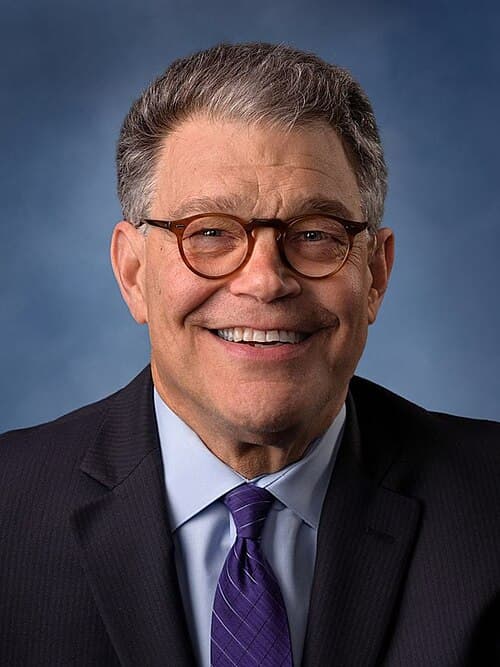
Al Franken
PERSON
American comedian and politician (born 1951)
Al Gore
PERSON
Vice President of the United States from 1993 to 2001 (born 1948)
AS
Al Shayrat
PERSON
Name reference in documents
AK
Alex P. Keaton
PERSON
Name reference in documents
AP
Alexandra Preate
PERSON
Name reference in documents
AH
Allie Hanley
PERSON
Name reference in documents
Andrew Jackson
PERSON
Person referenced in documents
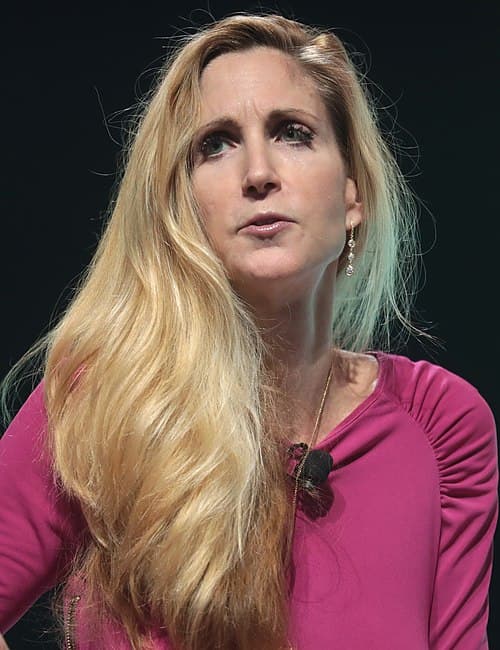
Ann Coulter
PERSON
American author, political commentator
Avi Berkowitz
PERSON
Assistant to the President and Special Representative for International Negotiations
BA
Baier
PERSON
Surname or name fragment in documents
Bannon let Ailes
PERSON
Name reference in documents
Bannon Trump
PERSON
Name reference in documents
BA
Bannonites
PERSON
Surname or name fragment in documents
Barack Obama
PERSON • 3 mentions
President of the United States from 2009 to 2017
Barry Diller
PERSON
American businessman
Bashar al-Assad
PERSON • 2 mentions
President of Syria from 2000 to 2024
Ben Rhodes’s
PERSON
Name reference in documents
Benjamin Netanyahu
PERSON
Prime Minister of Israel (1996–1999; 2009–2021; since 2022)
Beny Steinmetz
PERSON
Israeli businessman
Bernie Sanders
PERSON
United States Senator from Vermont since 2007
BA
Beth Ailes
PERSON
Name reference in documents
Betsy DeVos
PERSON
American politician and philanthropist (born 1958)
Bill Clinton
PERSON • 2 mentions
President of the United States from 1993 to 2001 (born 1946)
Bill O’Reilly
PERSON
American political commentator, television host and writer
Billy Bush
PERSON
American radio and television host (born 1971)
Bob Iger
PERSON
American businessman and CEO of The Walt Disney Company (born 1951)
BO
Bossie
PERSON
Surname reference in documents
Bret Baier
PERSON
American journalist, host of Special Report with Bret Baier on Fox News Channel
Brzezinski
PERSON
Surname or name fragment in documents

Bushes
PERSON
Surname reference in documents
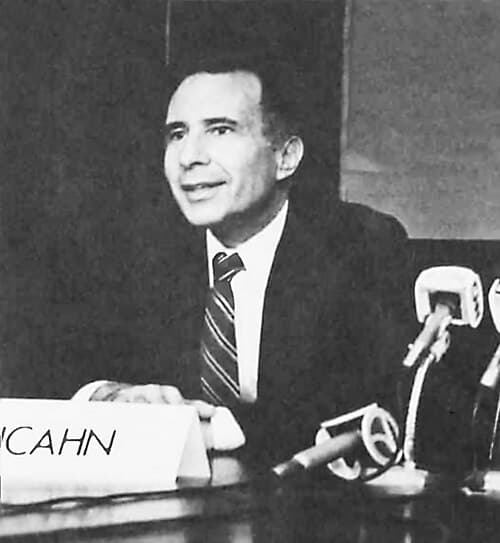
Carl Icahn
PERSON
American businessman
Caslen
PERSON
Name reference in documents

Cassandra
PERSON
Free and open-source, distributed, wide column store, NoSQL database management system.
Charlie Kushner’s
PERSON
Name reference in documents
Chloe Murdoch
PERSON
Australian-American business magnate (born 1931)
Chris Christie
PERSON • 2 mentions
55th Governor of New Jersey and former U.S. Attorney for the District of New Jersey
Chris Tucker
PERSON
American actor and comedian
CS
Christopher Steele
PERSON
Former British intelligence officer
Condoleezza Rice
PERSON
American diplomat and political scientist (born 1954)

Conway
PERSON • 2 mentions
Refers to Kellyanne Conway (White House advisor) in news coverage within Epstein-related DOJ documents
Corey Lewandowski
PERSON
American political operative and commentator
CW
Courtney Wild
PERSON
American victim/survivor of Jeffrey Epstein who led legal battle for victims' rights
CR
Cromwell
PERSON
First name reference to multiple individuals in Epstein-related documents
CV
Cruella de Vil-
PERSON
Name reference in documents
Cynthia Nixon
PERSON
American actress and politician
Dan Scavino
PERSON
American political adviser
Darth Vader
PERSON
Name reference in documents
David Boies
PERSON
American lawyer and chairman
David Duke
PERSON
American white nationalist and politician
David Remnick
PERSON
American journalist, writer and editor (born 1958)
Devin Nunes
PERSON
American politician, CEO of Trump Media
Dina Powell
PERSON
Egyptian-American diplomat and banker
Don McGahn
PERSON
American government official (born 1968)
Donald Trump
PERSON • 10 mentions
President of the United States (2017–2021, 2025–present)
Elon Musk
PERSON • 3 mentions
Businessman and entrepreneur (born 1971)
EN
Enrique Pefia Nieto
PERSON
Name reference in documents
Evan Osnos
PERSON
Journalist
Frank Luntz
PERSON
American political consultant, author, and pollster

Franken
PERSON
Surname or name fragment in documents
Gary Cohn
PERSON
American businessman & politician (born 1960)

Gary-Dina
PERSON
Name reference in documents
George Lincoln Rockwell
PERSON
American founder of the American Nazi Party (1918–1967)
George Soros
PERSON • 2 mentions
Hungarian-American investor and philanthropist (born 1930)

George W. Bush
PERSON • 5 mentions
President of the United States from 2001 to 2009
George Washington
PERSON
American literary and historical figure, referenced in Epstein documents
Gina Haspel
PERSON
American intelligence officer (born 1956)
Grace
PERSON
Short Christian prayer said before or after eating; artistic theme
Graydon Carter
PERSON
Canadian-born American journalist
H. R. McMaster
PERSON
Name reference in documents
HA
Haberman
PERSON • 2 mentions
Primarily refers to Maggie Haberman (New York Times journalist) in news coverage within Epstein-related DOJ documents
Hamad bin
PERSON
Person referenced in documents

Hanley
PERSON
Surname reference in documents
Harvey Weinstein
PERSON • 3 mentions
American film producer and sex offender (born 1952)
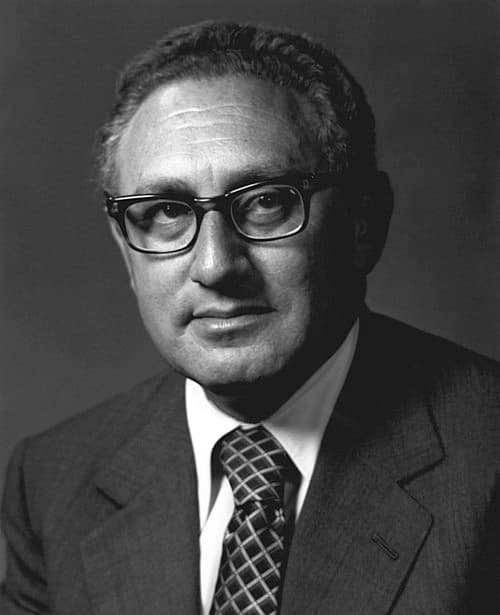
Henry Kissinger
PERSON • 2 mentions
American politician and diplomat (1923–2023)
HI
Hicks
PERSON • 2 mentions
Ambiguous surname - appears in Epstein emails and news coverage contexts
Hillary Clinton
PERSON • 2 mentions
American politician and diplomat (born 1947)
HI
Hiltzik
PERSON
Surname reference in documents
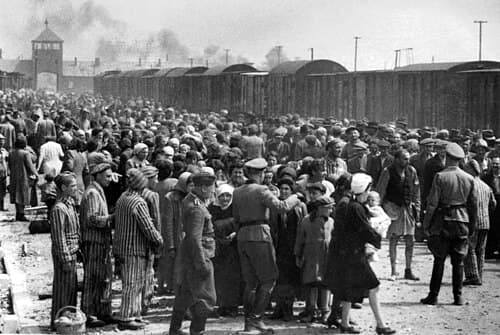
Holocaust
PERSON
Name reference in documents
Hoover
PERSON
Surname reference in Epstein-related documents

Hope Hicks
PERSON
American public relations executive and political advisor (born 1988)
Howard Kurtz
PERSON
American journalist
I.Q. Crazy Mika
PERSON
Name reference in documents
IP
Ike Perlmutter
PERSON
Israeli-American businessman and chairman of Marvel Entertainment

Ivanka Trump
PERSON • 2 mentions
American businesswoman, socialite and political advisior (born 1981)
James Clapper
PERSON
US government official (born 1941)
James Comey
PERSON • 3 mentions
American lawyer and 7th director of the Federal Bureau of Investigation (born 1960)
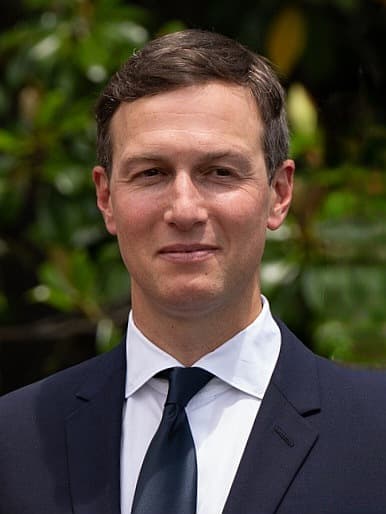
Jared Kushner
PERSON • 4 mentions
American businessman and real estate investor (born 1981)

Jared-Ivanka-Gary-Dina
PERSON
Name reference in documents
Jason Miller
PERSON
American mixed martial arts fighter
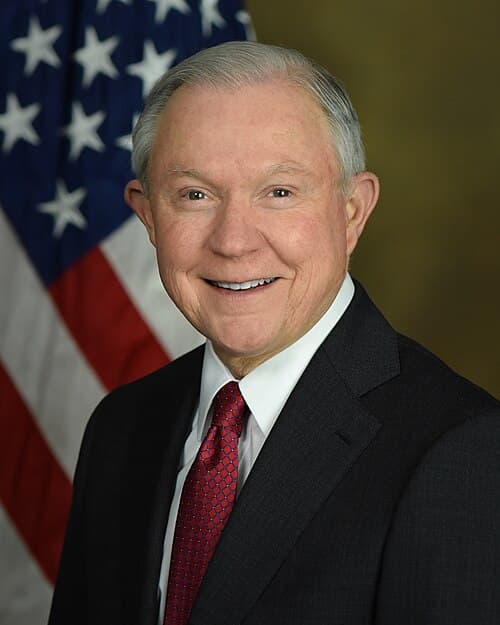
Jeff Sessions
PERSON • 3 mentions
American politician and lawyer (born 1946)
Jimmy Stewart
PERSON
American actor (1908–1997)
Joe Biden
PERSON
46th President of the United States (2021–2025)
Joe Hagin
PERSON
American politician (born 1956)
Joe Scarborough
PERSON
American television host and politician

John Birchers
PERSON
Name reference in documents
John Boehner
PERSON
53rd Speaker of the U.S. House of Representatives from 2011 to 2015
John Bolton
PERSON
American lawyer and diplomat (born 1948)
John Dean
PERSON
American lawyer, politician
John Dickerson
PERSON
American journalist (born 1968)
JM
John McCormick
PERSON
Name reference in documents
Johnny Cash
PERSON
American country singer (1932–2003)
Jon Corzine
PERSON
American politician in New Jersey (born 1947)

Josh Raffel
PERSON
Person referenced in documents
Joshua
PERSON
Primarily refers to Joshua Cooper Ramo in Epstein correspondence
Joshua Yaffa
PERSON
Name reference in documents
JH
Julia Hahn
PERSON
American journalist
Justin Trudeau
PERSON • 3 mentions
23rd prime minister of Canada from 2015 to 2025
KA
Karen
PERSON
Primarily refers to Karen Gordon, New Zealand property manager at Epstein's Zorro Ranch
Karl Rove
PERSON
American political consultant and policy advisor
KA
Kasowitz
PERSON
Surname or name fragment in documents
KA
Katie
PERSON
First name reference to multiple individuals in Epstein documents
Katie Couric
PERSON • 2 mentions
American journalist, presenter, producer, and author
Keith Schiller
PERSON
Director of Oval Office Operations for President Trump and bodyguard
Kellyanne
PERSON
Researcher
Kellyanne Conway’s
PERSON
Name reference in documents
Ken Starr
PERSON • 2 mentions
American judge and educational administrator (1946–2022)
Kimberly Guilfoyle
PERSON
American attorney and political campaign advisor (born 1969)
Kislyak
PERSON • 2 mentions
Surname reference in documents
KI
Kissingeresque
PERSON
Name reference in documents
Langley
PERSON
Surname reference in Epstein-related documents
Lanny Davis
PERSON
American lawyer, author, and lobbyist
Larry Kudlow
PERSON
American television host and financial analyst (born 1947)
Laura Ingraham
PERSON
American radio and television host (born 1963)
Lewandowski
PERSON
Surname reference in documents
LT
Liz Trotta
PERSON
American journalist
Lloyd Blankfein
PERSON • 2 mentions
American business executive
Louise Mensch
PERSON
British politician and blogger
Luntz
PERSON
Name reference in documents
Lyndon Johnson
PERSON
President of the United States from 1963 to 1969 (1908–1973)
MA
Magoo
PERSON
Name reference in documents
MB
Maligning Bannon
PERSON
Name reference in documents
MK
Marc Kasowitz
PERSON
American lawyer
Marc Rich
PERSON
American commodities trader (1934–2013)

Maria Bartiromo
PERSON
American financial journalist, television personality, news anchor, and author
MF
Maria Farmer
PERSON
American visual artist
MC
Mark Corallo
PERSON
American political consultant
Mark Halperin
PERSON
American journalist
Mark Meadows
PERSON • 2 mentions
White House Chief of Staff from 2020 to 2021
Martha Stewart
PERSON
American businesswoman, writer, TV personality (born 1941)
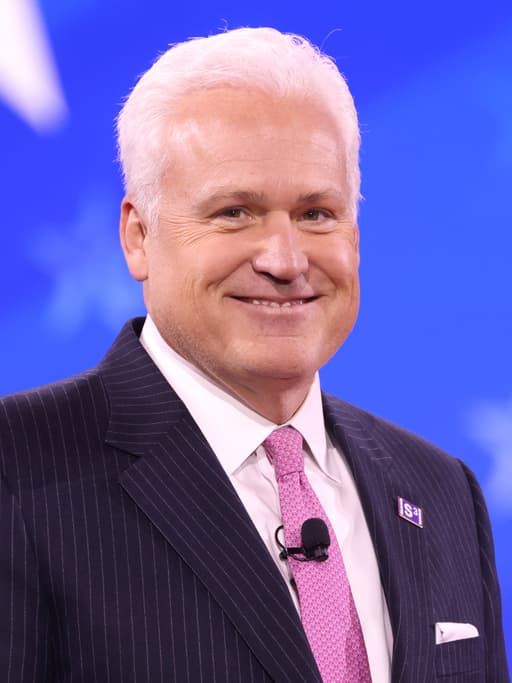
Matt Schlapp
PERSON
American conservative lobbyist

Matthew Hiltzik’s
PERSON
Name reference in documents
Mattis
PERSON
Reference to James Mattis, former U.S. Secretary of Defense

McCormick
PERSON
Surname reference in Epstein-related documents
MC
McMaster
PERSON
Surname reference in Epstein-related documents
Melania Trump
PERSON • 2 mentions
First Lady of the United States (2017–2021; since 2025)
Mercedes Schlapp
PERSON
American lobbyist and columnist
ME
Mercer
PERSON
Surname reference in Epstein-related documents
ME
Mercers
PERSON
Name reference in documents
Michael Flynn
PERSON • 2 mentions
U.S. Army general and former U.S. National Security Advisor (born 1958)
Michael Jackson
PERSON
American singer, songwriter, record producer, and dancer (1958–2009)
Michael Shannon
PERSON
Person referenced in documents
Mick Mulvaney
PERSON • 2 mentions
Former Director of the Office of Management and Budget and White House Chief of Staff
Mika Brzezinski
PERSON
American television host
Mike Dubke
PERSON
American entrepreneur and political aide who had been the White House Communications Director for U.S. President Donald Trump from March 6, 2017 to May 2017
Mike Pence
PERSON • 3 mentions
Vice President of the United States from 2017 to 2021
Mike Pompeo
PERSON
American politician (born 1963) and former United States Secretary of State (2018–2021)
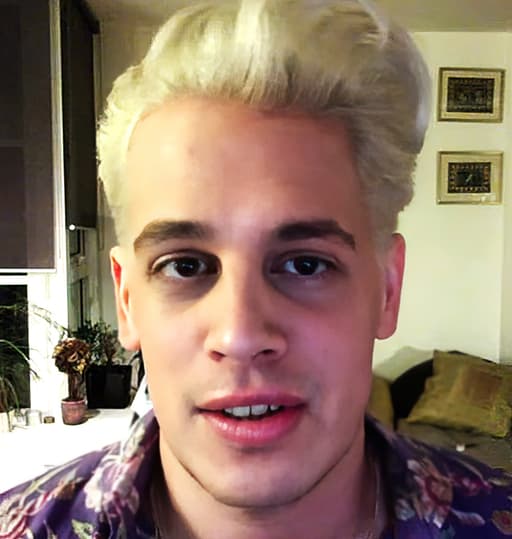
Milo Yiannopoulos
PERSON
British political commentator
Mitt Romney
PERSON • 2 mentions
American politician and businessman (born 1947)
Mohammed bin Nayef
PERSON
Former Saudi crown prince
Mohammed bin Salman
PERSON • 3 mentions
Saudi crown prince (born 1985)
Monica Lewinsky
PERSON • 2 mentions
American activist and writer (born 1973)
Neil Gorsuch
PERSON
Associate Justice of the Supreme Court of the United States since 2017 (born 1967)
Newt Gingrich
PERSON • 2 mentions
American politician, anti-sharia law activist and author (born 1943)
Nick Ayers
PERSON
Name reference in documents

O’Neill
PERSON
Name reference in documents
Oprah Winfrey
PERSON
American talk show host, actress, producer, and author (born 1954)
Paul Manafort
PERSON
American political consultant
Paul Ryan
PERSON • 2 mentions
Speaker of the United States House of Representatives from 2015 to 2019

Paula Jones
PERSON
American Civil Servant
Peter Mandelson
PERSON
British politician and life peer (born 1953)
Peter Thiel
PERSON • 2 mentions
German-American entrepreneur and venture capitalist (born 1967)
Prince Andrew
PERSON
Third child of Queen Elizabeth II and Prince Philip, Duke of Edinburgh (born 1960)
RA
Raffel
PERSON
Surname or name fragment in documents
Rasputin
PERSON
Name reference in documents
RM
Rebekah Mercer
PERSON
American political donor (1973-)
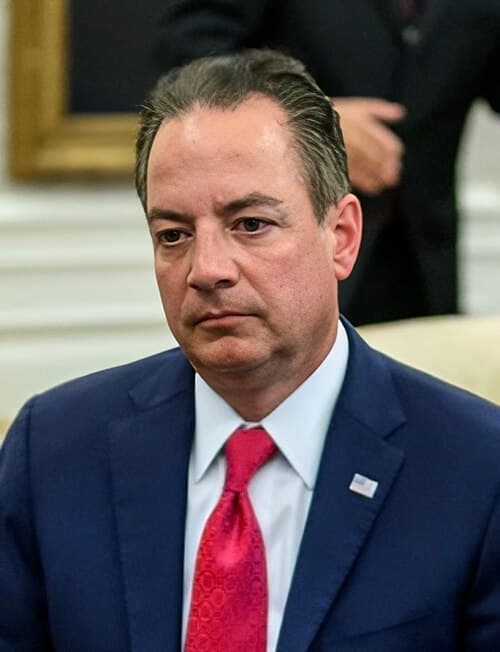
Reince Priebus
PERSON • 2 mentions
Chairman of the Republican National Committee from 2011 to 2017
Remnick
PERSON
American journalist, writer and editor (born 1958)
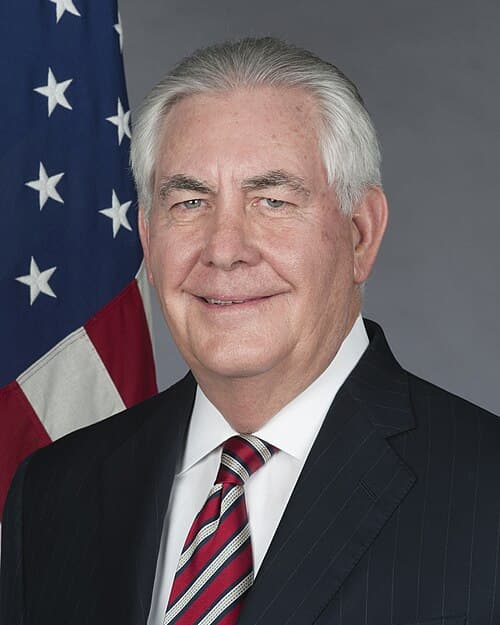
Rex Tillerson
PERSON • 2 mentions
69th United States Secretary of State
Rhodes
PERSON
Ambiguous surname reference in Epstein documents
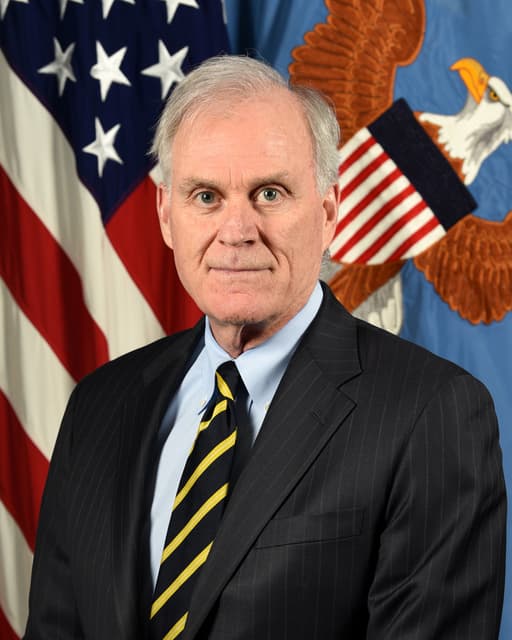
Richard Spencer
PERSON
Former United States Secretary of the Navy
RR
Richie Rich
PERSON
Person referenced in documents
Robert L. Caslen Jr.
PERSON
United States general
Robert Mueller
PERSON
Sixth director of the FBI; American attorney
Rod Rosenstein
PERSON • 2 mentions
American lawyer
Ronald Perelman
PERSON
American businessman and investor (born 1943)
Ronald Reagan
PERSON • 2 mentions
President of the United States from 1981 to 1989 and actor (1911–2004)
Rudy Giuliani
PERSON • 3 mentions
American attorney and politician (born 1944)
Rupert Murdoch
PERSON • 2 mentions
Australian-American business magnate (born 1931)
Rush Limbaugh
PERSON
American political commentator (1951–2021)
Russell Kirk
PERSON
American political theorist, moralist, historian, social critic, literary critic, and writer (1918–1994)
Sally Yates
PERSON
American lawyer, 36th United States Deputy Attorney General
SN
Sam Nunberg
PERSON
American political operative
Sarah Huckabee Sanders
PERSON
Governor of Arkansas since 2023
Scarborough
PERSON • 2 mentions
NER artifact - Scarborough media measurement company referenced in DOJ Bulletin Intelligence methodology
Scarlett Johansson
PERSON
American actress (born 1984)
SC
Schlapp
PERSON
Name reference in documents
Sean Hannity
PERSON • 2 mentions
American television host and political commentator (born 1961)
Sean Spicer
PERSON • 3 mentions
American political strategist and former White House Press Secretary and Communications Director for President Donald Trump
Sebastian Gorka
PERSON
British-born Hungarian American media personality, military and intelligence analyst and former government (born 1970)
Sergey Kislyak
PERSON
Russian diplomat
SH
Sheldon
PERSON
First name reference to multiple individuals in Epstein-related documents
Sheldon Adelson
PERSON
American businessman (1933–2021)
Sheryl Sandberg
PERSON
American technology executive, activist, and author
Smith Goes
PERSON
Name reference in documents
SP
Speaker
PERSON
Name reference in documents
Spencer
PERSON
Town in Worcester County, Massachusetts, United States
ST
Stepford
PERSON
Name reference in documents
Stephen Hawking
PERSON
British theoretical physicist, cosmologist and author (1942–2018)
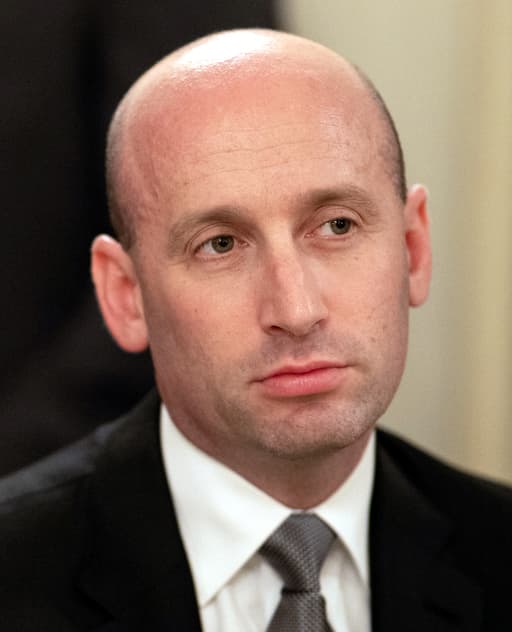
Stephen Miller
PERSON
American political advisor and Trump administration official (born 1985)
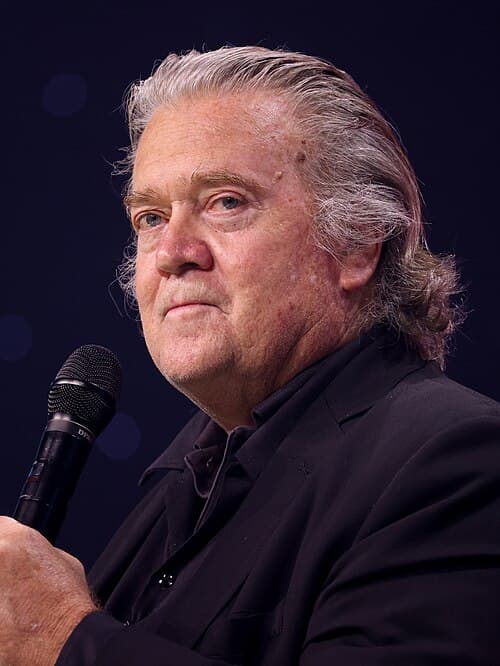
Steve Bannon
PERSON • 3 mentions
American media executive & political strategist (born 1953)
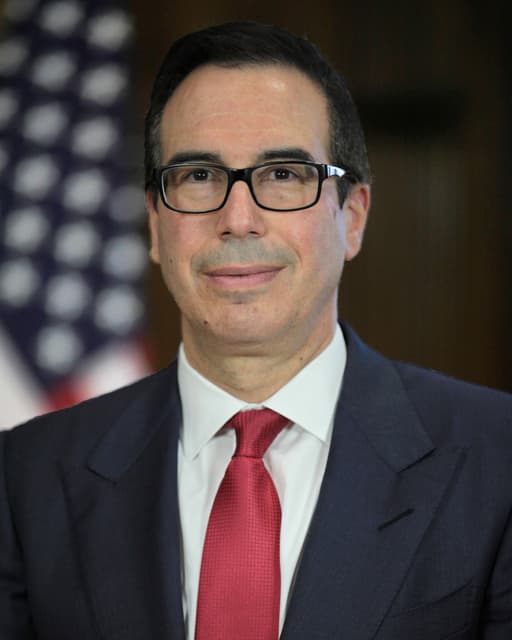
Steven Mnuchin
PERSON • 2 mentions
United States Secretary of the Treasury from 2017 to 2021
SR
Steven Roth
PERSON
Businessperson
Susan Rice
PERSON
American diplomat and policy advisor (born 1964)
Tom Barrack
PERSON • 2 mentions
American private equity investor, founder of Colony Capital, longtime Epstein associate
Tom Price
PERSON
Person referenced in documents
Tony Blair
PERSON • 2 mentions
Prime Minister of the United Kingdom from 1997 to 2007
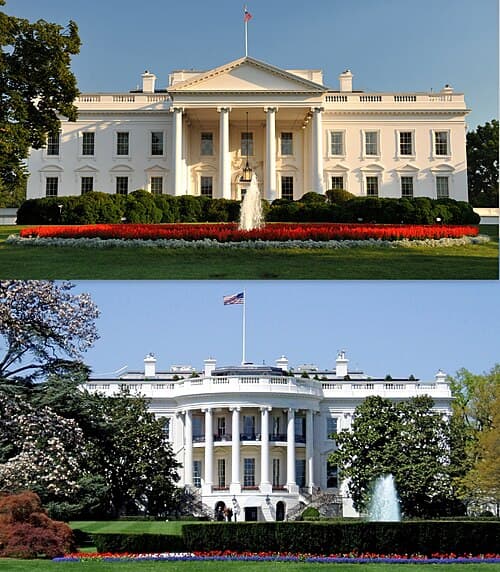
Trump White House
PERSON
Person referenced in documents
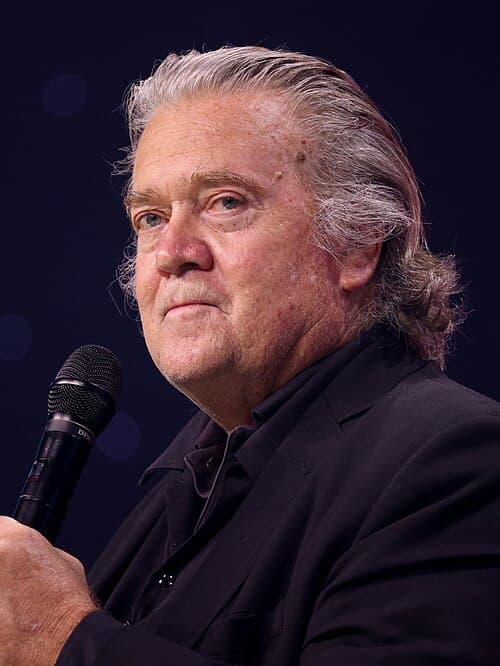
Trumpism-Bannonism
PERSON
Name reference in documents
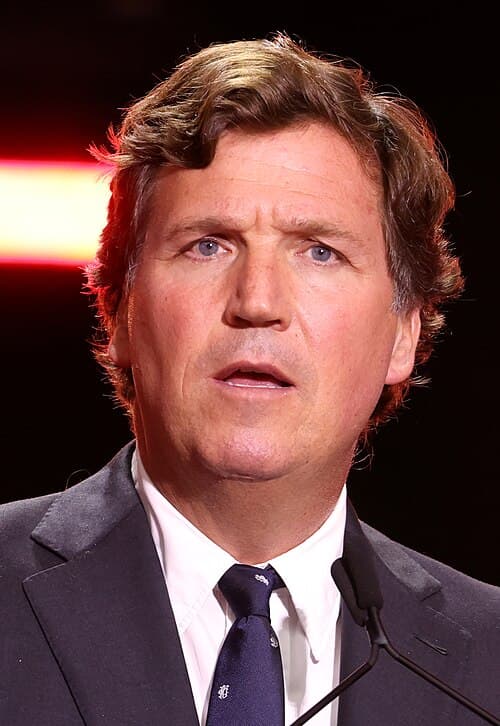
Tucker Carlson
PERSON
American conservative political commentator (born 1969)

Tudors
PERSON
Name reference in documents

Valentine
PERSON
Name reference in Epstein documents

Virginia Giuffre
PERSON
Advocate for sex trafficking victims (1983–2025)
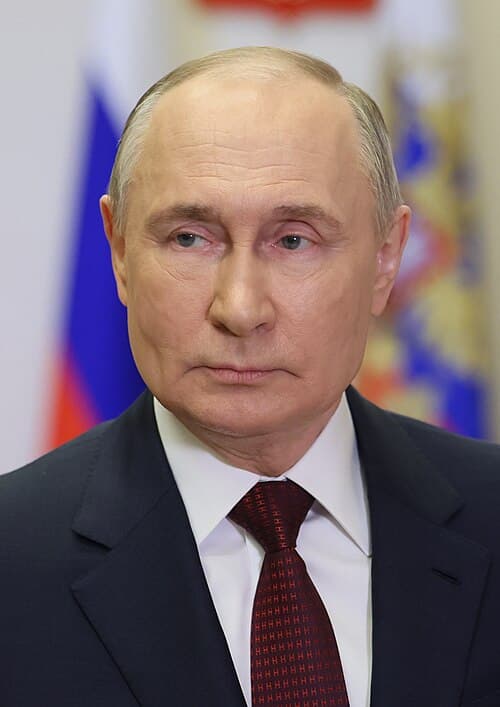
Vladimir Putin
PERSON • 3 mentions
2nd and 4th President of Russia (2000-2008, 2012-present), 7th and 11th Prime Minister of Russia (1999-2000, 2008-2012), Director of the Federal Security Service (1998-1999) and Deputy Mayor of Saint Petersburg (1994-1996)
WA
Walsh
PERSON • 2 mentions
Ambiguous surname - primarily appears in legal case citations within Epstein court documents
Wendell Willkie
PERSON
Name reference in documents
WE
Wendi
PERSON
First name reference to multiple individuals in Epstein-related documents
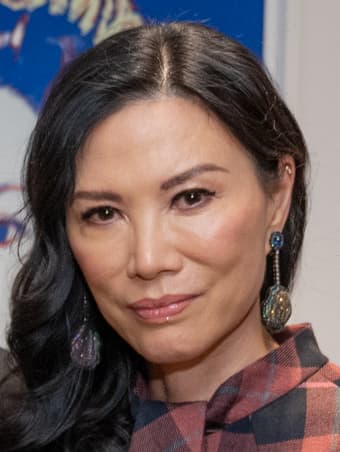
Wendi Murdoch
PERSON
Chinese-American businesswoman (1968-)
WI
Wilbur
PERSON
First name reference to multiple individuals in the documents
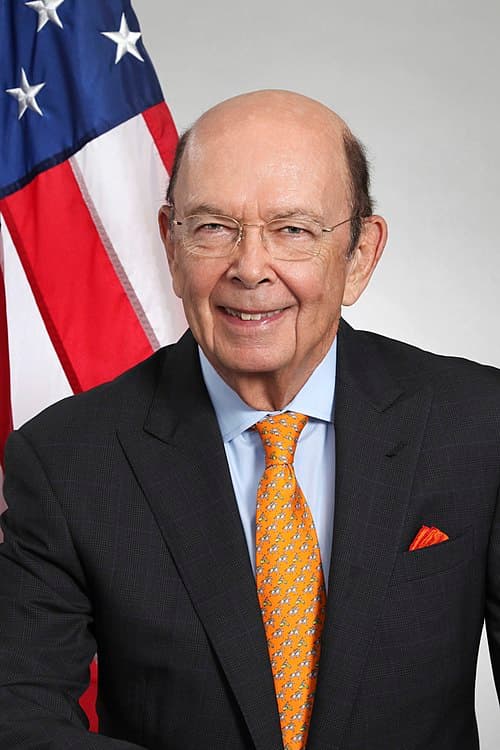
Wilbur Ross
PERSON • 2 mentions
United States 39th Secretary of Commerce
Xi Jinping
PERSON • 2 mentions
General Secretary of the Chinese Communist Party since 2012

Yates
PERSON • 2 mentions
Surname reference in Epstein-related documents
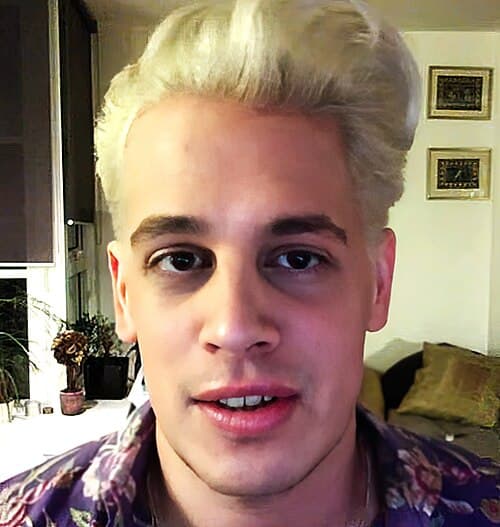
Yiannopoulos
PERSON
Name reference in documents
Anbang Insurance Group
ORGANIZATION
Organization referenced in documents
Andrews Air
ORGANIZATION
Organization referenced in documents
Bannon-Mercer
ORGANIZATION
Organization referenced in documents
Bannon—‘the next Ailes
ORGANIZATION
Organization referenced in documents
Breitbart Embassy
ORGANIZATION
Organization referenced in documents

Capitol Hill
ORGANIZATION
Neighborhood in Washington, D.C., USA
Comey-Mueller
ORGANIZATION
Organization referenced in documents
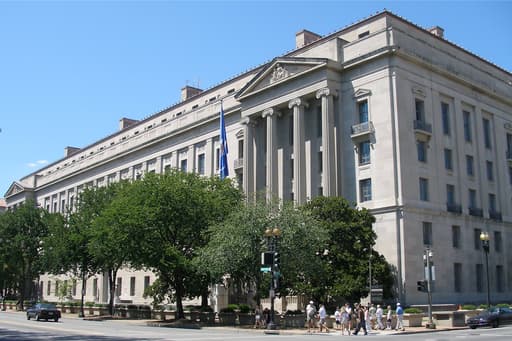
Department of Justice
ORGANIZATION
United States Department of Justice, federal executive department responsible for law enforcement

Dodge
ORGANIZATION
US automotive company
F-Troop
ORGANIZATION
Organization referenced in documents
Firing Comey
ORGANIZATION
Organization referenced in documents
FLOTUS
ORGANIZATION
Organization referenced in documents

Fox News
ORGANIZATION
American cable television news channel
Fox, Breitbart
ORGANIZATION
Organization referenced in documents
Freedom Caucus
ORGANIZATION
Organization referenced in documents
Getting Comey
ORGANIZATION
Organization referenced in documents
Goldman Jews
ORGANIZATION
Organization referenced in documents
GOP
ORGANIZATION
American political party
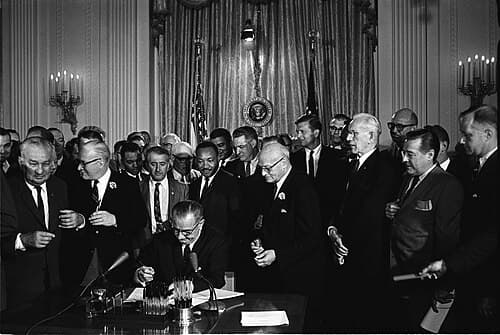
Great Society
ORGANIZATION
Political program launched by Democratic President Lyndon B. Johnson in 1964–65

Harvard College
ORGANIZATION
Undergraduate college of Harvard University in Cambridge, Massachusetts

Homeland Security
ORGANIZATION
U.S. Department of Homeland Security
Intelligence Committee
ORGANIZATION
Organization referenced in documents
Internetcentric Breitbart News
ORGANIZATION
Organization referenced in documents
Jared’s
ORGANIZATION
Organization referenced in documents
Jared’s Middle East
ORGANIZATION
Organization referenced in documents
K Street
ORGANIZATION
Organization referenced in documents
Keystone Cops
ORGANIZATION
Organization referenced in documents
Kremlin
ORGANIZATION
Fortified complex in Moscow, Russia
Kushner-Cohn
ORGANIZATION
Organization referenced in documents
Kushner-Goldman
ORGANIZATION
Organization referenced in documents
Manafort
ORGANIZATION • 2 mentions
Organization referenced in documents

Marvel Comics
ORGANIZATION
Company that publishes comic books and related media
McCarthyism
ORGANIZATION
Phenomenon in the United States of making accusations of subversion or treason without proper regard for evidence, named after Senator Joseph McCarthy
McGahn
ORGANIZATION
Organization referenced in documents

McKinsey
ORGANIZATION
Organization referenced in documents
Meadows’s
ORGANIZATION
Organization referenced in documents
National Committee
ORGANIZATION
Organization referenced in documents
National Intelligence
ORGANIZATION
Intelligence concerning the goals and capabilities of nations or alliances

National Security
ORGANIZATION
Organization referenced in documents
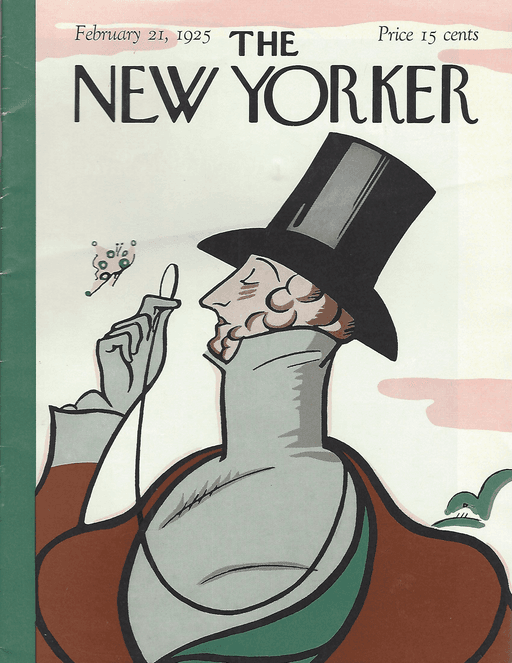
New Yorker
ORGANIZATION
American weekly magazine since 1925
Nunberg
ORGANIZATION
Organization referenced in documents
Oprahesque
ORGANIZATION
Organization referenced in documents
Pissgate
ORGANIZATION
Organization referenced in documents
Politico’s Playbook
ORGANIZATION
Organization referenced in documents

Revlon
ORGANIZATION
An American-based New York City multinational cosmetics, skin care, fragrance, and personal care company
Rosenstein and Sessions
ORGANIZATION
Organization referenced in documents

Sinclair
ORGANIZATION
Organization referenced in documents
Southern Methodist University
ORGANIZATION
Organization referenced in documents

State Department
ORGANIZATION
Executive department of the U.S. federal government
Svengali
ORGANIZATION
Organization referenced in documents
Tea Party
ORGANIZATION
Organization referenced in documents
that’—he
ORGANIZATION
Organization referenced in documents
the Bombay Club
ORGANIZATION
Organization referenced in documents
the Conservative Political Action Conference
ORGANIZATION
Organization referenced in documents
the Democratic Speaker of the
ORGANIZATION
Organization referenced in documents
the Executive Office Building
ORGANIZATION
Organization referenced in documents
the First Family
ORGANIZATION
Organization referenced in documents
the Glover Park Group
ORGANIZATION
Organization referenced in documents
the Health and Human Services
ORGANIZATION
Organization referenced in documents

the Heritage Foundation
ORGANIZATION
Organization referenced in documents
the House Budget Committee
ORGANIZATION
Organization referenced in documents
the House Ways and Means Committee
ORGANIZATION
Organization referenced in documents
the Joint Chiefs of Staff
ORGANIZATION
Senior military advisory body to the U.S. President
the National Economic Council
ORGANIZATION
Organization referenced in documents
the National Environmental Policy Act
ORGANIZATION
Organization referenced in documents

the National Security Council
ORGANIZATION
U.S. National Security Council
The New York Post
ORGANIZATION
New York City tabloid newspaper
the Office of American Innovation
ORGANIZATION
Organization referenced in documents
the Paris Climate Agreement
ORGANIZATION
Organization referenced in documents
the Senate Intelligence Committee
ORGANIZATION
Senate Intelligence Committee
the Senate Judiciary Committee’s
ORGANIZATION
Organization referenced in documents
the Tea Party-Bannon-Breitbart
ORGANIZATION
Organization referenced in documents
the Tea Party’s
ORGANIZATION
Organization referenced in documents

the University of Chicago
ORGANIZATION
University in Chicago

The Washington Post
ORGANIZATION
Daily broadsheet newspaper in Washington, D.C.
the West Wing for Marine One
ORGANIZATION
Organization referenced in documents
together’—Priebus
ORGANIZATION
Organization referenced in documents
too—75
ORGANIZATION
Organization referenced in documents
Trump SoHo
ORGANIZATION
Organization referenced in documents
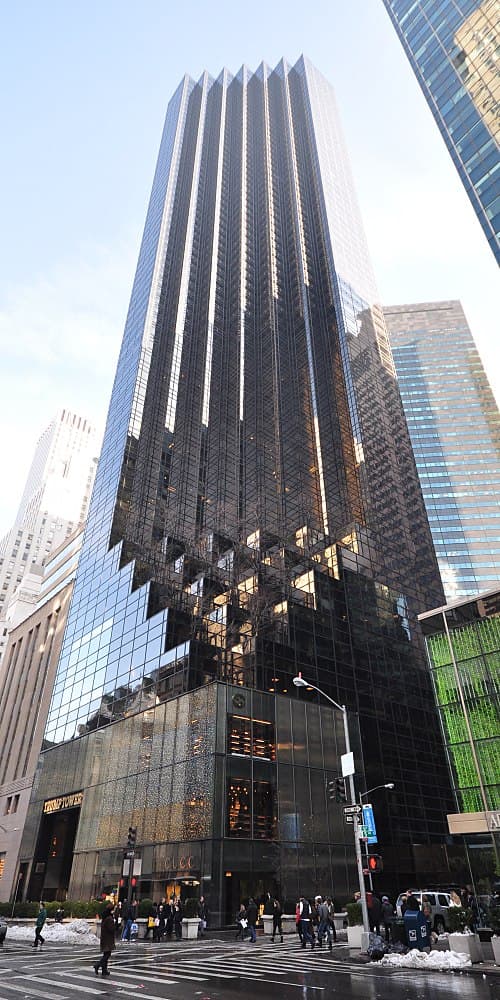
Trump Tower
ORGANIZATION
Skyscraper in Manhattan, New York
Trump-Breitbart
ORGANIZATION
Organization referenced in documents
Trumpcare
ORGANIZATION
Organization referenced in documents
Trumpcentric
ORGANIZATION
Organization referenced in documents

Wachtell
ORGANIZATION
Organization referenced in documents

Wachtell, Lipton, Rosen & Katz
ORGANIZATION
Organization referenced in documents

Washington Times
ORGANIZATION
American broadsheet newspaper published in Washington, D.C.
West Wing
ORGANIZATION • 2 mentions
Organization referenced in documents
White House
ORGANIZATION • 2 mentions
Official residence and office of the President of the United States

WikiLeaks
ORGANIZATION
Organization that publishes leaks provided by anonymous sources

Yale Law School
ORGANIZATION
Law school of Yale University
Zeitgeist
ORGANIZATION
Organization referenced in documents
Zelig
ORGANIZATION
Organization referenced in documents
Zimes
ORGANIZATION • 2 mentions
Organization referenced in documents
Alexandria
LOCATION
City in Egypt

Atlantic City
LOCATION
City in Atlantic County, New Jersey, United States

Baghdad
LOCATION
Capital city of Iraq

Bahrain
LOCATION
Country in the Persian Gulf

Bedminster
LOCATION
Township in New Jersey, United States

Bethlehem
LOCATION
City in the State of Palestine
Borscht Belt
LOCATION
Summer resort area in the Catskill Mountains, USA
can’t-
LOCATION
Location referenced in documents
Circa
LOCATION
Location referenced in documents
circa-1968
LOCATION
Location referenced in documents
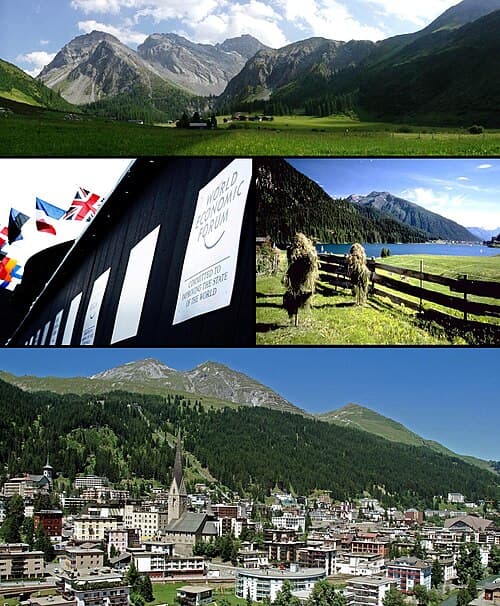
Davos
LOCATION • 2 mentions
Municipality in the canton of Graubünden, Switzerland
Davoscentric
LOCATION
Location referenced in documents

Dover
LOCATION
Town and major ferry port in Kent, South East England
Farmingdale
LOCATION
Incorporated village on Long Island, within the town of Oyster Bay, Nassau County, New York, United States
Fifth Avenue)—was
LOCATION
Location referenced in documents
Foxcentric
LOCATION
Location referenced in documents
Gaylord
LOCATION
Location referenced in documents
Greenwich
LOCATION
Town in Fairfield County, Connecticut, United States, suburb of NYC
Harrisburg
LOCATION
City in and county seat of Dauphin County, Pennsylvania, United States and Pennsylvania federated state capital city

Jerusalem
LOCATION
City in the Middle East, holy to the three Abrahamic religions
Khan Sheikhoun
LOCATION
Location referenced in documents
Las Vegas
LOCATION
City of Clark County, and largest city in state of Nevada, United States
Long Island
LOCATION
Island in New York, United States of America

Minnesota
LOCATION
State of the United States of America
National Harbor
LOCATION
Census-designated place in Maryland, United States
Queens
LOCATION
Borough in New York City, New York, United States

Riyadh
LOCATION
Capital and largest city of Saudi Arabia

Silicon Valley
LOCATION
2014–2019 American television series
the Bible Belt
LOCATION
Location referenced in documents
the River Jordan
LOCATION
Location referenced in documents
Trumpland
LOCATION
Location referenced in documents
Trumpness
LOCATION
Location referenced in documents
United States
LOCATION
Country located primarily in North America
yYiannopoulos
LOCATION
Location referenced in documents
Statistics
Pages:100
Entities:363
Avg. OCR:95.2%
Sponsored