EFTA01475956_sub_002 - EFTA01475956_200
Document Information
Bates Range
EFTA01475956_sub_002 - EFTA01475956_200
Pages
100
Original Filename
EFTA01475956.pdf
Document Content
Page 101 - EFTA01475956_101
Figure 5 : Consumer price index 101 103 105 107 109 97 99 1995 2000 2005 Note: Excluding the consumption tax hike effect Sources: MIC, Deutsche Bank Research 2010 2015 Overall Overall, excluding fresh food Overall, excluding food and energy Overall, excluding fresh food and energy Index, CY 2010=100, sa 2016F 4.8 -4.5 210.5 -22.6 -0.5 152.4 3.6 0.10 0.15 0.45 128 124 2017F 5.1 -3.4 208.4 -23.5 -0.5 168.8 3.9 Current Q1-2016 02-2016 Q4-2016 0.10 0.17 0.32 123 134 0.10 0.15 0.55 128 EFTA01476056
Page 102 - EFTA01475956_102
115 Source: National statistics, Deutsche Bank Research, as of December 07 Note: DB forecast from Q4 2015. Source: Cabinet Office, METI, Nikkei NEEDS, Deutsche Bank Research Mikihiro Matsuoka, (81) 3 5156 6768 Deutsche Bank AG/London Page 33 Figure 6 : Nominal GDP and industrial production Industrial production (lhs) 100 105 110 115 120 65 70 75 80 85 90 95 2001 2003 2005 2007 2009 2011 2013 2015 2017 2019 Index, CY2010=100, sa Forecast Nominal GDP (rhs) JPY trn, sa 450 460 470 480 490 500 510 520 530 540 550 EFTA01476057
Page 103 - EFTA01475956_103
8 December 2015 World Outlook 2016: Managing with less liquidity China: Rising challenges to trigger further policy easing China's economy had a tough year in 2015. 2016 will likely be even more challenging. The current round of policy easing may help to boost growth in Q4 2015 and Q1 2016, but it will exacerbate overcapacity and raise leverage, both are damaging in the long term. In mid-2016 the government may face a policy dilemma again. Downside pressure on growth may resurface, and pressure the government into further policy easing. Growth will likely stabilize in 2016Q1 The economic difficulty that troubled China for most of 2015 may be arrested temporarily in Q1. The difficulty in 2015 was to some extent due to a large fiscal contraction caused by the decline of lands sales revenue in Hl. Land auctions have rebounded strongly since mid-2015 because of policy easing (Figure 1). As growth of land sale revenue usually lags growth of land auctions by 1-2 quarters, the fiscal revenue has improved in Q4 2015 and should rebound further in Q1 2016. This will likely help GDP growth to pick up in Q4 and Ql. Investment is still the channel to boost growth, in our view. Higher land sales in Q3 2015 indicate the weak property investment may finally show some signs of stabilization in Q4 and Ql. Growth of infrastructure investment may pick up again as land sales help boost fiscal revenue. Property and infrastructure combined account for almost half of investment in China. Hence we expect investment growth may pick up modestly in Q4 2015 and Q1 2016. Challenges may rise beyond 2016Q1 The rebound of land sales was driven primarily by policy easing rather than economic fundamentals. The property sector remains in an oversupplied condition, as indicated by a rising level of inventory (Figure 2). This round of rebound in land sales helps to address economic and fiscal pressure in the short term, but will exacerbate the oversupply problem in the property sector. The policy easing since mid-2015 also led to another undesirable outcome — acceleration of leverage buildup. The growth of credit stock as measured by the total social financial picked up in Q3 to 12.5% yoy from 11.9% in Q2. Based on our estimate this is the first time it rebounded since 2014Q4. The rising leverage in the economy imposes financial risks. The authorities are clearly aware of this, but decided to focus on the short-term growth concern in H2 2015. Given the undesirable side effects of policy easing, we believe the government may switch to a neutral policy stance in Q4 2015 once growth shows signs of stabilization We expect the effect of policy easing will run out of steam in H1 and growth will then face downward pressure again. Labor market dynamics may drive the policy outlook The key macro uncertainty in 2016 lies in the labor market. In spite of expectation of slower growth beyond Ql, the prospect of unemployment is EFTA01476058
Sponsored
Page 104 - EFTA01475956_104
unclear. The best indicator in the market about labor condition is the ratio of job vacancies to job seekers. This ratio dropped in H1 as growth slowed, which is intuitive as it suggested weak labor demand. But it surprisingly rebounded in Q3. Moreover the ratio has been above 1 for 20 consecutive quarters (Figure 3) This suggests the job market does not show signs of rising unemployment despite of the slower growth. Figure 2: Rising housing inventory Floor space for sale 500 550 600 650 700 Mln sq metres Figure 1: Land sales and local government land sales revenue % yoy 20 40 60 80 -60 -40 -20 0 Sep-2013 Mar-2014 Sep-2014 Mar-2015 Sep-2015 Source: CREIS, Ministry of Finance, Deutsche Bank Research SouFun land sales, value Local government land sales revenue Feb-2014 Jul-2014 Dec-2014 May-2015 Oct-2015 Source: WIND, Deutsche Bank Research Figure 3: Job vacancies to job seekers ratio 1.00 1.02 1.04 1.06 1.08 1.10 1.12 1.14 1.16 Job vacancies to job seekers ratio Source: WIND, Deutsche Bank Research Page 34 Deutsche Bank AG/London EFTA01476059
Page 105 - EFTA01475956_105
Dec-10 Mar-11 Jun-11 Sep-11 Dec-11 Mar-12 Jun-12 Sep-12 Dec-12 Mar-13 Jun-13 Sep-13 Dec-13 Mar-14 Jun-14 Sep-14 Dec-14 Mar-15 Jun-15 Sep-15 EFTA01476060
Page 106 - EFTA01475956_106
8 December 2015 World Outlook 2016: Managing with less liquidity We understand why the labor market has been resilient, but we do not have full confidence it will stay so in 2016. The stable labor market reflects three factors. The labor force is shrinking, hence less pressure to supply side. The demand side has been boosted by a robust service sector, which helps to absorb labor from the weak industrial sector. Moreover, the government managed to prevent large scale layoffs so far, despite the growth slowdown. This delays job destruction. The labor market outlook is uncertain because the delayed job shedding may occur in 2016. The government started to send signals recently that it would tolerate more bankruptcy. Premier Li Keqiang mentioned the risk imposed by "zombie companies" on the economy in a State Council meeting in November. The lack of government intervention in the recent Shanshui cement bond default may also indicate the subtle change in government's thinking. The government recently mentioned the importance of managing the supply side of the economy, which suggests it may finally address the overcapacity problem more seriously. We believe it is the right policy to allow some "zombie companies" to go bankrupt. It will help improve the efficiency of the economy and avoid building up of bad loans down the road. The impact on the labor market in the short term is difficult to forecast. We assume as a baseline case that there will be some signs of rising unemployment in the economy. In such a scenario we believe the government will respond by cutting interest rates twice in H2 2016 and expand fiscal spending. There is room for policy easing in 2016, but with caveats The government has the capacity to ease policies. On the monetary front, the reserve requirement ratio is still quite high (Figure 4). We expect 4 RRR cuts in 2016. The one-year deposit rate is currently at 1.5%. With inflation relatively low, the PBoC can cut the benchmark interest rates if downward pressure on growth intensifies. On the fiscal front, total government debt is around 39.6% of GDP, not including the RMB8.6 trillion debt of local government financing vehicles, which has been recognized by the central government. This is lower than the level in major developed economies. Further policy easing clearly has its costs. The leverage ratio of the economy will likely rise further and imposes higher financial risks. Loosening of monetary policy may delay the resolution of "zombie companies" and overcapacity problem further. The benefit of short-term growth stabilization will come with pains in the longer term, and the tradeoff is becoming increasingly unfavorable. There is room for easing in 2016, but this may come with a hefty price. SDR inclusion is structurally positive EFTA01476061
Sponsored
Page 107 - EFTA01475956_107
The SDR inclusion of the RMB on November 30 is a structurally positive development for China (Figure 5). The most significant macro implication is on reform outlook. The progress of structural reforms has been slow. There is doubt among investors about whether China is truly committed to marketoriented reforms. Such doubt heightened in the summer after what happened in the equity market. The SDR inclusion may work as a catalyst to boost the momentum of reforms in China. It indicates that the authorities are keen to integrate China's economy further with the global economy, which may help better align China's domestic market operations with international best practices. The size of capital inflows in the short term may not be high, as the SDR inclusion itself will only begin effective Oct 1 2016. But China has opened its fixed income and foreign exchange markets to foreign central banks and Deutsche Bank AG/London Page 35 Figure 6: Deutsche Bank forecasts: China (% yoy, unless stated) Real GDP growth CPI inflation, pavg. Current account balance, % of GDP USD/CNY, eop Fiscal balance, % of GDP Government debt, % of GDP 1-year deposit rate, % M2 growth 7.3 2.0 3.1 6.1 -1.8 37.1 2.75 12.3 7.0 1.4 3.3 6.4 -3.2 39.6 1.50 13.6 Source: National authorities, Deutsche Bank Research 2.8 6.7 -3.5 40.0 1.00 EFTA01476062
Page 108 - EFTA01475956_108
12.7 Figure 4: Reserve requirement ratio 12 16 20 24 8 2007 2008 2009 2010 2011 2012 2013 2014 2015 Source: PBoC, Deutsche Bank Research Reserve requirement ratio for large financial institutions Figure 5: SDR basket 100 20 40 60 80 0 2005 2010 Source: IMF, Deutsche Bank Research 2016 11 11 34 USD EUR RMB GBP JPY 9.4 11.3 37.4 8.33 8.09 30.93 10.92 44 41.9 41.73 2014 2015F 2016F 2017F 6.7 1.8 6.7 1.8 2.5 6.7 -3.5 40.5 1.00 12.4 EFTA01476063
Page 109 - EFTA01475956_109
8 December 2015 World Outlook 2016: Managing with less liquidity sovereign wealth funds this year. We expect these institutions will start investing in 2016. Some argue that the market expectation of RMB depreciation may jeopardize the inflows. We do not think this is the key constraint, as central banks hold Euro and Yen assets despite these currencies also facing depreciation expectations. In our minds, the key constraint is that the domestic market is not ready for foreign reserve managers yet. Infrastructure needs to be established, liquidity condition needs to improve, and rules need to be revised to facilitate trading. This will take time, but we have no doubt it is doable. We maintain our view that the Chinese government will not allow sharp RMB depreciation in the rest of the year. As the market expectation for a December rate hike heightens, RMB depreciation would cause high volatility in the financial market, which is damaging to China's economy. We believe the PBoC may want to wait for the Fed to hike rate first and see how risks in the emerging markets evolve, before it takes the next move on the exchange rate. Zhiwei Zhang, (+852) 2203 8308 Page 36 Deutsche Bank AG/London EFTA01476064
Sponsored
Page 110 - EFTA01475956_110
8 December 2015 World Outlook 2016: Managing with less liquidity Asia (ex Japan): Triple troubles At first glance, Asia's ongoing economic slowdown could be explained away in cyclical terms that could bottom next year. After all, the hangover from the global financial crisis of 2008-09 persists and global economic recovery is uneven. With appropriate policy support, the recovery could gain strength, and it appears that 2016 may well be the year of strong fiscal spending in many parts of the world. The recent commodity bust may turn out to be temporary, with only short-lived impact on investment. G2 economies could continue to get stronger and re-emerge as a source of vigorous exports demand for Asia. China's cyclical measures to deal with overcapacity and financial system stress could pave the way for healthier growth. Even if some of these favorable developments were to transpire, Asia may find the economic environment in 2016 and 2017 to be about the same as the last couple of years. There may be further slowing of China, but India and Indonesia could see growth accelerate, Malaysia and the Philippines could maintain trend growth, and the rest of Asia could see less disappointment. Indeed, our forecast for the next two years assumes such a path. We see China settling at sub-7% growth in an orderly manner, while by 2017 India's growth should head past 7.5% and Indonesia should go back to 5%. 2-3% growth may be the norm for many other Asian economies, but given the challenging nature of the cycle, that ought to be an acceptable outturn. The key assumption in these forecasts is that financial sector risks are managed and economic spillovers from a slowing China are contained. But there are some major fault lines in this somewhat innocuous narrative. Deeper examination of the region's economic dynamic however reveals a series of headwinds that transcend the cycle. In this piece, we go over three key headwinds — aging, stagnant trade, and rising debt — that could get in the way of growth and prosperity in the coming years. There are enough savings and safeguards in place in the region to mitigate risks of an outright crisis owing to these headwinds; a more likely scenario however is a gradual erosion of potential GDP growth rate, worsening of public finances, and a general decline in sentiment about the region's prospects. Aging Considerable attention has been paid in recent years to China's rapid aging. Indeed, recent news on the relaxation of the long-standing one-child policy reflects the seriousness with which the Chinese authorities are considering the aging problem. Beyond China, a number of Asian Tiger economies are undergoing an aging process that will last decades. Aging is problematic for a variety of reasons. As the number of elderly rises, the labor force shrinks, reducing not just the availability of workers but also the output, incomes, and taxes generated by those workers. As a result, potential GDP growth declines, the fiscal position worsens (as transfers to dependents rise and tax collection EFTA01476065
Page 111 - EFTA01475956_111
from the shrinking pool of workers declines), and overall economic vitality dissipates. The decline in potential GDP growth along with a rise in the share of dependents also has adverse implications for savings, debt sustainability, and financial markets. Can't public policy arrest this problem? While we welcome China's latest initiative, we find that aging is very difficult to reverse. Singapore is a case in point. Faced with declining fertility and the prospect of rapid aging, the authorities have introduced wide-ranging measures to encourage families to have more children. These measures include longer leave for parents, tax incentives, and a more generous social safety net. But so far, the track record Deutsche Bank AG/London Page 37 Figure 2: Regional growth momentum continues to be weak z score -1.2 -1.0 -0.8 -0.6 -0.4 -0.2 0.0 Oct-13 Feb-14 Jun-14 Oct-14 Feb-15 Jun-15 Oct-15 Note:. Regional z-score is GDP-weighted, derived as a composite of country-by-country-scores of monthly indicators of domestic demand (.e.g. retail sales, imports, credit growth, and industrial production. Data is from 1995 to present. Source: CEIC, Deutsche Bank Research MMI Figure 1: Deutsche Bank forecasts: Emerging Asia (% yoy, unless stated) Real GDP growth Private consumption Investment Government consumption Exports Imports CPI CA balance, % of GDP Asia ex. China and India Real GDP growth CPI 6.1 6.5 5.7 6.1 6.7 EFTA01476066
Page 112 - EFTA01475956_112
6.3 -1.5 -6.1 2.4 2.6 4.1 3.4 3.6 2.2 Source: National authorities, Deutsche Bank Research 4.2 5.3 2.9 2.1 3.8 2.9 16.9 17.6 18.7 4.3 1.7 3.4 2.4 2014 2015F 2016F 2017F 6.4 6.7 5.2 6.3 6.9 6.7 5.7 5.9 7.5 2.9 1.8 4.2 3.3 EFTA01476067
Sponsored
Page 113 - EFTA01475956_113
8 December 2015 World Outlook 2016: Managing with less liquidity has been disappointing, with Singaporeans by and large choosing to keep family size small. We think that the Chinese authorities will also find that once set in practice, the culture and social attitude in keeping family size small is very difficult to reverse. Opening up to more immigration could reduce the headwind to aging, but that comes with its own set of political sensitivities and social implications. We reckon that most aging societies in Asia will have to accept the phenomenon and deal with recalibrating public finance, social safety net, and the service sector to take this into account. Not all economies in Asia are facing down the barrel of inexorable aging. India, Indonesia, and the Philippines, with 1.5bn people among them, should have favorable demographics dynamic for decades to come. This could create the potential of redistribution of growth, with the aging economies passing on the mantle of high growth to the relatively young ones. With the right investment policies, the latter economies could become that hub of regional manufacturing and demand. These economies also look set to maintain comfortable growth and interest rate differential to keep debt sustainable. All three are blessed with large populations and a favorable domestic demand dynamic that could generate satisfactory growth. Having a young population is no guarantee of high growth though. Not only do the governments need to put in place the requisite infrastructure and employment opportunities for the emerging workforce, they also need to ensure social stability that can often be challenged if population grows too fast. Trade stagnation Asia's success as a region owes much to its dynamic export sector. Over the past five decades, starting with Japan, followed by the Tiger economies, and then by China, Asian producers have supplied the bulk of manufactured goods consumed globally. A cost-competitive and educated workforce, businessfriendly policies, and efficient infrastructure have combined to give global leadership to Asia. But maintaining global market share and manufacturing leadership is one thing, continuing to grow with trade is turning out to be an altogether different challenge. Even as US growth has picked up, Europe has bottomed, and consumers worldwide have been benefitting from low energy prices (akin to a tax cut), Asia's exporters have had a torrid year. So far this year, all key Asian emerging market economies have reported negative exports growth. Whether they are commodity or electronics exporters, large or small economies, those that rely on China versus those that rely on G2 demand, the underperformance is across-the-board. Given the sharp drop in global commodity prices and the slowdown in China's investment cycle, it is easy to understand why commodity exporters like Indonesia and Malaysia will EFTA01476068
Page 114 - EFTA01475956_114
likely report such poor exports earnings. But the weakness among electronics producers seems counterintuitive. Surveys of purchasing managers in the US and EU show a much better environment presently for new orders than they have been in the past, say in 2013. Still, Asian exports are substantially weaker. Indeed, the tight historical relationship between Asian exports and lagged values of US and EU PMI has broken down over the past few years. Indeed, this breakdown in relationship can be seen not just with aggregate data, but with country-by-county analysis. The G2 cycle should have been much more supportive of Asian exports than has been the case. Our conjecture is that the recent bout of poor trade data reflects structural factors that will hold back exports (and export related investment) for years to come. The recovery in the US and EU is atypical, characterized by poor wage growth, low quality jobs, and greater service sector orientation than the past. Also, the aging dynamic in both regions is changing the pattern of consumption (and imports) profoundly. Furthermore, contrary to press reports Page 38 Deutsche Bank AG/London Figure 3: Deutsche Bank forecasts (% yoy, unless stated) China GDP CPI CA bal., % GDP Fiscal bal., % GDP Hong Kong GDP CPI CA bal., % GDP Fiscal bal., % GDP India GDP CPI CA bal., % GDP Fiscal bal., % GDP Indonesia GDP CPI CA bal., % GDP Fiscal bal., % GDP Malaysia GDP CPI CA bal., % GDP Fiscal bal., % GDP Philippines GDP CPI CA bal., % GDP Fiscal bal., % GDP Singapore GDP CPI CA bal., % GDP EFTA01476069
Page 115 - EFTA01475956_115
Fiscal bal., % GDP Korea GDP CPI CA bal., % GDP Fiscal bal., % GDP Sri Lanka GDP CPI CA bal., % GDP Fiscal bal., % GDP Taiwan GDP CPI CA bal., % GDP Fiscal bal. % GDP Thailand GDP CPI CA bal., % GDP Fiscal bal., % GDP Vietnam GDP CPI CA bal., % GDP Fiscal bal. % GDP Source: Deutsche Bank Research 7.0 1.4 3.3 1.8 2.8 -3.2 2.5 3.1 0.6 2.4 7.3 4.9 -1.3 -3.9 4.5 6.4 -2.2 -2.3 4.6 2.0 2.5 -3.2 6.0 1.4 2.6 -1.5 EFTA01476070
Sponsored
Page 116 - EFTA01475956_116
2.5 -0.4 20.2 2.6 2.6 0.7 8.9 -0.3 5.5 1.0 -1.6 -6.0 1.0 -0.3 15.6 -1.6 2.5 -0.9 3.8 -2.0 6.5 0.8 -1.6 -5.7 -3.5 3.0 4.4 2.0 1.3 7.5 5.4 -1.6 -3.8 4.5 4.8 -2.0 -2.3 4.2 2.7 3.0 -3.1 6.0 3.0 1.1 -1.6 2.5 1.2 19.4 3.3 2.8 1.6 EFTA01476071
Page 117 - EFTA01475956_117
7.3 -0.2 6.0 4.5 -1.4 -6.0 2.4 1.1 14.0 -1.8 2.5 0.9 2.7 -2.1 6.7 5.0 -2.9 -5.0 2015F 2016F 2017F 6.7 6.7 1.8 2.5 -3.5 4.0 3.8 2.4 1.8 7.8 5.0 -2.0 -3.7 5.0 5.2 -1.8 -2.2 5.0 2.6 3.3 -2.9 5.8 3.1 1.2 -1.8 2.5 1.8 17.8 3.1 3.0 2.1 7.2 EFTA01476072
Page 118 - EFTA01475956_118
0.1 7.0 5.0 -1.5 -5.5 2.7 1.6 12.7 -1.7 2.5 1.7 2.9 -2.2 7.0 5.8 -3.1 -5.0 EFTA01476073
Sponsored
Page 119 - EFTA01475956_119
8 December 2015 World Outlook 2016: Managing with less liquidity of trade liberalization, trade restrictions have risen sharply among the G-20 in recent years, as per UNCTAD data. We don't think any of these drags are going away. Therefore, Asian exporters may well have to settle for a new normal of anemic exports growth. Within the region, there are some additional challenges, starting with China's import substitution drive (which has hurt intermediate and capital goods exports from Japan, Taiwan, and Korea), rising cost of production (Singapore and Thailand), and failure to move up the value chain (Taiwan and Thailand). For aspiring economies like India and Indonesia, these developments are disappointing. The prevalence of regional excess capacity and weak G2 demand for Asian exports will make it particularly hard for these economies to join the club of major export-oriented manufacturers. They will do better relying on manufacturing to satisfy domestic demand, in our view. Debt The rise in regional debt, especially in China, is under a great deal of focus, evidenced by a plethora of reports issued by multilateral agencies. Taking advantage of years of strong growth, favorable investor sentiment, relatively low rates, ample liquidity, expectations of stable currency, and supportive fiscal and financial sector policies, Asian borrowers have accumulated substantial debt in recent years. But the optimistic projections associated with these borrowings have turned out to be mostly wrong. Both nominal and real growth rates have slowed, pushing down ROE, real rates have turned out to be high owing to sharp disinflation or deflation, and for those with foreign currency borrowing, expectations of stable currency have been off by a large margin due to the strong USD cycle. For those in the commodity sector, the risks are the greatest due to the combination of sharp revenue declines and soaring cost of servicing foreign currency debt. In addition to corporates, Asian households have amassed sizable debt in recent years, with Hong Kong, Malaysia, Singapore, South Korea, Taiwan and Thailand characterized by burdens amounting to over 60% of GDP. China's reported household debt figures are lower (slightly below 40% of GDP), but strikingly, its households have added more than 20% of GDP worth of debt in the past five years. Gross debt figures for wealthy economies like Singapore, South Korea, and Taiwan may be less alarming due to households' strong asset position, but for the rest of the cohort the high debt level can act as a major deterrent to the credit cycle and consumption outlook. High household debt may not be a source of systemic risk in the near term, but could readily become a chronic drag to growth. Unlike corporations, households don't have particularly orderly routes to restructuring debt. Hence firm level defaults and restructuring could form the headlines in the coming year, but the household debt burden that lies side-by-side could well be a bigger source of long-term headwind to the economy. Conclusion EFTA01476074
Page 120 - EFTA01475956_120
II Against this background, Asian policy makers need to recognize the nearterm risk of deflation, debt, and trade dependency, and the medium-term risk of aging and lower potential growth. Aggressive demand generating policy in the immediate future and well thought-out structural policies to address aging and competitiveness are needed. The previously successful model of growing fast as a global beta is unlikely to be replicable for most Asian economies. The key is to recognize the challenges mentioned here and strive for a more domestically (and perhaps regionally) sustainable growth model Taimur Baig (+65) 6423-8681 Deutsche Bank AG/London Page 39 EFTA01476075
Page 121 - EFTA01475956_121
8 December 2015 World Outlook 2016: Managing with less liquidity Latin America: Still adjusting to low commodity prices IILatin America's economic growth has continued to surprise on the downside. External demand has remained week, commodity prices low, and investment depressed. This together with a disorderly fiscal adjustment in Brazil and tighter economic restrictions in Venezuela and Argentina finally pushed the regional economy into recession in 2015. Further adjustment is likely to maintain negative growth in 2016, and a final recovery might need to wait until 2017, when we project 2.1% growth, I1 lose to the new medium-term pace of the region. Further exchange rate depreciation is expected to help through the ongoing adjustment process, but some large countries like Brazil, Venezuela, Colombia, and Peru do need to see a bigger correction in their current account deficits. Weaker currencies and depressed economic activity will create a growing policy dilemma in the region, but are unlikely to put at risk anti-inflationary commitment among Latin American Central Bankers. IILower public and external indebtedness than in the past should buffer Latin America from a likely rate and USD shock in 2016 and 2017, but debt dynamics are becoming fragile in Brazil while liquidity constrains might warrant a debt re-profiling in Venezuela. Different than in the past, private sector debt does not pose a financing risk, but might be another toll preventing a rapid investment rebound. Within such a mediocre backdrop, Argentina's election brings great hope for significant policy improvement. Economic adjustment to continue in 2016 Economic performance has continued surprising on the downside, forcing new forecasts revisions. We now estimate 2015 to be a year characterized by economic recession. Furthermore, we project negative growth to remain during 2016, based on continued weak external demand, low commodity prices, a disorderly fiscal adjustment in Brazil, and tighter economic restrictions being the case in Venezuela. The region is still suffering from a challenging external backdrop but also from the hangover from the last commodity bonanza. Commodity prices have been falling since late 2011 but some of them have simply tumbled since mid-2014. More importantly, according to future markets, commodity prices are expected to remain weak through much of 2016. Changes to commodity prices in the last three years have greatly harmed countries like Venezuela, Chile, Colombia and Peru, with accumulated income loses since 2012 of 8.0% of GDP, 4.5%, 4.0%, and 2.3%, respectively. Weaker economies have also exacerbated increasing public sector deficits, best reflected by the chaotic fiscal adjustment Brazil has been trying to introduce since the presidential re-election in late 2014. The need to compensate for weaker public sector revenues in the case of Mexico and Colombia is noteworthy too, adding further drags to weak economies. Mexico's relative small dependence on commodities plus its strong link with EFTA01476076
Sponsored
Page 122 - EFTA01475956_122
US trade makes it the country with a faster recovery prospect nonetheless. FX weakening is part of the adjustment but more might be needed ahead In tandem with weaker commodity prices, regional currencies have been depreciating steadily in the last couple of years, representing changes in real exchange rates in the 15-30% range, with Brazil, Colombia, and Chile in the upper bound of the spectrum, and Peru and Mexico in the lower. This has obviously helped to improve competitiveness in the region, but it has been certainly not enough. As noted, unit labor costs were very high to start with, as well as domestic absorption. This somehow is reflected in incomplete current account adjustments in countries like Colombia, Brazil, and Peru. The latter is likely to maintain pressure on these currencies but at the same time be an additional tow for investment pickup. Page 40 Deutsche Bank AG/London Figure 1: Current account adjustment still taking place (%GDP) Brazil % GDP -9 -7 -5 -3 -1 1 3 5 2006 2008 2010 2012 Source: IMF, Haver Analytics LP , Deutsche Bank Research 2014 Colombia Peru Chile Mexico Figure 2: Deutsche Bank forecasts: Latin America (% yoy, unless stated) Real GDP growth Private consumption Investment Exports, USD bn Imports, USD bn CPI Industrial production Unemployment, % Fiscal balance, % of GDP EFTA01476077
Page 123 - EFTA01475956_123
CA balance, % of GDP -2.5 -0.8 -0.7 -5.7 -0.1 -0.5 -2.7 2014 2015F 2016F 2017F 0.8 1.2 2.2 2.0 -3.0 934.1 824.8 843.1 881.0 907.8 820.4 822.5 858.7 12.5 15.2 18.8 19.4 -1.3 5.7 -3.2 6.5 -5.2 -2.8 -7.2 -3.0 Source: National authorities, Deutsche Bank Research 0.2 7.6 -5.9 -2.5 2.3 7.7 -5.0 -2.4 EFTA01476078
Page 124 - EFTA01475956_124
8 December 2015 World Outlook 2016: Managing with less liquidity Countries' recent investment performances also allow us to identify the most challenging macroeconomic outlooks in the region, led again by Brazil and Argentina, but including also the special case of Chile. In the latter, the combination of worsening external backdrop and controversial reforms has badly affected confidence and investment, but this effect should be partly temporary in nature, as policy uncertainties are expected to fade, and macro policy is actively helping the recovery in confidence and growth. The suboptimal investment performance is also a good indicator of the need for a second round of reforms in the region. Unfortunately Mexico has been the only country to show a clear determination to push for reforms in a couple of specific areas, particularly in the energy sector. By contrast, in Argentina, Brazil, and in particular in Venezuela, there has been an increasing intervention of some form of state capitalism, with expanding governments, increasing trade protectionism, and economic controls. This appears to explain the observed characteristics of the recent slowdown in the region, particularly visible in the industrial sector, and in countries reporting significant increases in unit labor costs, typical of a middle income malaise. In this regard, recent presidential elections in Argentina provide room for hope The new administration is expected to introduce corrective policies for existing macro-imbalances, while bringing Argentina back to international markets after a likely resolution of the pending holdouts case. Similarly, a mid-term election in Venezuela could bring a more balanced policy making, although the risk of a power vacuum should not be disregarded. By contrast, ongoing political instability in Brazil is likely to remain a big burden for fiscal adjustment and economic performance at least in 2016. A warranted fiscal adjustment has been announced, and steps are being taken to reestablish much needed policy credibility, but President Rousseff's conviction and power to support these policies remain major question marks. Low external debt is a plus but fiscal dynamics could worsen fast The last several years of ultra-low global interest rates have been a bonus for emerging countries and a likely rise in US rates has the potential to create further turbulence in capital flows. Similarly, the recent decline in commodity prices might prove too strong a test to external balances in producer countries. However, low levels of hard currency debt, with Brazil, Chile, Peru, and Mexico being actually creditors of the world economy, provide an exceptional buffer this time around. Expectations for slow-motion rate normalization in the US are another blessing for emerging economies in this cycle. EFTA01476079
Sponsored
Page 125 - EFTA01475956_125
This notwithstanding, public debt dynamics show that countries like Brazil, Venezuela, and Colombia might face significant increases in their debt levels if they fail to reduce their large primary deficits. Furthermore, at current oil prices, external conditions in Venezuela remain unsustainable, as a low level of reserves barely covers the projected balance of payment deficit of a single year under the status quo. Besides, a public debt restructuring appears difficult to avoid, with the government being harshly constrained politically by a protracted recession with inflation. Gustavo Canonero, (1) 212 250 7530 Figure 3: Public debt dynamics turning fragile for some countries Source: IMF, Deutsche Bank Research Figure 4: Deutsche Bank forecasts: (% yoy, unless stated) Argentina GDP CPI Brazil Chile -1.5 0.1 -3.7 -2.4 6.3 9.0 1.9 4.4 2.1 4.4 3.0 4.9 2.3 2.5 Peru 2.8 3.5 2014 2015F 2016F 2017F 1.0 -0.1 3.9 38.6 27.9 37.3 23.6 CA bal., % GDP -1.7 -2.3 -2.4 -2.3 GDP CPI 8.5 2.2 3.6 2.8 6.0 2.7 3.1 EFTA01476080
Page 126 - EFTA01475956_126
3.4 3.8 CA bal., % GDP -4.3 -3.5 -1.8 -1.9 GDP CPI Colombia GDP CPI Mexico GDP CPI CA bal., % GDP -1.2 -0.7 -1.3 -0.9 4.6 2.9 CA bal., % GDP -5.2 -6.2 -5.9 -5.1 2.3 4.0 CA bal., % GDP -2.3 -2.5 -2.7 -2.9 GDP CPI 2.4 3.2 Venezuela GDP CPI 1.0 6.2 2.7 3.5 3.2 3.5 3.2 3.4 4.2 3.3 CA bal., % GDP -4.0 -3.6 -3.3 -2.5 -3.4 -9.7 -7.6 -3.2 62.0 120.0 175.0 250.0 4.6 -0.3 -0.9 CA bal., % GDP Source: National authorities, Deutsche Bank Research 0.2 Deutsche Bank AG/London Page 41 EFTA01476081
Page 127 - EFTA01475956_127
8 December 2015 World Outlook 2016: Managing with less liquidity Bond Market Strategy: Peak policy divergence IIThe divergence between US and European monetary policy may have peaked. Our year-end forecasts have 10Y Bund at 1.1% and 10Y UST at 502t. In Europe, absent an external shock, the market is likely to focus in H2 on the prospects of the ECB discussing (but not implementing) taper. The urve should steepen as the front-end should remain anchored. 1 In the US, the terminal rate priced by the market is arguably too low. However, the hikes priced for 2016 appear close to fair given the downside risks to core PCE due to the lagged impact of the USD. IIThere are several key risks to this outlook: the policy response in China, oil prices, fiscal and regulatory policies, the US credit cycle and (geo) political risks. Peak policy divergence The end of 2015 was marked by the unusual combination of the Fed likely to tighten policy, while the ECB delivered additional easing (albeit below heightened expectations). There should be some partial policy convergence in 2016. Absent an external shock, conditions could be in place for the ECB to discuss (but not implement) tapering its asset purchase programme in the second half of the year. In the US, the market is close to pricing secular stagnation leaving room for an upward repricing of the terminal rate. However, the pace of rate hikes priced in 2016 looks close to fair given the lagged impact of the USD and commodity prices on core PCE. As a result, we expect yields to remain close to or even below the forwards initially before repricing higher later in the year as (a) the market focuses on the reassessment of the ECB's policy, (b) the factors driving the downside pressures on Core PCE in the US dissipate and (c) the Fed potentially opens the door for a tapering of its reinvestment policy. ECB: From QE quasi-infinity to taper tantrum The final ECB meeting of 2015 disappointed overly hyped market expectations but nonetheless added more stimulus. Is this last round of ECB easing just one of many more to come as Europe is turning Japanese? A Japanese-type outcome can be defined as a situation in which private sector deleveraging is slow and is not accommodated by a more aggressive policy response. As a result, the credit impulse (i.e. the pace of deleveraging) never reverses and domestic demand remains under pressure. Ultimately, the economy converges to a situation in which the output gap widens, inflation is negative and real rates are too high. None of that is happening in Europe. In fact, on most of EFTA01476082
Sponsored
Page 128 - EFTA01475956_128
the key metrics, Europe resembles more the US with a —3-year lag than Japan in the 1990s. Indeed, as can be seen below3 , Europe went through a two-step deleveraging process, but ultimately credit growth turned negative and the pace of deleveraging peaked mid-2013 three years after the US (see Figure 1) To accommodate the deleveraging process, the ECB engineered negative 10Y real rates in 2015 vs. 2012 for the Fed (see Figure 2.) Moreover, ECB policy also led to a more aggressive currency devaluation of more than 15% in real effective terms in 2015 vs. less than 10% achieved for the USD in early 2011 (see Figure 3). 3 In the analysis we compare in event time the behavior of key financial and economic variables in the US and Europe during this crisis and Japan in the 1990s. The reference time t=0 is defined as the peak in credit growth (Q4-07 for the US and Europe and Q1-90 for Japan). Page 42 Deutsche Bank AG/London EFTA01476083
Page 129 - EFTA01475956_129
8 December 2015 World Outlook 2016: Managing with less liquidity Figure 1: Europe more resembles the US with a 3Y lag when considering credit... Japan Euro area Rolling 4Q private sector borrowing, % of GDP (MFI loans to the private sector for the euro area) 10 15 20 25 30 -5 0 5 -10 -6 -2 2 6 10 14 18 22 26 30 34 No. of quarters from peak: Japan Q1-90, Euro area and US Q4-07 Vertical lines indicate the peak in deleveraging in US and EA Source: : Haver Analytics LP, Bloomberg Finance LP, ECB, Federal Reserve, Bank of Japan, Deutsche Bank Research US -1.0 0.0 1.0 2.0 3.0 4.0 5.0 6.0 Figure 2: _and long term real rate dynamics Japan Euro area US Long term real rate (10Y rate- GDP deflator) , % 100 110 120 130 140 150 Temporary impact of the 1997 VAT hike -20 -16 -12 -8 -4 0 4 8 12 16 20 24 28 32 No. of quarters from peak: Japan Q1-90, Euro area and US Q4-07 Vertical lines indicate the peaks in easing for long term real rates Source: Deutsche Bank Research, Haver Analytics LP, Bloomberg EFTA01476084
Page 130 - EFTA01475956_130
Finance LP, ECB, Federal Reserve, Bank of Japan, Eurostat, BEA, CAO Similarly, the output gap has mirrored the dynamics of credit, as the unemployment rate peaked mid-2013 in the euro area vs. late 2009 in the US. At the same time, the GDP deflator has remained around 1% in Europe and is at a similar level to the US. Thus, unlike Japan, the European economy is in a situation in which the deleveraging of the private sector is complete, the output gap is declining, the GDP deflator is positive, real rates are negative and the currency is cheap. If Europe is —3 years behind the US, the latest round of ECB easing would mirror the QE3/4 easing of the Fed at the end of 2012. Even though the incremental easing appears modest, the monthly pace of purchases in Europe was already exceeding (duration adjusted and as % of GDP) the pace of QE infinity. Also, this simple analogy would suggest that sometime in the second half of 2016, the focus will turn to when the ECB could indicate a tapering of its purchases. This conclusion is backed up by the evolution of the output gap. If the unemployment rate declines in 2016 at the same pace as it did in 2015, it will be close to 10% in Q4-16, i.e. about 3% above the pre-crisis level. When both the Fed pre-announced tapering in 2013, and the ECB hiked in 2011, the unemployment rate was at similar levels relative to pre-crisis (see Figure 4) Also, by the end of next year, our economists expect core inflation to be in a 1.25-1.45% range, only about 0.2% lower than the pre-crisis average (see Figure 5). Figure 4: End of 2016, the unemployment rate should be at the level at which the Fed pre-announced tapering mid 2013 Japan -1 0 1 2 3 4 5 6 Unemployment rate (0,% t=0) Euro area US -16 -12 -8 -404812162024283236 No. of quarters from trough: Japan 01-90, Euro area and US Q4-07 Source: Deutsche Bank Research, Haver Analytics LP, Eurostat, BEA, BLS, CAO, MIC 0 5 0.7 EFTA01476085
Sponsored
Page 131 - EFTA01475956_131
0.9 1.1 1.3 1.5 1.7 1.9 2.1 2.3 2.5 Figure 5: Core inflation in Europe should be close to its pre-crisis average by the end of 2016 Core HICP %yoy Forecasts Pre-crisis average 80 90 -20 -16 -12 -8 -4 0 4 8 12 16 20 24 28 32 No. of quarters from peak: Japan Q1-90, Euro area and US Q4-07 Source: Deutsche Bank Research, Haver Analytics LP, Bloomberg Finance LP, ECB, Federal Reserve, Bank of Japan, eurostat, BEA, CAD Figure 3: Europe benefits from a sharper currency depreciation than the US a few years ago Japan Euro area REER (100 at t=0) US 1997 1999 2001 2003 2005 2007 2009 2011 2013 2015 Source: Deutsche Bank Research, Haver Analytics LP, Eurostat Deutsche Bank AG/London Page 43 EFTA01476086
Page 132 - EFTA01475956_132
8 December 2015 World Outlook 2016: Managing with less liquidity From a market perspective, a potential tapering discussion will help support a partial normalization of core euro rates sometime next year. The timing of the repricing could depend on several factors, including the risk from EM countries and oil prices, which we discuss below. From a pure domestic perspective though, the dynamics of inflation and the unemployment rate would suggest a repricing in the second half of the year. Fed: Irregular tightening Now that a December hike seems likely, the market shifted its focus on the pace and terminal rate of this hiking cycle. It is now generally accepted that the rate cycle will be shallower than the most recent tightening cycles. Currently the market is pricing that the neutral real rate (estimated as 4Y1Y OIS minus 2%) will remain close to zero. One side of the argument for low neutral real rates is a structurally lower level of productivity (the secular stagnation argument). Productivity has indeed been close to historical lows during this recovery. However, the uptick in real wages since the trough of the recession would suggest that there could be some upside to productivity from these levels. This would be particularly the case if wages do follow the leading indicators, which suggest some improvement towards 2 5% yoy on a nominal basis (around 1% in real terms based on current core PCE forecasts). Figure 6: Productivity at historical low levels, but the improvement in real wages suggests some upside risks Real output per hour, 12q MA (lhs) 0.0 0.5 1.0 1.5 2.0 2.5 3.0 3.5 4.0 4.5 % yoy Real wage growth, 8q ahead (rhs) % yoy -0.5 0.0 0.5 1.0 1.5 2.0 2.5 3.0 EFTA01476087
Page 133 - EFTA01475956_133
85 91 97 03 Source: Deutsche Bank Research, Haver Analytics LP, BLS, BEA, NBER 09 15 Source: Deutsche Bank Research, Haver Analytics LP, BLS Others (including the Fed) argue that real rates have been low because of headwinds, namely tight fiscal policy, tighter regulation and credit supply, weaker demand for credit due to balance sheet repair and general macro uncertainty (fiscal cliff, Europe, China etc...). For Chair Yellen, we expect the normalization of policy will be driven not by an increase in GDP growth, but rather by the fact that the neutral real rate will drift up. The improvement in lending conditions and the marginally more supportive fiscal policy would also argue for some upside risks for the neutral rate. Irrespective of which side proves to be correct (within our own research team, the views are mixed), given that the market is de-facto pricing secular stagnation, the risks are to the upside in yields. Figure 7: There is scope for a limited normalization of wages % yoy 1.25 1.50 1.75 2.00 2.25 2.50 2.75 3.00 3.25 3.50 3.75 Implied by Quits and Part Time ECI (% yoy) Page 44 Deutsche Bank AG/London Sep-2001 Sep-2003 Sep-2005 Sep-2007 Sep-2009 Sep-2011 Sep-2013 Sep-2015 EFTA01476088
Sponsored
Page 134 - EFTA01475956_134
8 December 2015 World Outlook 2016: Managing with less liquidity Figure 8: Improvement in credit conditions would support some improvement in the short-term neutral real rate Neutral real rate implied by Fed Laubach/Williams model (lhs) -1.2 -0.8 -0.4 0.0 0.4 0.8 1.2 1.6 2.0 2.4 2.8 3.2 3.6 4.0 SLO cumulative supply conditions and demand conditions for mortgages (rhs) 100 200 300 400 -700 -600 -500 -400 -300 -200 -100 0 Figure 9: Easier fiscal policy should also support some improvement in the short-term neutral real rate -1.5 -1.0 -0.5 0.0 0.5 1.0 1.5 2.0 2.5 3.0 3.5 4.0 4.5 5.0 EFTA01476089
Page 135 - EFTA01475956_135
year, primarily on commodity weakness Figure 10: DB core projections at the Core PCE 0.6 0.8 1.0 1.2 1.4 1.6 1.8 2.0 2.2 2.4 2.6 % yoy DB forecasts, Nov-15 to Dec-16 2016 FOMC projection for core PCE at 1.7 -5 -4 -3 -2 -1 0 1 2 3 4 5 2006 2008 2010 2012 2014 Source: FOMC 2016 Source: Deutsche Bank Research, Bloomberg Finance LP, Deutsche Bank Research, BLS, Federal Reserve, 5.5 Source: Deutsche Bank Research, Haver Analytics LP, Federal Reserve 93 94 95 96 98 99 00 01 03 04 05 06 08 09 10 11 13 14 15 Neutral rate from Laubach Williams model US fiscal drag (CBO estimate, rhs) Source: Deutsche Bank Research, Haver Analytics LP, Federal Reserve, CBO Even if the risks are geared towards a higher terminal rate, the pace of tightening may be uneven at least initially. On the one hand, there is scope for an upward surprise to the forthcoming ECI wage data. On the other hand, we continue to see downside risks to the FOMC's core PCE projections for next the back of the lagged impact of the USD strength and on core goods PCE inflation. PCE projections below FOMC end of 2016 Haver Analytics LP, Haver Analytics LP EFTA01476090
Page 136 - EFTA01475956_136
As the gap between the market and the dovish centre of the committee and our economists' expectations (three hikes for 2016) is relatively small, it is difficult to argue for a much faster pace of rate hikes for next year. However, once the downside risks to inflation are reflected in the FOMC forecasts (presumably sometime in H1), there is a case for rebuilding some risk premium in the curve further out. This would be exacerbated if the Fed initiates its tapering of reinvestment in H2 as expected by our economists. This repricing would also coincide with the market focusing on potential tapering signals from the ECB. Figure 11: Downside risks to core PCE are due to expected weakness in core goods on the back of the temporary impact of USD strength Core goods inflation (lhs) % yoy USD TWI, 20 months lead (rhs) % yoy -40 -30 -20 -10 0 10 20 30 40 -3.0 -2.5 -2.0 -1.5 -1.0 -0.5 0.0 0.5 1.0 1.5 2.0 2.5 Deutsche Bank AG/London Page 45 Jun-93 Sep-94 Dec-95 Mar-97 Jun-98 Sep-99 Dec-00 Mar-02 Jun-03 Sep-04 EFTA01476091
Sponsored
Page 137 - EFTA01475956_137
Dec-05 Mar-07 Jun-08 Sep-09 Dec-10 Mar-12 Jun-13 Sep-14 Dec-15 2000 2001 2002 2003 2004 2005 2006 2007 2008 2009 2010 2011 2012 2013 2014 2015 2016 2017 EFTA01476092
Page 138 - EFTA01475956_138
8 December 2015 World Outlook 2016: Managing with less liquidity Back-end and swap spreads convergence The rationale outlined above would be consistent with a possible underperformance of the European back-end relative to the US. This macro assessment is supported by valuation arguments. Long-term valuation arguments which ignore flow effects such as QE suggest a significant richness of 5Y5Y rates in Europe relative to the US. Accounting for flows, the relative richness is less clear. The corollary however is that any pricing out of flow effect should lead to an underpeformance of European fixed income in the long end of the curve. At the same time, the structural drivers of the cheapness of swap spreads in the US are likely to become more prominent in Europe. This should also lead to a relative cheapening of the long end of the German curve vs. USTs. Figure 12: 5Y5Y adjusted risk premium (which ignores flow effects) indicate some scope for underperformance of European fixed income -3.0 -2.5 -2.0 -1.5 -1.0 -0.5 0.0 0.5 1.0 1.5 2.0 2.5 3.0 US vs. Germany spread of adjusted 5Y5Y BRP (lhs) Subsequent 1Y chge in USD vs EUR 5Y5Y spread (rhs) -3.0 -2.5 -2.0 -1.5 -1.0 -0.5 0.0 0.5 1.0 1.5 2.0 2.5 3.0 1991199319951997199920012003200520072009201120132015 Source: Deutsche Bank Research, Bloomberg Finance LP, Federal Reserve, ECB, EFTA01476093
Page 139 - EFTA01475956_139
Consensus Economics Figure 13: Swap spreads have diverged significantly in the US vs. Germany (cheapening of long UST bonds) bps 10 -80 -70 -60 -50 -40 -30 -20 -10 0 Dec-2009 Dec-2010 Dec-2011 Dec-2012 Dec-2013 Dec-2014 Dec-2015 Source: Deutsche Bank Research, Haver Analytics LP, Bloomberg Finance LP„ Federal Reserve, ECB Spread between UST 30Y ASW and German 30Y ASW Key risks to the outlook: As always, there are important risks to this outlook. These include external risks such as China and the dynamics of oil prices, but also domestic risks such as a change in the fiscal policy outlook, political risks in Europe or a turn in the US credit cycle. We summarise the key risks below. China: We argued earlier this year that China rather than Europe was the main disinflationary source at the global level. In contrast to Europe, credit growth remains relatively high, long-term real rates are above 4%, the GDP deflator is in negative territory and the currency has appreciated close to 30% and is now overvalued on some metrics. Our economists are positive on the short-term outlook for growth and China's ability/desire to maintain a relatively stable currency. However, they also recognize the secular decline in growth. Putting it all together, China could continue to exert background disinflationary pressures, but without creating a significant financial shock. Relative to this scenario, the risks would come from a more aggressive adjustment and/or policy response. For instance, a more aggressive devaluation would increase the disinflationary pressures that would be exported to the rest of the world, while enabling a rebuild of FX reserves. Both factors would contribute to a flattening of the curve and would likely lead to more dovish ECB and Fed. Conversely, a more aggressive domestic easing (fiscal and monetary policy) while maintaining the currency stable is likely to reduce disinflationary forces while at the same time putting more pressure on FX reserves. Both factors would lead to steeper core curves. Page 46 Deutsche Bank AG/London EFTA01476094
Sponsored
Page 140 - EFTA01475956_140
8 December 2015 World Outlook 2016: Managing with less liquidity Figure 14: Chinese REER dynamics tend to more closely mirror the Japanese experience Japan 100 110 120 130 140 150 80 90 -20 -16 -12 -8 -4 0 4 8 12 16 20 24 28 32 No. of quarters from peak: Japan Q1-90, Euro area and US Q4-07, China Q4-09 Source: Deutsche Bank Research, Haver Analytics LP, Bloomberg Finance LP, BIS, Bank of Japan, Federal Reserve, ECB, PBoC, CNBS, Eurostat, BEA Euro area REER (100 at t=0) US China -1 0 1 2 3 4 5 6 -20 -16 -12 -8 -4 0 4 Figure 15: Long-term real rates have also increased thanks to a falling deflator Japan (lhs) Euro area (lhs) US (lhs) Long term real rate (10Y rate- GDP deflator) China (rhs) Temporary Impact of the 1997 VAT hike 8 12 16 20 24 28 32 No. of quarters from peak: Japan Q1-90, Euro area and US Q4-07, China Q1-09 Source: Deutsche Bank Research, Haver Analytics LP, Bloomberg Finance LP, BIS, Bank of Japan, EFTA01476095
Page 141 - EFTA01475956_141
Federal Reserve, ECB, PBoC, CNBS, Eurostat, BEA Oil: Oil prices are exerting a significant impact on global bond markets. First, there is an obvious and very strong correlation between oil prices and the inflation risk premium and the term premium. Second, the ECB has now introduced a strong link between oil prices and monetary policy. The ECB is primarily concerned about a disanchoring of inflation expectations, i.e. the risk that persistently low spot inflation feeds into inflation expectations. In that respect, the ECB is less focused on why spot inflation is low (supply or demand factors, temporary or permanent) and inclined to react if spot inflation remains too low for too long. Given that spot inflation is itself largely determined by oil prices, there is an obvious link between the latter and the ECB's policy decisions. Our oil strategists see potential downside risks to oil prices in the short term, but are more positive for the medium-term outlook from a supply/demand perspective. The turn in oil prices, when it occurs, is likely to signal both a normalization of the term premium in bond markets and underperformance of European fixed income. Conversely, continued decline in oil prices would delay any prospects of an ECB tapering and further slow the pace of rate hikes in the US. Fiscal and regulatory policies: The past few years have been marked by a policy mix which was relying on monetary policy to (over?) compensate for tighter fiscal and regulatory policies. While the regulatory pressures remain strong, there has been a shift in the fiscal outlook. Indeed, not only have fiscal policies in Europe and the US turned neutral, but there are arguably some upside risks over the next couple of years. In the US, the latest budget agreement has incorporated a small fiscal stimulus. The upcoming presidential election could also open the way for a more constructive dynamics between Congress and the Presidency. In Europe, the refugee crisis and the renewed focus on security will also skew the risks towards more fiscal easing, above and beyond what is recognized in the EC's forecasts. The loosening of fiscal policy is likely to be relatively limited in the short term. However, from a medium-term perspective, a shift in fiscal policy would be an important driver behind a reassessment of monetary policy both in the US and Europe. US credit cycle: Under some metrics, the US credit cycle is already quite mature. Credit growth as percentage of GDP has recently averaged 7.5%, in the range seen in the late 1990s (6-10%) prior to the 04-07 credit bubble (1015%). From this perspective, there are no signs of excess in aggregate, but no clear room for improvement either. Given the significant cumulative accumulation of inflows into specialized credit bond funds over the last few EFTA01476096
Page 142 - EFTA01475956_142
years, there is a clear risk that the policy tightening leads to an unwind of these inflows, which would put pressure on credit spreads and in turn could lead to a decline in credit growth. This could prompt the Fed to slow the tightening process and in an extreme scenario reverse it. Deutsche Bank AG/London Page 47 -6 -4 -2 0 2 4 6 EFTA01476097
Sponsored
Page 143 - EFTA01475956_143
8 December 2015 World Outlook 2016: Managing with less liquidity Figure 16: Private sector credit growth back to pre-credit bubble levels Net borrowing of the non-financial private sector 10 15 20 -10 -5 0 5 1974 1978 1982 1986 1990 1994 1998 2002 2006 2010 2014 Source: Deutsche Bank Research, Haver Analytics LP, Federal Reserve, BEA % of GDP, saar Figure 17: Cumulative inflows into US funds since the Euro area debt crisis -20% -10% 0% 10% 20% 30% 40% 50% 60% 70% 80% US IG US Equities US Govt bonds US High Yield US MM Jun-2010 Jun-2011 Jun-2012 Jun-2013 Jun-2014 Jun-2015 Source: Deutsche Bank Research, EPFR (Geo) Politics: The Middle East will likely remain, directly or indirectly, an important source of (geo) political risk. One direct effect would be via the rebuilding of risk premium in the oil market (with the associated implications on inflation and bond markets). An indirect political risk would manifest itself in terms of the debate around the handling of the refugee crisis, with associated implications on border controls and by extension the functioning of the single market. This could support anti-EU sentiment in general and be particularly relevant in the UK ahead of the EU referendum. Francis Yared, (44) 20 7545 4017 Jerome Saragoussi, +1(212)250-3529 Abhishek Singhania, (44) 20 7547 4458 Dominic Konstam, (1) 212 250 9753 EFTA01476098
Page 144 - EFTA01475956_144
Stuart Sparks, (1) 212 250 0332 Page 48 Deutsche Bank AG/London EFTA01476099
Page 145 - EFTA01475956_145
8 December 2015 World Outlook 2016: Managing with less liquidity US Credit Strategy: US credit feels the pressure of high commodity exposure US credit markets have made a U-turn midway through 2015, as doubts began to surface with respect to issuer fundamentals, exposure to commodities and EM, and more recently even certain developed market names. The cavalier attitude that energy sector problems will remain contained has also seen defectors as oil prices set new lows during the course of the year and bonds came under even more pressure. At the same time, the expected pickup in consumer spending still takes time to materialize. The US credit market reflects a much more realistic view of a potential for rising credit losses from here, with spreads in both HY and IG being at 3- to 4year wides. Naturally, we like these levels better that those prevailing just a few months ago, and unless those credit losses start materializing soon, the market could be positioned for a strong rebound. Evidence we look at suggests that this is not the most likely outcome just yet, however. At the core of our view is that the epicenter of this cycle will be in commodities and EM. These areas continued to show few signs of imminent turnaround at the time of this writing. A McKinsey study earlier this year estimated total of new debt created since 2007 at $50trin, capturing all global sovereigns, corporates, and consumers. Much of it was raised with a belief in the commodity super-cycle. Today, we know that such a belief was wrong, and so it would only be logical to assume that meaningful debt write-downs are inevitable. The question really is whether they remain limited to commodity/- EM areas, or spill over to a wider set of sectors. We see three primary risks to the upside from here. The first one, least predictable but most relevant, is the Chinese economy turning the corner. The second, somewhat evident, is equities continuing to diverge in the face of commodity meltdown. The third, perhaps the most obvious, is more stimulus from central banks, at least outside the US. We discuss each of these in greater detail in our full year-ahead publication to be released soon. That they are listed here as risks, and not base case, gives readers a preview as to our assessment of their probabilities. Overall, we expect the push-and-pull to continue, with those seeking more yield and those seeing signs of a cycle turn. We expect variable degrees of success to be claimed by each side at different points over the course of 2016 We find ourselves believing in moderate increases in ex-energy defaults to 3.2% next year, up from 1.9% today, and a continued pressure on HY spreads, where USD DM ex-energy index could widen by about 100bp. Higher vulnerability of HY makes IG a more attractive alternative, in our eyes, especially in light of its current levels; we expect IG to widen only by about EFTA01476100
Sponsored
Page 146 - EFTA01475956_146
10bps from here, or well inside of a normal 1:4 relationship to HY. European credit should remain better bid than the US, and loans should continue to quietly outperform HY, just like both of them did in 2015. We are not viewing 2-3 hikes by the Fed as being problematic to credit. In our opinion, their ability to hike multiple times would be proof that credit tightening concerns were overblown. Also critical to our positive outlook on IG is the continued demand for 'safe yield' from overseas investors, particularly those in Asia. Non-U.S. investors absorbed roughly one-third of the net supply of U.S. issuer bonds in 2015 in a great rotation to developed-market debt markets, in flows that appeared to favor financial bonds, single-A corporates and 5-year and 30-year paper. The laggard, 10-year 666s, look cheap on a relative basis and we like owning these bonds outright or through 2slOs flatteners. Deutsche Bank AG/London Page 49 EFTA01476101
Page 147 - EFTA01475956_147
8 December 2015 World Outlook 2016: Managing with less liquidity The energy and materials sectors trade historically cheap to trailing fundamentals, although their prospects are tied heavily to the willingness of management teams to pare back bloated capital spending budgets that now run at double the rate of EBITDA. We recommend avoiding sectors exposed to the energy sector's coming capital expenditure declines, such as capital goods. Trends in non-financial issuer quality outside the energy sector are also worrisome, leading us to revise our view on the relative performance of senior US bank paper, which we think can now trade to spread parity with qualityand duration-matched non-financials. Oleg Melentyev, (1)212 250 6779 Daniel Sorid, (1)212 250 1407 Page 50 Deutsche Bank AG/London EFTA01476102
Page 148 - EFTA01475956_148
8 December 2015 World Outlook 2016: Managing with less liquidity European Credit Strategy: To follow the US or march to its own beat? Credit markets do have a late cycle feel about them but it will likely make a big difference to performance over the next 12 months if this cycle ends in 2016 or extends until at least 2017. Fundamentals — US deteriorating, Europe steadier but past peak As Oleg Melentyev has alluded to in his US section, US credit quality has deteriorated. However Europe credit quality remains much more stable. Figure 1: US IG total and net leverage Total Leverage 0.7 0.9 1.1 1.3 1.5 1.7 1.9 2.1 2.3 2.5 Net (floored at $0) Net Leverage ex-Energy/Metals Figure 2: US HY total and net leverage Total Leverage ex Energy/Mining 2.5 3.0 3.5 4.0 4.5 5.0 5.5 6.0 6.5 2006 2007 2008 2009 2011 2012 2013 2014 2006 2007 2008 2009 2010 2011 2012 2013 2014 2015 Source: Deutsche Bank Research Source: Deutsche Bank Research In Europe there are sign that earnings have been drifting lower but debt accumulation has been nowhere near as aggressive as in the US market thus helping the ratios. European credit has far less exposure to the Energy and Materials sectors, which has helped create some of the divergence. Figure 3: Euro IG (left) and HY (right) credit fundamentals 1 0 1.2 1.4 EFTA01476103
Sponsored
Page 149 - EFTA01475956_149
1.6 1.8 2.0 2.2 2000 2002 Net Debt/EBITDA (LHS) EBITDA/Interest (RHS) 10 11 12 6 7 8 9 2004 2006 2008 2010 2012 2014 2.0 2.5 3.0 3.5 4.0 4.5 2005 Source: Deutsche Bank Research, Bloomberg Finance LP Another reason for diverging fundamentals has been corporate activity. US M&A has risen much more sharply than in Europe. For share buybacks the divergence between the US and Europe is even more extreme. Europe has actually seen less in buybacks in 2015 than what was seen over the past decade whereas the US volume remains historically high even if not quite reaching peak levels. Deutsche Bank AG/London Page 51 Net Debt/EBITDA EBITDA/Interest Net Leverage 2007 2009 2011 2013 2015 EFTA01476104
Page 150 - EFTA01475956_150
8 December 2015 World Outlook 2016: Managing with less liquidity Figure 4: US and European M&A activity (left) and share buybacks (right) 1,000 1,500 2,000 2,500 500 0 US Acquirer WE Acquirer 100 200 300 400 500 600 700 0 US (S&P 500) Europe (Stoxx 600) Data for 2015 up to the end of November Source: Deutsche Bank Research. Overall these charts show that Europe is some way behind the US in terms of a deteriorating credit cycle. As such even if US credit widens further, it's possible that European credit can continue to outperform. We would be mildly bullish European credit and would be more aggressive if we saw some stabilization in the US credit market. Valuations Credit spreads globally are all wider than their 50th percentile observation through history with most rating bands having been tighter 60-80% of the time. Figure 5: Spread percentile rank — Current vs. YE 2013 and 2014 Wide Spread EUR Non-Fin HY B (13yrs) USD Fin Sen (17yrs) EUR Non-Fin HY CCC (13yrs) GBP Fin Sen (17yrs) EUR Non-Fin HY BB (13yrs) EUR Non-Fin BBB (16yrs) GBP Non-Fin BBB (17yrs) USD Non-Fin A (17yrs) GBP Fin Sub (17yrs) EUR Fin Sub (17yrs) USD Fin Sub (17yrs) EUR Fin Sen (17yrs) USD Non-Fin BBB (17yrs) GBP Non-Fin AA (17yrs) USD Non-Fin AA (17yrs) USD Corp HY BB (16yrs) GBP Non-Fin A (17yrs) EFTA01476105
Page 151 - EFTA01475956_151
USD Corp HY CCC (13yrs) EUR Non-Fin AA (17yrs) USD Corp HY B (16yrs) EUR Non-Fin A (17yrs) 0% 10% 20% 30% 40% 50% 60% 70% 80% 90% 100% Current Rank Source: Deutsche Bank Research, Mark-it Group The only caveat to this analysis is that the widest 10-15% of observations usually sees credit spreads gap wider as a recession hits. We are very close to the edge of pricing in a mild recession in global credit spreads. If we avoid it in 2016, spreads look very attractive but given that we're probably late cycle in the US there are risks at this stage to trying to eke out carry for another 12 months. On balance we're mildly bullish European credit due to being less late cycle than the US and due to valuations. Jim Reid, (44) 20 754 72943 Nick Burns, (44) 20 754 71970 Rank (31 Dec 2014) Rank (31 Dec 2013) Tight Spread Page 52 Deutsche Bank AG/London 2003 2004 2005 2006 2007 2008 2009 2010 2011 2012 2013 2014 2015 01/01/2001 01/01/2002 01/01/2003 01/01/2004 01/01/2005 01/01/2006 01/01/2007 01/01/2008 01/01/2009 01/01/2010 01/01/2011 01/01/2012 EFTA01476106
Sponsored
Page 152 - EFTA01475956_152
01/01/2013 01/01/2014 01/01/2015 EFTA01476107
Page 153 - EFTA01475956_153
8 December 2015 World Outlook 2016: Managing with less liquidity US Equity Strategy: Still-low treasury yields despite Fed hikes to boost S&P PE — Heavy tilts to Health Care & Tech IIWe recently cut 2016E S&P EPS by $3 to $125 on revised assumptions of even lower oil prices and a stronger dollar, but this is still about 5% EPS growth from 2015. We believe an 18x trailing PE is fair provided the climb in Treasury yields is moderate as the Fed hikes. Thus, S&P PE expansion should provide an additional few percent upside. Our S&P targets are 2100 for 2015 end and 2250 for 2016 end or up 5-10%. II2015E S&P EPS is $119, up 0.5% despite sales down 4%, buoyed by net margins climbing to a record high and about 1.5% share shrink. Ex. Energy & Financials, as much less y/y litigation expense at Banks, 2015 S&P EPS was up 6% or 10% ex. 4% FX drag. Growth led by Health Care and big consumer oriented Tech firms. We expect growth to slow at these two S&P segments, but remain key growth drivers. II2016E S&P EPS of $125 is up 5% on 4% sales growth, flat margins and 1% share shrink. Sales should turn positive in 2016 as commodity and currency drags diminish and sales better connects with US GDP. We assume WTI oil averages $55/bbl in 2016 and that DXY averages 100 with euro at $1.05 within DXY. This is a 1.5% FX drag to sales vs. 4% in 2015. If euro is $0.95 then drag is 2.5%, if DXY is 110 then 4%. IISales growth and PE should be the main drivers of performance in 2016. But few sectors offer both strong sales growth and sizable PE upside. Health Care does and should outperform in 2016 on sales-driven superior EPS growth and a higher PE. Health Care is the biggest and fastestgrowing part of US consumer spending. We're excited about the supply of life-enhancing products and the demographic 'destiny' of greater demand. Health Care is cheaper than the S&P, which is very unusual, despite a superior growth profile, balance sheets and less cyclicality. The political risks seem rather exaggerated beyond Managed Care. IIOur 2250 S&P target or 18x trailing 2016E S&P EPS is a PE 10-15% above history and highest on S&P EPS post a cyclical recovery other than the late 1990s. But we believe it's fair given persistently low long-term real interest rates. If Fed Funds and 10yr Treasury yields rise slowly and plateau around 2% and 3.0-3.5% (10yr TIPS yield <1.5%) in late 2017, then an 18x trailing PE looks fair on normalized S&P EPS — about 15x for Financials & Energy and 20x aggregate profits of other sectors. This assumes a fair real return on long-term S&P investment of 5.5%. A fair PE is 1/real CoE when future real EPS growth + dividend yield equals the real CoE. Health Care and Tech are why we are bullish on the S&P 500 for 2016. Energy and Industrials worry us a great deal. Most of the rest of the market, both the S&P and the Russell 2000, seem fully valued except a few big Banks, Utilities, Airlines, and some of our specific stock picks. EFTA01476108
Page 154 - EFTA01475956_154
Fortunately, Health Care and Tech represent 35% of the S&P 500. These two sectors dominate Growth style indices and have been outperformers since 2012. We advise sticking with sector and style strength and tilting heavily toward Heath Care and Tech, about 45% of a US equity portfolio, with a material allocation to Utilities of about 5%. IIWe do not think current conditions represent early cycle Fed hiking and we suggest that investors throw out their early-cycle playbooks. However, we also do not believe that a recession looms or that S&P profits will fall again in 2016 or that the S&P will suffer a bear market or a sharp correction. That said, here are five warnings signs to monitor of the cycle or the stock market being in jeopardy of rolling: Deutsche Bank AG/London Figure 2: Earnings weights of Tech & Health Care vs. Energy & Financials 10 15 20 25 30 35 40 45 0 5 Tech + Health Care Energy + Financials Source: Deutsche Bank Research, Compustat, S&P Earnings weights of Tech & Health Care vs. Energy & Financials S&P EPS estimates & targets: 2015E S&P EPS: $119 2015 end S&P target: 2100 2016E S&P EPS: $125 2016 end S&P target: 2250 Figure 1: S&P 500 Trailing PE and implied ERP 10 15 20 25 30 35 0 5 Recession Implied ERP (rhs) Avg ERP ex 1975-82 = 3.5% Trailing PE (lhs) EFTA01476109
Sponsored
Page 155 - EFTA01475956_155
Avg ERP = 4% Avg PE = 15.9 Red dot shows implied ERP on 10yr TIPS yield of 1.5% instead of 0.28% currently Source: Deutsche Bank Research, IBES, S&P Overstated EPS from inflation distortions Low offered ERP contributes to crash Long-term growth optimism Return to normal 0% 2% 4% 6% 8% 10% 12% Page 53 1985 1988 1991 1994 1997 2000 2003 2006 2009 2012 2015 1960 1963 1966 1969 1972 1975 1978 1981 1984 1987 1990 1993 1996 1999 2002 2005 2008 2011 2014 EFTA01476110
Page 156 - EFTA01475956_156
EFTA01476111
Page 157 - EFTA01475956_157
8 December 2015 World Outlook 2016: Managing with less liquidity 1. Dollar: Dollar strength challenged GDP and especially S&P EPS and performance all of 2015. It is important that any further dollar gains be very slow and not materially exceed 5% in 2016 from DXY —100 levels. 2. Unemployment and Unit Labor Costs: If unemployment falls quickly from 5.0% today despite still-slow growth, on less participation, then Fed hikes might exceed our 1% expectation at 2016 end. It's important that unit labor costs don't jump over 2%. Higher wage growth is great if funded by better productivity, but if unit labor costs approach 3%, Treasury yields could jump over 3% even if US growth stays slow. 3. Yield Curve: Historically, a flat or inverted curve is very cautionary. The curve remains steep, but with exceptionally low Fed Funds rates. If 10yr yields fall well under 2% as Fed hikes we'd likely be concerned. 4. Credit costs: Conditions at high yield credit markets are concerning, but we are encouraged by very low loan losses at banks. 5. Fiscal conditions: US fiscal conditions are healthy, but politically driven tax hikes or government disruptions or broad spending cuts are a risk. Key to 2016 S&P upside: Good S&P sales growth resumes with yields still low 2015 was a lost year of S&P EPS growth owing to exceptional headwinds from the surge in the dollar and collapse in oil prices as well as weak manufacturing, capex and exports. However, growth was strong at Health Care, parts of Tech and Consumer Discretionary, albeit disappointing at many Retailers given macro tailwinds. Ex. Energy, Financials, Health Care and AAPL, AMZN, GOOG, S&P EPS growth is about 2.5% in 2015. Less currency drag and good growth from Health Care and most of Tech should bring 5% S&P EPS growth in 2016. A third of S&P revenue and 40% of its profits are earned abroad. However, a substantial amount of Tech and Energy foreign earnings is still in dollars. We estimate that roughly 25% of total S&P profits are earned in foreign currencies. Thus, every 10% appreciation in the dollar vs. major currencies hits S&P EPS by 2.5% or $3. In 2016, we see 1.5% or $1.75 of S&P EPS drag or 2.5% drag at Tech and Industrials (including exports), roughly 2% at Staples and Health Care and 1.5% at Consumer Discretionary. Yet Consumer Discretionary, Health Care and Tech should still deliver 5%+ sales growth. Only slight growth is likely at Staples and Industrials, about 5% growth at Financials. Energy is a wildcard with 2016 earnings possibly -10% to +30%, but Energy is now a small contributor to total S&P EPS. S&P net margin likely flat with 1% share shrink. Financial shock risk? Dominoes of dollar, oil, corporate credit and S&P 500 The S&P's 2015 broad-based revenue recession and flat non-GAAP S&P EPS has underscored a big risk despite the high likelihood of continued US growth. We believe the worst of the profit recession is behind us for the S&P 500, but if EFTA01476112
Sponsored
Page 158 - EFTA01475956_158
the dollar surges 10% or more from current levels (DXY 100 now) in early 2016 upon Fed hikes or other central bank actions, it could cause a sharp correction. A surge in the dollar could cause commodity prices to stay this low or drop further, triggering further declines in high yield corporate bonds and flat to down S&P EPS through 1H16. If the Euro were to average $0.95 in 2016 and DXY nearly 110 with oil prices near or below $40/bbl most of next year, then 2016 S&P EPS would likely be about $120 even with about 2.5% US GDP and 3% global GDP. If this were to occur, the S&P could revisit correction levels under 1900. We don't think this would tip the US economy into a full recession, but it raises the risk and it is clearly not a good scenario for stocks. Such a correction could be deep and long, even without a recession, if the Fed kept hiking despite these hits to markets owing to still-falling unemployment. Figure 4: Strong dollar & weak oil weigh on S&P EPS Index 100 110 120 130 140 150 60 70 80 90 Recession US Dollar Index USD TWI (lhs) WTI Crude (rhs) Source: Deutsche Bank Research, FRB, EIA/WSJ Figure 3: 10yr real treasury yields and inflation breakeven 10yr TIPS (lhs) -1.0 -0.8 -0.6 -0.4 -0.2 0.0 0.2 0.4 0.6 0.8 1.0 10yr inflation breakeven (rhs) 1.1 EFTA01476113
Page 159 - EFTA01475956_159
1.3 1.5 1.7 1.9 2.1 2.3 2.5 2.7 2012 2013 2014 Source: Deutsche Bank Research, FRB 2015 USD/ bbl 100 120 140 20 40 60 80 0 Figure 5: Implied ERP vs Credit spread by sector Implied equity risk premium , % Attractive stocks vs bonds Financials Utilities Health Care Tech Cons. Disc. Cons. Staples Energy 1.0 1.5 2.0 Credit spread, % Source: Deutsche Bank Research, S&P, IBES 2.5 3.0 Industrials Materials Telecom Offered Energy ERP if oil is $65-70/bbl in 2016 2 3 4 5 EFTA01476114
Page 160 - EFTA01475956_160
6 7 8 9 Page 54 Deutsche Bank AG/London 1973 1975 1977 1979 1981 1983 1985 1987 1989 1991 1993 1995 1997 1999 2001 2003 2005 2007 2009 2011 2013 2015 EFTA01476115
Sponsored
Page 161 - EFTA01475956_161
8 December 2015 World Outlook 2016: Managing with less liquidity We don't think this is likely, but it is a known and material risk. It is for this reason, and also demanding valuations despite this risk, that we stay underweight Energy, Industrials and Materials. We see little upside and lots of downside potential at these three highly global (EM), dollar- and commoditysensitive sectors. Whereas upside at Health Care and Tech is at least as good or most likely better with far less risk. Figure 6: S&P 2016 EPS scenarios Poor global growth (China —5%) A continued profit recession, Foreign Cons Disc Cons Staples Energy Financials Health Care Industrials Tech Materials Telecom Utilities S&P 500 per share Avg oil price Euro Avg FF rate US UE yr end US GDP Global GDP Source: Deutsche Bank Research Sales % Profits % 27% 28% 41% 18% 20% 36% 59% 49% 1% 6% 31% FX A possible upside scenario 2015 2016 25% 28% EFTA01476116
Page 162 - EFTA01475956_162
20% 15% 20% 35% 37% 40% 0% 6% 25% 115.5 85.5 45 218 154.5 115 225 30.3 33.5 33.4 1055.7 $119 $47 89 y/y 2016 EPS 128 10.8% 14.39 4.1% 10.01 6.75 60 33.3% 234 168 120 242 34.5 1142 $128 $60 1.10 1.10-1.15 0.2% 0.75% 5.0% 4.7% 2.5% 2.5-3% 3% 3.5% 34 12.2% 32.5 -3.0% 3.3% 7.3% 26.31 8.7% 18.89 4.3% 13.49 7.6% 27.21 3.82 EFTA01476117
Page 163 - EFTA01475956_163
3.65 3.88 8.2% 128.39 DB's base case for 2016 S&P EPS 2016 125 87.5 2015 115.5 85.5 45 218 154.5 115 225 30.3 33.5 33.4 1055.7 $119 $47 1.05 2.3% 52 15.6% 230 165 117 239 32.5 32.5 34.5 1115 $125 $55 1.05 0.2% 0.50% 5.0% 2.5% -2.5% 3% -3.0% 4.7% y/y 2016 EPS 8.2% 14.05 9.84 5.85 5.5% 25.86 6.8% 18.55 1.7% 13.15 6.2% 26.87 7.3% -3.0% 3.3% EFTA01476118
Sponsored
Page 164 - EFTA01475956_164
5.6% 125.35 but decent US and global GDP growth y/y 2016 EPS 2015 115.5 85.5 45 218 3.65 3.65 3.88 154.5 115 225 30.3 33.5 33.4 2016 125 85.5 230 161 232 34.5 8.2% 14.05 0.0% 30 -33.3% 9.61 3.37 5.5% 25.86 4.2% 18.10 105 -8.7% 11.80 3.1% 26.08 3.26 3.65 3.88 1055 7 1064.5 $119 $47 1.05 $40 0.90 0.2% 0.50% 5.0% 4.7% 2.5% -2.5% 3% -3.0% 0.8% 119.68 $120 29 -4.3% 32.5 -3.0% EFTA01476119
Page 165 - EFTA01475956_165
3.3% yet 2%+ US growth with low credit costs Tight US labor mkt, Fed hikes >1% in 2016 Global recession and flat US GDP y/y 2016 EPS 2015 115.5 85.5 45 218 154.5 115 225 30.3 33.5 33.4 1055.7 $119 $47 1.05 0.2% 5.0% 2016 122 85 233 160 225 5.6% 13.72 -0.6% 30 -33.3% 9.56 3.37 6.7% 26.16 3.6% 17.99 100 -13.0% 11.24 0.0% 25.30 2.92 3.60 3.82 26 -14.2% -4.5% 1.8% 32 34 1046.7 $118 $40 0.90 1.2% 4.4% 2.5% 2.25% EFTA01476120
Page 166 - EFTA01475956_166
3% 2.5% -0.9% 117.68 2015 115.5 85.5 45 218 154.5 115 225 30.3 33.5 33.4 1055 7 $119 $47 1.05 2016 y/y 2016 EPS 110 -4.8% 12.37 83 -2.9% 20 -55.6% 210 -3.7% 23.61 2.3% 17.76 158 90 -21.7% 10.12 210 -6.7% 23.61 23 -24.1% 30 -10.4% 32.5 -2.7% 966.5 -8.4% 108.66 $109 $35 0.85 0.2% 0.25% 5.0% 2.5% 3% 6.5% 0.5% 1.5% 2.59 3.37 3.65 9.33 2.25 Figure 7: Our intrinsic valuation model S&P 500 Capi tal ized EPS Valuat ion Deutsche Bank's 2015E S&P 500 EPS DB's "normal 2015E" S&P 500 EPS EFTA01476121
Sponsored
Page 167 - EFTA01475956_167
"Normal 2015E" EPS / 2015E EPS Accounting quality adjustment to pro forma EPS Normal 2015E S&P 500 EPS fai r to capi tal ize Key principle: steady-state value = normal EPS / real CoE S&P 500 EPS Capitalization Valuation Normal EPS / (real CoE - (EM/payout) - EM): S&P 500 intrinsic value at 2015 start S&P 500 int rinsic value at 2015 end Implied fair fwd PE in early 2015 on 2015E $119 EPS Implied fair trailing PE at 2015 end on 2015E $119 EPS Normal EPS / (real CoE-value added EPS growth) S&P 500 Dividend Discount Model S&P 500 Long- term EPS & DPS Growth $119 Deutsche Bank's 2015E S&P 500 DPS 2015E dividend payout ratio $122 DB's "normal 2015E" S&P 500 DPS 103% Normal dividend payout ratio -$12.00 EPS directed to net share repurchases Normal share repurchase payout ratio $110 Total payout of S&P 500 EPS Total payout rate S&P 500 DPS Discount Model Normal DPS / (nominal CoE - DPS growth): 2000 S&P 500 intrinsic value at 2015 start 2109 S&P 500 intrinsic value at 2015 end 16.8 17.7 Implied fair forward yield on 2015E DPS of $41.0 Implied fair trailing yield on 2015E DPS of $41.0 2000 DPS discount model using true DPS (all payout) $41.00 Deutsche Bank's 2015E S&P 500 aggregate ROE 34% 2014 end S&P 500 book value per share $41.00 DB's "normal 2015E" S&P 500 aggregate ROE 37% S&P 500 Cost of Equ i ty & Fai r Book Mu 1 t iple 15.9% Fair long-term nominal return on S&P 500 index $750 Components of estimated fair S&P 500 return: 14.7% + Long-term real risk free interest rate + Long-term fair S&P 500 equity risk premium* S&P 500 EPS retained for t rue reinvestment 39% = Long- term real S&P 500 cost of equ i ty $26.50 Est imated ROE on reinvested S&P 500 EPS 7.50% + Long-term inflation forecast 24% Economic margin (EM) or ROE-CoE $67.50 Sources of long-term earnings growth: 61% + Long-term inflation forecast 0.00% = S&P 500 nominal cost of equ i ty * S&P 500 ERP usually 300-400bps, w/ real CoE @ 5.5% - 6.5% 2.00% + Fair return on true reinvestment + Value added return on true reinvestment EFTA01476122
Page 168 - EFTA01475956_168
= Long-term earnings growth 2000 + Growth from net share repurchases 2109 = Long- term S&P 500 EPS/DPS growth 2.05% + Fair normal dividend yield 1.94% = Total shareholder return at constant PE 2000 Value added growth premium in fair value est. 2.13% Fair S&P 500 Market Value and Book Value Multiple 0.00% 2014 end S&P 500 book value per share 4.13% Fair PB = Fair PE * normal aggregate ROE 1.33% Fair PE = (ROE-g) / (real ROE*(real CoE-real g)) 5.45% Implied S&P 500 fair value of book at 2015 start 2.05% Steady-state PB = normal agg. ROE / real CoE 7.50% Confirmed by fair steady-state PE = 1 / real CoE 0% $750 2.67 18.2 2000 2.67 18.2 Normal 2015E economic profit per share $68.75 Sensitivity matrix of S&P fair value at 2015 yearend to normalized EPS and Real CoE S&P 500 EPS discount model 5 steps to value: 1) Estimate normalized S&P 500 EPS 2) Adjust normalized EPS for pro forma accounting quality 3) Estimate a fair long-term real return on S&P 500 ownership (CoE) 4) Capitalize normalized and accounting quality adj. EPS at real CoE 5) Consider long-term potential for value added growth opportunities Real cost of equity 5.00% 5.25% 5.50% 5.75% 6.00% $118 2227 2124 2031 1945 1867 Normal 2015E S&P 500 EPS $120 2270 2165 2070 1983 1903 EFTA01476123
Page 169 - EFTA01475956_169
$122 2313 2206 2109 2020 1939 $125 2377 2267 2168 2077 1993 $130 2484 2370 2265 2170 2083 $135 2591 2472 2363 2264 2173 7.50% 1.50% 4.00% 5.50% 2.00% 7.50% Source: Deutsche Bank Research Deutsche Bank AG/London Page 55 EFTA01476124
Sponsored
Page 170 - EFTA01475956_170
World Outlook 2016: Managing with less liquidity 8 December 2015 Page 56 Deutsche Bank AG/London Figure 8: S&P 500 Advised Sector and Industry Allocation (2014/15 PE based on DB US Equity Strategy top down sector and industry EPS estimates) Market Advised Weight (%)Weight (%) Sector 2015 2016 PE PE Biotechnology Health Care Equipment & Supplies 14.5% 20.0% Health Care 17.1 16.1 Health Care Technology Life Sciences Tools & Services Pharmaceuticals Over - weight 21.2% 25.0% Information Technology IT Services 17.4 16.3 Semiconductors Software Communications Equipment Electronic Equipment 2.8% 5.0% Utilities Electric Utilities Gas Utilities 15.4 14.9 Independent Power Producers Multi-Utilities 2.3% 2.5% Telecom 12.4 12.7 Telecommunication Services Banks Capital Markets 16.4% 16.5% Financials 13.7 13.0 Overweight 2015/16 PE 2015 2016 PE PE 14.4 12.9 21.6 20.3 27.8 24.1 19.1 18.4 17.7 16.9 Technology Hardware, Storage & Peripherals11.9 11.2 Internet Software & Services EFTA01476125
Page 171 - EFTA01475956_171
30.0 26.7 18.5 17.5 16.9 16.3 21.3 20.1 12.3 11.8 17.0 15.8 14.6 14.3 21.3 19.9 10.5 9.5 16.9 16.4 12.4 12.7 11.8 11.2 Consumer Finance 14.7 13.6 Diversified Financial Services Insurance REITs Real Estate Mgmt. & Development Thrifts & Mortgage Finance Equa lweight Consumer 13.1% 13.0% Discretionary 20.9 19.3 Auto Components Automobiles Distributors Household Durables Leisure Products Multiline Retail Specialty Retail Internet & Catalog Retail Media Food & Staples Retailing 9.7% 7.0% Consumer Staples 21.0 20.5 Airlines Under - weight 10.2% 5.0% Industrials 16.4 16.1 7.3 8.3 Building Products Air Freight & Logistics Commercial Services & Supplies Professional Services Road & Rail Chemicals 3.0% 2.5% Materials 17.7 16.5 11.3 10.9 EFTA01476126
Page 172 - EFTA01475956_172
20.4 18.8 12.1 11.6 18.5 17.8 17.3 16.0 33.2 11.6 13.4 12.5 Diversified Consumer Services 8.0 Hotels, Restaurants & Leisure 8.4 19.3 18.0 Textiles, Apparel & Luxury Goods 16.4 14.6 20.5 19.3 15.3 14.3 21.5 19.8 81.5 65.2 18.1 17.1 18.1 17.5 Beverages Food Products Household Products Personal Products Tobacco 23.9 22.3 Industrial Conglomerates 18.1 17.0 Aerospace & Defense 19.1 18.1 Construction & Engineering 19.6 17.9 Electrical Equipment 14.8 13.9 Machinery Trading Companies & Distributors 17.1 16.3 Construction Materials Containers & Packaging Metals & Mining Paper & Forest Products 6.9% 3.5% Energy 27.5 23.8 Aggrega to PE of DB Indus t ry a lloca t ions S&P 500 Index Source: Deutsche Bank Research, IBES Overweight 15.6 14.8 2049.62 Equa lweight 17.6 16.6 Energy Equipment & Services Oil, Gas & Consumable Fuels Underweight 2015 & 2016 DB St ra tegy EPS 119.0 125.0 2015 & 2016 DB St ra tegy PE Bot tom-up Cons . EPS 118.4 128.1 Bot tom-up Cons . PE 22.8 22.6 24.4 23.4 20.4 19.8 27.4 24.0 EFTA01476127
Sponsored
Page 173 - EFTA01475956_173
20.3 20.6 22.7 21.6 17.2 16.3 14.0 14.0 15.9 15.9 15.3 15.9 16.7 15.9 43.2 36.0 16.0 15.3 28.0 18.3 10.6 10.6 20.5 29.3 29.5 22.9 21.3 20.0 17.2 16.4 17.3 16.0 18.4 16.8 24.5 22.4 23.8 21.7 Equa lweight 2015 2016 PE PE Underweight Health Care Providers & Services 2015 2016 PE PE 16.3 15.5 David Bianco,(1) 212 250 8169 Ju Wang, (1) 212 250 7911 Winnie Nip (1) 415 617 3297 EFTA01476128
Page 174 - EFTA01475956_174
8 December 2015 World Outlook 2016: Managing with less liquidity European Equity Strategy: 7% upside in 2016E but beware of the risk of a near-term correction We see around 7% upside for the European equity market by end 2016, with a target of 410 for the Stoxx 600. We think European EPS overall will grow by 9% in 2016 (compared to consensus at 7%), with Euro-area EPS growth as the main driver, at 14% (compared to consensus at 8%). 12-month trailing P/Es, at 16.5x, are currently close to a 10-year high, but we see only moderate scope for de-rating, given the bias within the financial system for real bond yields below equilibrium levels. We think Euro-area equities have scope to outperform US equities in 2016, on the back of stronger EPS growth (our US strategists project 5% EPS growth in 2016), more attractive valuations (the relative Shiller P/E is still close to a 20-year low) and FX support (our FX strategists expect the euro trade-weighted index to fall by 7% in 2016). We see the risk of a 5% to 10% correction in the European equity market near term, as global financial conditions tighten in response to the first Fed rate hike in nearly a decade. Figure 1: The scope for a de-rating is limited by low real bond yields in Europe Stoxx 600 12m trl P/E (lhs) 13.5 14.5 15.5 16.5 17.5 18.5 Euro-area 10-year GDP-weighted real bond yield, inverted (rhs) -100 -80 -60 -40 -20 0 20 40 Jun-14 Sep-14 Dec-14 Mar-15 Jun-15 Sep-15 Source: Deutsche Bank Research, Datastream, Bloomberg Finance LP Figure 2: We expect 14% EPS growth in the Euro area in 2016, driven by a cyclical rebound in earnings Euro area EPS growth US EPS growth 15 25 35 45 EFTA01476129
Page 175 - EFTA01475956_175
-35 -25 -15 -5 5 2007 2008 2009 2010 2011 2012 2013 2014 2015 2016 DB Source: Deutsche Bank Research, Datastream Among sectors, we like European banks (the relative RoE has risen to a sevenyear high despite investor pessimism about the sector's profitability outlook — but the relative P/B has not yet reflected this improvement) and cyclicals (tech and autos, in particular). Pharma is our preferred defensive sector, given that its high US exposure means it is a natural hedge in a correction scenario driven by higher US rates and a stronger dollar. We are cautious on the outlook for the resource sectors (which would suffer if commodity prices fall further on the back of a strong dollar) and consumer staples (which would be negatively affected by a further fall in emerging market exchange rates and a rise in US bond yields). Deutsche Bank AG/London Page 57 EFTA01476130
Sponsored
Page 176 - EFTA01475956_176
8 December 2015 World Outlook 2016: Managing with less liquidity Figure 3: Banks' P/B relative has not yet reacted to the improvement in relative RoEs P/B relative (lhs) -60 -50 -40 -30 -20 -10 European banks relative to the market 12m forward RoE relative (rhs) -6 -5 -4 -3 -2 -1 0 1 100 120 140 160 180 200 220 80 2007 Source: Deutsche Bank Research, Datastream 2009 2011 Source: Deutsche Bank Research, Datastream 2013 2015 Figure 4: Consumer staples are priced for an implausible rates trajectory European food & beverage, rel to the market (lhs) US 10-year bond yields, inverted (rhs) 1.3 1.6 1.9 2.2 2.5 2.8 3.1 3.4 EFTA01476131
Page 177 - EFTA01475956_177
3.7 4.0 4.3 4.6 4.9 5.2 5.5 Sebastian Raedler, +44 20 754 18169 Wolf-von Rotberg, +44 20 754 52801 Page 58 Deutsche Bank AG/London Nov-05 Nov-07 Nov-09 Nov-11 Nov-13 Nov-15 EFTA01476132
Page 178 - EFTA01475956_178
8 December 2015 World Outlook 2016: Managing with less liquidity FX Strategy: Plenty of run left in the USD upswing llThe multi-year strong USD cycle should extend for at least another two years, with a further 10% appreciation in the real broad USD TWI. ll2016 year-end forecasts are largely unchanged, with EUR/USD, USD/JPY and GBP/USD seen at 0.90, 128 and 1.27 respectively. We anticipate extremes in the likes of AUD/USD, NZD/USD and USD/CAD at 0.62, 0.53 I nd 1.40 respectively. In macro terms, how 2016 shapes up will be heavily influenced by whether the main macro driver is the Fed or China. If the Fed is the driver, USD gains are seen as likely to be slow and broad-based, spread fairly evenly between G4, commodity FX and EM FX. If on the other hand, China, particularly China FX policy, becomes a source of instability, USD gains will likely be heavily concentrated in commodity and EM FX, while the G4 majors all outperform. The USD continues to conform to the multi-year cycle big USD cycles of the past. Since the fall of Bretton Woods, big USD down cycles of 9-10 years have been followed by big USD upswings of 6-7 years. While all cycles are different, the macro backdrop conforms to a view that we are about 2/3rds the way through the big USD up cycle, with the real broad index some 50 months into an upswing. In the same vein, the real Broad TWI has in past cycles largely retraced any prior cycle losses, and increased by 53% and 33% in the 1978 - 1985 and 1995 — 2002 upswings respectively. In the last downswing the USD real broad TWI fell by 28%. We expect that the USD will at a minimum fully retrace these losses, fitting with further real broad TWI gains in the order of 10%. In magnitude terms we are then also likely to be a little over 2/3rds the way through the USD cycle, with USD gains henceforth likely to come at a slightly slower pace. The main departure in this cycle relative to past cycles is that the USD gains before the Fed starts hiking rates have been substantially larger than anything we have seen in any fed hiking cycle. This front-loading of USD gains fits with more modest USD gains to come. It would however be premature to think that we are close to a USD top. This cycle is also likely to be unique in a couple of respects that are very positive for the USD: (1) In this cycle, at least for the coming year the Fed, and perhaps the BOE are the only G10 Central Banks that are likely to tighten. This is in contrast to most EFTA01476133
Sponsored
Page 179 - EFTA01475956_179
Fed tightening cycles, when many G10 Central Banks are typically tightening. In the last Fed tightening cycle, all G10 Central Banks tightened. (ii) In addition, in this cycle many Central Banks are still leaning toward further accommodation, including not least in encouraging their own currency weakness. The US is one of the few countries willing to tolerate currency strength. iii) Some of the most important rate spreads for currencies, notably the 2yr US Treasury - Bund yield spread are seen moving in favor of the USD for the next 5 years, if the respective forward curves prove correct. We expect that some of the likely rate spread adjustment will also end up being front-loaded into the next two years. JPN EU* CHE yes no yes no yes yes yes no yes no no yes yes yes yes no yes no yes No, + easing yes yes No, + easing CAN yes yes yes yes yes yes No GBR yes yes No AUD yes yes yes yes yes yes No NZL** N/A N/A N/A yes yes yes No, + easing SWE yes yes yes yes yes yes No NOR yes yes yes no 6 Total 8 8 5 yes yes No, + easing 9 7 1 .*Bundesbank until 1992,ECB onwards.**data available from 1988 onwards Source: Deutsche Bank Research, Datastream yes Maybe yes Figure 1: USD real BROAD TWI performance during USD upward cycles Cycle Upswing gain (%) EFTA01476134
Page 180 - EFTA01475956_180
78-85 95-2002 2011 52.7 33.1 20.9 Prior cycle loss (%) -21.8 -34.0 -28.2 Source: Datastream, Deutsche Bank Research Months of upswing 78.0 83.0 50.0 Average gain per month 0.7 0.4 0.4 Figure 2: FX forecasts Q1-16F Q2-16F 04-16F 2015F 0.97 127 GBP/USD 1.42 128 1.37 0.90 128 1.27 2016F EUR/USD 1.01 USD/JPY 1.05 125 1.47 Source: Datastream, Deutsche Bank Research 0.90 128 1.27 2017F 0.85 120 1.15 Figure 3: EUR/USD performance months prior start of FED hike cycle t-24 Median EFTA01476135
Page 181 - EFTA01475956_181
Latest -5% -22% t-12 -2% -15% Source: Datastream, Deutsche Bank Research t-6 1% -4% t-3 -1% -6% Figure 4: G10 rate hike cycles Figure 5: 2y US-German spread forward curve 120 150 180 210 240 90 bps Source: Datastream, Deutsche Bank Research Deutsche Bank AG/London Page 59 Nov 76-May 81 Nov 82-Aug 84 Aug 86-May 89 Sep 92-Feb 95 Nov 98-May 00 Jun 03-Jun 06 2016 Curren t 3M0 6M0 1YR 2YR 3YR 4YR 5YR 10YR EFTA01476136
Sponsored
Page 182 - EFTA01475956_182
8 December 2015 World Outlook 2016: Managing with less liquidity (iv) Ongoing QE in Japan and the EUR area should remain a force encouraging a US yield curve bear flattening bias; that is the most favorable backdrop for USD deposit and bond inflows. The past year has shown an extraordinary divergence of over $1 trillion between net inflows into US bond markets of over $600bn, and a mirror image of similar scaled net outflows from EUR bond markets. We expect that this pattern will largely persist consistent with EUR/USD breaking below parity in H1 2016. In contrast to these enormous portfolio flows, Japan largely sits on the sidelines, especially now that the GPIF portfolio reallocation is closing in on completion. Even if the yen does not quite conform to the past pattern of strengthening in Fed tightening cycles, the yen should outperform almost all other currencies barring the USD in 2016, with a USD/JPY peak just shy of Y130. Extreme valuations remain a consideration in limiting yen losses, but will likely only become more of a factor for EUR/USD on a break below 0.95. In contrast to the yen that led the stronger USD cycle, the resilient G10 currencies should display some catch-up in 2016, as USD gains rotate into the GBP, and potentially the Swiss-franc as well. The pound in particular should suffer from a mix of fiscal contraction constraining the BOE tightening cycle, making a C/A deficit of near 5% of GDP more difficult to finance, most especially in the face of 'Brexit' uncertainties. In macro terms, how 2016 shapes up will be heavily influenced by whether the main macro driver is the Fed or China. If the Fed is the driver, USD gains are seen as likely to be slow and broad-based, spread fairly evenly between G4, commodity FX and EM FX. If on the other hand, China, particularly China FX policy, becomes a source of instability, USD gains should be heavily concentrated in commodity and EM FX, while the G4 majors all outperform. Historically, commodity and EMFX have tended to lag the majors at turning points, and this should also be apparent in this cycle when the USD eventually turns. We anticipate extremes in the likes of AUD/USD, NZD/USD and USD/CAD at 0.60, 0.50 and 1.45 respectively. Alan Ruskin (1) 212-250-8646 George Saravelos (44) 20-754-79118 Figure 6: USD/JPY and USD/EUR performance depending of US yield curve USD/JPY and USD/EUR performance depending of US yield curve -25% -20% -15% EFTA01476137
Page 183 - EFTA01475956_183
-10% -5% 0% 5% 10% 15% 20% Bear Flatten USD/EUR vs 10-2 yr yields USD/JPY vs 10-2 yr yields Twist Flatten Bull Bear Source: Datastream, Deutsche Bank Research Bull Twist Flatten Steepen Steepen Steepen Figure 7: Bond net flows -12m rolling sum (in USDbn) United States Euro Area 200 400 600 800 -600 -400 -200 0 Sep-2013 Apr-2014 Nov-2014 Source: Datastream, Deutsche Bank Research Jun-2015 USD bin Japan Figure 8: USD/JPY spot vs. PPP 20% Band USD/JPY 115 165 215 265 315 65 Source: Datastream, Deutsche Bank Research PPP USD/JPY 115 165 EFTA01476138
Page 184 - EFTA01475956_184
215 265 315 65 1973 1979 1985 1991 1997 2003 2009 2015 Page 60 Deutsche Bank AG/London EFTA01476139
Sponsored
Page 185 - EFTA01475956_185
8 December 2015 World Outlook 2016: Managing with less liquidity Commodities: Supply adjustment is well underway for oil, not so for the metals IIBy next year, we expect that OPEC will have engineered one of the sharpest historical declines in US production. A modelled contraction of at least 650 kb/d would be comparable with the 600 kb/d fall in 1989 which occurred in the context of an extended supply slowdown beginning after prices fell in 1986. IIOur modelling indicates that while the first half of next year will remain oversupplied and risks remain to the downside during this period, the steady contraction of US supply along with trend rates of demand growth will lead to a more normalised market balance in 2017. IIWe believe that the current recovery period in oil prices will be one of the slowest and most extended on record, owing partly to further growth in OPEC supply to 2017 when modelled OPEC production of 32.4 mmb/d matches our calculated call on OPEC (i.e., the volume required from OPEC It o balance demand). Oil at a Brent price of USD45/bbl is below the 2016 national budget breakeven level for all of the ten countries assessed by our EMEA macro team, and also below the breakevens for fourteen countries assessed by the IMF apart from Turkmenistan (with a breakeven of USD42.7/bbl). IIHowever, budget breakevens may continue to fall as a result of coping strategies in the form of spending cuts and currency devaluation while government bond issuance and asset sales help to fund deficits, thus making another year of low prices survivable. IIWe maintain our bearish outlook for gold. We believe the first step in US policy normalisation will now more likely than not take place this month. Moreover, further tightening in 2016 is long overdue and a full pricing-in of this risk has yet to unfold. Additionally, further 6% strength in the tradeweighted US dollar confirms the downside scenario for gold. IIFor industrial metals, the barriers to exit in many markets are high. These barriers range from the need to cover high fixed cost bases, take-or-pay supply contracts; pressure and incentives from governments to maintain employment and balance current accounts to a struggle for survival. IIThe metals industry still has to adjust to structurally lower Chinese demand while long gestation projects continue to add tonnes to the market. While we see supply cuts gathering momentum in 2016, we only expect price stabilisation in 2017 when the markets start to look more balanced. Oil fundamentals have bottomed; have prices? EFTA01476140
Page 186 - EFTA01475956_186
Our view is that market balances have seen their weakest period and that a slow and steady process of US supply curtailment is well underway. We have already seen a 440 kb/d decline in the US since July, although this was preceded and overshadowed by an OPEC increase of 1,400 kb/d between November 2014 and June 2015. Gradual improvement towards a more balanced market in 2017 is likely even with the onset of incremental Iranian exports next year. Further declines in the US will offset the Iranian ramp-up, while underlying demand growth of 1.2 mmb/d will take up the slack of excess Saudi and Iraqi volumes. Even if it is true that balances have seen the worst, market balances should remain weak for virtually the entire next year. Surpluses are most evident in the first half with an excess of +830 kb/d. Inventories will likely build once again over this period while we model the second half surplus at +177 kb/d. Deutsche Bank AG/London Figure 2: Global crude oil balances normalise in 2017E OECD Stock Change (rhs) Balance (rhs) Global Oil Demand (lhs) 100 84 86 88 90 92 94 96 98 mm b/d Surplus Global Oil Supply (lhs) mm b/d Deficit 2007 2008 2009 2010 2011 2012 2013 2014 2015 2016 2017 Sources: IEA, Deutsche Bank Research -3.0 -2.0 -1.0 0.0 1.0 2.0 3.0 Figure 1: Oil price slumps compared 100 120 20 40 60 80 EFTA01476141
Page 187 - EFTA01475956_187
0 0 50 100 150 200 250 300 350 400 450 Number of trading days after the oil price peaked Source: Bloomberg Finance LP, Deutsche Bank Research Oil price peak indexed at 100 2001 1990 1997 1985 2008 2014 Page 61 EFTA01476142
Sponsored
Page 188 - EFTA01475956_188
8 December 2015 World Outlook 2016: Managing with less liquidity This is a time when markets are normally undersupplied and global inventories typically draw down, however, so a 'balanced' second half may still be regarded as bearish. Last year, OECD inventories rose over the second half, defying the typical profile, and they are on pace to do the same this year. While we believe any excursion of prices below the 2015 low would be shortlived, some uncertainty arises from the fact that producer support in the form of shut-ins would be unlikely, in our view. First, operating expenses per barrel of oil produced are quite low. We estimate that 1.92 mmb/d of global production becomes cash negative at a Brent price of USD30/bbl including 660 kb/d of low-volume stripper wells in the US. Second, producer shut-ins are unlikely to occur in this volume as there are myriad reasons to avoid the expenses of shutdown and eventual restart, such as the need to decommission older fields and the possibility of reservoir damage. The only scenario in which we could more reliably expect such closures is if producers become convinced that long-term real oil prices will remain below USD30/bbl, which is unlikely in our view. The US adjustment still has much further to go The focus of expectations for supply contraction in 2016 continues to be centered on the US, although other non-OPEC producers and some OPEC producers such as Iraq may also begin to suffer declines at existing investment levels. The susceptibility of US supply to contract is partly a result of a relatively short lag time between drilling and production, and also the responsiveness of the industry in which drilling contracts are relatively short, lasting from six to twelve months. Thus far, drilling activity in the US has contracted by -66% from the peak, versus 26% in the remainder of non-OPEC and -14% among OPEC producers. The decline so far of 440 kb/d will be extended over the coming months. A key assumption is that rig productivity growth will remain subdued in the major basins of the Bakken, Permian and Eagle Ford as the rate of contraction in drilling activity also slows. This is explained by the notion that a sharper rise in productivity is only possible as activity falls materially. In this phase, producers can selectively drill the most economic assets and exclude marginal plays, thereby raising the initial production rate from the average well. However, as the decline in drilling activity flattens, this process of winnowing out the losers is no longer possible to the same extent. We can observe the resulting slowdown in productivity gains beginning around August in the Permian, October in the Bakken, and in forecast figures for the Eagle Ford in December. A second and more neutral assumption is that the level drilling activity EFTA01476143
Page 189 - EFTA01475956_189
remains constant going forward, despite an average decline of nine oil-directed rigs per week since September. We can think of the risks to our model as offsetting to some degree — if rigs do continue to decline, the production outlook would certainly deteriorate but would be helped by higher gains to rig productivity. On these expectations then we find that a continued decline of US production in 2017 contributes to a more normal profile of first-half surplus followed by second-half deficit and the possibility of the first meaningful inventory draws. With OPEC potential production in 2017 of 32.4 mmb/d matching the modelled "Call on OPEC", this suggests that the market will recognise a need to stabilise and eventually raise the level of investment in supply both in the US and globally. Figure 3: An extended surplus in US commercial crude inventory 300 350 400 450 500 550 5Y Range 2015 2014 Forecast Jan FebMar Apr May Jun Jul Aug Sep Oct Nov Dec Sources: Bloomberg Finance LP, Deutsche Bank Research Figure 4: Decline in US oil production has further to go Actual rigs (lhs) Production (rhs) 200 400 600 800 1000 1200 1400 0 2007 2008 2009 2011 2012 2014 2015 2016 Sources: Bloomberg Finance LP, Deutsche Bank Research Rigs Scenario (lhs) Scenario (rhs) kb/d 1000 2000 EFTA01476144
Page 190 - EFTA01475956_190
3000 4000 5000 6000 0 Figure 5: DB Oil price deck WTI (USD/bbl) Brent (USD/bbl) 2015F 01 2016F Q2 2016F Q3 2016F Q4 2016F 2016F 2017F 2018F 49.2 48.0 50.0 54.0 54.0 51.5 58.0 65.0 Figures are period averages Source: Deutsche Bank Research 53.5 52.0 55.0 59.0 59.0 56.3 63.0 70.0 Page 62 Deutsche Bank AG/London EFTA01476145
Sponsored
Page 191 - EFTA01475956_191
8 December 2015 World Outlook 2016: Managing with less liquidity Financial markets & gold We maintain our bearish outlook for gold. Although Fed funds futures have priced in a normalisation of US policy at various points since 2009, we believe the first step will now more likely than not take place this month. Moreover, a tightening cycle in US monetary policy is regarded as long overdue based on the Taylor rule, with a strong likelihood of further steps in the new year. While a 25 bps hike in December may have little impact for precious metals given the strength of market expectation, we also expect three more rate hikes in 2016. If realised this would be a meaningful departure from the currently priced expectation and consequently, more negative for precious metals. We reference the impact to gold prices of the rise in market expectations of a December hike from 30% in October to more than 70% currently, Figure 6. By the same token, a disappointment of the market expectation for the first rise in nominal US rates since 2006 would be positive for gold as we believe it would have to be accompanied by either a systemic risk event, a sudden and dramatic deterioration in growth prospects, or else the shock that market participants have miscalculated in some other way. Industrial metals: Supply rebalancing gains momentum The barriers to exit in many metals markets are high. These barriers range from the need to cover high fixed cost bases, take-or-pay supply contracts; pressure and incentives from governments to maintain employment and balance current accounts to a struggle for survival. 2015 did however mark the start of the supply curtailments in response to low and falling prices. There are some differences between the oil and the metals markets however. In the case of oil, demand was reasonably robust, and the oversupply was driven by a supply glut. In metals, the industry still has to adjust to structurally lower Chinese demand while long gestation projects continue to add tonnes to the market. We think the critical mass in this adjustment process will come in the latter half of 2016 for oil, but not so for the industrial metals. In the industrial metal complex, it was only toward the end of 2015 that any significant capacity cuts have been announced. Glencore has taken the industry lead in the base metals, with cuts of 500kt in mined zinc (c.3.5% of the market) and copper (c.2% of the market). In aluminium Alcoa announced cuts of 500kt (1% of global supply), but we think more cuts from China is needed to be truly effective. More recently, Chinese smelters (copper —200kt, zinc —500kt and nickel —120kt) announced a raft of cuts. These are partly in response to cuts by the miners in our view however. The magnitude of these cuts is not sufficient to support EFTA01476146
Page 192 - EFTA01475956_192
prices, except for potentially the Nickel market. In comparing the supply response during the global financial crisis, it was only when the cuts exceeded 10% of the market that prices started to find a floor. We see supply cuts gathering momentum in 2016, but the market will be wary of producers reversing their decision at the first sign of a price recovery. The adjustment process this time round will be much slower than during the GFC, and we only expect a price stabilisation in 2017, when the markets should start to look more balanced. The demand outlook for oil remains healthier than that of the industrial metals. This statement deserves some clarification. In absolute terms the demand growth in many metals is likely to be higher than that of oil; however the rate of growth in many metals is likely to be half the rate seen over the past five years. Oil demand is likely to be only marginally lower over the next five years due to the more price elastic response and the fact that oil demand growth is much less sensitive to the Chinese economic slowdown. The net result is that although we forecast metal demand growth to remain positive, producer and indeed market expectations are still too high in our view. The slowdown in Deutsche Bank AG/London Page 63 Figure 6: Gold downside to result from US Fed normalisation Index 85 90 95 100 105 Jul-2015 10 20 30 40 50 60 70 80 90 Aug-2015 Sep-2015 Oct-2015 Nov-2015 Dec-2015 Gold (indexed to 100, lhs inverse scale) Silver (indexed to 100, lhs inverse scale) EFTA01476147
Page 193 - EFTA01475956_193
Market-implied probability (0.25-0.5% Federal funds rate at 16-Dec-15 meeting) (rhs) Sources: Bloomberg Finance LP, Deutsche Bank Research Figure 7: Base metal production cuts as a percentage of the market Volume cuts (lhs) Percentage of market (rhs) 200 400 600 800 1000 1200 0 Copper Nickel Zinc Aluminium* Note: *excluding Chinese capacity cuts as net additions far outweigh closures Source: Deutsche Bank Research , Company Reports Kt 10 12 0 2 4 6 8 Figure 8: Metal and oil demand growth forecasts CAGR 2009 - 2014 0.0% 1.0% 2.0% 3.0% 4.0% 5.0% 6.0% 7.0% 8.0% 9.0% CAGR 2015 - 2020E 2016E Note: *excludes investment demand Source: Deutsche Bank Research, Wood Mackenzie, Platinum* Aluminium Nickel Copper Zinc EFTA01476148
Sponsored
Page 194 - EFTA01475956_194
Lead Iron ore Oil EFTA01476149
Page 195 - EFTA01475956_195
8 December 2015 World Outlook 2016: Managing with less liquidity Chinese metal demand is structural in our view, with over 60% of Chinese demand related to; infrastructure, property and industrial manufacturing. The remaining 40% is related to consumer demand. Unfavourable demographics with an ageing working population is the main driver for slower metals demand in property related demand sectors. We forecast demand growth from the property sector to be essentially flat with lower "new" demand being offset by replacement demand as lower-quality buildings are upgraded. Metal demand from infrastructure is also likely to be low single digits, with many of the tier-1 and tier-2 cities close to being fully developed, in our view. Infrastructure build in the lower tier cities offers some upside as does the upgrading of some early infrastructure builds. However, the jury is still out as to whether the more limited employment and social benefits will entice the general population to relocate to these tier-3 cities. The overcapacity in many basic industrial sectors such as mining, metal refining and processing, ship-building has led to a significant decline in capex. Basic industry is unlikely to be a driver of metals demand until the over capacity is squeezed out of the market. Industries further down the value chain tend to be more knowledge driven and less metal intensive, and any growth in these sectors is unlikely to offset the weakness in the basic industries. Demand growth in Auto's and white goods remains the bright spot for Chinese metals demand. We forecast mid-single-digit demand growth with rising metals intensity per unit as higher specification models are purchased. The net result is flat to falling demand growth in steel and low single digit demand growth in the base metals. Figure 10: Chinese copper demand by sector: demand is weighted towards FAI Other 8% Electronics 7% Building/ Construction 21% Figure 9: Falling Chinese FAI 10 20 30 40 -10 0 % change EFTA01476150
Page 196 - EFTA01475956_196
Y/Y FAI Manufacturing (Y/Y) FAI Real Estate (Y/Y) FAI infrastructure (Power/Water/Gas) (Y/Y) Source: Deutsche Bank Research, Wind Figure 11: Chinese copper demand growth by sector: Demand growth remains positive, but structurally lower 10.0% 15.0% 20.0% 25.0% White Goods 15% 0.0% 5.0% 2000 - 2005 Transportation 11% Industrial machinery & equipment 11% Source: Deutsche Bank Research Electrical network infrastructure 27% Construction Transportation Total 2005 - 2010 2010 - 2014 Electrical network White Goods 2014 - 2020E Industrial Machinery Electronics Source: Deutsche Bank Research Page 64 Deutsche Bank AG/London EFTA01476151
Sponsored
Page 197 - EFTA01475956_197
8 December 2015 World Outlook 2016: Managing with less liquidity A cyclical rebound in off a low base Although we think that much of the metal demand slowdown in China is structural, the cyclical weakness in the property market, weak land sales and continued anti-corruption investigations into some of the higher profile state infrastructure companies has exacerbated the structural slowdown. We think that there is a reasonable probability of a modest cyclical rebound in demand for 2016. Property sales have improved off a low base, but as yet there has not been a sustained pick-up in new starts. Land sales have improved, again off a low base, and this has resulted in a topping up of state coffers, which has allowed a re-acceleration in infrastructure spending. The end of anti- corruption investigations will also allow some more freedom of action, especially at the local government level. Declining investment into manufacturing capacity will continue to be a drag on the sector, as over capacity results in falling capex. Figure 12: Apparent crude steel consumption versus floor space sold China monthly floor space sold (lhs) China monthly crude steel apparent consumption, (rhs) 15 30 45 60 75 90 -30 -15 0 %yoy, Emma %yoy, Emma 16 24 32 40 48 -16 -8 0 8 Source: Deutsche Bank Research , WSA, CEIC Figure 13: Chinese fiscal deposits versus fiscal expenditure Figure 14: Non-financial sector capex growth rate yoy % yoy, 3mma -40% -20% EFTA01476152
Page 198 - EFTA01475956_198
0% 20% 40% 60% 80% Fiscal deposit_10months backward (lhs) Fiscal expenditure (rhs) % ytd yoy, 3mma After moved 10 months backward, fiscal deposit becomes highly correlated with fiscal expenditure. 0% 5% 10% 15% 20% 25% 30% 35% 40% Jun-2002 Jun-2004 Jun-2006 Jun-2008 Jun-2010 Jun-2012 Jun-2014 12 15 18 21 24 27 30 -3 0 3 6 9 % yoy Non-financials CAPEX growth rate (4-quarters moving average) Source: Deutsche Bank Research, NBS Source: Deutsche Bank Research, WIND A crescendo of corporate activity The mining sector is under severe stress, which we think will culminate in a flurry of corporate activity in 2016. The producers have continued to cut capex and operating costs, with the help of falling producer currencies trying to outpace the fall in prices. We continue to see further capex declines and cost cutting, but we believe the ability to cut much more is now limited. Cashflows and balance sheets remain under pressure. Dividends in all but a select few companies will be cut, asset sales are likely to accelerate and we expect to see a rise in M&A. At the opposite end of the spectrum, we expect to see a few EFTA01476153
Page 199 - EFTA01475956_199
companies in administration and the number of rights issues increasing over the course of the year, as companies look to repair balance sheets. The first wave of rights issues were seen in 2015 with the under pressure PGM producers Lonmin and Impala first out of the starting blocks. The crescendo of activity in the sector is likely to mark the bottom, and as long as the balance sheet repair process is accompanied by supply discipline, the outlook for the sector should improve towards the end of 2016. Figure 15: spot metal prices versus marginal cost -45 -40 -35 -30 -25 -20 -15 -10 -5 0 5 2015 2016e Note: *incl. US MidWest premium, **at spot Pd, Rh and Rand, ***incl. sustaining capex, ****Seaborne market Source: Deutsche Bank Research , Wood Mackenzie, Deutsche Bank AG/London Page 65 Aluminium* Copper AISC*** Nickel Zinc Iron ore Met Coal**** Thermal Coal**** Platinum** Gold AISC*** 3004 1005 3005 1006 3006 1007 3Q07 1Q08 3Q08 1009 3009 1010 EFTA01476154
Sponsored
Page 200 - EFTA01475956_200
3Q10 1Q11 3Q11 1Q12 3Q12 1Q13 3Q13 1Q14 3Q14 1Q15 3Q15 Apr-08 Oct -08 Apr-09 Oct -09 Apr-10 Oct -10 Apr-11 Oct-11 Apr-12 Oct-12 Apr-13 Oct-13 Apr-14 Oct -14 Apr-15 Oct -15 EFTA01476155
Entities Mentioned

Alan Dershowitz
PERSON
American lawyer, author, and art collector (born 1938)
AR
Alan Ruskin
PERSON
Person referenced in documents

Bill Burns
PERSON
American diplomat, former Director of the CIA (2021-2025), former Deputy Secretary of State
CT
Capi tal
PERSON
Name reference in documents
CY
Chair Yellen
PERSON
Name reference in documents
CU
Curren
PERSON
NER artifact - OCR error or non-person text
DS
Daniel Sorid
PERSON
Name reference in documents
DK
Dominic Konstam
PERSON
Name reference in documents
DB
Doug Band
PERSON
American presidential advisor
ET
Emmy Taylor
PERSON
Former assistant to Ghislaine Maxwell, appeared in Epstein flight logs and court documents
FY
Francis Yared
PERSON
Name reference in documents
GS
George Saravelos
PERSON
Person referenced in documents
GC
Gustavo Canonero
PERSON
Name reference in documents

Harry Reid
PERSON
American politician (1939–2021)
JS
Jerome Saragoussi
PERSON
Name reference in documents
JR
Jim Reid
PERSON
Person referenced in documents
JW
Ju Wang
PERSON
Person referenced in documents
LW
Laubach Williams
PERSON
Name reference in documents

Li Keqiang
PERSON
Premier of the People's Republic of China from 2013 to 2023
NB
Nick Burns
PERSON
Person referenced in documents
OM
Oleg Melentyev
PERSON
Name reference in documents

Samantha Power
PERSON
Irish-American academic, author and diplomat
SR
Sebastian Raedler
PERSON
Name reference in documents
SS
Stuart Sparks
PERSON
Name reference in documents

Winnie Nip
PERSON
Name reference in documents
WR
Wolf-von Rotberg
PERSON
Name reference in documents
ZZ
Zhiwei Zhang
PERSON
Name reference in documents
18.1 Construction & Engineering
ORGANIZATION
Organization referenced in documents
Aerospace & Defense
ORGANIZATION
Organization referenced in documents
Air Freight & Logistics
ORGANIZATION
Organization referenced in documents

Alcoa
ORGANIZATION
Organization referenced in documents
Asian Tiger
ORGANIZATION
Organization referenced in documents
AUD/USD
ORGANIZATION
Organization referenced in documents
Auto Components
ORGANIZATION
Organization referenced in documents
Avg ERP
ORGANIZATION
Organization referenced in documents
Avg FF
ORGANIZATION
Organization referenced in documents
Avg PE
ORGANIZATION
Organization referenced in documents

Bank of Japan
ORGANIZATION
Organization referenced in documents
BIS, Bank of Japan
ORGANIZATION
Organization referenced in documents

Bloomberg L.P.
ORGANIZATION
American privately held financial, software, data, and media company
Book Value Multiple
ORGANIZATION
Organization referenced in documents
Brent
ORGANIZATION
Entity referenced in documents
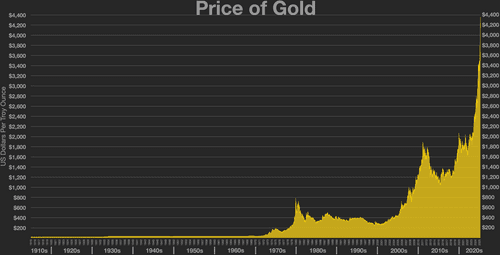
Bretton Woods
ORGANIZATION
Organization referenced in documents
CA bal.
ORGANIZATION
Organization referenced in documents
Cabinet Office
ORGANIZATION
Organization referenced in documents
Cashflows
ORGANIZATION
Organization referenced in documents

Central Banks
ORGANIZATION
Public institution that manages a state's currency, money supply, and interest rates
China FX
ORGANIZATION
Organization referenced in documents
Commercial Services & Supplies
ORGANIZATION
Organization referenced in documents
Compustat
ORGANIZATION
Organization referenced in documents
Core PCE
ORGANIZATION
Organization referenced in documents

Datastream
ORGANIZATION
Organization referenced in documents
Dec-16
ORGANIZATION
Organization referenced in documents

Deutsche Bank
ORGANIZATION • 2 mentions
German global banking and financial services company
Diversified Consumer Services
ORGANIZATION
Organization referenced in documents
Diversified Financial Services
ORGANIZATION
Organization referenced in documents
Eagle Ford
ORGANIZATION
Organization referenced in documents
EBITDA/Interest
ORGANIZATION
Organization referenced in documents
Electric Utilities
ORGANIZATION
Organization referenced in documents
Energy Equipment & Services
ORGANIZATION
Organization referenced in documents
EPS & DPS Growth
ORGANIZATION
Organization referenced in documents
EUR Fin Sub
ORGANIZATION
Organization referenced in documents
EUR Non-Fin AA
ORGANIZATION
Organization referenced in documents
EUR Non-Fin HY CCC
ORGANIZATION
Organization referenced in documents
European EPS
ORGANIZATION
Organization referenced in documents
European Equity
ORGANIZATION
Organization referenced in documents
European food &
ORGANIZATION
Organization referenced in documents

Eurostat
ORGANIZATION
Statistics agency of the European Union
ex-Energy/Metals
ORGANIZATION
Organization referenced in documents
Fair PB
ORGANIZATION
Organization referenced in documents
Feb-15
ORGANIZATION
Organization referenced in documents

Fed Funds
ORGANIZATION
Interest rates to maintain banks' Federal Reserve balance in the U.S.
Fed Laubach/Williams
ORGANIZATION
Organization referenced in documents

Federal Reserve
ORGANIZATION
Federal Reserve System, central banking system of the United States
Finance LP
ORGANIZATION
Organization referenced in documents
Financial markets & gold
ORGANIZATION
Organization referenced in documents
Financials & Energy
ORGANIZATION
Organization referenced in documents
GBP Fin Sub
ORGANIZATION
Organization referenced in documents
GBP Non-Fin AA
ORGANIZATION
Organization referenced in documents
GBP Non-Fin BBB
ORGANIZATION
Organization referenced in documents
Global Oil Demand
ORGANIZATION
Organization referenced in documents
Global Oil Supply
ORGANIZATION
Organization referenced in documents
Haver Analytics LP
ORGANIZATION
Organization referenced in documents
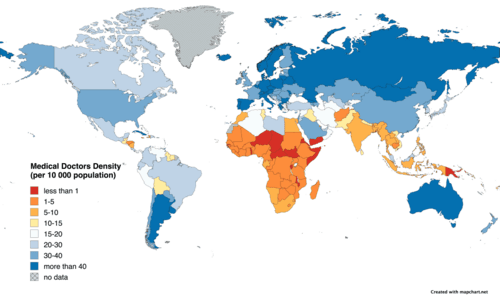
Health Care
ORGANIZATION
Organization referenced in documents
Health Care and Tech
ORGANIZATION
Organization referenced in documents
Health Care Providers & Services
ORGANIZATION
Organization referenced in documents
Health Care Technology
ORGANIZATION
Organization referenced in documents
Hotels, Restaurants & Leisure
ORGANIZATION
Organization referenced in documents
IIHowever
ORGANIZATION
Organization referenced in documents
IISales
ORGANIZATION
Organization referenced in documents
IIThere
ORGANIZATION
Organization referenced in documents
Independent Power Producers
ORGANIZATION
Organization referenced in documents
Internet Software & Services
ORGANIZATION
Organization referenced in documents
Leisure Products
ORGANIZATION
Organization referenced in documents
Life Sciences Tools & Services
ORGANIZATION
Organization referenced in documents
Lonmin
ORGANIZATION
Organization referenced in documents

McKinsey
ORGANIZATION
Organization referenced in documents
Mikihiro Matsuoka
ORGANIZATION
Organization referenced in documents
Ministry of Finance
ORGANIZATION
Organization referenced in documents
Multi-Utilities
ORGANIZATION
Organization referenced in documents
Nikkei NEEDS
ORGANIZATION
Organization referenced in documents
NZD/USD
ORGANIZATION
Organization referenced in documents
OECD Stock Change
ORGANIZATION
Organization referenced in documents
Ongoing QE
ORGANIZATION
Organization referenced in documents
P/Es
ORGANIZATION
Organization referenced in documents
PE PE
ORGANIZATION
Organization referenced in documents
Power/Water/Gas
ORGANIZATION
Organization referenced in documents
Real Estate Mgmt.
ORGANIZATION
Organization referenced in documents
Road & Rail
ORGANIZATION
Organization referenced in documents
S&P EPS
ORGANIZATION
Organization referenced in documents
S&P PE
ORGANIZATION
Organization referenced in documents
Sector and Industry Allocation
ORGANIZATION
Organization referenced in documents
Sep-2009
ORGANIZATION
Organization referenced in documents
Shanshui
ORGANIZATION
Organization referenced in documents
Shiller P/E
ORGANIZATION
Organization referenced in documents
State Council
ORGANIZATION
Organization referenced in documents
Tech and Energy
ORGANIZATION
Organization referenced in documents
Technology Hardware, Storage &
ORGANIZATION
Organization referenced in documents
Textiles, Apparel & Luxury Goods
ORGANIZATION
Organization referenced in documents
Tight US
ORGANIZATION
Organization referenced in documents
trl P/E
ORGANIZATION
Organization referenced in documents
UNCTAD
ORGANIZATION
Organization referenced in documents
US Equities
ORGANIZATION
Organization referenced in documents
US Fed
ORGANIZATION
Organization referenced in documents
US Govt
ORGANIZATION
Organization referenced in documents
USD Corp HY BB
ORGANIZATION
Organization referenced in documents
USD Corp HY CCC
ORGANIZATION
Organization referenced in documents
USD Fin Sen
ORGANIZATION
Organization referenced in documents
USD Fin Sub
ORGANIZATION
Organization referenced in documents
USD Non-Fin BBB
ORGANIZATION
Organization referenced in documents
USD/CAD
ORGANIZATION
Organization referenced in documents
USDbn
ORGANIZATION
Organization referenced in documents
Utilities
ORGANIZATION
Utility company or services
Vertical
ORGANIZATION
Organization referenced in documents
White Goods
ORGANIZATION
Organization referenced in documents

Wood Mackenzie
ORGANIZATION
Global research and consultancy firm
Bakken
LOCATION • 2 mentions
Location referenced in documents
below3
LOCATION
Location referenced in documents

Chile
LOCATION
Country in South America

Columbia University
LOCATION
Private Ivy League research university in New York City
Emerging Asia
LOCATION
Location referenced in documents

Malaysia
LOCATION
Country in Southeast Asia
Permian
LOCATION
Location referenced in documents

Philippines
LOCATION
Archipelagic country in Southeast Asia
Sep-2015
LOCATION
Location referenced in documents

Sri Lanka
LOCATION
Island country in South Asia
Taimur Baig
LOCATION
Location referenced in documents
the Eagle Ford
LOCATION
Location referenced in documents

Venezuela
LOCATION
Country in South America

Vietnam
LOCATION
Country in Southeast Asia
Statistics
Pages:100
Entities:150
Sponsored