EFTA00285909_sub_004 - EFTA00285909_336
Document Information
Bates Range
EFTA00285909_sub_004 - EFTA00285909_336
Pages
36
Original Filename
EFTA00285909.pdf
Document Content
Page 301 - EFTA00285909_301
More Questions Than Answers 287 back to the drawing board, except if we don't see any new signals at the LHC, we will have little guidance about which direction to head in order to derive a model of nature that might actually be correct. Things got more interesting when the LHC reported a tantalizing pos- sible signal due to a new particle about six times heavier than the Higgs particle. This particle did not have the characteristics one would expect for any supersymmetric partner of ordinary matter. In general the most exciting spurious hints of signals go away when more data are amassed, and about six months after this signal first appeared, after more data were amassed, it disappeared. If it had not, it could have changed everything about the way we think about Grand Unified Theories and electroweak symmetry, suggesting instead a new fundamental force and a new set of particles that feel this force. But while it generated many hopeful theoreti- cal papers, nature seems to have chosen otherwise. The absence of clear experimental direction or confirmation of super- symmetry has thus far not bothered one group of theoretical physicists. The beautiful mathematical aspects of supersymmetry encouraged, in 2984, the resurrection of an idea that had been dormant since the 196os when Nambu and others tried to understand the strong force as if it were a theory of quarks connected by stringlike excitations. When supersym- metry was incorporated in a quantum theory of strings, to create what became known as superstring theory, some amazingly beautiful math- ematical results began to emerge, including the possibility of unifying not just the three nongravitational forces, but all four known forces in nature into a single consistent quantum field theory. However, the theory requires a host of new space-time dimensions to exist, none of which has been, as yet, observed. Also, the theory makes no other predictions that are yet testable with currently conceived ex- periments. And the theory has recently gotten a lot more complicated so that it now seems that strings themselves are probably not even the central dynamical variables in the theory. None of this dampened the enthusiasm of a hard core of dedicated 2P_Glealer-StorgverTold_Atirdd 281 12/16116 3:06 PIA EFTA00286209
Page 302 - EFTA00285909_302
288 THE GREATEST STORY EVER TOLD-SO FAR and highly talented physicists who have continued to work on super- string theory, now called M-theory, over the thirty years since its heyday in the mid-398os. Great successes are periodically claimed, but so far M-theory lacks the key element that makes the Standard Model such a triumph of the scientific enterprise: the ability to make contact with the world we can measure, resolve otherwise inexplicable puzzles, and provide fundamental explanations of how our world has arisen as it has. This doesn't mean M-theory isn't right, but at this point it is mostly speculation, although well-meaning and well-motivated speculation. Here is not the place to review the history, challenges, and successes of string theory. I have done that elsewhere, as have a number of my col- leagues. It is worth remembering that if the lessons of history are any guide, most forefront physical ideas are wrong. If they weren't, anyone could do theoretical physics. It took several centuries or, if one counts back to the science of the Greeks, several millennia of hits and misses to come up with the Standard Model. So this is where we are. Are great new experimental insights just around the corner that may validate, or invalidate, some of the grander speculations of theoretical physicists? Or are we on the verge of a desert where nature will give us no hint of what direction to search in to probe deeper into the underlying nature of the cosmos? We'll find out, and we will have to live with the new reality either way. No matter what curveballs nature may throw at us, the recent dis- covery of the Higgs, the latest and one of the greatest experimental and theoretical achievements of the remarkable Standard Model of particle physics, has beautifully capped more than two millennia of intellectual effort by brave and determined philosophers, mathematicians, and sci- entists to uncover the hidden tapestry that underlies our existence. It also suggests that the beautiful universe in which we find ourselves may not only resemble, at least metaphorically, an ice crystal on a win- dowpane, it may be almost as ephemeral. 2P_Glealer-StoryEverrold_Atirdd 288 12/16116 3:06 PIA EFTA00286210
Page 303 - EFTA00285909_303
Chapter 23 FROM A BEER PARTY TO THE END OF TIME For the fashion of this world passeth away. -1 CORINTHIANS 7:31 My own research focus for much of my career has been the emerging field of cosmology called particle astrophysics. Following the flood of theoretical developments of the 296os and 197os, it was dif- ficult for terrestrial experiments, limited as they are by our abilities to build complex machines such as particle accelerators, to keep up. As a result, a number of us turned to the universe for guidance. Since the Big Bang implies that the early universe was hot and dense, conditions ex- isted then that we might never achieve in laboratories on Earth. But if we are clever, we can look for remnant signatures of those early times out in the cosmos, and we may be able test our ideas about even the most esoteric aspects of fundamental physics. My previous book, A Universe from Nothing, described the revolu- tions in our understanding of the evolution of the universe on large scales, and over long times. Not only have our explorations revealed the existence of dark matter, which, as I have described, is likely composed of new elementary particles not yet observed in accelerators—although 289 2P_Glealer-StoryEverrold_Atirdd 289 12/16116 3:06 PIA EFTA00286211
Sponsored
Page 304 - EFTA00285909_304
290 THE GREATEST STORY EVER TOLD-SO FAR we may be on the cusp of doing so—but far more exotic still, we have discovered that the dominant energy of the universe resides in empty space—and we currently have no idea how it arises. Our observations have now taken us back to the neonatal universe. We have observed the fine details of radiation, called the cosmic micro- wave background, which emanates from a time when the universe was merely three hundred thousand years old. Our telescopes take us back to the earliest galaxies, which formed perhaps a billion years after the Big Bang, and have allowed us to map huge cosmic structures contain- ing thousands of galaxies and spanning hundreds of millions of light- years across, sprinkled amid the hundred trillion or so galaxies in the visible universe. To explain these features, theorists rely on an idea that arose due to the development of Grand Unified theories. In 1981, Alan Guth realized that the symmetry-breaking transition that might occur at the GUT scale early in the universe might not be identical to the transition that breaks the symmetry between the weak interaction and electromag- netism. In the GUT case, the Higgs-like field that condenses in space to break the GUT symmetry between the strong force and the elec- troweak force might momentarily get stuck in a metastable high-energy state before relaxing to its final configuration. While it was in this "false vacuum" configuration, the field would store energy that would be re- leased when the field ultimately relaxed to its preferred lowest-energy configuration. The situation would not be unlike what may have happened to you if you have ever planned a big party and then forgotten to put the beer in the fridge in time. You then put the beer in the freezer and forget about it during the party. The next day you discover the beer, open a bottle, and wham! The beer in the bottle suddenly freezes and expands, shattering the glass, and producing quite a mess. Before the top is taken off, the beer is under high pressure, and the beer at this pressure and temperature is liquid. However, once you open the top and release the 2P_Glealer-StoryEverTold_Atirdd 290 12/18/18 3:08 PIA EFTA00286212
Page 305 - EFTA00285909_305
From a Seer Party to the End of Time 291 pressure, the beer suddenly freezes. During the transition, energy is re- leased as the beer relaxes to its new state—enough energy to cause the expanding ice to break the bottle. Now imagine a similar situation when you are in a cold climate. On a brisk and rainy winter day, the temperature may quickly drop below freezing, causing the rain to change to snow. Puddles of water on the street may not freeze right away, especially if the tires of passing cars are continually agitating them. Later in the day, when the traffic dies down, the water may suddenly freeze, causing dangerous black ice on the road. Due to the previous agitation by cars and the quick fall in temperature, the water got stuck in a `metastable phase," namely as a liquid. Eventu- ally, however, a phase transition takes place, and the black ice forms. Because at these low temperatures the preferred, lowest-energy state of water is its solid form, when the liquid freezes, it releases the excess en- ergy it stored in its metastable liquid state. Guth wondered what would have happened in the early universe if such a behavior occurred during a Grand Unified Theory transition—if whatever scalar field that acts like the Higgs field for that transition re- mains in its original (symmetry-preserving) ground state for a brief time, even as the universe cools past the point where the new (symmetry- breaking) ground state condensate becomes preferred. Guth realized that this type of energy, stored through space by this field before the transition completes, would be gravitationally repulsive. As a result, it would cause the universe to expand—potentially by a huge factor, maybe twenty-five orders of magnitude or more in scale—in a microscopically short time. He next discovered that this period of rapid expansion, which he dubbed inflation, could resolve a number of existing paradoxes associ- ated with the Big Bang picture, including why the universe is so uni- form on large scales and why three-dimensional space on large scales appears so close to being geometrically flat. Both of these seem inexpli- cable without inflation. The first problem is solved because, during the 2P_Glealer-StorgverTold_Atirdd 291 12/16116 3:06 PIA EFTA00286213
Page 306 - EFTA00285909_306
292 THE GREATEST STORY EVER TOLD-SO FAR rapid expansion, any initial inhomogeneities get smoothed out, just as a wrinkled balloon gets smoothed out when it gets blown up. Pushing the balloon analogy further, the surface of a balloon that is blown up to be very large, say, the size of Earth, could look very flat, just as Kansas does. While this provides two-dimensional intuition, the same phenomenon would apply to the three-dimensional curvature of space itself. After inflation, space would appear to be flat—namely it would be like the universe most of us had assumed we live in already, where parallel lines never intersect and the x, y, and z axes point the same direction every- where in the universe. After inflation ends, the energy stored in the false vacuum state throughout space would be released, producing particles and reheating the universe to a high temperature, setting up a natural and realistic initial condition for the subsequent standard hot Big Bang expansion. Even better, a year after Guth proposed his picture, a number of groups performed calculations of what would happen to particles and fields as the universe rapidly expanded during inflation. They discov- ered that small inhomogeneities resulting from quantum effects at early times would then be "frozen in" during inflation. After inflation ended, these small inhomogeneities could grow to produce galaxies, stars, planets, etc., and would also leave an imprint in the cosmic microwave background (CMB) radiation that resembles precisely the pattern that has since been measured. However, it is also possible, by using different inflationary models, to get different predictions for the CMB anisotro- pies (inflation is, at this point, more of a model than a theory, and since no unique Grand Unified Theory transition is determined by experi- ment, many different variants might work). Another exciting and more unambiguous prediction from inflation exists. During the period of rapid expansion, ripples in space, called gravitational waves, would be produced. These ripples would produce another characteristic signature in the CMB that might be sought out. In 2014, the BICEP experiment claimed to detect a signal that was iden- 2P_Glealer-StoryEverTold_Atincld 292 12/16116 3:06 PIA EFTA00286214
Sponsored
Page 307 - EFTA00285909_307
From a Seer Party to the End of Time 293 tical to what was predicted. This caused incredible excitement in both theoretical and observational communities. Along with Frank Wilczek, I wrote a paper that not only pointed out that such an observation would indicate a symmetry-breaking scale that corresponded nicely to the Grand Unified Theory symmetry-breaking scale in models with su- persymmetry, but also that the observation would demonstrate unam- biguously that gravity had to be a quantum theory on small scales—so that a search for a quantum theory of gravity was not misplaced. Unfortunately, however, the BICEP announcement proved to be pre- mature. Other backgrounds in our galaxy could have produced a similar signal, and as of this writing the situation still seems murky, with no unambiguous confirmation of inflation, or quantum gravity. Most recently, between completion of the first draft of this book and completion of the final draft, the first definitive direct discovery of gravitational waves was made by an amazing set of detectors, called the Laser Interferometer Gravitational-Wave Observatory (LIGO), located in Hanford, Washington, and Livingston, Louisiana. LIGO is a spec- tacular and ambitious machine. To detect gravitational waves emitted by colliding black holes in distant galaxies, the experimenters had to be able to detect an (oscillating) difference in length between two four- kilometer-long perpendicular arms of the detectors equivalent to one one-thousandth of the size of a proton—like measuring the distance between Earth and the nearest star other than our Sun, Alpha Centauri, to an accuracy of the width of a human hair! As amazing as the LIGO discovery of gravitational waves is, the waves it detected are from a distant astrophysical collision, not from the earliest moments of the Big Bang. But the success of LIGO will herald the building of new detectors, so that gravitational-wave astronomy will likely become the astronomy of the twenty-first century. If the successors to LIGO, or BICEP, in this or the next century are able to measure directly the signature of gravitational waves from infla- tion, it will give us a direct window on the physics of the universe when 2P_Glealer-StoryEverTold_AC.incld 293 12/16116 3:06 PIA EFTA00286215
Page 308 - EFTA00285909_308
294 THE GREATEST STORY EVER TOLD-SO FAR it was less than a billionth of a billionth of a billionth of a billionth of a second old. It will allow us to directly test our ideas of inflation, and even Grand Unification, and perhaps even shed light on the possible existence of other universes—turning what is now metaphysics into physics. For the moment, however, inflation is merely a well-motivated proposal that seems to naturally resolve most of the major puzzles in cosmology. But while inflation remains the only first-principles theoretical-candidate explanation for the major observational fea- tures of our universe, it relies on the existence of a new and com- pletely ad hoc scalar field—invented solely to help produce inflation and fine-tuned to initiate it as the early universe first began to cool down after the Big Bang. Before the discovery of the Higgs particle, this speculation was plausible at best. With no example of any fundamental scalar field yet known, the assumption that Grand Unified symmetry-breaking might result from yet another simple Higgs-like mechanism was an extrapola- tion that rested on an insecure footing. As I have described, the break- ing of electroweak symmetry was clear with the discovery of W and Z particles. But the simple Higgs field could have been a fairy-tale place- holder for some far more complicated, and perhaps far more interesting, underlying mechanism. Things have now changed. The Higgs exists, and so too apparently a background scalar field permeating all space in the universe today, giving mass to particles and producing the characteristics of a universe we can inhabit. If a Grand Unified Theory really exists combining all three forces into one at close to the beginning of time, some symmetry- breaking must have then occurred so that the three known nongravi- tational forces would only begin to diverge in character afterward. The Higgs demonstrates that symmetry-breaking in the laws of nature can occur as the result of a scalar field condensate throughout space. De- pending upon the details, inflation thus becomes a far more natural and 2P_Glealer-StoryEverTold_Atirdd 294 12/16116 3:06 PIA EFTA00286216
Page 309 - EFTA00285909_309
From a Seer Party to the End of Time 295 potentially generic possibility. As my colleague Michael Turner put it jokingly some time ago, aping then Federal Reserve Board chair Alan Greenspan, "Periods of inflation are inevitable!" That statement may have been more prescient than anyone imagined at the time. In 1998 it was discovered that our universe is now under- going a new version of inflation, validating some previous and rather heretical predictions by a few of us. As I mentioned earlier, this implies that the dominant energy of the universe now appears to reside in empty space—which is the most plausible explanation of why the observed ex- pansion of the universe is speeding up. The Nobel Prize was awarded to Brian Schmidt, Adam Riess, and Saul Perlmutter for the discovery of this remarkable and largely unexpected phenomenon. Naturally the questions arise, What could be causing this current accelerated expan- sion, and What is the source of this new kind of energy? Two possibilities present themselves. First, it could be a fundamental property of empty space, a possibility actually presaged by Albert Ein- stein shortly after he developed the General Theory of Relativity, which he realized could accommodate something he called a "cosmological constant," but which we now realize could simply represent a nonzero ground-state energy of the universe that will exist indefinitely into the future. Or second, it could be energy stored in yet another invisible back- ground scalar field in the universe. If this is the case, then the next ob- vious question is, Will this energy be released in yet another, future inflationary-like phase transition as the universe continues to cool down? At this time the answer is up for grabs. While the inferred energy density of empty space is today greater than the energy density of every- thing else we see in the universe, in absolute terms, on the scale of the energies associated with the masses of all elementary particles we know of, it is minuscule in the extreme. No one has any sensible first-principles explanation using known particle physics mechanisms for how the 2P_GrealetaleryEverTold_AC.indd 2ais 12/16116 3:06 PIA EFTA00286217
Sponsored
Page 310 - EFTA00285909_310
296 THE GREATEST STORY EVER TOLD-SO FAR ground-state energy of the universe could be nonzero—resulting in Ein- stein's cosmological constant—and yet so small as to allow the kind of gentle acceleration we are now experiencing. (One plausible explanation does exist—first due to Steve Weinberg—though it is speculative and re- lies on speculative ideas about possible physics well beyond the realm of anything we currently understand. If there are many universes, and the energy density in empty space, assuming it is a cosmological constant, is not fixed by fundamental physics constraints, but instead randomly varies from universe to universe, then only in those universes in which the energy in empty space is not much bigger than the value we measure would galaxies be able to form, and then would stars be able to form, and only then planets, and only then astronomers ...) Meanwhile, no one has a sensible model for a new phase transition predicted to occur in particle physics for a new scalar field that would store such a small amount of energy in space today. By sensible, I mean a model that anyone other than those who propose it finds plausible. Nevertheless, the universe is the way it is, and the fact that current fundamental theory does not make a first-principles prediction that ex- plains something as fundamental as the energy of empty space implies nothing mystical. As I have said, lack of understanding is not evidence for God. It is merely evidence of a lack of understanding. Given that we do not know the source of the inferred energy in empty space, we are free to hope for the best, and in this case perhaps that means hoping that the cosmological constant explanation is cor- rect rather than its being due to some as yet undiscovered scalar field that may one day relax into a new state, releasing the energy currently stored in space. Recall that because of the coupling of the Higgs field to the rest of the matter in the universe, when the field condensed into its electroweak symmetry-breaking state, the properties of matter and the forces that govern the interactions of matter changed dramatically. Now, if some similar phase transition involving some new scalar field 2P_Glealer-StoryEverTold_Atirdd 12/16116 3:06 PIA EFTA00286218
Page 311 - EFTA00285909_311
From a Seer Party to the End of Time 297 in space is yet to occur in nature, then the stability of matter as we know it could disappear. Galaxies, stars, planets, people, politicians, and everything we now see could literally disappear. The only good news (other than the disappearance of politicians) is that the transition— assuming it begins with some small seed in one location of our universe (in the same way that small dust grains may help seed the formation of the ice crystals on our frozen windowpane, or of snowflakes as they fall to the ground)—will then spread throughout space at the speed of light. We won't know what hit us until after it has, and after it has, we won't be around to know. The curious reader may have noticed that all of these discussions relate to new possible scalar fields in nature. What about the Standard Model Higgs field? Could it play a role in all of these current cosmic shenanigans? Could the Higgs field store energy and be responsible for inflation either in the early universe or now? Could the Higgs field not be in its final ground state, and will there be another transition that will once again change the configuration of the electroweak force, and the masses of particles in the Standard Model? Good questions. And the answers to all of them are the same: we don't know. That has not stopped a number of theorists from speculating about this possibility. My favorite example—not because it is better than any of the others, but because it's a speculation I made with a colleague, James Dent, shortly after the Higgs was discovered—is that perhaps the Higgs does play a role in the observed cosmic expansion. As a number of au- thors have recognized, the existence of one background field condensate and the particles it comprises can provide a unique window, or `portal," that may yield otherwise unexpected sensitivity to the existence of other Higgs-like fields in nature, no matter how weakly their direct couplings to the particles we observe in the Standard Model may be. If the Higgs and other Higgs-like particles exist, perhaps at the Grand Unified Theory scale, the physical Higgs, the particle that was 2P_Glealer-StoryEverTold_Aairdd 291 12/16116 3:06 PIA EFTA00286219
Page 312 - EFTA00285909_312
298 THE GREATEST STORY EVER TOLD-SO FAR discovered at CERN, may be a slight admixture between the weak in- teraction Higgs, and another Higgs-like particle. (In this we are guided by the physics of neutrinos, where similar phenomena play a vital role in understanding the behavior of neutrinos measured on Earth coming from the nuclear reactions in the Sun, for example.) It is then possible, at least, to argue that when the weak interaction Higgs field condenses in empty space, this could stimulate the condensation of another Higgs- like field with properties that would allow it to store just the right energy to explain the observed inflation of the universe today. The mathematics required to make this happen is pretty contrived—the model is ugly. But who knows? Maybe it is ugly because we haven't found the correct framework in which to embed it. However, one attractive feature of this scenario makes it a little less self-serving to mention it. In this picture, the energy carried by the second field, which would drive the current measured accelerated expansion of the universe today, will likely ultimately be released in a new phase transi- tion to the true ground state of the universe. Unlike many other possibili- ties for future possible phase transitions in our universe, because the new field can be weakly coupled to all observed particles, this transition will not induce a change in the observed properties of any of the known par- ticles in nature by an amount that would be noticeable. The upshot is that if this model is right, the universe as we know it may survive. Yet celebration may be premature. Independent of such speculations, the discovery of the Higgs particle has raised the specter of a much less optimistic possibility. While a future in which the observed accelera- tion of the universe goes on forever is a miserable future for life and for the ability to continue to probe the universe—because eventually all galaxies we can now observe will recede from us faster than light, ulti- mately disappearing from our horizon, leaving the universe cold, dark, and largely empty—the future that may result because of a Higgs field with a mass its times the mass of the proton could be far worse. For a Higgs mass coinciding with the allowed range of the observed 2P_Glealer-StoryEverTold_Atirdd 298 12/16116 3:06 PIA EFTA00286220
Sponsored
Page 313 - EFTA00285909_313
From a Seer Party to the End of Time 299 Higgs, assuming for the moment that the Standard Model is not supple- mented by a lot of new stuff at higher energy, calculations suggest that the existing Higgs field condensate is teetering on the edge of instabil- ity—it could change from its current value to a vastly different value associated with a lower-energy state. If such a transition occurs, normal matter as we know it changes its form, and galaxies, stars, planets, and people most likely disappear, like the ice crystal on a warm sunny morning. For those who enjoy horror stories, another, even more gruesome possibility has been suggested. An instability might exist that would cause the Higgs field to continue to grow in magnitude indefinitely. As a result of such growth, the energy stored by the evolving Higgs field could become negative. This could cause the entire universe to collapse once again in a cataclysmic reversal of the Big Bang—a Big Crunch. Happily the data disfavor such a possibility, as poetic as it might seem. In the scenario in which everything we now see disappears as the Higgs makes a sudden transition to a new ground state, I want to stress that the Higgs mass, as now measured, favors stability but has sufficient uncertainty in its value to fall on either side of this line—either pro- ducing the apparently stable vacuum that we are now flourishing in, or favoring such a transition. Moreover, this scenario is based on calcula- tions within the Standard Model alone. Any new physics that might be discovered at the LHC or beyond could change the picture entirely, stabilizing what could otherwise be an unstable Higgs field. Since we are reasonably certain there is new physics to be discovered, there is no cause for despair at present. If that isn't consolation enough, for those who still fear that the ulti- mate future of the universe might be the more miserable one I have just described, the same calculations that suggest this may happen also sug- gest that our current metastable configuration of reality would persist for not merely billions of years into the future, but billions of billions of billions of years. 2P_GlealerASIonEverTold_Atincld 299 12/16116 3:06 PIA EFTA00286221
Page 314 - EFTA00285909_314
S00 THE GREATEST STORY EVER TOLD-SO FAR Concerns about the future notwithstanding, now is an appropriate time to once again emphasize that the universe doesn't give a damn what we would like or whether we survive. Its dynamics continue in- dependently of whether we exist or not. For this reason I am strangely attracted to the doomsday scenario I have just described. In this case, the remarkable accident that is responsible for our existence—the con- densation of a field that allows the current stability of matter, atoms, and life itself—is seen as a short-term bit of good luck. The imaginary scientists living on the spine of an ice crystal on the windowpane that I described earlier would first discover that one direc- tion in their universe was particularly special (which would no doubt be celebrated by the theologians in such a society as an example of God's love). Digging deeper, they might discover that this special circum- stance is just an accident and that other ice crystals can exist in which other directions are favored. And so, we too have discovered that our universe, with its forces and particles and amazing Standard Model that results in the remarkable good fortune of an expanding universe with stars and planets and life that can evolve a consciousness, is also a simple accident made possible because the Higgs field condensed in just the way it did as the universe evolved early on. And even as the imaginary scientists on the hypothetical ice crystal might celebrate their discoveries as we are wont to do, they might also be unaware that the Sun is about to rise and that soon their ice crystal will melt, and all traces of their brief existence will disappear. Would this have made the thrill of their brief existence less enthralling? Cer- tainly not. If our future is similarly fleeting, we can at least enjoy the wild ride we have taken and relish every aspect of the greatest story ever told ... so far. 2P_Glealer-StorgverTold_Atird0 300 12/16116 3:06 PIA EFTA00286222
Page 315 - EFTA00285909_315
Epilogue COSMIC HUMILITY For dust thou art, and unto dust shalt thou return. -GENESIS 3:19 if These are the tears of things, and the stuff of our mortal- ity cuts us to the heart:' So said Virgil as he penned the first great epic story of the classical era. They are the words I chose to use as the epigraph of this book because the story I wanted to tell not only contains every bit as much drama, human tragedy, and exaltation, but it is ultimately motivated by a similar purpose. Why do we do science? Surely it is in part so that we can have greater control of our environment. By understanding the universe better we can predict the future with greater accuracy, and we can build devices that might change the future—hopefully for the better. But ultimately I believe we are driven to do science because of a pri- mal urge we have to better understand our origins, our mortality, and ultimately ourselves. We are hardwired to survive by solving puzzles, and that evolutionary advantage has, over time, allowed us the luxury of wanting to solve puzzles of all sorts—even those less pressing than how to find food or to escape from a lion. What puzzle is more seductive than the puzzle of our universe? 301 2P_Gtealer-StoryEverrold_Atirdd 301 12/16116 3:06 PIA EFTA00286223
Sponsored
Page 316 - EFTA00285909_316
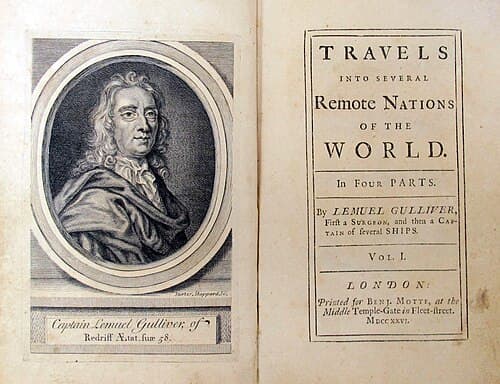
202 THE GREATEST STORY EVER TOLD-SO FAR Humanity didn't have a choice in its evolution. We find ourselves alive on a planet that is 46 billion years old in a galaxy that is 12 billion years old, in a 23.8-billion-year-old universe with perhaps a trillion gal- axies that is expanding ever faster into a future we cannot yet predict. So what do we do with this information? Is there special significance here for understanding our human story? In the midst of this cosmic grandeur and tragedy, how can we reconcile our own existence? For most people, the central questions of existence ultimately come down to transcendental ones: Why is there a universe at all? Why are we here? Whatever presumptions one might bring to the question "Why?," if we understand the "how" better, "why" will come into sharper focus. I wrote my last book to address what science has to say about the first of the above questions. The story I have related here provides what I think is the best answer to the second. Faced with the mystery of our existence, we have two choices. We can assume we have special significance and that somehow the universe was made for us. For many, this is the most comfortable choice. It was the choice made by early human tribes, who anthropomorphized nature because it provided them some hope of understanding what otherwise seemed to be a hostile world often centered on suffering and death. It is the choice made by almost all the world's religions, each of which has its own claimed solution to the quandary of existence. This choice of which tale to embrace has led to one culture's sacred book, the New Testament, which has sometimes been called "the great- est story ever told"—the story of that civilization's putative discovery of its own divinity. Yet when I witness wars and killing based on which prayers we are supposed to recite, which persons we are supposed to marry, or which prophet is the appropriate one to follow, I cannot help but be reminded, once again, of Gulliver, who discovered societies war- ring over which way God had intended man to break an egg. The second choice when addressing these transcendental mysteries 2P_Glealer-StoryEverrold_Atind0 302 12/16116 3:06 PIA EFTA00286224
Page 317 - EFTA00285909_317
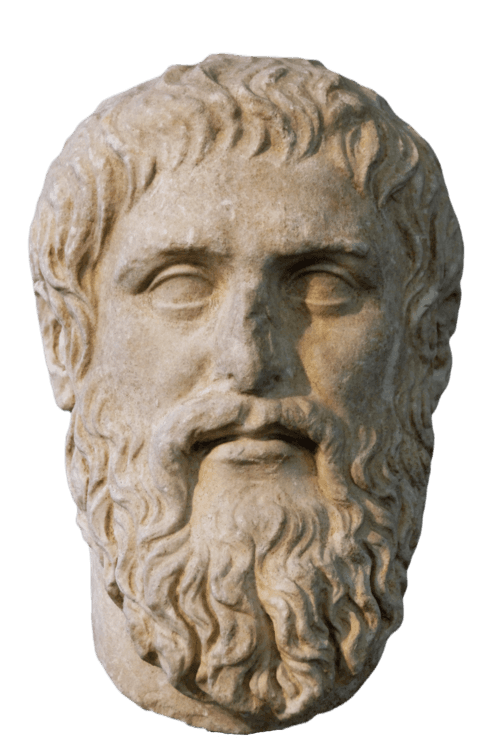
Cosmic Humility 303 is to make no assumption in advance about the answer. Which leads to another story. One that I think is more humble. In this story we evolve in a universe whose laws exist independently of our own being. In this story we check the details to see if they might be wrong. In this story we are going to be surprised at every turn. The story I have written here describes a human drama as much as a universal one. It describes the boldest intellectual quest humans have ever undertaken. It even has scriptural allegories, for those who prefer them. We wandered in the desert for forty years after the development of the Standard Model before we discovered the Promised Land. The truth, or at least as much of the truth as we now know, was revealed to us in what for most people seems to be incomprehensible scribbles: the mathematics of gauge theories. These have not been delivered to us on golden tablets by an angel, but rather by much more practical means: on pieces of paper in laboratory notebooks filled through the hard work of a legion of individuals who knew that their claims could be tested by whether they correctly modeled the real world, the world of observation and experiment. But as significant as the manner by which we got here is that we have gotten this far. At this point in the story, what can we conclude about why we are here? The answer seems all the more remarkable because it reveals ex- plicitly just how deeply the universe of our experience is a shadow of reality. I also began this book with a quote from the naturalist J. A. Baker, from The Peregrine: "The hardest thing of all to see is what is really there." I did so because the story I have told is the most profound ex- ample of this wise observation that I know of. I next described Plato's Allegory of the Cave because I know of no better or more lyrical representation of the actual history of science. The triumph of human existence has been to escape the chains that our limited senses have imposed upon us. To intuit that beneath the world of our experience lies a reality that is often far stranger. It is a real- 2P_Glealer-StoryEverTold_Atirdd 303 12/16116 3:06 PIA EFTA00286225
Page 318 - EFTA00285909_318
204 THE GREATEST STORY EVER TOLD-SO FAR ity whose mathematical beauty may be unimpeachable, but a reality in which our existence becomes—more than we might ever have imagined in advance—a mere afterthought. If we now ask why things are the way they are, the best answer we can suggest is that it is the result of an accident in the history of the universe in which a field froze in empty space in a certain way. When we ponder what significance that might have, we might equally pon- der what is the significance of that specific ice crystal seen in the early- morning frost on a windowpane. The rules that allowed us to come into being seem no more worth fighting and dying for than it would seem to be to fight and die to resolve whether "up" in the ice-crystal universe is better than "down," or whether it is better to crack an egg from the top or the bottom. Our primitive ancestors survived in large part because they recog- nized that nature could be hostile and violent, even as it was remarkable. The progress of science has made it clear just how violent and hostile the universe can be for life. But recognizing this does not make the universe less amazing. Such a universe has ample room for awe, wonder, and ex- citement. If anything, recognition of these facts gives us greater reason to celebrate our origins, and our survival. To argue that, in a universe in which there seems to be no purpose, our existence is itself without meaning or value is unparalleled solip- sism, as it suggests that without us the universe is worthless. The great- est gift that science can give us is to allow us to overcome our need to be the center of existence even as we learn to appreciate the wonder of the accident we are privileged to witness. Light played a major role in our story, as it did in Plato's allegory. Our changing perception of light led us to a changing understanding of the essence of space and time. Ultimately that changing perception made it clear that even this messenger of reality that is so essential to us and our existence is itself merely a fortunate consequence of a cosmic accident. An accident that may someday be rectified. 2P_Glealer-StoryEverTold_Atirdd 304 12/16116 3:06 PM EFTA00286226
Sponsored
Page 319 - EFTA00285909_319
Cosmic Humility 305 It is appropriate here to recognize that the line in the Aeneid that follows the epigraph with which this book began was the hopeful cry "Release your fear." A future that might bring about our end does not negate the majesty of the journey we are still taking. The story I have told is not the whole story. There is likely to be far more that we don't understand than what we now do. In the search for meaning, our understanding of reality will surely change as the story continues to unfold. I am often told that science can never do some things. Well, how do we know until we try? As fate would have it, I am writing these final words while sitting at the desk at which my late friend and coconspirator in the battle against myth and superstition Christopher Hitchens wrote his masterpiece, God Is Not Great. It is hard not to feel his presence channeling these words, even as I know he would be the first to remind me that such feelings arise from inside my head, and not from anything more cosmically sig- nificant. Yet the title of his book emphasizes that human stories, which he loved so dearly and described so brilliantly, pale in comparison to the story that nature has driven us to discover. And so the human stories about God also pale in comparison to the real "greatest story ever told." This story ultimately does not give the past special significance. We can reflect upon and even celebrate the road we have taken, but the greatest liberation, and the greatest solace that science provides, come from perhaps its greatest lesson: that the best parts of the story can yet be written. Surely this possibility makes the cosmic drama of our existence worthwhile. 2P_Glealer-StoryEverrold_Atirdd 30S 12/16116 3:06 PIA EFTA00286227
Page 320 - EFTA00285909_320
2P_Gtealer-StoryEverTold_Atirdd 908 12/16116 3:06 PM EFTA00286228
Page 321 - EFTA00285909_321
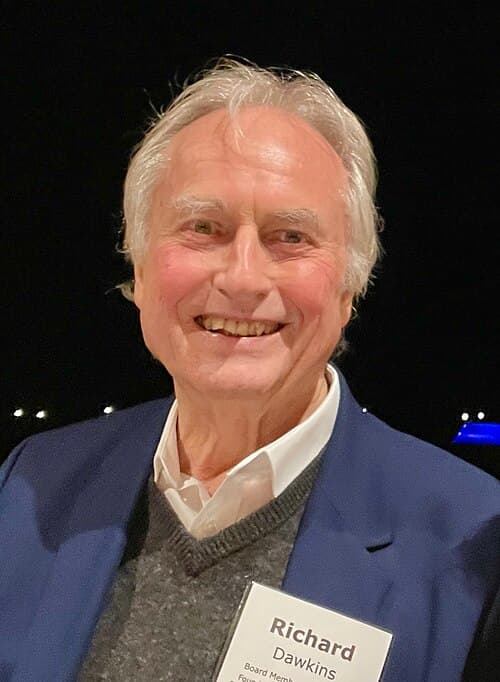
ACKNOWLEDGMENTS This book is written in part as a tribute to all of those who have helped bring our understanding of the universe to the place it is today. Because I wanted to properly and appropriately represent the sci- ence, and the history, to help me check both I turned to a number of my colleagues after I finished the first version of this book. I received com- ments and useful suggestions and corrections in response, and I want to thank both Sheldon Glashow and Wally Gilbert for their suggestions, as well as Richard Dawkins, and I am particularly indebted to one of the colleagues I admire most for his contributions as a scientist and his sci- entific integrity, who would rather remain anonymous, for his careful reading of the manuscript, and the numerous corrections he proposed. Beyond the science, I turned to a friend and one of the writers I admire most, who is also a wonderful student of science, for his thoughts on the manuscript. Cormac McCarthy, who amazingly volunteered to copyedit the paperback version of my earlier book Quantum Man, again went through every single page of the manuscript he received, with com- ments and suggestions to, in his words, "make the book perfect!" I can- not presume that it now is, but I can say that it is much better thanks to his kindness, wisdom, and talent. This book would never have been written if determining a publisher 307 2P_GlealerASIonEverTold_Atirdd 307 12/18/18 3:08 PIA EFTA00286229
Sponsored
Page 322 - EFTA00285909_322
308 ACKNOWLEDGMENTS hadn't been skillfully managed by my new agent and old friend John Brockman and his staff, and happily it worked out that my editor for this book was my editor for A Universe from Nothing, Leslie Meredith at Atria Books. Leslie is not only a kindred spirit, but was a wonderful foil off of which to bounce the ideas in this book. She helped force me to make various discussions of the science clearer, even when I thought they were already clear, and she encouraged me not to back off from my strong views on the need for scientists to speak out about scientific nonsense. When I faced the arduous task of exploring a variety of significant revisions in the final draft, I knew that I could seek safety, support, and solitude in the home that my wonderful wife, Nancy, who has saved me and inspired me more times than I can count, has made for us, and that my stepdaughter, Santal, would quietly tolerate the sound of my typing in my study, right above her bedroom, late at night. My staff at the Ori- gins Project, in particular my executive director and right-hand woman, Amelia Huggins, and my longtime executive assistant at Arizona State University, Jessica Strycker, pitched in to provide me the support and time I needed when I had to take time out from my day job to work on this book. And my Phoenix friends Thomas Houlon and Patty Barnes, who encouraged me on this book and others, have, over many break- fasts, given their feedback on a number of the presentations I developed as I was writing the book. Finally, as I was approaching the last push, my friend Carol Blue, Christopher Hitchens's widow, and her father, Edwin Blue, offered me use of a guesthouse where Christopher had written many essays and books, including his wonderful book God Is Not Great. I cannot think of a more inspiring place to have finished, and I can only hope the final version carries with it even a small fraction of the eloquence that so characterized Christopher's writing. 2P_Glealer-StoryEverrold_Atird0 908 12/16116 3:06 PIA EFTA00286230
Page 323 - EFTA00285909_323
INDEX Index pages 309-32o (2 pages) 309 2P_GlealestStoryEverTold_AC.ird0 309 12/16116 3:06 PM EFTA00286231
Page 324 - EFTA00285909_324
310 INDEX 2P_GreatestSlowEverrold_AC.incld 310 12/16,16 3:06 P1.1 EFTA00286232
Sponsored
Page 325 - EFTA00285909_325
INDEX 311 2P_GreatestSlowEverrold_AC.incld 311 12/16,18 3:1:03 P1.1 EFTA00286233
Page 326 - EFTA00285909_326
312 INCEX 2P_GreatestSlowEverrold_AC.incld 312 12/16/18 3:08 Pf.1 EFTA00286234
Page 327 - EFTA00285909_327
INDEX 313 2P_GrealemStrayEverToM_AC.indd 313 126606 3:06 PM EFTA00286235
Sponsored
Page 328 - EFTA00285909_328
314 IN:. 1 X 29_Grealer4SloryEverroldAtirdd 314 12/16/16 3:06 PM EFTA00286236
Page 329 - EFTA00285909_329
: N D k: X 315 2P_GreatestSionfEverrold_Atirsid 315 12/16116 3:06 PM EFTA00286237
Page 330 - EFTA00285909_330
316 INDEX 2P_GrealestStoryEverTold_AC.incld 318 12/1e/I8 3:1:45 PM EFTA00286238
Sponsored
Page 331 - EFTA00285909_331
INDEX 317 2P_GrealestSlowEverrold_AC.incld 31? 12/1&I6 3:1:8 PIA EFTA00286239
Page 332 - EFTA00285909_332
318 INCEX 2P_GreafestSlowEverrold_AC.incld ale 12/1eil 3:06 PM EFTA00286240
Page 333 - EFTA00285909_333
INDEX 319 2P_GreatestSlowEverrold_AC.incld 319 12AS/18 3:06 PM EFTA00286241
Sponsored
Page 334 - EFTA00285909_334
320 INCEX 2P_GrealestSlowEverrold_AC.indd 320 12/16O6 3:06 PM EFTA00286242
Page 335 - EFTA00285909_335
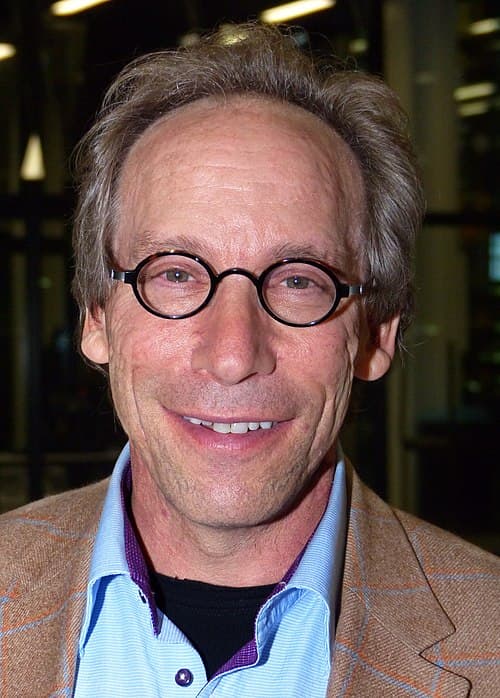
ABOUT THE AUTHOR Lawrence M. Krauss is director of the Origins Project at Arizona State University and Foundation Professor in the School of Earth and Space Exploration and the Physics Department there. Krauss is an internation- ally known theoretical physicist with wide research interests, including the interface between elementary-particle physics and cosmology, where his studies include the early universe, the nature of dark matter, general relativity, and neutrino astrophysics. He has investigated questions rang- ing from the nature of exploding stars to issues of the origin of all mass in the universe. He has won numerous international awards for both his re- search and his efforts to improve the public understanding of science. Krauss is the only physicist to have received the top awards from all three US physics societies: the American Physical Society, the American Insti- tute of Physics, and the American Association of Physics Teachers, and in 2012 he was awarded the National Science Board's prestigious Public Ser- vice Award for his many contributions to public education and the under- standing of science around the world. Among his other honors are the 2013 Roma Award, from the city of Rome, and the zois Humanist of the Year Award from the American Humanist Association. Krauss is the author of more than three hundred scientific publica- tions, as well as numerous popular articles on science and current af- 321 2P_Glealer-StoryEverTold_Atincld 921 12/16116 3:06 PIA EFTA00286243
Page 336 - EFTA00285909_336
322 ABOUT THE AUTHOR fairs. He is a commentator and essayist for periodicals such as the New York Times and the New Yorker and appears regularly on radio, on tele- vision, and on film. Krauss served as executive producer and subject of The Unbelievers, a documentary film that discusses science and reason with Richard Dawkins. He also appears in Werner Herzog's new films Salt and Fire and Lo and Behold. Krauss is the author of ten popular books, including the New York Times bestsellers The Physics of Star Trek (e995) and A Universe from Nothing (2012). Krauss is a Fellow of the American Physical Society and the Ameri- can Association for the Advancement of Science. He serves as the chair of the Board of Sponsors of the Bulletin of the Atomic Scientists and is on the Board of Directors of the Federation of American Scientists. He helped found ScienceDebate, which in 2008, 2012, and 2016 helped raise issues of science and sound public policy in the presidential elections in those years. Hailed by Scientific American as a rare scientific public intellectual, Krauss has dedicated his time, throughout his career, to is- sues of science and society and has helped spearhead national efforts to educate the public about science, ensure sound public policy, and defend science against attacks at a variety of levels. 2P_GrealestSleryfverTold_AC.indd 322 12/16116 3:06 PIA EFTA00286244
Entities Mentioned
AR
Adam Riess
PERSON
Name reference in documents
AE
Aeneid
PERSON
Surname or name fragment in documents

Alan Dershowitz
PERSON
American lawyer, author, and art collector (born 1938)

Alan Greenspan
PERSON • 2 mentions
American economist and financial advisor (born 1926)
Alan Guth
PERSON
American theoretical physicist and cosmologist
AL
Albert
PERSON
Ambiguous first name - refers to multiple people including Albert Bryan and Albert Paiewonsky in USVI documents
AH
Amelia Huggins
PERSON
Person referenced in documents
BS
Brian Schmidt
PERSON
Person referenced in documents
CB
Carol Blue
PERSON
Name reference in documents
CH
Christopher
PERSON
First name reference to multiple individuals in Epstein documents
CH
Christopher Hitchens's
PERSON
Name reference in documents
Cormac McCarthy
PERSON
Name reference in documents
CW
Courtney Wild
PERSON
American victim/survivor of Jeffrey Epstein who led legal battle for victims' rights
EB
Edwin Blue
PERSON
Name reference in documents

Eric Schmidt
PERSON
Software engineer, businessman, former Google CEO

Frank Wilczek
PERSON • 2 mentions
American theoretical physicist
Gulliver
PERSON
Surname reference in documents
HI
Higgs
PERSON • 3 mentions
Surname reference in documents
JB
J. A. Baker
PERSON
Name reference in documents
James Baker
PERSON
American lawyer and statesman (born 1930)
JS
Jessica Strycker
PERSON
Person referenced in documents
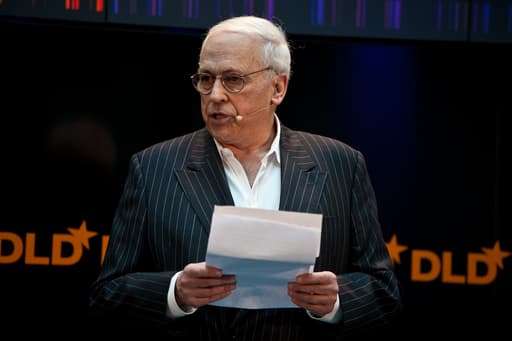
John Brockman
PERSON • 2 mentions
American literary agent
Lawrence Krauss
PERSON • 3 mentions
American particle physicist and cosmologist
LM
Leslie Meredith
PERSON
Name reference in documents
MW
Martin Weinberg
PERSON
American attorney (born 1946)
MT
Michael Turner
PERSON
Name reference in documents
NA
Nancy
PERSON
First name reference to multiple individuals in Epstein documents
PB
Patty Barnes
PERSON
Name reference in documents
Plato
PERSON
4th-century BCE Greek philosopher
Richard Dawkins
PERSON • 2 mentions
English ethologist, evolutionary biologist and author (born 1941)
SA
Santal
PERSON
Name reference in documents
SP
Saul Perlmutter
PERSON
Name reference in documents
Sheldon Glashow
PERSON
Person referenced in documents
SW
Steven Weinberg
PERSON
Nobel Prize-winning physicist, referenced in Epstein science funding network
TH
Thomas Houlon
PERSON
Name reference in documents
VI
Virgil
PERSON
First name reference to multiple individuals
WG
Wally Gilbert
PERSON
Name reference in documents
WH
Werner Herzog's
PERSON
Name reference in documents
2013 Roma Award
ORGANIZATION
Organization referenced in documents
a Seer Party
ORGANIZATION
Organization referenced in documents
Arizona State University
ORGANIZATION
Public university located in Tempe, Arizona
Association for the Advancement of Science
ORGANIZATION
Organization referenced in documents
Atria Books
ORGANIZATION
Organization referenced in documents
INCEX
ORGANIZATION
Organization referenced in documents
Nambu
ORGANIZATION
Organization referenced in documents

Physics
ORGANIZATION
Study of matter and its motion, along with related concepts such as energy and force
ScienceDebate
ORGANIZATION
Organization referenced in documents
Scientific American
ORGANIZATION
American popular science magazine
the American Association of Physics Teachers
ORGANIZATION
Organization referenced in documents
the American Humanist Association
ORGANIZATION
Organization referenced in documents
the American Physical Society
ORGANIZATION
Organization referenced in documents
the Board of Directors of
ORGANIZATION
Organization referenced in documents
the Board of Sponsors
ORGANIZATION
Organization referenced in documents
the Federation of American Scientists
ORGANIZATION
Organization referenced in documents
the General Theory of Relativity
ORGANIZATION
Organization referenced in documents
the National Science Board's
ORGANIZATION
Organization referenced in documents
the Physics Department
ORGANIZATION
Organization referenced in documents
The Physics of Star Trek
ORGANIZATION
Organization referenced in documents
the Standard Model
ORGANIZATION
Organization referenced in documents
Earth
LOCATION
Third planet from the Sun in the Solar System
Grand Unified
LOCATION
Location referenced in documents
Hanford
LOCATION
Location referenced in documents
Livingston
LOCATION
Township in New Jersey, United States

Louisiana
LOCATION
State of the United States of America

Phoenix
LOCATION
Seat of Maricopa County, largest city in, and capital of, the State of Arizona, United States
W and Z
LOCATION
Location referenced in documents
Statistics
Pages:36
Entities:66
Sponsored