EFTA00235326_email_023
Document Information
Bates Range
EFTA00235326_email_023
Pages
18
Original Filename
EFTA00235326.pdf (email 23: Epstein)
Document Content
Page 1 - EFTA00235326_293
<IaUSAPLS r usdej.govm 02/27/2008 09:45 PM To <JLeflcowitzakirkland.com> CC Vesta/bean, Andrew" <Andrew.Oostertm bcc Subject Fe: Epstein Sent from my BlackBerry Wireless Handheld Original Message From: Jeffrey Sloman <jalomanebellsouth.net> To: Sloman, pp (USAF1S) Sent: Wed Fe 21:37:02 2008 Subject: Epstein Jay, You have renewed your request for certain information which this Office does not generally make available in similar pre-indictment situations. After carefully considering your request, I have decided, in my capacity as the First Assistant V.S. Attorney, not to make an exception here. Regarding the Landon Thomas matter, Mr. Thomas was given, pursuant to his request, non-case specific information concerning specific federal statutes. Regarding the offer to extend the current deadline of March 3, 2008 contained in my February 25th email. That offer was based on counsel for Mr. Epstein meeting with CEOS the week of March 3rd. You indicate that you are unavailable. It is hard to imagine that some or all of the other attorneys representing Mr. Epstein cannot serve this function. After all, Mr. Epstein is also represented by Dean Kenneth Starr, Martin Weinberg, Roy Black, Gerald Lefcourt, Harvard Professor Alan Dershowitz, Lily III Sanchez, and Guy Lewis. That being said, the Southern District of Florida will only renew the offer to extend the current deadline if you and the CEOS Section Chief mutually agree on a timetable by close of business on Friday, February 29, 2008 to meet and complete presentations no later than March 19, 2008. Given that CEOS is ready to proceed US_Atty_Cor_00292 EFTA00235618
Page 2 - EFTA00235326_294
immediately, this seems like more than ample time. As I indicated.in my previous email, if CEOS subsequently decides that a federal prosecution should not be undertaken against Mr. Epstein, this Office will close its investigation. However, should CEOS disagree with Mr. Epstein's position, Mr. Epstein shall have one week to abide by the terms and conditions of the September 24, 2007 Agreement as amended by letter from United States Attorney Acosta. Jeffrey H. Sloman First Asst. US Attorney Southern District of Florida US_Atty_Cor_00293 EFTA00235619
Page 3 - EFTA00235326_295
Jay, S AFLSr 01.90v, 02/29t2008 07:17 PM To [email protected]> cc bcc Subject Epstein I know you emailed the U.S. Attorney but I feel compelled to respond. In my Monday, February 25th email, I tried to express my concern, on behalf of the SDFL, about additional delays concerning this matter and the desire to expedite review without interfering or restricting the process. When you replied on Wednesday , February 27th, it seemed to me that nothing had much changed. Your email stated " because I am currently scheduled to be on trial all next week in Delaware, I don't think we will actually be able to begin meeting with Drew until the following week, at the earliest." I felt that no effort was being made towards scheduling, and that, at the very least, one of Mr. Epstein 's other lawyers could have attempted to schedule a meeting with CEOS. To put it another way, it appeared to me that this matter was going to drag unnecessarily. Obviously you sensed my frustration in my responding email which, in turn, generated your email to the USA. Late this afternoon, I was informed that you have scheduled a meeting with CEOS for March 12th. Obviously, I am heartened to hear of this development. Please be assured that it is not, and never has been, this Office's intent to interfere with or restrict the review process for either Mr. Epstein or CEOS. I leave it to you and CEOS to figure out how best to proceed and will await the results of that process. US_Atty_Cor_00294 EFTA00235620
Sponsored
Page 4 - EFTA00235326_296
(7) S loman, FAUSA US_Atty_Cor_00295 EFTA00235621
Page 5 - EFTA00235326_297
Subject: Epstein Jay, I know you emailed the U.S. Attorney but I feel compelled to respond. In my Monday, February 25th email, I tried to express my concern, on behalf of the SDFL, about additional delays concerning this matter and the desire to expedite review without interfering or restricting the process. When you replied on Wednesday , February 27th, it seemed to me that nothing had much changed. Your email stated "because I am currently scheduled to be on trial all next week in Delaware, I don't think we will actually be able to begin meeting with Drew until the following week, at the earliest." I felt that no effort was being made towards scheduling, and that, at the very least, one of Mr. Epstein's other lawyers could have attempted to schedule a meeting with CEOS. To put it another way, it appeared to me that this matter was going to drag unnecessarily. Obviously you sensed my frustration in my responding email which, in turn, generated your email to the USA. Late this afternoon, I was informed that you have scheduled a meeting with CEOS for March 12th. Obviously, I am heartened to hear of this development. Please be assured that it is not, and never has been, this Office's intent to interfere with or restrict the review process for either Mr. Epstein or CEOS. I leave it to you and CEOS to figure out how best to proceed and will await the results of that process. ■ Sloman, FAUSA US_Atty_Cor_00296 EFTA00235622
Page 6 - EFTA00235326_298
C) The information contained in this commun.. ication is confidential, may be attorney-client privileged, may constitute inside information, and is intended only for the use of,. the add . It is the property of Kirkland & Ellis LLP or Kirkla.. nd & Ellis International LLP. Unauthorized use, disclosure or copying- of this communication or any part thereof is strictly prohibited and may be unlawful. If you have received this communication in — error, please notify us immediately by return e-mail or by e-mail to postmasterekirkland.com, and destroy this communication and all coping. s thereof, including all attachments. US_Atty_Cor_00297 EFTA00235623
Sponsored
Page 7 - EFTA00235326_299
Jay, 03/05/2008 09:09 AM To "Jay Lefkowite <[email protected] cc bcc Subject RE: Epstein I have again carefully considered your request and have decided not to make an exception here. Sloman, FAUSA From: Jay Lefkowitz [[email protected]] Sent TuesduMarch 04, 20O8 4:35 PM To: Sloman, (USARS) Subject Re: Epsbain -- Original Original Masse - From: "Slomaa. (USAFLS)" Sent: 02/29/2008 07:17 PM EST To: Jay Lefkowitz US_Atty_Cor_00298 EFTA00235624
Page 8 - EFTA00235326_300
05/16/2008 11:18 FAS 05/18/08 PEI 11:08 PAX UNITED STATES DEPARTME Criminal Divisio Child Exploitation and Obsc 1400 New York Avenue, NW Suite 600 Washington, DC 20530-0001 • 20005 • TO: Alexander Aoosta, Esq. Tay parkawftz, Esq. . OFFICE NUMBER: Lc-4-w bo FAX NUMBER: 305/530-7087 FROM: Alexandra Gelber DATEMME: May 16, 2008 OFFICE NUMBER: (202) 514-5780 NUMBER OF PAGES, FXCLUDINO THIS SHEET: 5 SPECIAL INSTRUCTIONS: US_Atty_Cor_00299 EFTA00235625
Page 9 - EFTA00235326_301
05/16/2008 11:16 FAX ' 05/16/08 FRI 11:08 FAX U.S. Department of Justice Criminal Division Andrew G. Oostettaan, Chief Q002/006 J002 add efftlelearion end Ott X•6110“ Jay Lefkowitz, Esq. Kirkland & Ellis LISP Citigroup Center 153 E. 5314 St New York, NY 10022-4611 Re: Investigation ()Peery Epstein Dear Mr. Lefkowitz: 1400 New York Amu% NW Sane 600 Walkinstax. DC 20130 (2o2) )11-57$0 FAX.• (202)1/44793 May 15, 2008 Pursuant to your request and the request of U.S. Attorney R. Alexander Acosta, we have independently evaluated certain issues raised in the investigation offefftey Epstein to determine whether a decision to prosecute Mr. Epstein for federal criminal violations would contradict criminal enforcement policy interests. As part of our evaluation, we have reviewed letters written on behalf of Mr. Epstein on Febniary 1, 2007, June 25, 2007, July 6, 2007, March 28, 2008, April 8, 2008, April 28, 2008, and May 14, 2008, with their attachments. We have also reviewed memos prepared by the U.S. Attorney's Office. As you will recall, we met with you and other representatives of Mr. Epstein to further discuss your views on the propriety of a federal prosecution. We have discussed the factual and legal issues you raise with the Criminal Division's Appellate Section, and we consulted with the Office of Enforcement Operations concerning the petite policy. We are examining the narrow question as to whether there is a legitimate basis tbr the U.S. Attorney's Office to proceed with a federal prosecution of Mr. Epstein. Ultimately, the prosecutorial decision making authority within a U.S. Attorney's Office lies with the U.S. Attorney. Therefore, to borrow a phrase from the case law, the question we sought to answer was whether U.S. Attorney Acosta would abuse his discretion if he authorized prosecution in this case. As you know, our review of this case is limited, both factually and legally. We have not. looked at the entire universe of facts in this case. ft is not the role of the Criminal Division to re- conduct a complete factual inquiry from scratch. Furthermore, we did not analyze any issues concerning prosecution under federal statutes that do not pertain to child exploitation, such as the money laundering statutes. U S_Atty_C o r_00 30 0 EFTA00235626
Sponsored
Page 10 - EFTA00235326_302
05/18/2008 11:16 FAX 05/16/08 PRI 11:08 FAX Q003/006 11003 As was made clear at the outset, we did not review the facts, circumstances, or terms included in the plea offer, nor any allegations that individuals involved in the investigation engaged in misconduct. Despite that agreement, we note that your letters of April 8, April 28, and May 14 focus in large part on accusations of investigative or prosecutorial misconduct. Not only do allegations of prosecutorial misconduct fall outside the boundary of our agreed review, they also fall outside the authority of the Criminal Division in the first instance. Simply, the Criminal Division does not investigate or resolve allegations of professional misconduct by federal prosecutors. For these reasons, we do not respond to the portion of those letters that discuss alleged misconduct. Based on our review of all of these materials, and after careful consideration of the issues, we conclude that U.S. Attorney Acosta could properly use his discretion to authorize prosecution in this case. We will briefly address each of the issues that you have raised. Knowledge ofage. Federal child exploitation statutes differ as to whether there must be proof that the defendant was aware that the children were under the age of 18. However, even for those statutes where knowledge of age is an element of the offense, it is possible to satisfy that element with proof that the defendant was deliberately ignorant of facts which would suggest that the person was a minor. For that reason, the fact that some of the individuals allegedly lied to Mr. Epstein about their age is not dispositive of the issue. While there may be an open factual issue as to Mr. Epstein's knowledge, we cannot say that it would be impossible to prove knowledge of age for any such charges which require it. Therefore, Mr. Acosta could rightfully conclude that this factual issue is best resolved by a jury. Travel for the purpose. In the materials you prepared, you suggest that Mr. Epstein should not be charged with violating 13 U.S.C. § 2423(b) because his dominant purpose in going to Florida was not to engage in illegal sexual activity, but rather to return to one of his residences. While we fully understand your argument, we also find that the U.S. Attorney's office has a good faith basis fully to develop the facts on this issue and brief the law to permit a court to decide whether the law properly reaches such conduct. Mr. Acosta would not be abusing his discretion if he decided to pursue such a course of action. intent to engage In the conduct at the time of travel. Based on our review of the facts of this case, we respectibily disagree that there is no evidence concerning Mr. Epstein's intent when he traveled, and when that intent was formed. Should Mr. Acosta elect to let the case proceed so that a jury can resolve this factual issue, he would be within his discretion to do so. Use oja porno, or means of Interstate or foreign commerce. Much of the materials you have prepared and much of the meeting we had focused on 18 U.S.C. § 2422(b), specifically your contention that Mr. Epstein did not use the phone to coerce anyone to engage in illegal sexual activity. We understand the issue you raise concerning the statutory interpretation. As before, however, we cannot agree that there is no evidence that would support a charge under Section 2422(b), nor can we agree that there is no argument in support of the application of that statute to this case. Finally, our assessment is that the application of that statute to these facts would not be 2 US_Atty_Cor_00301 EFTA00235627
Page 11 - EFTA00235326_303
06/16/2006 11:16 FAX 05/16706 FRI 11:09 FAX R)004/006 so novel as to implicate the so-called "clear statement rule," the Er Past Facto clause, or the Due Process clause. As with the other legal issues, Mr. Acosta may elect to proceed with the case. Absence of coercion. With respect to 18 U.S.C. § 1591, the alleged absence of the use of force, fraud, or coercion is of no moment. The statute does not require the use of force, fraud, and coercion against minors. Because of their ago, a degree of coercion is presumed. In your materials, you note that the statute requires that the minors must be "caused" to engage in a commercial sex act, further arguing that the word "cause" suggests that a certain amount of undue influence was used. We reject that interpretation, as it would read back into the offense an element•-coercion—that Congress has expressly excluded. We have successfully prosecuted defendants for the commercial sexual exploitation of minors, even when the minors testified that not only did they voluntarily engage in the commercial sex acts, it was their idea to do so. As such, Mr. Acosta could properly decide to pursue charges under Section 1591 even if there is no evidence of coercion. More broadly, a defendant's criminal liability does not hinge on his victim identifying as having suffered at his hands. Therefore, a prosecution could proceed, should Mr. Acosta decide to do so, even though some of the young women allegedly have said that they do not view themselves as victims. Witness credibility. As all prosecutors know, there arc no perfect witnesses. Particularly in cases involving exploited children, as ono member of your defense team, Ms. Thacker, surely knows from her work at CEOS, it is not uncommon for victim-witnesses to give conflicting statements. The prosecutors are in the best position to assess the witness's credibility. Often, the prosecutor may decide that the best approach is to present the witness, let defense counsel explore the credibility problems on cross-examination, and let the jury resolve the issue. Mr. Acosta would be within his authority to select that approach, especially when here there are multiple, mutually-corroborating witnesses. Contradictions and omissions in the search warrant application. We have carofully reviewed the factual issues you raise concerning the search warrant application. For a search warrant to be suppressed, however, the factual errors must be material, and the officers must not have proceeded hr good faith. Despite the numerous factual errors you describe, the U.S. Attorney's Office could still plausibly argue that the mistakes—whether inadvertent or intentional—were not material to the determination that probable cause existed for a search, and that the search was in good faith in any event. As such, Mr. Acosta could properly elect to defend the scorch warrant in court rather than forego prosecution. Petite After reviewing the petite policy and consulting with the Office of Enforcement Operations ("020"), we conclude that the petite policy does not prohibit federal prosecution in this case. According to the U.S. Attorney's Manual, the petite policy "applies whenever there has been a prior state or federal prosecution resulting in an acquittal, a conviction, including one resulting from a plea agreement, or a dismissal or other termination of 3 O004 US_Atty_Cor_00302 EFTA00235628
Page 12 - EFTA00235326_304
fib 005/006 06/16/2008 11:17 FAX 06/16/08 FRI 11:09 FAX the case on the merits after jeopardy has attached." USAM 9-2.031(C). Our understanding is that the state case is still pending. As such, the procedural posture of the state case does not implicate the petite policy. We recognize that the petite policy could be triggered if the state case concluded after a federal indictment was issued but prior to the commencement of any federal trial. Id. However, the policy "does not apply ... where (he (state) prosecution involved only a minor part of the contemplated federal charges." USAM 9-2.031(B). Based on our understanding of the possible federal charges and existing state charges, we do not think the petite policy would be an issue should federal proceedings take place. Federalism and Prosecutorial Discretion. All of the above issues essentially ask whether a federal prosecution can proceed. We understand, however, that you also ask whether a federal prosecution should proceed, even in the event that an of the elements of a federal offense could be proven. On this issue, you raised two arguments: that the conduct at issue here is traditionally a state concern because the activity is entirely local, and that the typical prosecution under federal child exploitation statutes have different facts than the ones implicated here. You have essentially asked us to look into whether a prosecution would so violate federal prosecutorial policy that a United States Attorney's Office should not pursue a prosecution, We do not think that is the case here for the following reasons. Simply, the commercial sexual exploitation of children is a federal concern, even when the conduct is local, and regardless of whether the defendant provided the child (the "pimp") or paid for the child (the "john"). In your materials, you refer to a letter sent by the Department of Justice to Congress in which the Department expresses concern over the expansion of federal laws to reach almost all instances of prostitution. In that portion of the letter, the Department was expressly referring to a proposed federal law that reach adult prostitution where no force, fraud, or coercion was used. Indeed, the point being made in that letter is that the Department's efforts arc properly focused on the commercial sexual exploitation of children and the exploitation of adults through the use of force, fraud, or coercion. As such, there is no inconsistency between the position taken in that letter and the federal prosecution of wholly local instances of the commercial sexual exploitation of children. If Congress wanted to limit the reach of federal statutes only to those who profit from the commercial sexual exploitation of children, or only to those who actually traffic children across state lines, it could have done so. It did not. Finally, that a prosecution of Mt Epstein might not look precisely Jike the cases that came before it is not dispositive. We can say with confidence that this case is consistent in principle with other federal prosecutions nationwide. As such, Mr. Acosta can soundly exercise his authority to decide to pursue a prosecution even though it might involve a novel application of a federal statute. Conclusion. After carefully considering all the factual and legal issues raised, as well as the arguments concerning the general propriety of a federal case against Mr. Epstein on these 4 @nob US_Atty_Cor_00303 EFTA00235629
Sponsored
Page 13 - EFTA00235326_305
--• --• ----- -- 05/16/0$ Fit 11:10 PAX WiluvW vy.• (hoes facts, we conclude that federal prosecution in this case would not be improper or inappropriate. While you raise many compelling arguments, we do not see anything that rays co us categorically that a federal case should not be brought. Mr. Acosta would not be abusing hie prosecutorial discretion should he authorize fodaal prosecution of Mr. Shwa* co: AM) Alice S. Fisher DAAG Sigal P. Mandelker U.S. Attorney R. Alexander Acosta a S OOSterballt US_Atty_Cor_00304 EFTA00235630
Page 14 - EFTA00235326_306
05/16/2008 11:18 FAX 05/18/08 FRE 11:08 FAX U.S. Department of Justice Criminal Division Andrew 0. Oosterbaan, Chief cb002/008 Q002 Child ka,ploliarlun and Obnvnity Ration Jay Lefkowitz, Esq. Kirkland & Ellis LLP Citigroup Center 153 E. 53i8 St. New York, NY 10022-4611 Re: Investigation of Jeffery Epstein Dear Mr. Lefkowitz: 1400 AM York Ammo, NW SW. 600 frottlagton. DC 28130 (302) 5/4.5740 PAX: (202) 1/4-179) May 15, 2008 Pursuant to your request and the request of U.S. Attorney R. Alexander Acosta, we have independently evaluated certain issues raised in the investigation of Jeffrey Epstein to determine whether a decision to prosecute Mr. Epstein for federal criminal violations would contradict criminal enforcement policy interests. As part of our evaluation, we have reviewed letters written on behalf of Mr. Epstein on February 1, 2007, June 25, 2007, July 6, 2007, March 28, 2008, April 8, 2008, April 28, 2008, and May 14, 2008, with their attachments. We have also reviewed memos prepared by the U.S. Attorney's Office. As you will recall, we met with you and other representatives of Mr. Epstein to further discuss your views on the propriety of a federal prosecution. We have discussed the factual and legal issues you raise with the Criminal Division's Appellate Section, and we consulted with the Office of Enforcement Operations concerning the petite policy. We are examining the narrow question as to whether there is a legitimate basis for the U.S. Attorney's Office to proceed with a federal prosecution of Mr. Epstein. Ultimately, the prosecutorial decision making authority within a U.S. Attorney's Office lies with the U.S. Attorney. Therefore, to borrow a phrase from the case law, the question we sought to answer was whether U.S. Attorney Acosta would abuse his discretion if he authorized prosecution in this case. As you know, our review of this case is limited, both factually and legally. We have not looked at the entire universe of facts in this case. ft is not the role of the Criminal Division to re- conduct a complete factual inquiry from scratch. Furthermore, we did not analyze any issues concerning prosecution under federal statutes that do not pertain to child exploitation, such as the money laundering statutes. U S_At t y_C o r_O 0 30 5 EFTA00235631
Page 15 - EFTA00235326_307
06/16/2008 11:16 FAX 05/16/08 PRI 11:08 FAX 133003/006 Q) 003 As was made clear at the outset, we did not review the facts, circumstances, or terms included in tho plea offer, nor any allegations that individuals involved in the investigation engaged in misconduct. Despite that agreement, we note that your letters of April 8, April 28, and May 14 focus in large part on accusations of investigative or prosecutorial misconduct. Not only do allegations of prosecutorial misconduct fall outside the boundary of our agreed review, they also fall outside the authority of the Criminal Division in the first instance. Simply, the Criminal Division does not investigate or resolve allegations of professional misconduct by federal prosecutors. For these reasons, we do not respond to the portion of thoso letters that discuss alleged misconduct. Based on our review of all of these materials, and after careful consideration of the issues, we conclude that U.S. Attorney Acosta could properly use his discretion to authorize prosecution in this case. We will briefly address each of the issues that you have raised. Knowledge of age. Federal child exploitation statutes differ us to whether there must be proof that the defendant was aware that the children were under the age of 18. However, even for those statutes where knowledge of age is an element of the offense, it is possible to satisfy that element with proof that the defendant was deliberately ignorant of facts which would suggest that the person was a minor, For that reason, the fact that some of the individuals allegedly lied to Mr. Epstein about their age is not dispositivc of the issue. While there may be an open factual issue as to Mr. Epstein's knowledge, we cannot say that it would be impossible to prove knowledge of age for any such charges which require it. Therefore, Mr. Acosta could rightfitlly conclude that this factual issue is best resolved by a jury. Travel for the purpose. In the materials you prepared, you suggest that Mr. Epstein should not be charged with violating 18 U.S.C. § 2423(b) because his dominant purpose in going to Florida was not to engage in illegal sexual activity, but rather to return to one of his residences. While we fully understood your argument, we also find that the U.S. Attorney's office has a good faith basis fully to develop the facts on this issue and brief the law to permit a court to decide whether the law properly reaches such conduct. Mr. Acosta would not be abusing his discretion if he decided to pursue such a course of action. intent to engage in the conduct at the time oftravel. Based on our review of the facts of this case, we respeetffilly disagree that there is no evidence concerning Mr. Epstein's intent when he traveled, and when that intent was formed. Sbould Mr. Acosta elect to let the case proceed so that a jury can resolve this factual issue, he would be within his discretion to do so. Use of a facility or means of interstate orfortagn commerce. Much of the materials you have prepared and much of the meeting we had focused on 18 U.S.C. § 2422(b), specifically your contention that Mr. Epstein did not use the phone to coerce anyone to engage in illegal sexual activity. We understand the issue you raise concerning the statutory interpretation. As before. however, we cannot agree that there is no evidence that would support a charge under Section 2422(b), nor can we agree that there is no argument in support of the application of that statute to this case. Finally. our assessment is that the application of that statute to these facts would not be 2 US_Atty_Cor_00306 EFTA00235632
Sponsored
Page 16 - EFTA00235326_308
05/16/2008 11:16 RAI 05/16/08 PRI 11:09 FAS Q004/006 so novel as to implicate the so-called "clear statement rule," the Lx Post Facto clause, or the Due Process clause. As with the other legal issues, Mr. Acosta may elect to proceed with the case. Absence of coercion. With respect to 18 U.S.C. § 1591, the alleged absence of the use of force, fraud, or coercion is of no moment. The statute does not require the use of force, fraud, and coercion against minors. Because of their age, a degree of coercion is presumed. In your materials, you note that the statute requires that the minors must be "caused" to engage in a commercial sex act, further arguing that the word "cause" suggests that a certain amount of undue influence was used. We reject that interpretation, as it would read back into the offense an element-coercion—that Congress has expressly excluded. We have successfully prosecuted defendants for the commercial sexual exploitation of minors, even when the minors testified that not only did they voluntarily engage in the commercial sex acts, it was their idea to do so. As such, Mr. Acosta could properly decide to pursue charges under Section 1591 even if there is no evidence of coercion. More broadly, a defendant's criminal liability does not hinge on his victim identifying as having suffered at his hands. Therefore, a prosecution could proceed, should Mr. Acosta decide to do so, even though some of the young women allegedly have said that they do not view themselves as victims. Witness credibility. As all prosecutors know, there are no perfect witnesses. Particularly in cases involving exploited children, as one member of your defense learn, Ms. Thacker, surely knows front her work at CEOS, it is not uncommon for victim-witnesses to give conflicting statements. The prosecutors are in the best position to assess the witness's credibility. Often, the prosecutor may decide that the best approach is to present the witness, let defense counsel explore the credibility problems on cross-examination, and let the jury resolve the issue. Mr. Acosta would be within his authority to select that approach, especially when hero there arc multiple, mutually-corroborating witnesses. Contradictions and omissions in the search warrant application. We have carefully reviewed the factual issues you raise concerning the search warrant application. For a search warrant to be suppressed, however, the factual errors must be material, and the officers must not have proceeded in good faith. Despite the numerous factual errors you describe, the U.S. Attorney's Office could still plausibly argue that the mistakes—whether inadvertent or intentional—were not material to the determination that probable cause existed for a search, and that the search was in good faith in any event. As such, Mr. Acosta could properly elect to defend the search warrant in court rather than forego prosecution. Petite Policy: After reviewing the petite policy and consulting with the Office of Enforcement Operations ("O2O"), we conclude that the polite policy does not prohibit federal prosecution in this case. According to the U.S. Attorney's Manual, the pctitc policy "applies whenever there has been a prior state or federal prosecution resulting in an acquittal, a conviction, including one resulting from a plea agreement, or a dismissal or other termination of 3 e004 US_Atty_Cor_00307 EFTA00235633
Page 17 - EFTA00235326_309
@005/006 • 06/16/2008 11:17 FAS 05/16/08 FRI 11:09 FAX the case on the merits after jeopardy has attached." USAM 9-2.03I(C). Our understanding is that the state case is still pending. As such, the procedural posture of the state case does not implicate the petite policy. We recognize that the petite policy could be triggered if the state case concluded after a federal indictment was issued but prior to the commencement of any federal trial. Id. However, the policy "does not apply ... where the (state) prosecution involved only a minor part of the contemplated federal charges." US AM 9-2.031(B). Based on our understanding of the possible federal charges and existing state charges, we do not think the petite policy would be an issue should federal proceedings take place. Federalism and Prosecutorial Discretion. All of the above issues essentially ask whether a federal prosecution can proceed. We understand, however, that you also ask whether a federal prosecution should proceed, even in the event that all of the elements of a federal offense could be proven. On this issue, you raised two arguments: that the conduct at issue here is traditionally a state concern because the activity is entirely local, and that the typical prosecution under federal child exploitation statutes have different facts than the ones implicated here. You have essentially asked us to look into whether a prosecution would so violate federal prosecutorial policy that a United States Attorney's Office should not pursue a prosecution. We do not think that is the case here for the following reasons. Simply, the commercial sexual exploitation of children is a federal concern, even when the conduct is local, and regardless of whether the defendant provided the child (the "pimp") or paid for the child (the "john"). in your materials, you refer to a letter sent by the Department of Justice to Congress in which the Department expresses concern over the expansion of federal laws to reach almost all instances of prostitution. In that portion of the letter, the Department was expressly referring to a proposed federal law that reach adult prostitution where no force, fraud, or coercion was used. Indeed, the point being made in that letter is that the Department's efforts are properly focused on the commercial sexual exploitation of children and the exploitation of adults through the use of force, 'laud, or coercion. As such, there is no inconsistency between the position taken in that letter and the federal prosecution of wholly local instances of the commercial sexual exploitation of children. If Congress wanted to limit the reach of federal statutes only to those who profit front the commercial sexual exploitation of children, or only to those who actually traffic children across state lines, it could have done so. It did not. Finally, that a prosecution of Mr. Epstein might not look precisely like the cases that came before it is not dispositive. We can say with confidence that this case is consistent in principle with other federal prosecutions nationwide. As such, Mr. Acosta can soundly exercise his authority to decide to pursue a prosecution even though it might involve a novel application of a federal statute. Conclusion. After carefully considering all the factual and legal issues raised, as well as the arguments concerning the general propriety of a federal case against Mr. Epstein on these 4 ll 008 US_Atty_Cor_00308 EFTA00235634
Page 18 - EFTA00235326_310
05.0.0/01: FRI 11:10 FAX atoms facts, we conclude that federal prosecution in this ease would not bo improper or inappropriate. While you raise many compelling arguments, we do not see anything that says to us categorically that a federal cue should Dot be brought. Mr. Acosta would not be abusing his prosecutorial discretion should he authorize federal prosecution of Mr. gpotei S co: AAG Alice S. Either DRAG Sigel P. Mandencer U S. Attorney R. Alexander Acosta 5 . Oosterbaan US_Atty_Cor_00309 EFTA00235635
Entities Mentioned
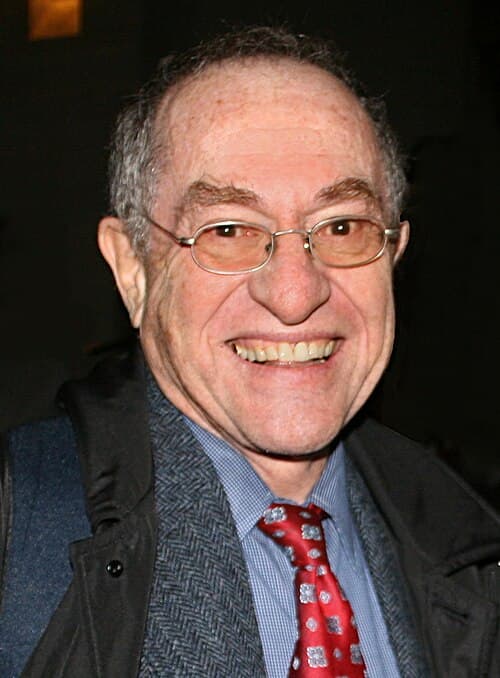
Alan Dershowitz
PERSON • 3 mentions
American lawyer, author, and art collector (born 1938)
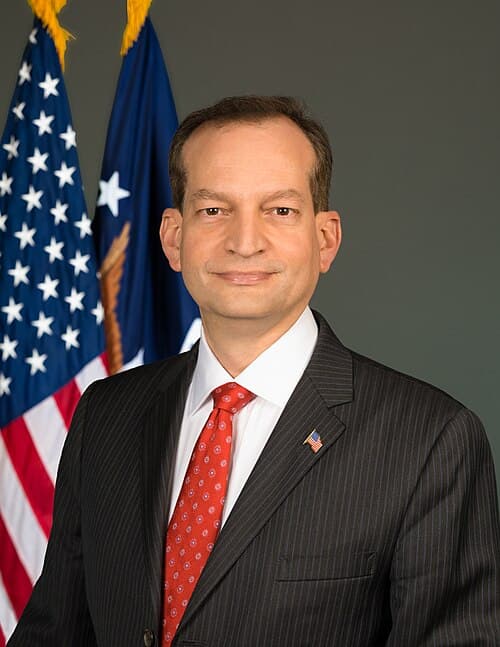
Alexander Acosta
PERSON • 2 mentions
American attorney and politician, 27th U.S. Secretary of Labor (born 1969)
Alexandra Gelber
PERSON
Person referenced in documents
Alice Fisher
PERSON
Person referenced in documents
AS
Alice S.
PERSON
Name reference in documents
AO
Andrew G. Oostettaan
PERSON
Name reference in documents
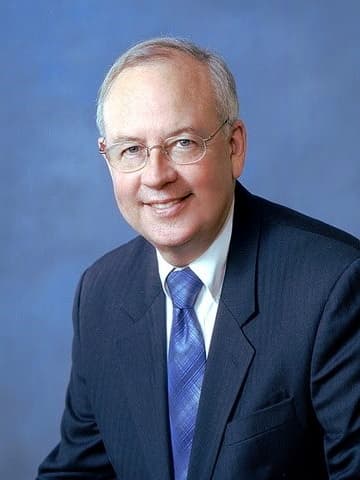
Dean Kenneth Starr
PERSON
Person referenced in documents

Drew Oosterbaan
PERSON • 2 mentions
DOJ attorney, referenced in Epstein case documents
GL
Gerald Lefcourt
PERSON • 2 mentions
American lawyer
Guy Lewis
PERSON
American basketball player and coach (1922-2015)
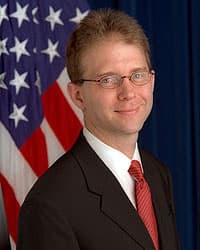
Jay Lefkowitz
PERSON • 2 mentions
American lawyer

Jeffrey Epstein
PERSON • 5 mentions
American sex offender and financier (1953–2019)
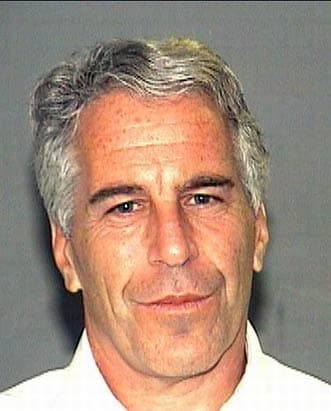
Jeffrey Sloman
PERSON • 2 mentions
Federal prosecutor, referenced in Epstein case legal proceedings
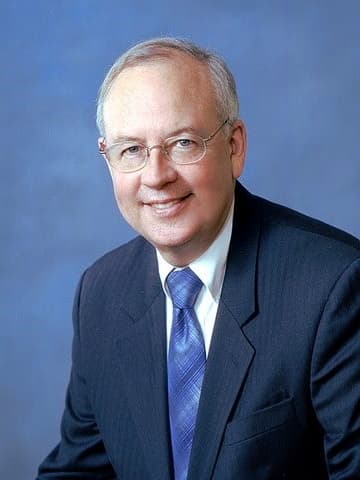
Ken Starr
PERSON • 2 mentions
American judge and educational administrator (1946–2022)
LJ
Landon Thomas Jr.
PERSON • 2 mentions
American journalist

Larry Page
PERSON
American computer scientist and Internet entrepreneur (born 1973)
LB
Leon Black
PERSON
American billionaire businessman (born 1951)
LS
Lily III Sanchez
PERSON
Name reference in documents

Mark Epstein
PERSON
American property developer, brother of Jeffrey Epstein
MW
Martin Weinberg
PERSON • 2 mentions
American attorney (born 1946)

Prince Andrew
PERSON
Third child of Queen Elizabeth II and Prince Philip, Duke of Edinburgh (born 1960)
RB
Roy Black
PERSON
American lawyer (1945–2025)
SB
Sbould
PERSON
Name reference in documents
SM
Sigel P. Mandencer
PERSON
Name reference in documents
Stephanie Thacker
PERSON
United States Circuit Judge
BlackBerry Wireless
ORGANIZATION
BlackBerry mobile device wireless service
Citigroup Center
ORGANIZATION
Office building in Midtown Manhattan
Criminal Division
ORGANIZATION
Division of the U.S. Department of Justice
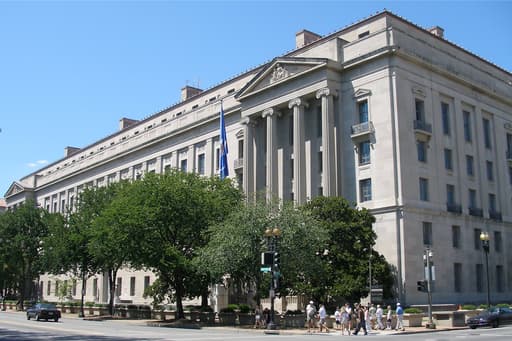
Department of Justice
ORGANIZATION
United States Department of Justice, federal executive department responsible for law enforcement
First Asst
ORGANIZATION
Organization referenced in documents
Interstate
ORGANIZATION
Organization referenced in documents
Kirkland & Ellis LISP
ORGANIZATION
Organization referenced in documents
Obnvnity Ration
ORGANIZATION
Organization referenced in documents
U S_Atty_C o
ORGANIZATION
Organization referenced in documents
the Southern District
LOCATION
Federal judicial district in New York City
Statistics
Pages:18
Entities:35
Sponsored