EFTA00184224_email_024
Document Information
Bates Range
EFTA00184224_email_024
Pages
42
Original Filename
EFTA00184224.pdf (email 24: Jeff Epstein)
Document Content
Page 1 - EFTA00184224_732
Case 9:08-cv-80736-KAM Document 362-30 Entered on FLSD Docket 02/10/2016 Page 2 of 2 .(USAFLS) From: Brad Edwards ([email protected]) Sent: ThillwARV ie 9908 11:34 AM To: p (USAFLS) Subject: Jeff Epstein I have information and concerns that I would like to share. While I understand that you are limited in what you can discuss, I would like to meet with you and discuss my plans. This would be beneficial to you and me. Let me know If you are interested in meeting and talking. My schedule is free next Monday, Tuesday, and Wednesday, July 23.25. If any of those days are open for you. then I will go to you and can meet you at any time convenient for you. I am scheduling to meet with my client again next week in your area anyway, so it would be no problem for me to meet you on the same day. I look forward to hearing back from you. Sincerely, Brad Edwards. Esquire Law Office of Brad Edwards & Associates 2028 Harrison Street Suite 202 Hollywood, Florida 33020 Telephone: 954-414-8033 (Broward) 305-935-2011 (Miami-Dade) Facsimile: 954-924-1530(Broward) 305/935-4227 (Miami-Dade) e-mail: [email protected] PRIVILEGED AND CONFIDENTIAL: The intbrmation contained in this e-mail message is intended for the use of the individual or entity to which it is addressed and may contain information that is proprietary, privileged, confidential, and exempt from disclosure under applicable laws. If the reader of this message is not the intended recipient, or the employee or agent responsible for delivery to the intended recipient, you are hereby notified that any use, printing, reproduction, disclosure or dissemination of this communication may be subject to legal restriction or sanction. 909 08-80736-CV-MARRA RFP WPB-001894 EFTA00184955
Page 2 - EFTA00184224_733
Case 9:08-cv-80736-KAM Document 362-31 Entered on FLSD Docket 02/10/2016 Page 1 of 3 EXHIBIT 101 ( EFTA00184956
Page 3 - EFTA00184224_734
Case 9:08-cv-80736-KAM Document 362-31 Entered on FLSD Docket 02/10/2016 Page 2 of 3 U.S. Department ofJustice United States Attorney Southern District of Florida 500 South Australian Ave., Suite 400 West Palm Beach, Ft 3340/ Facsimile.• July 8, 2008 VIA FACSIMILE AND ELECTRONIC MAIL Jack A. Goldberger, Esq. Atterbury, Goldberger & Weiss, P.A. One Clearlake Centre, Suite 1400 25b Australian Ave S. West Palm Beach, FL 33401-5015 Re: Jeffrey Epstein Dear Mr. Goldberger: In accordance with the terms of the Non-Prosecution Agreement, on June 30, 2008, the United States Attorney's Office provided you with a list of thirty-one individuals "whom it was prepared to name in an Indictment as victims of an enumerated offense by Mr. Epstein." Yesterday, I provided you with the identification of another victim whom I had erroneously left off of that list. At the time the list was provided, Special Agent and I impressed upon you the need to finalize this last piece of the agreement as quickly as possible so that we could fulfill our victim notification obligations. In deference to your vacation, we allowed you a week to provide us with any objections or requested modifications to the list and/or the Notification language. Yesterday, I contacted you via telephone and e-mail, but received no response. Accordingly, the United States hereby notifies you that it will distribute the victim notifications tomorrow, July 9, 2008, to each of the thirty-two identified victims, either directly or via their counsel. A carbon copy of each notification will be provided to you, and the notification will list you as the contact person for any civil litigation, if the victim decides 08-80736-CV-MARRA RFP WPB 000512 EFTA00184957
Sponsored
Page 4 - EFTA00184224_735
Case 9:08-cv-80736-KAM Document 362-31 Entered on FLSD Docket 02/10/2016 Page 3 of 3 JACK POLDEERGER, ESQ. Jui.v 8,2008 PAGE 2 to pursue damages. If the United States learns that a civil suit has been filed against Mr. Epstein and he has denied that one of these victims is entitled to proceed under 18 U.S.C. § 2255, that will be considered a breach of the Non-Prosecution Agreement and the United States will proceed accordingly. Sincerely, United States Attorney cc: Karen Atkinson, AUSA By: Assistant United States Attorney 08-80736-CV-MARRA RFP WPB 000513 EFTA00184958
Page 5 - EFTA00184224_736
Case 9:08-cv-80736-KAM Document 362-32 Entered on FLSD Docket 02/10/2016 Page 1 of 25 EXHIBIT 102 EFTA00184959
Page 6 - EFTA00184224_737
0asse9gOll8e.w88072614sPAIIA Lancunneethl252523.32EiffertelientrOURESDabekefiDNISEPajngt a ei4 25 UNITED STATES DISTRICT COURT SOUTHERN DISTRICT OF FLORIDA Case No. 08-80736-Civ-Marra/Johnson JANE DOE No. I and JANE DOE No. 2 v. UNITED STATES AFFIDAVIT OF BRADLEY J. EDWARDS, ESQ. REGARDING NEED FOR PRODUCTION OF DOCUMENTS 1. I, Bradley J. Edwards, Esq., do hereby declare that I am a member in good standing of the Bar of the State of Florida. Along with co-counsel, I represent Jane Doe No. 1 and Jane Doe No. 2 (as referred to as "the victims") in the above-listed action to enforce their rights under the Crime Victims Rights Act (CVRA). I also represented them (and several other victims) in civil suits against Jeffrey Epstein for sexually abusing them. I am also familiar with the criminal justice system, having served as state prosecutor in the Broward County State Attorney's Office. 2. This affidavit covers factual issues regarding the Government's assertions of privilege to more than 13,000 pages of documents it has produced for in camera inspection in this case. This affidavit provides factual information demonstrating that the Government's assertions of privilege are not well founded. It farther demonstrates that the victims have a compelling and substantial need for the information requested and have no other way of obtaining the information. Background Regarding Unsuccessful Efforts to Reach Stipulated Facts with the Government 3. On July 7, 2008, I filed a petition to enforce the CVRA rights of Jane Doe No. 1 and Jane Doe No. 2 with regard to sex offenses committed against them by Jeffrey Epstein while they were minors. The course of the proceedings since then is well-known to the Court. For purposes of this affidavit regarding privileges, it is enough to briefly recount the efforts of the victims to reach a stipulated set of facts with the Government — efforts that the Government has blocked. 4. The Court first held a hearing on victims' petition on July 11, 2008. The Court discussed a need to "hav[e] a complete record, and this is going to be an issue that's ... going to go to the Eleventh Circuit, [so it] may be better to have a complete record as to what your position is and the government's is as to what actions were taken." Tr. at 25-26. The Court concluded the hearing with the following instructions: "So I'll let both of you confer about whether there is a need for any additional evidence to be presented." Tr. at 32. 1 EFTA00184960
Sponsored
Page 7 - EFTA00184224_738
GOas€99C08e71280726149WIA IThrotureett ea€2132EaritedaticRIBISDOkeket87126120a016Payagb Cif d14 25 5. The victims and the U.S. Attorney's Office then attempted to reach a stipulated set of facts underlying the case. The U.S. Attorney's Office offered a very abbreviated set of proposed facts, and the victims responded with a detailed set of proposed facts. Rather than respond to the victims' specific facts, however, the U.S. Attorney's Office suddenly reversed course. On July 29, 2008, it filed a Notice to Court Regarding Absence of Need for Evidentiary Hearing (DE 17). The U.S. Attorney's Office took the following position: "After consideration, the Government believes that an evidentiary hearing is not necessary" (DE 17 at 1). The Office asserted that the Court need only take judicial notice of the fact that no indictment had been filed against Epstein to resolve the case. 6. On August 1, 2008, the victims filed a response to the Government's "Notice," giving a proposed statement of facts surrounding the case. DE 19 at 5. The victims' response also requested that the Court direct the Government to confer with the victims regarding the undisputed facts of the case, and produce the non-prosecution agreement and other information about the case. Id at 14. On August 14, 2008, the Court held a hearing on the case regarding the confidentiality of the non-prosecution agreement. The Court ultimately ordered production of the agreement to the victims. 7. After the U.S. Attorney's Office made the non-prosecution agreement available to the victims, the victims reviewed it and pursued further discussions with the U.S. Attorney's Office. Ultimately, however, the U.S. Attorney's Office declined to reach a stipulated set of facts with the victims and declined to provide further information about the case. 8. With negotiations at an impasse, the victims attempted to learn the facts of the case in other ways. In approximately May 2009, counsel for the victims propounded discovery requests in both state and federal civil cases against Epstein, seeking to obtain correspondence between Epstein and prosecutors regarding his plea agreement — information that the U.S. Attorney's Office was unwilling to provide to the victims and information that was highly relevant both to the victims' civil suit and their CVRA enforcement action. Epstein refused to produce that information, and (as the Court is aware) extended litigation to obtain the materials followed. The Court rejected all of Epstein's objections to producing the materials. 9. On June 30, 2010, counsel for Epstein sent to counsel for the victims approximately 358 pages of e-mail correspondence between criminal defense counsel and the U.S. Attorney's Office regarding the plea agreement that had been negotiated between them. See DE48-Attachment 1/Exhibit A. These e-mails began to disclose for the fast time the extreme steps that had been taken by the U.S. Attorney's Office to avoid prosecuting Epstein and to avoid having the victims in the case learn about the non-prosecution agreement that had been reached between Epstein and the Government. While the Court ordered that all of the correspondence be turned over to the victims, Epstein chose to disobey that order and instead only produced the correspondence authored by the Government and redacted all correspondence authored by him or his attorneys. 10. In mid-July 2010, Jane Doe No. 1 and Jane Doe No. 2 settled their civil lawsuits against Epstein. Then, armed with the new information, they turned to moving forward in the CVRA case. On September 13, 2010, the victims informed the Court that they were preparing new filings in the case. 11. On October 12, 2010, the Court entered an order directing the victims to provide a status report on the case by October 27, 2010. That same day, counsel for the victims again contacted 2 EFTA00184961
Page 8 - EFTA00184224_739
Gazoie9;O38ea731I6IGNAM Eltmannta62132ErffatedadthISESD6Meke2CO2620aCtlEPafigt dr 644 25 the U.S. Attorney's Office about the possibility of reaching a stipulated set of facts in the case. That same day, the U.S. Attorney's Office responded: "We don't have any problem with agreeing that a factual assertion is correct if we agree that is what occurred" (DE 41 at 2). 12. On October 23, 2010, the victims e-mailed to the U.S. Attorney's Office a detailed proposed statement of facts, with many of the facts now documented by the correspondence between the U.S. Attorney's Office and Epstein's counsel. The victims requested that the U.S. Attorney's Office identify which facts it would agree to. In a letter to the U.S. Attorney's Office, the victims stated: If you believe that any of the facts they propose are incorrect, Jane Doe No. 1 and Jane Doe No. 2 would reiterate their long-standing request that you work with us to arrive at a mutually-agreed statement of facts. As you know, in the summer of 2008 Jane Doe No. 1 and Jane Doe No. 2 were working with you on a stipulation of facts when you reversed course and took that position that no recitation of the facts was necessary (see doe. No. 19 at 2). . . . I hope that your e-mail means that you will at least look at our facts and propose any modifications that you deem appropriate. Having that evidence quickly available to the Court could well help move this case to a conclusion. That same day, the U.S. Attorney's Office agreed to forward the proposed statement of facts to the appropriate Assistant U.S. Attorney for review (DE 41 at 2-3). 13. On October 26, 2010, rather than stipulate to undisputed facts, the U.S. Attorney's Office contacted the victims' attorneys and asked them to delay the filing of their motion for a two- week period of time so that negotiations could be held between the Office and the victims in an attempt to narrow the range of disputes in the case and to hopefully reach a settlement resolution without the need for further litigation. Negotiations between the victims and the U.S. Attorney's Office then followed over the next two days. However, at 6:11 p.m. on October 27, 2010 — the date on which the victims' pleading was due — the U.S. Attorney's Office informed the victims that it did not believe that it had time to review the victims' proposed statement of facts and advise which were accurate and which were inaccurate. The Office further advised the victims that it believed that the victims did not have a right to confer with their Office under the CVRA in this case because in its view the case is "civil" litigation rather than "criminal" litigation (doe. No. 41 at 3). 14. As a result, purely as an accommodation to the U.S. Attorney's Office, on October 27, 2010, the victims filed a report with the Court in which they agreed to delay filing their motion and accompanying facts for up to two-weeks to see if negotiations can resolve (or narrow) the disputes with the U.S. Attorney's Office (DE 41 at 4). Discussions with the U.S. Attorney's Office dragged on, including a personal meeting between Jane Doe No. 1 and the U.S. Attorney in December 2010. I In seeming contradiction to this position, on March 17, 2011, the U.S. Attorney's Office informed the victims that it would not be making any initial disclosures to the victims as required for civil cases by Fed. R. Civ. P. 26(a)(1). The U.S. Attorney's Office did not explain why they believe that this rule of civil procedure is inapplicable if they think this case is properly viewed as a "civil" case. 3 EFTA00184962
Page 9 - EFTA00184224_740
iMase99CIESeav8E073116145CAM liEtecumetirt1122521.32ErEettedonhoRLEISDQbeke80261137031EP 25 • at dif4 15. After further discussions failed to produce any agreement or other visible progress, the victims informed the U.S. Attorney's Office that they would file their "summary judgment" motion with the Court on March 18, 2011 and requested further cooperation from the Office on the facts. 16. Ultimately, after months of discussion, the U.S, Attorney's Office informed counsel for the victims that — contrary to promises made earlier to stipulate to undisputed facts — no such stipulation would be forthcoming. Instead, on March 15, 2011, the U.S. Attorney for the Southern District of Florida, Wifredo A. , sent a letter to the victims declining to reach any agreement on the facts: Because, as a matter of law, the CVRA is inapplicable to this matter in which no federal criminal charges were ever filed, your requests for the government's agreement on a set of proposed stipulated facts is unnecessary and premature. That is, because whether the rights in 18 U.S.C. § 3771(a) attach prior to the filing of a charge in a federal court is a matter of statutory interpretation, resolution of that question is not dependent upon the existence of any certain set of facts, other than whether a charging document was ever filed against Jeffrey Epstein in the United States District Court for the Southern District of Florida. And while this Office remains willing to cooperate, cooperation does not mean agreeing to facts that are not relevant to the resolution of the legal dispute at issue . . . . Letter from Wifredo A. to Paul G. Cassell (March 15, 2011). 17. Accordingly, unable to work with the Government to reach a resolution of the facts, on March 21, 2011, the victims filed a Motion for Summary Judgment, alleging 53 undisputed facts along with some evidentiary support for each of the facts. DE 48. The victims also filed a motion to have their facts accepted because of the Government's failure to contest their facts. DE 49. The victims also filed a motion to have the Court direct the Government to not withhold relevant evidence. DE 50. 18. Following a hearing on the motions, on September 26, 2011, the Court rejected the Government's argument that the CVRA was inapplicable in this case because the Government had never filed charges against Epstein. DE 99. The Court, however, rejected the victims' argument that it should accept their facts because of the Government's failure to contest the facts. DE 99 at 11. Instead, the Court directed that discovery could proceed in the form of requests for admission and document production requests. Id at 11. The Court reserved ruling on the victims' motion that the Government should be directed not to withhold evidence. 19. In light of the Court's order, on October 3, 2011, the victims filed requests for production with the Government. The requests included 25 specific requests, each of which linked very directly to the facts that the victims were attempting to prove in this case. 20. On November 7, 2011, the day when the Government's responses were due, rather than produce even a single page of discovery, the Government filed a motion to dismiss the victims' petitions. DE 119. On that same day, the Government filed a motion to stay discovery. DE 121. The victims filed a response, arguing that the Government's motion was a stall tactic. DE 129. The victims also filed a motion to compel production of all of their discovery requests. DE 130. The Government filed a reply, arguing that it was not stalling. Indeed, the Government told the Court that "the United States has agreed to provide some information to [the victims] even 4 EFTA00184963
Sponsored
Page 10 - EFTA00184224_741
Mase990118eov28072614fAllil atonannera2332EritstedeatcRLPSESDatiekeSOM351202B16Pafrocit St1 25 during the pendency of the stay [of discovery] and is undertaking a search for that information." DE 140 at 4. Contrary to that representation, however, over the next seventeen months, the Government did not produce any information to the victims, despite the victims reminding the Government of that statement made to the court. 21. Ultimately, after some additional motions and rulings, on June 19, 2013, the Court denied the Government's motion to dismiss and lifted any stay of discovery. DE 189. That same day, the Court entered an order granting the victims' motion to compel and directing the Government to produce (1) all correspondence between it and Epstein; (2) all communications between the Government and outside entities; and (3) every other document requested by the victims. DE 190 at 2. With respect to the third item, the Court allowed the Government to assert privilege by producing the items in question for in camera inspection and filing a contemporaneous privilege log. Id. The Court required that the privilege log must "clearly identify[] each document[] by author(s), addressee(s), recipient(s), date, and general subject matter ...." DE 190 at 2. 22. On July 19 and July 27, 2013, the Government made its production. With regard to item (1) — correspondence with Epstein, the Government withheld the correspondence pending a ruling from the Eleventh Circuit on Epstein's motion to stay production of these materials. With regard to the other items, the Government produced 14,825 pages of documents to the Court for in camera inspection, but turned over only 1,357 pages to the victims. Thus, the Government asserted privilege to more than 90% of the documents in question. The documents that the Government produced were almost worthless to the victims, as they included such things that the victims' own letters to the Government (Bates 0001-04), court pleadings filed by the victims themselves or other victims, by Epstein, or by news media organizations (e.g., Bates 00142-88, 00229-31, 281-311, 00668-69), public court rulings on Epstein related matters (e.g., Bates 0008- 10, 0012-14. 0036-86, 00190-228), public newspaper articles (e.g., Bates 0011, 0030, 0032-33), and similar materials already available to the victims. It also included roughly four hundred pages of notices sent to the various other victims in this case — notices that were substantively indistinguishable from the notices the victims themselves in this case had already received. Almost without exception, the documents the Government produced do not go to the disputed issues in this case. 23. The Government made one last production of materials in this case on August 6, 2013. This involved roughly 1,500 pages of documents that were largely meaningless in the context of the contested issues in the case. They included public documents in the case such the crime victims' own pleadings, see, e.g., Bates 000671-000711 (copy of the victims' redacted summary judgment motion). Curiously, while the Government has produced these documents that would likely fall into an "irrelevant" category of documents, they have simultaneously refused production of hundreds of other documents that are responsive to our requests on the basis of relevance. 24. The victims have tried to obtain information on all relevant subjects through requests for admission. The Government, however, has refused to admit many of the victims' central allegations in this case. A copy of the victims' requests for admissions and the Government's responses is attached to this affidavit so that the Court can see that the victims have diligently tried to pursue this avenue for developing the facts in this case. 5 EFTA00184964
Page 11 - EFTA00184224_742
GDase99002cov20:772.614kAM Clacciarneati2252132E rEEntetimirRLYSES D attack EOM larzial EP dila" df 644 25 25. The victims have also tried to obtain information on subjects related to their suit by voluntary requests for interview with persons who are no longer emaedi g the Justice Department. For example, I have sent letters to both Bruce Reinhart and who both have information about the Epstein case, requesting an opportunity to discuss the case with them. Both of them have ignored my letters. The Need for the Materials Requested by the Victims 26. The documents that the victims requested that the Government produce to them on October 3, 2011, are all highly relevant to their CVRA enforcement action. We would not have requested them otherwise. The victims also have no other means of obtaining the requested material. This section of the affidavit explains why the materials are needed by the victims. For the convenience of the Court, the affidavit will proceed on a section-by-section basis concerning the need for the materials. Also for the convenience of the Court, a copy of the October 3, 2011, request for production is attached to this Affidavit. Also attached is the victims' supplemental discovery request of June 24, 2013. As the Court will note from reviewing the requests for production, most of the requests specifically recount the allegations that the requested documents would support, in an effort to eliminate any dispute from the Government that the documents were not relevant to the case. Many of the requests for production link directly to specific paragraphs in the victims' previously-filed summary judgment motion. Accordingly, the victims have a very specific need for these documents to support the allegations in the summary judgment motion found at DE 48 at 3-23. 27. The Court has previously concluded that the victims' proof of their claims is, at this point in the case, inadequate. Instead, the Court has ruled: "Whether the evidentiary proofs will entitle [the victims] to that relief [of setting aside the non-prosecution agreement] is a question properly reserved for determination upon a fully developed evidentiary record." DE 189 at 11-12. The Court has further indicated that it will be considering an "estoppel" argument raised by the Government as a defense in this case. DE 189 at 12 n.6. The Court has noted that this argument "implicates a fact-sensitive equitable defense which must be considered in the historical factual context of the entire interface between Epstein, the relevant prosecutorial authorities and the federal offense victims — including an assessment of the allegation of a deliberate conspiracy between Epstein and federal prosecutors to keep the victims in the dark on the pendency of negotiations between Epstein and federal authorities until well after the fact and presentation of the non-prosecution agreement to them as a fait accompli." DE 189 at 12 n.6 (emphasis added). The victims have a compelling need for information about the Government's actions to show what the "entire interface" was and to respond to the Government's estoppel arguments, as well as other defenses that it appears to be preparing to raise. See, e.g., DE 62 (52-page response from the Government to the victim's summary judgment motion, raising numerous factually- based and other arguments against the victim's position). 28. Request for Production ("RFP") No. 1 requests information regarding the Epstein investigation. These documents are needed to support the victims' allegations that the Government had a viable criminal case for many federal sex offenses that it could have pursued against Epstein. See, e.g., DE 48 at 3-7. 29. RIP No. 2 requests information regarding crime victim notifications in this case. These documents are needed to support the victims' allegations that their rights under the CVRA, their 6 EFTA00184965
Page 12 - EFTA00184224_743
asee92028EAMEGr731f614sPAM Ditecuitaerti t2262132ErffinteaseboRRIIDdithekeE02312022160 25 rvi • 614 right to notice and to confer with the Government, were violated in this case. In particular, these documents are needed to demonstrate that the victims were not properly notified about the non- prosecution agreement (NPA) entered into by the Government and Jeffrey Epstein and that the Government did not confer with the victims about the agreement. See, e.g., DE 48 at 11-17. 30. RFP No. 3 requests information about the NPA, including in particular its confidentiality provision. These documents are needed to demonstrate that the confidentiality provision precluded disclosing the agreement to Jane Doe No. 1 and Jane Doe No. 2, as well as to other victims. See, e.g., DE 48 at 10-17. These documents are further needed to demonstrate that Jeffrey Epstein specifically orchestrated the secrecy of the agreement, thereby deliberately causing the Government's CVRA violation in this case. See, e.g., DE 48 at 13. 31. RFP No. 4 requests documents relating to negotiations between the Government and Jeffrey Epstein concerning the court and/or location in which Jeffrey Epstein would enter any guilty plea (including in particular any negotiations concerning concluding the plea in Miami or another location outside of West Palm Beach). These documents are relevant to the victims allegations that the Government was interested in finding a place to conclude any plea agreement that would effectively keep Epstein's victims (most of whom resided in or about West Palm Beach) from learning what was happening through the press. See, e.g., DE 48 at 7-8. 32. RFP No. 5 requests documents pertaining to negotiations between the Government and Jeffrey Epstein regarding any legal representation of the victims in civil cases against Epstein. These documents are needed to prove the victims' allegation that part of the plea negotiations with Epstein involved Epstein's efforts to make sure that the victims would be represented in civil cases against Epstein by someone who was not an experienced personal injury lawyer or by someone familiar to Epstein or his legal team. See, e.g., DE 48 at 9. 33. RFP No. 6 requests documents concerning the Government's and/or Epstein awareness or discussion of possible public criticism and/or victim objections to the non-prosecution agreement that they negotiated. The documents are needed to prove the victims' allegations that the Government wanted the non-prosecution agreement with Epstein concealed from public view because of the intense public criticism that would have resulted had the agreement been disclosed and/or the possibility that victims would have objected in court and convinced the judge not to accept the agreement. See, e.g., DE 48 at 7-8, 11. They are also relevant to bias and motive by the authors or subjects of other documents in this case. 34. RFP No. 7 requests documents regarding the Government's awareness of its potential CVRA obligations in this case and regarding any discussions between the Government and Epstein concerning these CVRA obligations in this case. These documents are needed to prove the victims' allegations that the Government was aware that it potentially had obligations under the CVRA to notify the victims about the non-prosecution agreement and any related state court plea agreement. See, e.g., DE 48 at 12-13. 35. RFP No. 8 requests documents regarding Epstein's lobbying efforts to persuade the Government to give him a more favorable plea arrangement and/or non-prosecution agreement, including efforts on his behalf by former President Bill Clinton, Prince Andrew, and Harvard Law Professor Alan Dershowitz. These materials are needed to prove the victims allegation that, after Epstein signed the non-prosecution agreement, his performance was delayed while he used his significant social and political connections to lobby the Justice Department to obtain a 7 EFTA00184966
Sponsored
Page 13 - EFTA00184224_744
W92.401/1 Mmtanneerti t2152132E ifEttiteeedtRLFREE D Ostia eamembaailiDafigik dif 25 more favorable plea deal. See, e.g., DE 48 at 16-18. These materials also are needed to establish the course of the proceedings in this case, which is necessary in light of the Government's letters to the victims (discussed in the next paragraph) concerning the status of the case. 36. RFP No. 9 requests documents regarding the letters sent to the victims by the FBI on January 10, 2008, Jane Doe No. 1 and Jane Doe No. 2 advising them that "this case is currently under investigation." These documents are needed to show that these letters were inaccurate or, at the very least, highly misleading, because they conveyed the impression that no plea arrangement (for example, a non-prosecution agreement) had been negotiated between Epstein and the Government. See, e.g., DE 48 at 16. These documents are also needed to respond to the Government's "estoppel" defense, as noted in the Court's order DE 189 at 12 n.6. 37. RFP No. 10 requests documents regarding the victims' allegations that the FBI was led to believe that their investigation of Epstein was going to produce a federal criminal prosecution and that the FBI was also misled by the U.S. Attorney's office about the status of the case. The Government has argued that these documents are not relevant to the case, because the only issue is whether the Government misled the victims. But the Government fails to recognize that the victims received information about the case through the FBI. These documents are therefore needed to demonstrate that the victims received inaccurate information about the status of the case — inaccurate information caused by the U.S. Attorney's Office's negotiations with Epstein. If the FBI agents were not accurately informed about the progress of the cases, then they could not have accurately informed the victims about the progress of the case — a central point in the victims' argument. Moreover, these documents would show a common scheme or plan — something made admissible in a trial by operation of Fed. R. Evid. 404(b). Of course, if the U.S. Attorney's Office was misleading the FBI about the NPA, it would have been part of the same scheme or plan to mislead the victims as well. The documents are also needed to support specific allegations in the victims' summary judgment motion. See, e.g., DE 48 at 16-17. 38. RFP No. 11 requests documents regarding various meetings that the Government (including FBI agents) had with the victims. These documents are needed to prove that during those meetings the Government did not disclose to the victims (or to their attorneys) that a non- prosecution agreement had been negotiated with Epstein, and even signed with Epstein, that related to their cases, allegations that the victims have advanced in their summary judgment motion. See, e.g., DE 48 at 16-18. 39. RFP No. 12 requests all documents connected with a request from the U.S. Attorney's Office to me (Bradley J. Edwards) to write a letter concerning the need for filing federal charges against Epstein and follow-up to that letter. These documents are needed to show that this request was made to me without disclosing the existence of the non-prosecution agreement. Thus, just as Jane Doe No. 1 and Jane Doe No. 2 were deceived about the NPA, I was deceived as well. See, e.g., DE 48 at 18-19. It is also needed to contradict the Government's apparent position that it disclosed the "existence' of the NPA to me and to the victims. See, e..g., Gov't Answers to RFA ¶ 13(d) ("The government admits that, when Epstein was pleading guilty to the state charges discussed in the non-prosecution agreement, the USAO and Epstein's defense attorneys sought to keep the document memorializing the non-prosecution agreement confidential, but denies that they sought at that time to keep the existence of the non-prosecution agreement confidential."). 8 EFTA00184967
Page 14 - EFTA00184224_745
CWeiP 9.1118-m-all1P3B-IICAMI noraummarrit 2M-B2 EliteleidebeFESB0DOrfaideCDMAWLEa6 P 8 111) 64 25 40. RFP No. 13 requests documents regarding how, on or about June 27, 2008, the Government learned that Epstein would be entering his plea to state charges on or about June 30, 2008. The documents are needed to describe the course of proceedings in this case and to prove both the Government's and Epstein's awareness that he would be entering a guilty plea (and thus blocking prosecution of other crimes) without the victims' full knowledge of what was happening. See, e.g., DE 48 at 19-20. 41. RFP No. 14 requests documents relating to the Government and Epstein working together to keep the existence of the non-prosecution agreement secret, including declining comment about the existence of such an agreement when asked about it when his guilty plea in state court became public knowledge. These documents are needed to prove the victims' allegations that the Government concealed the NPA from them, see, e.g., DE 48 at 14-18,and to contradict what appears to be the Government's position, namely that the victims were aware of the NPA shortly after it was negotiated, see, e.g., Gov't Answers to RFA 1 13(b) (claiming that "the USAO had communicated with Jane Doe #1 about the non-prosecution agreement prior to Epstein's June 30, 2008 guilty plea."). These documents are also necessary to contradict the Government's apparent claim that the NPA did not bar discussions with crime victims. See, e.g., Gov't Answers to RFA 1 I3(d) (Government denying request that it admit that "Epstein's defense attorneys had negotiated for a confidentiality provision in the non-prosecution agreement that barred conferring with victims about the agreement"). 42. RFP No. 15 requests documents pertaining to the feasibility of notifying the victims about the NPA, along with information concerning how the victims came to receive a "corrected" notification letter on about September 3, 2008 — months after Epstein had pled guilty. These documents are needed to demonstrate that the Government had no valid reason for failing to provide notice to the victims. It is also needed to demonstrate why the victims at first received inaccurate information about the NPA, as well as Jeffrey Epstein's involvement in that inaccurate notice. See, e.g., DE 48 at 15-16. 43. RFP No. 16 requests documents regarding Bruce Reinhart, a senior prosecutor who was present in the U.S. Attorney's Office during the time that the Office negotiated the NPA with Epstein, blocking his prosecution for federal crimes in the Southern Districdt of Florida. In RFP No. 16, the victims have sought documents showing that Reinhart learned confidential, non- public information about Epstein matter. The Court will recall that Reinhart has filed a sworn affidavit with this Court, in which he flatly declared that while he was a prosecutor in the Office: "I never learned any confidential, non-public information about the Epstein matter." DE 79-1 at 3 (112). When Reinhart made that statement, it seemed improbable to me, because Reinhart was in close contact with other prosecutors in the Office and would seem likely that he would have discussed the high-profile Epstein case with them. Additionally, I learned through public record that while still a prosecutor at the Office Mr. Reinhart established his criminal defense office at the exact address (and exact Suite number) as Jeffrey Epstein's personal business address. However, I did not have any direct way of contradicting Reinhart's sworn statement. Since then, however, in answering the victims' Requests for Admissions, the Government has admitted that it possesses information that Reinhart learned confidential, non-public information about the Epstein case and that he discussed the Epstein case with other prosecutors. Gov't Answers to RFA's 1 15(a) & (b). Of course, this means that the Government has documents that Reinhart 9 EFTA00184968
Page 15 - EFTA00184224_746
0aane 93093Bmyffill7733B KOMI OD)M111113ffitaa542 Riltrielt1 con FRISTD de4t0ffiIllda016 B5 "sli p • Dia filed a false affidavit with this Court. This gives rise to the reasonable inference that, if Reinhart was willing to provide false information about this subject, he may have additional information about the case that is being concealed as well. 44. Materials about Reinhart are also needed to support the victims' summary judgment motion. See, e.g., DE 48 at 22-23 (raising allegations about Reinhart). 45. Reinhart's affidavit with the Court also states: "Because I did not have any, I did not share non-public confidential information about the Epstein investigation with any of Epstein's attorneys." DE 79-1 at 4 (1 17). Because the Government has information demonstrating that the first part of this statement is false, it may well be that the second part of the statement is false as well. Given that Mr. Reinhart established a business address identical to Epstein's business address, at a time while he was still working at the US Attorney's Office, and that Mr. Reinhart ultimately represented several of Epstein's co-conspirators, jet pilots, and staff, during the civil litigation, any involvement Mr. Reinhart had with the Epstein case while working at the Office is highly relevant. 46. The Government has further admitted that it possesses documents reflecting contacts between Bruce Reinhart and persons/entities affiliated with Jeffrey Epstein before Reinhart left his job at the U.S. Attorney's Office. Gov't Answers to RFA's 1 16. As stated above, Reinhart left the U.S. Attorney's Office to start a private firm that was located in the same address as Epstein's personal business where he was daily. This would appear to be a violation of the Florida rules of ethics for attorneys. 47. Information about Reinhart's connections to Epstein is critical to the victims' allegations in this case. If Reinhart was helping Epstein gain insight into the prosecutions efforts, that would provide a motive for Reinhart (and other prosecutors) not to properly notify the victims and not to confer with them. Also, if Epstein was improperly receiving information about the prosecution efforts against him (or lack thereon, that could be highly relevant to the remedies stage of this case, in which the victims will ask (among other things) to have the NPA agreement invalidated. Epstein has already indicated that he will raise a double jeopardy argument against that effort. However, double jeopardy considerations do not apply in situations where the defendant was not truly in jeopardy of prosecution. In addition, the Court may wish to consider, in crafting a remedy, Epstein's culpability for the violations of the NPA. Evidence that Epstein was improperly obtaining information about the prosecution efforts against him would be highly relevant to that culpability assessment. It is also relevant to the estoppel defense that the Government (and perhaps Epstein as well) intend to raise. 48. Evidence concerning Reinhart's connections, including improper connections, to Epstein is also relevant to bias and motive in this case. It would show, for example, the Reinhart had a reason to encourage others in the U.S. Attorney's Office to give Epstein a more lenient deal than the one he was entitled to. 49. RFP No. 16 requested information not only about improper connections between Epstein and Reinhart, but more broadly about such connections with any other prosecutors. Of course, if the Government possesses such information, it would be highly relevant to the victims' allegations for the reasons just discussed. In its answers to the victims' Requests for Admission, the Government admits that it has information about a personal or business relationship between Jeffrey Epstein and another prosecutor involved in the Epstein case, Matthew Answers 10 EFTA00184969
Sponsored
Page 16 - EFTA00184224_747
aleare930/8433AbE81V733E KOH Ilkawnenttaaa2 altered am Blain flitadde110)37/1102101126 Rase Muff 65 to Requests for Admission at ¶ 20. The Government should be required to disclose all of those documents so that the victims can determine whether there was anything improper about those relationships. In my experience, it is highly unusual for federal prosecutors to work on a case prosecuting someone (such as Jeffrey Epstein) and then, shortly thereafter, leave the employment of the federal government and enter into a business relationship with the person who was being prosecuted. 50. RFP No. 17 asks for documents concerning an investigation into the Epstein prosecution undertaken by the Justice Department's Office of Professional Responsibility (OPR) in Washington, D.C. The investigation was undertaken at the request of the victims, who asked the Justice Department to determine whether "improper influences" were brought to bear during the negotiations involving the possible prosecution (and ultimately the non-prosecution) of Jeffrey Epstein. It is apparent from the privilege logs that the Government has produced that OPR generated a great deal of correspondence (at least 46 pages) regarding this request. See Bates P- 013909 to P-013955. Of course, improper influences being brought to bear on the Epstein prosecution would support the victims' allegations that they were not being properly notified. Moreover, OPR may well have investigated the specific allegations that are at issue in this case — or directed others to undertake such an investigation. Here again, this information would be critical to supporting the victims' case. In fact, because OPR has presumably investigated many of the precise actions and actors, about which the victims complain in this litigation, and have already gathered many of the documents needed, the production of the OPR case file could probably short-cut this litigation and discovery process. 51. There is no other way to obtain this information from OPR. On May 6, 2011, nearly half a year after the victims' request of December 10, 2010, for an investigation, OPR sent a letter to my co-counsel, Professor Paul Cassell, in which it stated that it "regret[ted] it could not be of assistance" in providing information about the allegations. 52. RFP No. 18 asks for information about why the U.S. Attorney's Office for the Southern District of Florida was "conflicted out" of handling various issues related to the Epstein case. This information is needed to show why the victims did not receive proper notifications about the NPA that the Office negotiated with Epstein. It appears that the conflict of interest that has been recognized may have to do with the Office's treatment of the victims. Moreover, in its production of documents, and in follow-up correspondence, the U.S. Attorney's Office for the Southern District of Florida has indicated that there are no responsive documents being held by the U.S. Attorney's Office in the other district that is handling conflict matters. (It appears that this other office is the Middle District of Florida.) This appears to be improbable, because the conflict matters would presumably generate many documents covered by the victims' discovery requests, including the OPR investigative file. Accordingly, the conflict matter is highly relevant to determining whether the U.S. Attorney's Office has provided complete production to the victims. A conflict of interest would also be highly relevant to the motivations of the Government attorneys throughout the handling of the Epstein case. 53. RFP No. 19 asks for information supporting allegations made in March 2011, by former U.S. Attorney Alexander . He sent a three-page letter to the news media in which he claimed that when Government attorneys began investigating Epstein, Epstein launched "a yearlong assault on the prosecution and the prosecutors." This information is needed to explain 11 EFTA00184970
Page 17 - EFTA00184224_748
Gamie93(183mY8315733E61OM1 0ltugatmerttafiZa2 EfintweitiormFFUSED0En2alleite92/1331=6 1123aif C35 why the U.S. Attorney's Office would have withheld notifications from the victims about the NPA. If the prosecutors were being assaulted, as has said they were, then they would have reason to disregard their obligations to crime victims. In addition, this would show improper behavior by Epstein, which would be relevant at the remedies stage of this case in determining the scope of any remedy. These allegations would also bear strongly on motive and bias. 54. RFP No. 20 requests documents between the Government and state and local prosecutors and police agencies (including The Palm Beach Police Department) regarding the non- prosecution agreement. Because this involves information outside of the Department, it is the victims understanding that the Government has already turned over all of this information to them, as the Court has directed. See DE 190 at 2 (requiring production of information with persons or entities outside the federal government). For the sake of completeness, however, it is worth noting that this information is needed to demonstrate that the victims were not properly informed that Epstein's plea to state charges would trigger the NPA and preclude prosecution for crimes committed against them. 55. RFP No. 21 requests correspondence regarding the NPA. Here again, the victims understand that the Government is prepared to produce all of this information to them (once the stay pending action by the Eleventh Circuit is lifted). Again, for the sake of completeness, it is worth noting that this correspondence is needed to demonstrate the victims' claims that the Government was concealing the existence of the NPA from them and that this was done at Epstein's behest. The Court has specifically noted that the victims have a need for information that will allow them to argue to the Court in support of their "allegation of a deliberate conspiracy between Epstein and federal prosecutors to keep the victims in the dark on the pendency of negotiations between Epstein and federal authorities until well after the fact and presentation of the non-prosecution agreement to them as afait accompli." DE 189 at 12 n.6. 56. RFP No. 22 requests information about any considerations that Epstein provided, or offered to provide, to any individual within the Government. Here again, the victims understand that this information is being provided to them. It is again worth noting, however, that this information is highly relevant to explaining why the U.S. Attorney's Office would not have properly notified the victims about what was happening in their case, an allegation that is at the center of the victims' summary judgment motion. See, e.g., DE 48 at 11 (noting allegation that Epstein pushed the U.S. Attorney's Office to keep the NPA secret from public view to avoid public criticism). 57. RFP No. 23 asks for documents that will assist Jane Doe No. 1 and Jane Doe No. 2 in protecting their rights under the CVRA. This request links to the Government's obligations under the CVRA to use its "best efforts" to protect victims' rights. 18 U.S.C. § 3771(c)(1). The direct connection between this request and the victims' case is self-explanatory. 58. RFP No. 24 request correspondence related to the Epstein prosecution that the Government had with entities outside the federal government. Here again, it is my understanding that these materials have already been ordered produced. See DE 190 at 2 (requiring production of information with persons or entities outside the federal government). For the sake of completeness, this information is again relevant to showing the course of the Epstein 12 EFTA00184971
Page 18 - EFTA00184224_749
(lame S3B3aw 8B1733 4ign 0ftonunerntal5{5-32 Eatteesttl am ITEISDllaimilett0E7/113M01E6 FIrtige1131alf 64 investigation and why the victims were not properly notified about event during that investigation. 59. RFP No. 25 requests all initial productions that are required under the Federal Rules of Civil Procedure. This is a protective request to ensure that, should it be determined that the Civil Rules apply, they then receive all materials to which they are entitled. 60. In June 2013, the victims sent a supplemental request for production, asking the Government to provide any information concerning any investigation that the Department undertook concerning the treatment of the victims during the investigation in this case, including any FBI, grand jury, OPR or other investigation in the Southern District of Florida, Middle District of Florida, or elsewhere. Here again, this information is critically needed, as it would go directly to proving the victims' allegations that their rights were violated during the investigation of Epstein. This information would also go directly to defeating the Government's "estoppel" argument. This information would also show motive and bias. Inadequate Privilege Log 61. The Government has produced a privilege log that violates the Court's order in this case. I have been greatly hampered in responding to the Government's assertions of privilege because of that inadequate log. Indeed, in many cases, it is impossible to determine whether the Government's assertions of privilege are even plausible because of the inadequacy of the log. 62. The Court has directed the Government to produce a privilege log that "clearly identifjies] each document[] [as to which privilege is asserted] by author(s), addressee(s), recipient(s), date, and general subject matter . . . ." DE 190 at 2. Many of the entries in the privilege log fail to meet this requirement. 63. A good illustration of the inadequacies of the privilege log comes from the very first entry in the log, covering Box No. 1 (P-000001 through P-000039), some 39 pages of documents. DE Si. Yet the only description of these 39 pages is: "File folder entitled 'CORR RE GJ SUBPOENAS' containing correspondence related to various grand jury subpoenas and attorney otl ) handwritten notes." 64. Another good illustration of the inadequacies of the privilege log is provided on page 20 of the first privilege log, with regard to Box No. 3 (P412362 through P-012451). The Government asserts privilege here regarding 90 pages of documents. Yet the only description of these 90 pages is: "File folder entitled `Key Documents' containing correspondence between AUSA and case agent regarding indictment prep questions, victim identification information, corrections to draft indictment, indictment preparation timeline, key grand jury materials." 65. There are many other illustrations of the inadequacies of the privilege log which the Court will see when it examines it. I have also filed contemporaneously a response to the government's privilege log, which identifies many situations of an inadequate privilege log, as well as other responses that are needed to respond to the Government's privilege log. 66. The Government has never contacted me or co-counsel about any burdens associated with producing a privilege log that complied with the Court's directives. At all times relevant to this case, I would have been willing to work with Government counsel to minimize any excessive burden from producing an adequate privilege log. The requests for production that I sent to the Government specifically invited discussion to avoid any excessive burden. Failure to Prove Factual Underpinnings of Privilege Claim 13 EFTA00184972
Sponsored
Page 19 - EFTA00184224_750
CanBERLIBmx#8107/3161C0MI 0DirmumnittatMg2 EEntr3extlamFFELSICD OndiettC0111161ME6 08 " :ea • 67. Many of the Government's privilege assertions require factual premises — such as the existence of an attorney-client relationship and the rendition of legal services within that relationship. Yet the Government has not provided the factual underpinnings for any of its privilege assertions. 68. An illustration of this problem is found on page 1 of the supplemental privilege log WE 216-1), with regard to supplemental box No. 3 (P-013284). The entry here reads: "7/10/08 emails between J. and , K. Atkinson, and FBI re proposed response to Goldberger's letter re victim notification." The log then indicates that the Government is asserting attorney-client privilege, work product privilege, and deliberative process privilege. The Government, however, does not provide any document for any of the factual underpinnings of any of these claims. For example, with regard to the attorney-client claim, the Government does not explain who the attorney is and who the client is. With regard to the work product claim, the Government does not explain what litigation this document contemplated. And with regard to deliberative process, the Government does not explain what deliberative process was involved. 69. There are many other illustrations of the Government's failure to prove the factual underpinnings of privilege assertions, which the Court will see when it examines the privilege log and the victims responsive log. Waiver of Confidentiality 70. Some of the privileges that the Government has asserted have been waived. Of course, a requirement of a privilege is that confidentiality be maintained. Some of the materials have been circulated outside of any confidential circle, thereby waiving privilege. 71. An illustration of waiver found on page 1 of the supplemental privilege log (DE 216-1), with regard to supplemental box No. 3 (P-013282 to 83). The entry here reads: "7/08/08 email from A. to A. =, J. =, Ki. Atkinson, and FBI re proposed response to Goldberger's letter re victim notification." The log then indicates that the Government is asserting attorney-client privilege regarding these emails. But the emails were not internal to the U.S. Attorney's Office, but were also sent to the "FBI." (This is another illustration of the inadequacies of the privilege log, because who in the FBI the materials were sent to is not disclosed.) But the FBI is a law enforcement investigative agency, not an agency that provides legal advice. Accordingly, any attorney-client privilege would be waived by dissemination of this e-mail outside the U.S. Attorney's Office. 72. Mother illustration of waiver is found on page 3 of the supplemental privilege log (DE 216- 1), with regard to supplemental box No. 3 (P-013504 to P-013507). The entry here reads: "File folder labeled `Mtg w/ Ken Starr, RAA, JS, Drew' containing handwritten notes by n Kenn Starr, of course, is a defense attorney who represented defendant Epstein. Recording information provided by a defense attorney is not part of any governmental attorney- client privilege. 73. Another illustration of waiver is found on page 7 of the supplemental privilege log (DE 216-1), with regard to supplemental box No. 3 (P-013644 through P-013653). The entry here reads: "File folder entitled "Notes Re Plea Negotiations" containing 9/17/07 e-mail from A. Villafafia to J. N. re status update; undated and typed handwritten notes by A. re items to be completed on case, strength of case, victim interviews, 14 EFTA00184973
Page 20 - EFTA00184224_751
Cmize921O3ow8H773&61Wall IlitraturnettSE8a2 EEnneeklarnFRLSIDIRaddelt0121MBIE6 FRasfellEctif B13 summary of evidence, guidelines calculations." The Government is asserting attorne -client privilege regarding this e-mail. I understand the reference to `=. and ' ' to be references to FBI agents — not attorneys in the U.S. Attorney's Office. Accordingly, the attorney-client privilege would not extend to this e-mail. The Government's Fiduciary Duty to Crime Victims Bars Any Privilege 74. I am familiar with the caselaw recited in our pleadings regarding a "fiduciary exception" (also known as the "Garner exception" in some settings) to privileges. In this case, the Government had a fiduciary obligation to protect the CVRA rights of Jane Doe No. 1 and Jane Doe No. 2. Specifically, because they were recognized "victims" under the CVRA, the Government had obligations to provide them rights under the CVRA, including the right to confer, the right to notice, and the right to be treated with fairness. Because of this fiduciary duty, an exception applies to many of the Government privilege claims regarding interactions with the victims. 75. The fiduciary duty of the Government to the victims in this case is clear. In 2007, the FBI determined that both Jane Doe No. 1 and Jane Doe No. 2 were victims of sexual assaults by Epstein while they were minors beginning when they were approximately fourteen years of age and approximately thirteen years of age respectively. These sexual assaults involved use of means of interstate commerce (i.e., a telephone) and travel in interstate commerce. Both Jane Does were initially identified through the Palm Beach Police Department's investigation of Epstein. 76. Confirming the fact that the Government had identified Jane Doe No. 1 as a victim in this case, on about June 7, 2007, FBI agents hand-delivered to Jane Doe No. 1 a standard CVRA victim notification letter. The notification promises that the Justice Department would make its "best efforts" to protect Jane Doe No. I's rights, including "[t]he reasonable right to confer with the attorney for the United States in the case" and "to be reasonably heard at any public proceeding in the district court involving . . . plea . ." The notification further explained that "[a]t this time, your case is under investigation." 77. Similarly, on about August 11, 2007, FBI agents hand-delivered to Jane Doe No. 2 a standard CVRA victim notification letter. The notification promises that the Justice Department would make its "best efforts" to protect Jane Doe No. 1's rights, including "[t]he reasonable right to confer with the attorney for the United States in the case" and "to be reasonably heard at any public proceeding in the district court involving .. . plea . . . ." The notification further explained that "[alt this time, your case is under investigation." 78. Early in the investigation, the FBI agents and the Assistant U.S. Attorney had several meetings with Jane Doe No. 1. Jane Doe No. 2 was represented by counsel that was paid for by Epstein and, accordingly, all contact was made through that attorney. These meetings occurred because the FBI had obligations to protect the victims' rights under the CVRA. 79. In October 2007, shortly after the initial non-prosecution agreement was signed between Epstein and the U.S. Attorney's Office for the Southern District of Florida, Jane Doe No. 1 was contacted to be advised regardin the vestigation. On October 26, 2007, Special Agents E. and Jason met in person with Jane Doe No. 1 because she was recognized as a "victim' of Epstein's crime. 15 EFTA00184974
Page 21 - EFTA00184224_752
cc ne 931183mmailT7316 WA= Innaurrertt3E153/2 EH-itweld am ITIL53Th ftanariket002/B=1325 Rajfe Dififif 05 80. In all of these dealings between the Government and the victims, as well as other dealings of a similar nature, the Government had a fiduciary obligation to protect the interests of the victims under the Crime Victims Rights Act. Accordingly, the Government is precluded from raising any privilege claim to which a fiduciary exception applies or, at the very least, any privilege assertion would be outweighed by the victims' compelling need for the material. 81. An illustration of a situation where the fiduciary duty exception applies is found on page 1 of the supplemental privilege log (DE 216-1), with regard iii i•nental buS3 (PSW12 to 83). The entry here reads: "7/08/08 email from A. to A. M, J. K. Atkinson, and FBI re proposed response to Goldberger's letter re victim notification." In responding to defense attorney Goldberger's letter about victim notification, the U.S. Attorney's Office had a statutory duty under the CVRA to protect the victims' interests. Accordingly, the Office cannot assert privilege when questions about whether it fulfilled its obligations to the victims have arisen in this case or, at the very least, any privilege assertion would be outweighed by the victims' compelling need for the materials. 82. Another illustration of a situation where the fiduciary duty exception applies is found on page 16 of the first privilege log (DE .1), with regard to Box #2 P-010526 to P-010641. The entry reads: "File folder entitled 'Rsrch re Crime Victims Rights' containing attorney research, handwritten notes, draft victim notification letter, and draft correspondence to Jay Leflcowitz." Here again, the materials at issue go to the heart of this case — what kind of notifications were made to the victims and how did the defense attorneys shape and limit those notifications. Moreover, in evaluating victims' rights issues and determining what kind of letter to send, the Government was fulfilling legal duties that it owed to the victims. Accordingly, the Office cannot now assert privilege when questions about whether it fulfilled its obligations to the victims have arisen in this case. Communications Facilitatina Crime-Fraud-Misconduct Not Covered 83. I am familiar with the cases cited in our brief regarding an exception to various privileges when the communications concern crime, fraud, or government misconduct. Many of the important documents about the treatment of the victims to which the Government is asserting privilege would fall within that exception. 84. With regard to fraud and government misconduct, a number of the documents in the Government's privilege log concern concealment from the victims of the existence of a non- prosecution agreement between the Government and Epstein. I have reviewed a copy of the non- prosecution agreement signed on about September 24, 2007, by Epstein and his attorneys and a representative of the U.S. Attorney's Office. The text of that agreement bars disclosure of the agreement to the victims. 85. On about January 10, 2008, my clients Jane Doe No. 1 and Jane Doe No. 2 received letters from the FBI advising them that "Whir case is currently under investigation. This can be a lengthy process and we request your continued patience while we conduct a thorough investigation." The statement in the notification letter was deceptive, because it did not reveal that the case had previously been resolved by the non-prosecution agreement entered into by Epstein and the U.S. Attorney's Office discussed previously. Moreover, the FBI did not notify Jane Doe No. 1 or Jane Doe No. 2 that a plea agreement had been reached previously, and that part of the agreement was a non-prosecution agreement with the U.S. Attorney's Office for the 16 EFTA00184975
Sponsored
Page 22 - EFTA00184224_753
Catiam936183awffig733E6WECOVI 0Thoulunteritaia5312 EarltizosstiomFRaiDaltaddelt0337/111/aCiTh 05 Southern District of Florida and that the Non-Prosecution Agreement would resolve the federal case completely. (Whether the FBI itself had been properly informed of the non-prosecution agreement is also unclear. We are not alleging misconduct by the FBI, but rather that the FBI was not properly informed about the case or, in any event, was acting at the direction of the U.S. Attorney's Office.) 86. In about April 2008, Jane Doe No. 1 contacted the FBI because Epstein's counsel was attempting to take her deposition and private investigators were harassing her. Assistant U.S. Attorney I secured pro bono counsel to represent Jane Doe No. 1 and several other identified victims in connection with the criminal investigation. Pro bono counsel was able to assist Jane Doe No. 1 in avoiding the improper deposition. AUSA Villafafta secured pro bono counsel by contacting Meg Garvin, Esq. of the the National Crime Victims' Law Center in Portland, Oregon, which is based in the Lewis & Clark College of Law. During the call, Ms. Garvin was not advised that a non-prosecution agreement had been reached in this matter. 87. On May 30, 2008, another one of my clients who was recognized as an Epstein victim by the U.S. Attorney's Office, received letters from the FBI advising her that "[tJhis case is currently under investigation. This can be a lengthy process and we request your continued patience while we conduct a thorough investigation." The statement in the notification letter was deceptive because it did not reveal that the case had been resolved by the non-prosecution agreement entered into by Epstein and the U.S. Attorney's Office in September 2007. 88. In mid-June 2008, I contacted AUSA Villafafla to inform her that I represented Jane Doe No. 1 and, later, Jane Doe No. 2. I asked to meet to provide information about the federal crimes committed by Epstein, hoping to secure a significant federal indictment against Epstein. AUSA Villafa0a and I discussed the possibility of federal charges being filed. At the end of the call, AUSA Villafafta asked me to send any information that I wanted considered by the U.S. Attorney's Office in determining whether to file federal charges. I was not informed that previously, in September 2007, the U.S. Attorney's Office had reached an agreement not to file federal charges. I was also not informed that any resolution of the criminal matter was imminent at that time. Presumably the reason the U.S. Attorney's Office withheld this information from me was because of the confidentiality provision that existed in the non-prosecution agreement. At this point it is clear that AUSA was restricted in what she was being permitted to tell me. 89. On July 3, 2008, I sent to AUSA Villafafia a letter. In the letter, I indicated my client's desire that federal charges be filed against defendant Epstein. In particular, I wrote on behalf of my clients: "We urge the Attorney General and our United States Attorney to consider the fundamental import of the vigorous enforcement of our Federal laws. We urge you to move forward with the traditional indictments and criminal prosecution commensurate with the crimes Mr. Epstein has committed, and we further urge you to take the steps necessary to protect our children from this very dangerous sexual predator." When I wrote this letter, I was still unaware that a non-prosecution agreement had been reached with Epstein — a fact that continued to be concealed from me (and the victims) by the U.S. Attorney's Office. I only learned of this fact later on. 90. As alleged in the preceding paragraphs, and elsewhere in this affidavit and in this case, deliberate concealment from crime victims and their legal counsel of the existence of a signed 17 EFTA00184976
Page 23 - EFTA00184224_754
aria:ea:3 09B63,v MCFM6 WA= Ironuntent3132502 EBB W damnRIISThOThialke t0037/110=126 B8 lEDaff non-prosecution agreement would be a fraud and government misconduct. Documents relating to that fraud and misconduct would then fall outside of many of the privileges being asserted. 91. An illustration of a document to which the crime-fraud-misconduct exception applies on this basis is found on page 3 of the supplemental privilege log (DE 216-1), with regard to Suppl. Box #3 P-013342 to P-013350. The entry reads: "File folder entitled `12/05/07 Starr to containing drafts of 11/30/07 letters from A. to K. Starr and from J. to J. Lefkowitz re performance and victim notification with handwritten notes and edits by NEB" Again, these materials are central to the dispute in this case, as they involve discussions between the U.S. Attorney's Office and defense attorneys about notifications to crime victims. And given the dates of the communications, in all likelihood they would be related to the deceptive notifications that the Government made to the victims a few weeks later. 92. Another illustration of a document to which the crime-fraud-misconduct exception applies is found on page 1 of the supplemental privilege log (DE 216-1), with regard to Suppl. Box #3 P- 013282 to P-013283. The entry reads: "7/9/08 Email from to A. =, J. M , K. Atkinson, and FBI re proposed response to Goldberger letter re victim notification." These communications would presumably reflect efforts by the government prosecutors and Epstein's defense attorneys (e.g., Goldberger) to keep the non-prosecution agreement secret. 93. Another illustration of where the crime-fraud-misconduct exception would apply is to information that the Government possesses that Bruce Reinhart learned private, non-public information about the Epstein case. This would show (at the very least) misconduct by Bruce Reinhart in later representing Epstein-related entities. Because the Government's (inadequate) privilege log does not reveal which entries relate to Reinhart, it is not possible to point the Court to the specific documents that demonstrate this misconduct. These documents, however, are covered by the crime-fraud-misconduct exception. 94. Another illustration of where the crime-fraud-misconduct exception could potential) apply is with regard to information that the Government possesses that Matthew has a personal or business relationship with defendant Jeffrey Epstein. Gov't Answers to RFA's ¶ 20. This could potentially show misconduct by and also potentially a motive to violate the victims' rights as explained previously. The Government's privilege log has numerous entries showing that Menchal was substantially and personally involved in malcinislecisions related to the Epstein prosecution. See, e.g., page 19 of the first privilege log (DE M-1), with regard to Box #3 P-011923 to P-011966. The victims have informatitsgesting that immediately after leaving his employment with the U.S. Attorney's Office, was associated with Epstein- controlled entities or had some business relationship with him. The documents that the Government possesses showing a personal or business relationship between one of its prosecutors and the man he was charged with prosecuting should be produced. 95. The Government has admitted that its internal affairs component — the Office of Professional Responsibility — has collected information about possible improper behavior during the investigation of the Epstein matter. Gov't Answers to RFA ¶22 (government admits that "The Justice Department's Office of Professional Responsibility and/or other Government entities have collected information about . . . other government attorney's [apart from Bruce Reinhart's] possible improper behavior in the Epstein matter"). The fact that the Government's own investigating agencies have collected such information demonstrates that there is a prima facie 18 EFTA00184977
Page 24 - EFTA00184224_755
Clatw931033e2w8R111316WAD31 Motatunnint3125212 Enteccat FRLEIDOEmoideltOlatiJEZW26 IThiTtelaktif 68 case of improper behavior, which is enough to trigger the crime-fraud-misconduct exception to various privileges. Factual Materials Not Privileged 96. As noted in the accompanying legal memorandum, factual materials are generally not covered by the privileges at issue in this case. Many of the materials to which the Government is asserting privilege are factual materials. Assertions of Attorney-Client Privilege 97. The Government has asserted attorney client privilege regarding many documents. Yet with regard to most of these assertions, it is impossible to determine who is the attorney, who is the client, whether professional legal services are being rendered, and whether the communications were confidential to those involved in the delivery of legal services. Accordingly, it is very difficult for me to respond to many of the assertions of attorney client privilege and, in any event, the Government has failed to carry its burden of showing that the privilege applies. 98. An illustration of documents at to which attorney-client privilege appears to have been improperly asserted or inadequately described is found at page 7 of the first privilege log (DE 216-1), with regard to Suppl. Box #3 P-013811 to P-013833. The entry for these twenty-two pages of documents reads: "File folder entitled `Information Packet Drafts' containing several drafts of Informations, and complete draft Information packet." It is impossible from this description to see how the attorney-client privilege applies to these documents. I could provide many other illustrations of the problem. 99. The Government's attorney-client privilege claim directly covers situations where it was in a fiduciary relationship with the victims and therefore is limited in now asserting privilege. For example, page 3 of the supplemental privilege log (DE 216-1) contains an entry concerning Sulir #3 P-013342 through P-013350, which involves "File folder entitled `12/05/07 Starr to containing drafts of 11/30/07 letters from A. Acost to K. Starr and from J. to J Lefkowitz re performance and victim notification with handwritten notes and edits by A. Villafafia." This information goes very directly to the issues involved in this case, as it goes directly to "victim notification." Yet the Government has asserted an attorney-client privilege to prevent the victims from learning what is in these documents. The fiduciary exception to the attorney-client privilege applies in this situation, and limits the government's ability to invoke a privilege. This also appears to be shared communications between the Government and Epstein's attorneys, and it is unclear how the attorney-client privilege could ethically apply to such documents. 100. As one example of why the victims have established a compelling need for the materials described in the preceding paragraph (and other materials like them) is the fact that the Court has indicated that it will be considering an "estoppel" argument raised by the Government as a defense in this case. DE 189 at 12 n.6. The Court has noted that this argument "implicates a fact-sensitive equitable defense which must be considered in the historical factual context of the entire interface between Epstein, the relevant prosecutorial authorities and the federal offense victims — including an assecsment of the allegation of a deliberate conspiracy between Epstein and federal prosecutors to keep the victims in the dark on the pendency of negotiations between Epstein and federal authorities until well after the fact and presentation of the non-prosecution agreement to them as a fait accompli." DE 189 at 12 n.6 (emphasis added). The materials to 19 EFTA00184978
Sponsored
Page 25 - EFTA00184224_756
Gine 9301133cavatlYMEWAVII 0rmocurntiettta61532 EErttfwitl con FILLSID 116toud4ffitaaltlica6 Moth Bgi which the Government is asserting attorney-client privilege go directly to that "interface" between the victims, the Government, and Epstein. The victims have a compelling need for this information and the fiduciary exception to the attorney-client privilege applies to permit the Court to provide these documents to the victims. 101. The Government has not explained any harm that would come from releasing the documents covered by attorney client privilege to the victims. If the Government raises any such harm, I respectfully request an opportunity to provide additional information on that alleged harm. Deliberative Process Privilese 102. Some of the correspondence that is being withheld by the Government under the deliberative process privilege concerns an investigation that the Justice Department's Office of Professional Responsibility (OPR) opened with regard to the Epstein case. This investigation was undertaken at the request of the victims in this case. On December 10, 2010, co-counsel, Professor Paul Cassell of the University of Utah College of Law, and I met with the U.S. Attorney for the Southern District of Florida regarding this case in the U.S. Attorney's Office in Miami, Florida. At on that date, Professor Cassell presented a letter to the U.S. Attorney, Mr. asking him to personally investigate what happened during the Epstein prosecution and how the victims were treated during that investigation. Based on the privilege log that has been provided, as well as subsequent correspondence sent to Professor Cassell, that request for investigation was turned over to OPR in Washington, D.C. 103. The ultimate outcome of the OPR investigation is unclear. What is clear is that many documents are being withheld about that investigation — documents that would go to the central issues in this case. Approximately three whole pages of the privilege log — pages 12 through 14 of the supplemental privilege log (DE 216-1) — relate to the OPR investigation of how the Epstein case was handled and how the victims were treated. 104. A deliberative process privilege claim can only be asserted with regard to the process of reaching a decision, not the ultimate decision itself. The Government here has apparently asserted a deliberative process claim over not only the OPR process, but also over the OPR decision. It is not clear which document embodies the final OPR decision (or, given the inadequacies of the Government's privilege log, whether that fmal decision has been produced). Given the limited descriptions of the documents that have been provided, it appears that the OPR decision may be reflected in a document found on page 13 of the supplemental privilege log (DE 216-1), with regard to Suppl. Box #3 P-013940 to P-013942. The description there reads: "Draft Leteri_ marked `Confidential: To Be Opened by Addressee Only,' Robin C. Ashton to Wifredo A. =, with handwritten corrections." No date is provided regarding this letter. Nor is there any indication as to whether the letter was or was not circulated to other persons. It is also noteworthy that this letter is described as a "draft" letter. Nowhere in the privilege log is the final version of the letter indicated, raising questions about what was "draft" and what was "final." If this is the final embodiment of OPR's conclusions, then this letter would not be protected by a "deliberative process" privilege, because the deliberations would have come to an end. (It is also worth noting that because OPR is an agency that investigates misconduct by federal prosecutors, it would not be providing attorney-client advice to prosecutors and its 20 EFTA00184979
Page 26 - EFTA00184224_757
Qamie0183awEBTF731610X4011 OCCOmunenttaIR5212 EEterttgeittlarnFRLSIDIThellifit01010MDLO "ear 222arif documents would not be attorney-client privileged with regard to, for example, the U.S. Attorney's Office for the Southern District of Florida.) 105. The fact that OPR has investigated many of the exact claims raised by Jane Does 1 and 2, and were able to gather documents unobstructed by the Government in order to reach its conclusion likely means that production of the OPR file to the victims in this case could significantly shortcut this discovery process and the litigation. Additionally, if OPR "needed" the documents to investigate and make findings regarding the victims' claims, then logically the victims share that "need" and have no other means through which to obtain the documents. The Government has not explained any harm that would come from releasing the documents covered by deliberative process privilege to the victims. If the Government raises any such harm, I respectfully request an opportunity to provide additional information on that alleged harm. Investigative Privilege 106. The investigative privilege is a qualified privilege, which balances the need of particular litigate for access to information against any public interest in non-disclosure. That balancing process is ordinarily made with reference to factors discussed in Frankenhauser Rizzo, 59 F.R.D. 339, 344 (E.D.Pa.1973), specifically: (1) the extent to which disclosure will thwart governmental processes by discouraging citizens from giving the government information; (2) the impact upon persons who have given information of having their identities disclosed; (3) the degree to which governmental self-evaluation and consequent program improvement will be chilled by disclosure; (4) whether the information sought is factual data or evaluative summary; (5) whether the party seeking the discovery is an actual or potential defendant in any criminal proceeding either pending or reasonably likely to follow from the incident in question; (6) whether the police investigation has been completed; (7) whether any intradepartmental disciplinary proceedings have arisen or may arise from the investigation; (8) whether the plaintiffs suit is non-frivolous and brought in good faith; (9) whether the information sought is available through other discovery or from other sources; and (10) the importance of the information sought to the plaintiffs case. On the facts of this case, these factors weigh in favor of disclosing the information the victims have requested. 107. With regard to factor (1) (the extent to which disclosure will thwart governmental prornses by discouraging citizens from giving the government information), I represented four victims of Epstein's sex offenses in Federal Court — Jane Doe No. 1, Jane Doe No. 2, and a victim I will refer to as "S.R." and "M.J.", and other victims of Jeffrey Epstein's abuse as well. If further information is disclosed about this case, that will not discourage them from providing information, but rather will encourage them. I have also talked personally to attorneys for a number of other victims in this case. I have been told that many of these other victims hope that Jane Doe No. 1 and Jane Doe No. 2 are successful in their case. 108. With regard to factor (2) (the impact upon persons who have given information of having their identities disclosed), Jane Doe No. 1 and Jane Doe No. 2 are not asking for information that would identify any particular victim. Accordingly, there will be no effect on other victims. Additionally, I am aware of the true names of many of Epstein's victims and that information has 21 EFTA00184980
Page 27 - EFTA00184224_758
Ganeze9)0183o3m833fraiEWMNI ElEatuaunte rttaf25g2 EETIODatttl ant RIM flanottiet MC1E/MEG 85 "•ot:• 2223erif not been disseminated to the public where those individual victims did not wish for their identities to be disseminated. 109. With regard to factor (3) (the degree to which governmental self-evaluation and consequent program improvement will be chilled by disclosure), this is a lawsuit to force the compliance by the Government with its CVRA obligations. Accordingly, the Government's "program" of providing victims' rights will be directly improved if the victims are able to enforce their rights in this lawsuit. 110. With regard to factor (4) (whether the information sought is factual data or evaluative summary), many of the items that the victims seeks are factual summaries. An example of this is found at page 18 of the first privilege log (DE M-1), with regard to Box #3 P-011778 to P- 011788. The entry reads: "File folder entitled `6/12/09 Victim Notif. Log' containing chart with victim contact information and attorney notes regarding dates and type of contacts." This would include, for example, dates of contacts with Jane Doe No. 1 and Jane Doe No. 2, which would be purely factual information. 111. With regard to factor (5) (whether the party seeking the discovery is an actual or potential defendant in any criminal proceeding either pending or reasonably likely to follow from the incident in question), Jane Doe No. 1 and Jane Doe No. 2 are plainly victims of a crime, not criminal defendants. Indeed, as the Court is aware, it is the criminal defendant (Jeffrey Epstein) who has undertaken several "limited" intervention efforts to try and block disclosure of information to the victims. 112. With regard to factor (6) (whether the police investigation has been completed), the investigation of Epstein was completed years ago and the Government has not produced in its privilege log any information indicating recent investigative activity. 113. With regard to factor (7) (whether any intradepartmental disciplinary proceedings have arisen or may arise from the investigation), it appears than OPR investigation has arisen as a direct result of the victims' efforts in this case. However, it does not appear that release of any information to the victims would hamper any disciplinary proceedings. Indeed, to the extent that the victims are able to obtain information about this case and find information about misconduct, then they can provide that information to Government and other disciplinary entities as appropriate. 114. With regard to factor (8) (whether the plaintiff's suit is non-frivolous and brought in good faith), it should be clear at this juncture of a five-year long case that the victims have a substantial claim that is brought in good faith. 115. With regard to factor (9) (whether the information sought is available through other discovery or from other sources), as recounted throughout this affidavit, the victims have no other way to obtain the information at issue in this privilege debate, as it involves information internal to the Justice Department. 116. With regard to factor (10) (the importance of the information sought to the plaintiff's case), the information that the victims are seeking is highly important to their case. Indeed, without adequate proof, the Court has indicated that it may have to deny the victims' petition. DE 99 at 11. Throughout this affidavit, I have provided numerous examples and explanations of why the victims need the information that they are requesting. The documents to which the Government 22 EFTA00184981
Sponsored
Page 28 - EFTA00184224_759
Oanife9301BawEffiTalElfati41 lignununterita615a2 EEnterzeilconFRISIDO)mi4eltGEBEGIME6 64 • 'ru,:• is asserting investigative privilege, for example, bear directly on the Government's alleged "estoppel" defense, which the victims need a complete evidentiary record to dispute. Work-Product Doctrine 117. A work product claim can be defeated by a showing of substantial need and undue hardship to obtain the materials in other ways. In this affidavit, I have tried to articulate the specific and compelling need for all of the materials that victims are seeking. I will not repeat all of those assertions here, but simply note that I stand ready to provide any additional information that the Court may require to determine the compelling need that the victims have for the materials they have requested as well as the undue hardship (if not actual impossibility) of obtaining the materials in other ways. Any balancing of considerations tips decisively in the victims favor. 118. As one example, the victims have a compelling need for the materials that OPR collected as part of its investigation. Because Justice Department attorneys are generally required to talk to OPR investigators, OPR was apparently able to investigate the claims of misconduct related to the Epstein case by getting statements from the attorney's involved. These interviews appear to be recorded in materials found at page 14 of the supplemental privilege log (DE 216-1), with regard to Suppl. Box #3 P-013956 to P-013846 [sic — apparently should be P-013970, a total of 14 pages]. Judging from the entry, these notes would be factual statements from Justice Department prosecutors about how the Epstein case was handled and whether any misconduct occurred during the handling of the case. Those are central issues in this case. There is no other way for the victims to obtain information about these subjects, because the Justice Department has declined to provide information on this subject. 119. The victims have established a substantial need for the materials they are requesting in the previous paragraphs of this affidavit that review, request-by-request, their document production requests numbers 1 through 25 and supplemental request number 1. 120. As another example of why the victims have established a compelling need for the materials is the fact that the Court has indicated that it will be considering an "estoppel" argument raised by the Government as a defense in this case. DE 189 at 12 n.6. The Court has noted that this argument "implicates a fact-sensitive equitable defense which must be considered in the historical factual context of the entire interface between Epstein, the relevant prosecutorial authorities and the federal offense victims — including an assessment of the allegation of a deliberate conspiracy between Epstein and federal prosecutors to keep the victims in the dark on the pendency of negotiations between Epstein and federal authorities until well after the fact and presentation of the non-prosecution agreement to them as a fait accompli." DE 189 at 12 n.6 (emphasis added). The materials to which the Government is asserting work product protection go directly to that "interface" between the victims, the Government, and Epstein. The victims have no other way of showing what that interface is. The Government will not be harmed if the materials are provided to the victims. Grand Jury Information 121. The victims' legal pleading has explained why the Government has not properly asserted any grand jury secrecy to the documents at issue. In addition, many of the Government's grand jury privilege assertions appear to broadly cover both grand jury and non-grand jury information. Even if the Court allows the Government to assert some form of grand jury privilege, it should require the Government to sever grand jury materials from non-grand jury materials. 23 EFTA00184982
Page 29 - EFTA00184224_760
avv8RYPAB WNW 0DImunreritaf2532 EETItorloti con fRaDD 1192mliettaRM02111.126 e5 l'srep• YLbcdf 122. An illustration of this problem comes from page 12 of the first privilege log (DE M-1), with regard to Box #2 P-008616 to P-008686. The entry reads: "File folder entitled `FBI Summary Charts' containing chart prepared at direction of AUSA, containing victims names, identifying information, summary of activity, and other information relevant to indictment." This does not appear to be a document that was ever presented to the grand jury or that directly discloses grand jury proceedings. Moreover, to the extent that it involves some kind of limited disclosure of grand jury proceedings, that limited disclosure could be redacted and the other information provided to the victims. 123. It does not appear that any of the alleged grand jury materials that the Government is asserting privilege involve on-going grand jury issues. Moreover, it does not appear that disclosing any of the materials would "tip off" a potential target to a Government investigation. Of course, Jeffrey Epstein (and his associates) are well aware of the Government's investigation into their crimes against young girls for sexual purposes. 124. The Government has not explained any harm that would come from releasing the documents to the victims. If the Government raises any such harm, I respectfully request an opportunity to provide additional information on that alleged harm. Privacy Rights of Other Victims 125. Jane Doe No. 1 and Jane Doe No. 2 do not seek confidential or identifying information about any other victims. To clarify that fact, on July 31, 2013, I sent a letter to the Government stating, in part, that "to avoid any interference with any privacy rights of victims who are not parties to this litigation, Jane Doe #1 and Jane Doe #2 are not seeking any identifying information about other victims. In any of the documents that Jane Doe #1 and Jane Doe #2 have requested the Government produce, the Government should not produce the names of other victims or other identifying information (e.g., address or telephone number) but should instead redact that information." I declare under penalty of perjury, pursuant to 28 U.S.C. § 1746, that the foregoing is true and correct to the best of my knowledge and belief. Executed this 16th day of August, 2013. 1W Bradley J. Edwards BRADLEY J. EDWARDS, ESQ. Attachments: 1. October 3, 2011, request for production; 2. June 24, 2013, supplemental request for production; and 3. Victims' Requests for Admissions and Government Answers 24 EFTA00184983
Page 30 - EFTA00184224_761
Case 9:08-cv-80736-KAM Document 362-33 Entered on FLSD Docket 02/10/2016 Page 1 of 2 EXHIBIT 103 EFTA00184984
Sponsored
Page 31 - EFTA00184224_762
Case 9:08-cv-80736-KAM Document 362-33 Entered on FLSD Docket 02/10/2016 Page 2 of 2 U.S. Department of Justice United States Attorney Southern District of Florida June 30, 2008 NOTIFICATION OF IDENTIFIED VICTIMS On June 30, 2008, Jeffrey Epstein (hereinafter referred to as "Epstein) entered a plea of guilty to violations of Florida Statutes Sections 796.07 (felony solicitation of prostitution) and 796.03 (procurement of minors to engage in prostitution), in the 15th Judicial Circuit in and for Palm Beach County (Case Nos. 2006-cf-009454AXXXMB and 2008-cf- 00938 IAXXXMB) and was sentenced to a term of twelve months' imprisonment to be followed by eighteen months' of Community Control I, the first six months of which must be served imprisoned at the Palm Beach County Detention Facility. In light of the entry of the guilty plea and sentence, the United States has agreed to defer federal prosecution in favor of this state plea and sentence, subject to certain conditions. One such condition to which Epstein has agreed is the following: "Any person, who while a minor, was a victim of a violation of an offense enumerated in Title 18, United States Code, Section 2255, will have the same rights to proceed under Section 2255 as she would have had, if Mr..Epstein had been tried federally and convicted of an enumerated offense. For purposes of implementing this paragraph, the United States shall provide Mr. Epstein's attorneys with a list of individuals whom it was prepared to name in an Indictment as victims of an enumerated offense by Mr. Epstein. Any judicial authority interpreting this provision, including any authority determining which evidentiary burdens if any a plaintiff must meet, shall consider that it is the intent of the parties to place these identified victims in the. same position as they would have been had Mr. Epstein been convicted at trial. No more; no less." Initials ofJeffrey Epstein Initials of Jack Goldberger US_Atty_Cor_00323 EFTA00184985
Page 32 - EFTA00184224_763
1701 118111X3 L to 1 a6vd KOZ/OT/ZOlapoci aSld 110 paiewA pE-Z9£ luawnooa Wy)1-9£L08-A3-8O:6 asvo EFTA00184986
Page 33 - EFTA00184224_764
Case 9:08-cv-80736-KAM Document 362-34 Entered on FLSD Docket 02/10/2016 Page 2 of 7 U.S. Department of Justice United Stales Attorney Southern District of Florida A. Marie 500 S. Australian Ave 4th Floor Facsimile FACSIMILE COVER SHEET TO: Jack Alan Goldberger DATE: July 8. 2008 FAX NO. PHONE NO. _ # OF PAGES: 3 RE: Jeffrey Epstein FROM: A. VILLAFASIA. Assistant U.S. Attorney PHONE NO. COMMENTS: 08-80736-CV-MARRA RFP WPB 000515 EFTA00184987
Sponsored
Page 34 - EFTA00184224_765
Case 9:08-cv-80736-KAM Document 362-34 Entered on FLSD Docket 02/10/2016 Page 3 of 7 V-MARIkA RFP WPB 000516 EFTA00184988
Page 35 - EFTA00184224_766
Case 9:08-cv-80736-KAM Document 362-34 Entered on FLSD Docket 02/10/2016 Page 4 of 7 U.S. Department of Justice OTIVI ON BFI tot NOTICE.. IN ACCORD A.NCE Wall TITLE 18, UNITED STATES CODE, SECTION 3509(d) AND FLORIDA L.ANN, TOE ATT `AC DOCUMENT IS TO RETREATED AS CON VIDF,NTIAL AND SHALL NOT BE DISCLOSED EXCEPT IN CONNECTION WITH LEGAL PROCEEDING. 08-80736-CV-MARRA RFP WPB 000517 EFTA00184989
Page 36 - EFTA00184224_767
J.S. Department ofJustice Document 362-34 United Stales Attorney Southern District of Florida Entered on PI.SD Docket 02/10/2026 Pe(, 500 South Australian Ave., Suite 400 West Palm Beach, FL 33401 Infirsis June 30, 2008 NOTIFICATION OF IDENTIFIED VICTIMS June 30, 2008, Jeffrey Epstein (hereinafter referred to as "Epstein) entered a plea ,y to violations of Florida Statutes Sections 796.07 (felony solicitation of prostitution) 16.03 (procurement of minors to engage in prostitution), in the 15th Judicial Circuit in r Palm Beach County (Case Nos. 2006-cf-009454AXXXMB and 2008-cf- i8 I AXXXMB) and was sentenced to a term of twelve months' imprisonment to be owed by eighteen months' of Community Control I, the first six months of which must served imprisoned at the Palm Beach County Detention Facility. In light of the entry of the guilty plea and sentence, the United States has agreed to Jefer federal prosecution in favor of this state plea and sentence, subject to certain conditions. One such condition to which Epstein has agreed is the following: "Any person, who while a minor, was a victim of a violation of an offense enumerated in Title 18, United States Code, Section 2255, will have the same rights to proceed under Section 2255 as she would have had, if Mr. Epstein had been tried federally and convicted o f an enumerated offense. Forpurposes of implementing this paragraph, the United States shall provide Mr. Epstein's attorneys with a list of individuals whom it was prepared to name in an Indictment as victims of an enumerated offense by Mr. Epstein. Any judicial authority interpreting this provision, including any authority determining which evidentiary burdens if any a plaintiff must meet, shall consider that it is the intent of the parties to place these identified victims in the same position as they would have been had Mr. Epstein been convicted at trial. No more; no less." Initials of Jeffrey Epstein Initials of Guy Lewis EFTA00184990
Sponsored
Page 37 - EFTA00184224_768
Case 9:08-cv-80736-KAM Document 362-34 Entered on FLSD Docket 02/10/2016 Page 6 of 7 No IWICATION OF IDENTIFIED VICTIMS JUNE 30, 2008 PAGE 2 OF 3 Through this letter, this Office hereby provides Notice that the individuals identified below arc individuals whom the United States was prepared to name as a victim of an enumerated offense. Identified Individuals Courtney Wild UNITED STATES AI I ORNEY Dated: By: A. VILLAFARA ASSISTANT U.S. ATTORNEY ACKNOWLEDGMENT I have received this Notification from my attorney, Guy Lewis, Esquire, have read it and discussed it with my attorney, and I hereby acknowledge that it accurately sets forth my understanding and agreement with the Office of the United States Attorney for the Southern District of Florida regarding the notification and rights of identified victims. I understand Initials of JefFrey Epstein . Initials of Guy Lewis 08-80736-CV-MARRA RFP WPB 000519 EFTA00184991
Page 38 - EFTA00184224_769
Case 9:08-cv-80736-KAM Document 362-34 Entered on FLSD Docket 02/10/2016 Page 7 of 7 NOTIFICATION 01' IDENTIFIED VICTIMS JUNE 30, 2008 PAGE 3 0E 3 that an exact copy of this Notification will be provided to each identified individual, except that the names of all other identified individuals will be redacted, and I hereby waive any evidentiary challenges to the introduction of a copy of this document—even in redacted form—in any judicial proceeding between any identified individual and myself. Dated: Jeffrey Epstein Witnessed by: Guy Lewis, Esquire 08-80736-CV-MARRA RFP WPB 000520 EFTA00184992
Page 39 - EFTA00184224_770
Case 9:08-cv-80736-KAM Document 362-35 Entered on FLSD Docket 02/10/2016 Page 1 of 3 EXHIBIT 105 EFTA00184993
Sponsored
Page 40 - EFTA00184224_771
Case 9:08-cv-80736-KAM Document 3q27,tv cRterepEon FLSD Docket 02/10/2016 Page 2 of 3 a kiriel&ZInit ?Cif • AND A S S () ATES July 3, 2008 Am.= C t, AUSA United States Attorney's Office 500 South Australian Avenue Dear Ms.IIM: VIA CERTIFIED MAIL RETURN RECEIPT REQUESTED 7007 2680 0002 5519 8503 As you are aware, we represent several of the young girls that were victimized and abused by Jeffrey Epstein. While we are aware of his recent guilty plea and conviction in his State Court case, the sentence imposed in that case is grossly inadequate for a sexual predator of this magnitude. The information and evidence that has come to our attention in this matter leads to a grave concern that justice will not be served in this cause if Mr. Epstein is not aggressively prosecuted and appropriately punished. Based on our investigation and knowledge of this case, it is apparent that he has sexually abused more than 100 underage girls, and the evidence against him is overwhelmingly strong. As former Assistant State Attorneys with seven years' prosecution experience, we believe that the evidence against Mr. Epstein is both credible and deep and that he may be the most dangerous sexual predator of children that our country has ever seen. The evidence suggests that for at least 4 years he was sexually abusing as many as three to four girls a day. It is inevitable that if he is not confined to prison, he will continue to manipulate and sexually abuse children and destroy more lives. He is a sexual addict that focused all of his free time on sexually abusing children, and he uses his extraordinary wealth and power to lure in poor, underprivileged little girls and then also uses his wealth to shield himself from prosecution and liability. We are very concerned for the health and welfare of the girls he has already victimized, and concerned that if justice is not properly served now and he is not imprisoned for a very long time, he will get a free pass to sexually abuse children in the future. Future abuse and victimization is obvious to anyone who really reviews the evidence in this case, and future sexual abuse of minors is inevitable unless he is prosecuted, tried and appropriately sentenced. Money and power should not allow a man to make his own laws, and he has clearly received preferential treatment at every step up to this point. If he were a man of average wealth or the abused girls were from middle or upper class families, then this man would spend the rest of his life in prison. In a country of true, blind justice, those distinctions are irrelevant, and we really hope he does not prove the point that a man can commit heinous crimes against children and buy his way out of it. If the Department of Justice's recent commitment to the protection of our children from child molesters is to be more than rhetoric, then this is the time and the case where the Department must step forward. We urge the Attorney General and our United States 2028 HARRISON STREET,SUITE 202, HOLLYWOOD, FLORIDA 33020 OFFICE: 954-414-8033/305-935-2011 FA Eas t: 9g4-- Mig o/M- 41 44:227 1$§1V/0 000001 EFTA00184994
Page 41 - EFTA00184224_772
Case 9:08-cv-80736-KAM Document 362-35 Entered on FLSD Docket 02/10/2016 Page 3 of 3 Ann C. AUSA United States Attorney's Office Page Two Attorney to consider the fundamental import of the vigorous enforcement of our Federal laws. We urge you to move forward with the traditional indictments and criminal prosecution commensurate with the crimes Mr. Epstein has committed, and we further urge you to take the steps necessary to protect our children from this very dangerous sexual perpetrator. We will help you to do this in any way possible to ensure that true Justice is served in this case. Sincerely, Brad Edwards, Esquire Jay Howell, Esquire 2028 HARRISON STREST,813/TE 202, HOLLYWOOD, FLORIDA 33020 OFFICE, 954-414-8033/305-936-2011 It A tri VS 94 444tratra g 42 "7 000002 EFTA00184995
Page 42 - EFTA00184224_773
Case 9:08-cv-80736-KAM Document 362-36 Entered on FLSD Docket 02/10/2016 Page 1 of 2 EXHIBIT 106 EFTA00184996
Entities Mentioned
AA
A. Acost
PERSON
Name reference in documents
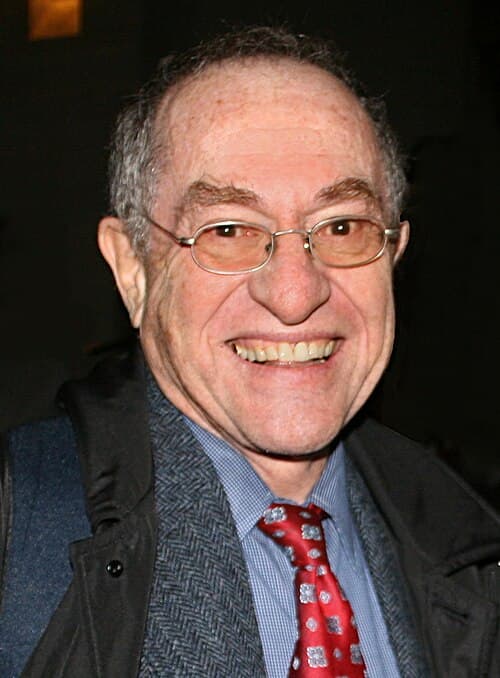
Alan Dershowitz
PERSON • 3 mentions
American lawyer, author, and art collector (born 1938)
AV
AUSA Villafafta
PERSON
Name reference in documents
BA
Bates
PERSON
Refers to Bates document numbering system, not a person
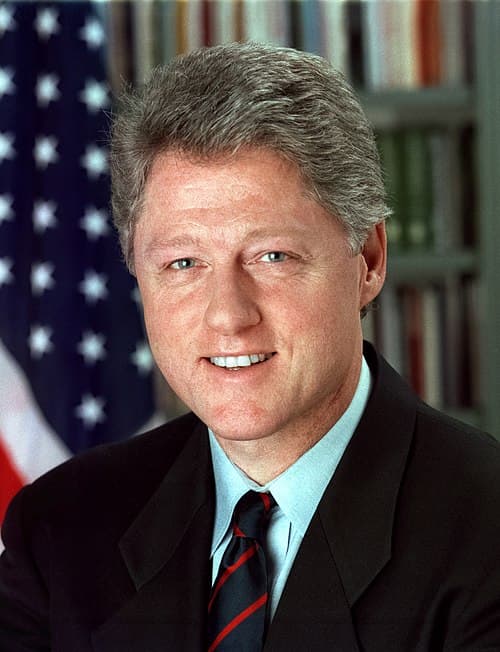
Bill Clinton
PERSON • 2 mentions
President of the United States from 1993 to 2001 (born 1946)
Blain
PERSON
Surname or name fragment in documents
Bradley Edwards
PERSON • 3 mentions
American attorney who represented Epstein victims, author of Relentless Pursuit
BR
Bruce E. Reinhart
PERSON
Federal magistrate judge in Southern District of Florida, presided over Epstein case proceedings

Courtney Love
PERSON
American rock musician and actress (born 1964)
CW
Courtney Wild
PERSON • 2 mentions
American victim/survivor of Jeffrey Epstein who led legal battle for victims' rights
FR
Frankenhauser
PERSON
Surname or name fragment in documents
Guy Lewis
PERSON
American basketball player and coach (1922-2015)
JG
Jack Goldberger
PERSON • 3 mentions
American criminal defense attorney who represented Jeffrey Epstein, partner at Goldberger Weiss P.A. in West Palm Beach, Florida
JD
Jane Doe
PERSON
Pseudonym for anonymous victims/witnesses in Epstein legal proceedings
JA
Jason
PERSON
First name reference to multiple individuals in Epstein documents
Jay Howell
PERSON
American attorney, Jay Howell & Associates, Jacksonville, FL
Jay Lefkowitz
PERSON • 3 mentions
American lawyer
JE
Jefer
PERSON
Name reference in documents

Jeffrey Epstein
PERSON • 6 mentions
American sex offender and financier (1953–2019)
KA
K. Atkinson
PERSON
Name reference in documents

K. Starr
PERSON
Person referenced in documents
Karen Atkinson
PERSON • 2 mentions
Person referenced in Epstein-related documents
Ken Starr
PERSON • 2 mentions
American judge and educational administrator (1946–2022)
Kenneth Marra
PERSON
American judge
Meg Garvin
PERSON • 2 mentions
Person referenced in documents
ME
Menchal
PERSON
Surname or name fragment in documents
Paul Cassell
PERSON • 3 mentions
United States federal judge

Prince Andrew
PERSON • 2 mentions
Third child of Queen Elizabeth II and Prince Philip, Duke of Edinburgh (born 1960)

Reinhart
PERSON • 2 mentions
Refers to Bruce Reinhart, former federal prosecutor who became Palm Beach County judge in Epstein case
RI
Rizzo
PERSON
Surname reference in documents
RA
Robin C. Ashton
PERSON
Person referenced in documents
S.
S.R.
PERSON
NER artifact: Initials S.R. extracted from academic citations and legal document references

Scarlett Johansson
PERSON
American actress (born 1984)
WA
Wifredo A.
PERSON
Person referenced in documents
ZA
ZOlapoci aSld
PERSON
Name reference in documents
A. M
ORGANIZATION
Organization referenced in documents
Admissions
ORGANIZATION
Organization referenced in documents
Am.=
ORGANIZATION
Organization referenced in documents
Assistant State Attorneys
ORGANIZATION
Organization referenced in documents
Atterbury
ORGANIZATION
Location or entity referenced in documents
AUSA Villafafia
ORGANIZATION
Organization referenced in documents
Box No.
ORGANIZATION
Organization referenced in documents
Brad Edwards & Associates
ORGANIZATION
Law firm founded by Bradley Edwards
Community Control I
ORGANIZATION
Organization referenced in documents
Department of Justice
ORGANIZATION • 4 mentions
United States Department of Justice, federal executive department responsible for law enforcement
Federal Court
ORGANIZATION
Current federal Canadian trial court
FLSD Docket
ORGANIZATION
Federal court docket reference
Goldberger & Weiss
ORGANIZATION
Law firm based in Florida
IAXXXMB
ORGANIZATION
Organization referenced in documents
Infirsis
ORGANIZATION
Organization referenced in documents
IThrotureett ea€2132EaritedaticRIBISDOkeket87126120a016Payagb
ORGANIZATION
Organization referenced in documents
MCFM6
ORGANIZATION
Organization referenced in documents
Office for the Southern District of Florida
ORGANIZATION
U.S. Attorney office for the Southern District of Florida

Palm Beach Police Department
ORGANIZATION
Police agency
Rase Muff
ORGANIZATION
Organization referenced in documents
State Court
ORGANIZATION
State court
Suppl
ORGANIZATION
Organization referenced in documents
the Federal Rules of Civil
ORGANIZATION
Organization referenced in documents
the Lewis & Clark College of Law
ORGANIZATION
Organization referenced in documents
the Southern Districdt
ORGANIZATION
Organization referenced in documents
the University of Utah College of Law
ORGANIZATION
Organization referenced in documents
U.S. Department
ORGANIZATION
U.S. Department (incomplete reference to a federal department)
Broward
LOCATION
County in southeastern Florida
Broward County
LOCATION
County in Florida, United States

Miami-Dade
LOCATION
City in Miami-Dade County, Florida, United States

Oregon
LOCATION
State of the United States of America

Poland
LOCATION
Country in Central Europe
the Middle District
LOCATION
Federal judicial district
the Southern District
LOCATION
Federal judicial district in New York City

United States
LOCATION • 3 mentions
Country located primarily in North America
YLbcdf
LOCATION
Location referenced in documents
Statistics
Pages:42
Entities:71
Sponsored