EFTA00193199_email_180
Document Information
Bates Range
EFTA00193199_email_180
Pages
1
Original Filename
EFTA00193199.pdf (email 180: RE: Jane Doe Hearing)
Document Content
Page 1 - EFTA00193199_228
Villafana, Ann Marie C. (USAFLS) From: Villafana, Ann Marie C. (USAFLS) Sent: Friday, July 11, 2008 3:04 PM To: Lee, Dexter (USAFLS) Subject: RE: Jane Doe Hearing Hi Dexter — I really think you should be on this call with Jack Goldberger, if you feel a response is required. A. Marie Villafana Assistant U.S. Attorney 561 209-1047 From: Lee, Dexter (USAFLS) Sent: Friday, July 11, 2008 2:33 PM To: Herd, Kim (USAEO); Neal, Kristina (USAEO); Acosta, Alex (USAFLS); Sloman, Jeff (USAFLS) Cc: Villafana, Ann Marie C. (USAFLS); Jacobus, Wendy (USAFLS) Subject: Jane Doe Hearing Colleagues, The hearing this morning lasted 45 minutes. Judge Marra first heard argument from Brad Edwards, who harangued the government for permitting Epstein to get off with a light sentence in state court. He argued that the victims were entitled to be consulted before this agreement was reached, and the court should set the agreement aside. Edwards again argued that the rights in section 3771(a) accrue prior to the filing of any charges. In my portion of the argument, I advised the court of the status of Epstein's state case: (1) he entered pleas of guilty to two state charges on June 30, 2008; (2) he was sentenced to 18 months' incarceration and 1 year of community control; and (3) he was serving his sentence of incarceration. The court queried me on the Dean case and the government's position on when the rights in section 3371(a) applied. I distinguished Dean and argued that rights under 3771(a) does not accrue until a charge is filing in district court. I noted that the A/G's guidelines are applied with common sense, such that a victim claiming they were being threatened by a perpetrator would not be turned away since an indictment had not been returned. I also argued that 18 U.S.C. 3771 did not grant authority to the court to set aside the agreement in the instant case, since it was not a plea agreement filed with court, which it had the discretion to accept or reject. The court had questions regarding the completion of the agreement in September 20O7, but the plea was not entered until June 3O, 2008. I advised the court that Epstein's attorneys sought higher review of the agreement within the DOJ. As to the motion to seal the government's response, the court asked if that was necessary any more, since a public hearing had been held and much of what was filed had been discussed. I argued that the government had two bases for sealing: (1) protection of the privacy of the minor victims; and (2) confidentiality of negotiations with Epstein's attorneys and the confidentiality clause in the Agreement. Edwards waived any protection for his clients, two of whom were present in court (C.W. and T.M.) As to the confidentiality, the court found that the discussions regarding the potential impeachment of the victims because of the availability of relief under 18 U.S.C. 2255 had already been discussed at the hearing. I argued that the exact clause in the agreement pertaining to section 2255 had been cited in the notification letters to C.W. and S.R., which were filed, and the government had agreed to notify Epstein before making any disclosure. The court stated that the disclosure was being done pursuant to its order, not by the government's action. I told the court the government wanted to register its objection. 520 EFTA00193426
Entities Mentioned
A. Marie Villafana
PERSON • 2 mentions
Former Assistant U.S. Attorney, lead federal prosecutor in the 2008 Epstein case
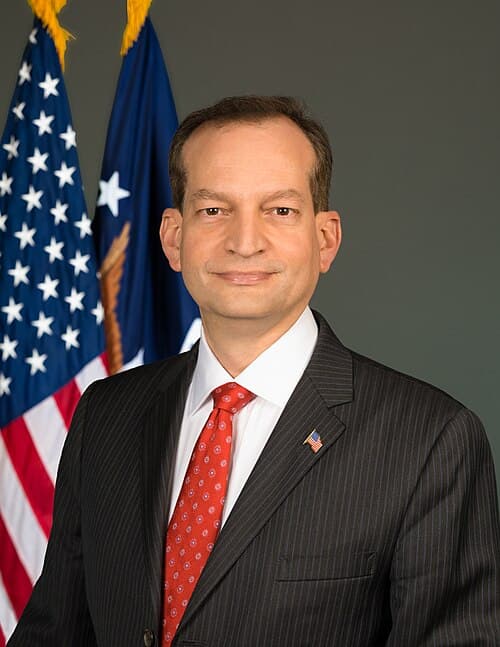
Alexander Acosta
PERSON
American attorney and politician, 27th U.S. Secretary of Labor (born 1969)
Bradley Edwards
PERSON • 2 mentions
American attorney who represented Epstein victims, author of Relentless Pursuit

C.W.
PERSON
NER artifact: Initials C.W.

Dexter Lee
PERSON
Assistant U.S. Attorney who argued for keeping Epstein non-prosecution agreement sealed

George W. Bush
PERSON
President of the United States from 2001 to 2009
JG
Jack Goldberger
PERSON • 2 mentions
American criminal defense attorney who represented Jeffrey Epstein, partner at Goldberger Weiss P.A. in West Palm Beach, Florida
JD
Jane Doe
PERSON
Pseudonym for anonymous victims/witnesses in Epstein legal proceedings

Jeffrey Epstein
PERSON
American sex offender and financier (1953–2019)
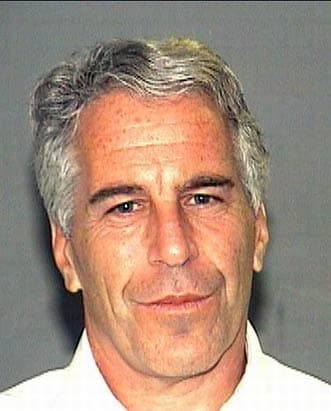
Jeffrey Sloman
PERSON
Federal prosecutor, referenced in Epstein case legal proceedings
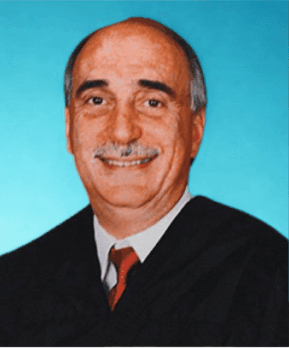
Kenneth Marra
PERSON • 2 mentions
American judge
KR
Kristina
PERSON
First name reference to multiple individuals in Epstein-related documents
S.
S.R.
PERSON
NER artifact: Initials S.R. extracted from academic citations and legal document references
T.
T.M.
PERSON
NER artifact: Initials or abbreviation T.M.
Wendy
PERSON
First name reference to multiple individuals including Wendy (Zorro Ranch staff), Wendy Jacobus (USAFLS), and Wendy Dulman (attorney)
Jacobus
ORGANIZATION
Entity referenced in documents
Statistics
Pages:1
Entities:16
Sponsored