EFTA00026750 - EFTA00026768
Document EFTA00026750 is a letter from the U.S. Attorney's Office for the Southern District of New York to Judge Alison J. Nathan regarding a protective order in the case of United States v. Ghislaine Maxwell.
The document outlines the Government's position on a proposed protective order in the Ghislaine Maxwell case, specifically addressing the defendant's request to publicly name and identify victims. It details disagreements between the government and defense counsel regarding inclusions in the protective order and argues for the protection of victims' identities based on privacy interests and established law. The letter includes references to the defendant's letter and the Government's proposed order, highlighting the points of contention between the parties.
Key Highlights
- •Disagreement between the Government and defense counsel regarding the protective order in the Ghislaine Maxwell case.
- •The Government seeks to protect the identities of victims, while the defense wants to publicly name them.
- •Alison J. Nathan is the judge presiding over the case.
- •The U.S. Attorney's Office is involved in the case.
Frequently Asked Questions
Books for Further Reading
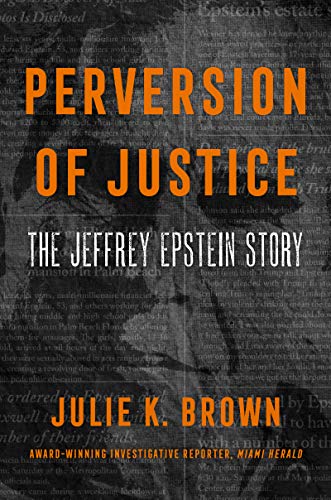
Perversion of Justice: The Jeffrey Epstein Story
Julie K. Brown
Investigative journalism that broke the Epstein case open

Filthy Rich: The Jeffrey Epstein Story
James Patterson
Bestselling account of Epstein's crimes and network

Relentless Pursuit: My Fight for the Victims of Jeffrey Epstein
Bradley J. Edwards
Victims' attorney's firsthand account
Document Information
Bates Range
EFTA00026750 - EFTA00026768
Pages
19
Document Content
Page 1 - EFTA00026750
Case 1:20-cr-00330-AJN Document 33 Filed 07/28/20 Page 1 of 7 U.S. Department of Justice United States Attorney Southern District of New York The Silvio J. Mao Building One Saint Andrew's Plaza New York. New York 10007 July 28, 2020 VIA ECF The Honorable Alison J. Nathan United States District Court Southern District of New York United States Courthouse 40 Foley Square New York, New York 10007 Re: United States v. Gleislaine Maxwell, 20 Cr. 330 (AJN) Dear Judge Nathan: The Government respectfully submits this letter with respect to the protective order to be entered in the above-captioned case, and to respond to the defendant's letter and submission of July 27, 2020 (the "Defendant Letter" or "Def. Ltr.") (Dkt. 29). The Government and defense counsel have conferred regarding a protective order several times via telephone and email between July 9, 2020, and today, including as recently as this morning. The Government and defense counsel have come to an agreement on much of the proposed protective order. However, the parties disagree as to two inclusions sought by the defendant which the Government objects to and for which, as detailed herein, the Government submits there is no legal basis. Accordingly, the Government respectfully requests that the Court enter its proposed protective order (the "Government Proposed Order"), which is attached hereto as Exhibit A, and which differs from the defendant's proposed order in those two respects, as further described below. A. The Defendant's Request to be Permitted to Publicly Name and Identify Victims As detailed herein, the Government seeks to protect the identities of victims, consistent with their significant privacy interests and the well-established law in this Circuit, and proposes a protective order consistent with those very significant interests. In contrast, the defendant insists that the protective order be modified such that she and her counsel would be permitted to "publicly referenc[e]" individuals, by name, who have "spoken on the public record to the media or in public fora, or in litigation — criminal or otherwise — relating to Jeffrey Epstein or Ghislaine Maxwell."' I Specifically, the defendant's proposed protective order differs from the Government's in that it adds a sentence, in its paragraph 6 (which is paragraph 5 of the Government Proposed Order), stating the following: "Nor does this Order prohibit Defense Counsel from publicly referencing individuals who have spoken on the record to the media or in public fora, or in litigation — criminal or otherwise — relating to Jeffrey Epstein or Ghislaine Maxwell." The defendant also either adds EFTA00026750
Page 2 - EFTA00026751
Case 1:20-cr-00330-AJN Document 33 Filed 07/28/20 Page 2 of 7 The Honorable Alison J. Nathan July 28, 2020 Page 2 The defendant's demand that she and her counsel be permitted to name any individuals who have ever publicly identified themselves as a victim of either Epstein or the defendant in any "public fora," and at any time, without limitation, is extraordinarily broad, unnecessary, and inappropriate, and should be denied. As an initial matter, there can be no serious question that there are significant privacy and victim interests at issue here, which the Government Proposed Order seeks to protect. Particularly in the context of victim witnesses, there are compelling reasons to limit public disclosure of victim identities and other sensitive information. Indeed, the Crime Victims' Rights Act, 18 U.S.C. § 3771, requires district courts to implement procedures to ensure that crime victims are accorded, among other rights, "[t]he right to be reasonably protected from the accused," in addition to "[t]he right to be treated with fairness and with respect for the victim's dignity and privacy." Id. §§ (a)(1), (a)(8) (emphasis added). Moreover, "the public generally has a strong interest in protecting the identities of .. . victims so that other victims will not be deterred from reporting such crimes." United States v. Paris, 2007 WL 1484974, at *2 (D. Conn. May 18, 2007). Moreover, and consistent with those interests, courts in this Circuit have routinely acknowledged the need to protect victim-witness identities. See, e.g., United States v. Corley, 13 Cr. 48 (AJN), 2016 WL 9022508, at *4 (S.D.N.Y. Jan. 15, 2016) ("Because Corley's minor victims have significant privacy and safety interests at stake, while Corley's interests are minimal, the Court finds good cause to modify the protective order in this case to prevent Corley from learning the surnames of the minor victims."); United States v. Kelly, 07 Cr. 374 (SJ), 2008 WL 5068820, at *2 (E.D.N.Y. July 10, 2008) ("Given the potentially explicit nature of the government witnesses' expected testimony, the government argues that it is necessary to conceal their identity to protect them from public humiliation and embarrassment. This Court agrees. Thus, the parties [. . .] are hereby prohibited from releasing to anyone, including members of the press, the identity or any identifying information of the government's witnesses."). It is similarly routine in this District for parties in a criminal case to refer to witnesses by pseudonyms (such as "Victim-I" or "Witness-1") to protect the privacy interests of third parties unless and until they testify publicly. The Government's proposed order endeavors to protect those interests by generally requiring the parties to abstain from identifying any victim by name in any public statement or filing while also ensuring that the defendant and her counsel are fully able to prepare for trial. Indeed, to facilitate the defendant's investigation and preparation for trial, the Government's proposal makes clear that defense counsel and defense staff, including defense investigators, should not be prohibited from referencing identities of individuals in conversations with prospective witnesses, so long as those witnesses and their counsel abstain from further disclosing or disseminating any such identities. See Government Proposed Order ¶ 5. The terms of the Government's proposed order also would permit defense counsel to refer to any individual by name in any filing under seal, merely requiring redaction of identifying information or the use of a pseudonym in public filings. The Government further proposes that defense counsel not be prohibited from publicly referencing individuals who have spoken—or who at some future time or deletes language in furtherance of its desire to publicly reference victim identities in defense paragraphs 7, 9, and 17 (which are Government Proposed Order paragraphs 6, 7, and 16). EFTA00026751
Page 3 - EFTA00026752
Case 1:20-cr-00330-AJN Document 33 Filed 07/28/20 Page 3 of 7 The Honorable Alison J. Nathan July 28, 2020 Page 3 speak—by name on the public record in this case, as one victim has already chosen to do, because those victims, and only those victims, have affirmatively chosen to be publicly identified in connection with this case. These proposals are reasonable, narrowly tailored, and not broader than necessary to protect victims' privacy interests, safety, and well-being, to avoid potential harassment of witnesses by the press and others, and to prevent undue embarrassment and other adverse consequences. At this stage in the case, permitting defense counsel to refer to witnesses by name in sealed filings, to refer to witnesses by name in the course of private conversations during their investigation, and to refer by name to individuals who have made the affirmative choice to be identified by name in connection with this criminal case is more than enough to enable the defendant ability to vigorously pursue her defense. The defendant has rejected this proposal because, as noted above, she believes that she and her counsel should be permitted to "publicly referenc[e]" individuals, by name, who have "spoken on the public record to the media or in public fora, or in litigation — criminal or otherwise — relating to Jeffrey Epstein or Ghislaine Maxwell." In support of the defendant's application for such sweeping ability to publicly name any such individuals, defense counsel provides only the conclusory assertion that an inability to publicly reference the names of victims, in court proceedings and beyond, will hinder their ability to investigate, prepare witnesses for trial, and advocate on the defendant's behalf. The Government has repeatedly asked defense counsel to explain how or why it would need to publicly name victims of sexual abuse to prepare for trial, and the defense repeatedly has declined to do so, presumably because the argument borders on the absurd.2 The Government's proposed protective order would do no such thing. As described above, the Government's proposed order would permit defense counsel and defense staff to reference the identities of individuals they believe may be relevant to the defense to potential witnesses and their counsel (who then would be prohibited from further disclosing or disseminating such identifying information). Government Proposed Order ¶ 5. It would further permit the defendant to publicly identify individuals who have chosen to speak on the record on this case. Id. ¶ 6. And it would permit the defendant to reference identifying information in filings made under seal. See id. 2 Despite the Government's requests for clarity on the need for the defendant's requested modification, the sole additional reason provided by defense counsel for why it would be appropriate or necessary to publicly name victims is that certain of these victims have obtained what defense counsel described as the "benefit" of publicly identifying themselves as victims (and thus, as the defendant presumably would have it, deserve whatever public identification and scrutiny the defendant intends to invite upon them). Beyond the offensive notion that victims of sexual abuse experience a "benefit" by making the incredibly difficult decision to share their experience publicly, the suggestion that victims who receive this supposed "benefit" should receive fewer protections than the law ordinarily offers to victims in criminal cases is alarming. Permitting defense counsel to publicly identify witnesses who have not identified themselves on the record in this case risks subjecting witnesses to harassment and intimidation, with no conceivable benefit to the defense other than perhaps discouraging witnesses from cooperating with the Government. EFTA00026752
Sponsored
Page 4 - EFTA00026753
Case 1:20-cr-00330-AJN Document 33 Filed 07/28/20 Page 4 of 7 The Honorable Alison J. Nathan July 28, 2020 Page 4 Moreover, the defendant is able, at any time, to apply to the Court for a modification of the protective order should she be able to identify a particularized need to publicly name victims who have not yet identified themselves on the record in this case—as opposed to redacting their names from court filings, or referring to them in an anonymized fashion. As noted, to date, defense counsel has declined to identify to the Court or to the Government any example of why doing so would be necessary or helpful to the defense, or even under what circumstances the defense might want to do so. The defendant's proposal is also extraordinarily broad, and without any temporal or subject matter limitation as to the phrase "public fora." Adopting the defendant's proposal would mean that any individual who has ever self-identified as a victim ofJeffrey Epstein or Ghislaine Maxwell publicly in any capacity would be subject to public identification by the defendant and her counsel in connection with this case. This would include, as hypothetical examples, someone who spoke to a journalist for a local story in 1997, or posted on a MySpace page followed by a handful of friends in 2005, or made a statement on a small podcast in 2009, or posted on Twitter to a handful of followers in 2013. But none of these examples of ventures into the "public fora" can possibly be construed as efforts by hypothetical victims to consent or choose "to self-identify," Def. Ltr. at 3, in a future criminal case against Ghislaine Maxwell subject to extraordinary public attention and scrutiny. Additionally, while some individuals have identified themselves as victims without providing any details or additional information about their abuse, the defense contemplates no limitation of publicly associating those individuals with the details of their abuse in public defense statements or filings. In essence, the defendant's proposal seeks authorization to drag into the public glare any victim who has ever made any type of public statement of victimization—no matter how long ago or how brief—without that victim's knowing consent and without any substantive justification. That is particularly troubling given that the Government expects to make productions of discovery and 3500 materials well surpassing its obligations. Those productions will necessarily include the identities of individuals whom the Government does not expect to call as witnesses, and whose accounts—much less identities—will have no bearing on this case. But the defendant's proposal would allow her and her counsel to publicly name them in any public statement or filing at their sole discretion. This is plainly unnecessary for any investigative steps or trial preparation, would be grossly inappropriate and unfair, and would be inconsistent with the Crime Victims' Rights Act. Conversely, the Government's submission proposes that the defendant and her counsel not be precluded from discussing publicly individuals who identify themselves on the record in this criminal prosecution, because any such individuals will have made a conscious and informed choice to be associated publicly with this case. See Government Proposed Order¶¶ 5, 6, 8. The identity of any other individuals should be protected from public broadcast by the defendant and her counsel. The defendant argues that her proposed language is "nearly identical in all material respects" to the protective order entered in United States v. Epstein, 19 Cr. 490 (RMB) (Dkt. 38). Def. Ltr. at 3. In the first instance, that is false. The protective order in the Epstein case included EFTA00026753
Page 5 - EFTA00026754
Case 1:20-cr-00330-AJN Document 33 Filed 07/28/20 Page 5 of 7 The Honorable Alison J. Nathan July 28, 2020 Page 5 a provision stating that it did not prohibit defense counsel from publicly referencing individuals who had spoken on the public record in litigation relating to Jeffrey Epstein. Id. ¶ 4. Here, defense counsel seeks permission to publicly identify any individuals who have self-identified as victims of either the defendant or Epstein "to the media or in public fora, or in litigation"—a vastly broader allowance. Indeed, as a comparison, none of the hypothetical examples described above would have been subject to public naming and identification under the Epstein protective order, but every single one would be under the defendant's proposed order in this case. Additionally, beyond the differences in the language itself, there are two significant differences between the circumstances of the Epstein prosecution and this case. First, at the time the Epstein protective order was entered, there were exceptionally few victims who had identified themselves by name in litigation. Accordingly, the practical application of that provision was extremely limited. Second, and related, in the time between when the Epstein protective order was entered and the indictment in this case, many more victims have made public statements about their victimization at the hands of Epstein, and the defendant, on their own terms and in their own ways, including by exercising their rights under the Crime Victims' Rights Act in the context of the dismissal of the indictment against Jeffrey Epstein following his suicide. Those victims could not possibly have predicted, much less chosen, that their names would be publicly broadcast by defense counsel in connection with a subsequent criminal case. Victims should be able to continue to come forward, in the ways and in the venues they themselves choose, without fear of reprisal, shaming, or other consequence arising from having their identities broadcast by defense counsel in this case. In sum, the requested modification to the Government's proposed order sought by the defendant is contrary to precedent and the compelling privacy interests of victims. Moreover, it is without basis in fact or law, and, despite the Government's repeated requests for clarity, the defendant and defense counsel have offered no legitimate reason for their desire to be able to publicly identify any number of victims, in the context of this criminal case and elsewhere, other than a minimal, conclusory statement, without factual examples or legal support.; At bottom, the defendant and her counsel seek an unlimited ability to name victims and witnesses publicly, for no discernible reason, and without justification or legal basis. The victims of Ghislaine Maxwell and Jeffrey Epstein have suffered enough, and the Crime Victims' Rights Act, applicable law, and common decency compel far more protection of their privacy interests here than the defense proposal would afford. B. The Defendant's Demand that the Government Restrict Use of its Own Documents The defendant and her counsel also ask the Court to impose restrictions upon the Government in its use, through potential witnesses and their counsel, of documents it currently possesses, beyond the already-extensive restrictions and protections applicable to the 3 To the extent defense counsel attempts to provide such examples or arguments for the first time in a reply filing, the Government respectfully requests leave to reply to those examples or arguments. EFTA00026754
Page 6 - EFTA00026755
Case 1:20-cr-00330-AJN Document 33 Filed 07/28/20 Page 6 of 7 The Honorable Alison J. Nathan July 28, 2020 Page 6 Govenunent.4 The defendant cites not a single example in any district court in the country where such a restriction has been imposed in a protective order. Indeed, it is nonsensical for a protective order to require limitations of the Government in its use of material already in its possession so that the Government may provide a defendant with discovery. The defendant's attempt to refuse to agree to receive discovery unless the Government agrees to additional restrictions upon the use of its own materials should be rejected. As an initial matter, the Government's use of materials it has gathered through its investigation, including through the grand jury process, search warrants, interviews, and voluntary disclosures, is already subject to a wide range of restrictions, including Rule 6(e) of the Federal Rules of Criminal Procedure, the Privacy Act of 1974, and other policies of the Department of Justice and the U.S. Attorney's Office for the Southern District of New York. In this case, consistent with the Government's customary practice, and as the Government has informed defense counsel, the Government has no intention of providing witnesses, victims or their counsel with the entirety of discovery produced to the defendant, nor anything even close to that. Indeed, consistent with its standard practice, the Government rarely provides any third party, including a witness, with any material they did not already possess. While the Government does more commonly show a witness materials in connection with proffers or trial preparation, the Government rarely if ever shows a witness material she has not already seen, does not have personal knowledge of, or would not have some specific reason to opine upon. Practically speaking, therefore, the concerns defense counsel raises about future use in civil litigation are not likely to occur. Nevertheless, a criminal protective order is not the appropriate forum for the defendant to demand restrictions on the Government's use of its own materials. To the contrary, as noted above, many of those restrictions are already established by rule and law—standards the defendant makes no suggestion the Government has failed to adhere to in this case. Moreover, the Government as a whole, including those beyond the prosecutors on this case, may have obligations that would conflict with such language in a protective order. For example, the Government has obligations under various statutory and regulatory regimes, including but not limited to the Freedom of Information Act and Touhy v. Ragen, 340 U.S. 462 (1951), that cannot be bargained away through a protective order. Indeed, the Government can represent that the Department of Justice has received both FOIA and Touhy requests in connection with this investigation, requests to which the Department has a legal obligation to respond appropriately. The Government respectfully submits it would be inappropriate for the defendant to seek—or the Court to order—language in a protective order that conflicts with or supersedes those obligations. Tellingly, the defendant cites no authority or precedent for her request regarding this issue. By contrast, to the extent the defendant intends to produce reciprocal discovery to the Government, it may in that case be appropriate to limit the Government's use, or third parties' use, Specifically, the defendant's proposed protective order differs from the Government's in that it adds a paragraph, its paragraph 3, proposing restrictions upon the Government and its potential witnesses, and their counsel, as well as adding language to its paragraph 5, which is Government paragraph 4, further restricting potential government witnesses and their counsel. EFTA00026755
Sponsored
Page 7 - EFTA00026756
Case 1:20-cr-00330-AJN Document 33 Filed 07/28/20 Page 7 of 7 The Honorable Alison J. Nathan July 28, 2020 Page 7 of such materials provided by the defendant to the Government. But there is no basis to add additional restrictions upon the Government's use of materials gathered by the Government itself. The defendant's only counter-argument, as noted—that this Court should put third parties "on equal footing with the defense"—is both unlikely to be relevant given the Government's standard practice, as described above, and, the Government submits, an irrelevant consideration in the context of a criminal protective order. Indeed, the Government respectfully submits that neither it nor this Court is well-positioned to, or should, become the arbiter of what is appropriate or permissible in civil cases. In sum, the defendant's attempt to restrict the Government and to restrict third parties in this way appears to be unprecedented, and is without legal basis, and should be denied. Accordingly, for the reasons set forth above, the Court should enter the Government's proposed protective order, which is enclosed, and deny the defendant's motion. Respectfully submitted, By: Alex Rossmiller / Alison Moe / Maurene Comey Assistant United States Attorneys Southern District of New York Tel: (212) 637-2415 REY STRAUSS ng United States Attorney Cc: All counsel of record (via ECF) EFTA00026756
Page 8 - EFTA00026757
Case 1:20-cr-00330-AJN Document 33-1 Filed 07/28/20 Page 1 of 12 UNITED STATES DISTRICT COURT SOUTHERN DISTRICT OF NEW YORK x UNITED STATES OF AMERICA GHISLAINE MAXWELL, Defendant. PROPOSED] PROTECTIVE ORDER 20 Cr. 330 (AJN) x ALISON J. NATHAN, United States District Judge: WHEREAS the Government intends to produce to GHISLAINE MAXWELL, the defendant, certain documents and materials that (i) affect the privacy and confidentiality of individuals, (ii) would impede, if prematurely disclosed, the Government's ongoing investigation; (iii) would risk prejudicial pretrial publicity if publicly disseminated, and (iv) is not authorized to be disclosed to the public or disclosed beyond that which is necessary for the defense of this action, and other materials pursuant to Federal Rule of Criminal Procedure 16 ("Rule 16") and pursuant to any other disclosure obligations (collectively, the "Discovery"), which contain sensitive, confidential, or personal identifying information; WHEREAS, the Government seeks to protect sensitive, confidential, or personal identifying information contained in the materials it produces consistent with Rule 16 or other disclosure obligations; 1 EFTA00026757
Page 9 - EFTA00026758
Case 1:20-cr-00330-AJN Document 33-1 Filed 07/28/20 Page 2 of 12 WHEREAS the Government has applied for the entry of this Order; IT HEREBY IS ORDERED: 1. The Discovery disclosed to the defendant ("Defendant") and/or to the defendant's criminal defense attorneys ("Defense Counsel") during the course of proceedings in this action: a) Shall be used by the Defendant or her Defense Counsel solely for purposes of the defense of this criminal action, and not for any civil proceeding or any purpose other than the defense of this action; b) Shall not be copied or otherwise recorded or transmitted by the Defendant, except to Defense Counsel, or except as necessary for the Defendant to take notes, which are not to be further transmitted to anyone other than Defense Counsel; c) Shall not be disclosed or distributed in any form by the Defendant or her counsel except as set forth in paragraph 1(d) below; d) May be disclosed only by Defense Counsel and only to the following persons ("Designated Persons"): i. investigative, secretarial, clerical, or paralegal personnel employed full-time, part-time, or as 2 EFTA00026758
Sponsored
Page 10 - EFTA00026759
Case 1:20-cr-00330-AJN Document 33-1 Filed 07/28/20 Page 3 of 12 independent contractors by the defendant's counsel ("Defense Staff"); ii. any expert or potential expert, legal advisor, consultant, or any other individual retained or employed by the Defendant and Defense Counsel for the purpose of assisting in the defense of this case ("Defense Experts/Advisors"); iii. such other persons as hereafter may be authorized by Order of the Court ("Other Authorized Persons"); e) May be provided to prospective witnesses and their counsel (collectively, "Potential Defense Witnesses"), to the extent deemed necessary by defense counsel, for trial preparation. To the extent Discovery materials are disclosed to Potential Defense Witnesses, they agree that any such materials will not be further copied, distributed, or otherwise transmitted to individuals other than the recipient Potential Defense Witnesses. 2. The Defendant and Defense Counsel shall provide a copy of this Order to any Designated Persons to whom they disclose Discovery materials. Prior to disclosure of Discovery materials to Designated Persons, any such Designated Person shall agree to be subject to the terms of this Order by signing a copy hereof and stating that they "Agree to be bound by the terms herein," and providing such copy to Defense Counsel. All 3 EFTA00026759
Page 11 - EFTA00026760
Case 1:20-cr-00330-AJN Document 33-1 Filed 07/28/20 Page 4 of 12 such acknowledgments shall be retained by Defense Counsel and shall be subject to in camera review by the Court if good cause for review is demonstrated. The Defendant and her counsel need not obtain signatures from any member of the defense team (i.e., attorneys, experts, consultants, paralegals, investigators, support personnel, and secretarial staff involved in the representation of the defendants in this case), all of whom are nonetheless bound by this Protective Order. 3. To the extent that Discovery is disseminated to Defense Experts/Advisors, Other Authorized Persons, or Potential Defense Witnesses, via means other than electronic mail, Defense Counsel shall encrypt and/or password protect the Discovery. 4. The Government, the Defendant, Defense Counsel, Defense Staff, Defense Experts/Advisors, Potential Defense Witnesses and their counsel, and Other Authorized Persons are prohibited from posting or causing to be posted any of the Discovery or information contained in the Discovery on the Internet, including any social media website or other publicly available medium. 5. The Government (other than in the discharge of their professional obligations in this matter), the Defendant, Defense Counsel, Defense Staff, Defense Experts/Advisors, Potential Defense Witnesses and their counsel, and Other Authorized Persons are strictly prohibited from publicly 4 EFTA00026760
Page 12 - EFTA00026761
Case 1:20-cr-00330-AJN Document 33-1 Filed 07/28/20 Page 5 of 12 disclosing or disseminating the identity of any victims or witnesses referenced in the Discovery. This Order does not prohibit Defense Counsel or Defense Staff from referencing the identities of individuals they believe may be relevant to the defense to Potential Defense Witnesses and their counsel during the course of the investigation and preparation of the defense case at trial. Any Potential Defense Witnesses and their counsel who are provided identifying information by Defense Counsel or Defense Staff are prohibited from further disclosing or disseminating such identifying information. This Order does not prohibit Defense Counsel from publicly referencing individuals who have spoken by name on the public record in this case. 6. The Defendant, Defense Counsel, Defense Staff, Defense Experts/Advisors, Potential Defense Witnesses, and Other Authorized Persons are prohibited from filing publicly as an attachment to a filing or excerpted within a filing the identity of any victims or witnesses referenced in the Discovery, who have not spoken by name on the public record in this case, unless authorized by the Government in writing or by Order of the Court. Any such filings must be filed under seal, unless authorized by the Government in writing or by Order of the Court. 5 EFTA00026761
Sponsored
Page 13 - EFTA00026762
Case 1:20-cr-00330-AJN Document 33-1 Filed 07/28/20 Page 6 of 12 7. Copies of Discovery or other materials produced by the Government in this action bearing "confidential" stamps, or designated as "confidential" as described below, and/or electronic Discovery materials designated as "confidential" by the Government, including such materials marked as "confidential" either on the documents or materials themselves, or designated as "confidential" in a folder or document title, are deemed "Confidential Information." The Government shall clearly mark all pages or electronic materials containing Confidential Information, or folder or document titles as necessary, with "confidential" designations. 8. Confidential Information may contain personal identification information of victims, witnesses, or other specific individuals who are not parties to this action, and other confidential information; as well as information that identifies, or could lead to the identification of, witnesses in this matter. The identity of an alleged victim or witness who has identified herself or himself publicly as such on the record in this case shall not be treated as Confidential Information. 9. Defense Counsel may, at any time, notify the Government that Defense Counsel does not concur in the designation of documents or other materials as Confidential Information. If the Government does not agree to de-designate such documents or materials, Defense Counsel may thereafter move 6 EFTA00026762
Page 14 - EFTA00026763
Case 1:20-cr-00330-AJN Document 33-1 Filed 07/28/20 Page 7 of 12 the Court for an Order de-designating such documents or materials. The Government's designation of such documents and materials as Confidential Information will be controlling absent contrary order of the Court. 10. Confidential Information disclosed to the defendant, or Defense Counsel, respectively, during the course of proceedings in this action: a) Shall be used by the Defendant or her Defense Counsel solely for purposes of the defense of this criminal action, and not for any civil proceeding or any purpose other than the defense of this action; b) Shall be maintained in a safe and secure manner; c) Shall be reviewed and possessed by the Defendant in hard copy solely in the presence of Defense Counsel; d) Shall be possessed in electronic format only by Defense Counsel and by appropriate officials of the Bureau of Prisons ("BOP"), who shall provide the defendant with electronic access to the Discovery, including Confidential Information, consistent with the rules and regulations of the BOP, for the Defendant's review; 7 EFTA00026763
Page 15 - EFTA00026764
Case 1:20-cr-00330-AJN Document 33-1 Filed 07/28/20 Page 8 of 12 e) Shall be reviewed by the Defendant solely in the presence of Defense Counsel or when provided access to Discovery materials in electronic format by BOP officials; f) May be disclosed only by Defense Counsel and only to Designated Persons; g) May be shown to, either in person, by videoconference, or via a read-only document review platform, but not disseminated to or provided copies of to, Potential Defense Witnesses, to the extent deemed necessary by Defense Counsel, for trial preparation, and after such individual(s) have read and signed this Order acknowledging that such individual(s) are bound by this Order. 11. Copies of Discovery or other materials produced by the Government in this action bearing "highly confidential" stamps or otherwise specifically designated as "highly confidential," and/or electronic Discovery materials designated as "highly confidential" by the Government, including such materials marked as "highly confidential" either on the documents or materials themselves, or designated as "highly confidential" in an index, folder title, or document title, are deemed "Highly Confidential Information." To the extent any Highly Confidential Information is physically produced to the Defendant and Defense Counsel, rather than being made available to the Defendant and Defense Counsel for on-site review, the 8 EFTA00026764
Sponsored
Page 16 - EFTA00026765
Case 1:20-cr-00330-AJN Document 33-1 Filed 07/28/20 Page 9 of 12 Government shall clearly mark all such pages or electronic materials containing Highly Confidential Information with "highly confidential" stamps on the documents or materials themselves. 12. Highly Confidential Information contains nude, partially-nude, or otherwise sexualized images, videos, or other depictions of individuals. 13. Defense Counsel may, at any time, notify the Government that Defense Counsel does not concur in the designation of documents or other materials as Highly Confidential Information. If the Government does not agree to de-designate such documents or materials, Defense Counsel may thereafter move the Court for an Order de-designating such documents or materials. The Government's designation of such documents and materials as Highly Confidential Information will be controlling absent contrary order of the Court. 14. Highly Confidential Information disclosed to Defense Counsel during the course of proceedings in this action: a) Shall be used by the Defendant or her Defense Counsel solely for purposes of the defense of this criminal action, and not for any civil proceeding or any purpose other than the defense of this action; 9 EFTA00026765
Page 17 - EFTA00026766
Case 1:20-cr-00330-AJN Document 33-1 Filed 07/28/20 Page 10 of 12 b) Shall not be disseminated, transmitted, or otherwise copied and provided to Defense Counsel or the Defendant; c) Shall be reviewed by the Defendant solely in the presence of Defense Counsel; d) Shall not be possessed outside the presence of Defense Counsel, or maintained, by the Defendant; e) Shall be made available for inspection by Defense Counsel and the Defendant, under the protection of law enforcement officers or employees; and f) Shall not be copied or otherwise duplicated by Defense Counsel or the Defendant during such inspections. 15. The Defendant, Defense Counsel, Defense Staff, Defense Experts/Advisors, Potential Defense Witnesses, and Other Authorized Persons are prohibited from filing publicly as an attachment to a filing or excerpted within a filing any Confidential Information or Highly Confidential Information referenced in the Discovery, unless authorized by the Government in writing or by Order of the Court. Any such filings must be filed under seal, unless authorized by the Government in writing or by Order of the Court. 16. The provisions of this Order shall not be construed as preventing disclosure of any information, with the exception of victim or witness identifying information, that is 10 EFTA00026766
Page 18 - EFTA00026767
Case 1:20-cr-00330-AJN Document 33-1 Filed 07/28/20 Page 11 of 12 publicly available or obtained by the Defendant or her Defense Counsel from a source other than the Government. 17. Except for Discovery that has been made part of the record of this case, Defense Counsel shall return to the Government or securely destroy or delete all Discovery, including but not limited to Confidential Information, within 30 days of the expiration of the period for direct appeal from any verdict in the above-captioned case; the period of direct appeal from any order dismissing any of the charges in the above- captioned case; the expiration of the period for a petition pursuant to 28 U.S.C. § 2255; any period of time required by the federal or state ethics rules applicable to any attorney of record in this case; or the granting of any motion made on behalf of the Government dismissing any charges in the above- captioned case, whichever date is later. 18. The foregoing provisions shall remain in effect unless and until either (a) the Government and Defense Counsel mutually agree in writing otherwise, or (b) this Order is modified by further order of the Court. 19. The Government and Defense Counsel agree to meet and confer in advance of any hearings or trial to discuss and agree to any modifications necessary for the presentation of evidence at those proceedings. In the absence of agreement, 11 EFTA00026767
Sponsored
Page 19 - EFTA00026768
Case 1:20-cr-00330-AJN Document 33-1 Filed 07/28/20 Page 12 of 12 Defense Counsel may make an appropriate application to the Court for any such modifications. SO ORDERED: Dated: New York, New York , 2020 HONORABLE ALISON J. NATHAN United States District Judge 12 EFTA00026768
Entities Mentioned
AR
Alex Rossmiller
PERSON
Person referenced in documents
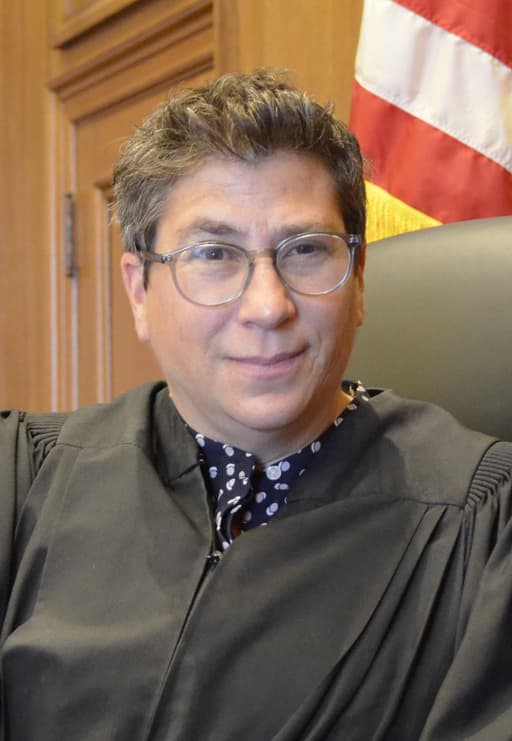
Alison J. Nathan
PERSON • 2 mentions
American federal judge who presided over the Ghislaine Maxwell criminal trial
AM
Alison Moe
PERSON
Person referenced in documents

Corley
PERSON • 2 mentions
Surname reference in Epstein-related documents
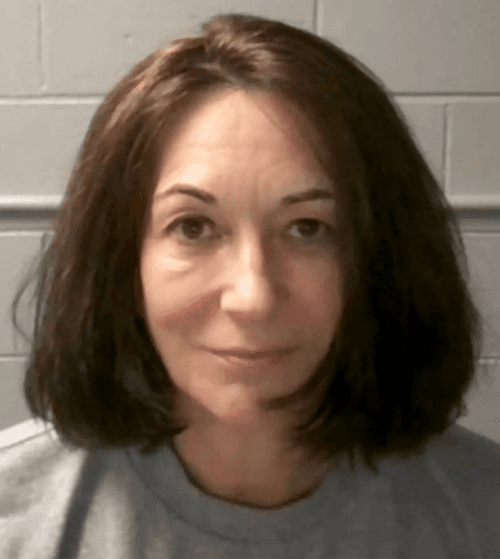
Ghislaine Maxwell
PERSON • 3 mentions
British socialite and sex trafficker, daughter of Robert Maxwell, accomplice of Jeffrey Epstein
James Comey
PERSON
American lawyer and 7th director of the Federal Bureau of Investigation (born 1960)
Jeffrey Epstein
PERSON • 3 mentions
American sex offender and financier (1953–2019)
Mao Zedong
PERSON
1st chairman of the Chinese Communist Party and founder of the People's Republic of China (1893–1976)
MC
Maurene Comey
PERSON
Person referenced in documents

Prince Andrew
PERSON
Third child of Queen Elizabeth II and Prince Philip, Duke of Edinburgh (born 1960)
Defense Counsel
ORGANIZATION
Organization referenced in documents
Department of Justice
ORGANIZATION
United States Department of Justice, federal executive department responsible for law enforcement
District Court for the Southern District of New York
ORGANIZATION
U.S. District Court for the Southern District of New York
D. Conn.
LOCATION
Location referenced in documents

the U.S. Attorney's Office
LOCATION
Location referenced in documents
Statistics
Pages:19
Entities:15
Avg. OCR:0.9%
Sponsored