EFTA00017109 - EFTA00017122
Document EFTA00017109 appears to be a court transcript from a hearing, likely related to legal proceedings involving prison conditions and housing arrangements.
The document contains a discussion in open court regarding a Curcio issue, the sealing of correspondence related to prison conditions and designation, and Mr. Tartaglione's housing situation. Attorneys and the judge discuss scheduling, redaction of documents, and requests to seal letters that have been docketed. The hearing took place after August 21st, based on a reference to a conference held on that date.
Key Highlights
- •Discussion of a Curcio issue and appointment of Ms. Sternheim as Curcio counsel.
- •Request to seal letters concerning prison conditions and designation.
- •Issue of Mr. Tartaglione's housing is addressed.
- •Government's request to seal letters that have been docketed.
Frequently Asked Questions
Books for Further Reading
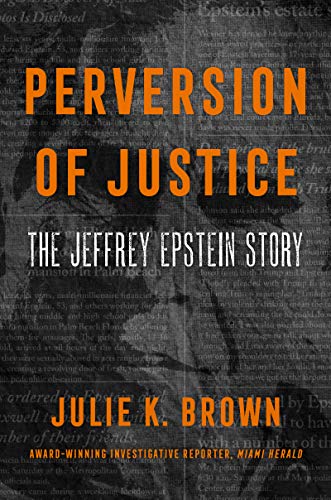
Perversion of Justice: The Jeffrey Epstein Story
Julie K. Brown
Investigative journalism that broke the Epstein case open

Filthy Rich: The Jeffrey Epstein Story
James Patterson
Bestselling account of Epstein's crimes and network

Relentless Pursuit: My Fight for the Victims of Jeffrey Epstein
Bradley J. Edwards
Victims' attorney's firsthand account
Document Information
Bates Range
EFTA00017109 - EFTA00017122
Pages
14
Document Content
Page 1 - EFTA00017109
1 1 2 3 4 5 6 7 8 9 10 11 12 13 14 15 16 17 18 19 20 21 22 23 24 25 (In open court) THE COURT: All right. So the first thing that I think we should address, sounds like it might be a brief conversation, is the Curcio issue I had alerted the government that there is -- a Curcio issue has arisen. I had appointed Ms. Sternheim to be Curcio counsel. She's here. MS. STERNHEIM: Yes. THE COURT: But my understanding -- Ms. Sternheim, you'll let me know if I'm wrong about this -- that we're not yet ready to address all the issues. I know you've been working diligently on it, but we're not quite done; is that right? MS. STERNHEIM: That is correct, Judge. And I can contact the parties and your Honor as to a schedule if that is helpful, but I do not have that in place. THE COURT: Okay. That's fine. That sounds like a good suggestion, and we can go from there. So I'll thank you again for taking on this assignment. I thank you for being here today and for the update. The next issue, I think it makes sense to address, is this question of sealing the correspondence with regard to prison conditions, prison designation and then I think we have to resolve the issue of Mr. Tartaglione's housing. So I've read all the letters. I don't know, Ms. if you want to add anything. EFTA00017109
Page 2 - EFTA00017110
2 1 2 3 4 5 6 7 8 9 10 11 12 13 14 15 16 17 18 19 20 21 22 23 24 25 MS. No, your Honor. I have nothing to add. We'll rest on our papers. THE COURT: Okay. And I take it that counsel for Mr. Tartaglione remain agnostic on this issue; is that right? MR. BARKET: Yes. THE COURT: Okay. All right. So what we're talking about here is the government's request to seal letters that have been docketed. There have been redacted versions filed, but we're talking about Docket Numbers 150 and 153. And the background of this is that back on August 21st there was a conference where we discussed, among other things, issues related to Mr. Tartaglione's housing in the MCC, and what I had asked the government to do is inquire about options for housing Mr. Tartaglione at either the MCC or MDC because those are the only two Bureau of Prisons facilities in the New York metropolitan area. Because it turns out that the other facilities, whether they were in Nassau County or here in Westchester County or in other counties, those are not federal facilities and those facilities either didn't have contracts with the Southern District Marshals, or otherwise had advised that they were not going to house Mr. Tartaglione. So the particular question was whether or not MDC would be willing to take Mr. Tartaglione back, and we had had a pretty fulsome discussion about the issues that had led to Mr. Tartaglione's EFTA00017110
Page 3 - EFTA00017111
3 1 2 3 4 5 6 7 8 9 10 11 12 13 14 15 16 17 18 19 20 21 22 23 24 25 transfer from MDC to MCC. The government followed up, as I had asked it to, with a letter dated August 23rd, and that's the letter, the first letter the government ask be placed under seal that addressed the issue about housing Mr. Tartaglione at MDC and MCC, and the government, as I said, asked that the letter be sealed. The Court, on August 26th, temporarily filed it under seal, but then asked the government to further explain its reasons for permanently sealing that letter. On August 28th, counsel for Mr. Tartaglione filed a letter which addressed the merits of the government's housing options as presented in the August 23rd letter and counsel had asked that that letter be filed under seal because it was responsive to the government's letter which had been filed under seal. On August 29th, the government filed a letter arguing that its August 23rd letter or at least a portion of it should ne filed under seal because it addressed Bureau of Prisons' reasoning for either why it was that certain things had been considered and certain steps that the Bureau of Prisons thought would be necessary to house Mr. Tartaglione, and also the government filed a letter stating that the August 28th letter should remain under seal, that is, counsel for Mr. Tartaglione. On September 5th, the New York Post and the New York Daily News filed a letter arguing for the unsealing of the EFTA00017111
Sponsored
Page 4 - EFTA00017112
4 1 2 3 4 5 6 7 8 9 10 11 12 13 14 15 16 17 18 19 20 21 22 23 24 25 letters. They were joined by the New York Times on September 10th. The government, as the Court had previously asked, had submitted a response to I guess the first letter from The Post and the Daily News explaining why and really reiterating its argument for sealing and that's when counsel for Mr. Tartaglione announced their agnosticism on the issue. So the question actually has a couple of layers to it. So the first question is whether or not the government's letters are considered judicial documents. And a judicial document is an item that is, "relevant to the performance of the judicial function and useful in the judicial process," and that's from the Second Circuit's decision in Bernstein v Bernstein Litowitz Berger & Grossmann LLP, 814 F.3d 132, 139, quoting from an earlier Second Circuit's decision in a case called Lugosch v Pyramid Company of Onondaga, 435 F.3d 110, 119. The mere filing, however, of anything, whether it's some kind of a document or a letter with the court by itself doesn't render such a document a judicial document. That's from the Second Circuit's decision in US versus Amodeo, 44 F.3d 141, 145. But if an item is a judicial document, then the public has a presumptive right of access to it under both the common law and the First Amendment. Also from Amodeo. The purpose of this right is to ensure that courts are held accountable and that the public has "confidence in the administration of EFTA00017112
Page 5 - EFTA00017113
5 1 2 3 4 5 6 7 8 9 10 11 12 13 14 15 16 17 18 19 20 21 22 23 24 25 justice." Also from Amodeo. Under the common law analysis, the Court is to determine the weight of the presumption of access. "Generally, the information will fall somewhere on a continuum from matters that directly affect an adjudication to matters that come within the court's purview solely to ensure their irrelevance." That's from the second Amodeo case, 731 F.3d at 1049. "Finally, after determining the weight of the presumption of access, the Court must 'balance competing considerations against it.'" Lugosch at page 120. Competing considerations include both "the danger of impairing law enforcement or judicial efficiency," or "the privacy of interests of those resisting disclosure." The first Amendment analysis requires two different approaches. The first considers "experience and logic," that is, "whether the documents have historically been open to the press and general public" and "whether public access plays a significant and positive role in the function of the particular process in question." That's from Bernstein at page 141. The second approach which applies when the judicial proceedings themselves are covered by the First Amendment considers whether the documents are "derived from or a necessary corollary of the capacity to attend the relevant proceedings." That's from Lugosch at 120. Under either approach, the moving party has to EFTA00017113
Page 6 - EFTA00017114
6 1 2 3 4 5 6 7 8 9 10 11 12 13 14 15 16 17 18 19 20 21 22 23 24 25 demonstrate that sealing is "essential to preserve higher values and is narrowly tailored to serve that interest." Bernstein at 134. Further, the Court has to make "specific, on-the-record findings...demonstrating that closure is essential to preserve higher values and is narrowly tailored to serve that interest." Lugosch at 120. So the Government's argument is that the August 23rd letter, in the first instance, is that the August 23rd letter doesn't qualify as a judicial document because it has no bearing on the charges contained in the pending indictment" and "the location where [Mr. Tartaglione] is to be detained pending trial is ancillary to this criminal prosecution." So in the Government's view, its August 23rd letter is status report about the BOP's "internal deliberations." The government argues in the alternative that even if it is a judicial document, that redacting certain information, including most specifically BOP's explanation of Mr. Tartaglione's housing options, is appropriate. And that's because, according to the government "the BOP maintains that the public filing of those paragraphs would jeopardize its law enforcement functions and inappropriately hamper its interim deliberative processes." I guess the SOP is arguing that any presumption of access is overcome because the letter also, to the extent it's even a judicial document, it still addresses what BOP considers an ancillary matter. And so a public filing EFTA00017114
Sponsored
Page 7 - EFTA00017115
7 1 2 3 4 5 6 7 8 9 10 11 12 13 14 15 16 17 18 19 20 21 22 23 24 25 would "hinder the internal deliberative process of the MDC and thereby jeopardies the BOP's ability to carry out its function of securing pretrial defendants," because the letter provides details that were "taken into account to make an appropriate housing decision for a defendant charged with multiple murders." Also, the assertion is the public filing of the document, the letter, would "risk circumvention of the law" because "the public revelation of internal deliberations" would "enable all inmates to alter their behavior and manipulate their housing assignments to cause harm to others or engage in illicit behavior." The aforementioned media organizations argue that the letter, the letter of August 23rd, is a judicial document because it was submitted to the Court for purposes seeking or opposing an adjudication, and also that there's significant public interest in the conditions in BOP facilities, and finally the conditions of Mr. Tartaglione's confinement are relative to his case and his rights. So addressing the threshold question about whether the August 23rd and August 28th letters are judicial documents, the Court concludes that they are. While the letters themselves may not directly address the actual charges filed against Mr. Tartaglione, that is not the governing standard. The correct standard I've already mentioned is broader than that, and therefore, in my view, the letters are "relevant to EFTA00017115
Page 8 - EFTA00017116
8 1 2 3 4 5 6 7 8 9 10 11 12 13 14 15 16 17 18 19 20 21 22 23 24 25 the performance of a judicial function and useful in a judicial process." First of all, the letters were filed in response to a court order. So calling them a nonjudicial document seems anomalous as they were directed as part of the judiciary's overseeing of this case. Second, the letter is related to an issue, that is, Mr. Tartaglione's conditions of confinement, that could substantially impact his ability to mount a defense and thus are directly related to his trial rights, his constitutional rights, among other things, to defend himself. Indeed, the housing issue has been repeatedly raised by counsel for Mr. Tartaglione precisely on that ground, and I think understandably so, and so the relevance of the letters follows from the relevance of Mr. Tartaglione's conditions, and of course it's not irrelevant that this is a capital case. The proof of that is that the issues that are addressed in the letters have been addressed here in open court really from the very first time that these issues have been raised. So put it in the language of the Second Circuit, the specific contents of the letters are "relevant to the nature of the proceeding," that is, how Mr. Tartaglione is being housed in connection with his ability to defend himself in this capital case. And I think it certainly is the case that access, public access to the letters "would materially assist EFTA00017116
Page 9 - EFTA00017117
9 1 2 3 4 5 6 7 8 9 10 11 12 13 14 15 16 17 18 19 20 21 22 23 24 25 in the public's understanding of these housing issues before the Court in evaluating the fairness and integrity of the Court's proceedings." That's from Second Circuit's decision in Newsday LLC County of Nassau, 730 F.3d 156, 166-67. And of course all this, in the Court's view, is consistent with holding those of us in the criminal justice system accountable for what it is we do. So given the letters are judicial documents, the Court proceeds to consider the weight of the presumption of access and whether any competing interest overcomes the weight of access such that portions of the letters may be redacted. There is, I think, at the outset a waiver issue, because a lot of even the deliberative process of the MDC has been discussed before. So, for example, some of the disciplinary issues that Mr. Tartaglione had they have been discussed. There's been a great deal of discussion involving conversation with counsel for MCC all the various things MCC has had 20 do to accommodate Mr. Tartaglione's concerns, and there's been a great deal of discussion, conversations for Mr. Tartaglione and MCC for the government and MCC officials, but weight of the presumptive right of access for example, about officials and counsel in any event, the here is heavy. This is a capital case. Given the obvious stakes involved, the public has a deep interest in ensuring judicial accountability in all aspects of the case, including adjudicating any EFTA00017117
Sponsored
Page 10 - EFTA00017118
10 1 2 3 4 5 6 7 8 9 10 11 12 13 14 15 16 17 18 19 20 21 22 23 24 25 grievances related to pretrial confinement that might affect Mr. Tartaglione's ability to defend himself in the case. Of course that goes to the very fairness of the proceedings. Also the public has an interest in the conditions of confinement in BOP facilities in general. Anything that would suggest to the contrary would be Kafkaesque. And Mr. Tartaglione's conditions in particular, and in ensuring that BOP's decision-making on inmate housing is reasonable seems to me precisely the kind of thing that should be accessible to the public. So I think BOP's argument in that regard falters. To the extent BOP is arguing that its deliberative process in this case satisfies the sort of compelling interest that could justify sealing the portions of the letters that it wants sealed, it bears noting that the parties seeking sealing that wants to overcome this presumption has to show that sealing will further a compelling interest, such as a law enforcement concern, a national security concern, a public safety concern. Obviously privilege is certainly a valid concern, as are privacy interests. And the burden, of course, is on BOP to make that showing. But I don't think SOP has done that here. The deliberative processes that BOP is talking about are not protocols, for example, that it never publicizes as to how it is that it might secure inmates at a facility. That would be different. That could very well be a situation where disclosure of how BOP addresses specific security EFTA00017118
Page 11 - EFTA00017119
11 1 2 3 4 5 6 8 9 10 11 12 13 14 15 16 17 18 19 20 21 22 23 24 25 concerns could alert and put not only BOP at risk. That's not people to then circumvent those concerns officials at risk but also other inmates what we're talking about here. We're talking about the deliberative process that BOP says it engaged in in evaluating where to house Mr. Tartaglione and how in particular it would do so at MDC and MCC. So, for example, to the extent that Bureau of Prisons :as some concerns about housing Mr. Tartaglione in the general housing and explains why, a lot of the things that letters that the BOP had the government put in its letter are things that people know. So the fact that Mr. Tartaglione is facing the death penalty, the fact that he used to be in law enforcement, the fact that there's been this whole public scrutiny over what happened with Mr. Epstein and Mr. Tartaglione being involved in that, these are things that are commonly known. So to the extent that the BOP took factors that were commonly known into its so-called deliberative process in evaluating how it is that he could be housed at the two facilities, including, by the way, the fact that there have been prior disciplinary issues, that's also been publically discussed here in Court, and it's been the subject of letters. So the cellphone thing, for example, and other prior disciplinary issues, that's all been publicly discussed, and to the extent BOP took all those things into consideration, I think it's hard for BOP to argue that taking into consideration factors that were publicly known EFTA00017119
Page 12 - EFTA00017120
12 1 2 3 4 5 6 7 8 9 10 11 12 13 14 15 16 17 18 19 20 21 22 23 24 25 about how it is best to house Mr. Tartaglione is the type of discussion of security protocols that otherwise aren't public. So I think it distinguishes between what BOP has done here and what it maybe does in coming up with very specific protocols, either as to a particular individual or as to how it is it houses people generally at its facilities. So I just don't see how unsealing the letters and revealing the deliberative process is something that's going to uniquely publicize certain things that are going to jeopardize BOP officials or other inmates. For example, to the extent BOP argues a disclosure could lead to bad behavior, that inmates could manipulate their housing assignments, I just don't see that here. There are certain things about Mr. Tartaglione that he has no control over. He has no control over the fact that -- in terms of things he can change. He was a law enforcement officer. The fact that BOP took that consideration, I don't see how somebody can manipulate that to somehow pretend that, for example, they weren't a law enforcement officer. You can't change your history. So I just don't understand how that's going to somehow lead to circumvention of security protocols. So I just don't think BOP has made the case that the public disclosure is going to risk harming anybody, and so give given the BOP'S, in my view, failure to establish a compelling EFTA00017120
Sponsored
Page 13 - EFTA00017121
13 1 2 3 4 5 6 7 8 9 10 11 12 13 14 15 16 17 18 19 20 21 22 23 24 25 interest to overcome the presumption of public access, I'm going to order the letters be unsealed. If BOP wants to have you go to the Second Circuit, can you let me know. I mean, I'll wait a day, Ms. if they're that concerned, but you'll let me know by the end of business tomorrow? MS. COMEY: Yes, your Honor. the ocurt: Okay, thank you. All right, any updates from the government? MS. Your Honor, we remain in the same place we were last time, the government is ready for trial. We would ask the Court to set a trial date. THE COURT: Okay. Mr. Barket. MR. BARKET: Well, I mean, before I get to the trial date part, we actually have something to say about that today. THE COURT: Yes. MR. BARKET: I'm curious about the issue concerning the telephone which has been stewing for some while. MS. The government will not be seeking a warrant for that phone. THE COURT: Okay. MR. BARKET: I guess, less work. On the issue of the trial date, we have had some discussions among counsel as to laying out what we think is a EFTA00017121
Page 14 - EFTA00017122
14 1 2 3 4 5 6 8 9 10 11 12 13 14 15 16 17 18 19 20 21 22 23 24 25 reasonable schedule among us. We've had a preliminary conversation about it with Mr. Tartaglione. We are still in the process of kind of finalizing that. So what I'm going to suggest to the Court is that you allow that process to continue internally, and that before the next Court date we'll have completed it, met with the government, proposed it to them and hopefully gotten their agreement on it and then we can come back with a joint scheduling order all the way through to the trial. (End of excerpt) EFTA00017122
Entities Mentioned
AM
Amodeo
PERSON • 2 mentions
Surname reference in documents
BA
Barket
PERSON
Footballer

Bernstein
PERSON
Ambiguous surname - Bernstein & Harley firm, Carl Bernstein
BS
Bobbi C. Sternheim
PERSON
Defense attorney for Ghislaine Maxwell in sex trafficking trial

Jeffrey Epstein
PERSON • 2 mentions
American sex offender and financier (1953–2019)

Lugosch
PERSON
Surname reference in Epstein-related documents
NT
Nicholas Tartaglione
PERSON
Former New York City police officer convicted of quadruple murder, was Epstein cellmate at MCC before Epstein death
Bernstein Litowitz Berger & Grossmann LLP
ORGANIZATION
Organization referenced in documents
Bureau of Prisons'
ORGANIZATION
Organization referenced in documents
Curcio
ORGANIZATION
Organization referenced in documents
New York Daily News
ORGANIZATION
Daily tabloid newspaper in New York City
Newsday LLC County of Nassau
ORGANIZATION
Organization referenced in documents
Pyramid Company of Onondaga
ORGANIZATION
Organization referenced in documents
Second Circuit
ORGANIZATION
U.S. Court of Appeals for the Second Circuit

the Daily News
ORGANIZATION
New York Daily News
The New York Post
ORGANIZATION
New York City tabloid newspaper
the Southern District Marshals
ORGANIZATION
Organization referenced in documents
Nassau County
LOCATION
County in New York

Westchester County
LOCATION
County in New York, United States
Statistics
Pages:14
Entities:19
Avg. OCR:0.9%
Sponsored