Back to People & Entities




Lugosch
Person
Also known as:
Lugasch
61
Total Mentions
50
Documents
234
Connected Entities
Surname reference in Epstein-related documents
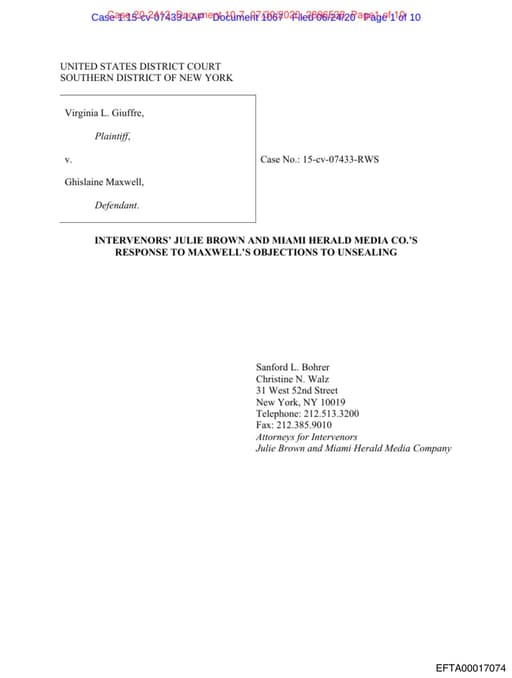
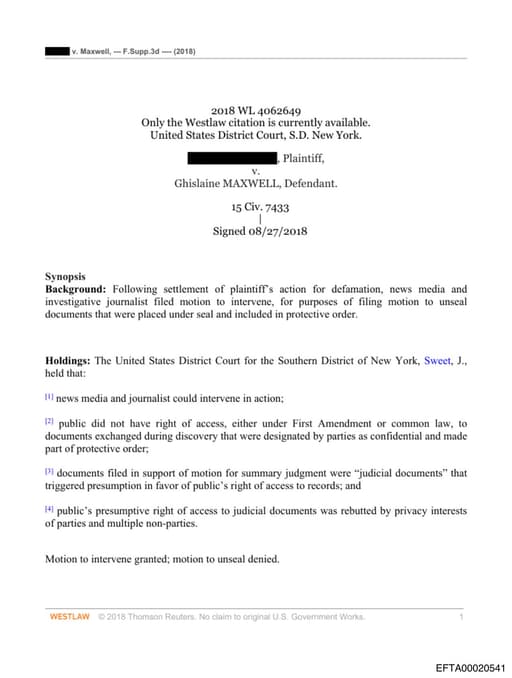
The documents mentioning Lugosch primarily refer to the legal case *Lugosch v. Pyramid Co. of Onondaga*, 435 F.3d 110 (2d Cir. 2006), and its use as a legal precedent regarding public access to judicial documents and redactions.
Lugosch appears almost exclusively in legal citations, specifically to *Lugosch v. Pyramid Co. of Onondaga*. This case is used as a benchmark by the Second Circuit for determining whether redactions are justified in court filings and other judicial documents. The legal standard established in *Lugosch v. Pyramid Co. of Onondaga* has been applied in the context of requests to seal documents, proposed redactions, and the balance between privacy interests and public access.
Key Highlights
- •Lugosch is mentioned solely in reference to the legal case *Lugosch v. Pyramid Co. of Onondaga*.
- •The case is used as a legal precedent for determining the appropriateness of redactions and sealing of documents.
- •The mentions highlight the importance of balancing privacy interests and public access in legal proceedings.
Frequently Asked Questions
Books for Further Reading
Perversion of Justice: The Jeffrey Epstein Story
Julie K. Brown
Investigative journalism that broke the Epstein case open
Filthy Rich: The Jeffrey Epstein Story
James Patterson
Bestselling account of Epstein's crimes and network
Relentless Pursuit: My Fight for the Victims of Jeffrey Epstein
Bradley J. Edwards
Victims' attorney's firsthand account
Document Mentions (20 of 50)
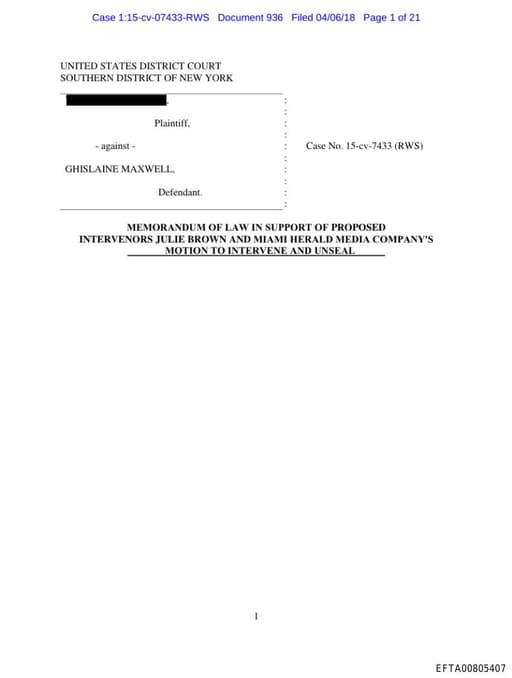
EFTA00805407.pdf
3 mentionsEFTA00805407
ng to seal judicial records to ensure that the courts do not sacrifice the public's right of access to the desires of the litigations. See generally Lugosch v. Pyramid Co. of Onondaga, 435 F.3d 110 (2d Cir. 2006) (First Amendment and common law right to judicial documents); In re Omnicom Grp., Inc. Sec.
emaining documents, the majority of which are those submitted in opposition or support to discovery motions, also qualify.' Citing the broad rule in Lugosch, the court in Alexander Interactive, Inc. v. Adorama, Inc., No. 12 CIV. 6608 PKC JCF, 2014 WL 4346174, at *2 (S.D.N.Y. Sept. 2, 2014), stated that
tlement). Neither of the Parties have presented the "specific, on-the-record findings" that establish a compelling reason for sealing or redaction. Lugosch, 435 F.3d at 126. Quite the opposite — the Court initially granted at least 35 letter motions to seal documents, the vast majority with de minimis
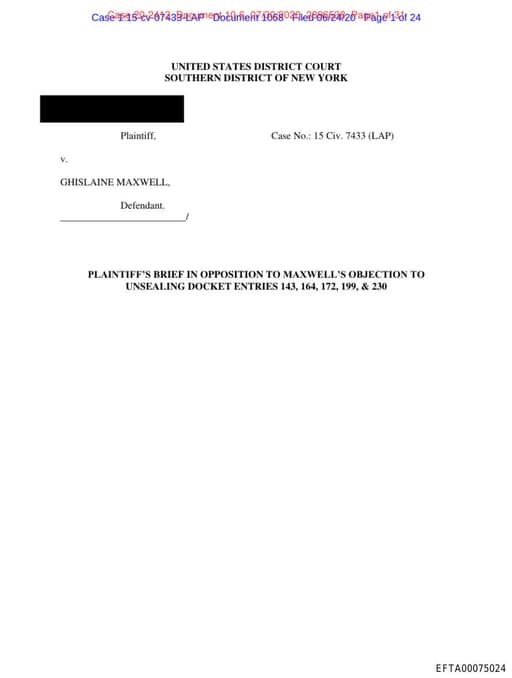
EFTA00075024.pdf
3 mentionsEFTA00075024
tive order is an umbrella protective order that "specifically contemplates that relief from the provisions of the order may be sought at any time." Lugosch, 435 at 125; ECF No. 62 fill, 14. Maxwell cannot use such an umbrella order to shield the entirety of her deposition from the public. "Given this pr
o see how [Maxwell] can reasonably argue that [she] produced documents in reliance on the fact that the documents would always be kept secret." See Lugosch, 435 F.3d at 125. Contrary to Maxwell's argument, Brown is of no help to her here and does not support keeping Maxwell's deposition under seal in i
Circuit squarely addressed and rejected the argument Maxwell currently makes in Lugosch v. Pyramid Co. of Onondaga, 435 F.3d 110 (2d Cir. 2006). In Lugosch, "[t]he district court suggested that [a] 10 EFTA00075037 CasqaPIRWM43P4AlaleDiggrfieAnag041401§/234,26a1PaiAcif53tif 24 confidentiality order w
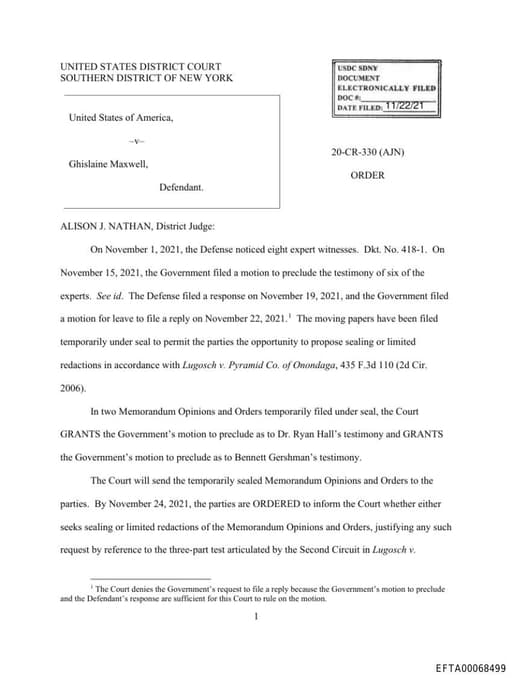
EFTA00068499.pdf
2 mentionsEFTA00068499
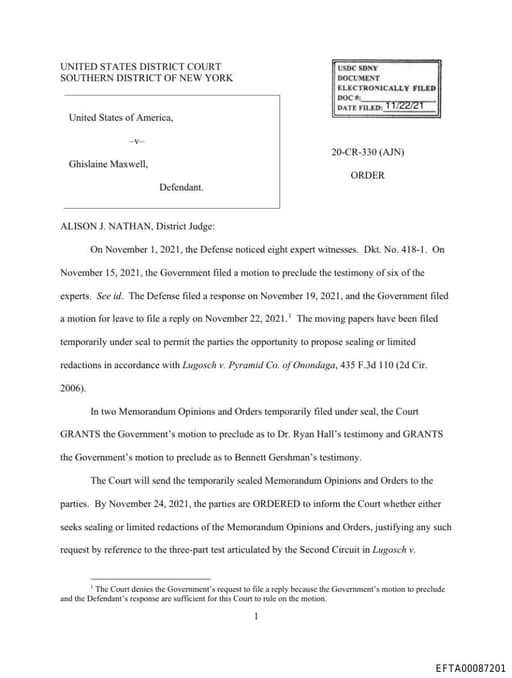
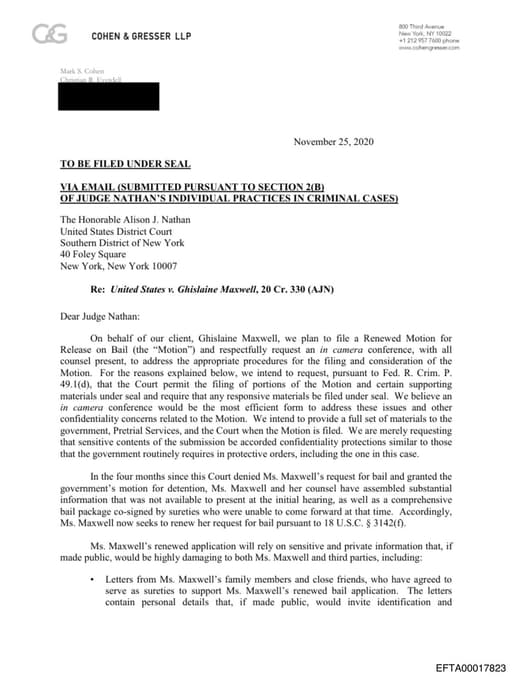
dactions of the Memorandum Opinions and Orders, justifying any such request by reference to the three-part test articulated by the Second Circuit in Lugosch v. The Court denies the Government's request to file a reply because the Government's motion to preclude and the Defendant's response are sufficien
any proposed redactions to the moving papers and/or supporting exhibits on the public docket, again justifying any such request by reference to the Lugosch test. SO ORDERED. Dated: November 22, 2021 New York, New York 2 ALISON J. NATHAN United States District Judge EFTA00068500
Sponsored
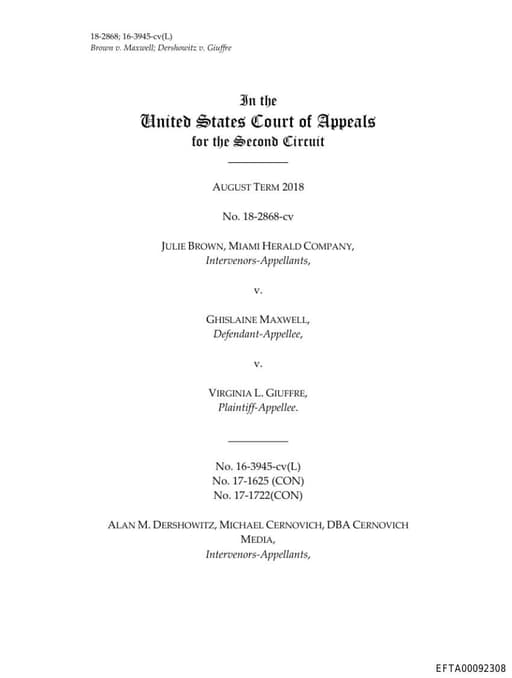
EFTA00092308.pdf
2 mentionsEFTA00092308
g order is narrowly tailored to achieve that aim."13 " Bernstein v. Bernstein Litowitz Berger & Grossmann LLP, 814 F.3d 132, 139 (2d Cir. 2016). 12 Lugosch v. Pyramid Co. of Onondaga, 435 F.3d 110, 121 (2d Cir. 2006). We observe that our holding in Lugosch relies on the general principle that parties ma
ann LLP, 814 F.3d 132, 139 (2d Cir. 2016). 12 Lugosch v. Pyramid Co. of Onondaga, 435 F.3d 110, 121 (2d Cir. 2006). We observe that our holding in Lugosch relies on the general principle that parties may "be assumed to have supported their papers with admissible evidence and non- frivolous arguments."
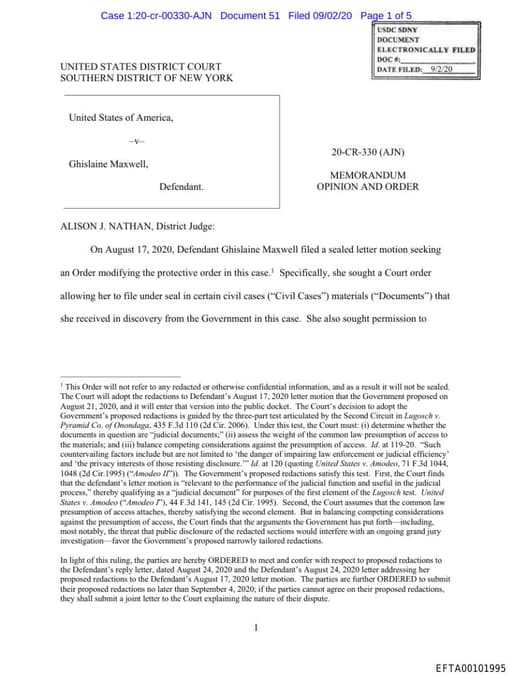
EFTA00101995.pdf
2 mentionsEFTA00101995
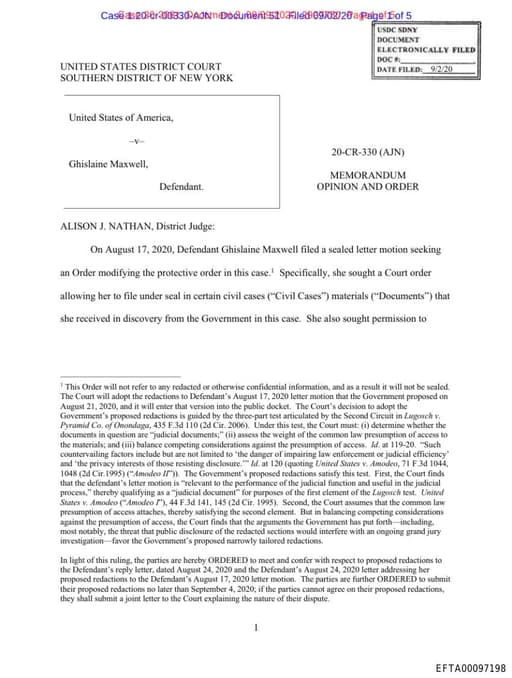
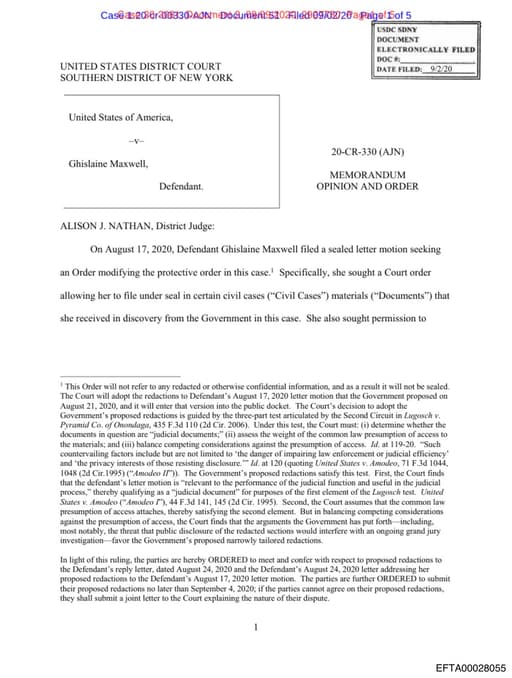
lic docket. The Court's decision to adopt the Government's proposed redactions is guided by the three-part test articulated by the Second Circuit in Lugosch v. Pyramid Co. of Onondaga, 435 F.3d 110 (2d Cir. 2006). Under this test, the Court must: (i) determine whether the documents in question are "judi
e of the judicial function and useful in the judicial process," thereby qualifying as a "judicial document" for purposes of the first element of the Lugosch test. United States v. Amodeo ("Amodeo 1"), 44 F.3d 141, 145 (2d Cir. 1995). Second, the Court assumes that the common law presumption of access at
EFTA00087201.pdf
2 mentionsEFTA00087201
dactions of the Memorandum Opinions and Orders, justifying any such request by reference to the three-part test articulated by the Second Circuit in Lugosch v. The Court denies the Government's request to file a reply because the Government's motion to preclude and the Defendant's response are sufficien
any proposed redactions to the moving papers and/or supporting exhibits on the public docket, again justifying any such request by reference to the Lugosch test. SO ORDERED. Dated: November 22, 2021 New York, New York 2 ALISON J. NATHAN United States District Judge EFTA00087202
Sponsored
EFTA00085098.pdf
2 mentionsEFTA00085098
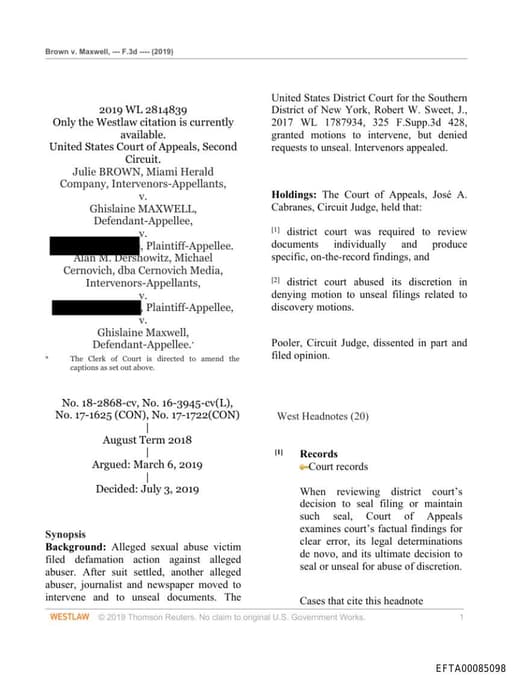
" Id. at 122. Insofar as a district court has, through striking a filing, specifically found that assumption inapplicable, the categorical rule in Lugosch may not apply. See notes 42-43 and accompanying text, post. 13 Id. at 124. Examples of such countervailing values may include, depending on the c
narrowly tailored to achieve that aim."I3 12 Lugosch v. Pyramid Co. of Onondaga, 435 F.3d 110, 121 (2d Cir. 2006). We observe that our holding in Lugosch relies on the general principle that parties may "be assumed to have supported their papers with admissible evidence and non-frivolous arguments."
EFTA00097198.pdf
2 mentionsEFTA00097198
lic docket. The Court's decision to adopt the Government's proposed redactions is guided by the three-part test articulated by the Second Circuit in Lugosch v. Pyramid Co. of Onondaga, 435 F.3d 110 (2d Cir. 2006). Under this test, the Court must: (i) determine whether the documents in question are "judi
e of the judicial function and useful in the judicial process," thereby qualifying as a "judicial document" for purposes of the first element of the Lugosch test. United States v. Amodeo ("Amodeo I"), 44 F.3d 141, 145 (2d Cir. 1995). Second, the Court assumes that the common law presumption of access at
EFTA00791869.pdf
2 mentionsEFTA00791869
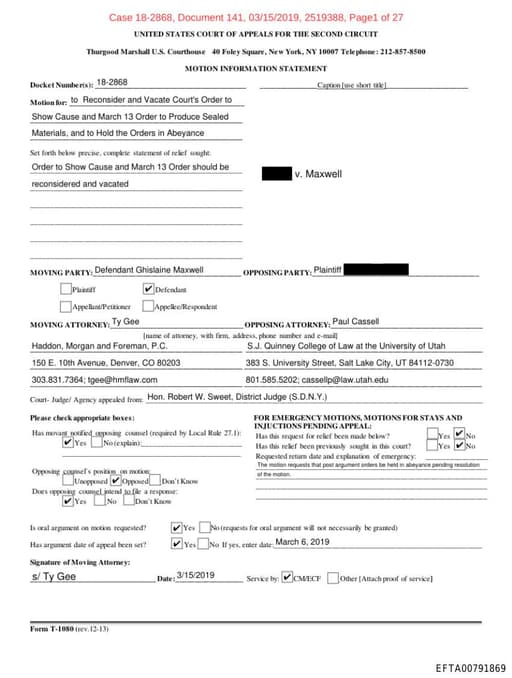
the parties. The Order to Show Cause rests on a number of premises that we respectfully submit are flawed. As the Court noted in the Order, under Lugosch a" strong presumption of access" attaches to documents submitted to a court for its consideration in a summary judgment motion. Doc.138 at 2. But a
—and the Court in its Order to Show Cause—rested heavily on Lugosch v. Pyramid Co. of Onondaga, 435 F.3d 110 (2d Cir. 2006). With respect, neither Lugosch nor any of the other 6 EFTA00791875 Case 18-2868, Document 141, 03/15/2019, 2519388, Page8 of 27 Second Circuit cases supports the position the
Sponsored
1 mention
ontinued sealing of documents in this case. See New York v. Actavis, PLC, No. 14 CIV. 7473, 2014 WL 5353774, at *3 (S.D.N.Y. Oct. 21, 2014) (citing Lugosch, 435 F.3d at 124) (decisions to seal must be supported by "specific, on-the-record findings that sealing is necessary to preserve higher values and
Page: EFTA00017081 →1 mention
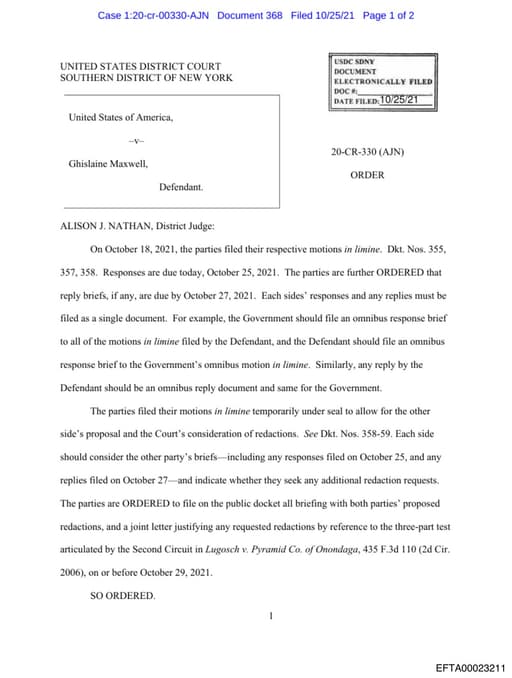
roposed redactions, and a joint letter justifying any requested redactions by reference to the three-part test articulated by the Second Circuit in Lugosch v. Pyramid Co. of Onondaga, 435 F.3d 110 (2d Cir. 2006), on or before October 29, 2021. SO ORDERED. EFTA00023211 --- PAGE BREAK --- Case 1:20-c
Page: EFTA00023211 →1 mention
008) (finding that where classified information presented at trial, if disclosed, would jeopardize national security weighed against public access); Lugosch v. Pyramid Co. of Onondaga, 435 F.3d 110 (2d Cir. 2006) (existence of confidentiality order alone did not defeat presumption of public access); Hanf
Page: EFTA00020559 →Sponsored
1 mention
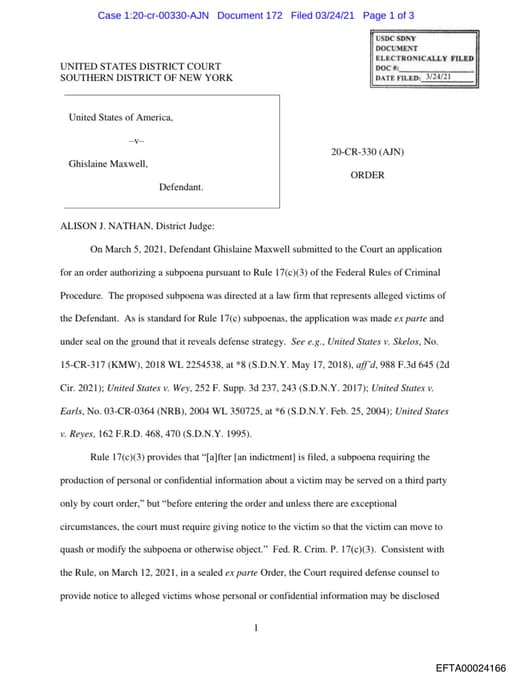
The law firm's objections with any proposed redactions shall be filed on or before March 26, 2021. Any redactions must be justified consistent with Lugosch v. Pyramid Co. of Onondaga, 435 F.3d 110 (2d Cir. 2006). Within one week of the filing of objections, defense counsel may respond to the subpoena o
Page: EFTA00024167 →1 mention
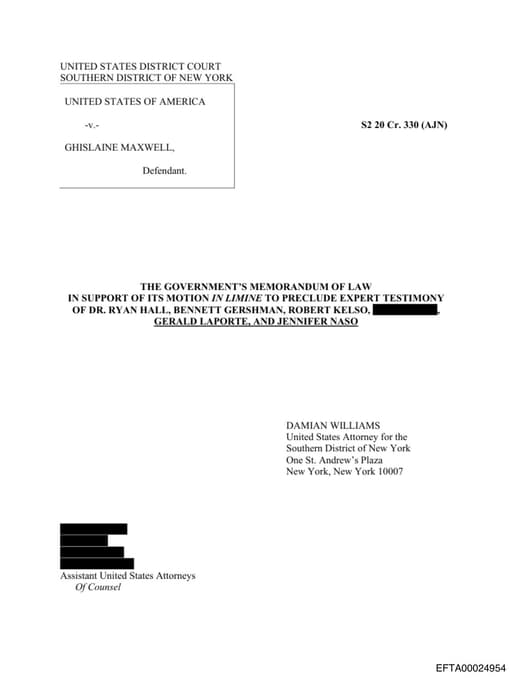
f and seal Exhibit B, which is Dr. Hall's evaluation of Minor Victim-4, in accordance with the three-part test articulated by the Second Circuit in Lugosch v. Pyramid Co. of Onondaga, 435 F.3d 110 (2d Cir. 2006). Although this brief and the attached exhibit are judicial documents subject to the common l
Page: EFTA00024960 →1 mention
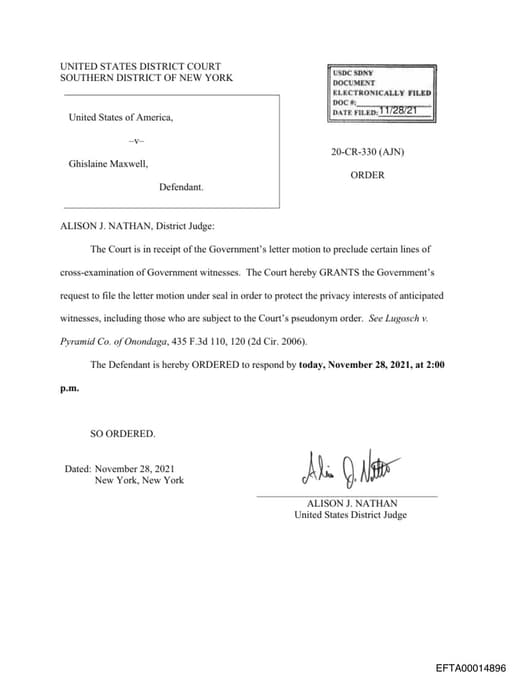
n under seal in order to protect the privacy interests of anticipated witnesses, including those who are subject to the Court's pseudonym order. See Lugosch v. Pyramid Co. of Onondaga, 435 F.3d 110, 120 (2d Cir. 2006). The Defendant is hereby ORDERED to respond by today, November 28, 2021, at 2:00 p.m.
Page: EFTA00014896 →Sponsored
1 mention
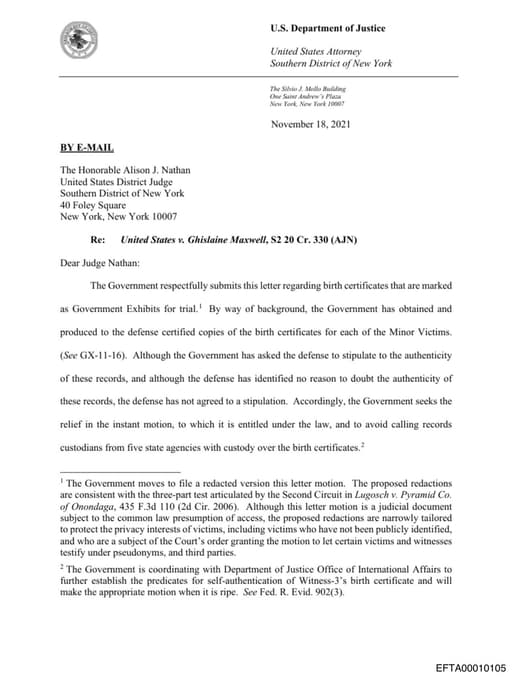
to file a redacted version this letter motion. The proposed redactions are consistent with the three-part test articulated by the Second Circuit in Lugosch v. Pyramid Co. of Onondaga, 435 F.3d 110 (2d Cir. 2006). Although this letter motion is a judicial document subject to the common law presumption o
Page: EFTA00010105 →1 mention
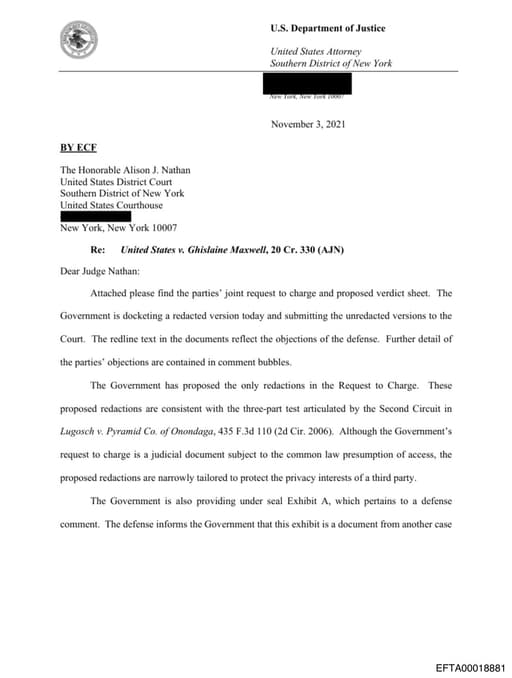
he only redactions in the Request to Charge. These proposed redactions are consistent with the three-part test articulated by the Second Circuit in Lugosch v. Pyramid Co. of Onondaga, 435 F.3d 110 (2d Cir. 2006). Although the Government's request to charge is a judicial document subject to the common la
Page: EFTA00018881 →1 mention
lic docket. The Court's decision to adopt the Government's proposed redactions is guided by the three-part test articulated by the Second Circuit in Lugosch v. Pyramid Co. of Onondaga, 435 F.3d 110 (2d Cir. 2006). Under this test, the Court must: (i) determine whether the documents in question are "judi
Page: EFTA00028055 →Sponsored
1 mention
iling of documents under seal if "countervailing factors" in the common law framework or "higher values" in the First Amendment framework so demand. Lugosch v. Pyramid Co. of Onandaga, 435 F.3d 110, 124 (2d Cir. 2006); see also Unites States v. Wey, 256 F. Supp. 3d 355, 411 (S.D.N.Y. 2017) (Nathan, J.)
Page: EFTA00017824 →1 mention
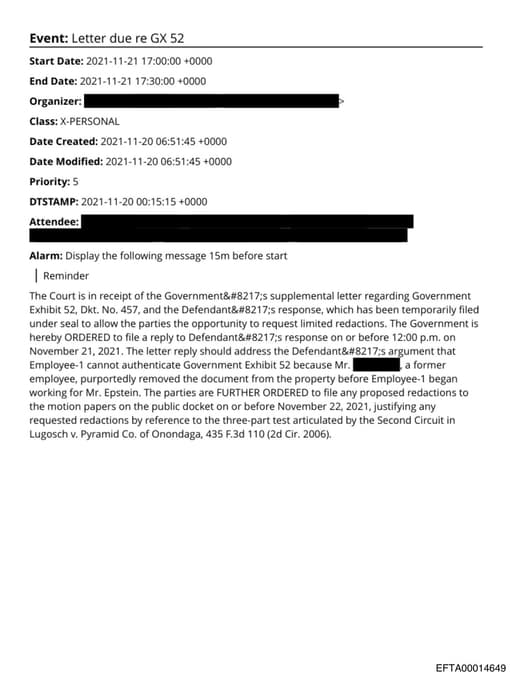
docket on or before November 22, 2021, justifying any requested redactions by reference to the three-part test articulated by the Second Circuit in Lugosch v. Pyramid Co. of Onondaga, 435 F.3d 110 (2d Cir. 2006). EFTA00014649
Page: EFTA00014649 →Sponsored
Connected Entities(20 of 234)
Ghislaine Maxwell
PersonBritish socialite and sex trafficker, daughter of Robert Maxwell, accomplice of Jeffrey Epstein
47 docs47 co-mentions
Second Circuit
OrganizationU.S. Court of Appeals for the Second Circuit
43 docs43 co-mentions
Jeffrey Epstein
PersonAmerican sex offender and financier (1953–2019)
28 docs28 co-mentions
Onondaga
LocationCity in New York
26 docs26 co-mentions
AM
Amodeo
PersonSurname reference in documents
19 docs19 co-mentions
Alison J. Nathan
PersonAmerican federal judge who presided over the Ghislaine Maxwell criminal trial
18 docs18 co-mentions
Julie K. Brown
PersonAmerican journalist
18 docs18 co-mentions
Pyramid Co. of Onondaga
OrganizationOrganization referenced in documents
17 docs17 co-mentions
Pyramid Co.
OrganizationOrganization referenced in documents
15 docs15 co-mentions
Prince Andrew
PersonThird child of Queen Elizabeth II and Prince Philip, Duke of Edinburgh (born 1960)
14 docs14 co-mentions
United States
LocationCountry located primarily in North America
14 docs14 co-mentions
MA
Martindell
PersonSurname reference in Epstein-related documents
12 docs12 co-mentions
David Boies
PersonAmerican lawyer and chairman
11 docs11 co-mentions
Cynthia Nixon
PersonAmerican actress and politician
10 docs10 co-mentions
Virginia Giuffre
PersonAdvocate for sex trafficking victims (1983–2025)
8 docs8 co-mentions
Alan Dershowitz
PersonAmerican lawyer, author, and art collector (born 1938)
8 docs8 co-mentions
ALISON J. NATHAN
OrganizationU.S. federal judge (person name misclassified as organization)
8 docs8 co-mentions
SM
Sigrid McCawley
PersonAmerican attorney
7 docs7 co-mentions
Supreme Court
OrganizationHighest court of jurisdiction in the US
7 docs7 co-mentions
the Second Circuit's
OrganizationOrganization referenced in documents
7 docs7 co-mentions