DOJ-COURT-377
DOJ-COURT-377 is an Omnibus Order from the United States District Court, Southern District of Florida, regarding the case of Jane Doe No. 2 versus Jeffrey Epstein.
The document pertains to a motion to compel Plaintiff Jane Doe 2 to respond to Defendant Jeffrey Epstein's requests for production and interrogatories. The case involves allegations of sexual assault by Epstein against underage girls at his Palm Beach mansion around 2004-2005, with his assistant Sarah Kellen allegedly involved in luring the girls. The order grants the motions, except for the request for fees and costs.
Key Highlights
- •The document is an Omnibus Order in the case of Jane Doe No. 2 vs. Jeffrey Epstein.
- •Jeffrey Epstein and Sarah Kellen are mentioned as key figures in the alleged sexual assault scheme.
- •The case involves allegations of sexual assault and battery, intentional infliction of emotional distress, and coercion and enticement to sexual activity.
Frequently Asked Questions



Document Information
Bates Range
DOJ-COURT-377
Pages
12
Source
DOJ First Production
Original Filename
377.pdf
Document Content
Page 1 - DOJ-COURT-377_p1
1 UNITED STATES DISTRICT COURT SOUTHERN DISTRICT OF FLORIDA CASE NO. 08-CIV-80119-MARRA/JOHNSON JANE DOE NO. 2, Plaintiff, vs. JEFFREY EPSTEIN, Defendant. ____________________________________/ Related cases: 08-80232, 08-80380, 08-80381, 08-80994, 08-80993, 08-80811, 08-80893, 09-80469, 09-80591, 09-80656, 09-80802, 09-81092 ____________________________________/ OMNIBUS ORDER THIS CAUSE is before the Court on the following motions: (1) Defendant Epstein’s Motion to Compel Plaintiff Jane Doe 2 to Respond to Defendant’s First Request to Produce and to Overrule Objections and For an Award of Defendant’s Reasonable Expenses (D.E. #67); and (2) Defendant Epstein’s Motion to Compel Plaintiff Jane Doe 2 to Respond to Defendant’s First Set of Interrogatories and to Overrule Objections and For an Award of Defendant’s Reasonable Expenses (D.E. #68). For the following reasons, except for Defendant’s request for fees and costs, both motions are granted. Case 9:08-cv-80119-KAM Document 377 Entered on FLSD Docket 10/28/2009
Page 2 - DOJ-COURT-377_p2
Page 1 of 12 2 In this case, which has been consolidated for purposes of discovery, Plaintiffs are former under-age girls who allege they were sexually assaulted by Defendant, Jeffrey Epstein (“Epstein”), at his Palm Beach mansion home. The scheme is alleged to have taken place over the course of several years in or around 2004-2005, when the girls in question were approximately 16 years of age. As part of this scheme, Epstein, with the help of his assistant Sarah Kellen, allegedly lured economically disadvantaged minor girls to his homes in Palm beach, New York and St. Thomas, with the promise of money in exchange for a massage. Epstein purportedly transformed the massage into a sexual assault. The three-count Complaint alleges sexual assault and battery (Count I), intentional infliction of emotional distress (Count II), and, coercion and enticement to sexual activity in violation of 18 U.S.C. §2422 (Count III). In an effort to mount a defense to the claims asserted against him in this case, Epstein has propounded several interrogatory and production requests seeking, among other information, income information and past sexual act information from the Plaintiff Jane Doe 2 as well as from the other Plaintiffs in this case. Plaintiffs have objected arguing the requests, in whole or in part, seek information that is irrelevant, not reasonably calculated to the discovery of admissible evidence, overly broad, unduly burdensome, propounded only for purposes of harassment, or are otherwise impermissibly vague as framed. Each of the requests at issue and the respective objections that go along with them shall be addressed in turn. The Court notes that the ruling issued herein with respect to D.E. #s 67 and 68 applies equally to those identical motions to compel filed in Case Nos. 08-80893, 08-80232, 08-80380, 08-80381, 08-80994, 08-80993 and 08-80811. First, however, a word about the general standard applicable to issues of discovery Case 9:08-cv-80119-KAM Document 377 Entered on FLSD Docket 10/28/2009
Page 3 - DOJ-COURT-377_p3
Page 2 of 12 3 in federal court. Rules 33 and 34 of the Federal Rules of Civil Procedure allow any party to serve on any other party interrogatories, requests to produce, inspect and copy, test or sample any documents or tangible things which constitute or contain matters within the scope of Federal Rule Civil Procedure 26(b). The scope of discovery under Rule 26(b) is broad: "[p]arties may obtain discovery regarding any matter, not privileged, which is relevant to the claim or defense of any party involved in the pending action. Relevant information need not be admissible at trial if the discovery appears reasonably calculated to lead to the discovery of admissible evidence." Id.; see also Hickman v. Taylor, 329 U.S. 495, 507-508 (1947); Farnsworth v. Proctor and Gamble Co., 758 F.2d 1545, 1547 (11th Cir. 1985)(the Federal Rules of Civil Procedure "strongly favor full discovery whenever possible"); Canal Authority v. Froehlke, 81 F.R.D. 609, 611 (M.D. Fla. 1979). Thus, under Rule 26, relevancy is "construed broadly to encompass any matter that bears on, or that reasonably could lead to another matter that could bear on any issue that is or may be in the case." Oppenheimer Fund, Inc. v. Sanders, 437 U.S. 340, 352 (1978). Discovery is not limited to the issues raised by the pleadings because "discovery itself is designed to help define and clarify the issues." Id. at 352. In short, information can be relevant and therefore discoverable, even if not admissible at trial, so long as the information is reasonably calculated to lead to the discovery of admissible evidence. Dunbar v. United States, 502 F.2d 206 (5th Cir. 1974). While the scope of discovery is broad, it is not without limits. Washington v. Brown & Williamson Tobacco, 959 F.2d 1566, 1570 (11th Cir. 1992). Indeed the 2000 Amendment to Rule 26 has effectively limited the scope of discoverable information to those matters which are relevant to a claim or defense in the lawsuit. Dellacasa, LLC v. Case 9:08-cv-80119-KAM Document 377 Entered on FLSD Docket 10/28/2009
Sponsored
Page 4 - DOJ-COURT-377_p4
Page 3 of 12 --- ---------------- 4 John Moriarty & Ass. Of Florida, Inc., 2007 WL 4117261 at *3 (S.D. Fla. 2007). Courts have long held that “[w]hile the standard of relevancy [in discovery] is a liberal one, it is not so liberal as to allow a party to ‘roam in the shadow zones of relevancy and to explore matter which does not presently appear germane on the theory that it might conceivably become so.’ ” Food Lion, Inc. v. United Food & Commercial Workers Intern. Union, 103 F.3d 1007, 1012-13 (C.A. D.C. 1997)(quoting Broadway and Ninety Sixth Street Realty Co. v. Loew’s Inc., 21 F.R.D. 347, 352 (S.D. N.Y. 1958)); Donahay v. Palm Beach Tours & Transp., Inc., 2007 W.L. 1119206 at *1 (S.D. Fla. 2007). Under Fed. R. Civ. P., 26(b)(1) a court may limit discovery of relevant material if it determines the discovery sought is unreasonably cumulative or duplicitive, or obtainable from some other source that is more convenient, less burdensome, or less expensive, or the burden or expense of the proposed discovery outweighs the likely benefit. Id. The party resisting discovery has a heavy burden of showing why the requested discovery should not be permitted. Rossbach v. Rundle, 128 F. Supp. 2d 1348, 1354 (S.D. Fla. 2000) (“The onus is on the party resisting discovery to demonstrate specifically how the objected- to information is unnecessary, unreasonable or otherwise unduly burdensome.”); Dunkin Donuts, Inc. v. Mary’s Donuts, Inc., 2001 WL 34079319 (S.D. Fla. 2001)(“the burden of showing that the requested information is not relevant to the issues in the case is on the party resisting discovery”)(citation omitted); Gober v. City of Leesberg, 197 F.R.D. 519, 521 (M.D. Fla. 2000)(“The party resisting production of information bears the burden of establishing lack of relevancy or undue burden in supplying the requested information”). To meet this burden, the party resisting discovery must demonstrate specifically how the objected-to request is unreasonable or otherwise unduly burdensome. See Fed. R. Civ. Case 9:08-cv-80119-KAM Document 377 Entered on FLSD Docket 10/28/2009
Page 5 - DOJ-COURT-377_p5
Page 4 of 12 5 P. 33(b)(4); Panola Land Buyers Ass’n v. Shuman, 762 F.2d 1550, 1559 (11th Cir. 1985); Rossbach, 128 F.Supp.2d at 1353. Thus, to even merit consideration, “an objection must show specifically how a discovery request is overly broad, burdensome or oppressive, by submitting evidence or offering evidence which reveals the nature of the burden.” Coker v. Duke & Co., 1777 F.R.D. 682, 686 (M.D. Ala. 1998). Once the resisting party meets its burden, the burden shifts to the moving party to show the information is relevant and necessary. Gober, 197 F.R.D. at 521; see also Hunter’s Ridge Golf Co. Inc. v. Georgia- Pacific Corp., 233 F.R.D. 678, 680 (M.D. Fla. 2006). Production Request No. 1 seeks all individual and/or joint income tax returns and supporting documentation including W-2 and 1099 forms for 2002-2007, as well as all records or documentation relative to the Plaintiff’s earnings for the current year. Plaintiff objects to the request as “overbroad, unduly burdensome, and not reasonably calculated to lead to the discovery of admissible evidence.” Without waiving the above objections, Plaintiff has provided Epstein with a copy of her 2006 and 2007 1040 forms. The Court finds the information sought by Defendant in Request No. 1 directly relevant to the claims and defenses raised herein and in no way overly broad or unduly burdensome as claimed. Like the rest of the Plaintiffs in these consolidated actions, the Plaintiff in this case, Jane Doe 2, is seeking millions of dollars in personal injury damages for, among other things, physical injury, pain and suffering, emotional distress, psychological trauma, mental anguish, humiliation, embarrassment, loss of self-esteem, loss of dignity, and invasion of her privacy. These damages stem from allegations relating to her claims of sexual assault, sexual battery, coercion and enticement to sexual activity. The sought after tax returns and supporting information will provide direct evidence as to Case 9:08-cv-80119-KAM Document 377 Entered on FLSD Docket 10/28/2009
Page 6 - DOJ-COURT-377_p6
Page 5 of 12 --- --- ---------------------------- 6 Plaintiff’s claimed damages, both with regard to her loss of earning capacity damage claim as well as her emotional psychological/mental health type damage claims. Furthermore, the six-year time period of 2002-2007 is reasonable on its face and not in any way overly broad or unduly burdensome as claimed, considering that Plaintiff’s Second Amended Complaint alleges the alleged sexual abuse and exploitation occurred in 2004-2005. The two-year period on either side of the dates the abuse is alleged to occur will allow Defendant to show Plaintiff’s employment and earning history, as well as provide evidence as to how Plaintiff has been able to function in her daily life before, during and after the alleged incident. Accordingly, Plaintiff’s objections to Production Request No. 1 are denied and Defendant’s Motion to Compel as it relates to Production Request No. 1 is granted. Plaintiffs are ordered to produce any and all documents responsive to the subject request within ten (10) days from the date hereof. The Court notes, however, in light of the inherent privacy concerns which attach to income tax returns, the information provided shall be subject to a mutually agreeable protective order which shall ensure the information provided shall not be disseminated to anyone other than the parties to this action or their attorneys and/or agents and only for purposes of this case. The remainder of the contested Production Requests (10, 11, 17, and 18) and the entirety of the contested Interrogatory Requests (18, 19, 20, and 21), being similar in nature, are accorded a nearly identical analysis and shall therefore be discussed together. Production Requests 10, 11, 17 and 18 relate to past sexual act information and seek all photos, movies, dvds, and videotapes in which Plaintiffs performed sexual acts or simulated sexual acts, whether in exchange for money or other consideration (Request 11), or not (Request 10), as well as all documents reflecting the names and addresses of other Case 9:08-cv-80119-KAM Document 377 Entered on FLSD Docket 10/28/2009
Sponsored
Page 7 - DOJ-COURT-377_p7
Page 6 of 12 7 individuals with whom Plaintiffs have engaged in sexual activity from January 1, 2000- December 31, 2005 (Request 17) and from January 1, 2006-November 30, 2008 (Request 18). Plaintiffs asserted the identical objections to each of these requests arguing the requests are “harassing and not reasonably calculated to lead to discoverable evidence,” are “outrageous, offensive and...apparently posed for the purpose of intimidating the Plaintiff,” inadmissible under Fed. R. Evid. 412, and “[w]ithout waiving this objection, none to Plaintiff’s knowledge.” As a preliminary matter the Court agrees with Defendant that Plaintiff’s response in which she begins by setting forth objections followed by the statement, “[w]ithout waiving this objection, none to Plaintiff’s knowledge,” is evasive. Defendant is entitled to know whether or not such items exist, and if so whether such items are in the care, custody or control of Plaintiff or someone other than Plaintiff. As for Plaintiff’s concerns that to the extent any such recordings of the Plaintiff engaged in sexual or simulated sexual activity since the year 2000 did exist, such recordings would be unlawful for anyone to possess, particularly a registered sex offender such as Epstein, the Court is sensitive to same and to the extent any such recordings are ordered to be turned over, the Court specifically orders these recordings be for “attorney’s eyes” only and not be given or otherwise shown to Defendant Epstein. Interrogatories 18, 19, 20 and 21 also relate to past sexual act information and seek the names, addresses and phone numbers of all males, excluding Epstein, with whom Plaintiff has had sexual activity from the age of 10 up through the present (Interrogatory 18), whom Plaintiff has claimed committed sexual assault or battery on her from the age of 10 up through the present (Interrogatory 19), whom Plaintiff has claimed committed lewd Case 9:08-cv-80119-KAM Document 377 Entered on FLSD Docket 10/28/2009
Page 8 - DOJ-COURT-377_p8
Page 7 of 12 8 or lascivious conduct to her from the age of 10 up through the present (Interrogatory 20), and whom Plaintiff has claimed committed lewd or lascivious exhibition to her from the age of 10 and up through the present (Interrogatory 21), and as to each describe the nature of the act or conduct, the date(s), and whether Plaintiff received money or other consideration from that person. Plaintiff asserted the identical objections as to each, namely, that the interrogatories are “vague, overly broad, unduly burdensome, harassing and not reasonably calculated to lead to admissible evidence. Moreover, [these interrogatories are] outrageous, offensive and apparently posed for the purpose of intimidating the victim. Fed. R. Evid. 412 makes any answer to [these interrogatories] inadmissible, and nothing in the answer could plausibly lead to discovery of admissible evidence.” The primary thrust of Plaintiff’s objection is her contention that the information sought is not discoverable in that it is not admissible under Fed. R. Evid. 412, which governs the admissibility of a victim’s sexual activity. Fed. R. Evid. 412 provides that a victim’s past sexual behavior is irrelevant to the credibility of the victim’s testimony, and that a victim’s prior and subsequent sexual activity with third parties has no bearing on the issue of whether the victim consented to or complied with the sexual acts charged. Putting aside for the moment the fact the information sought is not being sought for the purposes of establishing the victim’s consent or otherwise undermining her credibility, the fact remains Rule 412 is an evidentiary rule that while under some circumstances may be held to prevent mere discovery, is not applicable in this instance, where Plaintiff has placed her past sexual history at issue. Balas v. Ruzzo, 703 So.2d 1076 (Fla. 5 DCA 1997), rev. th denied,719 So.2d 286 (Fla. 1998)(allowing discovery of plaintiff’s employment history which included prostitution, employment records, electronic recording of the conduct which Case 9:08-cv-80119-KAM Document 377 Entered on FLSD Docket 10/28/2009
Page 9 - DOJ-COURT-377_p9
Page 8 of 12 9 was the subject of the complaint, and a description of plaintiff’s damages). See also US v. Bear Stops, 997 F.2d 451 (8 Cir. 1993)(defendant entitled to admission of evidence th relating to a victim’s (a six-year old boy) sexual assault by 3 older boys to establish alternative explanation for why victim exhibited behavioral manifestations of a sexually abused child). Under the circumstances of this case, where Plaintiff has alleged that Epstein exposed himself to her, “sexually assaulted her,” “committed willful acts of child sexual abuse” on her, which resulted in “mental or sexual injury,” and “caused” or is “likely to cause [Plaintiff’s] mental or emotional health to be significantly impaired,” 2d Am. Comp., ¶25, Plaintiff has put the nature of her claimed injuries and source and extent of her damages at issue, such that Epstein is entitled to discover evidence which would show the nature of Plaintiff’s relationship with males, whether she has suffered other acts of sexual misconduct as alleged in her Complaint, and whether she suffered injury and/or damages as a result of the other claimed sexual misconduct with males. In support of her position that Rule 412 prevents the discovery of Plaintiff’s sexual activities, Plaintiff cites to a string of employment related cases, Barta v. City and County of Honolulu, 169 F.R.D. 132 (D. Haw. 1996); Herron v. Eastern Industries, Inc., 2007 WL 2781211 (N.D. Fla. Sept. 19, 2007); Gibbons v. Food Lion, Inc., 1999 WL 33226474 (M.D. Fla. Feb. 19, 1999); P.J. Herchenroeder v. John Hopkins Univ. Applied Physical Lab, 171 F.R.D. 179 (D. Mad. 1997); Sanchez v. Zabihi, 166 F.R.D. 500 (D. N.M. 1996); and Stalnaker v. Kmart Corp., 1996 WL 397563 (D. Kan 1996). Plaintiff’s reliance on these cases in support of her position, however, is misplaced in that each of these cases deal specifically with employer liability for workplace sexual harassment claims, a factual Case 9:08-cv-80119-KAM Document 377 Entered on FLSD Docket 10/28/2009
Sponsored
Page 10 - DOJ-COURT-377_p10
Page 9 of 12 10 scenario not present in this case. Here, the requests at issue go to the very heart of Plaintiff’s damage claims, requesting not only general information relating to Plaintiff’s sexual history, but inquiring as to specific instances wherein Plaintiff received compensation or consideration for sex acts, claim other males sexually assaulted, battered, or abused her, and/or claim other males committed lewd or lascivious acts on her. As a global matter, Plaintiffs clearly and unequivocally place their sexual history in issue by their allegations that Epstein’s actions in this case has negatively affected their relationships by, among other things, “distrust in men,” “sexual intimacy problems,” “diminished trust,” “social problems,” “problems in personal relationships,” “feelings of stress around men,” “premature teenage pregnancy,” “antisocial behaviors,” and “hyper-sexuality and promiscuity.” See Composite Exh. “A” attached to Def’s Reply. Considering these allegations, there simply can be no question that Epstein is entitled to know whether Plaintiffs were molested or the subject of other “sexual activity” or “lewd and lascivious conduct” in order to determine whether there is an alternative basis for the psychological disorders Plaintiffs claim to have sustained, whether Plaintiffs engaged in prostitution or other similar type acts and how certain acts alleged in the Complaint materially affected Plaintiffs’ relationships with others or how those acts did not have such an affect on those relationships and/or whether Plaintiffs suffered from the alleged emotional and psychological disorders as a result of other sexual acts prior to the acts alleged in the Complaint. To deny Epstein this discovery, would be tantamount to barring him from mounting a defense. The Court also rejects Plaintiff’s contention that inquiring of instances from the age of 10 is unreasonable. In the instant case, Plaintiffs allege they were between the ages of Case 9:08-cv-80119-KAM Document 377 Entered on FLSD Docket 10/28/2009
Page 11 - DOJ-COURT-377_p11
Page 10 of 12 --- 11 13 and 16 at the time of the alleged contacts with Epstein. As such, it is not unreasonable to fix the inquiry start date at age10. All of the Plaintiffs in the Epstein related matters have alleged that Epstein’s actions caused their damages. It stands to reason that a 10 year old child who had a sexual experience of one kind or another could have been profoundly psychologically affected by this experience, and this experience may or may not be relevant to gauging the extent of any damages caused by a later sexual encounter. In light of the foregoing, the Court finds that fixing 10 years old as the start date to any inquiry is not overbroad as claimed, but under the circumstances reasonable and justifiable. Accordingly, the Court rejects Plaintiffs’ objections to Production Requests 10, 11, 17, and 18 and to Interrogatory Requests 18, 19, 20, and 21, and Defendant’s Motions as they relate to these requests are granted. Plaintiffs are ordered to fully and completely respond to the subject requests within fifteen (15) days from the date hereof. The Court notes, however, in light of the highly personal and sensitive nature of the information sought by these Motions, that the information provided shall be subject to a mutually agreeable protective order which shall ensure the information provided shall not be disseminated to anyone other than the parties to this action or to their attorneys and/or agents and only for purposes of this case. In this regard, the attorneys for the parties to this matter shall confer and reach agreement on the terms of such protective order and file same with the Court for signature within five (5) days from the date hereof. In accordance with the above and foregoing, it is hereby ORDERED AND ADJUDGED as follows: (1) Defendant Epstein’s Motion to Compel Plaintiff Jane Doe 2 to Respond to Case 9:08-cv-80119-KAM Document 377 Entered on FLSD Docket 10/28/2009
Page 12 - DOJ-COURT-377_p12
Page 11 of 12 12 Defendant’s First Request to Produce and to Overrule Objections and For an Award of Defendant’s Reasonable Expenses (D.E. #67) is GRANTED IN PART AND DENIED IN PART. As a substantive matter, the Motion is granted subject to the terms and conditions noted earlier herein. Defendant’s request for fees and costs is denied; and (2) Defendant Epstein’s Motion to Compel Plaintiff Jane Doe 2 to Respond to Defendant’s First Set of Interrogatories and to Overrule Objections and For an Award of Defendant’s Reasonable Expenses (D.E. #68) is GRANTED IN PART AND DENIED IN PART. As a substantive matter, the Motion is granted subject to the terms and conditions noted earlier herein. Defendant’s request for fees and costs is denied. DONE AND ORDERED this October 28, 2009, in Chambers, at West Palm Beach, Florida. LINNEA R. JOHNSON UNITED STATES MAGISTRATE JUDGE CC: The Honorable Kenneth A. Marra All Counsel of Record Case 9:08-cv-80119-KAM Document 377 Entered on FLSD Docket 10/28/2009
Entities Mentioned
BA
Balas
PERSON
Surname reference in documents
BA
Barta
PERSON
Surname or name fragment in documents

Bernie Sanders
PERSON
United States Senator from Vermont since 2007
CO
Coker
PERSON
Surname reference in documents
DO
Donahay
PERSON
Surname reference in documents

Dunbar
PERSON
First name reference to multiple individuals in Epstein-related documents
ET
Emmy Taylor
PERSON
Former assistant to Ghislaine Maxwell, appeared in Epstein flight logs and court documents
FA
Farnsworth
PERSON
Surname or name fragment in documents
FR
Froehlke
PERSON
Name reference in documents
GI
Gibbons
PERSON
Surname reference in documents
GO
Gober
PERSON
Surname or name fragment in documents
HE
Herron
PERSON
Surname reference in documents
HI
Hickman
PERSON
Surname reference in Epstein-related documents

J. Robert Oppenheimer
PERSON
American theoretical physicist, scientific director of the Manhattan Project (1904-1967)
JD
Jane Doe
PERSON
Pseudonym for anonymous victims/witnesses in Epstein legal proceedings
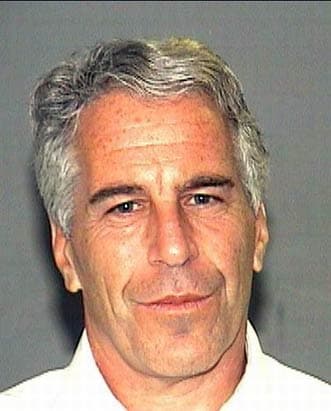
Jeffrey Epstein
PERSON • 4 mentions
American sex offender and financier (1953–2019)

Kenneth Marra
PERSON • 2 mentions
American judge
LJ
Linnea R. Johnson
PERSON
Person referenced in documents
PH
P.J. Herchenroeder
PERSON
Name reference in documents
RO
Rossbach
PERSON
Surname reference in documents
RU
Rundle
PERSON
Surname reference in documents
RU
Ruzzo
PERSON
Surname reference in documents
SA
Sanchez
PERSON
Surname reference in Epstein documents

Sarah Kellen
PERSON • 2 mentions
American assistant to Jeffrey Epstein, named as unindicted co-conspirator in 2008 non-prosecution agreement
SH
Shuman
PERSON
Researcher
ST
Stalnaker
PERSON
Surname reference in documents
ZA
Zabihi
PERSON
Researcher
Broadway and Ninety Sixth Street Realty Co.
ORGANIZATION
Organization referenced in documents
Canal Authority
ORGANIZATION
Organization referenced in documents
City and County
ORGANIZATION
Organization referenced in documents
D. Haw.
ORGANIZATION
Organization referenced in documents
D. Mad.
ORGANIZATION
Organization referenced in documents
D. N.M.
ORGANIZATION
Organization referenced in documents
Dellacasa, LLC
ORGANIZATION
Organization referenced in documents
District Court for the Southern District of New York
ORGANIZATION
U.S. District Court for the Southern District of New York
Duke & Co.
ORGANIZATION
Organization referenced in documents
Eastern Industries, Inc.
ORGANIZATION
Organization referenced in documents
Food Lion, Inc.
ORGANIZATION
Organization referenced in documents
Hunter’s Ridge Golf Co. Inc.
ORGANIZATION
Organization referenced in documents
John Hopkins Univ.
ORGANIZATION
Organization referenced in documents
John Moriarty & Ass.
ORGANIZATION
Organization referenced in documents
Kmart Corp.
ORGANIZATION
Organization referenced in documents
Loew’s Inc.
ORGANIZATION
Organization referenced in documents
Mary’s Donuts, Inc.
ORGANIZATION
Organization referenced in documents
Oppenheimer Fund, Inc.
ORGANIZATION
Organization referenced in documents
Palm Beach Tours &
ORGANIZATION
Organization referenced in documents
Panola Land Buyers Ass’n v.
ORGANIZATION
Organization referenced in documents
Proctor and Gamble Co.
ORGANIZATION
Organization referenced in documents
United Food & Commercial Workers Intern.
ORGANIZATION
Organization referenced in documents
D. Kan
LOCATION
Location referenced in documents
Statistics
Pages:12
Entities:50
Sponsored