DOJ-COURT-217
DOJ-COURT-217 is a court document from the Southern District of Florida, encompassing multiple cases against Jeffrey Epstein.
The document lists several cases (Jane Doe 2-7, C.M.A., Jane Doe, and Doe II) against Jeffrey Epstein. These cases have different case numbers but are all under the purview of the Southern District of Florida court. The document provides a glimpse into the legal proceedings involving Epstein.
Key Highlights
- •Multiple Jane Doe lawsuits against Jeffrey Epstein are listed
- •The cases are filed in the Southern District of Florida
- •The document was entered on the FLSD Docket on July 23, 2009
Frequently Asked Questions


Document Information
Bates Range
DOJ-COURT-217
Pages
26
Source
DOJ First Production
Original Filename
217.pdf
Document Content
Page 1 - DOJ-COURT-217_p1
UNITED STATES DISTRICT COURT SOUTHERN DISTRICT OF FLORIDA JANE DOE NO. 2, CASE NO: 08-CV-80119-MARRA/JOHNSON Plaintiff, vs. JEFFREY EPSTEIN, Defendant. _____________________________/ JANE DOE NO. 3, CASE NO: 08-CV-80232-MARRA/JOHNSON Plaintiff, vs. JEFFREY EPSTEIN, Defendant. ______________________________/ JANE DOE NO. 4, CASE NO: 08-CV-80380-MARRA/JOHNSON Plaintiff, vs. JEFFREY EPSTEIN, Defendant. _______________________________/ Case 9:08-cv-80119-KAM Document 217 Entered on FLSD Docket 07/23/2009
Page 2 - DOJ-COURT-217_p2
Page 1 of 26 CASE NO: 08-CV-80119-MARRA/JOHNSON JANE DOE NO. 5, CASE NO: 08-CV-80381-MARRA/JOHNSON Plaintiff, vs. JEFFREY EPSTEIN, Defendant. _____________________________/ JANE DOE NO. 6., CASE NO: 08-CV-80994-MARRA/JOHNSON Plaintiff, vs. JEFFREY EPSTEIN, Defendant. _______________________________/ JANE DOE NO. 7, CASE NO: 08-CV-80993-MARRA/JOHNSON Plaintiff, vs. JEFFREY EPSTEIN, Defendant. ________________________________/ Case 9:08-cv-80119-KAM Document 217 Entered on FLSD Docket 07/23/2009
Page 3 - DOJ-COURT-217_p3
Page 2 of 26 CASE NO: 08-CV-80119-MARRA/JOHNSON C.M.A., CASE NO: 08-CV-80811-MARRA/JOHNSON Plaintiff, vs. JEFFREY EPSTEIN, Defendant. ______________________________/ JANE DOE, CASE NO. 08-CV-80893-CIV-MARRA/JOHNSON Plaintiff, Vs. JEFFREY EPSTEIN, et al., Defendants. ______________________________/ DOE II, CASE NO: 09-CV-80469-MARRA/JOHNSON Plaintiff, vs. JEFFREY EPSTEIN, et al., Defendants. _______________________________/ Case 9:08-cv-80119-KAM Document 217 Entered on FLSD Docket 07/23/2009
Sponsored
Page 4 - DOJ-COURT-217_p4
Page 3 of 26 JANE DOE NO. 101, CASE NO: 09-CV-80591-MARRA/JOHNSON Plaintiff, vs. JEFFREY EPSTEIN, Defendant. ______________________________/ JANE DOE NO. 102, CASE NO: 09-CV-80656-MARRA/JOHNSON Plaintiff, vs. JEFFREY EPSTEIN, Defendant. _______________________________/ PLAINTIFF JANE DOE’S REPLY MEMORANDUM IN SUPPORT OF MOTION FOR INJUNCTION RESTRAINING FRAUDULENT TRANSFER OF ASSETS, APPOINTMENT OF A RECEIVER TO TAKE CHARGE OF PROPERTY OF EPSTEIN AND TO POST A $15 MILLION BOND TO SECURE POTENTIAL JUDGMENT Plaintiff, Jane Doe, hereby files this Reply Memorandum in Support of her Motion, pursuant to Federal Rule of Civil Procedure 64, for appointment of a receiver to take charge of Epstein’s property and to post a $15 million bond to secure any potential judgment in this case. As explained in Jane Doe’s motion, Epstein is a billionaire who recently has been fraudulently transferring his assets overseas and elsewhere with the intent to prevent Jane Doe (and possibly several dozen other victims of his sexual abuse) from satisfying any judgment they might obtain against him. In response, Epstein does not deny these allegations, but essentially argues: “Prove It … If You Can.” Jane Doe is willing to take up his challenge in three ways. First, in the face of a supported motion seeking protection against fraudulent transfers, Epstein cannot simply refuse to confirm or deny that he Case 9:08-cv-80119-KAM Document 217 Entered on FLSD Docket 07/23/2009
Page 5 - DOJ-COURT-217_p5
Page 4 of 26 CASE NO: 08-CV-80119-MARRA/JOHNSON 2 is making them. Because he has failed to controvert Jane Doe’s claims, they are deemed admitted. Second, in any event, Jane Doe has clear evidentiary support that Epstein is hiding his assets through an adverse inference from his Fifth Amendment invocations. That inference is entirely appropriate in this case, because Epstein has personal knowledge of the subject at hand (whether he is fraudulently transferring assets) and the inference is entirely reasonable on the facts of the case. Third, in addition to the adverse inference, Jane Doe has a perfect circumstantial case of fraudulent transfers: Epstein has the means, motive, and opportunity to hide his assets. In view of this proof of fraudulent transfers, Federal Rule of Civil Procedure 64 guarantees Jane Doe all available state law pre-judgment remedies to protect her interests. Florida has adopted the Florida Uniform Fraudulent Transfer Act (FUFTA), Fla. Stat. Ann. § 726.101 et seq., which gives the Court power to appoint a receiver to take charge of assets that are being fraudulently transferred. Epstein’s argument that this Court lacks the ability to make such an appointment conflates an ordinary case (where courts are reluctant to take control of a defendant’s assets before entry of judgment) and a case in which fraudulent transfers have been proven – in which case seizure of assets is entirely appropriate. Given that the Court has the power to appoint a receiver, it should appoint a receiver. Jane Doe has advanced extremely serious allegations of sexual abuse against Epstein, which is likely to produce a substantial judgment in her favor (not to mention judgments of a similar nature in several dozen other cases). This Court should not allow Epstein to move hundreds of millions of dollars overseas before Jane Doe can obtain her judgment, but should instead appoint a receiver - now - to take control of Epstein’s assets and to post a $15 million bond with this Court on behalf of Epstein to satisfy any judgment that Jane Doe might obtain. DEFENDANT ESPTEIN HAS NOT DISPUTED JANE DOE’S MATERIAL FACTS WITH HIS OWN MATERIAL FACTS, SO JANE DOE’S FACTS SHOULD BE ACCEPTED Case 9:08-cv-80119-KAM Document 217 Entered on FLSD Docket 07/23/2009
Page 6 - DOJ-COURT-217_p6
Page 5 of 26 CASE NO: 08-CV-80119-MARRA/JOHNSON 3 In her moving papers, Jane Doe provided 14 specific material facts, each supported by evidence. In response, Epstein choose to ignore most of the facts, resorting instead to generalized attacks that the facts are “irrelevant, speculative, and hearsay.” Epstein’s Memo. in Opp. [DE 198 at 5]. Epstein should not be permitted to proceed in this blunderbuss fashion. Epstein should be required to explain which of the 14 specific facts he disputes – and which he does not. Indeed, his failure to controvert the facts specifically should lead the Court to deem all of them admitted. A specific response to each of Jane Doe’s material facts is certainly the approach envisioned in this Court’s rules. Local Rule 7.5.C.3 explains that, for summary judgment motions, that statements of material facts “shall correspond with the order and with the paragraph numbering scheme used by the movant . . . .” Additional facts “shall be numbered and placed at the end of the opposing party’s statement of material facts . . . .” Id. The rule concludes that “[a]ll material facts set forth in the movant’s statement filed and supported as required by Local Rule 7.5.C will be deemed admitted unless controverted by the opposing party’s statement, provided that the Court finds that the movant’s statement is supported by evidence in the record.” Id. The obvious underlying reason for this point-counterpoint approach is to narrow the range of disputes presented to the court. A party needs to provide a specific basis for contesting the proposed facts of the other side and, without such a basis, should not contest the fact. Epstein has short-circuited this process by refusing to explain which of Jane Doe’s facts he contests – and which he admits. Obviously, some of Jane Doe’s facts are incontestable. For example, Jane Doe has asserted that she seeks more than $50 million in damages and many other, similarly-situated defendants seek at least the same amount in similar lawsuits pending before this Court and Florida courts. Thus, Epstein is facing more than $1 billion in damages claims. See Material Facts #1 and #4. If these facts are true, Case 9:08-cv-80119-KAM Document 217 Entered on FLSD Docket 07/23/2009
Sponsored
Page 7 - DOJ-COURT-217_p7
Page 6 of 26 CASE NO: 08-CV-80119-MARRA/JOHNSON 4 then Epstein has an undeniable motive to fraudulently hide his assets. But Epstein sidesteps and obscures this point by refusing to say whether or not he disputes these (quite incontestable) facts. Similarly, Jane Doe has alleged that Epstein has international contacts, having travelled overseas with such famous persons as President Bill Clinton, Prince Andrew, and Donald Trump. Is Epstein contesting that he has these international travels? Here again, it is impossible to tell because Epstein has not explained whether he is contesting or accepting these facts. With regard to several of Jane Doe’s facts, Epstein responds generally that they are supported by “hearsay” information. For example, Epstein argues “[t]his appearance of extreme wealth and sophistication in international financial matters is based on inadmissible hearsay . . . .” Epstein’s Memo. in Opp. [DE 198 at 6]. Epstein does not deny the truth of these allegations. And, to the extent that the supporting sources for these claims are inadequate, Jane Doe has now filed a motion to supplement her supporting evidence with a new, recently-obtained Declaration – from Epstein himself. See Plaintiff Jane Doe’s Motion to Provide Recently-Obtained Affidavit of Jeffrey E. Epstein in Support of Material Facts Supporting Motion for Appointment of a Receiver to Take Charge of Property of Epstein [DE 213]. This Declaration was signed by Esptein in October of 2002 and filed in support of a Memorandum of Law in Opposition to Plaintiff’s Motion for Summary Judgment filed in the matter of Citibank, N.A. v. Jeffrey E. Epstein and Financial Trust Company, Inc., Index No. 02 Civ. 5332(SHS) in United States Southern District of New York, in which Epstein was named individually and as President and Director of Financial Trust Co., Inc. as Defendant. A copy of the Declaration has been provided to Defendant and is attached hereto as Exhibit “A.”. In this Declaration Epstein declares under penalty of perjury: • That he is President and Director of Financial Trust Company, Inc., a business that provides financial and business consulting services from the U.S. Virgin Islands to its clients. Case 9:08-cv-80119-KAM Document 217 Entered on FLSD Docket 07/23/2009
Page 8 - DOJ-COURT-217_p8
Page 7 of 26 CASE NO: 08-CV-80119-MARRA/JOHNSON 5 • That he has been a legal resident of the U.S. Virgin Islands since 1999, residing at Little St. James Island – a 70-acre island that he owns through a wholly-owned limited liability company. • From 1987 through the date of the affidavit, Epstein was one of Citibank’s most important individual clients. • In 1999, Epstein and Citibank did a $10 million deal together, followed by another similar $10 million deal the next year. These deals involved Epstein borrowing $20 million from Citibank and then immediately reinvesting them in a fund that Citibank was touting. Of course, all of these admissions fully support the claims that Jane Doe made in her initial moving papers. Presumably the reason for Epstein refusing to respond point-by-point to Jane Doe’s facts is that he does not want to have to respond specifically to Jane Doe’s position that he has fraudulently transferred assets in the past and is currently transferring his assets overseas – transfers that are being used to defeat any judgment that might be entered against him in this case. If Epstein were required to go point-by-point through Jane Doe’s facts – as the Local Rules envision – then Epstein’s counsel would have to either sign a pleading admitting that such fraudulent transfers are taking place or representing, as an officer of the court, that no such transfers are taking place. Far better, Epstein has apparently concluded, to simply duck the issue entirely by blustering in general about how some aspects of Jane Doe’s are “speculative” or “irrelevant.” Because of Epstein’s failure to provide specific material facts in opposition to the facts proffered by Jane Doe, all of these facts should be taken as admitted. JANE DOE HAS PROVIDED SUFFICIENT, UNREBUTTED PROOF THAT EPSTEIN IS FRAUDULENTLY TRANSFERRING ASSETS Jane Doe Has Provided Sufficient Support of Her Alleged Facts In addition to Epstein’s procedural failures, he has also failed to provide any substantive reason for the court to refuse to accept the facts. Many of the facts are well supported by the affidavit of Paul Case 9:08-cv-80119-KAM Document 217 Entered on FLSD Docket 07/23/2009
Page 9 - DOJ-COURT-217_p9
Page 8 of 26 CASE NO: 08-CV-80119-MARRA/JOHNSON 6 Cassell, Esq., that Jane Doe initially filed. To the extent that any of the information provided in the Cassell affidavit was hearsay, that problem has now disappeared in view of the Declaration signed by Epstein that Jane Doe is providing to the Court. The facts regarding Epstein’s fraudulent transfers of assets overseas are also sufficiently supported. As envisioned by the local rule, Jane Doe supported her allegations on this point with specific materials “on file with the Court,” Local Rule 7.5.C.2, namely, Epstein’s answers to her requests for admissions and interrogatories. When asked directly whether he was perpetrating such a fraud, Epstein invoked his Fifth Amendment privilege against self-incrimination. Epstein’s invocation should lead the Court to draw the obvious adverse conclusion – that he is, in fact, fraudulently transferring assets overseas. Epstein concedes that the Court has the power to draw such an inference. See Epstein’s Memo. in Opp. at 8. He gamely maintains, however, that such an inference is somehow not proper under the test laid out by United States v. Custer Battles, LLC, 415 F.Supp.2d 628, 633 (E.D. Va. 2006). Custer Battles lays out a two-prong test for deciding whether a factfinder can appropriately draw an adverse inference. The first prong is whether there is “a valid basis for asserting the privilege.” Id. at 633. “When the privilege is invoked during discovery, this validity issue is typically resolved via a motion to compel.” Id. Because the burden rests squarely on Epstein to show the specific basis for his invocation, Jane Doe has filed currently-pending motions to compel answers to her requests for admissions, requests for production, and interrogatories. See, e.g., Plaintiff Jane Doe’s Motion to Compel Answers to Plaintiff’s First Request for Admissions to Defendant [DE 211] (filed July 20, 2009). If after reviewing Jane Doe’s motion to compel, the Court concludes that Epstein does not have a valid basis for invoking privilege about asset transfers, then Epstein will have to explain where he has transferred his assets and this motion can be resolved in light of specific explanations from Case 9:08-cv-80119-KAM Document 217 Entered on FLSD Docket 07/23/2009
Sponsored
Page 10 - DOJ-COURT-217_p10
Page 9 of 26 CASE NO: 08-CV-80119-MARRA/JOHNSON 7 Epstein. If, on the other hand, the Court concludes that Epstein does have a valid basis for invoking privilege about asset transfers, then the Court will have concluded that Epstein “might be prosecuted in this country” for making fraudulent transfers. Custer Battles, 415 F.Supp.2d at 633. The issue then arises about what the court should infer from this fact. The second-prong of the Custer Battles test explains how the Court should resolve whether to draw the obvious inference against Epstein. The Court should make “an assessment [of] whether the requested inference, which [is] a form of evidence, compl[ies] with the Federal Rules of Evidence. Thus, any adverse inferences must be relevant, reliable, and not unfairly prejudicial, confusing, or cumulative.” Id. at 634 (internal citation omitted), quoted in Epstein’s Memo. in Opp. [DE 198 at 9]. Surprisingly, having set out this governing, second prong of the test, Epstein does not pause to analyze whether it is satisfied. Presumably that is because the test obviously is satisfied. The inference that Epstein is fraudulently transferring assets is plainly “relevant” to Jane Doe’s motion to have the Court intervene to stop the fraud. The inference is likewise “reliable,” because Epstein makes no argument (nor offers any evidence) to the contrary. And the inference is clearly “not unfairly prejudicial, confusing, or cumulative” because it goes to the central issue in this motion. The Fifth Amendment Cases Do Not Require Independent Evidence Before An Adverse Inference Can Be Drawn Rather than analyze whether the inference satisfies the two-prong Custer Battles test, Epstein pulls another sentence out of context from the opinion, which he claims forms yet a third prong of what Custer Battles itself describes as a “two step inquiry.” Id. at 633. Epstein argues that an adverse inference can only be drawn when independent evidence exists of the fact to which the party refuses to answer. Epstein’s Memo. in Opp. [DE 198 at 9]. But that is not what Custer Battles actually says. Instead, Custer Battles discusses the need to show through independent evidence that an adverse inference satisfies the requirement of “personal knowledge” (one of the requirements for admissible Case 9:08-cv-80119-KAM Document 217 Entered on FLSD Docket 07/23/2009
Page 11 - DOJ-COURT-217_p11
Page 10 of 26 CASE NO: 08-CV-80119-MARRA/JOHNSON 8 evidence under Fed. R. Evid. 602). The case explains: “This finding of personal knowledge must itself rely on the other evidence to be presented at trial; a conclusion as to the reliability of an inference cannot derive by bootstrapping from Morris’ [the defendant’s] seemingly blanket invocation of the privilege against self-incrimination.” Custer Battles, 41 F.Supp.2d at 634-35 (emphasis added). Thus, Custer Battles cautioned against drawing inferences about other people’s state of mind via an adverse inference from defendant Morris’ invocation of his Fifth Amendment rights. But the Court had no difficulty in finding an inference proper regarding Morris’ own state of mind: “This [need for proof of personal knowledge] is not a problem here, as none of the six deposition questions [as to which Morris took the Fifth] inquire into matters as to which there is any doubt about Morris’ personal knowledge.” Id. So too here: There can be no doubt about Epstein’s personal knowledge about whether he himself is fraudulently transferring assets – which is the narrow question that Jane Doe propounded in her requests for admission. Accordingly, an adverse inference would be entirely reliable and proper in this case. Epstein also provides two “see also” citations in support of his claim that Jane Doe must provide some kind of “independent evidence” of his fraudulent transfers in order to gain the inference of fraudulent transfers. The first is Avirgan v. Hull, 932 F.2d 1572, 1580 (11th Cir. 1991), in which Plaintiffs who had filed a frivolous lawsuit appealed from a district court decision granting summary judgment against them. The plaintiffs in that case had attempted to defeat summary judgment by arguing that several of the defendants had not complied with discovery and invoked the Fifth Amendment in response to certain questions during discovery. The Eleventh Circuit, however, rejected that claim by explaining that the fact that several defendants had raised Fifth Amendment objections to discovery did not bar a summary judgment grant: “Invocation of the fifth amendment privilege did not give rise to any legally cognizable inferences sufficient to preclude entry of summary Case 9:08-cv-80119-KAM Document 217 Entered on FLSD Docket 07/23/2009
Page 12 - DOJ-COURT-217_p12
Page 11 of 26 CASE NO: 08-CV-80119-MARRA/JOHNSON 9 judgment. The negative inference, if any, to be drawn from the assertion of the fifth amendment does not substitute for evidence needed to meet the burden of production. Most importantly, Avirgan and Honey did not demonstrate that further discovery would have led to evidence which would have precluded summary judgment . . . . ” Id. at 1580 (citing United States v. Rylander, 460 U.S. 752 (1983)). Avirgan thus stands for the unexceptional proposition that the mere fact that someone has raised the Fifth Amendment does not prevent them from filing a well-supported summary judgment motion. That principle has little application, however, to this case; here it is Jane Doe who is the moving party. Epstein has not provided any evidence that the Court should not draw an adverse inference – or, indeed, any evidence at all in opposition to her motion. Accordingly, Avirgan is not on point and certainly does not suggest that Jane Doe needs to provide some sort of independent evidence to obtain an adverse inference.1 The other case cited by Epstein -- Eagle Hospital Physicians, LLC v. SRG Consulting, Inc., 561 F.3d 1298 (11th Cir. 2009) -- is likewise unavailing. There, a defendant presented an affidavit to the district court that attached attorney-client privileged e-mails of the plaintiff company. When the company deposed the defendant in an effort to learn how he obtained these sensitive documents, the defendant took the Fifth. Based on these facts alone, the district court drew the adverse inference that the plaintiff maintained the ability to monitor the company’s confidential e-mails. On appeal, the Eleventh Circuit affirmed the district court’s decision to draw an adverse inference. The Circuit explained that “[t]he decision to invoke the Fifth Amendment does not have to be consequence-free.” Id. Instead, a court need only avoid “an undue burden” on the constitutional invocation. An undue burden would exist from “[t]he automatic entry of an adverse judgment solely as a result of the 1 In addition, as explained below, Jane Doe has independent evidence via the circumstantial evidence of fraudulent transfers that she has provided to the Court, specifically the means, motive, and opportunity evidence. Case 9:08-cv-80119-KAM Document 217 Entered on FLSD Docket 07/23/2009
Sponsored
Page 13 - DOJ-COURT-217_p13
Page 12 of 26 CASE NO: 08-CV-80119-MARRA/JOHNSON 10 assertion of the Fifth Amendment.” Id. at 1304. Similarly, “a dismissal following the assertion of the Fifth Amendment violates the Constitution where the inferences drawn from the Fifth-Amendment- protected silence are treated as a substitute for the need for evidence on an ultimate issue of fact.” Id. Here, Jane Doe does not propose either the “automatic entry of an adverse judgment” or “a dismissal” based on a conclusion of “ultimate fact.” Rather, Jane Doe asks this Court to draw the specific adverse inference that Epstein is fraudulently transferring assets. That adverse inference then becomes a link in a chain of reasoning asking not for ultimate entry of final judgment in her favor, but rather for interim appointment of a receiver over Epstein’s assets to preserve the status quo and prevent any further fraudulent transfers. At the end of the case, after paying whatever judgment the jury returns, Epstein will then regain control over his remaining assets. Therefore, drawing the inference as part of resolving this motion does not burden Epstein with any conclusion of ultimate fact, but instead does no more than was done in Eagle Hospital: “assign the proper evidentiary weight to [Epstein’s] silence.” Id. at 1304. The conclusion that the Court can draw an adverse inference on the facts of this case is also supported by common sense. It is exceedingly difficult for Jane Doe to get information about Epstein’s assets. Indeed, this Court has previously recognized that “[i]n the fraudulent transfer context, . . . the defendant, as opposed to the plaintiff, is more likely to possess the particularized information about the complained-of conduct.” Special Purpose Accounts Receivable Co-op Corp. v. Prime One Capital Co., .L.L.C, 2007 WL 4482611 (S.D. Fla. 2007) (Marra, J.). Obtaining information about the whereabouts of Epstein’s assets is particularly difficult, given his financial sophistication in structuring control over those assets. See, e.g., Declaration of Jeffrey E. Epstein, Attachment 1, at 1 (noting ownership of of Little St. James Island in the U.S. Virgin Islands through a wholly-owned limited liability company itself resident in the Virgin Islands). Therefore, the Court should draw the Case 9:08-cv-80119-KAM Document 217 Entered on FLSD Docket 07/23/2009
Page 14 - DOJ-COURT-217_p14
Page 13 of 26 CASE NO: 08-CV-80119-MARRA/JOHNSON 11 obvious inference that the reason Epstein is taking the Fifth when asked about his fraudulent transfers of assets is because he is making fraudulent transfers of assets. In Any Event, Jane Doe Has Provided Circumstantial Evidence of Epstein’s Fraudulent Transfers. Even assuming, for sake of argument, that these cases could be read as establishing some sort of requirement that Jane Doe produce independent evidence of fraudulent transfers before obtaining an adverse inference, Jane Doe has produced that evidence. As explained in detail in her moving papers, Jane Doe has a “perfect circumstantial evidence case that [Epstein] ha[s] means, motive, and opportunity to fraudulently transfer assets.” Jane Doe’s Motion to Restrain Fraudulent Transfer of Assets at 11 (quoting United States v. Sparks, 265 F.3d 825, 830 (9th Cir. 2001)).2 Epstein completely misses the point of Jane Doe’s means, motive, and opportunity argument, construing it as some sort of new “test” for deciding whether asset transfers are fraudulent. See Epstein’s Memo. in Opp. at [DE 198 at 19-20]. But Jane Doe offers this circumstantial evidence not as a test for determining a fraudulent transfer, but as evidence that Epstein is making fraudulent transfers. Epstein cannot plausibly deny that he has the means, motive, and opportunity to move all of his substantial assets overseas beyond the reach of Jane Doe. This circumstantial evidence should be more than enough to meet whatever sort of burden of production Epstein wants to tease out of the adverse inferences cases. Indeed, taken to its logical conclusion, Epstein’s argument about Jane Doe’s purported need to provide “independent evidence” of fraudulent transfers ultimately collapses under its own weight. Epstein would apparently require Jane Doe to track down his fraudulent asset transfers to foreign countries, providing documentation of these fraudulent transfers. Of course, if she had clear 2 Epstein claims that the Sparks decision is “completely inapposite” because it concerns probable cause for an arrest, rather than a fraudulent asset determination. Epstein’s Memo. in Opp. at 20. But the legal principle at stake – that circumstantial evidence can provide strong proof – is the same regardless of the precise facts of the case. Indeed, if circumstantial evidence can be used at the basis for arresting a man and throwing him into jail (as in Sparks), then it would easily seem to provide a sufficient basis for the interim appointment of receiver to prevent fraudulent asset transfers. Case 9:08-cv-80119-KAM Document 217 Entered on FLSD Docket 07/23/2009
Page 15 - DOJ-COURT-217_p15
Page 14 of 26 CASE NO: 08-CV-80119-MARRA/JOHNSON 12 documentation of these transfers, there would be no need to rely on an adverse inference. In other words, Epstein’s interpretation of the burden that Jane Doe must sustain to obtain an adverse inference would make the inference all but irrelevant. Epstein’s position also ignores the realities of this case. As Jane Doe proffered in her statement of facts, without direct response from Epstein, “Epstein has blocked all discovery, in this and other related cases, regarding his assets.” Jane Doe’s Motion to Restrain Fraudulent Transfer of Assets at 8 (supported by uncontested affidavit of her legal counsel). Jane Doe had further proffered that Epstein is a man of great financial sophistication, id. at 6 – a fact now undeniably supported by Epstein’s own affidavit. See Declaration of Jeffrey E. Epstein at 2, Attachment 1 (swearing under oath that Epstein provides financial advice from the U.S. Virgin Islands in securities and other matters to his clients and that he is viewed by Citibank as “one of its most important individual clients”). Given the fact that asset transfers can take place to such countries as Israel, Switzerland, and the Cayman Islands, placing the burden on Jane Doe to document fraudulent asset transfers to such destinations effectively gives a green light to massive fraud – a fraud that could ultimately total in the neighborhood of one billion dollars ($1,000,000,000.00). See Jane Doe’s Motion to Restrain Fraudulent Transfer of Assets at [DE 165 at 5] (statement of material fact that Epstein is a billionaire). The Fifth Amendment does not require such obtuse results. Instead, it permits the narrow and reasonable inference that Epstein is fraudulently transferring his assets, permitting the Court to take appropriate remedial action. Drawing an Adverse Inference Would Not Violate the Fifth Amendment Epstein also tries to argue that drawing an adverse inference on these facts would violate his Fifth Amendment rights. Epstein contends that “a judgment cannot rest solely upon a privileged refusal to admit or deny at the pleading stage.” Epstein Memo. in Opp. [DE 198 at 10] (quoting LaSalle Bank Lake View v. Seguban, 54 F.3d 387, 391 (7th Cir. 1995) (emphasis added)). As just Case 9:08-cv-80119-KAM Document 217 Entered on FLSD Docket 07/23/2009
Sponsored
Page 16 - DOJ-COURT-217_p16
Page 15 of 26 CASE NO: 08-CV-80119-MARRA/JOHNSON 13 explained, Jane Doe has circumstantial evidence of fraudulent transfers. But more important for purposes of this argument, Jane Doe is not asking for a final judgment to be entered on Epstein’s fraudulent transfer of assets. Instead, she is asking merely for an adverse evidentiary inference that then becomes a piece of evidence supporting her motion. In turn, her motion merely asks for an interim measure that would protect the status quo: a receiver to account for Epstein’s assets and prevent him from hiding them overseas. Blocking fraudulent transfers is hardly the sort of “coercive” practice that is of concern in the cases cited by Epstein. The cases are clear that using the Fifth Amendment to block discovery need not be “cost free.” McKune v. Lile, 536 U.S. 24, 41 (2002). Here, there is no real cost to Epstein from the appointment of a receiver. All Jane Doe wants is a receiver to control Epstein’s assets to keep them from dissipating overseas and to post a bond (in an interest-bearing account) to satisfy any judgment that she might obtain. These measures will only harm Epstein if he is attempting to fraudulently transfer his assets outside the reach of the Court. This is not the sort of burden that might even conceivably implicate true Fifth Amendment concerns. Jane Doe Has Met the Elements to Obtain Relief Under Florida’s Uniform Fraudulent Transfer Act Somewhat out of order, Epstein argues in the tail end of his response that Jane Doe has failed to sufficiently prove fraudulent transfers under Florida’s Uniform Fraudulent Transfer Act (“FUFTA”), Fla. Stat. §§ 726.101 et seq. Memo. in Opp. at [DE 198 at 1821]. Epstein argues that a fraudulent transfer is proven where: (1) a transfer of property has in fact occurred; (2) the property transferred belonged to the debtor; (3) the transfer occurred within certain statutory time periods; and (4) the debtor made the transfer with the intent to hinder, delay or defraud creditors. Memo. in Opp. at [DE Case 9:08-cv-80119-KAM Document 217 Entered on FLSD Docket 07/23/2009
Page 17 - DOJ-COURT-217_p17
Page 16 of 26 CASE NO: 08-CV-80119-MARRA/JOHNSON 14 198 at 18] (citing In re Leneve, 341 B.R. 53, 56 (Bkrtcy S.D. Fla. 2006).3 However, Epstein does not grapple with the fact that Jane Doe has properly proven each of these four points with regard to the first factor – transfer of property – Jane Doe’s Material Fact #9 is that Epstein has “conveyed money and assets in an attempt to insulate and protect his money and assets from being capture[d] in civil lawsuits filed against him.” With regard to the second factor – that the property belonged to the debtor – Jane Doe’s Material Fact #9 and #12 (among others) is that he is moving his assets (which total more than $1 billion, according to Material Fact #8) overseas. With regard to the third factor – that the transfers occurred within the appropriate time limits – Jane Doe’s Material Fact #9 is that the fraudulent transfers have been taking place “since he was incarcerated” (i.e., since June 2008) and Material Fact #11 is that they are going on “currently.” This on-going activity obviously satisfies whatever applicable time limits may apply.4 With regard to the fourth factor – that Epstein made the transfers with the intent to hinder, delay or defraud creditors – Jane Doe’s Material Fact #9 is that Epstein has “conveyed money and assets in an attempt to insulate and protect his money and assets from being captured in civil lawsuits filed against him” and Material Fact #12 is that “Epstein is transferring these assets with the intent to defeat any judgment that might be entered against him in this and other similar cases.” Plainly Jane Doe has covered the required elements of a case under the FUFTA.5 There is thus no need for the 3 Epstein incorrectly cites this case has having been decided by this Court (the U.S. District Court for the S.D. of Florida), when in fact it was decided by the Bankruptcy Court for the Southern District of Florida. 4 It is not clear that any time limit applies under the FUFTA. The case cited by Epstein is a bankruptcy case, which refers to the need to prove that “[t]he transfer was within one year of the date of the filing of the [bankruptcy] petition.” See In re Leneve, 351 B.R. at 56, citing In re Ingersoll, 124 B.R. 116, 120 (M.D. Fla. 1991). The FUFTA eschews any rigid time limit if it can be shown that transfer was made with the “intent to hinder, delay, or defraud any creditor of the debtor.” Fla. Stat. Ann. § 726.105(1)(a). Jane Doe has made such a showing, as explained in the next paragraph in text. 5 For this reason, Epstein’s citation of In re Stewart, 280 B.R. 268, 285 (Bkrtcy. M.D. Fla. 2001), is not on point. In that case, the plaintiff had merely made allegations without providing any supporting evidence – Case 9:08-cv-80119-KAM Document 217 Entered on FLSD Docket 07/23/2009
Page 18 - DOJ-COURT-217_p18
Page 17 of 26 CASE NO: 08-CV-80119-MARRA/JOHNSON 15 Court to delve into the “badges of fraud” sometimes needed to determine fraudulent intent. See, e.g., In re Dealers Agency Services, Inc., 380 B.R. 608, 613 (Bkrtcy. M.D. Fla. 2007). Courts use these badges of fraud because it is, in some cases, “difficult to establish a transferor’s actual intent.” In re Ramsurat, 361 B.R. 246, 254 (Bkrtcy. M.D. Fla… 2006). Here, however, Jane Doe’s material facts establish the fraudulent intent. It could hardly be otherwise: Epstein has not alleged (much less proven) that he is moving his assets to overseas for any legitimate business purpose. For all these reasons, the Court should conclude that Epstein is fraudulently transferring his assets. JANE DOE IS ENTITLED TO RELIEF TO BLOCK EPSTEIN’S FRAUDULENT TRANSFERS UNDER THE UNIFORM FRAUDULENT TRANSFER ACT AS ADOPTED BY FLORIDA In light of Epstein’s fraudulent asset transfers, Jane Doe is entitled to pre-judgment remedies to protect her. For purposes of navigating through the Court’s PACER filing system, Jane Doe has checked the “injunction” box in the automated system. But, as made clear in the body of Jane Doe’s motion, while the relief can be viewed as a form of injunctive relief, is more precisely viewed as a pre- judgment seizure of property. In any event, the name is not important. See Rosen v. Cascade Intern., Inc., 21 F.3d 1520, 1530 (11th Cir. 1994) (“federal courts look past the terminology to the actual nature of the relief requested”) (internal quotation omitted). Jane Doe’s requested relief is specifically authorized by Federal Rule of Civil Procedure 64,6 which guarantees Jane Doe during the course of unlike Jane Doe, who has provided an affidavit of counsel, adverse inferences from discovery propounded to Epstein, and circumstantial evidence of the mean, motive, and opportunity for fraudulent transfers. Moreover, in Stewart, that plaintiff did not “allege any specific fact which, even if admitted, would support a finding that transfer was made with the actual intent to defraud a creditor.” Id. at 286. Here, of course, that is precisely what Jane Doe has alleged – and proven – all without any denial from Epstein. 6 Because Jane Doe is proceeding under Fed. R. Civ. P. 64 (“Seizure of Person or Property”) rather than Fed. R. Civ. P. 64 (“Injunctions”), she has not organized her brief around the well-known four factor test for obtaining injunctive relief. At the same time, however, her moving papers specifically discuss each of the four factors and it is obviously that she easily satisfies them. First, Jane Doe has shown a likelihood of success on the merits. As explained in her moving papers (see Jane Doe’s Motion at 16-18), at trial she and several dozen young girls will all testify to a pattern of sexual abuse by Case 9:08-cv-80119-KAM Document 217 Entered on FLSD Docket 07/23/2009
Sponsored
Page 19 - DOJ-COURT-217_p19
Page 18 of 26 CASE NO: 08-CV-80119-MARRA/JOHNSON 16 this suit “all remedies providing for seizure of person or property for the purpose of securing satisfaction of the judgment ultimately to be entered in the action” that are “available under the circumstances and in the manner provided by the law of the state in which the court is held.” The Rule goes on to provide that “[t]he remedies thus available include arrest, attachment, garnishment, replevin, sequestration, and other corresponding or equivalent remedies, however designated and regardless of whether by state procedure the remedy is ancillary to an action or must be obtained by an independent action.” This “long-settled federal law provid[es] that in all cases in federal court , . . . state law is incorporated to determine the availability of prejudgment remedies for the seizure of person or property to secure satisfaction of the judgment ultimately entered.” Rosen, 21 F.3d at 1531. Accordingly, under this Rule, this Court looks to Florida law to determine Jane Doe’s rights to pre- judgment relief.7 To prevent fraudulent transfers of assets before judgment, Florida has adopted the Uniform Fraudulent Transfer Act. Fla. Stat. Ann. § 726.101 et seq. Under Florida’s Uniform Fraudulent Transfer Act (FUFTA), courts are broadly empowered to take action to block fraudulent transfers of assets. Epstein attempts to obscure the power of this Court to block his fraud by arguing to the Court that “freezing a defendant’s assets to establish a fund with which to satisfy a potential judgment for money damages is not an appropriate exercise of a federal district court’s authority.” Mem. in Opp. Epstein. Epstein has pled guilty to abusing some of these girls and has invoked the Fifth Amendment rather than answer any questions about it. Second, Jane Doe will obviously be irreparably harmed if Epstein succeeds in fraudulently transferring his assets beyond the reach of this Court, has she will be unable to satisfy any judgment that she might obtain against him. Third, this injury clearly outweighs any injury to Epstein, as Epstein has not explained how he would be in any way harmed by the existence of a receiver whose job is merely to account for assets and block fraudulent transfers. Finally, such an injunction would serve the public interest, as it would prevent a billionaire sex offender from depriving Jane Doe (and his other victims) of compensation for the abuse he committed against them. 7 Because Jane Doe is proceeding under Fed. R. Civ. P. 64, there is no requirement that she engage in a paper chase by filing some sort of separate state law claim, as Epstein seems to argue. Mem. in Opp. at 11. See Rosen., 21 F.3d at 1531 (“Rule 64 commands that the proper pretrial remedy to ensure that a fund will be available with which to satisfy a money judgment . . . is available according to the provisions of the forum state’s law.”). Case 9:08-cv-80119-KAM Document 217 Entered on FLSD Docket 07/23/2009
Page 20 - DOJ-COURT-217_p20
Page 19 of 26 CASE NO: 08-CV-80119-MARRA/JOHNSON 17 [DE 198 at 12-13] (citing Rosen v. Cascade Intern., Inc., 21 F.3d 1520, 1531 (11th Cir. 1994)). But Jane Doe stands not in the position of an ordinary tort claimant who is merely trying to gain a leg up on the collection of an anticipated judgment; instead, she is trying to block Epstein from altering the status quo by hiding all of his assets. The difference between trying to gain an advantage in the collection process versus blocking fraudulent transfers is widely recognized in the case law. For example, Epstein’s lead case – Rosen v. Cascade Intern., Inc., 21 F.3d 1520 (11th Cir. 1994) – refused to approve a pre-judgment injunction seizing assets where the plaintiff had merely argued that this would help in collecting a judgment down the road. The Eleventh Circuit specifically recognized that fraudulent transfers of assets presented an entirely different problem: Contrary to [plaintiff’s] assertion, our holding that a district court is without the power to grant such preliminary injunctive relief does not mean that a federal court is powerless to protect a potential future damages remedy against a recalcitrant defendant with highly liquid assets, no matter how wrongful its conduct, how bad the injury it caused, or how brazen its attempt to evade judgment by secreting assets. On the contrary, Rule 64 of the Federal Rules of Civil Procedure authorizes the prejudgment attachment of property for the benefit of a plaintiff in certain situations and provides the proper vehicle for plaintiffs seeking to restrain a defendant’s assets with an eye towards satisfying a potential money judgment. 21 F.3d at 1520. In this case, of course, Jane Doe is face with a brazen attempt by Epstein to hide his assets. She has responded by proceeding under Rule 64, which Rosen calls the “proper vehicle” for plaintiffs in her position. Equally off point is Epstein’s other main case – De Beers Consol. Mines v. United States, 325 U.S. 212, 219 (1945) – in which the “Government disclaim[ed] any benefit of [Federal Rule of Civil Procedure 64], which provides for an attachment . . . during the course of an action for the purpose of securing payment of any judgment” (emphasis added). Here, of course, far from “disclaiming” use of Fed. R. Civ. 64, Jane Doe is proceeding under it. The apparent reason that the Government Case 9:08-cv-80119-KAM Document 217 Entered on FLSD Docket 07/23/2009
Page 21 - DOJ-COURT-217_p21
Page 20 of 26 CASE NO: 08-CV-80119-MARRA/JOHNSON 18 disclaimed use of Rule 64 in De Beers was that it was not seeking any sort of money damages. See Hoxworth v. Blinder, Robinson & Co., Inc., 903 F.2d 186, 195 (3rd Cir. 1990) (explaining why De Beers is a peculiar case that “must be understood in its context”). In later cases, the Supreme Court has not hesitated to approve relief to prevent fraudulent dissipation of assets that might be used to satisfy a judgment awarding money damages. See, e.g., United States v. First National City Bank, 379 U.S. 378, 385 (1965) (approving a temporary injunction to prevent “transfer[ring] assets abroad” and distinguishing De Beers). In one final attempt to obscure this Court’s power, Epstein cites Lawhon v. Mason, 611 So.2d 1367, 1368 (Fla. Ct. App. 1993), as rejecting plaintiff’s motion to prohibit a defendant from transferring assets. Mem. in Opp. at 14. But the specific reason given for rejecting the motion was that the plaintiffs were not proceeding “under the Uniform Fraudulent Transfer Act.” 611 So.2d at 1368. Of course, in this case, Jane Doe is proceeding under Florida’s Uniform Fraudulent Transfer Act, incorporated as a state law remedy into Fed. R. Civ. P. 64.8 For all these reasons, the Court has the power to protect Jane Doe through the provisions of the FUFTA. UNDER FLORIDA’S UNIFORM FRAUDULENT TRANSFER ACT, JANE DOE IS ENTITLED TO THE REMEDIES OF APPOINTMENT OF A RECEIVER TO TAKE CHARGE OF EPSTEIN’S ASSETS, FILE AN ACCOUNTING OF THOSE ASSETS WITH THE COURT, AND TO POST A $15 MILLION BOND In her motion, Jane Doe sought appointment of a receiver to take charge of Epstein’s assets, to file an accounting of those assets, and to post a $15,000,000 bond. Jane Doe explained that the Uniform Fraudulent Transfer Act gives this Court broad remedial powers to prevent fraudulent transfers of assets. The remedies provided by the Act include: 8 Epstein cites certain cases regarding the nature of affidavits and other proof that must be provided when a plaintiff proceeds under the general prejudgment attachment provisions found in Fla. Stat. § 76.01. See Mem. in Opp. at 15-16. Those requirements have no bearing on Jane Doe’s motion, which proceeds under the FUFTA. Case 9:08-cv-80119-KAM Document 217 Entered on FLSD Docket 07/23/2009
Sponsored
Page 22 - DOJ-COURT-217_p22
Page 21 of 26 CASE NO: 08-CV-80119-MARRA/JOHNSON 19 1. An injunction against further disposition by the debtor . . . of the asset transferred . . . .; 2. Appointment of a receiver to take charge of the asset transferred or of other property of the transferee; or 3. Any other relief the circumstances may require. Fla. Stat. Ann. § 726.108(c). In response, Epstein argues that this Court is powerless to appoint a receiver, because section (2) of the FUFTA refers to a receiver to take control “of the asset transferred or of other property of the transferee.” But Epstein does not deny that the Court obviously has the power to appoint a receiver under section (3) of the FUFTA, which broadly confers power on court to award “[a]ny other relief the circumstances may require.” For this reason, it is not important that Jane Doe shoehorn her claim within section (2). Instead, she can rely on (3), which is “a ‘catch-all’ phrase that allows courts to award “other relief.” Freeman v. First Union Nat. Bank, 865 So.2d 1272, 1276 (Fla. 2004). The intent of this provision was “to facilitate the use of the other remedies provided in the statute,” id. – presumably including receivers, since they are discussed in the statute. The only question, then, is whether the “circumstances” here make the appointment of a receiver appropriate. A receiver is the remedy that makes the most sense, because the receiver can identify where Epstein’s assets are and can prevent further fraudulent transfers.9 Epstein does not even argue (much less, convincingly argue) that appointment of a receiver is inappropriate. Instead, he dives off on a detour regarding the circumstances in which fiduciaries can obtain an equitable accounting. See Memo. in Opp. at 16-17. However, those cases allow an accounting where “the remedy at law is inadequate.” Florida Software Systems, Inc. v. Columbia/HCA Helathcare Corp., 46 F.Supp. 1276, 1285 (M.D. Fla. 1999) (citing Kee v. National Reserve Life Insurance Co., 918 F.2d 1538, 1540 (11th Cir. 1990). If the Court denies Jane Doe’s motion, then she will be completely without any remedy to bar Epstein’s fraudulent transfers – leaving her with no 9 A receiver to account for Epstein’s assets also makes sense because there are more than twenty other plaintiffs with sexual abuse claims against Epstein, who may be similarly situated to Jane Doe. A receiver can block fraudulent transfers that would harm these victims as well. Case 9:08-cv-80119-KAM Document 217 Entered on FLSD Docket 07/23/2009
Page 23 - DOJ-COURT-217_p23
Page 22 of 26 CASE NO: 08-CV-80119-MARRA/JOHNSON 20 “remedy at law.” Moreover, Epstein pretends that the only point of the receiver is to provide an itemized list of his assets, as though this were a mere accounting exercise. But the main point of the receiver is block further fraudulent transfers by exercising control over Epstein’s assets. Jane Doe will not be comforted to get an accounting next year after trial showing that Epstein has moved his hundreds of millions of dollars to Swiss bank accounts, Israeli corporations, and Cayman Island investment trusts. Instead, she wants a receiver appointed now to keep Epstein from fully perpetrating a billion-dollar fraud. After the receiver is in place, Jane Doe also asks for the posting of $15,000,000 bond. Here again, Epstein quibbles about the Court’s authority to order such an award, without addressing the fact that this Court has broad power to give Jane Doe “[a]ny other relief the circumstances may require.” Fla. Stat. Ann. § 726.108(c). Such a bond is appropriate in the circumstances here, particularly given that Epstein never contests Jane Doe’s argument as to why such a bond is a reasonable given the judgment she is likely to obtain. See Jane Doe’s Motion to Restrain Fraudulent Transfer of Assets at [DE 165 at 16-17]. THE COURT ALSO HAS EQUITABLE POWERS TO PREVENT FRAUDULENT TRANSFERS For all the reasons just explained, the Court has specifically direct power to appoint a receiver under the FUFTA. But Jane Doe also explained in her motion that the Court has additional equitable powers. As the Florida cases explain, the UFTA “grants the court equity powers to remedy . . . fraud.” Invo Florida, Inc. v. Somerset Venturer, Inc., 751 So.2d 1263, 1267 (Fla. Ct. Apps. 2000). The FUFTA’s provisions are “supplement[ed]” by “the principles of law and equity.” Fla. Stat. Ann. § 726.111. Epstein does not contest Jane Doe’s argument that “equity will do what ought to be done.” Jane Doe’s Motion to Restrain Fraudulent Transfer of Assets at 17 (citing Sterling v. Brevard County, 776 So.2d 281, 284 (Fla. Ct. Apps. 2000)). The only question then is “what ought to be done?” Case 9:08-cv-80119-KAM Document 217 Entered on FLSD Docket 07/23/2009
Page 24 - DOJ-COURT-217_p24
Page 23 of 26 CASE NO: 08-CV-80119-MARRA/JOHNSON 21 Epstein’s answer to that question, at least as can be inferred from his pleadings, is that he should be allowed to take the Fifth on all questions about his sexual abuse of Jane Doe and where his assets are, and then be left free to fraudulently transfer all of hundreds of millions of dollars of assets to such places as Switzerland, Israel, and tax havens in the Caribbean – ultimately leaving Jane Doe unable to obtain any financial compensation for the abuse he inflicted on her and the financial losses that it he entails. This Court should not allow such an affront to Jane Doe (and other victims of Epstein, a convicted sex offender) – not to mention the affront to the ability of this Court to enforce any judgment the jury might ultimately return. When this Court proceeds in equity, it “will not suffer a wrong to be without a remedy.” Connell v. Mittendorf, 147 So.2d 169, 172 (Fla. Ct. Apps. 1962). Jane Doe asks for the straightforward relief of appointing a receiver to take control over Epstein’s assets and make arrangement to prevent further fraudulent transfers. Jane Doe has explained precisely how the receiver should operate, providing a proposed order for the Court’s consideration. Epstein has not argued that the proposed order is burdensome in any way or suffers from any flaws. Indeed, the Court can read his entire response without finding any substantive reason why the Court should not take the obvious step of intervening to block fraudulent movement of his assets overseas. Instead, Epstein raises alleged legal roadblocks and procedural requirements that somehow keep the Court from doing “what ought to be done.” For all the reasons explained here and in Jane Doe’s opening papers, the Court should do what equity demands: It should reject Epstein’s makeweight arguments and intervene to block Epstein’s fraud by appointing a receiver to take charge of his assets. CONCLUSION WHEREFORE, in view of the fraudulent transfers being made by Jeffrey Epstein to prevent Jane Doe from satisfying any judgment she might obtain in this case, the Court should appoint a Case 9:08-cv-80119-KAM Document 217 Entered on FLSD Docket 07/23/2009
Sponsored
Page 25 - DOJ-COURT-217_p25
Page 24 of 26 CASE NO: 08-CV-80119-MARRA/JOHNSON 22 receiver to take charge of Epstein’s property and direct the receiver to provide the Court with an accounting of Epstein’s assets and post a $15 million bond to secure any potential judgment that Jane Doe might obtain in this case. DATED July 23, 2009 Respectfully Submitted, s/ Bradley J. Edwards Bradley J. Edwards ROTHSTEIN ROSENFELDT ADLER Las Olas City Centre 401 East Las Olas Blvd., Suite 1650 Fort Lauderdale, Florida 33301 Telephone (954) 522-3456 Facsimile (954) 527-8663 Florida Bar No.: 542075 E-mail: [email protected] and Paul G. Cassell Pro Hac Vice 332 S. 1400 E. Salt Lake City, UT 84112 Telephone: 801-585-5202 Facsimile: 801-585-6833 E-Mail: [email protected] CERTIFICATE OF SERVICE I HEREBY CERTIFY that on July 23, 2009, I electronically filed the foregoing document with the Clerk of the Court using CM/ECF. I also certify that the foregoing document is being served this day on all parties on the attached Service List in the manner specified, either via transmission of Notices of Electronic Filing generated by CM/ECF or in some other authorized manner for those parties who are not authorized to receive electronically filed Notices of Electronic Filing. s/ Bradley J. Edwards Bradley J. Edwards Case 9:08-cv-80119-KAM Document 217 Entered on FLSD Docket 07/23/2009
Page 26 - DOJ-COURT-217_p26
Page 25 of 26 CASE NO: 08-CV-80119-MARRA/JOHNSON 23 SERVICE LIST Jane Doe v. Jeffrey Epstein United States District Court, Southern District of Florida Jack Alan Goldberger, Esq. [email protected] Robert D. Critton, Esq. [email protected] Isidro Manual Garcia [email protected] Jack Patrick Hill [email protected] Katherine Warthen Ezell [email protected] Michael James Pike [email protected] Paul G. Cassell [email protected] Richard Horace Willits [email protected] Robert C. Josefsberg [email protected] Adam D. Horowitz [email protected] Stuart S. Mermelstein [email protected] William J. Berger [email protected] Case 9:08-cv-80119-KAM Document 217 Entered on FLSD Docket 07/23/2009
Entities Mentioned

Adam D. Horowitz
PERSON
American attorney specializing in sexual abuse cases, represented multiple Epstein victims
AV
Avirgan
PERSON • 2 mentions
Surname or name fragment in documents
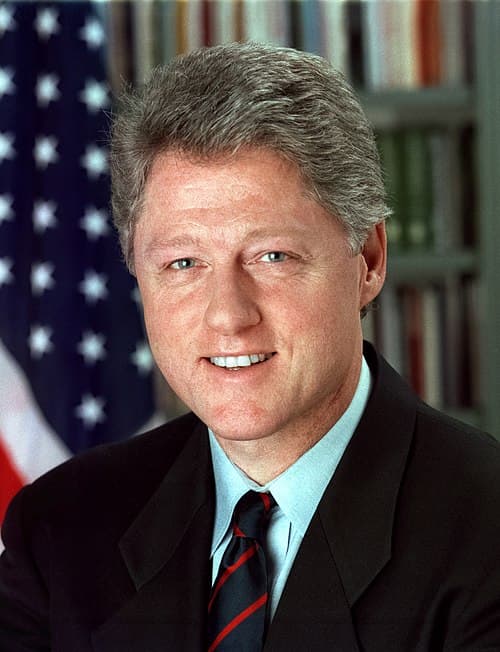
Bill Clinton
PERSON • 2 mentions
President of the United States from 1993 to 2001 (born 1946)
Bradley Edwards
PERSON
American attorney who represented Epstein victims, author of Relentless Pursuit
CU
Custer
PERSON
Surname reference in documents
CB
Custer Battles
PERSON • 2 mentions
Person referenced in documents

Donald Trump
PERSON • 3 mentions
President of the United States (2017–2021, 2025–present)
FR
Freeman
PERSON
Ambiguous surname - refers to multiple people in Epstein documents

Honey
PERSON
Surname reference in documents
HO
Hoxworth
PERSON
Name reference in documents
IG
Isidro Manual Garcia
PERSON
Person referenced in documents
JG
Jack Goldberger
PERSON • 2 mentions
American criminal defense attorney who represented Jeffrey Epstein, partner at Goldberger Weiss P.A. in West Palm Beach, Florida
JH
Jack Patrick Hill
PERSON
Attorney at Searcy Denney law firm, appeared in Epstein-related legal proceedings
JD
Jane Doe
PERSON
Pseudonym for anonymous victims/witnesses in Epstein legal proceedings
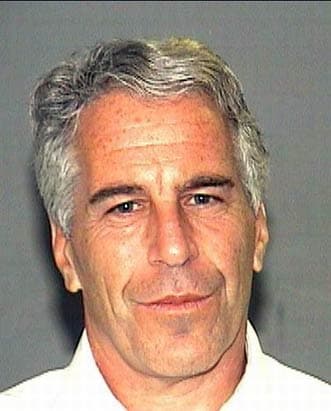
Jeffrey Epstein
PERSON • 4 mentions
American sex offender and financier (1953–2019)
KE
Katherine W. Ezell
PERSON
Person referenced in documents

Kenneth Marra
PERSON
American judge
LA
Lawhon
PERSON
Surname or name fragment in documents
LE
Leneve
PERSON
Namibian rugby union player

Martha Stewart
PERSON
American businesswoman, writer, TV personality (born 1941)
MP
Michael J. Pike
PERSON
Person referenced in Epstein-related documents
Mitch McConnell
PERSON
American politician and lawyer (born 1942)
MI
Mittendorf
PERSON
Name reference in documents
Paul Cassell
PERSON • 2 mentions
United States federal judge
Prince Andrew
PERSON • 2 mentions
Third child of Queen Elizabeth II and Prince Philip, Duke of Edinburgh (born 1960)
RW
Richard Horace Willits
PERSON
Lawyer and former federal prosecutor, represented Epstein in NPA negotiations
RJ
Robert C. Josefsberg
PERSON
Florida criminal defense attorney, appeared in Epstein legal proceedings
RC
Robert D. Critton
PERSON
Individual referenced in Epstein legal documents
RO
Rosen
PERSON
Ambiguous surname - refers to Jeffrey Rosen (Acting AG), Ira Rosen (producer), and others
RY
Rylander
PERSON
Name reference in documents
SE
Seguban
PERSON
Surname or name fragment in documents
SM
Stuart S. Mermelstein
PERSON
Attorney involved in Jeffrey Epstein legal matters.
WB
William J. Berger
PERSON
Person referenced in documents
Blinder, Robinson & Co., Inc.
ORGANIZATION
Organization referenced in documents
Custer Battles, LLC
ORGANIZATION
Organization referenced in documents
De Beers
ORGANIZATION
Organization referenced in documents
Dealers Agency Services, Inc.
ORGANIZATION
Organization referenced in documents
Eagle Hospital
ORGANIZATION
Organization referenced in documents
Eagle Hospital Physicians, LLC
ORGANIZATION
Organization referenced in documents

Financial Trust Company
ORGANIZATION
Financial Trust Company (FTC), Epstein-controlled financial services company that received over $490 million in fees between 1999-2018
First National City Bank
ORGANIZATION
Organization referenced in documents
Florida Software Systems, Inc.
ORGANIZATION
Organization referenced in documents
Ingersoll
ORGANIZATION
Organization referenced in documents
Mason
ORGANIZATION
Entity referenced in documents
National Reserve Life
ORGANIZATION
Organization referenced in documents
Prime One Capital Co.
ORGANIZATION
Organization referenced in documents
Somerset Venturer, Inc.
ORGANIZATION
Organization referenced in documents
Sparks
ORGANIZATION
Organization referenced in documents
SRG Consulting, Inc.
ORGANIZATION
Organization referenced in documents
Sterling
ORGANIZATION
Organization referenced in documents
the Bankruptcy Court for the Southern District of Florida
ORGANIZATION
Organization referenced in documents
the U.S. District Court for the S.D.
ORGANIZATION
Organization referenced in documents
Brevard County
LOCATION
County in Florida, United States

Cayman Island
LOCATION
British overseas territory in the Caribbean
Little
LOCATION
Location referenced in documents

Little St. James Island
LOCATION • 2 mentions
Island in Franklin County, Florida, United States

Salt Lake City
LOCATION
City in and county seat of Salt Lake County, Utah, United States and the capital of Utah
the Cayman Islands
LOCATION
British Overseas Territory in the Caribbean

U.S. Virgin Islands
LOCATION
Unincorporated territory of the United States of America
Statistics
Pages:26
Entities:59
Sponsored