HOUSE_OVERSIGHT_012048 - HOUSE_OVERSIGHT_012101
Document Information
Bates Range
HOUSE_OVERSIGHT_012048 - HOUSE_OVERSIGHT_012101
Pages
54
Source
House Oversight
Date
November 14, 2017
Original Filename
Rock all NoFT.pdf
File Size
5.79 MB
Document Content
Page 1 - HOUSE_OVERSIGHT_012048
se) BusinessWire A Berkshire Hathaway Company tl ROCKEFELLER & co. Rockefeller Partners with Gregory J. Fleming to Create Independent Financial Services Firm Firm to Focus on Wealth Management, Asset Management and Strategic Advisory Viking Global Investors to Back New Firm October 04, 2017 06:30 AM Eastern Daylight Time NEW YORK--(BUSINESS WIRE)--Rockefeller Financial Services, Inc. (“RFS”), the parent company of Rockefeller & Co., and Gregory J. Fleming have agreed to form Rockefeller Capital Management (“Rockefeller” or “the firm’), an independent financial services firm focused on wealth management, asset management and strategic advisory. The firm will look to build upon the 135-year history of excellence in wealth and investment management associated with the Rockefeller family through the addition of broader capabilities and new growth capital. Greg Fleming will become the Chief Executive Officer of Rockefeller upon closing. Mr. Fleming, a longtime financial services executive, was most recently the President of Morgan Stanley Wealth and Asset Management and prior to that, the President of Merrill Lynch. Viking Global Investors LP (“Viking”) will back the firm through an investment by one of its investment funds. Financial terms were not disclosed. “The team at Rockefeller Financial Services has spent years building the highest-quality investment management firm for families and institutions,” said David Rockefeller, Jr., Chairman of RFS. “We look forward to Greg’s leadership and Viking’s support to expand the Rockefeller platform and bring new products and services to our clients.” This combination will allow Rockefeller to build on its distinguished legacy of serving families, including the Rockefeller family, as well as foundations, endowments and institutions. Under Mr. Fleming’s leadership, the firm plans to expand its asset management focus on global equities and ESG investing, add to its wealth management capabilities, and build a strategic advisory business. Rockefeller will have four operating units: Wealth Management, Asset Management, Family Office Advisory, and Strategic Advisory. “| look forward to leading Rockefeller into its next chapter, backed by the Rockefeller family and my new partners at Viking,” Mr. Fleming said. "This is an opportunity to create a unique independent firm focused on wealth management, asset management, and strategic advisory." Rockefeller will be owned by a Viking investment fund, a trust representing the broader Rockefeller family, and the firm’s management. The ownership group anticipates making substantial additional capital investments in Rockefeller over multiple years. This will provide the capital necessary for Rockefeller to execute its strategy, enabling the firm to broaden its products and services and accelerate its growth. HOUSE_OVERSIGHT_012048
Page 2 - HOUSE_OVERSIGHT_012049
The board of the new firm will include Mr. Fleming, David Rockefeller, Jr, Peter M. O'Neill, Reuben Jeffery Ill, and Brian Kaufmann of Viking. Additional independent directors will be added in due course. The transaction is subject to certain customary closing conditions and is expected to close in the first quarter of next year. Ardea Partners acted as the financial advisor to RFS, and Willkie Farr & Gallagher LLP was the legal advisor to RFS. Paul, Weiss, Rifkind, Wharton & Garrison LLP was the legal advisor to Viking. About Rockefeller Financial Services As of June 30, 2017, Rockefeller & Co. has approximately $16.2 billion in assets under advisement for individuals and families, family offices, nonprofit organizations, foundations, endowments, and global institutions. This number includes net assets under management of approximately $10.9 billion plus approximately $5.3 billion in advisory assets. Advised assets represent non-managed assets that receive services, such as financial planning, administration and/or consulting for open architecture programs or other assignments, consolidated reporting, and accounting and tax return preparation services. About Viking Viking Global Investors LP is a global investment firm founded in 1999, with offices in Greenwich, New York, San Francisco, Hong Kong and London. The firm manages approximately $25 billion in capital and uses fundamental analysis to select investments, primarily public and private equity securities, from a wide range of industries globally. Viking is registered as an investment adviser under the U.S. Investment Advisers Act of 1940. Contacts Media: Teneo Strategy Stephen Cohen, 212-886-9332 [email protected] or Vested Binna Kim, 917-765-8720 [email protected] HOUSE_OVERSIGHT_012049
Page 3 - HOUSE_OVERSIGHT_012050
11/14/2017 Viking Global to Back Rockefeller Wealth Firm Led by Fleming - Bloomberg Viking Global to Back Rockefeller Wealth Firm Led by Fleming By Jennifer Surane and Simone Foxman October 4, 2017, 6:12 AM PDT Updated on October 4, 2017, 9:48 AM PDT — Ex-Morgan Stanley executive Greg Fleming to be firm’s CEO — Hedge fund to become majority owner of high-net-worth adviser Greg Fleming, a former top executive at Morgan Stanley, is joining with the Rockefeller family office to create a wealth-management firm that will be backed by Viking Global Investors. Fleming will be chief executive officer of Rockefeller Capital Management, an adviser to the ultra-wealthy that will be acquired by Viking Global after the deal is completed early next year, the New York-based company said Wednesday inastatement _. Terms weren’t disclosed. Fleming, 54, who was most recently president of Morgan Stanley Wealth and Asset Management, left the Wall Street firm last year after CEO James Gorman indicated he planned to stay on at least five more years and installed an older deputy in the bank’s No. 2 position, people with knowledge of the decision said at the time. Before joining Morgan Stanley, Fleming was president of Merrill Lynch & Co. C) Replay In addition to wealth and asset management, the new company will create a unit focusing on advising large multinational companies, Fleming said in a phone interview. ‘Strategic Advice’ “Many wealthy families own companies that they need to take public or sell,” he said. “They’re looking for strategic advice, and they’re looking for interesting investments.” https:/Awww.bloomberg.com/news/articles/201 7-10-04/viking-global-to-back-rockefeller-wealth-firm-led-by-fleming 1/4 HOUSE_OVERSIGHT_012050
Page 4 - HOUSE_OVERSIGHT_012051
11/14/2017 Viking Global to Back Rockefeller Wealth Firm Led by Fleming - Bloomberg He said a deal to purchase the Miami Marlins baseball team that he was involved in earlier this year was an example of the sort of investment the firm’s clients might be interested in. A private-equity fund managed by Viking will own the majority of the business, while Fleming and others in management will invest, he said. A trust representing the broader Rockefeller family will remain an owner, though it’s selling some of its stake as part of the transaction. Rockefeller & Co., which began 135 years ago as the family office of oil baron John D. Rockefeller, oversees about $10.9 billion for families and other institutional investors, and advises on another $5.3 billion, according to the statement. Fleming said that Viking’s capital will be used to expand these businesses, as well as building an advisory arm. “The industry is very fragmented," Fleming said. For independent companies that combine wealth and asset management, as well as advisory, “there’s room, if you do it well, to really generate some market share, especially for a firm with a brand as good as Rockefeller," he added. Viking Global, which was founded by Andreas Halvorsen, has about $25 billion under management, making it one of the biggest hedge funds in the world. The Rockefeller family office was advised by Ardea Partners, an investment bank formed last year by Goldman Sachs Group Inc. veteran Chris Cole and a handful of former colleagues. Willkie Farr & Gallagher LLP provided legal advice, according to the statement. Paul, Weiss, Rifkind, Wharton & Garrison LLP was legal adviser to Viking Global. The Wall Street Journal reported on Fleming’s new role earlier Wednesday. https:/Awww.bloomberg.com/news/articles/201 7-10-04/viking-global-to-back-rockefeller-wealth-firm-led-by-fleming 2/4 HOUSE_OVERSIGHT_012051
Page 5 - HOUSE_OVERSIGHT_012052
11/14/2017 Viking Global to Back Rockefeller Wealth Firm Led by Fleming - Bloomberg Terms of Service Trademarks Privacy Policy ©2017 Bloomberg L.P. All Rights Reserved Careers Made in NYC Advertise Ad Choices Website Feedback Help https:/Awww.bloomberg.com/news/articles/201 7-10-04/viking-global-to-back-rockefeller-wealth-firm-led-by-fleming 3/4 HOUSE_OVERSIGHT_012052
Page 6 - HOUSE_OVERSIGHT_012053
11/14/2017 Viking Global to Back Rockefeller Wealth Firm Led by Fleming - Bloomberg https:/Awww.bloomberg.com/news/articles/201 7-10-04/viking-global-to-back-rockefeller-wealth-firm-led-by-fleming 4/4 HOUSE_OVERSIGHT_012053
Page 7 - HOUSE_OVERSIGHT_012054
11/14/2017 Rockefeller & Co. :: Who We Are OUR FIRM DEFINED Rockefeller & Co. is a distinctive financial services firm that is privately held and independent. http:/Avww.rockco.com/who-we-are 1/6 HOUSE_OVERSIGHT_012054
Page 8 - HOUSE_OVERSIGHT_012055
11/14/2017 Rockefeller & Co. :: Who We Are DRIVEN FOCUSED COMMITTEL BY ON TO the intellectual soundness, assessing investment providing insightful solutions creative acumen, and personal opportunities through a global for the sophisticated needs of dedication of our people lens our clients 11/15/2016 10/3/2017 06/30/2016 About Rockefeller & Co. Thirty Years Later Rockefeller & Co. team members summarize the breadth of services available to non-profit clients. http:/Avww.rockco.com/who-we-are 2/6 HOUSE_OVERSIGHT_012055
Page 9 - HOUSE_OVERSIGHT_012056
11/14/2017 Rockefeller & Co. is privately owned and focused on the diverse investment and financial needs of our sophisticated clientele. From our beginnings as the Rockefeller family office, we are today a full-service, independent asset management and wealth advisory firm, with a mission to help our clients achieve their goals. http:/Avww.rockco.com/who-we-are Rockefeller & Co. :: Who We Are As global citizens—with a geographically unconstrained approach to asset management — we know how important it is to perceive the world in its totality in seeking to benefit from the wealth of opportunities held therein. Our asset management team speaks 13 languages, an indication of the global perspective we apply to our business. TODAY Rockefeller & Co. has approximately $16.9 billion in assets under advisement for individuals and families, family offices, nonprofit organizations, foundations, endowments, and global institutions." ' As of September 30, 2017. This number includes net assets under management of approximately $11.4 billion plus approximately $5.5 billion in advisory assets. Advised assets represent non-managed assets that receive services, such as consulting for open HOUSE_OVERSIGHT_012056 3/6
Page 10 - HOUSE_OVERSIGHT_012057
11/14/2017 Rockefeller & Co. :: Who We Are CEO MESSAGE IW thigvideo, Reubeneffery Ill discusses Rockefeller &(Co.Ocomraitnaant| to,service and stewardship. We pride ourselves on our client focus and the strong relationships we develop with individuals, families, and institutions. PLAY VIDEO OUR LEADERSHIP TEAM http:/Avww.rockco.com/who-we-are 4/6 HOUSE_OVERSIGHT_012057
Page 11 - HOUSE_OVERSIGHT_012058
11/14/2017 REUBEN JEFFERY III Managing Director, President & Chief Executive Officer STUART HENDRY Managing Director, Chief Operating Officer http:/Avww.rockco.com/who-we-are Rockefeller & Co. :: Who We Are JIMMY C. CHANG, CFA Managing Director, Chief Investment Strategist TIMOTHY J. MCCARTHY Managing Director, Chief Compliance Officer & Counsel YVETTE M. GARCIA Managing Director, General Counsel & Chief Administrative Officer ELIZABETH P. MUNSON Managing Director, President of Rockefeller Trust Company, N.A. & The Rockefeller Trust Company (Delaware) DAVID P. HARRIS, CFA Managing Director, Chief Investment Officer KARA VALENTINE Senior Vice President, Director of Ma rketing 5/6 HOUSE_OVERSIGHT_012058
Page 12 - HOUSE_OVERSIGHT_012059
11/14/2017 Rockefeller & Co. :: Who We Are RAYMOND N. DAVID WESTBROOK WAREHAM Managing Director, Managing Director, Chief Financial Head of Wealth Officer Advisory Subscribe for updates COPYRIGHT © 2017 ROCKEFELLER & CO. TERMS OF USE PRIVACY STATEMENT http:/Avww.rockco.com/who-we-are 6/6 HOUSE_OVERSIGHT_012059
Page 13 - HOUSE_OVERSIGHT_012060
11/14/2017 FAPPENINGS 09/08/2016 ROCKEFELLER & CO. PARTICIPATES IN OPERATION BACKPACK 2016 As part of our community outreach initiative, Rockefeller & Co. again participated in Operation Backpack 2016. Thousands of children live in New York City’s homeless and domestic violence shelters. One of the most devastating consequences of homelessness is the impact it has on a child's education. 06/15/2016 ROCKEFELLER RESEARCH SERIES: THE DRIVERLESS ECONOMY Rockefeller & Co. hosted 2016’s first installment of the Rockefeller Research Series at the Boston offices on Wednesday, June 8th with a subsequent presentation in New York at The Modern. http:/Avww.rockco.com/news Rockefeller & Co. :: News 01 02 07/22/2016 ROCKEFELLER & CO. HOSTS GUEST SIXTH ANNUAL NEXUS GLOBAL YOL SUMMIT From July 20th through 22nd in New York, Karen Wawrzaszek, Sen Advisor and Managing Director, and Jack McMackin, Client Associi delegation of “Next Generation” clients al he Sixt Nexus Global Youth Summit. 05/04/2016 MEREDITH BLOCK PRESENTS AT THI ATLANTA SOCIETY OF FINANCE & INVESTMENT PROFESSIONALS (ASF Rockefeller & Co. was invited to discuss Sustainability & Impact Inv: ASFIP in Atlanta, GA on May 4th, where Judy Lee, analyst and me: Institutional Sales and Consultant Relations team, introduced a pres Meredith Block, S&I Vice President and Analyst. 1/3 HOUSE_OVERSIGHT_012060
Page 14 - HOUSE_OVERSIGHT_012061
11/14/2017 Rockefeller & Co. :: News VDAVIV AAKRIS FAINELIS! Al ECSU VWURKKRSMAUP IMMAL | GELFAINY SFEARS AL INAPFUA £ AT INSTITUTIONAL INVESTOR FORUM CONFERENCE On Friday, April 29th, David Harris was featured in a workshop at the Institutional On Tuesday, April 19th Matt Gelfand, Managing Director, participa’ Investor Forum entitled “ESG: Divestment, Governance and Future of Sustainable the Native American Finance Officers Association’s (NAFOA) 341 Investing.” Conference in Phoenix, AZ. Ss Subscribe for updates COPYRIGHT © 2017 ROCKEFELLER & CO. TERMS OF USE PRIVACY STATEMENT http:/Avww.rockco.com/news 2/3 HOUSE_OVERSIGHT_012061
Page 15 - HOUSE_OVERSIGHT_012062
11/14/2017 Rockefeller & Co. :: News http:/Avww.rockco.com/news 3/3 HOUSE_OVERSIGHT_012062
Page 16 - HOUSE_OVERSIGHT_012063
11/14/2017 Rockefeller & Co. :: Insights WRATS NEW 11/01/2017 MONTHLY MARKET REVIEW A “Vixing” Puzzle — Market’s unusual lack of volatility; Be fearful when others are greedy 09/01/2017 MONTHLY MARKET REVIEW Fire & Fury — A chaotic presidential summer vacation; Government shutdown now a distinct possibility Q4 2017 GLOBAL FORESIGHT Q3 2017 GLOBAL FORESIGHT Thirty Years Later — Reagan’s Berlin Wall Speech, Rising Debt, the 1987 Aging Bull — Where we see investment Crash and Implications for Today’s Equity and Fixed Income Markets opporturiitiesafter eightyearsof ising markets http:/Avww.rockco.com/insights#What’s New 1/3 HOUSE_OVERSIGHT_012063
Page 17 - HOUSE_OVERSIGHT_012064
11/14/2017 Rockefeller & Co. :: Insights http:/Avww.rockco.com/insights#What’s New 2/3 HOUSE_OVERSIGHT_012064
Page 18 - HOUSE_OVERSIGHT_012065
11/14/2017 Rockefeller & Co. :: Insights Ss Subscribe for updates COPYRIGHT © 2017 ROCKEFELLER & CO. TERMS OF USE PRIVACY STATEMENT http:/Avww.rockco.com/insights#What’s New 3/3 HOUSE_OVERSIGHT_012065
Page 19 - HOUSE_OVERSIGHT_012066
11/14/2017 Capital Markets Rockefeller & Co., Inc.: Private Company Information - Bloomberg November 14, 2017 6:15 PM ET Company Overview of Rockefeller & Co., Inc. Snapshot Company Overview Rockefeller & Co., Inc. is a privately owned investment manager. It provides its services to High net worth individuals, their families, family offices and related entities, funds organized as domestic or offshore (non-U.S.) companies, limited partnerships, limited liability companies or other types of legal entities; U.S. registered investment companies; Trusts and other fiduciary accounts , Foundations, endowments, charitable and other nonprofit institutions; Taxable and tax-exempt accounts, and Sovereign Nation(s). The firm manages separate client-focused equity and fixed income portfolios. The firm invests in the public equity markets across the globe. It invests in the fixed income m... Detailed Description Phone: 212-549-5330 Fax: 212-549-5524 www.rockco.com 10 Rockefeller Plaza New York, NY 10020 United States Founded in 1882 People Key Executives For Rockefeller & Co., Inc. Mr. Reuben Jeffery Ill, J.D. Managing Director, President, CEO, and Member of the Board Age: 64 Mr. David Westbrook Chief Financial Officer and Managing Director Mr. Stuart Hendry Chief Operating Officer and Managing Director Mr. David Peter Harris CFA Chief Investment Officer, Managing Director, and Portfolio Manager Ms. Yvette Marie Garcia J.D. Chief Administrative Officer, Secretary, Managing Director, and General Counsel Compensation as of Fiscal Year 2017. Rockefeller & Co., Inc. Key Developments Rockefeller & Co Names David Rockefeller, Jr. as Chairman Oct 31 16 Rockefeller & Co announced that director David Rockefeller, Jr. has been appointed chairman of the board of directors. Mr. Rockefeller, a founding member of the board of directors, succeeds Colin G. Campbell, who has served as chairman since 2003. Mr. Campbell will remain a member of the board of directors. As chairman, Mr. Rockefeller will lead the board of directors in its oversight of the firm’s business, and will work closely with Rockefeller & Co. CEO and president, Reuben Jeffery III, in supporting the firm’s delivery of best in class wealth advisory and asset management services to high net worth individuals, families and institutions. Similar Private Companies By Industry Recent Private Companies Transactions Company Name Region Type Date Target @Visory LLC United States : Merger/Acquisition -- 1 Road Partners LLC United States October 3, 2017 11T Partners, LLC United States https:/Awww.bloomberg.com/research/stocks/private/snapshot.asp?privcapld=1082551 1/2 HOUSE_OVERSIGHT_012066
Page 20 - HOUSE_OVERSIGHT_012067
11/14/2017 Rockefeller & Co., Inc.: Private Company Information - Bloomberg Company Name Region 123Jump.com, Inc. United States 1509225 Ontario, Inc. United States Request Profile Update https:/Awww.bloomberg.com/research/stocks/private/snapshot.asp?privcapld=1082551 2/2 HOUSE_OVERSIGHT_012067
Page 21 - HOUSE_OVERSIGHT_012068
11/14/2017 Rockefeller & Co. :: Contact http:/Avww.rockco.com/careers 1/3 HOUSE_OVERSIGHT_012068
Page 22 - HOUSE_OVERSIGHT_012069
11/14/2017 Rockefeller & Co. :: Contact CAREER OPPORTUNITIES Rockefeller & Co. is a distinctive financial services firm that is privately held and independent. We take great pride in the integrity, depth and vision of our professionals. City * — NEW YORK, NY (4 POSITIONS) CLIENT ACCOUNTANT SUMMER INTERN-ASSET MANAGEMENT SUMMER INTERN-MANAGER SELECTION SUMMER INTERN-WEALTH ADVISORY — WILMINGTON, DE (1 POSITION) VP/ SENIOR TRUST ACCOUNTANT Don't see the Job you are looking for? You can submit a resume for future consideration by clicking here. http:/Avww.rockco.com/careers 2/3 HOUSE_OVERSIGHT_012069
Page 23 - HOUSE_OVERSIGHT_012070
11/14/2017 Rockefeller & Co. :: Contact COPYRIGHT © 2017 ROCKEFELLER & CO. TERMS OF USE PRIVACY STATEMENT http:/Avww.rockco.com/careers 3/3 HOUSE_OVERSIGHT_012070
Page 24 - HOUSE_OVERSIGHT_012071
Ss} ROCKEFELLER & CO. ROCKEFELLER INSIGHTS ACTIVE STEWARDSHIP IN FINANCIAL SERVICES Mariela Vargova, Ph.D. Senior Vice President, Senior Sustainability and Impact Analyst Emmanuel L. Sobong, CFA Senior Equity Analyst ROCKCO.COM © 2017 by Rockefeller & Co., Inc. All rights reserved. Does not apply to sourced material. Products and services may be provided by various subsidiaries of Rockefeller & Co., Inc. HOUSE_OVERSIGHT_012071
Page 25 - HOUSE_OVERSIGHT_012072
Ss! ROCKEFELLER & CO. “THE CONCEPT OF ‘ACTIVE STEWARDSHIP’ WAS FIRST INTRODUCED IN THE UNITED KINGDOM IN 2010 WHEN THE COUNTRY’S FINANCIAL REPORTING COUNCIL INTRODUCED THE UK STEWARDSHIP CODE.” - Mariela Vargova, Ph.D. 1 ACTIVE STEWARDSHIP IN FINANCIAL SERVICES HOUSE_OVERSIGHT_012072
Page 26 - HOUSE_OVERSIGHT_012073
®) ROCKEFELLER & CO. Active Stewardship Nine years ago, in mid-March, Bear Stearns, which in 2007 traded at over $125 per share, was sold to J.P. Morgan for $10 per share in a transaction that many mark as the beginning of, what we now know as, the Global Financial Crisis of 2008. While it is said that the passage of time heals all wounds, the disastrous contagion across the global financial landscape, the collapse of numerous large financial institutions and the loss of public trust in the financial services sector remains on the minds of many. Whether it was opaque counterparty exposure, excessive leverage, insufficient risk management, or a lack of corporate transparency, we now know that these factors in combination led to the near collapse of the entire global financial system. While the financial markets have moved well beyond that terrible day in March of 2008, the public trust of a very large sector of the global economy is still severely marred due to continued bad behavior, lack of corporate transparency, accountability and proper risk management, as well as risky business practices. ACTIVE STEWARDSHIP IN FINANCIAL SERVICES 2 HOUSE_OVERSIGHT_012073
Page 27 - HOUSE_OVERSIGHT_012074
®) ROCKEFELLER & CO. Accountability & Reflection As the Governor of the Bank of England Mark Carney said in 2015, the “crisis and its aftermath laid bare that many of our markets didn’t live up to these standards” of transparency, responsibility and accountability, and warned that until markets regain those qualities they cannot retain their social license to operate. | The crisis also underscored the lack of effective shareholder scrutiny of boards of directors and senior management on essential corporate governance issues such as risk management, corporate strategy, independence and long-term value creation. To overcome these shortcomings, the global investment community took on the role of “active stewardship’ in capital markets. It started to adopt stewardship codes to engage with companies in seeking to improve business practices and disclosures. These efforts were focused on seeking major reforms towards financial stability and greater corporate responsibility. 2010: Active Stewardship is Born The concept of “active stewardship’ was first introduced in the United Kingdom in 2010 when the country’s Financial Reporting Council introduced the UK Stewardship Code.” According to the code, stewardship means that investors are expected to proactively engage with companies on issues of strategy, performance, risk, capital structure, and corporate governance, including culture and remuneration. In January 2017, a group of U.S. and international institutional investors with combined assets of $17 trillion followed suit and launched the first U.S. Stewardship Code. The adoption of stewardship codes in many national markets highlights a new set of responsibilities for shareholders. By signing on, institutional investors commit to closely monitor their companies and to use their voting power to improve corporate behavior. As fiduciaries, investors also commit to be more transparent about their own activities to their clients and other stakeholders. Today, active stewardship includes many environmental, social and governance (ESG) issues that are priorities for those investing with a sustainability mindset. As fiduciaries, we at Rockefeller & Co. seek to engage with boards of directors and senior management on ESG issues to identify potential long-term business risks and encourage opportunities such as management quality and ethics, human capital and labor issues, climate change and low carbon economy. We believe that such engagements can have a long- lasting impact both on business profitability and competitive advantage. Beyond the potential long- term investment growth and sustainability benefits of implementing these engagement activities, institutional investors are leading the efforts to rebuild trust in public markets after the Financial crisis, starting where the issues were most apparent — the financial services sector. Embracing Change: Financial Services Sector Borne out of the trauma from 2008 and a new stricter reg- ulatory environment, financial services companies were the first to face this new level of share- holder scrutiny and engagement. Wall Street came under pressure by regulators and society to take significant steps to change its corporate governance guidelines, business practices and culture. 3 ACTIVE STEWARDSHIP IN FINANCIAL SERVICES It may come as a surprise to learn that several large banks led the reform efforts in 2010 by review- ing their business standards and ethics codes and implementing HOUSE_OVERSIGHT_012074
Page 28 - HOUSE_OVERSIGHT_012075
/ / ~~ wD | oe ie > Ta Va IN - fo _—= i E fae = A ~~ oT a y 4 “i = i io / L LJ = om NEN a = IN / RA A | ~ 7 < ( € A ~~ IN | | = 4 f 4 MmiARhR ws AN IN ET n RB aa a F a Us UB = lA ae. IN 2015. THE ‘C # IN me WV idea oF ie \» gn , il f a ~*~ red 7 I = a . ro) a | employee trainings on new values and culture. One of the largest banks signifi- cantly improved public disclosures by adopting new policies and processes on ethics, and publicly committing to high-quality prac- tices to ensure financial stability and economic opportunity.” At the core of these efforts was the goal to be client-oriented, with accountability to stakeholders and regulators alike. It was in the areas of risk man- agement and board oversight that banks made the most visible changes. They created risk com- mittees at the board level and implemented company-wide risk management programs. For ex- ample, we saw how a leading bank in the U.S. also established a new position of Chief Risk Officer reporting to the board and tasked with ensuring that incentive pro- grams in the organization do not encourage excessive or unneces- sary risk-taking.” One of the largest banks also showed corporate leadership by publicly acknowledging responsi- bility for unethical practices and recognizing past mistakes.” They shifted their focus to identify and monitor “material risk-tak- ing” in their organization and increased managerial oversight. Other banks publicly committed to seeking responsible business growth and to conduct their busi- ness in a more transparent way.” ACTIVE STEWARDSHIP IN FINANCIAL SERVICES 4 HOUSE_OVERSIGHT_012075
Page 29 - HOUSE_OVERSIGHT_012076
®) ROCKEFELLER & CO. A iN New Cot - A, Banks and insurance companies play a vital role in our financial system, providing savings, fi- nancing, investment, and pay- ment services to consumers and businesses of all sizes. Our mod- ern economy requires a stable, trustworthy, and efficient finan- cial services industry to function and grow. Active stewardship can serve a role in maintaining a strong financial system. Bank managements should be motivated to pursue best practic- es, having experienced the con- sequences of bad behavior long after the Global Financial Crisis. Tighter regulations, enacted in the aftermath of the Global Fi- nancial Crisis, including Basel III and the Dodd-Frank Wall Street Reform and Consumer Protec- tion Act, have increased capital requirements and compliance costs for financial institutions. They have also limited aggressive forms of lending and risk-taking. In addition, banks have also in- curred substantial legal penalties for poor conduct ranging from consumer loan servicing, market manipulation, fraudulent activity, and money laundering. However, while new regulations and legal settlements have placed incremental financial burdens on the financial services in- dustry, banks and insurers have since made substantial progress to comply with new rules and adjusted their business models accordingly. Balance sheets have been reinforced with additional capital and liquidity, and tighter underwriting. While this may limit loan growth, it has also result- ed in reduced risk costs in their lending businesses. Banks have added headcount in their compli- ance and risk control divisions in an effort to monitor and prevent future misconduct. With a new administration in power in the United States, there is some concern that an aggres- sive pullback of regulations is imminent. However, we believe that higher quality banks and insurers should remain conserva- tive in maintaining their increased regulatory capital, underwriting standards, and compliance and risk monitoring capabilities, as failing to do so could draw the ire of legislators and regulatory bod- ies, as well as the general public. This could lead to additional costs ITAIN CIAL through loan losses, further liti- gation expenses, and even more stringent regulations. We believe that through active stewardship, we can continue to promote re- sponsible practices among these companies. Going forward, we expect banks and other financial institutions with adjusted business models, that exhibit greater stability in earnings and balance sheet qual- ity to benefit financially in the long run. A reduction of earnings cyclicality should result in higher investor confidence in dividend payouts over time, and financial stocks could see higher valuations as a result. Swedish banks are a prime example. Highly capi- talized by global standards, with minimal loan losses in their home market even during economic downturns, Swedish banks have maintained premium valuations (14x to 16x forward earnings, 1.6x to 2x book value) compared to their European peers (many trade at 10x to 12x forward earnings, <x book value). We believe this represents significant potential upside for long-term investors in the sector. HOUSE_ OVERSIGHT _ 012076
Page 30 - HOUSE_OVERSIGHT_012077
Over the past several years, the Sustainability & Impact team at Rockefeller & Co. has implemented active stewardship with the financial services sector. On behalf of our clients, we have engaged with boards of directors and senior management, focusing on the following issues: ¢ Implementing strategy on long-term financial stability ¢ Improving transparency over business standards, values and culture ¢ Establishing sound risk management systems and processes e Compensation and incentive programs tied to long-term performance ¢ Implementing new employee engagement and trainings e Sustainable finance and climate related investments e Financial inclusion and access to underserved populations As engaged investors, we believe we have made significant progress in many of these areas. We worked together with some of the largest banks in the United States in seeking to improve their disclosures over business ROCKEFELLER & CO. standards and encouraged them to embrace ESG in their operations and investments. We continue to monitor their progress through regular meetings and communications. Despite making significant progress in the areas of governing business risk and regulatory compliance, many financia companies continue to be involved in irresponsible business practices. uch behavior can potentially urt long-term shareholder value and damage their corporate reputation. This is where we elieve our active stewardship and constructive shareholder voice can have the most positive impact. ROCKEFELLER & CO. HISTORY OF CO-FILING SHAREHOLDER RESOLUTIONS IN THE FINANCIAL SERVICES SECTOR AFTER 2008: 2013 2012 Wells Fargo, Payday Lending Morgan Stanley, Transparency in the Repurchase Markets Bank of America, Internal Controls Related to Mortgage Loan State Street, Separate Chair & CEO Morgan Stanley, Restore Confidence in the Financial System Wells Fargo, Report on Business Standards J.P. Morgan Chase, Proxy Voting Bank of America, Separation of Chair & CEO J.P. Morgan Chase, Report on Business Standards Bank of America, Report on Business Standards Wells Fargo, Report on Business Standards 2012 2011 2011 Network on Climate Risk (INCR) to engage with companies on sustainability across various sectors. through active stewardship and engagements. We believe that institutional investors should be more proactive than ever as stewards of companies and capital markets, and raise their voice in seeking to ensure good governance, accountability and responsible growth. Our engagements with the Financial services sector are supported by our long-term collaborative work with the nterfaith Center on Corporate Responsibility (ICCR). We also utilize other investor networks such as the UN-backed Principles For Responsible Investment PRI) and the CERES/Investor Finally, the outlook for possible increased deregulation under the new administration could potentially undermine the gains achieved by shareholders ACTIVE STEWARDSHIP 6 HOUSE_OVERSIGHT_012077
Page 31 - HOUSE_OVERSIGHT_012078
S] ROCKEFELLER & CO. [email protected] NEW YORK, NY WASHINGTON, DC BOSTON, MA 10 Rockefeller Plaza 900 17th Street NW 99 High Street, 17th Floor New York, NY 10020 Washington, DC 20006 Boston, MA 02110 T. 212-549-5100 T. 202-719-3000 T. 617-375-3300 ROCKEFELLER TRUST THE ROCKEFELLER TRUST COMPANY, N.A. COMPANY (DELAWARE) 10 Rockefeller Plaza 1201 N. Market Street, Suite 1401 New York, NY 10020 Wilmington, DE 19801 T. 212-549-5100 T. 302-498-6000 http://www.bankofengland.co.uk/publications/Documents/speeches/2015/speech865.pdf http://www.oecd.org/corporate/ca/corporategovernanceprinciples/43056196.pdf ttps://www.fre.org.uk/Our-Work/Publications/Corporate-Governance/UK-Stewardship-Code-September- 2012. pdf https://www.fre.org.uk/Our-Work/Codes-Standards/Corporate-governance/UK -Stewardship-Code.aspx http://www.goldmansachs.com/who-we-are/business-standards/committee-report/business-standards-committee-report.html ttps://www.morganstanley.com/about-us-2015ams/pdf/2015_Proxy_Solicitation_Presentation.pdf https://www.jpmorganchase.com/corporate/investor-relations/document/How_We_Do_Business.pdf on Au RF WN http://about.bankofamerica.com/assets/pdf/Bank-of-America~2015-Business-Standards- Report.pdf These materials are provided for informational purposes only and are not intended, and should not be construed as investment advice. The views expressed are as of a particular point in time and are subject to change without notice. Certain examples are intended to demonstrate aspects of Rockefeller & Co.’s engagement process with companies. Rockefeller & Co. may take different approaches with other companies and there is no guarantee that any engagement effort will be successful. Certain information contained in these materials may constitute “forward-looking statements” and/or may be obtained from, or based on, third party sources that Rockefeller & Co., Inc. believes to be reliable. No representations or warranties are made as to the accuracy or completeness of such statements, and actual events or results may differ materially from those reflected or contemplated. Although the information provided is carefully reviewed, Rockefeller & Co. cannot be held responsible for any direct or incidental loss resulting from applying any of the information provided. Company references are provided for illustrative purposes only and should not be construed as investment advice, or a recommendation to purchase, sell or hold any security. Past performance is no guarantee of future results and no investment strategy can guarantee profit or protection again losses. These materials may not be copied, reproduced or distributed without Rockefeller & Co.’s prior written consent. Cover and interior images: Shutterstock HOUSE_OVERSIGHT_012078
Page 32 - HOUSE_OVERSIGHT_012079
Ss] ROCKEFELLER & CO. alan: 6} pe CD MI. Ss ct Where we see investment opportunities after eight years of rising markets BY DAVID P. HARRIS, CFA pages 2-5 Yesterday Once More; Leveling the Playing Field The Promise of Governance Tomorrow Never Knows BY MICHAEL D. SEO, CFA Reform — South Korea BY JIMMY C. CHANG, CFA pages 10-13 BY MARIELA M. VARGOVA, PH.D. pages 6-9 pages 14-15 GLOBAL FORESIGHT THIRD QUARTER 2017 1 HOUSE_OVERSIGHT_012079
Page 33 - HOUSE_OVERSIGHT_012080
Cover Story Eight plus years into the market recovery, we see valuations extended as most of the gains since 2014 have been driven by multiple expansion rather than earnings growth. In this issue of Global Foresight, we highlight potential investment opportunities, as well as challenges to sustaining this bull market. We examine emerging markets with Jimmy Chang focusing on China, and DAVID P. HARRIS, CFA Chief Investment Officer 212.549.5210 [email protected] The Charging Bull The lifespan of a bull market typically lasts many years, at times ending abruptly. Conversely, the statue now on Lower Broadway known as Charging Bull had a very short-lived initial run on Wall Street. It is not widely known that Charging Bull was never commissioned by the City of New York nor by any one of its major investment banks. Rather, the three-and-a-half-ton statue was simply unloaded one December day back in 1989 by a private citizen in front of the New York Stock Exchange. The benefactor was Italian sculptor Arturo di Modica who cre- ated Charging Bull to demonstrate his belief in the strength of the U.S. economy after the stock market crash in 1987. Hours after di Modica delivered his statue, it was removed by the NYPD and was not expected to be resurrected. This was not the end of this bull’s run, however, since its removal generated an amazing amount of media buzz—particularly noteworthy con- sidering this happened before the internet was available to the general public, so “going viral” was not even a concept. After a couple of weeks of public pressure, Charging Bull was retrieved and installed at its current home at the intersection of Broadway and Whitehall, where it has been a staple for tourists’ photos ever since. The current equity bull market may have more years left, but its age and valuation make the case worth revisiting. As we assess potential investment opportunities, we see valuations elevated in the U.S. market, while we believe Europe is likely to continue its cyclical rebound. We are also encouraged by political devel- opments on the continent. We believe there are a number of attractive emerging market (EM) opportunities, but are mind- ful of the challenges most of these once-rapidly-growing econ- omies face. Frankly, it is not just the bull market that is aging; it is most of the world, which has important sociological, eco- nomic and investment implications as demographics and debt are likely to constrain long-term global economic growth. The Challenge of High Valuations In 1998, professors Robert Shiller and John Campbell con- ceived the cyclically adjusted price-earnings (CAPE) ratio, which averages earnings over a 10-year period to minimize the impact of economic cycles when valuing equity markets. The CAPE ratio has been widely cited as evidence of U.S. stock mar- ket overvaluation. The present U.S. equity CAPE ratio is the GLOBAL FORESIGHT THIRD QUAPTER 2017 article by Dr. Mariela Vargova. Michael Seo on South Korea. We also comment on corporate governance in an highest it has been except during two famous market peaks— 1929 and 1999. We believe the CAPE ratio is cause for concern, but not alarm. It most likely suggests that U.S. equities will have subdued future returns. However, unlike the market’s prior peaks at the end of the Roaring Twenties or the dot-com era, we do not believe we are in the midst of an economic or market bubble. If there is a benefit to the subdued economic recovery we have recently experienced in the U.S. where GDP growth has been averaging about 2.0%, it is that the economy has not built up the excesses that it did during past peaks in the CAPE ratio. By contrast, during the 1920s, U.S. real GDP growth aver- aged 4.2%, and from 1996-1999 it grew at least 4.3% in each calendar year. Since the CAPE ratios in those periods calcu- lated off a base of very strong economic activity and earnings, those periods were more susceptible to crashing than today’s more muted environment. co Ye Cy 904 de BAH, HUMBUG! N.Y. sak Exchange exinchel can’t bear Christmas-gift, | SATURDAY, DECEMBER 16, 1989 / 4 Cleicy ord windy. mid 25, dey; lor. ow tor, onghh J Dota, Page? A theae-ton bronze bul left the american lee tral jar i svay yesterday Re cad LAST GUANE TO WIN A B 310,000 HOME IN POCONOS UP FOR GRABS TODAY: Pages 2, 328 42 Ec mace ear Source: New York Post HOUSE_OVERSIGHT_012080
Page 34 - HOUSE_OVERSIGHT_012081
EM Growth? TABLE 1 highlights data from the 10 largest emerging mar- kets, which account for 89.2% of the MSCI Emerging Mar- kets Index. The growth prospects of this group appear sur- prisingly tepid. The median real GDP growth for the next five years is forecasted at 2.5%, while population growth is expected to be less than 1.0%. The term “emerging markets” was coined in the 1980s, but frankly, most of these econo- mies have already “emerged.” The countries with the most long-term economic growth potential are arguably those with young, growing populations—namely, India, Indone- sia and Malaysia. However, these countries have small eq- uity markets that, when combined, do not even equal South Korea's in size. CAPE ratios are lower outside the U.S., with emerging mar- kets even lower than those in developed markets. While we have been more constructive in recent issues of Global Fore- sight on non-U.S. opportunities, we believe there is limited rel- evance of CAPE ratios when comparing the very deep, diverse set of companies in the U.S. with most other markets. While valuation from 30,000 feet looks better in many places, there are reasons to discount CAPE asa reliable valuation tool when analyzing smaller markets. As an extreme example, Russia has the lowest CAPE ratio in the world, but its equity market is very concentrated in commodity businesses whose earnings are highly cyclical. TABLE 1: KEY DATA FROM THE TEN LARGEST EMERGING MARKETS ESTIMATED INDEX LAST5 YEAR NEVE Geis POPULATION INFLATION MEDIAN FISCAL LEADING 10-YEAR SOVEREIGN GDP GROWTH GROWTH TO RATE POPULATION DpEBT/GDP MARKETP/E BONDYIELD DEBT RATING GDP GROWTH Mer AGE COUNTRY WEIGHT CHINA 27.7% 7.3% 6.4% 0.6% 2.0% 371 x 3.5% SOUTH KOREA 15.4% 2.8% 2.7% 0.4% 1.3% 41.2 i 2.2% TAIWAN 12.2% 2.1% 2.2% 0.2% 1.4% 40.2 b 1.0% INDIA 8.8% 6.3% 7.5% 1.3% 5.0% 27.6 iE 6.5% SOUTH AFRICA 7.0% 1.6% 1.5% 1.6% 6.3% 26.8 z 8.4% BRAZIL 6.7% -0.4% 1.8% 0.7% 8.8% 31.6 . 10.7% MEXICO 3.7% 2.5% 2.4% 0.9% 2.8% 28.0 : 7.1% RUSSIA 3.3% 0.5% 1.5% -0.1% 7.1% 39.3 . 7.6% INDONESIA 2.5% 5.6% 5.3% 1.3% 3.5% 29.9 6.8% MALAYSIA 24% 5.1% 4.6% 1.7% 2.1% 28.2 17.9 3.8% SOURCE MSCI*ASOF BLOOMBERG BLOOMBERG IMF/ BLOOMBERG CIAWORLD MSCI/ BLOOMBERG MAY 31, 2017 BLOOMBERG FACTBOOK BLOOMBERG 89.7% MEDIAN AVERAGE Sources: Bloomberg, IMF, CIA World Factbook, MSCI, S&P Aging Populations China is a market that has looked attractively valued at times relative to its growth prospects. However, China has already A major challenge South Korea and China already face, is an aging population. Countries that are major economic powers are aging rapidly, while most of the youth in the world is concentrated in the poorest nations. One useful country demo- graphic is the median age of its citizens. The U.S., with a median age of 37.9 years (half of all Americans are 38 or older), ranks 62 out of 230 nations, making it one of the older nations in the world, though one of the world’s younger developed markets. Aging in the US. is dwarfed by comparison to most of Europe and Japan. Japan and Germany have median population ages of 46.9 and 46.8, respectively. Remarkably, if people in the U.S. ceased having kids for the next nine years, only then would we have a median population age approaching those today in Japan and Germany. Europe has a median age of 42.7 as a region and is nearly five years older than the US. had a spectacular recovery from a correction that rattled mar- kets globally in August 2015 and again in January 2016. China is the largest emerging market and a vital trading partner for many other key emerging markets, such as Brazil. While Chi- na remains an important source of long-term global economic growth, it faces some cyclical and structural challenges that Jimmy Chang discusses in his article. South Korea is an emerging market that has screened well for valuation and poorly for governance. As the second largest emerging market after China, we believe that South Korea is an important economy and source for potential investments. We cover it in more detail in the articles from Michael Seo and Dr. Mariela Vargova. GLOBAL FORESIGHT THIRD QUARTER 2017 3 HOUSE_OVERSIGHT_012081
Page 35 - HOUSE_OVERSIGHT_012082
CHART 1: CHINA POPULATION DISTRIBUTION 2015 100+ ; 95-99 | 90-94 it 85-89 OE 80-84 een eee 75-79 | 70-74 a 65-69 ee 60-64 ee y 9 a 2950-54 NN EE>E=—E>——E——E—E—E=—{—E:E—E<{EE 45-49 oo —_ee 40-44 Le 35-39 NN EE—E—E<;_—E=—£{T—E=E£E—EEoEo 30-34 OOE—EOO—E—E—E——Ee 25-29 _ eS ee 20-24 EEE 15-19 (I 10-14 eae 5-9 EE Ee 0-4 (| 6% 5% 4% 3% 2% 1% 0% 1% 2% 3% 4% 5% 6% While we consider demographics as an important long-term factor for investing (as discussed in the Third Quarter 2015 issue of Global Foresight: Investing for the Ages), in the short run, it is eclipsed by economic cycles and political changes. For instance, Japan’s and Germany’s economies have each been performing well over the last few years, despite being the second and third oldest countries in the world with the median population age of 47 years (Monaco has the world’s oldest population at 52 years). However, in the longer run, demo- graphics factor into economic growth as consumption declines dramatically in your 50s and 60s from where it is in your 30s and 40s. Health care burdens also increase and presumably need to be funded with higher taxes that will eventually weigh on the disposable incomes of younger workers. The largest emerging market, China, has a median age comparable to the U.S. and arguably has far worse demographics as China faces a big decline in new workers over the next ten years when the number of retirees may exceed the number of new entrants into the labor force as shown in CHART 1. South Korea is the oldest emerging market with a median age of 41. East Asian economies, including Japan, have grown over the years due to migration from villages to urban centers, resulting in productivity gains that have fueled economic expansion. Although this migration may continue a while longer, EM investors should understand the reality that the economic growth case outside of South Asia and Southeast Asia is mostly limited to productivity gains. India has the best demographic profile of any major emerging market as shown GLOBAL FORESIGHT THIRD QUAPTER 2017 "...in the longer run, demographics factor into economic growth as consumption declines dramatically in your 50s and 60s from where it is in your 30s and 40s." in CHART 2, with progressively younger population brackets getting steadily larger, indicating a stable increase in labor force for long-term economic growth. Young Ideas Japan has seen a long, steady economic recovery behind the market-friendly policies of Prime Minister Abe. The U.S. has experienced slow but consistent growth, arguably being driv- en more by its culture of innovation and leadership in the tech sector that has led its market’s returns. By com- parison, Europe has been plagued by infighting and rotating eco- nomic and political crises for most of the last nine years. In addition, when we consider the challenges to growth Europe faces longer-term as a result of its aging populations, it would seem difficult to make the case that the bull market centered in the U.S. may see its next leg driven by its counterparts across the Atlantic. However, we see the European continent energized by the electoral suc- cess of 39-year-old Emmanuel Macron, who not only won the French presidency in May, but also a strong party majority in its legislative body, the National Assembly. This mandate should pave the way for economic reforms that we believe in- vestors will embrace. It is a massive change in sentiment from six months ago when markets were fearing the “anti-European Union” rhetoric of since-defeated Marine Le Pen. Unifying Europe is no easy task, but the best chance appears to be in the hands of a political outsider with pro-business and economic policies that manage to be sufficiently main- stream to keep France from fracturing into far-left and far- HOUSE_OVERSIGHT_012082
Page 36 - HOUSE_OVERSIGHT_012083
CHART 2: INDIA POPULATION DISTRIBUTION 2015 100+ 95-99 90-94 ll 85-89 a 80-84 Oe 75-79 a | 70-74 —e| i, 65-69 CO TEE 60-64 | y 259 ee ee 2950-54 | 45-49 es ee 40-44 —————— ee 35-39 —E 30-34 (NNN EE>E=—E———E=—=—™_—=—E=—~_—>—=—E>—FTFcEo—E=co 25-29 ea 20-24 SS ee 15-19 (NNSA EE—>—E>E—E>E—E—E 10-14 aaa 5-9 Sa 0-4 eee 6% 4% 2% 0% 2% 4% 6% right camps. So far, Macron has fostered a good rapport with German Chancellor Angela Merkel, whom we expect to be re- elected in September. The political risk in continental Europe is now centered in Italy, but we were encouraged that its far- left Five Star Movement suffered key defeats in recent regional elections, which could bode well for their next national elec- tion, likely to occur next spring. In addition to Italy, Brexit remains a large political risk for 2018 as the weakened Tories will be negotiating with at best a tenuous alliance with the Democratic Unionist Party (DUP) and at worst may face another election and lose power alto- gether. We believe it is too soon to make major portfolio shifts based on Brexit, but we are watching this closely as substan- tial progress in negotiations will need to materialize months ahead of the March 2019 deadline. By this time next year, we would expect to see traction in negotiations and stability in Parliament or begin to consider reducing exposure to the Brit- ish pound and companies exposed to that economy. Aging Business Models The “FANG” stocks—Facebook, Amazon, Netflix, and Google —have disrupted countless business models while seeing their own revenues and market values soar. Empty storefronts from Manhattan to malls in Middle America are evidence of the disruption facing rapidly aging business models like brick-and- mortar retail. When you include Apple and Microsoft in the FANG stocks, the six companies account for 12.83% of the S&P 500 Index. At the start of this bull market on March 9, 2009, these companies had a market value of $326 billion. Today, their market value is $2.97 trillion. Their sheer size alone suggests that they cannot keep compounding like they have. To maintain its ascent, the U.S. bull market will need new sectors to emerge as market leaders. The challenge will be economic growth. Companies that disrupt mature businesses, like many of the FANG stocks have, typically have not relied on a robust global economy to generate their amazing revenue growth. Most other sectors in the S&P 500 Index, however, would likely benefit from a stronger economy. Summary and Conclusion Many bull markets have interesting back stories as to how they begin and end. The latest bull market can arguably be traced back to March 9, 2009 when the CEO of Citibank, Vikram Pandit, released a memo to employees announcing that the company was having its best quarter since early 2007. The market embraced that memo as a sign the worst was over, especially for the beleaguered banking sector. The S&P 500 rallied from that day and eight years later is up nearly four-fold. As we consider future returns, valuation matters. In March 2009, the S&P 500 was selling for roughly 10 times depressed earnings and is now selling for about 18.7 times. The U.S. market leads the world in innovative companies and is priced for it. As we look for opportunities overseas, we see political fortunes improving in Europe with some lingering headwinds that may appear in 2018. We could argue the same in the U.S. as the leadership in the House of Representatives can easily switch parties next year. If Europe can continue its economic improve- ment, we see the potential for more gains ahead for the region after a robust start to 2017. The emerging markets offer some attractive valuations, but are not likely to be a panacea for global growth as the largest ones face the same challenges of aging and maturing development that confront most of the developed world. This bull market may keep moving, but like all of us past a certain age, not at a pace that we are used to. @ GLOBAL FORESIGHT THIRD QUARTER 2017 HOUSE_OVERSIGHT_012083
Page 37 - HOUSE_OVERSIGHT_012084
| JIMMY C. CHANG, CFA Chief Investment Yesterday Once More; Tomorrow Never Knows Strategist 212.549.5218 [email protected] China’s housing boom once again fueled global growth, but how long will it last? consequential publication in 1776? With this article being published around July 4, you would probably think we are hinting at the US. Declaration of Independence. That would be a good response, but unlike the laws of physics or mathematics, there is not exactly a right answer to such a question. One could also point to a book published on March 9, 1776, that has had a transformative impact over time. It has a long title: An Inquiry into the Nature and Causes of the Wealth of Nations, and is generally referred to as The Wealth of Nations. This seminal work supposedly took Scottish economist and philosopher Adam Smith 10 years to complete, and was based on notes and observations spanning 17 years. It challenged the mercantilist and physiocratic economic theories that domi- nated the intellectual debate during the mid-18th century. Mercantilist theory held that countries grow wealthier by maxi- mizing domestic production and exports, and was the basis for European imperialism. Physiocratic theory postulated that the wealth of nations was derived from the value of agricultural and land development, and could trace the inspiration to China’s agrarian traditions. The Wealth of Nations marked the birth of modern capitalism and also had an influence on our Founding Fathers. James Madison cited the treatise in arguing against the need for a cen- tral bank in 1791; Thomas Jefferson referred to it as the best book on money and commerce. In February 1977, in celebra- tion of America’s Bicentennial, the Federal Reserve Bank of Richmond published the paper The Relevance of Adam Smith. It pointed out the striking similarities between the intellectual spirit of The Wealth of Nations and the Declaration of Independence. Both railed against the heavy hand of the state, and emphasized individual liberty and the harnessing of indi- vidual self-interest to the welfare of the greater society. | et us begin with a trivia question—what was the most So it is perhaps a tie between these two publications. One gave birth to modern economics that created the greatest prosperity GLOBAL FORESIGHT THIRD QUAPTER 2017 in human history, and the other marked the founding of argu- ably the most powerful and wealthiest nation ever. Do Not Bet Against the House At around the time that America celebrated its Bicentennial, China reached a historic turning point. Chairman Mao passed away in September 1976, and a month later, the arrest of the Gang of Four marked the end of the decade-long Cultural Revolution. Deng Xiaoping then returned to power and embarked on reforms that powered roughly 10% real GDP growth per annum for the next four decades and lifted more than 800 million people out of poverty. Today, the Chinese economy is the largest in the world based on purchasing power parity. Interestingly, China’s rise had little to do with Adam Smith’s free-market capitalism. While China’s unprecedented economic ascension was indeed fueled by unleashing the energy and the profit-seeking self-interest of the individual, its development has always been shaped by the government's heavy hand. Successive Five-Year Plans, which first started in 1953, continued to guide social and economic development, and key industries remained mostly state-owned. Some argued that China has been pursuing a mercantilist policy in building up its manufacturing base to drive exports and accumulate foreign exchange reserves. Indeed, its share of global exports has remarkably grown from about 1% in 1980 to around 15% by 2016, the largest in the world. Some claimed that China even produces more sombreros than Mexico. In the wake of the Global Financial Crisis in late 2008 and early 2009, China realized that the country’s growth model could no longer depend on external demand, and responded by unleashing massive stimulus for infrastructure projects. It worked so well that China’s growth skyrocketed, asset prices shot up, and the housing market became overheated. Globally, China’s reflation and the Fed’s quantitative easing generated an echo bubble in commodities and emerging market stocks. HOUSE_OVERSIGHT_012084
Page 38 - HOUSE_OVERSIGHT_012085
By early 2011, China had to cool the economy and tackle the rising leverage and speculation. Policymakers also declared a shift in China’s growth model to be more consumption-driven. The transition probably turned out to be more complicated than Chinese policymakers may have expected. Unlike the infrastructure-driven growth model under which the pace of growth could be controlled by adjusting the pipeline of construction projects, a consumption-driven model would let the “invisible hand” of self-interested consumers exert more influence. In other words, a consumption-driven model would cede more control to market forces and experience more unpredictability. While variability in realized growth versus projection is a fact of life in the rest of the world, Chinese officials have sought to minimize this uncertainty as the failure to hit growth targets could affect confidence. With an estimated homeownership rate around 90% and many families holding multiple apartments as investments, China's housing market has an outsized impact on wealth, consumption and construction, as well as the general economy. As shown in CHART 1, the rapid housing price increases in 2010 and 2011 prompted regulators to cool the housing market, which resulted in price declines in 2012. However, the slowing economy soon pushed them to relax home purchase restrictions. Predictably, housing prices rebounded as a response, with double-digit increases in tier-one cities, prompting measures to tame the bubble once again by 2014. It is quite clear that there isa momentum-driven herd mentality among Chinese buyers, as expressed in the Chinese adage “buy up market, not down” (ik # F HK). In an attempt to wean investors off real estate and channel their capital to highly leveraged state-owned companies, policymakers engineered a stock market rally in the second half of 2014. As the rally gained momentum, the herd flocked in (buy up market, not down) and pumped up a huge stock bubble that eventually blew up by mid-2015. This was followed by the renminbi’s official devaluation in August 2015 to alleviate the pressure from the surging U.S. dollar. Confronted with slowing economic growth, declining foreign exchange reserves, rising capital flight, and a collapsing stock market, Chinese policymakers shelved the reform agenda and went back to the proven playbook—infrastructure and real estate buildout. China even eased property investment rules for foreign institutions and individuals. The result was perhaps the biggest housing bubble ever in China’s tier-one cities—prices surged over 30% year-over-year by the spring of 2016. It is as if China was validating the old physiocratic economic theory which postulated that the wealth of a nation lies in its land development. For years China has justified its rapid property price increases on the basis that it is just catching up to global metropolises such as London, New York, Hong Kong, Tokyo, etc. The latest price surge has indeed accomplished that and more. For example, a run-of-the-mill two-bedroom apartment in Beijing’s financial district now costs more than $2,000 per square foot. Skyrocketing domestic property prices have also distorted many Chinese investors’ views of foreign properties—they are bargains relative to prices in Beijing, Shanghai and Shenzhen. It is no wonder Chinese investors have bid up property prices in many major cities around the globe. As a sign of the times, Warren Buffett’s Berkshire Hathaway HomeServices has recently teamed up with China's Juwai.com to bring American residential property listings to China. An Under-Appreciated Reflation Story According to a U.S. State Department memo released by WikiLeaks, when Chinese premier Li Keqiang was serving as the party secretary of Liaoning Province in 2007, he supposedly told a U.S. ambassador that he did not have confidence in the provincial GDP data. He preferred to monitor three indicators to assess the state of the local economy: the rail freight volume, electricity consumption and bank loan volume. In 2010, The Economist introduced the Li Keqiang Index, which takes the weighted average of these three metrics’ annual growth rates to track Chinese economic growth. The Li Keqiang Index has indeed tracked the direction of China’s reported GDP data as shown in CHART 2. There was a clear growth deceleration in 2015 and a strong rebound in 2016. CHART 1: YEAR-OVER-YEAR CHANGE IN CHINA NEW PROPERTY PRICES 35% 30% 25% 20% 15% 10% 5% 0% -5% -10% 2006 2007 2008 2009 2010 2011 Mle China 70 Cities New Apartment Prices Mumm China First Tier Cities New Apartment Prices 2012 2013 2014 2015 2016 2017 Source: Bloomberg GLOBAL FORESIGHT THIRD QUARTER 2017 HOUSE_OVERSIGHT_012085
Page 39 - HOUSE_OVERSIGHT_012086
CHART 2: THE LI KEQIANG INDEX VERSUS CHINESE REAL GDP GROWTH 30% 16% 15% 9 25% 1aBe 20% 13% 12% 15% 11% 10% 10% 9% 8% 0, 5% ai 0% ov 2006 2007 2008 2009 2010 ML) Kegiang Index (Left Hand Side) Furthermore, CHART 3 shows that, directionally, the Li Keqiang Index maps pretty well to the ebb and flow of Chinese property prices, confirming the thesis that property prices have much impact on the Chinese economy. A close examination of CHART 2 raises an interesting observation: Lately, the Li Keqiang Index has accelerated much more than the reported GDP growth. One could surmise that China’s actual GDP growth (measured on a year-over-year basis rather than on an annualized sequential change) may have been greater than the reported 6.9% in the first quarter of 2017. This could be rationalized by the conjecture that the actual growth in early 2016 may have been lower than the reported 6.7%. One indicator of China’s strong growth is the year-over-year changes in its imports as shown in CHART 4. Imports surged 24% year-over-year in U.S. dollar terms, and 31% in renminbi terms during the first quarter of 2017. To be fair, part of the surge was due to the rebound in commodity prices. However, China’s $58 billion import from Germany and Japan, two non- commodity countries, was still up an impressive 17% year-on- year. In the first quarter of 2016, China’s imports from those two countries had declined 10%. 2011 Mlle Chinese Real GDP Year-over-Year (Right Hand Side) 2012 2013 2014 2015 2016 2017 Source: Bloomberg We believe China’ strong reflation, thanks to the infrastructure buildout and the unprecedented property price increases in major cities, may have been the most impactful yet under- appreciated catalyst that fueled the synchronized global economic recovery since the summer of 2016. The good news is that China’s growth is likely to remain healthy for the remainder of 2017, as stability is paramount ahead of the quinquennial power transition this autumn. However, the uncertainty starts to rise as we look beyond 2017. Shadow Boxing Over the past few years, China watchers have been urging Chinese policymakers to introduce bold reforms and market forces to tackle the country’s rapidly growing leverage, over capacity, and housing bubble. However, with stability being of utmost importance, policymakers could not afford to take a chance with the market's invisible hand. Tough reforms in the context of slowing economic growth also ran the risk of jeopardizing social stability. Now, however, with the economy ona much stronger footing, Chinese policymakers have started to push through some needed reforms. CHART 3: LI KEQIANG INDEX VERSUS YEAR-OVER-YEAR PRICE CHANGE IN CHINESE PROPERTIES 30% 25% 20% 15% 10% 5% 0% -5% -10% 2005 2006 2007 2008 2009 2010 Mumm || Kegiang Index GLOBAL FORESIGHT THIRD QUAPTER 2017 2011 Mls «Year-over-Year Price Change in Chinese Properties 2012 2013 2014 2015 2016 2017 Source: Bloomberg HOUSE_OVERSIGHT_012086
Page 40 - HOUSE_OVERSIGHT_012087
With Chinese President Xi calling for a heightened effort to reduce systemic financial risk, regulators have started to tackle the bloated shadow banking system. Since taking office in February, Guo Shuqing, China's top banking regulator—with the nickname “Whirlwind Guo” for his no-nonsense management style—has already issued a series of directives to reduce leverage. For example, banks were asked to implement higher standards for interbank lending and for selling third- party wealth management products (a primary source of funding for the shadow banking system). In April, China's top insurance regulator was detained for corruption, and the regulatory agency has since taken disciplinary actions against some high-profile insurance companies that have deviated from the core insurance business by using shorter-term funding to finance corporate takeovers, as well as overseas acquisition sprees. Tomorrow Never Knows While we believe China’s economy should hold up well going into the 19th Party’s Congress this autumn, its growth is likely to decelerate, and the lagged effects of the tightening measures on the shadow banking system and on the housing market could become quite visible by 2018. Housing price changes could be flat or even negative by this time next year. If the past is any guide, Chinese policymakers may once again loosen property purchase restrictions next year to stimulate growth. Therein lies the moral hazard—it is well known that Chinese policymakers would not risk a sizeable correction in the housing market, and therefore would reflate again to strengthen economic growth. However, with property prices in China’s tier-one cities already on par with or even exceeding those of major global cities, it will be hard to rationalize another CHART 4: YEAR-OVER-YEAR CHANGE IN CHINESE IMPORTS (BILLIONS OF USD) 60% 50% 40% 30% 20% 10% 0% -10% -20% -30% 2011 2012 2013 These measures have driven up China interbank lending rates, as well as corporate bond yields. The squeeze on the shadow banking system has led to a big jump in aborted bond issuance. In May, China’s net corporate bond issuance dropped to a record low of negative 217 billion yuan as some bond issuers were unable to roll over their maturing bonds. On the housing front, various cities have rolled out new administrative measures with the aim of keeping housing prices flat. A few cities even resorted to the draconian measure of a 10-year lock-up period for new apartment purchases—buyers of new apartments built on recently auctioned off land are prohibited from selling their units for a decade. China has also continued to stem the capital outflow. Starting this July, Chinese banks and financial institutions have to report all domestic and overseas cash transfers of more than 50,000 yuan ($7,700), compared to the prior threshold of 200,000 yuan ($29,338). Funds transferred overseas are prohibited from purchasing properties, investments, and insurance products. Various new restrictions have also been placed on Bitcoin trading exchanges, as well as overseas use of credit cards. In short, it appears that capital flight from China will get somewhat more difficult for ordinary citizens. 2014 2015 2016 2017 Source: Bloomberg round of substantial price increases. In other words, using the property market as a lever to stimulate economic growth is not a sustainable long-term solution. Although equity volatility picked up some in June, most equity investors still appeared to be basking in the glow of a synchronized global recovery. However, the canary in the coal mine may be iron ore: having rallied from the December 2015 low of $37.50 per metric ton to nearly $95 in February 2017, it has lost roughly 30% to $65 a metric ton by the end of June. In the final analysis, the global economy has benefited from China’s rapid growth. However, China will likely be at a crossroads as President Xi embarks on his second term in 2018. Will policymakers inflate the housing bubble further to support economic growth? Will they find new levers to keep the economy growing above 6% per annum, or will they settle for a lower but more sustainable pace? The law of large numbers portends that the next five years will likely be more challenging for Chinese policymakers than the last five years. @ GLOBAL FORESIGHT THIRD QUARTER 2017 HOUSE_OVERSIGHT_012087
Page 41 - HOUSE_OVERSIGHT_012088
10 MICHAEL D. SEO, CFA Leveling the Playing Field Investment opportunities in the changing South Korean landscape mostly agricultural economy to a powerful exporter with the 11th highest GDP in the world. Its growth has been built on the back of its chaebol system — conglomerates of companies that are family-controlled, often spread across multiple industries. While this structure has served Korea well in terms of rapidly developing its industrial base, it has also been associated with ongoing governance issues. The risks associated with investing in Korea have historically resulted from its stock market having a much lower valuation than those of comparable economies. S outh Korea has grown over the last 50 years from a poor As an example of recent governance issues, consider that Chey Tae-Won, chairman of the SK chaebol, had been serving a four- year prison sentence for embezzling $40 million from the SK companies. He was pardoned by former President Park Geun- Hye in the summer of 2015 and soon found himself back in the familiar leadership role of his family conglomerate. Political actions such as this pardon or nepotism within large publicly CHART 1: CHAEBOL % SHARE OF THE KOSPI INDEX 60% 50% 40% 30% 20% 10% 0% Market Cap Ms Samsung ME Hyundai Me SK GLOBAL FORESIGHT THIRD QUAPTER 2017 es |G Ma | otic Director of Equity Research 212.549.5232 [email protected] traded corporations are common, if not expected, in Korea. Throughout its history, the nation’s gyrating politics and powerful businesses maintained a symbiotic relationship that propelled tremendous GDP growth while tarnishing the political reputation of a nation. The cultural and regulatory disregard of misconduct is at the root of Korea's corporate governance, especially among the chaebols. The five most recognizable chaebols as shown in CHART 1 (Samsung, Hyundai, SK, LG, and Lotte) collectively represent over 50% of the market capitalization of the Korea Composite Stock Price Index (KOSPI) and 47% of its revenues. Samsung Electronics alone represents a 21% share of the KOSPI market capitalization and 21% share of employees which is emblematic of the chaebols’ influence in Korean society. During Park Geun-Hye’s 2012 presidential election campaign and political career, Ms. Park had been critical of past presidents who had abused the power to pardon individuals and sought to limit the government’s role in granting pardons. Her decision Revenue Employees Source: Bloomberg HOUSE_OVERSIGHT_012088
Page 42 - HOUSE_OVERSIGHT_012089
Pyongyang, North Korea, is home to the largest stadium in the world with a seating capacity of over 114,000. to release Chey Tae- Won accelerated the demise of her political career. Ironically, she finds herself in prison awaiting trial while the Korean stock market continues to trade at a discount to peers. In addition, MSCI Korea’s relative valuation is also suppressed by the mercurial behavior of North Korea whose recent missile tests have dominated global headlines. A truly embarrassing South Korean political scandal emerged in the fall of 2016 when a journalist discovered a computer belonging to a personal confidant of President Park Geun-Hye. The contents of the device, belonging to Choi Soon-Sil, revealed that she had access to confidential presidential documents including speeches that were ultimately altered and influenced by Ms. Choi Soon-Sil. In the weeks following this revelation, the mighty chaebols of Samsung, Lotte and SK were once again linked to the current political impropriety. It is alleged that members of these chaebols (among others) were coerced into ca ioe | saat = WE, i wine - et eee OD =| — ~~ | aa) ome) cme GS Source: Getty Images contributing large sums of money to a foundation established by Ms. Choi Soon-Sil in order to maintain a positive relationship with President Park Geun-Hye. The Korean stock market languished as a result of President Park Geun-Hye’s miscues as shown in CHART 2. The performance of the MSCI Korea Index starting from the beginning of President Park Geun-Hye’s term was down 25% by late August 2015, which coincided with Mr. Chey Tae-Won’s pardon in the week prior. The Korean market drastically underperformed the MSCI Asia ex. Japan Index which was down 14% and the MSCI ACWI Index which was up about 9% during that period. Korea's recursive political environment was frustrating for many Koreans. It is widely believed that chaebols sapped the entrepreneurial vigor of small business owners and young adults who were experiencing unemployment rates of over 9%. However, the decision to impeach President Park Geun-Hye on CHART 2: PERFORMANCE SINCE PARK GEUN-HYE INAUGURATION 130 120 110 100 We 90 NAY 80 yw? SK Chairman Pardoned 70 PESSTERP RSQ ST PSESSTERP KROES TE PESETER KOZ sce S 2 Fnunwveesesa Freese rz Nua veesaA Fe RFA HDA! A Np N ON NN NBN NYnwp NVQ On NUN NY BN Nn ND on NM NY NN eg<ssgsgeesezsee2zeses8rgeszsgezgeges8 Seggee2eeee8 wm wm Ww ww wioaw i pep RK eB Fg F BRA RF BY uaa gs uuu gna Ge = MSCI KOREA MSCl ACWI Me VISCI ASIA EX. JAPAN Source: Bloomberg GLOBAL FORESIGHT THIRD QUAPTEP 2017 141 HOUSE_OVERSIGHT_012089
Page 43 - HOUSE_OVERSIGHT_012090
12 CHART 3: PERFORMANCE SINCE DECISION TO IMPEACH 130 125 120 115 110 105 100 95 90 Dec 2016 Jan 2017 Feb 2017 Mar 2017 Ms =~MSCI KOREA mu SCI ACW! December 9, 2016 proved to be a pivotal point for the country. The large-scale protests seeking a permanent change from the cronyism that runs rampant within Korea were finally being heard. It is no coincidence that since December 9, 2016, the MSCI Korea Index has outperformed as shown in CHART 3 the same indices it lagged during President Park Geun-Hye’s tenure. Investors and Korean citizens alike were finally sensing hope with the leading presidential candidates. Moon Jae-In’s eventual victory on May 10 secured the belief that a president in the Blue House was working for the people and not exclusively for Mu VISCI ASIA EX. JAPAN “President Moon Jae-|In has Apr 2017 May 2017 Jun 2017 Jul 2017 Source: Bloomberg and is expected to help navigate the complex political relationship with North Korea. President Moon Jae-In, who was once the Chief of Staff to President Roh Moo Hyun (1998-2008), assisted President Roh in implementing the “Sunshine Policy.” The Sunshine Policy was an attempt by the South Korean government to engage North Korea with a softer, humanitarian stance in an effort to build a peaceful relationship. President Moon will likely reengage communications with North Korea in a similar manner. The president appointed Jang Ha-Sung, formerly the dean of Korea University’s Business the chaebols. President Moon Jae-In has increased investor expectations for corporate reforms and it is critical for the nation to continue down this path of weakening family ties that maintain a stranglehold on the Korean economy. President Moon Jae-In has quickly appointed key members for advisory and cabinet roles that are aligned with the vision of eliminating corruption, enhancing corporate governance, and revitalizing a fractured economy. Korea’s decision to install the Terminal High Altitude Area Defense system (THAAD) under the prior administration resulted in escalating political tension between China and South Korea. In the weeks leading up to President Park’s impeachment hearings, China discouraged its citizens from traveling to Korea and restricted the sale of Korean consumer goods. President Moon Jae-In has moved swiftly to improve the crumbling relationship with China by reevaluating the deployment of the system. A friendly call with President Xi Jinping after his election gradually improved the relationship GLOBAL FORESIGHT THIRD QUAPTER 2017 increased investor expectations for corporate reforms and It is critical for the nation to continue down this path of weakening family ties that maintain a stranglehold on the Korean economy.” School, to the position of Chief of Staff for Policy. Jang Ha-Sung is a familiar face within the world of corporate reform as the founder of the People’s Solidarity for Participatory Democracy (PDSD), a civil organization pursuing shareholder reform. The PDSD was formed in the late 1990s and successfully fought for minority shareholders in legal battles against SK Telecom, Samsung Electronics, and others. Another governance advocate with a boisterous history of shareholder activism, Kim Sang-Jo, a professor of economics at Hansung University and executive director of “Solidarity for Economic Reform” (SER) was appointed as the Head of the Fair Trade Commission (FTC) in early June. Kim Sang-Jo and Jang Ha-Sung are longstanding allies in the field of corporate activism with Mr. Kim succeeding Mr. Jang as first chairman of PDSD’s future organization in 2006. The Korean stock market has been a star performer in 2017 with the KOSPI up approximately 24%, year-to-date in $USD basis and outperforming neighboring markets, such as Japan, HOUSE_OVERSIGHT_012090
Page 44 - HOUSE_OVERSIGHT_012091
CHART 4: REGIONAL VALUATIONS P/E RATIO (12M FORWARD) P/B RATIO 2011 2012 2013 2014 2015 2016 2017 RETURN ON COMMON EQUITY 14% 13% rc 12% a: 2011 2012 2013 2014 2015 2016 2017 Mam MSCI ACWI Mam MSCI KOREA Hong Kong and China. Despite the recent strong performance, the market is still inexpensive relative to other regions and indices. MSCI Korea's price-to-book (P/B) ratio of 1.1x and price-to-earnings (P/E) (12 month forward) ratio of 9.4x are 30% and 31% lower than MSCI Asia ex. Japan Index, respectively as shown in CHART 4. Three Korean industry groups or sectors currently offer compelling relative valuations when contrasted against other geographies. The Korean Automobiles and Components industry group currently trades at a P/B ratio of 1.0x which compares favorably to Japan’s P/B ratio of 1.4x. When comparing the automobile original equipment manufacturers (OEM), Korean OEMs trade at a P/B ratio near 0.5x book, which is a steep discount to their Japanese rivals. The Korean Automobiles and Components industry group appears undervalued when you also consider the fact that the five-year average return on equity (ROE) was 14.4% versus 11.8% for the Japanese group. Utilities is another sector where the valuation disparity is stark. Korea's largest electricity producer currently trades at a P/B ratio of 0.4x despite three stellar years of strong operating margin and prudent capital discipline. By comparison, the Mmmm MSCI ASIA EX. JAPAN 2011 2012 2013 2014 2015 2016 2017 DIVIDEND PAYOUT RATIO 2011 2012 2013 2014 2015 2016 2017 Source: Bloomberg Japanese utility sector currently trades at P/B ratio of 1.0x with the Tokyo regional electricity producer trading at a P/B ratio of 0.6x despite ¥10 trillion of possible unreserved liabilities stemming from a 2011 nuclear disaster. Finally, Korean banks are currently trading at a P/B ratio of 0.8x, which compares favorably to Japan's 1.0x and Italy’s 0.9x. It is estimated that the loan portfolios of the Korean banks have improved in recent years as evidenced by improving ROE. In the most recent fiscal year, Korean banks generated ROE of 7.7%, outperforming Japan's 7.5% and Italy’s 6.7%. These discrepancies in valuation have just started to close with the new president and the formation of his cabinet, but Korean market multiples have the potential to converge closer to global levels with a successful execution of corporate reform. We are not advocating that the new government implement heavy- handed methods to incite change among the chaebols. Instead, we believe that working with the chaebols in enhancing governance, minimizing cross holdings, creating board independence and minority shareholder protection, would be well received by global investors and mostly rewarding to chaebol valuations. For a further look at corporate governance in South Korea, please see the following article by Dr. Mariela Vargova. © GLOBAL FORESIGHT THIRD QUARTER 2017 HOUSE_OVERSIGHT_012091 13
Page 45 - HOUSE_OVERSIGHT_012092
14 MARIELA M. VARGOVA, PH.D. The Promise of Governance Reform—South Korea n his inauguration speech on May 10th, the newly elected South Korean President Moon Jae-In vowed to put chaebol reform at the forefront of his political and economic agenda. “Under the Moon Jae-In administration,” he asserted, “the collusive link between politics and business will completely disappear.’ The promise of meaningful governance reform comes in the wake of the biggest political corruption scandal in Korea that saw the impeachment and the arrest of democratically elected President Park Geun-Hye on charges of “collecting or demanding $52 million in bribes”? from Samsung, one of Korea’s largest family-owned conglomerates, known as chaebol. The presidential scandal in Korea also led to the latest high- profile corporate arrest in the country. In February, Jay Y. Lee, vice chairman and acting leader of Samsung’s conglomerate empire, was arrested on accusations of bribery to former President Park and her inner circle in exchange for securing a controversial merger of Samsung Construction and Trading Corporation and Cheil Industries. While the image of a handcuffed Lee sent shockwaves across the business world, his arrest was not unprecedented. In the past, his father Lee Kun- Hee, current chairman of Samsung, was convicted twice of corruption and pardoned. Similarly, in 2007, Hyundai’s Chairman Chung Mon-Koo was found guilty of fraud and pardoned. And in 2013, SK’s Chairman Chey Tae-Won was convicted of embezzlement and later pardoned.’ The family- owned conglomerates have long dominated the economic life of modern Korean society, accounting for roughly 50% of the total share of the Korean stock market. Their close ties with the government and state bureaucracy have fueled growing public distrust and frustration with the nation’s leadership and has led to increased shareholder discontent. Korea’s Governance Practices The collusion of politics and business in Korea highlights the poor practices of corporate governance and business ethics. Corporate governance studies on Asia consistently rate Korea as lagging in governance behind leaders in the region.* Korea underperforms its peers in the areas of board independence, ethics and transparency in corporate governance. GLOBAL FORESIGHT THIRD QUAPTER 2017 Senior Vice President, Senior Sustainability and Impact Analyst 212.549.5236 [email protected] Korea, however, has not always been viewed as the laggard in Asia’s governance landscape. Right after the Asian Financial Crisis of 1997-1998, the country underwent important governance reforms that sought to quickly and significantly increase corporate board independence and the overall governance of publicly-traded Korean companies. For instance, the proportion of listed firms with at least one outside director grew from 34% in 1999, to 62.3% in 2000, to reach 94% in 2007.° In 2001 and 2003, the country’s Security Exchange Acts required large listed companies (those with about $2 billion in market capitalization) on the Korea Exchange and KOSDAQ to have at least three outside directors and for one half of their boards to be independent. In 2004, the board independence requirements were further strengthened with the stipulation that there be a majority of independent board directors for large companies. This is on par with leading international best practices in corporate governance. The Korean Commercial Code also stipulates that outside or independent directors must not be related to management while acting as fiduciaries.® This resonated with the impetus towards greater board independence to mitigate the role of corporate insiders and create new independent auditing structures within Korean corporations. In 2012, the Korean Commercial Code was revised to further enhance the board’s fiduciary duties. It required the approval of two-thirds of directors for all internal transactions and for new business dealings with third parties. If transactions or deals benefit founding families or management at the expense of minority shareholders, the approving directors will be personally liable for the losses.’ Notwithstanding these developments towards good governance, ethics controversies involving Korean chaebols surged over the past several years. A prime example is the notorious Hyundai Motor land bid in 2014 for which the company paid the excessive price of $10 billion, three times the land’s market value of $3 billion, angering investors and hurting shareholder value. According to reports, while the boards of directors of Hyundai consortium companies voted to unanimously approve the deal, the company’s outside directors were kept in the dark about the price as it was considered by management to be a confidential matter. All these instances point to a serious lapse in the HOUSE_OVERSIGHT_012092
Page 46 - HOUSE_OVERSIGHT_012093
enforceability of existing corporate governance rules and a lack of accountability. They call into question the true independence of the boards of Korean conglomerates and the ability of outside directors to effectively oversee management and protect all shareholders’ interests. Recent research on Korean-listed companies shows strong social ties between independent directors and management of Korean conglomerates. While 87% of boards are in theory independent, only 62% are when one considers social ties.* The composition of Korean boards also poses concern as the percentage of directors with business or management backgrounds has decreased from 45.2% in 2004 to 28.4% in 2011.° This, while the number of former public officials has sharply increased from 2.7% in 2004 to 8.9% in 2011. Interestingly, in Korea's boardrooms, the inclusion of professors and lawyers as independent directors has become common. The need for stronger independent oversight and monitoring of management is especially important for Korean chaebols as they concentrate the managerial power into the board’s chairman, a member of the founding family. The chairman’s control over all subsidiaries of the conglomerate through the management council and appointment of management of all affiliated firms has been a serious concern for minority shareholders seeking more accountability and managerial transparency. Protecting Shareholder Interests At the core of Korea’s governance challenges lies a structural problem at the chaebol: the complex system of cross- shareholdings. On average, the founding family of Korean conglomerates owns about 10% of the parent company’s shares, while other listed subsidiaries own more than 30%.!° The founding family is a shareholder in the other chaebol subsidiaries, and the subsidiaries reciprocate by owning shares in the other companies. The circular ownership structure has been of investor concern as it provides a framework for related party transactions and potential conflict between family shareholders and external shareholders. For many, these concerns have been factored into what has been called for over a decade the “Korean discount.” With the promise of sweeping governance reform by the new President Moon Jae-In, foreign investors are looking today for better protection of minority shareholder rights and stronger constraints on chaebol businesses. On the politico-economic reform agenda are topics such as: 1) reforming the Korean Commercial Code by mandating separate elections for audit “With the adoption of a Stewardship Code, our expectations are that shareholders in Korean equities, and especially in chaebols, will use their voice more actively to promote positive governance change and long-term shareholder value creation.” committee members, 2) allowing shareholders of parent companies to sue directors of subsidiary firms, 3) lowering eligibility thresholds for filing representative lawsuits, 4) regulating compensation for controlling shareholders and management, as well as 5) introducing mandatory electronic and cumulative voting.!! One of the most ambitious goals includes proposed amendments to Korea’s Monopoly Regulation and Fair Trade Act, introducing constraints on chaebol businesses and banning all existing circular ownership structures of chaebols within three years.” The calls for big governance reform in Korea were first publicly voiced by chaebols’ shareholders themselves. In 2015, at Hyundai Motor’s annual general meeting, shareholders openly confronted management about the controversial land deal and proposed a new governance committee to strengthen oversight and accountability. In an unprecedented fashion, their shareholder action prompted the company to set up a separate Corporate Governance and Communication Committee consisting of four independent directors, and to engage in shareholder outreach. In 2016, Hyundai Motor officially announced its new “Corporate Governance Charter” in an effort to enhance transparent business management and to promote shareholder rights.!° Similarly, in November 2016, Samsung announced a “Comprehensive Roadmap to Enhance Long-term Shareholder Value Creation,” committing to improve governance by increasing its board’s independence, as well as the diversity and breadth of experience of its directors. Changing Korea’s Business Culture The expected governance reform in Korea is an opportunity not only to disentangle politics from business, but also to create better institutional protection for all shareholders. It also serves as an opportunity to change the culture of investing in the country. In February, Korea's Financial Services Commission introduced the country’s first Stewardship Code, encouraging big investors like pension plans and asset managers to actively engage with investee companies and to monitor their management decisions. This trend towards investor stewardship and active ownership echoes the progress already made in other Asian markets such as Japan, Hong Kong, Malaysia, the Philippines, Singapore, and Thailand. With the adoption of a Stewardship Code, our expectations are that shareholders in Korean equities, and especially in chaebols, will use their voice more actively to promote positive governance change and long-term shareholder value creation. @ GLOBAL FORESIGHT THIRD QUARTER 2017 HOUSE_OVERSIGHT_012093 15
Page 47 - HOUSE_OVERSIGHT_012094
16 <3) ROCKEFELLER & CO. ROCKCO.COM [email protected] New York, NY Washington, DC Boston, MA 10 Rockefeller Plaza 900 17th Street NW 99 High Street 3rd Floor Suite 603 17th floor New York, NY 10020 Washington, DC 20006 Boston, MA 02110 212-549-5100 202-719-3000 617-375-3300 Rockefeller Trust Company, N.A. The Rockefeller 10 Rockefeller Plaza Trust Company (Delaware) 3rd Floor 1201 N Market Street New York, NY 10020 Suite 1401 212-549-5100 Wilmington, DE 19801 302-498-6000 http://www. koreatimes.co.kr/www/nation/201 7/05/356_229150.html https://www.nytimes.com/2017/03/04/business/south-korea-samsung- bribery-lee.html https://www.nytimes.com/2017/03/04/business/south-korea-samsung- bribery-lee.html http://www.acga-asia.org/upload/files/research_preview/20161014021202_3.pdf http://www.eastasiaforum.org/201 1/07/08/corporate-governance-reform-in-korea/ “Reform of Corporate Governance,” in Economic Crisis and Corporate Restructuring, Cambridge University Press, 2003, p. 308. http:/Awww.acga-asia.org/upload/files/CG%20Watch%20201 2. pdf https://papers.ssrn.com/sol3/papers.cfm ?abstract_id=1195313 https://papers.ssrn.com/sol3/papers.cfm?abstract_id=2824303 1°"Reform of Corporate Governance,” in Economic Crisis and Corporate Restructuring, Cambridge "Asian Corporate Governance” Asia Pacific GS Sustain, April 11, 2017. '2"Asian Corporate Governance” Asia Pacific GS Sustain, April 11, 2017. University Press, 2003, p. 287. “Asian Corporate Governance” Asia Pacific GS Sustain, April 11, 2017. © Orn aoak oH = Cover image: Getty Images Certain information contained in this document may constitute “forward-looking statements.” No representations or warranties are made as to the accuracy or completeness of such statements, and actual events or results may differ materially from those reflected or contemplated. This document is provided for informational purposes only and is not intended, and should not be construed, as investment, tax or legal advice. This document does not purport to be a complete statement of approaches, which may vary due to individual factors and circumstances. Company references are provided for illustrative purposes only and should not be construed as investment advice or a recommendation to purchase, sell or hold any security. Although the information provided is carefully reviewed, Rockefeller & Co., Inc. cannot be held responsible for any direct or incidental loss resulting from applying any of the information provided. Past performance is no guarantee of future results and no investment or financial planning strategy can guarantee profit or protection against losses. These materials may not be reproduced or distributed without Rockefeller 4 Co., Inc.’s prior written consent. Copyright 2017 © Rockefeller & Co., Inc. All Rights Reserved. Products and services may be provided by various subsidiaries of Rockefeller & Co., Inc. GLOBAL FORESIGHT THIRD QUAPTER 2017 HOUSE_OVERSIGHT_012094
Page 48 - HOUSE_OVERSIGHT_012095
a ROCKEFELLER NY ASSET MANAGEMENT November 1, 2017 A “Vixing” Puzzle | Market’s unusual lack of volatility; Be fearful when others are greedy ctober has historically been a spooky month in which some of the biggest market declines took place — the crash of 1929, 1987’s Black Monday, the financial crisis of 2008, etc. This October, however, there were only treats and no tricks — the biggest one-day movement for the S&P 500 Index during the month was a 0.81% gain, and the biggest down day had a mere 0.47% drop. That said, there was quite a bit of turbulence among individual stocks. The Information Technology sector had a huge month, with the so-called FANG stocks (Facebook, Amazon, Netflix, Google) leading the way up, while some old economy bellwethers and the much beleaguered brick and mortar retailers took a beating. The rising hope of U.S. tax reform and the continued strength of the global economic expansion lifted U.S. Treasury yields as well as commodity prices from oil to copper. The U.S. reflation expectation also boosted the greenback. European sovereign bond yields and the euro declined after ECB President Draghi announced a reduction in monthly asset purchases starting in 2018, but promised a longer duration of QE. China completed its quinquennial leadership transition at the conclusion of the 19th Party Congress, which should usher in a new era with more focus on the quality of growth over the quantity. President Xi now awaits President Trump’s State visit to Beijing on November 84, Investors will likely be focused on issues ranging from trade to North Korea, though major breakthroughs appear unlikely. Lastly, there is still one unresolved sleeper issue that may come back to roil the market — will a new bipartisan deal be reached in time to fund the U.S. government beyond December 8, when the current continuing resolution expires? arket Review JIMMY CHANG, CFA Chief Investment Strategist 212-549-5218 [email protected] Equity Markets Indices’ 9 ~ ie 7 10/ erica 7 Chose aor MSCI All Country World 487 497 2.0% 17.7% S&P 500 2519 2575 2.2% 15.0% MSCI EAFE 1974 2003 1.5% 18.9% Russell 20002 1491 1503 0.8% 10.7% NASDAQ 6496 6728 3.6% 25.0% TOPIX 1675 1766 5.4% 16.3% KOSPI 2394 2523 5.4% 24.5% Emerging Markets 1082 1119 3.5% 29.8% Fixed Income 2-Year US Treasury Note 1.49% 1.60% 12 41 10-Year US Treasury Note 2.33% 2.38% 5 -7 BarCap US Agg Corp Sprd 1.01% 0.95% -6 -28 BarCap US Corp HY Sprd 3.47% 3.38% -9 -71 Australian (AUD/$) 1.28 1.31 -2.3% 6.3% Brazil Real (Real/$) 3.16 m27 -3.3% -0.5% British Pound ($/GBP) 1.34 1.33 -0.9% 7.6% Euro ($/Euro) 1.18 1.16 -1.4% 10.7% Japanese Yen (Yen/$) 113 114 -1.0% 2.9% Korean Won (KRW/$) 1145 1120 2.2% 7.6% US Dollar Index (DXY) 93.08 94.55 -1.6% 8.1% Commodities Gold 1280 1271 -0.7% 10.3% Oil 51.7 54.4 5.2% 1.2% Natural Gas, Henry Hub 2.89 2.80 -3.0% -24.0% Copper (cents/Ib) 296 310 4.9% 23.8% CRB Index 183 188 2.4% -2.6% Baltic Dry Index 1356 1534 13.1% 59.6% SOURCE: BLOOMBERG MONTHLY MARKET REVIEW NOVEMBER 2017 1 HOUSE_OVERSIGHT_012095
Page 49 - HOUSE_OVERSIGHT_012096
The Original Big Short The Amsterdam Stock Exchange, founded by the Dutch East India Company in 1602, is recognized as the world’s oldest stock exchange. It facilitated a secondary market to trade stocks and gave rise to trading clubs during the mid- 17: century where speculators would congregate. Messengers would rush to and from the exchange to update pricing to customers. In 1867, the invention of the stock- ticker machine, also known as the ticker tape, obviated the need for messengers. Stock transaction data was transmitted by telegraph to a ticker tape that would continuously print out abbreviated company names (ticker symbols) followed by the price and volume data. Thomas Edison later upgraded the system to reach a printing speed of one character per second. Ticker tape eliminated the need for messengers and allowed people to trade in “real time” from long distance. In 1900, 14 year-old Jesse Lauriston Livermore started working as a quotation board boy in the Boston office of Paine Webber. His job was to update the board with information coming off the ticker tape. He became interested in the behavior of stock prices and began recording price movements that enabled him to spot patterns prior to sizeable advances and declines. A fellow office boy later talked him into speculating on a stock on margin at a bucket shop. Two days later, Jesse sold the position with a $3.12 profit. He soon quit his job and started trading for a living. Jesse made his first $1,000 (around $27,600 in today’s dollars) at the age of 15. He was later banned by most bucket shops in Boston as he had outfoxed many of the shady operators. By the age of 20, he had accumulated $10,000. Then came the big payday — the Panic of 1907 — during which Jesse shorted the market and made $1 million ($25 million in today’s dollars). He would top this feat and live up to the reputation as “The Great Bear of Wall Street” by shorting the market in 1929 for an astounding $100 million profit ($1.43 billion in 2017!), making him one of the richest men in the world. The combination of elevated investor complacency and a tightening Fed makes the market vulnerable to a pullback. Unfortunately, the concept of diversification probably never crossed Jesse’s mind. He somehow managed to lose all his money and was bankrupt by 1934. The bankruptcy resulted in an automatic suspension of his membership on the Chicago Board of Trade. In 1940, the legendary trader, suffering from depression, shot himself in the cloak room of Manhattan’s Sherry-Netherland Hotel. Rise of the Machines How things have changed from those simpler days when humans were doing the trading. Today, with the advent of technology, market activity is dominated by passive and various quantitative strategies. It is estimated that fundamental discretionary investors now account for only 10% of the trading volume. Big inflow into major ETFs prompted buying across the board regardless of company specific issues and valuations. Big data and machine learning are the new buzz words. Forbes recently featured a quant fund run by three twenty-somethings. Their assets under management was in the low tens of millions of dollars, yet they averaged $1 billion in transactions, or 10,000 to 40,000 trades each day. Since there are only 86,400 seconds in a day, this fund would generate a trade every 2.16 to 8.64 seconds if it worked around the clock. Much of the decision making and trade execution, of course, has been taken over by software algorithms. These whiz kids employed statistical arbitrage trading strategies in stocks and currencies, and closed out all trading positions at the end of each day. The allure of sophisticated computer models trouncing their human competitors has continued to attract inflow to quant funds. It is estimated that quantitative hedge funds now manage more than $1 trillion, about one-third of the $3 trillion hedge fund industry. While there are indeed brilliant quant managers who have delivered strong returns over a long period of time, the sheer size of the industry means there are likely more pretenders than contenders. Given that many funds employ similar strategies (e.g., trend following), a reversal in trend could create disruptive market movements, not to mention the threat of rogue algorithms wreaking havoc on the market. MONTHLY MARKET REVIEW NOVEMBER 2017 2 HOUSE_OVERSIGHT_012096
Page 50 - HOUSE_OVERSIGHT_012097
A “Vixing” Puzzle Equity volatility has been unusually low for much of 2017. The Volatility Index (VIX), which measures the implied volatility of S&P 500 Index options and has been viewed as a barometer of equity market volatility, has drifted to all-time lows. Over a span of more than 7,000 sessions going back to the start of 1990, the VIX Index’s average and median closing values have come out to 19.4 and 17.6, respectively. It was a rare occurrence for the VIX to collapse below 10 — there were only 9 such occasions out of 6,802 trading sessions prior to 2017, or 0.13% of the times. Year-to-date in 2017, however, there were already 35 sessions with the VIX closing below 10. Another way to look at the lack of volatility is to tally the number of trading sessions when the S&P 500 Index had a daily change of more than 1% in either direction. There were only 8 such sessions so far in 2017, compared to 48 and 72 such occasions in 2016 and 2015, respectively. It seems ironic that the market should be this steady with arguably the most mercurial and unconventional president in modern history at the helm atop the free world. Perhaps investors have grown numb to all the chaos and controversies. It is as if Washington’s dysfunction and a divided America were just fodder for the hyperventilating media, and markets were behaving as if all will be fine when the Republicans pass the tax reform to prime the pump for the 2018 mid-term elections. Time will tell if this period of eerie calm is prescient or misguided. Unintended Consequences The decline in market volatility has made shorting against the VIX futures and various VIX ETPs (exchange-traded products) quite popular and profitable in recent years. The net short position on VIX futures has progressively climbed to new highs over the last couple of years. Another phenomenon was the rise of “volatility control” investment strategies, supposedly favored by many hedge funds and insurance companies. These strategies in essence adjust a portfolio’s allocation between equity and cash to maintain a targeted level of volatility at the portfolio level. In an environment of declining volatility, more assets would be allocated to equities — the equity allocation would even exceed 100% when the market’s realized volatility is below the targeted volatility. On the other hand, as volatility ticks up, the equity allocation would be scaled back. While these strategies have enjoyed strong returns during this stretch of progressively lower equity volatility, they may be planting the seeds of a market correction. Market makers and dealers on the other side of the growing short VIX trades would need to employ various S&P 500 option strategies to hedge their long VIX positions. There is the concern that a decline in the S&P 500 Index could trigger adjustments to these hedging positions that would exacerbate the market decline. Similarly, should volatility suddenly spike up, the aforementioned volatility control strategies would be cutting equity concurrently, which could amplify the market decline similar to the downward selling pressure that the so- called portfolio insurance products generated during the crash of 1987. We wonder if any investors and regulators truly appreciate how these strategies, in concert with various rapid fire trades generated by machine-learning based algorithms, could impact market movement and liquidity should there be an exogenous shock. Only time will tell. exposures Fear vs. Greed There is an adage that one should be fearful when others are greedy and greedy when others are fearful. Judging by the depressed levels of the VIX Index, the enthusiastic speculation over bitcoin as well as other variants of cryptocurrencies, and surveys that indicated strong investment sentiment, it is clear that greed has been on the rise. Can this euphoria continue for a while longer? Of course. However, in our opinion, the combination of elevated investor complacency and a tightening Fed makes the market vulnerable to a pullback, though the timing of it is hard to predict. The aforementioned issues with various trading strategies could further add fuel to fire in the event of a market decline. That said, with the macro and earnings backdrop remaining positive, we would view potential selloffs as a buying opportunity rather than the start of a protracted market downturn. e MONTHLY MARKET REVIEW NOVEMBER 2017 3 HOUSE_OVERSIGHT_012097
Page 51 - HOUSE_OVERSIGHT_012098
3 ROCKEFELLER S ASSET MANAGEMENT For More Information on Rockefeller & Co: ROCKCO.COM [email protected] New York, NY Washington, DC Boston, MA 10 Rockefeller Plaza 900 17th Street NW 99 High Street 3rd Floor Suite 603 17th Floor New York, NY 10020 Washington, DC Boston, MA 212-549-5100 20006 02110 202-719-3000 617-375-3300 Rockefeller Trust Company, N.A. The Rockefeller 10 Rockefeller Plaza Trust Company (Delaware) 3rd Floor 1201 N Market Street New York, NY 10020 Suite 1401 212-549-5100 Wilmington, DE 19801 302-498-6000 This paper is provided for informational purposes only. The views expressed by Rockefeller & Co.’s Chief Investment Strategist are as of a particular point in time and are subject to change without notice. The information and opinions presented herein have been obtained from, or are based on, sources believed by Rockefeller & Co. to be reliable, but Rockefeller & Co. makes no representation as to their accuracy or completeness. Actual events or results may differ materially from those reflected or contemplated herein. Although the information provided is carefully reviewed, Rockefeller & Co. cannot be held responsible for any direct or incidental loss resulting from applying any of the information provided. Company references are provided for illustrative purposes only and should not be construed as investment advice or a recommendation to purchase, sell or hold any security. Past performance is no guarantee of future results and no investment strategy can guarantee profit or protection against losses. These materials may not be reproduced or distributed without Rockefeller & Co.'s prior written consent. ’ Index pricing information does not reflect dividend income, withholding taxes, commissions, or fees that would be incurred by an investor pursuing the index return. 2 The Russell 2000® Index is a registered trademark of the Russell Investment Group. Russell Investment Group is the owner of the copyright relating to this index and is the source of its performance value. Copyright 2017 © Rockefeller & Co., Inc. All Rights Reserved. MONTHLY MARKET REVIEW NOVEMBER 2017 4 HOUSE_OVERSIGHT_012098
Page 52 - HOUSE_OVERSIGHT_012099
News, Quotes, Companies, Videos 11/14/2017 An Inside Look at Rockefeller & Co. - Barron's | wsJ | WSJ LIVE | MARKETWATCH | DJX MORE ASIA EDITION BARRON'S PENTA Rock of Ages Family-wealth advisor Rockefeller & Co. was hit by both the financial crisis and the death of its CEO. Not only did it survive, it thrived. Email Print 0 Comments Order Reprints By RICHARD C. MORAIS September 15, 2012 John D. Rockefeller's family office, Rockefeller & Co., was founded in 1882. It began selling its expertise to other families in 1980, and by mid-2008 it had $28 billion of clients' assets under its hood. Then came a tragic event that could have brought the firm to its knees. In September 2009, as the financial crisis raged, Rockefeller's chief executive, James S. McDonald, shot himself behind a car dealership in Dartmouth, Mass. While world markets continued their downward spiral, it took a year for the Rockefeller Family Trust, which owns 100% of the multifamily office's voting rights, to get McDonald's successor in place. It's hard to imagine a more dangerous situation for a financial-services firm to be in. Destabilized from within and without, most wealth managers in such circumstances would have been unable to contain the stampede of clients heading out the door. And yet, Rockefeller's assets under advisement and administration actually rose 52%, to $35 billion, in the three years through this past June. Client retention since the 2008 recession has been 97%, 1% higher than in the entire past decade. "Despite the turbulence of the period when | stepped in, it was a remarkably strong franchise and business," says Reuben Jeffery III, Rockefeller's CEO for the past two years. "It was a real testament to what had been created by generations long before me, including most of the people who are still here today." Penta's rare peak inside Rockefeller reveals that, for all the outward signs of serenity, the firm is hardly on autopilot. Jeffery, looking every bit the Wall Street incarnation of Cary Grant, is a former Goldman Sachs partner who in 2007 went to work as George Bush's undersecretary of state for economic, energy, and agricultural affairs, after first serving as the president's post-9/11 special advisor for Lower Manhattan development. In June 2008, Société Générale Private Banking closed on its purchase of a 37% economic share in Rockefeller & Co. Needing to strengthen its balance sheet during the recent euro crisis, the French bank has been under pressure to shed noncore assets. Therein lay an opportunity. This summer Jeffery quietly midwifed the sale of Société Générale's stake to Lord Jacob Rothschild's RIT Capital Partners. That closed-end fund is the investment vehicle for the London branch of the Rothschild family, and has 1.9 billion pounds ($3 billion) under management. The deal is expected to close at the end of this month. It's a union that should provide some valuable marketing opportunities. In these unsettled times, it's easy to imagine rattled new wealth wanting to tap the joint expertise of these experienced families that have managed to keep their heads down http:/Awww.barrons.com/articles/SB50001 424053111904881 40457760931 2447134388 Most Popular 1. Baker Hughes: It’s Still a GE Company...But That’s Not the Only Problem ae Qualcomm: Broadcom’s Got ‘A Lot of Leverage,’ Says Instinet 3 - Nvidia Rising: Dazzles Street At the Supercomputer Show 1/3 HOUSE_OVERSIGHT_012099
Page 53 - HOUSE_OVERSIGHT_012100
11/14/2017 An Inside Look at Rockefeller & Co. - Barron's and their assets intact over several Apple’s ‘Secular’ Problem, Per T Rowe generations and right through the * Price upheavals of history. 5 - Shopping Day Madness! Why Investors Any new clients will be dealing with Aren’t Crazy for Alibaba Rockefeller Financial Services, the trade name of Rockefeller & Co. Some $7 billion SEE FULL LIST of Rockefeller Financial's $35 billion pile are "assets under management"; the rest are assets under advisement or administration. Rockefeller provides its 1 Bitcoin: The 298 clients either financial, trust, and tax World’s Most advice, and the like, or service through its Dramatic Bubble portfolio-tracking product for wealthy Ever? families, Rockit Solutions. Latest Market Videos Rockefeller offers financial products from 2 Barron's Bounce: other firms but still believes in running its Barbie's Bargain own funds in 10 core areas, such as Shares : global equities and fixed income. David Reuben Jeffery Ill, Rockefeller Harris, Rockefeller's chief investment Financial's CEO Evan Kafka for officer, says large multinationals with their ‘ A Barron's . , . 3 D.Live: Tapping triple-A ratings and mountains of cash Asia's Tech Boom need to be viewed as "the new sovereigns" during a period when government finances are deteriorating. The firm claims that its global funds are stars, but it keeps a lid on details. Prodded by Penta, Rockefeller reluctantly produced a "confidential" performance sheet on its 10 core funds but barred us from publishing the results. We can confirm that out of 10 offerings, seven global-equity and small-cap funds have consistently outperformed indexes over long periods of time. One area of Rockefeller & Co. know-how has been built out of the Rockefeller family's 50-year record of integrating environmental, social, and governance concerns into its portfolio and investment decisions. Last fall, for example, Rockefeller hooked up with the Ocean Foundation, a nonprofit focused on marine conservation, to find "profitable investment opportunities that restore and support the health and sustainability of the world's oceans." Through such distinctive offerings, Jeffery hopes to reel in new money, both family and institutional. "We're talking to sovereign entities," he says. "They have pools of capital that need to be deployed, and they need to find competent, trustworthy managers in [relevant] areas of investment activity." Fees for managed assets invested in house funds typically run from 1% (for up to $25 million in assets) to 0.5% (over $50 million). Rockefeller targets families with $30 million; new clients are generally subject to a minimum $100,000 annual fee. Pure investment advice on a $50 million to $100 million portfolio typically costs 40 to 60 basis points, says the firm's president, Austin V. Shapard. Rockefeller has priced its services, he says, for "a fair profit margin, not a crazy one." Portfolio-tracking service Rockit deftly handles exotics like intrafamily loans and the fluctuating price of ranch cattle. Its 23 clients typically pay 3 to 7 basis points on the $13 billion that runs through the Rockit platform. This, too, is a hidden asset that Jeffery is leveraging into a boutique powerhouse. E-mail: [email protected] Email Print 0 Comments Order Reprints Latest in Barron's Penta 1, Luxury Boot Camp: Four Days at Ranch 4.0 2. Howto Buy a Used Jet At a Bargain Price http:/Awww.barrons.com/articles/SB50001 424053111904881 40457760931 2447134388 2/3 HOUSE_OVERSIGHT_012100
Page 54 - HOUSE_OVERSIGHT_012101
11/14/2017 An Inside Look at Rockefeller & Co. - Barron's 3 - The Family Portrait 4 - Tax Bonuses Earned From Renting Out Second Homes 5 - Howto Time Miami’s Condo Market 0 comments 41 PERSON LISTENING Want to participate in the discussion? SUBSCRIBE NOW F Already a subscriber? Log in for complete access. | | + Follow | Share | | Post comment as... NEWEST OLDEST Powered by Livefyre Customer Service Create an Account About Barrons.com Customer Center Subscribe to Barron's Contact Us Magazine Subscribers: Advertising Activate Your Digital Access Live Help Masthead Privacy Policy (Updated 10/19/2017) Cookie Policy (Updated 10/19/2017) Data Policy Copyright Policy Subscriber Agreement & Terms of Use Your Ad Choices Community Guidelines Copyright ©2017 Dow Jones & Company, Inc. All Rights Reserved http:/Awww.barrons.com/articles/SB50001 424053111904881 40457760931 2447134388 Also From Barron's Conferences Reprints Classifieds College Program Find a Broker Barron's in Japanese Return to Top Tools & Services Mobile Site Email Newsletters Barron's on iPad/iPhone Barron's on Android Watchlist Video Annual Reports StockGrader Barron's 400 Economic Calendar Stock & Mutual Fund Listings Commodities, Options & Annuities Listings Fund Prospectuses 3/3 HOUSE_OVERSIGHT_012101
Entities Mentioned
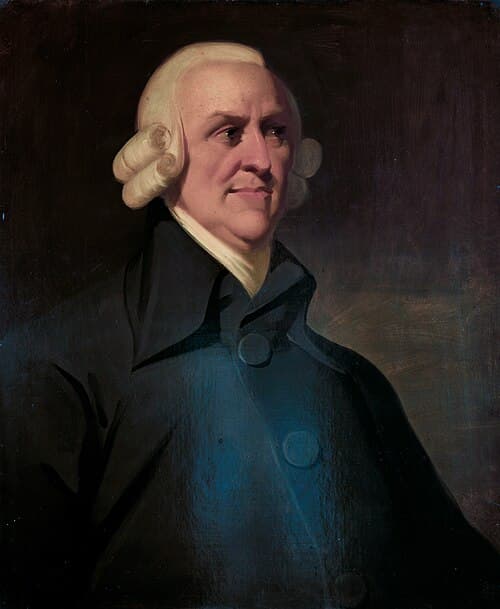
Adam Smith’s
PERSON
AH
Andreas Halvorsen
PERSON
Angela Merkel
PERSON • 2 mentions
Chancellor of Germany from 2005 to 2021

Anne Hathaway
PERSON
American actress (born 1982)

Arturo di Modica
PERSON
AS
Austin V. Shapard
PERSON
Baker Hughes
PERSON
BK
Binna Kim
PERSON
Brian
PERSON
Cary Grant
PERSON
CH
Chang
PERSON
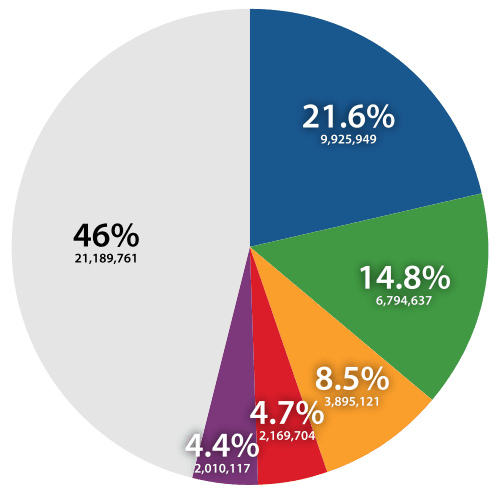
Chey Jae-won
PERSON
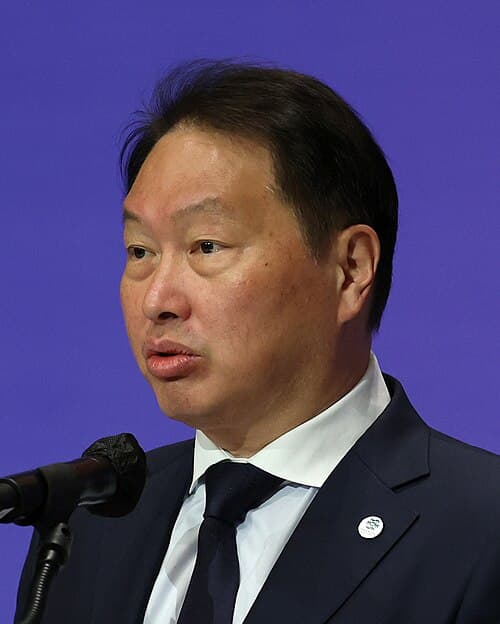
Chey Tae- Won
PERSON
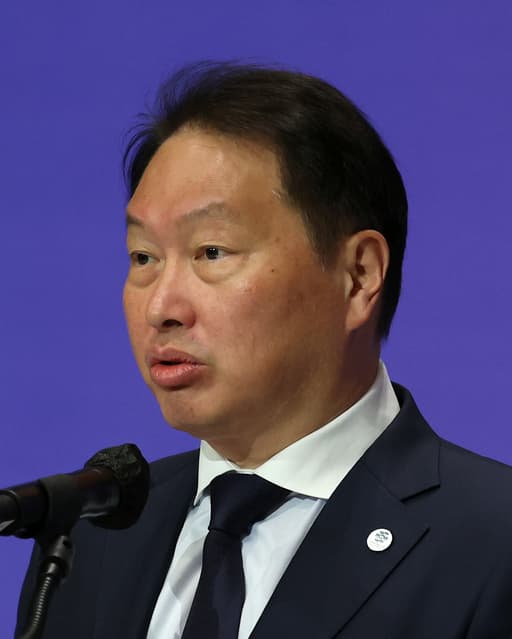
Chey Tae-Won’s
PERSON
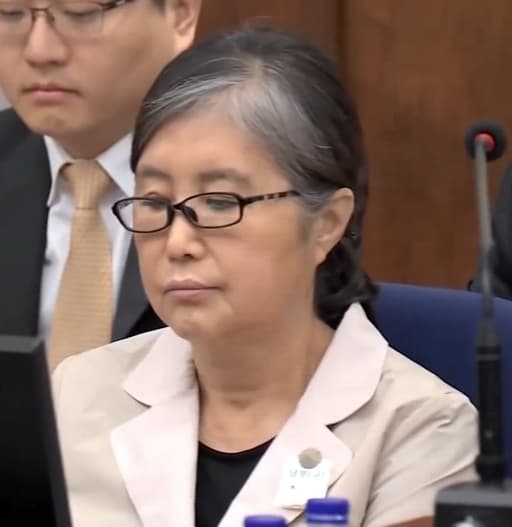
Choi Soon-Sil
PERSON
Chris Christie
PERSON
55th Governor of New Jersey and former U.S. Attorney for the District of New Jersey
Chung Mon-Koo
PERSON
CC
Colin G. Campbell
PERSON
DAVID P. HARRIS
PERSON

David Peter Harris
PERSON
DI
David Reuben Jeffery Ill
PERSON
David Rockefeller, Jr.
PERSON

David Westbrook
PERSON
Deng Xiaoping
PERSON • 2 mentions
Chinese politician and paramount leader from 1978 to 1989
di Modica
PERSON
DA
DJX MORE ASIA
PERSON
Donald Trump
PERSON • 3 mentions
President of the United States (2017–2021, 2025–present)
Draghi
PERSON
EP
ELIZABETH P.
PERSON
ES
Emmanuel L. Sobong
PERSON
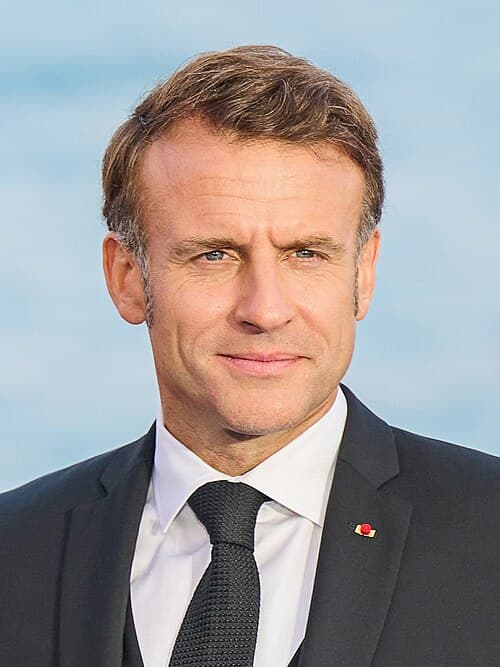
Emmanuel Macron
PERSON • 2 mentions
President of France and Co-Prince of Andorra since 2017
Eric Holder
PERSON
United States Attorney General from 2009 to 2015

Evan Kafka
PERSON
FL
Fleming
PERSON
F1
fleming 1/4
PERSON
George W. Bush
PERSON
President of the United States from 2001 to 2009
GF
Greg Fleming
PERSON
GF
Gregory J. Fleming
PERSON
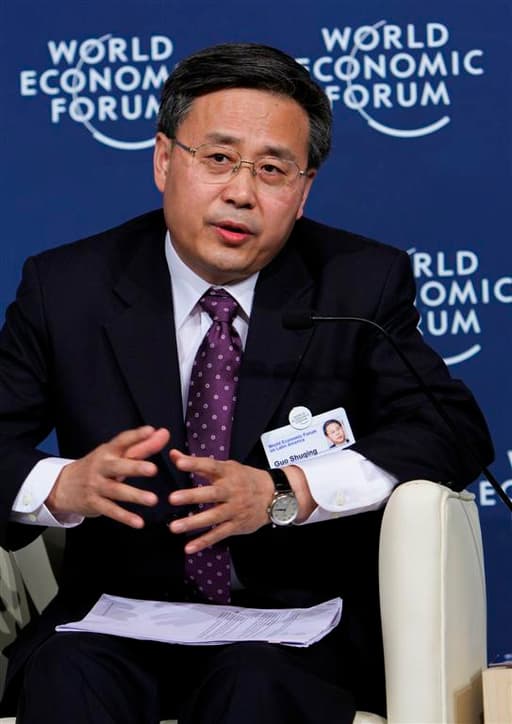
Guo Shuqing
PERSON
IN
Instinet
PERSON
JM
Jack McMackin
PERSON
JR
Jacob Rothschild
PERSON
James Gorman
PERSON
JM
James S. McDonald
PERSON

Jang Ha-Sung
PERSON
Jay Y. Lee
PERSON
Jeff Sessions
PERSON

Jeffrey Epstein
PERSON • 2 mentions
American sex offender and financier (1953–2019)
Jennifer Surane
PERSON

Jesse
PERSON
JL
Jesse Lauriston Livermore
PERSON
JIMMY C. CHANG
PERSON
Jinping
PERSON
General Secretary of the Chinese Communist Party since 2012

John Campbell
PERSON
John D. Rockefeller
PERSON
JL
Judy Lee
PERSON
KV
KARA VALENTINE
PERSON
KW
Karen Wawrzaszek
PERSON
Kaufmann
PERSON
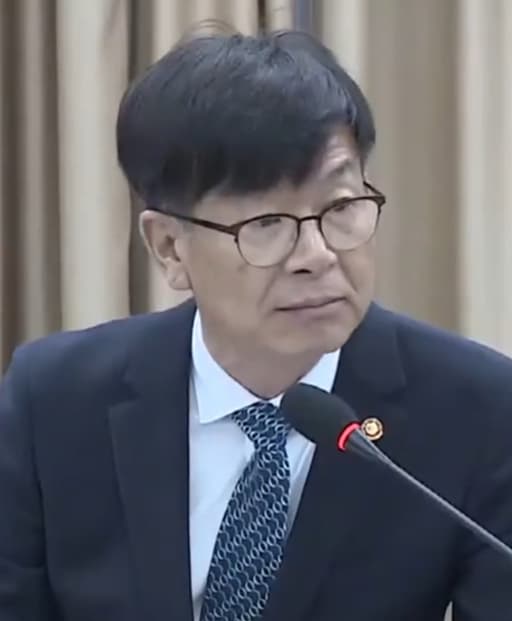
Kim Sang-Jo
PERSON
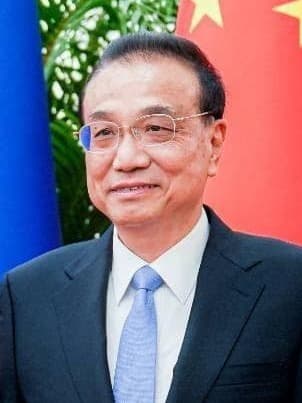
Li Keqiang
PERSON
Premier of the People's Republic of China from 2013 to 2023
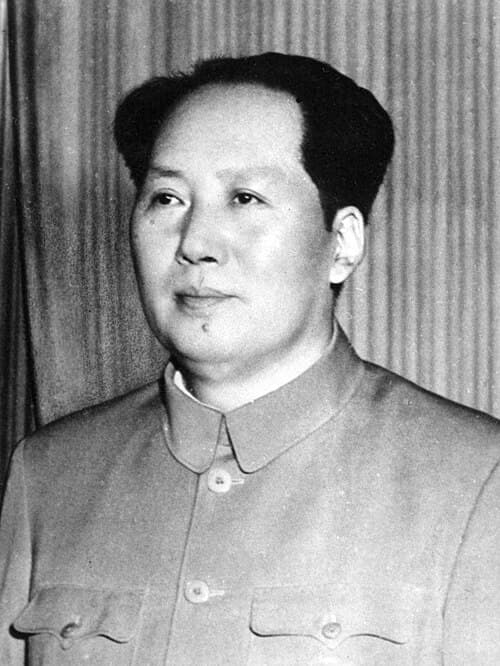
Mao Zedong
PERSON • 2 mentions

Mariela
PERSON
MV
MARIELA M. VARGOVA
PERSON
Marine Le Pen
PERSON • 2 mentions
French politician (born 1968)

Mark Carney
PERSON
MG
Matt Gelfand
PERSON

Meredith Block
PERSON
MT
MESSAGE IW thigvideo
PERSON
Michael Bloomberg
PERSON
Michael Cohen
PERSON
American former attorney and former Republican official

MICHAEL D. SEO
PERSON
MH
Moon Jae-|In has
PERSON
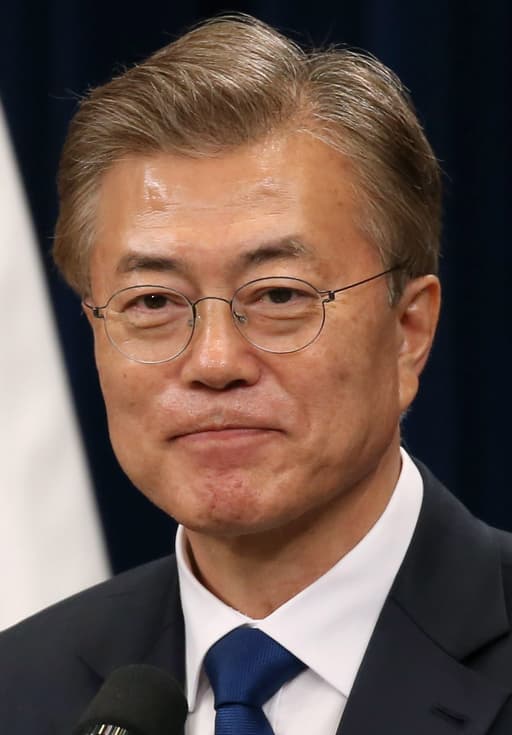
Moon Jae-In’s
PERSON
OJ
onghh J
PERSON

Pandit
PERSON
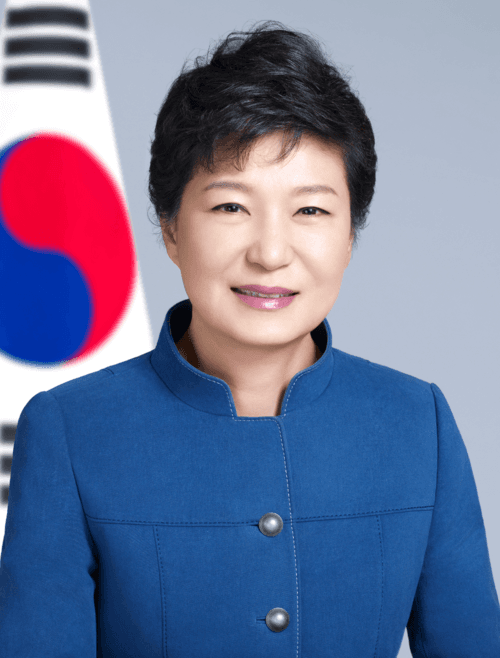
Park Geun-hye
PERSON
President of South Korea from 2013 to 2017

Peter M. O'Neill
PERSON
RW
RAYMOND N. DAVID WESTBROOK
PERSON
RI
Reuben Jeffery Ill
PERSON
RM
RICHARD C. MORAIS
PERSON
RM
Rise of the Machines
PERSON
Robert Shiller
PERSON
Indian choreographer
RA
Rock of Ages
PERSON
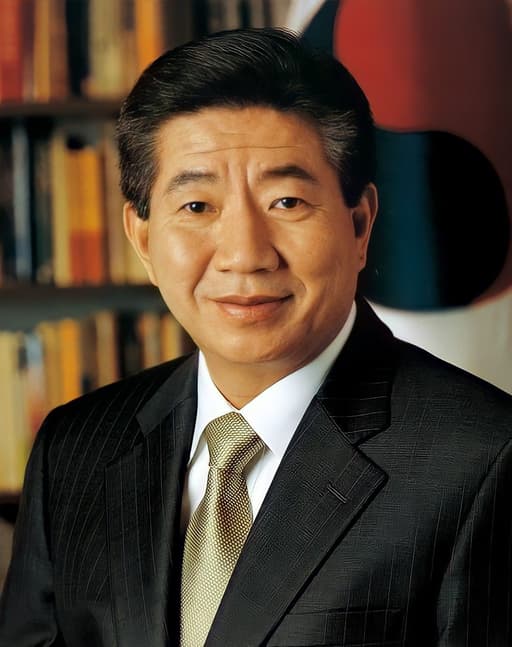
Roh Moo Hyun
PERSON
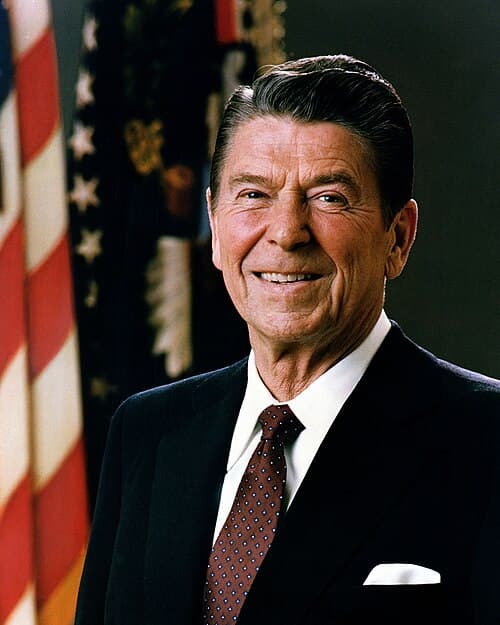
Ronald Reagan
PERSON
President of the United States from 1981 to 1989 and actor (1911–2004)
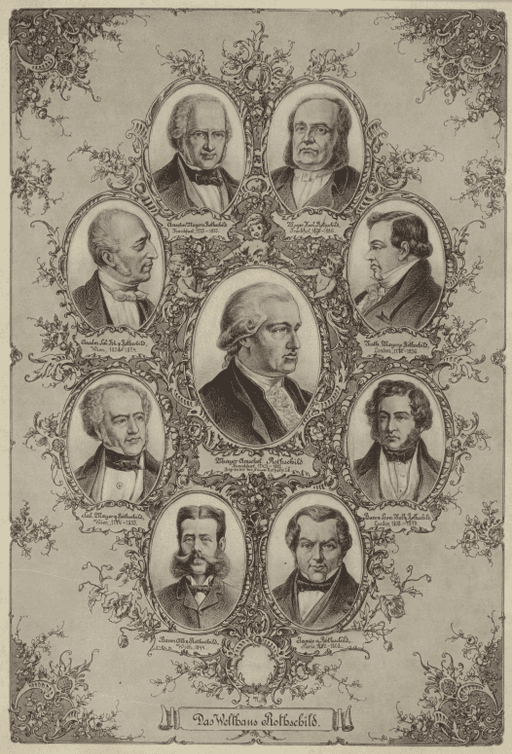
Rothschild
PERSON
Family descending from Mayer Amschel Rothschild
Rothschild Family
PERSON
Sergey Brin
PERSON
American billionaire businessman (born 1973)
Simone Foxman
PERSON
SC
Stephen Cohen
PERSON
American computer scientist and entrepreneur
STUART HENDRY
PERSON
TS
Teneo Strategy
PERSON
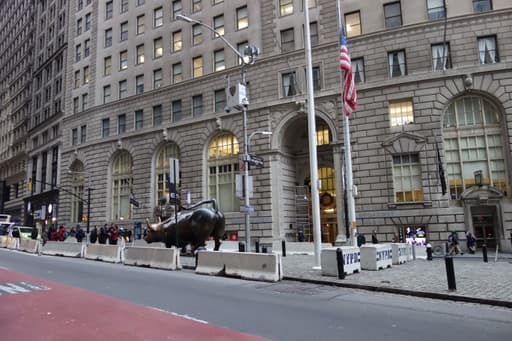
The Charging Bull
PERSON
TH
theae-ton
PERSON
Thomas Edison
PERSON
American inventor and businessman (1847–1931)
Thomas Jefferson
PERSON • 2 mentions
President of the United States from 1801 to 1809
Vargova
PERSON
Vikram
PERSON
Warren Buffett
PERSON • 2 mentions
American investor, entrepreneur and businessman
Xi Jinping
PERSON • 2 mentions
General Secretary of the Chinese Communist Party since 2012
YG
Yvette Marie Garcia
PERSON
11T Partners, LLC
ORGANIZATION
ABI Research
ORGANIZATION
Aging Populations
ORGANIZATION
Al ECSU
ORGANIZATION
Android
ORGANIZATION
Ardea Partners
ORGANIZATION
Aren’t Crazy for Alibaba
ORGANIZATION
Asia Pacific GS Sustain
ORGANIZATION
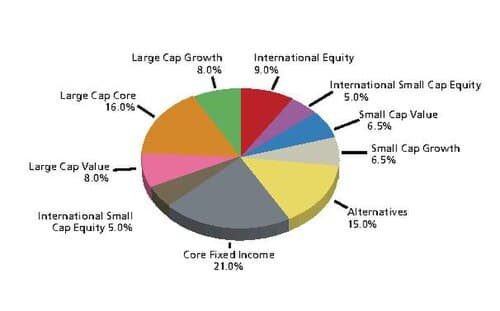
Asset Management
ORGANIZATION
BarCap US Corp
ORGANIZATION
Barron's Bounce
ORGANIZATION
Berkshire Hathaway Company
ORGANIZATION
Berkshire Hathaway HomeServices
ORGANIZATION

Bitcoin
ORGANIZATION
Digital cash system and associated currency
BLOOMBERG CIAWORLD
ORGANIZATION
BLOOMBERG FACTBOOK
ORGANIZATION
Bloomberg News
ORGANIZATION
International news agency
Broadcom
ORGANIZATION
American semiconductor company
BT Global
ORGANIZATION
Communications and IT services company
Businessweek
ORGANIZATION
American weekly business magazine based in New York City

Cambridge University Press
ORGANIZATION
Publishing business of the University of Cambridge
CFA Reform
ORGANIZATION
Cheil Industries
ORGANIZATION
CHI-X.
ORGANIZATION
CIA World Factbook
ORGANIZATION

Dartmouth
ORGANIZATION
Private university in Hanover, New Hampshire, US
Dow Jones
ORGANIZATION
American publishing and financial information company
Dow Jones & Company Inc.
ORGANIZATION
Economist
ORGANIZATION
Professional in the discipline of economics

Electronics
ORGANIZATION
Physics, engineering, technology and applications that deal with the emission, flow and control of electrons in vacuum and matter

Emerging Markets
ORGANIZATION
Country's economy that was traditionally small, but is currently expanding rapidly

Equity
ORGANIZATION
Equity Markets Indices’
ORGANIZATION
European Parliament
ORGANIZATION
American funk band most prominent during the 1970s
Financial Reporting Council
ORGANIZATION
Financial Services Commission
ORGANIZATION
Foundations
ORGANIZATION
Générale
ORGANIZATION
Global Foresight
ORGANIZATION
Goldman Sachs
ORGANIZATION
American investment bank
Hansung University
ORGANIZATION
House of Representatives
ORGANIZATION
Lower house of the United States Congress
Hyundai
ORGANIZATION
Hyundai Motor
ORGANIZATION
Hyundai Motor’s
ORGANIZATION
Institutional
ORGANIZATION
Institutional Sales
ORGANIZATION
jes Bankof America
ORGANIZATION
Juwai.com
ORGANIZATION
Property website, E-commerce service
Korea University’s
ORGANIZATION
Korean Automobiles and Components
ORGANIZATION
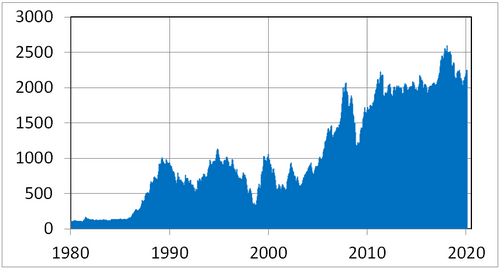
Kospi
ORGANIZATION
Stock market index
KOSPI2
ORGANIZATION
Lotte
ORGANIZATION

McDonald
ORGANIZATION
Borough of Pennsylvania, United States
Merrill Lynch & Co.
ORGANIZATION
Miami Marlins
ORGANIZATION
Baseball team and Major League Baseball franchise in Miami, Florida, United States
Morgan Stanley
ORGANIZATION
Capital of the Falkland Islands
Morgan Stanley Wealth and Asset Management
ORGANIZATION
Motor
ORGANIZATION
MSCI ACWI
ORGANIZATION
American financial service provider
MSCI Korea’s
ORGANIZATION
Mu VISCI ASIA EX.
ORGANIZATION
N.Y. sak
ORGANIZATION
Nvidia
ORGANIZATION
Office Advisory
ORGANIZATION
Paine Webber
ORGANIZATION
Parliament
ORGANIZATION
American funk band most prominent during the 1970s
participa’ Investor Forum
ORGANIZATION
Paul, Weiss, Rifkind, Wharton & Garrison LLP
ORGANIZATION
Payday Lending
ORGANIZATION
Penta
ORGANIZATION
People
ORGANIZATION
American weekly magazine devoted to celebrity and human-interest
Preschool
ORGANIZATION
Region 123Jump.com, Inc.
ORGANIZATION
Renmin
ORGANIZATION
Reubeneffery Ill
ORGANIZATION
RIT Capital Partners
ORGANIZATION
Road Partners LLC
ORGANIZATION
Rockefeller & Co., Inc.
ORGANIZATION
Rockefeller &(Co.Ocomraitnaant| to
ORGANIZATION
Rockefeller 4 Co., Inc.’s
ORGANIZATION
Rockefeller Capital Management
ORGANIZATION
Rockefeller Financial Services
ORGANIZATION
Rockefeller Harris
ORGANIZATION
Rockefeller Plaza Trust Company
ORGANIZATION
Rockefeller Trust
ORGANIZATION

Rockefeller University
ORGANIZATION
Private university in Baltimore, Maryland, USA
Rockefeller Wealth Firm
ORGANIZATION
Rockit
ORGANIZATION
Rockit Solutions
ORGANIZATION
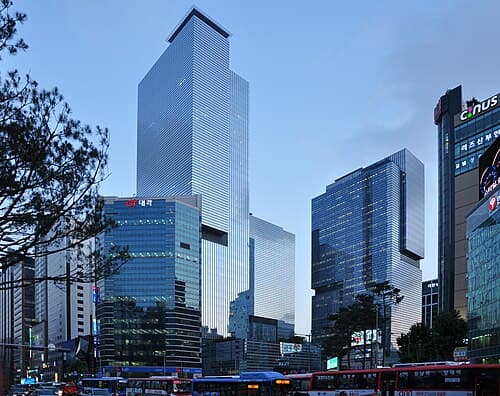
Samsung
ORGANIZATION
South Korean multinational conglomerate
Samsung Construction and Trading
ORGANIZATION
Sherry-Netherland Hotel
ORGANIZATION
SK Telecom
ORGANIZATION
Société
ORGANIZATION
Société Générale Private Banking
ORGANIZATION
Solidarity for Economic Reform
ORGANIZATION
Strategic Advisory
ORGANIZATION
T Rowe
ORGANIZATION
THE “MANAGEMENT COMPANY”
ORGANIZATION
The Amsterdam Stock Exchange
ORGANIZATION
The Bank of England
ORGANIZATION
the Chicago Board of Trade
ORGANIZATION
the Democratic Unionist Party
ORGANIZATION
THE DRIVERLESS ECONOMY Rockefeller & Co.
ORGANIZATION
the Federal Reserve Bank
ORGANIZATION
The Federal Trade Commission
ORGANIZATION
The Five Star Movement
ORGANIZATION
the Gang of Four
ORGANIZATION
the Korea Exchange
ORGANIZATION

the National Assembly
ORGANIZATION
the Native American Finance Officers Association’s
ORGANIZATION
the New York Stock Exchange
ORGANIZATION
the nterfaith Center on Corporate
ORGANIZATION
the Ocean Foundation
ORGANIZATION
the People’s Solidarity for Participatory Democracy
ORGANIZATION
the Rockefeller
ORGANIZATION
the Rockefeller Research Series
ORGANIZATION
the Russell Investment Group
ORGANIZATION
THI ATLANTA SOCIETY OF FINANCE & INVESTMENT PROFESSIONALS
ORGANIZATION

U.S. State Department
ORGANIZATION
Executive department of the U.S. federal government

U.S. Treasury
ORGANIZATION
Museum in Munich

University Press
ORGANIZATION
Student magazine of Florida Atlantic University in Boca Raton, Florida, United States
US Agg Corp
ORGANIZATION
Viking
ORGANIZATION
Viking Global
ORGANIZATION
Viking Global Investors
ORGANIZATION
Viking Global Investors LP
ORGANIZATION

Wealth Management
ORGANIZATION
Investment management and financial planning service
Wells Fargo
ORGANIZATION
American multinational banking and financial services company

WikiLeaks
ORGANIZATION
Organization that publishes leaks provided by anonymous sources
Willkie Farr & Gallagher LLP
ORGANIZATION
World’s Most
ORGANIZATION
Young Ideas
ORGANIZATION
Atlanta
LOCATION
Capital city of Georgia, United States
Cleicy ord
LOCATION

Delaware
LOCATION
State of the United States of America

Francisco
LOCATION

Greenwich
LOCATION
Town in Fairfield County, Connecticut, United States, suburb of NYC
Korea
LOCATION
Region in East Asia
Liaoning Province
LOCATION
Province of China
Lower Manhattan
LOCATION
Southernmost part of the island of Manhattan in New York City, United States

Madison
LOCATION
Capital city of Wisconsin, United States

Malaysia
LOCATION
Country in Southeast Asia

Middle America
LOCATION
Colloquial term for the United States heartland

Monaco
LOCATION
Microstate in Western Europe

New York City
LOCATION
Most populous city in the United States
NEW YORK--(BUSINESS
LOCATION
non-U.S.
LOCATION

North Korea
LOCATION
Sovereign state in East Asia
Ontario
LOCATION
Province of Canada

Philippines
LOCATION
Archipelagic country in Southeast Asia

Phoenix
LOCATION
Seat of Maricopa County, largest city in, and capital of, the State of Arizona, United States
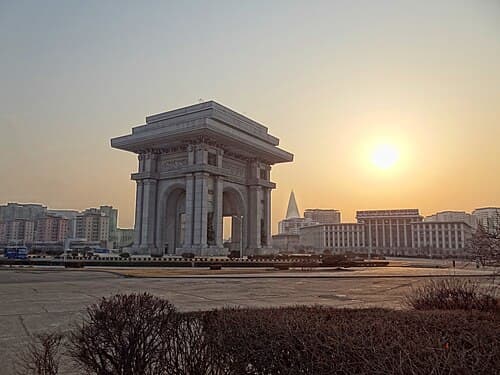
Pyongyang
LOCATION
Capital city of North Korea
Shanghai
LOCATION
Provincial-level municipality in China
Shenzhen
LOCATION
Sub-provincial division in China
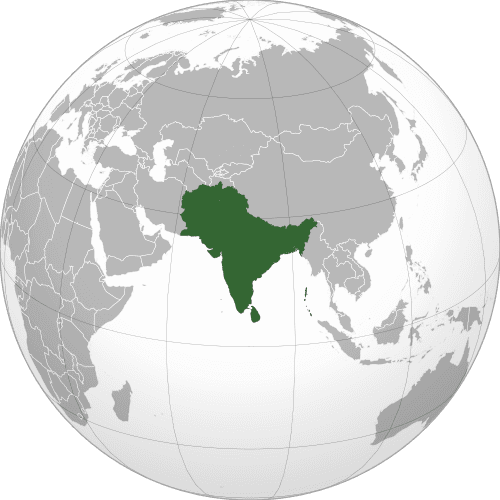
South Asia
LOCATION
Academic journal

Southeast
LOCATION
Region of Vietnam
the City of New York
LOCATION
Tokyo
LOCATION
Capital and largest city of Japan

United Kingdom
LOCATION
Country in north-west Europe

United States
LOCATION • 2 mentions
Country located primarily in North America
US States
LOCATION
Washington, D.C.
LOCATION • 2 mentions
Capital city of the United States of America

Wilmington
LOCATION
Seat of New Castle County, and largest city in Delaware, United States
Statistics
Pages:54
Entities:268
Avg. OCR:92.6%