HOUSE_OVERSIGHT_019233 - HOUSE_OVERSIGHT_019296
FH_Authoritarians_Report_2017.indd
The document HOUSE_OVERSIGHT_019233 is a report titled "Breaking Down Democracy: Goals, Strategies, and Methods of Modern Authoritarians" by Arch Puddington, published in June 2017 by Freedom House. It was sourced from the House Oversight Committee.
This government record from the House Oversight Committee analyzes the resurgence of authoritarian rule in the 21st century, exploring the goals, strategies, and methods employed by modern authoritarians. The report discusses various aspects of authoritarianism, including the validation of autocracy through elections, propaganda efforts, suppression of civil society, and the rise of 'illiberal democracy'. It also mentions several individuals and entities associated with authoritarianism or related political contexts, such as Vladimir Putin, Xi Jinping, Viktor Orbán, Rudy Giuliani, and the Soviet Union.
Key Highlights
- •The report discusses strategies and methods employed by modern authoritarians to undermine democracy.
- •Key figures like Vladimir Putin, Xi Jinping, and Viktor Orbán are mentioned in the context of authoritarianism.
- •The document identifies propaganda, suppression of civil society, and manipulation of elections as tools used by authoritarians.
Frequently Asked Questions
Books for Further Reading
Perversion of Justice: The Jeffrey Epstein Story
Julie K. Brown
Investigative journalism that broke the Epstein case open
Filthy Rich: The Jeffrey Epstein Story
James Patterson
Bestselling account of Epstein's crimes and network
Relentless Pursuit: My Fight for the Victims of Jeffrey Epstein
Bradley J. Edwards
Victims' attorney's firsthand account
Document Information
Bates Range
HOUSE_OVERSIGHT_019233 - HOUSE_OVERSIGHT_019296
Pages
64
Source
House Oversight Committee
Date
May 20, 2017
Original Filename
June2017_FH_Report_Breaking_Down_Democracy.pdf
File Size
2.67 MB
Document Content
Page 1 - HOUSE_OVERSIGHT_019233
June 2017 ¢ Freedom 1 House Breaking Down Democracy: Goals, Strategies, and Methods of Modern Authoritarians by Arch Puddington HOUSE_OVERSIGHT_019233
Page 2 - HOUSE_OVERSIGHT_019234
CONTENTS Executive Summary 1 Introduction: Modern Authoritarians: Origins, Anatomy, Outlook 5 Chapters 1. Validating Autocracy through the Ballot 10 2. Propaganda at Home and Abroad 15 3. The Enemy Within: Civil Society at Bay 22 4. The Ministry of Truth in Peace and War 29 5. The Rise of ‘Illiberal Democracy’ 35) 6. Flacks and Friends 4l 7. Bullying the Neighbors: Frozen Conflicts, the Near Abroad, and Other Innovations 47 8. Back to the Future 52 Conclusion: Authoritarianism Comes Calling 57 ACKNOWLEDGMENTS This report emerged from a presentation on the state of global freedom conducted by the author and David J. Kramer, former president of Freedom House. The major source of data and analysis is Freedom in the World, the report on political rights and civil liberties published annually by Freedom House. The author wishes to thank the Freedom House analysis staff and the many scholars who have participated in Freedom House assessments of global democracy. The author also extends special thanks to Elen Aghekyan, Tyler Roylance, Alexandra Cain, Danielle Recanati, Amy Slipowitz, Alan Williams, Christopher Walker, Bret Nelson, Michael Johnson, Rebeka Foley, Zselyke Csaky, Sarah Repucci, Vanessa Tucker, Robert Ruby, and Daniel Calingaert. THE AUTHOR Arch Puddington is Distinguished Scholar for Democracy Studies at Freedom House and a co-editor of Freedom in the World. ON THE COVER Chinese President Xi Jinping and Russian President Vladimir Putin in Beijing, 2016. Lintao Zhang/Getty Images HOUSE_OVERSIGHT 4
Page 3 - HOUSE_OVERSIGHT_019235
¢ Freedom 1 House Executive Summary Breaking Down Democracy: Goals, Strategies, and Methods of Modern Authoritarians by Arch Puddington The 21st century has been marked by aresurgence of authoritarian rule that has proved resilient despite economic fragility and occasional popular resistance. Modern authoritarianism has succeeded, where previous totalitarian systems failed, due to refined and nuanced strategies of repression, the exploitation of open societies, and the spread of illiberal policies in democratic countries themselves. The leaders of today’s authoritarian systems devote full- time attention to the challenge of crippling the opposition without annihilating it, and flouting the rule of law while maintaining a plausible veneer of order, legitimacy, and prosperity. Central to the modern authoritarian strategy is the capture of institutions that undergird political plural- ism. The goal is to dominate not only the executive and legislative branches, but also the media, the judiciary, civil society, the commanding heights of the economy, and the security forces. With these institu- tions under the effective if not absolute control of an incumbent leader, changes in government through fair and honest elections become all but impossible. Unlike Soviet-style communism, modern authoritari- anism is not animated by an overarching ideology or the messianic notion of an ideal future society. Nor do today's autocrats seek totalitarian control over people's everyday lives, movements, or thoughts. The media are more diverse and entertaining under modern authoritarianism, civil society can enjoy an independent existence (as long as it does not pursue political change), citizens can travel around the coun- try or abroad with only occasional interference, and private enterprise can flourish (albeit with rampant corruption and cronyism). This study explains how modern authoritarianism de- fends and propagates itself, as regimes from different regions and with diverse socioeconomic foundations copy and borrow techniques of political control. Among its major findings: « Russia, under President Vladimir Putin, has played an outsized role in the development of modern authoritarian systems. This is particu- larly true in the areas of media control, propa- ganda, the smothering of civil society, and the www.freedomhouse.org HOUSE_OVERSIGHT_019235
Sponsored
Page 4 - HOUSE_OVERSIGHT_019236
BREAKING DOWN DEMOCRACY: Goals, Strategies, and Methods of Modern Authoritarians MAJOR DECLINES FOR INFLUENTIAL COUNTRIES OVER THE PAST 10 YEARS 0 Turkey = @ = @ 2 = @ N <x Change in Freedom inthe World Aggregate Score, 2007-2016 weakening of political pluralism. Russia has also moved aggressively against neighboring states where democratic institutions have emerged or where democratic movements have succeeded in ousting corrupt authoritarian leaders. ¢ The rewriting of history for political purposes is common among modern authoritarians. Again, Russia has taken the lead, with the state's asser- tion of authority over history textbooks and the process, encouraged by Putin, of reassessing the historical role of Joseph Stalin. ¢ The hiring of political consultants and lobbyists from democratic countries to represent the interests of autocracies is a growing phenome- non. China is clearly in the vanguard, with multi- ple representatives working for the state and for large economic entities closely tied to the state. But there are also K Street representatives for Russia, Kazakhstan, Azerbaijan, Turkey, Ethiopia, Venezuela Hungary £ @ et 2 £ @ A) remy t and practically all of the authoritarian states in the Middle East. The toxic combination of unfair elections and crude majoritarianism is spreading from modern authoritarian regimes to illiberal leaders in what are still partly democratic countries. Increasing- ly, populist politiclans—once in office—claim the right to suppress the media, civil society, and other democratic institutions by citing support from a majority of voters. The resulting changes make it more difficult for the opposi- tion to compete in future elections and can pave the way for a new authoritarian regime. An expanding cadre of politicians in democ- racies are eager to emulate or cooperate with authoritarian rulers. European parties of the nationalistic right and anticapitalist left have expressed admiration for Putin and aligned their policy goals with his. Others have praised HOUSE_OVERSIGHT_019236
Page 5 - HOUSE_OVERSIGHT_019237
Freedom House EVERY INDICATOR HAS DECLINED OVER THE PAST 10 YEARS Electoral Pluralism and Functioning of Expression and Association and Process* Participation | Government* Personal and Assembly* Rule of Law Individual Rights Change in Score, 2007-2016 @ o I I I 1 1 Ce eee *Denotes indicators scored ona 12-point scale. All others are scored on a 16-point scale. illiberal governments in countries like Hungary for their rejection of international democratic standards in favor of perceived national inter- ests. Even when there is no direct collaboration, such behavior benefits authoritarian powers by breaking down the unity and solidarity of the democratic world. ¢ There has been arise in authoritarian inter- nationalism. Authoritarian powers form loose but effective alliances to block criticism at the United Nations and regional organizations like the Organization for Security and Co-operation in Europe and the Organization of American States, and to defend embattled allies like Syria's Bashar al-Assad. There is also growing replica- tion of what might be called authoritarian best practices, vividly on display in the new Chinese law on nongovernmental organizations (NGOs) and efforts by Russia and others to learn from China's experience in internet censorship. Modern authoritarians are working to revalidate the concept of the leacer-for-life. One of the seeming gains of the postcommunist era was the understanding that some form of term limits should be imposed to prevent incumbents from consolidating power into a dictatorship. In re- cent years, however, a number of countries have adjusted their constitutions to ease, eliminate, or circumvent executive term limits. The result has been a resurgence of potential leaders-for- life from Latin America to Eurasia. While more subtle and calibrated methods of re- pression are the defining feature of modern au- thoritarianism, the past few years have featured a reemergence of older tactics that undermine the illusions of pluralism and openness as well as integration with the global economy. Thus Moscow has pursued its military intervention in Ukraine despite economic sanctions and over- seen the assassination of opposition figures; www.freedomhouse.org HOUSE_OVERSIGHT_019237
Page 6 - HOUSE_OVERSIGHT_019238
BREAKING DOWN DEMOCRACY: Goals, Strategies, and Methods of Modern Authoritarians Beijing has revived the practice of coerced pub- lic “confessions” and escalated its surveillance of the Tibetan and Uighur minorities to totalitar- ian levels; and Azerbaijan has made the Aliyev family’s monopoly on political power painfully obvious with the appointment of the president's wife as “first vice president." ¢ Modern authoritarian systems are employing these blunter methods in a context of increased economic fragility. Venezuela is already in the process of political and economic disintegra- tion. Other states that rely on energy exports have also experienced setbacks due to low oil and gas prices, and China faces rising debt and slower growth after years of misallocated invest- ment and other structural problems. But these regimes also face less international pressure to observe democratic norms, raising their chanc- es of either surviving the current crises or—if they break down—giving way to something even worse, In subsequent sections, this report will examine the methods employed by authoritarian powers to neu- tralize precisely those institutions that were thought to be the most potent weapons against a revitalized authoritarianism. The success of the Russian and Chinese regimes in bringing to heel and even har- nessing the forces produced by globalization—digital media, civil society, free markets—may be their most impressive and troubling achievement. Modern authoritarianism is particularly insidious in its exploitation of open societies. Russia and China have both taken advantage of democracies’ commitment to freedom of expression and delivered infusions of pro- paganda and disinformation. Moscow has effectively prevented foreign broadcasting stations from reach- ing Russian audiences even as it steadily expands the reach of its own mouthpieces, the television channel RT and the news service Sputnik. China blocks the websites of mainstream foreign media while en- couraging its corporations to purchase influence in popular culture abroad through control of Hollywood studios. Similar combinations of obstruction at home and interference abroad can be seen in sectors in- cluding civil society, academia, and party politics. The report draws on examples from a broad group of authoritarian states and illiberal democracies, but the focus remains on the two leading authoritarian powers, China and Russia. Much of the report, in fact, deals with Russia, since that country, more than any other, has incubated and refined the ideas and institutions at the foundation of 21st-century author- itarianism. Finally, a basic assumption behind the report is that modern authoritarianism will be a lasting feature of geopolitics. Since 2012, both Vladimir Putin and Xi Jinping have doubled down on existing efforts to stamp out internal dissent, and both have grown more aggressive on the world stage. All despotic regimes have inherent weaknesses that leave them vulnerable to sudden shocks and individually prone to collapse. However, the past quarter-century has shown that dictatorship in general will not disappear on its own. Authoritarian systems will seek not just to survive, but to weaken and defeat democracy around the world. HOUSE_OVERSIGHT_019238
Sponsored
Page 7 - HOUSE_OVERSIGHT_019239
Freedom House Introduction Modern Authoritarianism: Origins, Anatomy, Outlook As the world’s democracies confront a dangerous internal challenge from populist and nationalist political forces, it is imperative that they recognize the simultaneous external threat presented by modern authoritarian regimes. These 21° century authori- tarians developed an arsenal of new tactics to use against their domestic opponents, and gone on the offensive in an effort to subvert and replace the liberal international order. But modern authoritarian systems are not simply adversaries of free societies. They also represent an alternative model—a grim future for beleaguered democracies that have already fallen under the sway of illiberal leaders and have suffered an erosion of freedom. Democracy under siege Global democracy is currently facing the repercus- sions of what has been called the “decade of decline." The phrase describes a 10-year-plus period, from 2006 to 2016, during which the state of freedom experi- enced more reversals than gains as measured by Free- dom in the World, the annual report on political rights and civil liberties published by Freedom House. According to Freedom in the World, the crucial indicators of democracy experienced setbacks in each of the 10 years in question. In all, 105 countries suffered net declines, while 61 showed some mea- sure of improvement. The decade marked the longest democratic slump of its kind in more than 40 years of Freedom House analysis.’ The decade of decline has been principally character- ized by a steady erosion of political institutions in es- tablished authoritarian countries, or in countries that were clearly headed in that direction. In other words, repressive countries became even more repressive— the bad became even worse.’ However, a parallel pattern of institutional erosion has affected some more democratic states, pushing them into the category of “illiberal democracies.” In these so- cieties, elections are regularly conducted, sometimes under conditions that are reasonably fair. But the state, usually under the control of a strong party or leader, applies much of its energy to the systematic weaken- ing of political pluralism and the creation of a skewed electoral playing field. Opposition parties are often impotent, freedom of the press is circumscribed, and the judiciary tends to be dominated by the ruling party. Countries that fit this description include Hungary, Bolivia, Ecuador, and, if recent trends continue, Poland. There are many reasons for the global decline in dem- ocratic indicators, but the statistical evidence from Freedom in the World suggests that modern author- itarian regimes have found a way to survive without resorting to democratic reforms, and that a number of democracies—as part of the general loss of liberal consensus—are engaging in their own antidemocratic experiments. Modern authoritarianism The traditional authoritarian state sought monopolis- tic control over political life, a one-party system orga- nized around a strongman or military junta, and direct rule by the executive, sometimes through martial law, with little or no role for the parliament. Traditional dictatorships and totalitarian regimes were often defined by closed, command, or autarkic econo- mies, a state media monopoly with formal censorship, and “civil society” organizations that were structured as appendages of the ruling party or state. Especially in military dictatorships, the use of force—including military tribunals, curfews, arbitrary arrests, political detentions, and summary executions—was pervasive. Often facing international isolation, traditional dictator- ships and totalitarian regimes forged alliances based on www.freedomhouse.org HOUSE_OVERSIGHT_019239
Page 8 - HOUSE_OVERSIGHT_019240
BREAKING DOWN DEMOCRACY: Goals, Strategies, and Methods of Modern Authoritarians common ideologies, whether faith in Marxist revolution or ultraconservative, anticommunist reaction. As the 20th century drew to a close, the weaknesses of both communist systems and traditional dictator- ships became increasingly apparent. Front and center was the growing economic gap between countries that had opted for market economies and regimes that were committed to statist economies. The political and economic barriers that had long shel- tered the old dictatorships were soon swept away, and those that survived or recovered did so by making a series of strategic concessions to the new global order. odern authoritarianism has a different set of defin- ing features: ¢ Anillusion of pluralism that masks state control over key political institutions, with co-opted or otherwise defanged opposition parties allowed to participate in regular elections ¢ State or oligarchic control over key elements of the national economy, which is otherwise open to the global economy and private investment, to ensure loyalty to the regime and bolster regime claims of legitimacy based on economic prosperity ¢ State or oligarchic control over information on certain political subjects and key sectors of the media, which are otherwise pluralistic, with high production values and entertaining content; in- dependent outlets survive with small audiences and little influence ¢ Suppression of nongovernmental organizations (NGOs) that are focused on human rights or political reform, but state tolerance or support for progovernment or apolitical groups that work on public health, education, and other develop- ment issues ¢ Legalized political repression, with targets pun- ished through vaguely worded laws and political- ly obedient courts ¢ Limited, selective, and typically hidden use of extralegal force or violence, with a concentration on political dissidents, critical journalists, and officials who have fallen from favor ¢ Opportunistic, non-ideological cooperation with fellow authoritarian states against pressure for democratic reform or leadership changes, international human rights norms and mech- anisms, and international security or justice interventions ¢ Knowledge-sharing with or emulation of fellow authoritarian states regarding tactics and legis- lation to enhance domestic control China and Russia The two major modern authoritarian powers are China and Russia. Until fairly recently, the conventional wisdom was that China's one-party authoritarian system would gradual- ly relax as the middle class expanded and the country became fully integrated into the global economic and diplomatic systems. The leadership did expand citizens’ freedom to travel, make money, and access information and entertainment that did not touch on sensitive subjects. But it has resolutely refused to give up control over the political sphere. In fact, the state has become increasingly aggressive in its suppression of political dissent and information that might challenge the Communist Party narrative. The regime's rhetoric and policies have become more hostile to democracy and “Western” values. Its propa- ganda asserts the superior efficiency of the one-party system and sneers at the messiness of democracy. And the focus of its repressive apparatus has steadily expanded from a relatively narrow segment of political opposition figures to encompass a broad collection of target groups, including human rights lawyers, ethnic minorities, Christians, women’s rights advocates, liber- al academics, and independent journalists. Russia is much smaller than China in terms of pop- ulation and economic might, but it has emerged as a leader of modern authoritarian innovation. Under Vladimir Putin, the Russian regime pioneered the capture of the media through state enterprises and oligarchic cronies, the adoption of laws designed to dismember civil society, the use of the judiciary as an instrument of political harassment, and, perhaps most importantly of all, the development of modern propaganda and disinformation. Russia has also been in the vanguard of a relentless campaign against liberal values, and has moved relentlessly to export authoritarian ideas and tech- niques to other societies, both in neighboring HOUSE_OVERSIGHT_019240
Page 9 - HOUSE_OVERSIGHT_019241
Freedom House Eurasian countries and elsewhere in the world. While today there is nothing that resembles the Comintern of Soviet times, authoritarian countries have devel- oped an ad hoc network of cooperation that has proven effective at the United Nations and in regional bodies like the Organization of American States. Adapting to survive Modern authoritarianism matured as regimes sought to defend themselves against the sorts of civil society movements that triggered “color revolutions” in Georgia, Ukraine, and elsewhere in the early 2000s. On their own, formal opposition parties were relatively easy to marginalize or co-opt, and traditional mass media could be brought to heel through pressure on private owners, among other techniques. But civil society organizations presented a formidable chal- lenge in some settings, as they were able to mobilize the public—especially students and young people— around nonpartisan reformist goals and use relatively open online media to spread their messages. It is now a major objective of modern authoritarian states to suppress civil society before it becomes strong enough to challenge the incumbent political leadership. Yet whereas dissidents were dispatched to the gulag or explicitly exiled by the Soviets, or jailed and murdered by traditional dictatorships like Augus- to Pinochet's Chile, today’s activists are checked by NGO regulations that control registration and foreign funding, laws that allow arbitrary restrictions on public protest, and trumped-up criminal charges for key organizers that serve to intimidate others. Modern authoritarianism has also devised special methods to bring the internet under political control without shutting it down entirely. While old-style dic- tatorships like Cuba long prevented the widespread use of the internet out of fear that online communi- cations would pose a threat to the state's monopoly on information, modern authoritarians understood that a high rate of internet penetration is essential to participation in the global economy. However, once online media emerged as a real alternative to tradi- tional news sources and a crucial tool for civic and political mobilization, these regimes began to step up their interference. The Chinese government has developed the world’s most sophisticated system of internet controls. Its so- called Great Firewall, a censorship and filtering appa- ratus designed to prevent the circulation of informa- tion that the authorities deem politically dangerous without affecting nonsensitive information, requires tremendous financial, human, and technological re- sources to maintain. Other regimes have not attempt- ed anything approaching the scale of China's system, but some have constructed more limited versions or simply relied on inexpensive offline techniques like arrests of critical bloggers, direct pressure on the owners of major online platforms, and new laws that force internet sites to self-censor. Alternative values While modern authoritarians initially mobilized for defensive purposes, to thwart color revolutions or the liberal opposition, they have become increasingly aggressive in challenging the democratic norms that prevailed in the wake of the Cold War, and in setting forth a rough set of political values as an alternative to the liberal model. Examples of this phenomenon include: 1. Majoritarianism: A signal idea of many author- itarians is the proposition that elections are winner-take-all affairs in which the victor has an absolute mandate, with little or no interference from institutional checks and balances. Putin, Turkish president Recep Tayyip Erdogan, and the Venezuelan chavista leadership all behave as if there are no valid controls on their authority, the opposition has no rights, and the system is theirs to dismantle and remake from top to bottom. Disturbingly, the leaders of some dem- ocratic societies have begun to embrace the majoritarian idea. The Hungarian prime minister, Viktor Orban, has instituted a thorough overhaul of the country's constitution and national leg- islation with an eye toward measures that will insulate his party from future defeat. 2. Sovereignty: A number of governments have invoked the doctrine of absolute sovereignty to rebuff international criticism of restrictions on the press, the smothering of civil society, the persecution of the political opposition, and the repression of minority groups. They claim that the enforcement of universal human rights standards or judgments from transnational legal bodies represent undue interference in their domestic affairs and a violation of national pre- rogatives. 3. Dictatorship of law: Initially articulated by Vlad- imir Putin, this phrase has come to signify the adoption of laws that are so vaguely written as to www.freedomhouse.org HOUSE_OVERSIGHT_019241
Sponsored
Page 10 - HOUSE_OVERSIGHT_019242
BREAKING DOWN DEMOCRACY: Goals, Strategies, and Methods of Modern Authoritarians give the authorities wide discretion in applying them to regime opponents. Such measures are typically paired with a court system that uses law merely to justify political instructions from the ex- ecutive branch, making a mockery of due process and international conceptions of the rule of law. 4. History revised: A number of countries have un- dertaken a refashioning of history to buttress the legitimacy and aims of the current government. Historians and journalists are forbidden to cross certain redlines set by the authorities. In China, the state has prevented the publication of full, accurate, or critical accounts of the Great Leap Forward, the Cultural Revolution, or the Mao Ze- dong era in general. In Russia, Joseph Stalin has been rehabilitated. He is now officially portrayed as a strong if mildly flawed leader rather than as the man responsible for the deaths of millions of his own people. In Turkey, Erdogan has decreed that high school students should study the de- funct Ottoman language, challenging a nearly century-old reform linked to Mustafa Kemal Atatiirk, modern Turkey's founder.* 5. Democracy redefined: It is a testament to the power of the democratic idea that authoritarian leaders around the globe have claimed the man- tle of democracy for forms of government that amount to legalized repression. Even as they heap disdain on the liberal order, they have often insisted on the validity of their own systems as types of democratic rule. They even devise terms to describe their special variant, such as “sovereign democracy,” “revolutionary democra- cy," or “illiberal democracy." 6. Return of the leader for life: Among the changes invariably instituted by modern authoritarians is the de facto or de jure removal of constitution- al limits on presidential terms. Preventing the concentration of power in a single leader is a fundamental goal of democratic governance, but authoritarian propaganda has presented term limits as artificial constraints, associated them with foreign origins, and claimed that they do not suit every country’s unique historical, cultur- al, or security conditions. While these ideas may not amount to a coherent or complete ideology, they do form the basis for an impressive degree of collaboration and alliance-build- ing that has brought together modern authoritarian regimes with significantly different economic systems, official creeds, and sources of political legitimacy. A loose-knit league of authoritarians works to protect mutual interests at the United Nations and other inter- national forums, subverting global human rights stan- dards and blocking precedent-setting actions against fellow despots. With the formation of the Shanghai Cooperation Organization, Russia, China, and a number of Central Asian governments have come together to discuss common regime-security strategies.> More disturbingly, modern authoritarians collaborate to prop up some of the world’s most reprehensible regimes, apparently reasoning that the toppling of one dictator thins the herd, inspires imitation, and endangers them all. This is most visible in Syria, where Russia, China, Iran, and Venezuela at various times have offered diplomatic support, loans, fuel, or direct military aid to the regime of Bashar al-Assad. Dashed hopes Democracy recorded unprecedented gains during the 20th century's last decades. In 1975, Freedom House found that just 25 percent of the world’s sovereign states qualified for the Free category; by 2000, the share of countries rated as Free had reached 45 percent. The numbers told an optimistic story, and a series of accelerating social trends suggested that the recent improvements would hold firm and expand as the new millennium dawned. There was, to begin with, a strong identification of free societies with free markets. The degree of economic freedom varied from one society to the next, and corruption was a problem in practically all of the new democracies. But there was no longer a major bloc of countries that rejected capitalism, and practically ev- ery country sought to deepen their participation in the global economic system, as witnessed by the number of governments seeking admission to the World Trade Organization. Authorities in the United States and elsewhere predicted that as countries came to accept the rules of the game set down by the WTO, they would also be more amenable to accepting the norms of liberal democracy, including fair elections, freedom of expression, minority rights, and the rule of law. A second development was the introduction of the in- ternet and other digital media. In the wake of the col- lapse of the Soviet Union, communist governments in HOUSE_OVERSIGHT_019242
Page 11 - HOUSE_OVERSIGHT_019243
Freedom House Eastern Europe, and military dictatorships elsewhere, there was an explosion of newspapers, radio and television stations, and other independent media with diverse editorial policies. But the internet in particular was seen as an irresistible force that could render censorship of any kind impossible. In 2000, President Bill Clinton compared China's efforts to control inter- net content to “trying to nail Jell-O to the wall.”” Third, a growing number of experts began to identify anew instigator of democratic change in global civil society. Unlike the “peoples movements’ of earlier decades, in which well-known leaders mobilized mass demonstrations and often insurrectionary violence with the goal of overthrowing despotic regimes, the phenomenon that was labeled civil society consisted of organizations that were often committed to a single cause or a few causes united by a particular theme. Most activists were young, with little prior involvement in politics, and many regarded themselves as part of a global effort to advance goals like reducing carbon emissions, empowering women, or fighting corruption. In a prescient 1997 article, Jessica T. Mathews predict- ed that in the future global civil society would be the triggering force behind liberal change.* She suggested that in many cases civil society organizations would play amore important role than governments. Her words seemed prescient in light of later events in Serbia, where student activists organized a campaign that eventually brought about the downfall of President Slobodan MiloSevicé in 2000, and in Ukraine, where young reformers played a pivotal role in ensuring that the 2004 elections were not stolen through fraud. In declaring that dictatorships or even authoritarian methods were destined to succumb to this triad of new social forces, commentators were also express- ing optimism about the universal appeal of liberal values. The decade after the end of the Cold War was a heyday for democratic ideas and norms. It was increasingly expected that countries would not only hold elections, but that their elections would meet international standards and be judged “free and fair.” There was also an expectation that political parties would be able to compete on a reasonably level playing field, that opposition leaders would not be harassed or arrested, and that minorities would be able to pursue their agendas through normal political channels and not find it necessary to wage perpetual protest campaigns. However, there were nagging questions. It remained unclear whether most societies would have access to multiple sources of political ideas, multiple interpreta- tions of the news, and open scholarly inquiries about the past. Would there be honest judicial proceedings, especially in cases with political implications? Would property rights be secure? Beyond these primarily domestic issues, there was another series of questions related to individual governments’ relations with their neighbors and the rest of the world. The end of the Cold War had brought a peace dividend, both financial and psychological, for all sides. At the time, most assumed that peace would prove durable. But would the general decline in military budgets hold? Would the new national boundaries that divided the former Soviet Union and the former Yugoslavia be sustainable? As modern authoritarianism has taken root and ex- panded its influence, the answers to these questions are increasingly negative. 1. Freedom in the World 2016 (New York: Freedom House, 2016), https://freedomhouse.org/report/freedom-world/free- dom-world-2016. 2. Ibid. 3. Ibid. 4. Ceylan Yeginsu, “Turks Feud Over Change in Education,” New York Times, December 8, 2014, http://www.nytimes.com/2014/12/09/ world/europe/erdogan-pushes-ottoman-language-classes-as-part-of-tradtional-turkish-values.html. 5. Eleanor Albert, “The Shanghai Cooperation Organization,” Council on Foreign Relations, October 14, 2015, http://www.cfr.org/ china/shanghai-cooperation-organization/p10883. 6. “Freedom in the World at 41,” in Freedom in the World 2014 (New York: Freedom House, 2014), https://freedomhouse.org/sites/ default/files/Freedom%20in%20the%20World%202014%20Booklet.pdf. 7. “Chinas Internet: A Giant Cage,” Economist, April 6, 2013, http://www.economist.com/news/special-report/21574628-internet- was-expected-help-democratise-china-instead-it-has-enabled. 8. Jessica T. Mathews, “Power Shift,” Foreign Affairs (January/February 1997), https://www.foreignaffairs.com/articles/1997-01-01/ power-shift. www.freedomhouse.org HOUSE_OVERSIGHT_019243
Page 12 - HOUSE_OVERSIGHT_019244
BREAKING DOWN DEMOCRACY: Goals, Strategies, and Methods of Modern Authoritarians Chapter 1 Validating Autocracy through the Ballot A major difference between modern authoritarian systems and traditional dictatorships lies in the role of elections for parliament and head of state. Twentieth-century dictatorships often dispensed with elections entirely or conducted them under blatantly fraudulent conditions. In the Soviet bloc, elections were a pointless ritual in which citizens were pres- sured to go to a polling place and cast ballots for the Communist Party candidate, the only one permitted to compete. Military and postcolonial dictatorships often canceled elections on spurious “national emergency" grounds, or rigged the outcome through crude bal- lot-stuffing and open intimidation. At acertain point in the 1980s, however, the strong- men, juntas, and revolutionary councils of the era realized that reasonably fair elections could no longer be avoided. Sometimes a ruling group understood that this would likely lead to an opposition victory. But usually, the incumbent leaders—and often foreign journalists and diplomats—presumed that voters in repressive settings preferred stability to uncertainty and would opt for the reassuring faces of authority. These calculations proved wildly misplaced. Opposi- tion parties swept to victory in country after coun- try—in Uruguay, Argentina, Nicaragua, South Korea, the Philippines, Poland. The word “stunning” made a frequent appearance in news accounts, as in the stunning rejection of the ruling party in Poland, or the stunning setback suffered by Chile's Augusto Pinochet in a referendum on the continuation of his dicta- torship. Or, perhaps most astonishing, the stunning defeat of Communist Party stalwarts in a number of Soviet cities in 1990 local elections.* Elections became a key force behind the wave of de- mocratization that engulfed much of the world during that decade. Today, the obligation to hold some form of multiparty balloting is felt by nearly all governments. The illusion of pluralism Yet just as with other democratic institutions, modern authoritarians have mastered the techniques of con- trol over the electoral process, maintaining political dominance behind a screen of false diversity. They have adapted in many ways to the age of the inter- “We're not perfect. But we do have democracy.” —Hugo Chavez “Yes, we falsified the last election... In fact, 93.5 percent [of ballots were] for President Lukashenka. People say this is not a European result, so we changed it to 86 percent.” —Alyaksandr Lukashenka net and the expectations of a better-informed public. In the most sophisticated authoritarian states, profes- sional political operatives—in Russia they are called “oolitical technologists’—work just as hard as their counterparts in the United States. Their goal, however, is not to defeat opposition candidates in a competitive setting, but rather to organize a system that creates the illusion of competition while squelching it in reality. In most countries, elections are largely “free and fair," meaning the playing field is reasonably level, there is an honest tabulation of the ballots, vote buying and ballot stuffing do not change the outcome, and independent election observers are allowed to monitor the proceed- ings. For 2015, Freedom in the World placed the num- ber of electoral democracies at 125, around 64 percent of the world’s sovereign states.? By historical standards, this is an impressive figure. Still, there are 70 countries that do not qualify as electoral democracies. In all but a few of these settings, elections are indeed held, but they are either badly flawed or patently dishonest. Yet even in systems where elections are tainted or fixed outright, authoritarian leaders often claim legitimacy from the ballot box. Of the countries assessed in this study, only China rejects elections as part of the leader- ships strategy for political control. In Russia, Turkey, Ven- ezuela, and elsewhere, the leadership invokes victory at the polls as a mandate for government, including the adoption of policies that are in fact deeply unpopular. In some authoritarian states, elections are neither free nor fair, with heavy manipulation that directly ensures 10 HOUSE_OVERSIGHT_019244
Sponsored
Page 13 - HOUSE_OVERSIGHT_019245
Freedom House the ruling party's dominance. But in other settings, elec- tions are held under conditions that are relatively free but effectively unfair. That is, the electoral playing field is tilted to favor the incumbents, though the balloting itself is not fixed and remains somewhat unpredictable. In illiberal environments like Hungary and Turkey over the past five years, prospects for an opposition victory are remote, but not out of the question. Even in a qua- si-dictatorship like Venezuela, the opposition can score impressive victories in parliamentary elections and mo- bilize competitive campaigns for the presidency. Adisplay of supremacy n December 2011, members of the Russian opposition obtained video evidence of ballot stuffing committed by operatives from Vladimir Putin’s United Russia party in that month's parliamentary elections. A series of unusu- ally large protests ensued. Putin weathered the furor and went on to win a presidential poll the following year. But for a brief period, Putin lost control of Russias political narrative and was placed on the defensive. He seemed angry and rattled, and subsequently blamed the turmoil on the United States, claiming that statements by then secretary of state Hillary Clinton were meant as a signal to the opposition to launch a color revolution in Russia. (The theme of Clinton as the puppet master behind a plot aimed at regime change in Russia was revived during the 2016 U.S. presidential campaign, when the Russian media displayed a clear preference for Republi- can candidate Donald Trump and disdain for Clinton.*) For Putin, the events of late 2011 and early 2012 were evidence of weakness and political incompetence. A ruling party whose triumph requires that party mem- bers be ferried by bus from one voting district to anoth- er to cast multiple ballots is, by today’s authoritarian standards, a party that has grown careless and lazy. Authoritarian rulers today seek to fix outcomes well before election day through laws and policies that em- bed unfairness at every level. These leaders take a measure of pride in election victo- ries, even if the results were secured through dishonest methods. They are held up as demonstrations of politi- cal mastery rather than neutral measurements of pub- lic preference. Putin's victories at the polls enable him to reject comparisons with Leonid Brezhnev and other doddering, defensive Soviet-era leaders. Likewise, Hugo Chavez boasted that unlike the colonels and generals who ruled over South American dictatorships during the 20th century, his tenure as president of Venezuela was sanctified by no fewer than 17 elections, including a number of referendums. Chavez won all but one. There are, of course, examples of elections whose out- come resembles the obviously rigged results in total- itarian or junta-like settings. Eurasian presidents such as Azerbaijan's Ilham Aliyev and Belarus's Alyaksandr Lukashenka have repeatedly won elections with over 80 percent of the vote, and others have easily broken the 90 percent barrier. The ruling Ethiopian Peoples’ Revolutionary Democratic Front (EPRDF) won every seat in the most recent parliamentary polling.@ However, more sophisticated autocracies try to manage elections so as to maintain a pluralist fagade and hide evidence of systematic fraud or intimidation. n Russia, nominal opposition parties usually garner a significant share of parliamentary seats. But all defer to Putin as the country’s unchallenged leader and typically vote according to his wishes on key issues.@ Genuine opposition forces that seek to win political power are not tolerated, particularly if they champi- on liberal values. Putin has long sought to prevent the rise of a democratic opposition that could raise embarrassing questions about systemic corruption, foreign interventions, or economic stagnation. State media and state resources Predetermining ballot results depends both on the rules and regulations that govern the administration of elections and on the regime's control of other as- sets that can influence the outcome. Control of the media is crucial. The methods of mod- ern censorship are examined in more detail in another section of this report. But when a would-be authori- tarian leader assumes power, one of the first goals is to secure domination over whichever sector of the media has the greatest impact on public opinion and therefore on voting behavior. The first clear indicator of Putin's authoritarian bent was his aggressive move to eliminate independent owner- ship of Russia's major television stations. Through vari- ous forms of intimidation, the new president persuaded private mecia moguls to surrender ownership to the state, state-owned corporations, or political cronies. Television thus became a propaganda vehicle for Putin and a potent weapon against his critics, who have since been mocked, vilified, or ignored on the nation’s most important medium. All this occurred within a few years after his election as president in 2000. In Venezuela, Chavez used his authority over media licensing to destroy Radio Caracas Television (RCTV), a popular broadcast station that was aligned with the www.freedomhouse.org im) HOUSE_OVERSIGHT_019245
Page 14 - HOUSE_OVERSIGHT_019246
BREAKING DOWN DEMOCRACY: Goals, Strategies, and Methods of Modern Authoritarians opposition. Other critical voices in television and print media later faced legal suits, regulatory harassment, and withdrawal of advertising revenue until the own- ers agreed to sell their holdings to business interests that were on more friendly terms with the regime.’ A prominent theme that runs through authoritarian media is the imperfect nature of electoral processes in the leading democracies, especially the United States. The goal is less to portray elections in Russia, Venezuela, or |ran as paragons of democratic practice than to muddy the waters—to make the case that countries like the United States have no right to lec- ture others on democracy, and that perhaps all elec- tions are equally flawed. The Kremlin's chief propagan- dist described the 2016 U.S. election as “so horribly noxious that it only engenders disgust towards what is still inexplicably called a ‘democracy.”* A second important instrument in authoritarians’ election toolbox is the state itself. During his period as Venezuela's president, Chavez became a master at using state money and manpower to ensure voter loyalty. In the 2012 election, the last before his death, Chavez is estimated to have invested billions of dol- lars in state resources, including giveaways of house- hold goods to ordinary citizens, in a rather unsubtle vote-buying campaign. That election vividly illustrated the powerful interplay of state media and state resources in undemocratic settings, and it is worth examining in greater detail. Su- perficially, it seemed reasonably consistent with dem- ocratic standards. The voting itself took place without serious violence or major complaints of irregularities. But to a substantial degree, the results were shaped by the regime's actions well before the ballots were cast. Chavez had by that time secured an iron grip on the me- dia. Through the state or political allies, he controlled six of the eight national television stations and about half of the country’s radio stations. In some regions, he com- manded a virtual information monopoly. The opposition was effectively shut out of the Chavez-aligned outlets, earning mention only as cartoonish villains. The incumbent benefited especially from a practice whereby all radio and television stations are obliged to preempt normal programming to accommodate the president's speeches to the nation. During 2012, Chavez took advantage of this tool to fill 100 hours of broadcast- ing, 47 of them in the 90 days prior to the election. Aure- lio Concheso, an analyst with Transparency Venezuela, placed the value of this free airtime at $1.8 billion. Anoth- er government mandate required radio and television stations to broadcast 10 state messages of 30 seconds each on a daily basis; the messages, not surprisingly, dovetailed with the arguments of the Chavez campaign. Concheso estimated the value of this free airtime at $292 million. In addition, the government spent an es- timated $200 million on advertising with private radio and television stations. By contrast, the opposition had access to five minutes of airtime a day, at a cost of $102 million. The opposition was thus limited to an incredible 4 percent of the airtime enjoyed by Chavez. Meanwhile, according to Concheso, the state oil com- pany spent some $20 billion on gifts of home durable goods, apartments, and outright cash subsidies to purchase the allegiance of Venezuelan voters and underscore the message that without Chavez, this largesse would dry up. Finally, a measure of fear was introduced through a campaign suggesting that although the balloting was secret, the government had ways of ascertaining a voter's choice. The threat had a special effect given public memories of an episode in 2004, in which those who signed a petition for a referendum to remove Chavez from office were blacklisted and excluded from government jobs, benefits, and contracts. Favored tactics The following are among the other tactics deployed by modern authoritarians to ensure success at the polls: 1. Intimidating the opposition: Opposition leaders are only occasionally targeted for assassination. But they can face a variety of other cruel fates. Wealthy businessman and opposition supporter ikhail Khodorkovsky was dispatched to a Rus- sian prison for 10 years for daring to challenge Putin. In 2017, anticorruption campaigner Andrei Navalny, widely regarded as the most serious challenger to Putin, was effectively eliminated from the 2018 presidential contest after being convicted in a trumped-up embezzlement case.? n Malaysia, opposition leader Anwar Ibrahim has twice been convicted and jailed on sodomy charges. Prominent political figures have also been jailed in Belarus, Venezuela, lran, Ethiopia, Turkey, and Egypt, among many others. Human rights activists and bloggers are also subject to harassment and persecution. They are frequent- ly jailed on trumped-up charges of defamation, tax fraud, or drug trafficking, among others. 12 HOUSE_OVERSIGHT_019246
Page 15 - HOUSE_OVERSIGHT_019247
Freedom House 2. Marginalizing the opposition: As noted above, authoritarian leaders use their media power to paint critics as knaves or buffoons. Especially through television coverage, opposition figures are presented as clownish, effeminate, shady, elitist, or enslaved by foreign interests. The mes- sage is pounded home day after day, until the image of the opposition as small and unfit to rule is fixed in the public's mind. 3. Tolerating the pseudo-opposition: Having jailed, exiled, or silenced potentially competitive oppo- sition figures, authoritarians tolerate nominal op- position parties that are effectively controlled by the regime. These groups have accepted the su- premacy of the incumbent leadership and settled into their roles in a stage-managed democracy. 4. Criminalizing protest: The crippling of formal opposition parties leads many voters to chan- nel their dissent into loosely organized civic activism, often relying on protests to mobilize support and reach the broader public despite state control of the media. Authoritarian govern- ments have responded by adopting harsher laws on public assembly, enabling them to jail pro- test leaders and even ordinary participants for vaguely defined offenses like disturbing public order and gathering without a permit. Protesters can also be imprisoned on trumped-up charges, such as assaulting a police officer or possessing a weapon. This discourages others from joining the civic movements and prevents them from growing into organized political forces. 5. Discarding term limits: Term limits designed to prevent the concentration of power in one individual have been rolled back, circumvented, or removed altogether in Venezuela, Nicaragua, Bolivia, Russia, Belarus, Kazakhstan, and many other countries over the past 15 years.'° Endless incumbency denies opposition forces an oppor- tunity to win over both voters and elements of the ruling establishment that may be ready for new leadership. It also promotes personal loy- alty at the expense of public service, stunts the development of possible successors, reinforces the impression that only the current leader is fit to govern, and feeds a self-perpetuating fear of political change. Returning to old habits While modern authoritarian regimes have generally maintained some illusion of pluralism as one of their main concessions to the post-Cold War international or- der, a number of governments have been less attentive to this priority, drifting back toward the electoral tactics, and lopsided results, of 20th-century dictatorships. In Belarus, the election of just two members of the opposition to the rubber-stamp parliament in 2016 was actually regarded as a step forward from the 2004, 2008, and 2012 balloting, in which no opposition candidates won seats. Lukashenka, in power since 1994, was accused of directing an assassination squad prior to the 2001 presidential election. Four politicians and journal- ists who had been critical of the incumbent disappeared prior to the vote. After Lukashenka won another term in a deeply flawed 2010 election, the authorities arrested over 700 protesters, including seven of the nine opposi- tion presidential candidates. The regime later sentenced three of the former candidates to prison terms" Ethiopian opposition members were beaten and arrest- ed during the 2015 electoral campaign. The Semayawi Party reported that more than 50 of its members were arrested ahead of the polls, and nearly half of Semay- awi candidates were deregistered on administrative grounds. The ruling EPRDF and its allies took all 547 seats in the lower house. The 2010 elections were also tightly controlled, with local officials or neighborhood militia going door to door and verifying that residents had registered as members of the EPRDF. Voters were threatened with the loss of their jobs, homes, or gov- ernment services if they did not turn out for the party. The most charismatic opposition figure, the leader of the Unity and Justice Party, Birtukan Mideksa, re- mained in prison during the election, in which opposi- tion candidates took only two seats.” The possible motivations for retrograde electoral abus- es vary from country to country, but authoritarians may feel emboldened to drop their quasi-democratic camouflage due to the lack of diplomatic repercus- sions for such actions. The European Union and the United States have criticized Belarus as “Europe's last dictatorship,” but they always seem willing to give Lu- kashenka another chance to improve relations based on the thinnest hopes of reform. Democratic powers have treated Ethiopia as a counterterrorism ally and a model of rapid economic development, granting it bil- lions of dollars in foreign assistance. Elections and democratic renewal Whether through blatant repression or less obvious methods, modern authoritarians seek to control the www.freedomhouse.org 13 HOUSE_OVERSIGHT_019247
Sponsored
Page 16 - HOUSE_OVERSIGHT_019248
BREAKING DOWN DEMOCRACY: Goals, Strategies, and Methods of Modern Authoritarians outcome of elections. They need to hold votes to vali- date their rule, but they also recognize the risk involved, as elections remain a potent instrument of democratic renewal even in deeply troubled societies. The events of late 2014 and 2015 include vivid re- minders of the power of the ballot. In Nigeria, Africa's most populous country and largest economy, voters who were fed up with governmental complacency, terrorism, and graft rejected the incumbent presicent, Goodluck Jonathan, and elected Muhammadu Buhari to replace him. In Myanmar, a huge turnout produced an overwhelming victory in parliamentary elections for longtime opposition leader Aung San Suu Kyi and her National League for Democracy (NLD), a remarkable turnaround in a country that until recently ranked among the world’s most repressive. Voters in Sri Lanka ousted their increasingly author- itarian and divisive president, Mahinda Rajapaksa, in favor of Maithripala Sirisena. Upon taking office, Sirisena immediately overturned some of Rajapaksa’s repressive policies and began repairing relations with both the country’s Tamil minority and the international community. And in Argentina, opposition candidate Mauricio Macri won the presidency by defeating the nominee of incumbent Cristina Fernandez de Kirch- ner, who with her late husband, Néstor Kirchner, had dominated the executive branch for over a decade. Combined with a victory for the democratic opposi- tion in Venezuela's parliamentary elections, Macri’s victory may have been the beginning of a rollback of Latin America’s populist movements, which had previ- ously made impressive gains across the region. Voters in these countries retained faith in the democrat- ic process even after experiencing hardship after hard- ship, including military rule (Myanmapn), civil war and au- thoritarian rule (Sri Lanka), a terrorist scourge (Nigeria), economic collapse and political repression (Venezuela), and economic setback and unaccountable government (Argentina). They prevailed despite, in some cases, an electoral playing field tilted sharply against the opposi- tion; in other cases, a history of political violence; and in still other cases, apprehensions about what lies ahead when dictatorships give way to normal politics. Some of these voters were also rejecting political figures who had publicly disdained the world’s democ- racies and drawn closer to authoritarian powers like Russia, China, and Iran. They were willing to listen to candidates who talked about the rule of law, freedom of expression, and the right to be free of payoffs and bribes, and they were unimpressed by those who blamed every step backward on foreign plots. There will always be dictators and would-be leaders for life who grow overconfident, lose touch with the mood of their people, and fail to do what it takes to ensure victory at the polls, as apparently occurred in The Gambia in late 2016. But the rest can be expected to learn from such mistakes and invest the necessary resources in a false mockery of democratic suffrage. 1. Arch Puddington, “The Rise of Virtual Elections,” Freedom at Issue, October 10, 2014, https://freedomhouse.org/blog/rise-virtu- al-elections. 2. Freedom in the World 2016 (New York: Freedom House, 2016), https://freedomhouse.org/report/freedom-world/free- dom-world-2016. 3. See, among others, Steve Rosenberg, “Russian Medias Love Affair with Trump,” British Broadcasting Corporation (BBC), November 2, 2016, http://www.bbc.com/news/world-europe-3783 7432. 4. Javier Corrales, “Autocratic Legalism in Venezuela,” Journal of Democracy 26, no. 2 (April 2015): 37-51, http://www.journalofde- mocracy.org/sites/default/files/Corrales-26-2.padf. 5. “Ethiopia,” in Freedom in the World 2016. 6. “Russia,” in Freedom in the World 2016. 7. “Venezuela,” in Freedom of the Press 2015 (New York: Freedom House, 2015), https://freedomhouse.org/report/free- dom-press/2015/venezuela. 8. “Whoever Wins the American Presidential Election, Russia Comes Out Ahead,” Economist, November 8, 2016, http://www.econ- omist.com/news/europe/21/709892-americas-campaign-has-served-vladimir-putins-purpose-discrediting-democracy-whoev- er-wins. 9. Neil MacFarquhar and lvan Nechepurenko, “Aleksei Navalny, Viable Putin Rival, 1s Barred from a Presidential Run,” New York Times, February 8, 2017, https://www.nytimes.com/2017/02/08/world/europe/russia-aleksei-navalny-putin.html?_r=0. 10. Farid Guliyey, “End of Term Limits,” Harvard International Review, February 28, 2009, http://hirharvard.edu/end-of-term-limits/. 11. “Belarus,” in Freedom in the World 2011 (New York: Freedom House, 2011), https://freedomhouse.org/report/freedom-world/2011/ belarus. 12. “Ethiopia,” in Freedom in the World 2016; “Ethiopia,” in Freedom in the World 2011 (New York: Freedom House, 2011), https://free- domhouse.org/report/freedom-world/2011/ethiopia. 13. “Anxious Dictators, Wavering Democracies,” in Freedom in the World 2016. 14 HOUSE_OVERSIGHT_019248
Page 17 - HOUSE_OVERSIGHT_019249
Freedom House Chapter 2 Propaganda at Home and Abroad The following propositions have all appeared in the Russian media over the past few years: ¢ The United States hired Islamic State terrorists to sabotage the Russian commercial airliner that was destroyed after takeoff in the Sinai in 2015. ¢ A three-year-old boy was crucified by the U.S.- backed Ukrainian army in Slovyansk in 2014. ¢ The United States is planning a major war in Eu- rope to enable Washington to cancel its national debt. ¢ The downing of the Malaysian airliner over eastern Ukraine in 2014 was in fact the central ingredient in an elaborate, American-driven plot to place blame on Russia. e American policies will lead to a global “homosex- ual sodomite tsunami." This is just a small sample of similar claims or conjec- tures that have made their way into Russian news cov- erage, especially in the wake of Moscow's occupation of Crimea and invasion of eastern Ukraine. They stand as areminder that under Vladimir Putin, the Russian media environment has been transformed from one marked by vibrancy and diverse opinions (if not high professional standards) to one dominated by blatant propaganda on the most sensitive international topics of the day. The basic regime narrative of U.S.-led conspiracy is applied to a broad set of themes: depression in oil prices, downgrading of Russia's credit ratings, political change in Ukraine, Russia's Olympics doping scandal. Every problem, Russians are told, is due to American plots and maneuvers. Press freedom and democracy A free press ranks among the most critical institutions of liberal democracy. Among the reforms introduced by Mikhail Gorbachev in his campaign to modernize the Soviet system, glasnost, or openness, played the most important role in challenging the decades-old system of Soviet totalitarianism. Something similar can be said of press freedom initiatives in other new democracies during the latter part of the 20th century, “If the 20th century was defined by the battle for freedom of information and against censorship, the 21st century will be defined by malevo- lent actors, states or corporations, abusing the right to freedom of information for quite other ends.” —Vasily Gatov, media analyst “Information wars have already become standard practice and the main type of warfare. The bombers are now sent in after the information campaign.” —Dmitry Kiselyov, chief Russian propaganda strategist particularly in postcommunist societies where strict press censorship had prevailed for years. Even if the professionalism and ethical standards of journalism in those countries were not always up to the highest levels, the fact that the press spoke with different voices, different opinions, and even different biases was a huge step toward a world in which democracy was the norm. Authoritarians push back lt is precisely because of press freedom’s central importance to democracy that the new generation of authoritarian leaders has made its annihilation a top priority. However, modern authoritarians recognize that the methods of the print and analog broadcast era—prepublication censorship and stilted, formula- ic propaganda—were no longer viable in the age of digital media and globalization. At a minimum, governments that sought involvement in the world economy found it advisable to tolerate a measure of openness about budgets, economic data, and those aspects of social life that are critical for international business. Authoritarian leaders thus face the dilemma of retaining domination over the political story while permitting a degree of accurate informa- tion about economic affairs. www.freedomhouse.org 15 HOUSE_OVERSIGHT_019249
Page 18 - HOUSE_OVERSIGHT_019250
BREAKING DOWN DEMOCRACY: Goals, Strategies, and Methods of Modern Authoritarians Furthermore, because the population now has greater access to foreign sources of news and entertain- ment, regimes must grapple with the complex task of monopolizing the political discourse in ways that are far more convincing and compelling than the robotic pronouncements that played such a crucial part in communism's loss of credibility. As is the case with so much of modern authoritarian practice, Russia has taken the lead in developing strat- egies and methods of media domination. The system built under Vladimir Putin is defined by the following characteristics: 1. Control over the commanding heights of the media: Among Putin's first goals as president was securing domination of the most influential media—the national television stations. They had been controlled by various oligarchs, who used the outlets to promote their personal and political interests. While the resulting journalism was hardly objective and independent, Russian television and Russian media generally were no- table for their liveliness and diversity during the presidency of Boris Yeltsin. All did not sing out of the same hymnal, and most influential outlets reflected a variety of opinions about government policies, including the Kremlin's conduct of the war in Chechnya. Putin moved quickly to change these conditions. He reorganized and exerted tighter political con- trol over state-owned television stations, brought others under indirect state control, and ensured that most of the remainder fell into the hands of loyal businessmen. Likewise, a number of the countn/’s leading newspapers and journals were bought by cronies of the leadership. The era of media diversity came to an abrupt end.’ 2. Distortion of coverage on sensitive topics: Un- like in communist times, the media do provide independent coverage of topics that the Kremlin considers less politically relevant. However, some normally apolitical topics can take ona highly political meaning. For example, coverage of the penalties meted out to Russian Olympic athletes for systematic doping reflected the leadership's position that the scandal was a product of American machinations.’ 3. Shrinking gap between offline and online me- dia: For much of Putin's tenure, the internet remained lightly regulated in comparison with the Kremlin's tight control over television and other mass media. However, Freedom House has noted growing restrictions over the past several years, with a series of new laws, prosecu- tions, and ownership changes that have reduced the Russian internet's freedom and diversity in practice.’ . Asmall stable of independent outlets: A token number of media outlets are allowed to remain independent at the sufferance of the Kremlin. These include the newspaper Novaya Gazeta, the indirectly state-owned radio station Ekho Moskvy, and a handful of internet-based news services, some of which are forced to operate from neighboring countries. Coerced owner- ship changes and other forms of pressure have gradually reduced the already tiny independent media sector in recent years. And the remaining independent outlets have little reach, small audi- ences, and at best modest impact on domestic politics. . The ‘weaponization’ of information: While Putin has used the press as a propaganda instrument throughout his political career, it was after his third term as president began in 2012 that the media were given a special, central role in de- monizing Putin's critics, preparing the Russian people for armed conflict in Ukraine and else- where, depicting Europe as morally corrupt, and attributing Russia's problems and setbacks to the United States.* With the invasion of Ukraine in 2014, the world awakened to the return of propaganda as an instrument of warfare. This is not just normal political spin or public diploma- cy, but sheer, raw propaganda that celiberately crosses the line between interpretation of facts and outright mendacity. The aim is both to stir up belligerence at home and to isolate, confuse, and demoralize the enemy.° . The centralization of information policy: The creation in 2013 of Rossiya Segodnya, an umbrel- la organization for Moscow's foreign news ser- vices, signaled the leadership's intention to use information in a more strategic way to advance the country’s international objectives. Dmitry Kiselyov, a controversial television presenter, was named to head the new entity.@ He actually embraces his identity as the Kremlin's chief propagandist, arguing that “Western” concepts 16 HOUSE_OVERSIGHT_019250
Sponsored
Page 19 - HOUSE_OVERSIGHT_019251
Freedom House of journalistic neutrality are fraudulent and self-serving. There is, he contends, no difference between his role and the role of a chief editor of Reuters or the Associated Press. In one inter- view, Kiselyov equated those two news services with Rossiya Segodnya: “Both are propaganda agencies—they shape the dominant narrative and tell their audiences what and how to think.” He continued: “In today’s world, information— how it is gathered, analyzed, interpreted and processed ... pushes a value system, certain views on good and evil, and shapes attitudes to different events."” 7. Theirrelevance of truth: “For the Soviets, the idea of truth was important—even when they were lying,” Peter Pomerantsev has written. “So- viet propaganda went to great lengths to ‘prove’ that the Kremlin's theories or bits of information were fact.” By contrast, in today’s Russia the idea of truth is seen as irrelevant and “the borders between fact and fiction have become utterly blurred.” Pomerantsev quotes Russia's deputy minister of communications as admonishing journalism students at Moscow State Univer- sity to forget about high ideals. “We should give students a clear understanding: They are going to work for The Man, and The Man will tell them what to write, what not to write, and how this or that thing should be written.”@ Russian propaganda outlets, especially RT, derive their influence from a clever blend of act and faction, mixing reports on genuine events with exagger- ations, biased coverage, and outright lies. And this mixture of fact and fiction is presented with modern production techniques that mimic cred- ible outlets like the BBC. Propaganda works The idea that governments can influence events through propaganda once seemed far-fetched in the internet age. Developments in Ukraine, however, have spurred a reassessment of propaganda’s role in setting the stage for intervention abroad and repression at home. According to numerous accounts in the international media, many Russians believe that the Ukrainian gov- ernment is responsible for massive war crimes, includ- ing the crucifixion of small children and the downing of the Malaysian Airlines passenger jet. Many of the wildest assertions have been reinforced by altered or repurposed images that allegedly depict Ukrainian atrocities but actually show events in Mexico, Syria, lraq, or other zones of civil conflict. Ordinary Russians and many Ukrainian consumers of Russian media have told foreign journalists of fears that “fascism” has come to power in Ukraine.*@ In George Orwell's dystopian novel 1984, the Ministry of Truth advanced what today would be called a re- gime narrative, with accounts of never-ending conflict abroad and treasonous enemies within. In similar fashion, though with considerably more finesse and sophistication than was described in Orwell's master- piece, Russian media tocay preach a strident message of external encirclement by Russophobes in Ukraine, the Baltics, Georgia, and elsewhere, and internal fifth-columnists among bloggers, civil society organi- zations, and advocates of gay rights. The media in democracies, especially in Europe, proved unprepared for the deluge of Russian propa- ganda during and after the seizure of Crimea. Putin was thus able to drum home the portrayal of Ukraine as a “divided state’ or an “artificial state,” labels that could be attached to many sovereign nations, Russia included."' Few were ready to mount a challenge to the Russian proposition that Ukraine's status was unique, and was a legitimate cause for Russia's concern and even a justification for war. The Russian propaganda machine also zeroed in on Ukraine's sup- posed lack of respect for minority rights, a problem that Moscow had not raised during the administra- tions of Viktor Yanukovych or Leonid Kuchma. Neither Ukrainians nor informed observers in the outside world believed that Ukraine was faced with a civil war. This was entirely a creation of Moscow's propaganda and active intervention. Russia's government is not alone in its use of propa- ganda to further its interests. But it is uniquely aggres- sive in pressing the dominant theme of the moment and the most effective in mimicking the idioms of modern commercial media while doing so. Further- more, as the country faces serious decay in economic and other material terms, the Kremlin sees success in the war of information as critical to Russia's identity as a great power. Other authoritarian regimes will take note of Russia's successes, and act accordingly. In past eras, dictators’ instrument of choice was cen- sorship. However, people understood that they were being cheated when the authorities banned books and prosecuted those who possessed “unauthorized literature.” Under a modern propaganda regime, www.freedomhouse.org 17 HOUSE_OVERSIGHT_019251
Page 20 - HOUSE_OVERSIGHT_019252
BREAKING DOWN DEMOCRACY: Goals, Strategies, and Methods of Modern Authoritarians alternative perspectives are permitted on a carefully rationed basis. But dissenting opinions are invari- ably subjected to relentless attack and ridicule, and the dissidents themselves face a form of character assassination in which their views are twisted to make them appear foolish, extreme, unpatriotic, or immoral. Christopher Walker, a vice president at the National Endowment for Democracy who has written exten- sively on modern authoritarianism, believes that con- trol of information is the most important achievement of today’s generation of autocrats: | think modern authoritarians have been adept at adjusting to the new environment. They recognize that trying to control the wealth of information out there is impossi- ble, and therefore they don't try. There are a number of countries which have found effective ways to incorporate entertainment and culture into their media offerings while keeping domination over the political sphere. They have thus defied the assumptions we held 20 years ago when the internet was emerging. The conventional wisdom then was that the internet guaranteed media diversity, and there is no way regimes could keep the genie in the bottle. In fact, in many countries authoritarians have kept the genie in the bottle through managing the political narrative and denying people access to key information.’* Walker's comments certainly apply to conditions in Rus- sia. During the communist period, Soviet propaganda was meant to justify both state socialism and Russia's isolation from the global economic system and Western culture. In Russia, China, and elsewhere, it is now pos- sible for citizens to enjoy the latest international music, fashion, and entertainment while hating the liberal values that are systematically disparaged in the media. What is tragic about all this is that Russians already came through a decades-long period of propaganda in which reality was twisted and lies circulated as a conscious matter of national policy. Orwell and other foes of totalitarian rule sought to describe the danger that propaganda and censorship posed to knowl- edge, reality, and independent thought. But instead of things getting better after the demise of totalitarian- ism, a newer and in some ways more insidious form of information control has emerged, one which does not so much try to persuade people that the government line is the only correct line, but that facts do not exist as such and nothing can be believed. China: 21st-century censorship The Chinese model of information control differs in crucial ways from the propaganda methods favored by Russia. Especially in its policies towards the internet, China focuses its energies on preventing access to in- formation or news on a wide and perpetually evolving range of subjects that the ruling Chinese Communist Party (CCP) regards as sensitive. Under Xi Jinping, who took power in late 2012, the government has been much more open in arguing for the right of the political leadership to censor internet content. He has, in fact, launched a campaign de- signed to radically redraw the global rules on internet freedom so as to enshrine the concept of “internet sovereignty,” according to which individual countries would “independently choose their own path of cyber development” and “model of cyber regulation." In late 2015, Xi also made the baffling statement, “Freedom is what order is meant for, and order is the guarantee of freedom."!* Over the next several months, regulators moved to enforce the president's vision for tighter CCP control over all news media and imposed rules that further restricted the production of independent news content by online outlets.!” Perhaps most important have been the threats to the livelihood and personal liberty of bloggers and online commentators. In recent years, the state has pursued a campaign of arrest, prosecution, and public humil- iation directed against well-known microbloggers and other media personalities, including a series of televised “confessions.” The machinery of repression was directed against those who had used their plat- forms to criticize the leadership or its policies, and to a disturbing extent, the effort has been successful in silencing such criticism. Among other recent developments in the CCP’s cen- sorship drive: ¢ The authorities have punished journalists for publishing news about the economy that highlighted negative trends, and issued media directives aimed at shaping coverage of econo- my-related topics. The economy was the second most censored topic in China in 2015, a year that featured a dramatic stock-market crash and slowing economic growth.!@ 18 HOUSE_OVERSIGHT_019252
Page 21 - HOUSE_OVERSIGHT_019253
Freedom House ¢ Chinese censors sent out guidelines listing sub- jects that should not be covered or not covered in a negative way during parliamentary sessions in 2016. Included on the list were the wealth of parliamentary delegates, military budgets, compliance with international human rights conventions, air pollution, church demolitions, and jokes about parliamentarians’ proposals.’@ ¢ Censorship officials quashed coverage of the “Panama Papers,” the trove of documents leaked in 2016 that listed the offshore holdings of the global elite, including the relatives of top Chi- nese officials.” e China added Time and the Economist to the list of blocked media websites in 2016, apparently in retaliation for articles that were critical of Xi Jinping’s accumulation of power.” ¢ In February 2016 visits to China Central Tele- vision (CCTV), the Xinhua news agency, and the People’s Daily newspaper—the flagships of the party and state media—Xi admonished the assembled journalists to give absolute support to the party leadership and later declared that all media should “have the party as their family name."” While critical voices can still be found on the inter- net, the authorities have been highly successful in suppressing material that might lead to any broad form of online protest or collective action. In addition to intrusive laws and regulations, the regime deploys armies of paid and volunteer commentators to flood social media with progovernment remarks, influence online discussions, report or attack those who make antigovernment comments, or sow confusion about particular incidents that might reflect poorly on the leadership.?° The overall goal of this strategy is to weaken the internet's potential as a mobilizing force for critics or reformers. Indeed, after years of intense pressure, the medium is drawing closer to Xi Jinping’s ideal of an internet that is “clear and bright." Global reach Both Russia and China have launched ambitious and expensive projects to expand the reach of propaganda and censorship beyond their borders. Russias project is better known due to RT, a global television network that is available to foreign audiences in a number of lan- guages and through many cable packages. Russia has also launched Sputnik, an international news service, in multiple languages. These outlets tend to be more effective than China’ at imitating the production styles and intentionally contentious formats now employed by many major outlets in democratic countries. The degree to which RT and other arms of the Russian global media apparatus actually influence the debate about Russia is unclear. RT makes grandiose claims of high viewership, but some analysts believe that its audience in the United States and elsewhere is much lower than asserted, and that its sizeable audience on YouTube may be inflated by enticing video clips with little political relevance.” When it was launched in 2005, RT's programming stressed the achievements of Russia and the strong leadership of Vladimir Putin. Subsequently, the focus changed to negative messages about the West, especially the United States. Programs have chroni- cled American poverty, inequality, political hypocrisy, racial injustice, and other real or perceived flaws. The network often promotes conspiracy theories about everything from the destruction of New York's World Trade Center in 2001 to America’s alleged role as pup- pet master behind the Ukrainian protest movement of 2013-14. Superficially, China's overseas propaganda efforts seem less aggressive. While Beijing has greatly ex- panded the capacity of CCTV's international broad- casts and opened media offices around the globe, the news content is less polemical and therefore less interesting than that of RT. But the CCP’s ultimate objectives may actually be far more ambitious. Rather than engaging, like Russia, in what amount to guerrilla-style attacks on mainstream news and information abroad, the Chinese regime is using its superior economic muscle to steadily gain control over how China is depicted in news coverage and popular culture in the rest of the world, and to establish something of a consensus on the idea of a “sovereign internet.” Its various tactics include state pressure on foreign correspondents tasked with informing the world about developments in China: Those who are too criti- cal or too aggressive in conducting investigations into sensitive matters may find their visas revoked, their outlet’s website blocked, and their employers placed in asort of political purgatory.’ www.freedomhouse.org 19 HOUSE_OVERSIGHT_019253
Sponsored
Page 22 - HOUSE_OVERSIGHT_019254
BREAKING DOWN DEMOCRACY: Goals, Strategies, and Methods of Modern Authoritarians The CCP has also asserted control over news outlets in Hong Kong, Taiwan, and Chinese diaspora commu- nities around the world.’@ Beijing has used pressure tactics and exerted influence through intermediaries to change editors or owners of critical outlets in Hong Kong.’? Wealthy progovernment forces from the mainland have begun to buy up media outlets in Hong Kong and elsewhere. And there have been instances in which businessmen with economic interests in China have attempted to expand their media holdings in Taiwan.** Perhaps more disturbing is China's effort to purchase influence in global culture through its state-affiliated and nominally private companies. For example, Visual China Group, a mainland company, has purchased the image and licensing division of Corbis, a company that controls a huge archive of historically important photographs. The trove includes iconic photographs of the 1989 Tiananmen Square demonstrations, which CCP censors have worked hard to keep out of the Chinese media. Those involved in the sale offered assurances that the new owners would not hinder the global circulation of politically sensitive images, but there is little to prevent them from casting aside such pledges at some future date.°? Another Chinese company, Dalian Wanda Group, has raised concerns with its rapid incursions into the U.S. film industry. Already the world’s largest owner of cinemas, including the second-largest U.S. theater chain, Wanda purchased Legendary Entertainment, a production company, in 2016 and is said to be inter- ested in gaining control of a major Hollywood studio. American lawmakers were sufficiently disturbed by Wanda’ initiatives to request a Justice Department in- vestigation. There is concern that China's companies, with state encouragement, are pursuing influence in Hollywood to ensure a favorable depiction of China and its CCP regime in major films.°° Even with studios under U.S. ownership, the international media have repeatedly uncovered cases in which U.S. filmmakers altered elements of their work to address or anticipate the objections of Chinese censors, who serve as gate- keepers to the country's lucrative domestic market. Exploiting democratic culture for authoritarian ends Ironically, some products of democratic culture have facilitated the work of modern authoritarian propa- gandists. The notion that there is no such thing as objective truth and that history is nothing more than a contest of competing narratives owes its popularity to radical theorists who have gained a strong foothold in academia and even among some who call themselves journalists, such as Glenn Greenwald. While accusations that the press is biased or publish- es lies are common in American political campaigns, the hysterical charges hurled by Donald Trump against the media during the 2016 presidential campaign served to reinforce the Kremlin's model of a world in which the truth is determined by power rather than impartial investigation. Moscow especially makes shrewd use of an unfortu- nate journalistic habit in which evenhandedness—a worthy goal when presenting two sides in a genuine debate—is improperly applied, so that patently false assertions are treated as symmetrical with legitimate views or facts. Many outside Russia would not disagree with Kise- lyov's dismissive views on the concept of impartial reporting. In meeting the challenge of authoritarian propaganda, a good place to start would be a reaffir- mation of the central role occupied by high-quality, traditional journalism in democratic societies. 1. See for example “Russia,” in Freedom of the Press 2004 (New York: Freedom House, 2004), https://freedomhouse.org/report/free- dom-press/2004/russia. 2. Christopher Walker and Robert Orttung, “Russias Media Autarky Strengthens Its Grip,” Real Clear World, November 30, 2014, http:// www.realclearworld.com/articles/2014/11/30/russias_media_autarky 110826.html. 3. “Russia,” in Freedom on the Net 2016 (New York: Freedom House, 2016), https://freedomhouse.org/report/freedom-net/2016/rus- sia. 4. Peter Pomerantsev and Michael Weiss, The Menace of Unreality: How the Kremlin Weaponizes Information, Culture and Money (New York: Institute of Modern Russia, 2014), http://www.interpretermag.com/wp-content/uploads/2014/11/The Menace _of_Un- reality Final.pdf. 5. Ibid. 6. “From Burning Hearts to Civil Unions: The Unlikely Evolution of Dmitry Kiselyov,” Radio Free Europe/ Radio Liberty, June 30, 2015, http://www.rferl.org/a/dmitry-kiselyov-civil-unions-lgbt-unlikely-evolution/27102541.html; Joshua Yaffa, “Dmitry Kiselev Is Redefin- ing the Art of Russian Propaganda,” New Republic, July 1, 2014, https://newrepublic.com/article/118438/dmitry-kiselev-putins-fa- vorite-tv-host-russias-top-propogandist. 20 HOUSE_OVERSIGHT_019254
Page 23 - HOUSE_OVERSIGHT_019255
Freedom House 7. “Dmitry Kiselev: ‘Western Behavior Borders on Schizophrenia,” Sputnik, April 5, 2014, https://sputniknews.com/analy- sis/20140405189054528-Dmitry-Kiselev-Western-behavior-borders-on-schizophrenia/. 8. Peter Pomerantsey, “Russia and the Menace of Unreality,” Atlantic, September 9, 2014, http://www.theatlantic.com/international/ archive/2014/09/russia-putin-revolutionizing-information-warfare/379880/. 9. Editorial Board, “Putin's Propaganda Keeps Russians in the Dark about Ukraine and More,” Washington Post, August 31, 2014, https://www.washingtonpost.com/opinions/putins-propoganda-keeps-russians-in-the-dark-about-ukraine-and- more/2014/08/31/6ba4114a-2fc5-11e4-9b98-848790384093_story.htmlPutm_term=.835f55ca0486. 10. Janina Semenova, “Behind Russias TV Propaganda Machine,” Deutsche Welle, February 9, 2015, http://www.dw.com/en/be- hind-russias-tv-propaganda-machine/a-18689297. 11. Alexander Motyl, “Is Russia Artificial?” World Affairs, November 7, 2014, http://www.worldaffairsjournal.org/blog/alexander-j-motyl/ russia-and-ukraine-artificial-or-authentic. 12. Halya Coynash, “Russia Continues Its False Narrative as Defender of Oppressed Minorities in Ukraine,” Human Rights in Ukraine, March 29, 2014, http://khpg.org/en/index.php?id=1396038633. 14. Interview with author. 15. “China Touts Its Great Firewall in Push for Internet Control,” Wall Street Journal, December 16, 2015, http:/Awww.wsj.com/articles/ china-touts-its-great-firewall-in-push-for-internet-control-1450251090. 16. Tom Phillips, “China's Xi Jinping Says Internet Users Must Be Free to Speak Their Minds,” Guardian, December 16, 2015, https:// www.theguardian.com/world/2015/dec/16/china-xi-jinping-internet-users-freedom-speech-online. 17. “Xi Jinping Visits Flagship State Media, Lays Out Vision for Party Control,” China Media Bulletin no. 113 (March 2016), https://free- domhouse.org/china-media/china-media-bulletin-issue-no-113-march-2016; “New Rules Clamp Down on Online News,” China Media Bulletin no. 116 (September 2016), https://freedomhouse.org/china-media/china-media-bulletin-issue-no-116-septem- ber-2016. 18. “Chinas Most Censored News Topics in 2015,” China Media Bulletin no. 111 (January 2016), https://freedomhouse.org/china-me- dia/china-media-bulletin-issue-no-111-january-2016. 19. Didi K. Tatlow, “What Chinese Media Mustn't Cover at the ‘2 Sessions,” New York Times, March 9, 2016, http://www.nytimes. com/2016/03/10/world/asia/china-news-censorship-two-sessions.html. 20. Michael Forsythe and Austin Ramzy, “China Censors Mentions of ‘Panama Papers Leaks,” New York Times, April 5, 2016, http:// www.nytimes.com/2016/04/06/world/asia/china-panama-papers.html. 21. Emily Feng, “China Blocks Economist and Time Websites, Apparently over Xi Jinping Articles,” New York Times, April 8, 2016, http:// www.nytimes.com/2016/04/09/world/asia/china-blocks-economist-time.html. 22. Edward Wong, “Xi Jinping’s News Alert: Chinese Media Must Serve the Party,” New York Times, February 22, 2016, http://www. nytimes.com/2016/02/23/world/asia/china-media-policy-xi-jinping.html. 23. “China,” in Freedom on the Net 2016 (New York: Freedom House, 2016), https://freedomhouse.org/report/freedom-net/2016/china. 24. David Bandurski, “How Xi Jinping Sees the Internet,” China Media Project, December 9, 2015, http://cmp.hku. hk/2015/12/09/39451/. 25. Katie Zevadski, “Putins Propaganda TV Lies About Its Popularity,” Daily Beast, September 17, 2015, http://www.thedailybeast.com/ articles/2015/09/17/putin-s-propaganda-tv-lies-about-ratings.html. 26. Neil MacFarquhar, “A Powerful Russian Weapon: The Spread of False Stories,” New York Times, August 28, 2016, http://www.ny- times.com/2016/08/29/world/europe/russia-sweden-disinformation.html. 27. PEN America, “New PEN America Report Shows Growing Pressure on Foreign Correspondents to Bias Coverage in China,” news release, September 22, 2016, https://pen.org/press-release/2016/09/22/new-pen-america-report-shows-growing-pressure-for- eign-correspondents-bias. 28. Sarah Cook, The Long Shadow of Chinese Censorship: How the Communist Partys Media Restrictions Affect News Outlets around the World (Washington: Center for International Media Assistance, 2013), http://www.cima.ned.org/wp-content/uploads/2015/02/ CIMA-China_Sarah%20Cook.pdf. 29. Michael Forsythe and Alan Wong, “Timing of Editor's Firing Has Hong Kong Worried about Press Freedom,” New York Times, April 20, 2016, http://www.nytimes.com/2016/04/21/world/asia/hong-kong-ming-pao-editor.html. 30. David Barboza, “Alibaba Buying South China Morning Post, Aiming to Influence Media,” New York Times, December 11, 2015, http:// www.nytimes.com/2015/12/12/business/dealbook/alibaba-scmp-south-china-morning-post.html. 31. Ben Goren, “China's Influence on Taiwan's Media,” Chinet, June 23, 2014, http://chinet.cz/reviews/contemporary-china/chinas-influ- ence-on-taiwans-media/. 32. Mike McPhate, “With Corbis Sale, Tiananmen Protest Images Go to Chinese Media Company,” New York Times, January 27, 2016, http://www.nytimes.com/2016/01/28/business/media/with-corbis-sale-tiananmen-protest-images-go-to-chinese-media-compa- ny. html. 33. Michael Forsythe, “Justice Dept. ls Asked to Review Chinese Company's Hollywood Purchases,” New York Times, October 7, 2016, http://www.nytimes.com/2016/10/08/world/asia/us-hollywood-dalian-wanda.html. 34. Clare Baldwin and Kristina Cooke, “How Sony Sanitized the New Adam Sandler Movie to Please Chinese Censors,” Reuters, July 24, 2015, http://www.reuters.com/investigates/special-report/china-film/. www.freedomhouse.org 21 HOUSE_OVERSIGHT_019255
Page 24 - HOUSE_OVERSIGHT_019256
BREAKING DOWN DEMOCRACY: Goals, Strategies, and Methods of Modern Authoritarians Chapter 3 The Enemy Within: Civil Society at Bay Among the more surprising developments in 21st-century politics are the reversals experienced by civil society, once regarded as an irresistible force in the global struggle for democracy. According to Freedom in the World, the ability of nongovernmental organizations (NGOs) and other civil society institutions to function without state re- strictions has suffered a pronounced decline over the past decade. The setbacks have been concentrated in authoritarian states like Russia, China, Venezuela, and lran. But civil society has also met with growing prob- lems in democracies—India and Indonesia among them—and in settings where democracy’s prospects are unclear, as with Ecuador, Hungary, and Kenya. The growing offensive against civil society is in many respects a tribute to the prominent role that NGOs have come to play in the political life of most coun- tries. An active civil society is often seen as a formida- ble threat to a repressive or illiberal status quo. Civil society was the linchpin in the successful popular revolutions in Serbia, Ukraine, and Georgia. In fact, civil society organizations frequently pose a greater threat to autocracy than do traditional opposition par- ties, which have proven relatively easy for determined strongmen to sideline, neutralize, or co-opt. Civil soci- ety movements, by contrast, are generally composed of younger activists, committed to a cause, more resilient, more agile, and less prone to corruption. To be sure, even some authoritarian states can boast of an active and growing civil society sector consist- ing of humanitarian organizations, religious entities, conservation groups, associations focused on public health or development, and so forth. It is with the NGOs that pursue politically sensitive objectives—hu- man rights advocacy, democratic reform, or anticor- ruption measures—that oppressive leaders have serious differences. Especially in countries where elections have been rendered meaningless, civil soci- ety groups can become surrogates for a democratic opposition, and are therefore regarded with deep suspicion by the leadership. The specter of ‘color revolution’ The term “color revolution” emerged in 2003-05 to describe a phenomenon whereby an existing politi- cal leadership is overthrown by a popular movement “Countries in western Asia and northern Africa, Ukraine and Thai- land, which have experienced street protests and even armed conflicts, have been led astray to the wrong path of Western-style democracy, that is, ‘street politics.’.. The United States and some Western forces have been involved in the street politics in these countries, either on stage or behind the scenes.” —Xinhua, paraphrasing an editorial by MiBohua of the People’s Daily “In the modern world, extremism is being used as a geopolitical instru- ment and for remaking spheres of influence. We see what tragic conse- quences the wave of so-called color revolutions led to... We should do everything necessary so that noth- ing similar ever happens in Russia.” —Vladimir Putin using tactics of nonviolent civil disobedience. Successful nonviolent democratic revolutions are not new. Perhaps the first color revolution took place in 1974, when a dictatorship in Portugal was overthrown by military officers who drew on the support of civilian democracy advocates. Later peaceful revolutions overcame authoritarian regimes in the Philippines, South Korea, Chile, and Poland. In the 21st century, however, the definitive events behind the new label took place in Georgia (2003) and Ukraine (2004-5). Both countries were governed by politicians with close ties to Moscow who were either personally corrupt or tolerated high levels of graft. In the Ukrainian elections of 2004, there was strong evidence of rigging to ensure the victory of Viktor Ya- nukovych, the candidate of the pro-Russian old guard. 22 HOUSE_OVERSIGHT_019256
Sponsored
Page 25 - HOUSE_OVERSIGHT_019257
Freedom House Tightening the Screws: The Kremlin's Legal Campaign against Civil Society e@ JANUARY 2006: Amendments to Certain Legislative Acts of the Russian Federation This law gave authorities the power to deny registration to organizations that “threaten” Russia, bar foreigners from opening organizations, subject foreign funding to more scrutiny, and make the founding and operation of organizations excessively burdensome, including by imposing frequent audits and reporting requirements. e@ JULY 2012: Amendments to the Law on Noncommercial Organizations, the Criminal Code, the Law on Public Associations, and the Law on Combating Money Laundering and the Financing of Terrorism This package of measures, which included the provision known as the “foreign agents law,” required nongovernmental organizations (NGOs) that receive foreign funding and carry out broadly defined “political activity” to register with the Justice Ministry and meet onerous requirements, including filing quarterly financial reports, submitting to annual and unscheduled audits, subjecting foreign donations to monitoring, and marking all publications and events with the “foreign agent” label. Penalties for noncompliance include fines, suspension of funds, and imprisonment of personnel. Other amendments penalized creating and participating in “illegitimate” groups and groups that urge citizens to shirk their civic duties or perform other illegal acts. e@ FEBRUARY 2014: Amendments to the Law on Noncommercial Organizations This change greatly expanded the list of reasons for unannounced audits of NGOs. Confronted by mass demonstrations, the authori- ties ordered a rerun. The candidate of the reformist Orange coalition won that election, which was widely seen as free and honest. The Orange Revolution was to have far-reaching reper- cussions. While democracies celebrated the outcome, repressive regimes reacted with alarm. The concerns expressed by Russian officials were soon echoed e@ JUNE 2014: Amendments to the Law on Noncommercial Organizations Enacted to strengthen enforcement of the foreign agents law, this legislation authorized the Justice Ministry to register NGOs as foreign agents without their consent and without a court order, and shifted the burden of proof to NGOs, compelling them to go to court to fight the label. e@ MAY 2015: Amendments to Certain Legislative Acts of the Russian Federation Known as the “undesirable organizations law,” this package of changes empowered the prosecutor general to shut down or restrict the activities of NGOs that are deemed “undesirable,” vaguely defined as groups that pose “a threat to the foundation of the constitutional order of the Russian Federation, the defense capability of the country, or the security of the state.” The amendments bar such organizations from opening delegate offices, carrying out programs, and promoting their activities in Russia, and subject collaborators with these NGOs to possible fines and imprisonment. e@ JUNE 2016: Amendments to the Law on Public Associations and the Law on Noncommercial Organizations This legislation revised the loose definition of “political activity” under the foreign agents law, but rather than narrowing the meaning of the term, it applied the law's restrictions to any activity aimed at influencing the government or public opinion. That could include opinion surveys, monitoring of government agencies performance, analysis of laws or policies, and petitions or other communications aimed at government officials. in China, lran, Belarus, Kazakhstan, Venezuela, and other authoritarian countries. Vladimir Putin spoke of the color revolution as the latest form of American interventionism, and began a process of restricting Russian NGOs that was to reach a climax a decade later. Yanukovych eventually won the presidency in a 2010 comeback, but a second protest-driven revolution www.freedomhouse.org 23 HOUSE_OVERSIGHT_019257
Page 26 - HOUSE_OVERSIGHT_019258
BREAKING DOWN DEMOCRACY: Goals, Strategies, and Methods of Modern Authoritarians in Ukraine, the Maidan uprising of 2013-14, forced him to flee to Russia after a bloody crackdown failed to disperse the demonstrators. Among other things, the episode shattered the old political establishment, which had been more or less equally divided between parties that were friendly to Russia and parties that favored independence from the Kremlin and an orientation toward Europe. For the foreseeable future, pro-Russian parties were unlikely to play a major role in Ukrainian political life. Russia responded by seizing and illegally annexing Crimea and fomenting a frozen conflict in eastern Ukraine. But the Kremlin also stepped up its campaign to demonize color revolutions more broadly as Amer- icas favored instrument of regime change, though no serious evidence of U.S. involvement in the Maidan revolution was put forward. The color revolution threat became a major theme of Russian domestic propa- ganda and political discourse. It even became a focus of the country's military planning. When speaking of color revolutions, Russian officials and commentators have struck several common themes: 1. Color revolutions are a U.S. strategy to break Russia's influence over its neighbors.' Nikolay Patrushev, secretary of Russia's Security Council and a longtime director of the Federal Security Service (FSB), has described color revolutions as an American scheme to bring down gov- ernments through the financing of opposition groups and economic sanctions “under the pre- text of human rights protection and the neces- sity to form civil society institutions.”? Russian officials in 2015 warned that Electric Yerevan, an Armenian protest movement against electricity price hikes, could be a provocation by the West dedicated to toppling a Moscow-friendly admin- istration? 2. The threat of military action is an integral part of the strategy. While color revolutions by definition employ nonviolent tactics, Russian strategists claim that the military dimension can be indirect, embedded in democratic governments’ warnings not to use force against protesters. In other words, according to the Kremlin, the United States and its allies stoke uprisings and then threaten to in- tervene if the authorities defend themselves. Rus- sias own response to the Maidan revolution was a reflection of this distorted image: It orchestrated separatist revolts in parts of Ukraine and then used its military to defend them.* 3. Color revolutions pose a danger to Russias allies around the world. To communicate its concerns on this front, the Kremlin has invited military delegations from China, Iran, Egypt, and other authoritarian regimes for meetings at which countering color revolutions is an important theme.@ Russian propaganda encourages gov- ernments to do what is necessary to put down civil society challenges, and praises incumbents who succeed. 4. Russia itself is under threat. “The aim is obvi- ous,” Putin said of protests and social media ac- tivity in 2015, “to provoke civil conflict and strike a blow at our country's constitutional founda- tions, and ultimately even at our sovereignty.”@ 5. Incumbents are ‘legitimate’ rulers. Russian offi- cials have stressed the legal and constitutional legitimacy of authoritarian leaders facing major protests, regardless of their crimes and blatant abuses of human rights and democratic norms. Moscow insisted that Yanukovych remained the “legitimate” president even after he had aban- doned his post to escape punishment for his role in the crackdown on demonstrators. 6. Russia reserves the right to intervene in defense of ethnic Russians. By asserting this right, the Kremlin is effectively saying that any color rev- olutions in neighboring states—many of which have Russian-speaking minorities—could trigger a Russian invasion, as in Ukraine. It could also become a self-fulfilling prophecy, whereby the governments of neighboring countries come to mistrust and mistreat their ethnic Russian citizens, providing the Kremlin with an excuse to get involved.’ The Russian leadership's reaction to the color revolu- tions, with its paranoid obsession with sinister outside forces, is a clear indication of the lack of self-confidence that is shared by all authoritarian powers. Whether the state is led by a strongman, a politburo, or a supreme religious leader, the world’s most repressive regimes understand that their systems offer few regular outlets for public frustration with government performance. Fear of color revolutions has intensified since the 2014 events in Ukraine, with a particular focus on the alleged 24 HOUSE_OVERSIGHT_019258
Page 27 - HOUSE_OVERSIGHT_019259
Freedom House Authoritarians on Color Revolutions “In my opinion, everything that happened in Ukraine shook Russia... Young people began to discuss and think about Russias direc- tion.” —lvan Mostovich, press secretary of the pro-Kremlin youth organization Nashi, April 2005 “We're only afraid these changes will be cha- otic.... It'll be a banana republic where the one who shouts loudest is the one who wins.” —Vladimir Putin, President of Russia, September 2005 “We have sympathy with [Arab governments] because they did not read warnings that they should have read. That things were changing because of the wishes of their people, and because of machinations of the imperialists.” —Robert Mugabe, President of Zimbabwe, June 2011 “It is hardly likely that the US will admit to manipulating [Hong Kong's] ‘Occupy Central’ movement, just as it will not admit to manip- ulating other anti-China forces. It sees such activities as justified by ‘democracy,’ ‘free- dom,’ ‘human rights’ and other values.” —People’s Daily commentary, October 2014 role of the United States as puppet master. Yet neither the Kremlin nor likeminded regimes have advanced credible evidence that the various civic movements were inauthentic. The American role in the Orange Rev- olution of 2004-5, for example, was limited to funding for voter training, upgrading of election technology, and other measures designed to assist authorities in ensuring fair balloting. There is no evidence of direct American government help to the Orange forces. If the United States influenced the eventual outcome, it did so by making it more difficult for the Ukrainian authori- ties to rig the election results.@ Strangled by law Over the past decade there has been a steady stream “Hostile forces have always attempted to make Hong Kong the bridgehead for subvert- ing and infiltrating mainland China... The il- legal Occupy Central activities in 2014 came as minority radical groups in Hong Kong, under the instigation and support of external forces ... orchestrated a Hong Kong version of a color revolution.” —Gen. Sun Jianguo, deputy chief of general staff, People's Liberation Army, March 2015 “Various human rights organizations, think tanks, and simple NGOs of the U.S. and its allies in Europe, concealing their true goals, have established a huge network of affiliates around the world... It is they who act as the ‘fifth column.” —Ramiz Mehdiyev, head of presidential administration, Azerbaijan, December 2014 “The sides noted that Russia and China had a common approach to the key problems of regional and international security and expressed readiness to counteract ‘color revolutions... Russia and China suffered the biggest losses during WWII and should be resolutely opposed to any attempts to revive fascism and falsify the results of the bloodi- est conflict in human history.” —Russian Security Council, statement on security consul- tations with China, May 2015 of laws that restrict the funding and operations of NGOs. While more than 50 countries have passed such legislation, the most aggressive campaign to bring civil society to heel through legal constraints has been carried out by the Russian authorities. There are 11 laws on the books in Russia that deal solely with civil society organizations and another 35 that mention NGOs. Yet nowhere are NGOs defined. This vagueness is deliberate. It gives officials the discretion to decide which civil society organizations should be prosecuted and harassed and which should be left alone or encouraged. It enables them to penal- ize, for example, a foundation that supports scientific www.freedomhouse.org 25 HOUSE_OVERSIGHT_019259
Sponsored
Page 28 - HOUSE_OVERSIGHT_019260
BREAKING DOWN DEMOCRACY: Goals, Strategies, and Methods of Modern Authoritarians research due to alleged foreign funding, while ignoring foreign funding for a quasi-political charity sponsored by the Orthodox Church.° n fact, most of these laws are unnecessary. In a state like Russia, China, or Iran, the authorities already have ample latitude to deregister and ban any organiza- tion, and to prevent foreign organizations from doing business with domestic partners. A legal system that is flexible enough to serve the evolving needs of the regime and target virtually any adversary is a hallmark of modern authoritarianism. But the NGO measures give an added veneer of legality to what is essentially arbitrary rule. The repeated adoption of new laws also gives the leadership the opportunity to showcase emotional propaganda that stresses the subversive nature of foreign or independent domestic civil society orga- nizations, reinforcing the idea that the motherland is threatened by hostile encirclement and political infiltration. Foreign agents n 2012, Russia adopted the so-called foreign agents law. It requires NGOs that receive foreign funding and engage in what the authorities define as political work to register as “foreign agents,” a term that, in Russian, is synonymous with foreign spy. Subsequent amend- ments allow the Justice Ministry to register groups as foreign agents without their consent. As with many other Russian laws, the standards for enforcement are entirely political. The designation is applied princi- pally to NGOs that seek political reforms or criticize the Kremlin's antidemocratic direction, though the authorities’ reasoning in many cases is difficult to fathom. State-friendly organizations have generally been left alone. emorial, the human rights organization founded to carry forward the ideals associated with Andrey Sakharov, was one of the first groups to be unilaterally registered as a foreign agent by the Justice Ministry in 2014. In 2015, the ministry accused Memorial of “undermining the foundations of constitutional order” by describing the Russian invasion of Ukraine as aggression and by asserting, correctly, that active duty Russian troops were taking part in the conflict. As in most countries, including some democracies, civil society organizations in authoritarian climates are largely funded by governmental or foreign entities. There is little tradition of private philanthropic funding for NGOs, and even if there were, few wealthy Rus- sians or Iranians would risk reprisal from the authori- ties by donating to regime critics. Consequently, orga- nizations that lose access to foreign funding typically have no domestic alternative and must curtail their operations or give up their political independence. In Russia, even NGOs with politically anodyne mis- sions have been targeted as foreign agents, as the regime seeks to deter any civil society activity that could challenge official policies or foster international ties without state approval. One such organization was the Northern Nature Coalition, which protects old-growth forests and had protested certain cdevel- opment projects. Another was Young Karelia, which sponsors puppet shows for children in Karelian—a language closely related to that spoken in neighboring Finland. The latter group was declared a foreign agent in part because of a $10,000 grant from the United Nations.” The undesirables Once it was the CIA that dictatorships reflexively blamed when under pressure. More recently, the tar- get of attack is a group of prodemocracy foundations, mostly American, that encourage political reform through nonviolent methods. According to the de- nunciations of officials from Russia, China, Venezuela, and other repressive states, the National Endowment for Democracy and the organizations associated with philanthropist George Soros present a danger to the status quo that rivals NATO or Western intelligence agencies.° In 2015, Putin signed a law that allowed the prosecu- tor general to declare foreign organizations “unde- sirable" if they are deemed to pose a threat to the country's security, defense capability, or public order. The measure empowered the authorities to shut such entities’ offices in Russia, ban Russian groups from working with them, and freeze their assets. While the law has been used to expel foreign prode- mocracy organizations, the real targets are Russian citizens. This is made clear by a section of the law that calls for heavy fines and jail terms of up to six years for Russians who collaborate with organizations on the undesirable list. Conceivably, a Russia human rights advocate who attends a seminar in Poland or Germany sponsored by the International Republi- can Institute—one of the groups added to the list in 2016—could be prosecuted once back in Russia.'* 26 HOUSE_OVERSIGHT_019260
Page 29 - HOUSE_OVERSIGHT_019261
Freedom House Sharing worst practices During the 1990s there was much discussion in the major democracies regarding the export of “best prac- tices,” meaning the institutions, policies, and ways f doing things that had strengthened democratic governance in some of the more successful post-au- thoritarian societies, especially in Central Europe. ore recently, modern authoritarian regimes have turned this concept on its head by sharing their own experiences with laws and tactics that have the effect f retarding democratic development. e} o} Laws restricting the autonomy and funding of NGOs have been widely copied around the world. Many of the affected countries tolerated civil society activism in the period after the Cold War, only to move ina more repressive direction after the most prominent color revolutions alerted incumbent leaders to poten- tial threat posed by civic activism. Once Russia had demonstrated a willingness to adopt legislation and then enforce it, other countries followed suit, first in Eurasia but subsequently in Africa, Asia, the Middle East, and Latin America. Governments that adopt such laws seldom if ever shut down the civil society sector entirely. Instead, they deal with NGOs selectively, tolerating those that present no threat to the status quo, monitoring oth- ers, and repressing those that the leadership regards as a potential focus of opposition activity. Even some democracies, such as India, Indonesia, and Kenya, have enacted laws to strengthen state control over NGOs. But the most serious restrictions have been imposed by authoritarian regimes. According to a 2013 report, 12 countries had prohib- ited foreign funding for NGOs outright while another 49 placed restrictions on foreign donations." For authoritarian leaders, the imposition of foreign fund- ing restrictions is a convenient tactic in that it makes it difficult for the organization to function effectively but falls short of an outright ban, which could attract sharper criticism. Furthermore, governments can jus- tify their action on grounds of protecting sovereignty against foreign interference—a potent argument in an era when nationalist ideas have garnered greater public support. Thus in rejecting an appeal to govern- ment policies that restrict NGO work, the Venezuelan Supreme Court spoke of foreign assistance as “a typical manifestation of the interventionist policies of a foreign power to influence the internal affairs of the Venezuelan state."!” China piles on In early 2016, joining its authoritarian colleagues, China acopted its first formal law meant to regulate the country’s rapidly expanding NGO sector. Previous- ly, foreign NGOs registered as commercial enterprises and conducted their advocacy work “off the books.” Under the new law, foreign NGOs are subject to a se- ries of additional bureaucratic hurdles, some of which could seriously impinge on their work. For example, foreign NGOs are now required to join in partnership with a Chinese organization. In practice, this could make it difficult for NGOs that work on sen- sitive issues like the rule of law to function, as Chinese organizations would be hesitant to join a foreign entity in pursuing such a politically explosive mission. Moreover, foreign NGOs will be compelled to register with the police rather than the Ministry of Civil Affairs, as had been the case.'@ The law gives the police sweeping powers to detain staff, restrict activities or events, or regulate an NGO's ability to open an office.'@ An NGOs registration can be revoked under a vague clause that forbids spreading rumors, engaging in defamation, or publishing “other harmful information that endangers state security or damages the national interest."”° The new law was passed in the context of intensified repression, an economic slowdown, and a drive by the Xi Jinping leadership to suppress discussion of “Western ideas” in the media and at universities. Even as the country’s leadership boasted of China's role as a world power, the country’s education minister, Yuan Guiren, felt compelled in 2015 to warn against the use of “textbooks promoting Western values” in Chinese classrooms. Indeed, the authorities had carried out a series of arrests, focusing on precisely the sort of indepen- dent-minded activists with whom reform-oriented international NGOs would expect to collaborate: hu- man rights lawyers, advocates for minority rights and religious freedom, and women's rights campaigners.” Around the time of the law's adoption, the govern- ment took the unusual step of showcasing a televised confession by a Swedish citizen who had worked with legal reform groups in China. Xinhua claimed that the activist, Peter Dahlin, had served a human rights organization that “hired and trained others to gather, fabricate, and distort information about China."22 The adoption of formal restrictions on NGOs is one www.freedomhouse.org 27 HOUSE_OVERSIGHT_019261
Page 30 - HOUSE_OVERSIGHT_019262
BREAKING DOWN DEMOCRACY: Goals, Strategies, and Methods of Modern Authoritarians sign among many that China is rolling up the welcome NGOs is particularly troubling, however, given the total mat for the outside world. The leadership's exertion absence of national elections and opposition political of pressure on reform-minded foreigners parallels its parties in China. The NGO sector was one of the few increasingly skeptical attitude toward the internation- outlets available to Chinese citizens who seek political al press, certain foreign technology firms, Christian change. The Xi Jinping leadership, in adopting the new churches, and especially “Western” ideas like democ- law, is communicating its determination to shut off all racy, the rule of law, and press freedom. The hostility to possible avenues for independent political action. 1. Roger McDermott, “Protecting the Motherland: Russias Counter—Color Revolution Military Doctrine,” Eurasia Daily Monitor, No- vember 14, 2014, https://jamestown.org/program/protecting-the-motherland-russias-counter-color-revolution-military-doctrine/. 2. Leon Aron, “Drivers of Putin's Foreign Policy,” American Enterprise Institute, June 14, 2016, https://www.aei.org/publication/ drivers-of-putins-foreign-policy/; Dennis Lynch, “Russian Security Council Warns US Seeks ‘Color Revolution’ against Kremlin,” International Business Times, March 25, 2015, http://www.ibtimes.com/russian-security-council-warns-us-seeks-color-revolu- tion-against-kremlin-1859808. 3. Howard Amos, “Russian Officials See ‘Color Revolution’ in Armenia,” Moscow Times, June 24, 2015, https://themoscowtimes.com/ articles/russian-officials-see-color-revolution-in-armenia-47670. 4. Alexander Golts, “Are Color Revolutions a New Form of War?” Moscow Times, June 2, 2014, https://themoscowtimes.com/articles/ are-color-revolutions-a-new-form-of-war-36093. 5. Dmitry Gorenburg, “Countering Color Revolutions: Russias New Security Strategy and Its Implications for U.S. Policy,” Ponars Eur- asia, September 2014, http:/Avww.ponarseurasia.org/memo/countering-color-revolutions-russia%E2%80%99s-new-security-strat- egy-and-its-implications-us-policy. 6. Gabrielle Tétrault-Farber, “Putin Sounds the Alarm over Budding ‘Color Revolutions’ in Russia,” Moscow Times, March 4, 2015, https://themoscowtimes.com/articles/putin-sounds-the-alarm-over-budding-color-revolutions-in-russia-44473. 7. Dmitry Gorenburg, “Countering Color Revolutions: Russias New Security Strategy and Its Implications for U.S. Policy.” Anders Aslund and Michael McFaul, eds., Revolution in Orange: The Origins of Ukraines Democratic Breakthrough (Washington: Carnegie Endowment for International Peace, 2006). 9. “Briefing on Shrinking Space for Civil Society in Russia,” Human Rights Watch, February 24, 2017, https:/Awww.hrw.org/ news/2017/02/24/briefing-shrinking-space-civil-society-russia. 10. Tanya Lokshina, “Russia Civil Society Deemed ‘Undesirable,” Open Democracy, May 20, 2015, https://www.hrw.org/ news/2015/05/20/russian-civil-society-deemed-undesirable. 11. Heather McGill, “Russian NGOs Cynically Treated Like Enemies of the State,” Amnesty International, November 13, 2015, https:// www.amnesty.org/en/latest/news/2015/11/russian-ngos-cynically-treated-like-enemies-of-the-state/. 12. Thomas Grove, “Russia Squeezes Critics at Home by Declaring Them ‘Foreign Agents,” Wall Street Journal, August 16, 2015, http:// www.wsj.com/articles/russia-squeezes-critics-at-home-by-declaring-them-foreign-agents-1439778187. 13. Fred Weir, “Russia Moves to Silence Civil Society and Its ‘Undesirable’ Contacts,” Christian Science Monitor, May 27, 2015, http:// www.csmonitor.com/World/Europe/2015/052 7/Russia-moves-to-silence-civil-society-and-its-undesirable-contacts. 14. “Russia Deems Two U.S.-Based NGOs ‘Undesirable,” Radio Free Europe/Radio Liberty, August 18, 2016, http://www.rferl.org/a/rus- sia-u-s-ngos-undesirable/27931869.html. 15. Thomas Carothers, “Closing Space: Democracy and Human Rights Support Under Fire,” Carnegie Endowment for International Peace, February 20, 2014, http://carnegieendowment.org/2014/02/20/closing-space-democracy-and-human-rights-support-un- der-fire-pub-54503. 16. Civicus 2013: Enabling Environment Index (Civicus), http://civicus.org/downloads/2013EEI%20REPORT.pdf. 17. Carothers, “Closing Space.” 18. Josh Chin, “China Gives Police Broad Powers over Foreign Nonprofits,” Wal! Street Journal, April 28, 2016, http://www.wsj.com/ articles/china-passes-law-clamping-down-on-foreign-ngos-1461853978. 19. Charlie Campbell, “Chinas New Foreign NGO Law Is Threatening Vital Advocacy Work,” Time, April 26, 2016, http://time. com/4307516/china-ngo-law-foreign-human-rights/. 20. Stanley Lubman, “Chinas New Law on International NGOs—And Questions about Legal Reform,” Wall Street Journal, May 25, 2016, http://blogs.wsj.com/chinarealtime/2016/05/25/chinas-new-law-on-international-ngos-and-questions-about-legal-reform/. 21. “Chinas Strange Fear of a Colour Revolution,” Financial Times, February 9, 2015, https://www.ft.com/content/9b5a2ed2-af96-11e4- b42e-00144feab/de. 22. Tom Phillips, “Swedish Activist Peter Dahlin Paraded on China State TV for ‘Scripted Confession,” Guardian, January 19, 2016, https://www.theguardian.com/world/2016/jan/20/swedish-activist-peter-dahlin-paraded-on-china-state-tv-for-scripted-confes- sion. 28 HOUSE_OVERSIGHT_019262
Sponsored
Page 31 - HOUSE_OVERSIGHT_019263
Freedom House Chapter 4 The Ministry of Truth in Peace and War An early and telling sign that Vladimir Putin planned something more ambitious than a mere tightening of state control over political life was his decision to return Joseph Stalin to his position in the pantheon of great Russian leaders. Stalin's rehabilitation was formalized in 2007, with the publication of a new cur- riculum guide for teachers of Russian history.' The manuals content dovetailed with Putin's broader promotion of a narrative in which Russia is a great power that recovered from the chaos and weakness of the Yeltsin era and overcame the hostility of deter- mined enemies, especially the United States. Accord- ing to the manual, Russia's dark chapters—its domi- nation of Eastern Europe, internal repression, Stalinist purges—were the regrettable but understandable responses to the country’s underdevelopment and encirclement by foreign enemies. The new history paints a picture of an all-wise Russian state, under both Stalin and Putin, whose requirements always take precedence over the needs of the individual.? Putin took unusual interest in the preparation of the history manual. The idea that history should be written by historians, not political leaders, was never voiced in public discussion. Putin later called for history textbooks “written in proper Russian, free of internal contradic- tions and double interpretation.’? He said the manual was needed to clear up “the muddle” in teachers’ heads. And in unveiling the new guide, he struck a theme that runs through Russian propaganda in the Putin era: Russian history “did contain some problematic pages,” he said. “But so did other states’ histories. We have fewer of them than in other countries. And they were less terrible than in some other countries.” Putin's basic message was that “we can't allow anyone to impose a sense of guilt on us."* More broadly, Putin was saying that a sovereign state has the right to interpret its history in whatever way it wants, to ignore or distort the tragic chapters, and to burnish the repu- tations of mass murderers and thugs. Whereas other countries simply avoid serious study of the most shameful episodes of their histories, as Indonesia has done with the epidemic of political killings during the 1960s, or as China has done with the Cultural Revolution, Russia treats the Stalin era “Its easy predicting the future; what's difficult is predicting the past.” —Soviet joke "A lie isn't an alternative point of view.” —Linus Linkeviéius, Lithuanian foreign minister “The implied objective of this line of thought is a nightmare world in which the Leader, or some ruling clique, controls not only the future but the past... This prospect fright- ens me much more than bombs." —George Orwell, Looking Back on the Spanish War as a time of progress during which the foundation for modern Russian greatness was laid.> To build a case that Russia's dark pages were “less a terrible” than those of other countries, Russia's official history depicts Stalin as a strong leader who was ca- pable of acts of cruelty but whose rough tactics were necessary for the defense of the homeland, which was besieged militarily by the Nazis and politically by the capitalist powers. Excusing the Soviet empire The Russian leadership is especially tenacious in defending Stalin's World War || diplomacy. Putin, for example, has defended the Hitler-Stalin pact, the 1939 nonaggression agreement that opened the door to Nazi Germany's invasion of Poland and carved up much of Eastern Europe between the two totalitarian states. While Putin called the pact “immoral” during a 2009 visit to Poland, he defended the agreement during a joint press conference with Angela Merkel in 2015, following Russia's invasion of Ukraine. q He did so in a fashion typical of current Russian propa- ganda methods. He accused the West of trying to “hush www.freedomhouse.org 29 HOUSE_OVERSIGHT_019263
Page 32 - HOUSE_OVERSIGHT_019264
BREAKING DOWN DEMOCRACY: Goals, Strategies, and Methods of Modern Authoritarians up’ the agreement between British prime minister Neville Chamberlain and Adolf Hitler that resulted in Germany's seizure of parts and eventually all of Czecho- slovakia. This clearly falsified the historical record. Far from suppressing Chamberlain's actions, historians and politicians alike have held up the Munich agreement as a symbol of all that went wrong due to the European democracies’ appeasement of Hitler.” Putin has also justified the Hitler-Stalin pact on the grounds that it kept the Soviet Union out of war for a time and was in keeping with the amoral power politics practiced in that era. As for the divvying up of Eastern Europe, he repeated the hoary lie that the record was unclear as to whether the pact’'s secret protocols—in which the two parties agreed on which territories each would subsequently control—were genuine.’ Predict- ably, Putin did not go into the unwritten parts of the agreement that caused Stalin to forcibly repatriate a group of German dissidents, mostly Communists, who had sought refuge in the Soviet Union. Both the history manual and the political leadership justify the transformation of postwar Eastern Europe into a Soviet-controlled bloc—in which the econ- omy came under state control, religious belief was persecuted, civil society was destroyed, the press was converted into a monolithic instrument of propagan- da, and opposition political parties were crushed—by claiming that Moscow needed a layer of territorial security to protect it from the hostile West. “Historical necessity” is how Putin’s spokesman described Soviet domination of the region. Putin likewise blames the democracies for the Iron Curtain: “We understand the fatality of an ‘iron curtain’ for us. We will not go down this path. No one will build a wall around us.” The manual recalls Mikhail Gorbachev not for his attempts to reform and liberalize the Communist system, but instead for his having permitted the unraveling of the European security belt in 1989 and the collapse of the Soviet Union in 1991. Moving into the 21st century, the manual denounces the color revolutions in neighboring countries like Georgia and Ukraine as Western-backed schemes to replace pro-Russian leaders with pro-American usurpers. In this view, the centuries may change and the Soviet empire may fade into history, but Russia's geopolitical predicament remains constant. Sakharov as nonperson Because Putin is intent on blaming the West for Rus- sias problems, both past and present, he has worked to ensure that critical domestic voices are removed from Russian history. This explains the near total ab- sence of Andrey Sakharov from any discussion of the Soviet past or Russia's future course. Today Sakharov is recalled abroad as a dissident and Nobel Peace Prize laureate. In Russia, however, he has been relegated to the status of nonperson. Putin and other leaders never refer to him, his legacy, or his views. The organizations that were launched to promote his principles are harassed and placed on the “foreign agents’ list.*° In an age of flourishing digital media, Russians are ironically less likely to know what Sakharov stood for than was the case under Soviet censorship, when underground samizdat literature was reproduced on manual typewriters to reach an audience of a few hundred. In fact, Sakharov was an imposing global presence from the mid-1960s until his death in 1989. His stat- ure derived from his prominent role in the develop- ment of the Soviet nuclear arsenal. He was sometimes called the “father of the hydrogen bomb,” and because of the respect he enjoyed in the global scientific com- munity, his views on arms control carried enormous weight. His initial forays into political dissent consisted of cau- tious statements about the importance of weapons treaties between Washington and Moscow. But the more he thought about arms control, the more closely he looked at his own society. And soon he was making caustic comments about the yawning gap between Soviet boasts on the achievements of socialism and the reality of Soviet backwardness. He eventually came to see the system that prevailed in the Soviet Union as inherently repressive. Sakharov attributed Russia's epidemic of alcoholism to the leadership's having purged the governing system of moral considerations. He said it was “important that our society gradually emerge from the dead end of unspirituality.” He spoke of the need for the “system- atic defense of human rights and ideals, and not a political struggle, which would inevitably incite people to violence, sectarianism, and frenzy." The Kremlin has worked hard to make Russians forget that he once ranked among the eminent figures of global political protest. The current leadership is especially determined to ensure that Sakharov's core goals disappear from the debate: a Russia committed to humane and democratic values, a government that 30 HOUSE_OVERSIGHT_019264
Page 33 - HOUSE_OVERSIGHT_019265
Freedom House deals honestly with the people, and a country that lives at peace with its neighbors. The Ukraine factor The falsification of history that began during the early years of Putin's leadership has been intensified in the wake of the invasion of Ukraine and seizure of Crimea in 2014. To convince the Russian people that waging a form of low-intensity warfare against a neighbor was justified, Putin has stepped up efforts to depict the West as antagonistic to Russian interests, launched a campaign to label those responsible for Ukraine's Maidan uprising as fascists, driven home the idea that ethnic Russians living outside the Russian Federation were under relentless persecution, and identified Russian critics of aggression against Ukraine as a treasonous fifth column. A recurring theme of post-Crimea propaganda is the notion that Russia faces the same threats from the West today as it did during the Cold War. To make this point, Russian television aired a documentary meant to justify one of the more shameful events of the Soviet period, the 1968 Soviet-led Warsaw Pact intervention in Czechoslovakia. The invasion was undertaken to crush the reformist Prague Spring movement, whose leaders were moving increasingly in the direction of jettisoning state socialism, embracing democratic reforms, and seeking a kind of neutral geopolitical status much like that enjoyed at the time by Austria. The documentary used archival footage to build a concocted case that the invasion was necessary to thwart a NATO-inspired coup in Prague.'° The clear purpose of the film was to portray NATO as a permanent threat to Russian inter- ests, as much in 2014 as in 1968." Another television documentary focused on the sei- zure of Crimea, a year after the event. As Lucian Kim has noted, the program is something of a celebration of the tactics of dictatorship. The filmmakers offer no conflicting opinions and present American leaders as puppet masters. Among other claims, the docu- mentary asserts that Washington gave the Maidan forces information about Ukrainian security methods that American officials had obtained during bilateral exchange programs with the Kyiv government. !% To further bolster the case for the invasion of Ukraine, the Russian propaganda machinery devoted great energy to demonstrating the fascist nature of the Maidan, relying heavily on invocations of Soviet history. The Ukrainian protesters and activists who helped drive out corrupt president Viktor Yanukovych, and the European-oriented politicians who replaced him, were repeatedly labeled as present-day followers of Stepan Bandera, a controversial nationalist leader who fought the Soviets and at times cooperated with the Nazis in a doomed campaign for an independent Ukraine during World War II. Russian media presented Bandera and his followers as unambiguous allies of the Nazis, and highlighted their wartime atrocities. Russian media also featured a number of documenta- ries that emphasized Russian, as opposed to Soviet, resistance to Hitler. The objective was to equate contemporary Ukrainians who favored full sovereignty and independence from Russian influence with Nazi collaborators and pogromists. This served not only to explain Moscow's response, but also to deter any emulation of the Maidan protests in Russia itself. The assault on academic freedom Since the occupation of Crimea and invasion of east- ern Ukraine, it has become increasingly dangerous to express dissenting views on Russian foreign policy in Russias schools and universities. Putin mace the point quite clearly in a speech before the parliament in March 2014, when he referred to a “fifth column” and a “disparate bunch of national traitors” sowing discord within Russia."@ In the ensuing months, anyone criticizing Russian pol- icy risked the label of foreign agent, which in Russian usage is tantamount to being called a spy. Around this time a new website called Predatel (traitor) began listing alleged traitors, specifically those who had criticized Russia's annexation of Crimea or supported sanctions against Russian officials. The site encour- aged Russians to send in the names of other traitors. Meanwhile, a number of educators fell afoul of the new policies on the teaching of history. In March 2014, Andrey Zubov, who held a position at the Moscow State Institute of International Relations, was fired for “an im- moral act"—namely an article he published in the news- paper Vedomosti that criticized the seizure of Crimea and compared it to Hitler's annexation of Austria. “We must not behave the way the Germans once behaved, based on the promises of Goebbels and Hitler,” he wrote. The university's explanation claimed that Zubov's writings “contradict Russias foreign policy and inflict careless, irresponsible criticism on the actions of the state."”’ In a similar incident, senior sociologist Aleksan- dr Konkov was let go by Sakhalin State University after declaring that Russia had seized Crimea opportunisti- cally because Ukraine was weak, not because Crimeans themselves had clamored for the takeover.!@ www.freedomhouse.org 31 HOUSE_OVERSIGHT_019265
Sponsored
Page 34 - HOUSE_OVERSIGHT_019266
BREAKING DOWN DEMOCRACY: Goals, Strategies, and Methods of Modern Authoritarians In May 2014, Putin signed a new law that criminalized the purposeful distortion of the Soviet Union's role in World War II. It could easily be applied to historians who, for example, criticize Stalin's Great Terror and its decimation of the military leadership in the years before the war.'@ Historians who make the “wrong” interpretations of the Hitler-Stalin pact, the huge casualties suffered by the Red Army, or the rape and plunder committed by Soviet troops as they marched toward Berlin might also risk criminal penalties. In late 2016 the Russian Security Council discussed the establishment of a new center to counter the “falsification” of history. The council placed the pro- posal in the context of the country’s national security, pointing to “deliberate destructive activity by foreign state structures and international organizations to realize geopolitical interests by means of carrying out anti-Russian policies.” A group of experts identified six topics from Russia's past that they claimed were being actively distorted as part of an anti-Russia strategy. Among the topics: the Soviet Union's ethnic policies, the Hitler-Stalin pact, the Soviet Union's conduct during World War Il, the 1917 Russian Revolution, and the Soviet Union's suppression of uprisings in Hungary, Czechoslovakia, and East Germany during the Cold War.” In each case, the most serious and respected historical accounts have been written by foreign scholars, due largely to the pressures, including outright censorship, brought to bear on Russian historians during Soviet times and more recently during the Putin era. China: Evading the past Mao Zedong’s Great Leap Forward ranks among the most deadly politically inspired catastrophes in human history. From 1958 to 1962, Communist Party authorities, under strict orders from Beijing, forcibly herded millions of farmers into communes and then proceeded to seize grain harvested in the countryside to feed the urban population. The result, according to long-standing estimates, was the death of some 30 mil- lion people in the provinces. Historian Frank Dikotter, who studied the archives in some of the most seriously affected regions, has argued that the number of deaths was at least 45 million, and others have cited higher numbers. While most died of starvation, many were tortured to death or murdered by local Communists.” To this day, Communist Party officials have refused to acknowledge anything approaching the full dimen- sions of the tragedy. Nor have they admitted that the party, and especially Mao, were responsible. Often they blame the weather. There are no official monu- ments to the victims, no days of commemoration, no serious histories available to the general public, and most significantly, no effort to place accountability where it belonged. Chinese leaders may be even more concerned about presenting the “correct” interpretation of history than their Russian counterparts. An updated offi- cial version of the party history that was released in 2011 took 16 years to draft, including four extensive rewrites. It was vetted by 64 state and party bodies, including the People's Liberation Army. In telling the story of the Great Leap Forward, the history admits that the project brought great suffering, but credits Mao with wanting to “change a picture of poverty and backwardness and make China grow rich and strong so that it could use its own strength to stand tall in the forest of nations.””? In other words, one of the century's great politically driven famines was justified because it supposedly contributed to China's emer- gence as a world power. The history also insists that Mao tried to change course when he learned of the growing rural suffering—an outright lie, as Mao actual- ly doubled down on the most disastrous policies. The determination to suppress any real assessment of the dark corners of Chinese history under the Communist Party is also reflected in the exhibits at the National Museum of China in Tiananmen Square. Mao's Cultural Revolution (1966-76), a period of polit- ical terror and violent nationwide purges, is dispensed with through one photograph and a brief caption, located in an out-of-the-way part of the facility. As for the famine, it is glossed over with the euphemistic phrase, “the project of constructing socialism suffered severe complications.’ Seven ‘don’t mentions’ In 2013, the General Office of the Communist Party Central Committee issued a secret directive prohib- iting universities from permitting the discussion of seven themes—the “Seven Don't Mentions.” Accord- ing to the directive, lecturers were not allowed to take up universal values, freedom of the press, civil society, civic rights, elite cronyism, Judicial independence, and past mistakes of the Communist Party. To independent-minded scholars, the most disturbing item in the roster of Don't Mentions was the leader- ship's mistakes. While the authorities have never come close to permitting a serious investigation of either 32 HOUSE_OVERSIGHT_019266
Page 35 - HOUSE_OVERSIGHT_019267
Freedom House the Great Leap Forward or the Cultural Revolution, these and other aspects of the party's past were not considered utterly taboo, as long as the discussion did not lead to serious challenges to orthodox historical interpretations. According to the policies set down under Xi Jinping’s leadership, talking in classrooms about Mao's errors is now forbidden.’5 The drive to inculcate a national amnesia on the worst abuses of the Communist era is not limited to university courses. Commentary and discussion in the media and on the internet are also heavily censored, especially on anniversary days when, in normal societies, problematic events of the past are remem- bered and debated.** The most sensitive anniversary, of course, falls on June 4, marking the deadly 1989 crackdown on prodemocracy protests in Tiananmen Square. Even the most oblique or coded reference to that date on social media is quickly censored. There are no museums cevoted the Cultural Rev- olution or the Great Leap Forward. The archives of the Cultural Revolution period are mainly closed to researchers. Chinese historians have made some im- portant breakthroughs, but can discuss their findings only with small groups of peers. The Communist Party's refusal to come to terms with the crimes of the Mao era has enabled a revival of the former leader's personality cult that has captured the support of millions of Chinese. As Jamil Anderlini wrote in the Financial Times, Mao has come to be seen as a symbol of a “simpler, fairer society—a time when everyone was poorer but at least they were equally poor.””” Xi and his colleagues have actively promoted Maoist images, songs, and propaganda themes as ornaments of Chinese nationalism, and used Mao-style tactics and terminology in their drive for ideological discipline and political loyalty. The melding of nationalism and reverence for Mao is no accident. According to the regime's updated histor- ical narrative, China was subjugated by foreign powers for more than a century until the party took power in 1949 and restored the country’s national greatness. Admitting Mao's abuses would mean admitting that the first three decades of Communist rule left China poor, isolated, and traumatized, and that only the partial abandonment of party doctrine and control allowed the country to prosper. A side effect of the party's appropriation of Chinese na- tionalism is a renewed hostility toward the foreign pow- ers that kept China weak before Communist rule. Basic history textbooks—in addition to omitting or distorting the mistakes, failures, and criminal acts of the Commu- nist leadership—focus on China's persecution at the hands of outsiders, especially Japan. Some Chinese critics worry that the teaching of history is cultivating an alarming degree of xenophobia and jingoism.”° History held hostage In much of the world today, there are or have been major efforts to confront uncomfortable truths about the past. This is certainly true of Germany and South Africa. Latin American countries like Chile and Argentina have probed the histories of ugly conflicts between military juntas and Marxist revolutionaries. In China's own backyard, South Korea and Taiwan have moved to address the complex legacies, including outright crimes, of dictators. The process of accounting for the mistakes and crimes of earlier decades can raise a tangle of ethical and emotional challenges in any country. But resis- tance to a full examination of the past is especially bitter in societies where communism held sway. In China, the heirs of Mao still control the state, and the very legitimacy of the system is built on a veneration of the Great Helmsman. In Russia, the Putin leader- ship praises the achievements of Stalin and aspires to the superpower status of the Soviet Union. A conse- quence of this ahistorical nostalgia is that in Russia today, 26 percent of those polled by Levada believe that Stalinist repression was necessary; a decade ago, the figure was just 9 percent. Likewise, only 45 percent told Levada that political persecution was a crime; in 2007, the figure was 72 percent.” The communist system was responsible for four of the most destructive episodes of the 20th century: Stalin’s purges, the Great Leap Forward, the Cultural Revolution, and the Cambodian genocide. Add to this the persecutions inflicted on the people of the Baltic states, Eastern Europeans, Cubans, North Koreans, and many others, and the population affected by mass killings and misery swells even further. While few peo- ple today admire totalitarian Marxism as a governing system, there is a reluctance to reject it with the same moral clarity as in assessments of Nazism. Scholars, not to mention political figures, who express even mod- est admiration for Hitler are immediately and properly condemned. As long as Stalin and Mao, two of history's worst mass murderers, escape similar opprobrium in their own countries, a reckoning with historical truth and an understanding of its lessons will be postponed. www.freedomhouse.org 33 HOUSE_OVERSIGHT_019267
Page 36 - HOUSE_OVERSIGHT_019268
BREAKING DOWN DEMOCRACY: Goals, Strategies, and Methods of Modern Authoritarians 1. Andrew E. Kramer, “New Russian History: Yes, People Died, but ...," New York Times, August 15, 2007, http://www.nytimes. com/2007/08/15/world/europe/15iht-letter.1.7122937.html. 2. “The Rewriting of History,” Economist, November 8, 2007, http://www.economist.com/node/10102921. 3. Gabriela Baczynska, “Putin Accused of Soviet Tactics in Drafting New History Book,” Reuters, November 18, 2013, http://www. reuters.com/article/us-russia-history-idUSBRE9AHOJK20131118. 4. “The Rewriting of History,” Economist. 5. Ben Hoyle, “Putin Rewrites History for New School Textbook,” Times (London), November 20, 2013, http://www.thetimes.co.uk/tto/ news/world/europe/article3926546.ece. 6. Gabriela Baczynska, “Putin Accused of Soviet Tactics in Drafting New History Book.” 7. “Merkel Listens as Putin Defends USSR's Pact with Nazi Germany,” Kviv Post, May 10, 2015, httos://www.kyivpost.com/article/con- tent/war-against-ukraine/merkel-listens-as-putin-defends-ussrs-pact-with-nazi-germany-388241.html; “Putin Defends Ribben- trop-Molotov Pact in Press Conference with Merkel,” Moscow Times, May 11, 2015, https://themoscowtimes.com/news/putin-de- fends-ribbentrop-molotov-pact-in-press-conference-with-merkel-46441. 8. Linas Linkevicius, “Putin Has Defended the Nazi-Soviet Pact. Time for the West to Wake Up,” Guardian, November 7, 2014, https:// www.theguardian.com/commentisfree/2014/nov/07/viadimir-putin-defended-nazi-soviet-pact-west-world-war-two; Tom Parfitt, ‘Vladimir Putin Says There Was Nothing Wrong with Soviet Union's Pact with Adolf Hitler's Nazi Germany,” Telegraph, November 6, 2014, http://www.telegraph.co.uk/news/worldnews/vladimir-putin/11213255/Vladimir-Putin-says-there-was-nothing-wrong-with- Soviet-Unions-pact-with-Adolf-Hitlers-Nazi-Germany.html; Timothy Snyder, “Putin's New Nostalgia,” New York Review of Books, November 10, 2014, http://www.nybooks.com/daily/2014/11/10/putin-nostalgia-stalin-hitler/. 9. Reuters, “Putin: ‘We Understand the Fatality of an lron Curtain,” Business Insider, November 23, 2014, http://www. businessinsider. com/r-putin-says-russia-is-not-isolated-tass-2014-11. 10. Fred Weir, “How a Liberal Bastion Is Persevering in an Increasingly Illiberal Moscow,” Christian Science Monitor, January 25, 2016, http://www.csmonitor.com/World/Europe/2016/0125/How-a-liberal-bastion-is-persevering-in-an-increasingly-illiberal-Moscow. 11. Serge Schmemann, “Sakharov, Little Remembered in Putin’s Russia,” New York Times, December 17, 2014, http://www.nytimes. com/2014/12/18/opinion/sakharov-little-remembered-in-putins-russia.html. 12. Arch Puddington, “A Prophet Ignored in His Own Land: Andrey D. Sakharov," Freedom at Issue, September 28, 2015, https://free- domhouse.org/blog/prophet-ignored-his-own-land-andrey-d-sakharov. 13. Tony Barber, “Russia Rewrites History of the Prague Spring,” Financial Times, June 3, 2015, https://www.ft.com/content/340a086c- O9df-11e5-b6bd-00144feabdcO. 14. Andrew Pulver, “New Russian Invasion Documentary Dismays Czech and Slovak Governments,” Guardian, June 2, 2015, https:// www.theguardian.com/film/2015/jun/02/new-russian-invasion-documentary-dismays-czech-slovak-governments; “Russian Documentary on ‘Helpful’ 1968 Invasion Angers Czechs,” Radio Free Europe/Radio Liberty, June 1, 2015, http://www. rferl.org/a/ russian-documentary-on-helpful-1968-invasion-angers-czechs/27047867.html. 15. Lucian Kim, “Vladimir Putin's New Faux Documentary Is Trying to Rewrite the History of His Own Aggression,” Slate, March 19, 2015, http://www.slate.com/articles/news_and_politics/foreigners/2015/03/viadimir_putin_s documentary is trying to_rewrite_histo- ry_crimea_the_way.html. 16. Joshua Yaffa, “Putin's New War on ‘Traitors,” New Yorker, March 28, 2014, http://www.newyorker.com/news/news-desk/putins-new- war-on-traitors. 17. “Russian Professor Sacked over Criticism of Actions in Ukraine,” Reuters, March 24, 2014, http://www.reuters.com/article/ us-ukraine-crisis-professor-idUSBREA2N1BM20140324; “Russian Propaganda: 1984 in 2014,” Economist, March 29, 2014, http:// www.economist.com/news/europe/21599829-new-propaganda-war-underpins-kremlins-clash-west-1984-2014. 18. Sergey Berzin, “Russian Academics Spooked by Zubov’s Dismissal,” University World News, April 11, 2014, http://www.university- worldnews.com/article.php?story=20140410172832334. 19. “Putin Signs Law Criminalizing Denial of Nazi War Crimes,” Radio Free Europe/Radio Liberty, May 5, 2014, http://www.rferl.org/a/ russia-criminalizes-nazi-denial/25373990.html. 20. Tom Balmforth, “Russias Security Council Turns Its Gaze to History and 1917," Radio Free Europe/Radio Liberty, October 30, 2016. http://www.rferl.org/a/russia-history-distortion-information-attacks/28087105.html. 21. Gao Wengian, “China Must Purge Mao's Ghost,” New York Times, December 25, 2013, http://www.nytimes.com/2013/12/26/opin- ion/china-must-purge-maos-ghost.html. 22. Andrew Higgins, “In China, a Long Path of Writing the Communist Party's History,” Washington Post, May 26, 2011, https://www. washingtonpost.com/world/in-china-a-long-path-of-writing-the-communist-partys-history/2011/05/16/AGDfMECH_story.html. 23. lan Johnson, “At Chinas New Museum, History Toes Party Line,” New York Times, April 3, 2011, http://Awww.nytimes. com/2011/04/04/world/asia/O4museum.html. 24. Anne Henochowicz, “Sensitive Words: Seven Don't Mentions and More,” China Digital Times, May 11, 2013, http://chinadigital- times.net/2013/05/sensitive-words-seven-say-nots-and-more/. 25. Raymond Li, “Seven Subjects Off Limits for Teaching, Chinese Universities Told,” South China Morning Post, May 10, 2013, http:// www.scmp.com/news/china/article/1234453/seven-subjects-limits-teaching-chinese-universities-told. 26. Tom Mitchell, “China Deploys Amnesia on Fiftieth Anniversary of Cultural Revolution,” Financial Times, May 13, 2016, https://www. ft.com/content/40b84132-18cf-11e6-b197-a4af20d5575e. 27. Jamil Anderlini, “The Return of Mao: A New Threat to China's Politics,” Financial Times, September 29, 2016, https://www.ft.com/ content/63a5a9b2-85cd-11e6-8897-2359a58ac7/a5. 28. Cameron White, “Beijing's Textbook Hypocrisy,” Wall Street Journal, June 17, 2015, http://www.wsj.com/articles/beijings-text- book-h-1434555035. 29. Maxim Trudolyuboy, “Putin Plays Politics with Russia's Terrible Past,” Newsweek, November 3, 2016, http://www.newsweek.com/ putin-plays-politics-russias-terrible-past-515906. 34 HOUSE_OVERSIGHT_019268
Sponsored
Page 37 - HOUSE_OVERSIGHT_019269
Freedom House Chapter 5 The Rise of ‘Illiberal Democracy’ In July 2014, Hungarian prime minister Viktor Orban gave what has come to be known as his “illiberal democracy" speech before an ethnic Hungarian audi- ence in Baile Tusnad, Romania.! Several points in his remarks are worth noting: ¢ Orban urged his listeners to no longer regard the 1989 triumph over communism as the reference point for developments in Hungary. Instead of measuring progress from the transition from dictatorship and foreign domination to elections, civil liberties, and sovereignty, Orban said Hungary should adopt a new point of departure, the onset of the global financial crisis in 2008, which also marked the European Union’s greatest setback. ¢ He cited U.S. president Barack Obama and vari- ous unnamed sources on the West's weakness, including an “internationally recognized analyst" who wrote that liberal values today “embody corruption, sex, and violence.” « He suggested that in the future it would be systems that were “not Western, not liberal, not liberal democracies, and perhaps not even democracies’ that would create successful and competitive societies. He asserted that “the stars of the international analysts today are Singapore, China, India, Russia, and Turkey.” In a passage devoted to the obstacles facing his own political party, Fidesz, as it seeks to build an alternative to liberalism, Orban singled out civil society and the nongovernmental sector. Civil society critics, he insisted, “are not nongovern- mental organizations" but “paid political activists who are attempting to enforce foreign interests here in Hungary.” (In a separate speech in early 2016, he referred to “hordes of implacable hu- man rights warriors" who “feel an unquenchable desire to lecture and accuse us.’”) In this relatively short address, Orban neatly summa- rized most of the key factors that distinguish a fully democratic “Western” system based on liberal values and accountability from what he calls an “Eastern” approach based ona strong state, a weak opposition, and emaciated checks and balances. “There is a race underway to find the method of community organization, the state, which is most capable of making a nation and a community internationally competitive... [T]he most popular topic in thinking today is trying to understand how systems that are not Western, not liberal, not liberal democracies, and perhaps not even democracies, can nevertheless make their nations successful.” —Viktor Orban, prime minister of Hungary “If we want to organize our national state to replace the liberal state, it is very important that we make it clear that we are not opposing nongov- ernmental organizations here, and it is not nongovernmental organi- zations who are moving against us, but paid political activists who are attempting to enforce foreign inter- ests here in Hungary.” —Viktor Orban First, his exhortation to no longer regard the events of 1989 as a seminal, even sacred, juncture in Hungarian history is noteworthy given Orban's biography. While he often cites his own role in the anticommunist struggle and describes himself as a freedom fighter, he now regards 1989—so redolent of liberal values, ideas about individual freedom, and democratic solidarity—as an intellectual impediment to his plans for a Hungary that is skeptical of such ideals and of European integration. Second, Orban included full-blown dictatorships (Russia and China) in the roster of governments he admires, along with quasi-democratic illiberal states (Turkey and Singapore) and one genuine, if inconsis- tent, democracy (India). www.freedomhouse.org 35 HOUSE_OVERSIGHT_019269
Page 38 - HOUSE_OVERSIGHT_019270
BREAKING DOWN DEMOCRACY: Goals, Strategies, and Methods of Modern Authoritarians Third, he signaled his support for majoritarianism, with its disdain for checks and balances and civil society, as opposed to the values of pluralism that are enshrined in liberal democratic practice. The message here is important. For many, illiberalism’s defining feature is intolerance toward minority groups: the LGBT (lesbian, gay, bisexual, and transgender) community, Roma, Muslims, refugees and migrants of all sorts. But in Hungary and elsewhere, illiberal government signifies something much more compre- hensive than the prime minister asserting that “every single migrant poses a public security and terror risk,” and that refugees bring “gangs hunting down our women and daughters”*—two of Orban's more incen- diary declarations. The Hungarian leader is instead telling us that illiberal- ism involves a wholesale rejection of liberal values and democratic norms, with all that this implies for politics and governance. Fidesz’'s “reform” efforts have been less concerned with the repression of unpopular minori- ties than with the creation of a system in which the institutions of pluralism are hollowed out and the ruling party's dominance is assured over the long term. aving come to office with a two-thirds parliamen- tary majority in 2010, Orban was able to rewrite the constitution without the consent of the opposition. e rushed through a series of constitutional changes, cardinal laws (requiring a two-thirds vote to change or remove), and regular laws that had the effect of turn- ing the Hungarian political system upside down. Among the steps taken by Fidesz after its 2010 triumph: ¢ The Constitutional Court was overhauled so that Fidesz appointees became a majority and its jurisdiction was narrowed. ¢ The government eliminated the independent Fiscal Council, responsible for overseeing bud- getary policy, then replaced it with a new council under Fidesz control. ¢ Anewelection law created gerrymandered legis- lative districts that were favorable to Fidesz.@ ¢ Orban gave voting rights to ethnic Hungarians in neighboring countries, who were likely to support Fidesz.’ ¢ The government created a new press authority whose chair and members were Fidesz loyalists. The authority was given wide-ranging powers to fine media outlets.’ While the measures listed above were some of the most notorious of the Fidesz initiatives, in some cases draw- ing critical attention from European oversight bodies, they represent only part of the campaign that has trans- formed Hungary into a full-fledged illiberal democracy. Perhaps the more far-reaching measures introduced under Orban have been in the economic sphere. Since 2010, Hungary has evolved into a crony capitalist state par excellence. But unlike in outright kleptocracies such as Russia, where the regime itself is organized around the plunder of public wealth by the ruling clique, Orban has used state laws and procurement contracts to create a wealthy Fidesz-affiliated business constituency that can finance political campaigns, re- ward party supporters, and operate friendly media out- lets. The enrichment of cronies is less an objective in itself than a means of fortifying the dominant political party against any future challenge from the opposition.@ While Orban is highly unpopular in European liberal circles, he has gained a following among conserva- tives in both Europe and the United States. At a 2015 congressional subcommittee hearing in Washington, one Republican legislator after another defended the Fidesz government, often in ways that demonstrated blatant ignorance of political conditions in Budapest.'@ Conservatives praise Orban for his commitment to traditional values and decisive leadership, but they ignore the course he has set for the economy. Since taking power in 2010, the prime minister has violated practically every principle of the free market and prudent economic stewardship. Were Hungary a developing state in Latin America or Africa, donor gov- ernments would likely have imposed special conditions on foreign assistance given the overt acts of corruption and cronyism that Fidesz has embraced as a matter of public policy. This includes a pattern of awarding gov- ernment contracts to businesses with Fidesz ties, the adoption of special laws to benefit Fidesz supporters in the business community, the use of punitive taxation against foreign-owned corporations, tax concessions for corporations controlled by Fidesz loyalists, and the granting of control over nationalized sectors of the economy to Fidesz supporters. In its relentless drive to hand economic power to its allies, Fidesz resembles the old-style political ma- 36 HOUSE_OVERSIGHT_019270
Page 39 - HOUSE_OVERSIGHT_019271
Freedom House chines, with their vast patronage networks, that pre- sided over American cities a half-century ago. Fidesz is apparently seeking to ensure that rival parties will never have access to the funds or influence necessary to unseat the incumbent government. ls Orban a Central European version of Putin? Orban's domestic critics have often compared his governing style to that of Russian president Vladimir Putin. On the surface, the comparison seems unfair. Hungary is still rated Free by Freedom House. It still has genuine opposition parties, however weak, in parliament, a relatively unfettered civil society sector, freedom of assembly, and other civil liberties. Hungary has also been spared the routine violence that marks Russian politics. But Orban also began his current tenure in an environ- ment very different from the Russia inherited by Putin. Hungary had been a successful, if flawed, democracy for two decades before Orban took office in 2010. t was a member of the European Union (EU) and subject to that bloc’s norms and regulations. It was also a member of the North Atlantic Treaty Organiza- tion (NATO). For Hungarians, the events of 1989 led to democratic liberties and freedom from foreign domi- nation. For Russia, 1989 and 1991 meant the loss of a vast empire and the beginning of a decade of political and economic upheaval. Given their different contexts, the striking feature in a Putin-Orban comparison is the similarities. The follow- ing are some of the more obvious: ¢ Both have repeatedly expressed disdain for “Western” liberal values. ¢ Both have employed a combination of control over state broadcasters and crony ownership of the private press to dominate the mainstream media, though Hungary's environment remains notably more free than Russias. ¢ Both have hollowed out the institutions that provide oversight and transparency regarding actions by the executive branch. ¢ Both have made clear their dislike for civil society organizations that pursue reformist or human rights missions. While Orban has yet to enact Russian-style laws to declare such groups “foreign agents’ or ban them as “undesirable,” Fi- desz has announced the intention to introduce parliamentary legislation designed to harass NGOs and curb their funding.'? ¢ Both have seized political opportunities offered by the presence of ethnic compatriots in sur- rounding countries. Putin has exploited sup- posed discrimination against ethnic Russians and certain other minorities in Ukraine, Georgia, Moldova, and the Baltic states as justification for military intervention or hostile propaganda. Orban has brought nearby Hungarian minorities into his political coalition by giving them the right to vote in Hungarian national elections and making it even easier for them to cast ballots than it is for Hungarian citizens who are tempo- rarily working in Europe or elsewhere. ¢ Asa matter of high priority, both Orban and Pu- tin have secured domination over the judiciary with the goal of removing its role as a check on their power. ‘Law and Justice’ in Poland Like Hungary, Poland was until recently regarded as one of the chief success stories from the wave of de- mocratization that accompanied the end of the Cold War. Poland's democratic institutions were imperfect, and the economic gains that were made possible by a rapid changeover to free-market policies were spread unevenly among the Polish people. But the achieve- ments seemed to outweigh the deficiencies. The country's rate of growth was impressive by European standards; it was one of the few EU member states to emerge relatively unscathed from the financial crisis of 2008. Its leaders exercised influence within the EU and NATO, and enjoyed global respect. According to the leaders of the archconservative Law and Justice (PiS) party, however, Poland was a deeply troubled society whose system of government was in need of a top-to-bottom overhaul. Ahead of the 2015 elections, PiS appropriated a vo- cabulary similar to that of Fidesz in its 2010 campaign. lt depicted the center-right government as the archi- tect of a failed economy. It denounced mainstream leaders as more comfortable with the cosmopolitan liberal values of Brussels and Berlin than with the traditional Christian morality of rural Poland. And PiS suggested that the liberal establishment that had gov- erned for most of the postcommunist period had “sto- www.freedomhouse.org 37 HOUSE_OVERSIGHT_019271
Sponsored
Page 40 - HOUSE_OVERSIGHT_019272
BREAKING DOWN DEMOCRACY: Goals, Strategies, and Methods of Modern Authoritarians len" the democratic revolution from the Polish people by failing to carry out a proper purge of communists and their collaborators." PiS even initiated a cam- paign to sully the reputation of Lech Walesa, leader of the anticommunist Solidarity movement in the 1980s, by accusing him of working as a communist agent.’ Since coming to power with a parliamentary majority in October 2015, PiS has embarked on a course of change that places it solidly in the illiberal camp, with many of the initiatives mirroring those enacted by Fidesz in Hungary. As in Hungary, an initial focus for the new government was securing control of the Constitutional Tribunal. PiS has moved to pack the court with its own appoin- tees, using tactics that are blatantly illegal according to Polish law and which have drawn criticism both from the EU and the United States.'* However, party leader Jarostaw Kaczynski, who holds a seat in the parliament but no formal government position, has much greater ambitions to refashion Poland along culturally conservative and politically illiberal lines. The media are a major target. The government quickly asserted control over public broadcasters and purged them of journalists whom it regarded as loyal to the op- position.’” PiS officials have also spoken of the need to “restore balance” to the private media by, among other things, taking measures to reduce foreign ownership of key outlets. Already, the new government has used its power over the allocation of state advertising to reward friendly media and punish its critics.'@ The new government has involved itself in a debate over history. It proposed a law that would punish those who use the phrase “Polish death camps’ to refer to sites established by Nazi Germany in Poland during World War II.!9 PiS leaders have demonized scholars, such as the eminent historian Jan Gross, who have published research on the participation of Poles in the persecution of Jews during the war. Gross was questioned by a prosecutor on his research, and there was talk of rescinding an award he had received.”° The government threatened to withdraw support from the useum of the Second World War, a project that was near completion in Gdansk and enjoyed strong support from such highly regarded scholars as Timothy Snyder and Norman Davies. PiS complained that the museum focused on all victims of the conflict rather than on specifically Polish suffering.”? Perhaps the most unsettling measure enacted under the PiS government is an ambitious law that, in the name of counterterrorism, gives the security services sweeping powers over telecommunications and personal information. With this legislation, Poland became one of the first countries in the democratic world to embrace the use of telecommunications shutdowns in a particular area, a measure that smacks of digital repression.?? The law gives Poland's domestic intelligence agency unrestricted access to personal data without ap- proval from a court or any other body. Tax reports, vehicle information, insurance information, financial statements, and other records are all now available to the intelligence service of a government that has made a point of naming party loyalists to key security positions. The legislation also grants the domestic security agency the ability to shut down websites. The action can be reviewed by a court within five days, but this is far from reassuring in light of the government's efforts to exert political control over the judiciary. The legislation is ostensibly needed to counter acts of terrorism. But Poland has not experienced a terrorist act since 1939, and has one of the smallest popula- tions of Muslim immigrants—often perceived as a risk factor for terrorism—in Europe. Furthermore, the law is written in vague terms that give the government great latitude to decide what is and is not an act of terrorism.23 Given the PiS leadership's penchant for smearing its political adversaries as traitors to the Polish nation,”* it is not inconceivable that such a law could one day be used against the opposition. llliberalism’s preconditions The triumph of illiberal governments in countries like Hungary and Poland raises the question of whether the phenomenon will spread further. Might illiberal- ism come to dominate a society with much deeper democratic roots—Austria, France, or even the United States? From a practical standpoint, illiberal forces are unlikely to transform countries where the political divide is rel- atively equal and the established parties have strong, loyal followings. It is only when the mainstream parties suffer cata- strophic electoral setbacks that illiberal challengers can rush into the breach. The Socialist Party had governed Hungary for much of the period since 1989, but it rapidly lost credibility due 38 HOUSE_OVERSIGHT_019272
Page 41 - HOUSE_OVERSIGHT_019273
Freedom House to economic mismanagement and political dishones- ty. It was devastated by the 2010 election results, and has failed to reemerge as a viable opposition entity. In Poland, the center-right Civic Platform had been the dominant force until the 2015 PiS victory. It achieved economic success and gained respect in Brussels, but lost the support of the working class, the provinc- es, and all those who felt bypassed by globalization. Similarly, the elitist secular parties that had ruled Turkey for most of the 20th century were swept aside by Recep Tayyip Erdogan’s Justice and Development Party, which appealed to a rising Islamist middle class. And in Venezuela, it took only a few years in power for Hugo Chavez to win over the country’s poor and marginalize the conservative mainstream parties that had led the country for decades. A second precondition for the emergence of illiberal re- gimes is a fundamental weakness in democratic institu- tions beyond the political sphere, including the media, civil society, anticorruption agencies, and the judiciary. In many newer democracies, these checks and balanc- es remain fragile: It is widely assumed that whoever controls the parliament will also come to dominate the judiciary and the security services, and the media are vulnerable to intimidation or partisan capture. lliberalism seems less likely to gain traction in the United States because the courts, for example, are proudly independent, and freedom of the press is firm- ly protected by statute and constitutional jurispru- dence. But if illiberal forces have sufficient political will and the defenders of democratic institutions lack conviction and public support, anything is possible. Polls have shown that popular faith in Congress and the Supreme Court are at historic lows. A growing number of Americans question the effectiveness of representative democracy and ask whether it would be better to let the president make decisions unen- cumbered by the legislative branch. An astonishing one in six Americans believe it would be acceptable to have the army rule. And with each passing genera- tion, a smaller share of U.S. citizens believe that living under a democracy is important.’ 1. “Prime Minister Viktor Orban's Speech at the 25th Balvanyos Summer Free University and Student Camp,” Website of the Hungari- an Government, July 26, 2014, http://www.kormany.hu/en/the-prime-minister/the-prime-minister-s-s peeches/prime-minister-vik- tor-orban-s-speech-at-the-25th-balvanyos-summer-free-university-and-student-camp. 2. “Speech by Prime Minister Viktor Orban on 15 March,” Website of the Hungarian Government, March 16, 2016, http://www.korma- ny. hu/en/the-prime-minister/the-prime-minister-s-speeches/speech-by-prime-minister-viktor-orban-on-15-march. 3. Cynthia Kroet, “Viktor Orban: Migrants Are ‘a Poison,” Politico, July 27, 2016, http://www.politico.eu/article/viktor-orban-mi- grants-are-a-poison-hungarian-prime-minister-europe-refugee-crisis/. 4. “Speech by Prime Minister Viktor Orban on 15 March,” Website of the Hungarian Government, March 16, 2016, http://www.korma- ny.hu/en/the-prime-minister/the-prime-minister-s-speeches/speech-by-prime-minister-viktor-orban-on-15-march. 5. See for example “Hungary,” in Freedom in the World 2011 (New York: Freedom House, 2011), https://freedomhouse.org/report/free- dom-world/2011/hungary. 6. “Hungary,” in Freedom in the World 2015 (New York: Freedom House, 2015), https://freedomhouse.org/report/free- dom-world/2015/hungary. 7. Ibid. 8. “Hungary,” in Freedom of the Press 2012 (New York: Freedom House, 2012), https://freedomhouse.org/report/freedom-press/2012/ hungary. 9. “Balint Magyar’s Latest Book: Post-Communist Mafia State: The Case of Hungary,” Hungarian Spectrum, February 19, 2016, http:// hungarianspectrum.org/2016/02/19/balint-magyars-latest-book-post-communist-mafia-state-the-case-of-hungary/. 10. “Kim Lane Scheppele: Hungary and the State of American Democracy,” Hungarian Spectrum, May 21, 2015, http://hungarianspec- trum.org/2015/05/2 1/kim-lane-scheppele-hungary-and-the-state-of-american-democracy/. 11. “Hungary,” in Freedom in the World 2016 (New York: Freedom House, 2016), https://freedomhouse.org/report/free- dom-world/2016/hungary. 12. Pablo Gorondi, “Hungary Lawmakers Debate Bill Seen Meant to Intimidate NGOs," Associated Press, April 19, 2017, https://apnews. com/f70fa05a11fa4ec389d388b1f50acal9. 13. Mitchell A. Orenstein, Péter Kreko, and Attila Juhasz. “The Hungarian Putin?” Foreign Affairs, February 8, 2015, https://www.foreig- naffairs.com/articles/hungary/2015-02-08/hungarian-putin. 14. “Poland: An Inconvenient Truth,” Financial Times, May 1, 2016, https://www.ft.com/content/4344ca44-0b94-11e6-9cd4-2be- 898308be3. 15. Dalibor Rohae, “Illiberal Democracy’ Spreads to Poland,” Wall Street Journal, June 9, 2016, http://www.wsj.com/articles/illiberal-de- mocracy-spreads-to-poland-1465413404. 16. Noah Feldman, “Poland's New Leaders Take Aim at Democracy,” Bloomberg View, December 31, 2015, https://www.bloomberg. com/view/articles/2015-12-31/poland-s-new-leaders-take-aim-at-democracy. 17. Alison Smale and Joanna Berendt, “Poland's Conservative Government Puts Curbs on State TV News,” New York Times, July 3, 2016, http://www.nytimes.com/2016/07/04/world/europe/polands-conservative-government-puts-curbs-on-state-tv-news.html. www.freedomhouse.org 39 HOUSE_OVERSIGHT_019273
Page 42 - HOUSE_OVERSIGHT_019274
BREAKING DOWN DEMOCRACY: Goals, Strategies, and Methods of Modern Authoritarians 18. Jan Cienski, “Polish Media Veers Back to Pre-1989,” Politico, July 11, 2016, http://www.politico.eu/article/polish-tv-viewers-turn- off-tune-out-drop-out-poland-kaczynski/. 19. “Jaroslaw Kaczynski’s Party Is Rewriting the History of Poland,” Financial Times, March 11, 2016, https://www.ft.com/con- tent/67532c/8-e62d-11e5-a09b-1f8b0d268c39. 20. Ibid. 21. Vanessa Gera, “Polish Leaders Threaten Fate of Nearly Finished WWII Museum,” Washington Times, April 24, 2016, http://www. washingtontimes.com/news/2016/apr/24/polish-leaders-threaten-fate-of-nearly-finished-ww/. 22. Jan Rydzak, “Now Poland's Government Is Coming After the Internet,” Foreign Policy, June 10, 2016, http://foreignpolicy. com/2016/06/10/now-polands-government-is-coming-after-the-internet/. 23. Ibid. 24. Henry Foy, “Poland’s New Majoritarians,” American Interest, June 7, 2016, http://www.the-american-interest.com/2016/06/07/po- lands-new-majoritarians/. 25. Roberto Foa and Yascha Mounk, “Across the Globe, a Growing Disillusionment with Democracy,” New York Times, September 15, 2015, http://www.nytimes.com/2015/09/15/opinion/across-the-globe-a-growing-disillusionment-with-democracy.html. 40 HOUSE_OVERSIGHT_019274
Sponsored
Page 43 - HOUSE_OVERSIGHT_019275
Freedom House Chapter 6 Flacks and Friends Did the Russian government attempt to surrepti- tiously influence the 2016 U.S. presidential election in Donald Trump's favor? The answer to that question may never be definitively known. There is, neverthe- less, a critical mass of evidence that Kremlin-allied forces were responsible for hacking into the Dem- ocratic National Committee's computers, stealing millions of files, and turning the information over to WikiLeaks, which in turn circulated it to the media. Some may find the evidence unsatisfactory. But given Russia's well-established record of cyberwarfare, previously directed at neighboring states like Estonia and Ukraine, and the Russian regime's dislike for the Democratic candidate, Hillary Clinton, there is ample reason to treat charges of Russian culpability as strongly credible. Another body of evidence can be found in Russia's record of involvement in the internal politics of a number of countries in Europe, including European Union (EU) member states. In fact, under Vladimir Putin, Russia has repeatedly interfered in the affairs of European states in ways that the Kremlin would regard as intolerable if Russia were the target. Russian involvement is usually camouflaged so as to ensure a degree of deniability, but the disguise is sometimes rather thin. In late 2014, France's far-right National Front party, led by Marine Le Pen, secured a €9 million loan from a Russian bank with indirect ties to the government in what many interpreted as a bet by Putin on the future of French politics. Le Pen has subsequently spoken favorably of Putin and criticized the sanctions imposed on Russia by the EU.' She has even called for a strategic alliance with Russia and proposed a pan-European grouping that would include Russia while leaving out the United States. By 2016, the National Front was seeking more funding that would enable it to participate on an equal footing with main- stream parties in the 2017 presidential contest. The 2014 loan came just months after the National Front helped provide a veneer of legitimacy to Russia's illegal annexation of Crimea. Aymeric Chauprade, a Le Pen adviser who once called Russia “the hope of the world against new totalitarianism,” participated in an observer mission to monitor the Crimean referendum on secession from Ukraine and union with Russia. The “As an operator, but not as a human being, | would say Putin. The way he played the whole Syria thing. Bril- liant.” —Nigel Farage, on the world leader he most admires “| admire his cool head. Because there is a cold war being waged against him by the EU at the behest of the United States... | admire that he has managed to restore pride and contentment to a great nation that had been humiliated and persecuted for 70 years.” —Marine Le Pen “[Putin] makes a decision and he exe- cutes it, quickly. And then everybody reacts. That's what you call a leader.” —Rudy Giuliani mission was arranged by a pro-Moscow organization called the Eurasian Observatory for Elections and Democracy, and consisted largely of politicians from a variety of European far-right parties, including Hun- gary’s Jobbik and Austria's Freedom Party. The vote, held under Russian military occupation, was widely re- garded as falling well short of international standards. However, the Eurasian Observatory delegation gave the referendum an enthusiastic thumbs-up.’ oscow has paid considerable attention to evolving political developments in Central and Eastern Europe. Despite their relatively recent histories of Soviet subjugation and communist rule, a number of these countries have seen the rise of populist or nationalist parties that express admiration for or affinity with Putin's regime. Meanwhile, mainstream parties have developed attitudes toward Russia that are notable for their ambivalence, including on the pivotal issue of the Kremlin's invasion of Ukraine. www.freedomhouse.org A HOUSE_OVERSIGHT_019275
Page 44 - HOUSE_OVERSIGHT_019276
BREAKING DOWN DEMOCRACY: Goals, Strategies, and Methods of Modern Authoritarians In some countries, Russia has made progress among both far-right nationalists and more traditional con- servative parties. In Hungary, for example, Moscow has a reliable ally in Jobbik and a business partner in the ruling Fidesz party, which has been critical of the EU's economic sanctions.* The Hungarian parliament conducted an investigation into allegations that the Kremlin was helping to finance Jobbik. There were also charges that a Jobbik member of the European Parliament was a Russian agent. Gabor Vona, the chairman of Jobbik, has embraced the idea of Eur- asianism and speculated that Hungary could serve as a “bridge” between Europe and Asia. At the intergovernmental level, Russia in 2015 provided Hungary with a $10.8 billion loan to expand the Paks nuclear power plant, a facility that supplies 40 percent of the country’s electricity. The project was to have been put out for open bidding until Hungarian officials abruptly decided to accept the proposal from Russia's state nuclear energy firm—financed by the Kremlin's loan—without competition.@ Some believe that the Paks deal is meant to encourage the Fidesz government to continue its support for an EU policy that would be more sympathetic toward Russian interests.@ While the Fidesz leader, Prime Minister Viktor Orban, has been cautious in public statements about Putin and Russia, he did identify Russia as one of several countries with illiberal or authoritarian governments that would pro- vide the models for global political development in the future, as opposed to supposedly declining powers like the United States and the EU's founding members.’ The Russian government has also developed friendly ties to parties in Slovakia. Marian Kotleba, leader of the far-right People’s Party—Our Slovakia, supported Ukrainian president Viktor Yanukovych in his decision to reject an association agreement with the EU and pursue closer ties with Russia instead—a decision that ultimately led to Yanukovych’s fall from power in February 2014. Slovakia's left-leaning populist prime minister, Robert Fico, has publicly expressed his lack of enthusiasm for the EU sanctions imposed on Rus- sia following the invasion of Ukraine.’ In other countries, there is evidence that Moscow has bankrolled environmentalist protests against the devel- opment of local hydrocarbon resources, which would reduce European dependence on Russian oil and nat- ural gas. In 2012, street protests compelled Bulgaria's prime minister, Boyko Borisov, to cancel contracts with Chevron to explore shale-oil sites in the country. Those who suspect the Kremlin's involvement in the demon- strations point to a €20 million media campaign that was handled by companies with Russian ties, as well as enthusiastic support from Ataka, a far-right political party that is aggressively pro-Russia? Russia and the right During the Cold War, the Soviet Union could count on the uncritical support of a network of left-wing parties and personalities in the democratic world. Some were formally communist; others were independent leftists or part of what was called the peace camp, which argued that the West, especially the United States, shared responsibility with the Soviets for the world’s political tensions, and therefore chose a path of pollit- ical neutrality. In the Cold War's later years, a growing collection of business interests encouraged détente between the Soviet Union and the United States due to the economic opportunities it would offer. Under Putin, Russia has formed its alliances on a strictly nonideological basis. Russia has built close diplomatic ties with Venezuela, governed by a socialist movement; Iran, an authoritarian system under the rule of Shiite Muslim clerics; Syria, a dictatorship with nominally Arab nationalist views; and China, a formally communist regime devoted to state-led capitalism. The interests that draw these governments together are a common hostility to democratic norms, a need for allies to block criticism and sanctions at inter- national bodies, a fear of “color revolutions” and the potential consequences of democracy-promotion projects backed by foreign donors, and an adversarial relationship with the United States. In its dealings with European political parties or move- ments, Russia adheres to a similar policy of ideolog- ical indifference, focusing instead on those with an interest in disrupting Europe's political establishment and weakening its unity. Thus Putin has courted leftist parties like Syriza, which leads the current govern- ment of Greece and opposes austerity measures imposed by the EU. Nigel Farage, former leader of the anti-EU United Kingdom Independence Party (UKIP), and Nick Griffin, head of the far-right British National Party, have both praised Putin for his leadership quali- ties; but so has Alex Salmond of the Scottish National Party, which seeks Scottish independence within the EU and supports social democratic policies. For the most part, however, Russia's allies in dem- ocratic countries are found on the political right. A Swedish journalist who examined votes in the Europe- an Parliament reported that right-leaning Euroskeptic 42 HOUSE_OVERSIGHT_019276
Page 45 - HOUSE_OVERSIGHT_019277
Freedom House Putin's Foreign Admirers “Putin decides what he wants to do, and he does it in half a day, right? He decided he had to go to their parliament—he went to their parliament, he got permission in 15 min- utes... He makes a decision and he executes it, quickly. Then everybody reacts. That's what you calla leader.” —Rudolph Giuliani, former New York City mayor “In my opinion, Putin is right on these is- sues.... Obviously, he may be wrong about many things, but he has taken a stand to pro- tect his nation’s children from the damaging effects of any gay and lesbian agenda.” —Franklin Graham, American Christian evangelist “Putin is certainly a pure democrat, but with an authoritarian style. Russia is a great state. The president has been endowed with great power by the constitution... Putin tries to keep Russian interests from his perspective.” —Heinz-Christian Strache, leader of Freedom Party of Austria parties supported Russian interests on a select group of issues. The most reliable pro-Russian party was Dutch politician Geert Wilders’ Party for Freedom, followed by France's National Front, Italy's Northern League, the Swedish Democrats, and UKIP.?° Putin and other Kremlin officials speak of Russia as a successful example of interreligious harmony, boast of government policies to ensure fair treatment for Russias large Muslim population, and denounce those who brought down Yanukovych’s government in Ukraine as fascists and pogromists. Yet when it comes to potential allies in Europe, it makes no difference to the Kremlin whether a party has views that are racist, anti-Semitic, Islamophobic, or even openly fascist. Russia welcomes the support of parties like Jobbik, with its history of anti-Semitism and contempt for Hungary's Romany population, and has no qualms about right-wing parties that speak of Muslims as criminals and rapists. “AS an operator, but not as a human being, | would say Putin [is the most admirable world leader]. The way he played the whole Syria thing. Brilliant.” —Nigel Farage, former leader of UK Independence Party “| admire his cool head. Because there is a cold war being waged against him by the EU at the behest of the United States, which is defending its own interests. | admire that he has managed to restore pride and content- ment to a great nation that had been humili- ated and persecuted for 70 years.” —Marine Le Pen, leader of France's National Front “Between Putin and [Italian prime minister Matteo] Renzi | will always choose Putin. | wish Putin tomorrow morning became chair- man of the Council of Ministers of Italy... Pun- ishment against Russia [through sanctions] is a stupid measure, which will cost us 5 billion euros. If there is a part of Ukraine, which wants to be Russia, | don’t see why not.” —Matteo Salvini, national secretary of Italy's Northern League For Russia, the payoff from this strategy is a network of parties that identify with the Kremlin's hatred of liberal values, support Russia on critical foreign policy issues, and praise Putin as a strong leader. While some of these parties are still marginal forces in domestic politics, a growing number are regarded as legitimate contenders, especially since an uncontrolled influx of refugees and an increase in terrorist attacks dented public trust in mainstream parties. Even if Russia remains unpopular in most European countries, the fact that increasingly influential political figures laud Putin for his energy, decisiveness, and eagerness to challenge liberal orthodoxies is regarded as a gain for Moscow. As these parties acquire a share of govern- ing power in EU states, the prospects for a recognition of the Crimea annexation and the abandonment of economic sanctions improve significantly. The benefit for European far-right parties is less clear. Though they claim to be champions of national sov- www.freedomhouse.org 43 HOUSE_OVERSIGHT_019277
Sponsored
Page 46 - HOUSE_OVERSIGHT_019278
BREAKING DOWN DEMOCRACY: Goals, Strategies, and Methods of Modern Authoritarians ereignty, they are aligning themselves with a Russian leader who has sought to dominate neighboring states and who regularly invokes his country’s imperial and Soviet past. Putin has refused to apologize for Russias historical subjugation of Central and Eastern Europe. He has defended the Soviet Unions occupa- tions as necessary to secure its national interests, and denounced the movement of former Soviet bloc coun- tries to join the EU and seek protection in the North Atlantic Treaty Organization (NATO). Far-right parties apparently see Putin not as a threat to national security, but as an exemplar of their own nationalist values. Like him, they hope to build a strong national state without regard for international agreements, domestic checks and balances, or funda- mental human rights. Putin's contempt for democracy carries no stigma among these parties, for which elections and civil liberties are purely instrumental. While Le Pen, Wilders, and their ilk need elections as a means of gaining power and a free press to convey their arguments, they are hostile to the extension of rights to immigrants and minorities, and unenthusias- tic about independent courts that might block their initiatives. To the extent that the EU enforces demo- cratic norms in its region, Putin and Europe's far right have a common enemy in Brussels. Flacks for autocrats Paul Manafort, a Washington lobbyist and consultant, had a long career of work for leading Republicans, including presidents Richard Nixon, Gerald Ford, and Ronald Reagan. But by the time he became Donald Trump's campaign chairman in 2016, Manafort was best known for his work on behalf of foreign political leaders, including several with distinctly autocratic pedigrees: Ferdinand Marcos, the strongman of the Philippines until 1986; Mobutu Sese Seko, the klepto- cratic dictator of what is now the Democratic Republic of Congo; Sani Abacha, a Nigerian military ruler; and Viktor Yanukovych, president of Ukraine from 2010 to 2014, when he was forced to abandon the presidency and flee to Russia in the wake of nationwide protests. anafort's work to dress up the images of Marcos and obutu stood out at a time when American consul- tants seldom represented dictators or authoritarians. nthe 1980s, U.S. political operatives with experience in major campaigns were expanding their clientele to include foreign governments and political parties, though usually in democratic settings." By 2005, when Manafort signed on to work with Yanu- kovych, political consultants, public relations special- ists, and blue-chip law firms were earning fees paid by a majority of the world’s autocracies, dictatorships, and illiberal regimes. Some, especially Middle Eastern monarchies, are American allies. But others are hostile to democracy and regard the United States—and often the EU—as adversaries. The lobbyists and spin masters they employ are not located exclusively in the United States. Authoritarians with the requisite means and interests have hired representatives in London and Brussels as well as Washington and New York. Lawyers and consultants often represent dictator- ships indirectly, through state-owned enterprises. A number of China's state businesses have hired legal and political consultants in major democracies, as have state energy corporations in oil-rich countries like Azerbaijan, Venezuela, and Angola. But authoritarian governments generally seek the assistance of global public relations companies in the wake of repressive crackdowns at home or acts of aggression against neighbors. During Manafort’s rela- tively brief tenure with the Trump campaign, it emerged that several American firms had been contracted to discourage Congress from criticizing the Yanukovych government for its jailing of Yanukovych’s 2010 presi- dential campaign rival, Yuliya Tymoshenko. That effort failed, as members of Congress and the American me- dia made Tymoshenko’ fate a crucial criterion in their assessment of Yanukovych’s record.’? Manafort had more success in his earlier work to prepare Yanukovych for his candidacy in 2010. Ukrainian observers credited the American adviser with smoothing Yanukovychs rough edges, convincing him to stay on message, and reminding him that it was important to assure U.S. and European audiences that he was committed to democ- racy and the fight against corruption. n 2016, Reuters reported that five global public rela- tions firms had competed for a contract to improve China's image abroad. The planned campaign would presumably repair reputational damage caused by the Chinese government's intensifying domestic repression, its aggressive territorial policies in the South China Sea, and a push by Chinese companies to acquire crucial assets in democratic countries. The firms that participated in the public relations audition were Hill+Knowlton, Ogilvy, Ketchum, FleishmanHil- lard, and Edelman. According to the Reuters account, the firms were asked to give a presentation “on China's most pressing image problems and demonstrate their expertise on managing new forms of media." 44 HOUSE_OVERSIGHT_019278
Page 47 - HOUSE_OVERSIGHT_019279
Freedom House Several other examples of consultants in the pay of authoritarians are worth mention: ¢ Until rather recently, Azerbaijan was represented by a battalion of lawyers, political operatives, and public relations specialists in Washington, London, and Brussels. While some worked for the national energy company, others were hired directly by the government to explain away the regime's miserable human rights record to the ad- ministration, members of Congress, think tanks, and other opinion makers in the United States. ¢ Bahrain spent over $32 million between 2011, when political protests broke out, and 2015 on political consultants in the United States and Britain. During that period, the country experi- enced an explosion in the number of political prisoners as the Sunni Muslim monarchy carried out an often violent persecution of the Shiite majority.*@ ¢ Despite their efforts to hollow out Venezuela's democratic infrastructure and their virulent anti-Americanism, the late Hugo Chavez and his successor, Nicolas Maduro, had no difficulty in finding American consultants who would repre- sent the interests of their government and the national oil company.” ¢ Richard Burt, a former U.S. diplomat in Re- publican administrations, earned hundreds of thousands of dollars promoting a critical Rus- sian energy project while also helping to shape candidate Trump's foreign policy positions. According to Politico, Burt received $365,000 in the first half of 2016 for lobbying on behalf of Nord Stream ||, a Russian-backed pipeline plan that would deliver more natural gas directly to Western and Central Europe via the Baltic Sea, bypassing Ukraine and Belarus. At the same time, Burt was helping to write a major Trump foreign policy address. That speech, among other things, called for greater cooperation with Russia.?@ ¢ In early 2017, an Egyptian intelligence agency hired two Washington public relations firms to lobby on the country’s behalf and boost its image. Filings with the Department of Justice showed the General Intelligence Service hired Weber Shandwick and Cassidy and Associates in a deal worth $1.8 million annually. e Michael Flynn, who served briefly as President Trump's national security adviser, did lucra- tive consulting work for a firm with ties to the government of Turkish president Recep Tayyip Erdogan before and immediately after the 2016 election. Among other things, Flynn wrote an op-ed that urged the American government to expel Fethullah Gillen, a controversial cleric who was accused by the Turkish government of masterminding the 2016 coup attempt. Flynn's consulting firm was paid $535,000 for work between September 9 and November 14.” Balance sheet Even as they declare their disdain for liberal values, modern authoritarians take maximum advantage of the freedoms that are embedded in democratic systems. Russia, China, Venezuela, Iran, and others have established television networks that broadcast beyond their borders to countries around the globe. Viewers in the United States or Europe can watch Russia's RT or China Central Television on their local cable systems. Pro-Beijing tycoons have gained a strong foothold in the Hong Kong press landscape, and Chinese businesses are making substantial investments in Hollywood studios and production companies. Russia would not tolerate a foreign power providing funding for an opposition political party. Yet it helps to finance France's National Front and quite possi- bly Hungary's Jobbik. In 2013, Greenpeace activists attempted to scale a Russian offshore drilling platform as part of a protest against Arctic oil exploration; the authorities arrested the protesters, charged them with piracy, and held them for two months before their release.”' Yet at the same time, the Kremlin was al- legedly fostering anti-fracking demonstrations in parts of Central and Eastern Europe.”? Russia organizes bogus election-monitoring missions that give a stamp of approval to polling in Crimea and other authoritar- ian settings, while effectively preventing legitimate election observation teams from functioning on its own soil. Authoritarian states also rent the services of former gov- ernment officials and members of Congress, powerful lawyers, and experienced political image-makers to per- suade skeptical audiences that they share the interests of democracies. These lobbyists work to advance the economic goals of their clients’ energy companies and other businesses, but they also burnish the reputa- www.freedomhouse.org 45 HOUSE_OVERSIGHT_019279
Page 48 - HOUSE_OVERSIGHT_019280
BREAKING DOWN DEMOCRACY: Goals, Strategies, and Methods of Modern Authoritarians tions of regimes that have been sullied by the jailing of dissidents or opposition leaders, the shuttering of media generally because of other strategic concerns or simple neglect, not because lobbyists have persuaded them outlets, or violent attacks on peaceful demonstrators. Is the money that authoritarians allocate for image beautification well spent? Some campaigns have been more successful than others, but autocracies that hire well-known former cabinet secretaries or elected officials to defend or deny their acts of repression often fail to sway either the public or the policy community in the United States. If democratic leaders have not mounted adequate responses to such repression, it is that the regime in question is benevolent and just. Authoritarian efforts to change governments, as opposed to perceptions, may ultimately prove more rewarding. Russias wager on the rise of friendly European populist parties already seems to be paying off. After Britain's vote to withdraw from the EU and the triumph of Donald Trump in the United States, the prospect of radical shifts in global politics can no longer be dismissed as unthinkable. 1. Brian Whitmore, “Vladimir Putin, Conservative Icon,” Atlantic, December 20, 2013, http://www.theatlantic.com/international/ar- chive/2013/12/vladimir-putin-conservative-icon/282572/?single_page=true. 2. Ivo Oliveira, “National Front Seeks Russian Cash for Election Fight,” Politico, February 19, 2016, http://www.politico.eu/article/le- pen-russia-crimea-putin-money-bank-national-front-seeks-russian-cash-for-election-fight/. 3. Andrew Higgins, “Far-Right Fever for a Europe Tied to Russia,” New York Times, May 20, 2014, http://www.nytimes.com/2014/05/21/ world/europe/europes-far-right-looks-to-russia-as-a-guiding-force.html?_r=0. 4. Susi Dennison and Dina Pardijs, “The World according to Europe's Insurgent Parties: Putin, Migration and People Power,” European Council on Foreign Relations, June 27, 2016, http://www.ecfr.eu/publications/summary/the world according to europes insur- gent_parties/055. 5. Krisztina Than, “Special Report: Inside Hungary's $10.8 Billion Nuclear Deal with Russia,” Reuters, March 30, 2015, http://www. reuters.com/article/us-russia-europe-hungary-specialreport-idUSKBNOMQOMP20150330. 6. Dennison and Pardijs, “The World according to Europe's Insurgent Parties.” 7. “Prime Minister Viktor Orban's Speech at the 25th Balvanyos Summer Free University and Student Camp,” Website of the Hungari- an Government, July 26, 2014, http://www.kormany.hu/en/the-prime-minister/the-prime-minister-s-s peeches/prime-minister-vik- tor-orban-s-speech-at-the-25th-balvanyos-summer-free-university-and-student-camp. 8. Dennison and Pardijs, “The World according to Europe's Insurgent Parties.” 9. Ibid. 10. Jason Karaian, “Putin Has Friends on Europe's Far Right and Left (but Mostly Right),” Quartz, January 15, 2015, http:// gqz.com/326487/putin-has-friends-on-europes-far-right-and-left-but-mostly-right/. 11. Amber Phillips, “Paul Manafort’s Complicated Ties to Ukraine, Explained,” Washington Post, August 19, 2016, https://www.washing- tonpost.com/news/the-fix/wp/2016/08/19/paul-manaforts-complicated-ties-to-ukraine-explained/. 12. Steven Lee Myers and Andrew E. Kramer, “How Paul Manafort Wielded Power in Ukraine Before Advising Donald Trump,” New York Times, July 31, 2016, http://www.nytimes.com/2016/08/01/us/paul-manafort-ukraine-donald-trump.html. 13. Ibid. 14. Engen Tham and Matthew Miller, “Exclusive: Beijing Auditions Foreign Public Relations Firms to Polish China Brand,” Reuters, April 22,2016, http://www.reuters.com/article/us-china-pr-exclusive-idUSKCNOXJ007. 15. Arch Puddington, “Paul Manafort Is the Tip of the Iceberg,” Freedom at Issue, August 18, 2016, https://freedomhouse.org/blog/ paul-manafort-tip-iceberg; Ilya Lozovsky, “How Azerbaijan and Its Lobbyists Spin Congress,” Foreign Policy, June 11, 2015, http:// foreignpolicy.com/2015/06/11/how-azerbaijan-and-its-lobbyists-spin-congress/. 16. Ken Silverstein, “How Bahrain Works Washington,” Salon, December 8, 2011, http://www.salon.com/2011/12/08/how_bahrain works washington/; Akbar Shahid Ahmed, “How Wealthy Arab Gulf States Shape the Washington Influence Game,” Huffington Post, September 2, 2015, http://www.huffingtonpost.com/entry/arab-gulf-states-washington_us_55e62be5e4b0b7a9633ac659. 17. Lachlan Markay, “State-Owned Venezuelan Oil Firm Spends Millions on U.S. Lobbying,” Washington Free Beacon, June 6, 2016, http://freebeacon.com/issues/state-owned-venezuelan-oil-firms-spends-millions-u-s-lobbying/. 18. Ben Schreckinger and lulia loffe, “Lobbyist Advised Trump Campaign While Promoting Russian Pipeline,” Politico, October 7, 2016, http://www. politico.com/story/2016/10/donald-trump-campaign-lobbyist-russian-pipeline-229264. 19. Brian Rohan, “Egypt's Mukhabarat Hires Washington Lobbyists to Boost Image,” Associated Press, March 5, 2017, http://bigstory. ap.org/article/d8d55dbbcedb4e589d33555cc5fa8855/egypts-general-intelligence-registers-washington-lobbyist. 20. Theodoric Meyer, “Flynn Lobbied for Turkish-linked Firm after Election, Documents Show," Politico, March 8, 2017, http://www. politico.com/story/2017/03/michael-flynn-lobby-turkey-235843. 21. Ben Stewart, “When Russia Declared War on Greenpeace: The Story of the Arctic 30 Captured on a Gazprom Drilling Platform and Sentenced to Years in Jail,” Independent, April 11, 2015, http://www.independent.co.uk/news/world/europe/when-russia-declared- war-on-greenpeace-the-story-of-the-arctic-30-captured-on-a-gazprom-drilling-10170138.html. 22. Andrew Higgins, “Russian Money Suspected Behind Fracking Protests,” New York Times, November 30, 2014, http://www.nytimes. com/2014/12/01/world/russian-money-suspected-behind-fracking-protests.html. 46 HOUSE_OVERSIGHT_019280
Sponsored
Page 49 - HOUSE_OVERSIGHT_019281
Freedom House Chapter 7 Bullying the Neighbors: Frozen Conflicts, the Near Abroad, and Other Innovations Vladimir Putin's publicists have used the phrase “sovereign democracy” to describe the political system that evolved in Russia under his leadership. In practice, however, Putin's regime respects neither democracy nor sovereignty. Sovereign democracy bears no more resemblance to the unmodified original than did previous variants: guided democracy, managed democracy, people's democracy. Nor does sovereign democracy represent a genuine commitment to the notion of national sovereignty, as countries on the Russian periphery will attest. On repeated occasions, Putin has demon- strated a readiness to intervene in the affairs of nearby countries by fomenting ethnic discontent, undermin- ing the economy, or grabbing territory. Putin has in effect set down a doctrine of limited sovereignty for Russia's neighbors, especially those that were part of the Soviet Union. The Kremlin's tactics are meant to keep these countries fearful and off balance. The instruments of choice range from the nonviolent, such as destabilizing propaganda and economic pressure, to the lethally aggressive, such as proxy insurgencies and outright invasion. The following are the main techniques employed by the Kremlin to influence the actions of its neighbors: 1. Civil society and ‘traditional values’: The Krem- lin has funded and encouraged pro-Russian civil society organizations in neighboring states to “Certainly within the next four to five years [Russia] will have the ability to conduct operations in eastern Ukraine and pressure the Baltics and pressure Georgia and do other things, without having to do a full mobilization.” —U.S. Lieutenant General Ben Hodges 3. The energy weapon: At various times during Pu- tin’s tenure, Russia has sought to use its oil and natural gas exports as a means of disciplining Ukraine and other neighbors. It has raised and lowered prices for political reasons, abruptly halted deliveries in the dead of winter, and ma- nipulated pipeline routes and investments to drive a wedge between Germany and other Eu- ropean powers on one side and the Baltic states and Ukraine on the other. . The trade weapon: Russia has invoked dubious health concerns and other pretexts to block the import of products from countries whose governments displease Putin, including Georgia, Moldova, and Poland, as well as the European Union (EU) as a bloc.@ 5. Cyberwarfare: Russian-backed hackers are build influence among local populations and promote its policies and interests. The Russian government has also exploited its partnership with the Orthodox Church to present itself as a champion of “traditional values,” and to portray opponents—including human rights activists and European democracies—as purveyors of hedonism and immorality.’ . Propaganda offensives: The Kremlin has made powerful use of Russian-language media, es- pecially state-controlled television stations, to spread disinformation and foment discontent among ethnic Russians in the Baltics, Ukraine, Moldova, and elsewhere. widely believed responsible for a powerful 2007 cyberattack on government websites in Estonia in the wake of a controversy over the removal of a war memorial. Other countries in the region have since suffered similar attacks, particularly Ukraine following the 2014 ouster of President Viktor Yanukovych and Russia’s invasion of Crimea and the Donbas. . Military threats: In the wake of the Ukraine inva- sion and subsequent sanctions, the Russian mil- itary launched a series of military exercises on its borders with the Baltic states and intensified more distant patrols that tested the readiness of a number of European navies and air forces. www.freedomhouse.org 47 HOUSE_OVERSIGHT_019281
Page 50 - HOUSE_OVERSIGHT_019282
BREAKING DOWN DEMOCRACY: Goals, Strategies, and Methods of Modern Authoritarians 7. Military invasions: Russian forces poured into Georgia through its two breakaway territories, Abkhazia and South Ossetia, during a brief con- flict in 2008. In 2014, Russian troops occupied Crimea, oversaw a stage-managed referendum on annexation there, and unofficially entered eastern Ukraine en masse to support a sup- posedly indigenous rebellion by ethnic Russian separatists. 8. Frozenconflicts: The term “frozen conflict” in- dicates a condition in which active fighting has ended or subsided but there is no peace agree- ment beyond a tenuous cease-fire. Under Putin, Russia has perpetuated or created frozen con- flicts that affect Armenia, Azerbaijan, Moldova, Georgia, and Ukraine. In each case, the Kremlin retains for itself the capacity to subdue or esca- late tensions as needed to maximize its political influence over the relevant country. oscow applies these tactics according to its objec- tives for a particular country or region. For nearby EU and North Atlantic Treaty Organization (NATO) mem- ber states, the goal is to remind local political leaders that Russia can play a disruptive role, and to inject a measure of fear into foreign policy calculations. While the Kremlin holds out the possibility of military inva- sion as an option, its preference thus far has been to promote instability and uncertainty. Russia's message is meant both for the target country and for its more distant allies. The target country is effectively warned that challenging Russian interests could provoke serious reprisals. For allies like the Unit- ed States, Britain, or Germany, the message is that solidarity with the target country could entail a heavy cost, including the possibility of a shooting war in which they are obliged to defend small NATO member states like Estonia and Latvia. The ‘Russian world’ A favorite theme of Kremlin propaganda is the so- called Russian world, a cultural or civilizational space that extends beyond Russia's political borders. This deliberately flexible and nebulous concept suggests that Russia claims the right to intervene wherever its perceived brethren—ethnic Russians, other Russian speakers, Orthodox Christians—are under threat. Putin has spoken of one million Russians cut adrift by the collapse of the Soviet Union. He has said it is his ob- ligation to protect these people, and he has tried to ap- peal to them through culture, history, and the media. His press spokesman, Dmitriy Peskov, has said that “Russia is the country that underlies the Russian world, and the president of that country is Putin; Putin precisely is the main guarantor of the security of the Russian world.” In 2014, amid Russia's invasion of Ukraine, Putin dredged up the tsarist-era term Novorossiya to de- scribe a large swath of southeastern Ukraine that he hinted might be annexed. Suddenly, the Novorossiya idea began appearing in Russian media, complete with maps, while Russian-backed separatists moved to write the “history” of the region into textbooks.° Eventually Putin dropped Novorossiya from his speeches, having successfully stoked fears that the Ukraine conflict could widen beyond Crimea and the Donbas. The international community was then apparently meant to feel grateful that Russian forces did not press their attack any further. In practice, Putin has invoked the idea of a greater Russian world to intimidate only countries that have embraced democracy and seek closer ties to the EU and NATO. He has shown little interest in ethnic Rus- sians and other residents in Central Asian states like Kazakhstan and Uzbekistan, even though they suffer under political conditions that Freedom House ranks as among the least free in the world. The case of Estonia Throughout its history, Estonia has been fought over by Russia and European powers to the west. During World War Il, it was occupied by the Red Army and forcibly annexed to the Soviet Union. Its elites and intellectuals were murdered or deported to the Soviet gulag, and the Estonian people endured over four decades of Soviet- ization and Russification, including a policy of encour- aging Russian speakers to relocate to Estonia. The country regained its independence in 1991 with the disintegration of the Soviet Union. From early on, relations between the ethnic Estonian majority and the sizeable ethnic Russian minority have been difficult. Estonia has adopted citizenship laws that require many ethnic Russians to pass an Estonian language test, and they complain of being treated as second-class citizens. In opinion surveys, however, Russian speakers show little enthusiasm for becoming citizens of Russia, and have indicated an appreciation for the access to Europe that citizenship in an EU country confers.’ There are an estimated 300,000 ethnic Russians in Estonia. Approximately three-quarters get their news 48 HOUSE_OVERSIGHT_019282
Page 51 - HOUSE_OVERSIGHT_019283
Freedom House through Russian television stations. On a daily basis, they are exposed to propagandistic programs in which the EU is demonized, NATO is treated as an aggressor, the democracies on Russia's borders are presented as enemies, and the annexation of Crimea is hailed as a milestone in the rebuilding of a great Russian state.@ By exploiting the tensions that already exist between Estonia's ethnic communities, the Kremlin has sought to turn a complex problem into something combus- tible. The tendency of Russian speakers and ethnic Estonians to live in parallel universes is exacerbated by Russian propaganda, which depicts the Estonian political leadership as hostile to Russians and as members of a cosmopolitan European elite that promotes sexual degeneracy and cultural radicalism. Moscow also tries to create distrust of the Baltic states among their NATO allies by depicting them as overly emotional, irresponsible, and intent on dragging other countries into a conflict with Russia. There is no strong evidence that Russian speakers in Estonia are simply embracing the Russian explanation of things. Instead, they tend to reject both Russian and Estonian sources of information. This is in itself a victory of sorts for Russia, since the goal of external Russian propaganda is less to win people over to its way of thinking than to sow confusion and mistrust. oscow’s interests are served so long as Estonian so- ciety remains divided. As a report on the integration of Russian speakers in Estonia concluded, “They [ethnic Estonians and Russian speakers] reside in separate in- formation spaces and hold divergent perceptions and perspectives not just about each other, but also about the Estonian state and its history, its threat environ- ment, and its national security policies. Since these two Estonias do not fully trust one another, when security developments put pressure on the country they tend to drift to opposing poles—especially if the factor of Russia is involved.”* Awolf in sheep's clothing n their campaign to assert control over countries on Russias periphery, Kremlin officials have not hesitated to use traditional authoritarian methods, up to and including military invasion and the creation or support of proxy insurgents. But they have taken care to defend their efforts in terms meant to appeal to, or at least confuse, democratic audiences. This is especially the case with propaganda broadcasts. While the Russian government has sought to prevent foreign news services like Radio Free Europe/Radio Liberty from reaching the Russian people, it expects its own broadcasts to remain unhindered in neighbor- ing democracies, which are committed to freedom of expression. Thus when Latvian authorities imposed a six-month ban on the Russian television channel Rossi- ya RTR for inciting ethnic hatred in April 2016, Russian officials called on international watchdog bodies to in- vestigate the incident as a violation of media freedom.” Something similar is at work in the nongovernmental organization (NGO) sector. Moscow has established or supported a series of charities, think tanks, and asso- ciations that promote Russian interests, claim to rep- resent Russian minorities, and in some cases advance secessionist causes in the near abroad.'! The Russian government presumes that these organizations will be allowed to operate without restriction in democracies. eanwhile, it compelled the U.S. Agency for Interna- tional Development (USAID) to close down its Russia operations in 2012, and has banned contact between Russian NGOs and foreign organizations that have been placed on its “undesirable” list. Russia has also used the extensive distribution of passports to draw populations involved in frozen conflicts—or potentially involved in future conflicts— into its orbit, and to justify its meddling in neighboring states. Rather than conquering a foreign people, the Russian authorities convert foreign individuals into Russian citizens, then claim a right to defend them from what had been their own government. Up to 90 percent of those living in Georgias breakaway region of South Ossetia have Russian passports, which are accessible to anyone who still has Soviet documents or at least one ancestor who was a permanent resi- dent of Russia, among other forms of eligibility. Limited sovereignty, limited options For Russias neighbors, the constant intimidation and interference from Moscow have significant conse- quences. Most importantly, normal political develop- ment becomes difficult, and sometimes impossible. The affected countries lack full sovereignty in the sense that they are not free to make fundamental decisions about their political systems, their trading partners, and whether to integrate into Euro-Atlantic institutions. Their national identity and existence as states are reg- ularly cast into doubt. Democratic reform often takes a back seat to security concerns, or to policy conces- sions aimed at maintaining good relations with Russia. Prior to the saber rattling from the Kremlin, Estonia had an economy with one of Europe’ higher rates of www.freedomhouse.org 49 HOUSE_OVERSIGHT_019283
Sponsored
Page 52 - HOUSE_OVERSIGHT_019284
BREAKING DOWN DEMOCRACY: Goals, Strategies, and Methods of Modern Authoritarians growth and was among the vanguard in embracing e-government and other innovations associated with a modern open society. Since the invasion of Ukraine and the Russian military's menacing gestures along its border, Estonia has ramped up defense spending and launched war games to increase preparedness. Indeed, all three Baltic countries announced major increases in military spending in 2016. Conditions are even worse for states where Russia has instigated frozen conflicts. Russia maintains military bases in Abkhazia and South Ossetia, both on the territory of Georgia, and in Transnistria. These enclaves, as well as the occupied portions of Ukraine, are impoverished, heavily militarized, and marked by gangsterism and corruption. Crimea is an instructive case for neighboring peoples who live under the threat of Russian military interven- tion. Residents of the peninsula enjoyed a reasonable array of civil liberties under the Ukrainian government. Under Russian occupation, all that has changed. Moscow has sent Russian officials to run the region as de facto viceroys. Freedom of the press, which was rel- atively vigorous before 2014, has been extinguished, and independent voices have been arrested or forced into exile. Property rights are routinely ignored, and expropriation is used as a blunt instrument against those who oppose the new order. The fate of the Crimean Tatars is especially tragic, given the group's history of persecution and mass removal during Soviet times. Their leaders have been silenced or driven out of the region, their commemo- rations banned, and their media muzzled. By support- ing a still-deadly frozen conflict in eastern Ukraine, the Russian leadership has ensured that the attention of policymakers in the democracies will be focused on the fighting there, and not on the dreadful conditions in Crimea.” Since its invasion of Ukraine, Moscow has cone its best to maximize the intimidating effect on other neighbors. It conducted war games in which 33,000 troops rehearsed the invasion of Sweden, Norway, Finland, and Denmark.!? The Russian navy has held multiple, large-scale exercises in the Black Sea to defy NATO, assert its control over Crimea, and threaten Georgia.'* Russian and Abkhaz separatist officials have announced what amounts to a merger of troops from the two sides under the command of a Russian officer.'5 Russia's military is developing the capacity to simultaneously carry out several operations on the scale of the Ukraine conflict—limited, rapid offensives involving elite troops, deception, and propaganda that would leave opponents fumbling for an appropriate re- sponse.!@ The intervention in Syria has already demon- strated Russia's ability to project force unexpectedly in a new theater while maintaining its existing engage- ments in Ukraine and elsewhere. Russias renewed embrace of cross-border aggres- sion has had wide repercussions in Central Europe, a region that had expected a secure alignment with the democratic world after the end of the Cold War. Poland, for example, had achieved something quite remarkable prior to 2014, given its history of domina- tion by outside powers. It enjoyed friendly relations with Germany, one of its past occupiers, and stable ties with Russia, traditionally the other main threat to its sovereignty. After the annexation of Crimea, Poland's leaders were forced to seriously contemplate the possibility of a Russian invasion, especially given Putin's bellicose language about the speed with which his tanks could reach nearby capitals.'” As a result, Po- land has embarked on a military buildup to maintain its hard-won independence and territorial integrity.!@ But no single European country could ever match Russia's present military might. If Poland, the Baltic states, and their allies fail to maintain solidarity based on shared democratic standards, it will not be long before their sovereignty erodes under pressure from the Kremlin. 50 HOUSE_OVERSIGHT_019284
Page 53 - HOUSE_OVERSIGHT_019285
Freedom House 1. Vladimir Frolov, “Rise and Fall of Surkov's Sovereign Democracy,” Moscow Times, May 13, 2013, https://themoscowtimes.com/arti- cles/rise-and-fall-of-surkovs-sovereign-democracy-23891. 2. Marlene Laruelle, The ‘Russian World’: Russia's Soft Power and Geopolitical Imagination (Washington: Center on Global Interests, May 2015), http://globalinterests.org/wp-content/uploads/2015/05/FINAL-CGI_Russian-World_Marlene-Laruelle.pdf. 3. Denis Cenusa, Michael Emerson, Tamara Kovziridze, and Veronika Movchan, “Russias Punitive Trade Policy Measures towards Ukraine, Moldova and Georgia,” CEPS Working Document no. 400, September 2014, https://www.ceps.eu/publications/rus- sia%E2%80%99s-punitive-trade-policy-measures-towards-ukraine-moldova-and-georgia. 4. Laruelle, The ‘Russian World.’ 5. Peter Pomerantsey, “Russia and the Menace of Unreality,” Atlantic, September 9, 2014, http://www.theatlantic.com/international/ archive/2014/09/russia-putin-revolutionizing-information-warfare/379880/. 6. Freedom in the World 2016 (New York: Freedom House, 2016), https://freedomhouse.org/report/freedom-world/free- dom-world-2016. 7. Jill Dougherty and Riina Kaljurand, Estonia's ‘Virtual Russian World’: The Influence of Russian Media on Estonia's Russian Speakers (Tallinn: International Centre for Defence and Security [RKK ICDS], October 2015), http://www.icds.ee/publications/article/esto- nias-virtual-russian-world-the-influence-of-russian-media-on-estonias-russian-speakers-1/. Ibid. 9. Juhan Kivirahk, Integrating Estonia's Russian-Speaking Population: Findings of National Defense Opinion Surveys (Tallinn: RKK ICDS, December 2014), https://www.icds.ee/fileadmin/media/icds.ee/failid/Juhan_Kivirahk_- Integrating Estonias Russian-Speaking_ Population.pdf. 10. TASS, “Foreign Ministry Says Latvian Ban of Russian TV Channel Violates Freedom of Speech,” Meduza, April 8, 2016, https://medu- za.io/en/news/2016/04/08/foreign-ministry-says-latvian-ban-of-russian-tv-channel-violates-freedom-of-speech. 11. Laruelle, The ‘Russian World.’ 12. Andrii Klymenko, Human Rights Abuses in Russian-Occupied Crimea (Washington: Atlantic Council and Freedom House, 2015), https://freedomhouse.org/report/special-reports/human-rights-abuses-russian-occupied-crimea#.WA-iD_krK70. 13. David Blair, “Russian Forces ‘Practiced Invasion of Norway, Finland, Denmark, and Sweden,” Telegraph, June 26, 2015, http:// www.telegraph.co.uk/news/worldnews/europe/russia/11/702328/Russian-forces-practised-invasion-of-Norway-Finland-Den- mark-and-Sweden.html. 14. See for example “Russia Launches Large-Scale Naval Drill in Black Sea Same Day as NATO,” RT, July 4, 2014, https://www.rt.com/news/170540-black-sea-russia-drill/. 15. Luke Harding, “Georgia Angered by Russia-Abkhazia Military Agreement,” Guardian, November 24, 2014, https://www.theguardian.com/world/2014/nov/25/georgia-russia-abkhazia-military-agreement-putin. 16. Adrian Croft, “Russia Could Soon Run Multiple Ukraine-Sized Operations: U.S. General,” Reuters, January 16, 2015, http://Awww. reuters.com/article/us-nato-russia-idUSKBNOKP1F620150116. 17. lan Traynor, “Putin Claims Russian Forces ‘Could Conquer Ukraine Capital in Two Weeks,” Guardian, September 2, 2014, https:// www.theguardian.com/world/2014/sep/02/putin-russian-forces-could-conquer-ukraine-capital-kiev-fortnight. 18. Jeffrey Simpson, “Why Russia's Neighbors Are Getting Nervous,” Globe and Mail, September 5, 2014, http://www.theglobeandmail. com/opinion/why-russias-neighbours-are-getting-nervous/article20346364/. www.freedomhouse.org 51 HOUSE_OVERSIGHT_019285
Page 54 - HOUSE_OVERSIGHT_019286
BREAKING DOWN DEMOCRACY: Goals, Strategies, and Methods of Modern Authoritarians Chapter 8 Back to the Future Until recently, a distinguishing feature of modern authoritarianism was the ruling group’s ability to con- solidate political power without resorting to the brutal tactics that defined the mainstream dictatorships of the 20th century. The political leadership maintained control of the commanding heights of the media while tolerating a small group of critical outlets as a safety valve for dissent and in order to tout the existence of diverse opinions in the news. Reformist nongovernmental organizations (NGOs) were allowed to operate, but not to grow or gain traction. The regime used violence against its critics, but only sparingly, targeting a few dissidents or independent journalists as a deterrent to others. And they were careful to keep the number of political prisoners to a minimum. Perhaps most importantly, modern authoritarian regimes generally refrained from overt acts of hostility toward their neighbors. Some, such as China, boasted of a policy that sought harmonious, mutually ben- eficial relations with other regional states. Turkey similarly claimed a policy of “zero problems” with its neighbors in the period before the Syrian civil war. Freedom House's Tyler Roylance has described a “common set of concessions" that 21st-century au- thoritarians made to the prevailing democratic ethos in the wake of the Cold War, when these regimes were balancing domestic political control with the need for deeper integration into the global diplomatic and economic systems: e Economic openness: Rather than attempting to preserve a closed, command, or autarkic economy, the typical “modern authoritarian” regime cultivated extensive connections with the outside world, creating a sense of freedom and prosperity. However, state enterprises and crony tycoons retained a dominant position, and pliant legal systems allowed the leadership and other corrupt officials to set and routinely reset the terms of economic participation for foreign companies, investors, and local entrepreneurs. e Pluralistic media: Formal prepublication censor- ship and media monopolies were abandoned in most cases, clearing the way for a proliferation of commercialized, well-produced, and often entertaining media outlets. But the state and its agents retained direct or indirect control of key sectors, manipulated mainstream news cover- age, and kept truly independent journalism on the margins of the information landscape. Political competition: Most regimes allowed multiparty systems to emerge, and held regular elections, but opposition parties were fabricat- ed, coopted, or defanged in practice, allowing the ruling group to retain a de facto monopoly on power. Civil society: Nongovernmental organizations were permitted to operate, but they were kept under close watch and forced to compete with state-sponsored groups. Organizations focusing on apolitical topics like public health or educa- tion often received less scrutiny than critical human rights activists, who were variously belittled, harassed, or suppressed. Rule of law: Twentieth-century authoritarian sta- ples like martial law, curfews, mass arrests, and summary executions were largely left behind, and force began to be used more selectively, so that most of the population rarely experi- enced state brutality. Dissidents were punished through the legal system, with its vaguely word- ed laws and obedient judges, and in cases where extralegal violence was used, state authorship was either hidden or not acknowledged. Only certain ethnic minorities faced naked military force or deadly police tactics.‘ While more calibrated and less expansive methods of repression are the defining feature of modern authoritarianism, the past few years have seen a reemergence of older methods that undermine the illusions of pluralism, openness, and integration into the global economy. The most extreme departure from the modern authoritarian policy of balancing national am- bitions with participation in global governance was Russia's invasion of Ukraine and annexation of Crimea. No breach of international standards of that magnitude had been committed since bz HOUSE_OVERSIGHT_019286
Sponsored
Page 55 - HOUSE_OVERSIGHT_019287
Freedom House lraq’s seizure of Kuwait in 1990. China's claim of ownership of the South China Sea, along with its creeping militarization of previously uninhabited islets, is at least as ambitious as Russia's move, though the impact is perhaps less jolting given the dearth of occupied populations. There have been other reversions to 20th-centu- ry methods of repression. For example: Political prisoners: During the 20th century, opposition figures, political dissidents, advocates for minority groups, and people who wrote critical commentaries were regularly sentenced to prison terms, often under grim conditions, by dicta- torships of all stripes. Amnesty International's founding mission was the defense of what were called “prisoners of conscience,” and they ranged from dissidents and Jewish refuseniks in the So- viet Union to those who resisted right-wing juntas in Latin America. Soviet dissidents like Natan Sharansky and Vladimir Bukovsky were the focus of international campaigns organized by human rights organizations and cautiously embraced by the United States and other governments. The ranks of political prisoners declined sub- stantially after the end of the Cold War and the collapse of dictatorships in Latin America, Asia, and to acertain extent Africa. Indeed, it was a major objective of the new authoritarianism to maintain political control without shedding blood or putting people behind bars, actions that pro- voked condemnation by human rights advocates, democratic governments, and UN entities. Recently, however, the political prisoner has made a comeback. One notably egregious offender is Azerbaijan. Under President Ilham Aliyev, this country of just 9.4 million people has amassed one of the world's largest numbers of political prisoners per capita, with approximately 80 prisoners of conscience during 2015, accord- ing to verified figures. Azerbaijan's repression has grown despite the fact that Aliyev already enjoyed near-total control of key institutions and distinctly gentle treatment from U.S. and Euro- pean political leaders due to Azerbaijan's role as an alternative to Russian energy exports. Venezuela also has a substantial number of political prisoners—around 100 as of June 2016, according to credible sources, including promi- nent members of the political opposition.? Under President Abdel Fattah al-Sisi, some estimates suggest that Egypt holds as many as 60,000 polit- ical prisoners.’ Turkish authorities have similarly rounded up tens of thousands of people in the wake of the July 2016 coup attempt. A much smaller country, Bahrain, has convicted hundreds of people of political crimes since 2011, when the monarchy began arresting members of the polit- ical opposition who were demanding democratic elections and other freedoms.’ China is in a class by itself. Since the 1989 crackdown on prodemocracy protests in Tian- anmen Square, the Communist Party leadership has regularly jailed political dissidents, espe- cially those who argued publicly for democratic political changes or made gestures toward the formation of opposition political parties. The most notable political prisoner is Liu Xiaobo, the Nobel Peace Prize winner who was sentenced to 11 years in prison in 2009. However, conditions have grown far worse under President Xi Jinping, as a numbing procession of lawyers, journalists, bloggers, women's advocates, minority rights campaigners, and religious believers have been detained, placed under house arrest, disap- peared, or sentenced to prison.> Public confessions: Humiliating public con- fessions of ideological crimes were a staple of Soviet leader Joseph Stalin's purges and Mao Zedong’s Cultural Revolution in China. They were also employed by Eastern European sat- ellite regimes during the show trials of the late 1940s. A peculiarly communist technique, the public confession was largely abandoned after the deaths of Stalin and Mao. Under Xi, China has revived the practice. A grow- ing list of editors, human rights lawyers, and advo- cates of political reform have been coerced into making televised confessions of their “crimes.” The Chinese authorities even intimidated a Swed- ish citizen, legal reform activist Peter Dahlin, into confessing that he broke Chinese law and “hurt the feelings of the Chinese people.” Dahlin was accused of endangering state security by funding human rights lawyers and compiling reports on the state of human rights in China.@ ntensified media domination: Most modern au- thoritarian countries allowed a sufficient degree www.freedomhouse.org 53 HOUSE_OVERSIGHT_019287
Page 56 - HOUSE_OVERSIGHT_019288
BREAKING DOWN DEMOCRACY: Goals, Strategies, and Methods of Modern Authoritarians of criticism in the media to justify a tenuous claim of pluralism. In recent years, tolerance for ideas and opinions that are not aligned with those of the regime has steadily eroded. In Russia, a bad situation became much worse after the invasion of Ukraine in 2014. Those who criticized or even raised questions about the morality or wisdom of the Kremlin's actions were persecuted, dismissed from employment, and banned from media com- mentary. Putin also expanded the zone of media control from the mainstream television and print sectors to the internet. In Venezuela, one opposition or independent voice after another has been neutralized, as key newspapers and television stations were sold, under duress, to businessmen with ties to the government. The new and often opaque owners generally watered down political reporting and forced out prominent journalists.’ Even before the 2016 coup attempt, media free- dom in Turkey was deteriorating at an alarming rate. The government, controlled by President Recep Tayyip Erdogan’s Justice and Develop- ment Party, aggressively used the penal code, criminal defamation legislation, and antiterror- ism laws to punish critical reporting. Journal- ists also faced growing violence, harassment, and intimidation from both state and nonstate actors. The authorities also used financial and administrative leverage over media owners to influence coverage and muzzle dissent.’ War propaganda: For some time, propaganda from Russia, China, and other authoritarian countries stressed a hostility toward liberal val- ues and democracy, framed around a relentless anti-Americanism. There were, however, certain redlines that propagandists were unlikely to cross. They would criticize American foreign policy and blame it for a country’s problems. But only rarely would they accuse Washington of warlike intentions, and they seldom if ever made military threats themselves. Since the invasion of Ukraine and the resulting economic sanctions imposed by the United States and the EU, Russian propaganda has assumed an uglier, more menacing tone. The same Is true in China, where official expressions of hostility toward the United States and “Western” democratic values intensified—indeed took on a histrionic and belligerent character—after the ascension of Xi Jinping as Communist Party leader. In Turkey, progovernment commentators have accused the U.S. government and even an American think tank of involvement in the failed coup of 2016. ° Closing doors to the outside world: More than anything else, modern authoritarianism is distinguished from traditional autocracy by its openness to relatively normal relations with the outside world. China, for example, long sought to balance calibrated repression at home with participation in an impressive array of global in- stitutions. Beijing welcomed the establishment of local branches of foreign, mostly American, universities, joint research ventures with foreign scholars, and even the involvement of foreign NGOs in areas such as legal reform and envi- ronmental conservation. While more ambiv- alent about the international media, Chinese authorities did give unprecedented freedom of movement to foreign journalists in the period surrounding the 2008 Beijing Olympics. Russia was less welcoming to foreign involvement in the country, whether by governmental or private entities, but for a time it maintained academic exchanges with the United States and European countries, grudgingly tolerated foreign NGOs, and took some pride in the freedom of Russians to travel freely abroad. Conditions have deteriorated over the past several years. In Russia, the government re- duced trade with Europe in response to sanc- tions, imposed travel restrictions on millions of public-sector employees, smeared domestic human rights organizations as “foreign agents” for accepting international funding, and began blacklisting foreign NGOs as “undesirable.” Chi- na has increased regulatory and legal pressure on foreign companies, bullied foreign countries into repatriating Chinese political refugees, significantly increased regulatory restrictions on foreign NGOs, and sharply curbed journalistic freedom for foreign correspondents. Propaganda and official rhetoric in both countries has increasingly portrayed them as besieged fortresses, threatened on all sides by hostile foreign powers, spies, separatists, and traitors who seek to topple the government and deny the nation its rightful place in the world. In this environment, any interaction with foreigners 54 HOUSE_OVERSIGHT_019288
Page 57 - HOUSE_OVERSIGHT_019289
Freedom House becomes suspect, and national security takes precedence over the benefits of global integra- tion. e Foreign aggression: The revival of Russia as a military power has been a central goal of Putin's leadership. He increased troop levels, devoted billions of dollars to equipment modernization, and instituted a series of reforms designed to enable the military to engage in several limited conflicts simultaneously. To compensate for the material advantages of the United States and NATO, the Russian military developed a strategic approach known as hybrid warfare, which seeks to combine conventional tactics, espionage and subversion, cyberattacks, and propaganda so as to limit the role of traditional battlefield opera- tions and, where possible, sow confusion as to who is responsible for the aggression and how it should be dealt with. The strategy has been put into action in Ukraine, and intrusive Russian patrols have also harassed foreign navies and air forces across Northern Europe. In Georgia, Russian troops have constantly encroached on the Tbilisi government by simply moving border fences encircling the Russian-backed separatist region of South Ossetia. China has also engaged in a massive military buildup, and is pressing its maritime territorial claims with huge fleets of coast guard vessels and new island bases that bristle with arma- ments. Its tactics at sea are openly aggressive, but stop just short of the sort of action that might trigger live fire. lran has long cultivated indirect methods of for- eign aggression, particularly through the covert equipping and training of allied Shiite militias in Arab states. In recent years, however, it has openly deployed these militias in large num- bers—overseen on the front lines by high-ranking lranian officers—to battle zones in Syria and Iraq, and it has increasingly drawn on Afghan recruits in addition to Arabs. lran’s regional rivals, chiefly Saudi Arabia and the United Arab Emirates, have responded with more direct foreign interventions of their own, most notably in Yemen. The recent embrace of more overtly repressive policies stems in part from the common structural flaws of the modern authoritarian model. The question of succes- sion in authoritarian governments is a constant source of tension, producing crises—such as Putin's return to the presidency after his circumvention of term limits in 2012—that require new crackdowns on dissent. Moreover, because these regimes do not allow peaceful rotations of power through elections, they rely in large part on the promise of economic growth as a source of legitimacy. However, they also feature systemic corruption as a means of maintaining inter- nal cohesion. All of this leaves them ill-equipped to cope with economic shocks and related public anger. The global economic downturn of 2008 and the more recent crop in energy prices have shaken economies and political establishments around the world, but while citizens of democracies can take their frus- trations to the ballot box, authoritarian rulers must treat protests against austerity or unemployment as existential threats. The promise of national greatness and the menace of external enemies are tried-and-true alternatives to economic prosperity as sources of regime legiti- macy. Unfortunately, promoting these narratives also generates new cycles of dissent and repression, and damages ties with the outside world, further under- mining the economy. Atransition from bad to worse While the return to the blunt instruments of the past suggests a fundamental weakness in the modern authoritarianism model, it would be a mistake to con- clude that these regimes are doomed to extinction. The emergence of this model was in fact a remarkable demonstration of adaptability on the part of author- itarian rulers, who faced a uniquely inhospitable en- vironment in the years after the end of the Cold War. Democracy, human rights, and the rule of law were newly ascendant as the governing principles of the international order, and undemocratic leaders made the changes necessary to survive without surrender- ing their political dominance. f they are now reversing some of these changes, it is not just because the basic structures and incen- tives of authoritarian rule tend to encourage greater repression over time. It is also because the external pressure to conform to democratic standards is rapid- ly disappearing. Leading democracies have absorbed the economic blows of recent years without revolution or repres- sion, but voter frustration has increasingly lifted up antiestablishment, populist, and nationalist politicians www.freedomhouse.org 55 HOUSE_OVERSIGHT_019289
Sponsored
Page 58 - HOUSE_OVERSIGHT_019290
BREAKING DOWN DEMOCRACY: Goals, Strategies, and Methods of Modern Authoritarians who have little interest in the democratizing mission traditionally espoused by mainstream parties with deep roots in the global struggles of the 20th century. The new mood is reflected in the democracies foreign poli- cies, many of which are aimed more at seeking national advantage than at promoting the common good. The rise of populist politics in democracies could give modern authoritarianism a new lease on life. While it may no longer be as useful for entrenched autocracies to mask their nature with an illusion of pluralism, free- ly elected leaders with authoritarian ambitions can use similar techniques to replace genuine democratic institutions with hollowed-out fagades. This process is already under way in the countries that have been dubbed “illiberal democracies." With states across the spectrum shifting in an authoritarian direction, there is not much comfort in the fact that repressive regimes are fundamentally more unstable and vulnerable to breakdowns than democracies. Major authoritarian governments may collapse in the face of economic crises, popular protests, or succession battles. But in the absence of international pressure and support, it seems doubt- ful that they would be replaced by aspiring democra- cies. Indeed, they could be succeeded by something even worse. 1. Tyler Roylance, “The Twilight of ‘Modern Authoritarianism,” Freedom at Issue, October 29, 2014, https://freedomhouse.org/blog/ twilight-modern-authoritarianism. 2. Daniel Lansberg-Rodriguez, “In Venezuela, Political Prisoners as Pawns,” New York Times, July 1, 2016, http://www.nytimes. com/2016/07/02/opinion/in-venezuela-political-prisoners-as-pawns.html. 3. Albaraa Abdullah, “Egypt Fills Its Prisons, But Don’t Worry, It'll Make More,” Al-Monitor, February 3, 2016, http://www.al-monitor. com/pulse/originals/2016/02/egypt-authorities-prison-free-speech-sisi.html. 4. “Bahrain,” in Annual Report (London: Amnesty International, 2016), https://www.amnesty.org/en/countries/middle-east-and-north- africa/bahrain/report-bahrain/. 5. “China: List of Political Prisoners Detained or Imprisoned as of October 11, 2016,” U.S. Congressional-Executive Commission on China, http://www.cecc.gov/sites/chinacommission.house.gov/files/documents/CECC%20Pris%20List_20161011 1433.pdf. 6. Tom Phillips, “Swedish Activist Peter Dahlin Paraded on China State TV for ‘Scripted Confession,” Guardian, January 19, 2016, https://www.theguardian.com/world/2016/jan/20/swedish-activist-peter-dahlin-paraded-on-china-state-tv-for-scripted-confes- sion. 7. “Venezuela,” in Freedom of the Press 2015 (New York: Freedom House, 2015), https://freedomhouse.org/report/free- dom-press/2015/venezuela. 8. “Turkey,” in Freedom of the Press 2016 (New York: Freedom House, 2016), https://freedomhouse.org/report/freedom-press/2016/ turkey. 9. John Hudson, “Erdogan Allies Accuse Leading Washington Think Tank of Orchestrating Coup,” Foreign Policy, August 8, 2016, http://foreignpolicy.com/2016/08/08/erdogan-allies-accuse-leading-washington-think-tank-of-orchestrating-coup/. 56 HOUSE_OVERSIGHT_019290
Page 59 - HOUSE_OVERSIGHT_019291
Freedom House Conclusion Authoritarianism Comes Calling Until very recently, the spread of the methods and strategies described in this report has largely been greeted with complacency and indifference in the democratic world. Even as it became clear that the rejection of liberal values by Russia, China, and other authoritarian states was a permanent fixture of global politics, democracies convinced themselves that although modern authoritarianism posed a challenge to the spread of freedom beyond its current reach, their own freedoms were in no jeopardy. In the aftermath of the stunning events of 2016, it is apparent that the post-Cold War democratic order is in fact facing an unprecedented threat. Britain’s vote to leave the European Union (EU), the election of Don- ald Trump as president of the United States, and the emergence of populist demagogues across Europe have all raised questions about the future of democra- cy in its traditional bastions. It can no longer be assumed that Russia's challenge to democracy is limited to its policies of internal repression and aggression toward neighbors like Ukraine and Georgia. The Kremlin’s development of parallel institutions—government-controlled civil society, a propaganda machine based on the latest media technologies, realistic but purely decorative elections—was once regarded as a project intended for Russia alone. When Angela Merkel, in response to Russia's invasion of Ukraine, exclaimed that Vladimir Putin lives in a different world, she meant a specif- ically Russian universe where facts are irrelevant, international treaties are obsolete, and sovereignty is a matter of power rather than law. Now, however, the Kremlin has attempted to project this version of reality onto the democratic world. In the United States, Russia brazenly interfered in the electoral process through hacking efforts sponsored by its intelligence agencies. Whether this interference actually affected the outcome of the election is sub- ject to debate. But there is strong evidence, endorsed by the entirety of the U.S. intelligence establishment and numerous independent analyses, that the inter- ference did occur. Just as worrying is the suggestion that the United States, much like Russia itself, has entered a “post-truth era,” in which lies and distortions carry as much weight as facts. Clearly, at least some of this hand-wring- ing was a partisan reaction to Trumps victory. But it followed an election in which the winning candidate falsely claimed, among other things, that the balloting was rigged against him, that violent crime had reached record levels, and that undocumented immigrants were responsible for a large share of the violence. Meanwhile, as of early 2017, populist parties with Rus- sian-friendly platforms and histories of nativism and other forms of bigotry were expected to gain ground in upcoming elections in countries like the Netherlands, France, and Germany. As it became more obvious that the democracies were poorly equipped to contend with resurgent authoritarianism, the leading autocracies were exper- imenting with more frightening methods of assuring domestic political control. China in particular seemed to take an Orwellian turn with the planned introduction of a social credit www.freedomhouse.org 57 HOUSE_OVERSIGHT_019291
Page 60 - HOUSE_OVERSIGHT_019292
BREAKING DOWN DEMOCRACY: Goals, Strategies, and Methods of Modern Authoritarians system. This form of digital totalitarianism would allow the state to gather information on Chinese citizens from a variety of sources and use it to maintain scores or rankings based on an individual's perceived trust- worthiness, including on political matters. Chinese officials have claimed that by 2020, the system will “allow the trustworthy to roam everywhere under heaven while making it hard for the discredited to take a single step.”! A citizen could receive bad marks for petitioning the government, participating in protests, or circulating banned ideas on social media. As for Russia, the Kremlin complemented its covert in- terference overseas with open and ugly acts of repres- sion at home. In one brief period in early 2017, Russian opposition politician Aleksey Navalny was blocked from competing in the 2018 presidential contest through a trumped-up criminal conviction, dissident journalist Vladimir Kara-Murza nearly died from his second sus- pected poisoning, and the Russian parliament passed a law to decriminalize domestic violence that results in “minor harm" such as small lacerations and bruising. Proponents of the domestic abuse law hailed it as a win for traditional family values. The confluence of authoritarian gains and setbacks for democracy suggest a number of conclusions: 1. Modern authoritarianism is a permanent and increasingly powerful rival to liberal democracy as the dominant governing system of the 21st century. Variations on the systems that have proved effective in suppressing political dissent and pluralism in Russia and China are less likely to collapse than traditional authoritarian states, given their relative flexibility and pragmatism. 2. The most serious threat to authoritarian systems lies in economic breakdown. However, Russia, China, and other major autocracies have shown themselves capable of surviving economic set- backs that, while affecting the standard of living, did not push citizens to the limits of endurance. The catastrophic case of Venezuela is a notable exception. Of the main countries examined in this study, only in Venezuela did the political leac- ership attempt to impose a socialist economic system and wage war on the private sector. 3. Illiberalism in democratic environments is more than a temporary problem that can be fixed through an inevitable rotation of power. In Hun- gary, the Fidesz government has instituted poli- cies that make it difficult for opposition parties to raise funds or present their political message, creating a structurally uneven political playing field. Other elected leaders with authoritarian mindsets will take notice and follow suit. . Authoritarian states are likely to intensify efforts to influence the political choices and govern- ment polices of democracies. The pressure will vary from country to country, but it will become increasingly difficult to control due to global economic integration, new developments in the delivery of propaganda, and sympathetic leaders and political movements within the de- mocracies. Putin and his cohorts have learned well how to use democratic openness against democracy itself. . Authoritarian leaders can count on an increas- ingly vocal group of admirers in democratic states. For several years now, European parties of the nationalistic right and anticapitalist left have forged ties with Moscow and aligned their goals with Putin's. The 2016 U.S. presidential election revealed a new constituency, albeit small, that harbors respect for Putin despite his hostility to American interests and his in- terference in the country’s democratic process. A disturbing number of advisers to the Trump campaign, including Trump himself, expressed admiration for Putin and his system. In addition, various political figures and commentators have praised or come to the defense of despotic rulers including Abdel Fattah al-Sisi and Bashar al-Assad. . Modern authoritarians can be expected to dou- ble down on their drive to neuter civil society as an incubator of reformist ideas and political initiatives. Civil society can serve as a vibrant alternative to mainstream democratic parties as those parties fall prey to corruption, elitism, and ossification. After the Kremlin effectively defanged the collection of human rights organi- zations, conservation projects, election monitors, and anticorruption committees in Russia, other autocrats and illiberal leaders began to act in similar fashion. Both Viktor Orban in Hungary and the leaders of the Law and Justice party in Poland have spoken of “bringing order" to the nongov- ernmental sector, though serious restrictions on freedom of association have yet to be adopted by an EU state. That could change in 2017. 58 HOUSE_OVERSIGHT_019292
Sponsored
Page 61 - HOUSE_OVERSIGHT_019293
Freedom House 7. The rewriting of history will become more wide- spread and will greatly complicate societal ef- forts to confront both past and present political abuses. The rehabilitation of Joseph Stalin and the airbrushing of Mao Zedong’s destructive reign serve to facilitate an authoritarian form of nationalism in which strength and unity super- sede justice and freedom, and the state is exalt- ed at the expense of individual human beings. 8. Authoritarian or illiberal forces are more likely to gain supremacy in countries where the parties that represent liberal democracy do not simply lose elections, but experience a full-blown political collapse, whether through corruption, ineptitude, or failure to build lasting bonds with the public. In the end, elections do matter, and real change still requires victory at the polls. This is why robust, self-confident, and uncorrupted opposition par- ties are essential to democracy’s survival. Recommendations In studies of this kind, recommendations are primarily addressed to policymakers, particularly in the admin- istration and Congress of the United States. Given the election of Donald Trump, however, a different approach is called for. Trump has made clear again and again his admiration for Vladimir Putin, to the point of asserting a kind of moral equivalency between the Russian and American governments. Since he assumed office, Trump and certain aides have encouraged in America the kind of “oost-truth” environment that has prevailed in Russia under Putin. The new president has shown no interest in an American role in promoting human rights and democracy around the world; indeed, he seemed to dismiss this core element of U.S. foreign policy in his initial address to Congress, instead emphasizing “harmony and stability" and “the sovereign rights of all nations.” Under these circumstances, to rely first and foremost on the U.S. government to meet the chal- lenge posed by Russia, China, and other authoritarian states would amount to an exercise in futility. The role of governments, both in the United States and Europe, will remain crucial. But the threat posed by modern authoritarianism has spread well beyond its original proving grounds. To some extent, the prob- lems discussed in this report have already infected the United States and a number of European coun- tries. They represent a menace to the media, academ- ic freedom, civil society, electoral systems, and the rule of law. They even put in jeopardy the integrity of the facts and figures that an accountable government and a successful economy require. When the values of the political leadership are seen to waver, indepen- dent, nongovernmental voices and institutions will be called upon to do their part—not just to defend democracy at home, but to convince skeptical politi- cians and citizens that supporting the same struggle abroad serves the public interest. To the U.S. government: We urge the Trump adminis- tration to appoint a director of global communications who is experienced in journalism and allow that per- son to build a program to counter hostile authoritari- an messaging through up-to-date delivery techniques, honest reporting, and forthright commentary. Near the end of 2016, Congress passed legislation that placed the country’s government-supported interna- tional media outlets—Voice of America (VOA), Radio Free Europe/Radio Liberty (RFE/RL), and their sister services focused on Asia and other regions—under more direct presidential control, on the theory that a commander-in-chief who was committed to counter- ing aggressive Russian influence would be better able to develop and implement new strategies. President Trump has yet to indicate how he intends to use this authority. In the contest against Soviet communism, America’s international broadcasting entities were the crown jewels of U.S. soft power. Indeed, in some countries, such as Poland or Romania, Radio Free Europe functioned as the opposition press, and clearly had a greater audience and more influence than the censored government press. In the post-Cold War period, what were initially shortwave radio services have evolved into modern media outlets, with video content, podcasts, blogs, social media engagement, and other forms of information delivery. Nevertheless, the United States today needs to update the strategy and operations of its publicly supported broadcast- ers and—most importantly—provide them with the resources to compete with a Russian propaganda machine that is nimble, attuned to popular discontent, and generously funded. To the independent media: The mainstream press in the United States has recently shown increased interest in reporting on Russian methods of infor- mation warfare, some of which have been embraced by far-right media outlets that seek to undermine popular support for the core institutions of Ameri- can democracy. We urge more responsible media to www.freedomhouse.org 5g HOUSE_OVERSIGHT_019293
Page 62 - HOUSE_OVERSIGHT_019294
BREAKING DOWN DEMOCRACY: Goals, Strategies, and Methods of Modern Authoritarians continue their investigation of these techniques and experiment with ways to combat them. We also urge more intense coverage of Beijing's efforts to undermine democratic norms in neighboring states or territories, as in Hong Kong and Taiwan, and its largely successful attempts to pressure other govern- ments into repatriating citizens who had fled persecu- tion in China. Lastly, the media are not doing their job if they neglect to give aggressive coverage to the lobbyists and pub- lic-relations specialists who make money by repre- senting dictators and kleptocrats. Those who flack for the leaders of China, Azerbaijan, Egypt, and their ilk should be made to answer for each political prisoner, murdered opposition figure, shuttered newspaper, and offshore account full of stolen funds that can be tied to their authoritarian clients. To the academic community: We urge academic associations, individual scholars, and university administrations to stand up for freedom of thought and open inquiry at a time when those values are under relentless pressure from dictatorships. We urge statements of protest against the persecution of fellow scholars or the politicized rewriting of history, especially in countries, like Russia and China, that are integrated into the international university system. We urge universities to reject the establishment of projects and study departments—whether at home or overseas—that do not adhere to the highest stan- dards of intellectual freedom or that restrict discus- sion of certain subjects. To the business community: We urge private busi- nesses to avoid commercial relationships with authoritarian governments that force them to violate fundamental democratic principles. Private compa- nies and investors have a clear interest in democratic public goods like the rule of law, which guarantees their property rights, and the transparency provid- ed by free media and corruption watchdogs, which ensures the accuracy of economic data and the fair allocation of state contracts. They should therefore do what they can to prevent any further deterioration in the condition of global democracy. Some sectors are especially vulnerable to authoritarian pressure, and have a special role to play in combating it. We urge the film industry to reject involvement in joint ventures with companies that have close ties to au- thoritarian regimes and reputations for demanding po- liticized censorship of artistic content. We also urge the technology industry to refuse business arrangements that require active complicity in or passive acceptance of political censorship or information control. To the European Union: We urge the EU to undertake a comprehensive review of member states’ democrat- ic institutions to determine whether recent changes have weakened checks and balances or unduly protected incumbent parties from fair electoral com- petition. The EU should adopt measures to publicize departures from democratic standards and develop a new set of sanctions that could be imposed on noncompliant governments—whether inside, outside, or hoping to join the bloc—even in the absence of unanimity among member states. In the meantime, the EU should use the sanctions already in place, even if it means freezing a member state's participation, and be prepared to actually impose any new sanctions that might be introduced. To private foundations: We urge private foundations to recognize and oppose the current assault on democracy. With a few exceptions, the great institu- tions of American philanthropy have studiously—and shamefully—ignored the steady erosion of global free- dom and the rise of authoritarian powers. The recent developments in Europe and the United States will hopefully shake their complacency. There is a strong need for analysis, support for individual dissidents, and aid for societies under authoritarian threat, and as many democratic governments waver in their com- mitment to such priorities, it is essential for private funders to step into the breach. To mainstream political candidates: We urge re- sponsible political figures to call out colleagues or rivals when they show contempt for basic democratic ideas. Until now, politicians in the democracies have been unimpressive in their responses to opponents who embrace authoritarian figures like Putin. This is despite the overwhelming evidence of egregious crimes under Putin’ rule: murdered journalists and political opposition leaders, the invasion of neighbor- ing states, brutish counterinsurgency campaigns in the North Caucasus, the emasculation of a once-vi- brant media sector, rigged elections, and much more. If they choose to shower him with praise, political leaders like Marine Le Pen, Geert Wilders, and Donald Trump should be forced to account for the realities of Putin's appalling record. The same is true for any politi- cian who praises dictators in the Middle East, Asia, or Africa. 60 HOUSE_OVERSIGHT_019294
Page 63 - HOUSE_OVERSIGHT_019295
Freedom House To human rights organizations: Human rights groups operating from the safety of democracies should be more aggressive in publicizing the plight of political prisoners. The defense of jailed dissidents was a major factor behind the rise of the modern human rights movement. Political prisoners became a lower priority as their numbers declined after the Cold War, but today there are more than a thousand in China alone, and many others in Venezuela, lran, Azerbaijan, and elsewhere. It is past time for the phrase “prisoner of conscience’ to again become an important part of our regular political vocabulary. Furthermore, human rights organizations need to develop strategies that address the varied and sophisticated methods of repression used by mod- ern authoritarians. There should be better efforts to identify individual perpetrators of abuse, document their culpability, and expose their actions. Among oth- er benefits, such work would feed into governmental mechanisms for imposing sanctions, like the United States’ Global Magnitsky Human Rights Account- ability Act, which allows visa bans and asset freezes for foreign officials who are personally involved in egregious human rights violations. To the free world: All democratic governments should make support for civil society in authoritarian and illiberal environments a bigger priority. This is espe- cially urgent given that laws and regulations designed to neutralize nongovernmental organizations, which were first adopted by Russia, are now being taken up in countries like Hungary and Poland. Democracies will also have to push back against Chinese censorship. The sheer size of China's econo- my gives Beijing the clout to insist on unreasonable, nonreciprocal, and often antidemocratic concessions 1. “Big Data, Meet Big Brother: China Invents the Digital Totalitarian S from trading partners, the most prominent of which is the state's right to determine what its people can read, watch, or circulate via social media. The Chinese leadership expects the rest of the world to accept its brand of censorship as the normal state of affairs in China, and it is increasingly extending its demands beyond its borders, affecting the information available to global audiences. Chinese censorship practices should be challenged at international forums and in bilateral meetings. Demo- cratic governments should speak out when their own academics, artists, media companies, and corpora- tions are subjected to censorship or blocking by the Chinese authorities. As long as Beijing maintains its current policies, democracies should take measures to prevent their own media, entertainment, and other information-related corporations from falling under the control of Chinese companies that support or benefit from censorship. Finally, the free world must keep faith with states whose democratic goals are under threat from large and aggressive authoritarian powers. A prime example is Ukraine. That country represents the absolute front line in the global struggle for freedom. Building democracy in an inhospitable neighborhood is always difficult, particularly when your most powerful neigh- bor is determined to steal your land and wreck your home. Kyiv has made impressive strides; indeed, it has gone much further along the democratic path than it did after the Orange Revolution in 2005. But it still has hard work ahead, and it remains in serious danger. A positive outcome in Ukraine would not by itself erase the broader gains secured by the world’s autocrats over the past decade, but it would be a pivotal defeat for their campaign to sow chaos and disunity among those who still live or aspire to live in freedom. tate,” Economist, December 17, 2016, http://www.economist. com/news/briefing/21711902-worrying-implications-its-social-credit-project-china-invents-digital-totalitarian. 2. Feliz Solomon, “Vladimir Putin Just Signed Off on the Partial Decriminalization of Domestic Abuse in Russia,” Time, February 8, 2017, http://time.com/4663532/russia-putin-decriminalize-domestic-abuse/. www.freedomhouse.org 61 HOUSE_OVERSIGHT_019295
Sponsored
Page 64 - HOUSE_OVERSIGHT_019296
Freedom House is a nonprofit, 1850 M Street NW, 11th Floor www.freedomhouse.org IF d nonpartisan organization that Washington, DC 20036 facebook.com/FreedomHouseDC = ree om supports democratic change, @FreedomHouseDC I monitors freedom, and advocates 120 Wall Street, 26th Floor ouse for democracy and human rights. New York, NY 10005 202.296.5101 | [email protected] HOUSE_OVERSIGHT_ 96
Entities Mentioned
Abdel Fattah al-Sisi
PERSON
President of the Republic of Egypt
Adam Sandler
PERSON • 2 mentions
American actor and comedian
Adolf Hitler
PERSON • 2 mentions
Dictator of Germany from 1933 to 1945, main instigator of World War II and leader of the Holocaust (1889–1945)

Adrian Croft
PERSON
Name reference in documents
AA
Akbar Shahid Ahmed
PERSON
Pakistani football player
Alan Williams
PERSON
British politician (1930-2014)
AW
Alan Wong
PERSON
American chef
AA
Albaraa Abdullah
PERSON
Name reference in documents
Alec Baldwin
PERSON
American actor
Aleksey Navalny
PERSON
Russian jurist and opposition leader (1976–2024)
Alex Salmond
PERSON
Alba Party leader and First Minister of Scotland 2007–2014 (1954–2024)
Alexander Golts
PERSON
King of Macedonia and conqueror of Achaemenid Persia (356–323 BC)
Alexander Motyl
PERSON
American historian
Alexandra Cain
PERSON
Name reference in documents
Alfredo Rodriguez
PERSON
Jeffrey Epstein's former butler and house manager (2004-2005), convicted of obstruction of justice for attempting to sell Epstein's contact book, died 2014
AS
Alison Smale
PERSON
British journalist
Aliyev
PERSON
Surname or name fragment in documents
AL
Alyaksandr
PERSON
Name reference in documents
AL
Alyaksandr Lukashenka
PERSON
Name reference in documents

Amber Phillips
PERSON
Name reference in documents
Amy Slipowitz
PERSON
Name reference in documents
Anders Aslund
PERSON
Swedish economist
Andrew E. Kramer
PERSON
Journalist
Andrew Higgins
PERSON
New York Times journalist
Andrew Pulver
PERSON
Name reference in documents
Andrey D. Sakharov
PERSON
Name reference in documents
Andrey Zubov
PERSON
Russian historian (*1952)
Andrii Klymenko
PERSON
Name reference in documents
Angela Merkel
PERSON • 2 mentions
Chancellor of Germany from 2005 to 2021
AH
Anne Henochowicz
PERSON
Name reference in documents
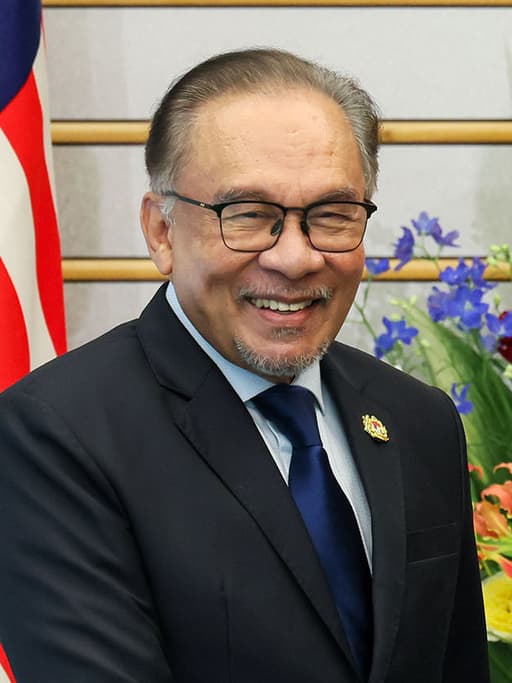
Anwar Ibrahim
PERSON
Prime Minister of Malaysia since 2022
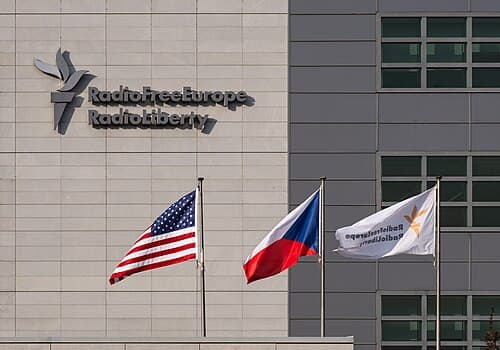
Arch Puddington
PERSON
Name reference in documents
AS
Asmall
PERSON
Name reference in documents
AJ
Attila Juhasz
PERSON
Hungarian politician
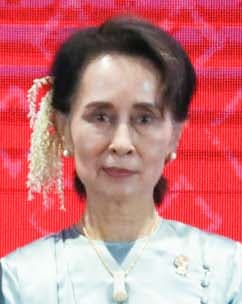
Aung San Suu Kyi
PERSON
Former State Counsellor of Myanmar and Leader of the National League for Democracy
Austin Ramzy
PERSON
Name reference in documents
Aymeric Chauprade
PERSON
French political scientist and politician
Balint Magyar
PERSON
Name reference in documents

Bandera
PERSON
Surname or name fragment in documents
Barack Obama
PERSON • 2 mentions
President of the United States from 2009 to 2017
Bashar al-Assad
PERSON
President of Syria from 2000 to 2024
BG
Ben Goren
PERSON
Name reference in documents
Ben Hodges
PERSON
United States Army officer
BH
Ben Hoyle
PERSON
New Zealand pastor
BS
Ben Schreckinger
PERSON
American journalist and writer

Ben Stewart
PERSON
Canadian politician
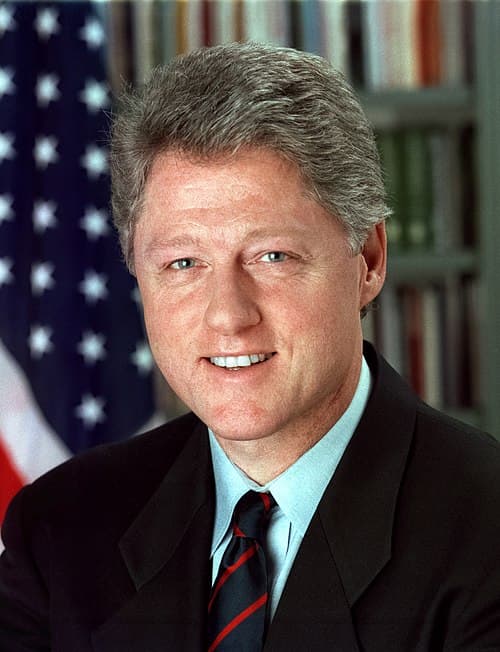
Bill Clinton
PERSON • 2 mentions
President of the United States from 1993 to 2001 (born 1946)
Birtukan Mideksa
PERSON
Ethiopian politician
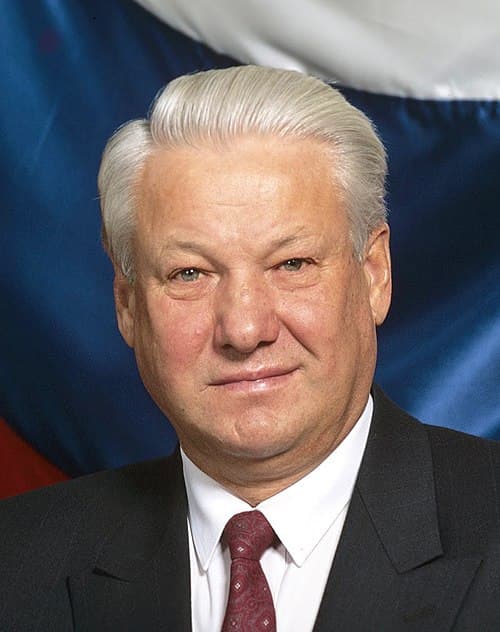
Boris Yeltsin
PERSON
Soviet and Russian politician, 1st President of Russia (1931–2007)
Boyko Borisov
PERSON
Prime Minister of Bulgaria (2009–2013; 2014–2017; 2017–2021)
BN
Brett Nelson
PERSON
American basketball player and coach (born 1980)
Brian Rohan
PERSON
Name reference in documents
Brian Whitmore
PERSON
Name reference in documents
Cameron White
PERSON
Australian cricketer
CA
Carothers
PERSON
Name reference in documents
CY
Ceylan Yeginsu
PERSON
Turkish-British journalist
Chamberlain
PERSON
Surname reference in documents
CC
Charlie Campbell
PERSON
American soccer player
Chavez
PERSON
Surname reference in Epstein-related documents
CW
Christopher Walker
PERSON
Gibraltarian triathlete and cyclist
Clare Baldwin
PERSON
American journalist
CO
Concheso
PERSON • 2 mentions
Name reference in documents
Cynthia Nixon
PERSON
American actress and politician
DA
Dahlin
PERSON
Name reference in documents
Dalibor Rohae
PERSON
Name reference in documents
Daniel Calingaert
PERSON
Name reference in documents
DL
Daniel Lansberg-Rodriguez
PERSON
Name reference in documents
Danielle Recanati
PERSON
Name reference in documents
DB
David Bandurski
PERSON
Name reference in documents
DB
David Barboza
PERSON
American journalist
DB
David Blair
PERSON
Name reference in documents
David Cameron
PERSON
British politician (born 1966)
David J. Kramer
PERSON
American government official
Denis Cenusa
PERSON
Name reference in documents
DL
Dennis Lynch
PERSON
Name reference in documents

Dennison
PERSON
Name reference in documents
DT
Didi K. Tatlow
PERSON
Name reference in documents
DP
Dina Pardijs
PERSON
Name reference in documents
Dmitriy Peskov
PERSON
Name reference in documents
Dmitry Gorenburg
PERSON
Name reference in documents
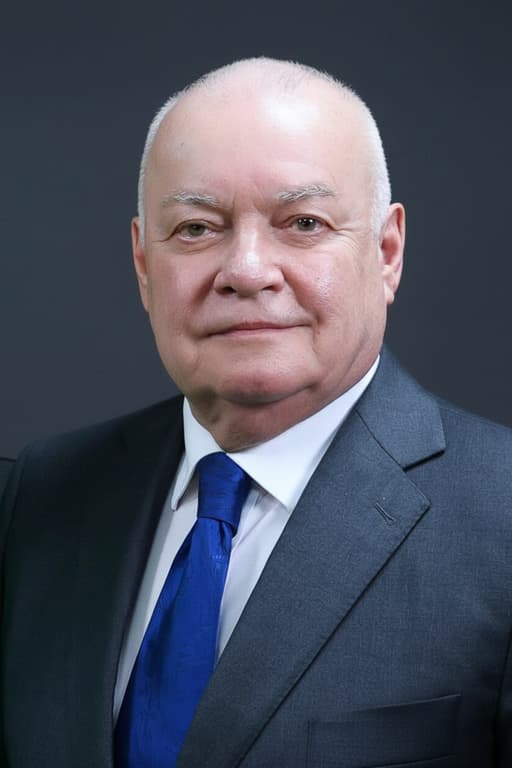
Dmitry Kiselyov
PERSON
Russian television presenter
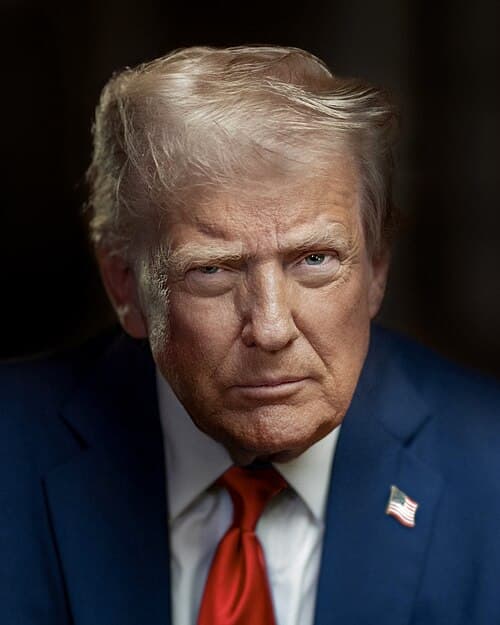
Donald Trump
PERSON • 2 mentions
President of the United States (2017–2021, 2025–present)
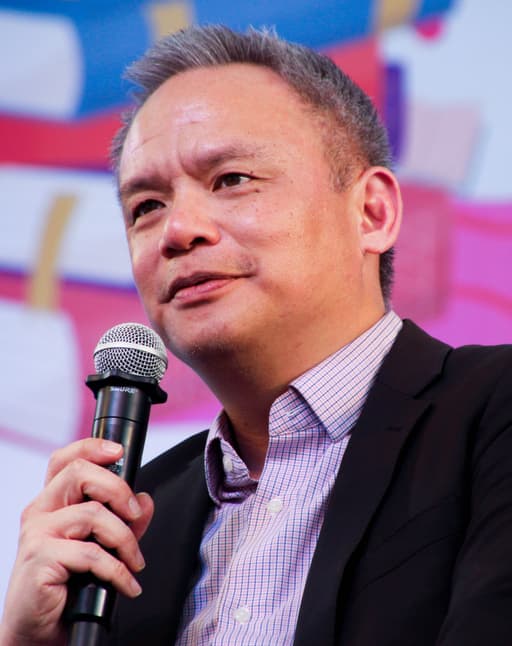
Edward Wong
PERSON
Journalist and foreign correspondent
Eleanor Albert
PERSON
Name reference in documents
EA
Elen Aghekyan
PERSON
Name reference in documents
EF
Emily Feng
PERSON
American journalist
ET
Engen Tham
PERSON
Name reference in documents
FG
Farid Guliyey
PERSON
Name reference in documents
Feliz Solomon
PERSON
Name reference in documents
Ferdinand Marcos
PERSON
President of the Philippines from 1965 to 1986
FG
Fethullah Gillen
PERSON
Name reference in documents
Frank Dikotter
PERSON
Dutch historian
Franklin Graham
PERSON
Christian evangelist and missionary, son of Billy Graham
FW
Fred Weir
PERSON
Canadian journalist
Gabor Vona
PERSON
Hungarian politician
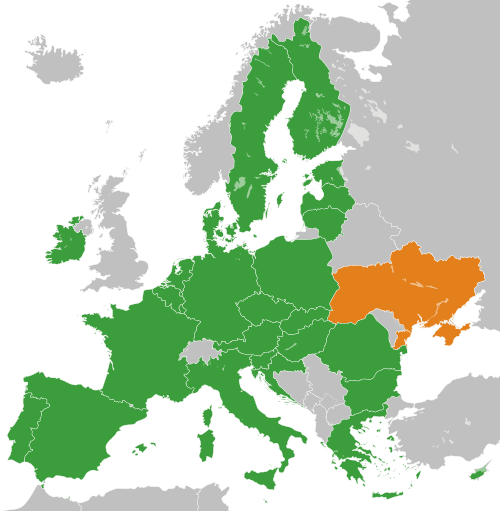
Gabriela Baczynska
PERSON
Name reference in documents
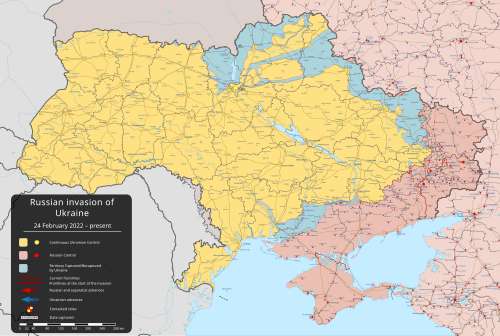
Gabrielle Tétrault-Farber
PERSON
Name reference in documents
GW
Gao Wengian
PERSON
Name reference in documents
Geert Wilders
PERSON
Dutch politician (born 1963)
George Orwell
PERSON
British writer and journalist (1903–1950)
George Soros
PERSON • 2 mentions
Hungarian-American investor and philanthropist (born 1930)
Gerald Ford
PERSON
President of the United States from 1974 to 1977 (1913–2006)
Glenn Greenwald
PERSON
American journalist, lawyer and writer (born 1967)
Goebbels
PERSON
Name reference in documents
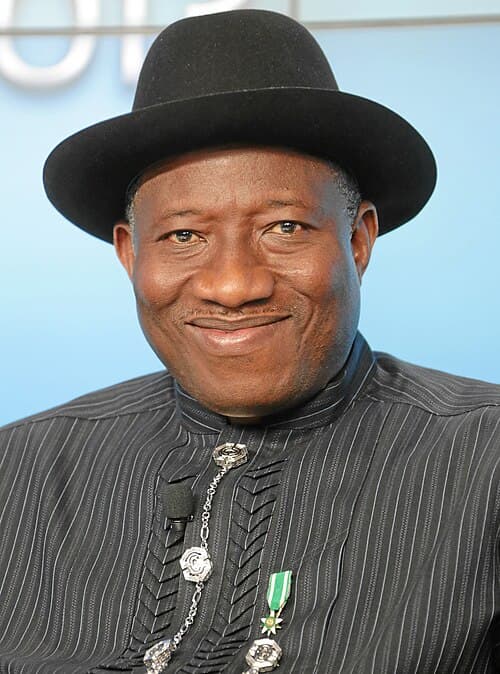
Goodluck Jonathan
PERSON
President of Nigeria from 2010 to 2015
GU
Guiren
PERSON
Name reference in documents
HC
Halya Coynash
PERSON
Name reference in documents
Heinz-Christian Strache
PERSON
Austrian Freedom Party politician

Helmsman
PERSON
Name reference in documents

Henry Foy
PERSON
Taiwnanese-Canadian singer and musician
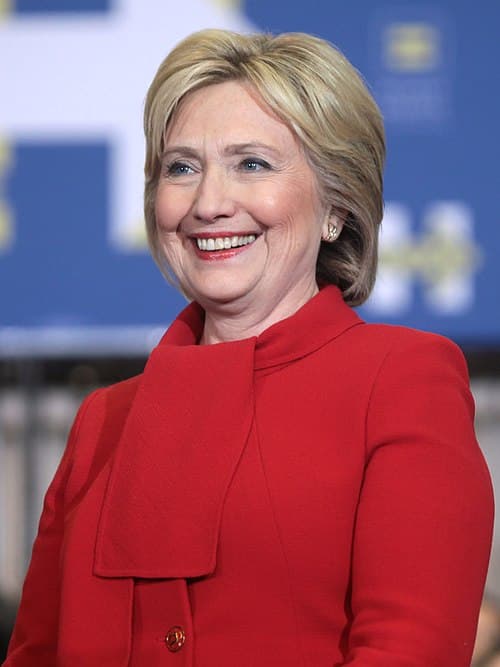
Hillary Clinton
PERSON
American politician and diplomat (born 1947)
HA
Howard Amos
PERSON
Journalist
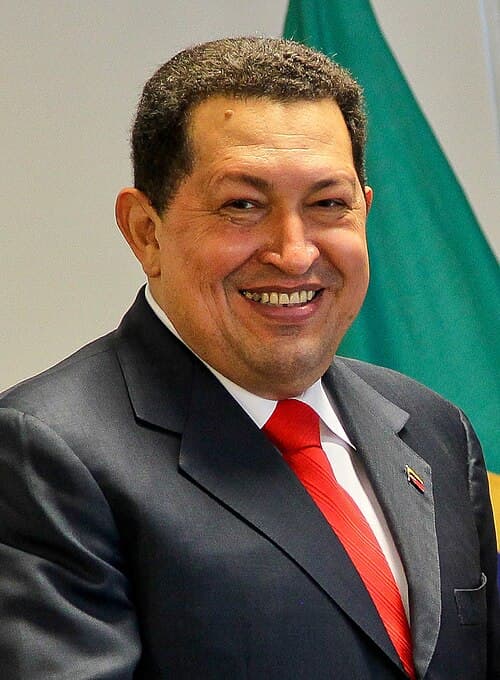
Hugo Chavez
PERSON
52nd President of Venezuela from 1999 to 2013 (born 1954–2013)
IK
ikhail Khodorkovsky
PERSON
Name reference in documents
IL
Ilham
PERSON
Name reference in documents
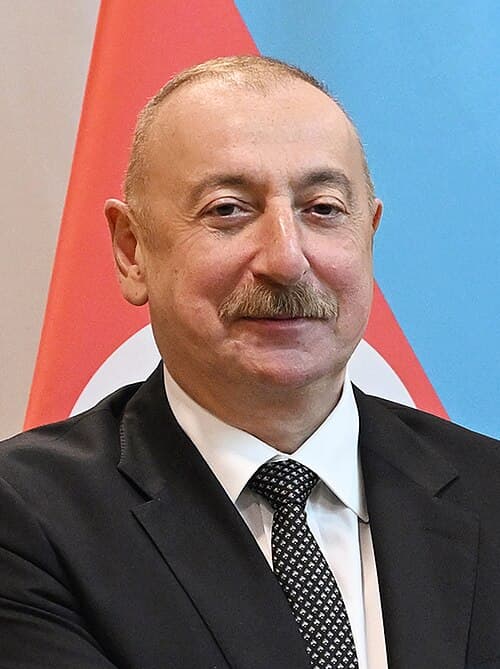
Ilham Aliyev
PERSON
President of Azerbaijan since 2003
Ilya Lozovsky
PERSON
Name reference in documents

Ivo Oliveira
PERSON
Portuguese bicycle racer
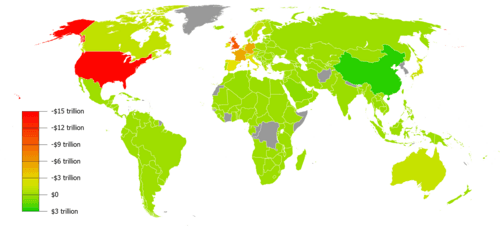
Jamil Anderlini
PERSON
Asia Editor - Financial Times
Jan Cienski
PERSON
Roman Catholic bishop
Jan Gross
PERSON
American historian and sociologist
JR
Jan Rydzak
PERSON
Name reference in documents
Janina Semenova
PERSON
Name reference in documents
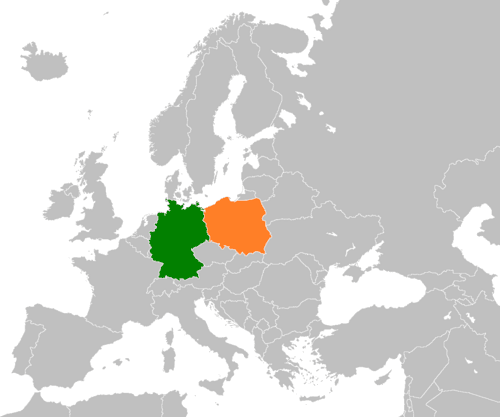
Jaroslaw Kaczynski
PERSON
Name reference in documents
Jason Karaian
PERSON
Name reference in documents
JC
Javier Corrales
PERSON
American political scientist
Jeff Sessions
PERSON
American politician and lawyer (born 1946)
JS
Jeffrey Simpson
PERSON
Canadian journalist
Jessica T. Mathews
PERSON
American pornographic actress (1979–2019)

Jill Dougherty
PERSON
American journalist
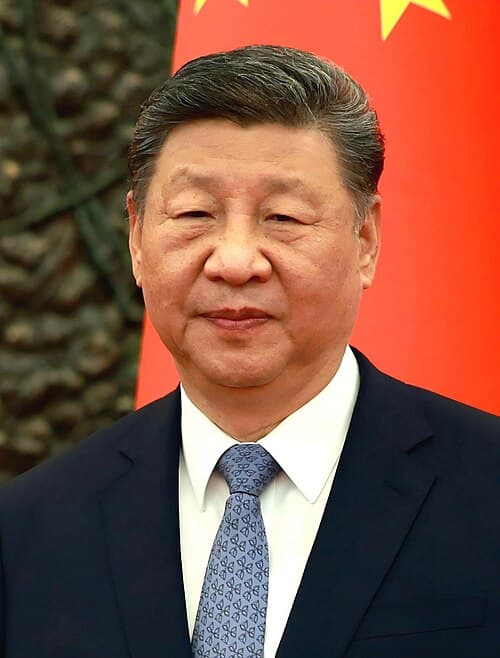
Jinping
PERSON • 2 mentions
General Secretary of the Chinese Communist Party since 2012
JB
Joanna Berendt
PERSON
Name reference in documents
John Hudson
PERSON
American actor (1919-1996)
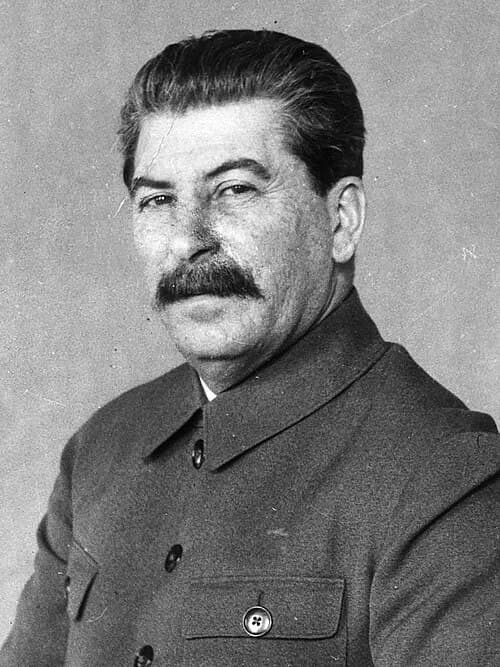
Joseph Stalin
PERSON
Name reference in documents
JC
Josh Chin
PERSON
Name reference in documents
Joshua Yaffa
PERSON
Name reference in documents
Juhan Kivirahk
PERSON
Estonian sociologist (born 1957)
KZ
Katie Zevadski
PERSON
Name reference in documents
KS
Ken Silverstein
PERSON
American magazine editor
Kristina Cooke
PERSON
American journalist
KT
Krisztina Than
PERSON
Name reference in documents
KR
Kroet
PERSON
Name reference in documents
Lachlan Markay
PERSON
Name reference in documents
lan Johnson
PERSON
Indian composer (1953–2011)
LT
lan Traynor
PERSON
Name reference in documents
Laruelle
PERSON
Belgian politician
Lech Walesa
PERSON
President of Poland from 1990 to 1995
Leon Aron
PERSON
American actor
Leonid Brezhnev
PERSON
General Secretary of the Communist Party of the Soviet Union (1906–1982)
Leonid Kuchma
PERSON
The second president of Ukraine
LZ
Lintao Zhang
PERSON
Researcher
Linus Linkeviéius
PERSON
Name reference in documents
Liu Xiaobo
PERSON
Chinese literary critic, writer, professor, and human rights activist (1955–2017)
Lucian Kim
PERSON
Name reference in documents
Luke Harding
PERSON
British journalist and writer (born 1968)
LM
lvan Mostovich
PERSON
Name reference in documents
LN
lvan Nechepurenko
PERSON
Name reference in documents
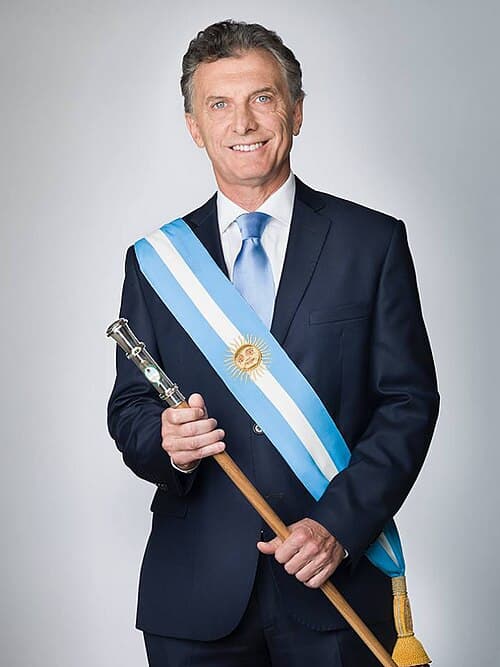
Macri
PERSON
Surname or name fragment in documents
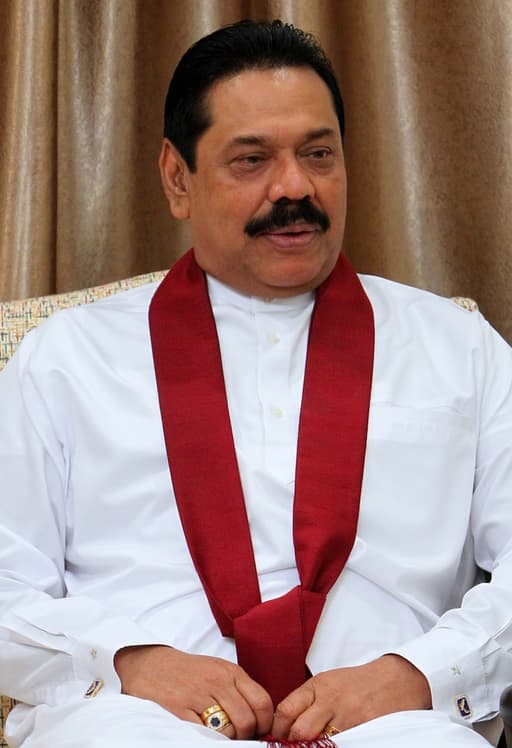
Mahinda Rajapaksa
PERSON
President of Sri Lanka from 2005 to 2015
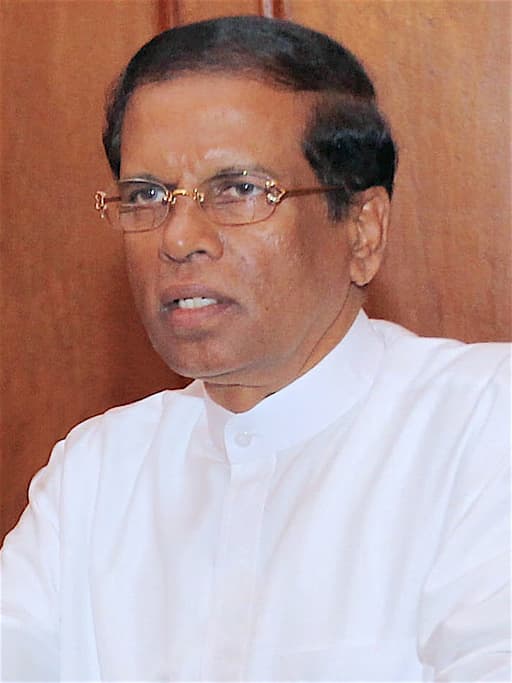
Maithripala Sirisena
PERSON
President of Sri Lanka from 2015 to 2019
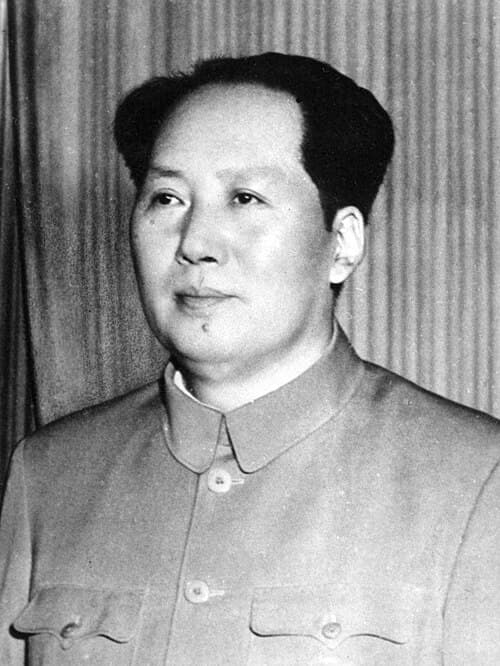
Mao Zedong
PERSON • 3 mentions
1st chairman of the Chinese Communist Party and founder of the People's Republic of China (1893–1976)
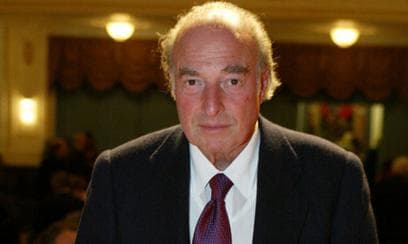
Marc Rich
PERSON
American commodities trader (1934–2013)
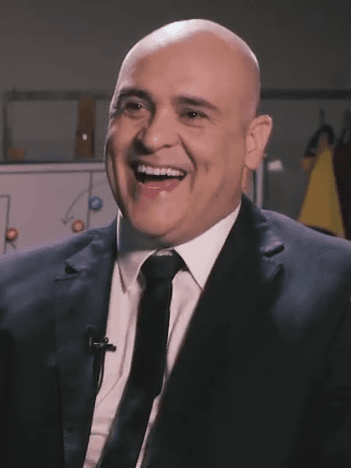
Marcos
PERSON
First name reference to multiple individuals in Epstein-related documents
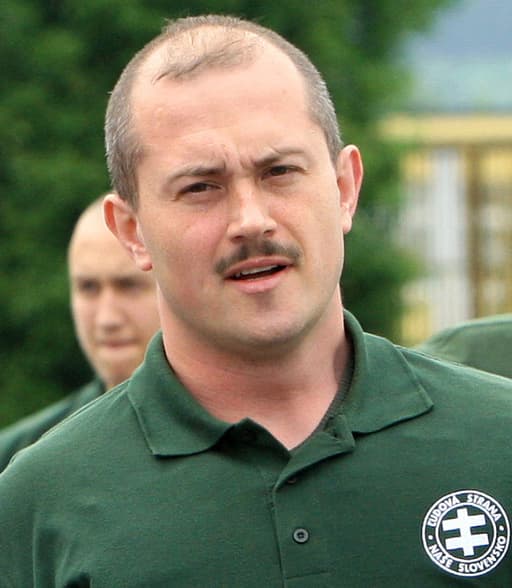
Marian Kotleba
PERSON
Slovak politician and economist
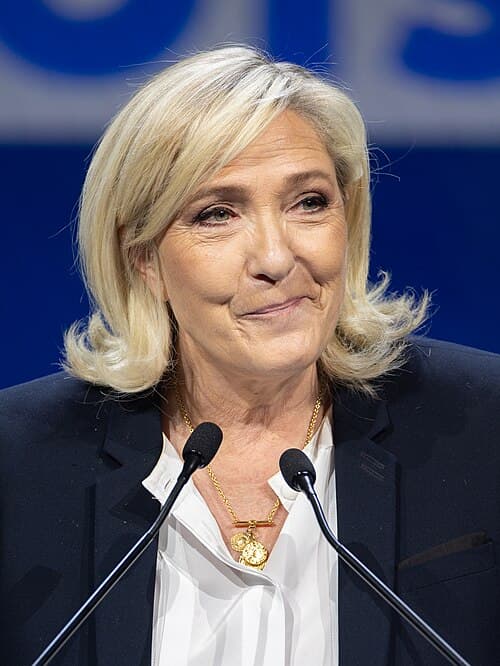
Marine Le Pen
PERSON • 2 mentions
French politician (born 1968)
Marlene Laruelle
PERSON
French historian
Matteo Salvini
PERSON • 2 mentions
Italian politician

Matthew Miller
PERSON
American journalist
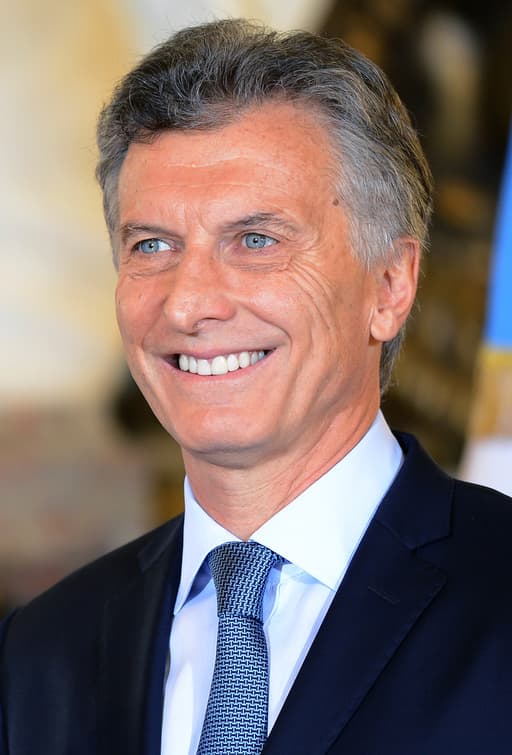
Mauricio Macri
PERSON
President of Argentina from 2015 to 2019
MT
Maxim Trudolyuboy
PERSON
Name reference in documents
Michael Emerson
PERSON
American actor (born 1954)
Michael Flynn
PERSON • 2 mentions
U.S. Army general and former U.S. National Security Advisor (born 1958)
MF
Michael Forsythe
PERSON
American journalist
Michael Johnson
PERSON
American mixed martial arts fighter
Michael Weiss
PERSON
Figure skater
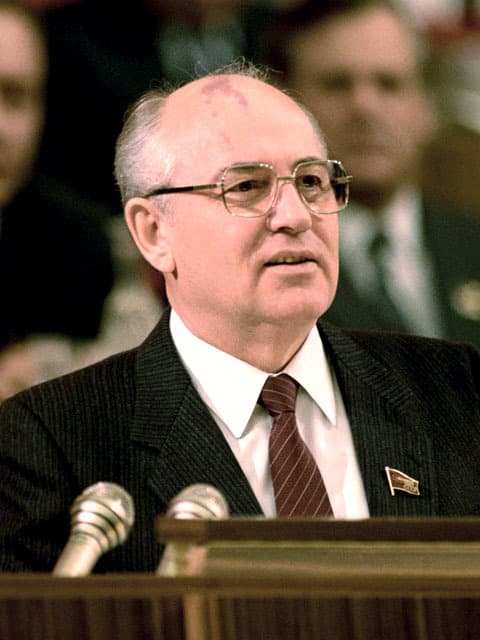
Mikhail Gorbachev
PERSON
Leader of the Soviet Union from 1985 to 1991 (1931–2022)
MO
Mitchell A. Orenstein
PERSON
Name reference in documents
Mobutu Sese Seko
PERSON
Congolese politician and military officer, the first and only president of Zaire from 1971 to 1997 (1930 – 1997)
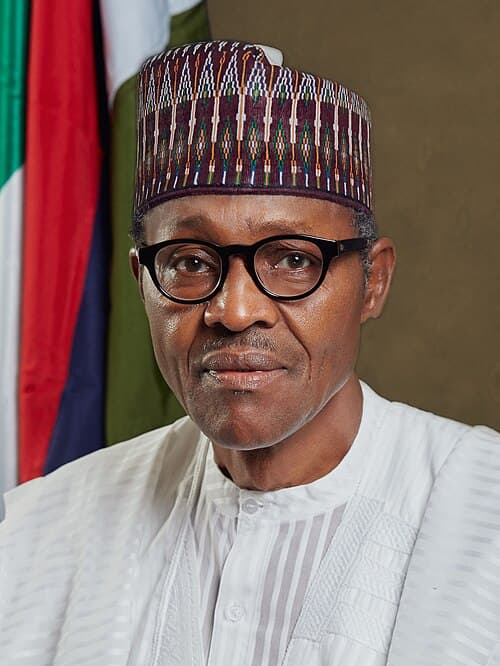
Muhammadu Buhari
PERSON
Former President of Nigeria from 1983 to 1985 and 2015 to 2025 (born 1942–2025)
NA
Natan
PERSON
Surname or name fragment in documents
Navalny
PERSON
Surname reference in Epstein-related documents
Néstor Kirchner
PERSON
President of Argentina from 2003 to 2007
Neville Chamberlain
PERSON
Person referenced in documents
Nick Griffin
PERSON
British politician (born 1959)
Nicolas Maduro
PERSON
President of Venezuela since 2013
Nigel Farage
PERSON • 2 mentions
British right-wing politician (born 1964)
Noah Feldman
PERSON
American academic, educator, political writer
Norman Davies
PERSON
British historian

Orwell
PERSON
Surname reference in Epstein-related documents
PG
Pablo Gorondi
PERSON
Name reference in documents
PA
Pardijs
PERSON
Name reference in documents
PA
Patrushev
PERSON
Name reference in documents
Paul Manafort
PERSON • 2 mentions
American political consultant
Peter Dahlin
PERSON
Swedish human rights activist
Péter Kreko
PERSON
Political scientist
Peter Pomerantsev
PERSON
British journalist, author and TV producer
Pomerantsev
PERSON
Name reference in documents
Prince Andrew
PERSON • 2 mentions
Third child of Queen Elizabeth II and Prince Philip, Duke of Edinburgh (born 1960)
Rajapaksa
PERSON
President of Sri Lanka from 2005 to 2015
Ramiz Mehdiyev
PERSON
Azerbaijani politician
RL
Raymond Li
PERSON
Name reference in documents
RF
Rebeka Foley
PERSON
Name reference in documents
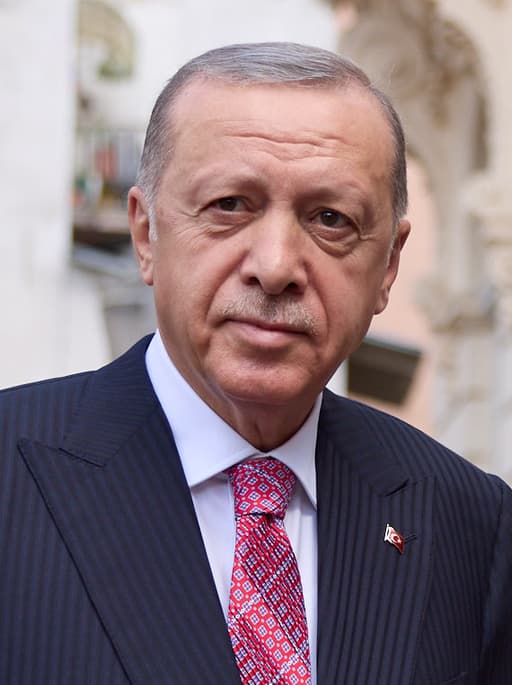
Recep Tayyip
PERSON
President of Turkey since 2014
Recep Tayyip Erdogan
PERSON • 2 mentions
President of Turkey since 2014
Richard Burt
PERSON
American diplomat
Richard Nixon
PERSON
President of the United States from 1969 to 1974 (1913–1994)
Riina Kaljurand
PERSON
Estonian diplomat (born 1975)
Robert Fico
PERSON
Prime Minister of Slovakia since 2023
Robert Mugabe
PERSON
2nd President of Zimbabwe from 1987 to 2017
RO
Robert Orttung
PERSON
Indian choreographer
Robert Ruby
PERSON
Name reference in documents
Roberto Foa
PERSON
Spanish association football player (1986-)
Ronald Reagan
PERSON • 2 mentions
President of the United States from 1981 to 1989 and actor (1911–2004)
Rudy Giuliani
PERSON • 4 mentions
American attorney and politician (born 1944)
Sakharov
PERSON
Surname or name fragment in documents
Sani Abacha
PERSON
Nigerian military ruler (1943-1998)
SC
Sarah Cook
PERSON
Canadian art historian (born 1974)
SR
Sarah Repucci
PERSON
Name reference in documents
SS
Serge Schmemann
PERSON
American journalist
Sergey Brin
PERSON
American billionaire businessman (born 1973)
Sharansky
PERSON
Israeli politician (born 1948)
SI
Sirisena
PERSON
Name reference in documents
Stanley Lubman
PERSON
Name reference in documents
Stepan Bandera
PERSON
Ukrainian nationalist leader (1909–1959)
SR
Steve Rosenberg
PERSON
British journalist
SM
Steven Lee Myers
PERSON
Journalist in Washington, DC
Sun Jianguo
PERSON
Chinese Navy admiral
Susi Dennison
PERSON
Name reference in documents
Tamara Kovziridze
PERSON
Name reference in documents
Tanya Lokshina
PERSON
Human rights activist from Russia
TH
the-prime-minister-s
PERSON
Name reference in documents
Theodoric Meyer
PERSON
Name reference in documents
TC
Thomas Carothers
PERSON
American political scientist
TG
Thomas Grove
PERSON
Name reference in documents
Timothy Snyder
PERSON
American historian (born 1969)

Tom Balmforth
PERSON
Name reference in documents
Tom Mitchell
PERSON
Computer scientist

Tom Parfitt
PERSON
Name reference in documents

Tom Phillips
PERSON
American professional wrestling announcer
Tony Barber
PERSON
Australian TV host
Tony Blair
PERSON
Prime Minister of the United Kingdom from 1997 to 2007
TR
Tyler Roylance
PERSON
Name reference in documents
Tymoshenko
PERSON
Surname or name fragment in documents
Vanessa Gera
PERSON
Name reference in documents

Vanessa Tucker
PERSON
Name reference in documents

Vasily Gatov
PERSON
Name reference in documents
Veronika Movchan
PERSON
Romanian singer, songwriter
Vicky Ward
PERSON
British investigative journalist
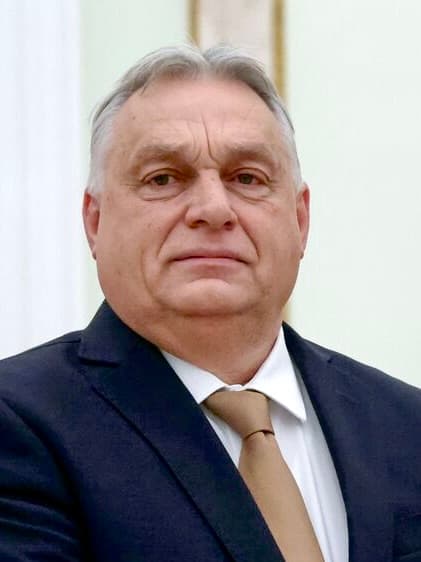
Viktor Orbán
PERSON • 3 mentions
Prime Minister of Hungary (1998–2002; 2010–present)
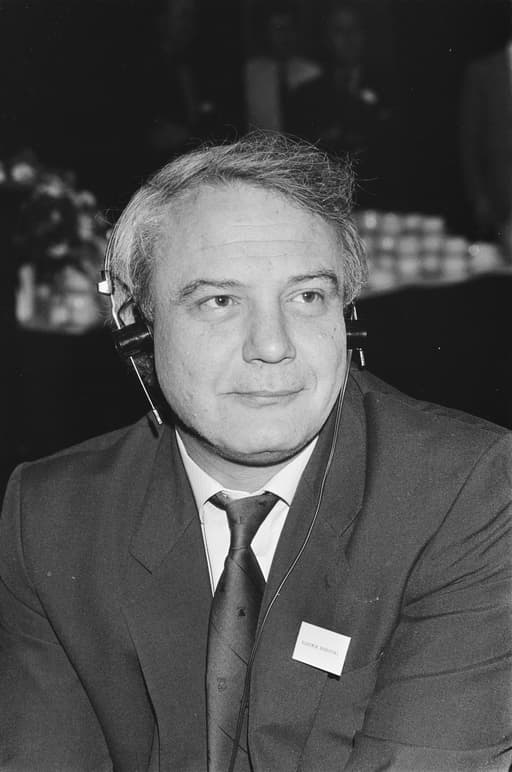
Vladimir Bukovsky
PERSON
Soviet dissident; prominent in the Soviet dissident movement of the 1960s and 1970s and spent a total of twelve years in psychiatric prison-hospitals, labor camps and prisons within the Soviet Union
VF
Vladimir Frolov
PERSON
Russian footballer (1982-)
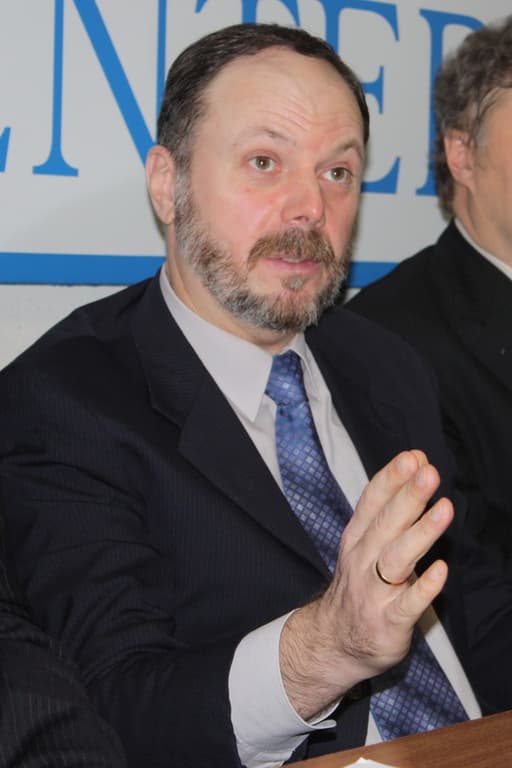
Vladimir Kara-Murza
PERSON
Russian journalist (1959-2019)
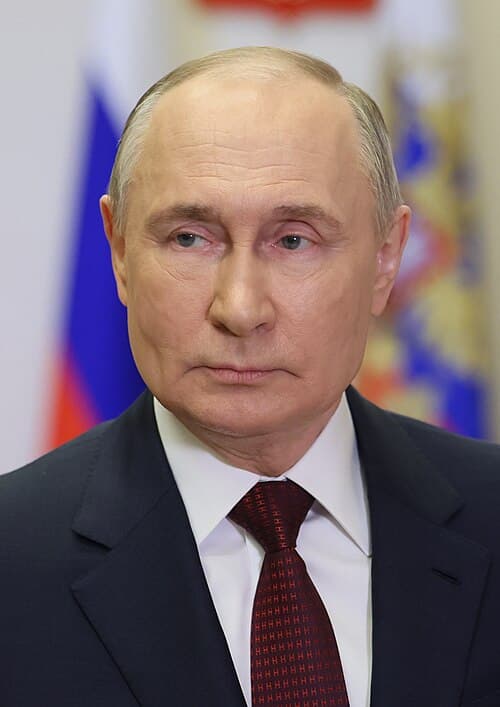
Vladimir Putin
PERSON • 4 mentions
2nd and 4th President of Russia (2000-2008, 2012-present), 7th and 11th Prime Minister of Russia (1999-2000, 2008-2012), Director of the Federal Security Service (1998-1999) and Deputy Mayor of Saint Petersburg (1994-1996)
WA
Walker
PERSON
Surname reference in Epstein documents
Wilders
PERSON
Surname or name fragment in documents
Xi Jinping
PERSON • 3 mentions
General Secretary of the Chinese Communist Party since 2012
Yascha Mounk
PERSON
German-American political scientist
Yeltsin
PERSON
Surname or name fragment in documents
Yuliya Tymoshenko
PERSON
Name reference in documents
ZE
Zedong
PERSON
Researcher
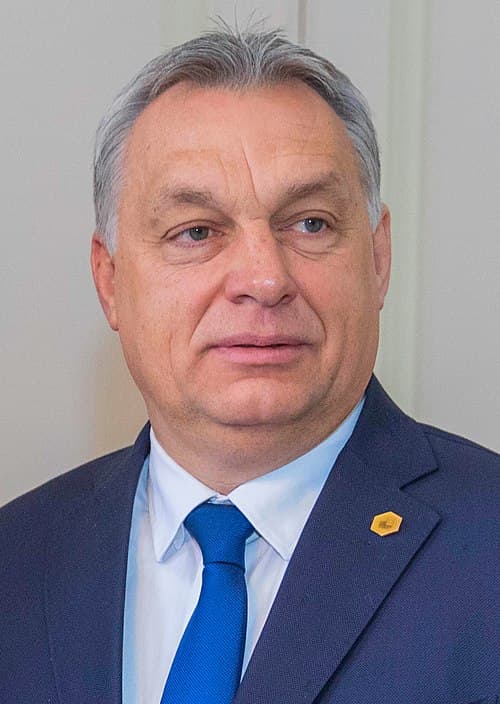
Zselyke Csaky
PERSON
Name reference in documents
Zubov
PERSON
Name reference in documents
Al-Monitor
ORGANIZATION
Website providing reporting and analysis pertaining to the Middle-East
Amnesty International
ORGANIZATION
Non-governmental organization based in the United Kingdom
British Broadcasting Corporation
ORGANIZATION
Organization referenced in documents

Business Insider
ORGANIZATION
Financial and business news website
Cassidy and Associates
ORGANIZATION
Organization referenced in documents
Center for International Media Assistance
ORGANIZATION
Non-governmental Organization based in Washington, DC
Center on Global Interests
ORGANIZATION
Organization referenced in documents

Chevron
ORGANIZATION
American multinational energy corporation
China Central Television
ORGANIZATION
Chinese Communist Party-run propaganda outlet
China Digital Times
ORGANIZATION
Organization referenced in documents
China Group
ORGANIZATION
Organization referenced in documents
China Media Bulletin
ORGANIZATION
Organization referenced in documents
China Media Project
ORGANIZATION
Organization referenced in documents
Chinese Communist
ORGANIZATION
Organization referenced in documents
Chinet
ORGANIZATION
Organization referenced in documents
Christian Science Monitor
ORGANIZATION
American nonprofit newspaper (1908-)
Civic Platform
ORGANIZATION
Organization referenced in documents
Civicus
ORGANIZATION
Organization referenced in documents
Comintern
ORGANIZATION
Organization referenced in documents

Corbis
ORGANIZATION
Stock photo licensing company.
Dalian Wanda Group
ORGANIZATION
Chinese conglomerate
Deutsche Welle
ORGANIZATION
International German public radio and television channel

Economist
ORGANIZATION
Professional in the discipline of economics

Edelman
ORGANIZATION
American public relations and marketing consultancy firm
Editorial Board
ORGANIZATION
Group of experts who dictate the tone and direction the publication's editorial policy will take
Electric Yerevan
ORGANIZATION
Organization referenced in documents
Eurasia Daily Monitor
ORGANIZATION
Organization referenced in documents
Eurasian Observatory
ORGANIZATION
Organization referenced in documents
European Parliament
ORGANIZATION
American funk band most prominent during the 1970s
European Union
ORGANIZATION
Political and economic union of 27 European states
Fidesz
ORGANIZATION
Organization referenced in documents
Foreign Affairs
ORGANIZATION
American magazine and website on international relations

Foreign Policy
ORGANIZATION
American news magazine and website based in Washington, D.C.
Freedom at Issue
ORGANIZATION
Organization referenced in documents

Freedom House
ORGANIZATION
Organization referenced in documents
Freedom in the World
ORGANIZATION
Organization referenced in documents
Freedom on the Net
ORGANIZATION
Organization referenced in documents
Gazprom
ORGANIZATION
Russian oil and gas company
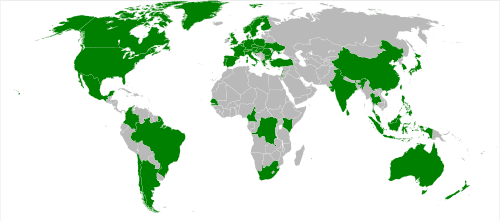
Greenpeace
ORGANIZATION
Non-governmental environmental organization
Harvard International Review
ORGANIZATION
Organization referenced in documents
Hill+Knowlton
ORGANIZATION
Organization referenced in documents
Human Rights in Ukraine
ORGANIZATION
Organization referenced in documents
Human Rights Watch
ORGANIZATION
International human rights advocacy and research non-governmental organization
Hungarian Spectrum
ORGANIZATION
Organization referenced in documents
Institute of Modern Russia
ORGANIZATION
Organization referenced in documents
International Business Times
ORGANIZATION
Organization referenced in documents
International Centre for Defence and Security
ORGANIZATION
Organization referenced in documents
Islamic State
ORGANIZATION
Salafi jihadist militant Sunni Islamist group
Jobbik
ORGANIZATION
Organization referenced in documents
Journal of Democracy
ORGANIZATION
Organization referenced in documents
Ketchum
ORGANIZATION
Organization referenced in documents
Kremlin
ORGANIZATION
Fortified complex in Moscow, Russia
Kviv Post
ORGANIZATION
Organization referenced in documents
League
ORGANIZATION
Organization referenced in documents
Legendary Entertainment
ORGANIZATION
Organization referenced in documents
Levada
ORGANIZATION
Organization referenced in documents
Maidan
ORGANIZATION
Organization referenced in documents
Malaysian Airlines
ORGANIZATION
Standard Malay dialect spoken in Malaysia
Meduza
ORGANIZATION
Organization referenced in documents
Memorial
ORGANIZATION
Organization referenced in documents
Moscow Times
ORGANIZATION
Organization referenced in documents
Moskvy
ORGANIZATION
Organization referenced in documents
National League for Democracy
ORGANIZATION
Organization referenced in documents
New Republic
ORGANIZATION
Fictional state in the "Star Wars" universe

New York Review of Books
ORGANIZATION
American magazine
Novaya Gazeta
ORGANIZATION
Organization referenced in documents
Novorossiya
ORGANIZATION
Organization referenced in documents

Ogilvy
ORGANIZATION
Advertising agency
Open Democracy
ORGANIZATION
Organization referenced in documents
Party for Freedom
ORGANIZATION
Organization referenced in documents
PEN America
ORGANIZATION
Organization referenced in documents
People’s Party—Our Slovakia
ORGANIZATION
Organization referenced in documents
Predatel
ORGANIZATION
Organization referenced in documents
Quartz
ORGANIZATION
Online news publication
Radio Caracas Television
ORGANIZATION
Organization referenced in documents
Radio Free Europe/Radio
ORGANIZATION
Organization referenced in documents
Real Clear World
ORGANIZATION
Organization referenced in documents
RFE/RL
ORGANIZATION
Organization referenced in documents
RKK ICDS
ORGANIZATION
Organization referenced in documents
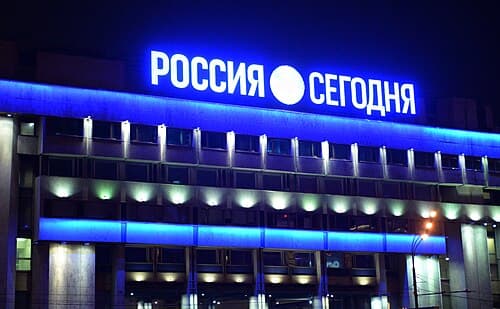
Rossiya Segodnya
ORGANIZATION
Organization referenced in documents
Sakhalin State University
ORGANIZATION
Organization referenced in documents
Salon
ORGANIZATION
American progressive news and opinion website

Security Council
ORGANIZATION
Ministry of Japan

Slate
ORGANIZATION
U.S.-based online magazine
Socialist Party
ORGANIZATION
French political party (1969–present)
Solidarity
ORGANIZATION
Polish trade union federation evolved into broad anti-authoritarian social movement
Sputnik
ORGANIZATION
Russian government news agency

Telegraph
ORGANIZATION
British daily broadsheet newspaper
the American Enterprise Institute
ORGANIZATION
Organization referenced in documents

The American Interest
ORGANIZATION
Organization referenced in documents
The Atlantic
ORGANIZATION
Organization referenced in documents

the Atlantic Council
ORGANIZATION
Organization referenced in documents
the Carnegie Endowment for International Peace
ORGANIZATION
Organization referenced in documents
the Federal Security
ORGANIZATION
Organization referenced in documents
the Fiscal Council
ORGANIZATION
Organization referenced in documents

the Foreign Ministry
ORGANIZATION
Organization referenced in documents

the Freedom of the Press
ORGANIZATION
Organization referenced in documents
the General Intelligence Service
ORGANIZATION
Organization referenced in documents
The Man
ORGANIZATION
Organization referenced in documents
the Organization of American States
ORGANIZATION
Organization referenced in documents
the People's Liberation Army
ORGANIZATION
Organization referenced in documents
the Red Army
ORGANIZATION
Organization referenced in documents
The Semayawi
ORGANIZATION
Organization referenced in documents
the South China Morning Post
ORGANIZATION
Organization referenced in documents
the Soviet
ORGANIZATION
Organization referenced in documents
the Voice of America
ORGANIZATION
Organization referenced in documents
The Wall Street Journal
ORGANIZATION
American business-focused daily newspaper
the World Trade
ORGANIZATION
Organization referenced in documents
Transparency Venezuela
ORGANIZATION
Organization referenced in documents
U.S. Congressional-Executive Commission
ORGANIZATION
Organization referenced in documents
UK Independence Party
ORGANIZATION
Organization referenced in documents
United Nations
ORGANIZATION
Global international and intergovernmental organization
United Russia party
ORGANIZATION
Organization referenced in documents
University World News
ORGANIZATION
Organization referenced in documents
Vedomosti
ORGANIZATION
Organization referenced in documents
Visual
ORGANIZATION
Organization referenced in documents

Wanda
ORGANIZATION
Entity referenced in documents
Washington Free Beacon
ORGANIZATION
Conservative American news organization

Washington Times
ORGANIZATION
American broadsheet newspaper published in Washington, D.C.
Weber Shandwick
ORGANIZATION
Organization referenced in documents
WikiLeaks
ORGANIZATION
Organization that publishes leaks provided by anonymous sources
World Affairs
ORGANIZATION
American academic journal
Young Karelia
ORGANIZATION
Organization referenced in documents
Abkhazia
LOCATION
Disputed territory in the South Caucasus, whose recognition as a country is limited
Angola
LOCATION
Country on the west coast of Southern Africa
Armenia
LOCATION
Sovereign state in the South Caucasus region of Eurasia
Azerbaijan
LOCATION
Country in the Caucasus in Eastern Europe and Western Asia

Bahrain
LOCATION
Country in the Persian Gulf
Baile Tusnad
LOCATION
Town in Harghita County, Romania
Baltics
LOCATION
Three countries east of the Baltic Sea: Estonia, Latvia, Lithuania
Belarus
LOCATION
Country in Eastern Europe
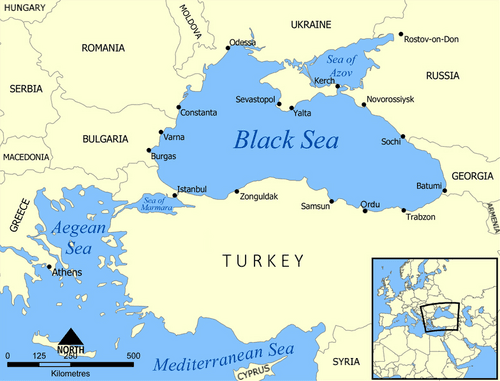
Black Sea
LOCATION • 2 mentions
Sea between Europe and Asia

Bolivia
LOCATION
Sovereign state in South America
Budapest
LOCATION
Capital and largest city of Hungary
Bulgaria
LOCATION
Country in Southeast Europe
Central and Eastern Europe
LOCATION
Geographic and cultural region of Europe
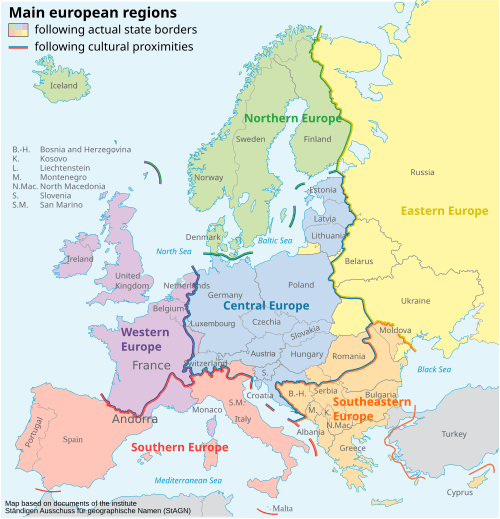
Central Europe
LOCATION
Region of Europe
Chechnya
LOCATION
Federal subject of Russia, republic of Russia

Chile
LOCATION
Country in South America
China
LOCATION
Country in East Asia
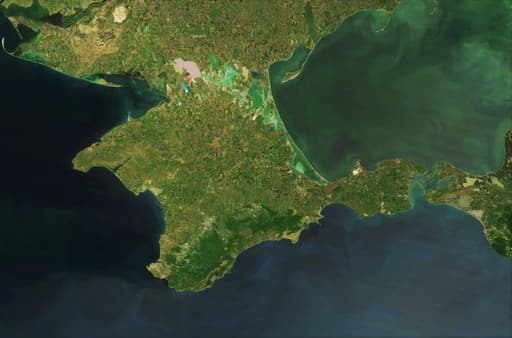
Crimea
LOCATION
Eastern European peninsula, in the Black Sea and Sea of Azov, disputed between Ukraine (de jure) and Russia (de facto)
Czechoslovakia
LOCATION
Country in Central Europe, 1918–1992
Denmark
LOCATION
Country in Northern Europe and North America
Donbas
LOCATION
Industrial region in southeastern Ukraine and southwestern Russia
East Germany
LOCATION
Location referenced in documents
Eastern Europe
LOCATION
Eastern part of Europe
Ecuador
LOCATION
Sovereign state in South America

Estonia
LOCATION
Country in Northern Europe
Ethiopia
LOCATION
Country in the Horn of Africa
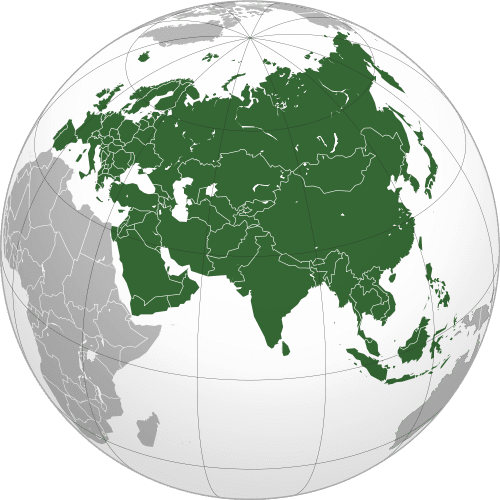
Eurasia
LOCATION
Continental landmass comprising Europe and Asia
Euro-Atlantic
LOCATION
Location referenced in documents

Finland
LOCATION
Country in Northern Europe
Gdansk
LOCATION
City and capital of the Pomeranian Voivodeship on the Baltic coast of northern Poland
Hong Kong
LOCATION
City and special administrative region of China
Kazakhstan
LOCATION
Sovereign state in Eastern Europe and Central Asia
Kenya
LOCATION
Country in Eastern Africa
Kuwait
LOCATION
Sovereign state in Western Asia
Latin America
LOCATION
Region of the Americas where Romance languages are primarily spoken

Latvia
LOCATION
Sovereign state in northeastern Europe
Malaysia
LOCATION
Country in Southeast Asia
Moldova
LOCATION
Country in Eastern Europe
Myanmapn
LOCATION
Location referenced in documents
Myanmar
LOCATION
Country in Southeast Asia
New York City
LOCATION
Most populous city in the United States
Nicaragua
LOCATION
Sovereign state in Central America

Nigeria
LOCATION
Sovereign state in West Africa
Northern
LOCATION
Directional region of the United States
Northern Europe
LOCATION
Northern region of the European continent
Norway
LOCATION
Country in Northern Europe
Orange
LOCATION
French multinational telecommunications corporation
Philippines
LOCATION • 2 mentions
Archipelagic country in Southeast Asia
Prague
LOCATION
Capital city of the Czech Republic
Romania
LOCATION
Country in Southeast Europe
Russia
LOCATION
Common term for the Duchy, the Kingdom and the Free State of Prussia (1525–1947)
Serbia
LOCATION
Country in Southeast Europe
Sinai
LOCATION
Peninsula in the Middle East
Slovakia
LOCATION
Country in Central Europe
Slovyansk
LOCATION
City in Donetsk Oblast, Ukraine
South Ossetia
LOCATION
State in the South Caucasus
Soviet Union
LOCATION • 4 mentions
Former country in Eurasia (1922–1991)
Sri Lanka
LOCATION
Island country in South Asia
Syria
LOCATION
Country in West Asia
Tallinn
LOCATION
Capital and most populous city of Estonia
Tbilisi
LOCATION
Capital and the largest city of Georgia (country)
the Baltic Sea
LOCATION
Location referenced in documents
The Gambia
LOCATION
Location referenced in documents
the North Caucasus
LOCATION
Location referenced in documents
Transnistria
LOCATION
Russian-occupied territory in Moldova
United Arab Emirates
LOCATION
Country in Western Asia

United States
LOCATION • 4 mentions
Country located primarily in North America
Uruguay
LOCATION
Sovereign state in South America
Uzbekistan
LOCATION
Sovereign state in Central Asia
Venezuela
LOCATION
Country in South America
Warsaw Pact
LOCATION
European Eastern Military Alliance (1954 – 1991)
Yemen
LOCATION
Country in West Asia
Yugoslavia
LOCATION
1918–1992 country in Southeastern Europe
Zimbabwe
LOCATION
Sovereign state in southern Africa
Statistics
Pages:64
Entities:459
Avg. OCR:93.8%
Sponsored