HOUSE_OVERSIGHT_028648 - HOUSE_OVERSIGHT_028674
Document HOUSE_OVERSIGHT_028648 is a government record from the House Oversight Committee, consisting of 27 pages.
The document appears to be an email sent to Jeffrey Epstein from Larry Summers on February 15, 2013, forwarding an article by Ray Takeyh regarding the United States' strategy in dealing with Iran's nuclear program. The article suggests that a step-by-step diplomatic approach is more practical than offering Iran a final, all-encompassing nuclear agreement. The document also mentions several countries and political figures relevant to international relations and U.S. foreign policy.
Key Highlights
- •The document discusses the United States' approach to Iran's nuclear program.
- •Jeffrey Epstein and Larry Summers are key people involved in the email exchange.
- •The document references the potential for sanctions and the use of force in dealing with Iran.
Frequently Asked Questions


Document Information
Bates Range
HOUSE_OVERSIGHT_028648 - HOUSE_OVERSIGHT_028674
Pages
27
Source
House Oversight Committee
Document Content
Page 1 - HOUSE_OVERSIGHT_028648
From: Sent: To: Jeffrey Epstein [[email protected]] 2/15/2013 4:52:58 PM Larry Summers take-it-or-leave-it deal by the U.S. on the nuclear issue is the wrong strategy Ray Takeyh February 14, 2013 -- On Feb. 26, the United States and Iran will once more resume their diplomatic ritual, in the so-called six-party talks, over Iran's disputed nuclear program. As the two perennial adversaries eye one another, there are competing paradigms about how to deal with Tehran. An emerging school of thought suggests that the best means of "testing" Iran is to offer it a final nuclear agreement that presumably promises measurable relief from sanctions for significant Iranian concessions. Iran's failure to grasp such an offer would then conclusively demonstrate to both domestic and international audiences that the cause of the impasse is not American belligerence but Iranian truculence. But this approach fails to recognize that an arms-control process is necessarily an incremental one, nor does it offer a practical substitute to the existing step-by-step diplomacy. Iran's nuclear program encompasses a vast complex of enrichment facilities, centrifuge construction plants, uranium extraction companies and thousands of scientists working in university and government laboratories. Iran is enriching uranium at both 5% and 20% levels, experimenting with high-velocity centrifuges and seemingly in the process of constructing additional enrichment facilities. Such a multilayered, multifaceted program can be dealt with only on a piecemeal basis, as the technical details and rules for inspections are too complex to be addressed in a single agreement. Moreover, should the United States offer Iran a final deal, Tehran still has a right to contest and negotiate its provisions and offer counterproposals. HOUSE_OVERSIGHT_028648
Page 2 - HOUSE_OVERSIGHT_028649
The international community is unlikely to concede to either more sanctions or the use of force until Iran's objections are taken into full consideration. As such, a grand deal that is supposed to provoke a moment of clarity is likely to be enmeshed in the existing, protracted arms-control process. Another complication is the advent of public opinion and critical constituencies in Iran devoted to the perpetuation of the program. The growing public sentiment is that Iran has a right to acquire a nuclear capability. As the program matures, it is becoming a source of pride for a citizenry accustomed to the revolution's setbacks and failures. Also emerging is a bureaucratic and scientific establishment with its own parochial considerations for sustaining the nuclear investment. A clerical leadership that is dealing with a restive population and empowered security services cannot easily dispense with its nuclear trump card. All this suggests that the best means of addressing Iran's nuclear challenge is to mitigate its most dangerous dimensions. The focus should remain on Iran's high-grade enrichment and its underground nuclear facility nestled in mountains outside Qom. Tehran seems to have conceived an ingenious path to nuclear advancement, one that involves increasing the size and sophistication of its civilian atomic apparatus to the point where it can quickly surge into a bomb. While staying within the rules of the International Atomic Energy Agency's inspection process, Iran is essentially expanding its capabilities while shielding them under the veneer of legality. Given the fact that much of civilian nuclear technology can easily be misappropriated for military purposes, Iran can construct an elaborate nuclear infrastructure while remaining within IAEA guidelines. The diplomatic challenge is to derail this path to a nuclear weapon by imposing significant restraints on its program. And this can still be done through a process that proceeds incrementally and sequentially. U.S. officials would be wise to get out of the crisis mode and put some time back on the clock. The Iran issue always seems urgent, and yet somehow there is always time to deal with it. Washington should acknowledge the obvious, namely, that given Iran's gradualist approach, it HOUSE_OVERSIGHT_028649
Page 3 - HOUSE_OVERSIGHT_028650
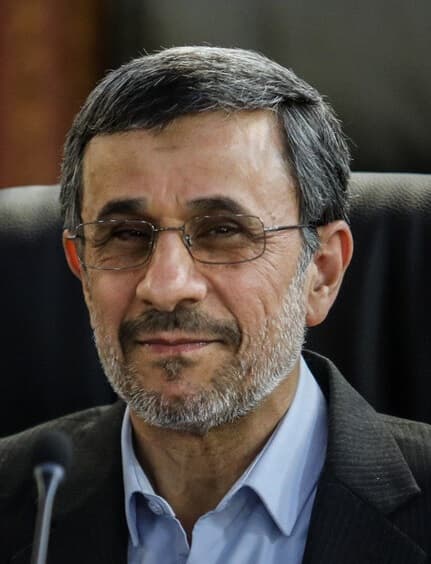
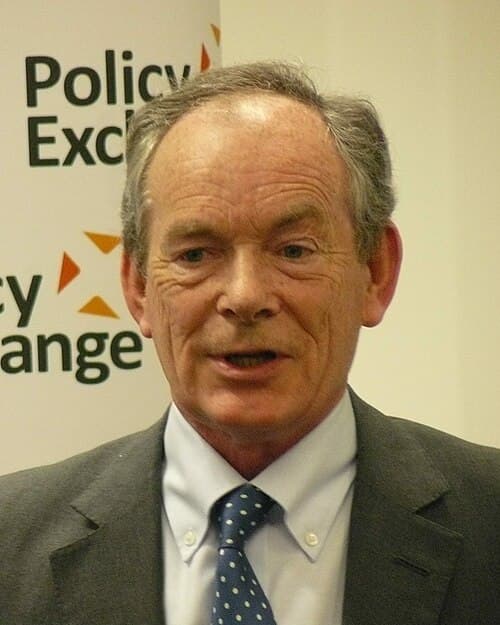
is still years from completing an efficient enrichment infrastructure, constructing a nuclear arsenal and developing a reliable means of delivery. By agreeing to a compressed timeline, the U.S. only narrows its options and makes a solution even more elusive. As the United States again contemplates its Iran conundrum, it should eschew calls for a take-it-or-leave-it deal. The history of Iran's confrontation with the international community suggests that keeping it a crisis situation benefits the Islamic Republic. Ironically, it is the Western powers that have generated alarmist conditions. And then to escape the predicament of their own making, they offer Iran more concessions and further incentives. To avoid a repeat of that outcome, it would be prudent to have a sense of proportionality and appreciate that, in the end, time works best for the United States and not the economically beleaguered theocracy. Ray Takeyh is a senior fellow at the Council on Foreign Relations. Article 2. The Guardian Whether it's North Korea or Iran, sanctions won't work Simon Jenkins 13 February 2013 -- Iranian president Mahmoud Ahmadinejad. 'Threats and sanctions have not weakened the regime's determination to proceed [with nuclear weapons], but rather weakened opposition to it'. Photograph: Sven Hoppe/EPA HOUSE_OVERSIGHT_028650
Sponsored
Page 4 - HOUSE_OVERSIGHT_028651
North Korea has set off a third nuclear test explosion. It has done so in defiance of the UN, America, Japan and even, reportedly, its sponsor, China. It has said to hell with everyone, in a brutal comment on western economic sanctions. The UN security council met yesterday and Washington threatened "significant consequences" - code nowadays for "tighter sanctions". Every shred of evidence suggests that these will not achieve the declared goal. They will merely add to the impoverishment of North Korea's people by its own government. Sanctions are the most counter-productive tool known to diplomacy. Yet we keep imposing them. Why? Sanctions assume that all countries react to external pressure as might a capitalist democracy. They assume a misguided regime will change its mind and put financial advantage above its definition of national interest. "Smart sanctions" (really dumb sanctions) further assume the rich can be punished without punishing the poor, and that all dictators' wives want to fly abroad and shop at Harrods. They assume that trade guides political action and political action trumps dictatorship. Economic sanctions are hugely popular to western politicians, not because of their effect but because of their cause: the desire to stand on an international stage and being seen to "do something". They are the least- cost first resort of the laptop bombardiers of global intervention. They sound punitive and aggressive without inflicting any hardship on the imposer. After North Korea the other target in the sanctions frame is Iran. Everything at present suggests that ever-tighter sanctions have done nothing to curb Iran's nuclear programme. Indeed, by inducing paranoia, probably the reverse. Sanctions have certainly "bitten", to the glee of their advocates. They have brought inflation and a collapse in the currency, the rial. They have harmed ordinary people and solidified sentiment against the west and the "great Satan" of the US. Assassination and cyber- weapons have wiped out a few scientists and scrambled a few computers. What sanctions have not done is weakened the power of the ayatollahs or their private army, the Revolutionary Guards. Both seem as secure as ever, HOUSE_OVERSIGHT_028651
Page 5 - HOUSE_OVERSIGHT_028652
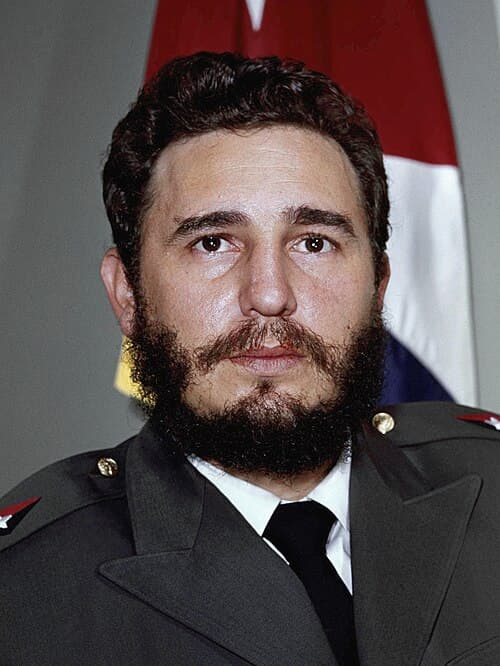
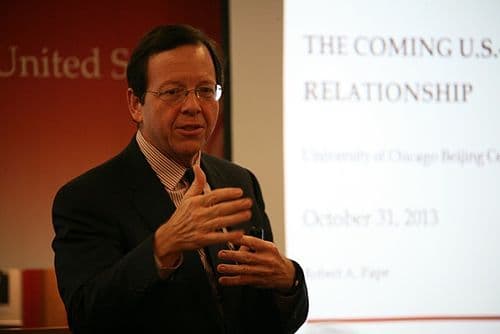
while (relatively) moderate civilian politicians are reduced to feuding and arresting each others' children. Iran's nuclear programme appears to proceed independent even of the organs of its own state. A spoof article in the Economist last year portrayed Iran's supreme leader, Ayatollah Khamenei, ruminating on western nations' obsessive posturing towards his country. He mused that these were unstable, unreliable places, dangerous though probably not all mad. But since it was hard to be sure, "I would feel a lot safer if we already had that bomb". . Similar insecurity drove sanctioned Cuba to accept Russian missiles in the 1960s, and sanctioned Iraq and Libya to pretend to build weapons of mass destruction in the 1990s. Sanctions never stop bad things happening. Rather they entrench dictators, build up siege economies and debilitate the urban middle class from which opposition to dictatorship grows. As Khamenei said in a speech a year ago, sanctions were "painful ... but make us more self-reliant". Indeed, for a regime to be sanctioned is to receive an elixir: witness Castro, Gaddafi, the ayatollahs and the ruling cliques of Burma, Afghanistan and North Korea. That sanctioned regimes sometimes come to an end is not proof that sanctions work, rather that they take a long time and usually require war to "work" This is a rarely researched topic because sanctions are diplomatic ideology rather than science. A debate in 1998 in International Security magazine saw the Chicago academic, Robert Pape, barely challenged in his view that only around five of the 115 cases of sanctions imposed since the war could claim any plausible efficacy. Most merely inflicted "significant human costs on the populations of target states, including on innocent civilians who have little influence on their government's behaviour". They are a ready invitation to war. When I was reporting on South Africa in the 1980s I became convinced that sanctions were aiding import substitution and benefiting the Afrikaner economy, probably giving apartheid an extra decade of life. They likewise prolonged Ian Smith's regime in Rhodesia. Sanctions made Libya's Gaddafi so rich he could spoon money into the London School of HOUSE_OVERSIGHT_028652
Page 6 - HOUSE_OVERSIGHT_028653
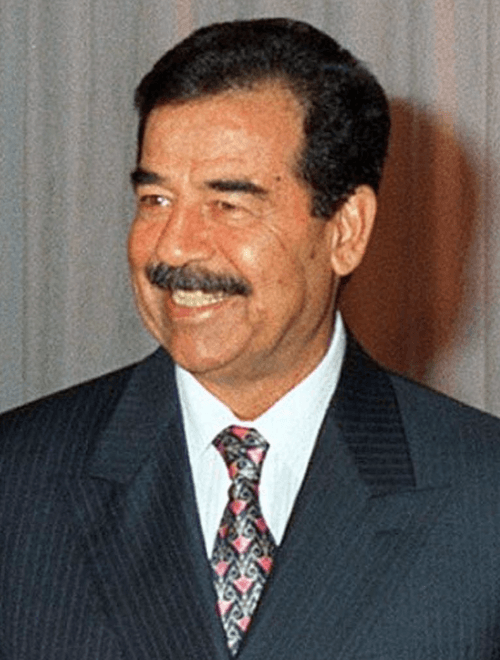
Economics. They made Saddam Hussein one of the 10 wealthiest people in the world. Besides, sanctions create sanctions-busting which, like drugs, is a global criminal industry born entirely of the idiocy of western diplomacy. A year ago the Foreign Office defended yet another round of sanctions against Tehran on the grounds they would "hasten Iran's economic collapse and deepen rifts within the regime, in the hope that saner voices will deem the price of pursuing nuclear weapons too high" '. Economies don't collapse, any more than poverty changes governments. Even Greece, now the most "sanctioned" nation in Europe, has not collapsed. Places just get poorer. As for "saner voices". , they go into exile, hiding or prison. That's where sanctions send them. Iran is a proud nation of 80 million mostly Muslim people, one of many Asian and African states struggling between theocracy and democracy, tradition and modernity. These are agonising struggles among and within peoples, to which the west has contributed nothing but hostility and belligerence. Under the cloak of "counter-terror" ', it has been as crass as it was during the Crusades. Of course no one wants to see nuclear weapons spread. Russia tried to stop China getting them. China tried to stop North Korea. The west tried to stop India and Pakistan, while hypocritically tolerating Israel and the replenished arsenals of France and Britain. No pressure made the slightest difference to anyone. If Iran really wants a nuclear weapon, it will get one - the more so when it is threatened with dire retribution if it does. That is how such states react to pressure. Ever since the dodgy election of 2009, threats and sanctions have not weakened the regime's determination to proceed, but rather weakened opposition to it. If ever there was a country unlikely to respond to diplomatic bullying, it is Iran. If ever there was a country that might respond to constructive engagement, to commercial, governmental and cultural intercourse, it is also Iran. Why the west should want to make it another North Korea passes comprehension. Article 3. HOUSE_OVERSIGHT_028653
Sponsored
Page 7 - HOUSE_OVERSIGHT_028654
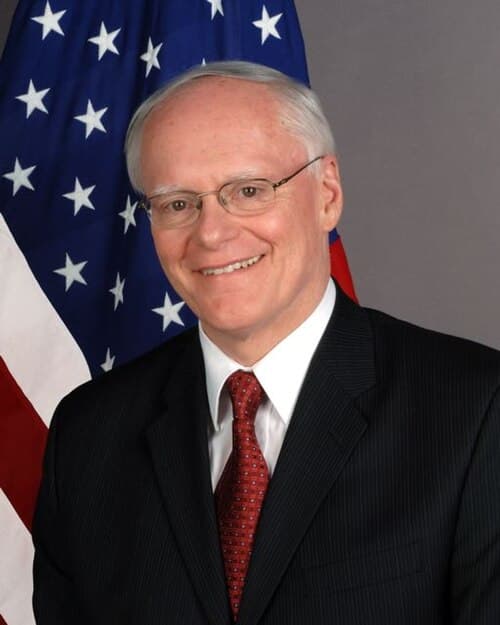
The Washington Institute Year of Decision: U.S. Policy toward Iran in 2013 James F. Jeffrey and Thomas Pickering February 12, 2013 -- On February 7, 2013, James F. Jeffrey and Thomas Pickering addressed a Policy Forum at The Washington Institute. Ambassador Jeffrey, a former assistant to the president and deputy national security advisor, is author of the new Institute study Moving to Decision: U.S. Policy toward Iran. Ambassador Pickering served in numerous key posts at home and abroad over a five-decade career, including undersecretary of state for political affairs. The following is a rapporteur's summary of their remarks. JAMES F. JEFFREY The move to decision on Iran is the most pressing and dangerous issue on the U.S. and international agenda in 2013. The year ahead will largely define the longstanding struggle between Washington and Tehran, and the considerable stakes involved make it absolutely crucial that a swift and decisive resolution be achieved. Regardless of the outcome of the nuclear issue, however, Iran will continue to present a long-term challenge to the United States because of clashing ideologies, conflicting foreign policy goals, and Iran's claim to regional hegemony. There are four likely outcomes to the nuclear issue: a unilateral Iranian decision to halt or dramatically slow its progress toward a nuclear weapon; a negotiated outcome, whether through the PS+1 (i.e., the five permanent members of the UN Security Council plus Germany) or bilateral negotiations; a military strike, as threatened by President Obama and Israeli prime minister Binyamin Netanyahu; and an explicit or implicit shift to containment, indicating that Washington would be prepared to coexist with a nuclear-armed Iran. HOUSE_OVERSIGHT_028654
Page 8 - HOUSE_OVERSIGHT_028655
The most effective resolution would be a negotiated outcome -- to achieve it, Washington will need to take preliminary steps on several fronts. A serious compromise needs to be put on the table, including an offer to suspend crippling oil sanctions in return for specific, verifiable Iranian steps to eliminate any nuclear breakout capabilities. Equally significant is establishing a credible military threat, given that Tehran has been willing to endure increasing economic pressure in order to continue its nuclear program. The regime is unlikely to concede anything during negotiations if it does not believe that Washington will actually follow through on such threats. Although specific public redlines are often unpalatable, the Obama administration must clarify internally when it would take military steps, and these intentions must be made clear to the Iranians. In the same vein, the military option requires a credible negotiating complement, as seen in the early 1990s with Iraq. To legitimize military action against Saddam Hussein's regime, Washington had to prove that all other options had been exhausted. Similarly, the only way to set the predicate for military action against Iran is to show the regime and the international community that everything has been tried, and that Washington has left Tehran with a way out. Failure to do so would undermine the legitimacy of any strikes. It is also important to understand that curtailing Iran's nuclear progress will not by itself alter the regime's regional agenda -- nuclear ambitions are but an extension of Tehran's wider aspirations toward hegemony in the Middle East. Unfortunately, none of the longer-term proposals for addressing that issue seem feasible at the moment (e.g., regime change by internal or external means; a shift in Tehran's views on the Supreme Leader and succession; a "grand deal" between Washington, Iran, and the international community). One lesson to be learned from past interactions with Tehran (or lack thereof) is that when the United States proactively opposes Iranian aggression in the Middle East, the regime relents, but when Washington offers a more passive response, Iranian aggression increases. With respect to Syria, for example, it cannot be assumed that Bashar al-Assad will fall at all, let alone quickly, without active U.S. engagement. If the Assad HOUSE_OVERSIGHT_028655
Page 9 - HOUSE_OVERSIGHT_028656
regime does in fact survive, Iran would become increasingly emboldened, with potentially disastrous consequences for the United States and its allies and interests in the Middle East. Denuding U.S. forces in the region to enable a pivot to Asia is also risky. Nowhere else in the world is America more likely to deploy forces than in the Persian Gulf in opposition to Iran, and nowhere else is it of utmost importance that any potential confrontation be won decisively in the next five to ten years than with the Islamic Republic. Going forward, Washington must discriminate between Iranian behaviors it considers unacceptable -- such as support for terrorism, hegemonic ambitions, and progress toward nuclear weapons -- and those it can tolerate. U.S. officials could open the door for negotiations by making clear to Tehran that they do not seek regime change; the first step in that regard would be to let Iran know that Washington respects it as a nation- state and not a transnational revolutionary movement. Finally, disorganization within the U.S. government and a "go it alone" mentality have accounted for many of Washington's internal difficulties in responding to the Iranian challenge. To alleviate this problem, all cabinet- level officials must be in constant and complete coordination, devoid of routine bureaucratic obstacles. In addition, the appointment of a senior subcabinet official whose sole responsibility is Iran (or, alternatively, a small group of officials in constant coordination) could allow the administration to reorganize bureaucratically in preparation for this year of decision. THOMAS PICKERING Discussions of containment policy typically imply accepting the Islamic Republic as an inevitable nuclear power and using deterrence to deal with a nuclear-armed Iran. Yet such an outcome would be disastrous for U.S. nonproliferation policy, which is based on the notion that fewer nuclear states means less chance of miscalculated use. If Iran attains a nuclear weapon, other regional powers would likely follow suit -- clearly an undesirable outcome for the international community. HOUSE_OVERSIGHT_028656
Sponsored
Page 10 - HOUSE_OVERSIGHT_028657
At the other end of the spectrum, using military means in the short term to guarantee prevention would entail a vast use of force - essentially an unofficial, semipermanent occupation of Iran. This is not a viable path, particularly since other diplomatic possibilities have not yet been exhausted. Similarly, sanctions, while effective, are not sufficient by themselves. They must be intertwined with negotiations - as Washington and its allies increase the pressure, cohesive and meaningful talks with equivalent concessions should follow suit. Some have argued that negotiations should expand to a "big for big" format, but decades of mistrust between the United States and Iran make smaller deals more practical. Such an approach would have to focus on ending Iran's most problematic enrichment activity: processing uranium to the 20 percent threshold, which makes the leap to weapons-grade material much easier. Instead, the regime could limit itself to 5 percent enrichment, and under strict supervision by the International Atomic Energy Agency. The intelligence community widely believes that although Iran has not yet decided to make a nuclear weapon, it is still moving to acquire all the necessary capabilities in case it chooses that path. Accordingly, Washington will need to obtain a concrete Iranian commitment to convert its stocks of readily upgradeable gaseous uranium into metallic fuel elements, which pose significantly less of a threat. A serious inspection system would need to be implemented in order to monitor these requirements. In return, the Iranians would expect the lifting of nuclear- related sanctions. They would also likely ask for acknowledgement that they have the right to continue their civil enrichment program, whether for supposed use in cancer treatment or to safeguard against a potential Russian decision to cease fueling the Bushehr reactor. Thus far, President Obama has been frustrated at the lack of progress in response to his openness toward the Iranian regime, and his new cabinet has an obligation to help him solidify a negotiating position that improves the situation. If the Iranians continue to reject U.S. positions that seemingly respond to some of their demands, then the administration should begin applying other pressures. These steps should be taken sooner HOUSE_OVERSIGHT_028657
Page 11 - HOUSE_OVERSIGHT_028658
rather than later so that the parties can move toward a mutually acceptable conclusion. Washington must also keep in mind that Supreme Leader Ali Khamenei has the last word on all matters in Iran, and that negotiations will go only as far as he allows them to go. In years past, he issued a fatwa condemning nuclear weapons -- Washington could take advantage of this fact by drafting a UN Security Council resolution endorsing the fatwa. This could be a small step toward boosting Khamenel's international profile while simultaneously pressuring Iran to follow its own religious decree. To be sure, regime change remains an attractive alternative on paper, and some in Washington view it as an insurance policy. Historically, however, regime change has not been a successful option for the United States, and internal attempts at toppling Iran's leadership have thus far been crushed by Stalinesque suppression, including the 2009 uprising. Despite such failures and Washington's limited influence in Iranian domestic affairs, U.S. policy should be to demonstratively support popular democratic movements. Article 4. TIME Spy Fail: Why Iran Is Losing Its Covert War with Israel Karl Vick Feb. 13, 2013 -- Slumped in a Nairobi courtroom, suit coats rumpled and reading glasses dangling from librarian chains, the defendants made a poor showing for the notorious Quds Force of the elite Iranian Revolutionary Guard Corps. Ahmad Abolafathi Mohammed and Sayed Mansour Mousa had been caught red-handed and middle-aged. And if the latter did them a certain credit - blandly forgettable always having been a good look for a HOUSE_OVERSIGHT_028658
Page 12 - HOUSE_OVERSIGHT_028659
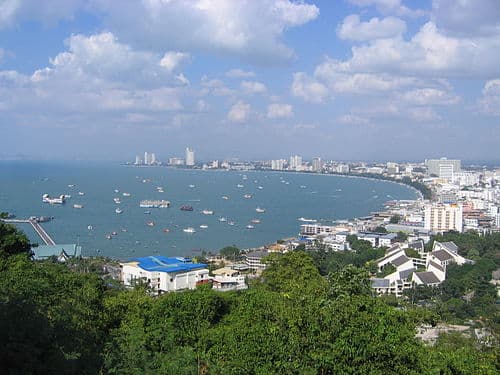
secret agent — the prisoners still had to explain why they had hidden 15 kg of the military explosive RDX under bushes on a Mombasa golf course. Created to advance Iran's interests clandestinely overseas, the Quds Force has lately provided mostly embarrassment, stumbling in Azerbaijan, Georgia, India, Kenya and most spectacularly in Thailand, where before accidentally blowing up their Bangkok safe house, Iran's secret agents were photographed in the sex-tourism mecca of Pattaya, one arm around a hookah, the other around a hooker. In its ongoing shadow war with Israel, the Iranian side's lone "success" was the July 18 bombing of a Bulgarian bus carrying Israeli tourists - though European investigators last week officially attributed that attack to Iran's Lebanese proxy, Hizballah. That leaves the Islamic Republic itself with a failure rate hovering near 100% abroad and an operational tempo — nine overseas plots uncovered in nine months — that carries a whiff of desperation. A Tehran government long branded by U.S. officials as the globe's leading exporter of terrorism may be cornering the market on haplessness. Within Iran's own borders, however, the story is different. Twice in the past two years Iranian intelligence has cracked espionage rings working with Israel's Mossad, Western intelligence officials tell TIME. In both cases, the arrests were the furthest thing from secret: announced at a news conference, each was later followed up by televised confessions broadcast on Iranian state television in prime time. Given Iran's history of trumped- up confessions, skepticism is more than justified. But the arrests appear to be solid. One intelligence official said the captured Iranians provided "support and logistics" to the Mossad operatives who carried out the assassinations of Iranian nuclear scientists. At least four scientists were killed on Tehran's streets from 2010 to 2012, when, as TIME has reported, Israel ratcheted back on covert operations inside Iran. Officially, Israel has remained silent on the killings, though government officials will coyly say they welcome the deaths. The Jewish state maintains the same ambiguous posture on other "setbacks" to Iran's nuclear program widely - and correctly, Western intelligence officials say — attributed to Mossad, from the Stuxnet computer virus, to HOUSE_OVERSIGHT_028659
Sponsored
Page 13 - HOUSE_OVERSIGHT_028660
mysterious explosions like the massive blast at a missile base, which destroyed ballistic missiles that could reach Israel. The covert onslaught dovetails with Israel's history of reaching "over the horizon" to disarm perceived threats at a distance. To keep advanced arms from reaching Hamas and Hizballah, Israel in the past year sent warplanes to bomb convoys and arms depots in Sudan and Syria, respectively, without apparent retribution. In the case of Iran, however, experts say the audacity of Israel's covert campaign stirred Tehran to revive an espionage effort that lay largely fallow since 9/11. The Spy vs. Spy contest that ensued would prove woefully one-sided, even in the third-world countries where Iran chose to strike, hoping to avoid heightened security awareness in the developed world. In the end, its only success came inside Iran, where the secret police operate without inhibition. The shadow war may have started on Jan. 15, 2007, the day Ardeshir Hosseinpour passed away. Hosseinpour was a specialist in electromagnetics at the Nuclear Technology Center in the city of Isfahan, Iran, but his death might have escaped notice had Iran's government not kept it under wraps for almost a week, finally attributing it to fumes from a faulty heater. An online report by the American private intelligence firm Stratfor suggested another cause - radioactive poisoning — and hinted that Mossad's Caesarea section was back in business. Caesarea, named for an Israeli beach town that dates back to Roman times, is the operations branch of Israel's secret service, most notoriously responsible for the assassinations of some two dozen Palestinians (and an innocent waiter) after the 1972 Munich Olympics. Assassinations are carried out by a very small unit dubbed Kidon, the Hebrew word for "tip of the spear." Kidon operates at a remove from the legions of Mossad employees working in less lethal fields. It would have been a unit called Hatzomet, or "The Junction," that recruited Majid Fashi, a handsome young Iranian who dropped out of high school to pursue a career in kickboxing. By the account he gave on Iranian state television early in 2011, Fashi presented himself at the Israeli consulate in Istanbul in 2007 and was vetted for a solid year before being shown any trust. Two years later, on Jan. 12, 2010, he would place a bomb HOUSE_OVERSIGHT_028660
Page 14 - HOUSE_OVERSIGHT_028661
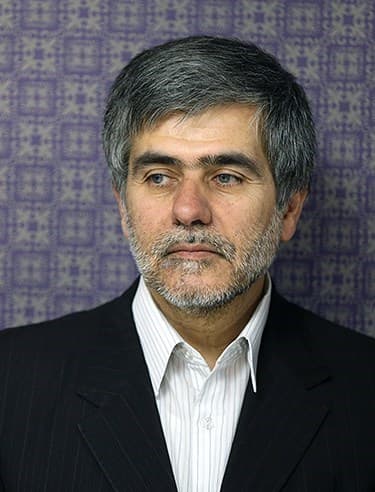
on a motorbike parked on the sidewalk outside the Tehran home of Masoud Alimohammadi; the nuclear physicist was killed when it was detonated by remote control. In the broadcast, Fashi accurately described the Mossad campus north of Tel Aviv. He said he had been given a laptop equipped with a second operating system and used it to communicate through online drop boxes. He was impressed by his handlers' thoroughness. At one point Fashi described studying a scale model of Alimohammadi's street. "It was an exact copy of the real one," Fashi said. "The tree next it, the street curb, the bridge." In a later broadcast, he was seated across from Alimohammadi's widow, who glared at him as he bowed his head and wept. Mossad officials were "pissed off and shocked" seeing their agent on television, the intelligence official said Fashi was executed in May 2012. About the same time, Iran's intelligence minister announced the arrest of 14 more Iranians, eight men and six women dubbed members of the "Terror Club" in the subsequent prime- time broadcast of that name. Filmed in shadow, and rich in atmospherics, the Aug. 5 program recreated Alimohammadi's death and four subsequent attacks: they started with the Nov. 29, 2010 nearly simultaneous attempts on Majid Shariari and Fereydoun Abbasi, nuclear scientists driving to work when magnetic "sticky bombs" were attached to the side of their cars from passing motorcycles. Abbasi managed to escape before it detonated, saving his wife as well. Shariari was killed - a significant setback for the Iranian nuclear program where he was the top scientist, according to a Western intelligence official. The confessed agents offered absorbing detail - they were aboard a Bajaj Pulsar, wearing helmets, when the magnet bomb stuck on the right front panel of Shariari's car exploded. The riders scrambled into the "trail car" assigned to follow the target and disappeared into the traffic of the Imam Ali Autobahn. Already gone was the car assigned to cut off and slow the car carrying the scientist. They claimed to have rehearsed on a practice track inside Israel. None of the details could be confirmed, but an intelligence official acknowledged: "Another network was taken." HOUSE_OVERSIGHT_028661
Page 15 - HOUSE_OVERSIGHT_028662
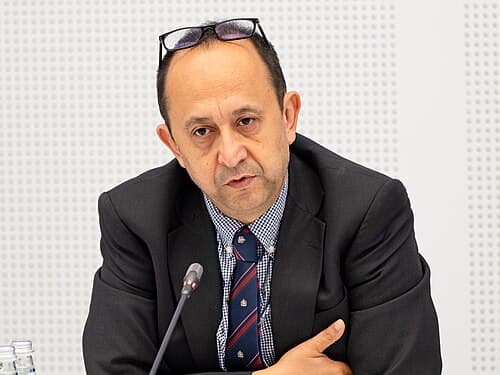
The third scientist, Dariush Rezaeinejad was shot on July 23, 2011 after picking up his child at a day care; his wife described hearing shots whiz by as she chased the assailants. The most recent assassination was the Jan. 11, 2012 death of Mustafa Ahmadi-Roshan, an expert on uranium enrichment, also by a magnet bomb slapped on his car during his morning commute. By then, Iran was trying to strike back. The task of avenging the scientists fell to the sprawling Quds Force's own covert-operations division, known as Unit 400. It took a shotgun approach, targeting Israeli diplomatic missions in a variety of countries, mostly in the developing world where the global antiterrorism mesh is not so fine. Exposed in Baku, Tbilisi, Johannesburg, Mombasa and Bangkok, the failures mounted at a pace that was itself one of the problems. In the world of espionage, a quality covert operation can take years to pull together. Yet in the 15 months from May 2011 to July 2012, the Quds Force and Hizballah attempted 20 attacks, by the count of Matthew Levitt, a former State Department counterterrorism official. "Hizballah and the Quds Force traded speed for tradecraft and reaped what they sowed," Levitt writes in a January report for the Washington Institute for Near East Policy. "Quds Force planners were stretched thin by the rapid tempo of their new attack plan, and were forced to throw together random teams of operatives who had not trained together." The decline in quality was so striking it initially inspired disbelief. Recall the preposterous-sounding plot weaving together a former used-car salesman, Mexico's Zetas drug gang and a bank transfer from a Revolutionary Guard account to assassinate Saudi Arabia's ambassador - by bombing a Washington restaurant? A year on it looks like the new normal. In Bangkok last month, an Iranian agent entered a courtroom in a wheelchair, having accidentally blown his legs off while fleeing police. A January alert issued by Turkish intelligence was light on specifics but quite certain the Quds operatives would be staying in five-star hotels. "There's a number of reasons that Iranian intelligence has suffered," says Meir Javedanfar, an Iranian-born analyst who lectures at the Interdisciplinary Center in Herzliya, Israel. "No. 1," he says, "is the 2009 uprisings in Iran." The street protests over a fraudulent election HOUSE_OVERSIGHT_028662
Sponsored
Page 16 - HOUSE_OVERSIGHT_028663
undermined the perceived legitimacy of the state among people who once would work for it, including in its secret services. "People less and less see it as a nationalist endeavor and more as a Khamenel-related project to strengthen himself," Javedanfar says, referring to Iran's Supreme Leader Ayatullah Ali Khamenei, who by some published accounts personally authorizes all overseas attacks. Hard-liners further aggravated the situation by purging competent reformists from both the secret services and from Iran's embassies — crucial to a force expected to work undetected abroad. "Basically the Quds Force doesn't cooperate with the Foreign Ministry, and the Foreign Ministry isn't what it used to be either," says Javedanfar. Under President Mahmoud Ahmadinejad, 42% of ministry employees have only high school degrees. "The regime is a bigger threat to itself than Israel," he says. Karl Vick has been TIME's Jerusalem bureau chief since 2010, covering Israel, the Palestine territories and nearby sovereignties. He worked 16 years at the Washington Post in Nairobi, Istanbul, Baghdad, Los Angeles and Rockville, MD. Article 5. YaleGlobal Is the US Ready To Be Number Two? Kishore Mahbubani 11 February 2013 -- SINGAPORE: Long before anyone did, former US president Bill Clinton saw that America would have to prepare for the time HOUSE_OVERSIGHT_028663
Page 17 - HOUSE_OVERSIGHT_028664
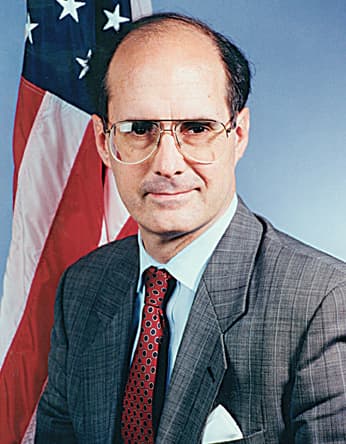
when it would no longer be the number one power in the world. In his 2003 Yale University address on "Global Challenges," he said: If you believe that maintaining power and control and absolute freedom of movement and sovereignty is important to your country's future, there's nothing inconsistent in that [the US continuing to behaving unilaterally]. [The US is] the biggest, most powerful country in the world now.... But if you believe that we should be trying to create a world with rules and partnerships and habits of behavior that we would like to live in when we're no longer the military political economic superpower in the world, then you wouldn't do that. It just depends on what you believe. Long before 2003, Clinton wanted to begin preparing Americans for this new world. "Clinton believed [.] what we had in the wake of the cold war was a multilateral moment - an opportunity to shape the world through our active leadership of the institutions Clinton admired and [Charles] Krauthammer disdained," writes Strobe Talbott, former deputy secretary of state in his book The Great Experiment: The Story of Ancient Empires, Modern States, and the Quest for a Global Nation. "But Clinton kept that belief largely to himself while he was in office.... political instincts told him it would be inviting trouble to suggest that the sun would someday set on American preeminence." Sadly, few Americans have heeded Clinton's wisdom. Few dare to mention that America could well be number two. I discovered this when I chaired a panel on "the future of American power" at the 2012 World Economic Forum in Davos. After citing projections that America would have the second largest economy in just a few years, I asked the American panelists - two senators, a congresswoman and a former deputy national security advisor - whether Americans are ready to become number two. To my shock, none could acknowledge publically this possibility. America may well become number two faster than anyone has anticipated. According to the most recent International Monetary Fund (IMF) projections, China will have larger share of global GDP than the United States by 2017. In 1980, in PPP terms, the US share of the global economy was 25 percent, while China's was 2.2 percent. By 2017, the US share will decline to 17.9 percent, and China's will rise to 18.3 percent. Even if HOUSE_OVERSIGHT_028664
Page 18 - HOUSE_OVERSIGHT_028665
America becomes number two, we will still have a better world. In many ways, the world is "converging" to American values and standards, as I explain in The Great Convergence. The global middle class is booming, interstate war is waning, and never before have people traveled and communicated across the world so easily. These changes are creating common values and norms across the world. Education and scientific reasoning, for example, are enabling people the world over to speak with a common language. However, while humanity is well on its way to combating absolute poverty and interstate warfare, other problems are surfacing. Preventing and curtailing transnational issues like climate change, human and drug trafficking, and financial crises require cooperation among nation states, yet this is not happening. A simple analogy illustrates this. Before the era of modern globalization, humankind was like a flotilla of more than 100 separate boats in their separate countries. The world needed a set of rules then to ensure that the many boats did not collide and facilitate their cooperation on the high seas if they chose to do so. The 1945 rules-based order strived to do this, and despite some obvious failures, it succeeded in producing a relatively stable global order for more than 50 years. Today, the 7 billion people who inhabit planet earth no longer live in more than 100 separate boats. Instead, they live in 193 separate cabins on the same boat. But this boat has a problem. It has 193 captains and crews, each claiming exclusive responsibility for one cabin. No captain or crew cares for the boat as a whole. The world is now sailing into increasingly turbulent waters with no captain or crew at the helm. The Great Convergence echoes the themes of Clinton's 2003 Yale speech. It's in the interest of all - particularly great powers - to strengthen institutions of global governance so that we're not sailing blindly into choppy waters without a captain. The National Intelligence Council recently projected that in 2030 Asia would overtake the Western world economically, technologically and militarily. When China becomes a world superpower in a matter of decades, the United States and Europe will want to ensure that China plays by the rules. But in order to make international organizations like the United Nations, the IMF and the World Bank more credible and effective, they must HOUSE_OVERSIGHT_028665
Sponsored
Page 19 - HOUSE_OVERSIGHT_028666
undergo serious reform. It is manifestly absurd that the West makes up 12 percent of the world's population but takes up 60 percent of UN Security Council permanent seats. It's nonsensical that the head of the IMF is always a European and the head of the World Bank is always an American as the West's share of global GDP diminishes every year. This concentration of clout in the hands of a relative few has grave implications for these institutions' effectiveness and independence, making them instruments of the West. No other organization, not even huge global NGOs like the Bill and Melinda Gates Foundation or the Clinton Foundation, has the scope and legitimacy that the UN currently enjoys. For example, the United States for years has been trying to pressure China to take a more proactive role in fighting climate change. Predictably, China has resisted these pressures because they saw them as a clever yet transparent American ruse to curtail Chinese economic growth. Only when the United Nations Development Programme raised the issue with China did the Chinese government take heed, as the UNDP is seen as a neutral party in China. The UN and its many agencies may soon lose invaluable credibility if the West insists on monopolizing its power over these institutions. Any reform of the UN should take into account three principles: democracy, recognition of power balances and the rule of law. Institutions of global governance can be made more democratic by ensuring that their leadership accurately reflects the composition of world's population. At the same time, we must also take into account geopolitical relationships among emerging and middle powers. Finally, the rule of law is essential to the mediation and resolution of thorny international issues and to governing the conduct of states on the international stage so as to prevent escalation of conflict. In this rapidly changing world, it's a mistake to allow institutions of global governance to stay as they are. The 1945 rules-based order is no longer appropriate for 21st century circumstances. Global leaders must better prepare us for the challenges to come and equip our international organizations to deal with them. Leaders must find the courage to continue advocating for stronger multilateral cooperation. It is time for our captains HOUSE_OVERSIGHT_028666
Page 20 - HOUSE_OVERSIGHT_028667
and crews to emerge from their cabins and start steering the boat. Kishore Mahbubani is dean of the Lee Kuan Yew School of Public Policy, NUS, and author of the forthcoming book The Great Convergence: Asia, the West, and the Logic of One World. Article 6. Foreign affairs Pyongyang's Nuclear Logic Jennifer Lind, Keir A. Lieber, and Daryl G. Press February 14, 2013 -- In his State of the Union address, U.S. President Barack Obama described North Korea's recent nuclear test as a provocation that required a firm response. The intended audience for that provocation, though, is up for debate. Some commentators have posited that the test was a signal aimed at China, designed to demonstrate North Korea's independence from its great-power patron. Others think that Kim Jong-un was sending a message to the newly elected president of South Korea, Park Geun-hye. Still other North Korea experts have suggested that the test was actually meant for domestic consumption, to lift the sagging morale of a deprived public or for the regime to curry favor with the military. The intended North Korean signal is being analyzed and debated by U.S. government officials, who hold views across the spectrum. A much simpler explanation exists. Pyongyang tested a nuclear device for the same reason it has been testing long-range missile designs: to see what works. In truth, the effort was less a signal than an attempt to master the technical capabilities that are vital to its nuclear deterrent. This rationale should come as no surprise to those steeped in Cold War history. Between 1945 and 1992, the United States conducted 1,054 nuclear tests and fired an untold number of missiles. If the goal had merely HOUSE_OVERSIGHT_028667
Page 21 - HOUSE_OVERSIGHT_028668
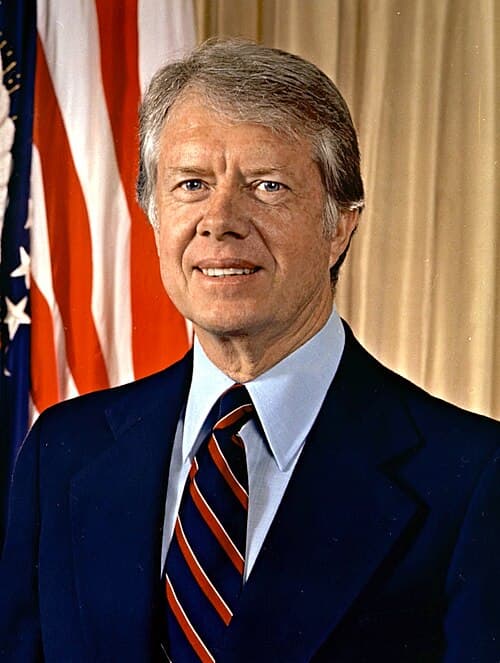
been to show the Soviets that the United States meant business, testing nearly twice a month throughout the entire Cold War would have been overkill. In fact, Operation Sandstone -- a series of three tests at Enewetak Atoll in 1948 -- was not intended to warn off the Soviets as tensions rose over Berlin. Nor was the series of 48 underground tests launched in the summer of 1964 designed to impress the newly installed premier, Leonid Brezhnev. And the United States would not have conducted a dozen atomic blasts at its Nevada test site in the first half of 1977 -- including the Cove, Dofino, Marsilly, Bulkhead, Crewline, Forefoot, Carnelian, Strake, Flotost, Gruyere, Scantling, and Scupper detonations -- just because new President Jimmy Carter was vulnerable to right-wing criticism. The United States did what it did because it needed its ultimate deterrent to actually work, and because the technical requirements of the nuclear mission continually changed. The ruins of Hiroshima and Nagasaki were evidence enough that the United States could destroy cities, but deterring the Soviet Union was a far greater challenge. If the Soviets had invaded Western Europe, for example, U.S. bombers would have had to penetrate alerted Soviet air defenses, identify Soviet ground forces and industrial centers, and attack them. Accordingly, U.S. bombers had to be highly maneuverable and able to carry multiple weapons, so the bombs themselves had to be lighter and smaller than the ones the United States used against Japan. The Soviets put another wrinkle in Washington's plans when they began to deploy large numbers of their own nuclear weapons. The United States needed to find a way to potentially destroy the Soviet arsenal on the ground. Eliminating those targets -- numerous and often hardened -- required even greater numbers of bombs, even lighter designs, and more accurate delivery systems. So the United States updated its designs and tested. And tested. And tested again. Like the United States during the Cold War, North Korea has apparently decided that nuclear weapons are central to its national security strategy. With few friends, its conventional military forces outgunned, an economy in tatters, and facing off against a superpower prone to deposing dictatorships across the globe, the Kim regime set about building an operational nuclear arsenal. And just as NATO planned to thwart a Soviet HOUSE_OVERSIGHT_028668
Sponsored
Page 22 - HOUSE_OVERSIGHT_028669
invasion by striking targets in the Soviet Union and Eastern Europe, North Korea presumably plans to defend itself, should war erupt on the peninsula, by threatening U.S. regional allies and targets in the United States. North Korea's mission requires small, lightweight warheads, and missiles that work -- and the only way to know that they work is to test them. So far, the weapons have proved unspectacular. The country's first nuclear test, conducted in 2006, was an embarrassment. Pyongyang had told the Chinese that the device would generate four kilotons of explosive power, but it ended up producing less than one. The second test in 2009 fared slightly better, producing between one and eight kilotons, although it is not known what size of a blast the North Koreans had sought. Moreover, Pyongyang has much more work to do before it can boast weapons that will actually fit on its missiles (which have been, themselves, a series of humiliating failures). Observers in the West who presume that North Korea's behavior must be about signaling should remember NATO and the United States' own experience during the Cold War. The United States understood then that the ability to conduct nuclear operations was the very foundation of a credible deterrence strategy. Today, a sound strategy for dealing with North Korea should not ascribe ulterior motives to acts that the United States once considered rational and routine. The view that nuclear weapons are merely political instruments -- suitable for sending signals, but not waging wars - is now so common in Washington, London, and Berlin that it is hard to find anyone who disagrees. Yet those comforting assumptions are not shared by leaders everywhere. Beyond North Korea, Russia is cutting down its arsenal, modernizing the nuclear forces it plans to keep, and increasing its reliance on nuclear weapons in national defense strategy. China is slowly expanding its own arsenal, while substantially improving its weapons. And Iran seems so committed to going nuclear that it has been ready to endure crippling sanctions and risk foreign attack. HOUSE_OVERSIGHT_028669
Page 23 - HOUSE_OVERSIGHT_028670
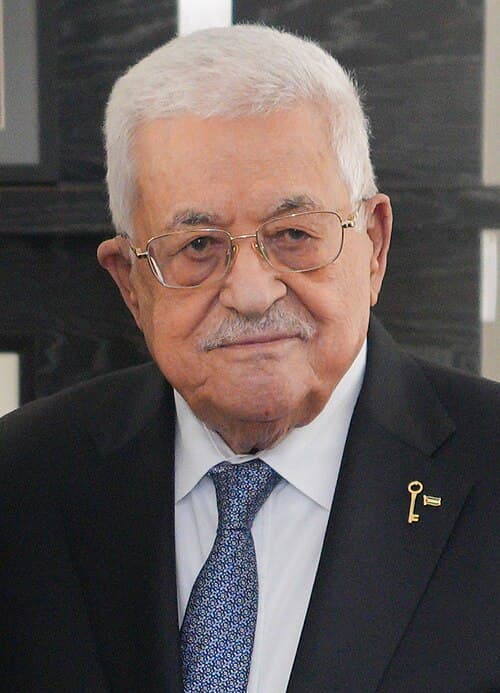
It is unfortunate that U.S. policymakers are so convinced of nuclear obsolescence that they have difficulty understanding the motivations of potential adversaries. It would be tragic, however, if their questionable assumptions prevent them from recognizing the deterrence problems that lie ahead and the grave difficulties that will be posed by adversaries, such as North Korea, that still cling to nuclear weapons. JENNIFER LIND is an Associate Professor of government at Dartmouth College and the author of Sorry States: Apologies in International Politics. KEIR A. LIEBER is an Associate Professor in the Edmund A. Walsh School of Foreign Service and Department of Government at Georgetown University. DARYL G. PRESS is an Associate Professor in the Government Department at Dartmouth College and Coordinator of War and Peace Studies at Dartmouth's John Sloan Dickey Center for International Understanding. Article 7. Foreign Policy in Focus (FPIF) The Depths of Malaise in Palestine Daniel DePetris February 12, 2013 -- When talking about peace in Israel-Palestine, it is easy to narrow the conversation to the leaders who are responsible for making it. Over the past few years, there have been numerous profiles in newspapers and profiles in magazines attempting to document the two men who are supposed to make the effort—Israeli Prime Minister Benjamin Netanyahu and Palestinian Authority President Mahmoud Abbas. HOUSE_OVERSIGHT_028670
Page 24 - HOUSE_OVERSIGHT_028671
Delving into the lives and minds of world leaders is an undoubtedly helpful, exciting, and informative way to find answers, but a conflict as multifaceted and complicated as the Israeli-Palestinian dispute cannot be fully explained without taking into account the opinions of the ordinary people who live the reality every single day. Millions of Israelis and Palestinians on both sides of the green line have had their voices drowned out by the very politicians, lawmakers, and personalities who purport to represent them. The result is a host of unanswered questions. What does the average Israeli or Palestinian think about the chances for a lasting and comprehensive peace agreement? What types of concessions need to be given for a deal to be struck? Do Israelis have the political courage to sacrifice on settlements and Jerusalem so the conflict can finally be resolved? Can the Palestinians negotiate in good faith? Luckily, polling organizations in Israel and Palestine have spent years trying to answer these very questions, often working together and sharing their resources during the hunt. Two of the latest polls, one from the Jerusalem Media and Communications Center (JMCC) and the other from the Palestinian Center for Policy and Survey Research (PCPSR), are particularly telling. Unlike other surveys that confirm what most in the international community already think, the results of these polls are unprecedented, revealing a stark and disturbing malaise in the Palestinian territories. The message is clear: frustration with the conflict is at a high point, the two-state solution is steadily losing credibility in the eyes of the people, and ordinary citizens in the Holy Land are starting to wonder whether a settlement can be achieved without another round of bloodshed. Oslo Fatigue When asked by the PSPSR whether Mahmoud Abbas's policy of peace talks or armed resistance by Hamas is the best way to achieve a Palestinian state, an alarming 60 percent of Palestinians surveyed threw in their lot with armed resistance (compared to 28 percent who favored negotiations). With the eight-day Israel-Hamas war having ended with a HOUSE_OVERSIGHT_028671
Sponsored
Page 25 - HOUSE_OVERSIGHT_028672
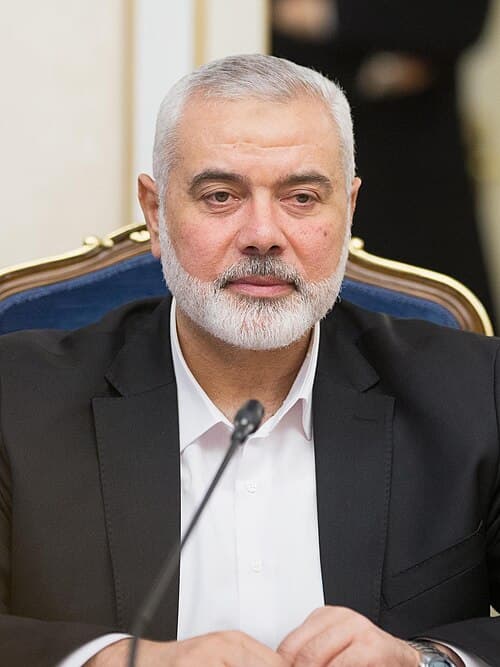
ceasefire that many view as a victory for the Islamist group, Hamas Prime Minister Ismall Haniyeh finds his popularity having soared. Forty-eight percent of Palestinians say that they would rather pick Haniyeh as Palestine's next president instead of Abbas, who has struggled to secure the freedom of movement and self-determination that so many Palestinians once expected from his government. The JMCC issued similar findings. By far the most disturbing figure in the poll is the exponential rise in support among the Palestinian public for armed operations against Israel—50.9 percent now view attacking Israeli positions in the current climate as a credible way to express their grievances and pressure the Israeli government to compromise. This is a 20-percent increase from the previous year. The numbers can perhaps best be summarized by Ali Najjar, an 18-year- old Palestinian who lives in a refugee camp. "In my view," he said, "what was taken by force will only be returned by force. Twenty years after Oslo, we haven't gained one inch of Palestine." Many young Palestinians agree. Indeed, the words summarize the how dire the situation has become for an entire generation of Palestinians, most of whom are too young to remember the signing of the Oslo Accords in 1993. Most have not seen any benefit from peace agreements or negotiations, and all of them have grown tired of the settlement construction in the West Bank, the killing of Palestinian civilians, and the internal fighting among Palestinian politicians that never seems to dissipate. The Corrosive Status Quo One cannot blame Palestinian civilians for feeling this way. The previous year was a terrible one for Abbas and his government. Settlement tenders and approvals in the West Bank rose to such an extent that the anti- settlement organization Peace Now named 2012 "the year of the settlement," with the Ministry of Defense authorizing an additional 6,000 housing units and Netanyahu pushing for the construction of 11,000 homes in the month of December alone. HOUSE_OVERSIGHT_028672
Page 26 - HOUSE_OVERSIGHT_028673
The lack of economic support from donor nations and the restrictions that impede the Palestinian economy from functioning at anywhere near its full potential have also made for a deadly cocktail for Abbas' Palestinian Authority. Combined with the occasional holding of Palestinian tax revenue by the Israelis, the PA is finding it incredibly difficult to pay the tens of thousands of employees on its payroll. The recent Israeli parliamentary elections perhaps best illustrate where the Palestinian issue is today: at the bottom of the barrel. Israeli politicians chose to focus their campaigning on social and economic issues, from the price of housing and cost of living to whether religious students should be drafted into the Israeli military like everyone else. The only Israeli candidate who spoke about the need to reengage the Palestinians in peace talks was the former foreign minister Tzipi Livni, whose party failed to reach double-digits in the incoming parliament. The overall message is depressingly familiar to Palestinians: creating a Palestinian state in the West Bank, Gaza Strip, and East Jerusalem is simply not on the list of priorities for Israel at the current time. And the Palestinian Authority is proving itself to be an increasingly fragile governing body without the constant generosity of foreign countries; it's an institution that cannot adequately care for its people, let alone its employees who go months without pay. The average Palestinian is losing hope that peace is possible in his or her lifetime. Palestinian leaders may speak of ending the occupation, but for those who live under it, the occupation is so ingrained that escaping it has become a violation of the normal. Some may take the more militant attitudes of Palestinians as confirmation that Israel does not have a partner for peace. Yet those attitudes can also be viewed differently: without a renewed effort at peacemaking, however frustrating and difficult it will be, the conflict will reach a nadir where searching for a peace partner will be irrelevant. HOUSE_OVERSIGHT_028673
Page 27 - HOUSE_OVERSIGHT_028674
*********************************************************** The information contained in this communication is confidential, may be attorney-client privileged, may constitute inside information, and is intended only for the use of the addressee. It is the property of Jeffrey Epstein Unauthorized use, disclosure or copying of this communication or any part thereof is strictly prohibited and may be unlawful. If you have received this communication in error, please notify us immediately by return e-mail or by e-mail to jeevacation@,gmail.com, and destroy this communication and all copies thereof, including all attachments. copyright -all rights reserved HOUSE_OVERSIGHT_028674
Entities Mentioned
AM
Ahmad Abolafathi Mohammed
PERSON
Name reference in documents
Ali Khamenei
PERSON
Supreme Leader of Iran since 1989
AN
Ali Najjar
PERSON
(born 1940)
AL
Alimohammadi
PERSON
Name reference in documents
Ardeshir
PERSON
Iranian guitarist
Ayatullah Ali Khamenei
PERSON
Supreme Leader of Iran since 1989
Barack Obama
PERSON • 3 mentions
President of the United States from 2009 to 2017
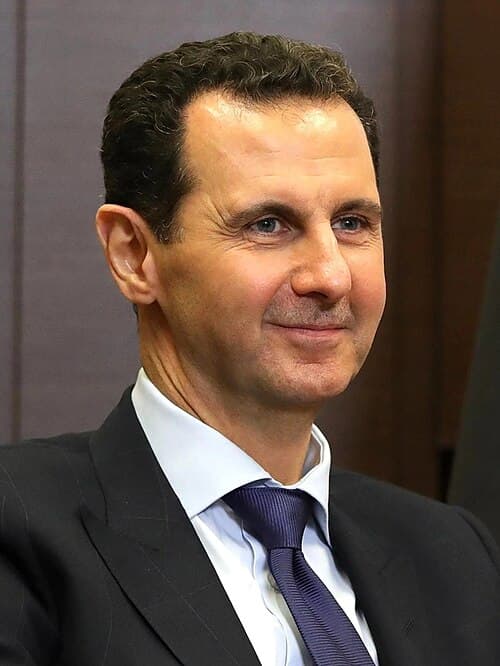
Bashar al-Assad
PERSON
President of Syria from 2000 to 2024
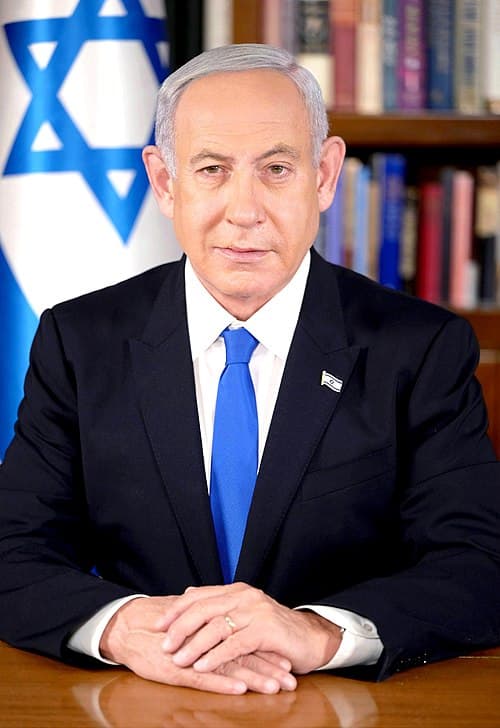
Benjamin Netanyahu
PERSON • 2 mentions
Prime Minister of Israel (1996–1999; 2009–2021; since 2022)
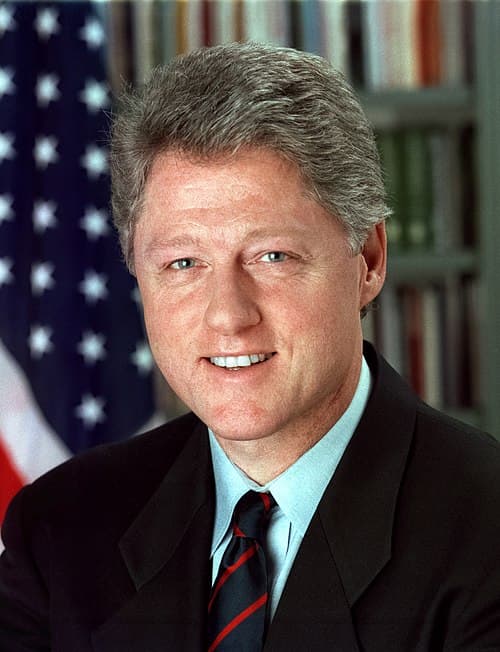
Bill Clinton
PERSON • 2 mentions
President of the United States from 1993 to 2001 (born 1946)
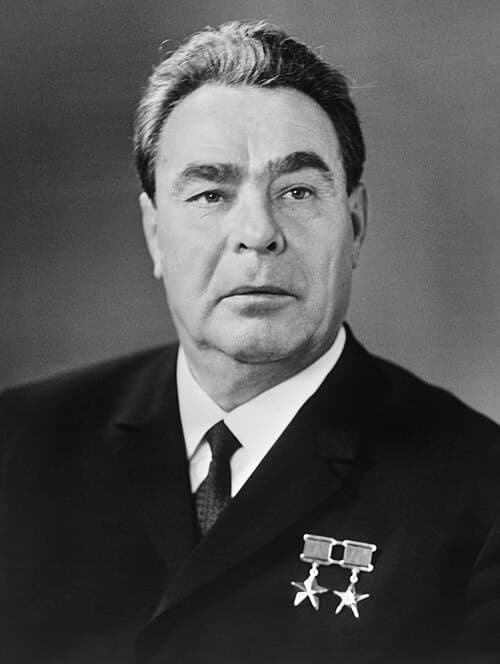
Brezhnev
PERSON
General Secretary of the Communist Party of the Soviet Union (1906–1982)

Castro
PERSON
Chilean city
DR
Dariush Rezaeinejad
PERSON
Iranian nuclear physicist
Daryl G. Press
PERSON
Name reference in documents

Donald Trump
PERSON
President of the United States (2017–2021, 2025–present)

Fashi
PERSON
Surname or name fragment in documents
Fereydoun Abbasi
PERSON
Iranian nuclear scientist and politician (1958–2025)
Fidel Castro
PERSON
Cuban politician and revolutionary (1926–2016)
Haniyeh
PERSON
Researcher
HO
Hosseinpour
PERSON
Musican
IH
Ismall Haniyeh
PERSON
Name reference in documents
James F. Jeffrey
PERSON
Name reference in documents
Javedanfar
PERSON
Name reference in documents
Jeffrey Epstein
PERSON • 2 mentions
American sex offender and financier (1953–2019)

Jennifer Lind
PERSON
Name reference in documents
Jimmy Carter
PERSON
President of the United States from 1977 to 1981 (1924–2024)

Karl Vick
PERSON
Person referenced in documents
Keir A. Lieber
PERSON
American academic
Khamenei
PERSON
Surname reference in Epstein-related documents
Kim Jong-un
PERSON
General Secretary of the Workers' Party of Korea and 3rd Supreme leader of North Korea
Kishore Mahbubani
PERSON
Singaporean diplomat
Larry Summers
PERSON
American economist and government official (born 1954)
LE
Leonid
PERSON
First name reference to multiple individuals in the documents
Levitt
PERSON
Biophysicist and Professor of Structural biology
Mahmoud
PERSON
First name reference to multiple individuals in Epstein-related documents
Mahmoud Abbas
PERSON
President of the Palestinian Authority since 2005
Mahmoud Ahmadinejad
PERSON
6th President of the Islamic Republic of Iran from 2005 to 2013
MF
Majid Fashi
PERSON
Name reference in documents
MS
Majid Shariari
PERSON
Name reference in documents
Marc Rich
PERSON
American commodities trader (1934–2013)
MA
Masoud Alimohammadi
PERSON
Iranian physicist (1959-2010)
Meir Javedanfar
PERSON
Israeli journalist
Melinda Gates
PERSON
American philanthropist
Muammar Gaddafi
PERSON
Leader of Libya from 1969 to 2011
MA
Mustafa Ahmadi-Roshan
PERSON
Name reference in documents
OF
Oslo Fatigue
PERSON
Name reference in documents

Park Geun-hye
PERSON
President of South Korea from 2013 to 2017

Pickering
PERSON
Surname or name fragment in documents
RT
Ray Takeyh
PERSON
American Middle East scholar
Robert Pape
PERSON
American political scientist
Saddam Hussein
PERSON • 3 mentions
Iraqi president, army officer and Baathist politician (1937–2006)
SM
Sayed Mansour Mousa
PERSON
Name reference in documents
SH
Shariari
PERSON
Name reference in documents
Simon Jenkins
PERSON
English journalist
Strobe Talbott
PERSON
American foreign policy analyst
SH
Sven Hoppe
PERSON
Name reference in documents
TP
Thomas Pickering
PERSON
English abbot of Whitby and genealogist

Tzipi Livni
PERSON
Israeli politician, former Israeli Foreign Minister and former leader of the Coalition: Zionist Union together with Isaac Herzog from 2015 to 2019
Ayatollahs
ORGANIZATION
American record producer

College
ORGANIZATION
Episode of The Sopranos (S1 E5)
Councils
ORGANIZATION
Organization referenced in documents

Dartmouth
ORGANIZATION
Private university in Hanover, New Hampshire, US
Dartmouth College
ORGANIZATION
Private university in Hanover, New Hampshire, US
Department of Government
ORGANIZATION
Organization referenced in documents

Economist
ORGANIZATION
Professional in the discipline of economics
Force
ORGANIZATION
Organization referenced in documents

Georgetown University
ORGANIZATION
Private university in Washington, D.C., United States

Harrods
ORGANIZATION
British department store
Hatzomet
ORGANIZATION
Organization referenced in documents
International Atomic Energy Agency
ORGANIZATION
International organization that seeks to promote the peaceful use of nuclear energy, and to inhibit its use for any military purpose, including nuclear weapons

International Security
ORGANIZATION
Journal
Kidon
ORGANIZATION
Department within Israel's Mossad that is allegedly responsible for the execution of opponents

Ministry
ORGANIZATION
American industrial metal band

Mossad
ORGANIZATION
National intelligence agency of Israel
National Intelligence Council
ORGANIZATION
Organization referenced in documents

Peace Now
ORGANIZATION
Organization referenced in documents

PS+1
ORGANIZATION
Organization referenced in documents
Quds Force
ORGANIZATION
Iranian Islamic Revolutionary Guard Corps unit

State Department
ORGANIZATION
Executive department of the U.S. federal government

Stratfor
ORGANIZATION
American geopolitical intelligence platform and publisher
the Bill and Melinda Gates Foundation
ORGANIZATION
Organization referenced in documents
the Council on Foreign Relations
ORGANIZATION
Council on Foreign Relations, foreign policy think tank

the Foreign Ministry
ORGANIZATION
Organization referenced in documents
the Foreign Office
ORGANIZATION
Organization referenced in documents

the Government Department
ORGANIZATION
Organization referenced in documents
the Iranian Islamic Revolutionary Guard Corps
ORGANIZATION
Organization referenced in documents
The Junction
ORGANIZATION
Organization referenced in documents
the Lee Kuan Yew School of Public Policy
ORGANIZATION
Organization referenced in documents
the Ministry of Defense
ORGANIZATION
Organization referenced in documents
the Palestinian Authority
ORGANIZATION
Palestinian National Authority
the Quds Force
ORGANIZATION • 2 mentions
Organization referenced in documents
the Revolutionary Guards
ORGANIZATION
Organization referenced in documents
the UN Security
ORGANIZATION
Organization referenced in documents
the UN Security Council
ORGANIZATION • 2 mentions
Organization referenced in documents
the United Nations Development Programme
ORGANIZATION
Organization referenced in documents

The Washington Institute
ORGANIZATION
Organization referenced in documents
the Washington Institute for Near East Policy
ORGANIZATION
Organization referenced in documents
Walsh School of Foreign Service
ORGANIZATION
Organization referenced in documents
War and Peace Studies
ORGANIZATION
Organization referenced in documents
Zetas
ORGANIZATION
Criminal syndicate in México

Azerbaijan
LOCATION
Country in the Caucasus in Eastern Europe and Western Asia
Baghdad
LOCATION
Capital city of Iraq

Bangkok
LOCATION
Capital of Thailand
Burma
LOCATION
City in Myanmar (Burma)
Caesarea
LOCATION
Modern day town in Israel

Davos
LOCATION
Municipality in the canton of Graubünden, Switzerland
East Jerusalem
LOCATION
Eastern part of Jerusalem, in dispute between Israel and the Palestinian Arabs since 1967
Herzliya
LOCATION
City in the Tel Aviv District of Israel
Hiroshima
LOCATION
Capital city of Hiroshima Prefecture, Japan
Isfahan
LOCATION
City in Isfahan Province, Iran
Istanbul
LOCATION
Largest city in Turkey
Jerusalem
LOCATION
City in the Middle East, holy to the three Abrahamic religions

Johannesburg
LOCATION
Largest city in South Africa

Kenya
LOCATION
Country in Eastern Africa
Mombasa
LOCATION
City in Kenya
Nagasaki
LOCATION
Core city in Kyushu, Japan

Nairobi
LOCATION
Capital city of Kenya

Nevada
LOCATION
State of the United States of America

North
LOCATION
1994 comedy film by Rob Reiner

North Korea
LOCATION • 2 mentions
Sovereign state in East Asia
Norther
LOCATION
Finnish melodic death metal band
Pattaya
LOCATION
City in Chonburi province, Thailand
Planet Earth
LOCATION
Location referenced in documents
Pyongyang
LOCATION
Capital city of North Korea
Republic
LOCATION
Location referenced in documents
Rhodesia
LOCATION
Location referenced in documents

Rockville
LOCATION
City in Montgomery County, Maryland, United States, suburb of Washington, DC

Saudi Arabia
LOCATION • 2 mentions
Country in West Asia

Soviet Union
LOCATION
Former country in Eurasia (1922–1991)

Sudan
LOCATION
Country in Northeast Africa

Tbilisi
LOCATION
Capital and the largest city of Georgia (country)

Tehran
LOCATION
Capital city of Iran
Tel Aviv
LOCATION
City in Israel
the Gaza Strip
LOCATION
Territory in the Middle East
the Holy Land
LOCATION
Location referenced in documents
the Persian Gulf
LOCATION
Body of water between Iran and Arabian Peninsula

United States
LOCATION • 3 mentions
Country located primarily in North America
West Bank
LOCATION • 2 mentions
Territory in the Middle East

Western Europe
LOCATION
Western part of the European continent
Statistics
Pages:27
Entities:139
Avg. OCR:97.9%
Sponsored