HOUSE_OVERSIGHT_028621 - HOUSE_OVERSIGHT_028647
Document HOUSE_OVERSIGHT_028621 is a government record from the House Oversight Committee consisting of 27 pages.
This document is a forwarded press snapshot from August 26, 2013, originally sent to Bill Gates and forwarded to Jeffrey Epstein by Boris Nikolic. It contains a collection of headlines and brief summaries of news articles from various sources such as The New York Times, Wall Street Journal, and Nature, covering topics ranging from energy and technology to healthcare and global development. The document provides a glimpse into the news and topics that may have been of interest to Jeffrey Epstein at that time.
Key Highlights
- •The document is a press snapshot forwarded to Jeffrey Epstein.
- •Bill Clinton, Barack Obama, and Bill Gates are mentioned in the document.
- •The press snapshot includes articles on technology, energy, healthcare, and global development.
Frequently Asked Questions
Books for Further Reading

My Life
Bill Clinton
Clinton's autobiography
Who Is Henry Kravis?: Secrets, Strategy, and the Silent Grip That Shaped Global Capital (Titans of Industry: Influential American Investors & Business Owners)
HENRY KRAVIS BIOGRAPHY: The Titan of Private Equity – The Life, Legacy, and Leverage of a Financial Pioneer
Document Information
Bates Range
HOUSE_OVERSIGHT_028621 - HOUSE_OVERSIGHT_028647
Pages
27
Source
House Oversight Committee
Document Content
Page 1 - HOUSE_OVERSIGHT_028621
Date: Monday, August 26 2013 02:46 PM Subject: FW: Press Snapshot: Monday, August 26th, 2013 From: Boris Nikolic < To: Jeffrey Epstein < [email protected]>; See good article re balmer below. Still awaiting for call reply Sent from my Windows Phone From: John Pinette Sent: 8/26/2013 4:17 PM To: Bill Gates Cc: DL-Press Snapshot Subject: Press Snapshot: Monday, August 26th, 2013 HOUSE_OVERSIGHT_028621
Page 2 - HOUSE_OVERSIGHT_028622
Headline Journalist Outlet Energy Nuclear Operator Raises Alarm on Crisis The New Nuclear Craze Pipeline-Capacity Squeeze Reroutes Crude Oil U.S. Electrical Grid on the Edge of Failure Hiroko Tabuchi Mark Bittman Russell Gold Jeff Tollefson New York Times New York Times Wall Street Journal Nature Technology Ballmer Departure From Microsoft Was More Sudden Kara Swisher All Things D Than Portrayed by the Company The Decline of E-Empires Paul Krugman New York Times As Amazon Stretches, Seattle's Downtown Is Reshaped Kirk Johnson & Nick New York Times Wingfield Nina Bernstein Sarah Kliff and Sandhya Somashekhar Charles Babington New York Times Washington Post Associated Press Full Text Article text Article text Article text Article text Article text Article text Article text State Budgets and Healthcare Costs How to Charge $546 for Six Liters of Saltwater States scramble to get health-care law's insurance marketplaces up and running 80 House members: Shutdown better than Obamacare Berkshire Hathaway No breaking news Philanthropy Philanthropy: the givers club Article text Article text Article text Cordelia Jenkins Livemint and the Wall Street Journal Guardian blog Article text Global Health and Development Pat on the back or force for good: what purpose do development awards serve? Education A Chance at Learning Obama goes for college 'datapalooza' Massively Online And Offline Too: How MOOCs Will Evolve In The Physical World Women and Children Indian Police Arrest Suspects in Two Gang Rapes Mark Tran Ginia Bellafante Nick Anderson Giovanni Rodriguez Sean Mclain and Khushita Vasan Is there any space in the development debate for African Andrew Quinn experts? Child marriage campaigners in south Asia receive $23m cash iniection Mark Tran Article text New York Times Washington Post Forbes Article text Article text Article text Wall Street Journal Guardian blog Guardian blog Article text Article text Article text ARTICLE TEXT HOUSE_OVERSIGHT_028622
Page 3 - HOUSE_OVERSIGHT_028623
Energy - Full text articles Nuclear Operator Raises Alarm on Crisis Hiroko Tabuchi - New York Times The operator of Japan's tsunami-hit nuclear power plant sounded the alarm on the gravity of the deepening crisis of containment at the coastal site on Friday, saying that there are more than 200,000 tons of radioactive water in makeshift tanks vulnerable to leaks, with no reliable way to check on them or anywhere to transfer the water. The latest disclosures add to a long list of recent accidents, leaks and breakdowns that have underscored grave vulnerabilities at the Fukushima Daiichi nuclear power plant site more than two years after a powerful earthquake and tsunami set off meltdowns at three reactors. They come two weeks after the prime minister, Shinzo Abe, promised that his government would take a more active role in the site's cleanup, raising questions over how seriously he has taken that pledge. Mr. Abe's government has continued to push for a restart of the country's nuclear power program, and he heads to the Middle East on Saturday to promote Japanese exports to the region, including nuclear technology. Mr. Abe also plans to lead Tokyo's delegation to Argentina for the International Olympic Committee's final vote, set for Sept. 7, on the host city for the 2020 Olympics. Tokyo, 150 miles south of the stricken nuclear power plant, is one of three finalists competing to host the games. The others are Istanbul and Madrid. Opposition lawmakers here have demanded that Mr. Abe stay home and declare a state of emergency. "The nuclear crisis is real and ongoing, yet the government continues to look the other way," said Yoshiko Kira of the opposition Japan Communist Party, which made significant gains in parliamentary elections last month. "The government should declare a state of emergency right now, and intervene to stop the outflow of contaminated water," Ms. Kira said at an anti-nuclear rally outside Mr. Abe's office in Tokyo. Mr. Abe remains popular, and it is uncertain how large a liability the crisis at the Fukushima plant will become for him. But it has become increasingly clear that the latest problems may be too large for the plant's operator, the Tokyo Electric Power Company, or Tepco, to handle. Tepco has built nearly 1,000 tanks at the sprawling complex to store as many as 335,000 tons of contaminated water, the product of coolant pumped into the reactors to keep their cores from overheating, and groundwater pouring into their breached basements at a rate of 400 tons a day. This week, Tepco said one tank had sprung a huge leak. On Friday, Tepco presented an even starker view of the situation, acknowledging that as much as 220,000 tons of that water is stored in makeshift steel tanks similar to the one that is leaking. The operator said the 36-foot-tall cylindrical tanks, meant as a temporary repository for the growing amount of radiated water at the complex, used vulnerable rubber sealing and that their ability to withstand radiation was not tested. The tanks are susceptible to leaks at the seams and through their concrete base, said Noriyuki Imaizumi, the acting general manager of Tepco's nuclear power division. A nearby drain can carry any leaked water to the sea, Mr. Imaizumi said, and high radiation readings along a section suggest that water has already traveled through the drain to the ocean. The makeshift tanks also lack water level gauges, making it difficult to detect leaks. Only two workers are assigned to checking nearly 1,000 tanks on two-hour patrols twice a day, Mr. Imaizumi said. The Nuclear Regulation Authority, which the Japanese government ordered to more actively advise and monitor Tepco's activities at the plant, had told the company to begin transferring the water from the makeshift tanks to better-built vessels. But after visiting the plant on Friday, an authority commissioner, Toyoshi Fuketa, said the vast quantities made doing so quickly "unrealistic." HOUSE_OVERSIGHT_028623
Sponsored
Page 4 - HOUSE_OVERSIGHT_028624
A series of pits Tepco dug to store some of the water also began leaking earlier this year, forcing workers to transfer the water into the steel tanks. Experts have said they suspect that more contaminated water is seeping out from under the melted-down reactors into the groundwater and the Pacific. Elevated levels of radioactive cesium in surrounding waters seem to confirm those suspicions. Tepco has said those leaks are not directly from beneath the reactors, but from maintenance tunnels that run along the coast and remain contaminated from the early days of the disaster. But it also acknowledges that the water beneath the reactors is extremely contaminated, and experts say that if it does get into the ocean, it will surpass even the leaks that occurred in the disaster's early days. "That prospect scares me," Michio Aoyama, a senior scientist in the Oceanography and Geochemistry Research Department at the government-affiliated Meteorological Research Institute, said in an interview this month. "It's the ultimate, worst-case scenario," Professor Aoyama said. Back to top The New Nuclear Craze Mark Bittman - New York Times There is a new discussion about nuclear energy, prompted by well-founded concerns about carbon emissions and fueled by a pro-nuclear documentary called "Pandora's Promise." Add a statement by James E. Hansen — who famously sounded the alarm on climate change - and, of course, industry propaganda, and presto: We Love Nukes. Before we all become pro-nuclear greens, however, you've got to ask three questions: Is nuclear power safe and clean? Is it economical? And are there better alternatives? No, no and yes. So let's not swap the pending environmental disaster of climate change for another that may be equally risky. Despite all-out efforts and international cooperation, Fukushima, which scared Germany right out of the nuclear power business, still isn't under control. Proponents of nuclear power promise new and safer technology, but these discussions are filled with "coulds"; no such plants exist. Nor would they reduce the risks of proliferation. (Oh, that little thing.) Nor would they do much to mitigate the all-too-infrequently discussed dangers of uranium mining, which uses vast amounts of water in the West — an area that can ill afford it — and is barely regulated or even studied. Thousands of uranium mines have been abandoned, and no one seems to know how many remain to be cleaned up. The cost of that cleanup, of course, will be borne by taxpayers, not industry. Then there's disposal of spent fuel, which is not contained at the same safety level as active fuel, itself a scary thought. Decades into the nuclear age there remains, incredibly, no real plan for this; a patchwork scheme by the Nuclear Regulatory Commission, which appears to be even more industry-friendly than most federal agencies, was rejected by an appeals court last year, and the Obama administration is standing by its campaign promise (shocking, I know) to abandon the nuclear repository at Yucca Mountain in Nevada. The economic viability of nuclear power is no more encouraging. Plants continue to close and generation rates continue to drop. Operators may indeed continue to make money on reactors, but that's only because federal subsidies are enormous. Insurance costs are limited. Loans are guaranteed (the Solyndra loan guarantee was half a billion dollars; in contrast, loan guarantees for new nuclear plants may run $8 billion); cost recovery and return on investment are also assured for decades, and some operators are able to collect costs from ratepayers (and pay dividends to shareholders) years before plants come online — even if they never come online. So they're economical as long as you're the owner, because historically, subsidies for nuclear power have been more than double the expense of power generation itself. While estimates of the costs of power generation vary wildly - allowing both HOUSE_OVERSIGHT_028624
Page 5 - HOUSE_OVERSIGHT_028625
proponents and detractors of any given power technology to make their cases — few of them take externalities (costs to the environment or to public health, for example) into account. And nuclear power's externalities could exceed those for any other form of power generation except coal. That's why we're reducing coal usage — if we had a strong climate policy it would be gone in a couple of deades, and nuclear should be right behind it. It's likely that no new nuclear plants will be built before true renewables are able to take the place of scary, highly damaging energy sources. Which brings us full circle: the new proponents of nuclear power say that since nuclear power is arguably preferable to coal, maybe we should subsidize the building of new plants. If those were the only options, maybe that argument would be a sound one. But they're not. Energy efficiency (remember that?), natural gas (imperfect, yes, but improvable) and wind are all cheaper. Even solar is already less expensive than nuclear power in good locations. Some studies show that renewables can generate 80 percent of our electricity in 2050, using current technologies, while reducing carbon emissions from the electric sector by 80 percent. Climate change fears should be driving not old and disproven technologies but renewable ones, which are more practical. These technologies remain relatively small - non- hydro renewables were around 5 percent of the total last year — but they're growing so fast (wind and solar use have quadrupled in the last five years) that just this week the chairman of the Federal Energy Regulatory Commission predicted that solar power could soon begin to double every two years. Utilities are afraid that solar power will be to the electrical grid what PCs were to mainframes, or e-mail to the Postal Service: a technology that will simply kill its predecessors. Coal and nuclear power are both doomed, and the profit-making power grid with it. That's all to our benefit. Back to top Pipeline-Capacity Squeeze Reroutes Crude Oil Russell Gold - Wall Street Journal More crude oil is moving around the U.S. on trucks, barges and trains than at any point since the government began keeping records in 1981, as the energy industry devises ways to get around a pipeline-capacity shortage to take petroleum from new wells to refineries. The improvised approach is creating opportunities for transportation companies even as it strains roads and regulators. And it is a precursor to what may be a larger change: the construction of more than $40 billion in oil pipelines now under way or planned for the next few years, according to energy adviser Wood Mackenzie. "We are in effect re-plumbing the country," says Curt Anastasio, chief executive of NuStar Energy LP, NS +0.58% a pipeline company in San Antonio. Oil is "flowing in different directions and from new places." HOUSE_OVERSIGHT_028625
Page 6 - HOUSE_OVERSIGHT_028626
U.S. oil production has reached its highest level in two decades, while imports have fallen dramatically. A system built to import oil and deliver it to coastal refineries has become ill-equipped to handle rising production in Texas, North Dakota and Canada's Alberta province. "All of the pipes are pointed in the wrong direction," says Harold York, an oil researcher at Wood Mackenzie. "We are turning the last 70 years of oil-industry history in North America on its head, and we are turning it on its head in the next 10 to 15 years." With oil prices persistently above $100 a barrel, companies drilling new wells don't want to forgo revenue while they wait years for new pipelines. That leaves them with trucks, trains and barges to move an increasing amount of crude. Oil delivered to refineries by trucks grew 38% from 2011 to 2012, according to the U.S. Energy Information Administration, while crude on barges grew 53% and rail deliveries quadrupled. Although alternatives are growing rapidly, pipelines and oceangoing tankers remain the primary method for delivering crude to refineries. In the Eagle Ford, a large four-year-old South Texas oil field, production has grown to more than 500,000 barrels a day, from less than 1,000 in 2009, according to state statistics. Getting that torrent out of the sparsely populated region has required modifications to the oil-delivery system. For example, last year NuStar reversed a 16-inch pipeline built to carry crude imported from Africa and Europe northward from the Port of Corpus Christi. Now, the pipeline flows south, taking delivery from hundreds of trucks that fill up at individual wells. Some of the 175,000 barrels a day moving through the pipe is loaded onto barges at Corpus Christi and towed toward refineries near Houston. Earlier this year, Phillips 66 began putting some of this crude on ships for a 2,200-mile journey around Florida to its refinery in Linden, N.J. The heavy trucks moving Eagle Ford crude are causing headaches for residents and local officials, ripping up roads and causing traffic tie-ups. "These are rural roads built for 10 cars an hour, and now it's 100 vehicles an hour, and 75 of them are 80,000-pound trucks," says Tom Voelkel, president of Dupre Logistics LLC. The Lafayette, La., company started hauling crude in Eagle Ford in November 2011 and has more than 100 drivers full time in the region. The Texas Legislature appropriated $450 million this year to repair and improve roads in oil-producing counties. "It doesn't even begin to reach where it needs to reach," says Daryl Fowler, the chief elected county official in Cuero, Texas, about a hundred miles southeast of San Antonio. "We've seen a fourfold increase in congestion around here," he says. "The roads are crumbling." HOUSE_OVERSIGHT_028626
Sponsored
Page 7 - HOUSE_OVERSIGHT_028627
In July, the Texas transportation department decided to convert 83 miles of state road in six oil-boom counties from pavement to gravel, to reduce repair costs and slow traffic. Trucks filled with Eagle Ford crude are also heading 100 miles west to a barge canal. The first barge of crude departed in September 2011, heading south toward the Gulf of Mexico and refineries near Houston. Now the canal moves 1.6 million barrels a month, says Jennifer Stastny, executive director of the Port of Victoria. "It's like putting your 5-year-old to bed one night and he wakes up the next morning as a 16-year-old, with the appetite and demands of a 16-year-old," she says. In North Dakota, trains move 69% of the state's 800,000 barrels a day of crude, according to state figures. Energy companies say they value rail's ability to deliver crude to the highest-paying markets. But the deadly runaway crude train crash in Canada's Quebec province in July, which incinerated a small town and killed at least 47 people, highlighted the risks of the mile-long crude trains crisscrossing the country. The U.S. government is imposing new regulations on oil shipments by rail. Some state regulators wonder if their local efforts leave them prepared for a train accident, in part because federal railroad rules pre-empt state and local control over trains. In Washington state, "we can't say [to train operators] you have to have oil-spill contingency plans in order to operate," says Curt Hart, a spokesman for the state's Department of Ecology. "We do that for oil tankers, barges, large commercial vessels and refineries." Home to five refineries, the state levies a per-barrel tax on crude delivered by tankers and barges, which pays for spill- response officials and inspectors. The tax doesn't apply to rail shipments. The American Association of Railroads says it is prepared for growing crude shipments because it has long carried hazardous cargoes. In 2008, major U.S. railroads carried 9,500 carloads of crude, the association says, and are on pace this year to carry 389,000. Most industry analysts believe that while crude on trains will last, truck and barge traffic will decline once new pipelines come into service. Environmental groups have criticized some pipeline projects, including the Keystone XL, meant to move Canadian oil to Gulf Coast refineries. The federal government is still studying the Keystone pipeline and has yet to issue needed permits. Steve Kean, president and chief operating officer of Kinder Morgan Inc., KMI +0.30% one of several interrelated companies that own or operate 82,000 miles of North American pipeline, says government agencies thoroughly vet new projects. Falling imports, infrastructure investments and increased manufacturing are just some of the benefits of newly abundant energy supplies, he says. "This has got to be one of the best things that has happened in our economy in the past 10 years. It is better than the iPad." Back to top U.S. Electrical Grid on the Edge of Failure Jeff Tollefson - Nature Facebook can lose a few users and remain a perfectly stable network, but where the national grid is concerned simple geography dictates that it is always just a few transmission lines from collapse. That is according to a mathematical study of spatial networks by physicists in Israel and the United States. Study co-author Shlomo Havlin of Bar-Ilan University in Ramat-Gan, Israel, says that the research builds on earlier work by incorporating a more explicit analysis of how the spatial nature of physical networks affects their fundamental stability. The upshot, HOUSE_OVERSIGHT_028627
Page 8 - HOUSE_OVERSIGHT_028628
published today in Nature Physics, is that spatial networks are necessarily dependent on any number of critical nodes whose failure can lead to abrupt — and unpredictable — collapse 1. The electric grid, which operates as a series of networks that are defined by geography, is a prime example, says Havlin. "Whenever you have such dependencies in the system, failure in one place leads to failure in another place, which cascades into collapse." The warning comes ten years after a blackout that crippled parts of the midwest and northeastern United States and parts of Canada. In that case, a series of errors resulted in the loss of three transmission lines in Ohio over the course of about an hour. Once the third line went down, the outage cascaded towards the coast, cutting power to some 50 million people. Havlin says that this outage is an example of the inherent instability his study describes, but others question whether the team's conclusions can really be extrapolated to the real world. "I suppose I should be open-minded to new research, but l'm not convinced," says Jeff Dagle, an electrical engineer at the Pacific Northwest National Laboratory in Richland, Washington, who served on the government task force that investigated the 2003 outage. "The problem is that this doesn't reflect the physics of how the power grid operates." Critical order Havlin and his colleagues focused on idealized scenarios. They found that randomly structured networks — such as social networks — degrade slowly as nodes are removed, which in the real world might mean there is time to diagnose and address a problem before a system collapses. By contrast, the connections of orderly lattice structures have more critical nodes, which increase the instability. The problem is that such orderly networks are always operating near an indefinable edge, Havlin says. To reduce that risk, he recommends adding a small number of longer transmission lines that provide short cuts to different parts of the grid. Benjamin Carreras, a physicist at Oak Ridge National Laboratory in Tennessee who has conducted similar work2, says that network theory can be useful for providing insight into electric grids but must be complemented with more complex models that attempt to represent both the physical realities and the responsiveness of the modern electric grid. Although in some cases adding long lines can benefit the overall stability of an electric system, Carreras' work suggests that in certain circumstances such an approach allows problems to propagate even farther. "More connections may stabilize some processes, by, for instance, increasing the number of paths to generators, but also may destabilize others," Carreras says. "One cannot make generic statements on this topic." Although local outages caused by falling trees knocking down distribution lines are common, large-scale failures within the core ne transmission lines rarely occur on a modern electric grid. Before 2003, the last major blackout in the United States had been on the west coast in 1996, and more recently an outage has struck in the San Diego area. Dagle says that the 2003 blackout stemmed from a combination of bad vegetation management — the first three lines tripped after sagging into trees but were all within their load rating — and a series of monitoring and communications breakdowns. Vegetation requirements have since been standardized, and a new generation of sensors is providing grid operators with more information about what is happening across the grid at any given moment. "Many more utilities have much more data," Dagle says. "The next phase of our voyage is to make better use of that data." Back to top Technology - Full text articles Ballmer Departure From Microsoft Was More Sudden Than Portrayed by the Company Kara Swisher - All Things D According to sources close to the situation, the departure of CEO Steve Ballmer from Microsoft last week was more sudden than was depicted by the company in its announcement that he would be retiring within the next year in a planned smooth transition. It was neither planned nor as smooth as portrayed HOUSE_OVERSIGHT_028628
Page 9 - HOUSE_OVERSIGHT_028629
While the decision to go seems to have technically been Ballmer's, interviews with dozens of people inside and outside the company, including many close to the situation, indicate that he had not aimed to leave this soon and especially after the recent restructuring of the company that he had intensely planned. Instead, sources said Ballmer's timeline had been moved up drastically — first by him and then the nine-member board, including his longtime partner and Microsoft co-founder and chairman Bill Gates — after all agreed that it was best if he left sooner than later. That was due to a number of increasingly problematic issues on the immediate horizon — including a potentially nasty proxy fight, continued business performance declines and, perhaps most of all, that Ballmer's leadership was becoming a very obvious lightning rod. Interestingly, Ballmer actually indicated that he had planned on staying in his letter about his impending departure, noting: "My original thoughts on timing would have had my retirement happen in the middle of our transformation to a devices and services company focused on empowering customers in the activities they value most." That sentence spurred much chatter inside the company, including the persistent rumor that Gates had dropped the bomb on Ballmer. That sentiment was further underscored when Ballmer's letter contained no reference or thanks to Gates, with whom he has been tightly tethered over the last several decades. Its absence has been much discussed internally at Microsoft, where it has been seen as an unusual slight and a sign of a rift. Gates also did not reference his longtime business partner in any celebratory manner in Microsoft's announcement. "As a member of the succession planning committee, I'll work closely with the other members of the board to identify a great new CEO," said Gates, in the entirety of the quote about Ballmer's retirement. "We're fortunate to have Steve in his role until the new CEO assumes these duties." Other sources cautioned that it was not indicative of tensions between the pair, but was done to minimize "lame duck concerns" that might arise if Ballmer was portrayed as already out the door. Those sources also insist that Gates never asked Ballmer to step down sooner, although they acknowledge that he also did not — as Gates had in the past — disagree that it was best that he move on. "Did Gates instigate it? No," said one source with knowledge of the situation. "But was he as supportive of Ballmer as he had been in the past? Maybe not." That was still a big change, of course. Gates — who has always been and remains the key decision-maker on Microsoft's board — had always been Ballmer's major backer, despite increasing pressure both externally and from other directors for him to step down. Gates had rejected such suggestions for years. That included former director and Netflix CEO Reed Hastings, who many sources said had been one of the first to urge that the company replace Ballmer as CEO, as well as from a spate of Wall Street investors complaining about the company's declining value in the Ballmer years. As AllThingsD's John Packowski wrote on Friday: "Here's one metric by which Ballmer will be judged harshly. On the last day of 1999, the day before he took over as CEO, Microsoft's market capitalization was $600 billion. On the day before he announced his intention to retire, it was less than $270 billion." That's a damning number, of course, coupled with a widespread sentiment that Ballmer had missed critical trends in tech under his tenure. Despite a strong growth in revenue, investors and others had long concluded that Microsoft had thrived when Gates was CEO and waned under Ballmer's rule. Still, until recently, there has been no signal from the company indicating any change in top leadership. In fact, the management reorganization backed strongly by the board a month ago had essentially placed Ballmer at the center of the structure under a plan described as "One Microsoft." And, at the time of the restructuring announcement in July, Ballmer's definite and clear message was that he was there to stay: "Lots of change. But in all of this, many key things remains the same. Our incredible people, our spirit, our commitment, our belief in the transformative power of technology — our Microsoft technology — to make the world a better place for billions of people and millions of businesses around the world. It's why I come to work inspired every day. It's why we've evolved before, and why we're evolving now. Because we're not done. Let's go." Though early in its rollout, the changes have been jarring and created a level of chaos at the company that has led to much grumbling internally. It also did not help that the restructuring was quickly followed by a dismal Q4 performance by Microsoft. HOUSE_OVERSIGHT_028629
Sponsored
Page 10 - HOUSE_OVERSIGHT_028630
As I wrote in mid-July: "Microsoft had a bad fourth quarter, mostly because many people are not using PCs any more. In addition, the tech giant took a $900 million charge related to having to cut the price of its Surface RT tablet, which had - as you might imagine — an impact on results. Missed profit expectations, missed revenue, missed all over the ying-yang." With the prospect that the next quarter could be weaker still and with numerous reports of late that there has been slowing of adoption from its new flagship Windows 8 offering, Ballmer and the board finally aligned to move his departure date sooner. Most critical to that decision, source said, were increased board worries that recent pressure from activist investor ValueAct — which has a large stake in the company — had a good chance of succeeding in its efforts to obtain a seat on the board of Microsoft, especially if Ballmer stayed in place. And even if the software giant was able to thwart that from happening, said several sources, such a public fight is untenable for the company, since it was likely to attract even more scrutiny to Ballmer's performance and perhaps even more investor action. ValueAct has until August 30 to notify Microsoft if it plans a proxy battle, and sources said it still wants more that Ballmer's retirement. In talks, said sources, it has asked for an aggressive stock buyback and also a dividend increase, which might assuage its efforts to garner a board seat. Ballmer denied any pressure from ValueAct specifically in his decision in an interview with the Seattle Times, though sources said that was simply bluster. And, even with mounting pressure on him, Ballmer definitely portrayed the change as his decision in an interview he gave to ZDNet's Mary Jo Foley last week, after his retirement announcement. "I would say for me, yeah, I've thought about it for a long time, but the timing became more clear to me over the course of the last few months," he insisted. When asked if Gates asked him to stay or go, he said no, apparently to both. "Bill respects my decision. I mean, it's one of these things when if it's — you know, ultimately these kinds of things have to be one's own personal decision." That statement also struck many inside the company as a quick shift. Ballmer, said sources, had been jumping enthusiastically into business review meetings, as part of the new structure, over the last month. In addition, he had expressed to many employees his excitement at being part of the changes he had initiated. But, in meetings after the announcement, numerous sources inside the company said Ballmer seemed uncharacteristically chastened and quiet, in contrast to his usual confident and forceful manner. "He was definitely not leaving and then he suddenly was," said one source. "Even if today's Steve made the choice, it was a choice yesterday's Steve did not want to." Another source, close to the board, perhaps explained it best: "If ValueAct got on the board, I think Ballmer finally realized that meant it was going to be the hard way from then on out until he left and he did not want that for a company he clearly loves and has been his life." Now, those inside the company are turning to what comes next. While not everyone on the board thought that Ballmer should step down without a new CEO in place, it's moot now as Microsoft turbocharges the process — in place for several years now — to select its next leader. But, though the committee is headed up by John Thompson, CEO of Virtual Instruments and the former CEO of security software giant Symantec, most expect Gates — as usual — to be the key decision maker on that choice, too. A Microsoft spokesman declined comment. Back to top The Decline of E-Empires Paul Krugman - New York Times Steve Ballmer's surprise announcement that he will be resigning as Microsoft's C.E.O. has set off a huge flood of commentary. Being neither a tech geek nor a management guru, I can't add much on those fronts. I do, however, think I know a bit about economics, and I also read a lot of history. So the Ballmer announcement has me thinking about network externalities and Ibn Khaldun. And thinking about these things, l'd argue, can help ensure that we draw the right lessons from this particular corporate upheaval. HOUSE_OVERSIGHT_028630
Page 11 - HOUSE_OVERSIGHT_028631
First, about network externalities: Consider the state of the computer industry circa 2000, when Microsoft's share price hit its peak and the company seemed utterly dominant. Remember the T-shirts depicting Bill Gates as a Borg (part of the hive mind from "Star Trek"), with the legend, "Resistance is futile. Prepare to be assimilated"? Remember when Microsoft was at the center of concerns about antitrust enforcement? The odd thing was that nobody seemed to like Microsoft's products. By all accounts, Apple computers were better than PCs using Windows as their operating system. Yet the vast majority of desktop and laptop computers ran Windows. Why? The answer, basically, is that everyone used Windows because everyone used Windows. If you had a Windows PC and wanted help, you could ask the guy in the next cubicle, or the tech people downstairs, and have a very good chance of getting the answer you needed. Software was designed to run on PCs; peripheral devices were designed to work with PCs. That's network externalities in action, and it made Microsoft a monopolist. The story of how that state of affairs arose is tangled, but I don't think it's too unfair to say that Apple mistakenly believed that ordinary buyers would value its superior quality as much as its own people did. So it charged premium prices, and by the time it realized how many people were choosing cheaper machines that weren't insanely great but did the job, Microsoft's dominance was locked in. Now, any such discussion brings out the Apple faithful, who insist that anything Windows can do Apple can do better and that only idiots buy PCs. They may be right. But it doesn't matter, because there are many such idiots, myself included. And Windows still dominates the personal computer market. The trouble for Microsoft came with the rise of new devices whose importance it famously failed to grasp. "There's no chance," declared Mr. Ballmer in 2007, "that the iPhone is going to get any significant market share." How could Microsoft have been so blind? Here's where Ibn Khaldun comes in. He was a 14th-century Islamic philosopher who basically invented what we would now call the social sciences. And one insight he had, based on the history of his native North Africa, was that there was a rhythm to the rise and fall of dynasties. Desert tribesmen, he argued, always have more courage and social cohesion than settled, civilized folk, so every once in a while they will sweep in and conquer lands whose rulers have become corrupt and complacent. They create a new dynasty - and, over time, become corrupt and complacent themselves, ready to be overrun by a new set of barbarians. I don't think it's much of a stretch to apply this story to Microsoft, a company that did so well with its operating-system monopoly that it lost focus, while Apple — still wandering in the wilderness after all those years — was alert to new opportunities. And so the barbarians swept in from the desert. Sometimes, by the way, barbarians are invited in by a domestic faction seeking a shake-up. This may be what's happening at Yahoo: Marissa Mayer doesn't look much like a fierce Bedouin chieftain, but she's arguably filling the same functional role. Anyway, the funny thing is that Apple's position in mobile devices now bears a strong resemblance to Microsoft's former position in operating systems. True, Apple produces high-quality products. But they are, by most accounts, little if any better than those of rivals, while selling at premium prices. So why do people buy them? Network externalities: lots of other people use Whatevers, there are more apps for iOS than for other systems, so Apple becomes the safe and easy choice. Meet the new boss, same as the old boss. Is there a policy moral here? Let me make at least a negative case: Even though Microsoft did not, in fact, end up taking over the world, those antitrust concerns weren't misplaced. Microsoft was a monopolist, it did extract a lot of monopoly rents, and it did inhibit innovation. Creative destruction means that monopolies aren't forever, but it doesn't mean that they're harmless while they last. This was true for Microsoft yesterday; it may be true for Apple, or Google, or someone not yet on our radar, tomorrow. Back to top HOUSE_OVERSIGHT_028631
Page 12 - HOUSE_OVERSIGHT_028632
State Budgets and Healthcare costs - Full text articles How to Charge $546 for Six Liters of Saltwater Nina Bernstein - New York Times It is one of the most common components of emergency medicine: an intravenous bag of sterile saltwater. Luckily for anyone who has ever needed an IV bag to replenish lost fluids or to receive medication, it is also one of the least expensive. The average manufacturer's price, according to government data, has fluctuated in recent years from 44 cents to $1. Yet there is nothing either cheap or simple about its ultimate cost, as I learned when I tried to trace the commercial path of IV bags from the factory to the veins of more than 100 patients struck by a May 2012 outbreak of food poisoning in upstate New York. Some of the patients' bills would later include markups of 100 to 200 times the manufacturer's price, not counting separate charges for "IV administration." And on other bills, a bundled charge for "IV therapy" was almost 1,000 times the official cost of the solution. It is no secret that medical care in the United States is overpriced. But as the tale of the humble IV bag shows all too clearly, it is secrecy that helps keep prices high: hidden in the underbrush of transactions among multiple buyers and sellers, and in the hieroglyphics of hospital bills. At every step from manufacturer to patient, there are confidential deals among the major players, including drug companies, purchasing organizations and distributors, and insurers. These deals so obscure prices and profits that even participants cannot say what the simplest component of care actually costs, let alone what it should cost. And that leaves taxpayers and patients alike with an inflated bottom line and little or no way to challenge it. APRICE IN FLUX In the food-poisoning case, some of the stricken were affluent, and others barely made ends meet. Some had private insurance; some were covered by government programs like Medicare and Medicaid; and some were uninsured. In the end, those factors strongly (and sometimes perversely) affected overall charges for treatment, including how much patients were expected to pay out of pocket. But at the beginning, there was the cost of an IV bag of normal saline, one of more than a billion units used in the United States each year. "People are shocked when they hear that a bag of saline solution costs far less than their cup of coffee in the morning," said Deborah Spak, a spokeswoman for Baxter International, one of three global pharmaceutical companies that make nearly all the IV solutions used in the United States. It was a rare unguarded comment. Ms. Spak — like a spokesman for Hospira, another giant in the field — later insisted that all information about saline solution prices was private. In fact, manufacturers are required to report such prices annually to the federal government, which bases Medicare payments on the average national price plus 6 percent. The limit for one liter of normal saline (a little more than a quart) went to $1.07 this year from 46 cents in 2010, an increase manufacturers linked to the cost of raw materials, fuel and transportation. That would seem to make it the rare medical item that is cheaper in the United States than in France, where the price at a typical hospital in Paris last year was 3.62 euros, or $4.73. One-liter IV bags normally contain nine grams of salt, less than two teaspoons. Much of it comes from a major Morton Salt operation in Rittman, Ohio, which uses a subterranean salt deposit formed millions of years ago. The water is local to places like Round Lake, IIl., or Rocky Mount, N.C., where Baxter and Hospira, respectively, run their biggest automated production plants under sterility standards set by the Food and Drug Administration. But even before the finished product is sold by the case or the truckload, the real cost of a bag of normal saline, like the true HOUSE_OVERSIGHT_028632
Sponsored
Page 13 - HOUSE_OVERSIGHT_028633
cost of medical supplies from gauze to heart implants, disappears into an opaque realm of byzantine contracts, confidential rebates and fees that would be considered illegal kickbacks in many other industries. IV bags can function like cheap milk and eggs in a high-priced grocery store, or like the one-cent cellphone locked into an expensive service contract. They serve as loss leaders in exclusive contracts with "preferred manufacturers" that bundle together expensive drugs and basics, or throw in "free" medical equipment with costly consequences. Few hospitals negotiate these deals themselves. Instead, they rely on two formidable sets of middlemen: a few giant group- purchasing organizations that negotiate high-volume contracts, and a few giant distributors that buy and store medical supplies and deliver them to client hospitals. Proponents of this system say it saves hospitals billions in economies of scale. Critics say the middlemen not only take their cut, but they have a strong interest in keeping most prices high and competition minimal. The top three group-purchasing organizations now handle contracts for more than half of all institutional medical supplies sold in the United States, including the IVs used in the food-poisoning case, which were bought and taken by truck to regional warehouses by big distributors. These contracts proved to be another black box. Debbie Mitchell, a spokeswoman for Cardinal Health, one of the three largest distributors, said she could not discuss costs or prices under "disclosure rules relative to our investor relations." Distributors match different confidential prices for the same product with each hospital's contract, she said, and sell information about the buyers back to manufacturers. A huge Cardinal distribution center is in Montgomery, N.Y. — only 30 miles, as it happens, from the landscaped grounds of the Buddhist monastery in Carmel, N.Y., where many of the food-poisoning victims fell ill on Mother's Day 2012. Among them were families on 10 tour buses that had left Chinatown in Manhattan that morning to watch dragon dances at the monastery. After eating lunch from food stalls there, some traveled on to the designer outlet stores at Woodbury Commons, about 30 miles away, before falling sick. The symptoms were vicious. "Within two hours of eating that rice that I had bought, I was lying on the ground barely conscious," said Dr. Elizabeth Frost, 73, an anesthesiologist from Purchase in Westchester County who was visiting the monastery gardens with two friends. "I can't believe no one died." About 100 people were taken to hospitals in the region by ambulance; 5 were admitted and the rest released the same day. The New York State Department of Health later found the cause was a common bacterium, Staphylococcus aureus, from improperly cooked or stored food sold in the stalls. MYSTERIOUS CHARGES The sick entered a health care ecosystem under strain, swept by consolidation and past efforts at cost containment. For more than a decade, hospitals in the Hudson Valley, like those across the country, have scrambled for mergers and alliances to offset economic pressures from all sides. The five hospitals where most of the victims were treated are all part of merged entities jockeying for bargaining power and market share — or worrying that other players will leave them struggling to survive. The Affordable Care Act encourages these developments as it drives toward a reimbursement system that strives to keep people out of hospitals through more coordinated, cost-efficient care paid on the basis of results, not services. But the billing mysteries in the food poisoning case show how easily cost-cutting can turn into cost-shifting. A Chinese-American toddler from Brooklyn and her 56-year-old grandmother, treated and released within hours from the emergency room at St. Luke's Cornwall Hospital, ran up charges of more than $4,000 and were billed for $1,400 — the hospital's rate for the uninsured, even though the family is covered by a health maintenance organization under Medicaid, the federal-state program for poor people. HOUSE_OVERSIGHT_028633
Page 14 - HOUSE_OVERSIGHT_028634
The charges included "IV therapy," billed at $787 for the adult and $393 for the child, which suggests that the difference in the amount of saline infused, typically less than a liter, could alone account for several hundred dollars. Tricia O'Malley, a spokeswoman for the hospital, would not disclose the price it pays per IV bag or break down the therapy charge, which she called the hospital's "private pay rate," or the sticker price charged to people without insurance. She said she could not explain why patients covered by Medicaid were billed at all. Eventually the head of the family, an electrician's helper who speaks little English, complained to HealthFirst, the Medicaid H.M.O. It paid $119 to settle the grandmother's $2, 168 bill, without specifying how much of the payment was for the IV. It paid $66.50 to the doctor, who had billed $606. At White Plains Hospital, a patient with private insurance from Aetna was charged $91 for one unit of Hospira IV that cost the hospital 86 cents, according to a hospital spokeswoman, Eliza O'Neill. Ms. O'Neill defended the markup as "consistent with industry standards." She said it reflected "not only the cost of the solution but a variety of related services and processes," like procurement, biomedical handling and storage, apparently not included in a charge of $127 for administering the IV and $893 for emergency-room services. The patient, a financial services professional in her 50s, ended up paying $100 for her visit. "Honestly, I don't understand the system at all," said the woman, who shared the information on the condition that she not be named. Dr. Frost, the anesthesiologist, spent three days in the same hospital and owed only $8, thanks to insurance coverage by United HealthCare. Still, she was baffled by the charges: $6,844, including $546 for six liters of saline that cost the hospital $5.16. "It's just absolutely absurd." she said. "That's saltwater." Last fall, I appealed to the New York State Department of Health for help in mapping the charges for rehydrating patients in the food poisoning episode. Deploying software normally used to detect Medicaid fraud, a team compiled a chart of what Medicaid and Medicare were billed in six of the cases. But the department has yet to release the chart. It is under indefinite review, Bill Schwarz, a department spokesman, said, "to ensure confidential information is not compromised." Back to top States scramble to get health-care law's insurance marketplaces up and running Sarah Kliff and Sandhya Somashekhar - Washington Post With a key deadline approaching, state officials across the country are scrambling to get the Affordable Care Act's complex computer systems up and running, reviewing contingency plans and, in some places, preparing for delays. Oct. 1 is the scheduled launch date for the health-care law's insurance marketplaces — online sites where uninsured people will be able to shop for coverage, sometimes using a government subsidy to purchase a plan. An estimated 7 million people are expected to use these portals to purchase health coverage in 2014. The task is unprecedented in its complexity, requiring state and federal data systems to transmit reams of information between one another. Some officials in charge of setting up the systems say that the tight deadlines have forced them to take shortcuts when it comes to testing and that some of the bells and whistles will not be ready. "There's a certain level of panic about how much needs to be accomplished but a general sense that the bare minimum to get the system functional will be done," said Matt Salo, executive director of the National Association of Medicaid Directors. "It will by no means be as smooth and as seamless as people expected." Oregon announced this month that it will delay consumers' direct access to its marketplace, opening the Web site only to brokers and consumer-assistance agents in order to shield consumers from opening-day glitches. HOUSE_OVERSIGHT_028634
Page 15 - HOUSE_OVERSIGHT_028635
"Even though we're testing now, once you actually have the system up, you don't know what the bugs will be," said Amy Fauver, spokeswoman for Cover Oregon, the state agency implementing the law there. In California, which has the nation's largest uninsured population, health officials have begun hinting that they may have a similar problem. "It's a complex system, and there's a lot of navigation that needs to happen," said Oscar Hidalgo, a spokesman for Covered California. He said the agency will know by early September whether the system will be ready in time. If not, he said, customers will still be able to log on to the Web site and peruse insurance plans and view prices. When they get to the final step, however, they will not be able to sign up. They will have to contact a customer service representative to complete the final enrollment step. Officials with the District of Columbia's Health Link decided to put off building a Spanish version of its Web site until later this year, giving its staff bandwidth to complete other tasks they see more critical to the launch. Until then, the District will have bilingual call-center workers and in-person helpers who will be able to help Spanish speakers navigate the site. The hiccups are troubling to advocates, who worry that there will be mistakes that result in people being erroneously rejected by Medicaid or denied subsidies to which they are entitled. They are concerned that impediments will discourage the uninsured from signing up for coverage. "There will be something up and running, but there will be serious, serious difficulties with it" that could result in delays and errors initially, said Robert H. Bonthius Jr., a lawyer at the Legal Aid Society of Cleveland. "It's an extremely ambitious program, well-intentioned, that is going to be very difficult to accomplish, and it's going to be months and maybe years before it really gets sorted out." Much of the difficulty stems from the information the federal government needs to determine who qualifies for which health- law program, including data on citizenship, income, residence and employment. State systems will need to communicate seamlessly with a federal data hub that pulls in information from the Department of Homeland Security and the Internal Revenue Service, among others. President Obama has predicted "bumps" and "glitches" in the initial launch of the exchanges. Health and Human Services Secretary Kathleen Sebelius has acknowledged a very tight time frame that has required the government to test the hub in imperfect conditions, but she has said it will still launch on time. "Ideally what you would do if you were building a data hub that needs this kind of information, you'd put a piece together and test that. You test it, if you will, sequentially," she said in an interview. "We have to build and test simultaneously. ... It's a big operational issue, but all systems are a go for the first of October." Sixteen states decided to build their own health-insurance marketplaces, with the rest leaving all or much of the task to the federal government. Those states are now in the process of, or have completed, testing to share data back and forth with the data hub. "There were times when the hub had to be taken offline. ... So we couldn't test until they got it back online," said Jon Hager, executive director of Nevada's Silver State Health Insurance Exchange. "But I think the end result, and everything l've seen, says it will be ready." Hager has invested significant time preparing contingency plans for his state, including one for a situation in which the federal data hub does not work, though he said he believes that to be a relatively unlikely scenario. "If there's a new rule, that could throw us into a quandary," Hager said. "You could have, I don't know, a disaster or a fire. I think we've got backup and contingency plans for everything." The federal government handles all testing of these connections for states that did not build a portal and chose instead to HOUSE_OVERSIGHT_028635
Sponsored
Page 16 - HOUSE_OVERSIGHT_028636
rely on the federally facilitated marketplace. State Medicaid programs, which typically serve low-income individuals, are also undergoing testing with the federal data hub. At least one state, Arizona, has not begun that work. It will start testing in September, a late start that worries the executive director of the state's marketplace. "It's a concern that we're testing this late," said Tom Betlach, who runs the Arizona Health Care Cost Containment System. "Usually when you do testing, you have to go ahead and address any changes. Given the October 1st start date, I don't know much of it will be an iterative process." Back to top 80 House members: Shutdown better than Obamacare Charles Babington - Associated Press More than one-third of House Republicans urged their leader Thursday to trigger a government shutdown rather than pay for the implementation of the health-care law they call Obamacare. A letter from 80 Republicans asked Speaker John Boehner, R-Ohio, to resist any spending bills that would accommodate the new health-care law, which is nearing a critical stage of signing up millions of Americans for health coverage. Because it's virtually certain that President Obama and the Democrat-controlled Senate would reject such demands, leaders of both parties say the standoff likely would result in a partial shutdown of the federal government, similar to those that occurred in 1995 and 1996. The letter is mixed news for Boehner and other GOP leaders who view a government shutdown as politically unwise. The federal 2013 fiscal year ends Sept. 30. New money must be appropriated by then to avoid a shutdown of countless government offices and agencies. Voters chiefly blamed congressional Republicans for the mid-1990s shutdowns, and the fallout boosted Democratic President Clinton. Ever since, many establishment Republicans have urged the party to avoid using shutdown threats as a bargaining tool. But a new generation of tea-party-backed conservatives rejects the advice. They say "Obamacare" — officially the Affordable Care Act — is so unpopular and unworkable that it justifies extraordinary tactics to block it. A possible solution to the budget impasse, often used in past years, would involve a "continuing resolution" to keep funding the government at current levels. Many top Republicans, including Senate Minority Leader Mitch McConnell, say it's impossible to carve out money for Obamacare in any appropriations measure. The House letter was authored by Rep. Mark Meadows, R-N.C. It urges Boehner "to affirmatively de-fund the implementation and enforcement of Obamacare in any relevant appropriations bill," including "any continuing appropriations bill." At least a dozen Senate Republicans have signed a similar letter. In recent years, Democrats and Republicans in Congress repeatedly have failed to reach major compromises on spending. The impasses led this year to automatic, across-the-board spending cuts known as sequestration, which have hampered some federal agencies and helped shrink the deficit. Back to top Berkshire Hathaway - Full text articles HOUSE_OVERSIGHT_028636
Page 17 - HOUSE_OVERSIGHT_028637
No breaking news Back to top Philanthropy - Full text articles Philanthropy: the givers club Cordelia Jenkins - Livemint and the Wall Street Journal On Friday, around 60 prospective philanthropists attended the "First Givers Club" summit in Delhi run by the online philanthropic donation forum Givendia. While the club has existed in Mumbai since 2010, said Dhaval Udani, Givelndia's CEO, this was their first foray into the capital city. Mint was the media partner of the event. "With this club, we wanted to create a platform for like-minded individuals to build a community of donors who share knowledge and vision; it will also help to facilitate giving effectively," Udani told his audience. "Our aim is to help you get more exposure and awareness of the different aspects of philanthropy; over the last three years this club has helped channel more than Rs. 18 crore to the lives of more than 10,000 underprivileged in India." Rakesh Bharti Mittal, vice-chairman and managing director of Bharti Enterprises, along with speakers Anu Aga of Thermax and Amit Chandra of Bain Capital gave their perspectives on how and where to give effectively and on the future of Indian philanthropy. Edited excerpts: Rakesh Mittal set up the Satya Bharti school programmes in 2006. The aim was to set up 500 primary and 50 secondary schools of its own with a corpus of Rs.200 crore. After that, state governments began reaching out and Bharti began adopting government schools, creating a public-private partnership in delivering quality education to rural children. "Given the new companies Bill, which has been passed by Parliament, l assume within the next two three months the rules will be finalized; there is going to be a mad rush for seeking funding. Already, I get a letter every other day for supporting a cause...If I see corporates have been very powerful instruments and drivers of philanthropy, this comes from the wider wealth creation and management role which they do in their businesses. Today they are looking at doing more beyond business, not because the government is forcing them, but because we cannot have islands of wealth. You cannot take this country forward if we are just worried about what I have and what I need for me and my family, and the ecosystem and the society around is crumbling. This country will not move forward." because we did not have sustainable wealth creation opportunities, either for ourselves, our families, or our large stakeholders as we were running the companies. "This all changed in the post-1991 year of liberalization. In the last two decades, more and more, new age economies moved this country to prosperous economic growth and suddenly you saw people wanting to give back to society because now you have a model which was creating sustainable wealth for yourself." "There are individuals who may give money and their time, but there are also entrepreneurs, young entrepreneurs who produce products which are low in cost but make a huge impact for the people who use it. This is the brief India is looking at in the landscape today and this will be a stepping stone for the future." "Giving at Bharti has always been part of our DNA, it was always our endeavour to make a difference. At the beginning, in the mid-70s, we were more interested in creating businesses which could impact society at large. If I look at telecom, retail, agri and food processing we wanted to make a difference and not a buck. In 2000 we set up Bharti Foundation with the sole objective of supporting the youth of India and enabling the underprivileged to come and compete with anyone. "We started writing cheques and one day I felt that was not the purpose, the fact is there are 320 million children in the age of 6-16, we talk of demographic dividend-absolutely yes, if we nurture this potential, but if we don't do justice to these children there is a disaster which is waiting to happen. HOUSE_OVERSIGHT_028637
Page 18 - HOUSE_OVERSIGHT_028638
"The way things are going I am not feeling very positive. I am a born optimist; we are spending billions of dollars but is that being delivered efficiently? The answer is no, all of us know that, and that's why we keep going back to the government; public-private-partnerships is going to be the key to move forward, you have the resources we have the management expertise let's join hands. And it has started moving." Anu Aga led Thermax Ltd from 1996-2004, after retirement she remains on the company's board of directors. The chairperson of TFI (Teach For India) was nominated to Rajya Sabha in 2012. "My giving actually started when I lost my son, who was 25 and died in a car accident. Having studied abroad, poverty really bothered him. We who live in India, we become quite insensitive to seeing poor people, but he kept saying a substantial part of our wealth has to go to charity." "It started in a very small way, it's not as if I gave away crores and crores at once. It started with me getting personally involved and I like that model very much, I'm not very happy with just writing a cheque and not getting involved. I was involved with Akansksha and then I was invited to join their board—it ran centres for slum children and I brought it to Pune. "We have six schools, now this is done by the CSR wing of Thermax, but Shaheen (Mistry) then started Teach For India, which personally I support. "From the family wealth, it's my daughter and I who decide on things. The bulk of our giving is to Teach For India and Akanksha, but we also give to an institute called Parivaar in Calcutta, which is for the poorest of the poor. In Bihar we are giving to a school run by an ex-police officer for the rat-eating tribe. The main underlining thing is credibility. Giving without being involved does give me that little fear, but at the same time I would rather make a few mistakes than mistrust everybody. "There is a lovely body called Caring Friends in Bombay, where a few hundred people meet informally. It's not an NGO, the two people who started it incubate NGOs which are new from their own money, and after a few years when they become credible, bring it to the others and ask for money from them." Amit Chandra is managing director of Bain Capital and responsible for the firm's India initiative. He is also chairperson of the Akanksha Foundation that works in the field of education for less privileged children. "Even though I came from a lower middle class family, we were always taught as children to give and share whatever we had. For me the big inflection points were as I was working at DSP Merrill Lynch and I rose through the ranks, I got success relatively early. I was running the firm before I was 35 but there was still a sense of unease that I had with everything I saw around me. I think the unease was on two counts, one was that by virtue of running what was the largest investment bank at that time I got to work with a lot of families and I realized that wealth did not necessarily translate into happiness when you really got to know a lot of these people individually. "In fact, wealth built a sense of entitlement amongst the next generation, it built a sense of extreme bitterness amongst siblings, and it often was a source of great degree of unhappiness. And another thing, having had the opportunity to study in the West, I realized that when you look at leaders with legacy, a very vast percentage of leaders who had any degree of legacy where the ones who had given back to society. These issues were beginning to bother me. "My wife and I were inspired by what Chuck Feeney (Irish-American businessman and philanthropist and the founder of The Atlantic Philanthropies) did. We decided to cap the amount of wealth we wanted to have as a family, and so my wife and I walked into a lawyer's office, and I transferred how much she thought was needed for her, my daughter, and to support my living, and we said from this day onwards everything else basically goes to charity. "What that did for us was actually incredible because our constraint after that point in time was to find good causes that could be scaled up. That's where the Givendia team came in extremely handy because we've set a budget every year for ourselves which is higher than the previous year with the objective really being to effectively give away all our income every vear. "I think giving your time is critical to being able to scale up giving your money. The two things have to go hand in hand. There is no substitute to actually giving time and approaching it the same way you would approach businesses and investments. HOUSE_OVERSIGHT_028638
Sponsored
Page 19 - HOUSE_OVERSIGHT_028639
The biggest network we use is the Givelndia network. Working with their team allows us to screen and monitor, before that we were able to support a handful of NGOs. Now we have a reasonable portfolio across all the areas we are interested in. I don't think that scale up would be able to happen if we hadn't leveraged the Givendia team." Back to top Global Health and Development - Full text articles Pat on the back or force for good: what purpose do development awards serve? Mark Tran - Guardian blog Divyesh Thakkar has just returned from refugee camps in Ethiopia, where he was surprised to see portable solar lanterns designed by his company still in use three years after their distribution. The batteries for the prototype lamps were expected to last only two years, but were still functioning at the Jijiga camp near the Somali border. "It's amazing they're still working and to see them changing lives," said Thakkar, who is based in Leicester. "People are going to university thanks to the lamp." The solar lantern, which looks like an old-fashioned kerosene hurricane lamp, won an innovation award last year at Aid Ex, an annual trade show bringing together suppliers and buyers of products for the aid industry. The lamp has a built-in solar panel to charge its four AA-sized batteries. The lantern has an obvious advantage over kerosone-fuelled equivalents: with no flame or smoke emissions, it is safer and more environmentally friendly. The batteries are made for 500 cycles, or about two years, but the longevity of the lamps in Ethiopia has come as a pleasant surprise. In a novel twist, the lantern, which costs $38 (£24.50), can also be used to charge mobile phones. The award provided a huge fillip for Thakkar's company, Sunlite. As word spread, relief agencies placed increasingly large orders. About 100,000 of the lamps have been (or are being) used after emergencies in Japan, the Philippines, Thailand and Syria. Sunlite makes 15,000 lamps a month at two plants in India, including one in a special economic zone in Gujarat state. Next month, there will be a new winner at AidEx in Brussels, the third year of the award. The innovation award sits alongside a crowded field of honours in the development world, although AidEx is geared more towards humanitarian needs. Awards seem to be proliferating. Last month, 53 finalists met in Washington to showcase ideas to save the lives of mothers and newborns in developing countries. The award is given by the Saving Lives at Birth partnership, launched in 2011, which includes USAid, Norway, Grand Challenges Canada, backed by the Canadian government, the UK's Department for International Development, and the Bill & Melinda Gates Foundation. In October, the Mo Ibrahim foundation will announce its prize for achievement in African leadership, established in 2007. Past winners include presidents Joaquim Chissano and Festus Gontebanye Mogae, of Mozambique and Botswana respectively, although the prize is not awarded if no one meets the criteria. Sceptics may wonder whether these accolades contribute meaningfully to development, or exist only to make donors feel good while sidestepping more fundamental, structural issues. For instance, the Gates foundation awarded $100,000 to the California Institute of Technology last year for designing a solar-powered toilet that breaks down water and human waste into hydrogen gas for use in fuel cells. The competition was for "next-generation" toilets to improve sanitation in the developing world. Would that money have been better spent on supporting community-led total sanitation - a project to end open defecation that has had considerable HOUSE_OVERSIGHT_028639
Page 20 - HOUSE_OVERSIGHT_028640
Calestous Juma, international development professor at the Kennedy school of government and a nominator, judge and promoter of new types of prizes, sees awards as part of a complex ecology of financing innovation that includes many other instruments. He believes there should be more prizes for humanitarian work and development. "Doing humanitarian work may look like a thankless job. Yet it is driven by the instinct of empathy that makes us human," said Juma, author of The New Harvest: Agricultural Innovation in Africa. "Honouring, rewarding, celebrating and inspiring work in this area is more needed today than ever. This is an area that can use more societal recognition, especially at a time when the whole aid industry is under scrutiny." However, Juma says prizes need to be carefully thought out. "Many organisations are launching them without thinking carefully about what prizes can do or cannot do." The AidEx challenge's lead judge, Michael Pritchard, inventor of the Lifesaver water bottle, says the award is not so much about the money - £2,000 - as validation, although the publicity can be a much-needed boost. "The validation goes an awfully long way to get the product developed and provides a big leg-up into getting it into the market," he said. "It gets written up all over the world and gets the oxygen of publicity." As for Thakkar, he says winning the AidEx award has been a positive experience: "Winning the award made a huge difference, it increased publicity. People look more favourably on us and [that] gives us an extra edge. We don't have to sell it as much. But we don't want to be just appreciated, we want the lamp to be used extensively." Back to top Education - Full text articles A Chance at Learning Ginia Bellafante - New York Times This year, a study administered by researchers at Harvard and Stanford drew significant attention for what it revealed about how inadequately low-income students are represented at selective colleges and universities. Only 34 percent of the highest-achieving high-school seniors whose families fell in the bottom quarter of income distribution — versus 78 percent in the top quarter — attended one of the country's most selective colleges, based on a list of nearly 250 schools compiled by Barron's. In New York City, where a neighborhood like Bushwick, in Brooklyn, can seem like a satellite campus of Wesleyan and a prewar apartment building on the Upper East Side can feel like an Ivy League dormitory for 46-year-olds, there has been considerable philanthropic attention, of the kind other cities ought to envy, paid to finding the most gifted low-income students and putting them on a similar path. In 1978, Gary Simons, a Bronx teacher, founded Prep for Prep with the goal of identifying talented students of color in the city and readying them for attendance at private schools like Dalton and Groton and so on. Hundreds of the program's alumni have gone on to law, medical and business schools, and employment at Goldman Sachs, JPMorgan Chase and Time Warner. A decade ago, hoping also to advance the best students attending public high schools, Mr. Simons and others founded another organization, Leadership Enterprise for a Diverse America, or LEDA, which draws exceptional children from around the country, regardless of race, almost entirely from families who make less than $55,000 a year. Applicants are required to be in the top 10 percent of their class, having taken the most difficult courses their schools offer. The 60 who gain entry to the program each year spend the summer before 12th grade at Princeton, studying ethics, political theory and public policy, and preparing for standardized college entrance exams. In a wondrous righting of the current disequilibrium, however small its scale, they are tutored for those tests by the same instructors who work with some of Manhattan's wealthiest teenagers: the staff of Advantage Testing, whose services cost parents up to $795 an hour. Arun Alagappan, the founder and president of Advantage and a major benefactor of LEDA, provides his employees (whose résumés typically resemble those of the people at Google or McKinsey) pro bono. HOUSE_OVERSIGHT_028640
Page 21 - HOUSE_OVERSIGHT_028641
LEDA has been very successful. Of the 500 or so students who have graduated from the program, three quarters have gone on to top-tier colleges, 30 percent of them to the Ivy League. Among LEDA's 2012 graduates alone, 19 gained admission to Princeton, 11 to Georgetown and 6 to the University of Pennsylvania. Last week I took a walk around Red Hook, Brooklyn, with Joshua El-Bey, a LEDA graduate who was leaving in a few days for his sophomore year at Yale. His family struggled as he grew up, moving often and ultimately landing in the Red Hook Houses, the borough's largest public housing development. His first memories of book learning, he told me, were the readings his mother delivered from Genesis when he was 2. What was disconcerting about Mr. El-Bey's otherwise incredibly inspiring trajectory was how much of his success had depended on opportunities outside the public education system. Bullied in middle school for his studiousness, Mr. El-Bey hoped to gain admission to one of the city's elite specialized public high schools, but he did not do well enough on the entrance exam. The free tutoring provided by the city for the test was insufficient, he said. He ended up at Edward R. Murrow in Midwood, Brooklyn, a good school whose academics were nevertheless surpassed by the supplemental training he received as a scholar at Sponsors for Educational Opportunity, an organization begun 50 years ago by Manhattan lawyers and advertising executives as a mentoring program to get poor minority students into good colleges. Today it essentially provides a shadow education. In school, Mr. El-Bey told me, he simply learned to "regurgitate facts." Programs like LEDA and S.E.O. are popular with wealthy, supremely educated donors, precisely because of outcomes like Mr. El-Bey's. Just this May, the financier Henry R. Kravis pledged $4 million in matching gifts to S.E.O. And in a city as dense with talent and money as New York, the effects of such philanthropy can be effortlessly observed. Walking through his neighborhood, Mr. El-Bey ran into another alumnus of S.E.O., Luis Hernandez, who was about to begin his freshman year at the University of Southern California. In a precocious accomplishment more typical in other neighborhoods, Mr. Hernandez had won a screenwriting contest for a film about obesity that had already made its debut on the Showtime cable channel. As a society we have begun to pay increasing and essential attention to gaining access to the top, but the brightest among us might do well to apply equal focus to how we might enhance the middle. Most students, rich or poor, will not go to Harvard, while plenty of working-class and poor students will go to colleges that serve them not nearly well enough. Not long ago, our son's caregiver, who is taking classes at LaGuardia Community College in Queens, showed me a paper she had written for a class in English composition taught by a teacher who was consistently late and twice absent. It was on Ibsen's "A Doll's House" and my husband had helped her. It incisively analyzed the play's theme of 19th-century marital oppression and was impeccably written. When our nanny received her grade, she was shocked not to have done as well as she had expected. Her formatting had been imprecise, the teacher told her. And there was a problem with spacing. Content seemed not to matter much at all. Back to top Obama goes for college 'datapalooza' Nick Anderson - Washington Post In President Obama's plan to overhaul higher education, which envisions using new federal ratings of colleges to determine levels of student aid, there is a deep faith in the power of information and innovation to catalyze change in colleges and universities. Ultimately, the belief is that these forces will make college more affordable. Yet academia has witnessed and taken part in many waves of innovation in the past half-century, and affordability remains elusive. The administration's faith is encapsulated in a word the White House used this week in a fact sheet about the plan: HOUSE_OVERSIGHT_028641
Sponsored
Page 22 - HOUSE_OVERSIGHT_028642
"Datapalooza." Here's the reference: "New college ratings will help students compare the value offered by different colleges," the fact sheet said. "The Department of Education will enlist entrepreneurs and technology leaders with a 'Datapalooza' to catalyze new private- sector tools, services, and apps to help students evaluate and select colleges. The effort will be complemented by earnings information by college that will be released for the first time on [the] administration's College Scorecard this fall." What is a datapalooza? Apparently, it is a festival of, or related to, data. The White House and the Education Department hosted such an event Oct. 9. Students and parents are arguably awash in data now, much of it conflicting and confusing. Some would say more is better. Few would argue that better data would be best of all for the consumer. The yen for better data is shared not just by Obama but also by some colleges. Start with graduation rates. Now, the federal government measures how many students graduate within four years or six years of starting college. But it only measures that for students who are first-timers, who are enrolled full-time and who don't transfer from one institution to another, omitting a huge share of the college population. Millions of students are part-timers. Community colleges with excellent records of getting students into prestigious four-year schools are not rewarded for their efforts if those students fail to pick up an associate's degree before they transfer. Nor are four-year colleges that give transfer students or former dropouts a second chance and help them get a bachelor's degree. The Association of Public and Land-grant Universities, which represents schools such as the University of Maryland, is spearheading an effort to improve this flawed metric, using not only federal data but also information from the nonprofit National Student Clearinghouse to track degree completion for students who move from one school to another. One question Education Secretary Arne Duncan will face, as he confers with colleges to create a ratings system within the next two years, is what kind of graduation rate the government will use. Another is what kind of data the government will report on income of college graduates. All we know about the federal rating metrics at this point are rough sketches from the fact sheet, highlighting these potential factors: "access, such as percentage of students receiving Pell grants; affordability, such as average tuition, scholarships, and loan debt; and outcomes, such as graduation and transfer rates, graduate earnings, and advanced degrees of college graduates." The plan envisions that ratings will be tied to student aid formulas by 2018, if Congress agrees. That is a big if. It's also a year after Obama's term ends. There is nothing in the plan that would force states to give more funding to public higher education, one of the key cost drivers in tuition. The president recognized the issue, touting a proposal that he has made before — a "Race to the Top" incentive fund of $1 billion for higher education. This fund would aim to spur state reforms and reward states that maintain strong higher education funding, much as an identically named fund for K-12 education did in 2009 and 2010. But it is unlikely to win congressional approval. Obama's plan highlights innovation. The president gave a major shout-out to a movement to award degrees based not on how much time students spend in class but on how well they master their material, citing an experiment under way at Southern New Hampshire University and one that is about to launch at the University of Wisconsin. "So the idea would be if you're learning the material faster, you can finish faster, which means you pay less and you save money," Obama said Thursday in a speech at the University at Buffalo. This notion is indeed revolutionary in academia because most degrees are awarded based on the concept of a credit hour — which is a rough measure of the time a student spends doing work in and for a course. Obama also underscored the online learning movement, which has gained steam in recent years, saying that it holds out the promise of reducing costs. Carnegie Mellon, Arizona State and Georgia Tech universities won coveted presidential mentions in the speech. So did the University of Maryland, in the fact sheet. Fans of massive open online courses, or HOUSE_OVERSIGHT_028642
Page 23 - HOUSE_OVERSIGHT_028643
MOOCs, took heart from this. What exactly can the administration do to hasten technological innovation besides hosting datapaloozas? The fact sheet points to two proposals: one that requires money, and one that doesn't. A "First in the World" fund of $260 million, presumably requiring congressional approval, would "test and evaluate innovative approaches to higher education that yield dramatically better outcomes." Education officials liken this to a $650 million "Investing in Innovation" fund created under the 2009 stimulus law that has been used as seed money for experiments in K-12 education. And the Education Department could cut regulatory barriers to innovation, whatever those might be. Education officials said Friday that they plan to solicit ideas from colleges on what government rules are hindering innovation. Many educators might say that red tape gets in the way of experiments in distance learning and degree programs not organized around the traditional credit hour. The fact sheet asserts: "The Department will use its authority to issue regulatory waivers for 'experimental sites' that promote high-quality, low-cost innovations in higher education, such as making it possible for students to get financial aid based on how much they learn, rather than the amount of time they spend in class." Back to top Massively Online And Offline Too: How MOOCs Will Evolve In The Physical World Giovanni Rodriguez - Forbes I was at the airport about this time last Sunday, when I overheard a conversation that's becoming quite commonplace. One person was explaining to another what a MOOC was, but he couldn't remember what the letters stood for. As someone who regards himself as an amateur, ad-hoc, in-the-moment teacher, I felt compelled to help him out: "Massive. Open. Online. Course." He thanked me. He had been struggling to remember the "open" part of the MOOC message. And, even more interesting, he had been struggling to remember the word "course." Over the past few months, more and more clients and partners have been coming to me to deconstruct not just the acronym but also the attributes of MOOCs. So often in fact that I have decided to write a short series on the subject. There are many things to say about both the true impact and hype about MOOCs in the larger narrative that's emerging about disruption in education. But from where I sit, what's most important to note about MOOCs in 2013 is something that the acronym does not yet capture: the massive disruption we're seeing in education will be online and offline, too. Experience There are at least three reasons for this. And each of these reasons deserves at least one post, but l'll be super brief here. The first is that the online experience of MOOCs will almost certainly evolve in a way that teachers, students, and staff will look to find ways to meet with one another. This will either happen by design (by intent and with care) or it will happen organically. Almost certainly, the producers of MOOCs will look to do this with some sense of design, while leveraging the organic power of networks to grow by themselves. And if you have been following the evolution of MOOCs, you already know that the online experience is still a work in progress. My business colleague, Chris Bennett — a behavior designer and gamification expert — and I recently spoke about this: many are stuck in the old paradigm of delivering education to the consumer, rather than leveraging the greatest assets of the new medium (co-creation, crowdsourcing, collaboration). By redesigning the online experience to become more interactive, innovators in the MOOC world will see the possibilities for offline experience. Inventory Another reason for thinking about physical space: while the world ponders the impact that the costs of higher education will have on schools that are struggling to compete, the inventory of quality physical space that becomes available will appeal to organizations that need it. A couple of years ago, I had the privilege of serving as an advisor to a White House initiative that traveled the country meeting with leaders in large spaces in a network of state and community colleges. As a former theater producer, I was impressed with the availability and quality of these spaces. In theater — and other kinds of shared, quasi-spiritual, transformative experience — physical space is everything. Innovators in the MOOC world will get wise — if they haven't already — to the existence of networks of spaces (there are many different networks, as I will show in a later HOUSE_OVERSIGHT_028643
Page 24 - HOUSE_OVERSIGHT_028644
article) and make them come alive for their clientele. Opportunity And I use the word clientele to make a final point: innovation in the MOOC world will not just come from educators, but from any organization that sees the value of massive online and offline courseware. As my own clientele have come to realize, education in the 21st century is not just something you do before you become an adult but a modality of experience that empowers you throughout your entire life. No reason for schools to own the entire market for those kinds of experiences. But l expect the most enterprising schools — especially those with great or underused physical inventory — to partner with organizations that now have the opportunity to rethink themselves for the education market. In the meantime, it may be time to reassess the MOOC acronym to make the opportunities more obvious. "Massive Online Offline Communities" seems more like it. And unlike the online communities of the past, these communities are learning communities, driven by the new lifelong modality of transformative experience. Expect a land grab for branding and positioning. The disruption in education is just beginning, and the players are just becoming visible. Back to top Women and Children - Full text articles Indian Police Arrest Suspects in Two Gang Rapes Sean Mclain and Khushita Vasan - Wall Street Journal Indian police Sunday were holding 10 men suspected of involvement in two highly publicized gang-rape cases—one in urban Mumbai, the other in rural Jharkhand state-highlighting India's struggles with sexual violence. In Jharkhand in eastern India, police said they had detained five suspects in connection with the rape of a policewoman by a group of men who had set up a roadblock on a highway. The attack occurred Thursday, but wasn't reported to police until Friday, they said. Five other men were in custody Sunday in the Mumbai case, in which a 22-year-old magazine intern taking photographs of dilapidated buildings was assaulted Thursday in an abandoned textile mill in the city, police said. The attacks come as the trial of five people accused in the December gang rape and murder of a 23-year-old student on a Delhi bus entered its final phase. That crime sparked nationwide demonstrations and prompted the government to introduce harsher penalties for crimes against women. Protesters took to the streets of Mumbai on Friday to decry the assault on the magazine intern in a city that has a reputation as a relatively safe place for women. In 2012, the incidence of rape in the Western Indian metropolis was about half the national rate, according to the National Crime Records Bureau. "I've always felt much safer in Mumbai compared to other Indian cities," said Sanika Prabhu, a television producer from Mumbai. "After this incident, I feel like I don't recognize this city anymore." Mumbai police said the magazine intern was with a 21-year-old male companion when she was attacked Thursday. The assailants tied his hands with his belt and raped the woman from 5:30 p.m. to 7 p.m., an official at N.M. Joshi police station said. Medical tests confirmed the rape, he said. Under Indian law, rape victims cannot be named in media accounts. There were 24,915 reported rapes in India in 2012, according to the National Crime Records Bureau, including 233 in Mumbai. The victims in almost half the Mumbai cases were between 14 and 18 years old. Activists say the number of rapes is much higher, as many go unreported. India also has a poor record on convictions, with only around a quarter of alleged rapists convicted in 2010. In Jharkhand, police said the rape of the police constable occurred at around 1:30 a.m. on Thursday, as she and her HOUSE_OVERSIGHT_028644
Sponsored
Page 25 - HOUSE_OVERSIGHT_028645
relatives were transporting the corpse of her brother-in-law for cremation. "They were accosted by five or six young men who had set up a roadblock," said S.N. Pradhan, a police official in Jharkhand. According to the criminal complaint, the men stole 40,000 rupees ($625) and then ordered the woman out of the vehicle. "Then they took her to the bush and raped her one by one while others stood watch," he said. The rape wasn't reported until Friday, when police-investigating reports of highway robbery-discovered a photo of a policewoman near where the thefts occurred. "The superintendent of police asked her why her photo was there and only then did she report the rape," Mr. Pradhan said. Back to top Is there any space in the development debate for African experts? Andrew Quinn - Guardian blog At a 2012 TEDxChange conference in Berlin, African women's development fund CEO Theo Sowa turned the spotlight on an uncomfortable truth: African women may be the focus of many development campaigns, but they are rarely represented as drivers of the discussion. "When people portray us as victims, they don't want to ask us about solutions. Because people don't ask victims for solutions," Sowa told the audience. Of course, experts from Africa and other parts of the developing world are pioneering solutions to a vast range of development challenges on everything from improving maternal health to boosting sustainable crop output. Bringing their perspectives to light should be an integral part of development work, particularly as the international community contemplates the next steps in the global development agenda beyond the 2015 MDGs. Celebrity advocates, government officials and major funders all have ready-made platforms for spreading their views - the power of their brand is often enough to build an audience. But for those without immediate recognition, the task is harder. The Aspen Institute's New Voices Fellowship, launched this year with support from the Bill & Melinda Gates foundation, is one attempt to start figuring out an answer by providing both media coaching and contacts for development experts from Africa and, eventually, other parts of the developing world. Development experts, so focused on their endless and crucial work, often neglect this area. Yet finding ways to leverage yours or your colleagues' public visibility is not as difficult as it sounds. Media training can be expensive, but enormously beneficial. Persistence pays off. And above all, helping people to think like "thought leaders" can bring real results. Our fellows represents a cross-section of the work under way in Africa today, from a Congolese doctor seeking to build a health system in one of the remotest parts of his country to a Ghanaian tech entrepreneur devising new strategies for expanding math and science education in rural communities. Each one is an expert, and each one has a story to tell. Helping them to craft their stories, and find an audience, have been our challenges. The audience, at least initially, has been the easy part. The explosion of online and issue-driven media over the past decade has created a wide range of outlets, many of which are eager to bring new voices to light. Development-focused media such as the Guardian's Global Development section, general interest aggregators such as the Huffington Post, and geographic specialists such as AllAfrica.com and Think Africa Press all represent potential platforms for fresh writing about development issues. Even mainstream outlets such as CNN and Al Jazeera are welcoming new contributors for their opinion sections, while professional community portals such as Business Fights Poverty and the Guardian Global Development Professionals Network can open the door to engaged specialists who care deeply about the challenges ahead. Add to this the increasingly crowded schedule of conferences and meetings ranging from the Clinton Global Initiative and Skoll World Forum to TEDx events held around the world and it's clear that there are a wealth of opportunities to reach important audiences with new stories. HOUSE_OVERSIGHT_028645
Page 26 - HOUSE_OVERSIGHT_028646
Crafting those stories has proved a little trickier. While the development-focused media has expanded, the standard for what makes a compelling blog, speech or opinion piece have not: clear writing and cogent argument backed up by solid evidence and examples. Putting the pieces together, and injecting the right personal note to make for a truly memorable piece, takes work, self-confidence and practice. For our first New Voices Fellowship meeting in Johannesburg in June, we set up a series of training sessions on how to handle media interviews, how to behave on camera, and how to build an online presence. But the most important part of the curriculum turned out to be a crash course in confidence: how to believe in the importance of what you have to say. For many of our fellows, unused to thinking of themselves as "thought leaders", the leadership component was new territory. We learned that helping the fellows define their specific areas of expertise, and to understand how that personal expertise can translate into important contributions to the global development discussion, was an essential starting point. One fellow, an expert on maternal health from Tanzania, found new confidence in the fact that alongside her medical degrees she has personal experience as an African mother. Another, who specialises in poverty alleviation in Nairobi's slums, began to harness his own stories about growing up in those slums to buttress his points about development in informal settlements. These are exactly the types of new perspectives that will inform and enrich development policy discussions. At Aspen, we will be recruiting our next class of New Voices fellows starting mid-September, and look forward to learning from and working with other organisations which are committed to expanding the dialogue about what works - and what doesn't - in global development. Andrew Quinn is director of the New Voices Fellowship at the Aspen Institute. Back to top Child marriage campaigners in south Asia receive $23m cash injection Mark Tran - Guardian blog By the age of 17, Zeenat had been divorced three times after forced marriages. She first wed shortly after puberty to a man who abused her, an experience that recurred in her subsequent marriages. She became so isolated that she did not go to the hospital or ask for help. Neither had she heard of India's Protection of Women from Domestic Violence Act of 2005, which made her husband's violent outbursts not just wrong, but illegal. Sadly, her story is all too common. Every year about 10 million girls become child brides, and one in seven girls in the developing world marries before the age of 15. Bangladesh, Nepal and India have three of the highest rates of child marriage, with 68.7%, 56.1% and 50% respectively of girls married before the age of 18. Child marriage is not just a question of poverty - although that is a critical issue - but also of how girls are viewed in society. "Even with higher levels of income, there is the practice of child marriage," said Care International's gender director, Theresa Hwang. "It is an issue of status; girls are valued in a lesser way. In India, girls are not seen as 'added value'. The issue is squarely tied to gender equality and social norms." Care USA, the US arm of the anti-poverty NGO, and the American Jewish World Service (AJWS) this week received grants of $7.7m (£4.9m) and $15.3m respectively from the Kendeda fund to tackle child marriage in south Asia. Both organisations will use the money to support local NGOs. Founded 10 years ago, the Kendeda fund worked initially on environmental sustainability in the US, but last year created a girls' rights portfolio. AJWS will focus on India, Care on Nepal and Bangladesh. All three countries have laws against child marriage, but implementation has proved difficult. Civil child marriage laws are not enforced, and religious or social customs prevail. In Nepal, Care supports groups such as Chunauti, which seeks to spread its message against child marriage among schools and local businesses. The local NGO persuaded factories to put anti-child marriage slogans in their production HOUSE_OVERSIGHT_028646
Page 27 - HOUSE_OVERSIGHT_028647
materials. It also convinced a food catering business not to cater for child marriage ceremonies. For Care and AJWS, the logical route is to work through local partners familiar with regional conditions and practices, and based where the pressure points are. For the local NGOs, it shows they are not working alone on a difficult problem only now receiving the attention it merits. The UN high-level panel appointed by Ban Ki-moon, the UN secretary general, to look at development targets to replace the millennium development goals when they expire in 2015, has urged the recognition of child marriage as a key indicator of female empowerment. In another sign that child marriage is moving up the development agenda, Girls Not Brides, the global partnership to end child marriage, was formed in September 2011 to tackle the problem. Empowerment can come through that catch-all term, livelihoods training. Groups such as Brac, the Bangladeshi NGO, for example, have created clubs in Uganda where young girls learn to develop confidence through storytelling and songwriting. They also learn more practical skills, from financial literacy and tailoring to agricultural work. Backed by AJWS, Mohammad Bazar Backward Classes Development Society in West Bengal takes a similar approach. The organisation, which works with marginalised Muslim and tribal women and children in urban Kolkata, runs a school for girls as well as vocational training for women in the rural area of Birbhum. "We work to build girls' aspirations, promote girls' ideas of themselves when they don't have aspirations, and engage with key decisionmakers - parents, teachers and religious leaders," said Javid Syed, Asia programme officer for AJWS. AJWS helped change Zeenat's life. It provided her with vocational training, allowing her to become financially independent and diminishing the likelihood that economic need will turn her towards another abusive marriage. If Zeenat does marry again, the hope is that she will have the support of her family and the ability to leave the marriage if she chooses, in full knowledge of her rights. Back to top HOUSE_OVERSIGHT_028647
Entities Mentioned

Alfredo Rodriguez
PERSON
Jeffrey Epstein's former butler and house manager (2004-2005), convicted of obstruction of justice for attempting to sell Epstein's contact book, died 2014
AC
Amit Chandra
PERSON
Managing Director - 57 Stars
AQ
Andrew Quinn
PERSON
Irish hurler

Anne Hathaway
PERSON
American actress (born 1982)

Anu Aga
PERSON
Indian billionaire

Aoyama
PERSON
Name reference in documents
Arne Duncan
PERSON
American educator
Arun Alagappan
PERSON
American businessman

Baler
PERSON
Farm machine for creating hay or straw bales
Ban Ki-moon
PERSON
8th Secretary-General of the United Nations

Barack Obama
PERSON • 2 mentions
President of the United States from 2009 to 2017

Baxter
PERSON
Industrial robot

Benjamin Carreras
PERSON
Name reference in documents
Bill Clinton
PERSON • 2 mentions
President of the United States from 1993 to 2001 (born 1946)

Bill Gates
PERSON
American businessman, investor, and philanthropist (born 1955)
BS
Bill Schwarz
PERSON
British historian, academic and writer
Boehner
PERSON
53rd Speaker of the U.S. House of Representatives from 2011 to 2015
Boris Nikolic
PERSON • 2 mentions
American immunologist, biotech investor, and former chief science and technology advisor to Bill Gates
CJ
Calestous Juma
PERSON
Kenyan academic (1953–2017)

Carreras
PERSON
Surname or name fragment in documents
Charles Babington
PERSON
Peerage person ID=699265
CB
Chris Bennett
PERSON
American dancer and singer
CF
Chuck Feeney
PERSON
American businessman
Condoleezza Rice
PERSON
American diplomat and political scientist (born 1954)

Cordelia Jenkins
PERSON
Name reference in documents

Curt Anastasio
PERSON
Italian rapper (1997-)

Curt Hart
PERSON
Name reference in documents

Dagle
PERSON
Name reference in documents
DF
Daryl Fowler
PERSON
Name reference in documents

Debbie Mitchell
PERSON
Name reference in documents

Deborah Spak
PERSON
Name reference in documents
DU
Dhaval Udani
PERSON
Name reference in documents
DT
Divyesh Thakkar
PERSON
Name reference in documents
Edward R. Murrow
PERSON
American broadcast journalist (1908–1965)

El-Bey
PERSON
Name reference in documents
Eliza O'Neill
PERSON
Name reference in documents

Elizabeth Frost
PERSON
American professional wrestling manager, announcer and ocassional professional wrestler (1960–2003)
FA
Fauver
PERSON
Brazilian footballer
Festus Gontebanye Mogae
PERSON
President of Botswana from 1998 to 2008

Gary Simons
PERSON
Name reference in documents
GB
Ginia Bellafante
PERSON
American critic
Giovanni Rodriguez
PERSON
American musician (1942–2023)

Giovanni Rodriguez - Forbes
PERSON
Name reference in documents
HA
Hager
PERSON
Surname reference in documents

Harold York
PERSON
Name reference in documents
HA
Havlin
PERSON
Surname or name fragment in documents
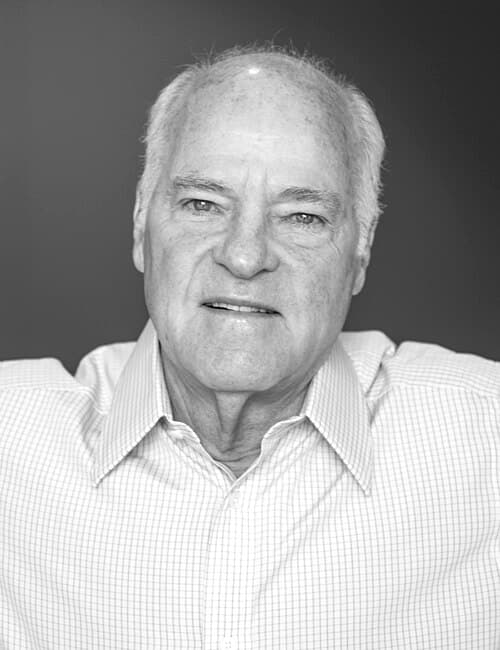
Henry Kravis
PERSON • 2 mentions
American businessman

Hernandez
PERSON
Ambiguous surname - refers to multiple people in Epstein documents

Hiroko Tabuchi
PERSON
Name reference in documents

Ibn Khaldun
PERSON
Person referenced in documents
Ibsen
PERSON
Surname reference in documents
IM
Imaizumi
PERSON
Name reference in documents

James E. Hansen
PERSON
American physicist
Javid Syed
PERSON
Name reference in documents

Jeff Dagle
PERSON
Name reference in documents

Jeff Sessions
PERSON
American politician and lawyer (born 1946)

Jeff Tollefson
PERSON
Researcher

Jeffrey Epstein
PERSON • 2 mentions
American sex offender and financier (1953–2019)

Jennifer Stastny
PERSON
Name reference in documents
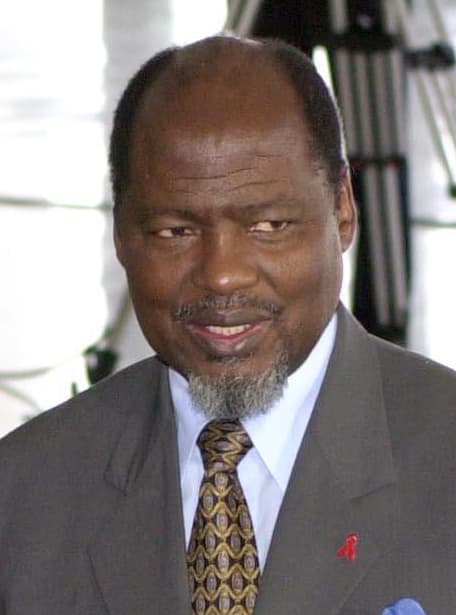
Joaquim Chissano
PERSON
2nd President of Mozambique
John Boehner
PERSON
53rd Speaker of the U.S. House of Representatives from 2011 to 2015

John F. Kennedy
PERSON
President of the United States from 1961 to 1963 (1917–1963)

John Packowski
PERSON
Name reference in documents

John Pinette
PERSON
American comedian and actor (1964–2014)

John Thompson
PERSON
Australian actor
JH
Jon Hager
PERSON
American musician and comedian (1941-2009)

Joshua El-Bey
PERSON
Name reference in documents
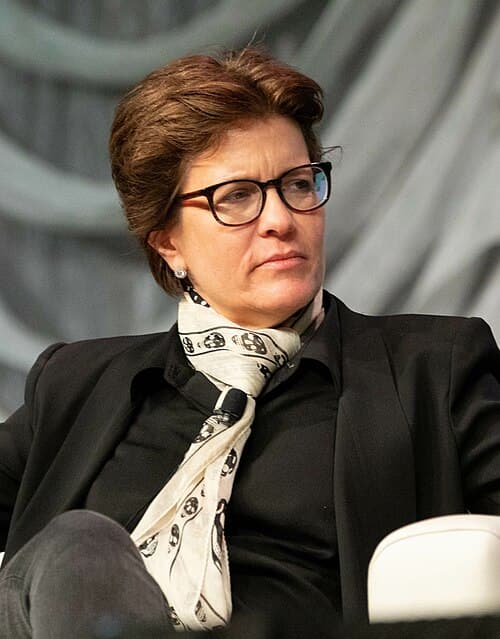
Kara Swisher
PERSON
American journalist
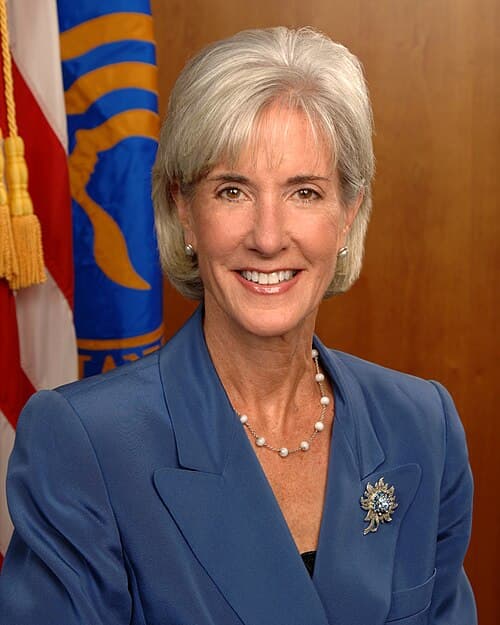
Kathleen Sebelius
PERSON
United States Secretary of Health and Human Services
KV
Khushita Vasan
PERSON
Name reference in documents
KJ
Kirk Johnson
PERSON
Canadian boxer

Luis Hernandez
PERSON
Mexican figure skater and coach
Marc Rich
PERSON
American commodities trader (1934–2013)
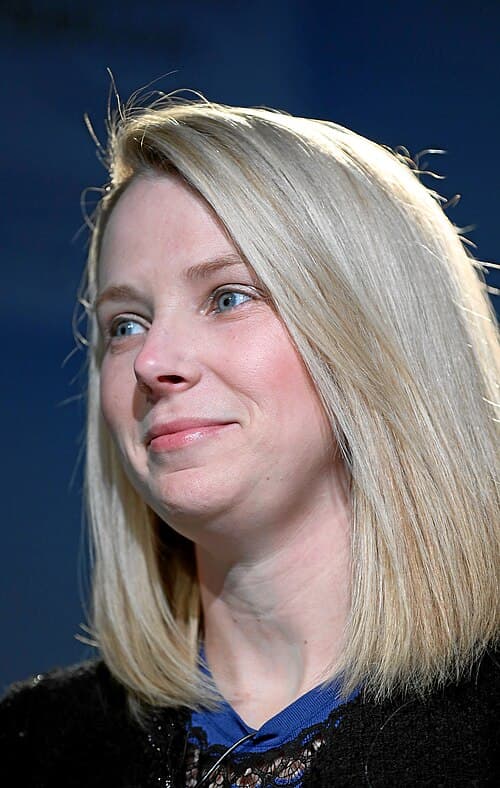
Marissa Mayer
PERSON
American business executive and engineer, former CEO of Yahoo!
Mark Bittman
PERSON
American journalist, food writer
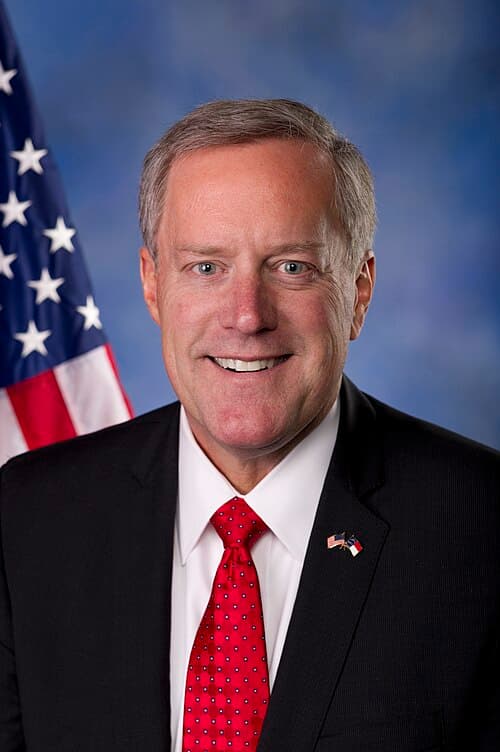
Mark Meadows
PERSON
White House Chief of Staff from 2020 to 2021

Mark Tran
PERSON
Name reference in documents

Mary Jo Foley
PERSON
American podcaster, author, and blogger
MS
Matt Salo
PERSON
Name reference in documents
Melinda Gates
PERSON
American philanthropist

Michael Pritchard
PERSON
Comedian, youth counselor
Michio Aoyama
PERSON
Name reference in documents
MI
Mistry
PERSON
Name reference in documents

Mitch McConnell
PERSON • 2 mentions
American politician and lawyer (born 1942)
Nick Anderson
PERSON
American basketball player
NB
Nina Bernstein
PERSON
American journalist
NI
Noriyuki Imaizumi
PERSON
Name reference in documents

O'Neill
PERSON
Surname reference in Epstein-related documents
OH
Oscar Hidalgo
PERSON
Mexican racing driver
Paul Krugman
PERSON
American economist (born 1953)
PR
Pradhan
PERSON
Hindi traditional word
QU
Quinn
PERSON
Ambiguous first name - refers to multiple people in Epstein documents
Rakesh Bharti Mittal
PERSON
Vice-Chairman - Bharti Enterprises
Rakesh Mittal
PERSON
Name reference in documents
Reed Hastings
PERSON
American entrepreneur and education philanthropist

Robert H. Bonthius Jr.
PERSON
Name reference in documents
Russell Gold
PERSON
American reporter
Russell Simmons
PERSON
American entrepreneur and record executive
SP
S.N. Pradhan
PERSON
Name reference in documents
Sandhya Somashekhar
PERSON
Name reference in documents
SP
Sanika Prabhu
PERSON
Name reference in documents

Sarah Kliff
PERSON
Name reference in documents
Sean Mclain
PERSON
Name reference in documents

Shaheen
PERSON
Surname or name fragment in documents
Shlomo Havlin
PERSON
Israeli physicist
SI
Simonsen
PERSON
Surname or name fragment in documents
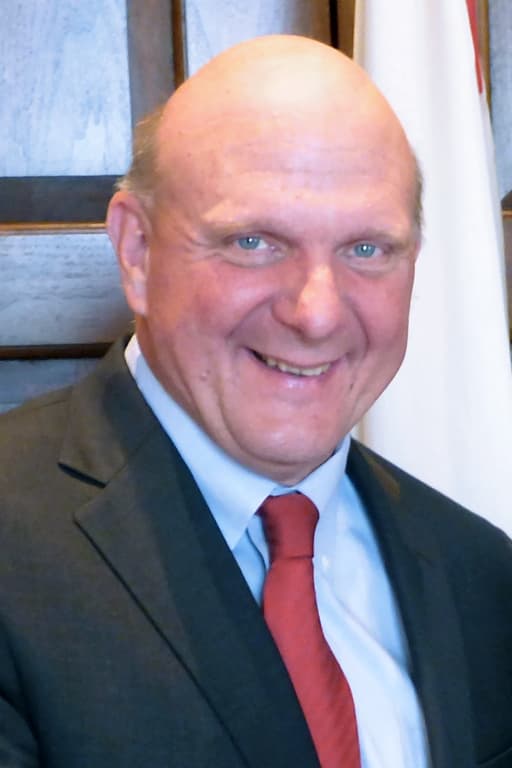
Steve Ballmer
PERSON
Person referenced in documents

Steve Kean
PERSON
Scottish footballer and football manager (born 1967)
TH
Thakkar
PERSON • 2 mentions
Surname reference in documents
TN
The New Nuclear
PERSON
Name reference in documents

Theo Sowa
PERSON
Ghanaian writer and human rights activist
TH
Theresa Hwang
PERSON
Name reference in documents
TB
Tom Betlach
PERSON
Name reference in documents

Tom Voelkel
PERSON
Name reference in documents

Toyoshi Fuketa
PERSON
Japanese scientist
TO
Tricia O'Malley
PERSON
Name reference in documents
UD
Udani
PERSON
Name reference in documents
WI
Wingfield
PERSON
Surname or name fragment in documents

Yoshiko Kira
PERSON
Japanese politician

Zeenat
PERSON
Surname or name fragment in documents

Advantage
ORGANIZATION
Organization referenced in documents

Advantage Testing
ORGANIZATION
Organization referenced in documents

Aetna
ORGANIZATION
American managed health care company

Agency for International Development
ORGANIZATION
US government civilian foreign aid agency

Akansksha
ORGANIZATION
Organization referenced in documents
Al Jazeera
ORGANIZATION
Qatari international television channel
Atlantic Philanthropies
ORGANIZATION
Private philanthropic foundation

Bain Capital
ORGANIZATION
American alternative investment firm specialized in private equity, venture capital and credit products

Bar-Ilan University
ORGANIZATION
Episode of The Sopranos (S3 E6)

Baxter International
ORGANIZATION
American manufacturer of healthcare goods

Bharti
ORGANIZATION
Organization referenced in documents
Bharti Enterprises
ORGANIZATION
Company
Bharti Foundation
ORGANIZATION
Organization

Bill & Melinda Gates Foundation
ORGANIZATION
Philanthropic foundation founded by Bill and Melinda Gates
Business Fights Poverty
ORGANIZATION
Organization referenced in documents

Cardinal
ORGANIZATION
Organization referenced in documents

Cardinal Health
ORGANIZATION
Healthcare company
Care International
ORGANIZATION
Organization referenced in documents

Care USA
ORGANIZATION
Organization referenced in documents
Caring Friends
ORGANIZATION
Organization referenced in documents
Carnegie Mellon
ORGANIZATION
Private research university in Pittsburgh, Pennsylvania, United States
Chunauti
ORGANIZATION
Organization referenced in documents
College
ORGANIZATION
Episode of The Sopranos (S1 E5)
Cover Oregon
ORGANIZATION
U.S. health insurance marketplace

Covered
ORGANIZATION
Bridge with roof and sidings

Department of Ecology
ORGANIZATION
Organization referenced in documents

Department of Homeland Security
ORGANIZATION
U.S. Department of Homeland Security
Dupre Logistics LLC
ORGANIZATION
Organization referenced in documents
Eagle Ford
ORGANIZATION
Organization referenced in documents
European Parliament
ORGANIZATION
American funk band most prominent during the 1970s

Georgetown
ORGANIZATION
Private university in Washington, D.C., United States
Georgia Tech
ORGANIZATION
Public research university in Atlanta, Georgia, United States
Girls Not Brides
ORGANIZATION
Ghana's NGO committed to ending child marriage and ensuring girls can reach their full potential
Givelndia
ORGANIZATION
Organization referenced in documents
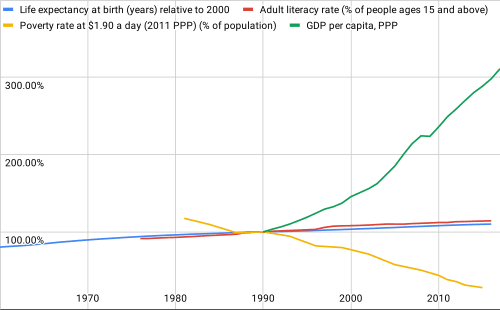
Global Development
ORGANIZATION
Wide concept concerning the level of development on an international scale

Global Health and Development
ORGANIZATION
Collaborative trans-national research and action for promoting health for all

Grand Challenges
ORGANIZATION
Difficult but important problems set by various institutions or professions to encourage solutions or advocate for the application of government or philanthropic funds
Groton
ORGANIZATION
Town in New London County, Connecticut, United States
Health and Human Services
ORGANIZATION
Western Michigan University building
Health Link
ORGANIZATION
Non-governmental organization in Uganda

Hospira
ORGANIZATION
American pharmaceutical company
Ivy League
ORGANIZATION
Athletic conference of 8 American universities
Japan Communist Party
ORGANIZATION
Political party in Sweden
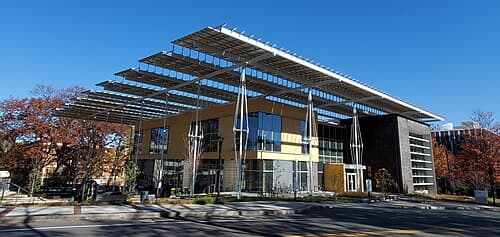
Kendeda
ORGANIZATION
Classroom and Class Lab in Georgia, United States
Kinder Morgan Inc.
ORGANIZATION
Organization referenced in documents
Leadership Enterprise for a Diverse America
ORGANIZATION
Organization referenced in documents

Livemint
ORGANIZATION
Newspaper

McKinsey
ORGANIZATION
Organization referenced in documents

Medicaid
ORGANIZATION
United States social health care program for families and individuals with limited resources
Meteorological Research Institute
ORGANIZATION
Organization referenced in documents
Mohammad Bazar Backward Classes Development Society
ORGANIZATION
Organization referenced in documents

Morton Salt
ORGANIZATION
Salt producing company from the USA

National Student Clearinghouse
ORGANIZATION
Nonprofit organization in Herndon, United States
Nature Physics
ORGANIZATION
Journal
New Voices
ORGANIZATION
American Jewish justice-focused student magazine
Nuclear
ORGANIZATION
Ryan Adams song

Parivaar
ORGANIZATION
Organization referenced in documents
Parliament
ORGANIZATION
American funk band most prominent during the 1970s

Prep for Prep
ORGANIZATION
Non-profit organization in the USA
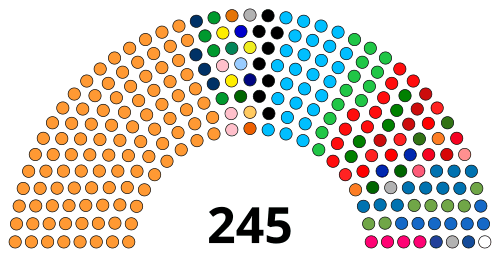
Rajya Sabha
ORGANIZATION
Upper house of the Parliament of India
S.E.O.
ORGANIZATION
Organization referenced in documents
Satya Bharti
ORGANIZATION
Organization referenced in documents

Showtime
ORGANIZATION
American premium cable TV channel

Silver State Health Insurance Exchange
ORGANIZATION
Type of organizations in the US
Skoll World Forum
ORGANIZATION
Organization referenced in documents

Solyndra
ORGANIZATION
American solar panel manufacturer

Southern New Hampshire University
ORGANIZATION
Private university in New Hampshire, U.S.
Sponsors for Educational Opportunity
ORGANIZATION
Organization
St. Luke's Cornwall Hospital
ORGANIZATION
Organization referenced in documents
Sunlite
ORGANIZATION
Organization referenced in documents

Symantec
ORGANIZATION
American software company

Teach For India
ORGANIZATION
NGO that recruits college graduates as full-time teachers in low-income schools
Tepco
ORGANIZATION
Organization referenced in documents
the Al-Aqsa Foundation
ORGANIZATION
Organization referenced in documents
The American Association of Railroads
ORGANIZATION
Organization referenced in documents
the American Jewish World Service
ORGANIZATION
Organization referenced in documents
The Association of Public and Land-grant Universities
ORGANIZATION
Organization referenced in documents
the Bill & Melinda Gates Foundation
ORGANIZATION
Organization referenced in documents
the California Institute of Technology
ORGANIZATION
Organization referenced in documents
the Clinton Global Initiative
ORGANIZATION
Organization referenced in documents

the Education Department
ORGANIZATION
Government agency
the Federal Energy Regulatory Commission
ORGANIZATION
Organization referenced in documents

the Food and Drug Administration
ORGANIZATION
Organization referenced in documents
the Guardian Global Development Professionals Network
ORGANIZATION
Organization referenced in documents

the Internal Revenue Service
ORGANIZATION
Internal Revenue Service (IRS), US government agency responsible for tax collection and enforcement
the International Olympic Committee
ORGANIZATION
Organization referenced in documents

the Legal Aid Society of Cleveland
ORGANIZATION
Organization referenced in documents
the Mo Ibrahim foundation
ORGANIZATION
Organization referenced in documents
the National Association of Medicaid Directors
ORGANIZATION
Organization referenced in documents
the National Crime Records Bureau
ORGANIZATION
Organization referenced in documents
the New Voices Fellowship
ORGANIZATION
Organization referenced in documents
The New York State Department of Health
ORGANIZATION
Organization referenced in documents
The Nuclear Regulation Authority
ORGANIZATION
Organization referenced in documents
the Nuclear Regulatory
ORGANIZATION
Organization referenced in documents
the Oceanography and Geochemistry Research
ORGANIZATION
Organization referenced in documents
the Postal Service
ORGANIZATION
Organization referenced in documents

The Texas Legislature
ORGANIZATION
Organization referenced in documents
the Tokyo Electric
ORGANIZATION
Organization referenced in documents

the U.S. Department of Education
ORGANIZATION
Organization referenced in documents
the U.S. Energy Information Administration
ORGANIZATION
Organization referenced in documents
the University at Buffalo
ORGANIZATION
Organization referenced in documents
the University of Maryland
ORGANIZATION
Organization referenced in documents
the University of Pennsylvania
ORGANIZATION
Organization referenced in documents

the University of Southern California
ORGANIZATION
Organization referenced in documents

the University of Wisconsin
ORGANIZATION
Organization referenced in documents
Thermax
ORGANIZATION
Indian Engineering company
Thermax Ltd
ORGANIZATION
Indian Engineering company
Think Africa Press
ORGANIZATION
Organization referenced in documents

Time Warner
ORGANIZATION
Former American cable telecommunications company

University of Maryland
ORGANIZATION
Public research university in the city of College Park in Prince George's County, Maryland, USA
USA Education
ORGANIZATION
Organization referenced in documents

Virtual Instruments
ORGANIZATION
Application for debugging and analyzing software

Wall Street
ORGANIZATION
Street in Manhattan, New York, USA

Wesleyan
ORGANIZATION
Organization referenced in documents
Whatevers
ORGANIZATION
Organization referenced in documents

White Plains Hospital
ORGANIZATION
Hospital in White Plains, New York, United States
Winds
ORGANIZATION
Organization referenced in documents

Wood Mackenzie
ORGANIZATION • 2 mentions
Global research and consultancy firm

ZDNet
ORGANIZATION
Business technology news website

Alberta
LOCATION
Province of Canada

Aspen
LOCATION
City in and county seat of Pitkin County, Colorado, United States

Bangladesh
LOCATION
Country in South Asia

Bihar
LOCATION
State in eastern India

Birbhum
LOCATION
District in West Bengal, India
Bombay
LOCATION
Location referenced in documents

Botswana
LOCATION
Sovereign state in Southern Africa

Bronx
LOCATION
Cocktail with orange juice
Bushwick
LOCATION
Neighborhood in Brooklyn, New York City, New York, United States
Calcutta
LOCATION
Location referenced in documents

Chinatown
LOCATION
1974 US film directed by Roman Polański
Corpus Christi
LOCATION
City and county seat of Nueces County, Texas, United States
Cuero
LOCATION
City in Texas, United States

Delhi
LOCATION
Megacity and union territory of India
District of Columbia
LOCATION • 2 mentions
Federal district, capital of the United States

Ethiopia
LOCATION
Country in the Horn of Africa
Gujarat
LOCATION
State of India
Gulf Coast
LOCATION
Literary magazine from Houston, Texas
Gulf of Mexico
LOCATION
Location referenced in documents

Houston
LOCATION
Seat of Harris County, and largest city in State of Texas, United States
IIl.
LOCATION
Location referenced in documents

Istanbul
LOCATION
Largest city in Turkey
Jharkhand
LOCATION
State in eastern India
Jijiga
LOCATION
City

Johannesburg
LOCATION
Largest city in South Africa

Kolkata
LOCATION
Capital city of West Bengal, India
Lafayette
LOCATION
City in and the county seat of Tippecanoe County, Indiana, United States
Leicester
LOCATION
Association football club in Leicester, England

Madrid
LOCATION
Capital of Spain
Midwest
LOCATION
Location referenced in documents

Montgomery
LOCATION
City in and county seat of Montgomery County, and capital of the State of Alabama, United States

Mozambique
LOCATION
Country in Southeastern Africa; the current form of Mozambique since 1975
Mumbai
LOCATION
Capital city in Maharashtra, India

Nairobi
LOCATION
Capital city of Kenya

Nepal
LOCATION
Country in South Asia

Nevada
LOCATION
State of the United States of America

New Jersey
LOCATION
State of the United States of America

New York
LOCATION
Most populous city in the United States

North America
LOCATION
Continent

North Carolina
LOCATION
State of the United States of America

North Dakota
LOCATION
State of the United States of America

Norway
LOCATION
Country in Northern Europe
Oak Ridge
LOCATION
City in Tennessee, United States

Oregon
LOCATION
State of the United States of America

Philippines
LOCATION
Archipelagic country in Southeast Asia
Purchase
LOCATION
Acquisition of goods or services by fiduciary exchange
Queens
LOCATION
Borough in New York City, New York, United States

Ramat-Gan
LOCATION
City in the Tel Aviv District of Israel

Red Hook
LOCATION
Neighborhood in Brooklyn, New York City
Richland
LOCATION
City in Benton County, Washington, United States
Rittman
LOCATION
City in Medina and Wayne counties, Ohio, United States
Rocky Mount
LOCATION
City in Edgecombe and Nash counties in the coastal plain region North Carolina, United States
Round Lake
LOCATION
Village in Lake County, Illinois, United States of America
Saltwater
LOCATION
Song by Chicane featuring the vocals of Irish singer Máire Brennan

San Antonio
LOCATION
City in Bexar, Comal, and Medina counties in Texas, United States, that is the seat of Bexar County

San Diego
LOCATION
Seat of San Diego County, California, United States; second-largest city in California
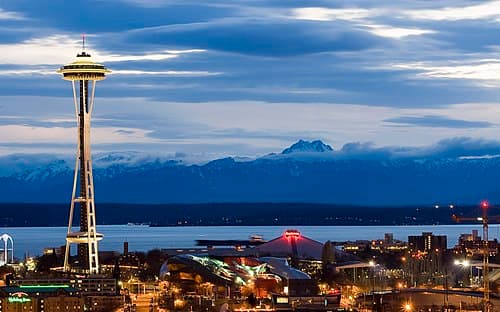
Seattle
LOCATION
City in and county seat of King County, State of Washington, United States

South Texas
LOCATION
Region of the U.S. state of Texas

Tanzania
LOCATION
Country in East Africa

Tennessee
LOCATION
State of the United States of America
the Eagle Ford
LOCATION
Location referenced in documents
the Gulf of Mexico
LOCATION
Gulf of Mexico, body of water
Tokyo
LOCATION
Capital and largest city of Japan

Uganda
LOCATION
Country in east Africa

Upper East Side
LOCATION • 2 mentions
Neighborhood in Manhattan

West Bengal
LOCATION
Indian state

Westchester County
LOCATION
County in New York, United States

Yucca Mountain
LOCATION
Mountain in Nevada, United States
Statistics
Pages:27
Entities:307
Avg. OCR:98.1%
Sponsored