Back to Network


















7
Shared Docs
7
Same-Page
7 / 7
Mentions
Document Mentions (7 shared documents)
2 mentions1 same-page
Page ?Same page
assume a responsibility that has become "part of Germany's reason of state," as Chancellor Merkel said in a speech to the Israeli parliament, the Knesset, in March 2008? "It means that for me, as a German chancellor, Israel's security is never negotiable," Merkel told the lawmakers. The perils of suc
via water," said Ami Ayalon, the deputy commander of the navy at the time, who would later become head of the Israeli domestic intelligence agency, Shin Bet. Strategic Depth Even then it was becoming apparent, according to Ayalon, "that in the Middle East things were heading toward nuclear weapons," es
2 mentions1 same-page
Page ?Same page
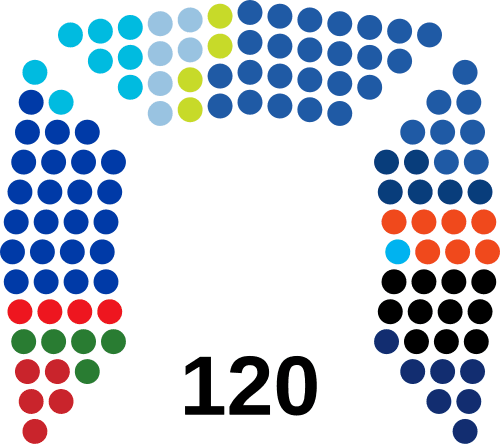
he pundits were now suggesting that Shimon Peres might bring Labor back to power. There was no prospect he’d win an outright majority in the 120-seat Knesset. No one had ever done that, not even Ben-Gurion in his political heyday. From 1948, Israel’s political landscape had been populated by at least a doz
h their lives. Yet there were signs of trouble. The PLO leaders’ relocation to Tunis had reduced their direct influence. But the briefings I got from Shin Bet officers made it clear that some young West Bankers had begun trying to organize attacks against police, soldiers and Israeli civilians. The settleme
2 mentions1 same-page
Page ?Same page
quitting. He said it would be a waste of time to stay in the cabinet if it was going to bring the peace process to a halt. I warned Bibi, both in the Knesset and in a series of speeches, about the alternative on the Palestinian side if those who wanted a negotiated peace had nothing but stalemate to show f
ed there as well: Danny Yatom, as well as Shaul Mofaz and Uzi Dayan, who was now deputy chief of staff. Newer colleagues, too, like Yossi Ginossar, a Shin Bet veteran who spoke fluent Arabic and, after working in the West Bank and Gaza in the late 1960s became one of the first Israelis to hold secret talks
Sponsored
2 mentions1 same-page
Page ?Same page
he years, initially when I was in the kirya and both he and another rising Likud politician to whom I became closer, Dan Meridor, were members of the Knesset’s defense committee. But from the day I returned to the Israeli government in June 2007, there was growing tension between us over dealing with the S
an and I withdrew into a side room to talk with the chief of staff, Gaby Ashkenazi, as well as the heads of military intelligence, the Mossad and and Shin Bet. We emphasized that no final decision on whether to attack had been taken. That would require a further meeting with the Group of Eight, and then the
2 mentions1 same-page
Page ?Same page
he pundits were now suggesting that Shimon Peres might bring Labor back to power. There was no prospect he'd win an outright majority in the 120-seat Knesset. No one had ever done that, not even Ben-Gurion in his political heyday. From 1948, Israel's political landscape had been populated by at least a doz
h their lives. Yet there were signs of trouble. The PLO leaders' relocation to Tunis had reduced their direct influence. But the briefings I got from Shin Bet officers made it clear that some young West Bankers had begun trying to organize attacks against police, soldiers and Israeli civilians. The settleme
2 mentions1 same-page
Page ?Same page
quitting. He said it would be a waste of time to stay in the cabinet if it was going to bring the peace process to a halt. I warned Bibi, both in the Knesset and in a series of speeches, about the alternative on the Palestinian side if those who wanted a negotiated peace had nothing but stalemate to show f
ed there as well: Danny Yatom, as well as Shaul Mofaz and Uzi Dayan, who was now deputy chief of staff. Newer colleagues, too, like Yossi Ginossar, a Shin Bet veteran who spoke fluent Arabic and, after working in the West Bank and Gaza in the late 1960s became one of the first Israelis to hold secret talks
Sponsored
2 mentions1 same-page
Page ?Same page
he years, initially when I was in the kirya and both he and another rising Likud politician to whom I became closer, Dan Meridor, were members of the Knesset's defense committee. But from the day I returned to the Israeli government in June 2007, there was growing tension between us over dealing with the S
an and I withdrew into a side room to talk with the chief of staff, Gaby Ashkenazi, as well as the heads of military intelligence, the Mossad and and Shin Bet. We emphasized that no final decision on whether to attack had been taken. That would require a further meeting with the Group of Eight, and then the
Sponsored
Mutual Connections (551)
Entities connected to both Knesset and Shin Bet
Benjamin Netanyahu
PERSON53 w/ Knesset·13 w/ Shin
Jerusalem
LOCATION42 w/ Knesset·11 w/ Shin
Barack Obama
PERSON45 w/ Knesset·7 w/ Shin
George W. Bush
PERSON41 w/ Knesset·7 w/ Shin
Bashar al-Assad
PERSON36 w/ Knesset·9 w/ Shin
Bill Clinton
PERSON33 w/ Knesset·8 w/ Shin
Lebanon
LOCATION32 w/ Knesset·9 w/ Shin
United States
LOCATION34 w/ Knesset·7 w/ Shin
Likud
ORGANIZATION27 w/ Knesset·7 w/ Shin
Ehud Barak
PERSON24 w/ Knesset·9 w/ Shin
West Bank
LOCATION25 w/ Knesset·7 w/ Shin
Mossad
ORGANIZATION18 w/ Knesset·14 w/ Shin
Jeffrey Epstein
PERSON24 w/ Knesset·7 w/ Shin
the West Bank
LOCATION23 w/ Knesset·8 w/ Shin
Damascus
LOCATION24 w/ Knesset·6 w/ Shin
Saddam Hussein
PERSON23 w/ Knesset·6 w/ Shin
Fatah
ORGANIZATION20 w/ Knesset·8 w/ Shin
Michael Cohen
PERSON22 w/ Knesset·6 w/ Shin
Cairo
LOCATION24 w/ Knesset·4 w/ Shin
Middle East
LOCATION22 w/ Knesset·5 w/ Shin