Back to Network














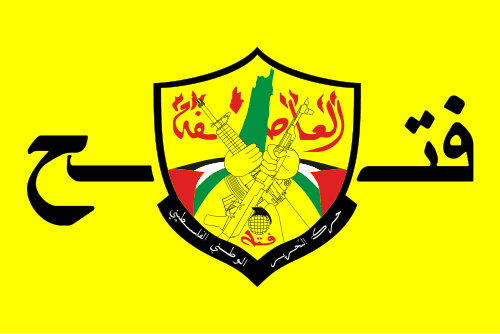
5
Shared Docs
3
Same-Page
5 / 5
Mentions
Document Mentions (5 shared documents)
2 mentions1 same-page
Page HOUSE_OVERSIGHT_023519Same page
condemning the Palestinian strategy to seek recognition as a state from the U.N. General Assembly in September. He also questioned the accord between Fatah and Hamas. Obama endorsed the idea of a demilitarized Palestinian state, a demand Israel has made in recent years. Instead of thanking Obama for this
Page: HOUSE_OVERSIGHT_023519 →’s future. The newsworthy, and real, shift in U.S. policy was Obama publicly condemning the Palestinian strategy to seek recognition as a state from the U.N. General Assembly in September. He also questioned the accord between Fatah and Hamas. Obama endorsed the idea of a demilitarized Palestinian state, a demand Israel ha
Page: HOUSE_OVERSIGHT_023519 →2 mentions1 same-page
Page ?Same page
ctivists that form the "March15" movement -- named for the date when thousands took to the streets of Gaza, the West Bank and Jersualem to call for Fatah and Hamas, the two dominant Palestinian parties, to end their bitter division. But the movement also proves that the Palestinian street is EFTA_R1
ts Rachel Shabi JULY 13, 2011 -- U.S. President Barack Obama said he believed a Palestinian state could be created by September 2011. Speaking to the U.N. General Assembly in September 2010, he laid down a challenge to formulate an agreement that would make it a reality. That same deadline was set by Palestinian Prime
2 mentions1 same-page
Page ?Same page
in Gaza, but the "Hamas trumps Abbas" dynamic has been underway for some time now and is likely to continue. I'd offer four reasons why. Feckless Fatah Abbas's party is in disarray. The Islamists' victory in the 2006 Palestinian legislative elections, its takeover of Gaza in 2007, Fatah's own sens
again on center stage. The Palestinian president is nowhere to be found. For all the attention paid to Abbas's statehood initiative this month at the U.N. General Assembly, it seems truly irrelevant now. And once again, this is confirmation of the fact that events on the ground determine what's up and down in Israel a
Sponsored
Page HOUSE_OVERSIGHT_031917
s. HOUSE_OVERSIGHT_031916 --- PAGE BREAK --- 5 Article 2. Strattor Israeli-Arab Crisis Approaching George Friedman August 22, 2011 -- In September, the U.N. General Assembly will vote on whether to recognize Palestine as an independent and sovereign state with full rights in the United Nations. In many ways, this would ap
Page: HOUSE_OVERSIGHT_031917 →Page HOUSE_OVERSIGHT_031918
to have a state but of the nature of a Palestinian state under current circumstances. The Palestinians are split into two major factions. The first, Fatah, dominates the West Bank. Fatah derives its ideology from the older, secular Pan-Arab movement. Historically, Fatah saw the Palestinians as a state w
Page: HOUSE_OVERSIGHT_031918 →Page HOUSE_OVERSIGHT_032175
irmer than ever, and the looser tunnel patrols in Egypt mean greater access to weapons as well. But opinion surveys show that its more secular rival, Fatah, is more popular. That may explain why an attempt at political unity with Fatah is moving slowly: the Hamas leaders here are likely to lose their job
Page: HOUSE_OVERSIGHT_032175 →Page HOUSE_OVERSIGHT_032178
e Jewish and Palestinian peoples to self-determination, without prejudice to the rights of all citizens and minority groups. Recall, in this context, U.N. General Assembly resolution 181 of 1947 that called for the establishment of a Jewish state and an Arab state. • Acknowledge institutional and security reform, econom
Page: HOUSE_OVERSIGHT_032178 →Sponsored
Mutual Connections (291)
Entities connected to both Fatah and the U.N. General Assembly
Jerusalem
LOCATION116 w/ Fatah·4 w/ the
Barack Obama
PERSON82 w/ Fatah·16 w/ the
Lebanon
LOCATION83 w/ Fatah·13 w/ the
Mahmoud Abbas
PERSON88 w/ Fatah·4 w/ the
Benjamin Netanyahu
PERSON81 w/ Fatah·7 w/ the
Bashar al-Assad
PERSON75 w/ Fatah·7 w/ the
United States
LOCATION63 w/ Fatah·17 w/ the
George W. Bush
PERSON64 w/ Fatah·13 w/ the
Tehran
LOCATION64 w/ Fatah·13 w/ the
Cairo
LOCATION66 w/ Fatah·8 w/ the
Damascus
LOCATION63 w/ Fatah·9 w/ the
Hosni Mubarak
PERSON63 w/ Fatah·7 w/ the
Tunisia
LOCATION56 w/ Fatah·6 w/ the
West Bank
LOCATION55 w/ Fatah·6 w/ the
Bill Clinton
PERSON44 w/ Fatah·16 w/ the
the West Bank
LOCATION53 w/ Fatah·2 w/ the
Middle East
LOCATION44 w/ Fatah·10 w/ the
the Gaza Strip
LOCATION51 w/ Fatah·3 w/ the
Saddam Hussein
PERSON44 w/ Fatah·9 w/ the
Yemen
LOCATION41 w/ Fatah·10 w/ the