Back to Network




3
Shared Docs
3
Same-Page
3 / 6
Mentions
Document Mentions (3 shared documents)
3 mentions1 same-page
Page ?Same page
nce over a Middle East peace agreement, even as the Administration continued to try to manage the post- revolution transitions across the region and North Africa. Obama doesn't believe that there is much he can do to change EFTA_R1_02204192 EFTA02720663 the status quo in North Korea. Meanwhile, the situat
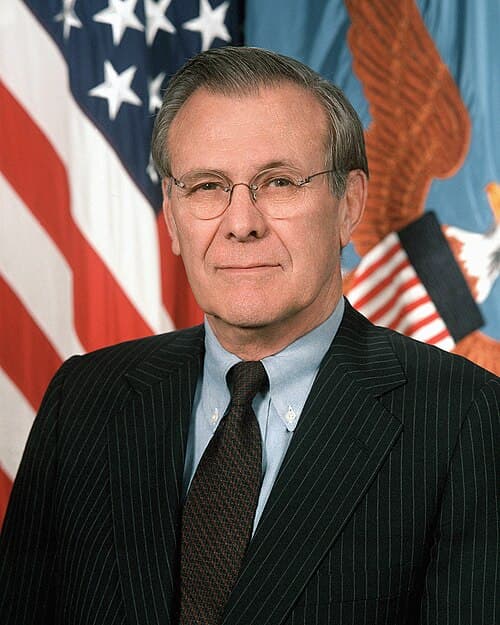
esident Dick Cheney and Defense Secretary Donald Rumsfeld—most associated with extreme views of how to han
of the first four years. During the 2004 campaign, Bush came close to jettisoning the two people—Vice-President Dick Cheney and Defense Secretary Donald Rumsfeld—most associated with extreme views of how to handle post-9/11 foreign affairs. After the election, Cheney saw the influence of his principal ideolo
3 mentions1 same-page
Page ?Same page
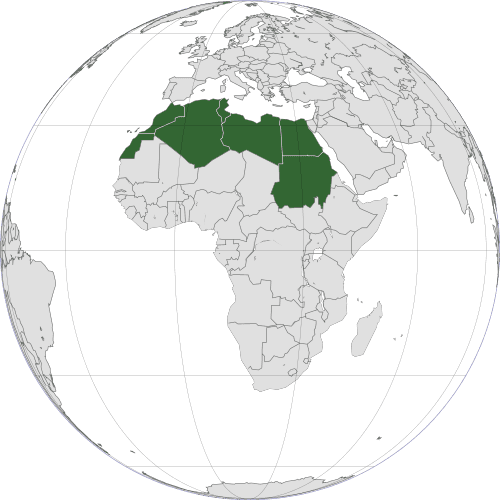
ons. For realists and idealists alike, such independence holds tremendous value as the country contends with a fragmenting Middle East, an unstable North Africa, and a contentious Russia, among other challenges. EFTA00707205 Since 1973, OPEC's "oil weapon" has dangled ominously over the U.S. While Americ
istances. In a 75-minute conversation, Hagel gave me his version of the Middle East crisis tour. Talking with him, I found, was not like talking to Donald Rumsfeld. Interviewing Rumsfeld at this table was like interviewing a razor blade; one wrong move and you'd get cut. Hagel, on the other hand, is tranquil,
rsation, Hagel gave me his version of the Middle East crisis tour. Talking with him, I found, was not like talking to Donald Rumsfeld. Interviewing Rumsfeld at this table was like interviewing a razor blade; one wrong move and you'd get cut. Hagel, on the other hand, is tranquil, conversational, and ver
3 mentions1 same-page
Page ?Same page
en Tripoli. Then Damascus. You watch as the anger, moving on once-invisible technological lines of video and text, demolishes the stability of all of North Africa. Over the next two years leaders are pushed from power in Egypt, Tunisia, Libya, and Yemen: their names, instead of being symbols of stability, insta
ging the most expensive war on terrorism in human history, the US was uneasily discovering that it was creating more terrorists. Secretary of Defense Donald Rumsfeld had sketched the nature of this puzzle in an October, 2003 memo with acid clarity. He asked: “Are we capturing, killing or deterring and dissuading m
yond what the soldiers and analysts could match or even fully monitor. “Is our current situation such that ‘the harder we work, the behinder we get?” Rumsfeld asked in 2003.38 To be constantly behind. This was a commander’s nightmare. Among other things it was that sense of never quite catching up that had
Sponsored
Mutual Connections (458)
Entities connected to both North Africa and Donald Rumsfeld
George W. Bush
PERSON45 w/ North·47 w/ Donald
Barack Obama
PERSON52 w/ North·40 w/ Donald
Jeffrey Epstein
PERSON55 w/ North·31 w/ Donald
United States
LOCATION50 w/ North·31 w/ Donald
Bill Clinton
PERSON35 w/ North·37 w/ Donald
Marc Rich
PERSON49 w/ North·18 w/ Donald
Bashar al-Assad
PERSON39 w/ North·18 w/ Donald
Donald Trump
PERSON24 w/ North·32 w/ Donald
Hillary Clinton
PERSON19 w/ North·34 w/ Donald
Lebanon
LOCATION38 w/ North·12 w/ Donald
Benjamin Netanyahu
PERSON35 w/ North·14 w/ Donald
Tunisia
LOCATION33 w/ North·14 w/ Donald
Tehran
LOCATION32 w/ North·15 w/ Donald
Saddam Hussein
PERSON25 w/ North·20 w/ Donald
Prince Andrew
PERSON21 w/ North·24 w/ Donald
Department of Justice
ORGANIZATION17 w/ North·28 w/ Donald
Ghislaine Maxwell
PERSON27 w/ North·17 w/ Donald
Middle East
LOCATION33 w/ North·11 w/ Donald
Yemen
LOCATION30 w/ North·14 w/ Donald
John F. Kennedy
PERSON21 w/ North·21 w/ Donald