Back to Network




















6
Shared Docs
4
Same-Page
6 / 6
Mentions
Document Mentions (6 shared documents)
2 mentions1 same-page
Page ?Same page
aigns sprang up in the Arab world. The Rebel campaign, turned grassroots movement, led to the removal of elected former president Mohamed Morsi. In Tunisia, Bahrain, Libya, Syria, Morocco, and Palestine, different versions of the Tamarod campaign took root, each born out of the experiences and politica
Respond To a Western Strike on Syria? By: An Al-Monitor Correspondent in Beirut August 31. -- About three months ago, Hezbollah Secretary-General Hassan Nasrallah decided to send his elite military units to Syria to support the military efforts of the regime of President Bashar al-Assad in facing opposition f
2 mentions1 same-page
Page ?Same page
, it soon became clear that the rebellious youth were neither driven b= an anti-western animus nor by a desire for an Islamist system. In Egypt a=d Tunisia, Islamist movements capitalised on the fall of presidents Hosni =ubarak and Zine al- Abidine Ben Ali. However, even in these countries (espe=ially Eg
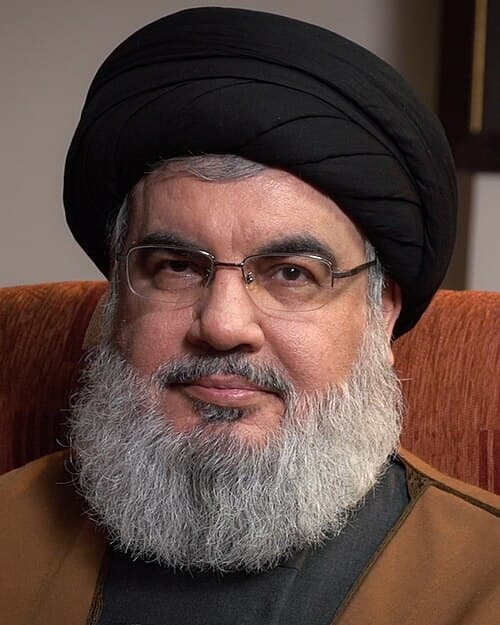
s longstanding anti-western, anti-Israeli stand. Hi=bollah's support of the Assad regime has similarly dented its legitimacy= Gone are the days when Hassan Nasrallah, its secretary-general, was the h=ro of the Arab street — 3 EFTA_R1_01401467 EFTA02384040 Sunni and Shia — for his position at the forefront of
2 mentions1 same-page
Page ?Same page
arty is pragmatic enough to realize that positioning itself against the Sunni Islamist tide that is currently sweeping the region (in Egypt, Libya, Tunisia, possibly Syria and elsewhere) is against its long-term interests. Having operated in the Iranian strategic orbit in the past, Hamas might now wish
disarm, forge new strategic alliances or end its military struggle against Israel. In fact, in a rare public appearance this month, Hezbollah chief Hassan Nasrallah declared that his party will remain defiant, side with Assad's Syria and never relinquish its arms. If Hamas, an ally of Hezbollah, Syria and Iran
Sponsored
2 mentions1 same-page
Page ?Same page
nomic openness and believe that government efficiency is the key issue. The G8 members have pledged $20 billion in financial assistance to Egypt and Tunisia over the next few years. The ruling Military Council is facing conflicting pressures from the public. Some civilians—fearing a new military dictator
n Egypt met with important political actors during a visit in Lebanon. For the first time, it did not ask for a meeting with Hizbullah leader Sheikh Hassan Nasrallah. The current relationship between the two factions is markedly different from the decades of alliance against western influence in the region. The
Page HOUSE_OVERSIGHT_023462
in Bahrain, where Shiites are a distinct majority and Iran had claimed sovereignty as recently as 1970. The protests that began this past January in Tunisia had nothing to do with any of this. They started when a struggling street vendor in that country's desolate heartland publicly set himself on fire af
Page: HOUSE_OVERSIGHT_023462 →Page HOUSE_OVERSIGHT_023464
ors to that point. But to the Saudis, not to mention Bahrain's ruling family, even the occasional appearance of posters of Lebanese Hezbollah leader Hassan Nasrallah amid crowds of Shiite protesters pumping their fists and chanting demands for regime change was too much. They saw how Iran's influence has grown in
Page: HOUSE_OVERSIGHT_023464 →Page HOUSE_OVERSIGHT_025011
ated from Moammar Gadhafi's autocratic rule. Tensions in Syria, meanwhile, have already claimed more civilian lives than the revolutions in Egypt and Tunisia combined, and yet the Arab League is holding back. Why are you going easy on the Syrian regime? Elaraby: Syria isn't Libya. Libya has always been la
Page: HOUSE_OVERSIGHT_025011 →Page HOUSE_OVERSIGHT_025020
nd then avoided defeat in a subsequent round of fighting in 2006. In a poll of Arab public opinion taken in 2008, the three most popular leaders were Hassan Nasrallah, Bashar al-Assad and Mahmoud Ahmedinejad, in that order. But this sense of inexorable ascendancy in which the Iran-led bloc liked to cloak itself has
Page: HOUSE_OVERSIGHT_025020 →Sponsored
Mutual Connections (88)
Entities connected to both Tunisia and Hassan Nasrallah
Barack Obama
PERSON120 w/ Tunisia·10 w/ Hassan
Bashar al-Assad
PERSON112 w/ Tunisia·10 w/ Hassan
Lebanon
LOCATION95 w/ Tunisia·9 w/ Hassan
United States
LOCATION97 w/ Tunisia·6 w/ Hassan
Hosni Mubarak
PERSON89 w/ Tunisia·5 w/ Hassan
Damascus
LOCATION82 w/ Tunisia·9 w/ Hassan
George W. Bush
PERSON84 w/ Tunisia·5 w/ Hassan
Yemen
LOCATION82 w/ Tunisia·5 w/ Hassan
Tehran
LOCATION77 w/ Tunisia·6 w/ Hassan
Cairo
LOCATION78 w/ Tunisia·4 w/ Hassan
Bill Clinton
PERSON76 w/ Tunisia·6 w/ Hassan
Benjamin Netanyahu
PERSON72 w/ Tunisia·7 w/ Hassan
Marc Rich
PERSON73 w/ Tunisia·3 w/ Hassan
Morocco
LOCATION67 w/ Tunisia·6 w/ Hassan
Saddam Hussein
PERSON65 w/ Tunisia·7 w/ Hassan
Middle East
LOCATION64 w/ Tunisia·5 w/ Hassan
Terje Rod-Larsen
PERSON64 w/ Tunisia·3 w/ Hassan
Bahrain
LOCATION56 w/ Tunisia·7 w/ Hassan
Fatah
ORGANIZATION56 w/ Tunisia·4 w/ Hassan
Hillary Clinton
PERSON56 w/ Tunisia·3 w/ Hassan