Back to Network
















5
Shared Docs
5
Same-Page
5 / 5
Mentions
Document Mentions (5 shared documents)
2 mentions1 same-page
Page ?Same page
hic time bomb facing the Jewish state. Israel, he said, is heading into "a historic tragedy" in the West Bank: "The painful reality is that between the Jordan River and the sea, we have 12 million people: 7.5 [million] Israelis and 4.5 million Palestinians. If over this ground, there is only one sovereign, call
uine bond. Barak and Netanyahu "have a high regard for themselves and each other," explained David Makovsky, a former diplomatic correspondent for Haaretz. "They both see themselves as big-picture guys. They come out of the special forces culture and are far more similar than they are different." Of c
2 mentions1 same-page
Page ?Same page
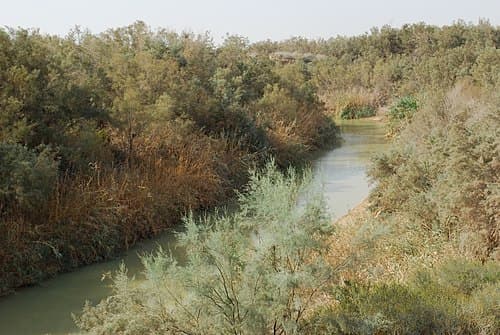
orps general, to lead 160 military and intelligence experts to devise a plan, in consultation with the Israel Defense Forces, to make the border on the Jordan River the most secure in the world. If Kerry's mission fails, Israel will be mistaken to assume that America will automatically veto every decision brou
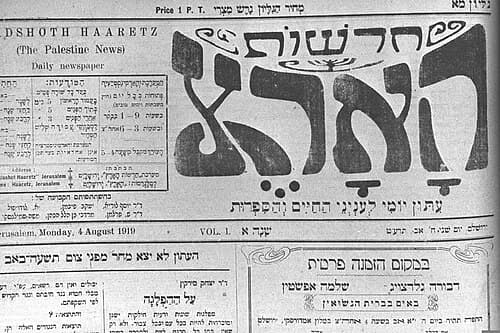
From: Office of Terje Rod-Larsen ‹ > Subject: January 20 update Date: Mon, 20 Jan 2014 10:38:04 +0000 20 January, 2014 Article 1. Haaretz Kerry can survive failure, but can Israel? S. Daniel Abraham Article 2. The Guardian There's reason for optimism on Arab-Israeli peace Michael
2 mentions1 same-page
Page ?Same page
f fire in the late 1950s were provoked by Israel.” I didn’t respond directly, though I did note it was the Syrians who had tried to divert water from the Jordan River in the early fifties. “You did it first,” he retorted. So it continued. Only later did we learn that while Muallem had sent back a generally encourag
cluded two Israeli academics with personal ties to prominent Palestinians: 254 HOUSE_OVERSIGHT_011725 Yair Hirschfeld, and the historian and former Haaretz journalist Ron Pundak. Three PLO officials were there, led by Arafat’s closest economic aide, Abu Ala’a. Though both of the Israelis were friends of
Sponsored
2 mentions1 same-page
Page ?Same page
st Jerusalem, I expected to be able to retain Israeli sovereignty over the city. The third principle was that there would be “no foreign army west of the Jordan River.” In other words, if we did hand back at least the major part of the West Bank, it would be demilitarized and we would have security control over the
ciently sensitive to Arafat’s needs in the negotiating process. Typical of the argument was a broadside by the journalist and historian Tom Segev, in Haaretz, which accused me of an “incredible arrogance” which had “led to an historic mistake. Rather than continue on the Oslo road, Barak put it into his he
2 mentions1 same-page
Page ?Same page
f fire in the late 1950s were provoked by Israel." I didn't respond directly, though I did note it was the Syrians who had tried to divert water from the Jordan River in the early fifties. "You did it first," he retorted. So it continued. Only later did we learn that while Muallem had sent back a generally encourag
cluded two Israeli academics with personal ties to prominent Palestinians: 254 HOUSE _OVERSIGHT_028102 Yair Hirschfeld, and the historian and former Haaretz journalist Ron Pundak. Three PLO officials were there, led by Arafat's closest economic aide, Abu Ala'a. Though both of the Israelis were friends of
Sponsored
Mutual Connections (458)
Entities connected to both the Jordan River and Haaretz
Benjamin Netanyahu
PERSON23 w/ the·33 w/ Haaretz
Jerusalem
LOCATION20 w/ the·25 w/ Haaretz
George W. Bush
PERSON21 w/ the·23 w/ Haaretz
Barack Obama
PERSON20 w/ the·24 w/ Haaretz
Bill Clinton
PERSON14 w/ the·27 w/ Haaretz
Lebanon
LOCATION20 w/ the·20 w/ Haaretz
Bashar al-Assad
PERSON19 w/ the·16 w/ Haaretz
Jeffrey Epstein
PERSON4 w/ the·29 w/ Haaretz
Ehud Barak
PERSON13 w/ the·20 w/ Haaretz
the West Bank
LOCATION14 w/ the·17 w/ Haaretz
Marc Rich
PERSON10 w/ the·20 w/ Haaretz
Middle East
LOCATION12 w/ the·18 w/ Haaretz
United States
LOCATION15 w/ the·14 w/ Haaretz
West Bank
LOCATION15 w/ the·13 w/ Haaretz
Fatah
ORGANIZATION18 w/ the·9 w/ Haaretz
Hosni Mubarak
PERSON15 w/ the·12 w/ Haaretz
Mahmoud Abbas
PERSON11 w/ the·13 w/ Haaretz
Knesset
ORGANIZATION12 w/ the·11 w/ Haaretz
Tehran
LOCATION12 w/ the·11 w/ Haaretz
Ramallah
LOCATION9 w/ the·13 w/ Haaretz