Back to Network



















9
Shared Docs
7
Same-Page
12 / 9
Mentions
Document Mentions (9 shared documents)
3 mentions1 same-page
Page ?Same page
Given the competitive Islamist field and the likelihood that Shater joining the fray could rally secular and nationalist voters behind a figure like Amr Moussa, the Brotherhood's decision has certainly made the election EFTA00686681 outcome difficult to predict. And that, of course, is a hallmark of demo
and of the King." Alternately, the generals could throw the military's not inconsiderable weight behind a more popular nationalist candidate such as Moussa. "They think that the SCAF is preparing something for them," says Abdel Rahim Akl of the Arab Center for Islamic Movements Studies. The Brotherhoo
continue with an interim arrangement for almost 20 years. This was not the intention when we spearheaded the Oslo process in late 1992 -- you from Tunis and I from Jerusalem -- or when we assiduously worked on what subsequently became known as the "Beilin- Abu Mazen Agreement" between 1993 and 1995.
3 mentions1 same-page
Page ?Same page
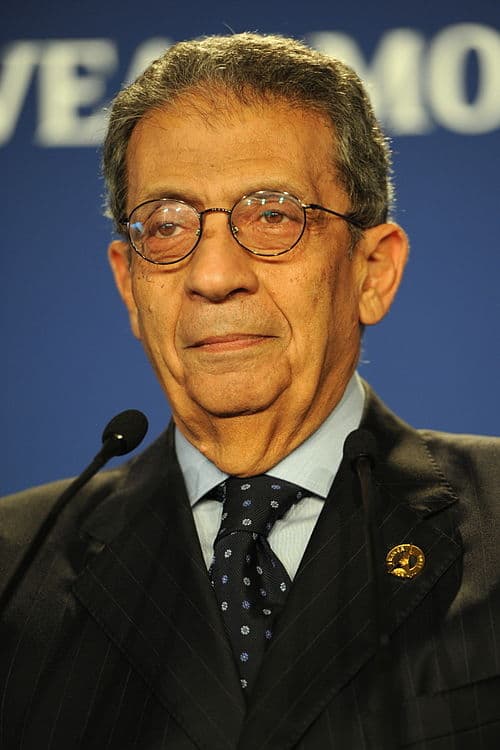
president are responsible secular centrists; the runaway favorite, so far, is former foreign minister and Arab League general secretary Amr Moussa. Moussa may be a recent convert to liberal democracy, and he is known for striking populist poses against Israel. But he would almost certainly run a bette
idates for president are responsible secular centrists; the runaway favorite, so far, is former foreign minister and Arab League general secretary Amr Moussa. Moussa may be a recent convert to liberal democracy, and he is known for striking populist poses against Israel. But he would almost certainly run
ngman and showed him the door, averting full- scale war, and enabling the preservation of the state machinery. The post-revolutionary governments in Tunis and Cairo were therefore better positioned to provide the essential goods and services that Libya is now responsible for supplying. In this sense,
2 mentions1 same-page
Page ?Same page
lrahman al-Attiyah, former Secretary-General of the Gulf Cooperation Council, as the new Secretary-General for the League of Arab States, to replace Amr Moussa. The meeting of the Foreign Ministers of the GCC, held in Riyadh last weekend, has supposedly endorsed the Qatari nomination. It is worth noting th
ab League have been Egyptians, with the exception of Mr. Chedli Klibi of Tunisia, who assumed the post after the League's headquarters were moved to Tunis upon President Sadat's signing of the Camp David Agreements with Israel. The issue will be a test for Egypt at a time when it is trying to restore
Sponsored
2 mentions1 same-page
Page ?Same page
two countries began to consider the resumption of direct flights between the two nations after 32 years. Also in 2010, the head of the Arab League, Amr Moussa, urged member countries to acknowledge the new geopolitical realities in the region: namely, the rise of non-Arab countries such as Turkey and Iran
he Middle East for so long that nothing, it seems — no amount of extraordinary change — can silence them. After the successful revolts in Cairo and Tunis, the slanders abated. Soon, however, the old messages depicting the Middle East as extreme, fundamentalist, and hostile to democracy began to re-in
2 mentions1 same-page
Page ?Same page
ha Mossae Toshimitsu Motegi Patrice T. Motsepe Amr Moussa Brian T. Moynihan Nkosana D. Moyo Jonitha Gugu
Republic of Korea Chief Executive Officer Acting Ambassador and Permanent Representative of Guinea President. African Development Bank (AfDB), Tunis Governor of the Central Bank of Libya Author and Founder Tsuguhiko Kadokawa Chairman Paul Kagame Shoeb Kagda President of Rwanda Group Chief E
2 mentions1 same-page
Page ?Same page
e some of the other Arab foreign 282 HOUSE_OVERSIGHT_011753 ministers when we’d arrived in the banqueting hall. I did have a good talk with Egypt’s Amr Moussa, and the foreign ministers of Morocco and Tunisia. When I tried to start a conversation with Syria’s Farouk al-Sharaa, however, he pointedly, though
ctober 1985. It came a couple of days after an especially gruesome Palestinian terror attack. Even with Arafat now more than a thousand miles away in Tunis, much of Rabin’s focus was taken up in responding to, or trying to preempt, Palestinian terrorism. The issue was especially sensitive politically in
Sponsored
2 mentions1 same-page
Page ?Same page
e some of the other Arab foreign 282 HOUSE _OVERSIGHT_028130 ministers when we'd arrived in the banqueting hall. I did have a good talk with Egypt's Amr Moussa, and the foreign ministers of Morocco and Tunisia. When I tried to start a conversation with Syria's Farouk al-Sharaa, however, he pointedly, though
ctober 1985. It came a couple of days after an especially gruesome Palestinian terror attack. Even with Arafat now more than a thousand miles away in Tunis, much of Rabin's focus was taken up in responding to, or trying to preempt, Palestinian terrorism. The issue was especially sensitive politically in
Page HOUSE_OVERSIGHT_024959
ave to make peace with 85 million Egyptians. The days in which one phone call by Israel to Mubarak could shut down any crisis in relations are over. Amr Moussa, the outgoing head of the Arab League and the front- runner in polls to succeed Mubarak as president when Egypt holds elections in November, just mad
Page: HOUSE_OVERSIGHT_024959 →eed Mubarak as president when Egypt holds elections in November, just made that clear in an interview with The Wall Street Journal. Regarding Israel, Moussa said: “Mubarak had a certain policy. It was his own policy, and I don’t think we have to follow this. We want to be a friend of Israel, but it has to
Page: HOUSE_OVERSIGHT_024959 →Page HOUSE_OVERSIGHT_024975
ndrews Air Force Base, and by midmorning she was in the Oval Office conferring with President Obama. The night before, as her plane was en route from Tunis, they had agreed that the vote of the United Nations Security Council to impose a no-fly zone on Libya meant that it was now decision time on launchi
Page: HOUSE_OVERSIGHT_024975 →Page HOUSE_OVERSIGHT_030160
the Middle East for so long that nothing, it seems - no amount of extraordinary change - can silence them. After the successful revolts in Cairo and Tunis, the slanders abated. Soon, however, the old messages depicting the Middle East as extreme, fundamentalist, and hostile to democracy began to re-insi
Page: HOUSE_OVERSIGHT_030160 →Page HOUSE_OVERSIGHT_030174
o countries began to consider the resumption of direct flights between the two nations after 32 years. Also in 2010, the head of the Arab League, Amr Moussa, urged member countries to acknowledge the new geopolitical realities in the region: namely, the rise of non-Arab countries such as Turkey and Iran.
Page: HOUSE_OVERSIGHT_030174 →Sponsored
Mutual Connections (536)
Entities connected to both Amr Moussa and Tunis
Barack Obama
PERSON24 w/ Amr·34 w/ Tunis
Yemen
LOCATION29 w/ Amr·24 w/ Tunis
Hosni Mubarak
PERSON29 w/ Amr·24 w/ Tunis
Tunisia
LOCATION22 w/ Amr·29 w/ Tunis
Bashar al-Assad
PERSON24 w/ Amr·27 w/ Tunis
Terje Rod-Larsen
PERSON23 w/ Amr·27 w/ Tunis
Cairo
LOCATION20 w/ Amr·30 w/ Tunis
United States
LOCATION21 w/ Amr·28 w/ Tunis
George W. Bush
PERSON21 w/ Amr·27 w/ Tunis
Bahrain
LOCATION28 w/ Amr·18 w/ Tunis
Jeffrey Epstein
PERSON23 w/ Amr·21 w/ Tunis
Lebanon
LOCATION21 w/ Amr·21 w/ Tunis
Tehran
LOCATION19 w/ Amr·22 w/ Tunis
Morocco
LOCATION25 w/ Amr·11 w/ Tunis
Marc Rich
PERSON7 w/ Amr·29 w/ Tunis
Bill Clinton
PERSON15 w/ Amr·20 w/ Tunis
Benjamin Netanyahu
PERSON14 w/ Amr·20 w/ Tunis
Damascus
LOCATION19 w/ Amr·15 w/ Tunis
Saddam Hussein
PERSON15 w/ Amr·16 w/ Tunis
Kuwait
LOCATION17 w/ Amr·12 w/ Tunis