Back to Network















3
Shared Docs
2
Same-Page
4 / 3
Mentions
Document Mentions (3 shared documents)
3 mentions1 same-page
Page ?Same page
decisive mark of leadership and success in revolutionary periods. Consider, for instance, Charles, the Duke of Brunswick-Wolfenbuttel who faced down Napoleon on the fields of Jena in what is now central Germany in October 1806. Brusnwick-Wolfenbuttel was then 71 years old. He was considered one of the most
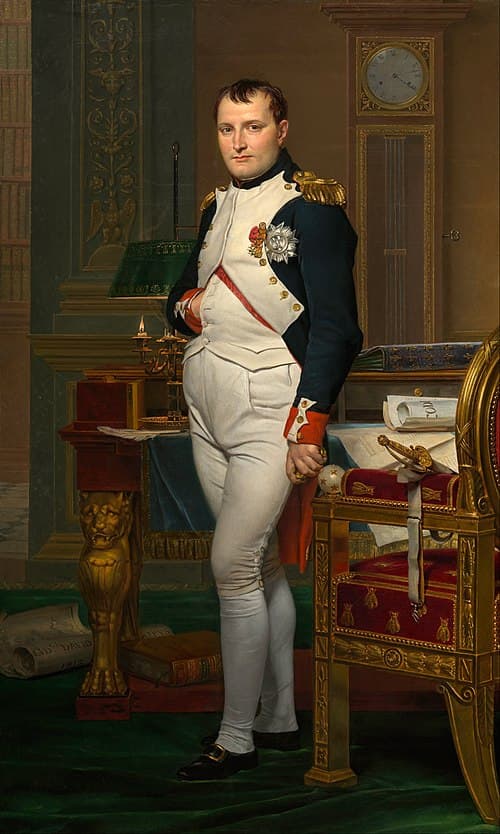
rs to one. His men were masters of the subtle techniques of Frederick the Great, tactics that had delivered victory in far more perilous moments. But Napoleon, less than half the Duke’s age at 37, stared across the same undulating land, the same poised armies and saw in the landscape something completely 4
ople “dared to know’, the big ideas and big thinkers attracted an audience. Arguments started. New ways to record and share the answers appeared too. Locke or Newton or Darwin were as notable for the crowd of debating, curious citizens they attracted as for their ideas. Such contentious discussions were
2 mentions1 same-page
Page ?Same page
ciples of power in a connected age. “Read over and over again the campaigns of Alexander, Hannibal, Caesar, Gustavus, Turenne, Eugene and Frederick,” Napoleon wrote once. “Make them your models. This is the 147 | was thinking: Dan Geer, “Cybersecurity as Realpolitik”, speech delivered at BlackHat, August 6
churchmen and later the technocrats of various empires, the men who helped birth and then manage the problems of an Enlightened, urban social order: Locke, Bismarck, Disraeli. And by soldiers he had in mind both the great aristocratic warrior classes of Europe and upstart, genius figures like Napoleon o
Page HOUSE_OVERSIGHT_031888
ench Revolution. Enthusiasts like Thomas Jefferson initially thought they saw France following in America's footsteps. Then came the Reign of Terror, Napoleon, and a generation of brutal war. Many Americans responded with the same generous enthusiasm to the South American revolutions against colonial rule.
Page: HOUSE_OVERSIGHT_031888 →Page HOUSE_OVERSIGHT_031911
EAK --- 36 He considers three leading theories about what we ought to do - one deriving from Kant, one from the social-contract tradition of Hobbes, Locke, Rousseau, and the contemporary philosophers John Rawls and T.M. Scanlon, and one from Bentham's utilitarianism - and argues that the Kantian and soc
Page: HOUSE_OVERSIGHT_031911 →Sponsored
Mutual Connections (171)
Entities connected to both Napoleon and Locke
Jeffrey Epstein
PERSON30 w/ Napoleon·13 w/ Locke
Barack Obama
PERSON17 w/ Napoleon·5 w/ Locke
Marc Rich
PERSON16 w/ Napoleon·6 w/ Locke
George W. Bush
PERSON14 w/ Napoleon·7 w/ Locke
United States
LOCATION14 w/ Napoleon·4 w/ Locke
Samantha Power
PERSON10 w/ Napoleon·5 w/ Locke
LB
Leon Black
PERSON6 w/ Napoleon·8 w/ Locke
Bashar al-Assad
PERSON12 w/ Napoleon·2 w/ Locke
Cairo
LOCATION11 w/ Napoleon·3 w/ Locke
Benjamin Netanyahu
PERSON12 w/ Napoleon·2 w/ Locke
Thomas Jefferson
PERSON8 w/ Napoleon·5 w/ Locke
DB
Doug Band
PERSON8 w/ Napoleon·5 w/ Locke
Yemen
LOCATION11 w/ Napoleon·2 w/ Locke
Woody Allen
PERSON11 w/ Napoleon·2 w/ Locke
Michael Jackson
PERSON5 w/ Napoleon·7 w/ Locke
Bill Clinton
PERSON10 w/ Napoleon·2 w/ Locke
Hosni Mubarak
PERSON10 w/ Napoleon·2 w/ Locke
David Cameron
PERSON9 w/ Napoleon·3 w/ Locke
Barry Diller
PERSON7 w/ Napoleon·5 w/ Locke
Michael Cohen
PERSON7 w/ Napoleon·5 w/ Locke