Back to Network


















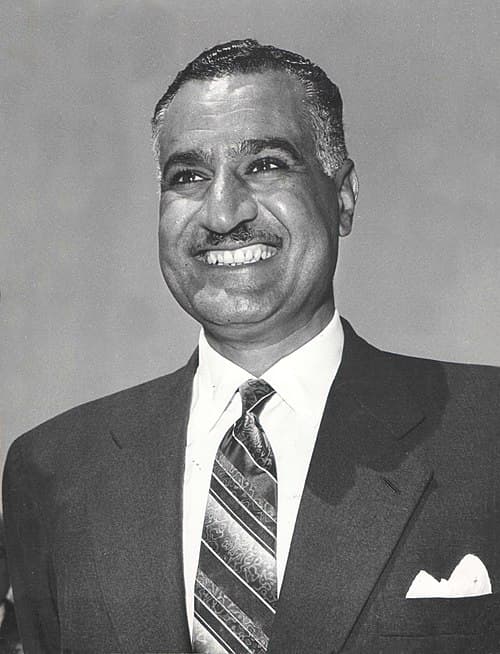
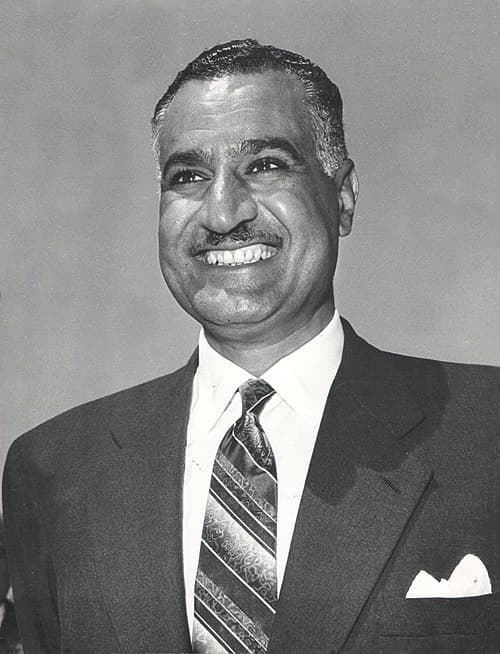
7
Shared Docs
7
Same-Page
7 / 7
Mentions
Document Mentions (7 shared documents)
2 mentions1 same-page
Page HOUSE_OVERSIGHT_023151Same page
ee Officers Movement. 18 June 1953 The Revolutionary Command Council (RCC) abolishes the monarchy and proclaims the Republic of Egypt. 23 June 1956 Gamal Abdel Nasser is elected President of the Republic of Egypt. 26 July 1956 President Nasser of Egypt nationalizes the Suez Canal. 29 October 1956 Suez Crisis. Isr
Page: HOUSE_OVERSIGHT_023151 →monarchy and proclaims the Republic of Egypt. 23 June 1956 Gamal Abdel Nasser is elected President of the Republic of Egypt. 26 July 1956 President Nasser of Egypt nationalizes the Suez Canal. 29 October 1956 Suez Crisis. Israel invades Sinai (Operation Kadesh) with the covert assent of France and the
Page: HOUSE_OVERSIGHT_023151 →2 mentions1 same-page
Page ?Same page
times. In the aftermath of defeat in the 1967 war against Israel, Egypt's soldiers became the object of ridicule. The jokes got so out of hand that Gamal Abdel Nasser finally called on Egyptians to stop poking fun at the army. But Egyptians' political jokes do not come without a price: Through the years, hundreds
f of Egypt's General Intelligence Directorate, Salah Nasr, was convinced that the American Embassy in Cairo was behind the jokes going around about Nasser, by then the president. The directorate assigned dozens of offices throughout Egypt to collect the jokes and study their meaning. These were writte
2 mentions1 same-page
Page ?Same page
sia in the past several months—most conspicuously, Egypt. Following his categorical and embarrassing defeat in the Six-Day War, Egyptian President Gamal Abdel Nasser, already a Soviet client, reaffirmed his fealty to Moscow Centre by telling Nikolai Podgorny, the Chairman of the Presidium of the Supreme Soviet:
ourselves with the Soviet Union... We are ready to offer facilities to the Soviet fleet from Port Said to Salloum and from al-Arish to Gaza." With Nasser's death in September 1970, and the inauguration of Anwar Sadat as Egyptian President, the Soviet-Egyptian relationship quickly deteriorated. The KG
Sponsored
2 mentions1 same-page
Page ?Same page
at the Egyptian Ministry of Defense will be followed by a strategic realignment between Cairo and Washington. When they came to power in July 1952, Gamal Abdel Nasser and his fellow Free Officers (with a few notable exceptions) were willing to join in a Western security alliance. And for its part, the Eisenhower
inistration regarded Egypt's new leaders as potentially important allies in confronting the Soviet Union. The U.S. embassy in Cairo cultivated both Nasser and Muhammad Naguib, who had been the Free Officers' front man. At the same time, Washington began helping Cairo develop its own clandestine intel
2 mentions1 same-page
Page ?Same page
ia, Israel was much more ambivalent about that outcome. The Israelis are always opposed to the rising regional force. When that was Egyptian leader Gamal Abdel Nasser, they focused on Nasser. When it was al Qaeda and its sympathizers, they focused on al Qaeda. When it was Iran, they focused on Tehran. But simple
about that outcome. The Israelis are always opposed to the rising regional force. When that was Egyptian leader Gamal Abdel Nasser, they focused on Nasser. When it was al Qaeda and its sympathizers, they focused on al Qaeda. When it was Iran, they focused on Tehran. But simple opposition to a regiona
2 mentions1 same-page
Page ?Same page
archy had been toppled in a coup organized by a group of army officers led by a stridently pan- Arabist — and anti-Israeli — lieutenant colonel named Gamal Abdel Nasser. Egypt began providing not just tacit support for the fedayeen in Gaza, but arming and training them and helping organize cross-border attacks. Then,
he fedayeen in Gaza, but arming and training them and helping organize cross-border attacks. Then, in 38 HOUSE_OVERSIGHT_011509 the summer of 1956, Nasser nationalized the Suez Canal, which had been owned by the British and French. Ben-Gurion was emboldened to go war by the fact that both Britain and F
Sponsored
2 mentions1 same-page
Page ?Same page
archy had been toppled in a coup organized by a group of army officers led by a stridently pan- Arabist — and anti-Israeli — lieutenant colonel named Gamal Abdel Nasser. Egypt began providing not just tacit support for the fedayeen in Gaza, but arming and training them and helping organize cross-border attacks. Then,
he fedayeen in Gaza, but arming and training them and helping organize cross-border attacks. Then, in 38 HOUSE_OVERSIGHT_027886 the summer of 1956, Nasser nationalized the Suez Canal, which had been owned by the British and French. Ben-Gurion was emboldened to go war by the fact that both Britain and F
Sponsored
Mutual Connections (472)
Entities connected to both Gamal Abdel Nasser and Nasser
Barack Obama
PERSON25 w/ Gamal·19 w/ Nasser
Bashar al-Assad
PERSON24 w/ Gamal·17 w/ Nasser
Hosni Mubarak
PERSON24 w/ Gamal·17 w/ Nasser
Lebanon
LOCATION22 w/ Gamal·19 w/ Nasser
Cairo
LOCATION22 w/ Gamal·15 w/ Nasser
Saddam Hussein
PERSON22 w/ Gamal·13 w/ Nasser
George W. Bush
PERSON18 w/ Gamal·17 w/ Nasser
United States
LOCATION17 w/ Gamal·15 w/ Nasser
Benjamin Netanyahu
PERSON14 w/ Gamal·18 w/ Nasser
Tunisia
LOCATION18 w/ Gamal·13 w/ Nasser
Damascus
LOCATION16 w/ Gamal·14 w/ Nasser
Tehran
LOCATION18 w/ Gamal·11 w/ Nasser
Bill Clinton
PERSON14 w/ Gamal·14 w/ Nasser
Middle East
LOCATION18 w/ Gamal·9 w/ Nasser
Jerusalem
LOCATION14 w/ Gamal·9 w/ Nasser
Yemen
LOCATION12 w/ Gamal·11 w/ Nasser
Terje Rod-Larsen
PERSON15 w/ Gamal·7 w/ Nasser
Bahrain
LOCATION12 w/ Gamal·9 w/ Nasser
Sinai
LOCATION6 w/ Gamal·13 w/ Nasser
Ehud Barak
PERSON9 w/ Gamal·9 w/ Nasser