Back to Network



















4
Shared Docs
4
Same-Page
6 / 4
Mentions
Document Mentions (4 shared documents)
4 mentions1 same-page
Page ?Same page
1 loved the fight scenes and the sex scenes were excellent." —Eric Idle 2P_GlealerASIonEverTold_Atirdd 2 1211&I6 3:06 PIA EFTA00285910 ALSO BY LAWRENCE M. KRAUSS A Universe from Nothing The Fifth Essence Fear of Physics The Physics of Star Trek Beyond Star Trek Hiding in the Mirror Quintessence Atom Q
hysical reality ranks as one of humanity's greatest collective achievements. This book gives a fine account of the main ideas and how they emerged. Krauss is himself close to the field and can offer insights into the personalities who have led the key advances. A practiced and skilled writer, he succe
e still want answers. In A Universe from Nothing Lawrence Krauss, one of the biggest thinkers of our time,
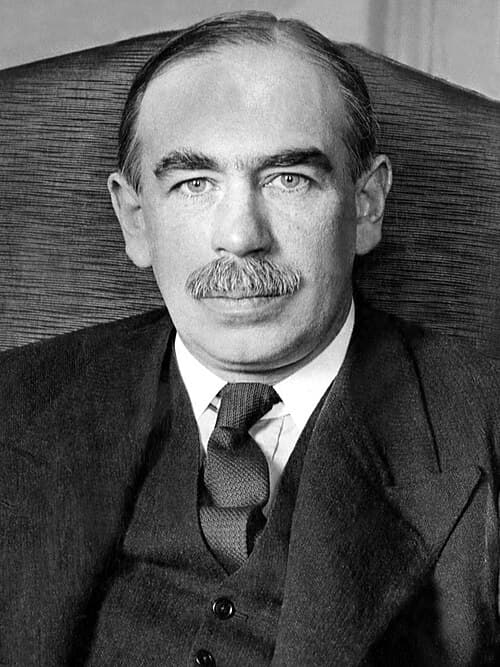
assical laws of motion and laid the basis for his theory of gravity, both of which form the foundation of much of modern physics. Never- theless, as John Maynard Keynes pointed out: Newton was not the first of the age of reason, he was the last of the magicians, the last of the Babylonians and Sumerians, the
2 mentions1 same-page
Page ?Same page
me ill-advised early experiments, such as buzzing Lawrence Berkeley Laboratory with one of his self-flying s
ovement of goods is largely automated, as are many services. What’s left for humans to do? In 1930—long before the advent of computers, let alone AI—John Maynard Keynes wrote, in an essay called “Economic Possibilities for our Grandchildren,” that as a result of improvements in productivity, society could prod
2 mentions1 same-page
Page ?Same page
1998 The Book of Letters, A Mystical Alef-bait, Lawrence Kushner, Jewish Lights Publishing. Woodstock, Vt.
he polychromatic properties of light like a talisman. In his essay called Newton, the Man, the early 20" Century Cambridge Don and economic theorist, John Maynard Keynes, said that the Newton of the chapel followed “...certain mystic clues which God had laid about the world to allow a sort of philosopher’s trea
Sponsored
2 mentions1 same-page
Page ?Same page
me ill-advised early experiments, such as buzzing Lawrence Berkeley Laboratory with one of his self-flying s
ovement of goods is largely automated, as are many services. What’s left for humans to do? In 1930—long before the advent of computers, let alone AI—John Maynard Keynes wrote, in an essay called “Economic Possibilities for our Grandchildren,” that as a result of improvements in productivity, society could prod
Sponsored
Mutual Connections (465)
Entities connected to both Lawrence Krauss and John Maynard
Jeffrey Epstein
PERSON4,676 w/ Lawrence·4 w/ John
LB
Leon Black
PERSON389 w/ Lawrence·4 w/ John
Prince Andrew
PERSON375 w/ Lawrence·5 w/ John
Marc Rich
PERSON372 w/ Lawrence·7 w/ John
Donald Trump
PERSON337 w/ Lawrence·4 w/ John
George W. Bush
PERSON324 w/ Lawrence·8 w/ John
John F. Kennedy
PERSON317 w/ Lawrence·3 w/ John
Ghislaine Maxwell
PERSON285 w/ Lawrence·3 w/ John
Stephen Hawking
PERSON278 w/ Lawrence·5 w/ John
Prince Charles
PERSON264 w/ Lawrence·4 w/ John
Eric Trump
PERSON251 w/ Lawrence·6 w/ John
Alan Dershowitz
PERSON238 w/ Lawrence·6 w/ John
United States
LOCATION225 w/ Lawrence·4 w/ John
Samantha Power
PERSON217 w/ Lawrence·5 w/ John
Julie K. Brown
PERSON194 w/ Lawrence·6 w/ John
Bill Clinton
PERSON196 w/ Lawrence·2 w/ John
Joe Biden
PERSON194 w/ Lawrence·2 w/ John
Noam Chomsky
PERSON191 w/ Lawrence·3 w/ John
Martin Nowak
PERSON183 w/ Lawrence·2 w/ John
Michael Cohen
PERSON182 w/ Lawrence·2 w/ John