Back to Network








8
Shared Docs
8
Same-Page
8 / 8
Mentions
Document Mentions (8 shared documents)
2 mentions1 same-page
Page ?Same page
ago, a building workman approached Mr. Epstein with news that the workman's wife needed a kidney transplant and that the workman's sister-in-law in Colombia was a willing donor. The non English speaking workman had neither the financial resources nor the know-how to get the sister-in-law to the United St
erbs. I consider myself an expert on this topic, having written about it in many scholarly articles and in three books: Learnability and Cognition (MIT Press, 1989), Lexical and Conceptual Semantics (coedited with Beth Levin; Blackwell, 1992), and The Stuff of Thought: Language as a Window into Human Nat
2 mentions1 same-page
Page ?Same page
(Cambridge: MIT Press, 2008); and Lorraine Daston and Gregg Mitman, eds., Thinking with Animals: New Perspectives on Anthropomorphism (New York: Columbia University Press, 2005). Ralph Waldo Emerson made the classic American argument for the positive reciprocity between the human and the natural. This idea of mutua
I For a sampling of relevant recent work, see Philip Husbands, Owen Holland, and Michael Wheeler, eds., The Mechanical Mind in History (Cambridge: MIT Press, 2008); and Lorraine Daston and Gregg Mitman, eds., Thinking with Animals: New Perspectives on Anthropomorphism (New York: Columbia University Pr
2 mentions1 same-page
Page ?Same page
Learning, 2007. Tur50. Alan Turing. Computing machinery and intelligence. Mind, 59, 1950. Tur77. Valentin F. Thrchin. The Phenomenon of Science. Columbia University Press, 1977. TV96. Thrchin and V. Supercompilation: Techniques and results. In Dines Bjorner, M. Broy, and Alek- sandr Vasilevich Zamulin, editors, Persp
ateson. Mind and Nature: A Necessary Unity. New York: Ballantine, 1979. BC94. S. Baron-Cohen. Mindblindness: An Essay on Autism and Theory of Mind. MIT Press, 1994. BDL93. Louise Barrett, Robin Dunbar, and John Lycett. Human Evolutionary Psychology. Princeton University Press, 1993. BDS03. S Ben-David
Sponsored
2 mentions1 same-page
Page ?Same page
ne Learning, 2007. Tur50. Alan Turing. Computing machinery and intelligence. Mind, 59, 1950. Tur77. Valentin F. Turchin. The Phenomenon of Science. Columbia University Press, 1977. TV96. Turchin and V. Supercompilation: Techniques and results. In Dines Bjorner, M. Broy, and Alek- sandr Vasilevich Zamulin, editors, Perspe
Bateson. Mind and Nature: A Necessary Unity. New York: Ballantine, 1979. Bog4. S. Baron-Cohen. Mindblindness: An Essay on Autism and Theory of Mind. MIT Press, 1994. BDL93. Louise Barrett, Robin Dunbar, and John Lycett. Human Evolutionary Psychology. Princeton University Press, 1993. BDS03. S Ben-David an
2 mentions1 same-page
Page ?Same page
humans gradually stopped the withdrawal of their limbs with stimulation of its 114 HOUSE_OVERSIGHT_013614 skin when it was repeated several times. Columbia University’s Nobelist in the brain sciences, Eric Kandel studied the neural mechanisms of habituation as a primitive, accessible and fundamental example of learni
ce, Park Street Press, Rochester, Vermont, 2002 Psychiatry and Mysticism, S.R. Dean, Nelson-Hall, Chicago, 1975 Zen and the Brain, James H. Austin, MIT Press, Boston, 2000 Perspectives in Biological Dynamics and Theoretical Medicine. Eds. S.H. Koslow, A.J. Mandell and M.F. Shlesinger, Ann. N. Y. Acad of S
2 mentions1 same-page
Page ?Same page
butchering: I’ve finessed the always-unstranslatable Zhuangzi. See for reference Burton Watson, Burton, The Complete Works of Chuang Tzu. (New York: Columbia University Press, 1968) 14 HOUSE_OVERSIGHT_018246 different and totally, lethally correct: An interlocking set of murderous gears that could be set loose by his ar
Do Committees Invent?” Datamation, April, 1968. 23 In our connected age: Barbara Schewick, Internet Architecture and Innovation, (Cambridge, Mass.: MIT Press, 2010) Chapter 1 24 “When you decide what infrastructure to use”: Paul Graham, “Great Hackers”, on paulgraham.com July 2004 25 HOUSE_OVERSIGHT_018
Sponsored
2 mentions1 same-page
Page ?Same page
tory (Cambridge: MIT Press, 2008); and Lorraine Daston and Gregg Mitman, eds., Thinking with Animals: New Perspectives on Anthropomorphism (New York: Columbia University Press, 2005). Ralph Waldo Emerson made the classic American argument for the positive reciprocity between the human and the natural. This idea of mutuality
. ' For a sampling of relevant recent work, see Philip Husbands, Owen Holland, and Michael Wheeler, eds., The Mechanical Mind in History (Cambridge: MIT Press, 2008); and Lorraine Daston and Gregg Mitman, eds., Thinking with Animals: New Perspectives on Anthropomorphism (New York: Columbia University Press,
2 mentions1 same-page
Page ?Same page
ago, a building workman approached Mr. Epstein with news that the workman's wife needed a kidney transplant and that the workman's sister-in-law in Colombia was a willing donor. The non English speaking workman had neither the financial resources nor the know-how to get the sister-in-law to the United St
erbs. I consider myself an expert on this topic, having written about it in many scholarly articles and in three books: Learnability and Cognition (MIT Press, 1989), Lexical and Conceptual Semantics (coedited with Beth Levin; Blackwell, 1992), and The Stuff of Thought: Language as a Window into Human Nat
Sponsored
Mutual Connections (1,443)
Entities connected to both Columbia University and MIT Press
Jeffrey Epstein
PERSON223 w/ Columbia·24 w/ MIT
United States
LOCATION121 w/ Columbia·10 w/ MIT
George W. Bush
PERSON101 w/ Columbia·25 w/ MIT
LB
Leon Black
PERSON108 w/ Columbia·14 w/ MIT
Donald Trump
PERSON112 w/ Columbia·10 w/ MIT
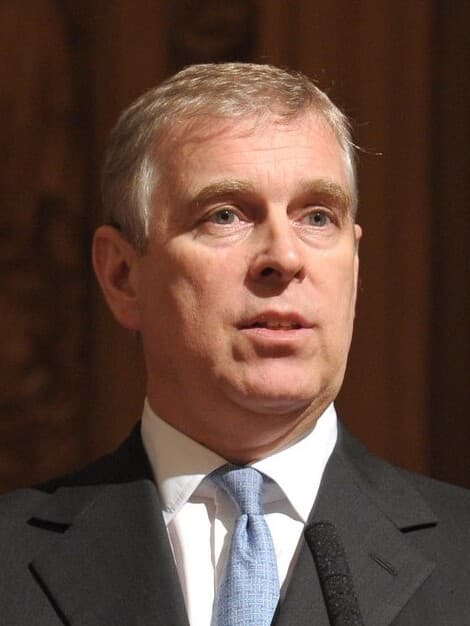
Prince Andrew
PERSON100 w/ Columbia·14 w/ MIT
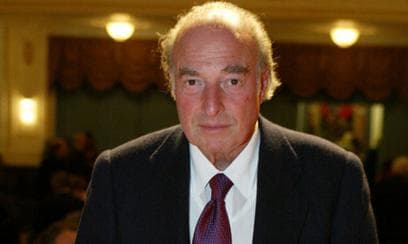
Marc Rich
PERSON80 w/ Columbia·21 w/ MIT
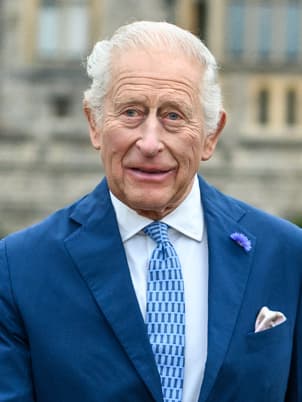
Prince Charles
PERSON80 w/ Columbia·17 w/ MIT
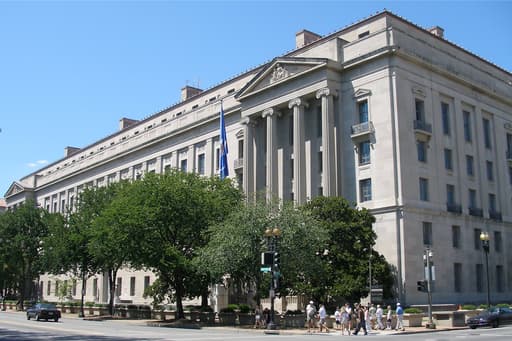
Department of Justice
ORGANIZATION93 w/ Columbia·2 w/ MIT
Virginia Giuffre
PERSON79 w/ Columbia·5 w/ MIT
ET
Emmy Taylor
PERSON70 w/ Columbia·14 w/ MIT
New York
LOCATION75 w/ Columbia·8 w/ MIT
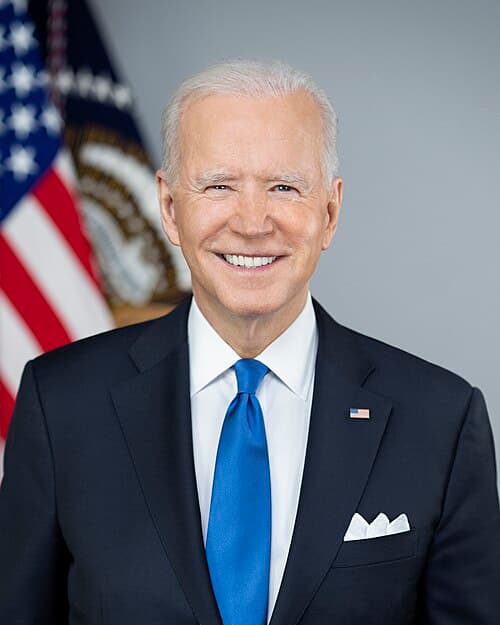
Joe Biden
PERSON79 w/ Columbia·4 w/ MIT
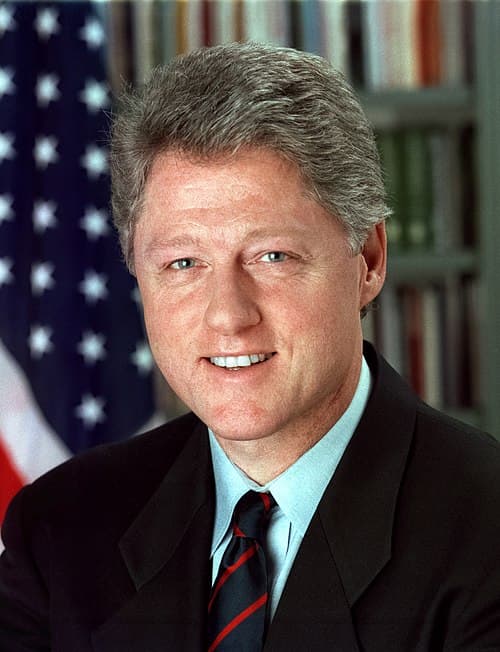
Bill Clinton
PERSON73 w/ Columbia·7 w/ MIT
Julie K. Brown
PERSON63 w/ Columbia·16 w/ MIT
Stephen Hawking
PERSON65 w/ Columbia·14 w/ MIT
Barack Obama
PERSON71 w/ Columbia·7 w/ MIT
Michael Jackson
PERSON61 w/ Columbia·8 w/ MIT
Ghislaine Maxwell
PERSON66 w/ Columbia·2 w/ MIT
Samantha Power
PERSON51 w/ Columbia·16 w/ MIT