Back to Network

















4
Shared Docs
4
Same-Page
4 / 6
Mentions
Document Mentions (4 shared documents)
3 mentions1 same-page
Page ?Same page
and decision making, they are the best learners in the universe. Much of the process of turning data into theories happens before we are five. Since Aristotle and Plato, there have been two basic ways of addressing the problem of how we know what we know, and they are still the main approaches in machine le
a topic absent from a typical computer-science education: the physical configuration of a 118 HOUSE_OVERSIGHT_016921 computation. Von Neumann and Turing posed their questions as theoretical studies, because it was beyond the technology of their day to realize them. But with the convergence of communic
ce in terms of feedback, exploring the cultural rather than engineering uptake of this idea. She begins with primary readings by Wiener, Shannon, and Turing and then pivots from the scientists and engineers to the work and ideas of artists, feminists, postmodern theorists. Her goal: to come up with a new
3 mentions1 same-page
Page ?Same page
and decision making, they are the best learners in the universe. Much of the process of turning data into theories happens before we are five. Since Aristotle and Plato, there have been two basic ways of addressing the problem of how we know what we know, and they are still the main approaches in machine le
a topic absent from a typical computer-science education: the physical configuration of a 118 HOUSE_OVERSIGHT_016338 computation. Von Neumann and Turing posed their questions as theoretical studies, because it was beyond the technology of their day to realize them. But with the convergence of communic
ce in terms of feedback, exploring the cultural rather than engineering uptake of this idea. She begins with primary readings by Wiener, Shannon, and Turing and then pivots from the scientists and engineers to the work and ideas of artists, feminists, postmodern theorists. Her goal: to come up with a new
2 mentions1 same-page
Page ?Same page
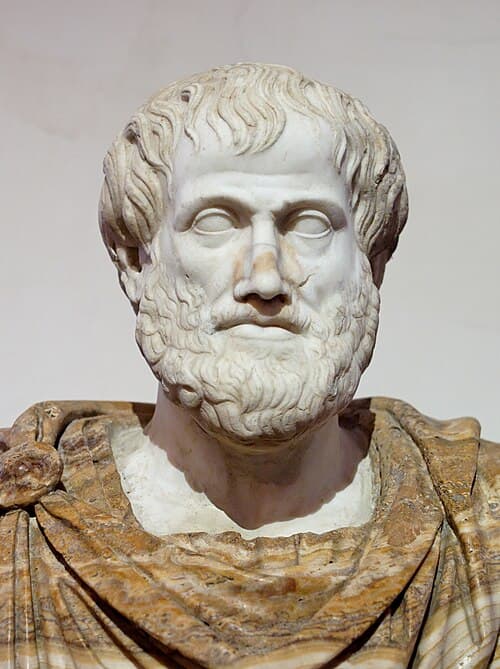
friends. Logical Beginnings The formal study of logic began in 3848c with the publication ofa treatise called the Organon by the Greek philosopher Aristotle. A student of Plato, Aristotle taught many of the famous leaders of his time, including Alexander The Great. Ancient Greece was not some idyllic thin
but, using this simple idea, Bertrand Russell changed the course of mathematical history and it is the fundamental paradox used to show computers are Turing limited. The Russell Paradox In the late 19 century, mathematicians began to think about the nature of numbers. What is a number? It is certainly
Sponsored
2 mentions1 same-page
Page ?Same page
an when he was 60 years old. He’d had an astonishing life until then, of course. He’d been taught by Socrates and, in turn, had sharpened the mind of Aristotle. He’d established his famous Academy in Athens. The puzzles of philosophy and politics that defined his city’s most turbulent era had been the work o
ere? A dim, honest, slow-multiplying human? Impossible to tell. The distinction between machine and man blurred a bit. Buried in the very premise of Turing’s test was an assumption about what machines could do, and how they might do it. “The idea behind digital computers may be explained by saying that t
Sponsored
Mutual Connections (507)
Entities connected to both Aristotle and Turing
Jeffrey Epstein
PERSON10 w/ Aristotle·44 w/ Turing
Stephen Hawking
PERSON13 w/ Aristotle·29 w/ Turing
Alan Dershowitz
PERSON12 w/ Aristotle·27 w/ Turing
George W. Bush
PERSON13 w/ Aristotle·18 w/ Turing
Marc Rich
PERSON13 w/ Aristotle·16 w/ Turing
Prince Charles
PERSON14 w/ Aristotle·15 w/ Turing
Earth
LOCATION11 w/ Aristotle·18 w/ Turing
Harvey Weinstein
PERSON11 w/ Aristotle·17 w/ Turing
Samantha Power
PERSON9 w/ Aristotle·19 w/ Turing
Richard Dawkins
PERSON10 w/ Aristotle·15 w/ Turing
Prince Andrew
PERSON11 w/ Aristotle·13 w/ Turing
Alan Turing
PERSON6 w/ Aristotle·17 w/ Turing
Daniel Dennett
PERSON8 w/ Aristotle·14 w/ Turing
Marvin Minsky
PERSON4 w/ Aristotle·18 w/ Turing
Robert Gates
PERSON8 w/ Aristotle·14 w/ Turing
Bill Gates
PERSON6 w/ Aristotle·15 w/ Turing
LB
Leon Black
PERSON10 w/ Aristotle·10 w/ Turing
John Brockman
PERSON7 w/ Aristotle·13 w/ Turing
Barack Obama
PERSON10 w/ Aristotle·10 w/ Turing
DB
Doug Band
PERSON9 w/ Aristotle·11 w/ Turing