Back to Network












3
Shared Docs
3
Same-Page
5 / 3
Mentions
Document Mentions (3 shared documents)
3 mentions1 same-page
Page ?Same page
could be used as an oracle, capable of answering almost any question imaginable. I could, for example, write a program that says: for every index in Fermat’s puzzle try every number and halt if you find a solution greater than 2. Now if I run my halt program on this program and it states ‘will crash; I w
ery number and halt if you find a solution greater than 2. Now if I run my halt program on this program and it states ‘will crash; I will have solved Fermat’s Last Theorem! Do you see why? If we give ‘Halt’ an input: a program we are interested in, along with some data, it will tell us if the program fin
head at the same time, and this requires deep concentration. To get some idea of the creative process at work, listen to the excellent TED lecture by John Cleese. HOUSE_OVERSIGHT_015960 Software 271 A common and costly mistake is to put off thinking about a class of things you are going to need in the next
3 mentions1 same-page
Page ?Same page
ms of Logic Based on Ordinals.” Proceedings of the London Mathematical Society 2, no. 1 (1939): 161-228. Wiles, Andrew. “Modular Elliptic Curves and Fermat’s Last Theorem.” Annals of Mathematics-Second Series 141, no. 3 (1995): 443-552. Chapter 12 Burgin, Mark. Super-Recursive Algorithms. Springer, 200
analysis 84 eyes 108 color perception 110 fovea centralis 112 resolution of 112 F Facebook 71, 271 face-to-face interaction 83 false paradox 155 Fermat’s Last Theorem xi, 225, 241, 242, 251, 253, 254, 259, 261, 275, 278, 351, 368 Fermat's puzzle 225 Fermilab 293 Feynman, Richard 58, 70, 157, 239,
, 257, 309 convergent thinking 300 design tradeoff 311 divergent thinking 298 Eureka moment 302 incubation 301 innovator’s dilemma 306 intimation 301 John Cleese on 303 knowledge and 141 mathematical creativity 309 mechanical steps 141 non-linearity of 311 preparation 301 process 133, 270, 305 process versus 3
2 mentions1 same-page
Page ?Same page
e in a Universe where information comes into existence through the creative endeavors of human beings. When Andrew Wiles discovered his solution to Fermat’s Last Theorem, he did something a computer cannot do and demonstrated non-computational thought. But there is an alternative explanation put forward
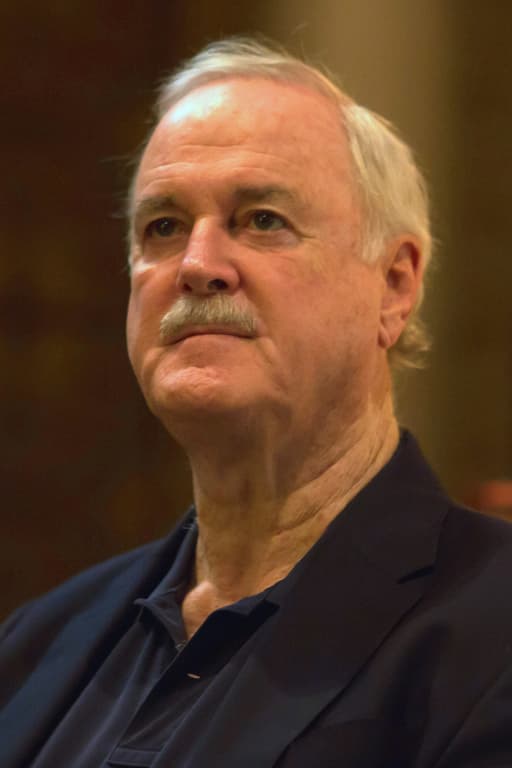
ively performed by a computer. As you know, I don’t agree with his later viewpoint. Another person who has thought long and hard about creativity is John Cleese, the comedian and actor. He describes the process wonderfully in a number of talks which you can find on YouTube. He finds a lot of his creativity em
Sponsored
Mutual Connections (104)
Entities connected to both Fermat and John Cleese
George W. Bush
PERSON10 w/ Fermat·3 w/ John
Alan Dershowitz
PERSON9 w/ Fermat·3 w/ John
Stephen Hawking
PERSON6 w/ Fermat·5 w/ John
Eric Trump
PERSON5 w/ Fermat·5 w/ John
Prince Andrew
PERSON7 w/ Fermat·3 w/ John
Quantum
ORGANIZATION6 w/ Fermat·3 w/ John
Ghislaine Maxwell
PERSON7 w/ Fermat·2 w/ John
LB
Leon Black
PERSON5 w/ Fermat·3 w/ John
Prince Charles
PERSON5 w/ Fermat·3 w/ John
Harvey Weinstein
PERSON6 w/ Fermat·2 w/ John
SE
Searle
PERSON5 w/ Fermat·3 w/ John
Condoleezza Rice
PERSON5 w/ Fermat·2 w/ John
Feynman
PERSON5 w/ Fermat·2 w/ John
Penrose
PERSON4 w/ Fermat·3 w/ John
Last Theorem
ORGANIZATION4 w/ Fermat·3 w/ John
Wiles
PERSON4 w/ Fermat·3 w/ John
William Shakespeare
PERSON5 w/ Fermat·2 w/ John
Eureka
PERSON4 w/ Fermat·3 w/ John
Michael Douglas
PERSON4 w/ Fermat·3 w/ John
Chris Christie
PERSON4 w/ Fermat·3 w/ John